Free Printable Origins of Islam Worksheets for Class 5
Explore Class 5 Origins of Islam worksheets and printables that help students learn about the founding and early development of Islam through engaging practice problems and comprehensive answer keys.
Explore printable Origins of Islam worksheets for Class 5
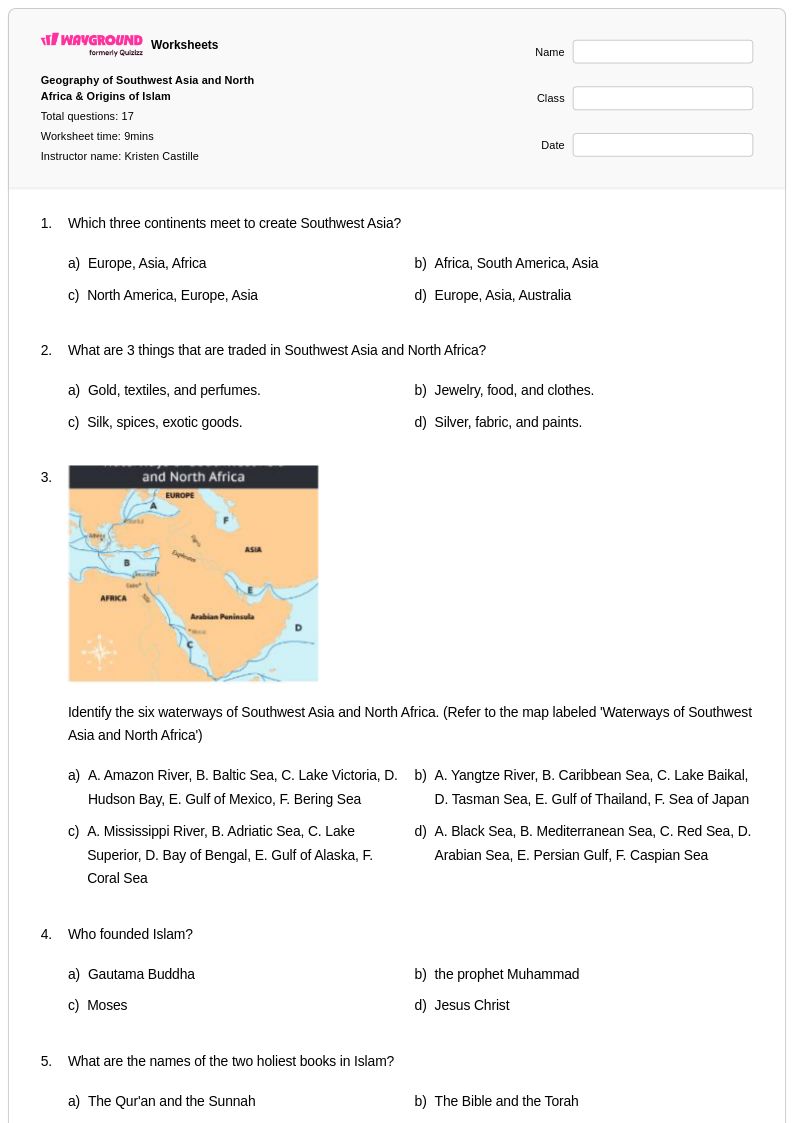
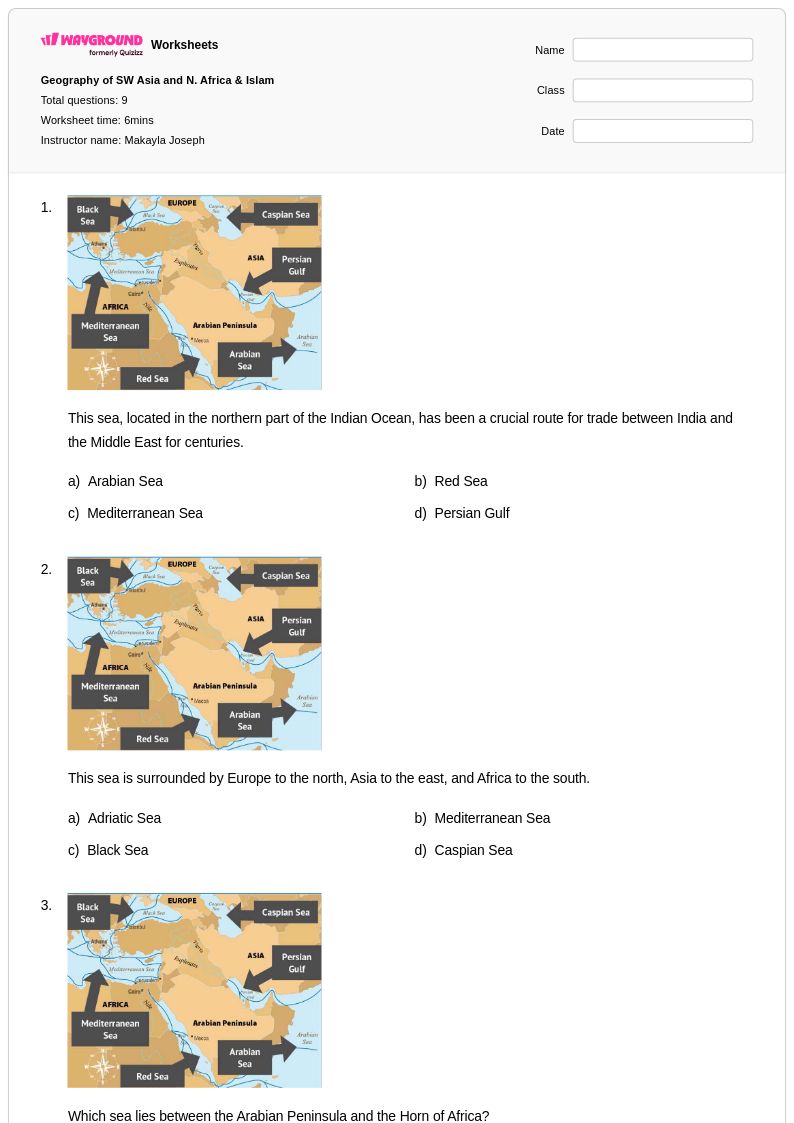
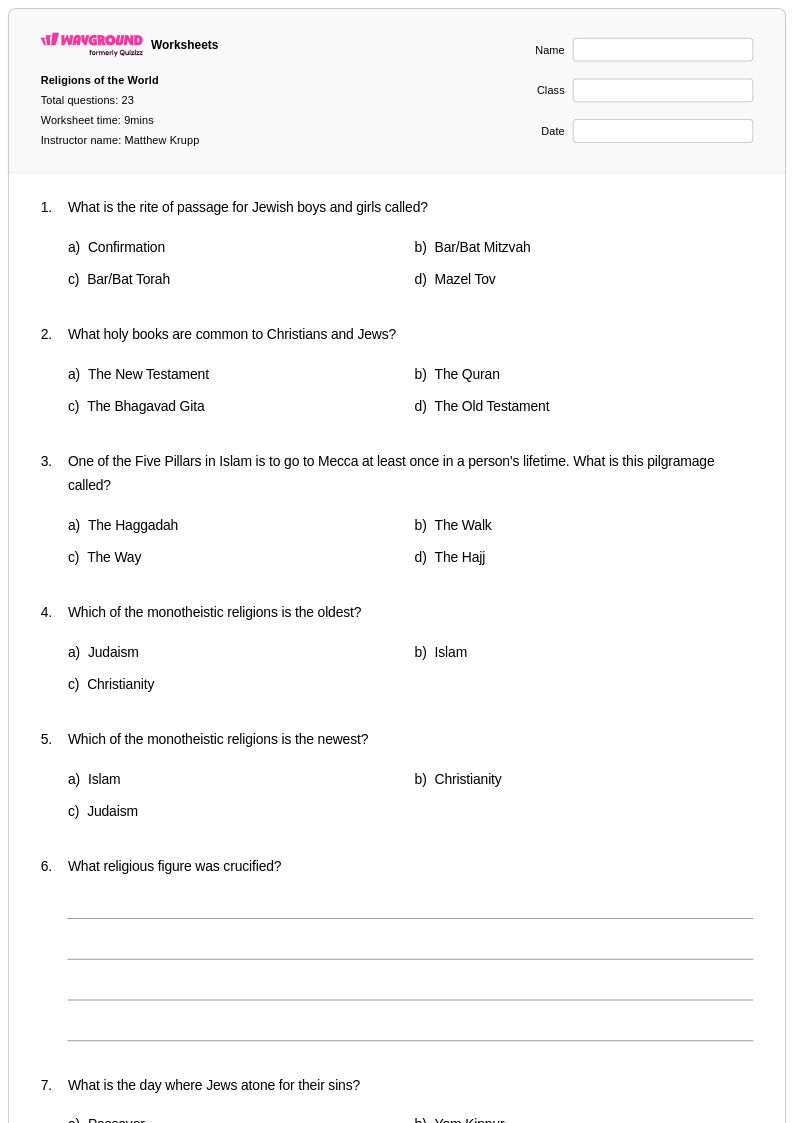
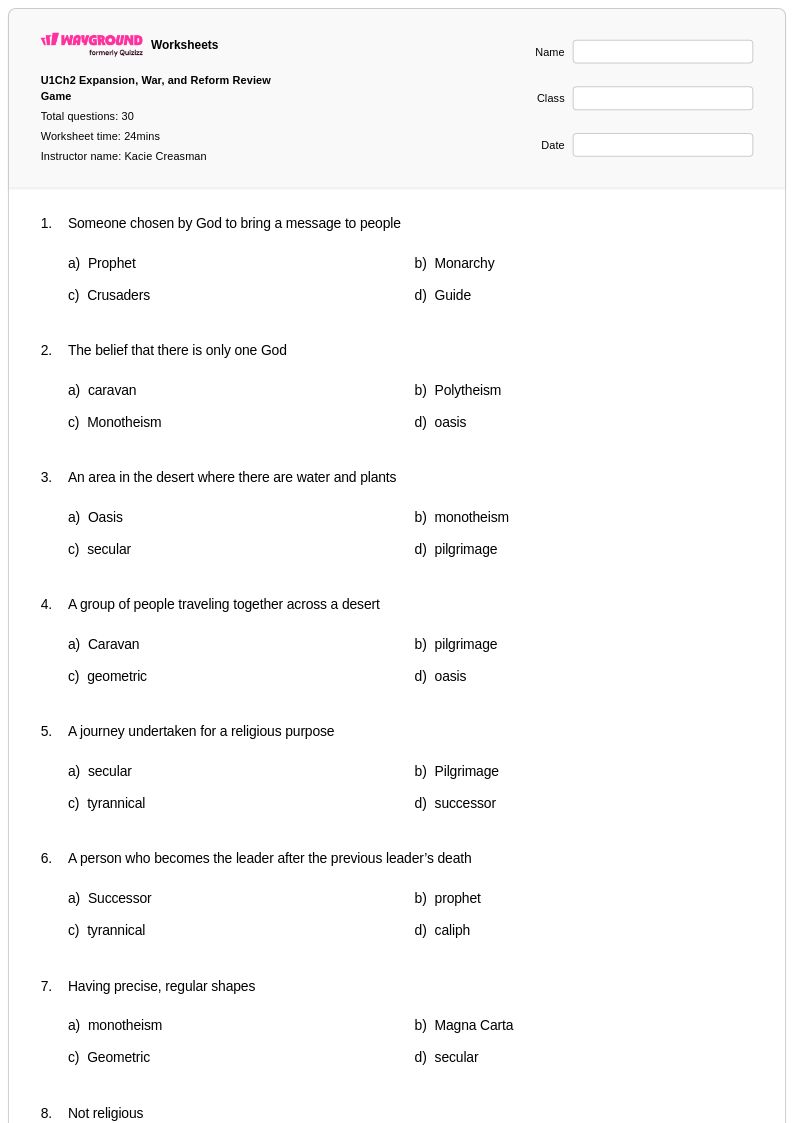
Origins of Islam worksheets for Class 5 students through Wayground (formerly Quizizz) provide comprehensive educational resources that introduce young learners to the foundational elements of one of the world's major religions. These carefully designed materials help students explore the historical context of 7th century Arabian Peninsula, understand the life and teachings of Prophet Muhammad, and examine the early spread of Islamic civilization. The worksheets strengthen critical thinking skills through practice problems that encourage students to analyze primary source excerpts, compare religious traditions, and trace geographical patterns of Islamic expansion. Each printable resource includes detailed answer keys that support both independent study and guided instruction, while free pdf formats ensure accessibility for diverse classroom environments.
Wayground (formerly Quizizz) empowers educators with millions of teacher-created resources specifically focused on Origins of Islam content that aligns with Class 5 social studies standards. The platform's robust search and filtering capabilities allow teachers to quickly locate materials that match their specific curriculum requirements, whether addressing the Five Pillars of Islam, early Islamic achievements in science and mathematics, or the development of Islamic art and architecture. Advanced differentiation tools enable instructors to customize worksheets for varying ability levels, supporting both remediation for struggling students and enrichment opportunities for advanced learners. Available in both printable and digital formats, including downloadable pdf versions, these resources facilitate flexible lesson planning while providing essential skill practice that deepens students' understanding of Islamic history and its lasting global influence.
FAQs
How do I teach the origins of Islam to middle or high school students?
Teaching the origins of Islam effectively begins with establishing the historical context of 7th-century Arabia, including the political fragmentation and religious landscape that preceded Muhammad's prophethood. From there, teachers can guide students through key events in sequence: the first revelation, the early Muslim community in Mecca, the Hijra to Medina, and the consolidation of Islamic governance. Anchoring instruction in primary-source analysis and timeline activities helps students connect events causally rather than memorizing isolated facts.
What exercises help students practice key concepts in the origins of Islam?
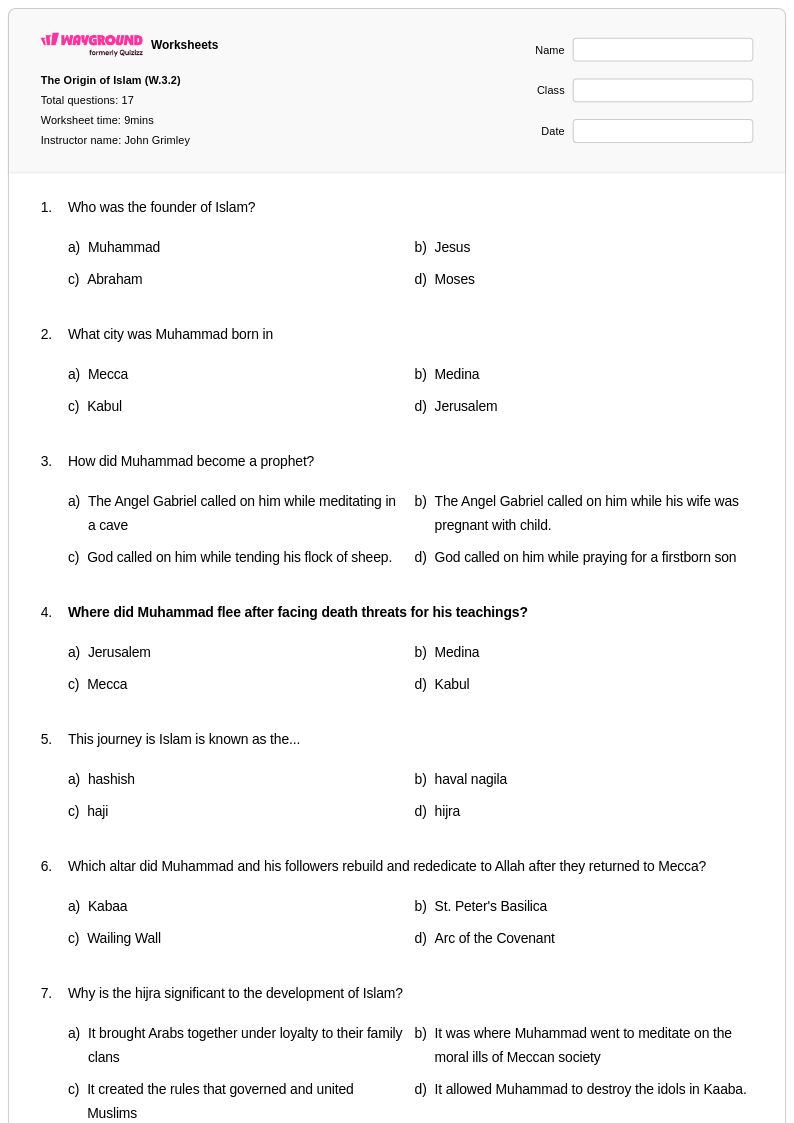
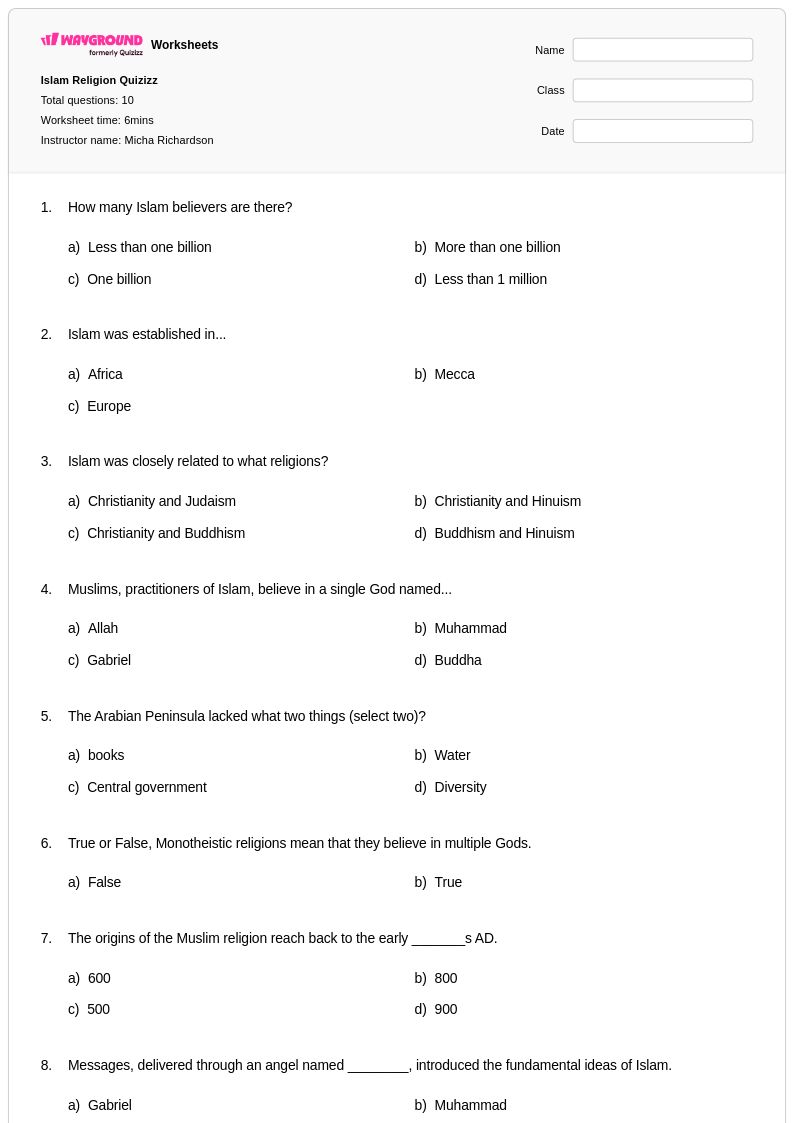
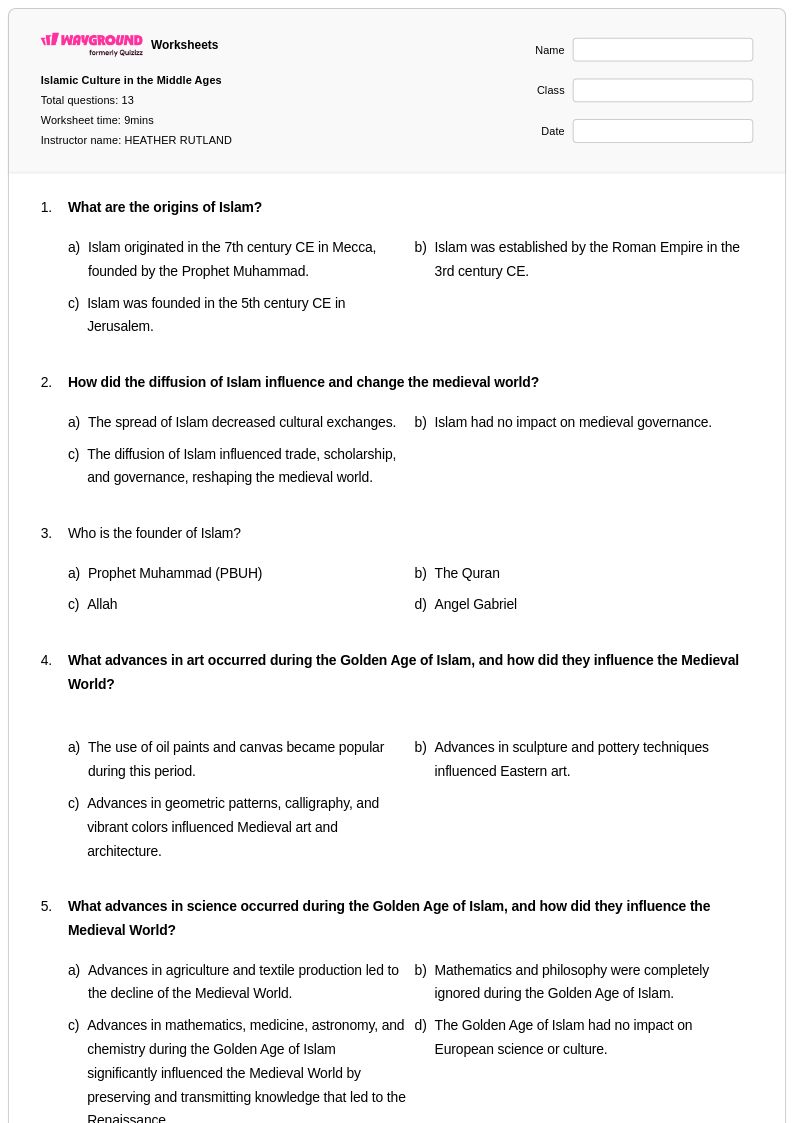
Effective practice exercises for this topic include timeline construction tracing events from Muhammad's birth through the early expansion of Islam, document analysis of Quranic context, and comparative studies between pre-Islamic Arabian society and the emerging Muslim community. Worksheets that ask students to explain the significance of the Five Pillars, the Hijra, and the establishment of the first Islamic state reinforce both factual recall and conceptual understanding. These activity types mirror the analytical tasks students encounter on standardized assessments.
What misconceptions do students commonly have about the origins of Islam?
A common misconception is that Islam emerged in a historical vacuum, when in fact it developed in direct dialogue with existing Jewish, Christian, and polytheistic Arabian traditions. Students also frequently conflate the Meccan and Medinan periods, missing how the community's circumstances and the nature of Quranic revelation shifted significantly after the Hijra. Addressing these errors explicitly through comparative analysis activities helps students build a more accurate and nuanced understanding of Islamic history.
How can I use Origins of Islam worksheets to support students with different learning needs?
Origins of Islam worksheets on Wayground are available in both printable PDF and digital formats, making them easy to deploy in traditional classrooms, blended learning environments, or as homework assignments. When hosting worksheets digitally on Wayground, teachers can enable accommodations for individual students, such as read aloud support for complex historical texts, extended time for students who need it, and reduced answer choices to lower cognitive load. These settings can be configured per student and saved for reuse across future sessions, so differentiation does not require rebuilding your setup each time.
How do I connect the origins of Islam to broader world history curriculum standards?
The origins of Islam connects directly to world history standards covering early civilizations, the spread of major world religions, and the development of trade networks across the Middle East, North Africa, and Central Asia. Teachers can use this topic as a bridge between units on Late Antiquity and the medieval period, linking Islamic expansion to the decline of the Byzantine and Sasanian empires. Framing Islamic history within these broader patterns helps students see it as an integrated part of global historical development rather than an isolated religious narrative.
What are the most important vocabulary terms students need to understand the origins of Islam?
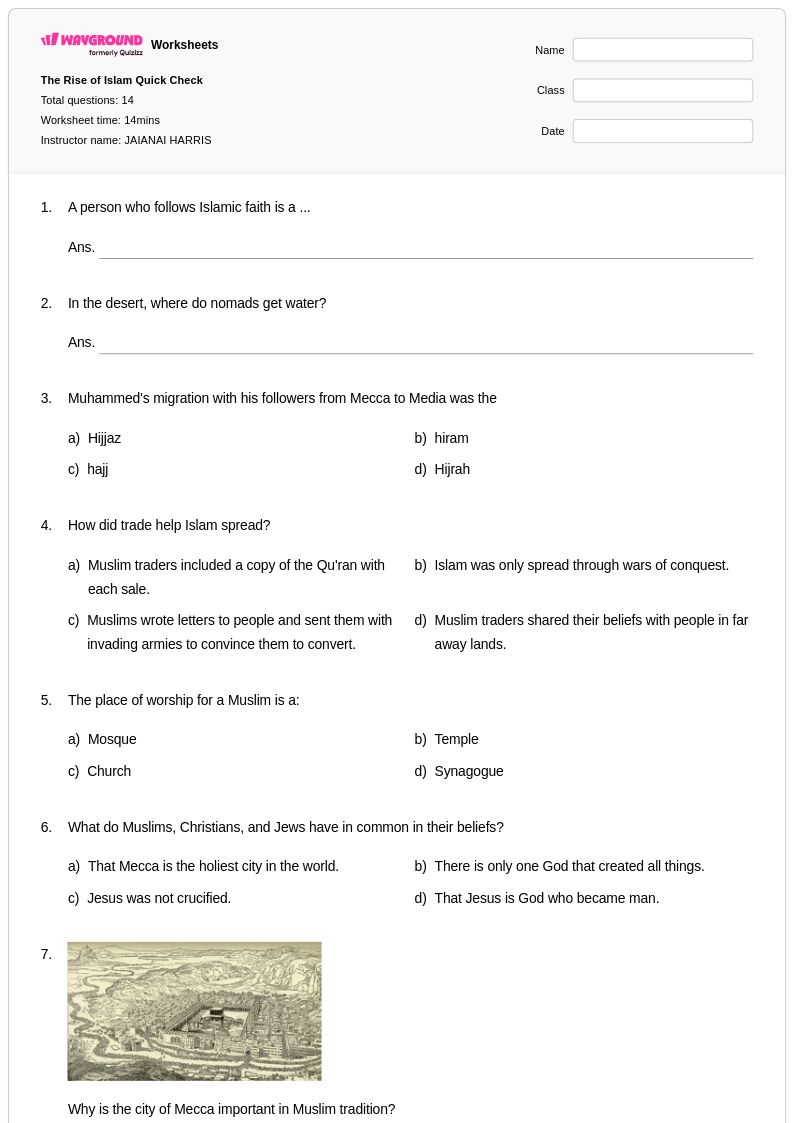
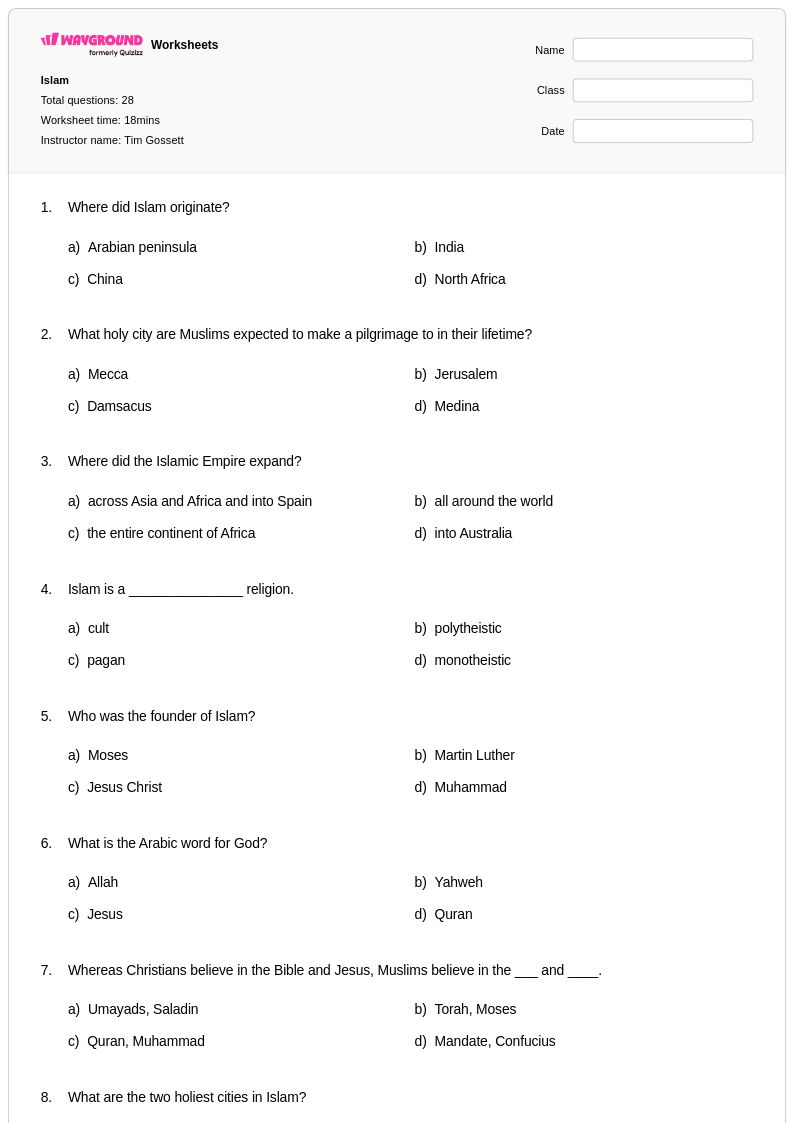
Key vocabulary for this topic includes terms such as the Quran, the Five Pillars of Islam, the Hijra, the Ummah, the Kaaba, and the Caliphate. Students should also be able to define and distinguish between Mecca and Medina as distinct phases of early Islamic history. Embedding vocabulary practice into worksheet activities, such as matching, contextual fill-in-the-blank, and short-answer explanation tasks, reinforces retention more effectively than isolated definition memorization.