Free Printable Rosa Parks and Civil Rights Worksheets for Class 5
Explore Class 5 Rosa Parks and Civil Rights free worksheets and printables from Wayground that help students learn about this pivotal figure and movement through engaging practice problems and comprehensive answer keys.
Explore printable Rosa Parks and Civil Rights worksheets for Class 5
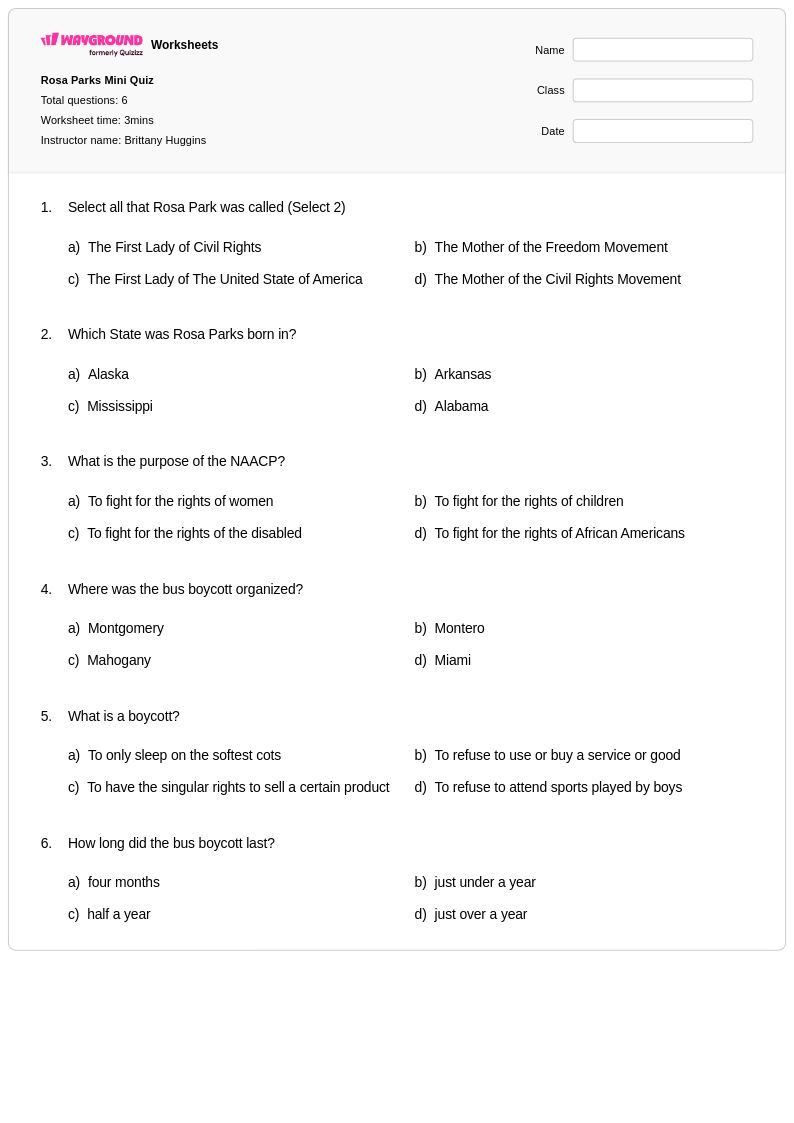
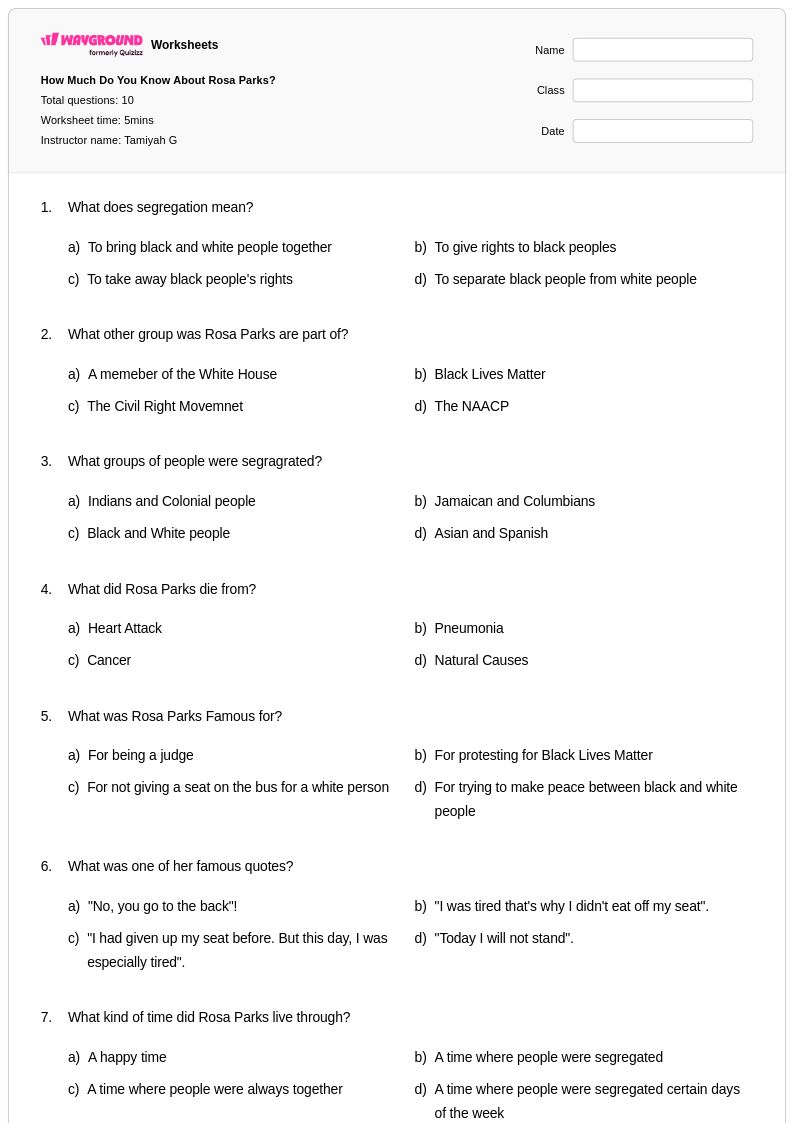
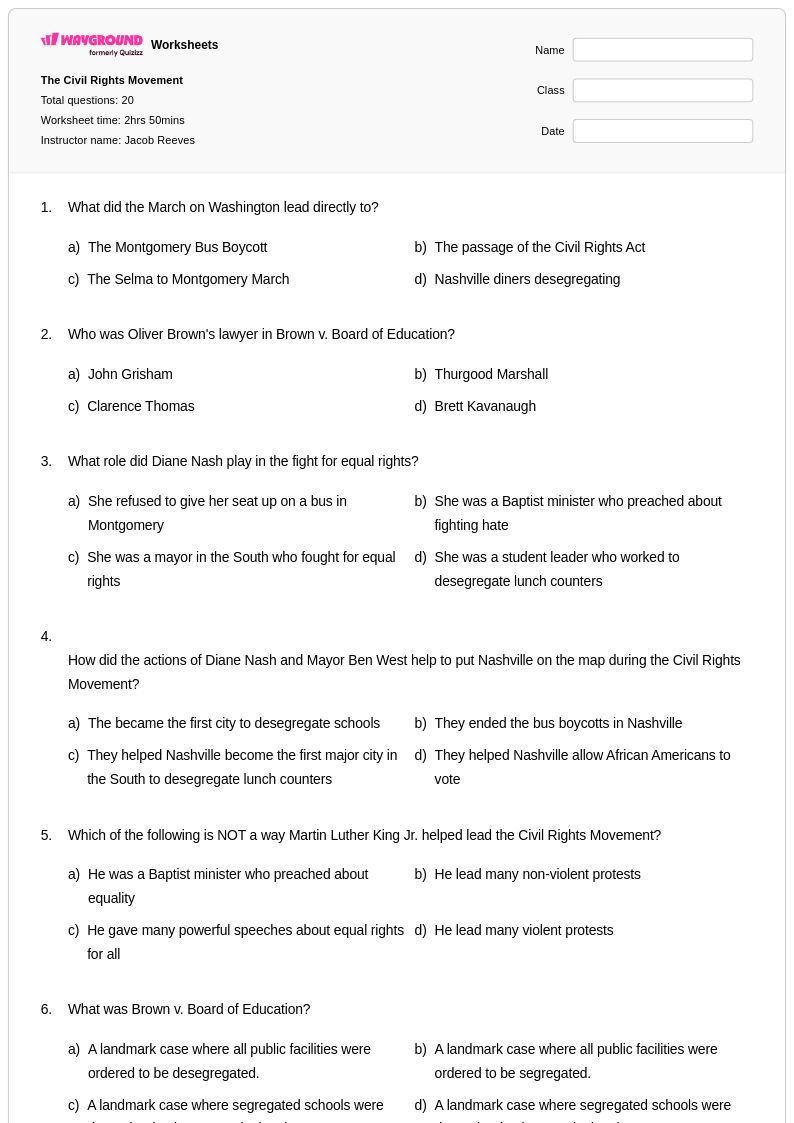
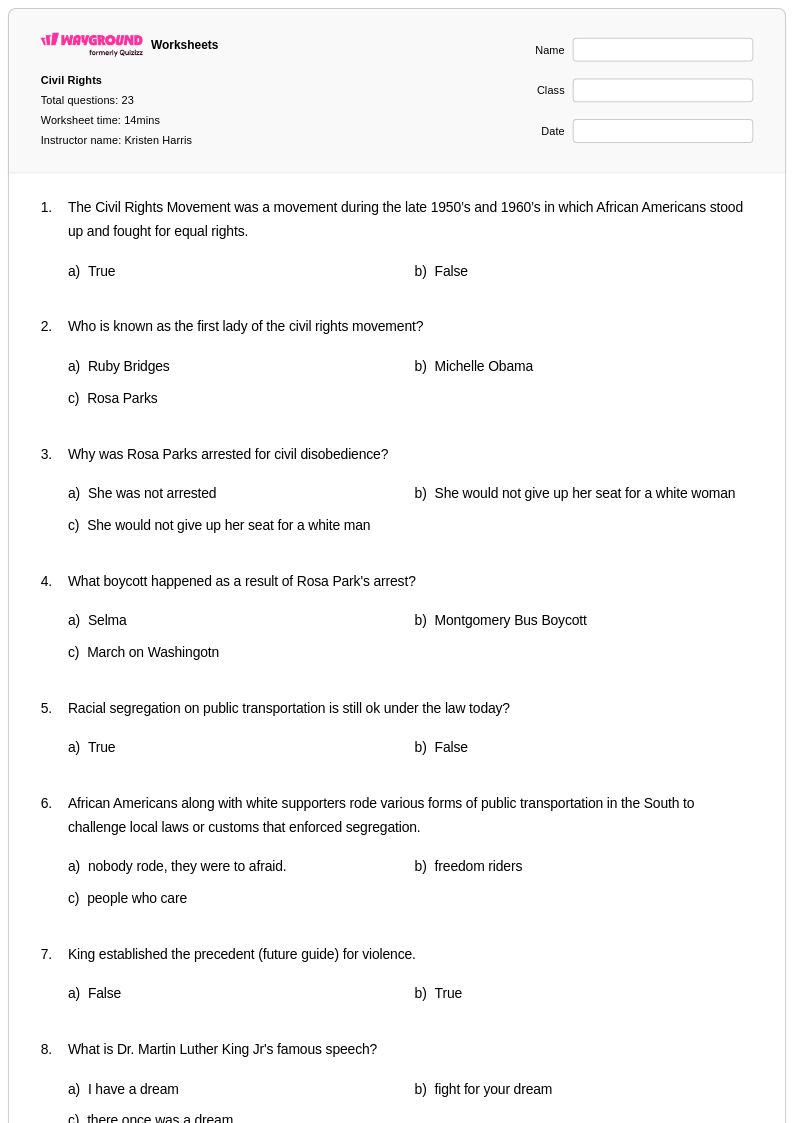
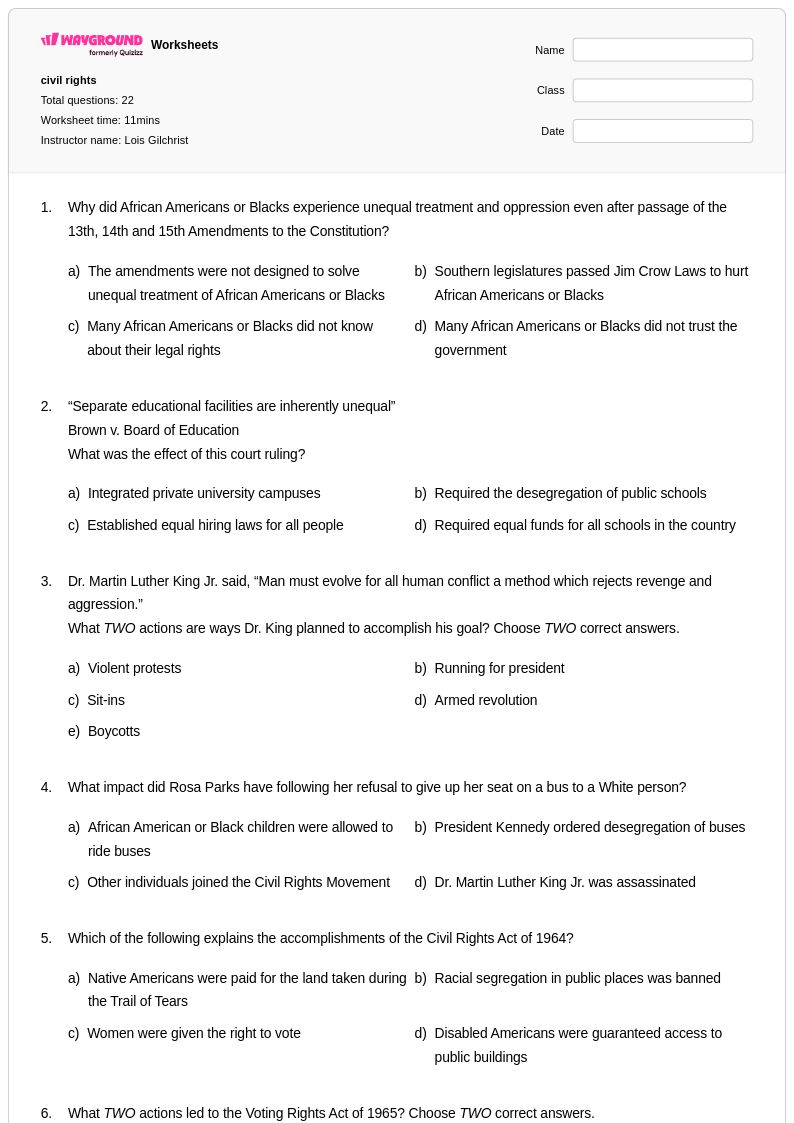
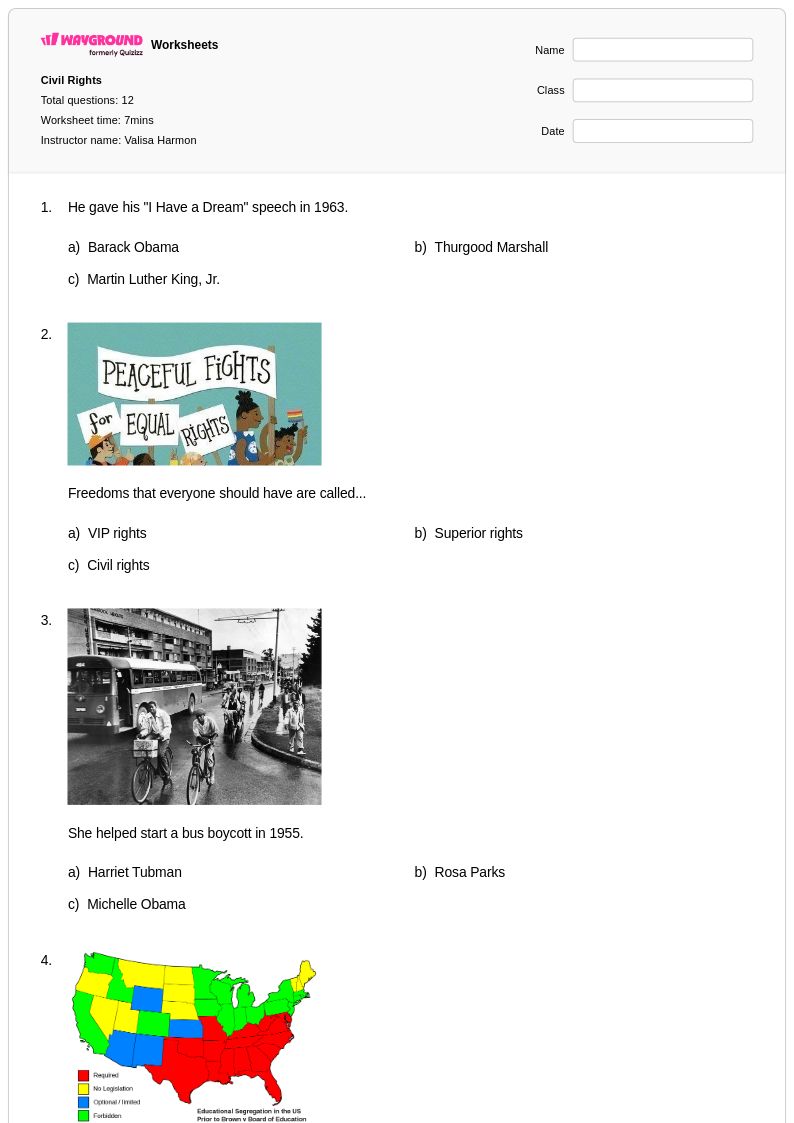
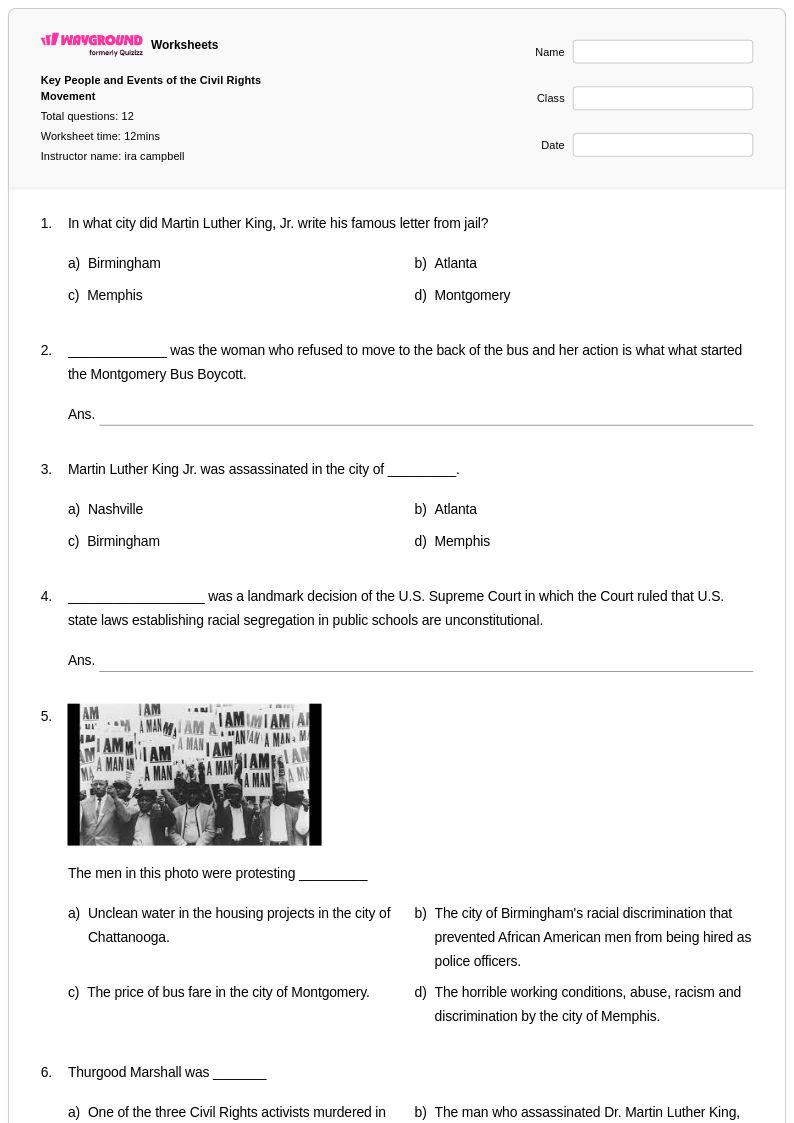
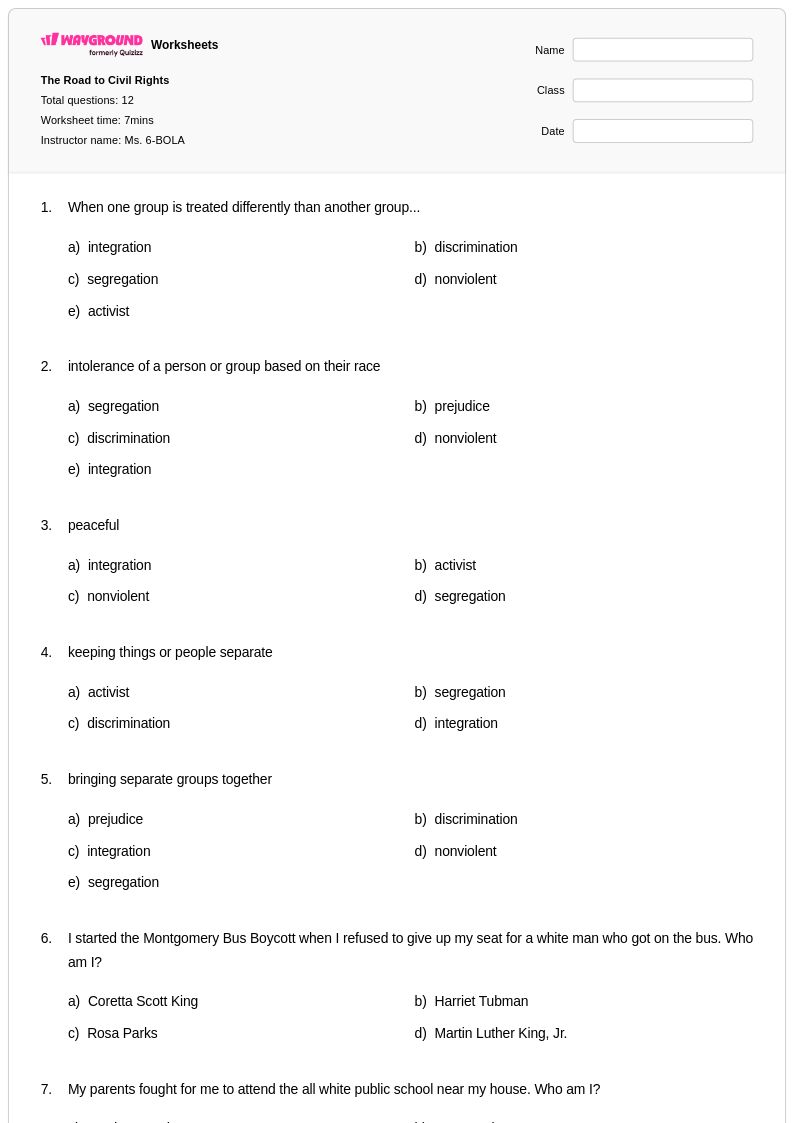
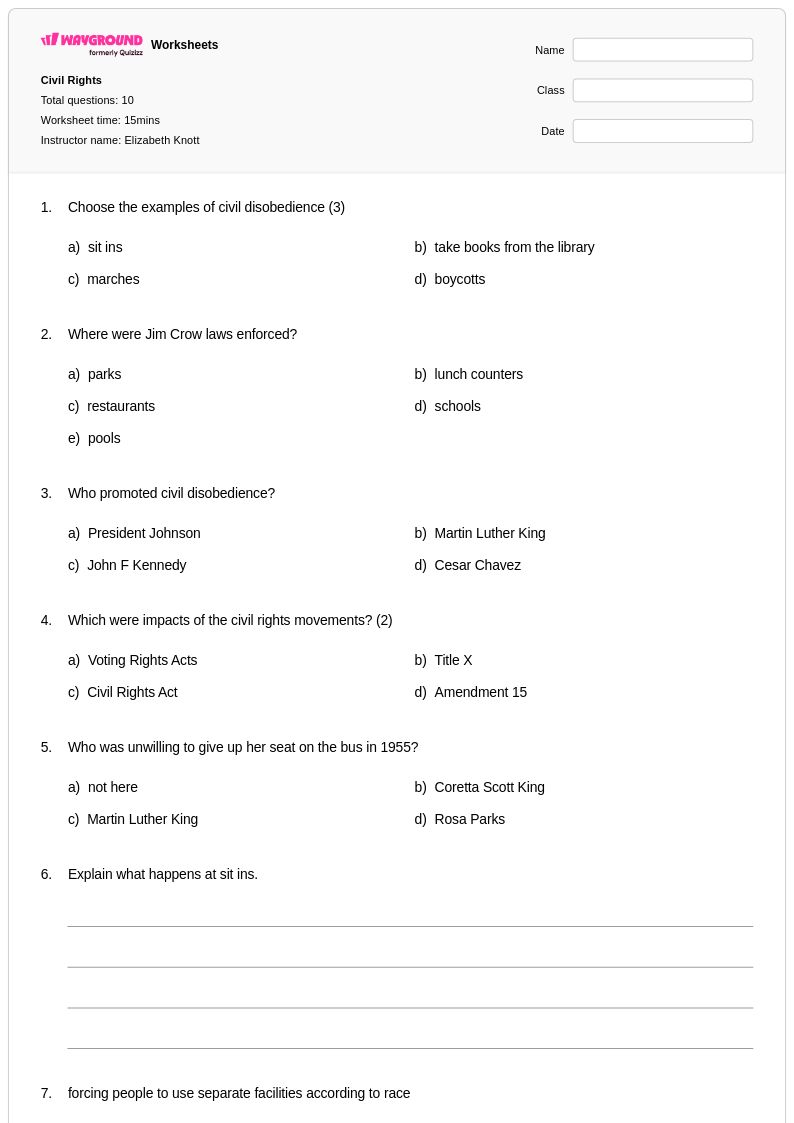
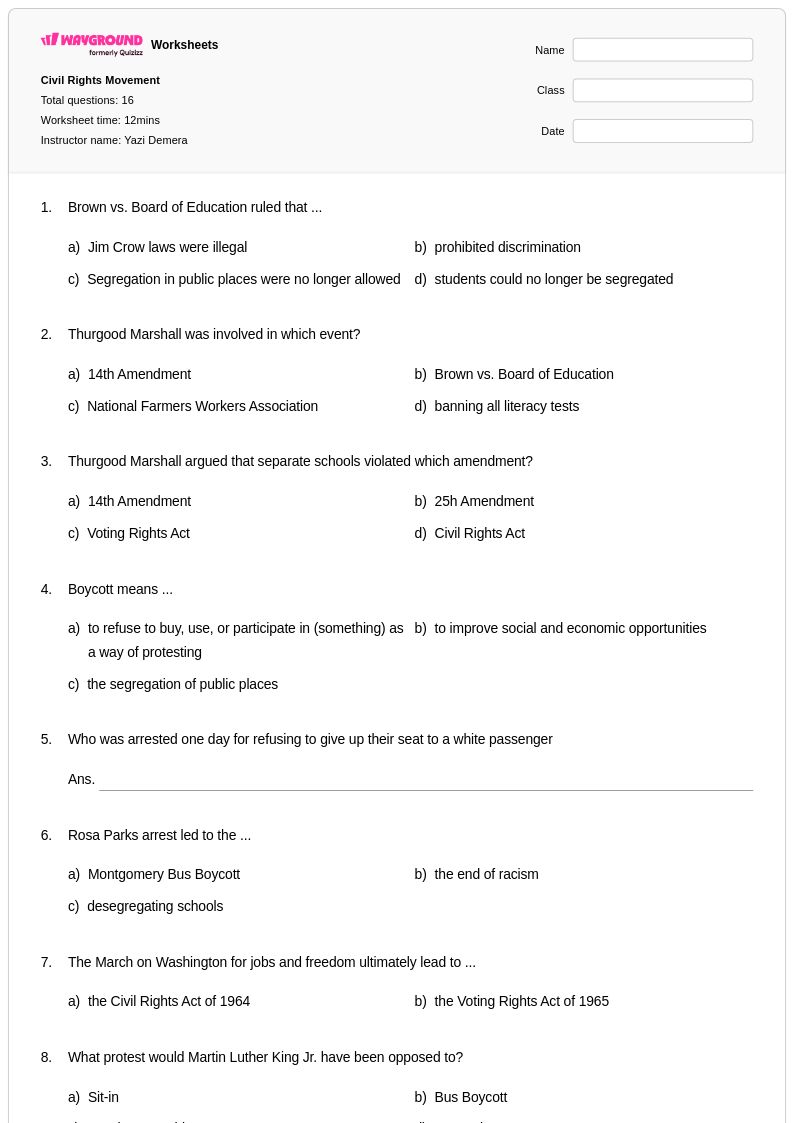
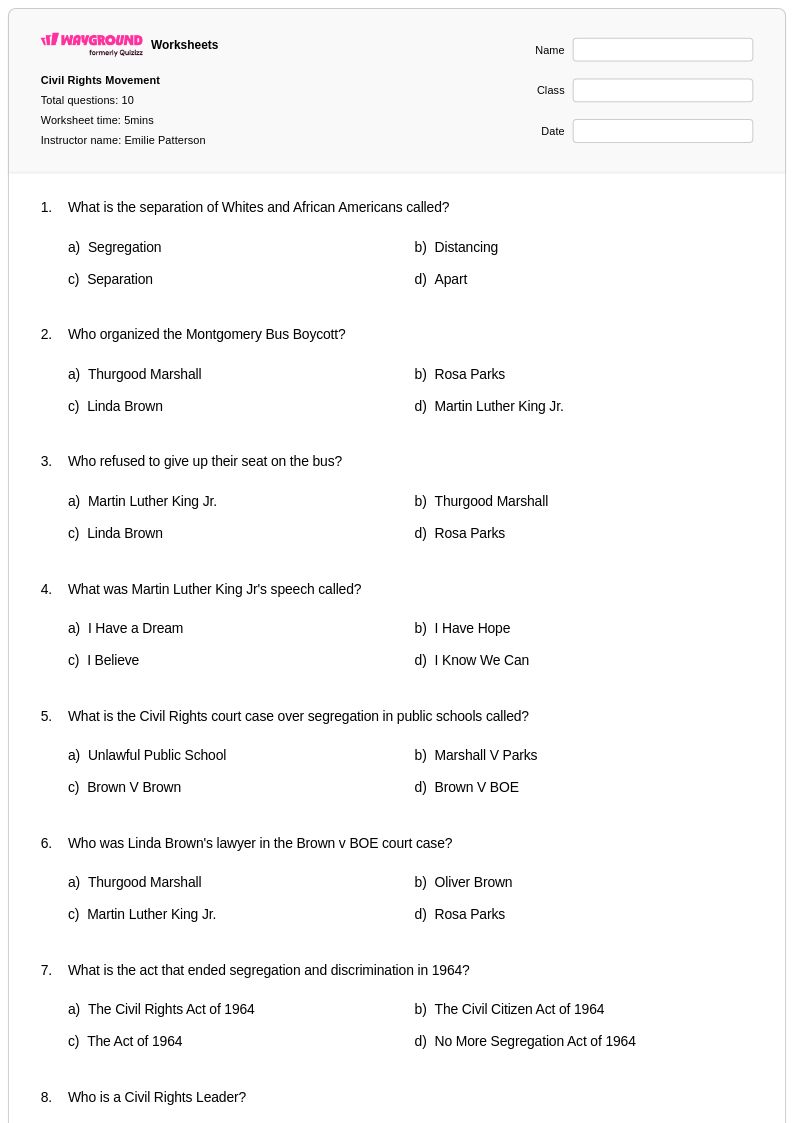
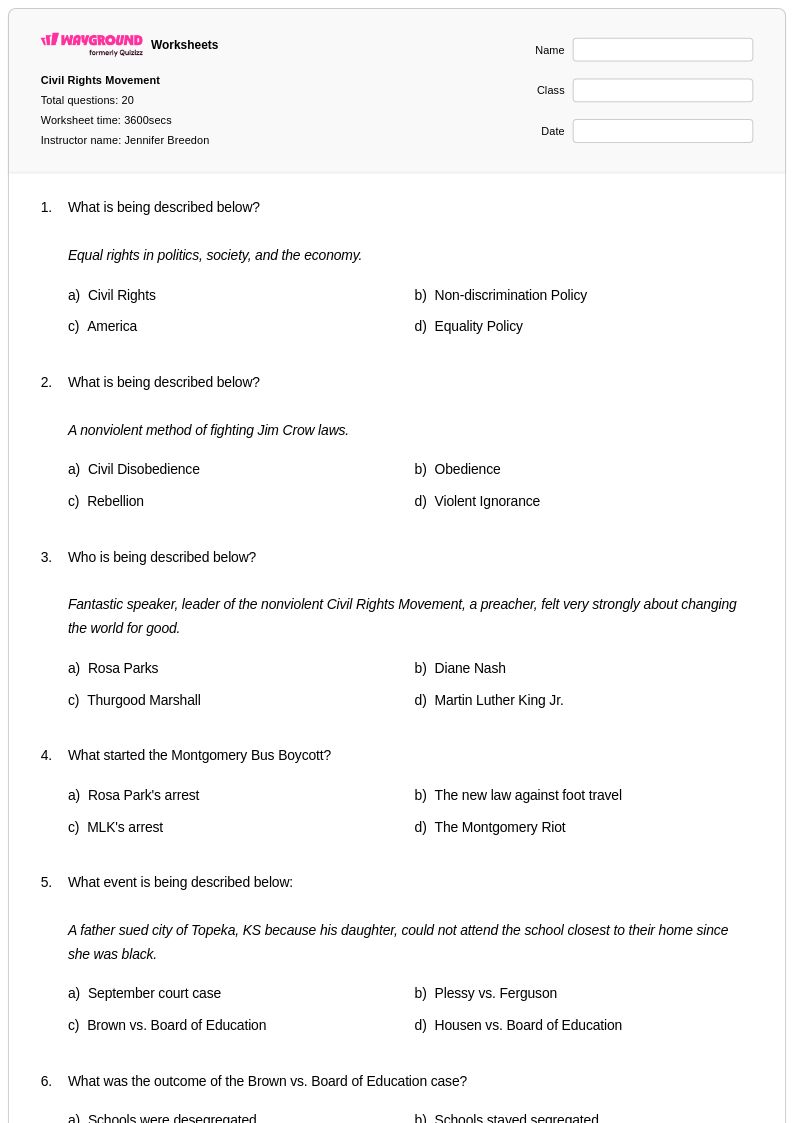
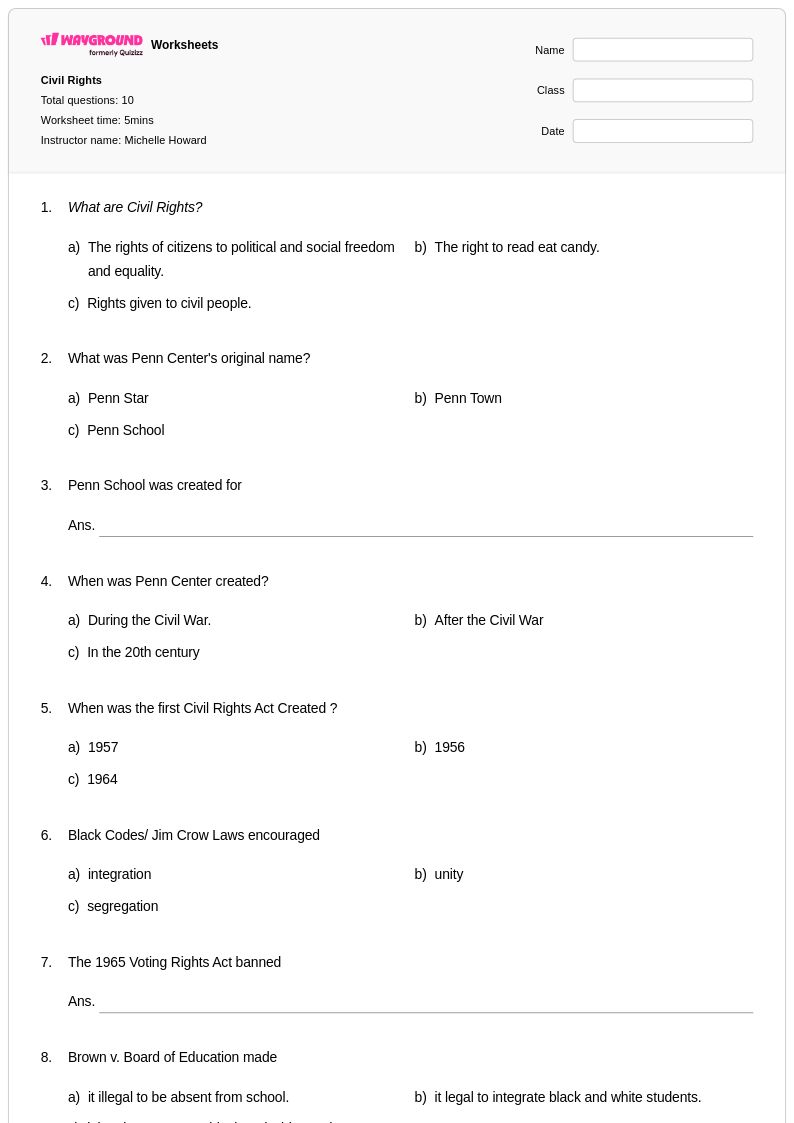
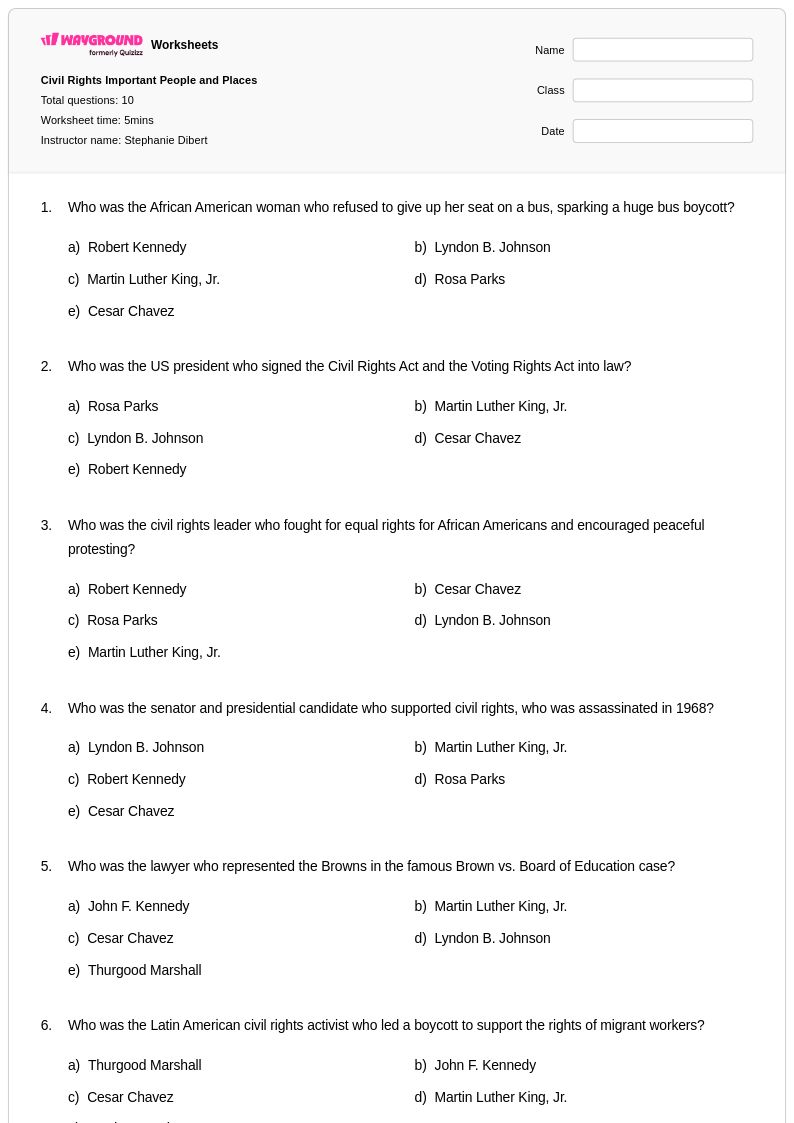
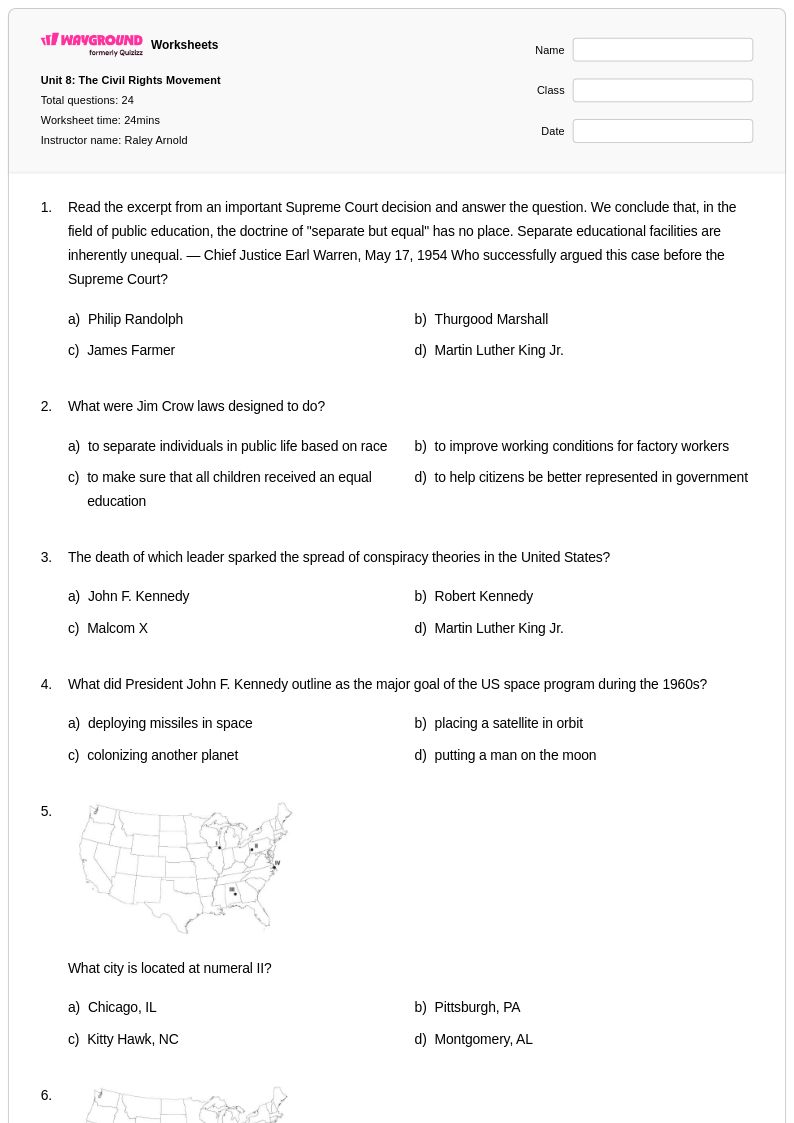
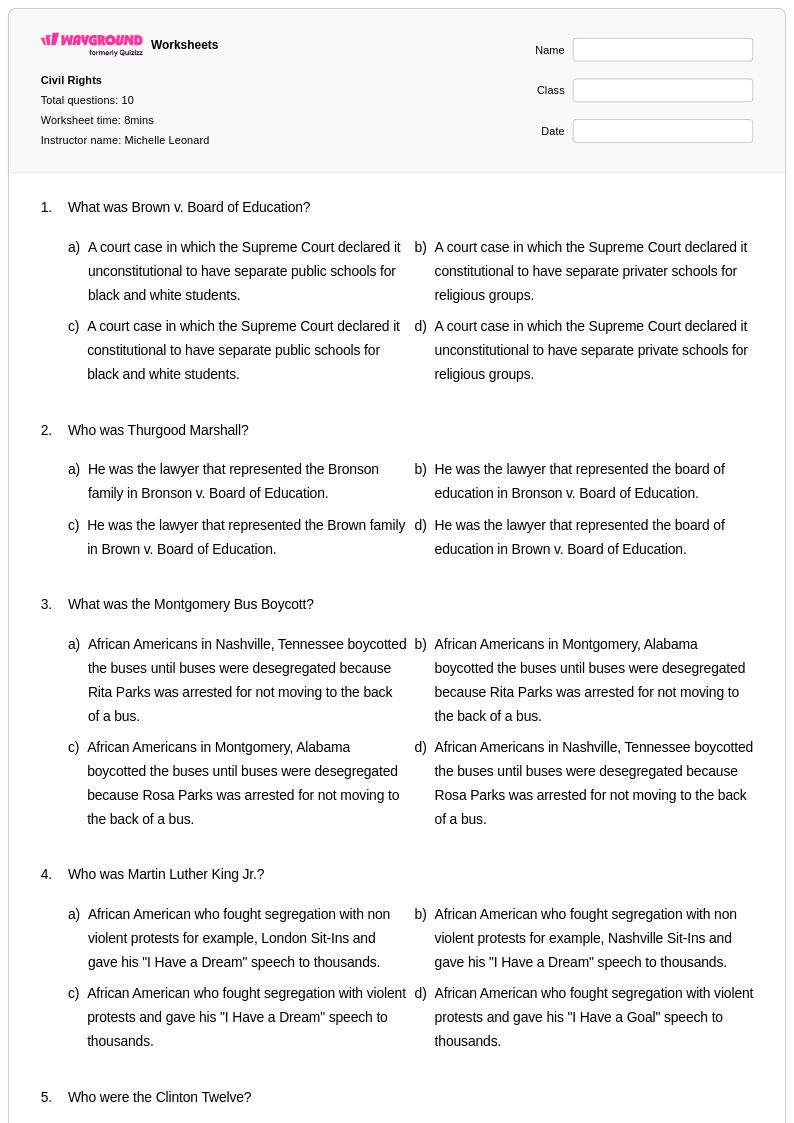
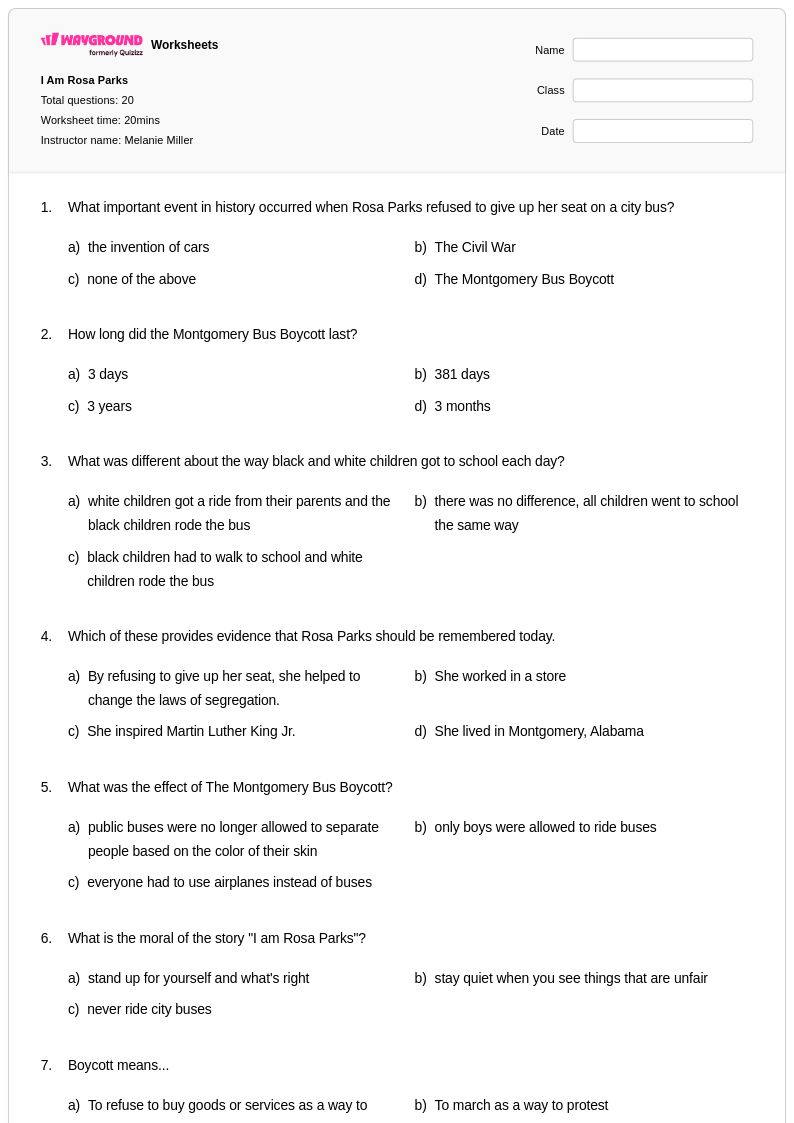
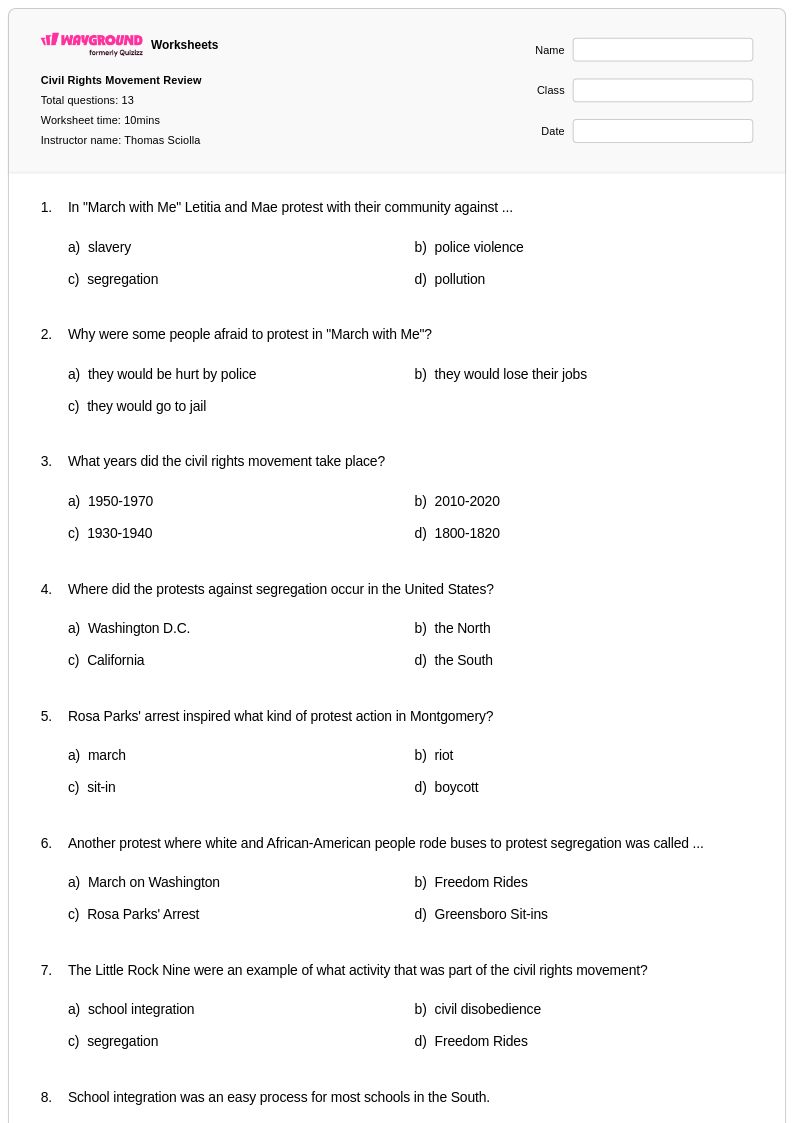
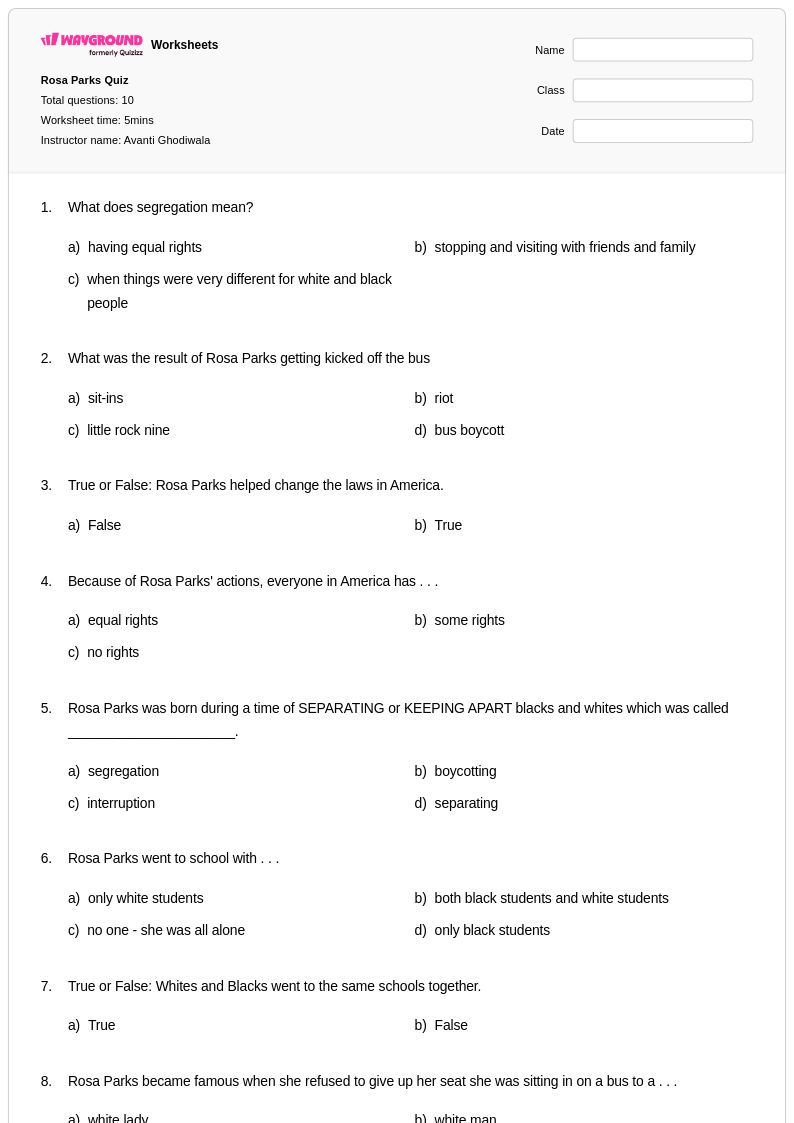
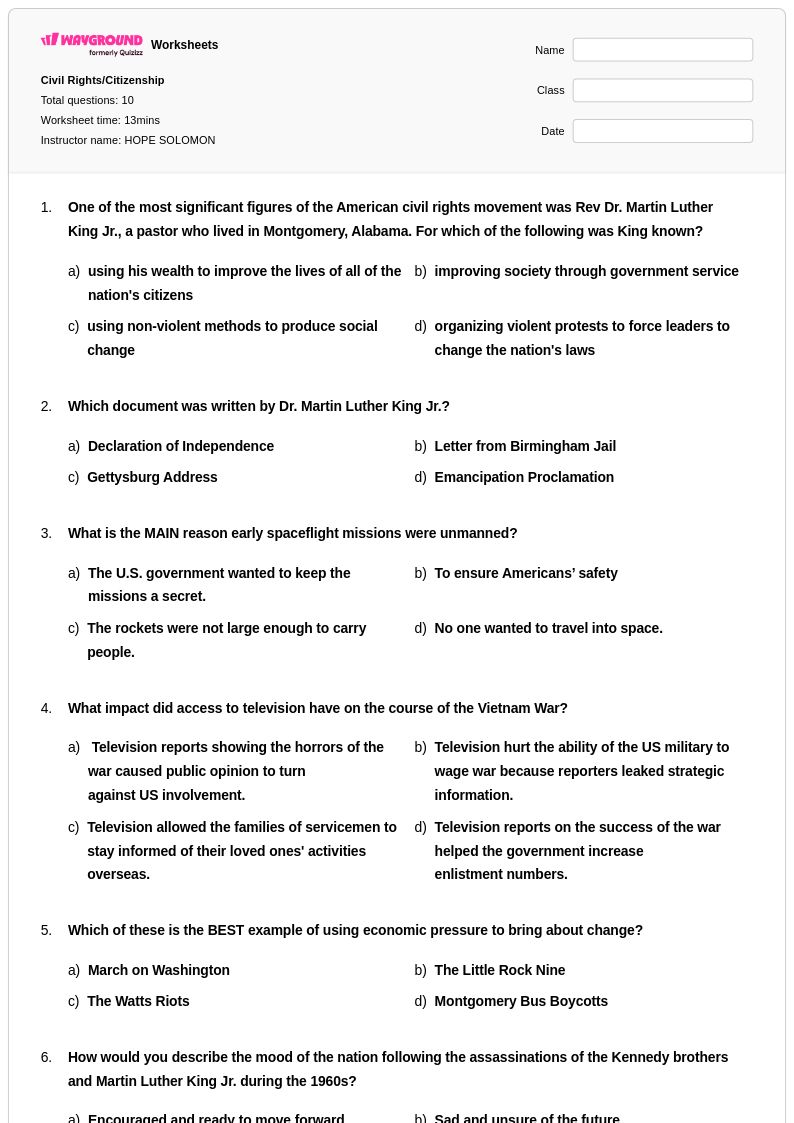
Rosa Parks and Civil Rights worksheets for Class 5 students available through Wayground (formerly Quizizz) provide comprehensive educational resources that explore one of the most pivotal moments in American history. These expertly crafted materials help fifth-grade students understand Rosa Parks' courageous stand against segregation and its profound impact on the Civil Rights Movement, developing critical thinking skills about social justice, historical cause and effect, and the power of individual action in creating societal change. The worksheet collection includes engaging practice problems that challenge students to analyze primary sources, timeline activities, reading comprehension exercises with detailed answer keys, and free printable activities that bring this transformative period to life in age-appropriate ways.
Wayground (formerly Quizizz) empowers teachers with millions of educator-created Rosa Parks and Civil Rights resources that streamline lesson planning and enhance student engagement across diverse learning needs. The platform's robust search and filtering capabilities allow teachers to quickly locate standards-aligned materials that match their specific curriculum requirements, while differentiation tools enable seamless customization for varying skill levels within the same Class 5 classroom. Available in both printable pdf formats and interactive digital versions, these comprehensive worksheet collections support effective remediation for struggling learners, provide enrichment opportunities for advanced students, and offer flexible skill practice options that accommodate different teaching styles and classroom environments, ensuring every student can access this crucial historical content in meaningful ways.
FAQs
How do I teach Rosa Parks and the Civil Rights Movement in a meaningful way?
Effective teaching of Rosa Parks and the Civil Rights Movement goes beyond memorizing dates — it requires students to examine the systemic conditions that made her act of defiance on December 1, 1955, so significant. Start by grounding students in the realities of legal segregation and Jim Crow laws before introducing Rosa Parks' story, so they understand the stakes. From there, use primary source analysis, timeline activities, and cause-and-effect discussions to connect the Montgomery Bus Boycott to the broader momentum of the Civil Rights Movement. Closing lessons by linking historical strategies like nonviolent resistance and grassroots organizing to modern social justice movements helps students see the enduring relevance of this history.
What exercises help students practice their understanding of Rosa Parks and civil rights history?
Students benefit most from exercises that require them to actively analyze rather than passively recall. Timeline sequencing activities, primary source document analysis, and cause-and-effect graphic organizers are particularly effective for this topic because they push students to trace how one event, like Rosa Parks' arrest, triggered a chain of legal and social changes. Practice problems that ask students to connect historical civil rights strategies to contemporary issues deepen comprehension and build critical thinking skills. These types of exercises are especially valuable as homework assignments, review activities, or scaffolded group work.
What misconceptions do students commonly have about Rosa Parks and the Civil Rights Movement?
One of the most common misconceptions is that Rosa Parks acted spontaneously out of physical tiredness, when in fact she was a trained activist with ties to the NAACP whose arrest was a deliberate catalyst for organized protest. Students also frequently underestimate the scale and coordination of the Montgomery Bus Boycott, viewing it as a single event rather than a sustained 381-day campaign. Another common error is treating the Civil Rights Movement as the work of a few heroic individuals rather than a broad coalition sustained by grassroots organizing, legal strategy, and community sacrifice. Addressing these misconceptions directly through analytical exercises strengthens both historical accuracy and critical thinking.
How can I use Rosa Parks and Civil Rights worksheets in my classroom?
Rosa Parks and Civil Rights worksheets on Wayground are available as printable PDFs and in digital formats, making them flexible enough for traditional classroom instruction, independent study, homework assignments, or technology-integrated learning environments. Teachers can also host worksheets as a quiz directly on Wayground, which adds an interactive assessment layer to the material. With complete answer keys included, these resources reduce prep time while supporting skill practice, structured review, or enrichment activities that connect civil rights history to broader social studies standards.
How can I differentiate Rosa Parks and Civil Rights instruction for students with different learning needs?
Differentiation for this topic can involve adjusting the complexity of source documents, scaffolding analytical questions, or modifying how students demonstrate understanding. On Wayground, teachers can apply student-level accommodations such as read aloud support for students who need text read to them, reduced answer choices to lower cognitive load, and extended time settings configurable per student. These accommodations can be assigned to individual students while the rest of the class receives default settings, and they are saved for reuse across future sessions. This makes it practical to support diverse learners, including English language learners and students with IEPs, without creating entirely separate lesson materials.
How do I connect Rosa Parks and civil rights history to current events in a classroom discussion?
The most effective bridge between Rosa Parks' era and today is through the strategies of the Civil Rights Movement itself — nonviolent protest, legal challenges to unjust laws, and community organizing are tactics that continue to shape modern social justice movements. Ask students to identify a current civil rights issue and research whether any of the same tactics used during the Montgomery Bus Boycott are being applied today. This type of analytical exercise not only deepens historical understanding but also builds the critical thinking and civic literacy skills that social studies standards prioritize across grade levels.