Free Printable Business Organizations Worksheets for Class 9
Explore Class 9 business organizations with Wayground's free worksheets and printables, featuring practice problems and answer keys that help students master different types of business structures and their characteristics.
Explore printable Business Organizations worksheets for Class 9
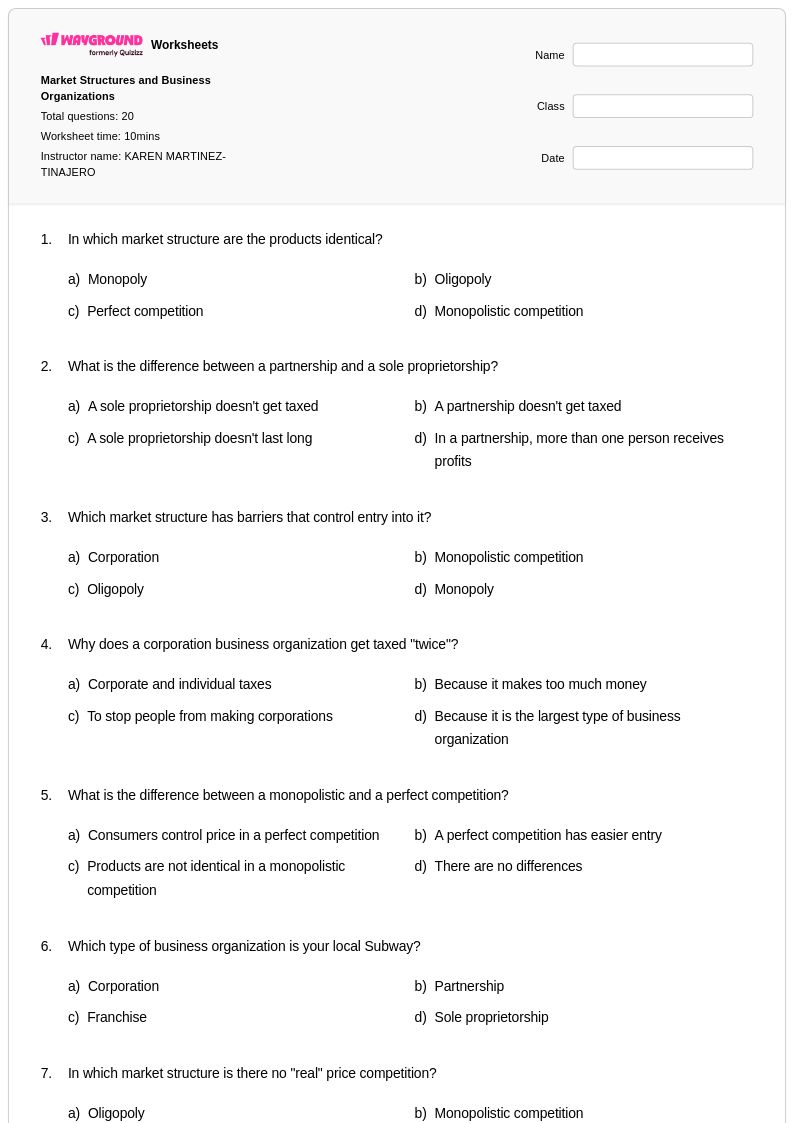
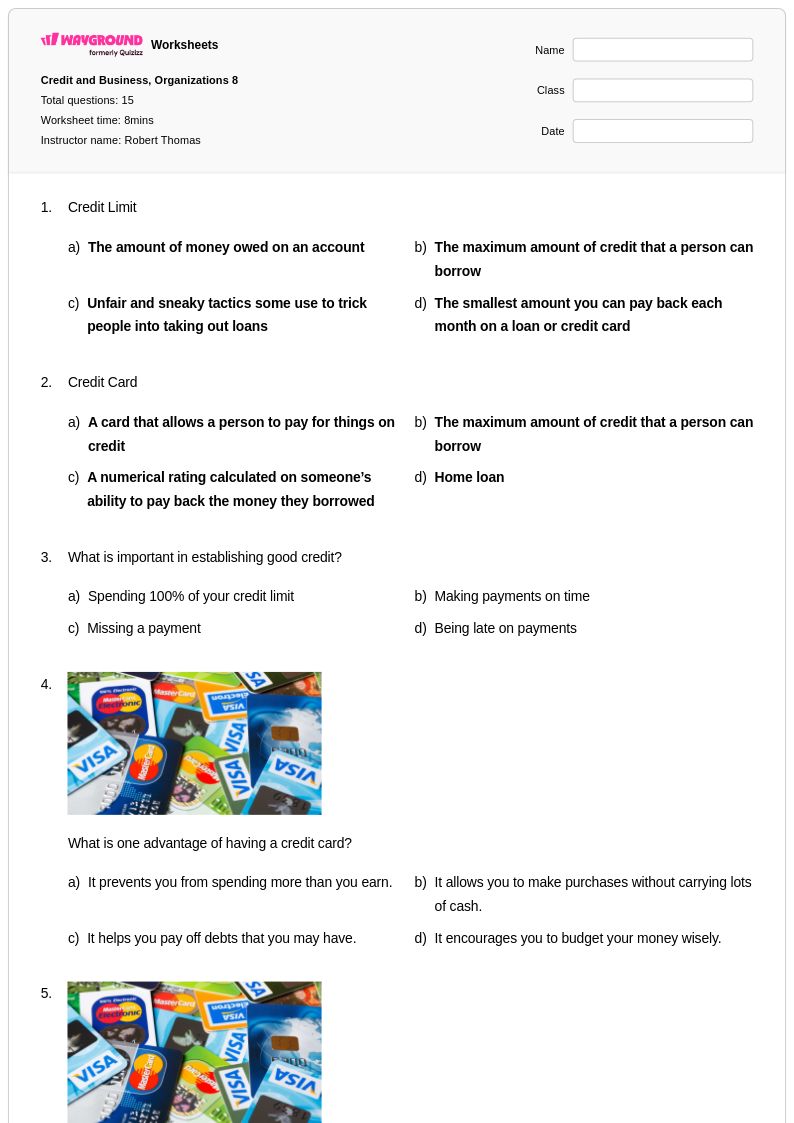
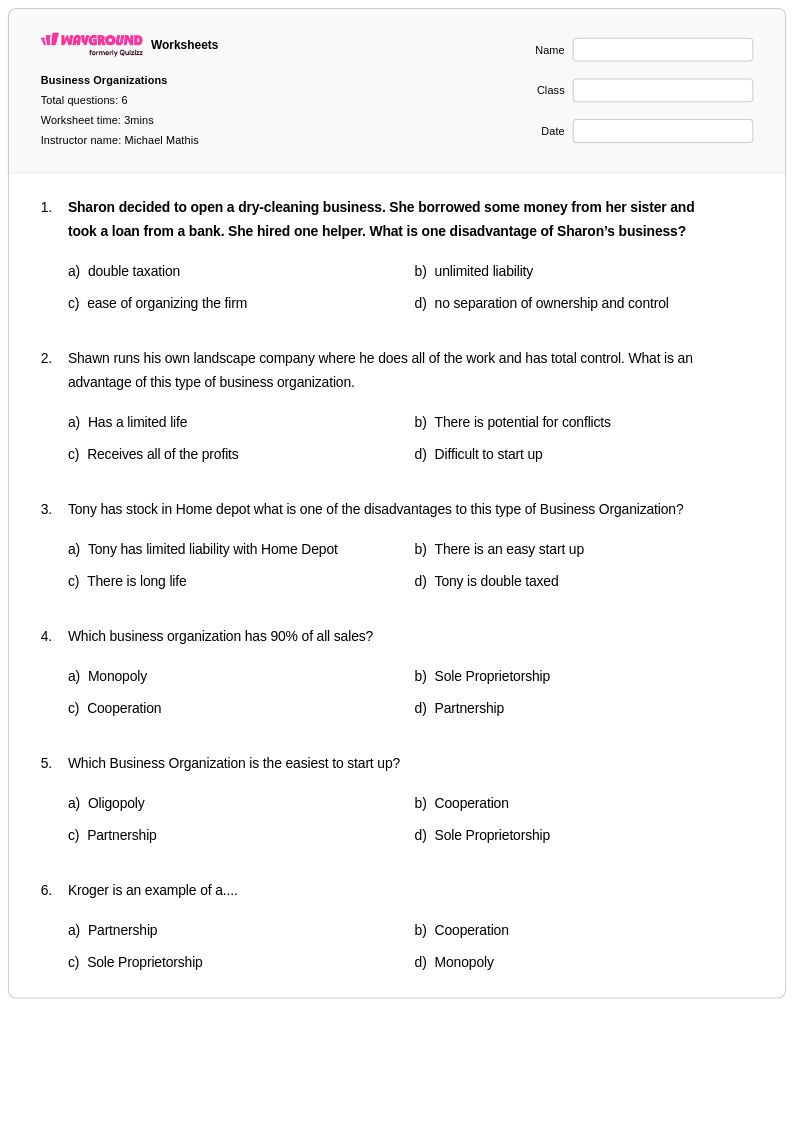
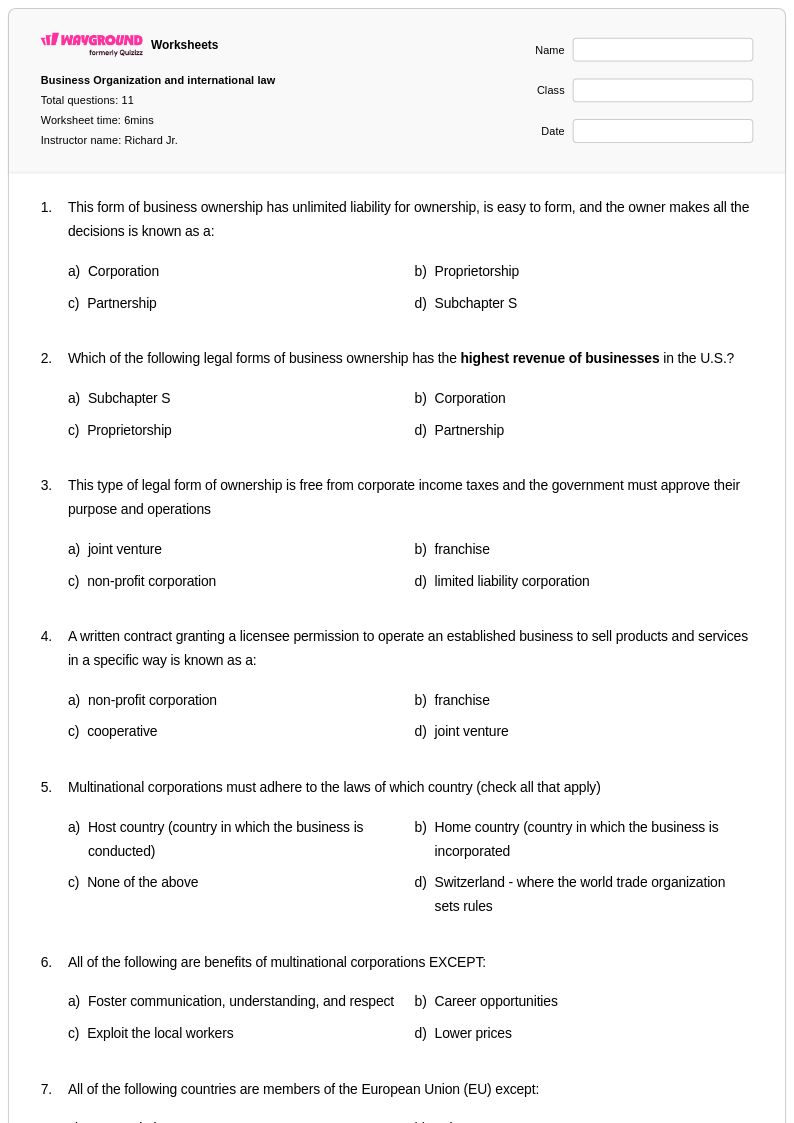
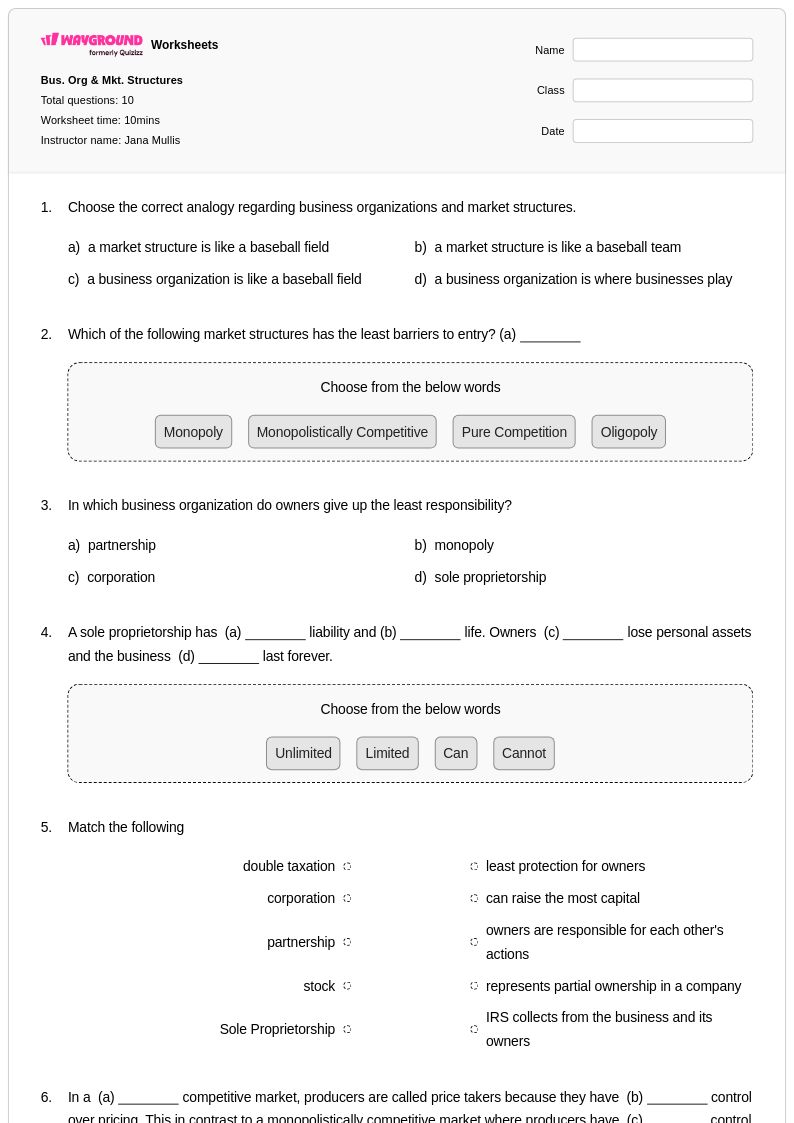
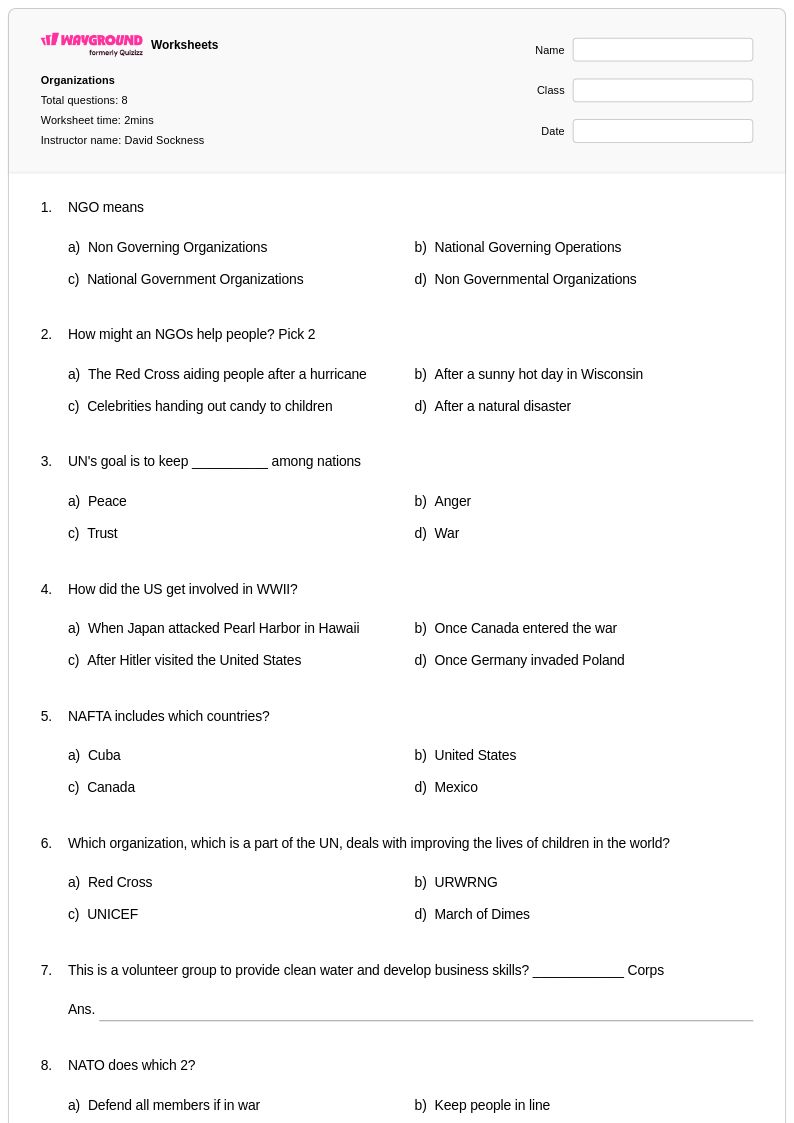
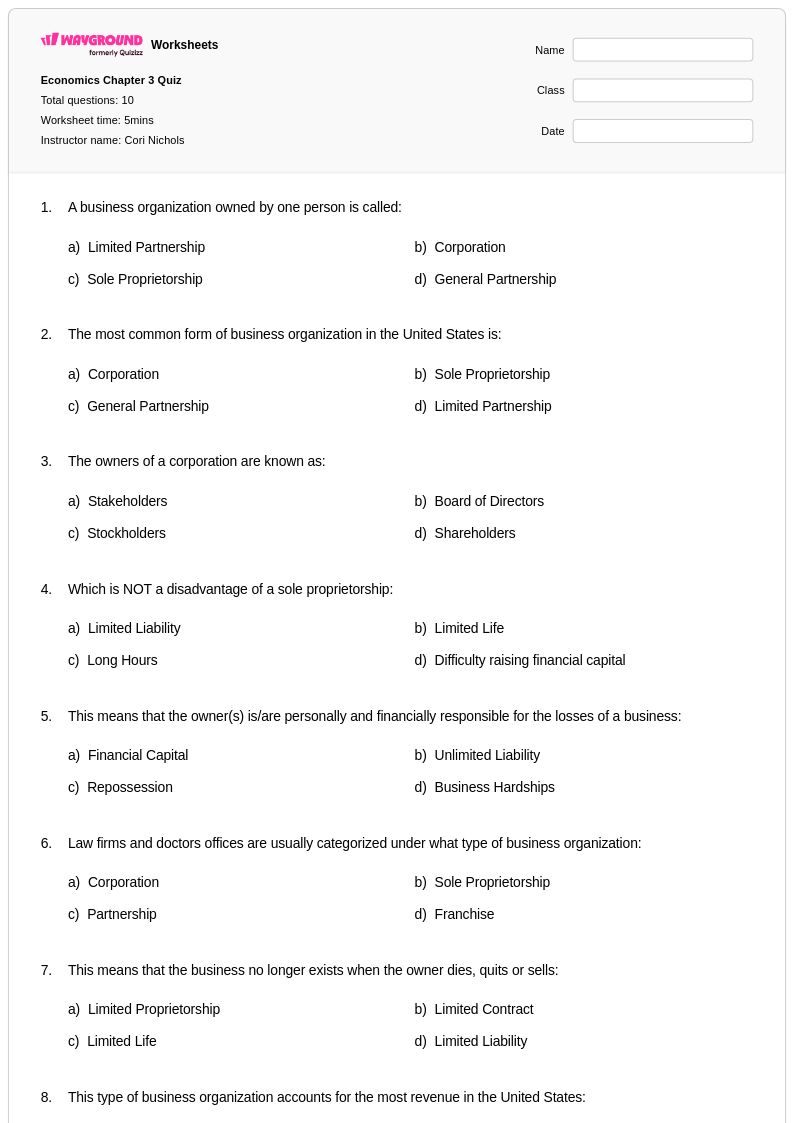
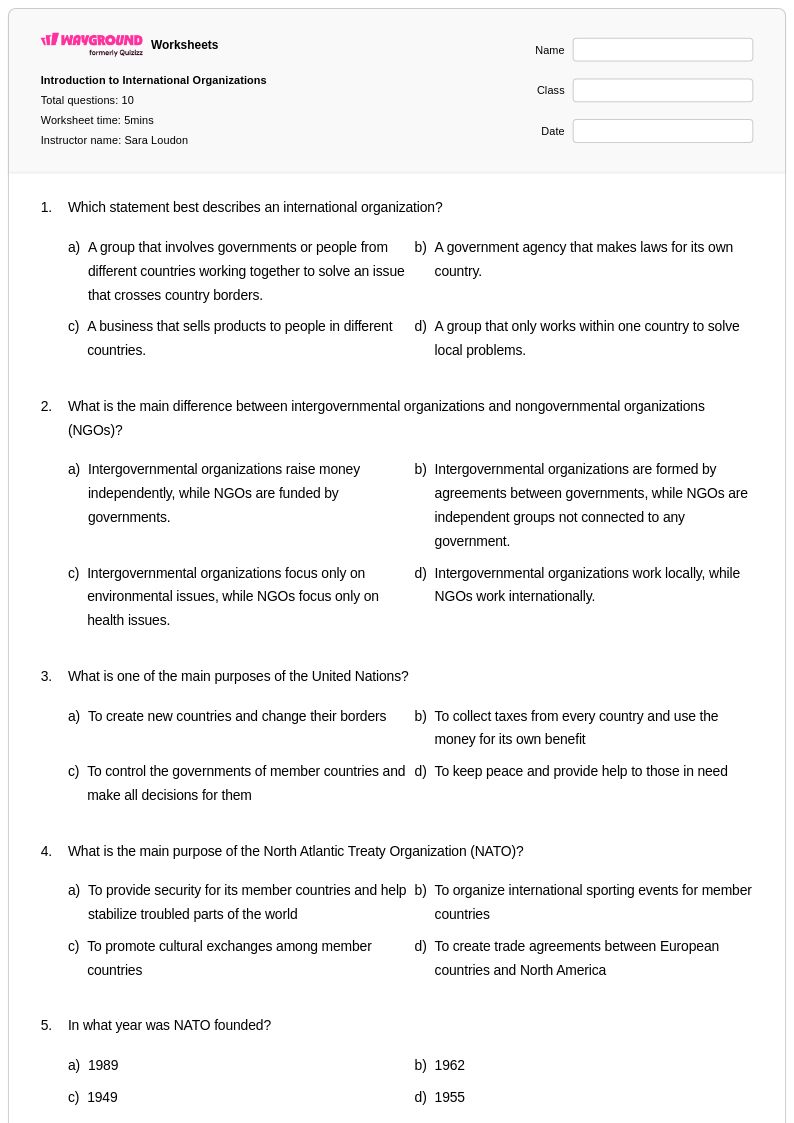
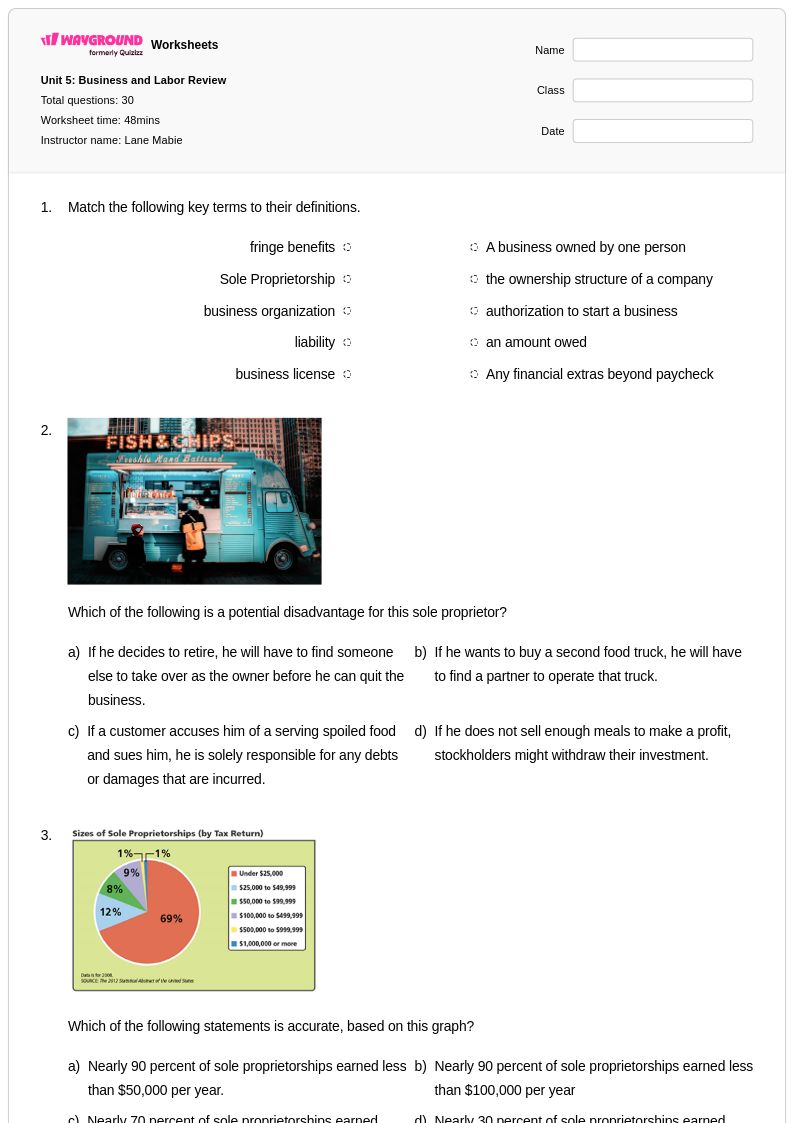
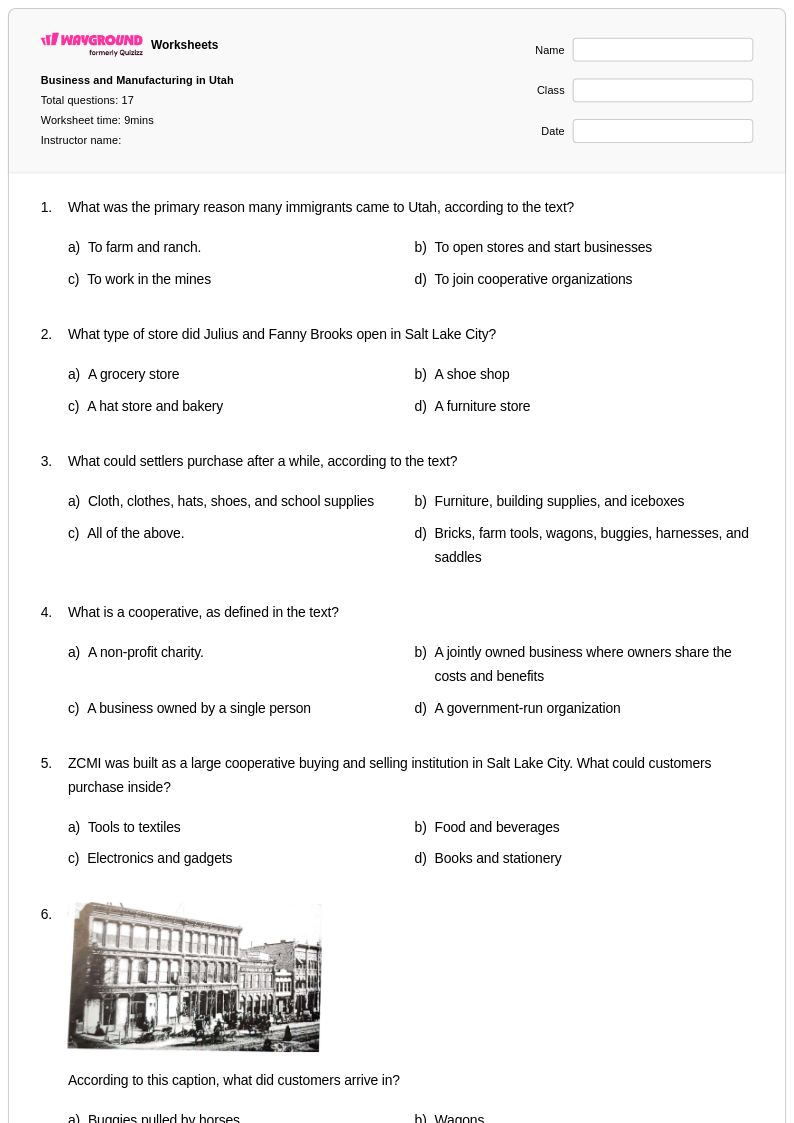
Business organizations worksheets for Class 9 students provide comprehensive practice with the fundamental structures and operations that drive modern economies. These educational resources help students master key concepts including sole proprietorships, partnerships, corporations, and limited liability companies while developing critical thinking skills about entrepreneurship, business ownership, and organizational decision-making. The worksheets feature practice problems that challenge students to analyze real-world business scenarios, compare different organizational structures, and evaluate the advantages and disadvantages of various business models. Each worksheet comes with a detailed answer key to support independent learning and self-assessment, and teachers can access both printable pdf versions and digital formats to accommodate diverse classroom needs. These free resources strengthen students' understanding of how businesses function within economic systems while building essential analytical skills for advanced social studies coursework.
Wayground (formerly Quizizz) empowers educators with millions of teacher-created business organizations worksheets specifically designed for Class 9 social studies instruction. The platform's robust search and filtering capabilities allow teachers to quickly locate resources that align with specific curriculum standards and learning objectives, while differentiation tools enable customization for students with varying skill levels and learning needs. Teachers can easily modify existing worksheets or create new ones to target specific aspects of business organizations, from basic partnership agreements to complex corporate governance structures. The platform supports both remediation for struggling learners and enrichment activities for advanced students, providing flexible options for skill practice and assessment. With seamless integration of printable and digital formats, including downloadable pdf versions, educators can efficiently plan lessons that engage students in meaningful exploration of how business organizations shape economic activity and entrepreneurial opportunities in their communities and beyond.
FAQs
How do I teach the different types of business organizations to students?
Start by establishing a clear framework: sole proprietorships, partnerships, corporations, and limited liability companies each have distinct ownership structures, liability profiles, and tax implications. Use side-by-side comparison charts to help students visualize the differences before moving into case studies or scenario-based problems. Grounding each structure in a real-world business example — a local restaurant versus a publicly traded company — makes abstract concepts concrete and memorable.
What exercises help students practice comparing business structures?
Scenario-based practice is most effective: present students with a fictional entrepreneur and ask them to select and justify the most appropriate business structure given factors like investment needs, liability tolerance, and number of owners. Decision-tree activities, pros-and-cons charts, and matching exercises that pair business characteristics to their correct entity type all reinforce the analytical thinking this topic demands. Practice problems that incorporate real-world trade-offs — such as unlimited liability in a sole proprietorship versus the double taxation of a C-corporation — push students beyond memorization.
What mistakes do students commonly make when learning about business organizations?
Students frequently conflate limited liability with zero liability, assuming that forming an LLC or corporation fully protects owners in all circumstances. Another common error is treating partnerships as informally identical to sole proprietorships, overlooking the legal and financial obligations shared partners hold. Students also tend to memorize definitions without understanding why a business owner would choose one structure over another, which limits their ability to apply concepts in new scenarios.
How can I use business organizations worksheets to support students with different learning needs?
Business organizations worksheets on Wayground can be assigned digitally, which opens access to built-in accommodation tools. Teachers can enable Read Aloud for students who benefit from audio support, reduce answer choices for students who need less cognitive load on multiple-choice questions, and grant extended time to individual students without affecting the rest of the class. These settings are saved per student and apply automatically in future sessions, making differentiation practical rather than labor-intensive.
How do I use Wayground's business organizations worksheets in my classroom?
Wayground's business organizations worksheets are available as printable PDFs for traditional classroom use and in digital formats for technology-integrated environments. Teachers can assign them as independent practice, use them to structure a lesson sequence moving from sole proprietorships to corporations, or host them as a quiz directly on Wayground to collect student responses and review performance. Both formats include detailed answer keys, making them practical for self-paced learning, homework, or guided class review.
How do business organizations fit into a social studies or economics curriculum?
Business organizations is a core unit in economics and personal finance courses, typically introduced in middle or high school when students begin examining how market economies function. The topic connects directly to broader concepts such as entrepreneurship, capital investment, labor, and consumer decision-making. In social studies contexts, understanding business structures also supports civic literacy — helping students grasp how corporations are regulated, how employment works, and how economic entities interact with government and law.