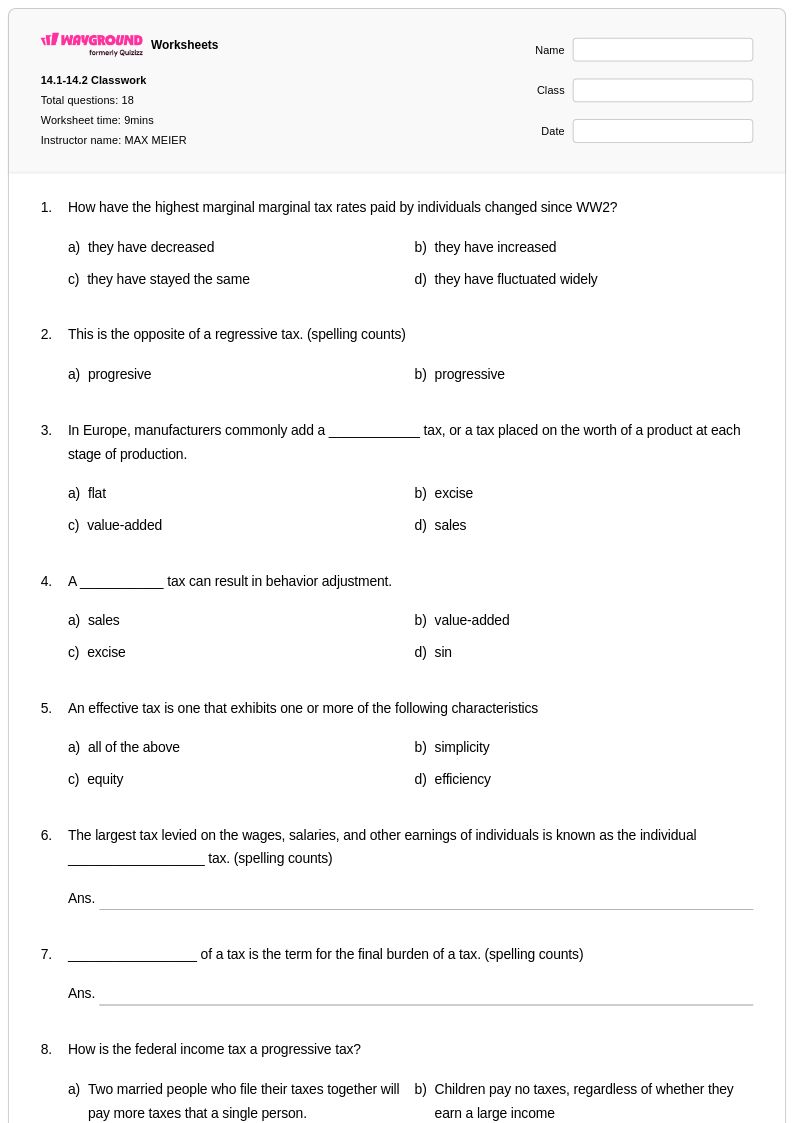
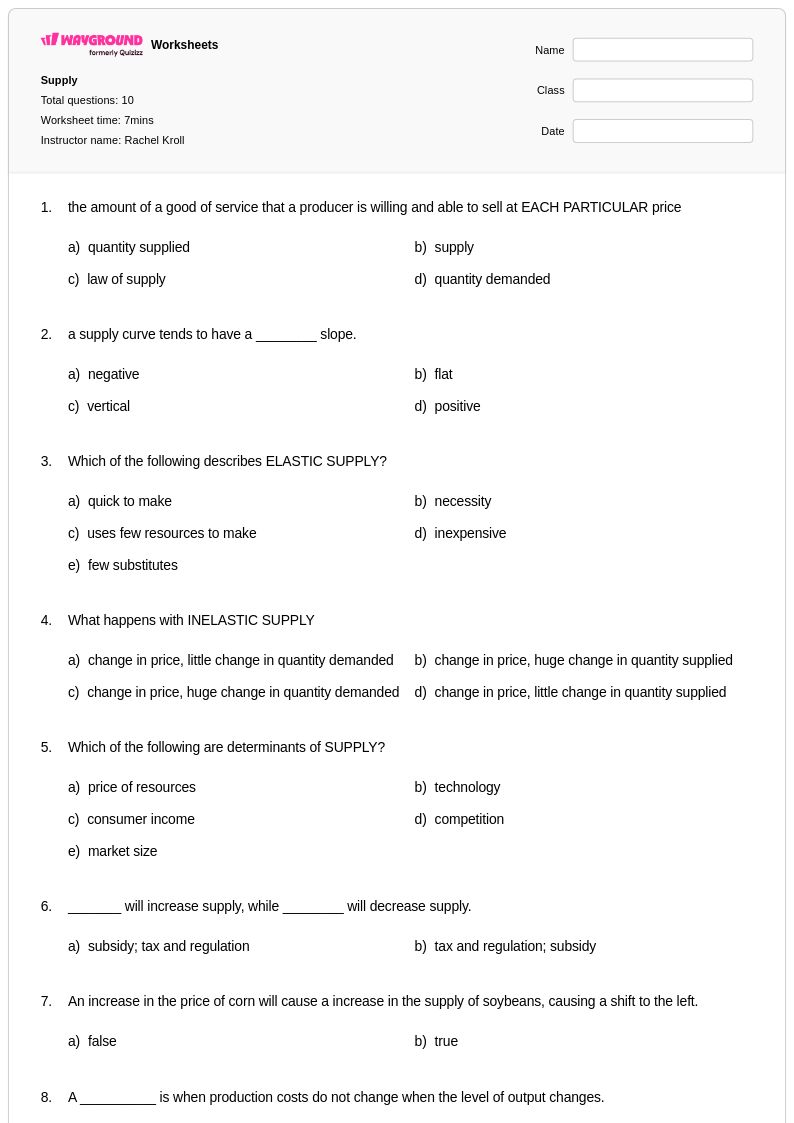
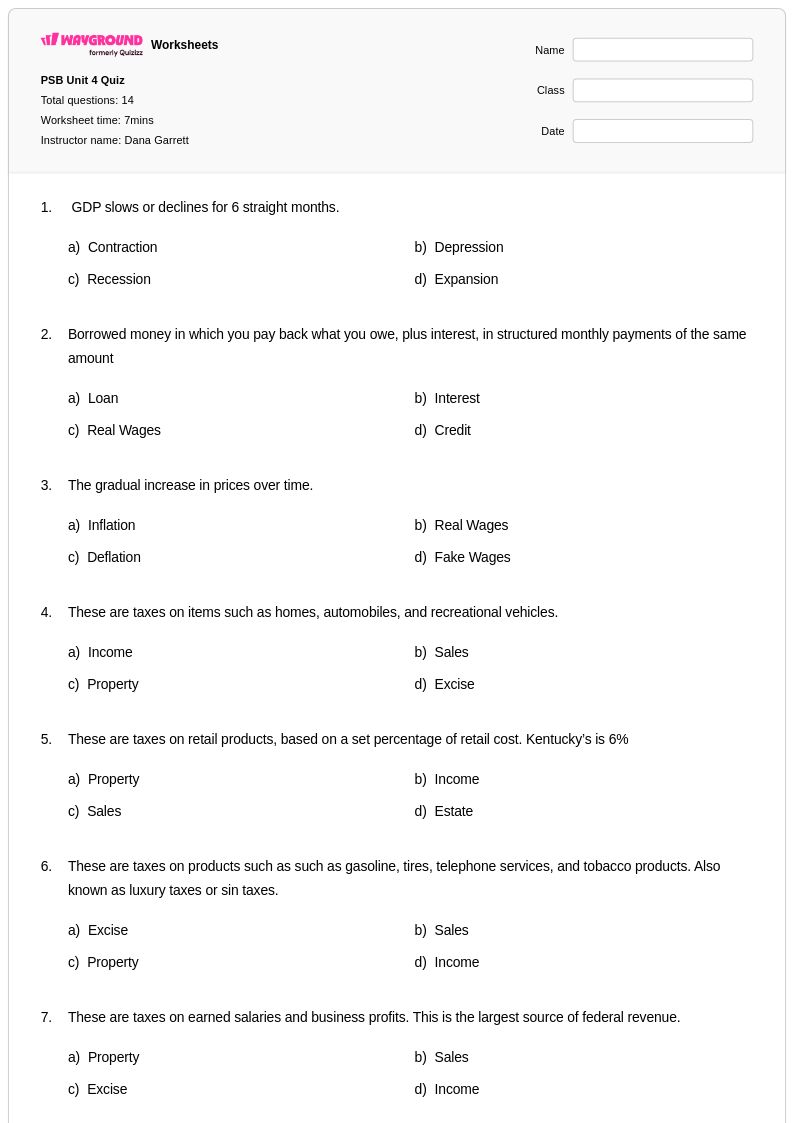
Free Printable Wages and Salaries Worksheets for Class 9
Class 9 wages and salaries worksheets from Wayground help students explore compensation structures through engaging printables and practice problems, complete with answer keys for effective economics learning.
Explore printable Wages and Salaries worksheets for Class 9
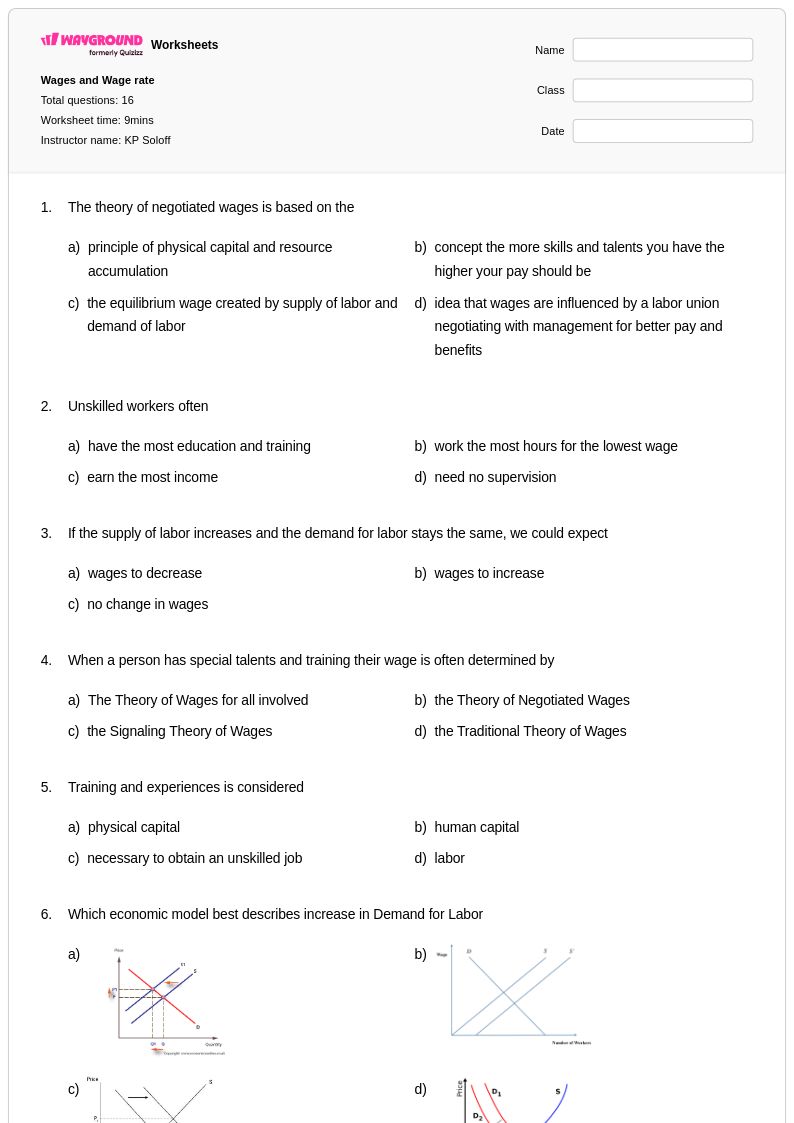
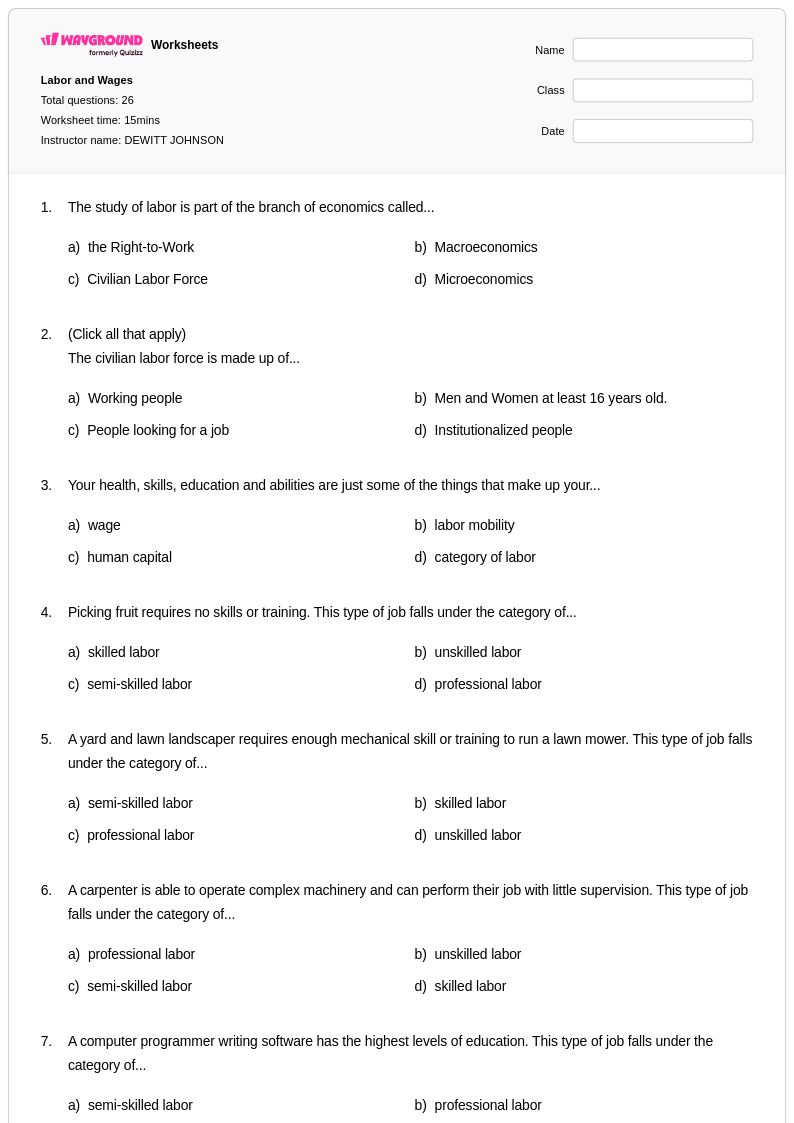
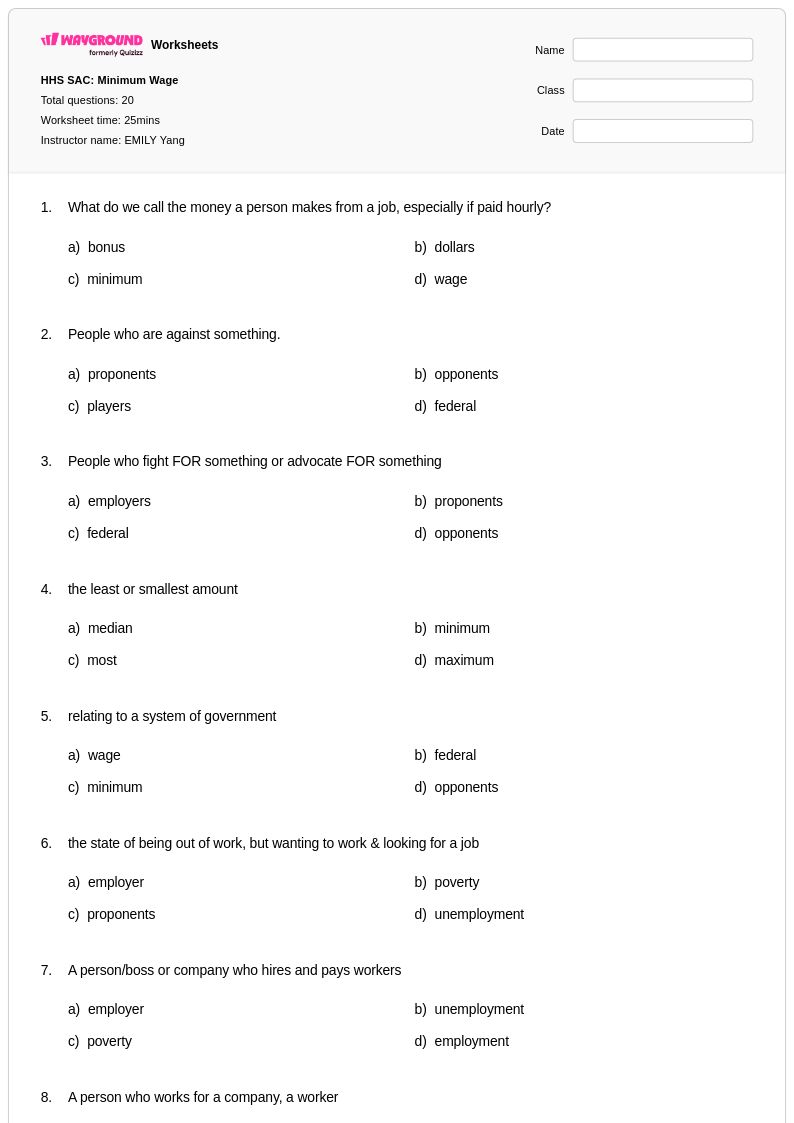
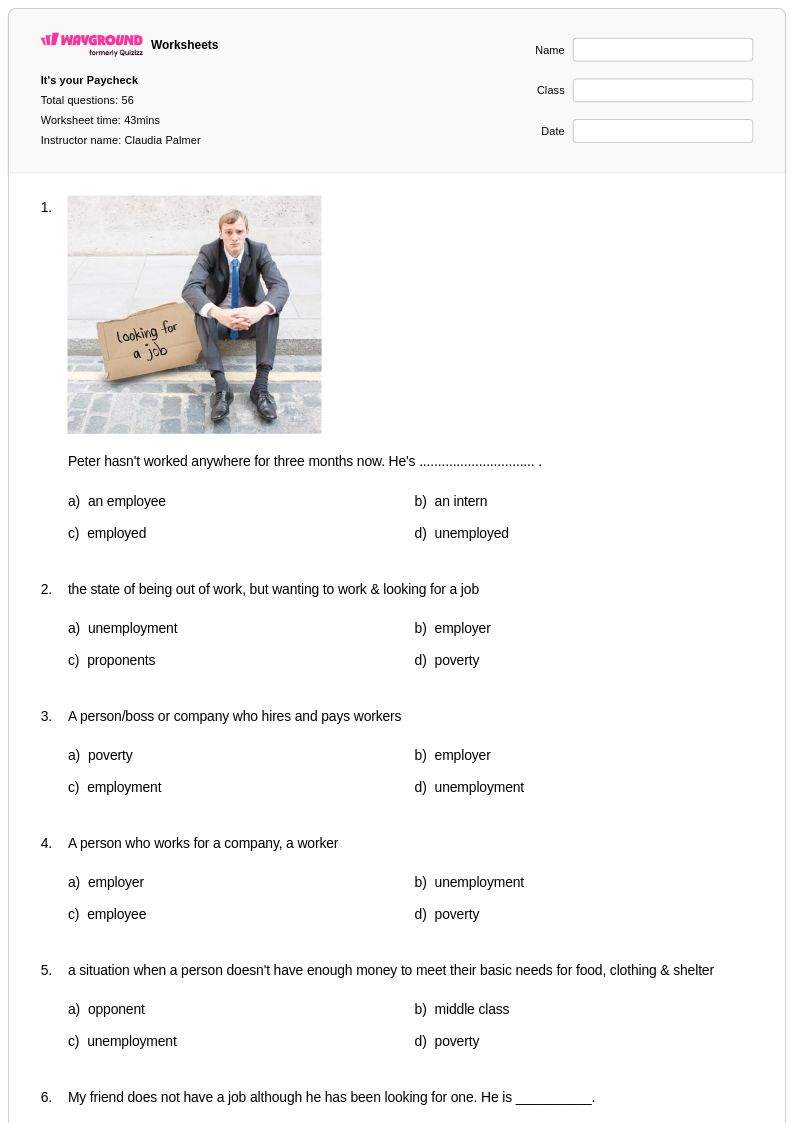
Wages and salaries represent fundamental concepts in Class 9 economics education, forming the cornerstone of students' understanding of labor markets, compensation structures, and economic decision-making. Wayground's comprehensive collection of wages and salaries worksheets provides educators with expertly crafted materials that guide students through essential topics including hourly versus salaried compensation, gross and net pay calculations, payroll deductions, minimum wage legislation, and the factors that influence earning potential across different industries and skill levels. These practice problems strengthen critical analytical skills as students learn to calculate take-home pay, compare compensation packages, and evaluate the economic implications of various employment arrangements. Each worksheet includes detailed answer keys and is available as free printable resources, enabling teachers to seamlessly integrate these materials into their economics curriculum while providing students with structured opportunities to master complex wage and salary calculations.
Wayground's extensive library, featuring millions of teacher-created resources, empowers educators to locate precisely targeted wages and salaries materials through robust search and filtering capabilities that align with state economics standards and Class 9 learning objectives. The platform's differentiation tools allow teachers to customize worksheets for varying skill levels, ensuring that struggling students receive additional scaffolding while advanced learners encounter enrichment activities that deepen their understanding of labor economics. Whether delivered in traditional printable format or as interactive digital assignments, these resources support comprehensive lesson planning by offering flexibility for both classroom instruction and independent practice. Teachers can efficiently address skill gaps through targeted remediation exercises, reinforce key concepts through varied problem sets, and assess student mastery of wages and salaries concepts using materials specifically designed to meet the developmental needs of ninth-grade economics students.
FAQs
How do I teach students the difference between wages and salaries?
Start by contrasting the two compensation structures directly: wages are hourly and variable based on hours worked, while salaries are fixed annual amounts paid regardless of hours. Use real-world examples such as a retail worker earning $15 per hour versus a teacher on a $50,000 annual contract. Once students grasp the distinction, introduce related concepts like overtime eligibility, which typically applies to hourly workers but not salaried employees, to deepen their understanding of why the difference matters in practice.
What exercises help students practice calculating gross and net pay?
Practice problems that present realistic pay scenarios are the most effective approach. Give students a set hourly rate and number of hours worked, then require them to calculate gross pay, apply deductions such as federal tax, Social Security, and health insurance, and arrive at net pay. Analyzing sample pay stubs is particularly valuable because it forces students to interpret each line item rather than simply perform isolated arithmetic, which mirrors what they will encounter in real employment.
What mistakes do students commonly make when calculating overtime pay?
The most frequent error is applying the overtime rate to all hours worked rather than only the hours exceeding 40 in a week. Students also often forget to use 1.5 times the regular hourly rate when computing overtime, defaulting instead to the base rate. A third common mistake is confusing gross pay with net pay after overtime is added, overlooking that additional earnings also increase the amount subject to tax withholding.
How can I use wages and salaries worksheets to build financial literacy skills?
Wages and salaries worksheets build financial literacy by connecting abstract economic concepts to decisions students will face as adults. Use pay stub analysis activities to teach students how to read deduction categories, understand employer contributions, and calculate take-home pay. Extending these exercises to budgeting scenarios, where students must live within a simulated net income, reinforces why understanding compensation structures is a foundational real-world skill.
How do I use Wayground's wages and salaries worksheets in my classroom?
Wayground's wages and salaries worksheets are available as printable PDFs for traditional classroom use and in digital formats for technology-integrated environments, making them flexible for in-person, hybrid, or remote instruction. Teachers can also host worksheets directly as a quiz on Wayground, enabling real-time student responses and automated grading. Each worksheet includes a complete answer key, so the materials work equally well for guided practice, independent work, or homework assignments.
How can I differentiate wages and salaries instruction for students at different skill levels?
For students who are still developing numeracy skills, begin with straightforward hourly wage calculations before introducing deductions or overtime. More advanced students can be challenged with multi-scenario comparisons, such as evaluating whether a salaried position or an hourly role yields higher annual earnings given specific working conditions. On Wayground, teachers can apply accommodations such as reduced answer choices or read-aloud support for individual students, ensuring that the same core content is accessible across varying skill levels without singling anyone out.