
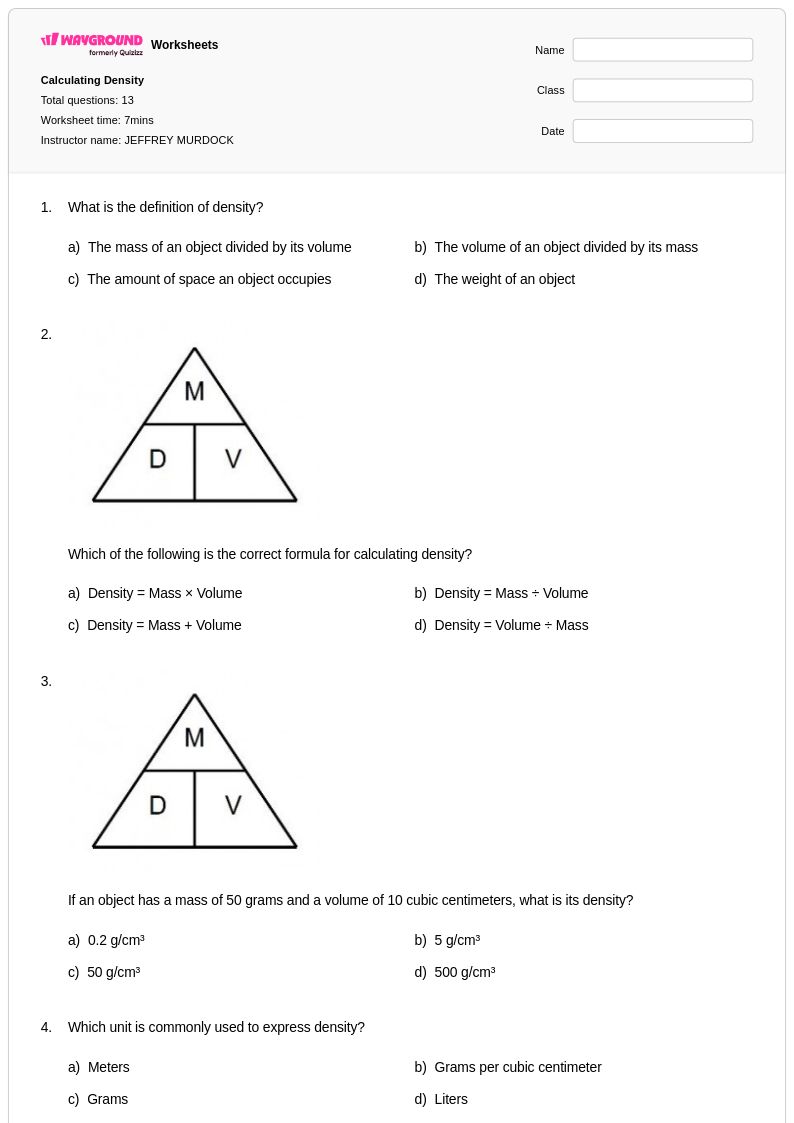
13 Q
6th - Uni
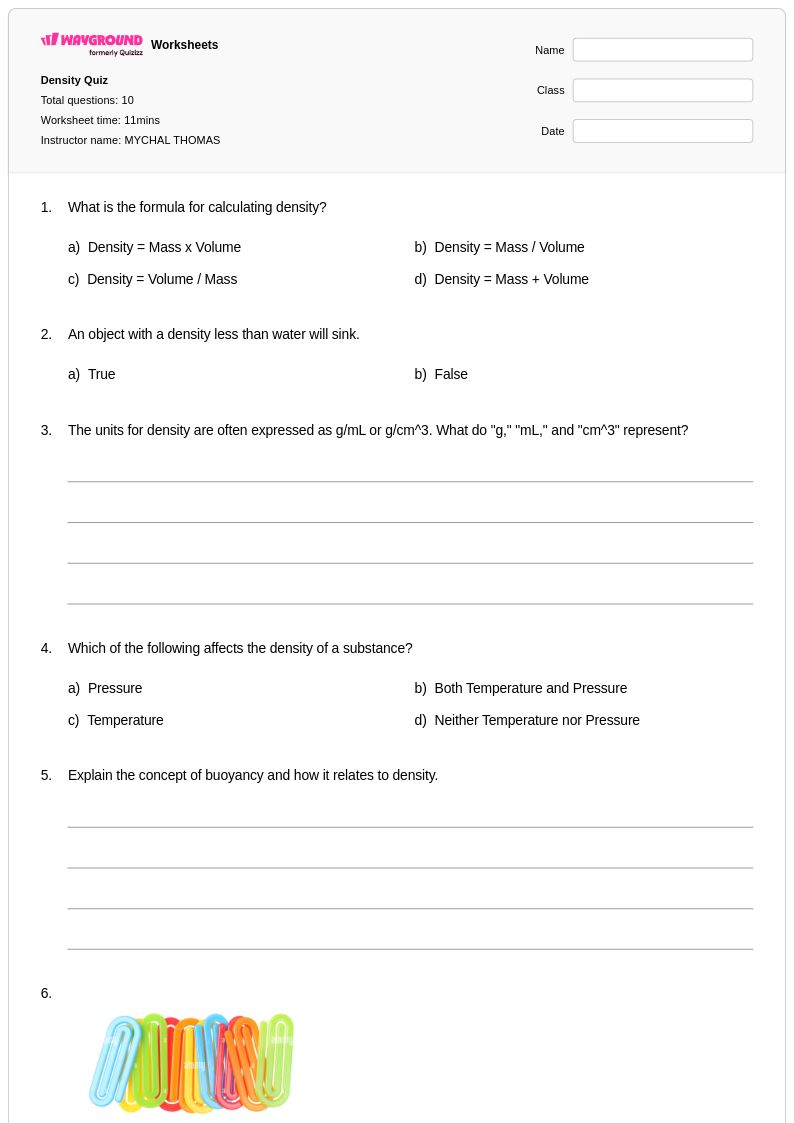
10 Q
9th - 12th
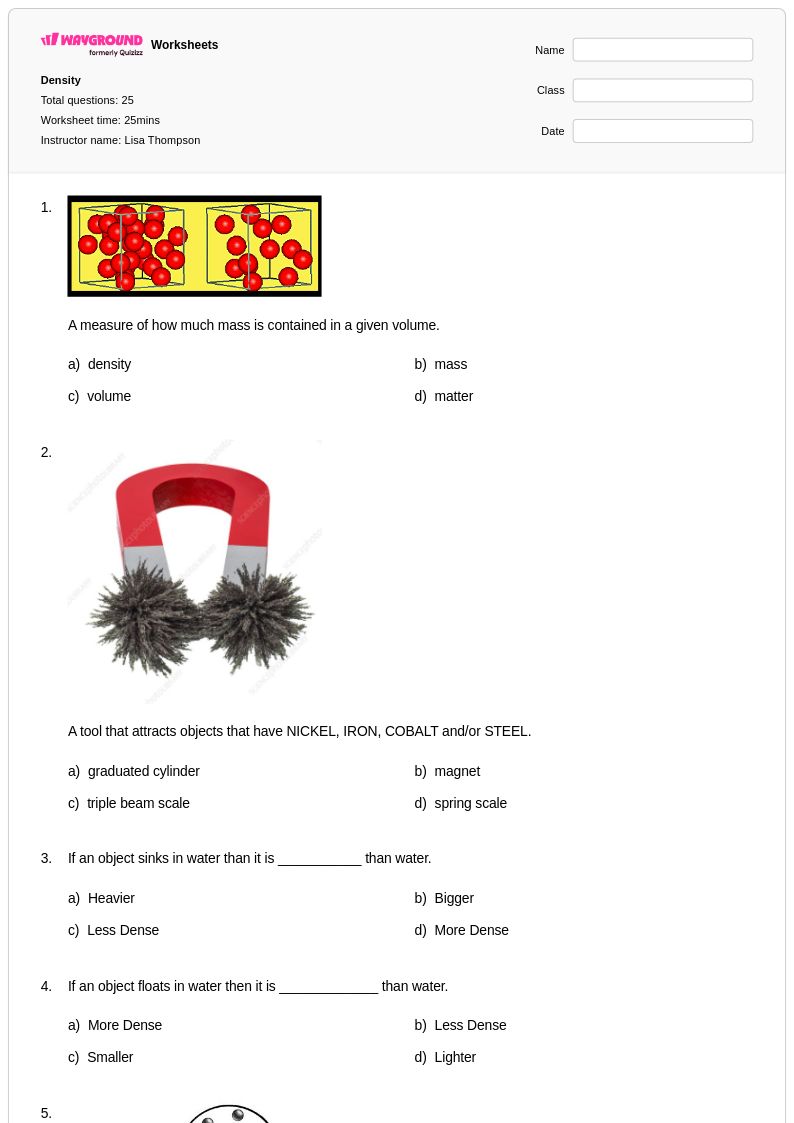
25 Q
5th - Uni
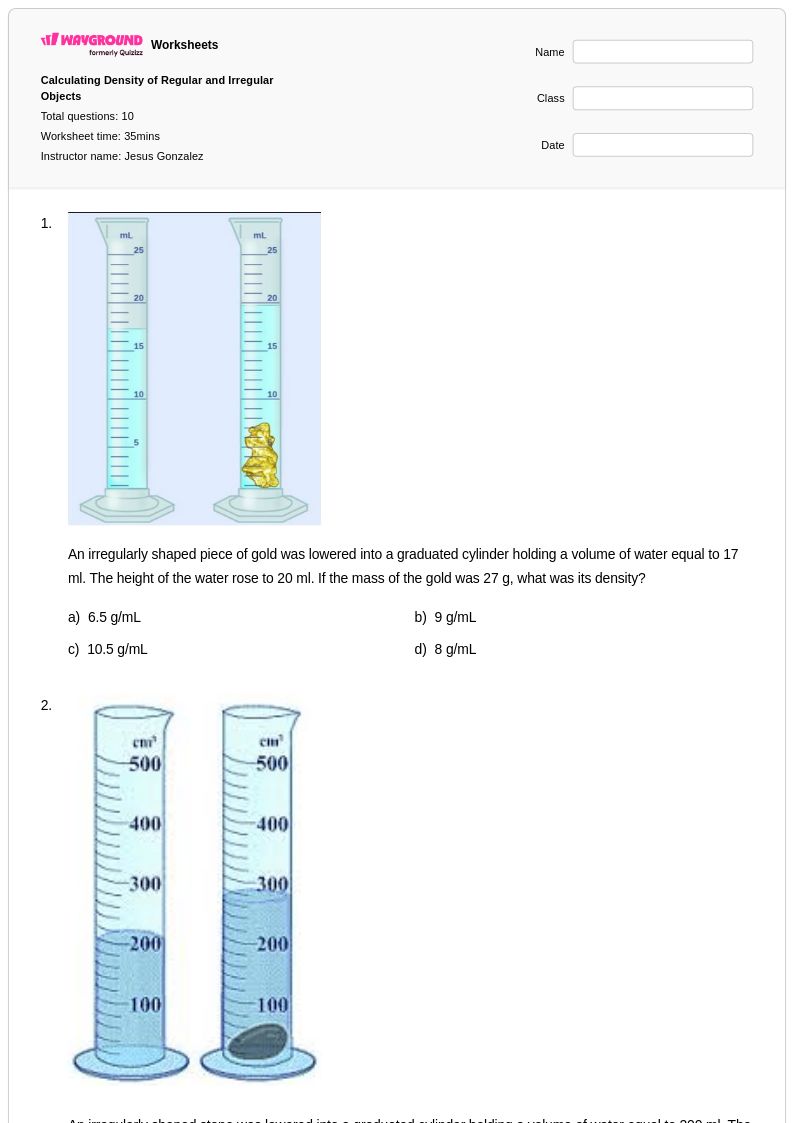
10 Q
6th - 12th
15 Q
6th - Uni
40 Q
9th - 12th
20 Q
5th - Uni
9 Q
9th - 12th
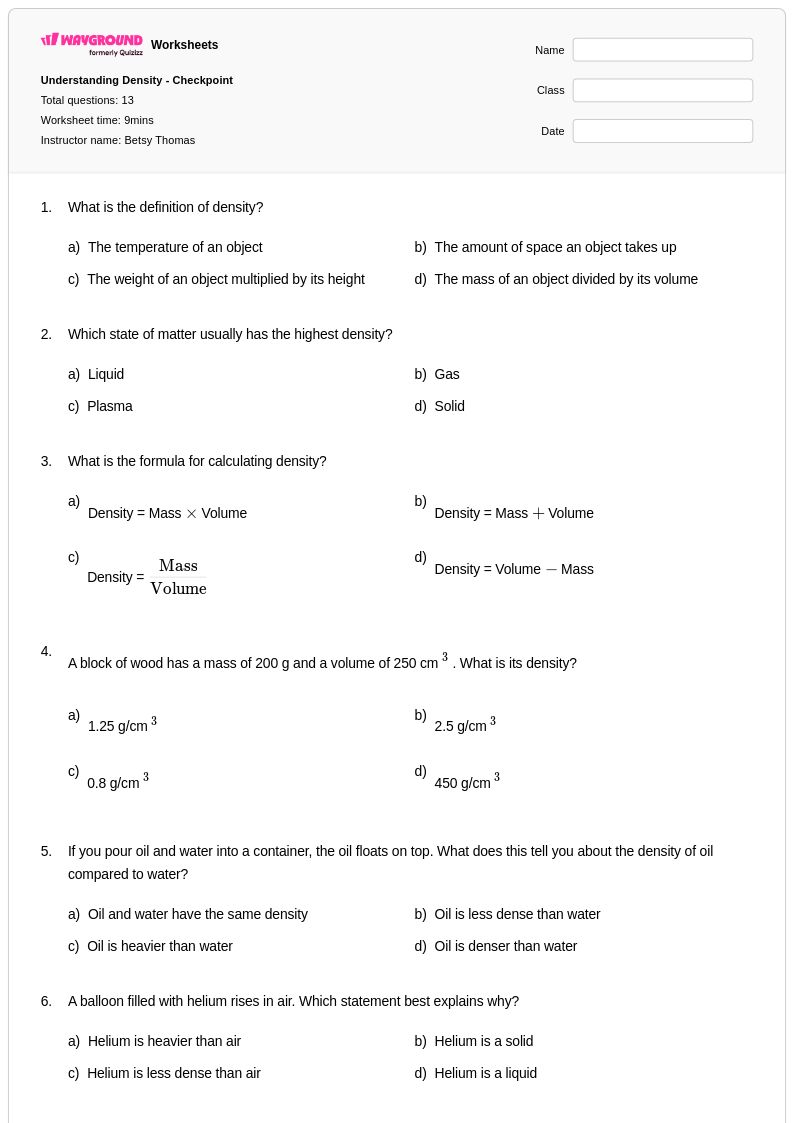
13 Q
6th - Uni
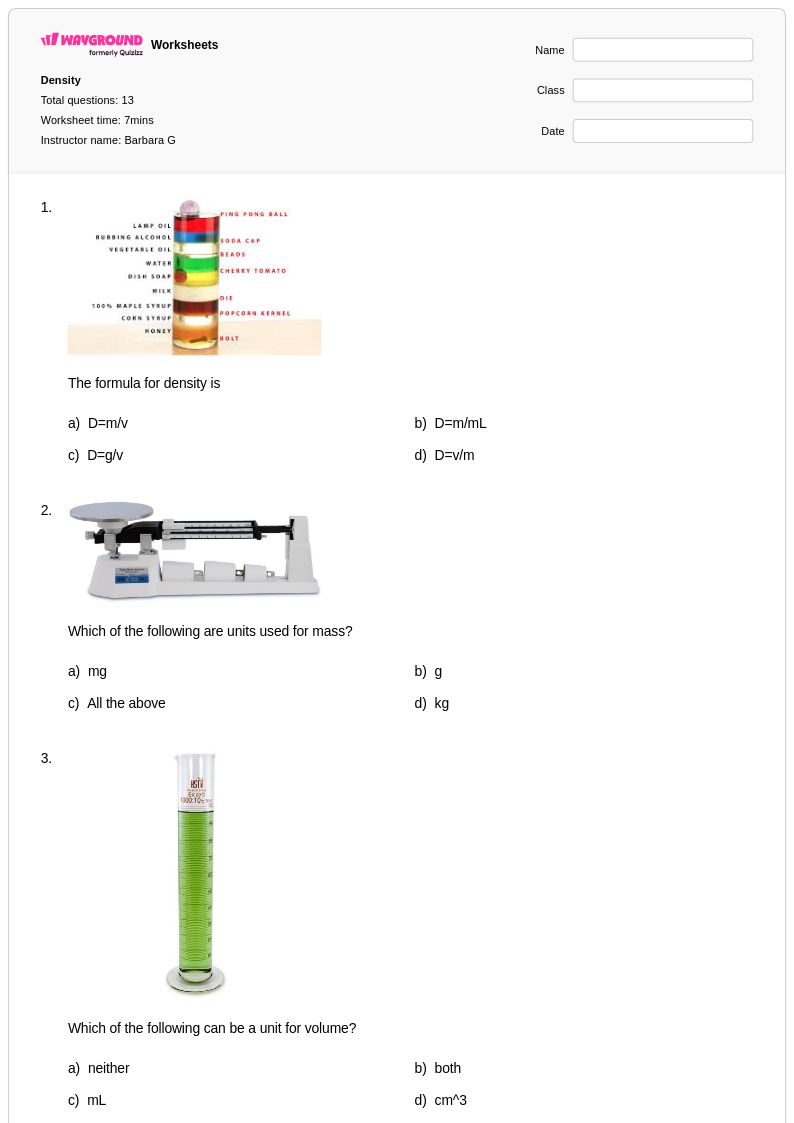
13 Q
11th
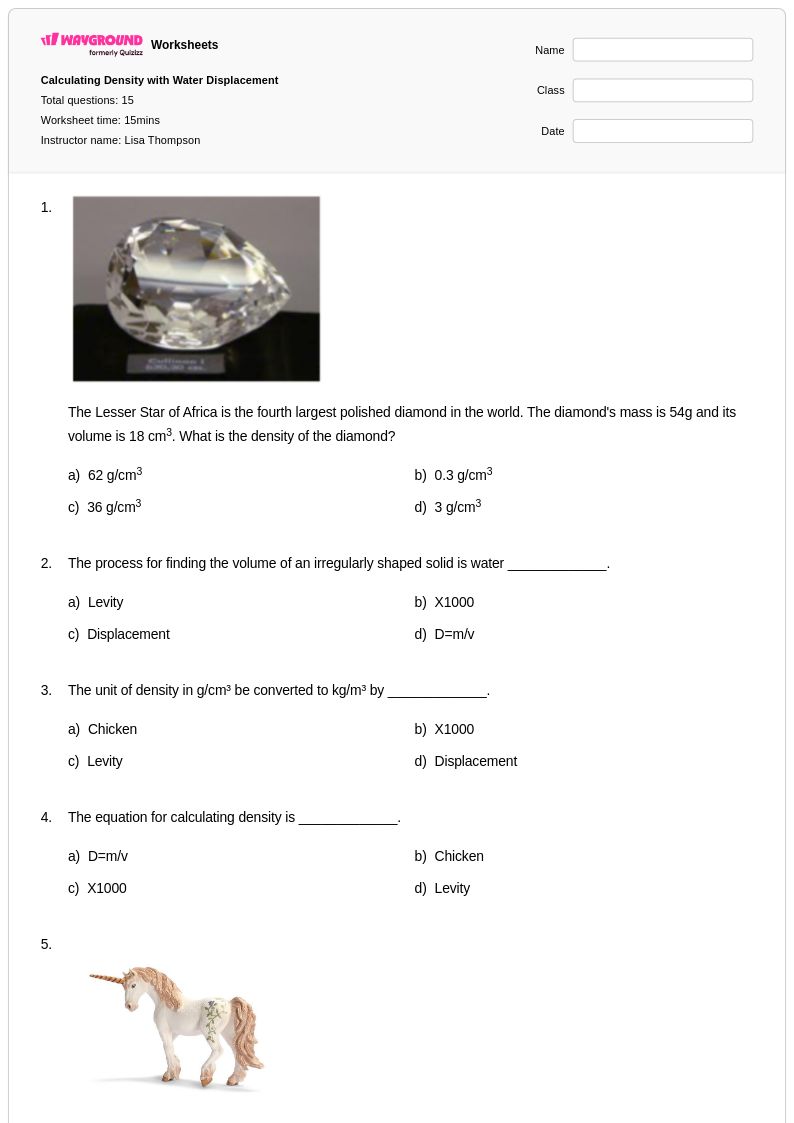
15 Q
8th - Uni
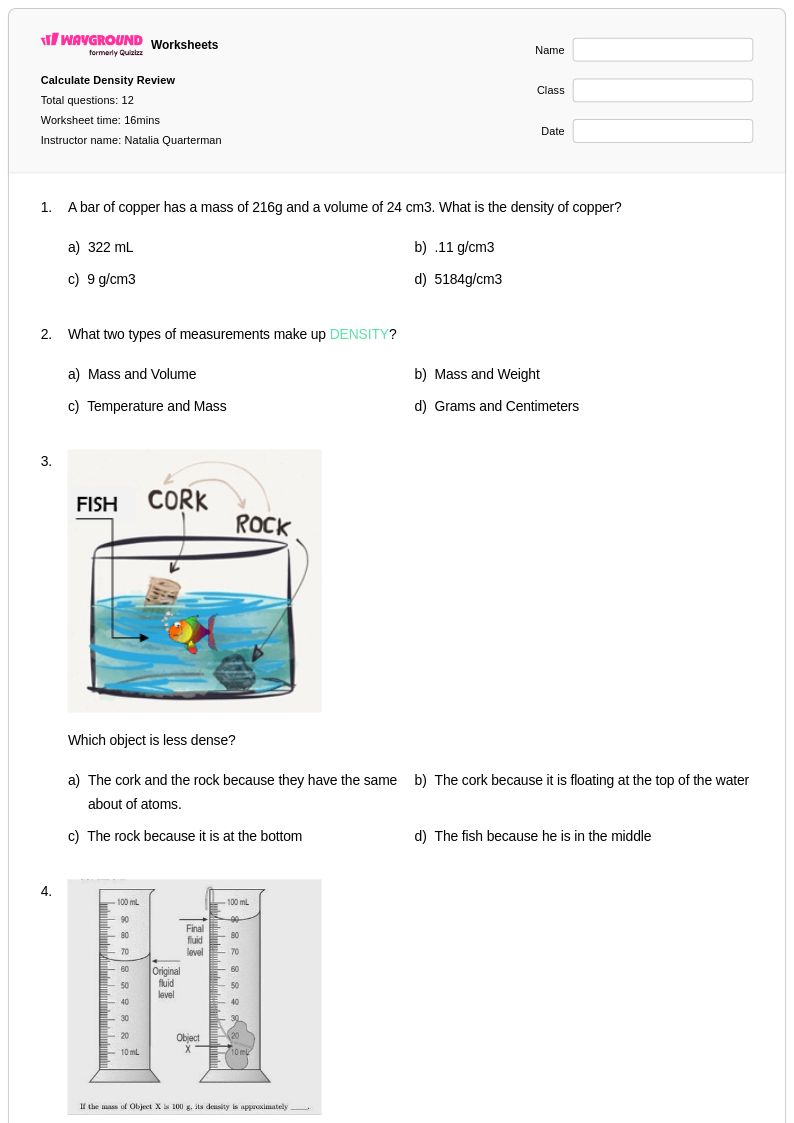
12 Q
11th
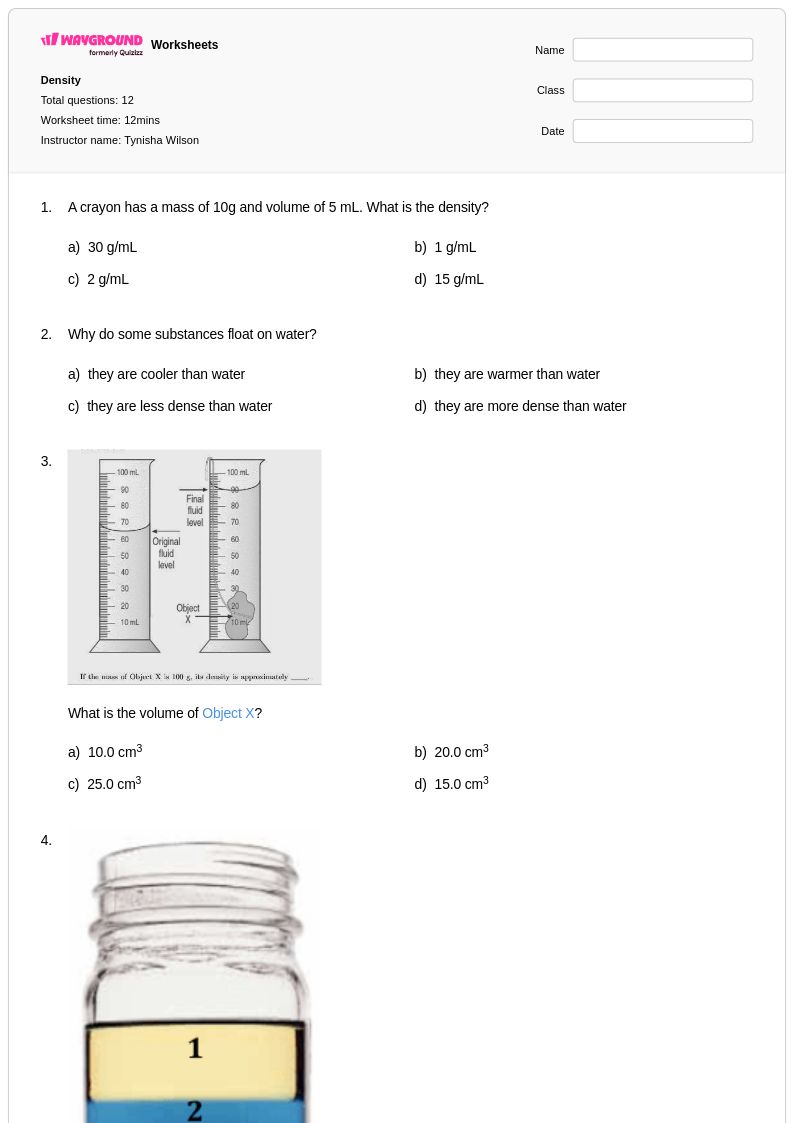
12 Q
11th
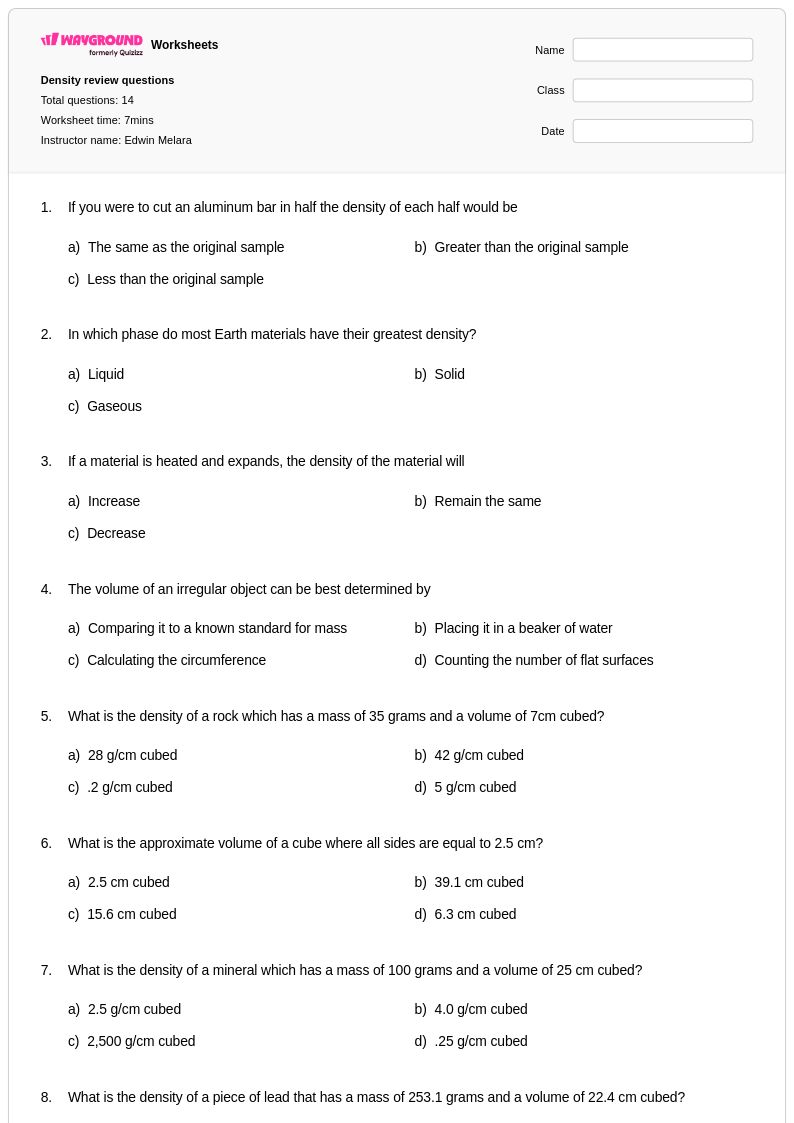
14 Q
8th - 12th
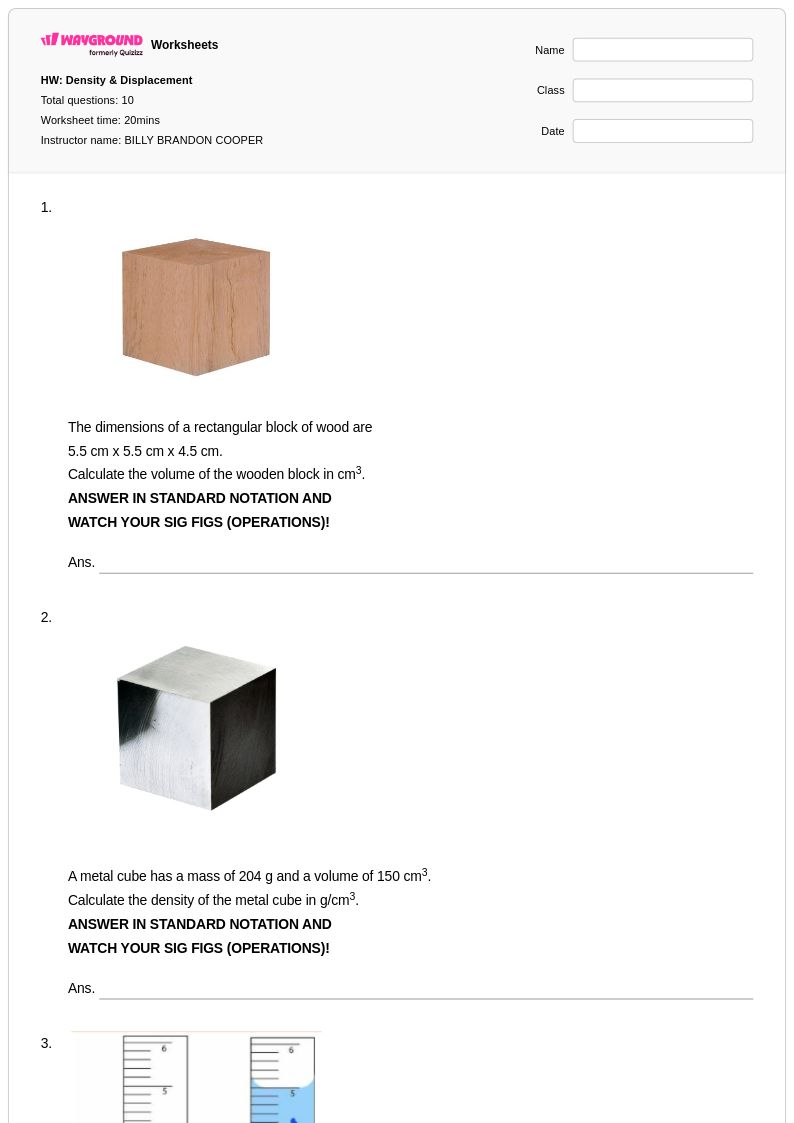
10 Q
9th - Uni
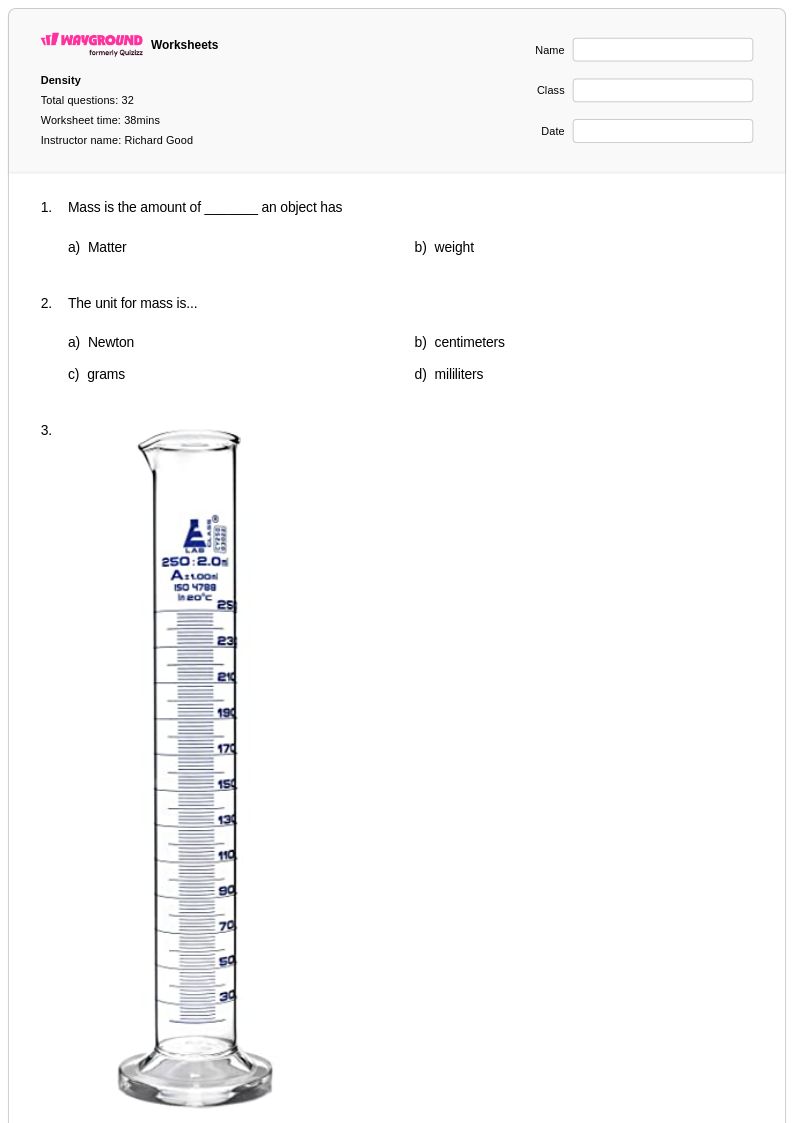
32 Q
3rd - 11th
25 Q
8th - Uni
25 Q
6th - Uni
23 Q
11th - Uni
25 Q
5th - Uni
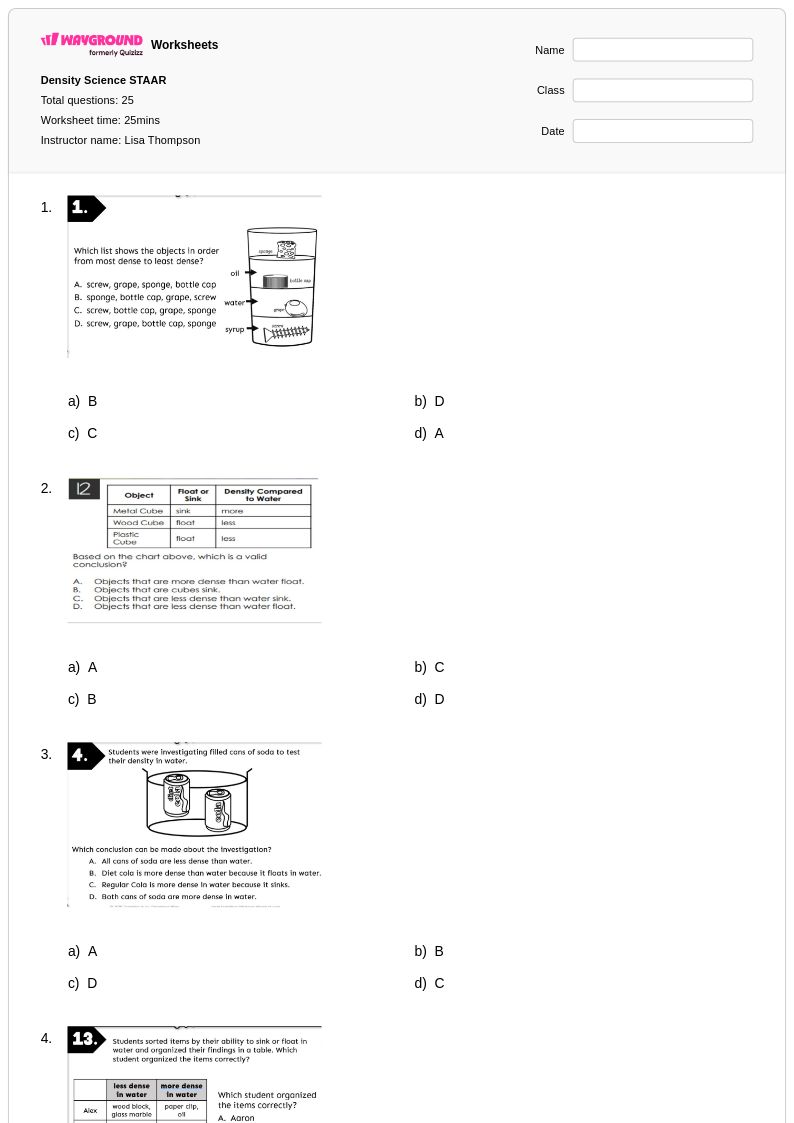
25 Q
5th - Uni
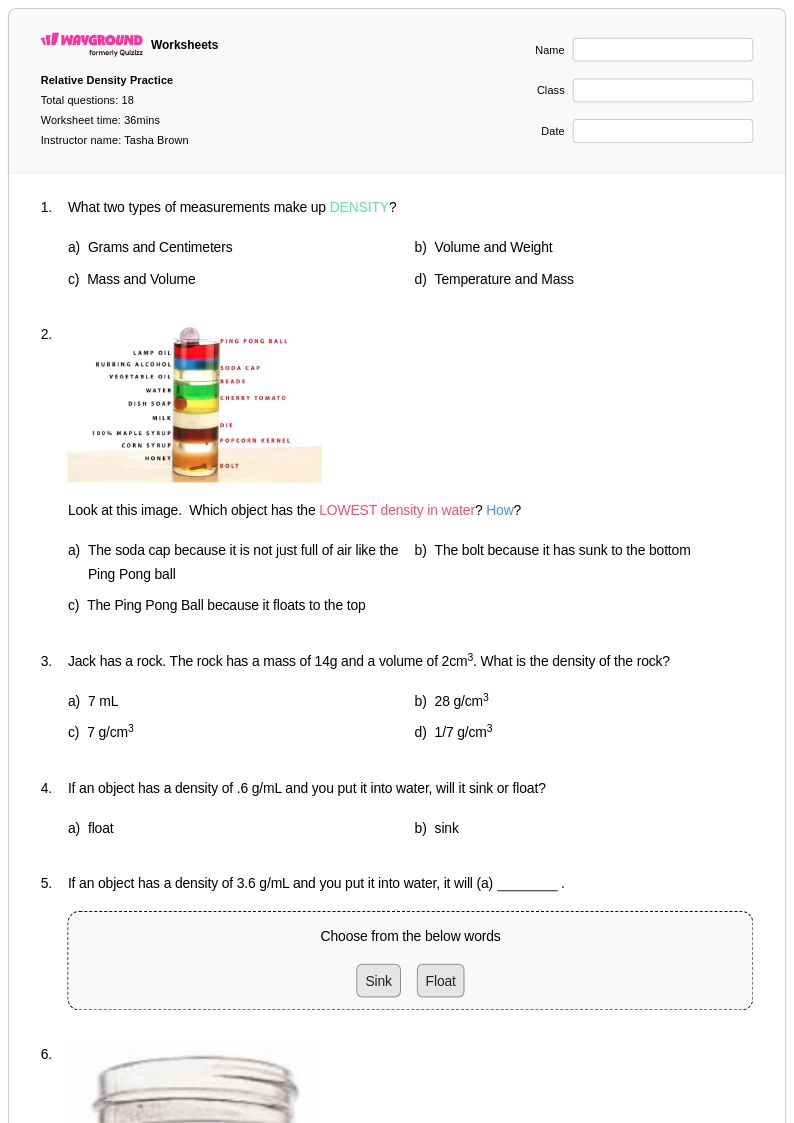
18 Q
6th - Uni
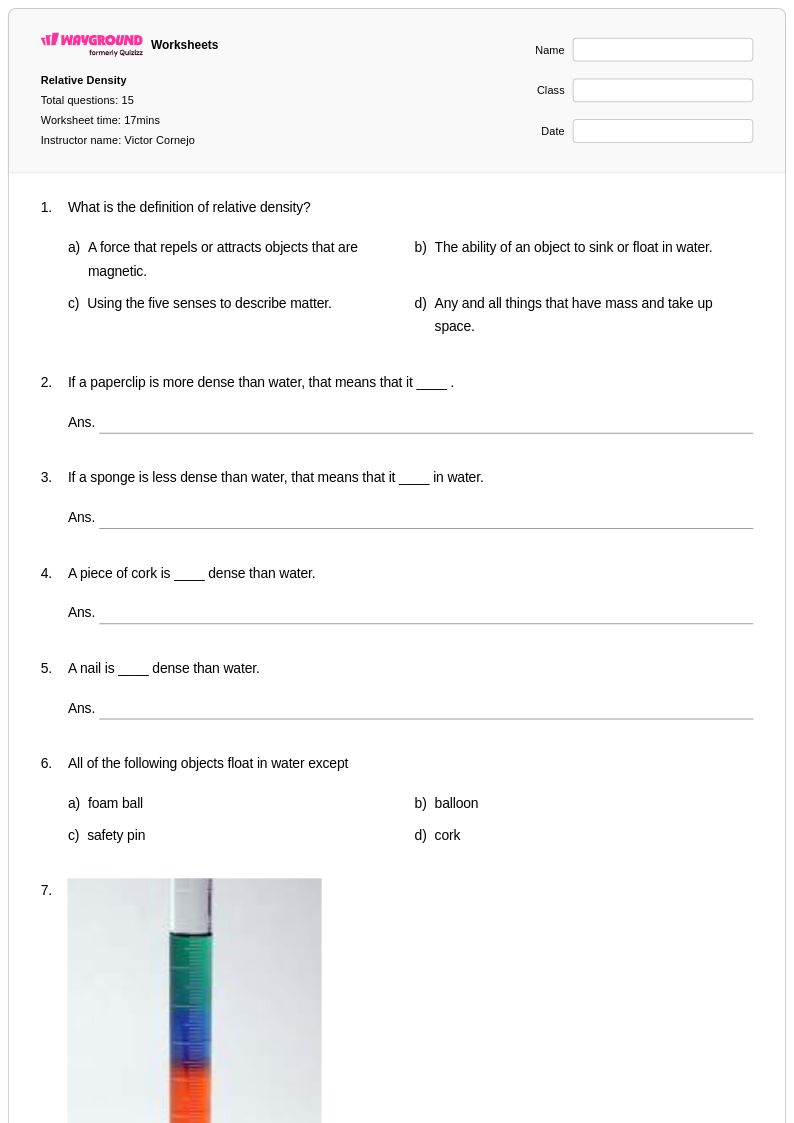
15 Q
6th - Uni
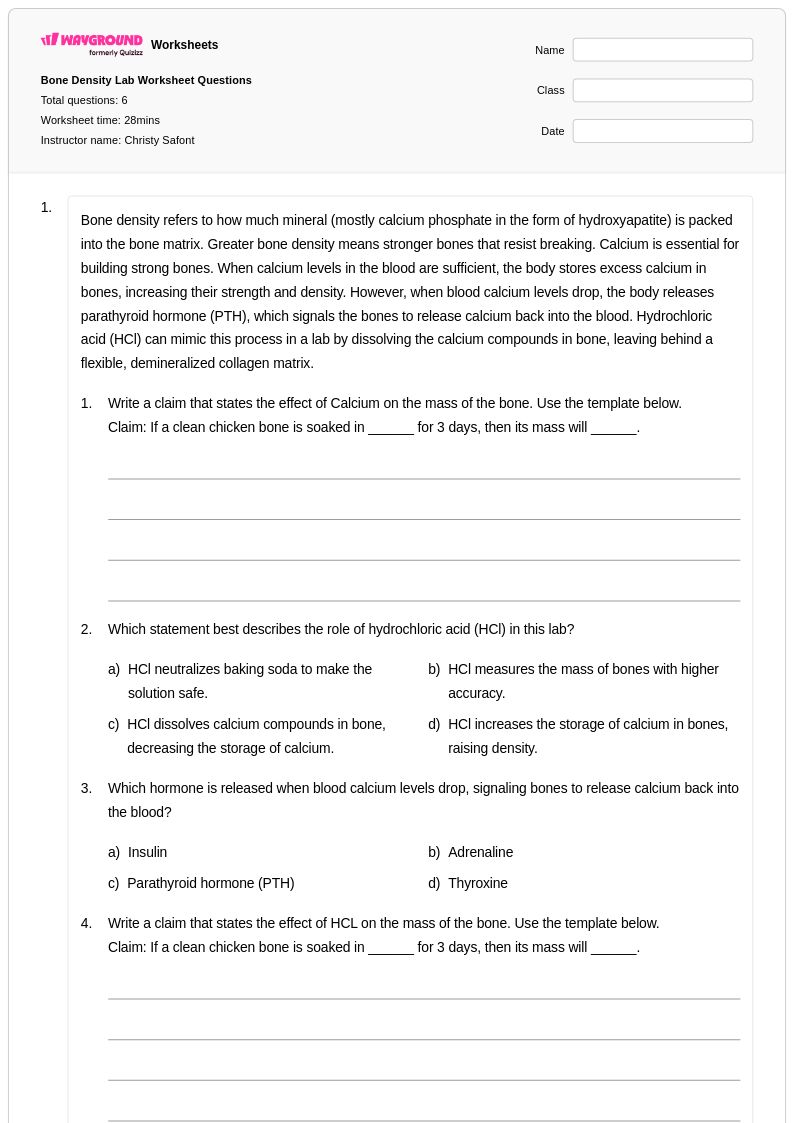
15 Q
11th
Explore Calculating Density Worksheets by Grades
Explore Other Subject Worksheets for class 11
Explore printable Calculating Density worksheets for Class 11
Calculating density worksheets for Class 11 students available through Wayground provide comprehensive practice with this fundamental physical science concept that bridges chemistry and physics coursework. These expertly designed worksheets strengthen students' abilities to apply the density formula (D = m/V), manipulate algebraic equations to solve for mass or volume when density is known, and interpret density values to predict material behavior such as buoyancy and phase relationships. Students work through progressively challenging practice problems that incorporate unit conversions, scientific notation, and real-world applications including material identification and fluid dynamics scenarios. Each worksheet includes detailed answer keys that show complete solution steps, making these free printables valuable for both independent study and classroom instruction where students need to master quantitative problem-solving skills essential for advanced chemistry and physics courses.
Wayground supports science educators with an extensive collection of teacher-created calculating density worksheets that can be easily customized to match specific Class 11 physical science curriculum requirements and student ability levels. The platform's robust search and filtering capabilities allow teachers to quickly locate resources aligned with state and national science standards, while differentiation tools enable instructors to modify problem complexity, adjust numerical values, or incorporate additional scaffolding for struggling learners. These worksheets are available in both printable pdf format for traditional classroom use and interactive digital versions that provide immediate feedback, making them ideal for homework assignments, lab follow-up activities, test preparation, and targeted remediation sessions. Teachers can efficiently plan instruction sequences that build from basic density calculations to complex multi-step problems involving irregular objects, composite materials, and experimental error analysis.
FAQs
How do I teach students to calculate density for the first time?
What types of problems should students practice when learning to calculate density?
What mistakes do students commonly make when calculating density?
How can I differentiate density calculation practice for students at different ability levels?
How do I use Wayground's calculating density worksheets in my classroom?
How does density calculation connect to broader physical science concepts?