Free Printable Capitalizing Proper Nouns Worksheets for Class 1
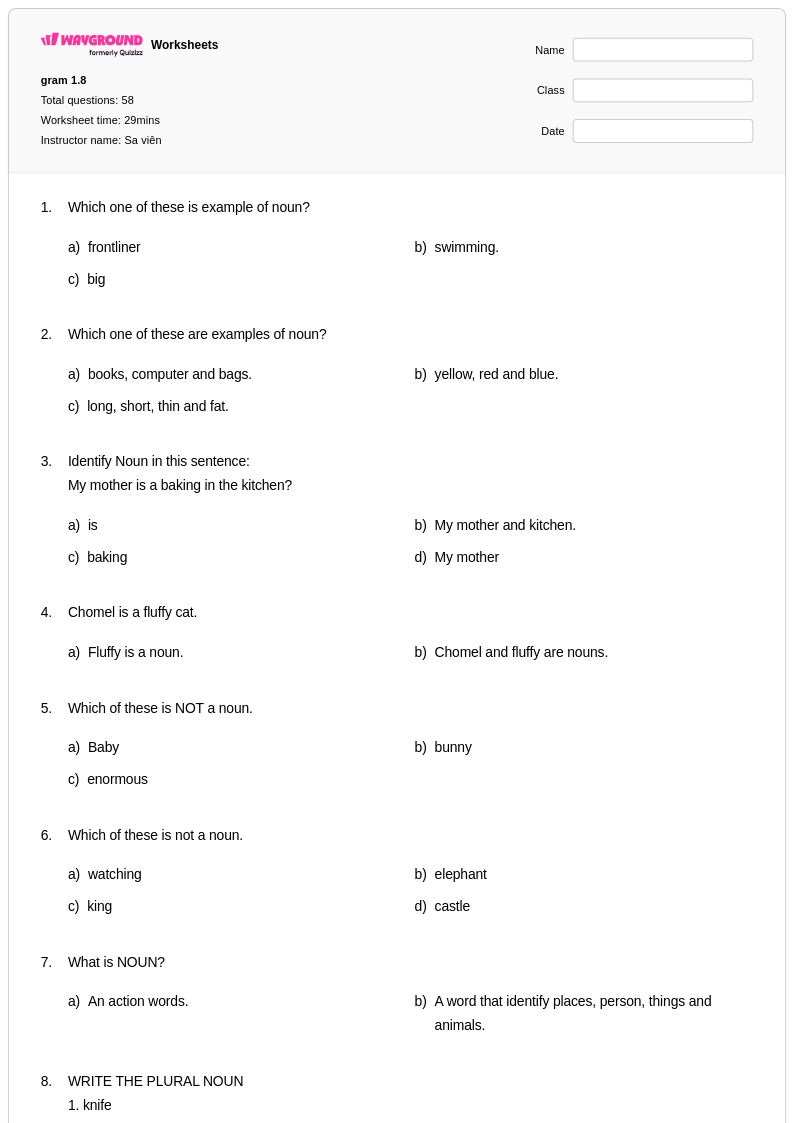
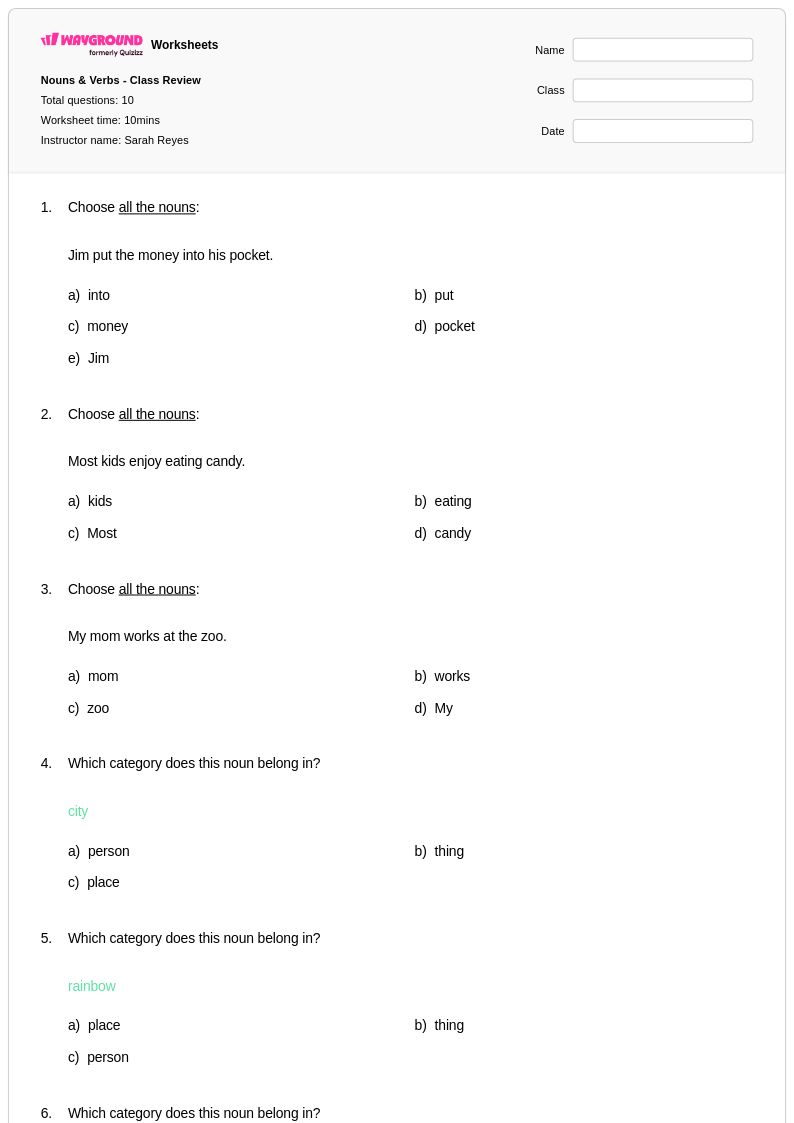
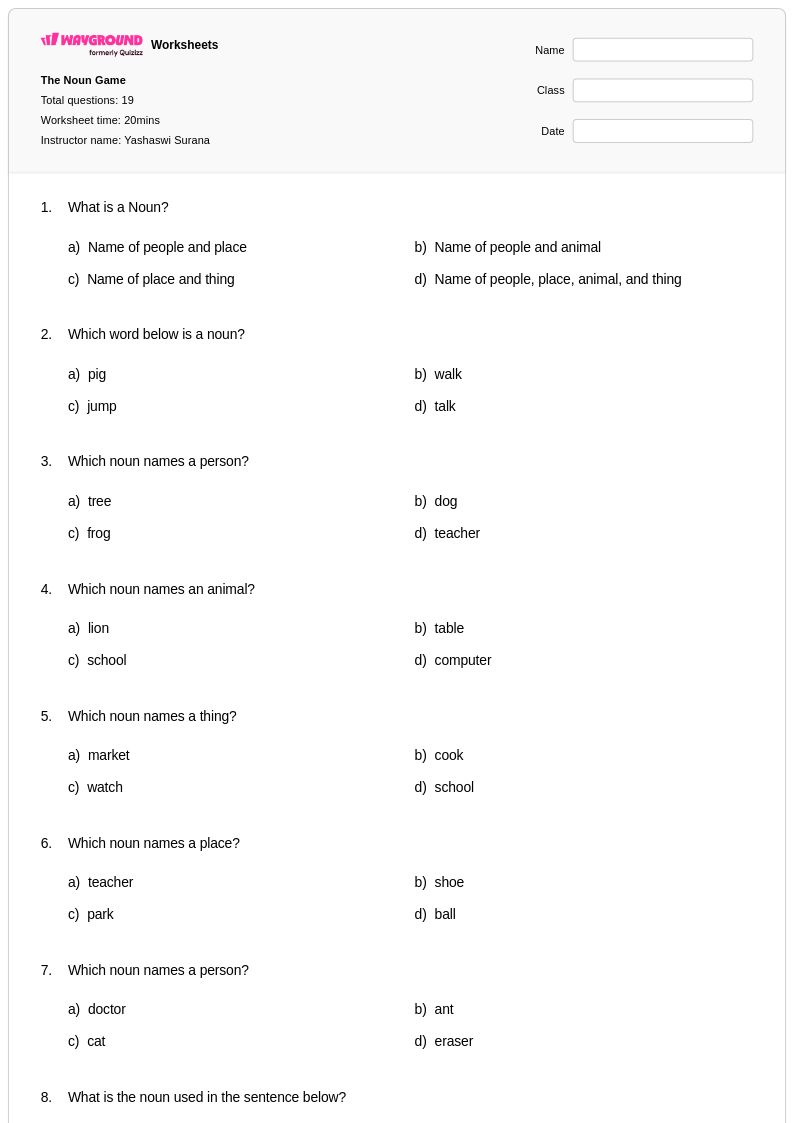
Class 1 capitalizing proper nouns printable worksheets from Wayground help young learners practice identifying and correctly capitalizing names of people, places, and things through engaging free PDF exercises with answer keys.
Explore printable Capitalizing Proper Nouns worksheets for Class 1
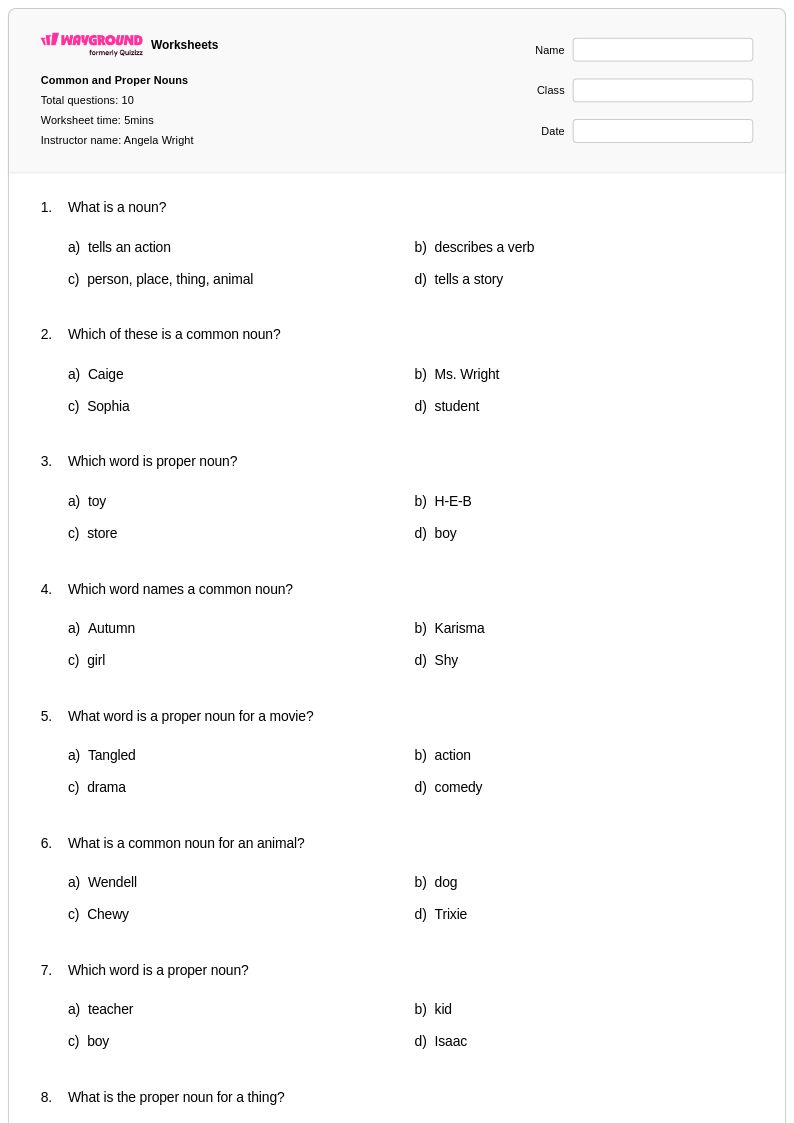
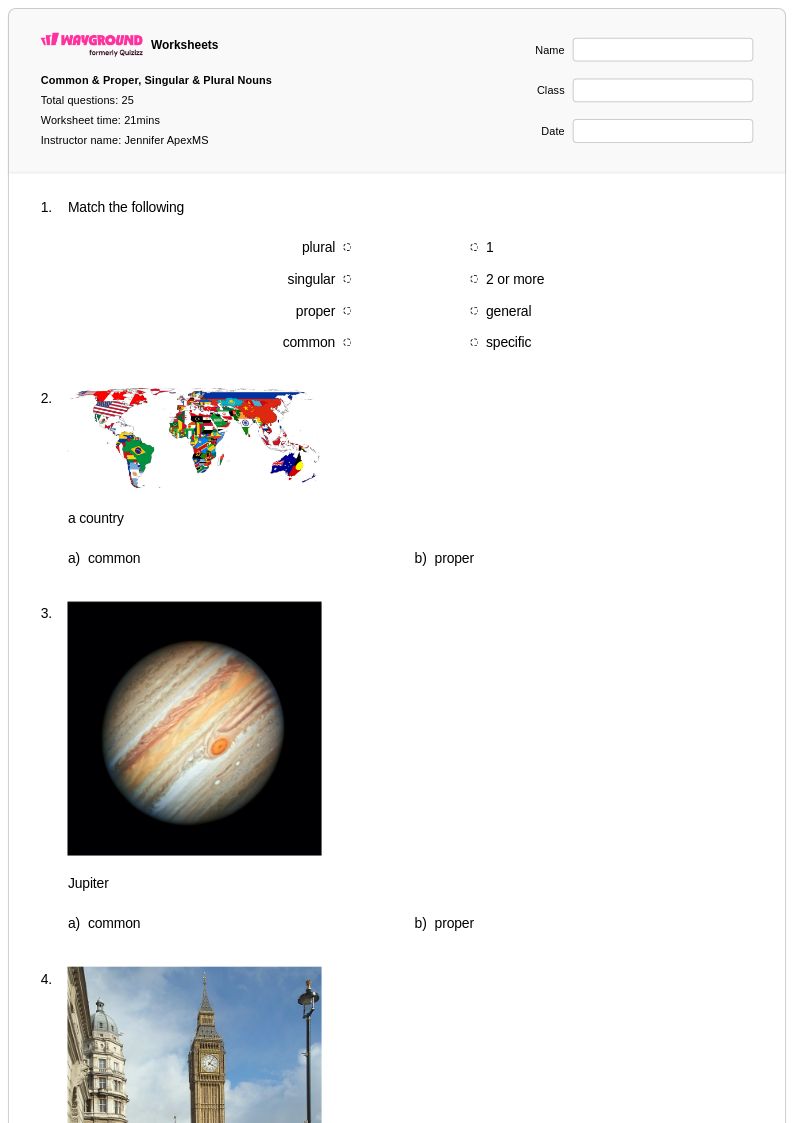
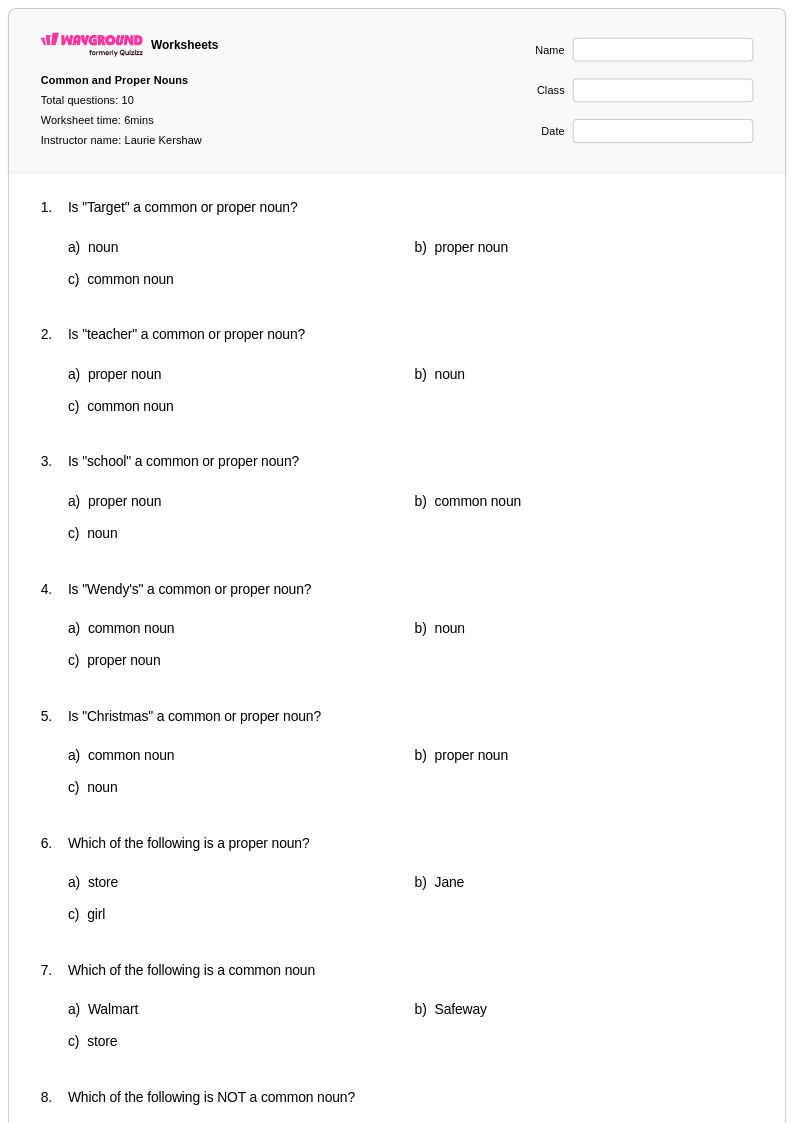
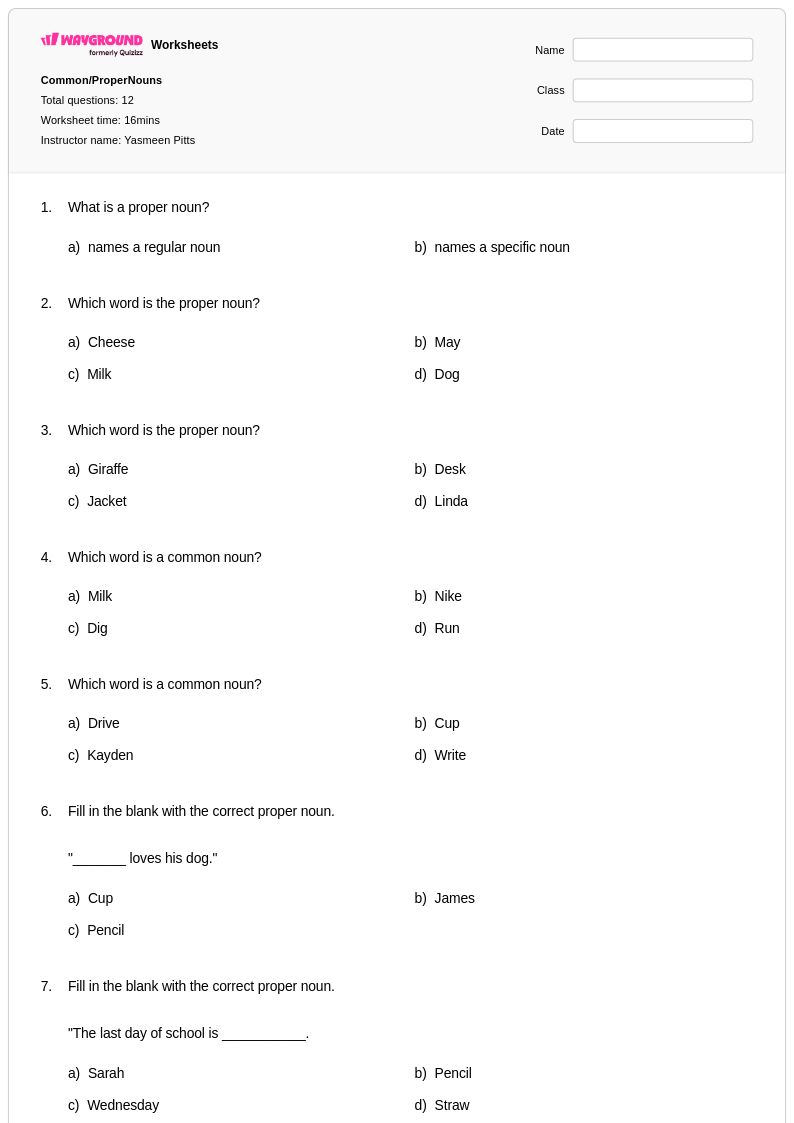
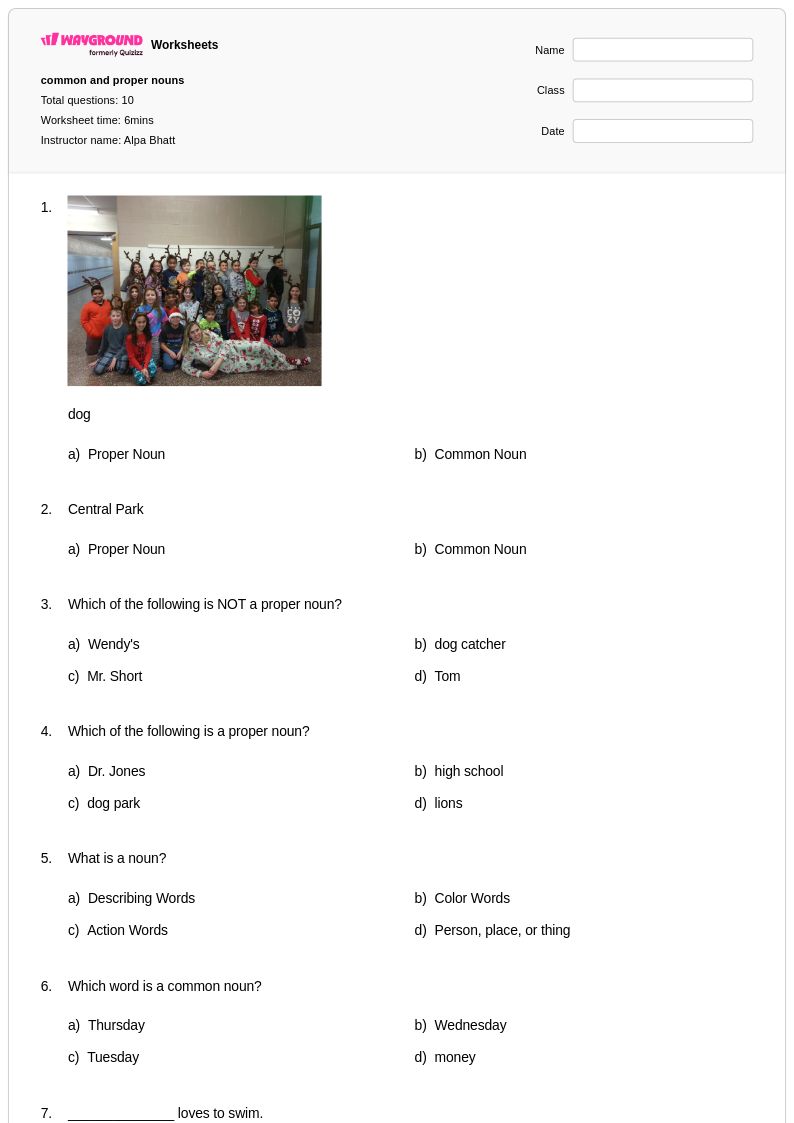
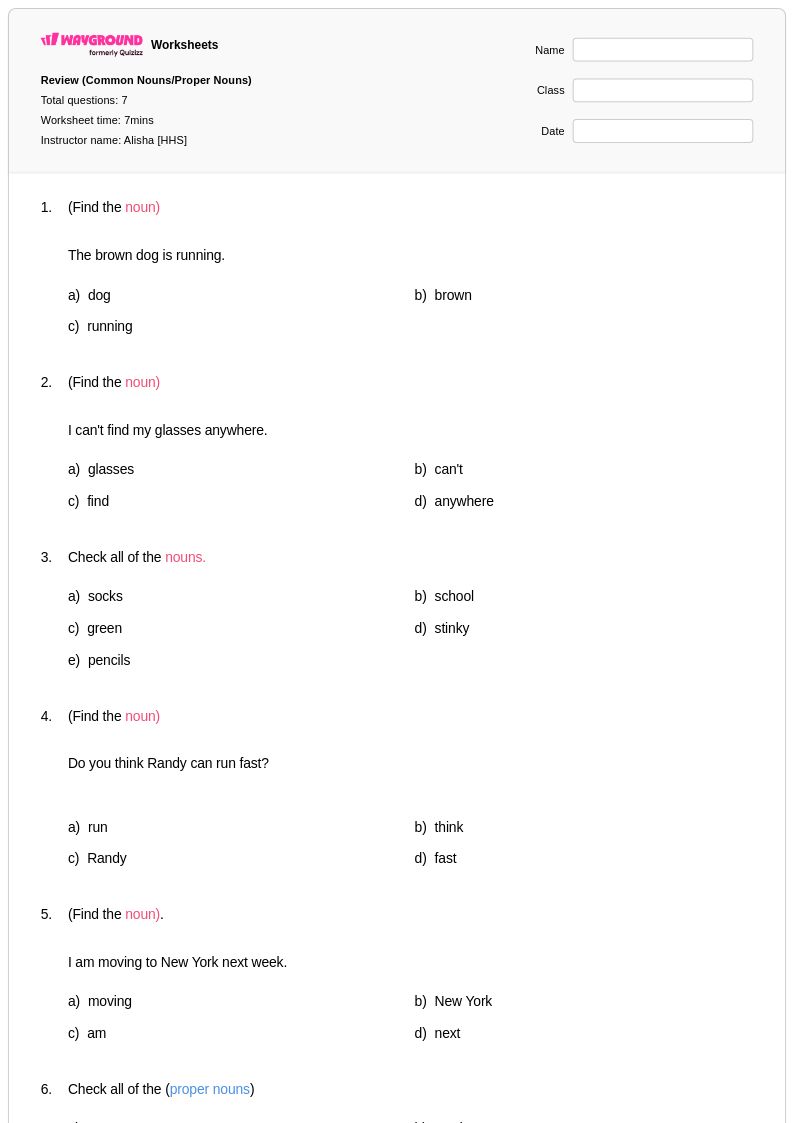
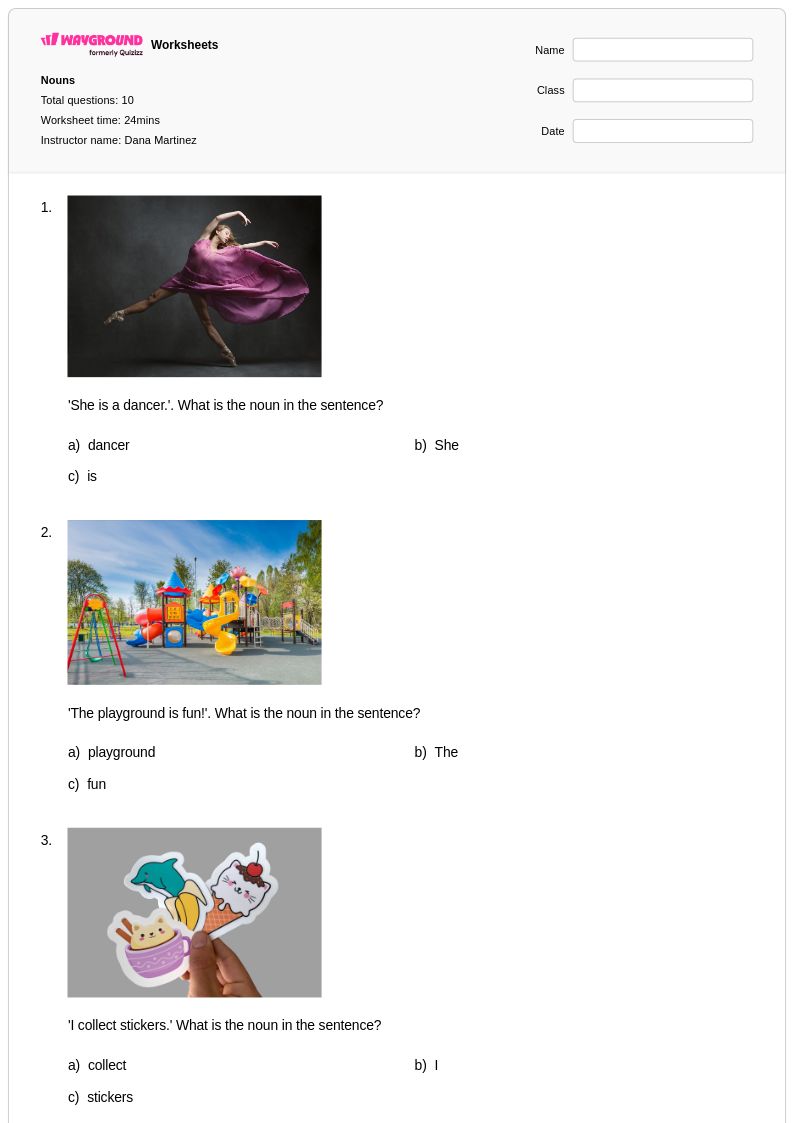
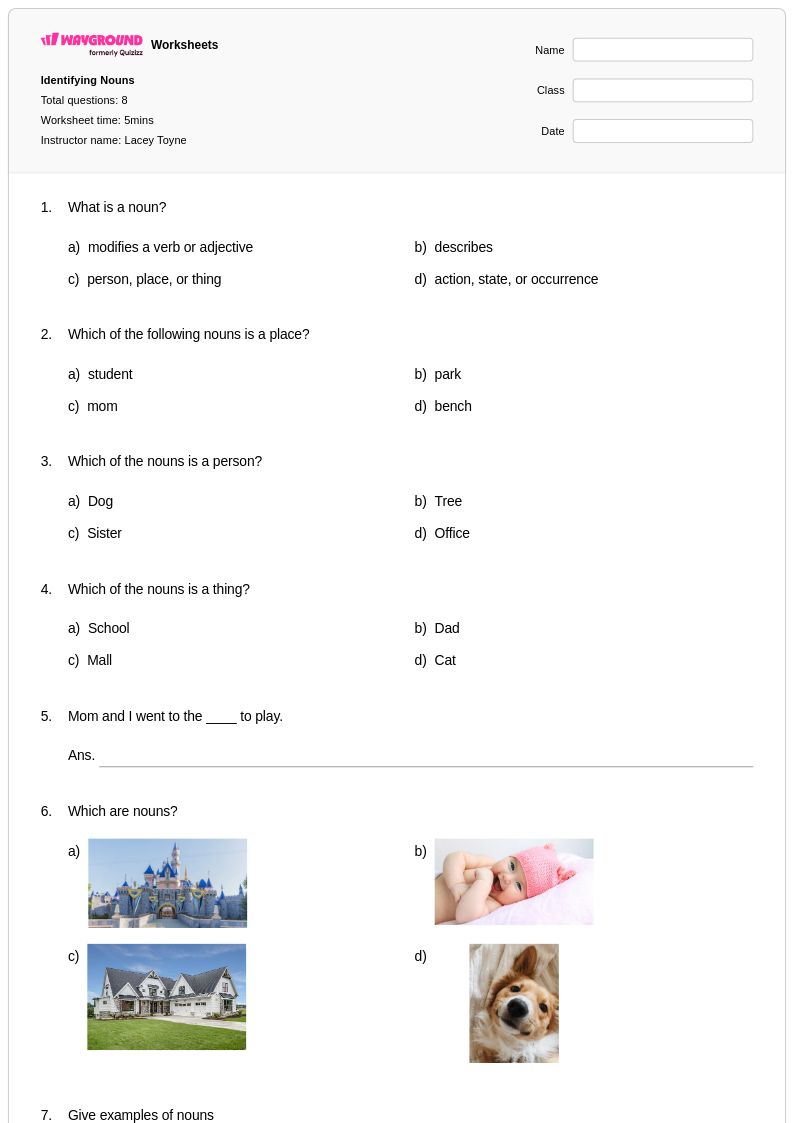
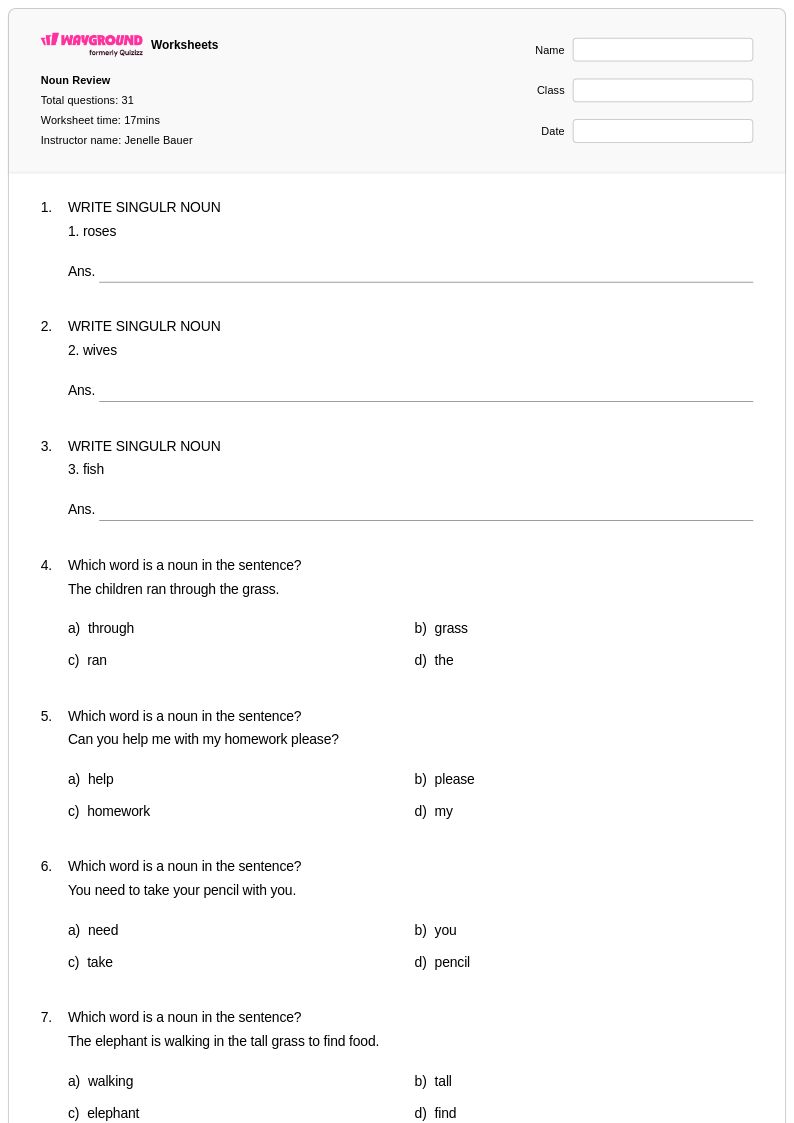
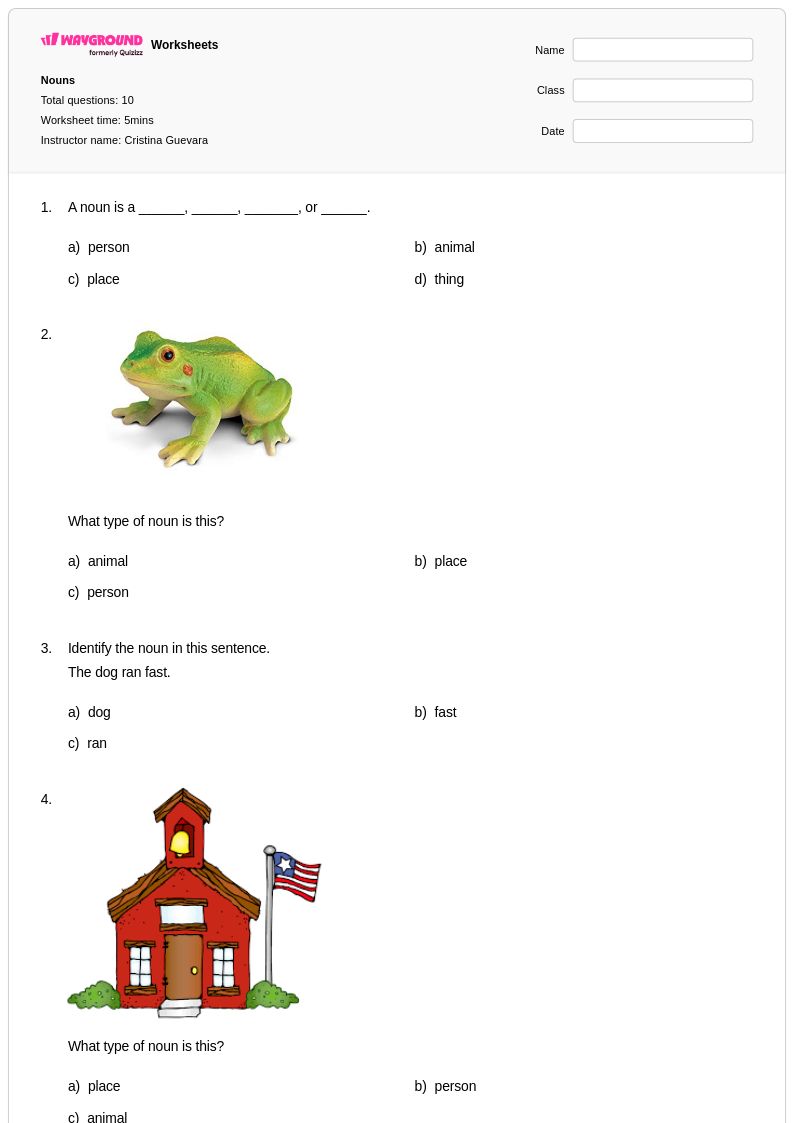
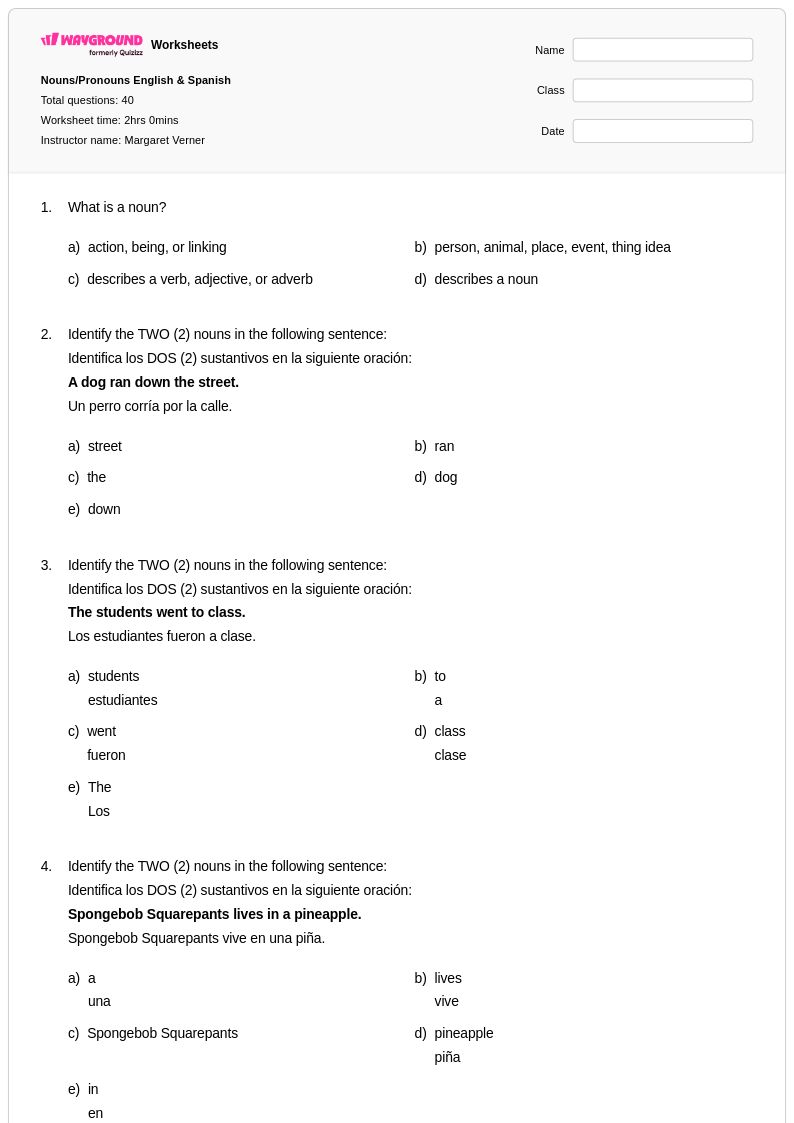
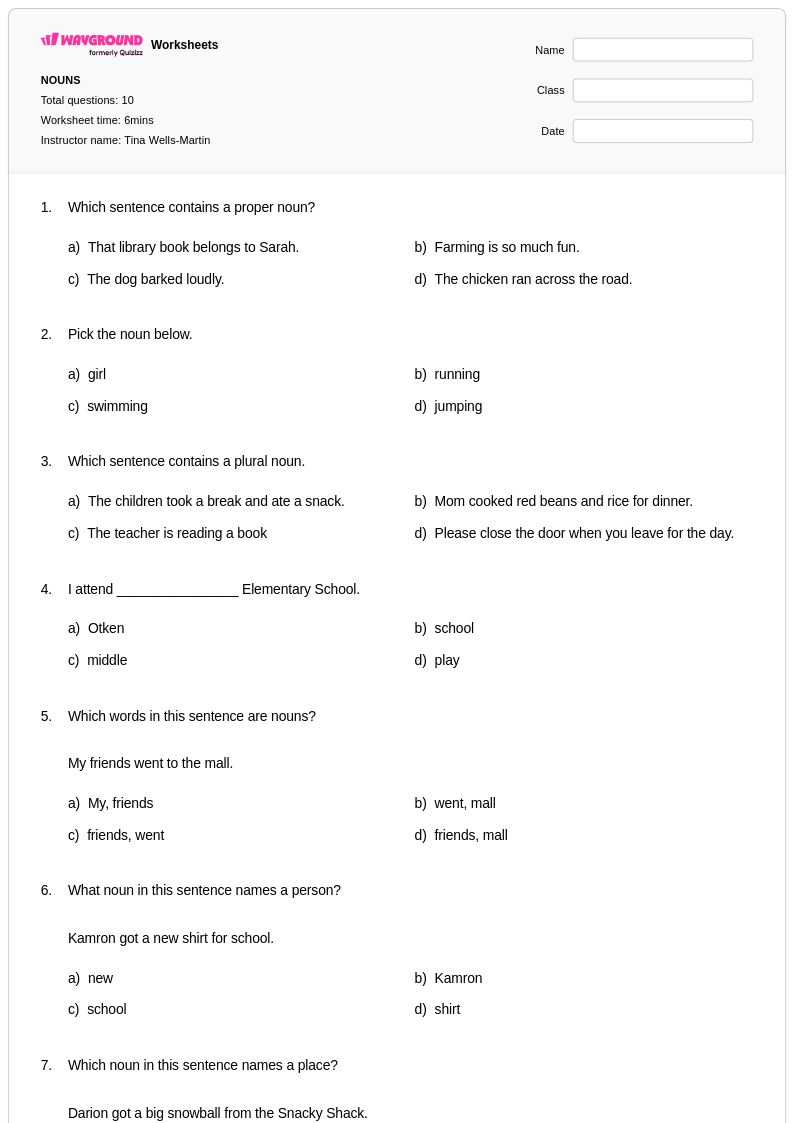
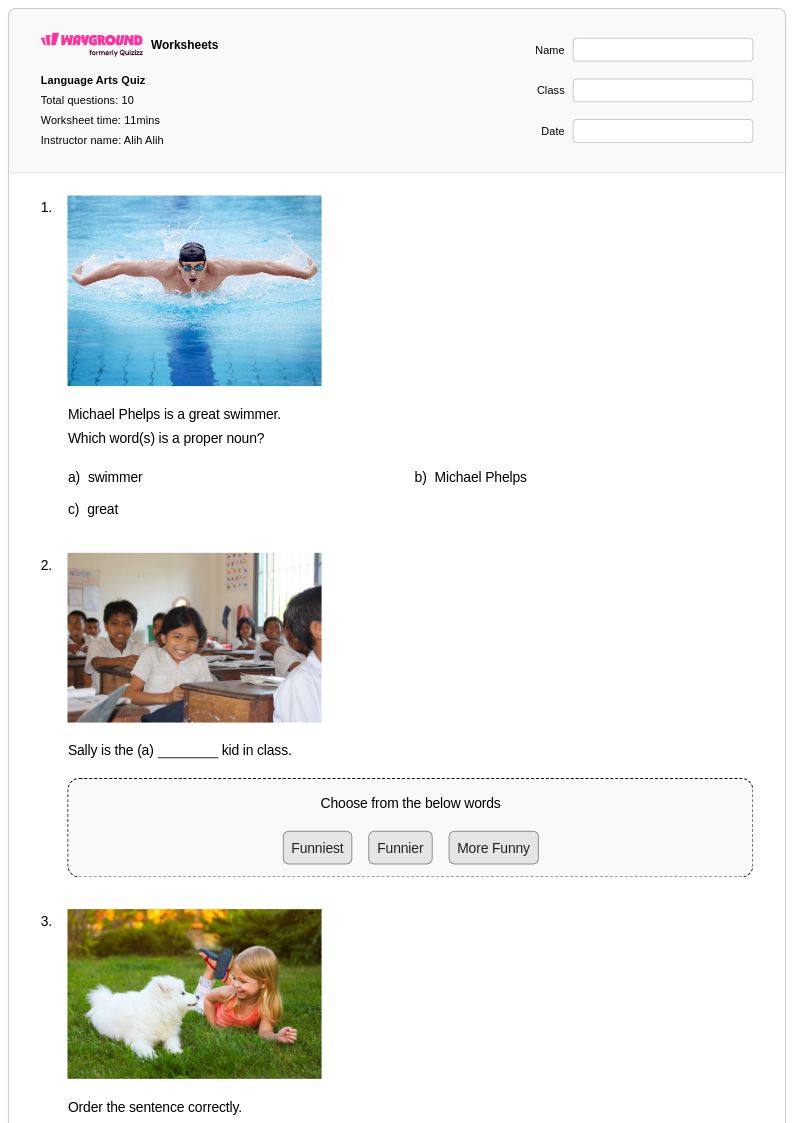
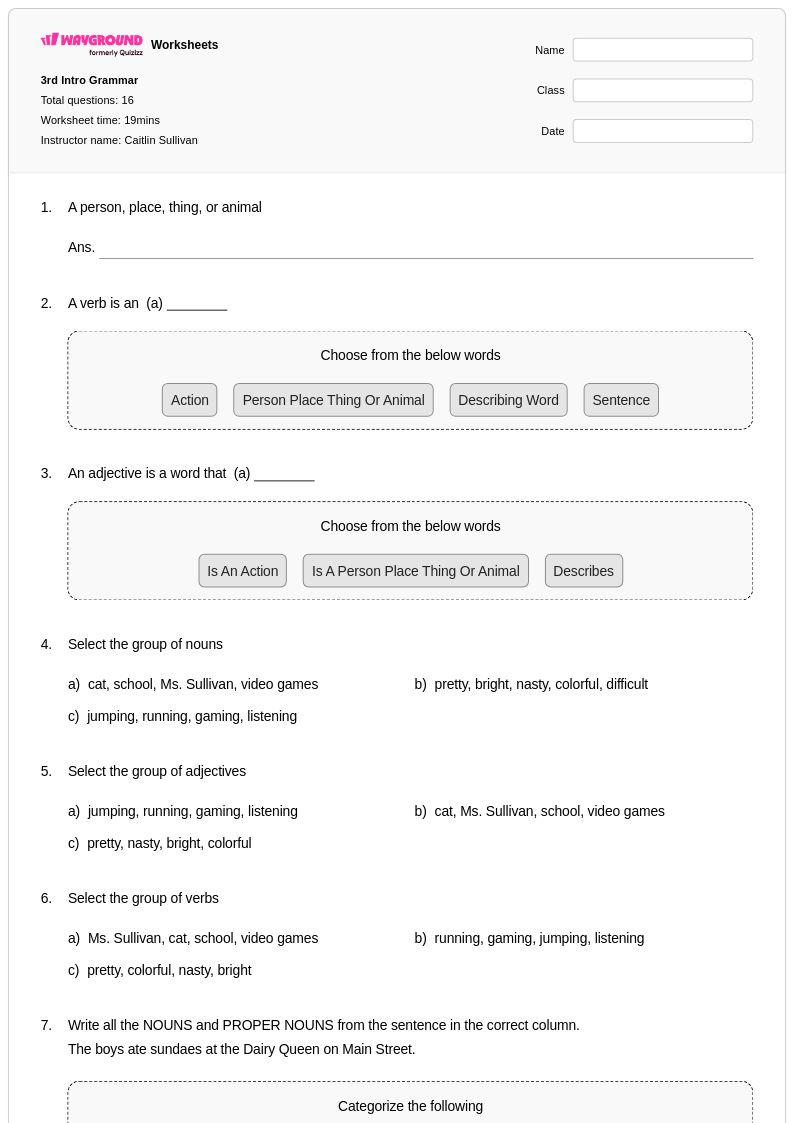
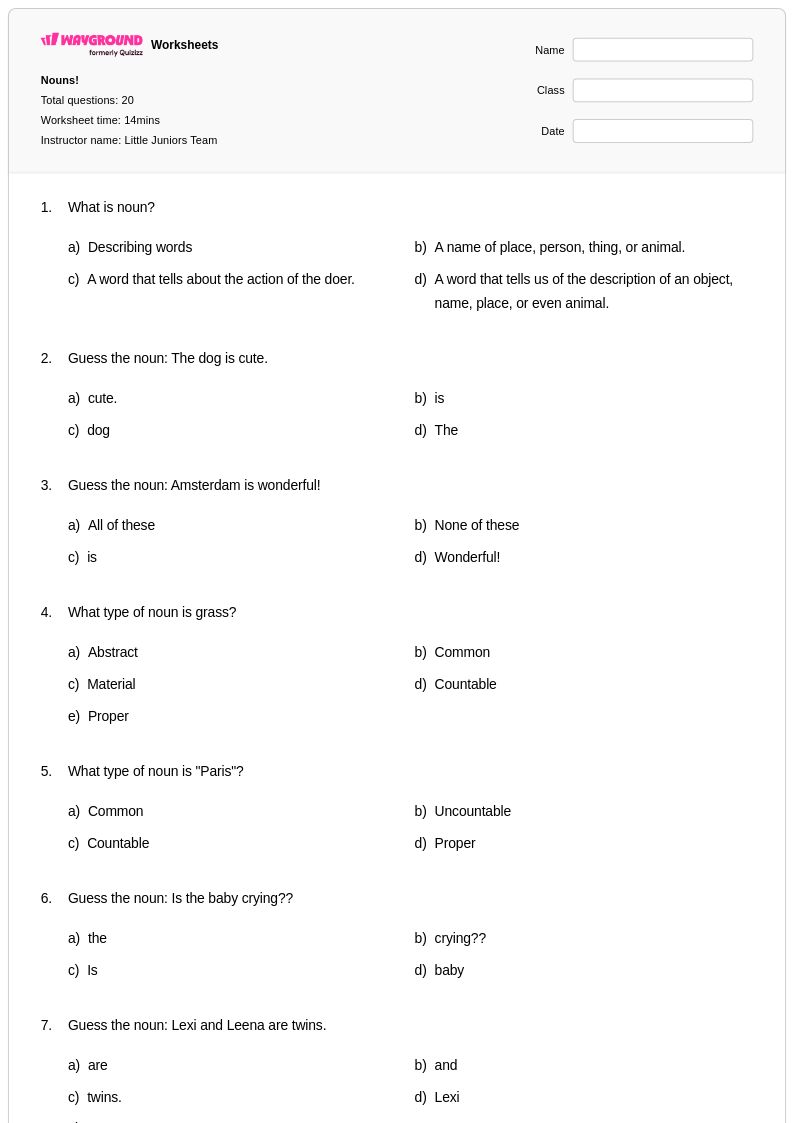
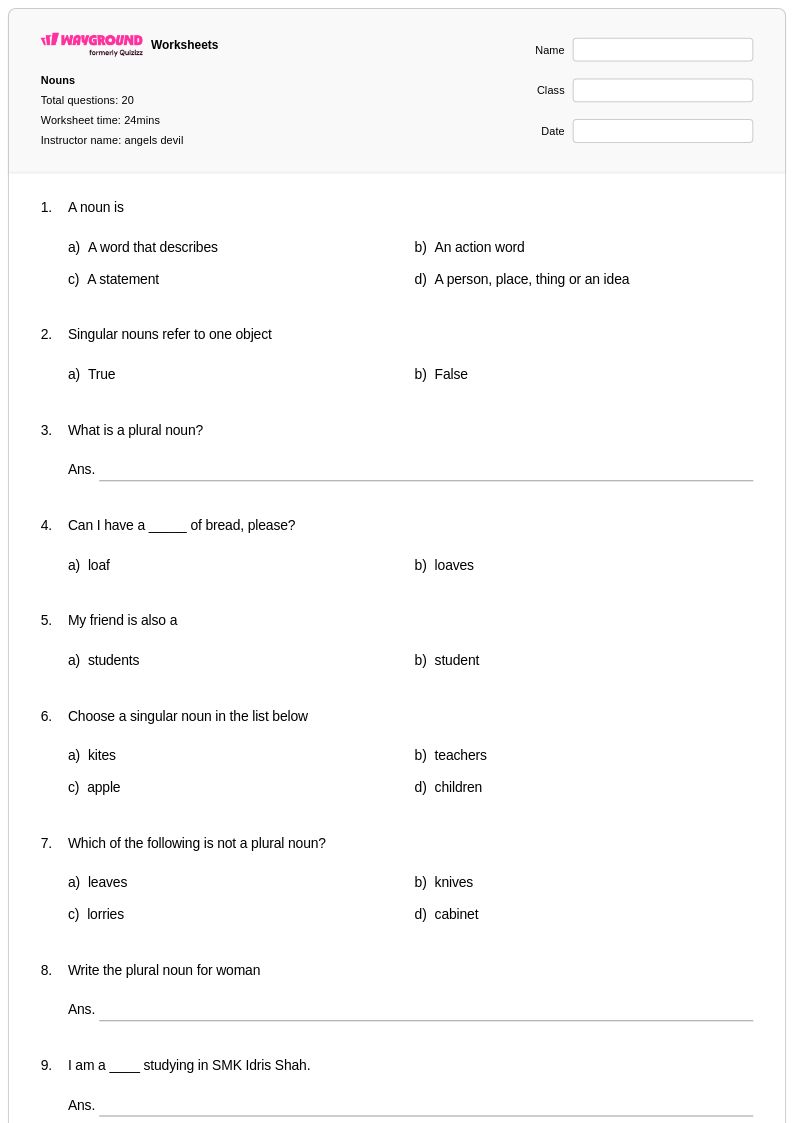
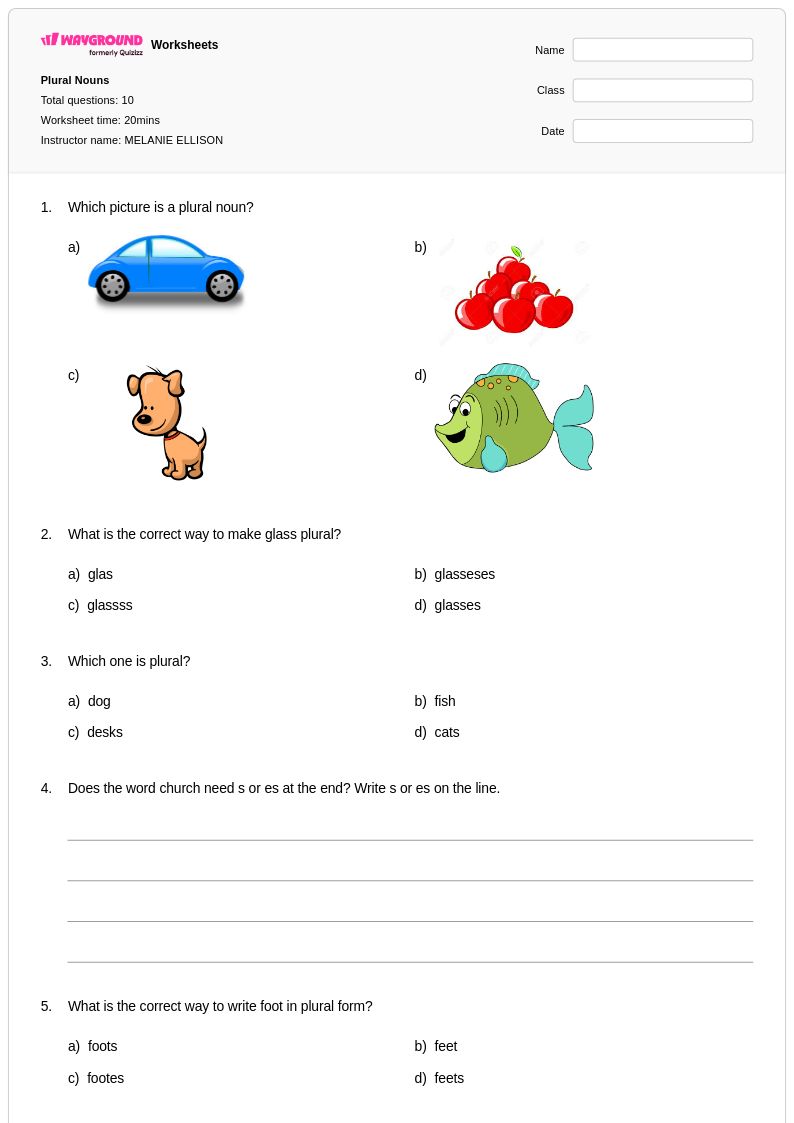
Capitalizing proper nouns worksheets for Class 1 students through Wayground (formerly Quizizz) provide foundational practice in one of the most essential capitalization rules young learners must master. These comprehensive printables focus specifically on helping first-grade students identify and correctly capitalize names of people, places, and specific things that require capital letters. Each worksheet contains carefully crafted practice problems that guide students through recognizing the difference between common nouns like "dog" or "school" and proper nouns such as "Spot" or "Lincoln Elementary." The free pdf resources include clear examples, engaging exercises, and complete answer keys that enable both independent practice and teacher-guided instruction, ensuring students develop strong capitalization skills through systematic repetition and application.
Wayground (formerly Quizizz) supports teachers with an extensive collection of millions of teacher-created resources specifically designed for capitalizing proper nouns instruction at the Class 1 level. The platform's robust search and filtering capabilities allow educators to quickly locate worksheets that align with state standards and match their students' specific learning needs. Teachers can easily differentiate instruction by selecting from various difficulty levels and formats, whether they need printable pdf versions for traditional classroom work or digital formats for remote learning environments. These flexible customization tools enable educators to adapt materials for remediation with struggling students, provide enrichment opportunities for advanced learners, and ensure consistent skill practice across diverse learning settings, making lesson planning more efficient and instruction more targeted.
FAQs
How do I teach students when to capitalize proper nouns?
Start by establishing a clear contrast between common nouns and proper nouns — common nouns name general people, places, or things, while proper nouns name specific ones and always require capitalization. Use sorting activities where students categorize words like 'city' versus 'Paris' or 'teacher' versus 'Ms. Rivera' to build the distinction. From there, extend practice to less obvious categories like organization names, brand names, and titles used before a name, since these are areas where students frequently overgeneralize or under-apply the rule.
What types of exercises help students practice capitalizing proper nouns?
Effective practice includes error-correction tasks where students identify and fix miscapitalized sentences, fill-in-the-blank exercises that require substituting a specific proper noun for a general common noun, and rewriting passages with deliberate capitalization errors. Covering a range of proper noun categories — personal names, geographical locations, organizations, titles, and brand names — ensures students apply the rule across varied contexts rather than in a single, narrow format. Repetition across these formats builds the automatic recognition students need for accurate writing.
What capitalization mistakes do students most commonly make with proper nouns?
The most frequent error is capitalizing a title or role when it is used generically rather than directly before a name — for example, writing 'the President gave a speech' is correct, but students often lowercase it even when it precedes a specific name. Students also struggle with geographical terms, unsure whether to capitalize directional words like 'north' or 'southern' depending on whether they indicate a specific region. Brand names and organization names are another common trouble spot, particularly when students are unfamiliar with the specific entity being referenced.
How do I use Wayground's capitalizing proper nouns worksheets in my classroom?
Wayground's capitalizing proper nouns worksheets are available as printable PDFs, making them easy to distribute for in-class practice or homework, and in digital formats suited for technology-integrated classrooms or remote learning. Teachers can also host the worksheets as a quiz directly on Wayground, enabling students to complete the exercises online with immediate feedback. Each worksheet includes a complete answer key, which supports both teacher-led review and independent student self-assessment.
How can I differentiate proper noun capitalization practice for students at different skill levels?
For students who are still building foundational understanding, reduce cognitive load by focusing on a single category of proper nouns at a time — such as personal names only — before introducing geographical locations or organizational titles. For more advanced students, use authentic writing samples or content-area texts that require students to identify and correct capitalization errors in context. On Wayground, teachers can apply accommodations such as reduced answer choices or read-aloud support for individual students who need additional scaffolding, without affecting the experience of the rest of the class.
At what grade level should students be expected to master proper noun capitalization?
Proper noun capitalization is introduced in the early elementary grades, typically in first and second grade, as students learn basic sentence conventions. However, consistent and accurate application across varied proper noun categories — including titles, organizations, and brand names — is typically reinforced through upper elementary and into middle school. Students who continue to misapply the rule in grades four through six often benefit from targeted re-teaching that addresses specific categories rather than the concept as a whole.