
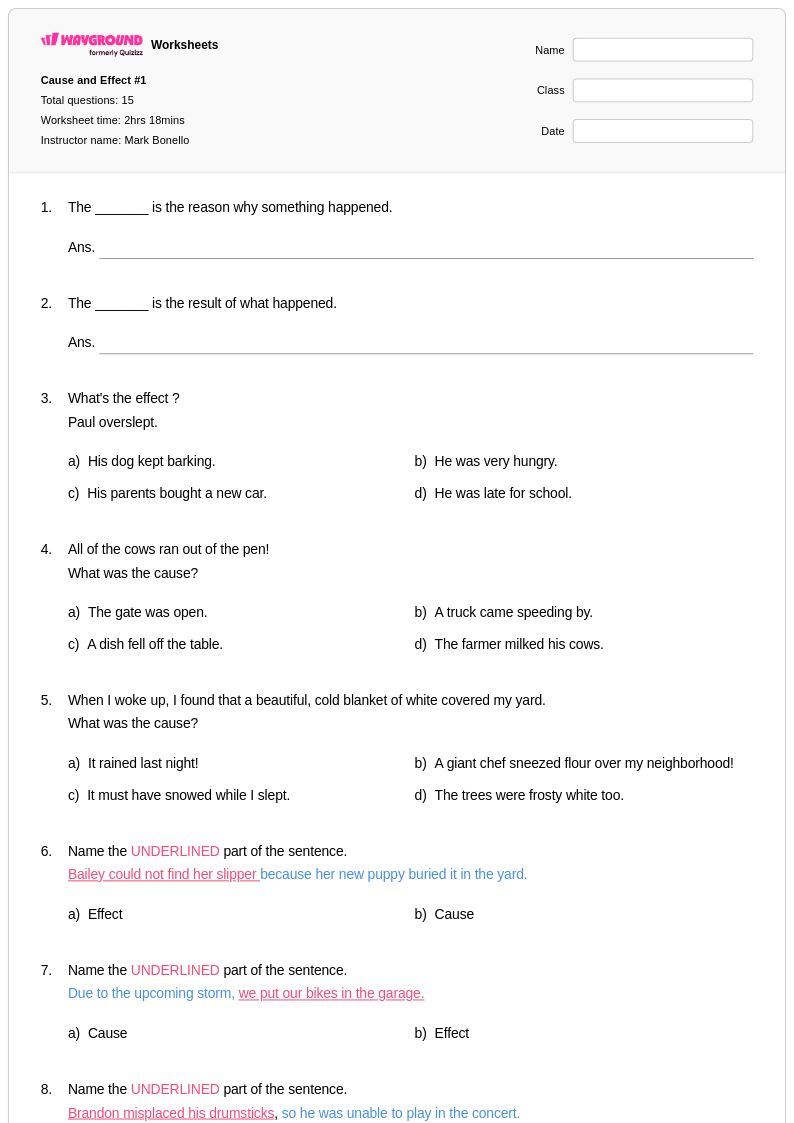
15 Q
4th
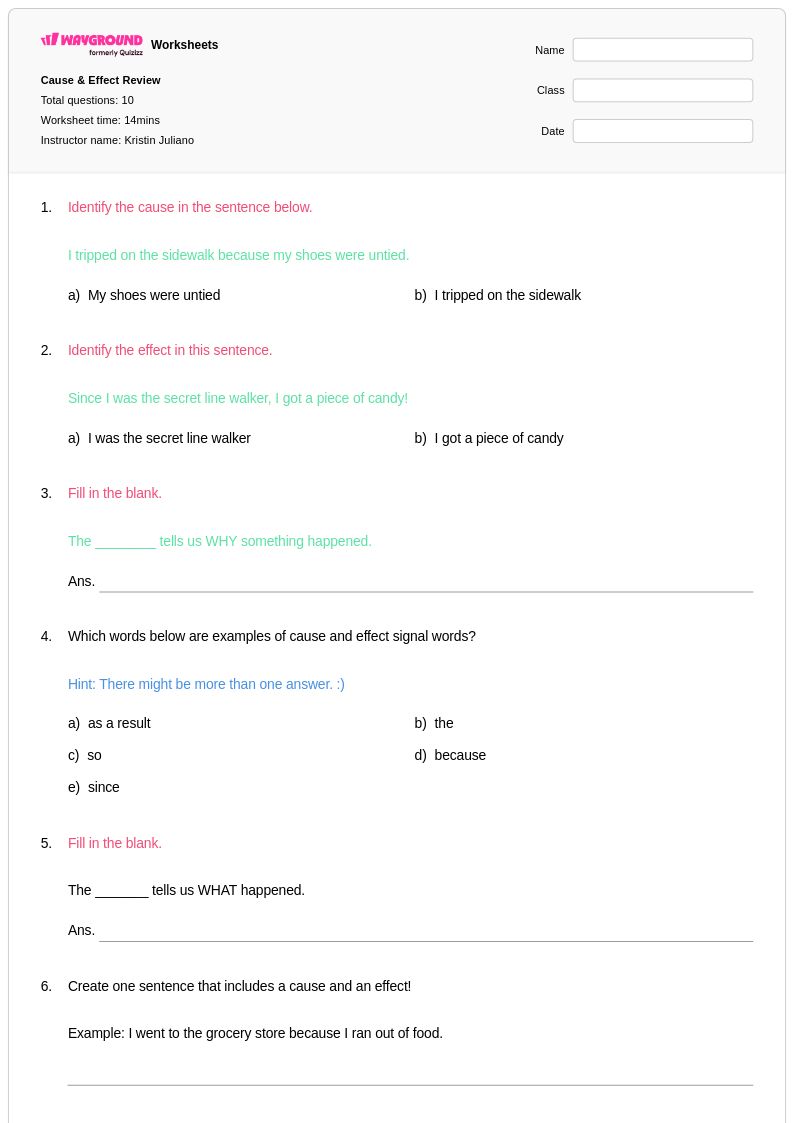
10 Q
4th
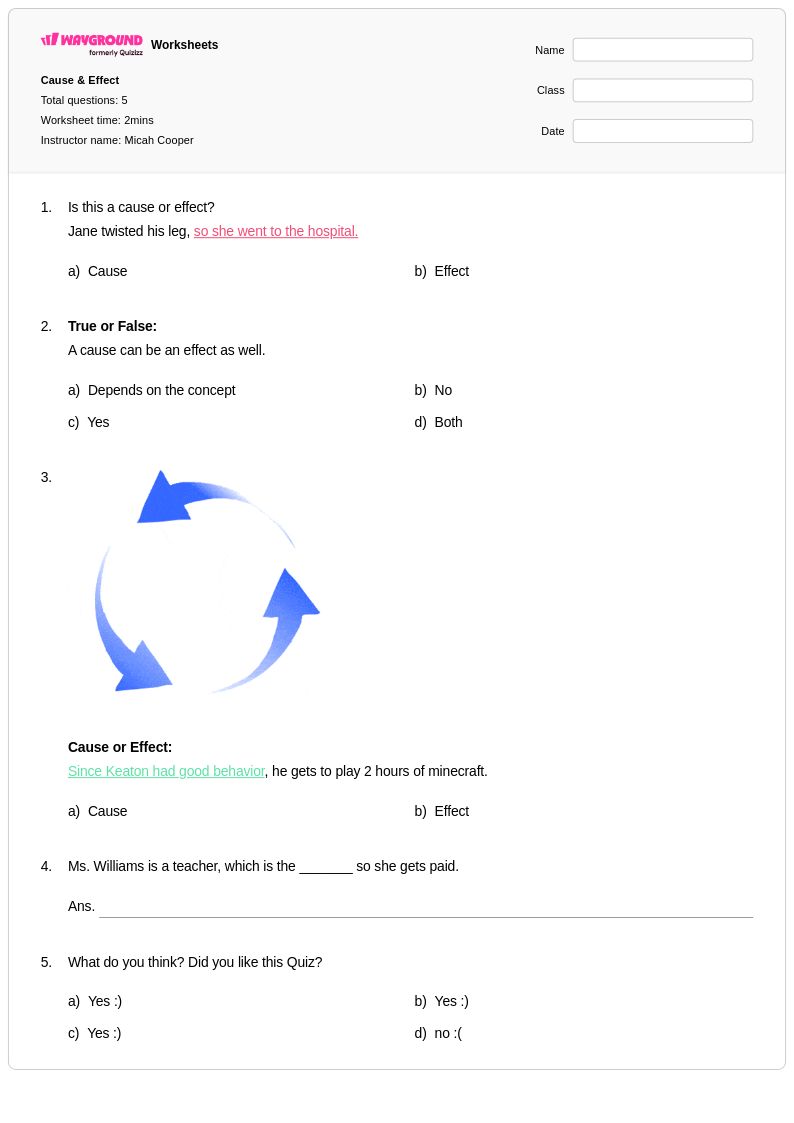
5 Q
4th
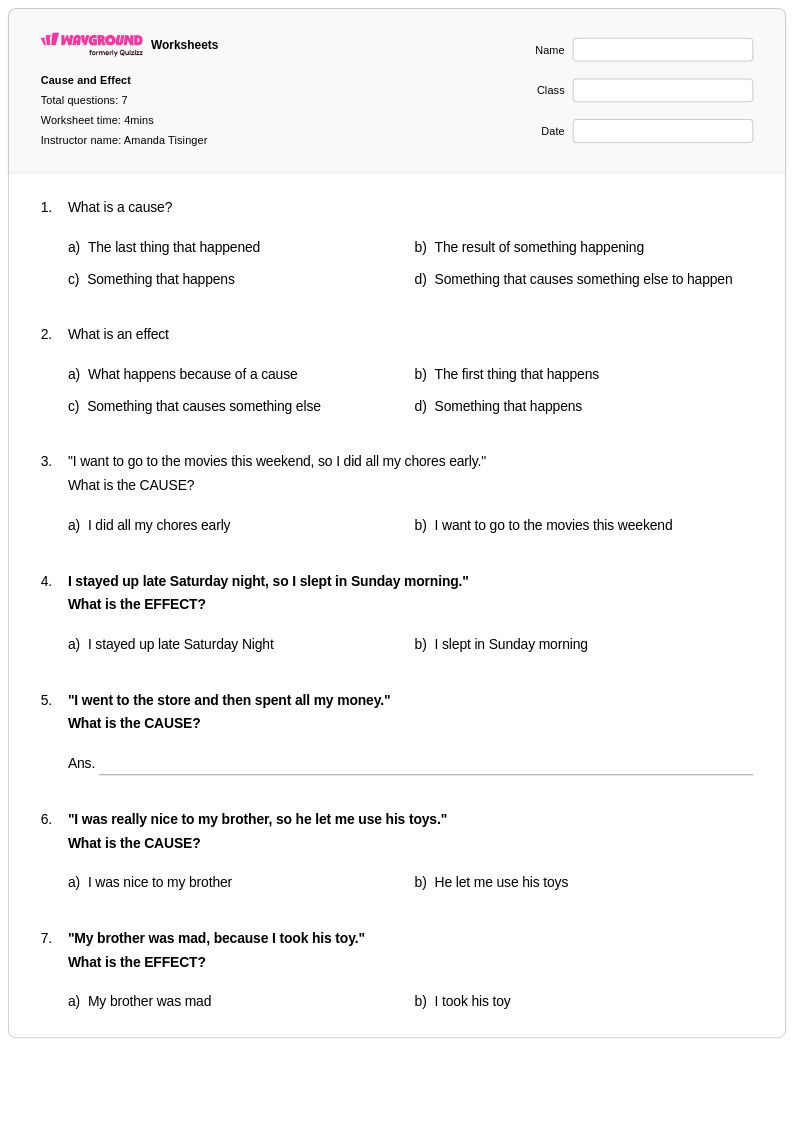
7 Q
4th - 5th
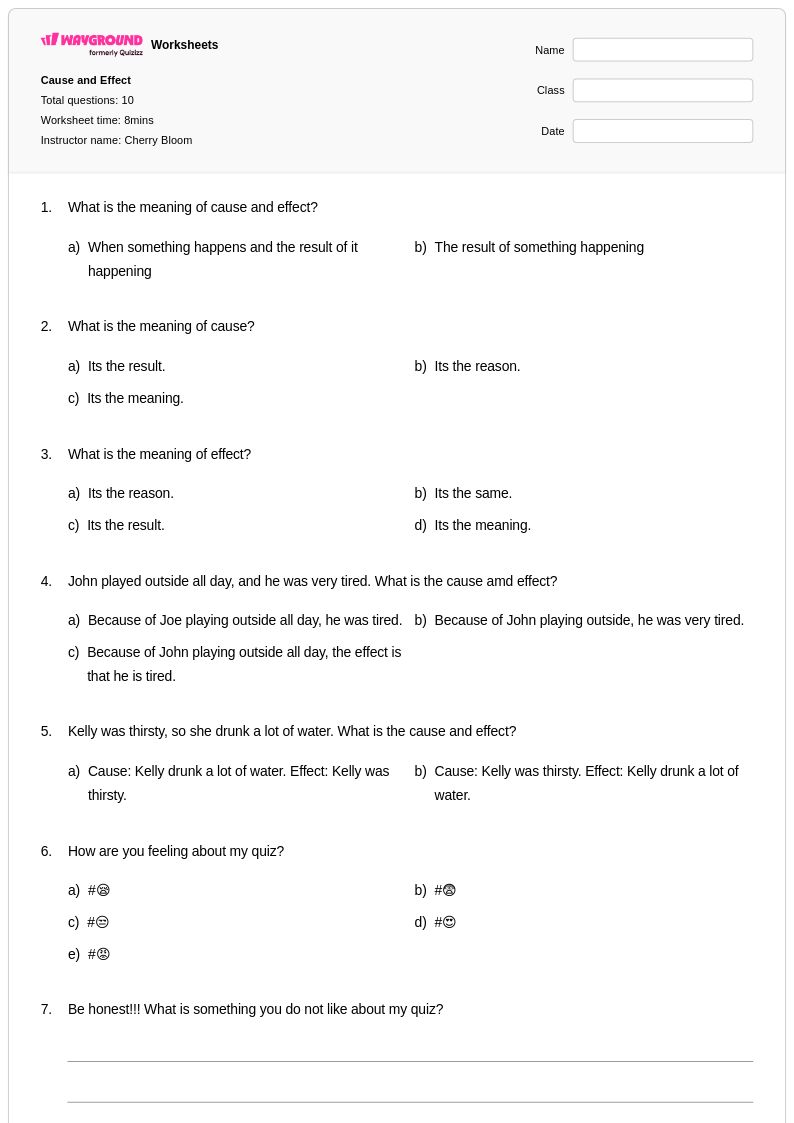
10 Q
3rd - 4th
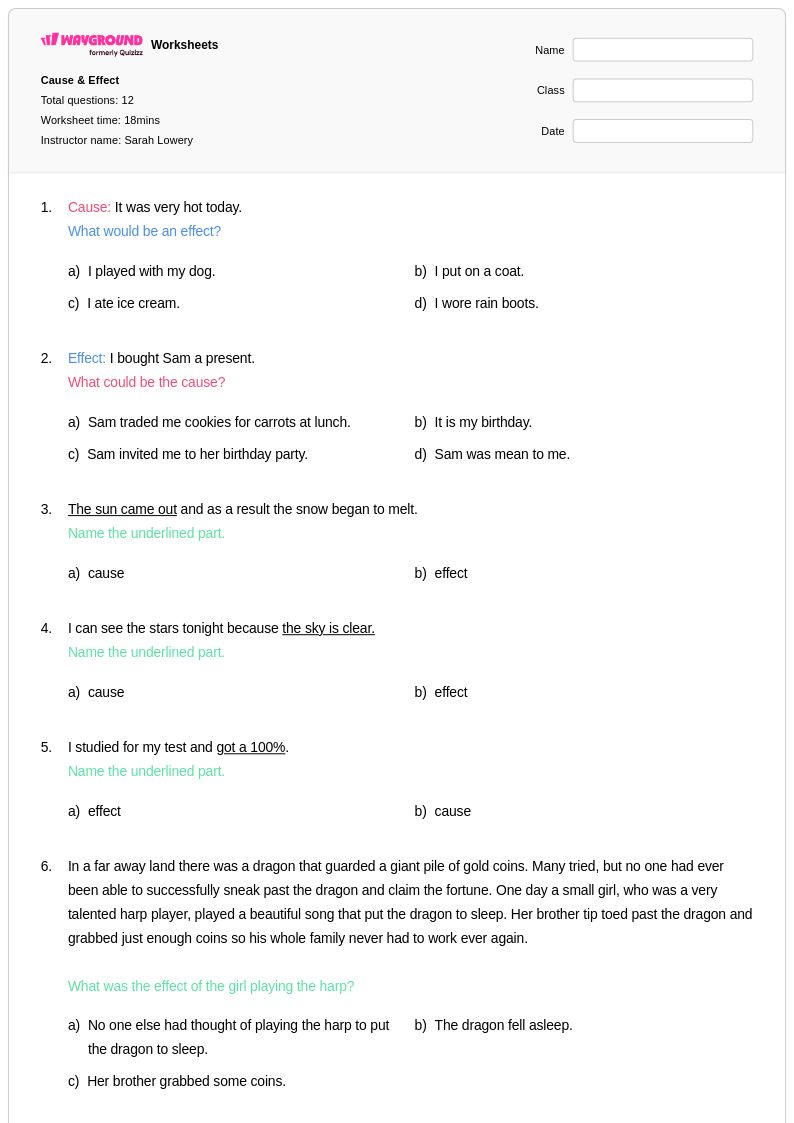
12 Q
2nd - 4th
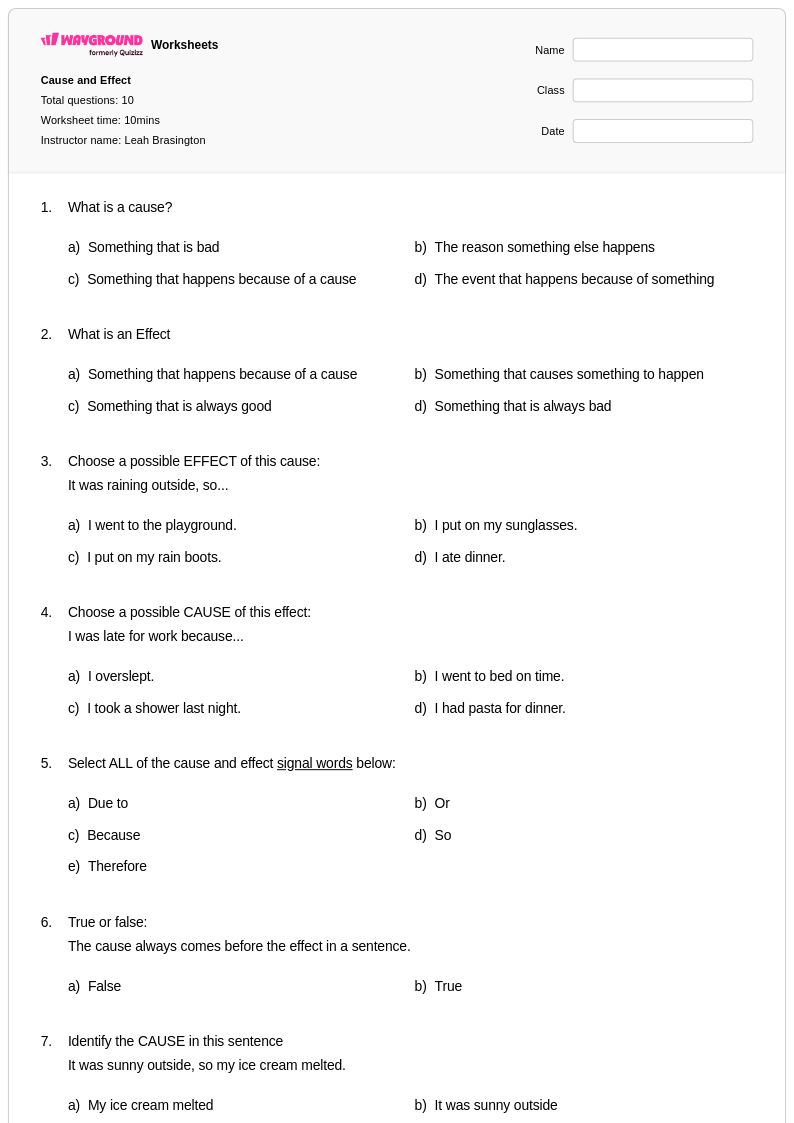
10 Q
4th
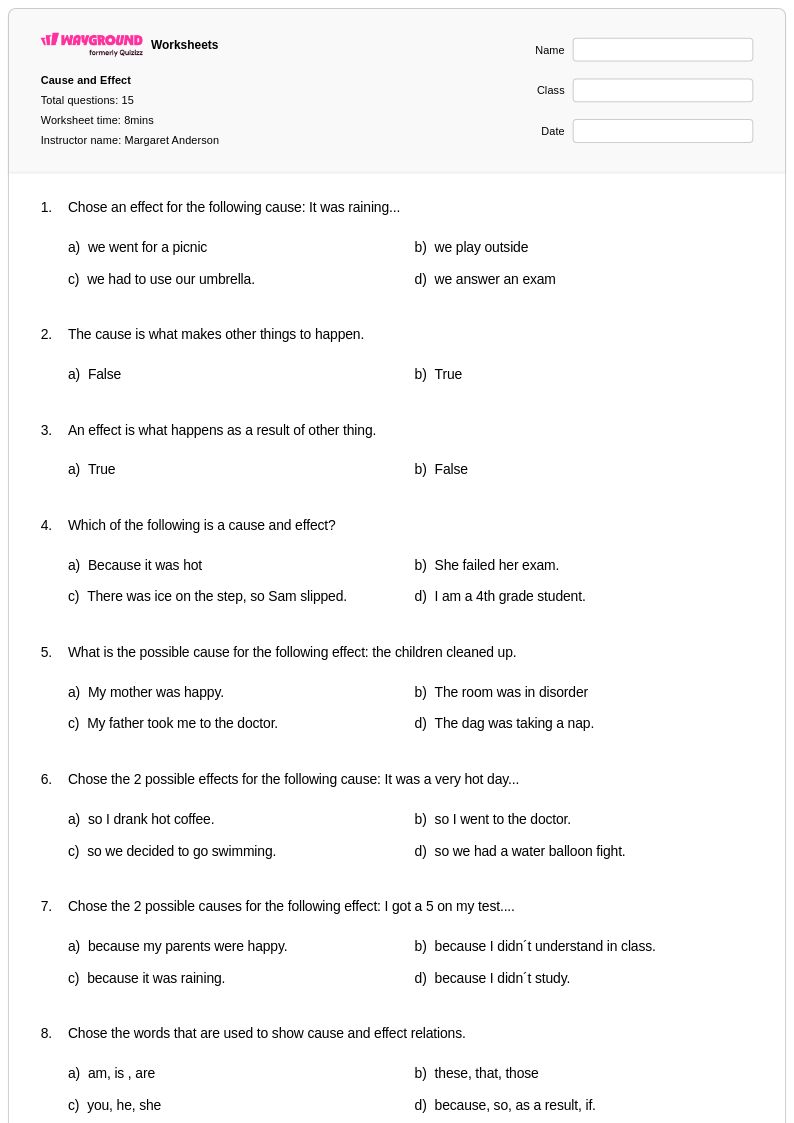
15 Q
4th
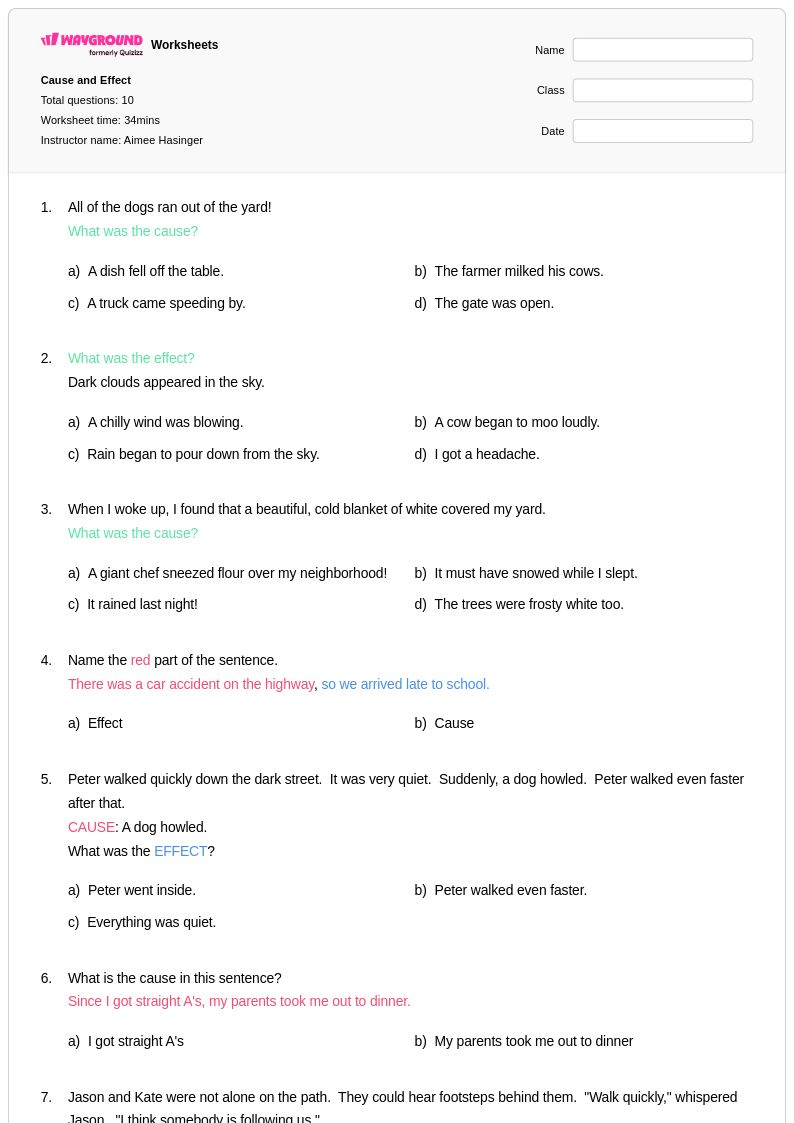
10 Q
4th
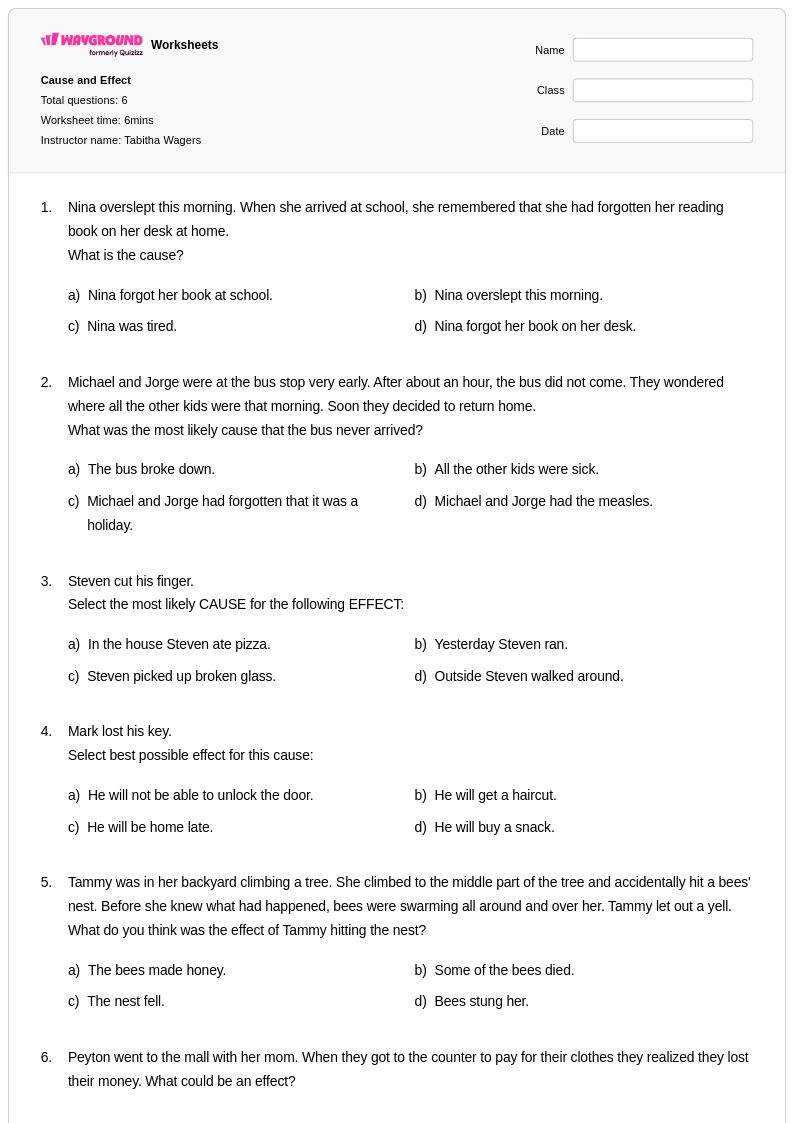
6 Q
4th
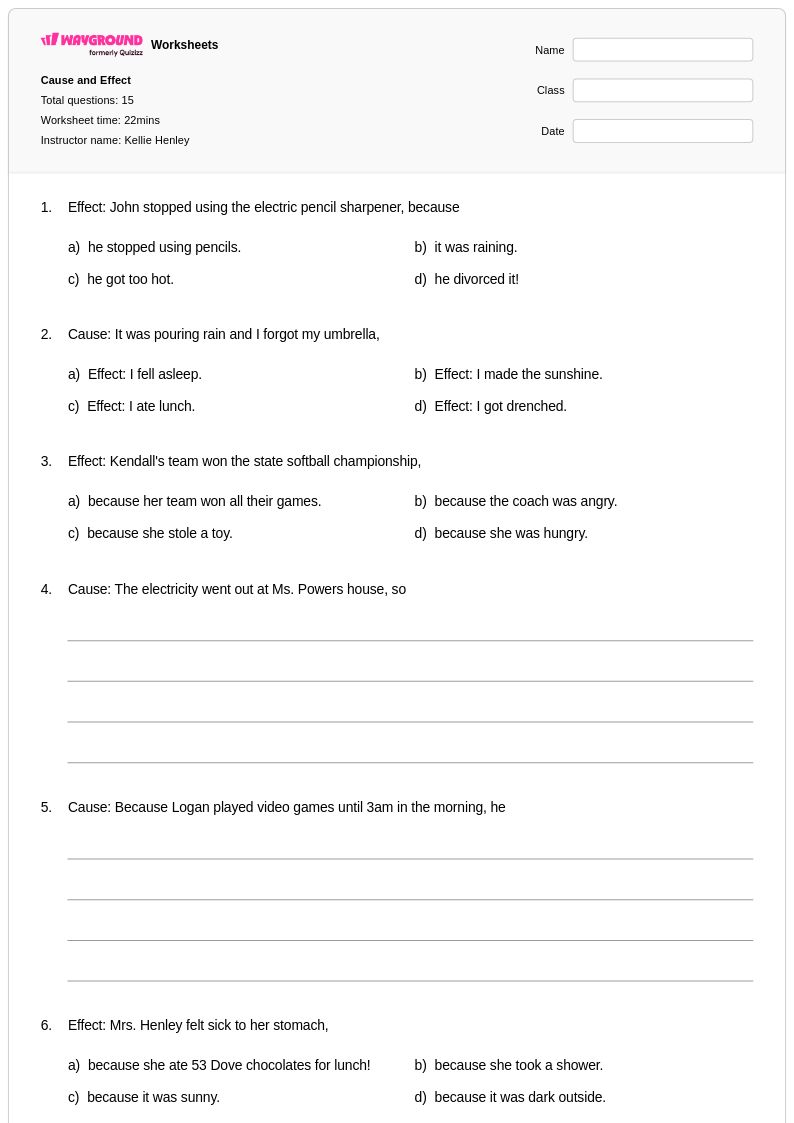
15 Q
4th - 6th
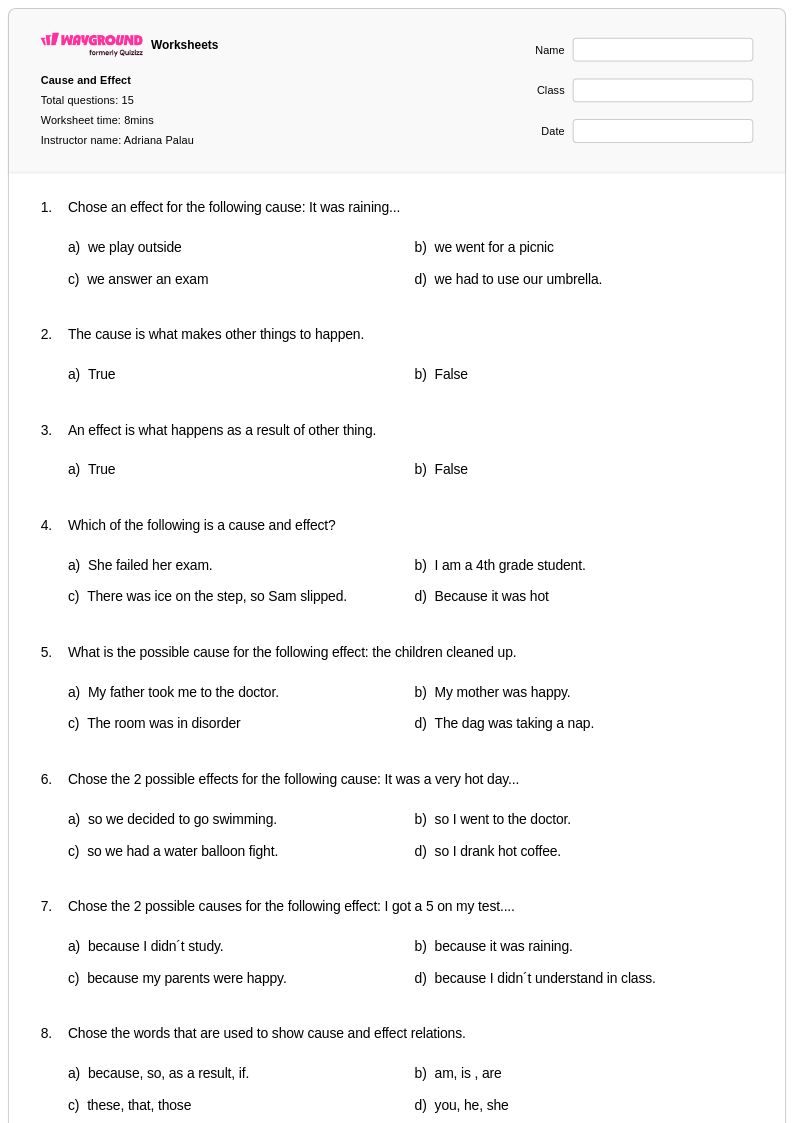
15 Q
4th
10 Q
4th
12 Q
3rd - 5th
20 Q
3rd - 8th
15 Q
4th - Uni
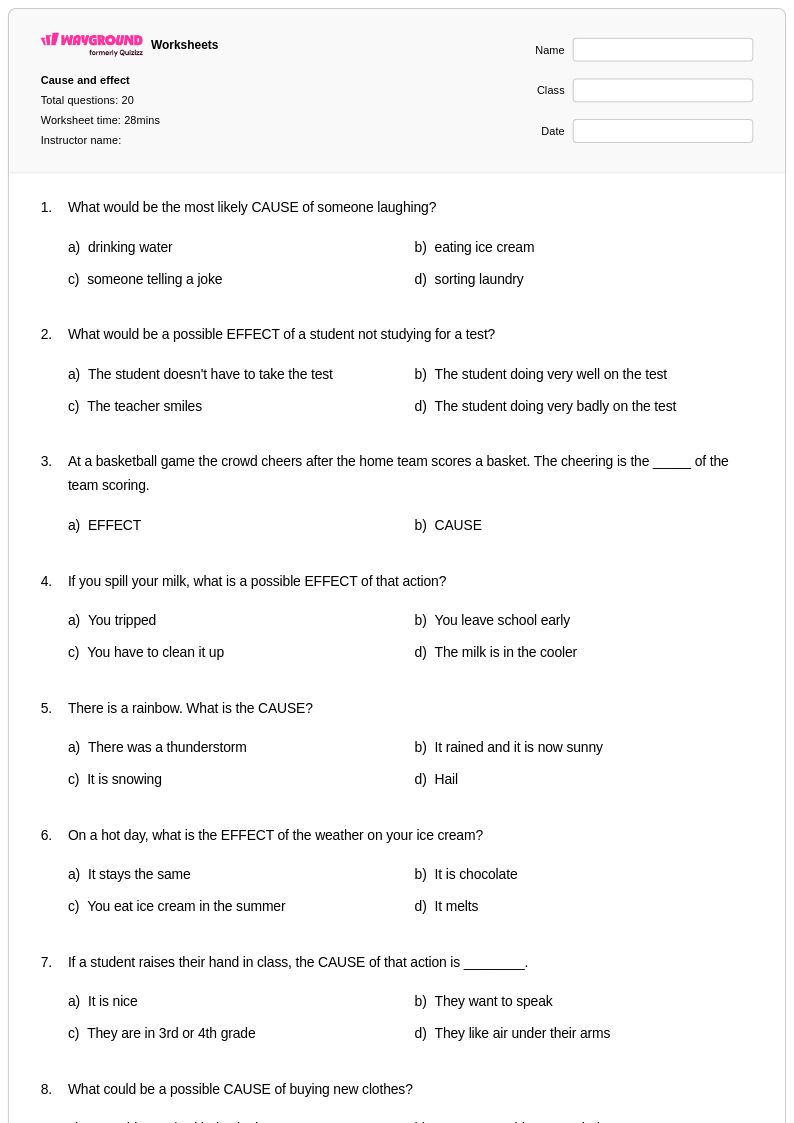
20 Q
4th
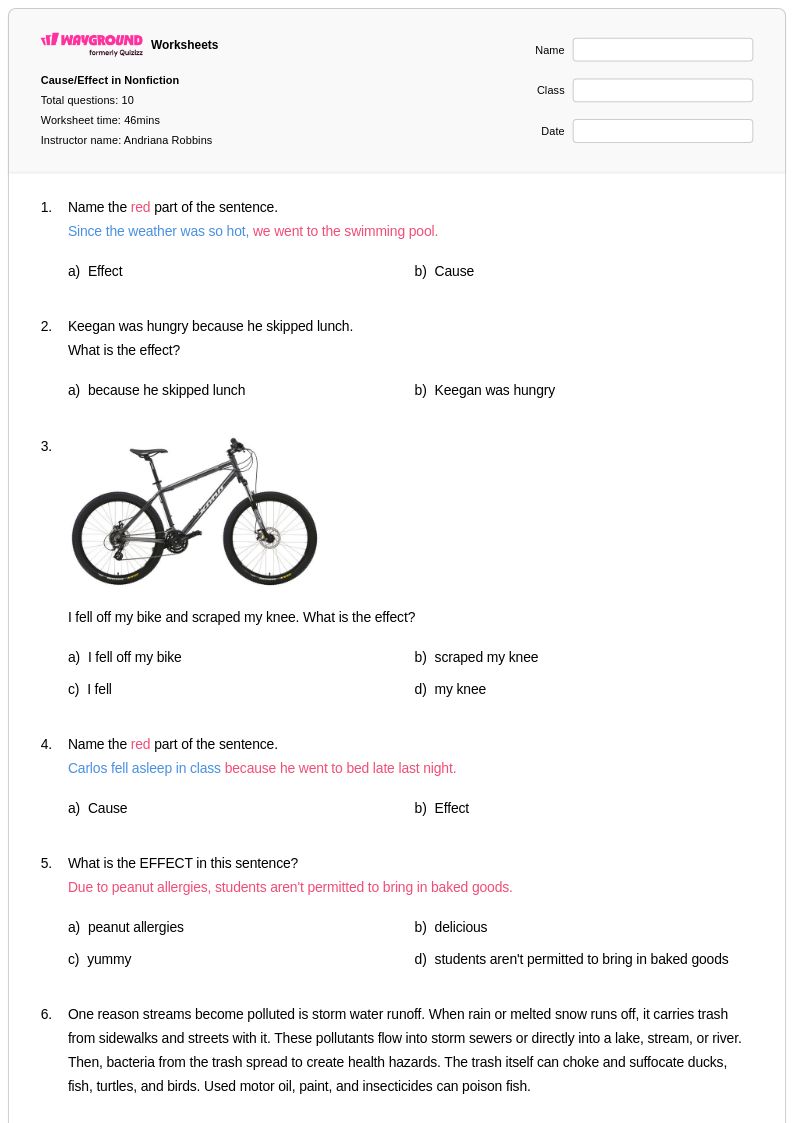
10 Q
4th
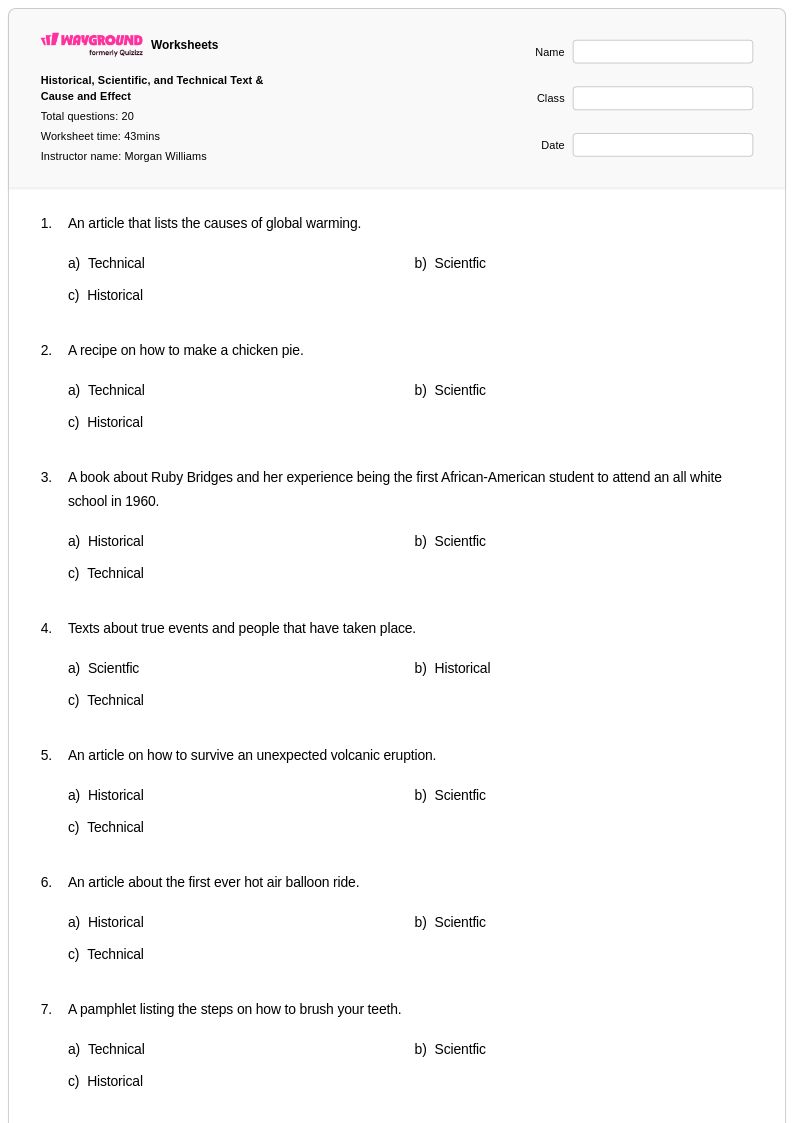
20 Q
4th
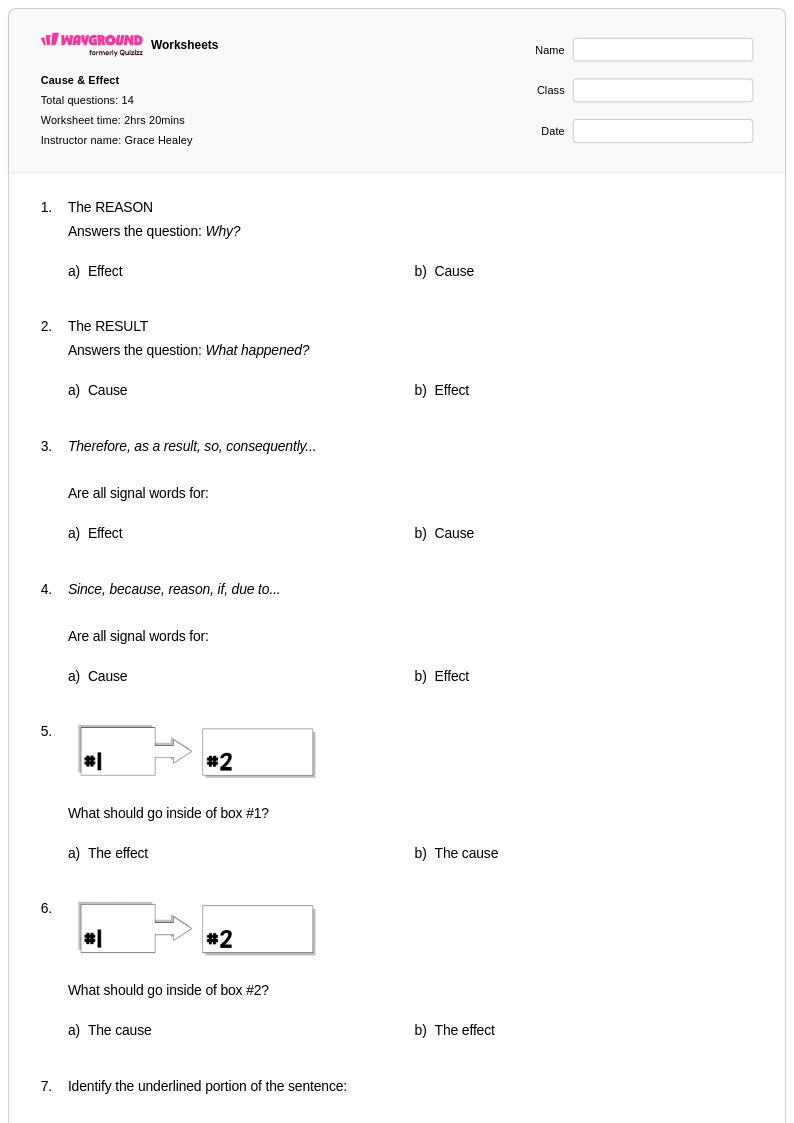
14 Q
2nd - 4th
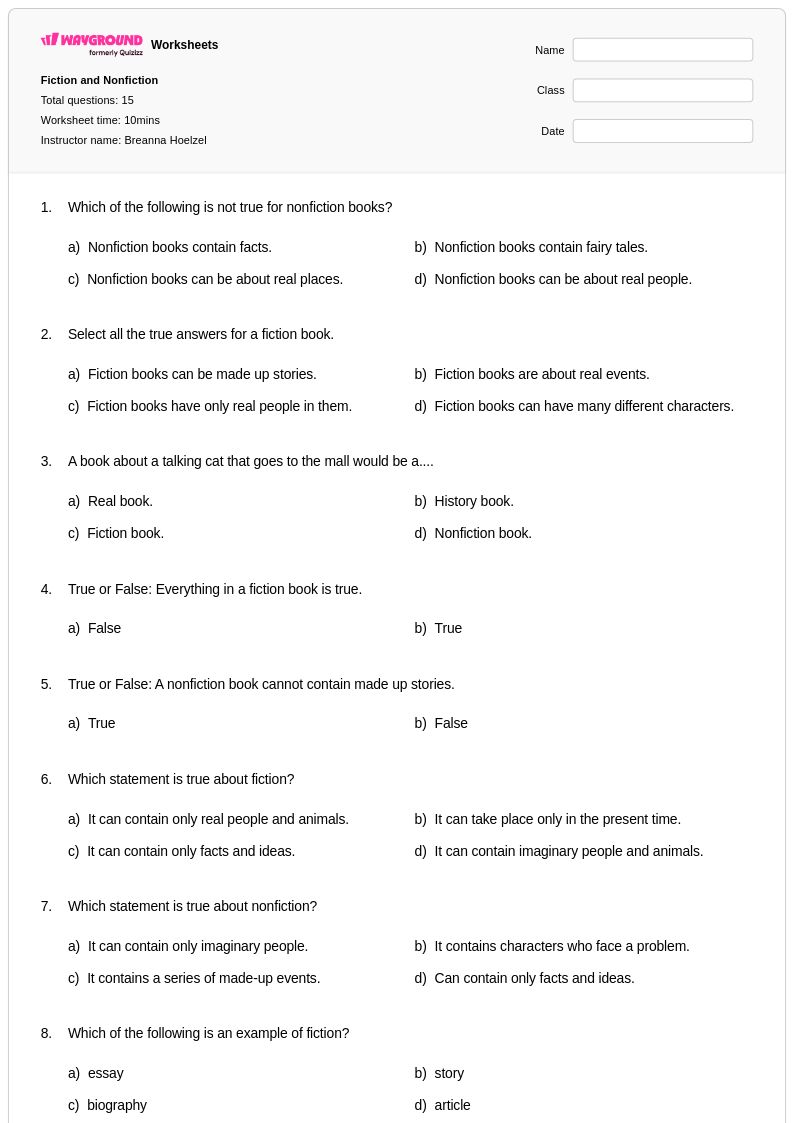
15 Q
3rd - 5th
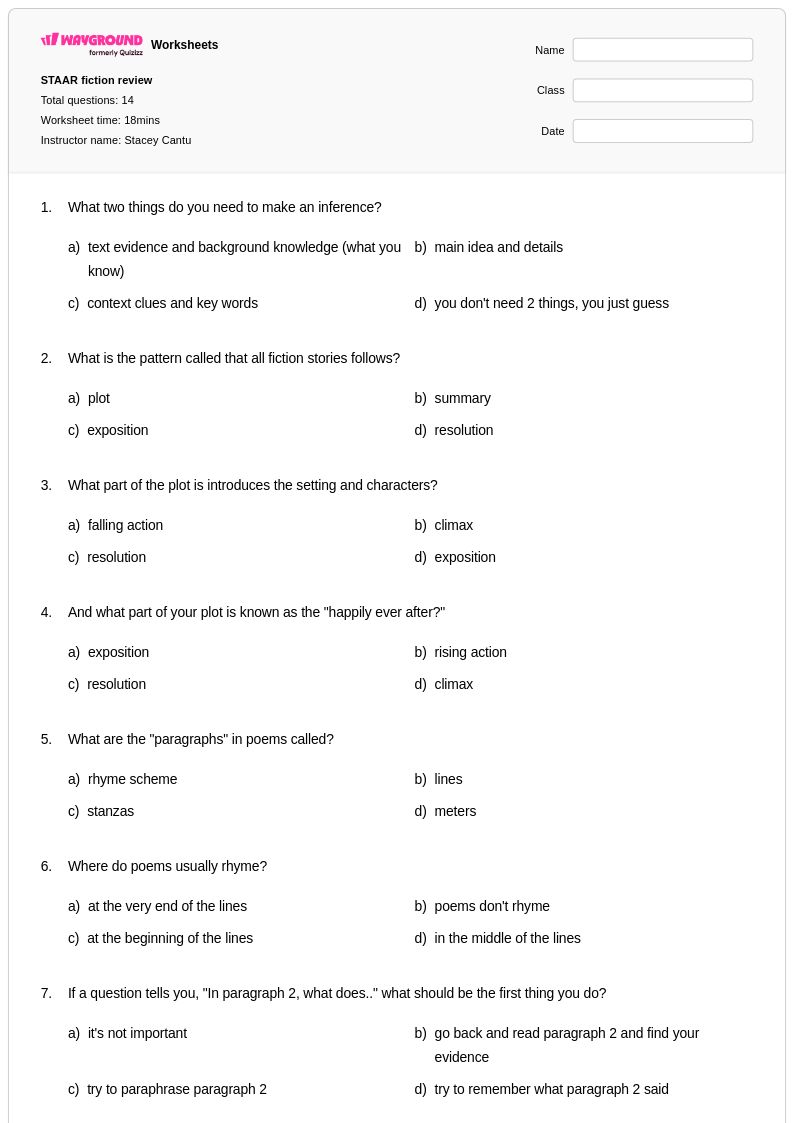
14 Q
4th
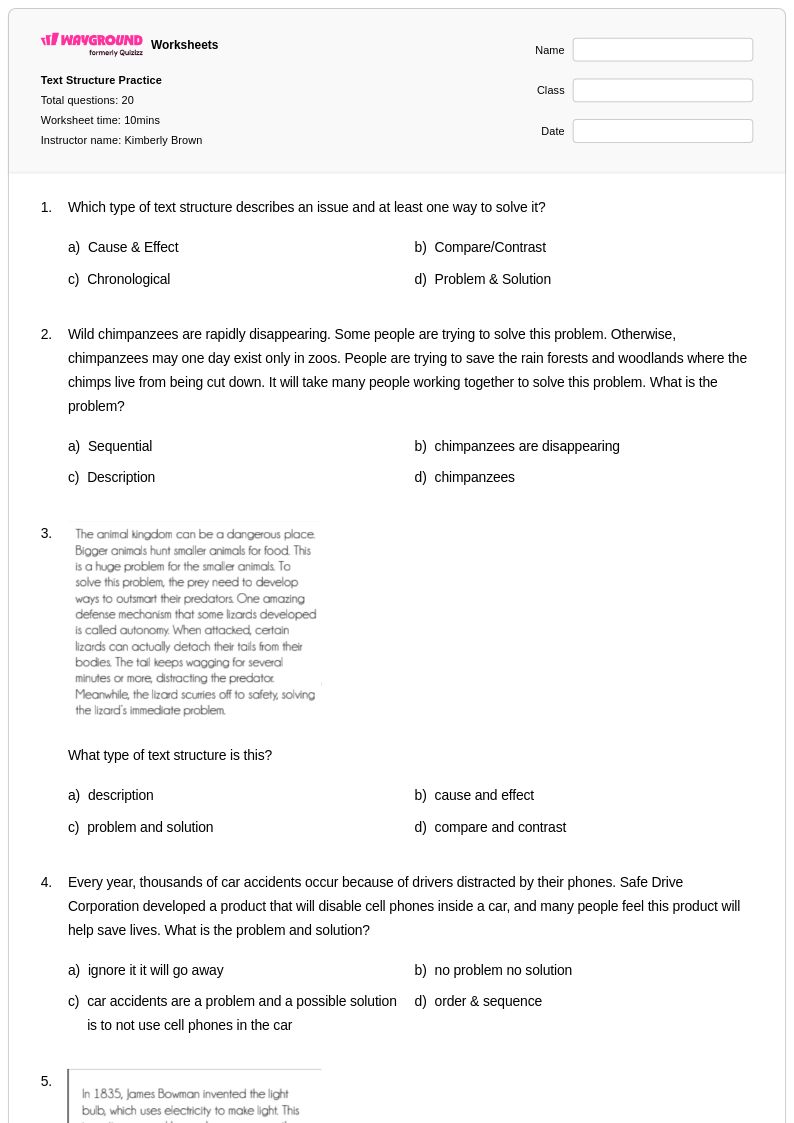
20 Q
1st - Uni
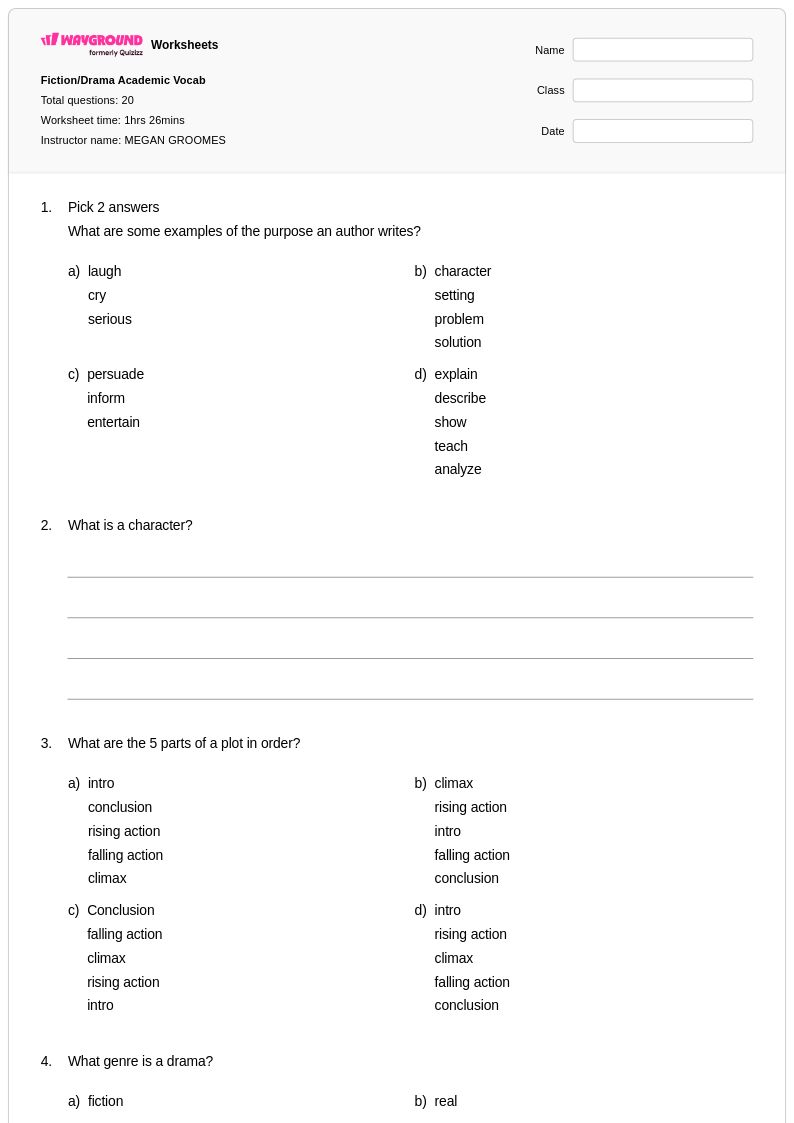
20 Q
4th
Explore Identifying Cause and Effect in Fiction Worksheets by Grades
Explore Other Subject Worksheets for class 4
Explore printable Identifying Cause and Effect in Fiction worksheets for Class 4
Identifying cause and effect in fiction represents a fundamental reading comprehension skill for Class 4 students, and Wayground's extensive worksheet collection provides targeted practice to strengthen this critical literary analysis ability. These carefully designed worksheets guide students through the process of recognizing how events, actions, and decisions within fictional stories create consequences and drive plot development. Students work with engaging passages and practice problems that challenge them to trace connections between story elements, helping them understand how authors construct narratives through deliberate cause-and-effect relationships. Each worksheet includes comprehensive answer keys and is available as free printable pdf resources, making it simple for educators to incorporate meaningful fiction analysis practice into their curriculum while building students' analytical thinking skills.
Wayground, formerly Quizizz, empowers teachers with millions of educator-created resources specifically focused on cause and effect identification in fictional texts, supported by robust search and filtering capabilities that allow quick access to grade-appropriate materials. The platform's standards alignment ensures these worksheets meet curriculum requirements, while built-in differentiation tools enable teachers to customize content for diverse learning needs and reading levels within their Class 4 classrooms. Available in both printable and digital pdf formats, these resources offer maximum flexibility for lesson planning, targeted remediation sessions, and enrichment activities. Teachers can seamlessly integrate these worksheets into guided reading groups, independent practice time, or homework assignments, providing consistent opportunities for students to develop their ability to analyze fictional narratives and understand the logical connections that make stories meaningful and compelling.