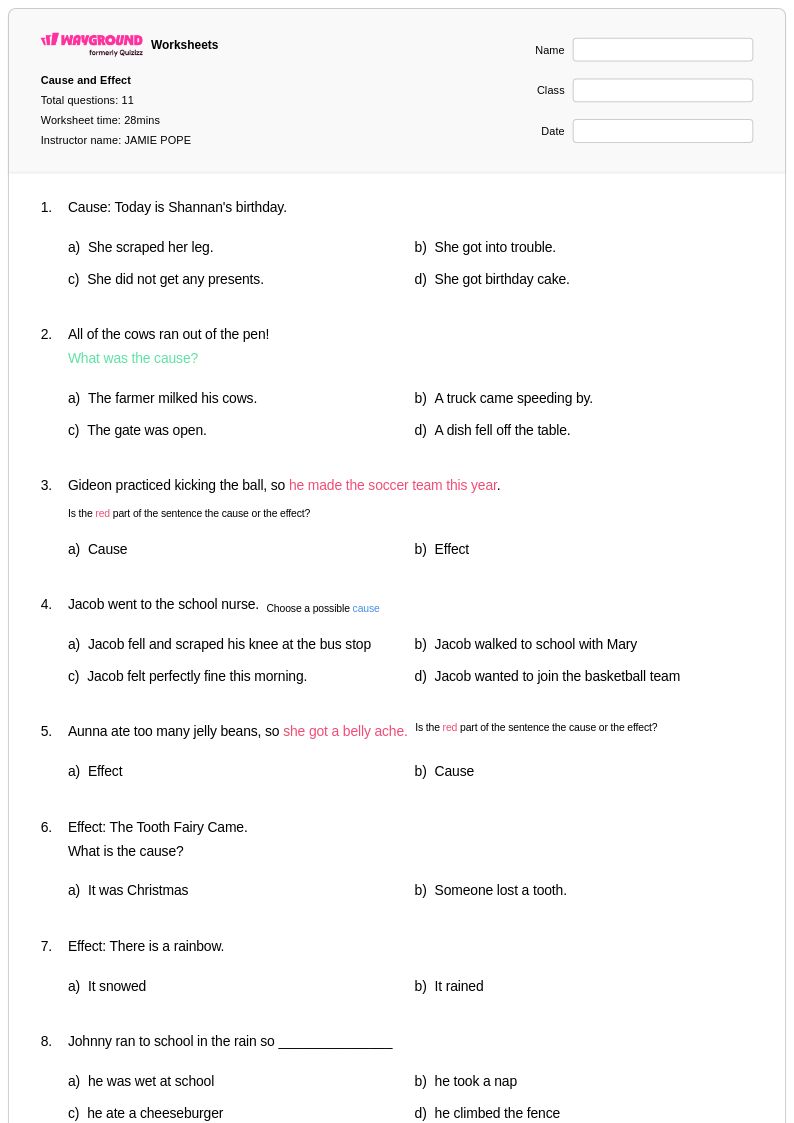
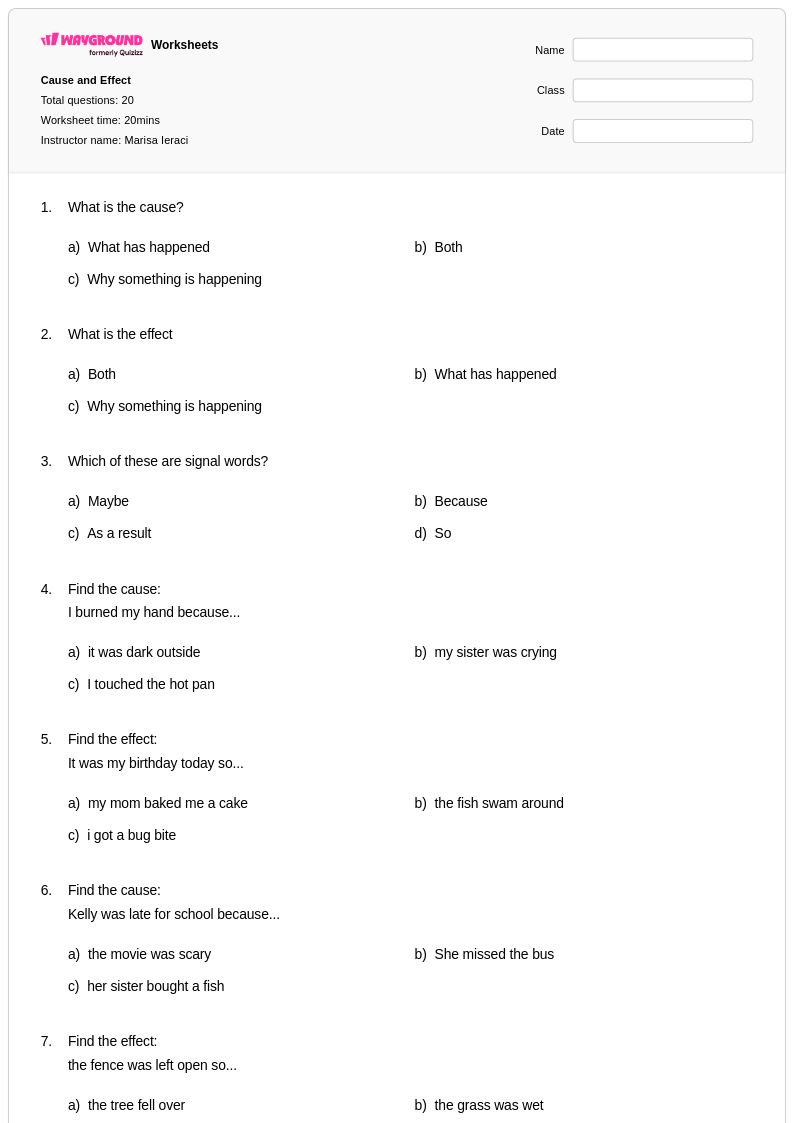
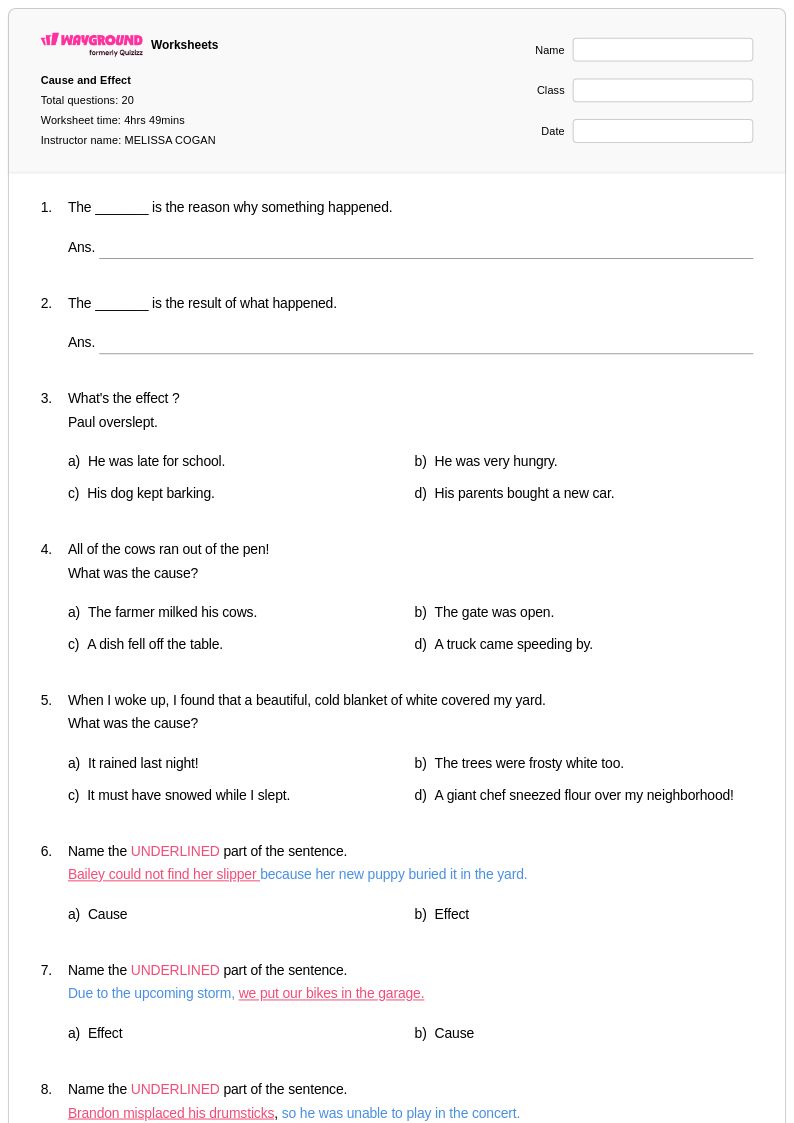
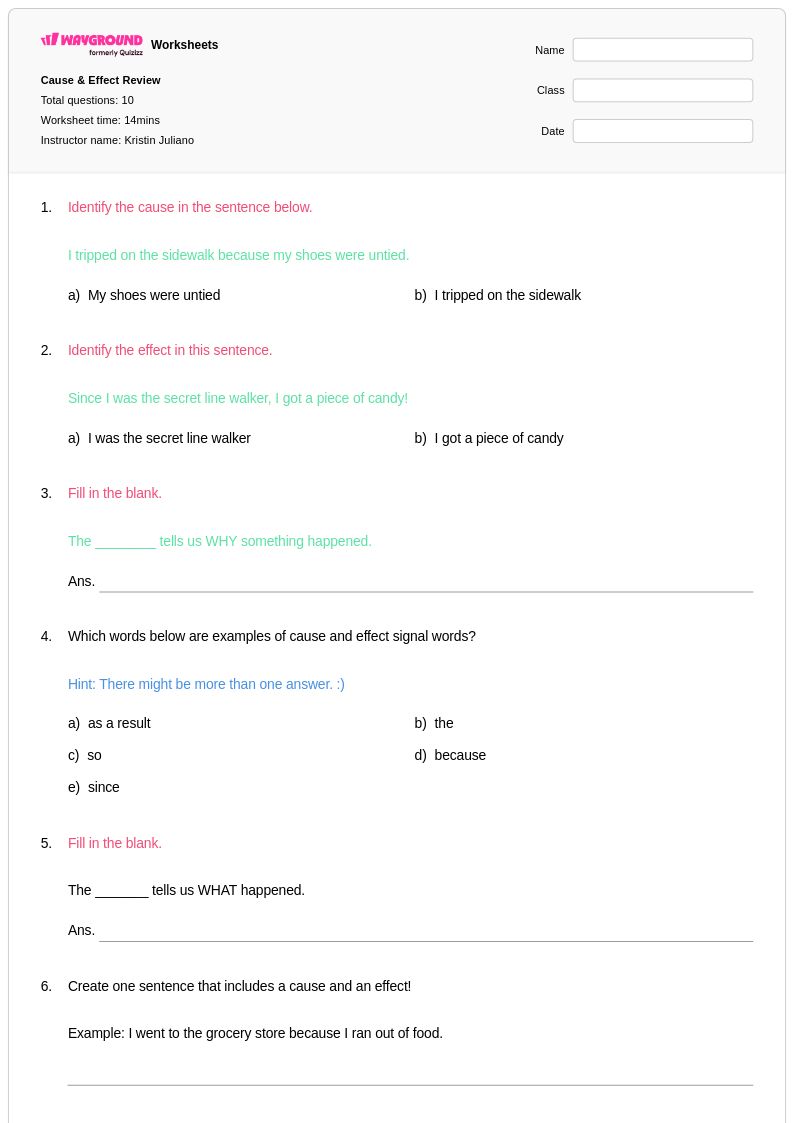
Free Printable Identifying Cause and Effect in Fiction worksheets
Free printable worksheets and practice problems help students master identifying cause and effect relationships in fictional texts, complete with answer keys and engaging PDF activities from Wayground.
Explore printable Identifying Cause and Effect in Fiction worksheets
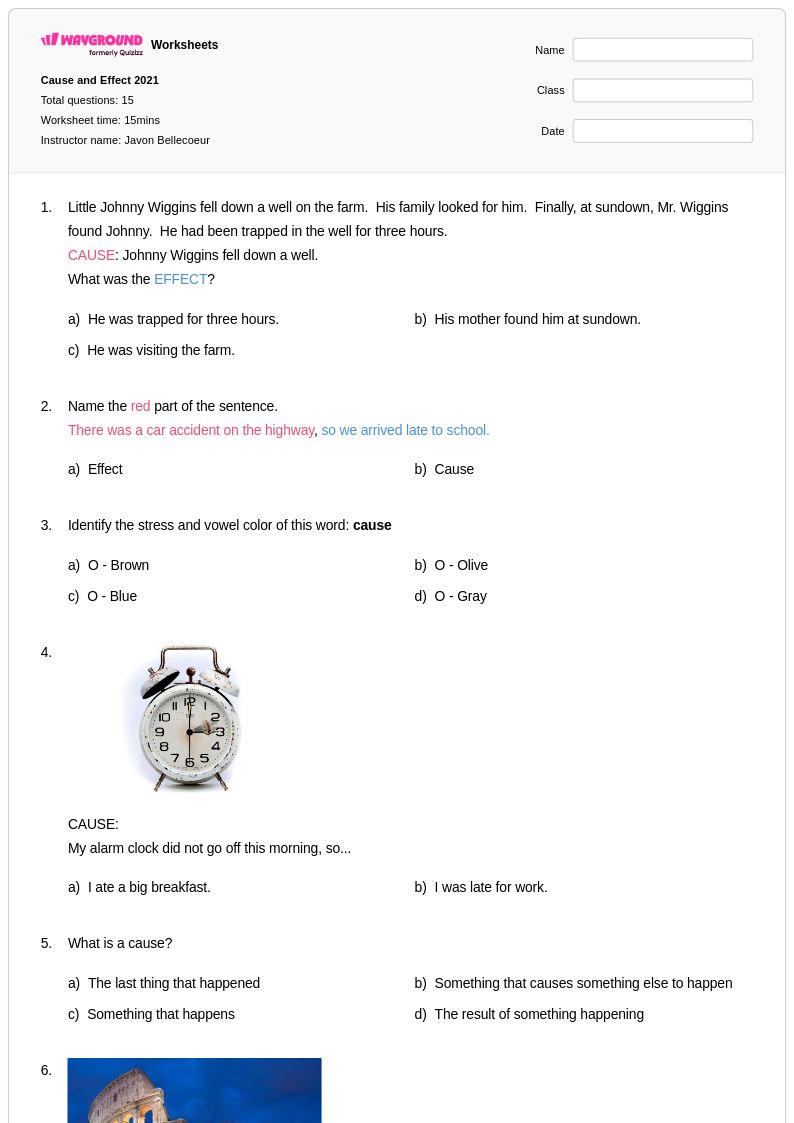
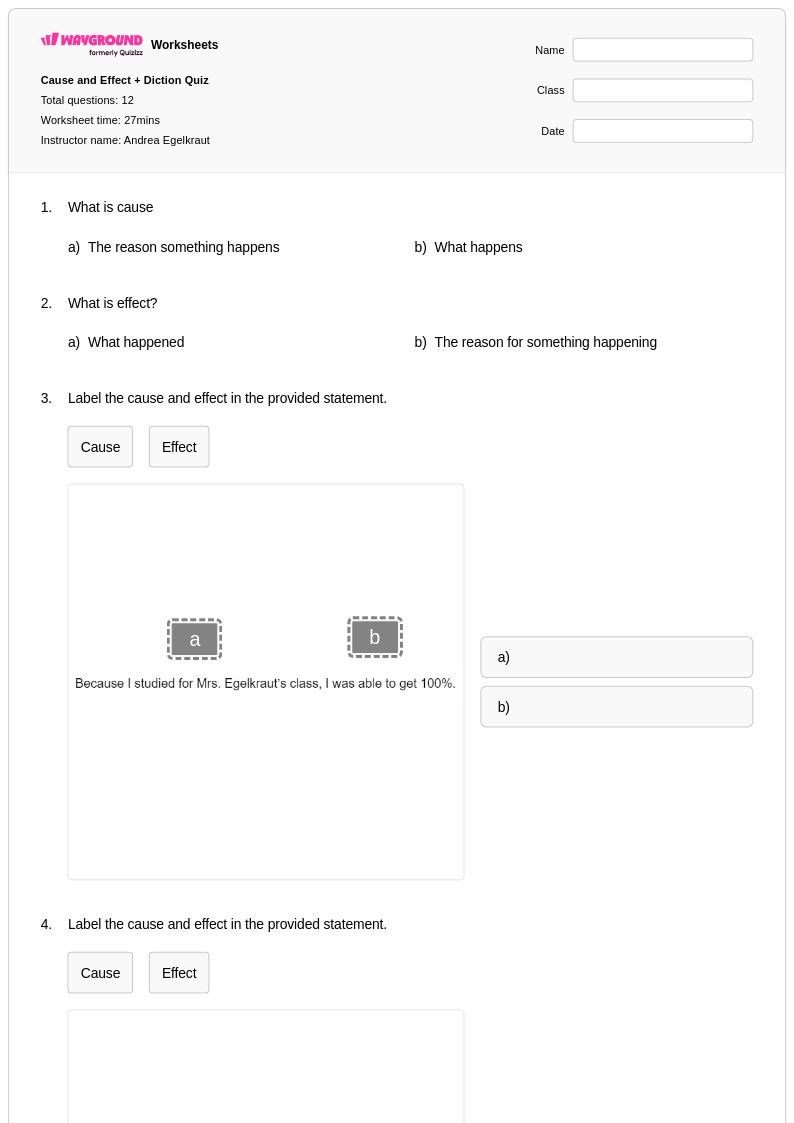
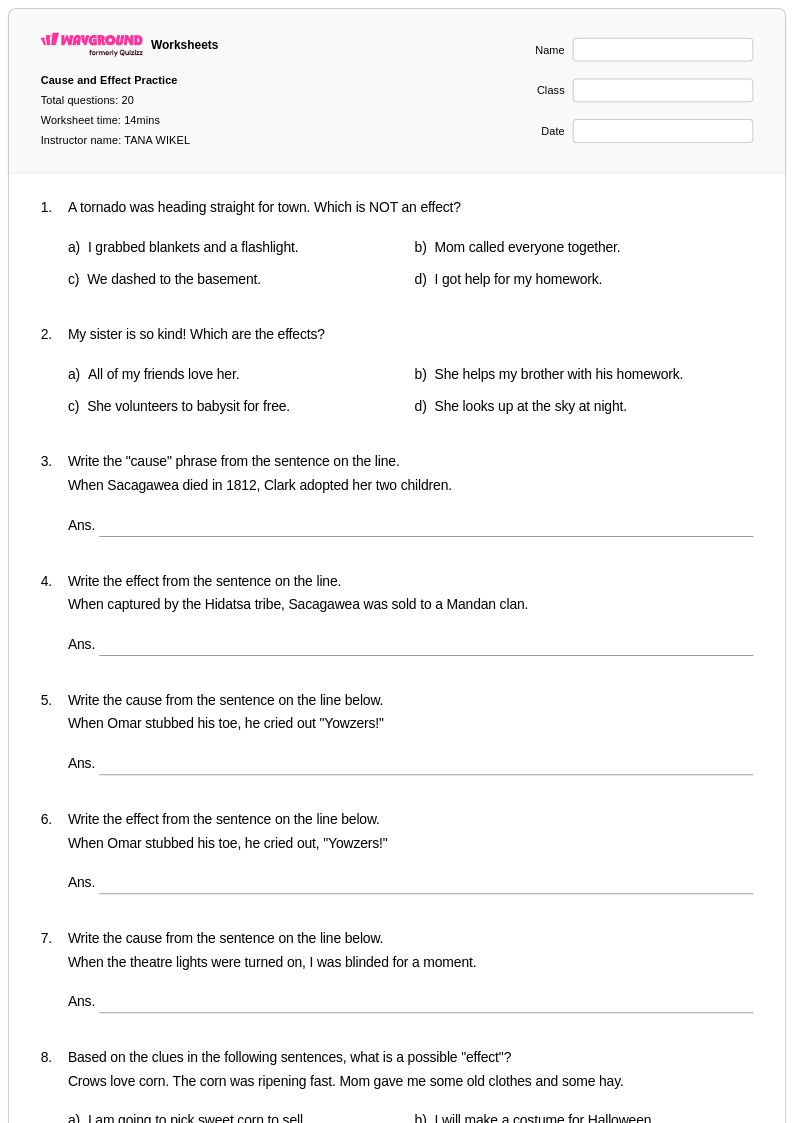
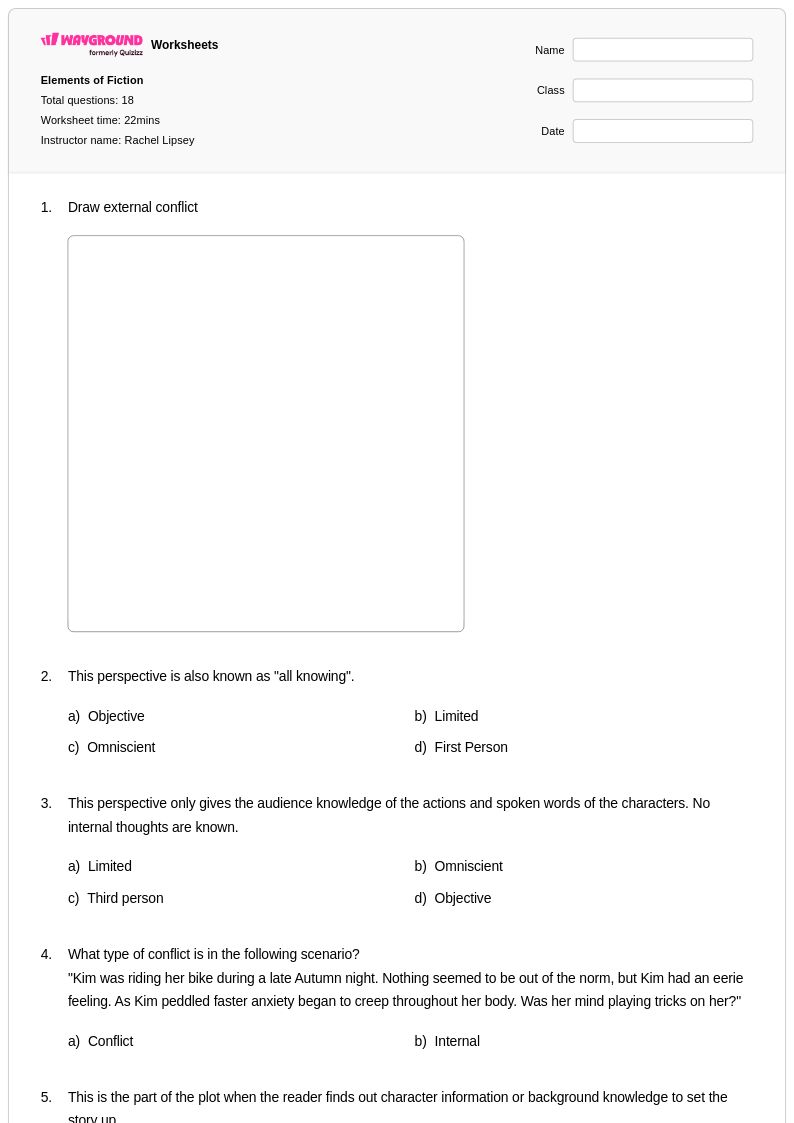
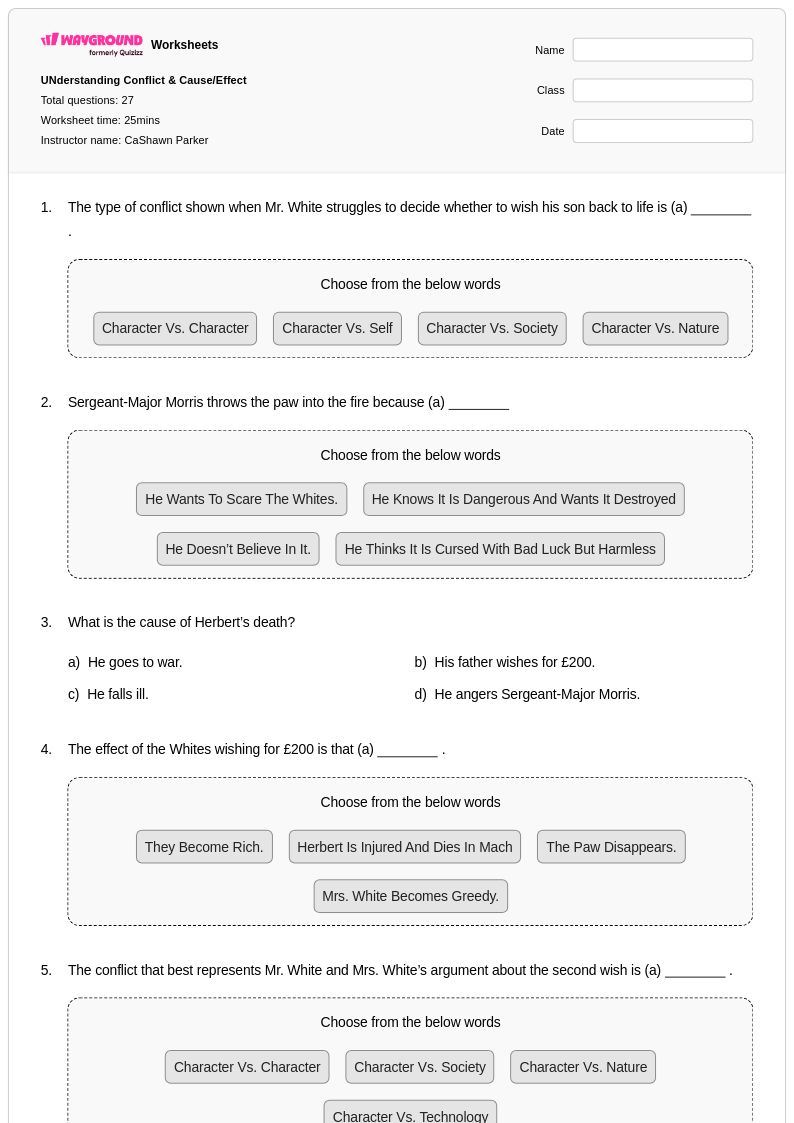
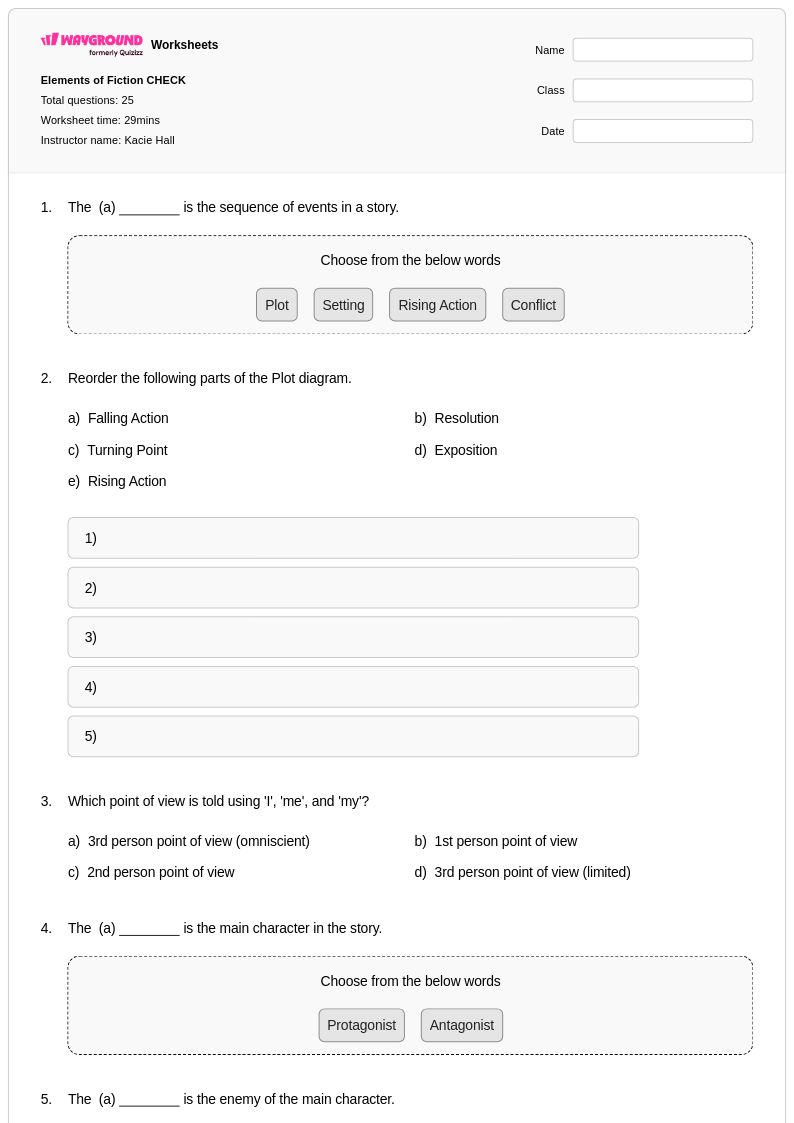
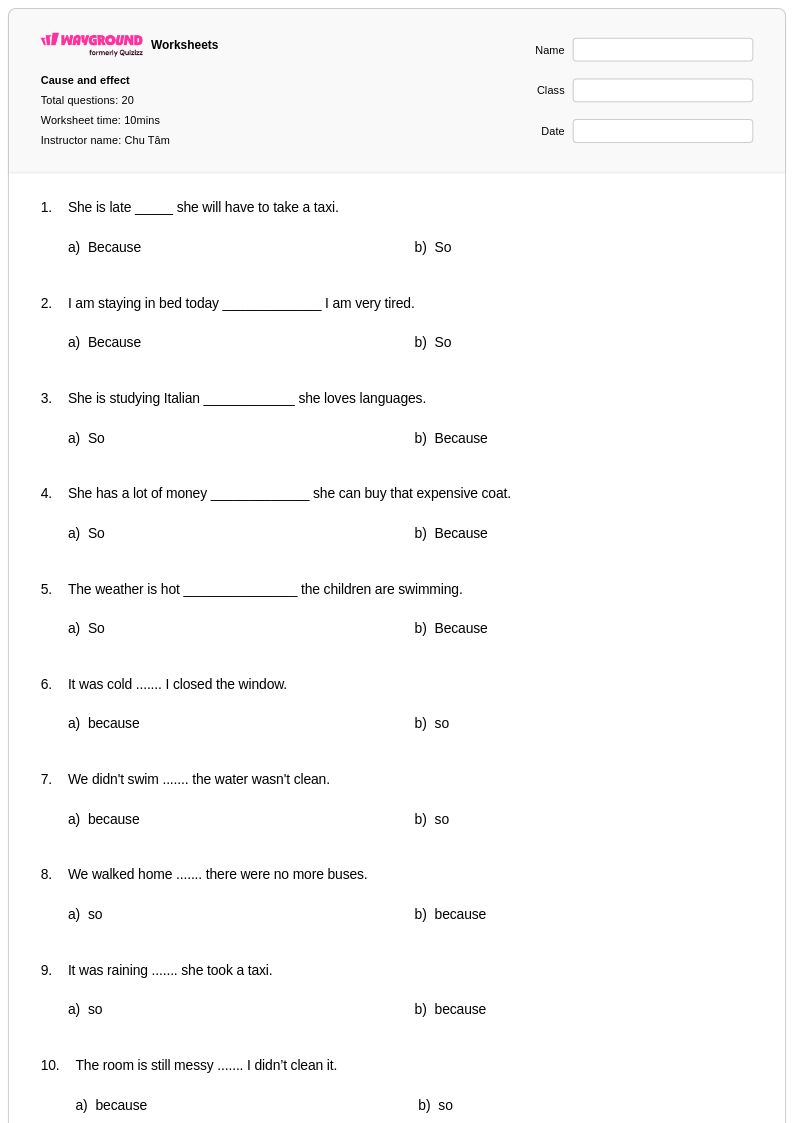
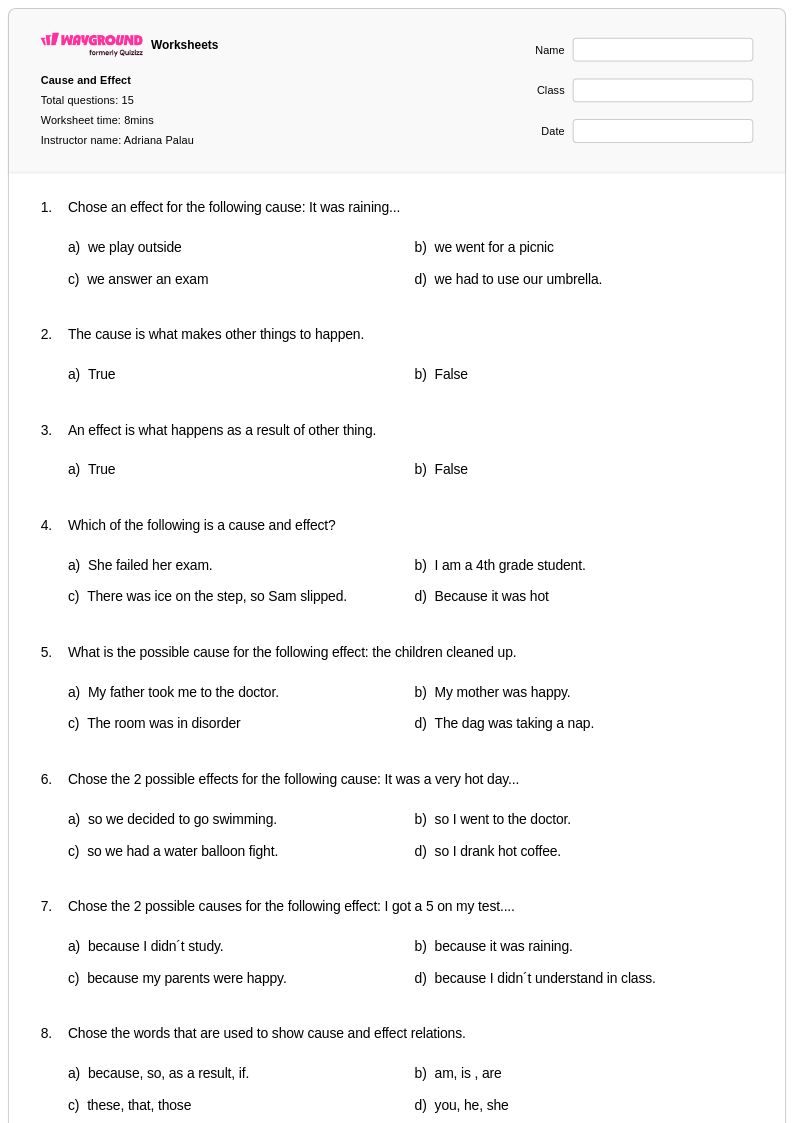
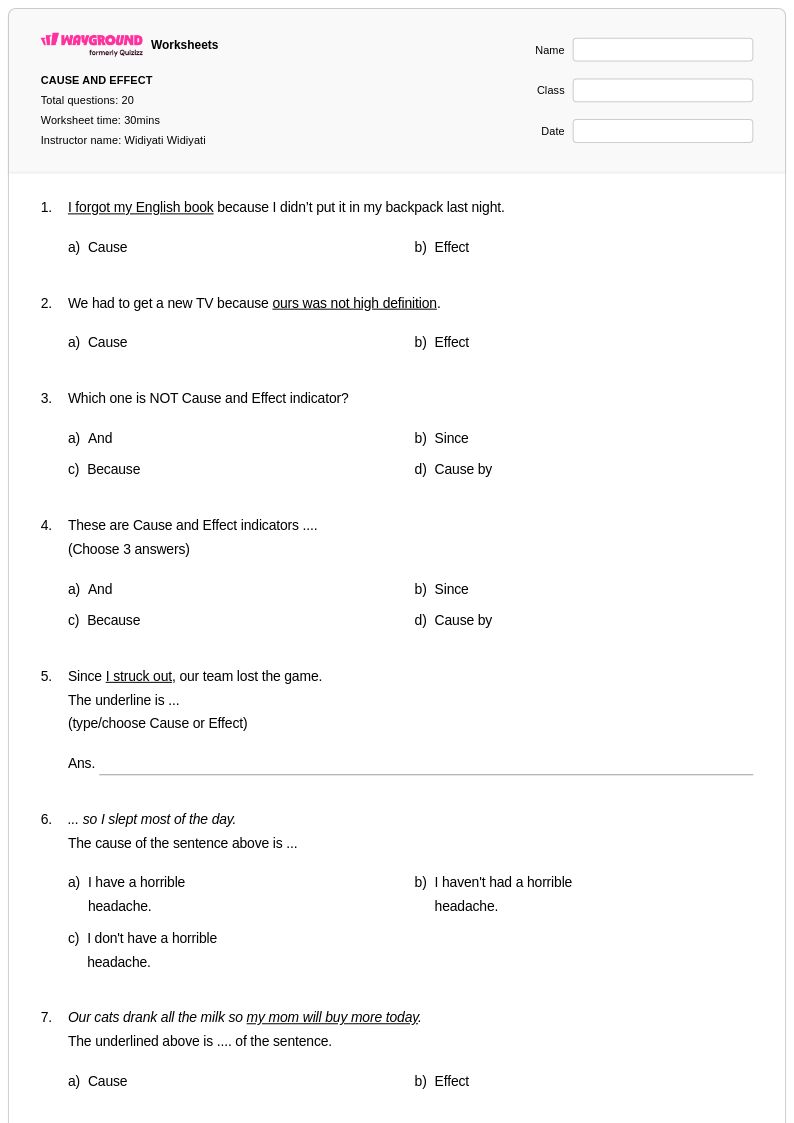
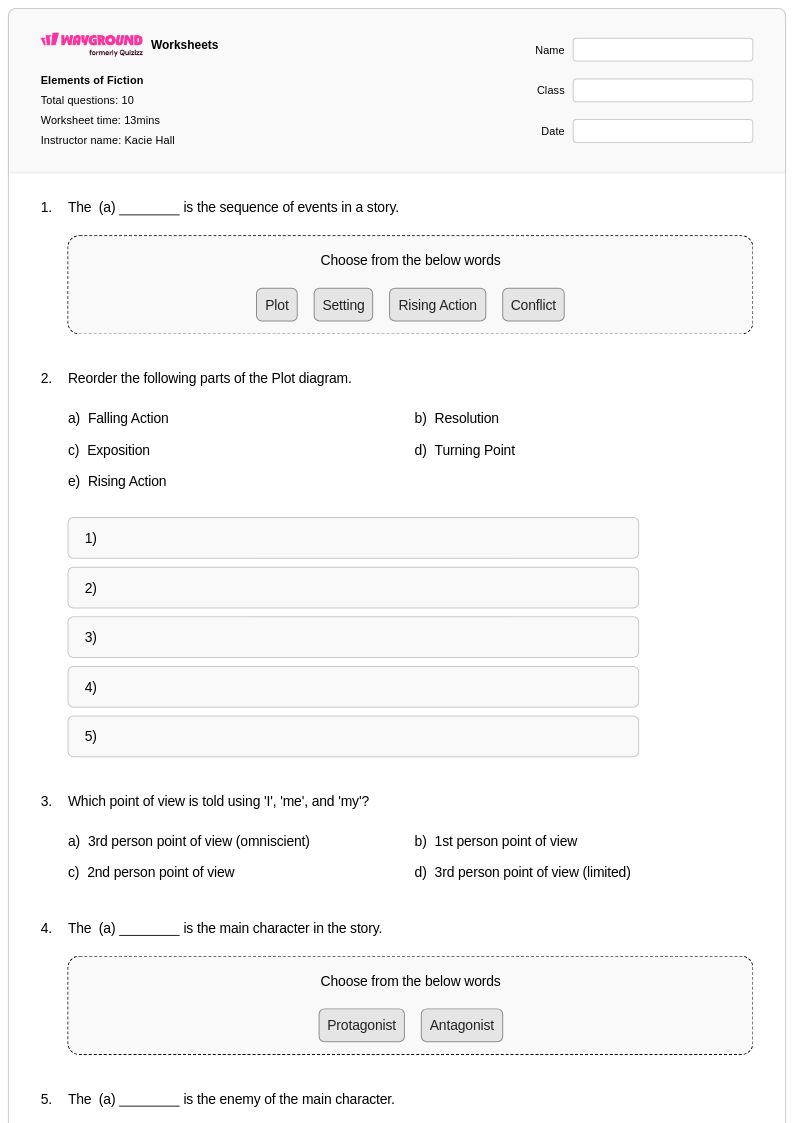
Identifying cause and effect in fiction worksheets available through Wayground (formerly Quizizz) provide students with essential practice in analyzing the fundamental relationships that drive narrative structure and character development. These comprehensive worksheets strengthen critical reading skills by guiding students through the process of recognizing how events, actions, and decisions create consequences within fictional texts, while also helping them understand how authors use causal relationships to build tension, develop plots, and create meaningful story arcs. Each worksheet includes carefully crafted practice problems that challenge students to trace connections between character motivations and outcomes, environmental factors and plot developments, and dialogue exchanges and story progression, with accompanying answer keys that support both independent study and classroom instruction. The free printables offer varied approaches to skill development, from graphic organizers that visually map cause-effect chains to analytical passages that require students to identify multiple layers of causation within complex fictional scenarios.
Wayground (formerly Quizizz) empowers educators with an extensive collection of teacher-created resources specifically designed for cause and effect instruction in fiction, featuring millions of worksheets that can be easily accessed through robust search and filtering capabilities. The platform's alignment with educational standards ensures that teachers can confidently select materials that meet curriculum requirements while utilizing differentiation tools to address diverse learning needs within their classrooms. These flexible resources support comprehensive lesson planning by offering both printable pdf formats for traditional instruction and digital versions for technology-enhanced learning environments, enabling teachers to seamlessly integrate cause and effect practice into remediation sessions, enrichment activities, and regular skill-building exercises. The customization features allow educators to modify existing worksheets or combine elements from multiple resources, creating targeted practice opportunities that address specific gaps in student understanding while reinforcing the sophisticated analytical thinking required for literary comprehension.
FAQs
How do I teach students to identify cause and effect in fiction?
Start by anchoring instruction in a familiar, short text where the causal chain is explicit — picture books or brief short stories work well for this. Model how to ask 'Why did this happen?' (cause) and 'What happened as a result?' (effect) at key story moments, then gradually shift to less obvious causal relationships, such as how a character's internal motivation leads to a plot-level consequence. Graphic organizers that visually map cause-effect chains help students see how multiple causes can produce one effect, or how a single event can trigger a cascade of consequences across a narrative.
What exercises help students practice identifying cause and effect in fiction?
Effective practice moves from isolated sentence-level exercises to full-passage analysis. Students benefit from activities that ask them to trace cause-effect chains within a single scene, then extend that analysis across a full story arc, connecting character decisions to eventual outcomes. Graphic organizers, annotation tasks, and passage-based multiple-choice questions all reinforce the skill at different levels of complexity, making them well-suited for both initial instruction and targeted review.
What mistakes do students commonly make when identifying cause and effect in fiction?
The most common error is confusing sequence with causation — students assume that because one event follows another, the first must have caused the second. A related misconception is identifying only surface-level causes while missing deeper character motivations or thematic forces driving the plot. Students also tend to oversimplify by identifying only one cause per effect, when most fictional events result from multiple overlapping factors, such as a character's backstory, external conflict, and a specific triggering moment.
How do I help struggling readers find cause and effect relationships in fiction?
For students who struggle, narrow the text scope to a single scene or paragraph and provide sentence frames such as 'Because ___, ___happened' to scaffold their thinking. Visual tools like cause-effect flow charts reduce the cognitive load of holding the whole narrative in mind at once. On Wayground, teachers can enable the Read Aloud accommodation so students hear the passage read to them, and Reduced Answer Choices to lower the difficulty of multiple-choice questions, making the skill more accessible without removing the analytical challenge.
How do I use Wayground's cause and effect in fiction worksheets in my classroom?
Wayground's identifying cause and effect in fiction worksheets are available as printable PDFs for traditional classroom use and in digital formats for technology-integrated settings, giving teachers flexibility depending on the lesson context. Teachers can also host these worksheets as quizzes directly on Wayground, which enables live or asynchronous student responses and automatic scoring. Each worksheet includes an answer key, making them practical for independent practice, small-group instruction, or homework assignments.
How does cause and effect analysis connect to broader literary comprehension skills?
Understanding cause and effect is foundational to literary comprehension because narrative structure is fundamentally causal — characters act, events respond, and meaning emerges from those relationships. Students who can trace causal chains are better equipped to analyze plot development, interpret character motivation, and understand how authors build tension and resolve conflict. This analytical skill also transfers directly to informational text comprehension and argumentative writing, making it one of the highest-leverage reading skills to develop.