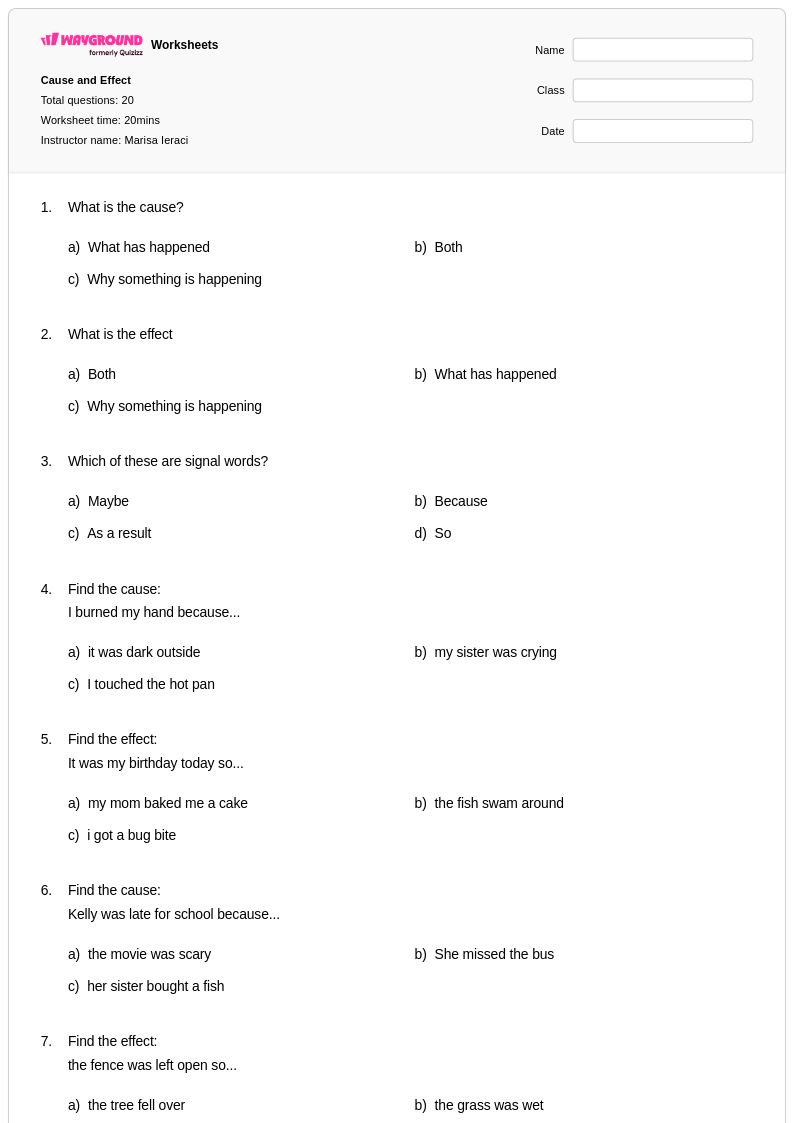
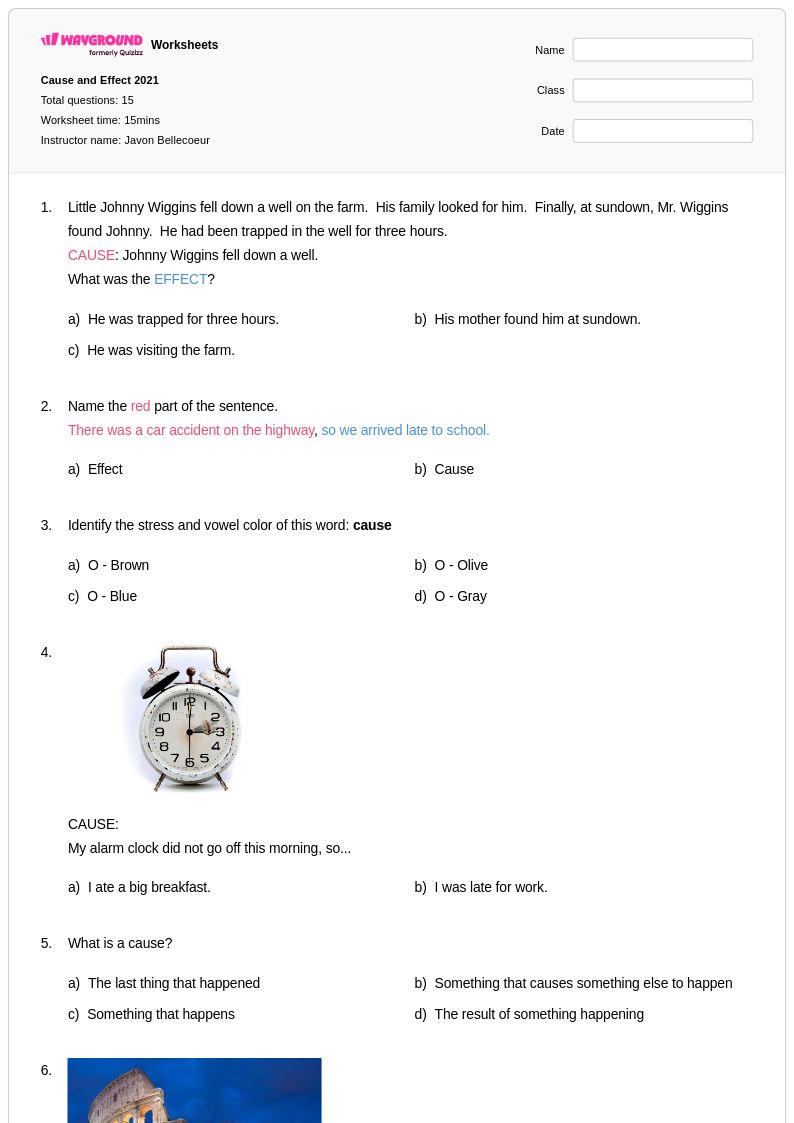
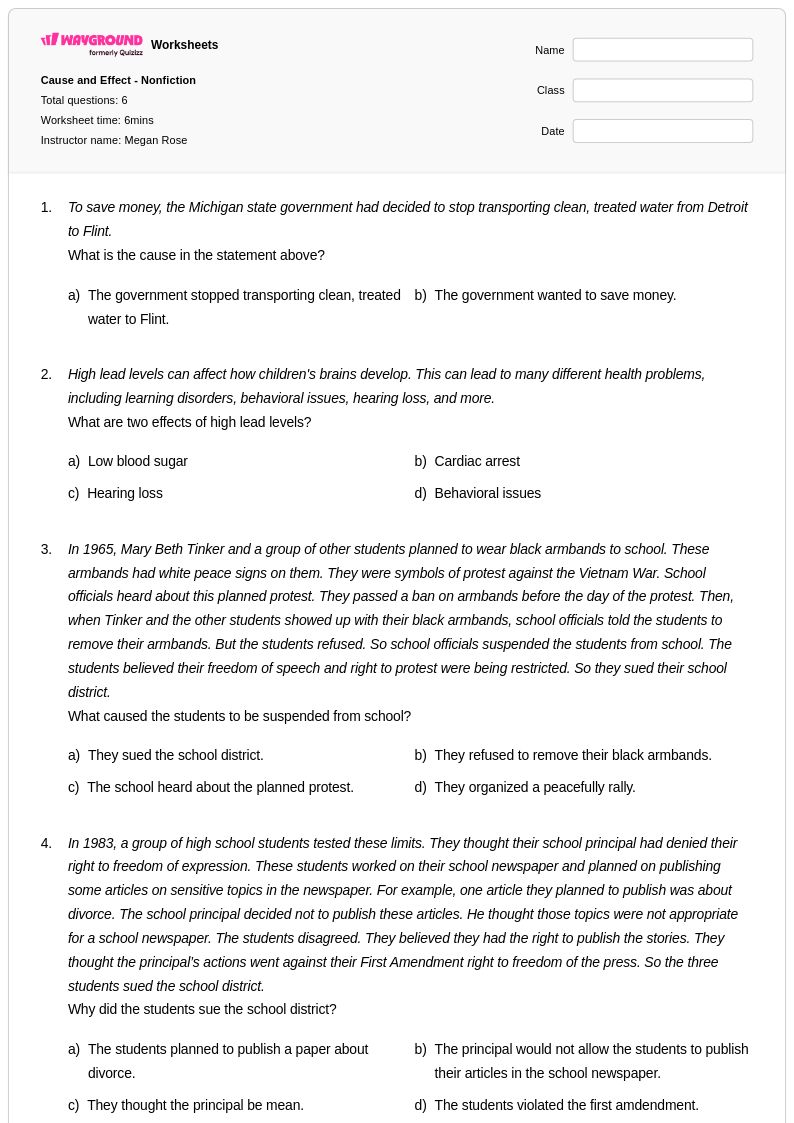
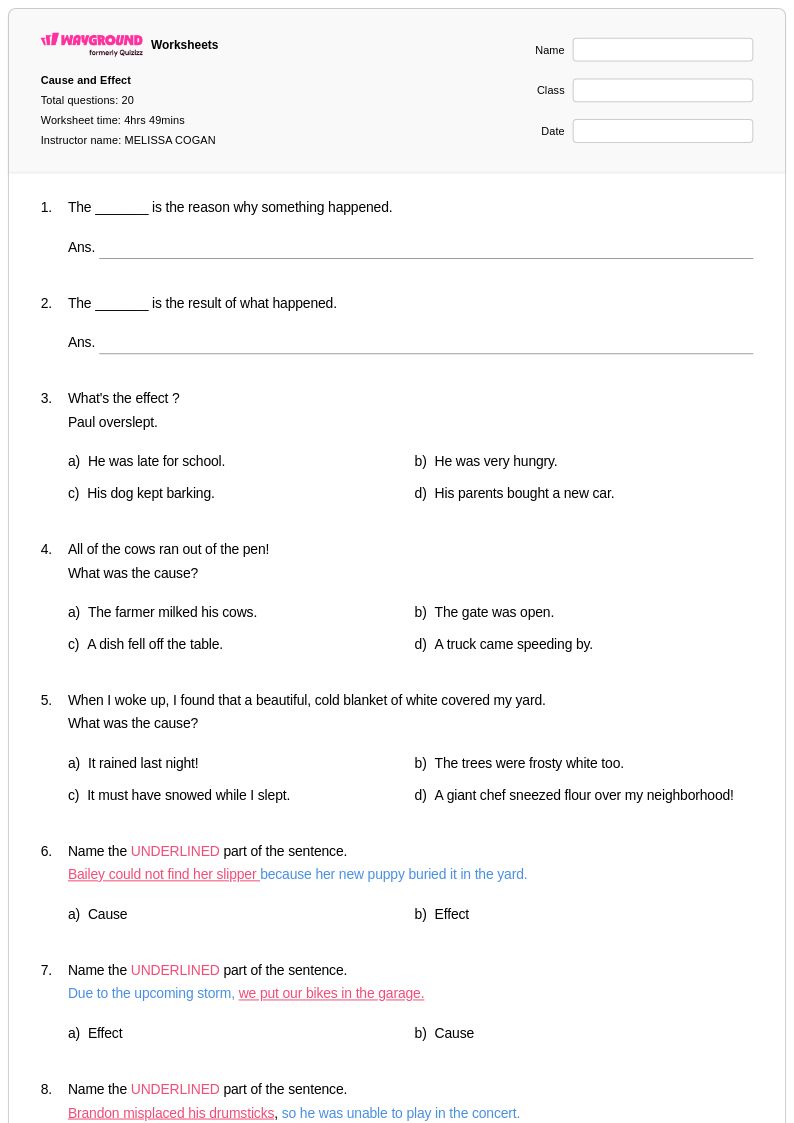
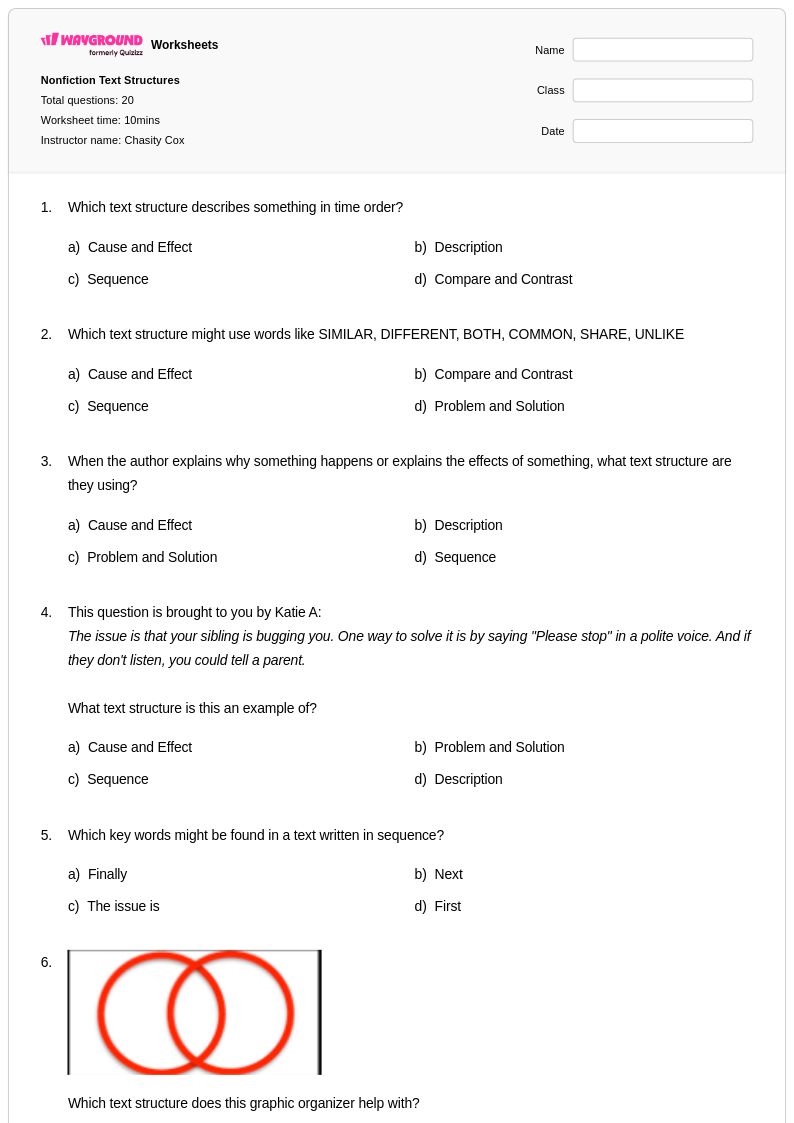
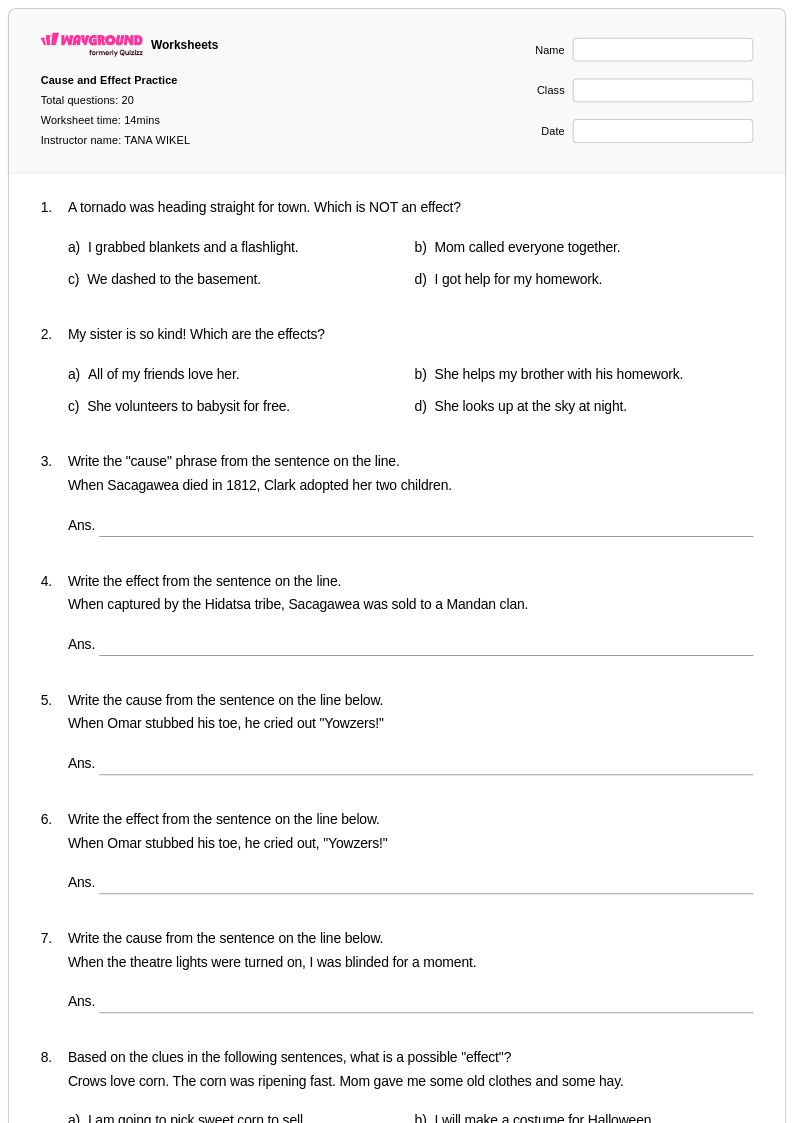
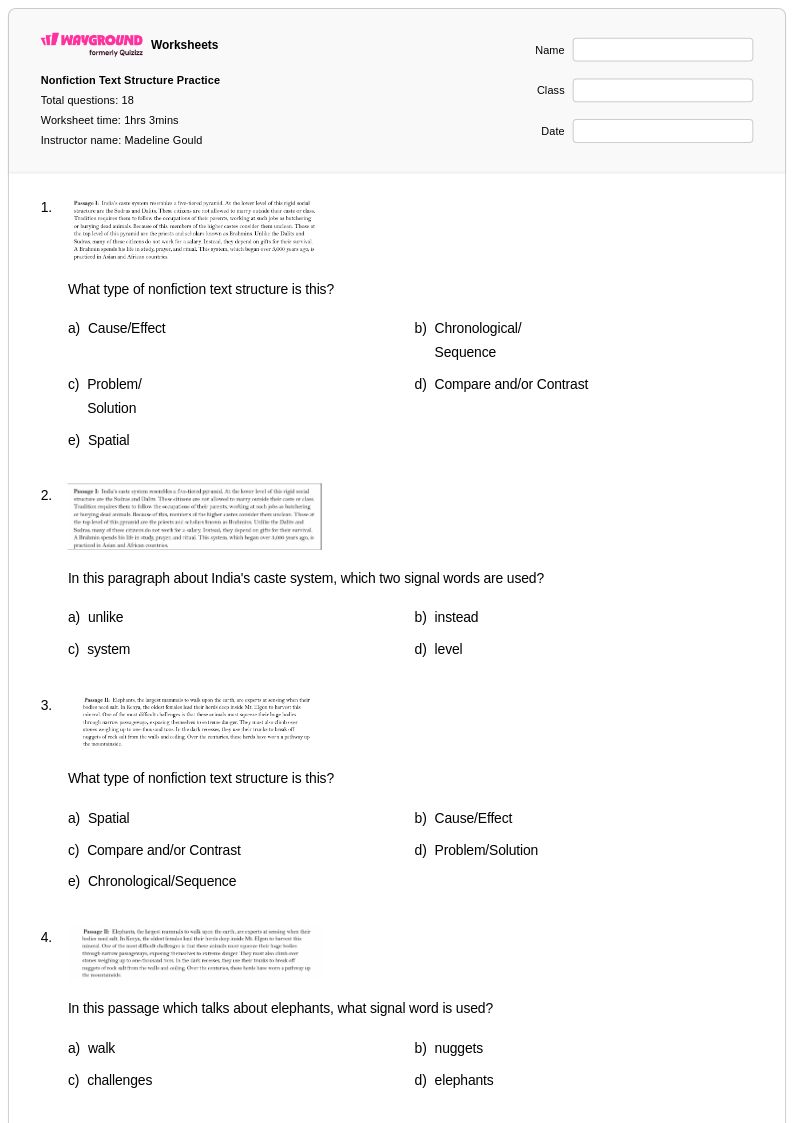
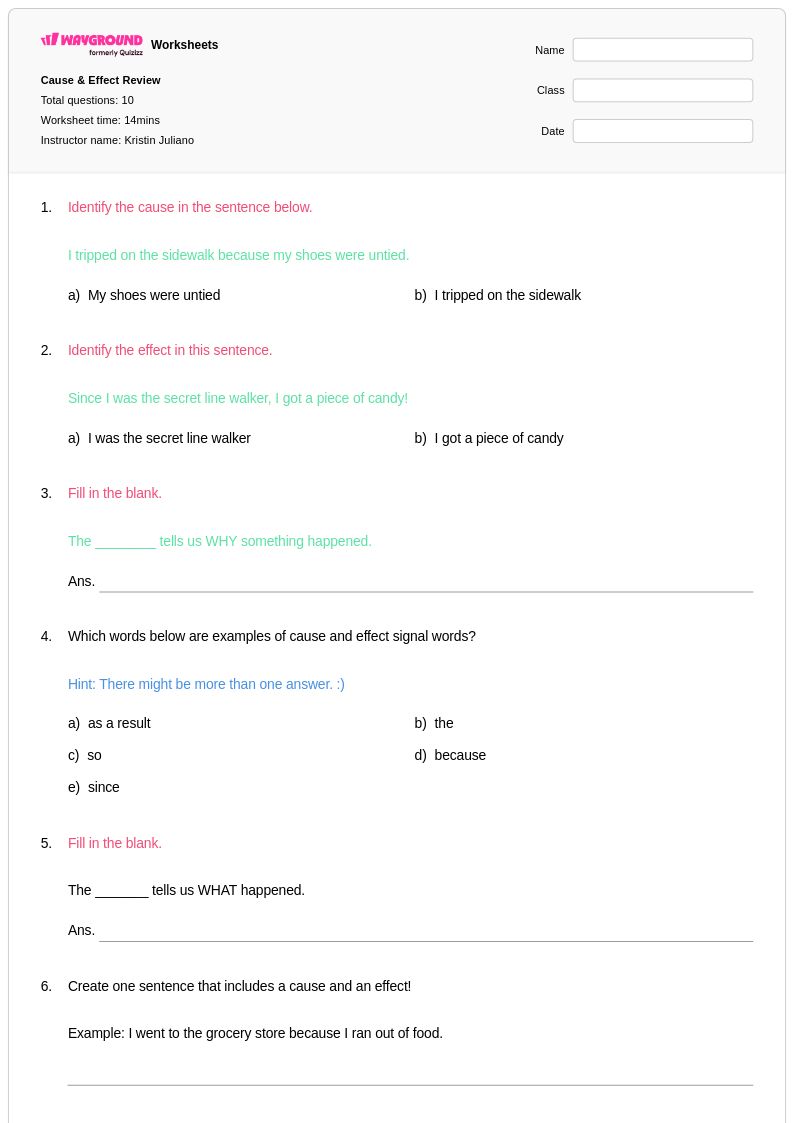
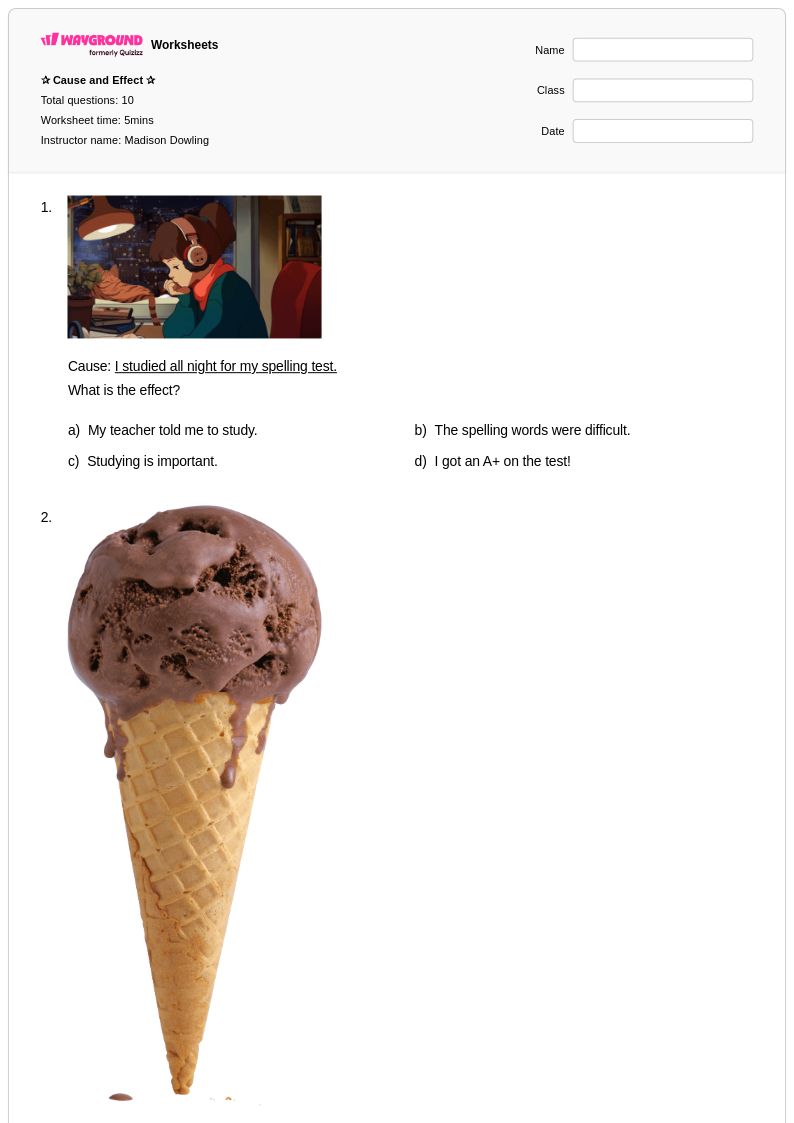
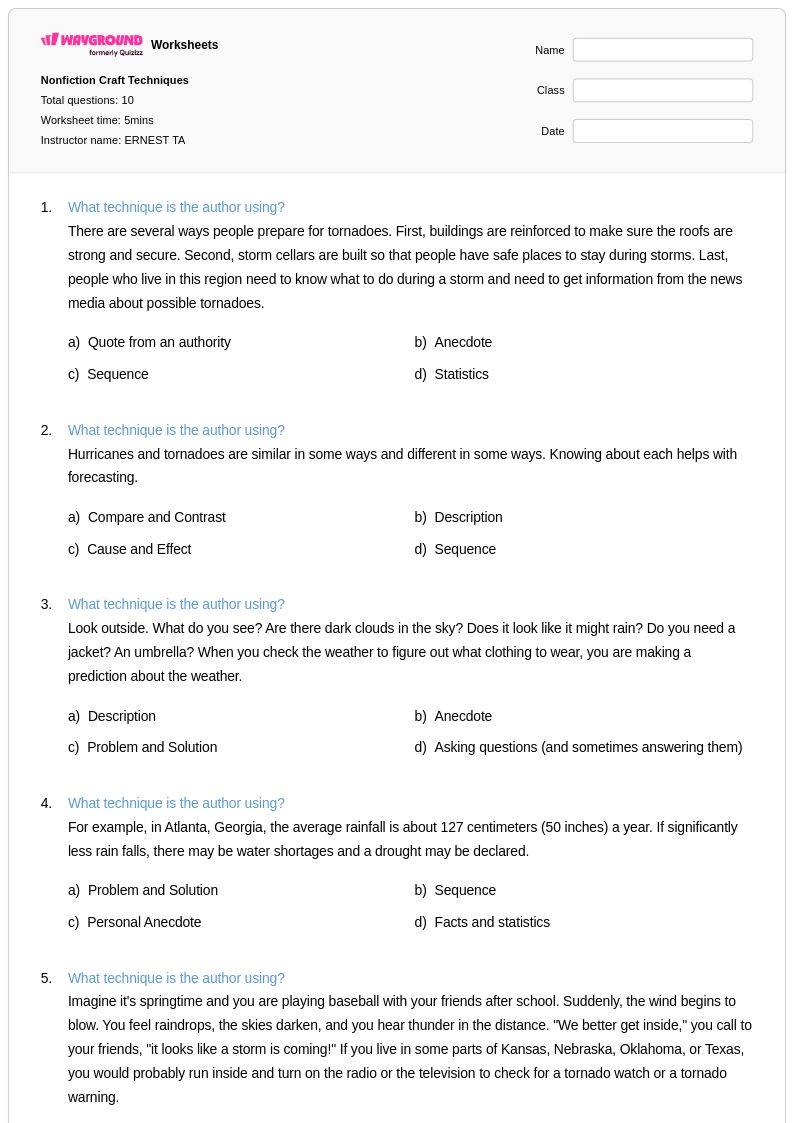
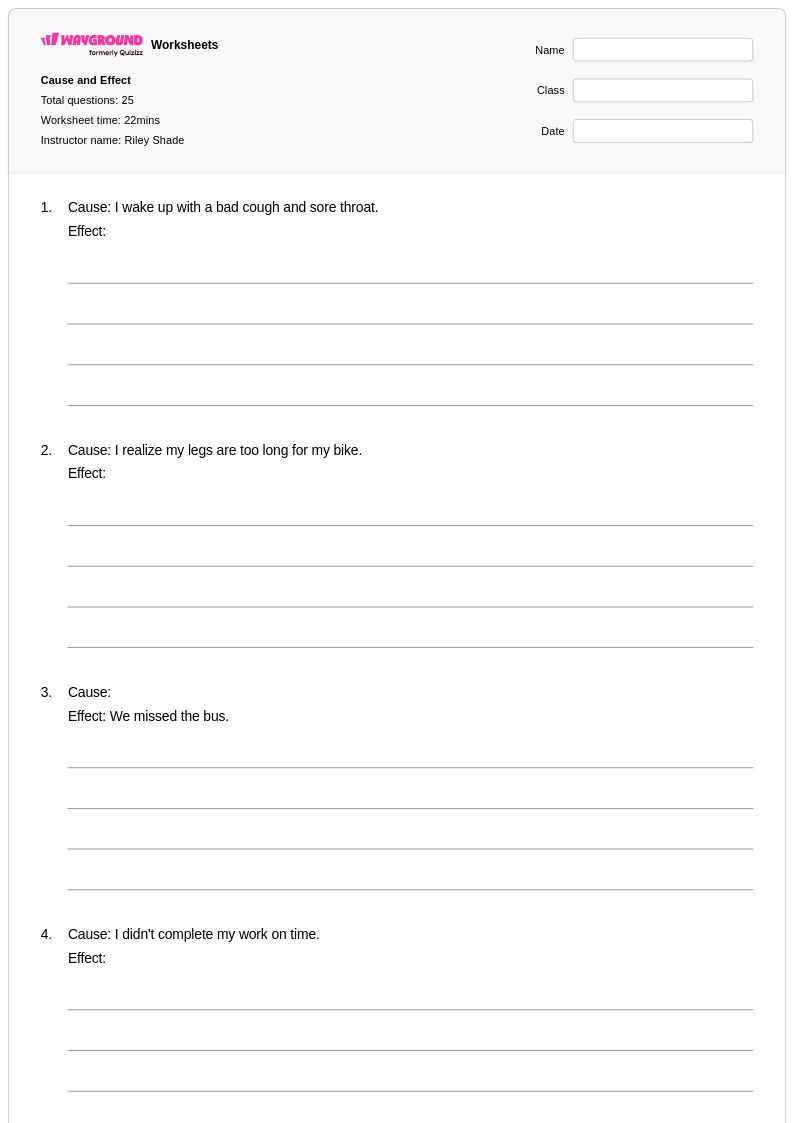
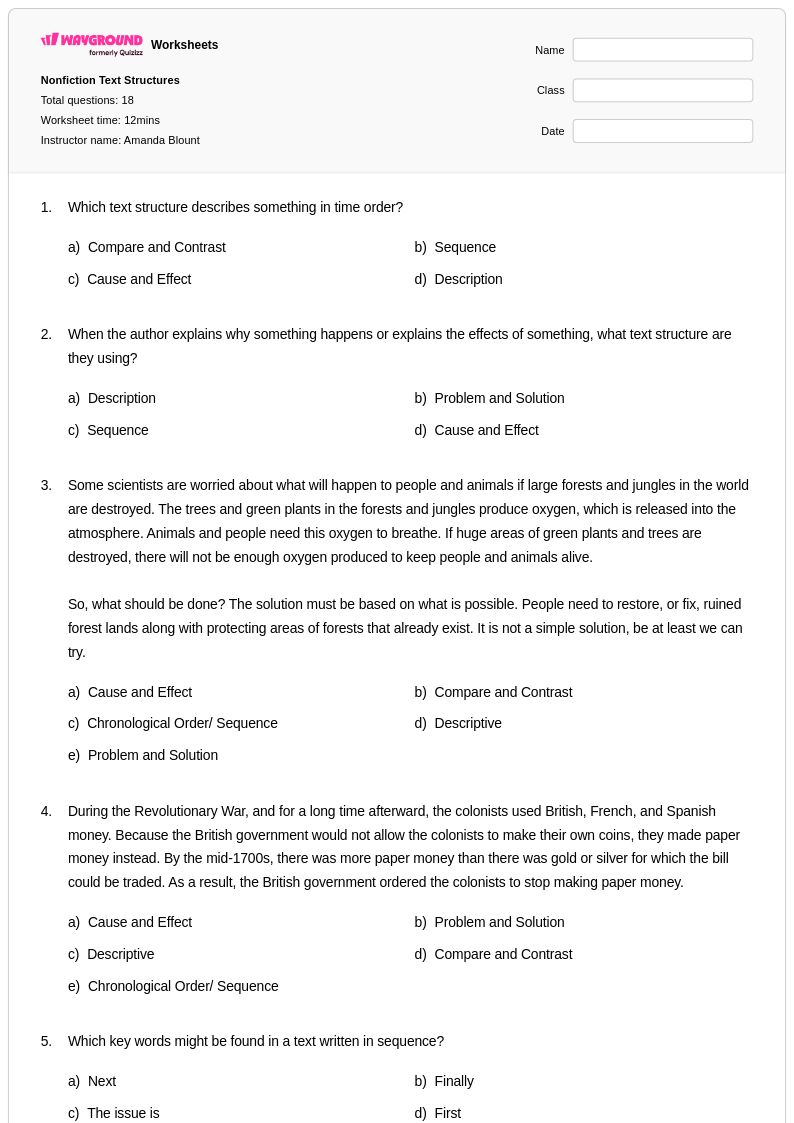
Free Printable Identifying Cause and Effect in Nonfiction worksheets
Access free printable worksheets and practice problems from Wayground that help students master identifying cause and effect relationships in nonfiction texts, complete with answer keys and PDF downloads for effective learning.
Explore printable Identifying Cause and Effect in Nonfiction worksheets
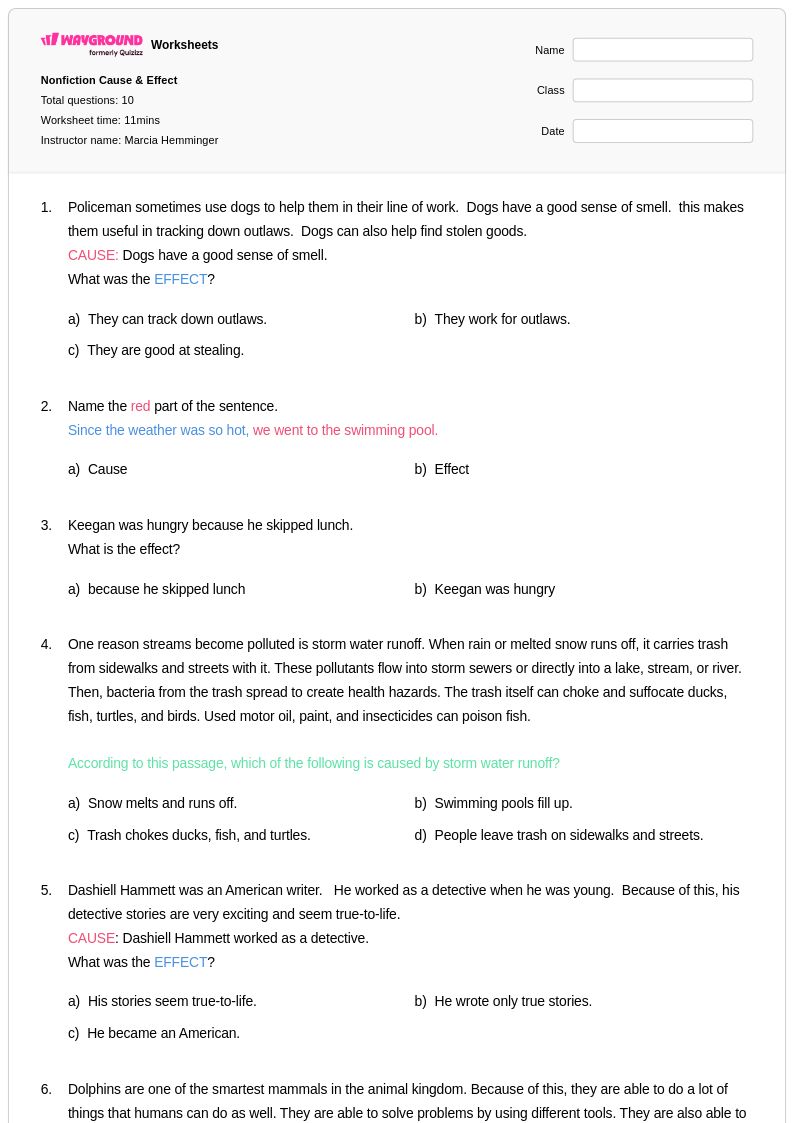
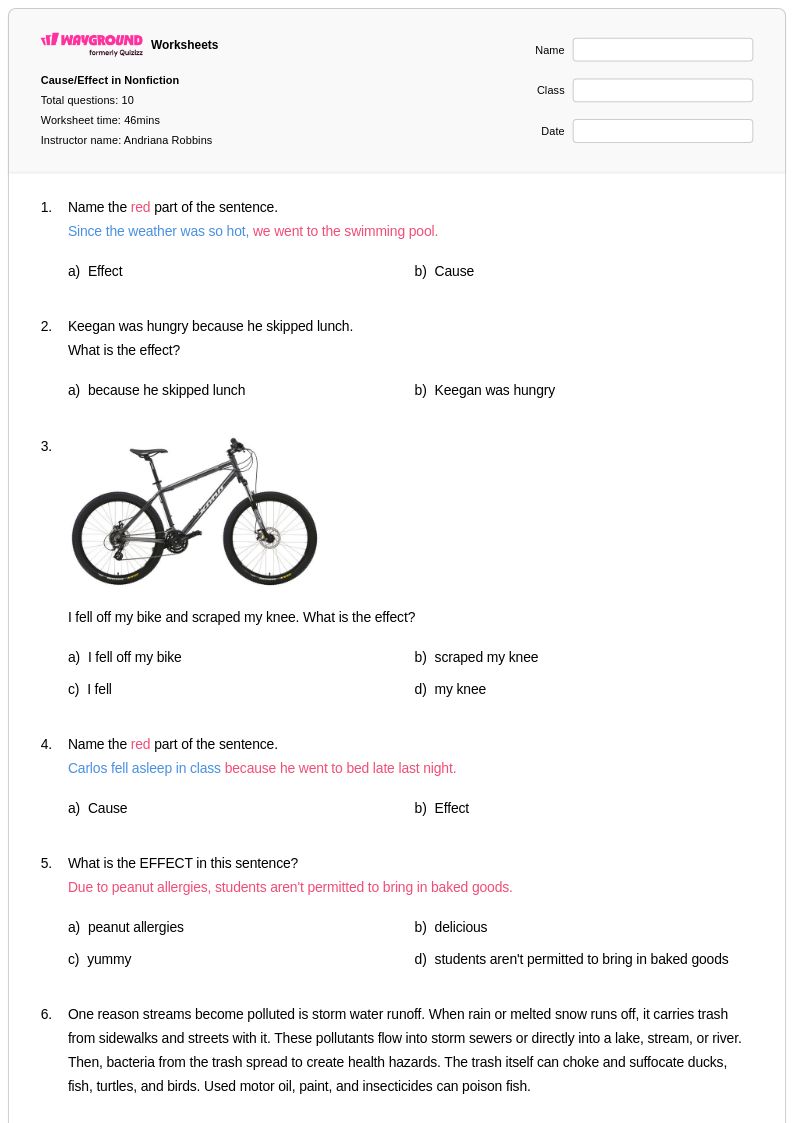
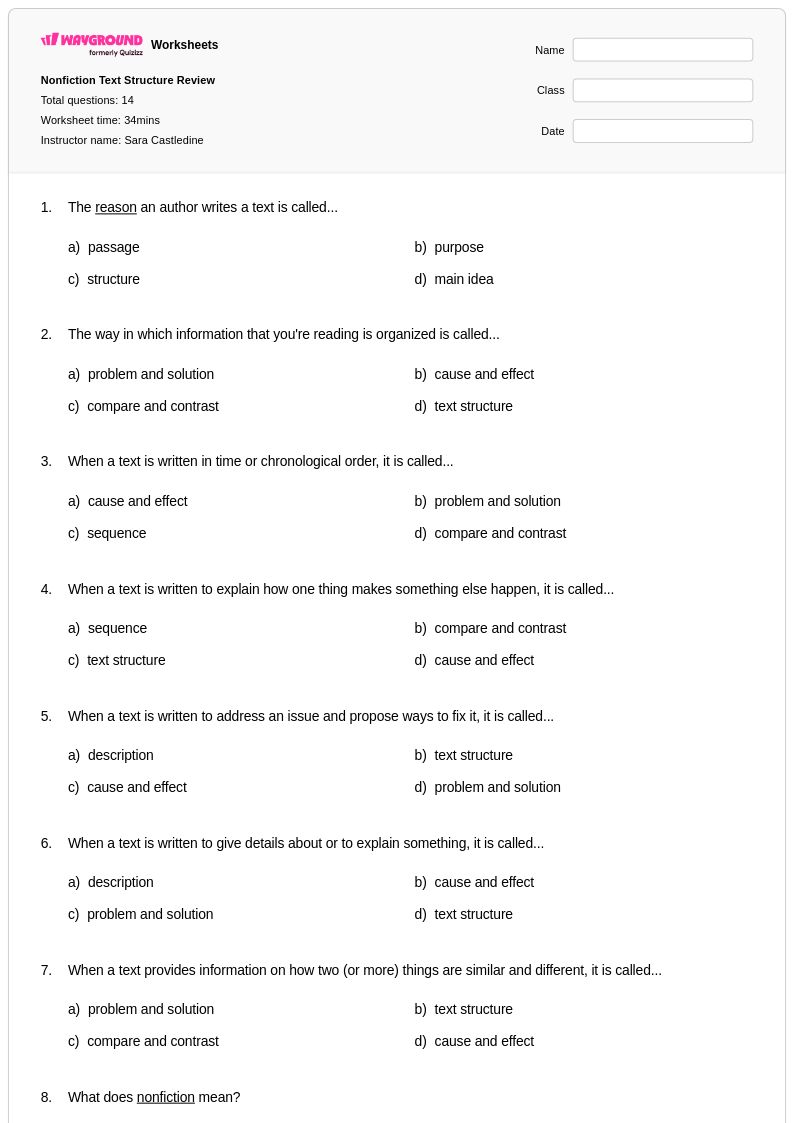
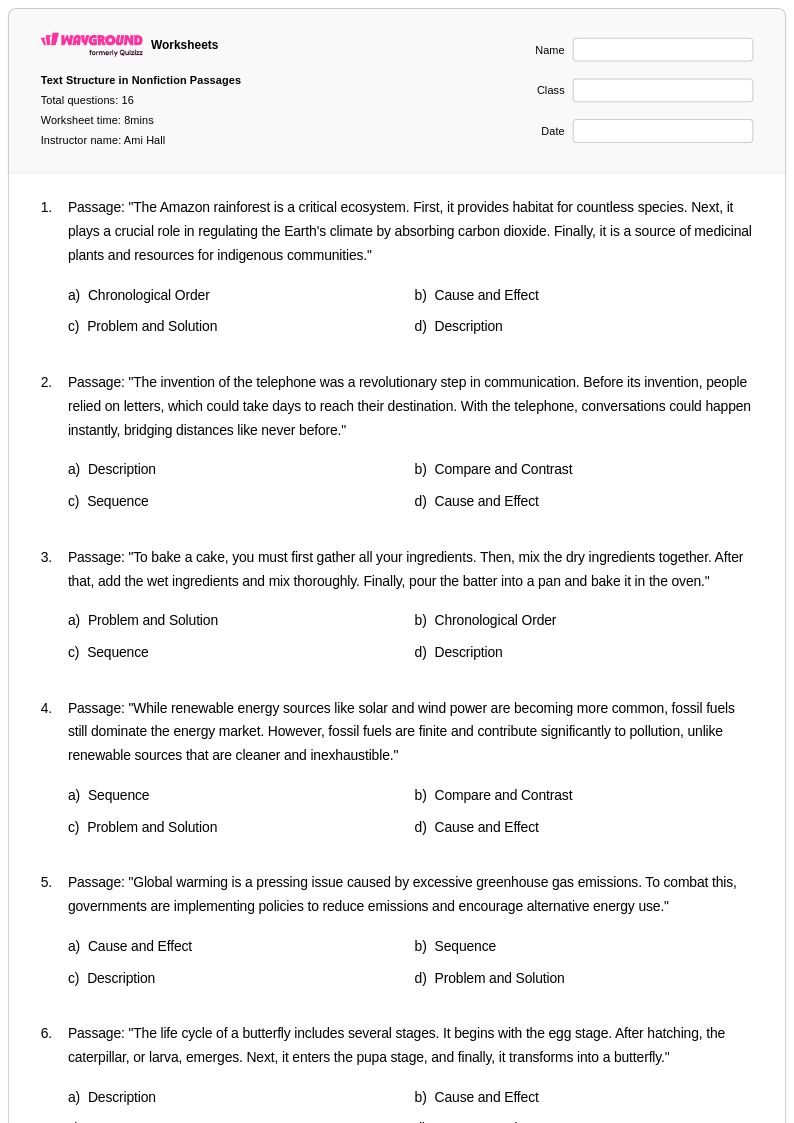
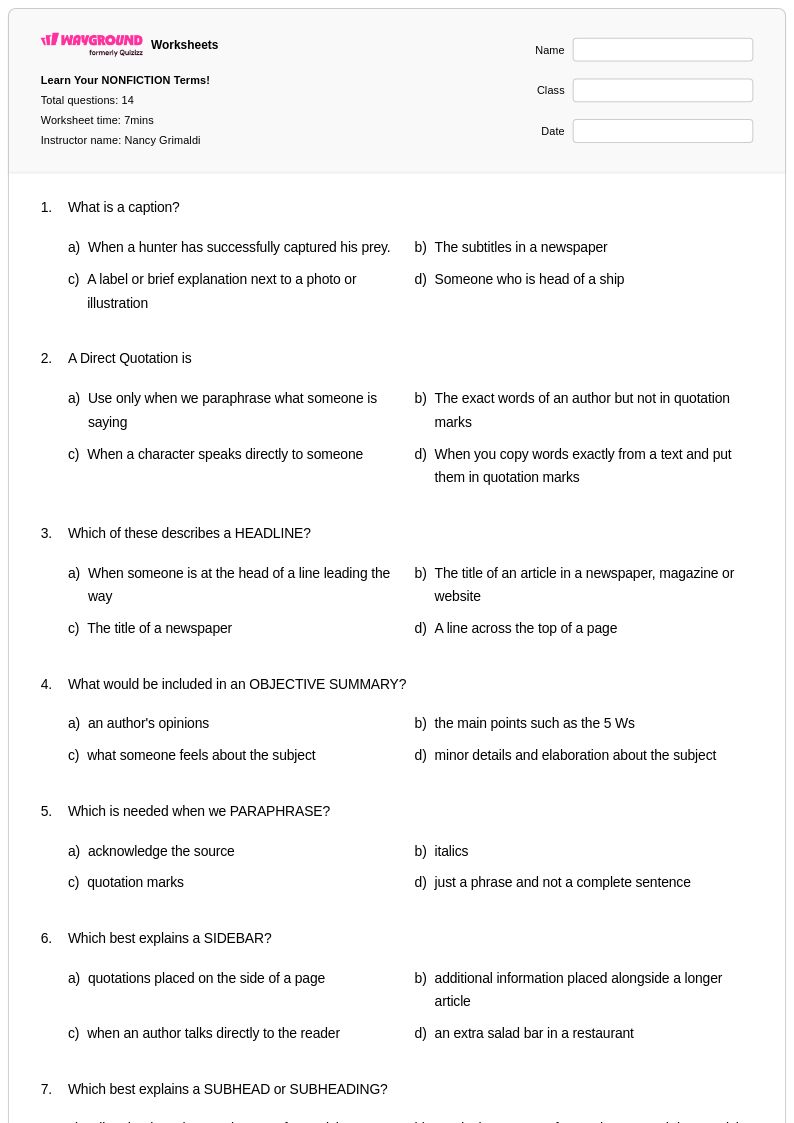
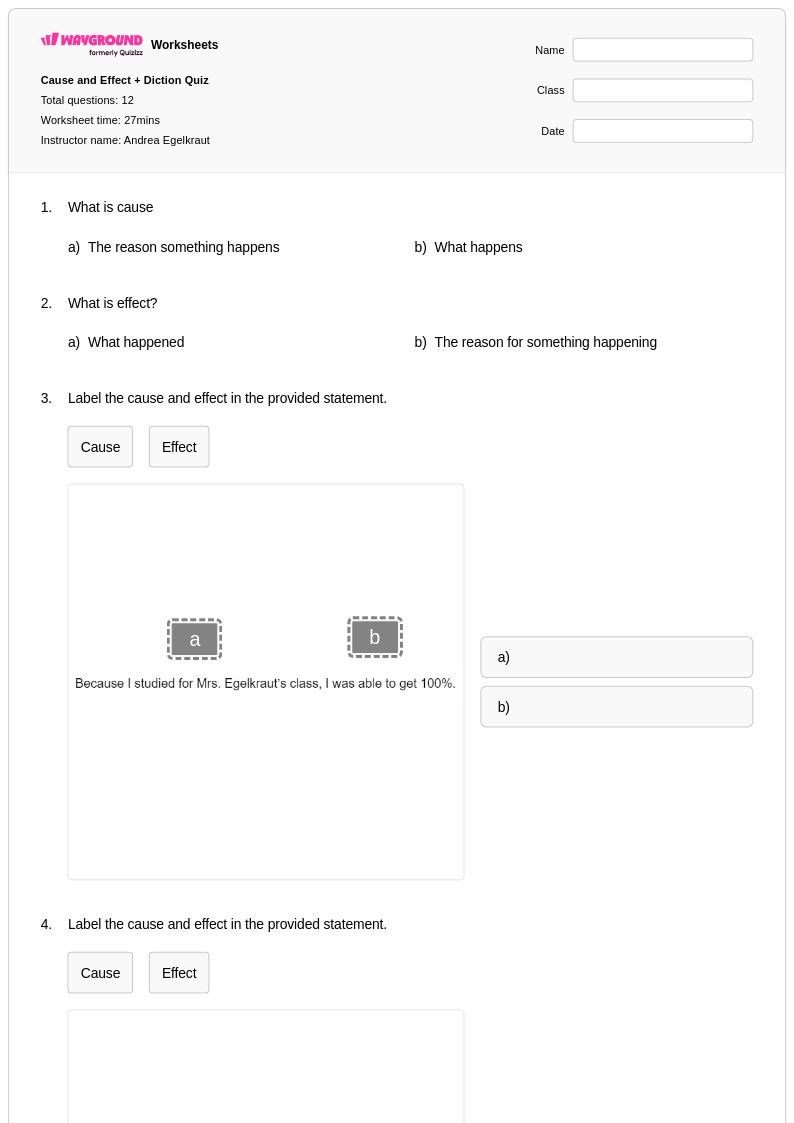
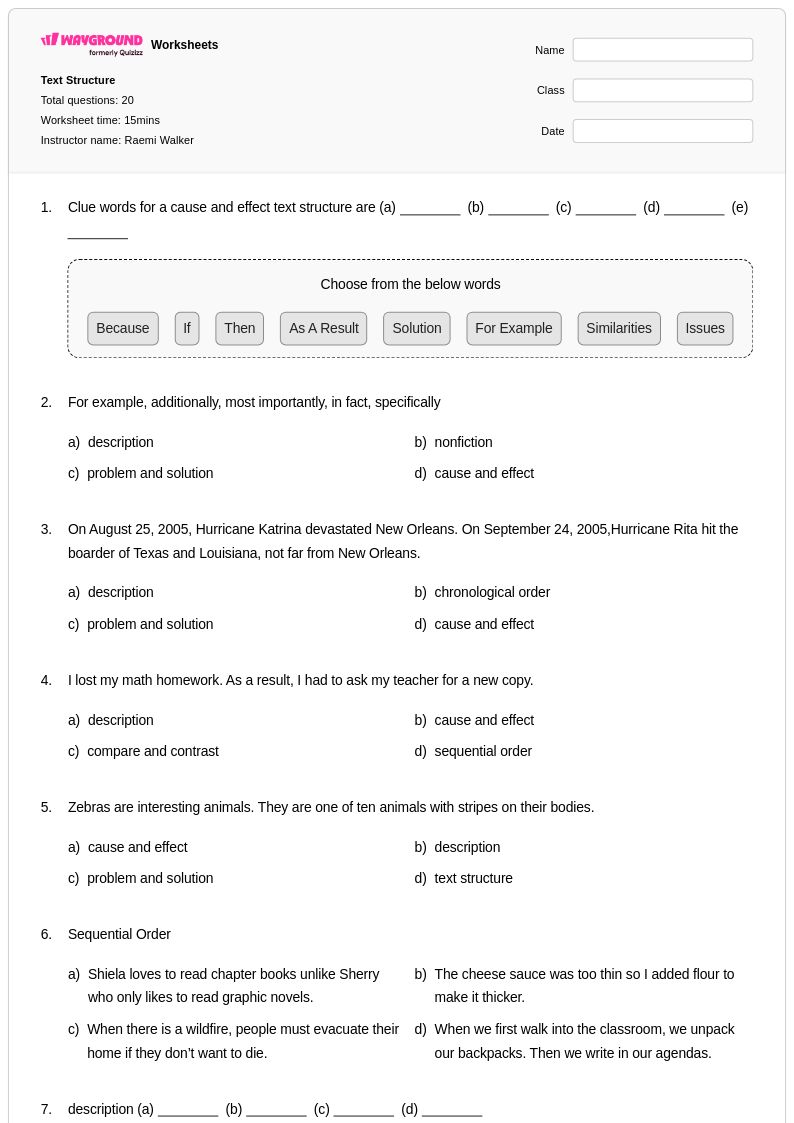
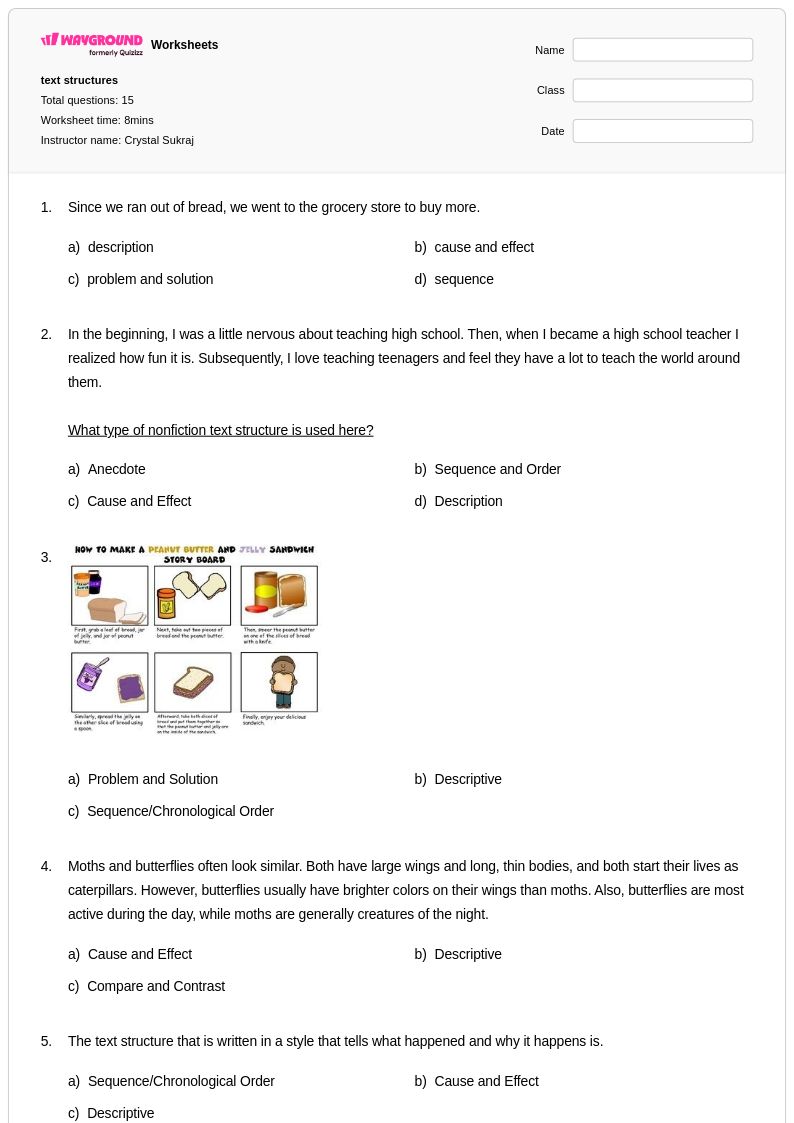
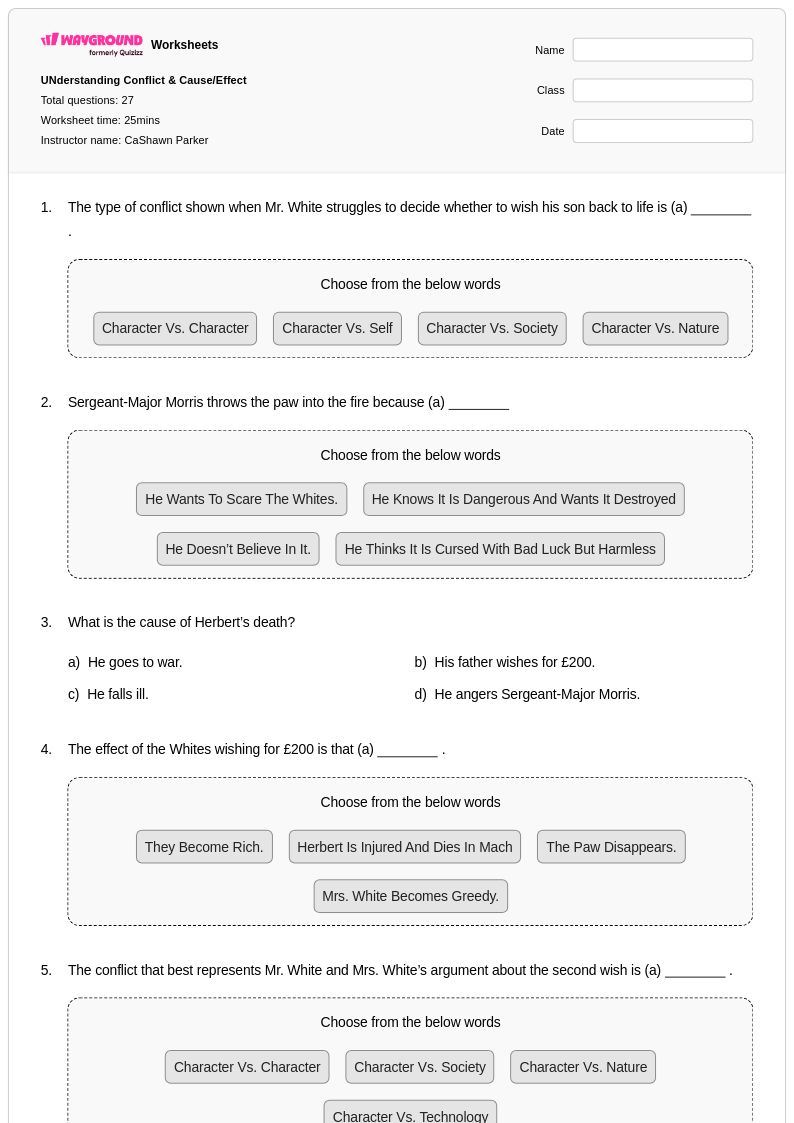
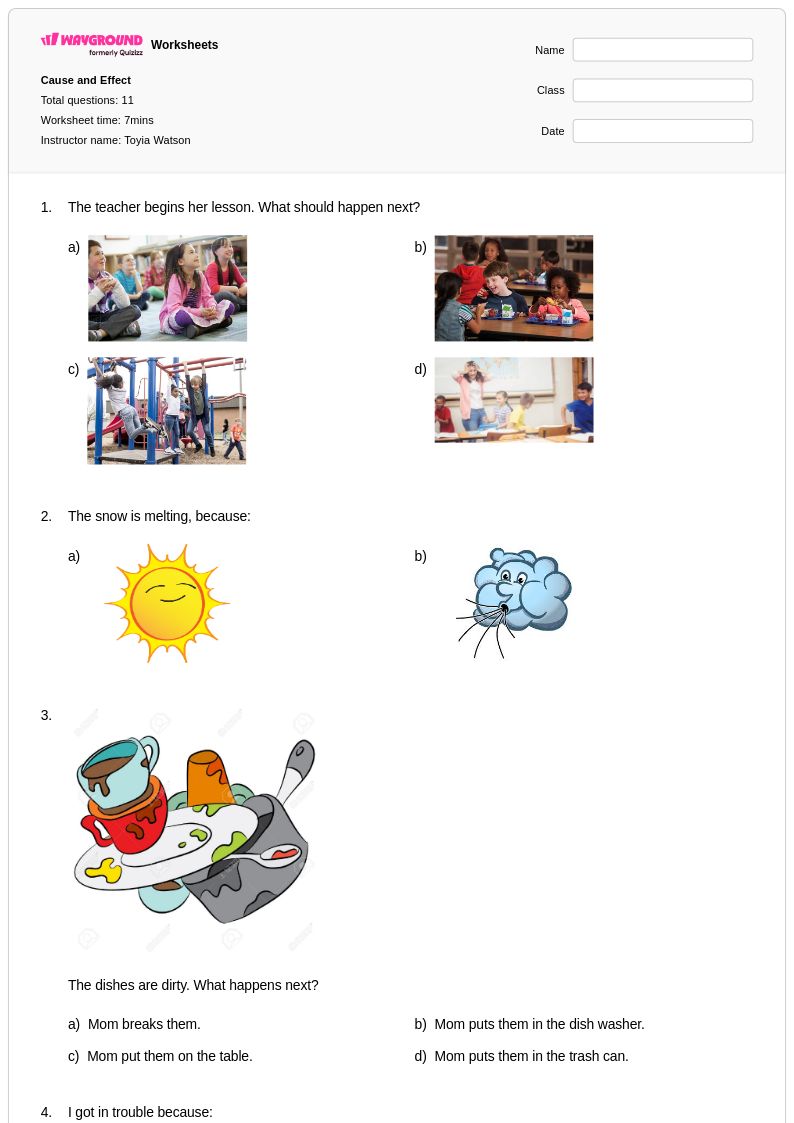
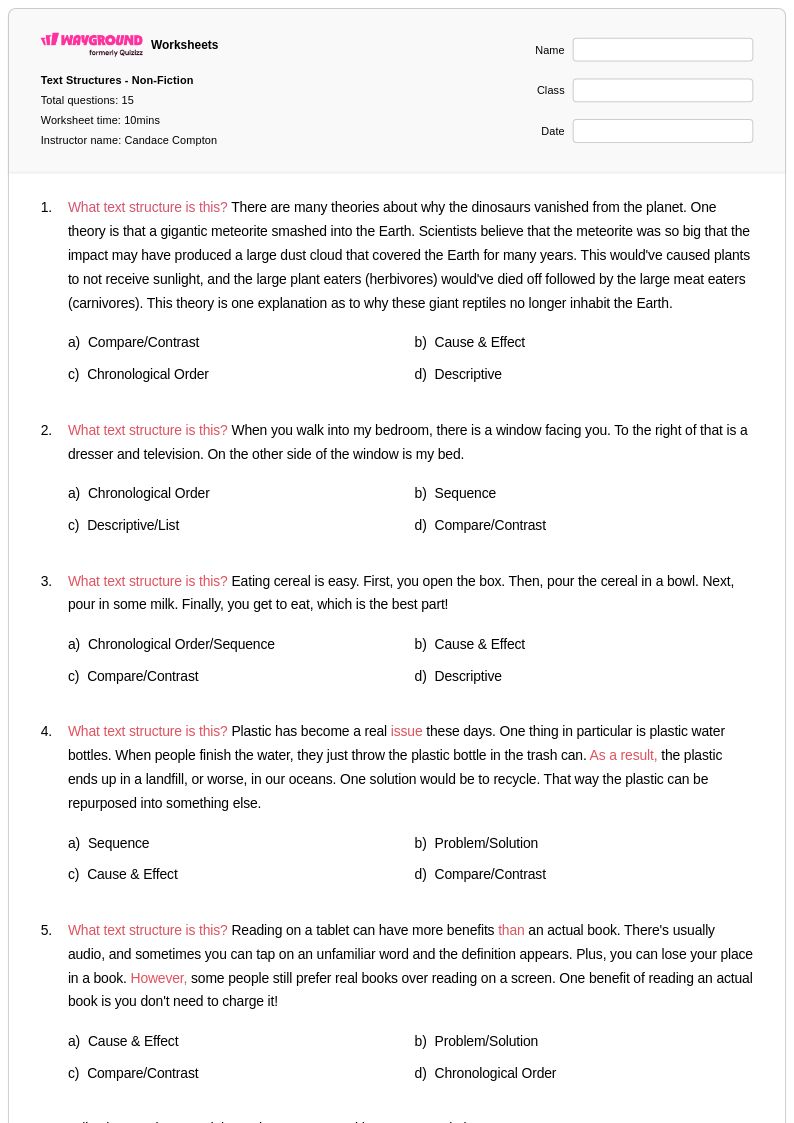
Identifying cause and effect relationships in nonfiction texts represents a fundamental reading comprehension skill that students must master to analyze informational content critically. Wayground's extensive collection of worksheets focused on identifying cause and effect in nonfiction provides educators with comprehensive practice problems that guide students through the process of recognizing explicit and implicit relationships between events, circumstances, and outcomes in real-world texts. These free printable resources include detailed answer keys and are designed as pdf downloads, making them easily accessible for classroom instruction or independent study. The worksheets systematically build students' analytical abilities by presenting authentic nonfiction passages paired with targeted exercises that require learners to distinguish between causes and their corresponding effects, understand signal words that indicate causal relationships, and evaluate the strength of cause-and-effect connections presented by authors.
Wayground, formerly Quizizz, empowers teachers with millions of educator-created resources specifically designed to strengthen students' nonfiction analysis skills through robust search and filtering capabilities that allow instructors to locate materials aligned with specific learning standards and individual student needs. The platform's differentiation tools enable teachers to customize worksheets for various skill levels, ensuring that both struggling readers and advanced learners can engage meaningfully with cause-and-effect identification activities. Available in both printable and digital formats including downloadable pdfs, these resources support flexible lesson planning whether educators need materials for whole-class instruction, small group remediation, or enrichment activities. Teachers can efficiently integrate these worksheets into their literacy instruction to provide targeted skill practice, assess student progress in analytical reading, and scaffold students' development toward independent identification of causal relationships in complex nonfiction texts.
FAQs
How do I teach students to identify cause and effect in nonfiction texts?
Start by explicitly modeling how to locate signal words such as 'because,' 'as a result,' 'therefore,' and 'consequently' in short, accessible nonfiction passages. Teach students to ask two guiding questions: 'What happened?' (the effect) and 'Why did it happen?' (the cause). Once students can identify explicit relationships, move them toward implicit causal connections where the author does not signal the relationship directly, which requires stronger inferential reading skills.
What exercises help students practice identifying cause and effect in nonfiction?
Paired-passage exercises work well, where students read a nonfiction text and then complete a graphic organizer mapping causes to their corresponding effects. Targeted worksheets that require students to distinguish between causes and effects, identify signal language, and evaluate the strength of causal connections give structured, repeatable practice. Progressively increasing the complexity of the nonfiction passages ensures students build analytical stamina over time.
What mistakes do students commonly make when identifying cause and effect in nonfiction?
The most common error is confusing sequence with causation — students assume that because one event follows another, the first event caused the second. Students also struggle to distinguish between multiple causes contributing to a single effect, often identifying only the most obvious cause. A third frequent mistake is misidentifying the cause and effect when they appear in reverse order in the text, which happens frequently in nonfiction writing.
How do I differentiate cause and effect instruction for struggling readers?
Use shorter, single-topic nonfiction passages with explicit signal words before introducing complex multi-cause texts. Graphic organizers with labeled boxes and arrows reduce cognitive load by giving students a visual structure for their thinking. On Wayground, teachers can apply individual accommodations such as Read Aloud, which allows the platform to read questions and passage content aloud, and reduced answer choices, which limits the number of options displayed for students who need additional support.
How can I use Wayground's cause and effect in nonfiction worksheets in my classroom?
Wayground's identifying cause and effect in nonfiction worksheets are available as printable PDF downloads for traditional classroom use and in digital formats for technology-integrated instruction, including the ability to host them as a quiz directly on Wayground. All worksheets include complete answer keys, making them suitable for independent practice, small group work, or whole-class instruction. Wayground's search and filtering tools help teachers locate materials aligned to specific learning standards and student skill levels.
How do I assess whether students can identify cause and effect relationships in nonfiction?
Look beyond correct labeling and assess whether students can explain the relationship in their own words, which reveals genuine comprehension versus surface-level guessing. Common errors to watch for include students reversing the cause and effect or identifying a contributing factor rather than the primary cause. Using a mix of multiple-choice and open-response items gives a more complete picture of each student's analytical reading ability.