
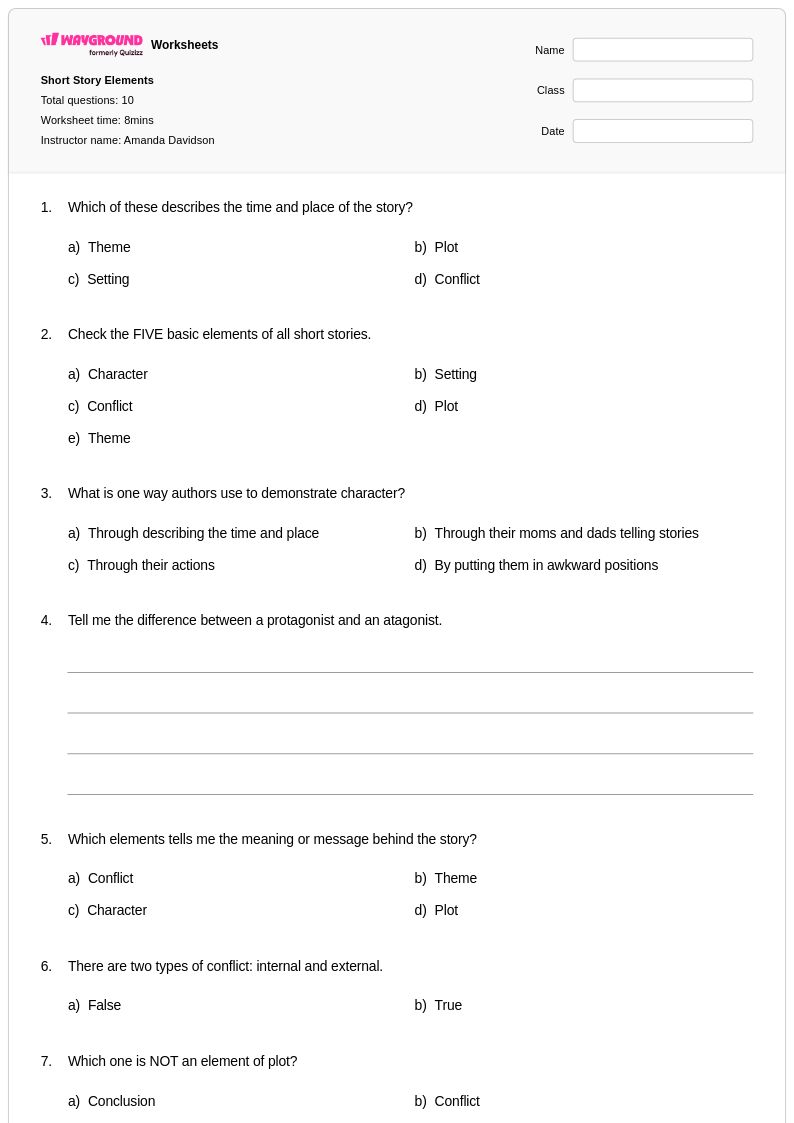
10 T
6th - 10th
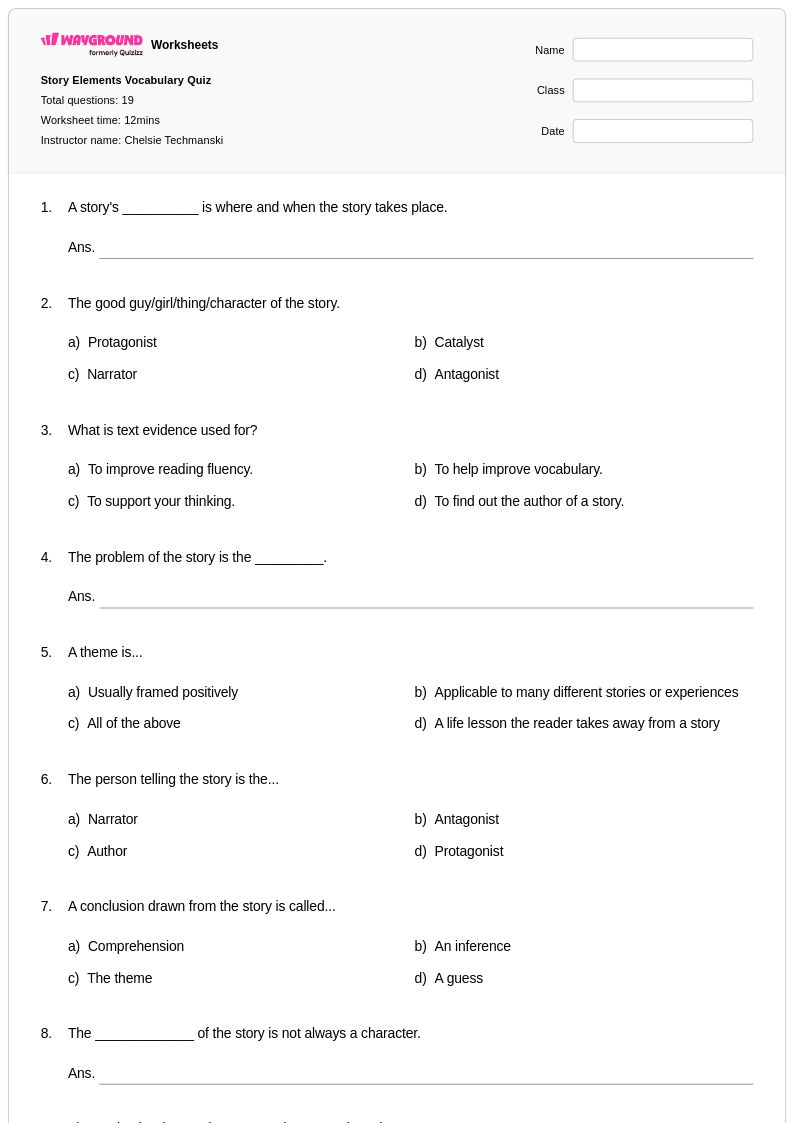
19 T
6th
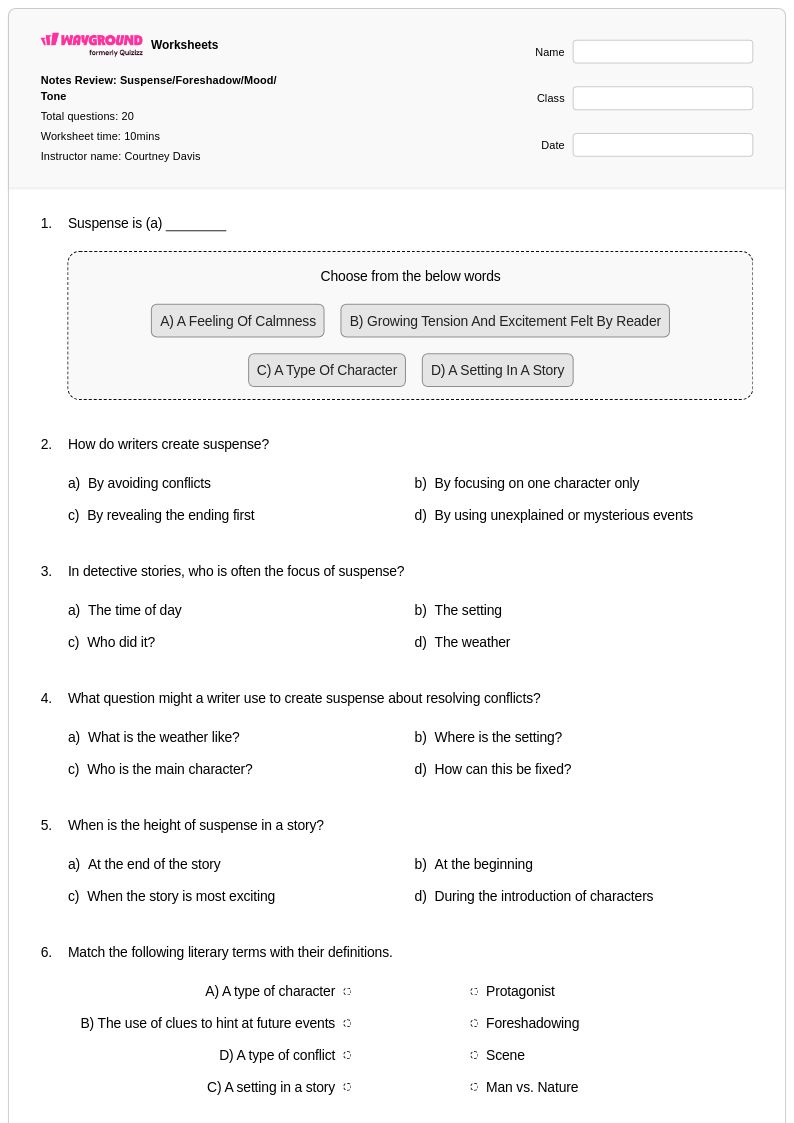
20 T
6th
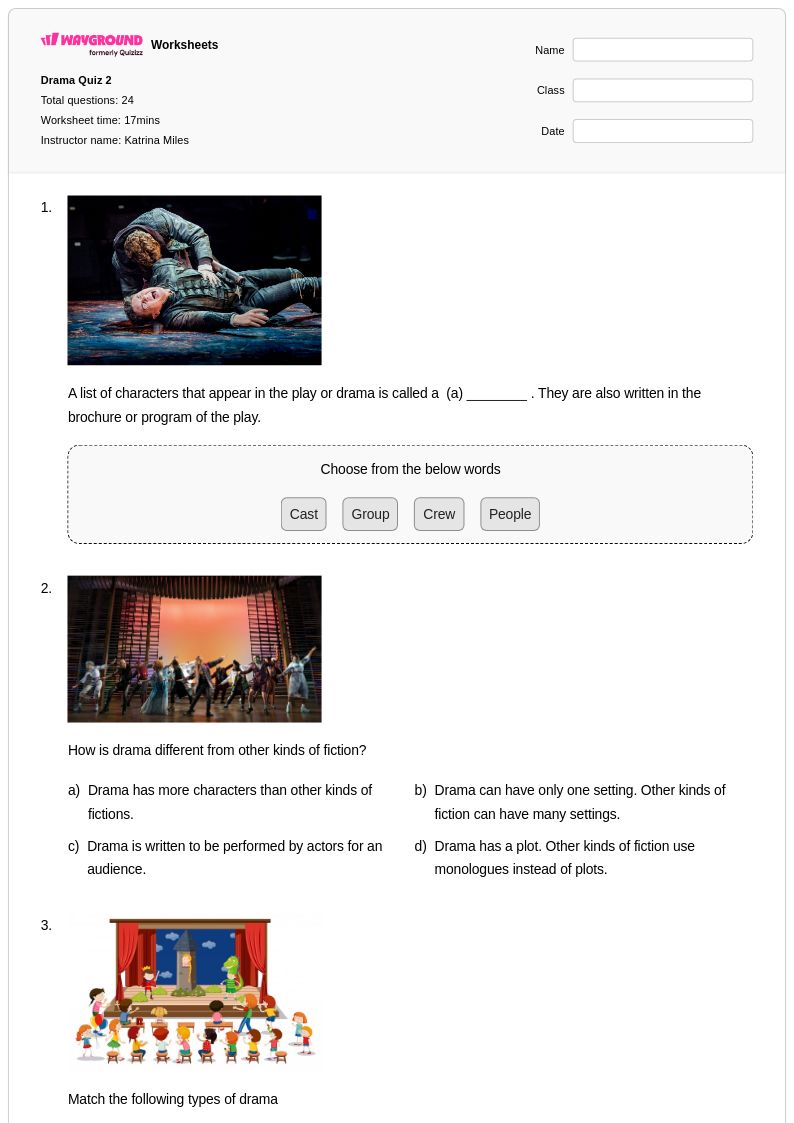
24 T
6th
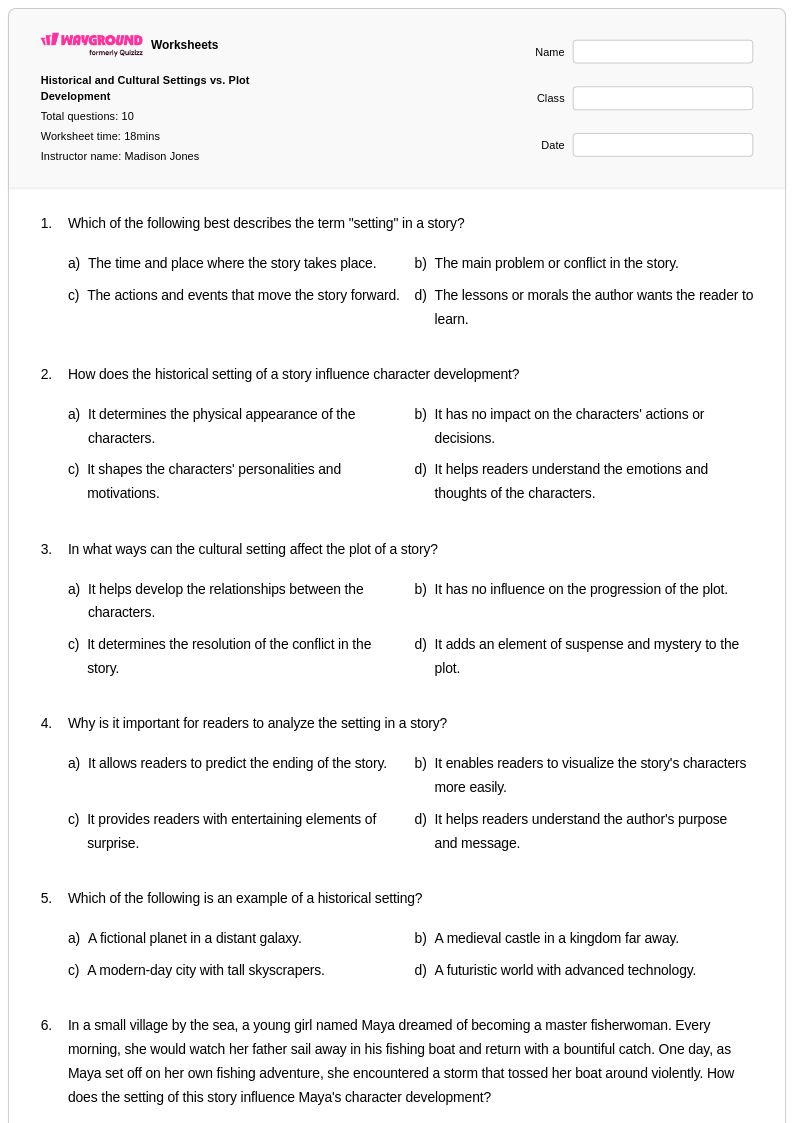
10 T
6th
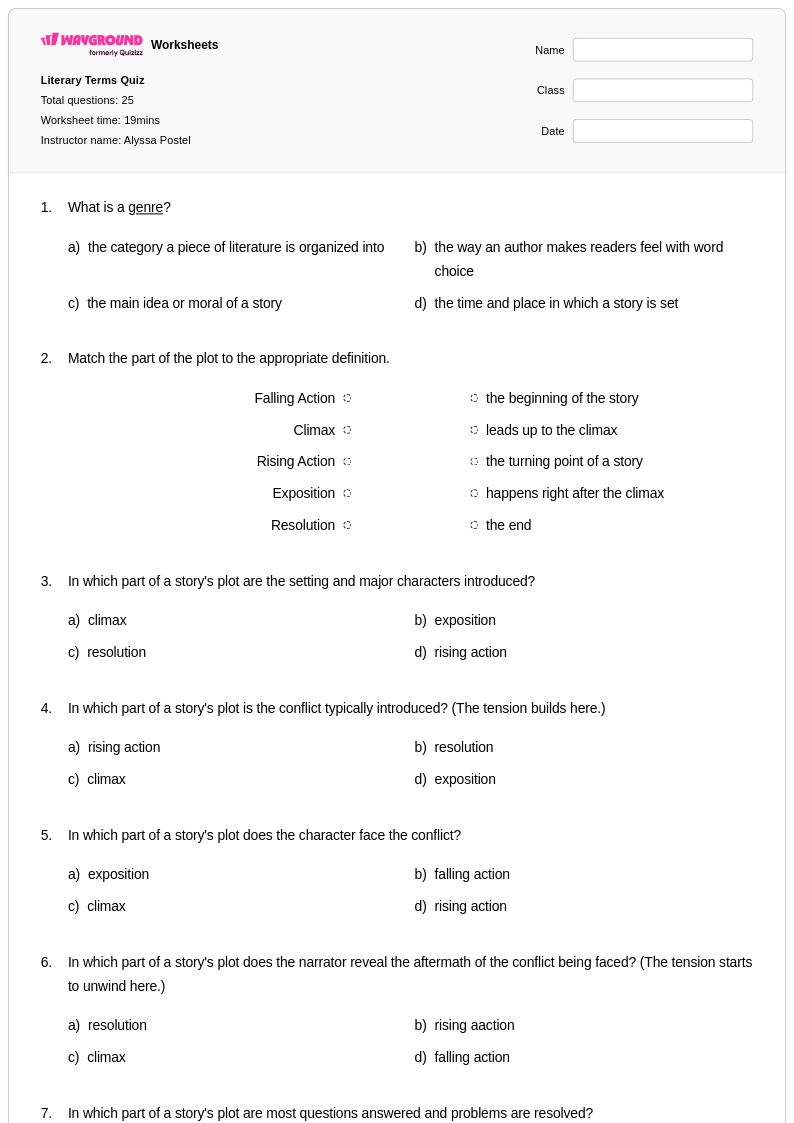
25 T
6th - 8th
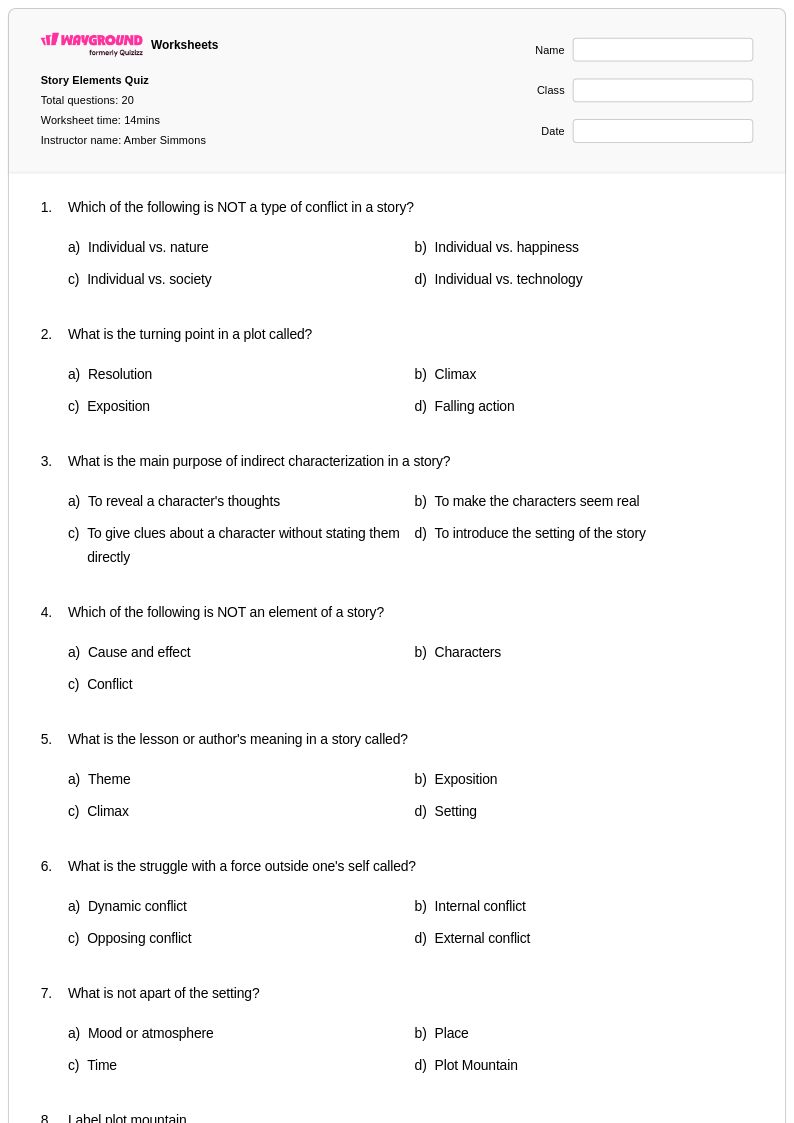
20 T
6th
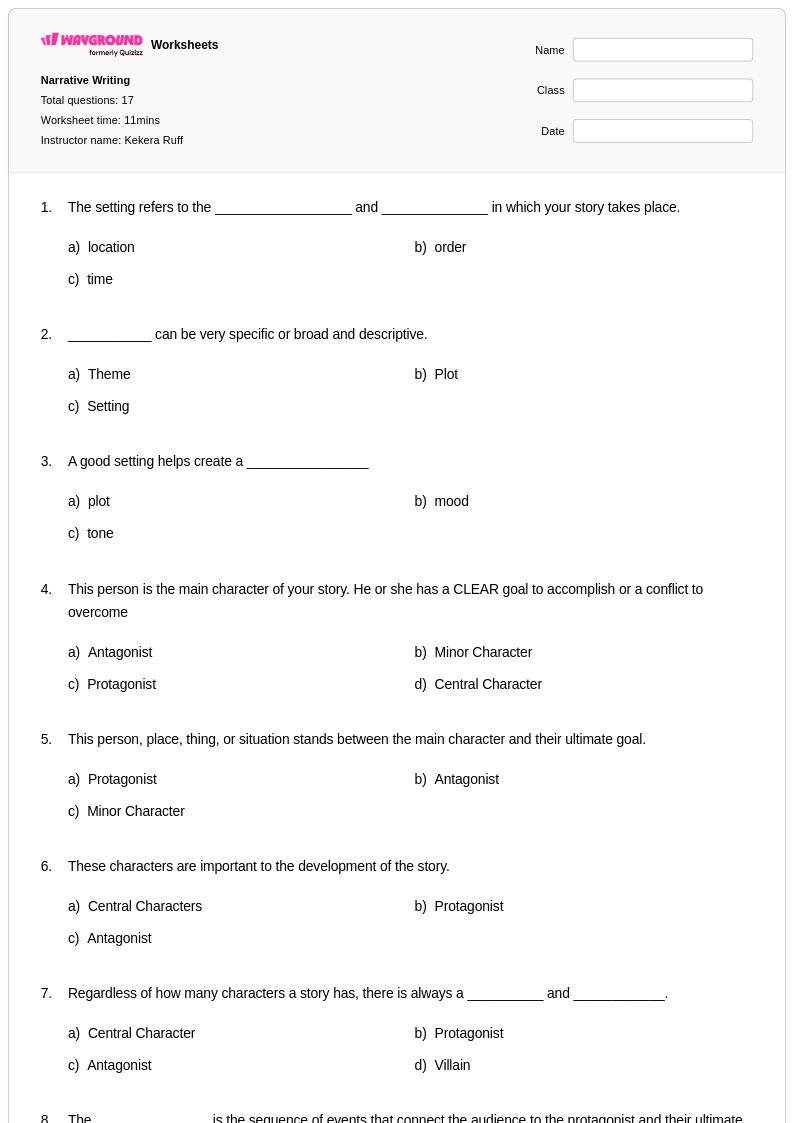
17 T
6th - 8th
19 T
6th
20 T
6th
15 T
6th - 8th
14 T
6th - 7th
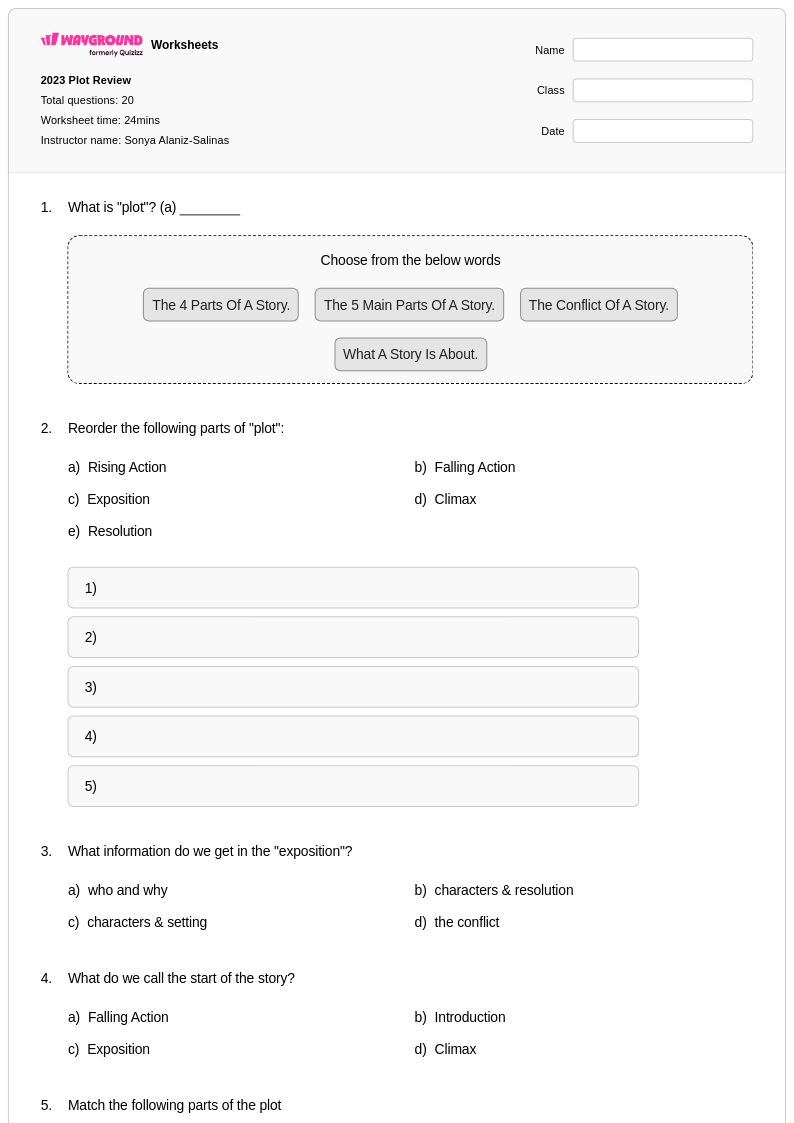
20 T
6th - 8th
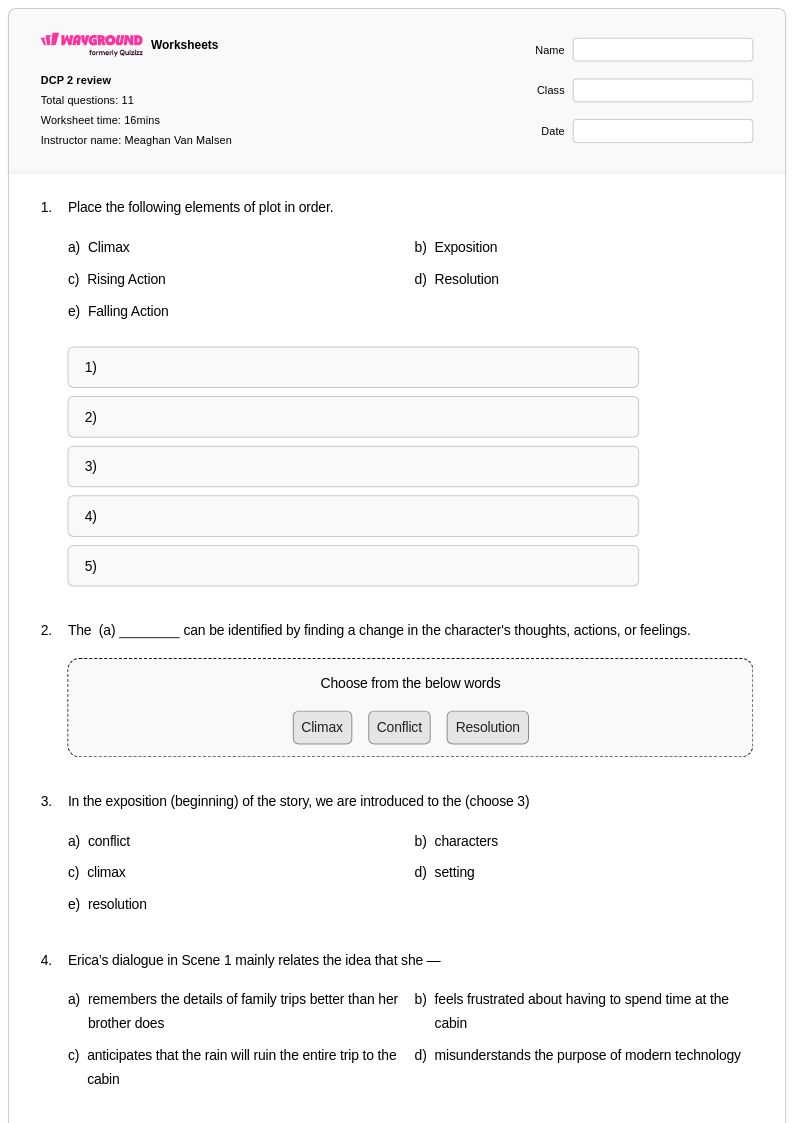
11 T
6th
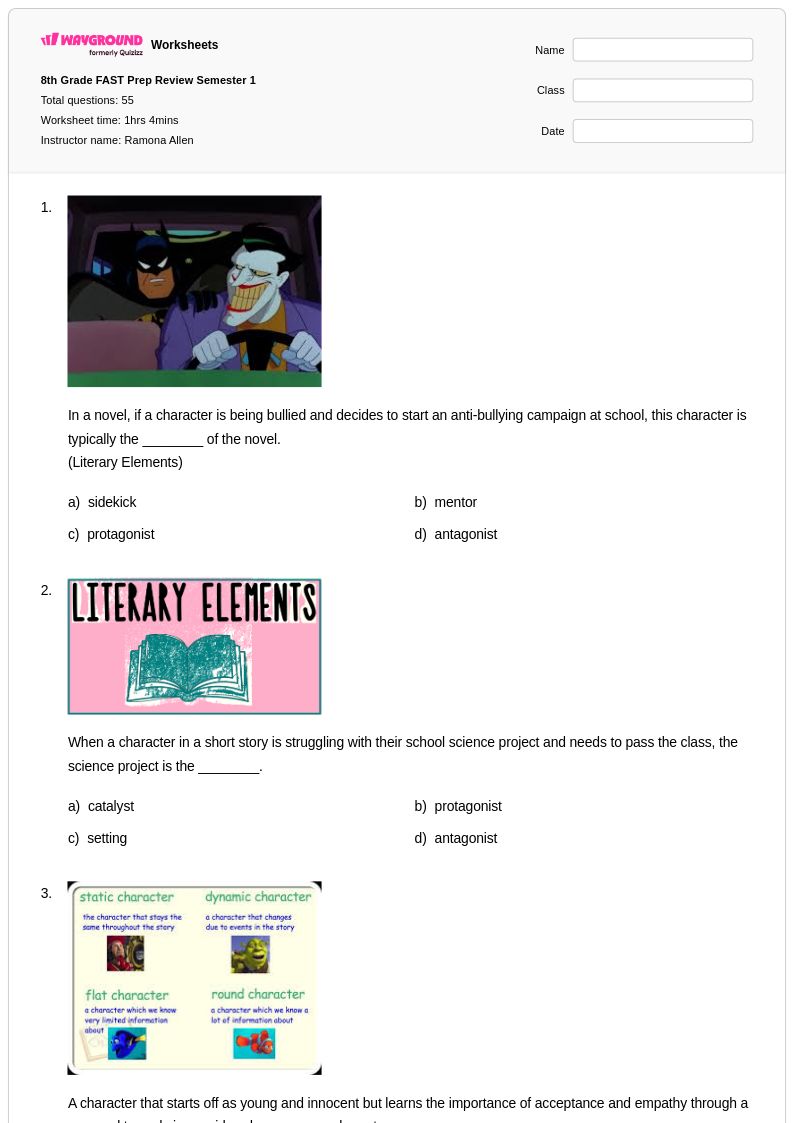
60 T
6th
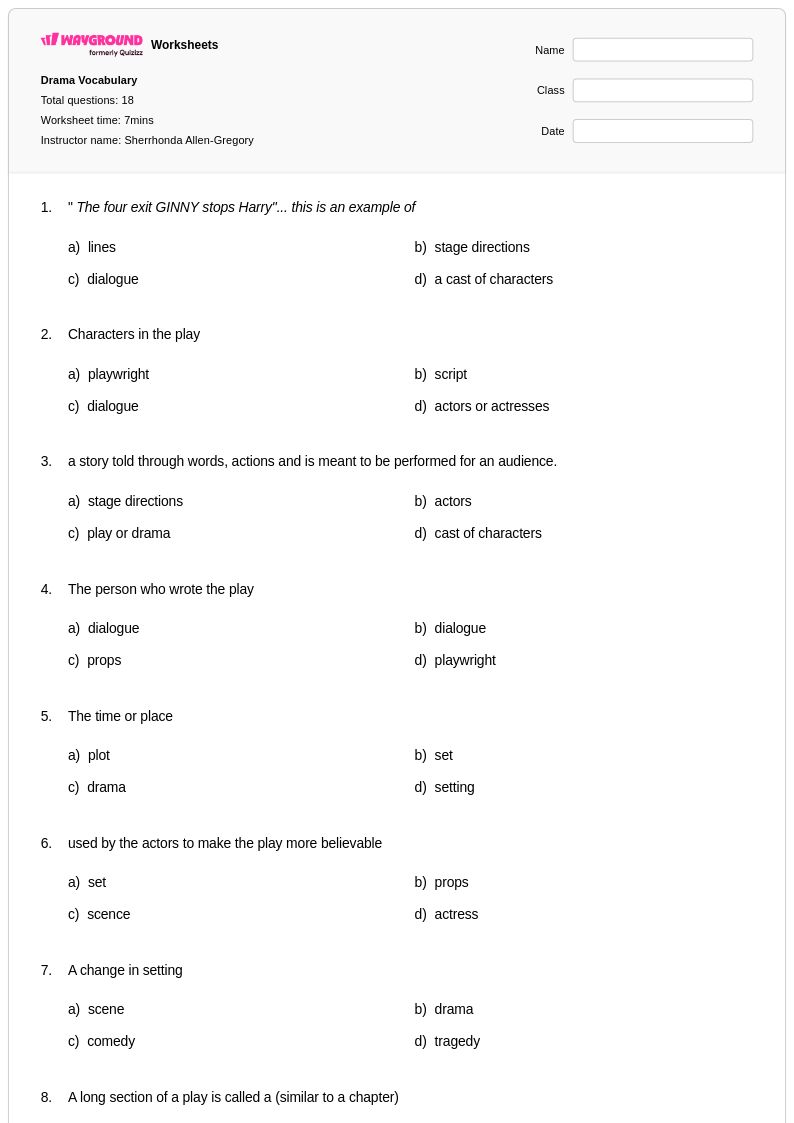
18 T
6th
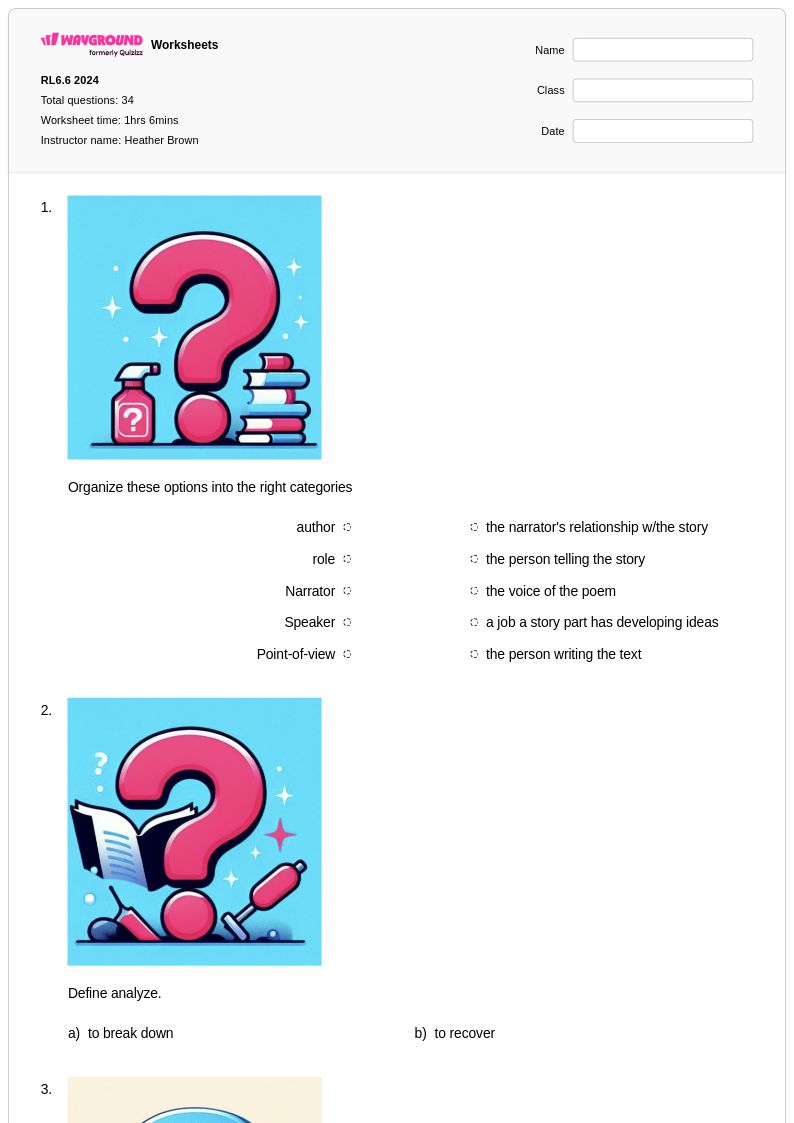
34 T
6th
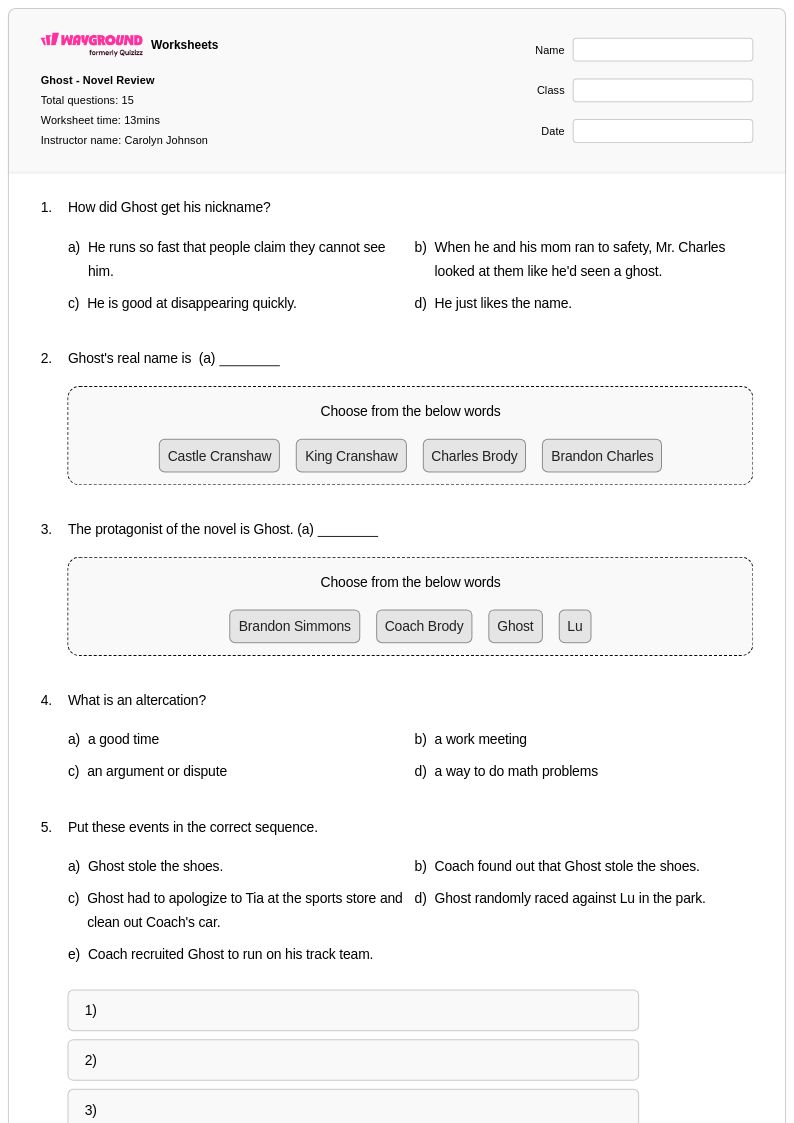
15 T
6th
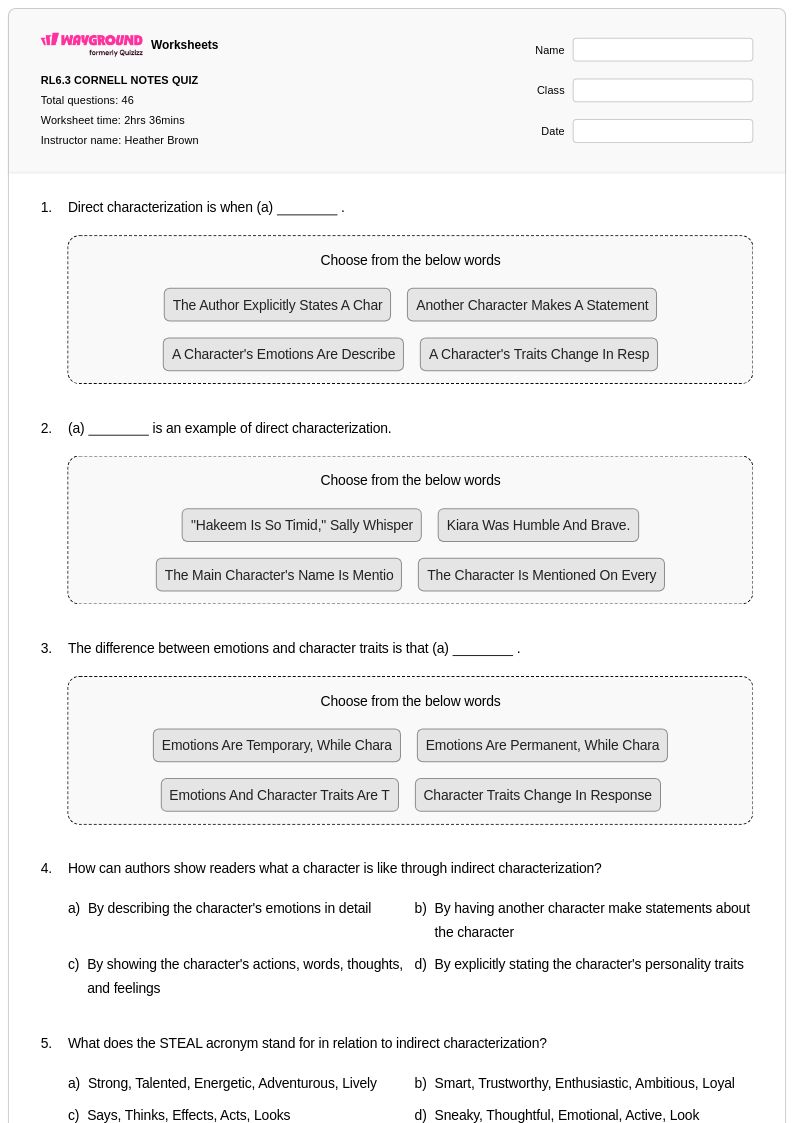
46 T
6th
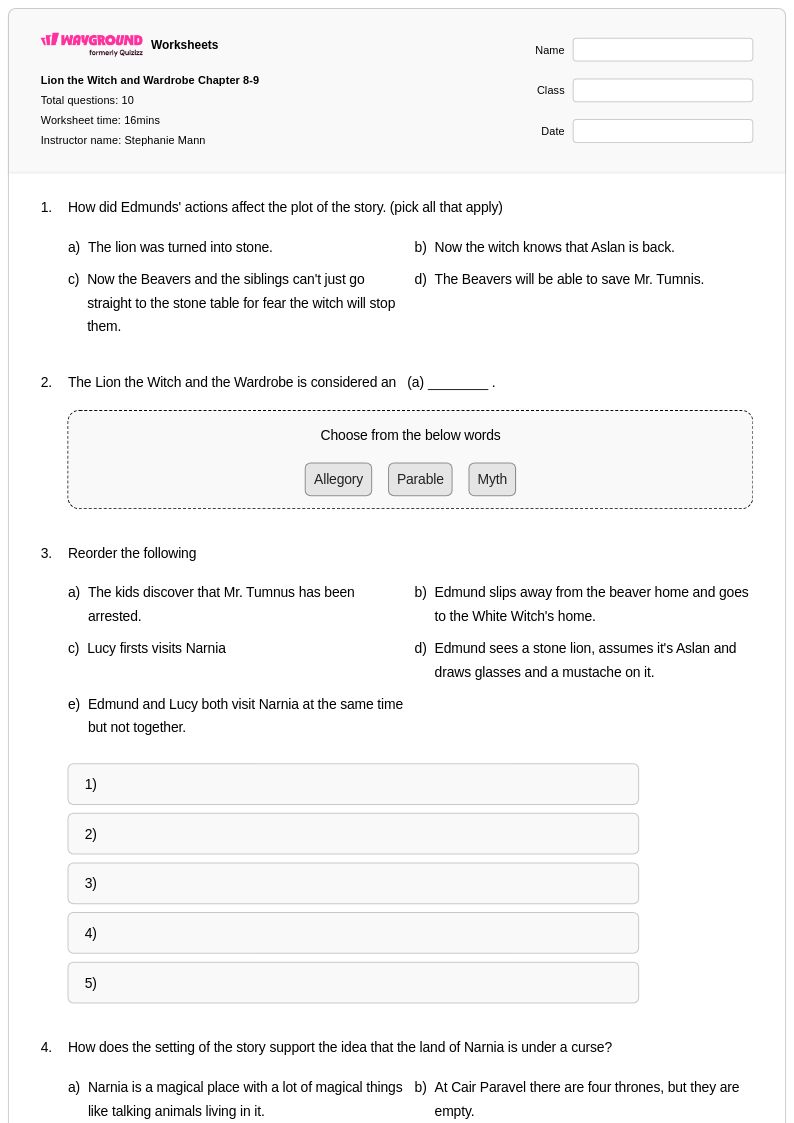
10 T
6th - 8th
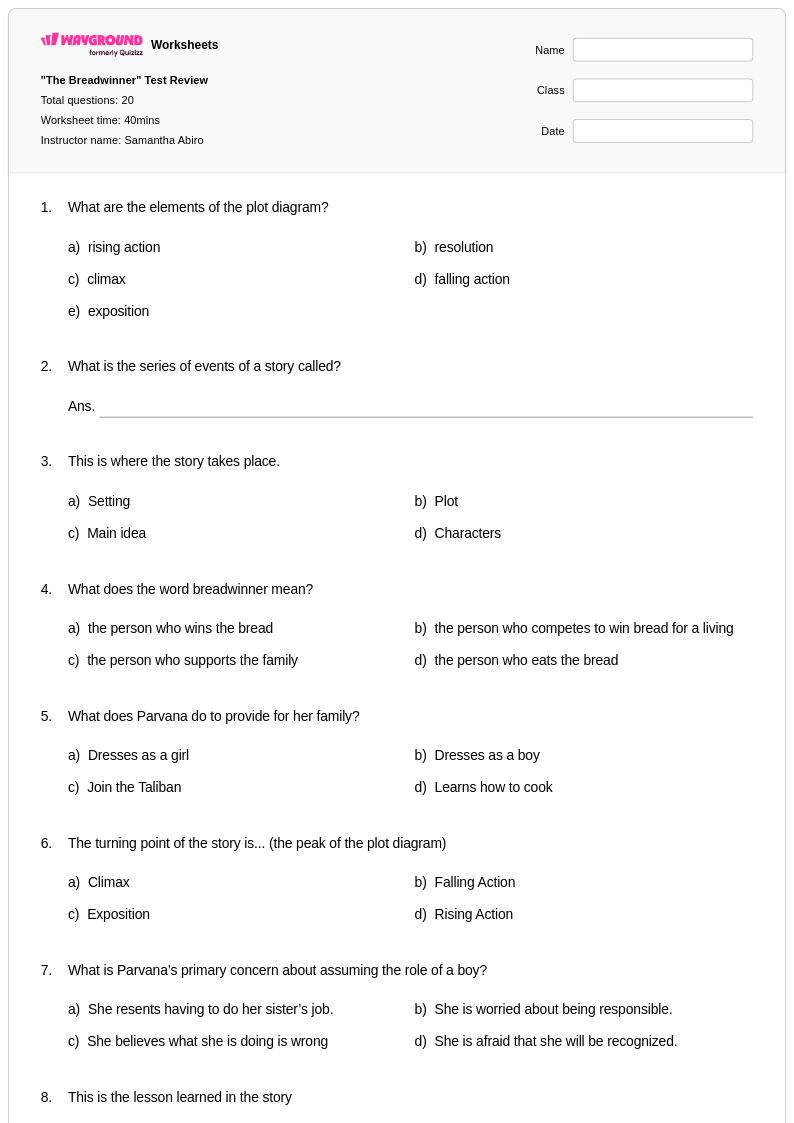
20 T
6th
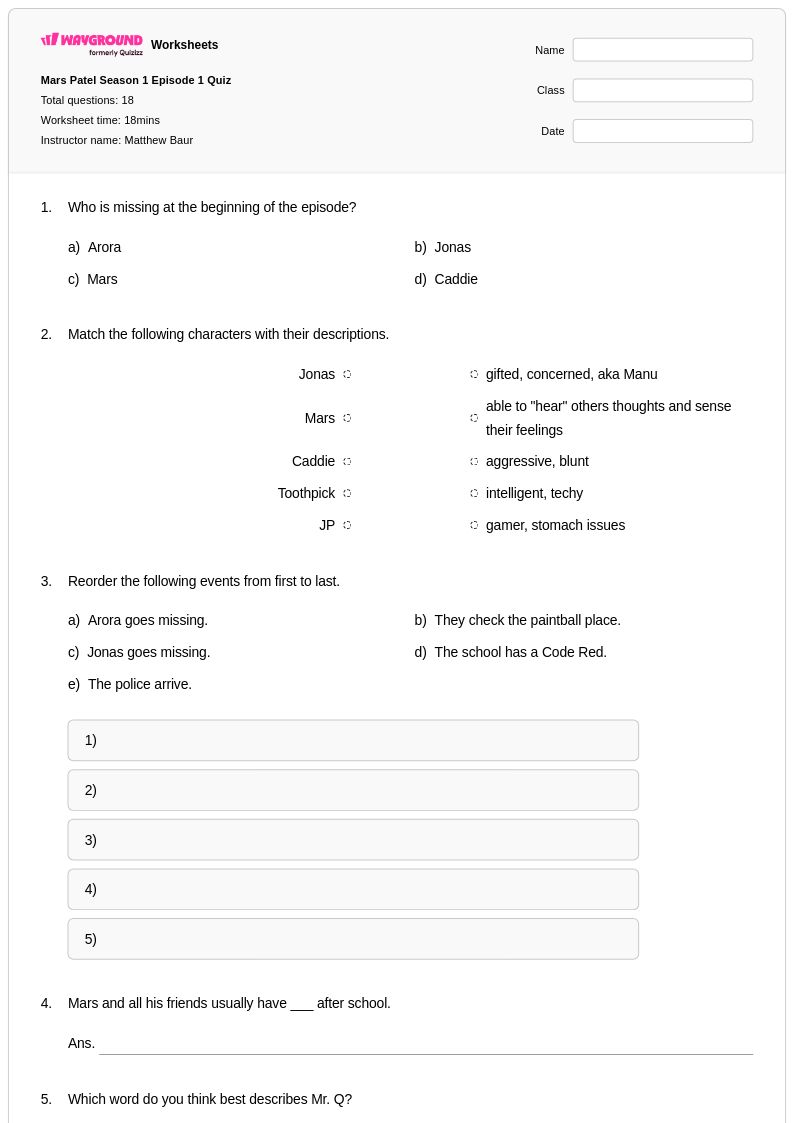
18 T
6th
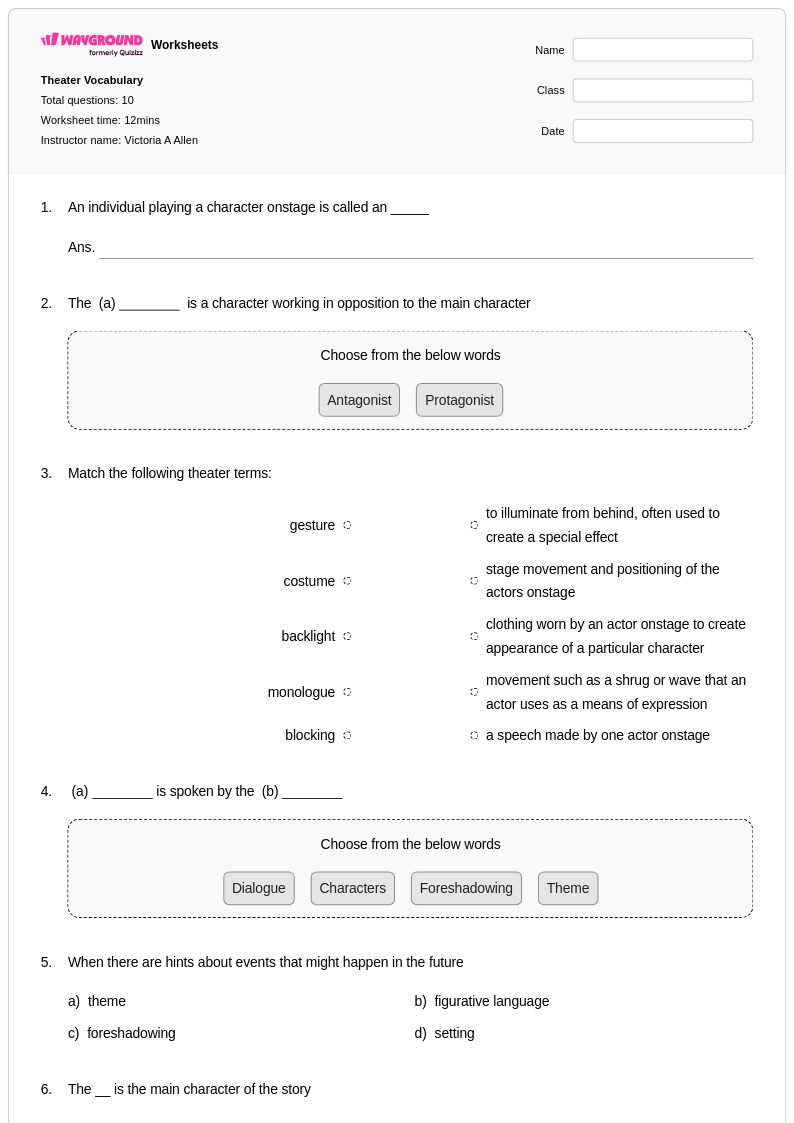
10 T
6th - 8th
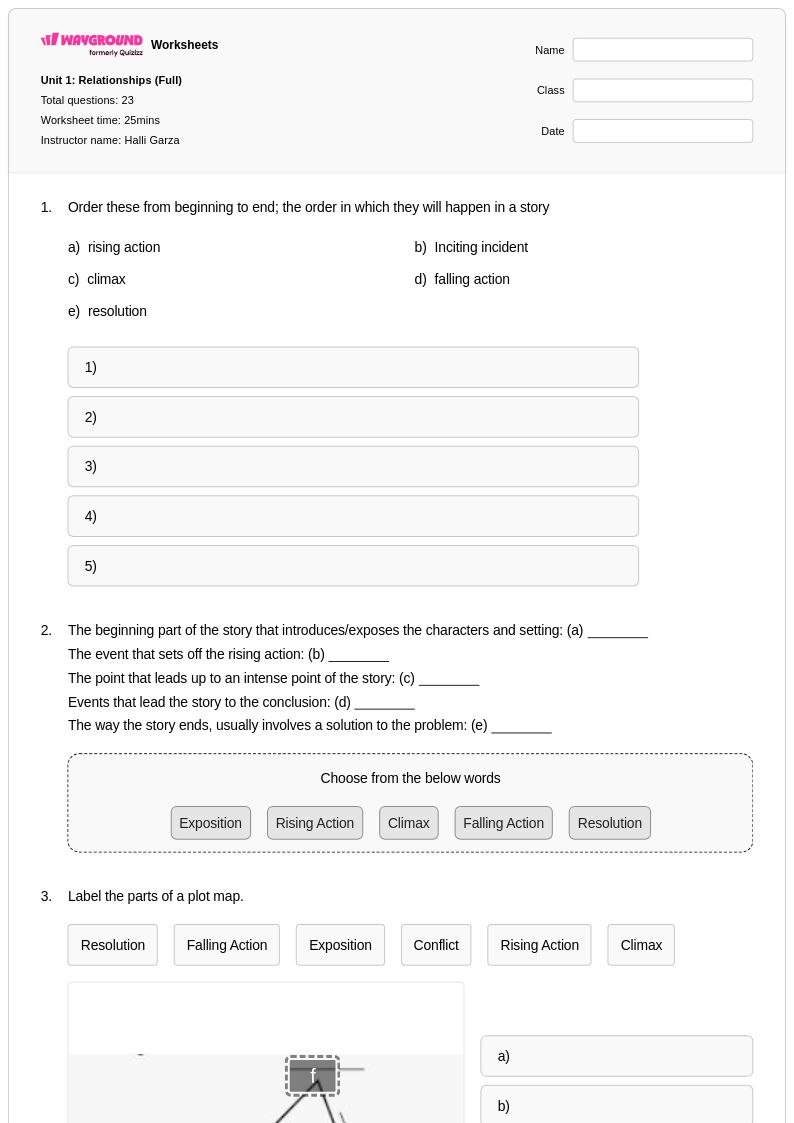
23 T
6th - 8th
Jelajahi Character, Setting, and Plot Lembar Kerja berdasarkan Nilai
Jelajahi Lembar Kerja Mata Pelajaran Lainnya untuk class 6
Explore printable Character, Setting, and Plot worksheets for Class 6
Character, setting, and plot worksheets for Class 6 students through Wayground provide essential practice in understanding the fundamental elements of literary analysis. These carefully designed reading comprehension resources help sixth-grade learners develop critical thinking skills by examining how characters develop throughout a story, identifying various settings and their impact on narrative events, and analyzing plot structures including exposition, rising action, climax, and resolution. Each worksheet collection includes comprehensive answer keys and is available as free printable pdf resources, allowing students to work through practice problems that strengthen their ability to identify character motivations, describe setting details, and sequence plot events effectively. The structured exercises guide students in making connections between these three core story elements while building vocabulary and analytical writing skills essential for middle school English success.
Wayground's extensive library of millions of teacher-created resources makes it simple for educators to find high-quality character, setting, and plot materials that align with Class 6 reading standards and curriculum requirements. The platform's robust search and filtering capabilities allow teachers to quickly locate worksheets by difficulty level, text complexity, or specific literary focus areas, while differentiation tools enable customization for diverse learning needs within the same classroom. These versatile resources are available in both printable pdf format for traditional paper-based instruction and digital formats for interactive online learning, supporting flexible lesson planning approaches. Teachers can effectively use these materials for targeted skill practice, remediation for struggling readers, enrichment activities for advanced students, and formative assessment to monitor student progress in understanding how character development, setting descriptions, and plot progression work together to create meaningful narratives.
FAQs
How do I teach character, setting, and plot together in one lesson?
What exercises help students practice identifying character, setting, and plot?
What mistakes do students commonly make when analyzing character, setting, and plot?
How can I differentiate character, setting, and plot instruction for students at different reading levels?
How do I use Wayground's character, setting, and plot worksheets in my classroom?
How do I help students understand how setting affects plot and character?