
10 Hỏi
1st
9 Hỏi
1st - 5th
7 Hỏi
1st
8 Hỏi
1st - 5th
8 Hỏi
KG - 4th
47 Hỏi
1st - 5th
10 Hỏi
1st - 5th
10 Hỏi
KG - 3rd
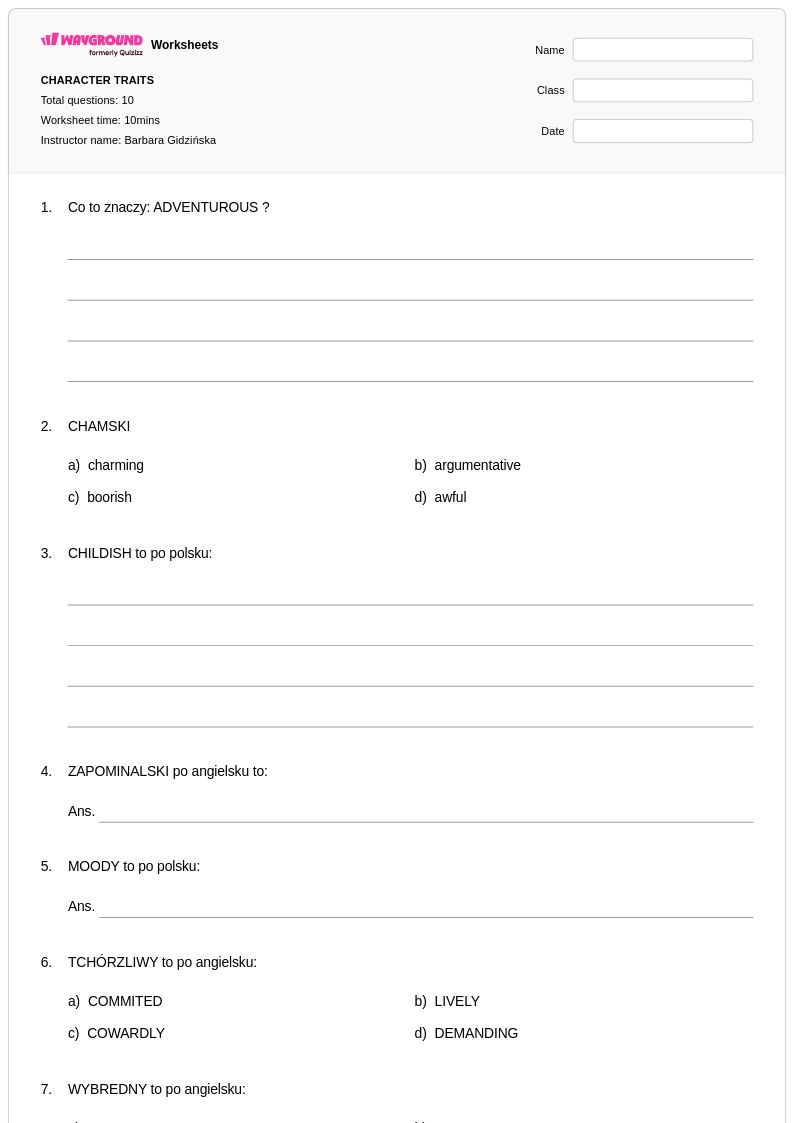
10 Hỏi
1st - 6th
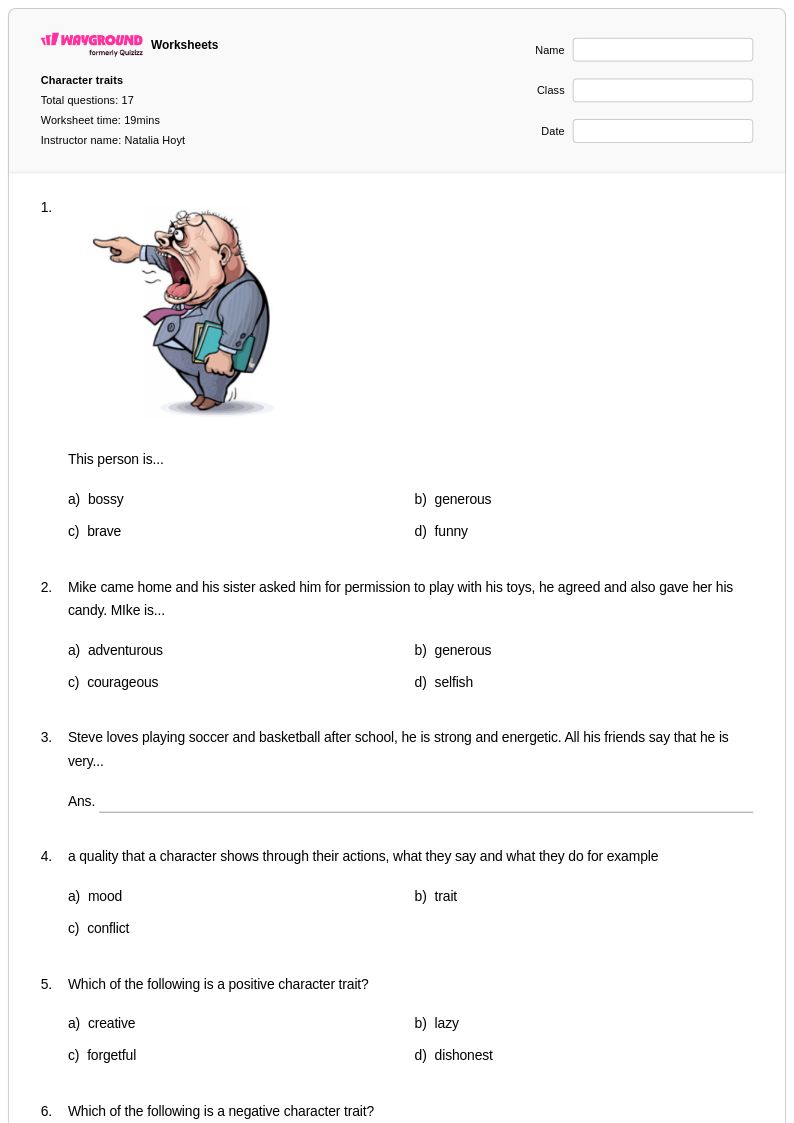
17 Hỏi
1st - 12th
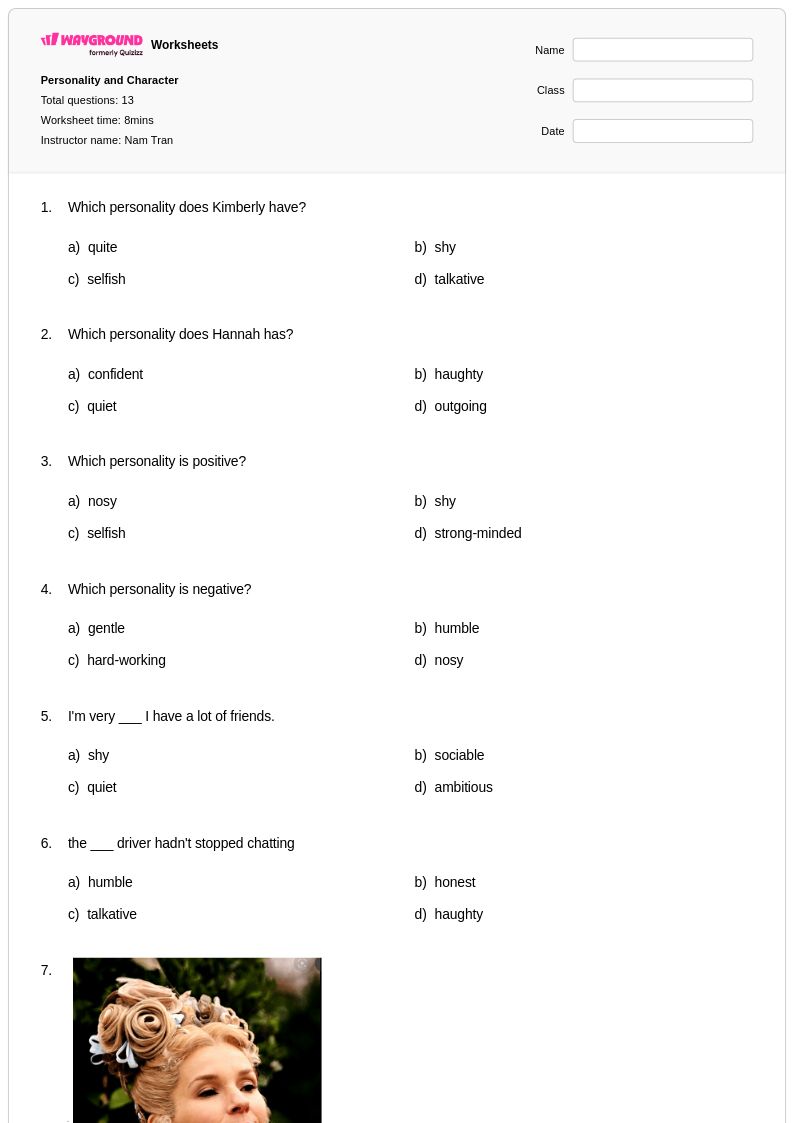
13 Hỏi
1st - 2nd
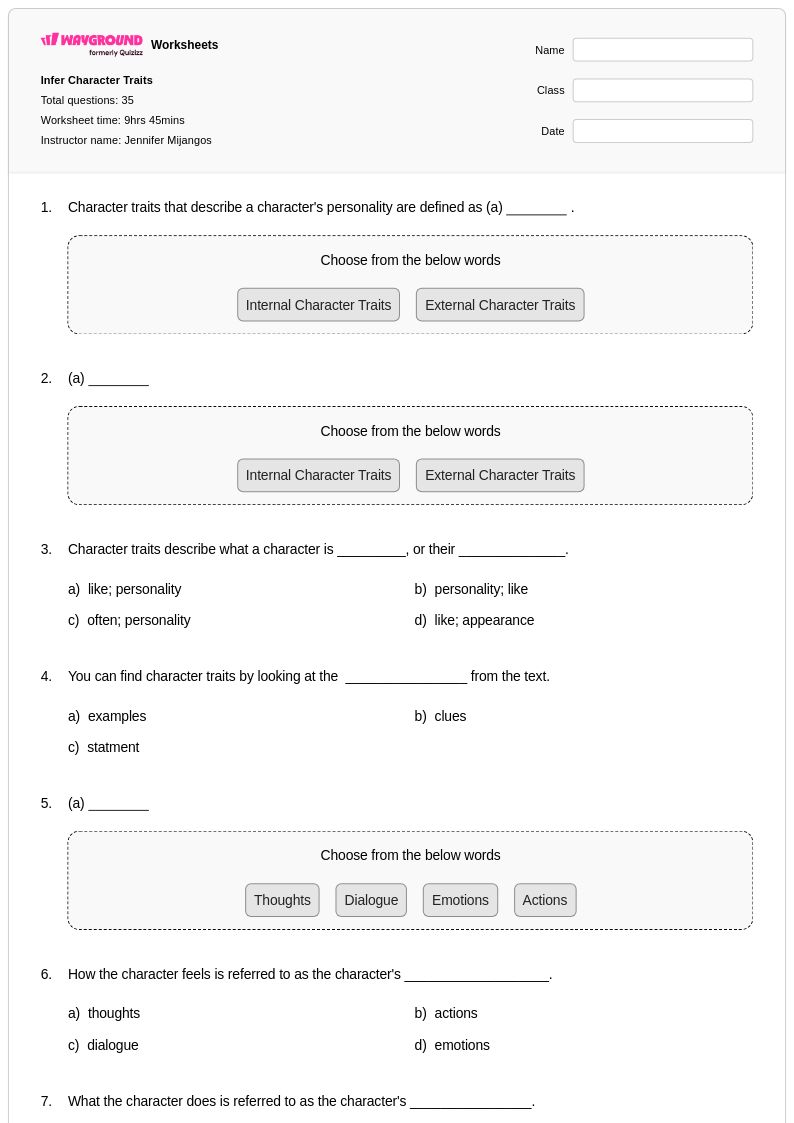
35 Hỏi
1st - 5th
6 Hỏi
1st
7 Hỏi
1st
15 Hỏi
1st
10 Hỏi
1st - 5th
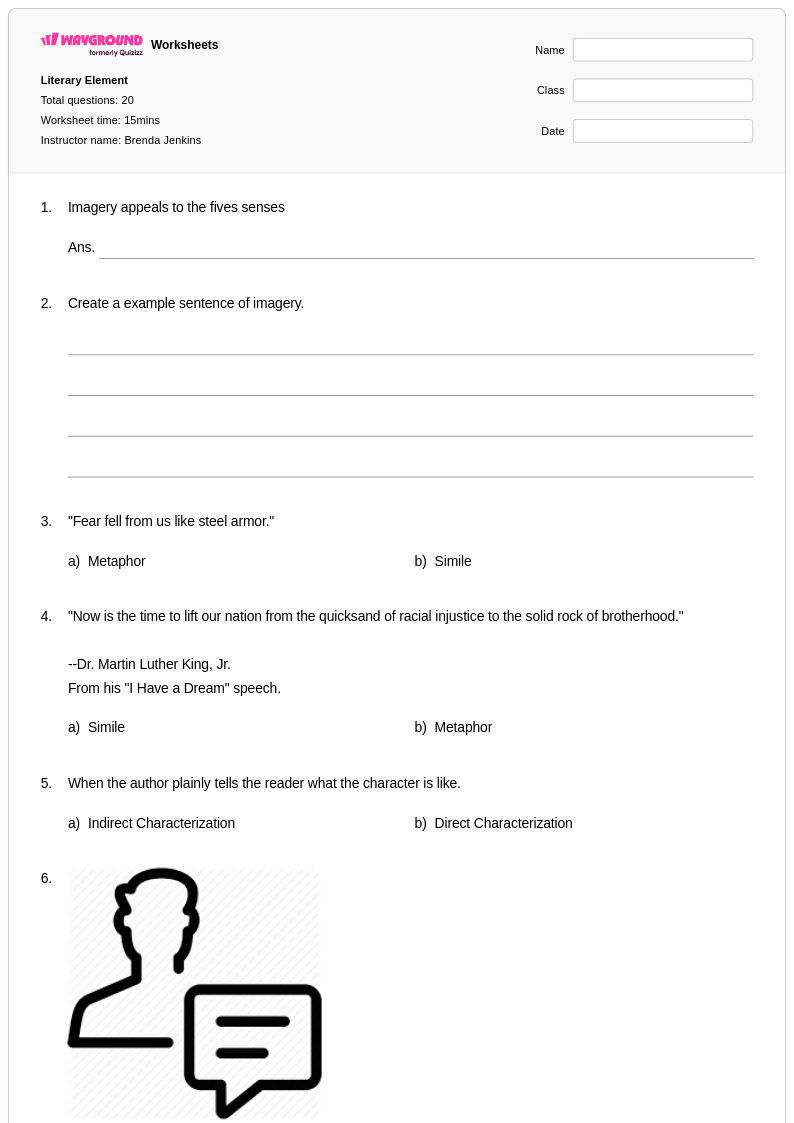
20 Hỏi
1st - 5th
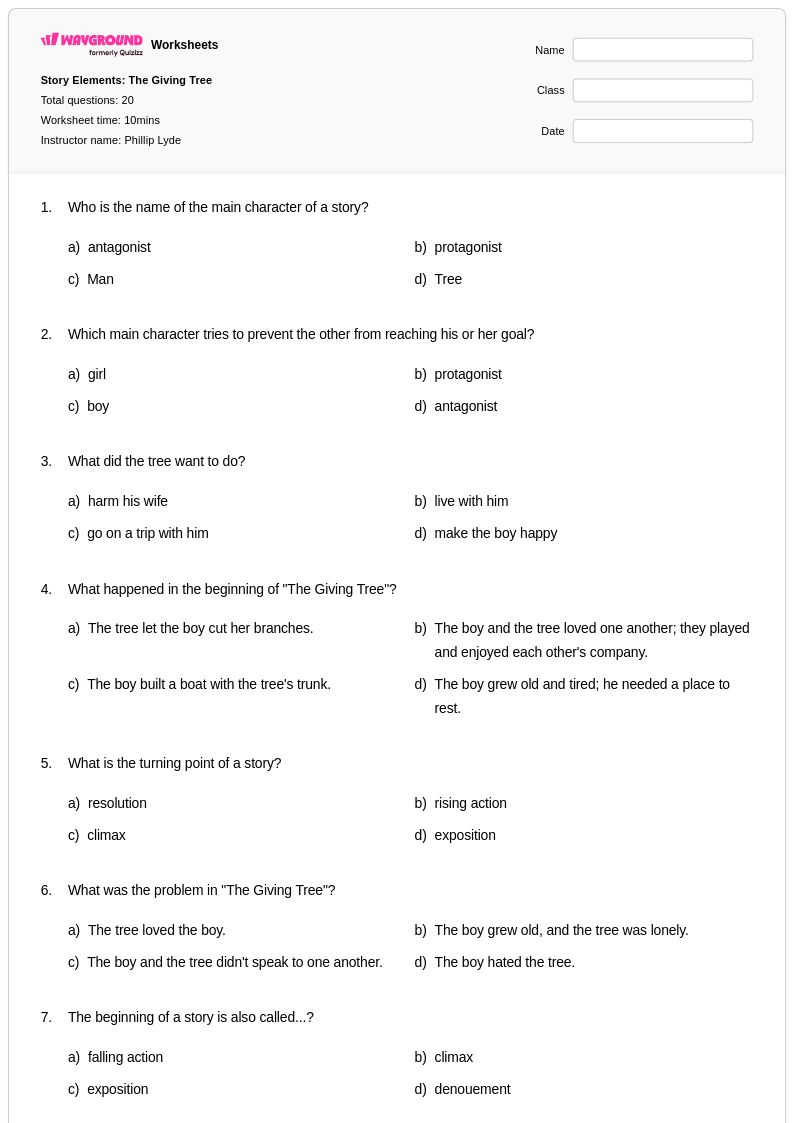
20 Hỏi
KG - 4th
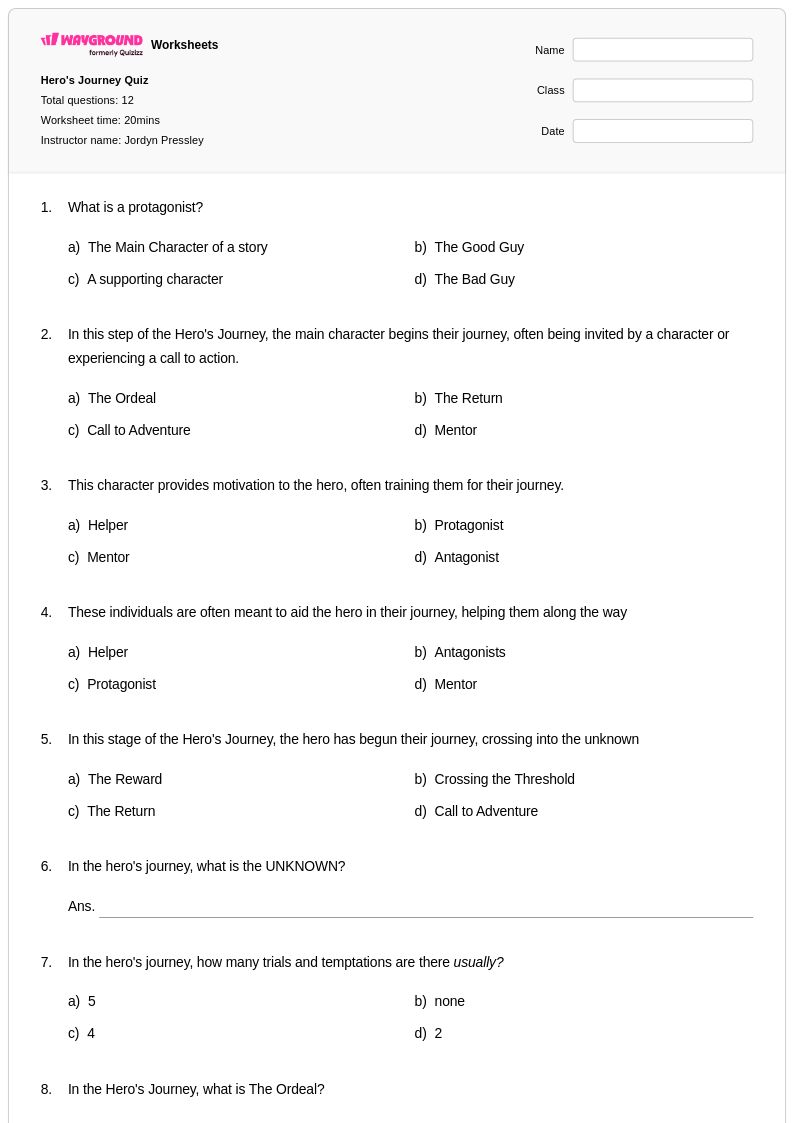
12 Hỏi
1st - 5th
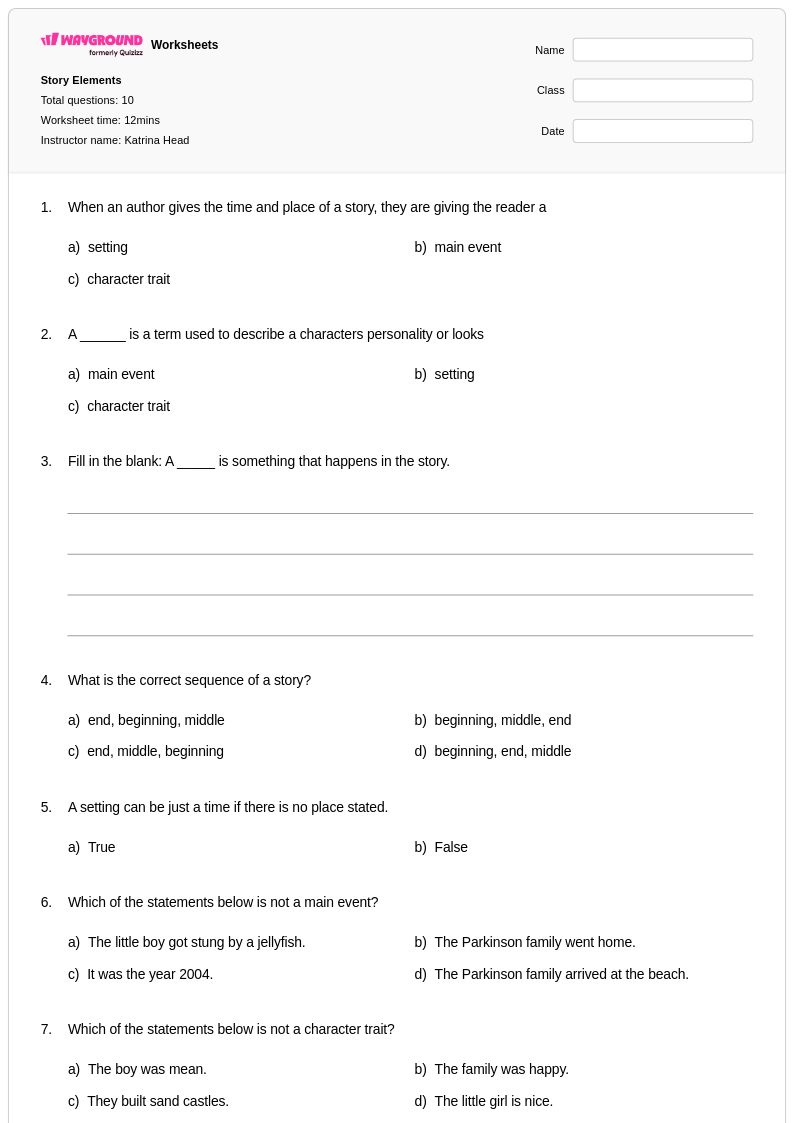
10 Hỏi
1st
10 Hỏi
1st - Uni
12 Hỏi
1st - 5th
15 Hỏi
1st - 5th
15 Hỏi
1st
Khám phá Character Types Bảng tính theo cấp độ
Khám phá các bảng tính chủ đề khác cho class 1
Explore printable Character Types worksheets for Class 1
Character types worksheets for Class 1 through Wayground provide young readers with essential practice in identifying and understanding different kinds of characters they encounter in stories. These carefully designed printables help first-grade students develop foundational reading comprehension skills by teaching them to distinguish between main characters and supporting characters, recognize heroes and helpers, and understand how characters drive story events. Each worksheet includes age-appropriate activities that guide students through character analysis using simple vocabulary and engaging exercises, with comprehensive answer keys that support both independent practice and guided instruction. These free resources strengthen critical thinking abilities while building the analytical skills students need to become thoughtful readers who can discuss and write about the characters they meet in books.
Wayground's extensive collection of millions of teacher-created character types worksheets offers educators powerful tools for differentiated instruction and skill development in Class 1 classrooms. The platform's robust search and filtering capabilities allow teachers to quickly locate materials that align with their curriculum standards and match their students' specific learning needs, whether for remediation, enrichment, or regular practice sessions. Teachers can easily customize these digital and printable pdf resources to accommodate diverse learning styles and academic levels, ensuring every first-grade student receives appropriate challenge and support. The flexibility of accessing materials in both digital and printable formats streamlines lesson planning while providing multiple options for assessment, homework assignments, and targeted skill practice that helps young learners master the important concept of character identification and analysis.
FAQs
How do I teach character types in a literature class?
What exercises help students practice identifying character types?
What mistakes do students commonly make when analyzing character types?
How can I differentiate character types instruction for struggling readers?
How do I use Wayground's character types worksheets in my classroom?