Free Printable Charlotte's Web Worksheets for Class 1
Explore Class 1 Charlotte's Web worksheets and printables that help young students develop reading comprehension skills through engaging activities, practice problems, and answer keys available as free PDF downloads.
Explore printable Charlotte's Web worksheets for Class 1
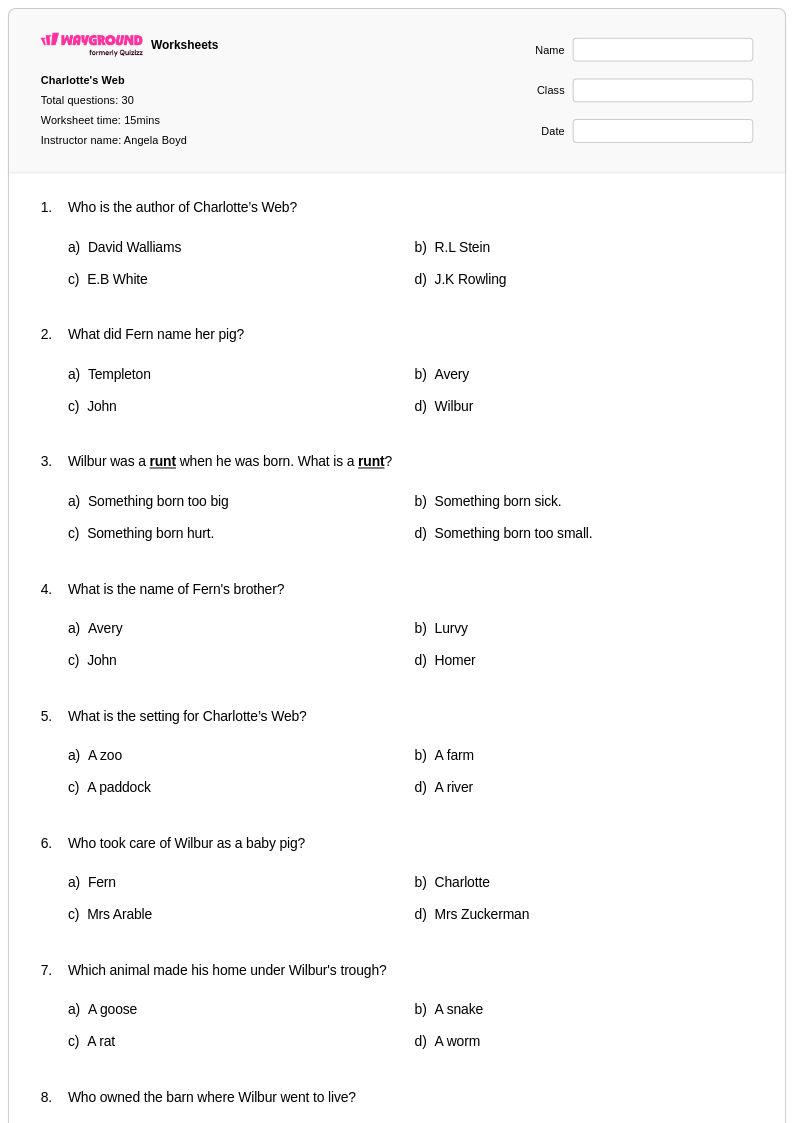
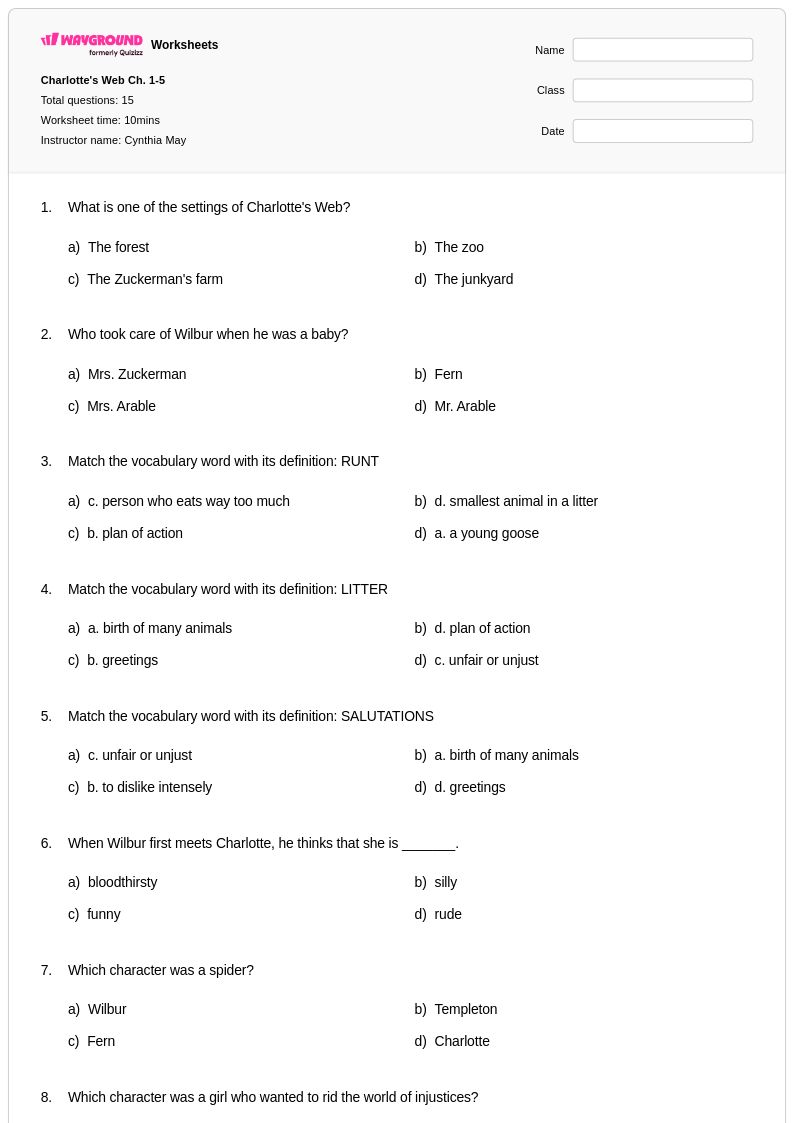
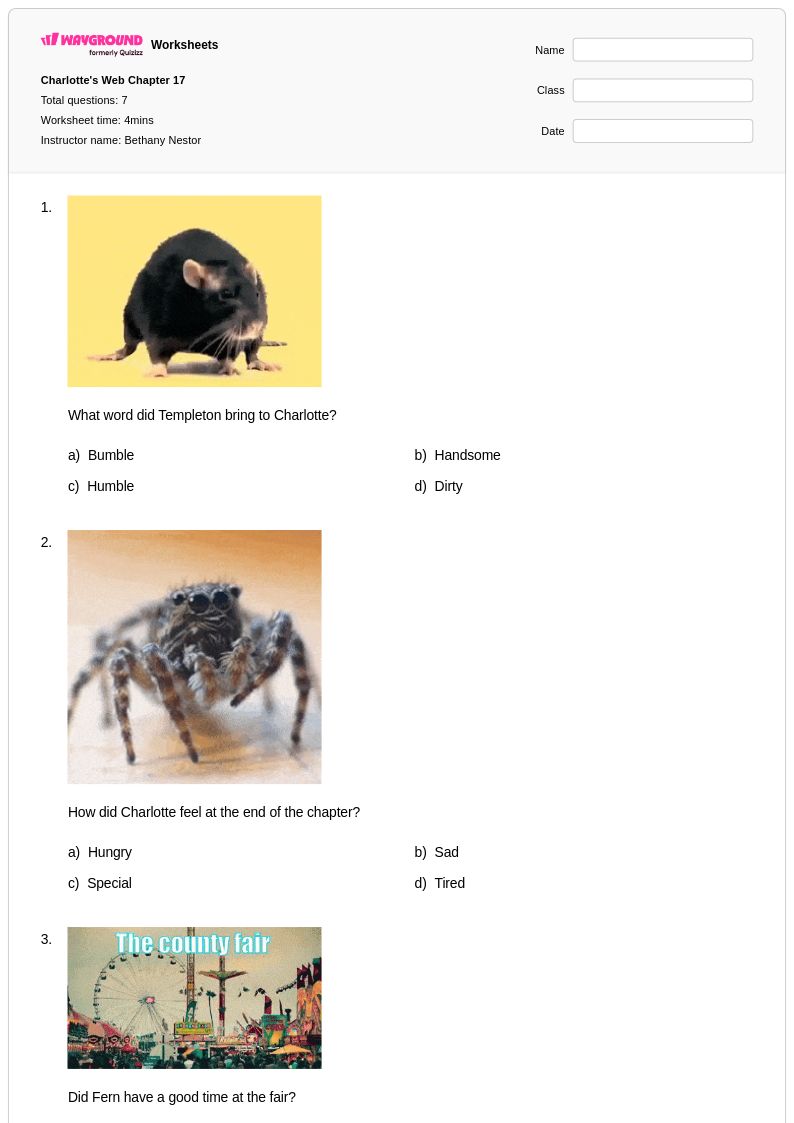
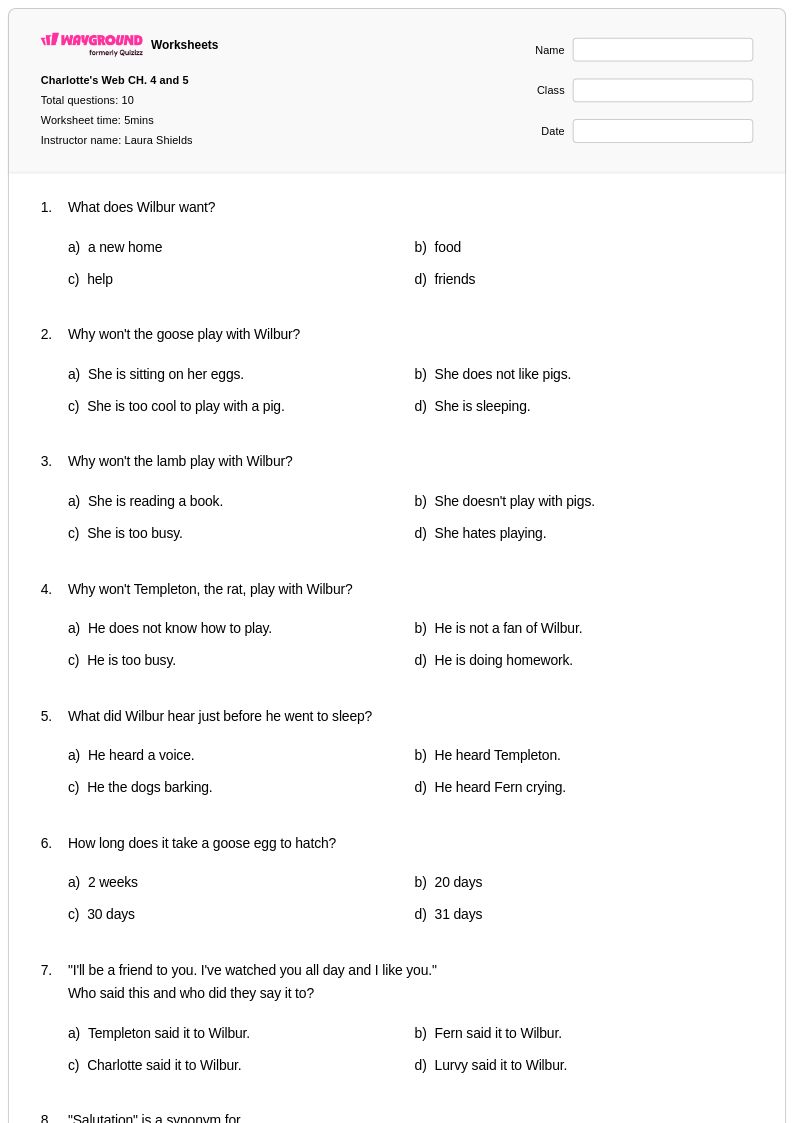
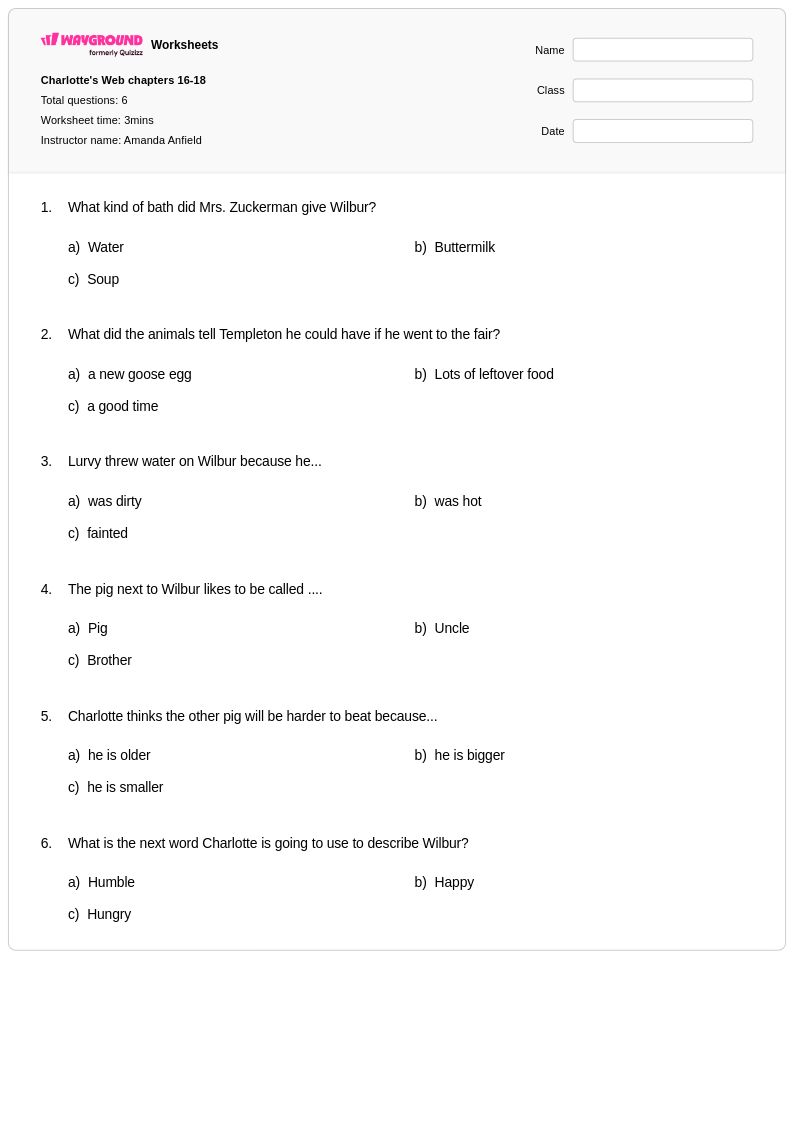
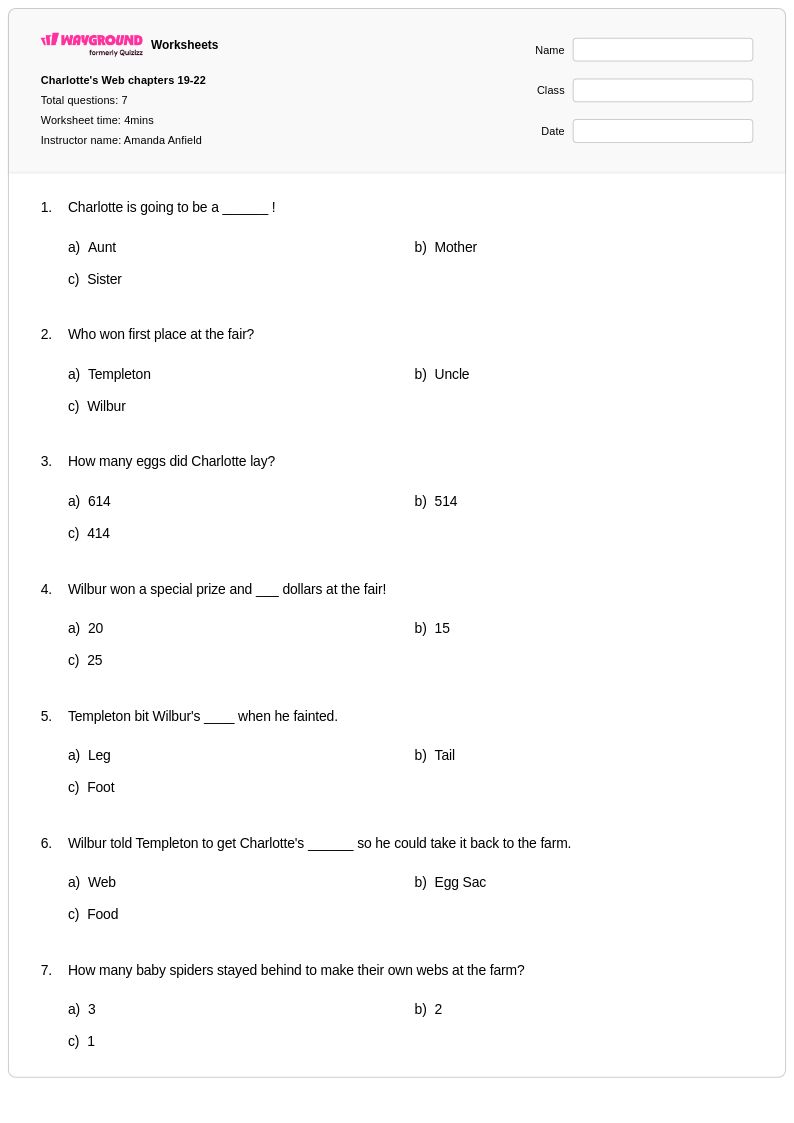
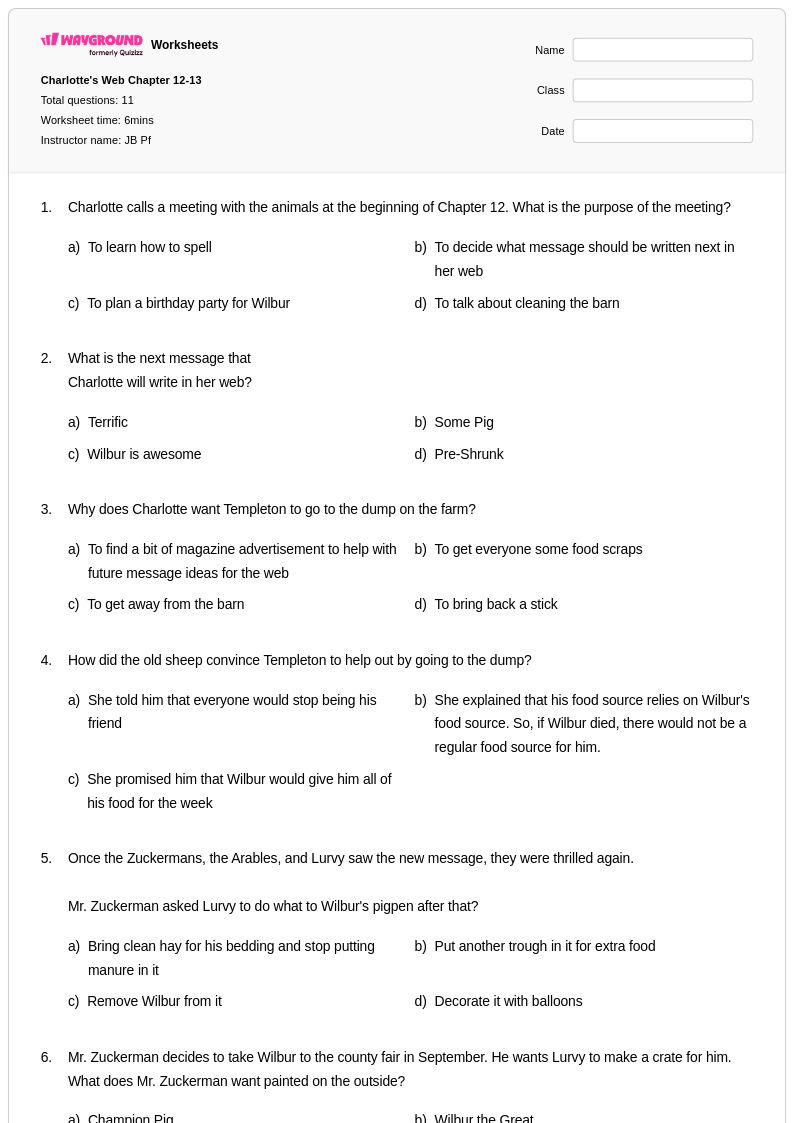
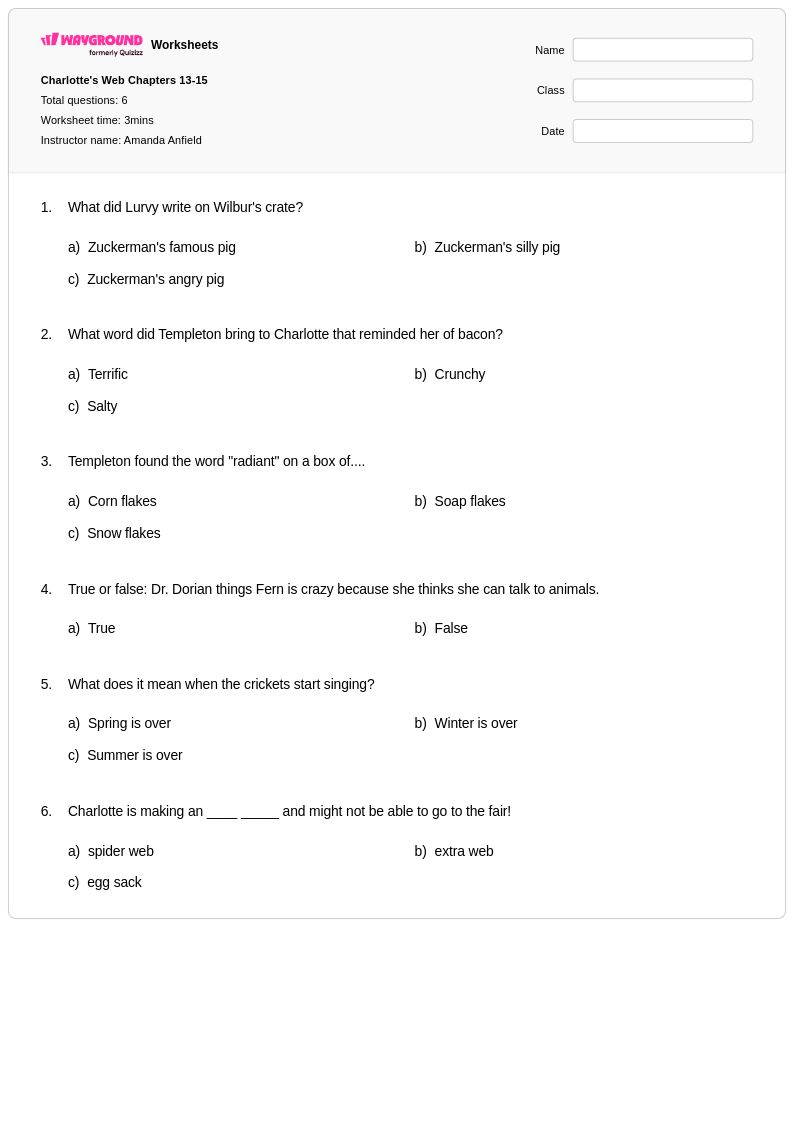
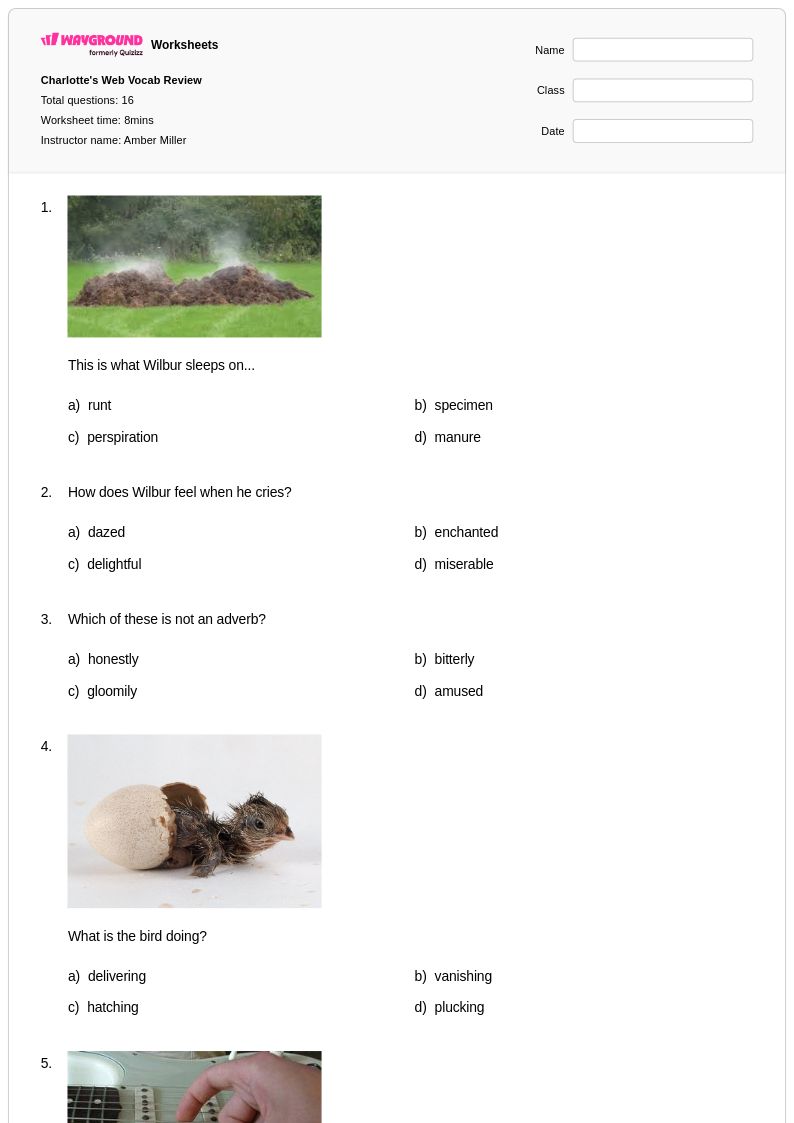
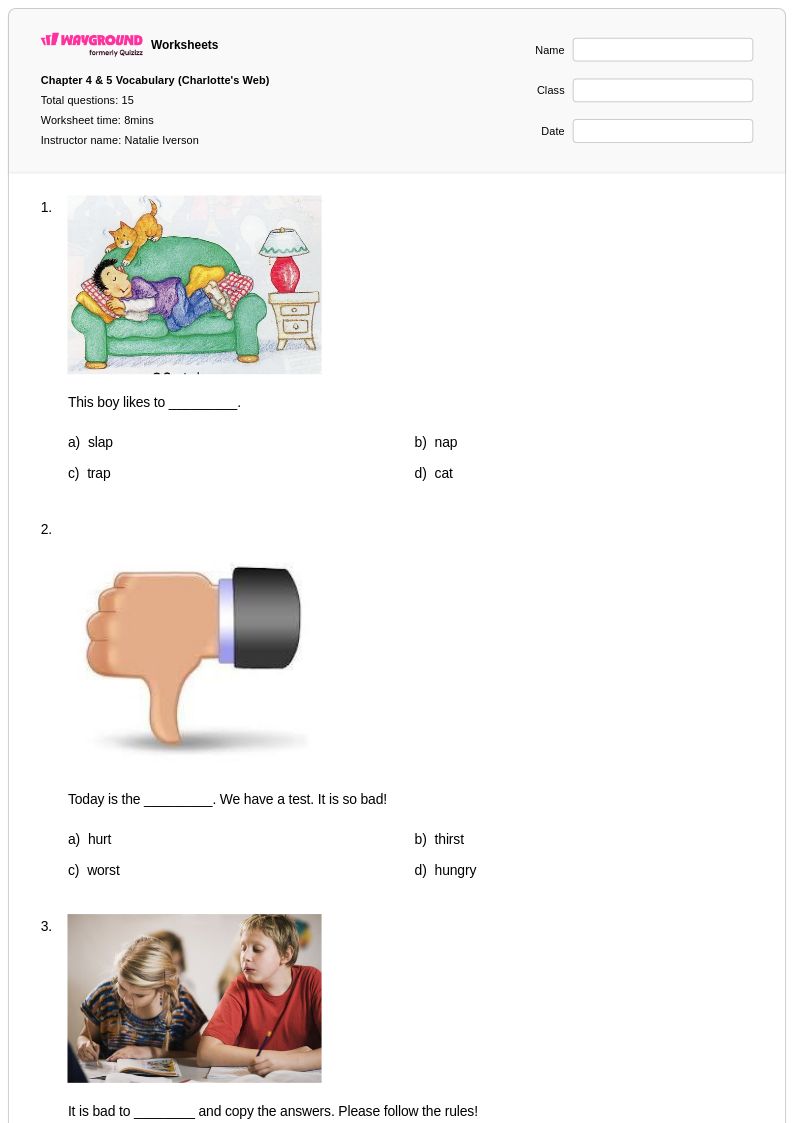
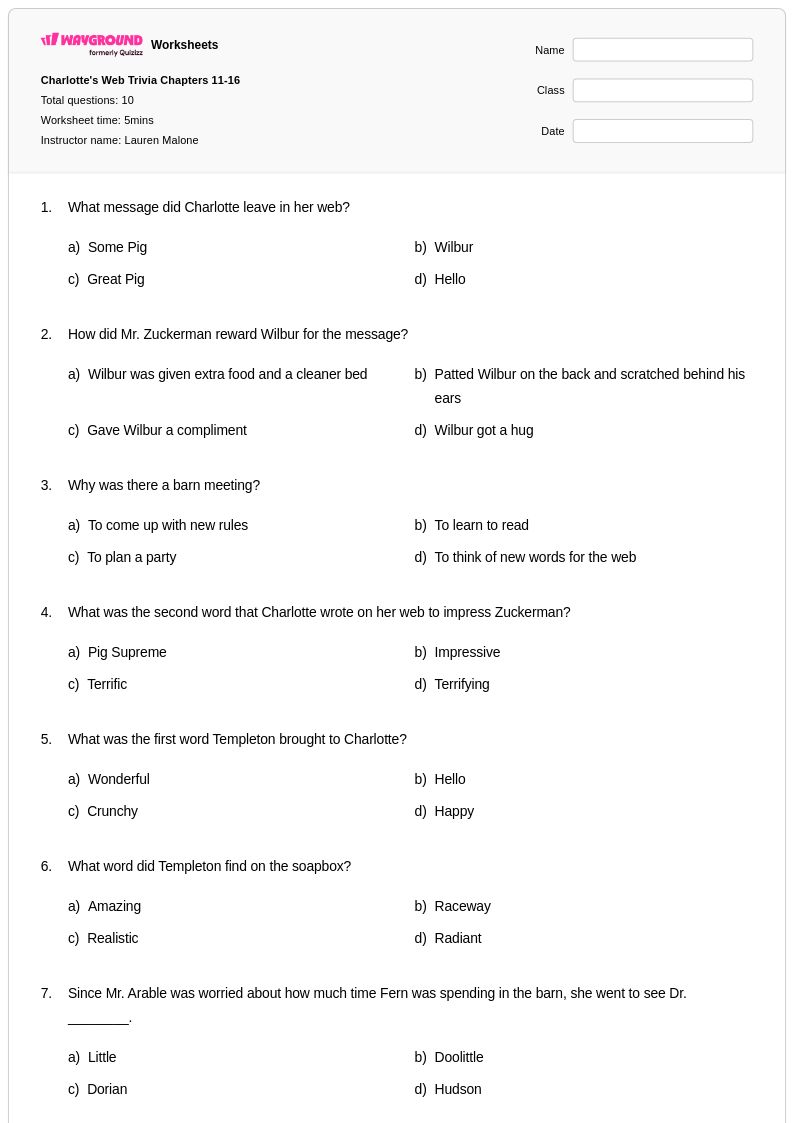
Charlotte's Web worksheets for Class 1 students available through Wayground (formerly Quizizz) provide young readers with engaging activities that build essential reading comprehension and literary analysis skills. These carefully crafted resources help first-grade students explore E.B. White's beloved classic through age-appropriate exercises that focus on character identification, plot sequencing, vocabulary development, and basic story elements. The comprehensive collection includes printable activities with answer keys, free practice problems that reinforce key concepts, and pdf materials designed to support emerging readers as they navigate this timeless tale of friendship between Wilbur the pig and Charlotte the spider.
Wayground (formerly Quizizz) empowers teachers with millions of educator-created Charlotte's Web resources specifically designed for Class 1 learners, featuring robust search and filtering capabilities that make finding the perfect worksheet quick and efficient. The platform's standards-aligned materials support differentiated instruction through customizable content that can be adapted for various reading levels and learning needs, while printable and digital pdf formats provide flexibility for both classroom and remote learning environments. These comprehensive tools enable teachers to effectively plan novel study units, provide targeted remediation for struggling readers, offer enrichment opportunities for advanced students, and deliver consistent skill practice that deepens students' understanding of literary themes, character development, and narrative structure within this classic children's literature selection.
FAQs
How do I teach Charlotte's Web effectively in the classroom?
Teaching Charlotte's Web works best when structured around its core literary elements: character development, plot arc, theme, and figurative language. Begin with pre-reading vocabulary to reduce friction when students encounter White's prose, then guide students through chapter-by-chapter comprehension checks before moving into deeper analysis of Charlotte and Wilbur's friendship as a vehicle for themes like loyalty, sacrifice, and the cycle of life. Character analysis charts and textual evidence activities help students move beyond surface-level retelling toward interpretive reading.
What are the most important themes in Charlotte's Web to discuss with students?
The central themes in Charlotte's Web include friendship and selflessness, the inevitability of death and how it gives life meaning, and the power of words and storytelling. Charlotte's act of writing in her web is a rich entry point for discussing how language shapes perception and community. Teachers often pair theme identification activities with short written responses that ask students to connect these themes to their own experiences, which strengthens both literary comprehension and personal reflection skills.
What exercises help students practice literary analysis with Charlotte's Web?
Effective practice activities for Charlotte's Web include character motivation questions that ask students to cite textual evidence, vocabulary-in-context exercises drawn directly from E.B. White's language, and plot sequencing tasks that reinforce students' understanding of narrative structure. Creative writing prompts, such as writing a new web message from Charlotte's perspective, extend analysis into original thinking. These exercise types work well as formative checks throughout the novel rather than only at the end.
What comprehension mistakes do students commonly make when reading Charlotte's Web?
Students frequently misread Charlotte's death as a sad ending rather than a meaningful and intentional narrative conclusion, which can lead to shallow thematic analysis. Another common error is treating Wilbur as the protagonist without recognizing Charlotte's equal narrative weight and agency. Students also tend to summarize plot events when asked to analyze character, so prompts that explicitly require textual evidence help redirect their responses toward deeper literary thinking.
How can I use Charlotte's Web worksheets to support different reading levels in my class?
Charlotte's Web worksheets can be differentiated by task complexity: struggling readers benefit from guided reading questions with sentence starters and vocabulary support, while advanced readers can be challenged with open-ended thematic analysis and comparative essay prompts. On Wayground, teachers can apply individual accommodations including Read Aloud for students who need audio support, reduced answer choices to lower cognitive load, and extended time settings, all configurable per student without disrupting the rest of the class.
How do I use Charlotte's Web worksheets from Wayground in my classroom?
Charlotte's Web worksheets on Wayground are available as printable PDFs for traditional classroom use and in digital formats for technology-integrated learning environments. Teachers can also host worksheets as a quiz directly on Wayground, enabling interactive student responses and streamlined grading. All worksheets include complete answer keys, so teachers can assess student work quickly and provide targeted feedback without building their own rubrics from scratch.