Free Printable Children's Authors Worksheets for Class 1
Explore Class 1 children's authors through Wayground's free printable worksheets and PDF practice problems, complete with answer keys to help young learners discover beloved writers and their stories.
Explore printable Children's Authors worksheets for Class 1
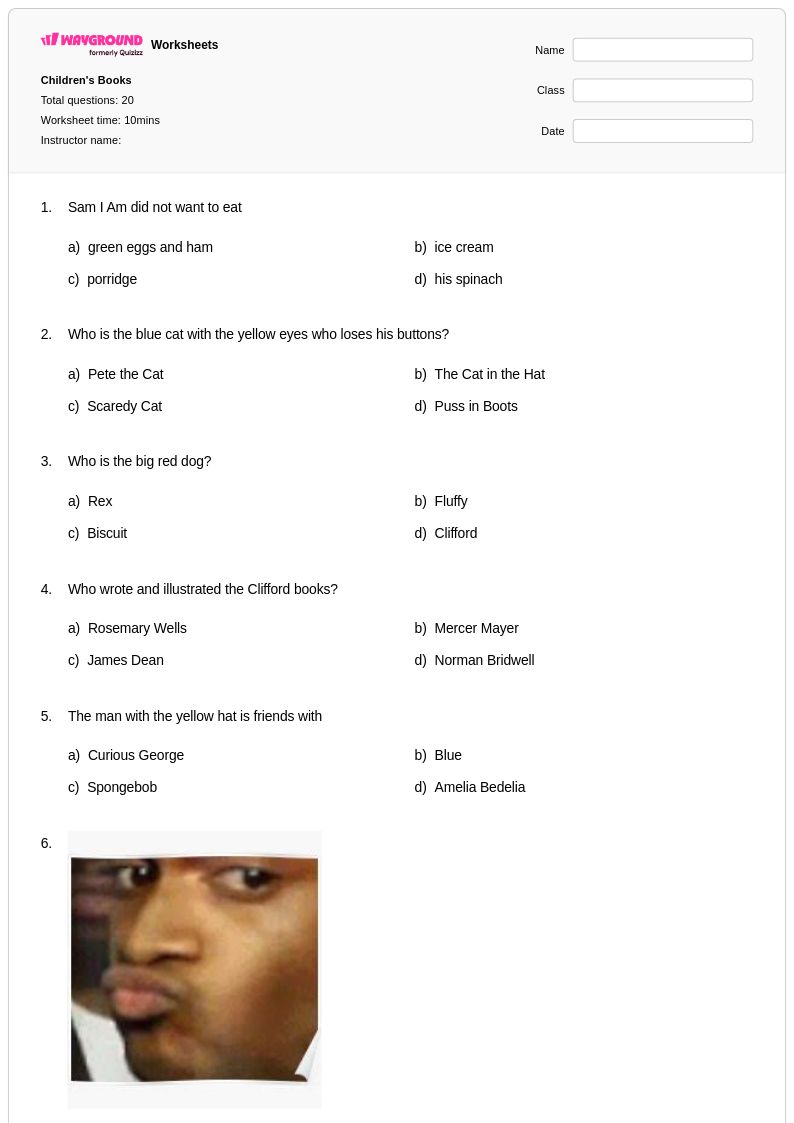
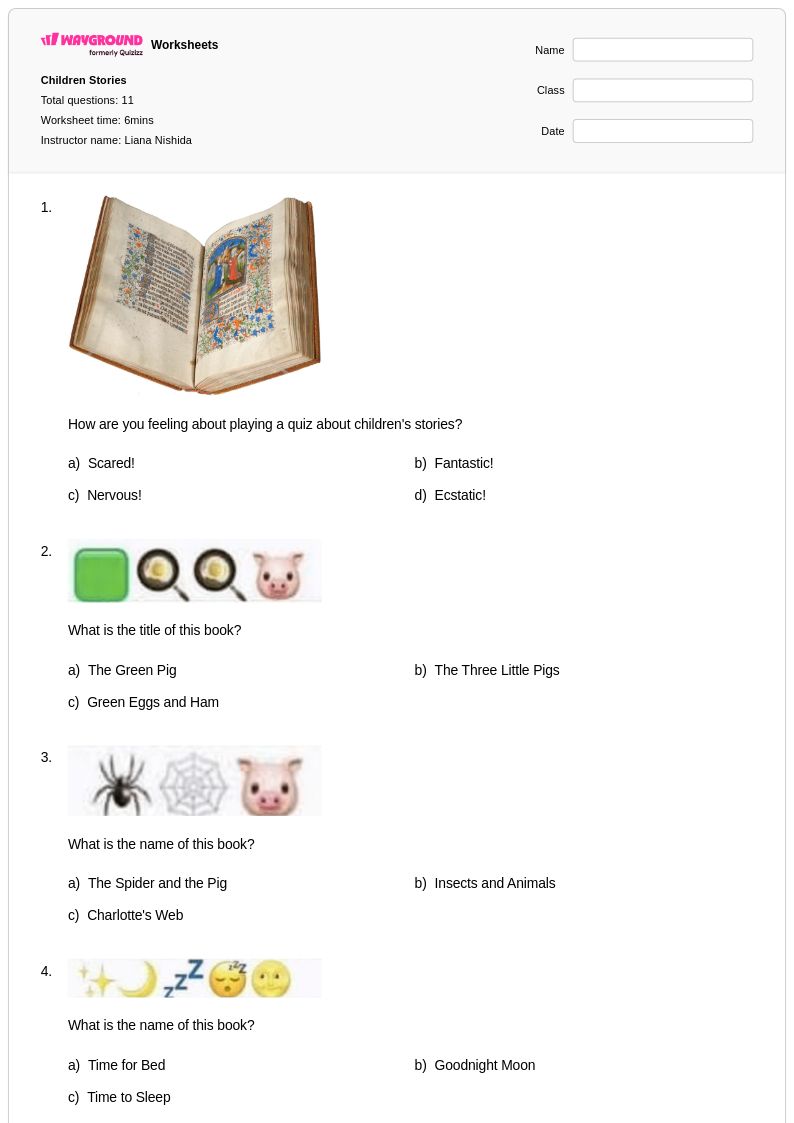
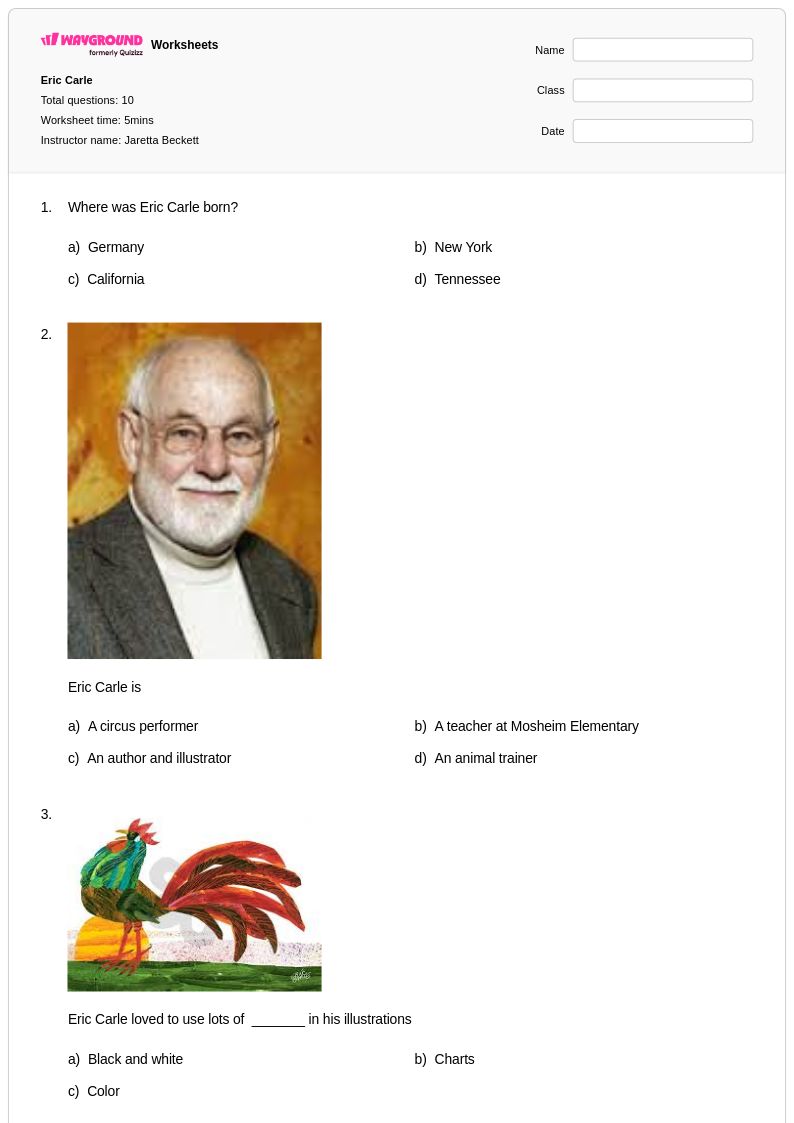
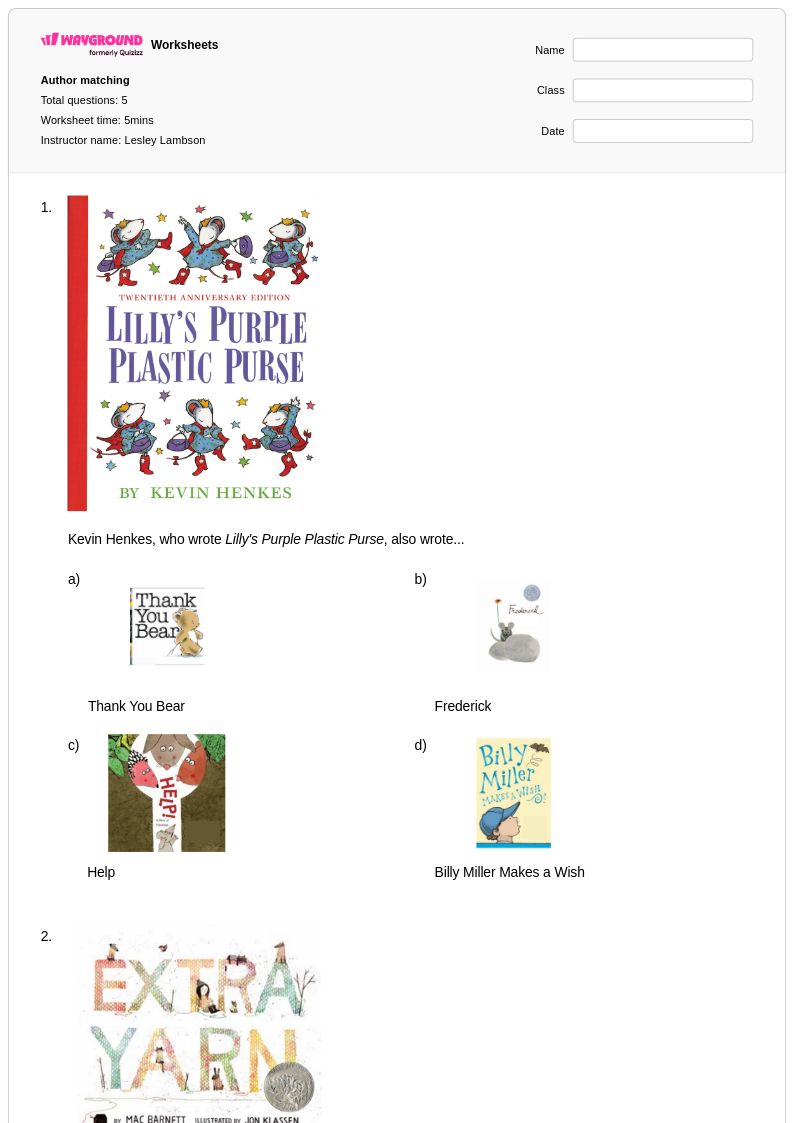
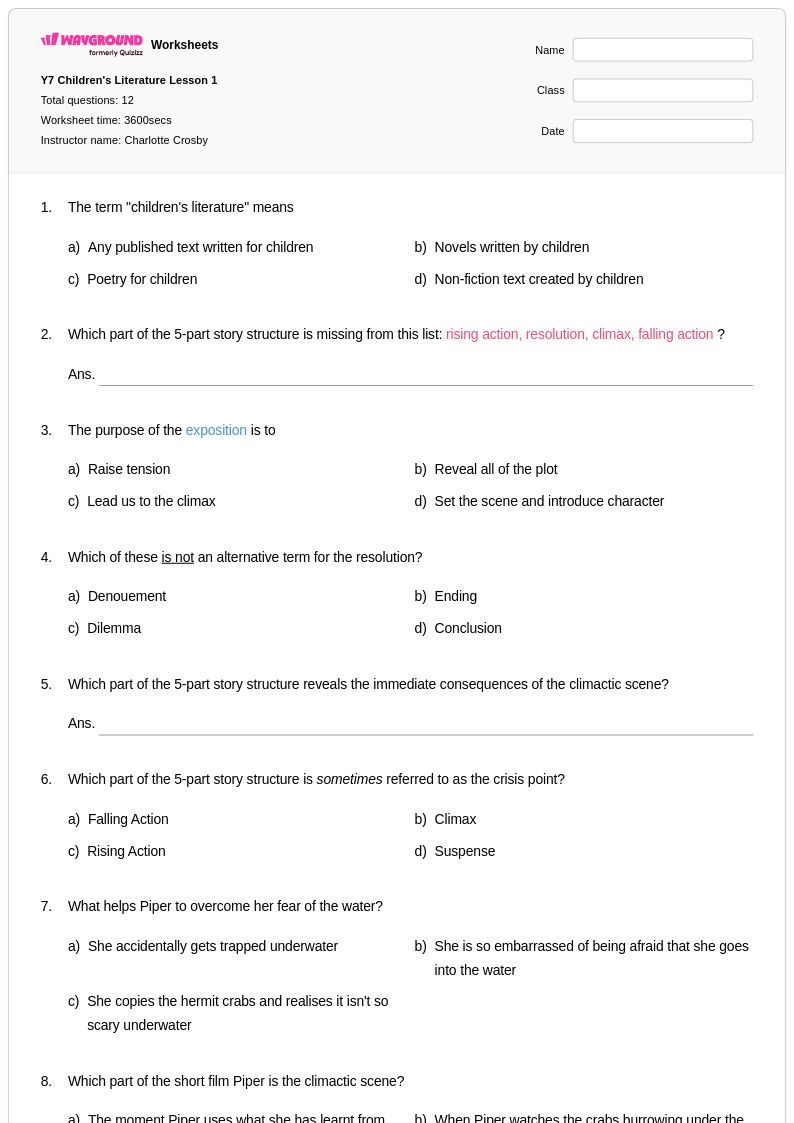
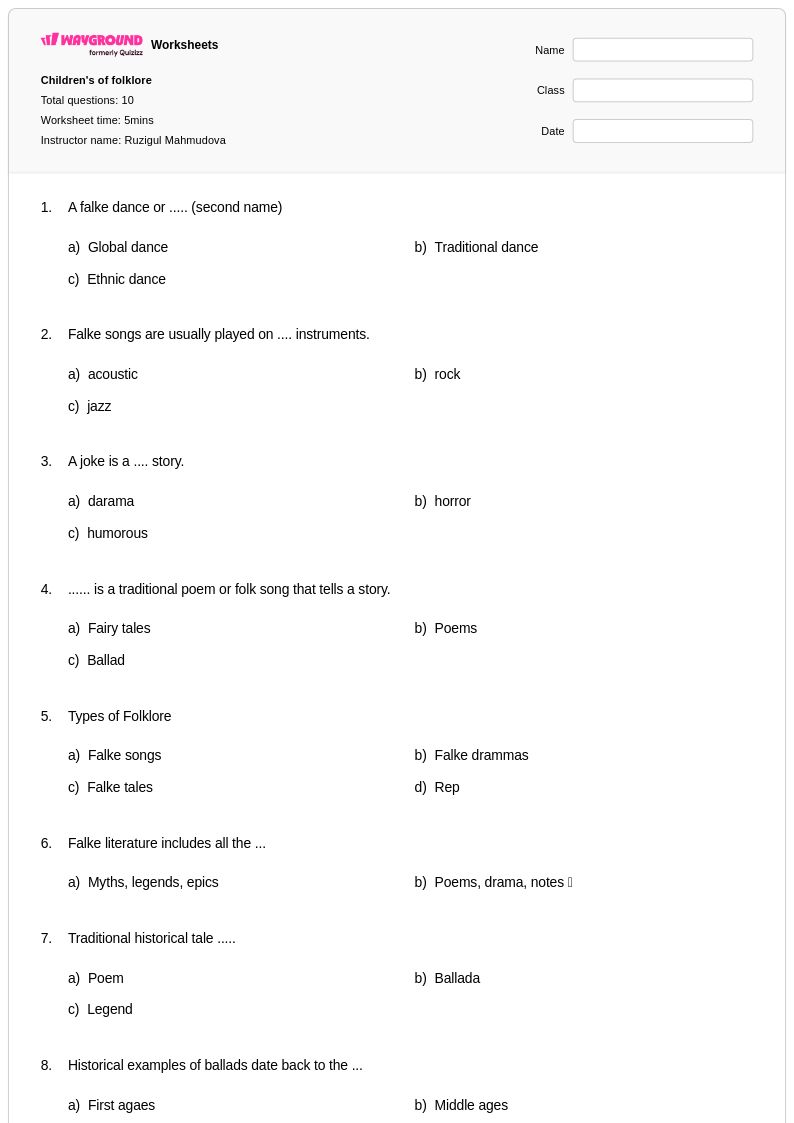
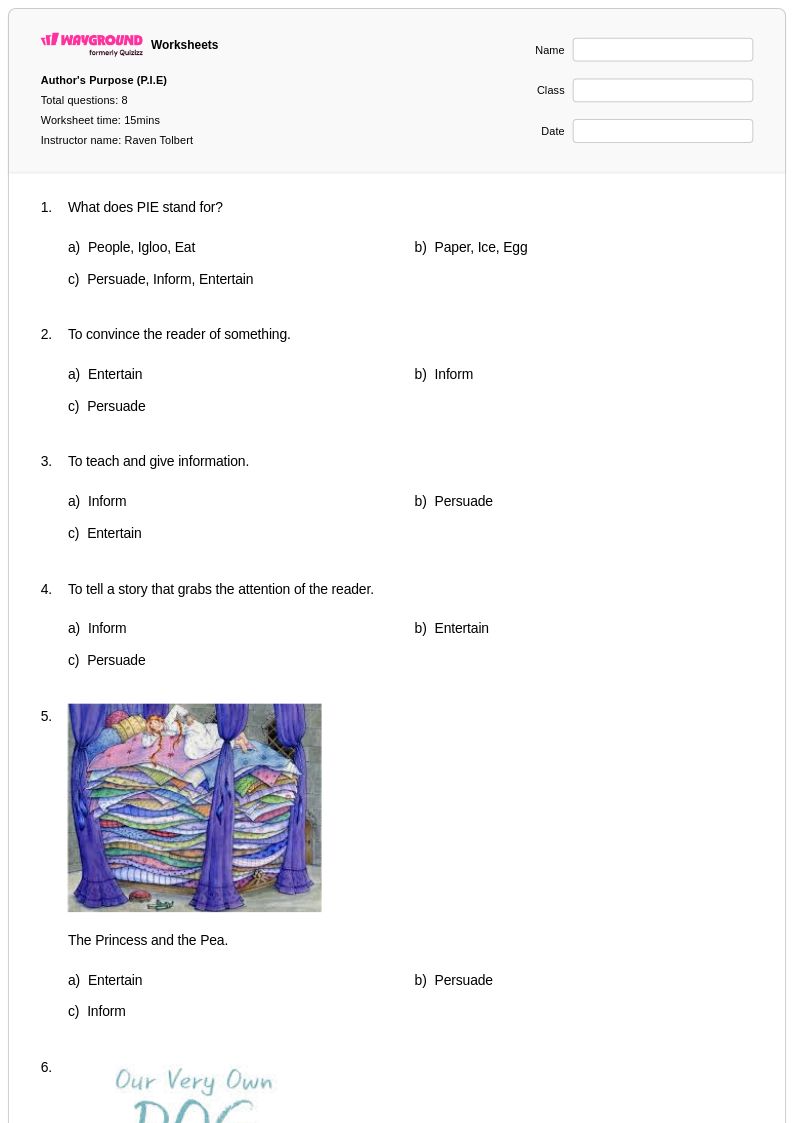
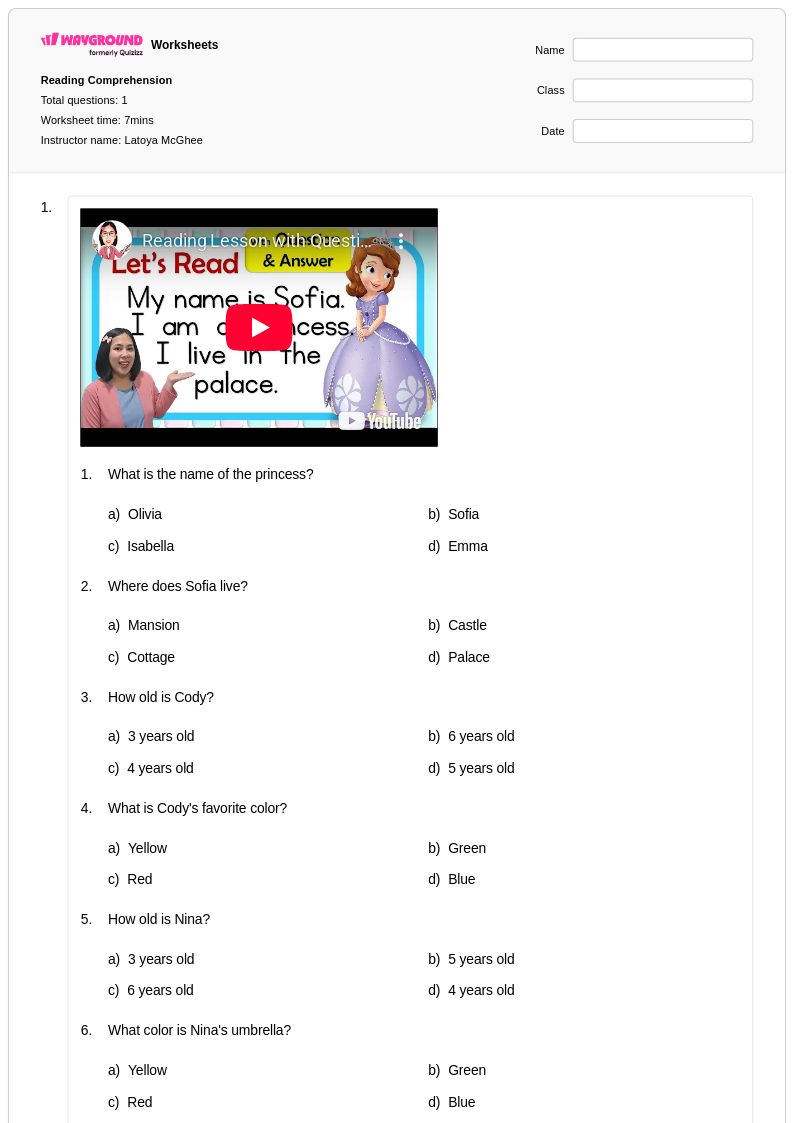
Children's authors worksheets for Class 1 students available through Wayground (formerly Quizizz) introduce young learners to beloved writers who have shaped early childhood literature. These educational resources focus on building foundational reading comprehension skills while fostering appreciation for the creative minds behind classic picture books and early reader series. Students explore the lives and works of renowned authors such as Eric Carle, Dr. Seuss, Maurice Sendak, and Tomie dePaola through engaging activities that connect biographical information with literary analysis appropriate for their developmental level. The worksheets strengthen critical thinking abilities as children learn to identify author styles, recognize recurring themes across different books by the same writer, and make connections between an author's life experiences and their creative output. Each printable resource includes comprehensive practice problems with detailed answer keys, ensuring teachers can effectively assess student understanding while providing immediate feedback on literary concepts and reading comprehension skills.
Wayground (formerly Quizizz) empowers educators with an extensive collection of teacher-created children's authors worksheets specifically designed for Class 1 learners, drawing from millions of high-quality educational resources that support diverse instructional needs. The platform's robust search and filtering capabilities allow teachers to quickly locate materials aligned with specific curriculum standards while offering differentiation tools that accommodate varying reading levels and learning styles within the classroom. These versatile worksheet collections are available in both digital and printable pdf formats, enabling seamless integration into traditional and technology-enhanced learning environments. Teachers can customize existing resources or create entirely new materials using the platform's flexible editing features, supporting targeted skill practice, remediation for struggling readers, and enrichment opportunities for advanced students. The comprehensive nature of these resources streamlines lesson planning while providing educators with reliable, professionally-developed materials that effectively introduce young learners to the fundamental concept of authorship and its role in the literary world.
FAQs
How do I teach students about children's authors in an engaging way?
Teaching children's authors works best when students connect an author's life experiences to the themes and characters in their books. Start by introducing biographical details — such as Roald Dahl's wartime experiences or Dr. Seuss's use of satire — and then have students trace how those influences appear in specific texts. Pairing author studies with close reading activities helps students develop both literary analysis skills and a genuine appreciation for the craft of writing.
What exercises help students practice analyzing children's authors and their works?
Effective practice exercises for studying children's authors include biographical reading comprehension questions, character development analysis, and prompts that ask students to identify an author's recurring themes or signature storytelling techniques. Worksheets that present excerpts alongside guided questions help students practice moving from surface-level plot recall to deeper literary analysis. Comparing two authors' approaches to similar themes — such as how Beverly Cleary and Judy Blume each address childhood friendship — can deepen critical thinking further.
What mistakes do students commonly make when analyzing children's authors?
A common misconception is that children's literature is simple, which leads students to summarize rather than analyze. Students often struggle to distinguish between an author's biography and their thematic intent, conflating personal facts with literary meaning. Another frequent error is ignoring historical context — for example, not recognizing how Maurice Sendak's childhood experiences with the Holocaust informed the emotional intensity of his picture books. Prompting students to ask 'why did the author make this choice?' rather than 'what happened?' helps correct these patterns.
How can I use children's authors worksheets to support different reading levels in my class?
Children's authors worksheets can be scaffolded by adjusting the complexity of the reading passages and the depth of analytical questions required. For struggling readers, focus on biographical comprehension and basic author-to-text connections; for advanced students, introduce prompts requiring comparative analysis across multiple works or authors. On Wayground, teachers can also apply student-level accommodations such as Read Aloud, which delivers audio reading of questions and content, and reduced answer choices to lower cognitive load for students who need additional support — all configurable per individual student without disrupting the rest of the class.
How do I use Wayground's children's authors worksheets in my classroom?
Wayground's children's authors worksheets are available as printable PDFs, making them easy to distribute for in-class work or homework assignments, and in digital formats suited to technology-integrated classrooms. Teachers can also host worksheets as a quiz directly on Wayground, allowing for interactive student completion and streamlined review. The worksheets include complete answer keys, so teachers can efficiently assess student responses and guide discussion around author analysis and reading comprehension.
Which children's authors are typically covered in elementary and middle school author studies?
Elementary and middle school author studies commonly feature writers such as Roald Dahl, Dr. Seuss, Beverly Cleary, Maurice Sendak, Judy Blume, and E.B. White, as their works span a wide range of genres, themes, and reading levels. These authors are frequently chosen because their bodies of work allow students to study character development, narrative voice, and literary theme across multiple texts. Selecting authors whose books students have already read builds prior knowledge and makes analytical tasks more accessible and motivating.