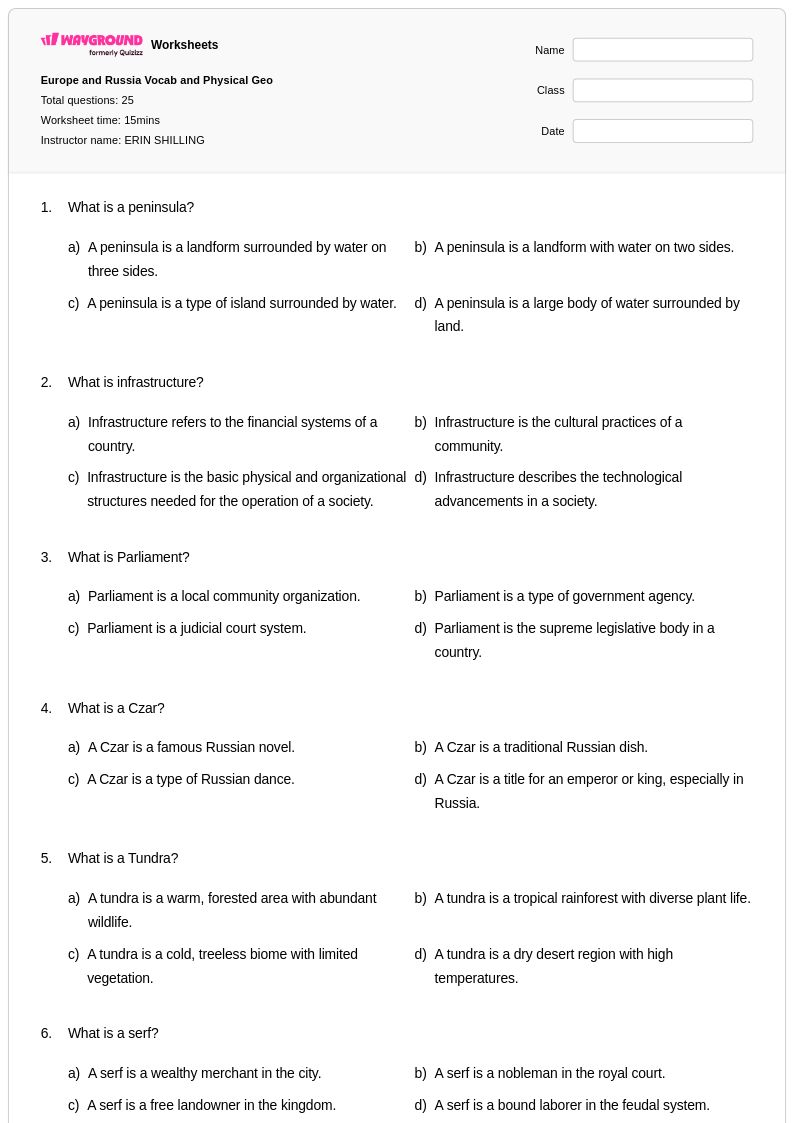
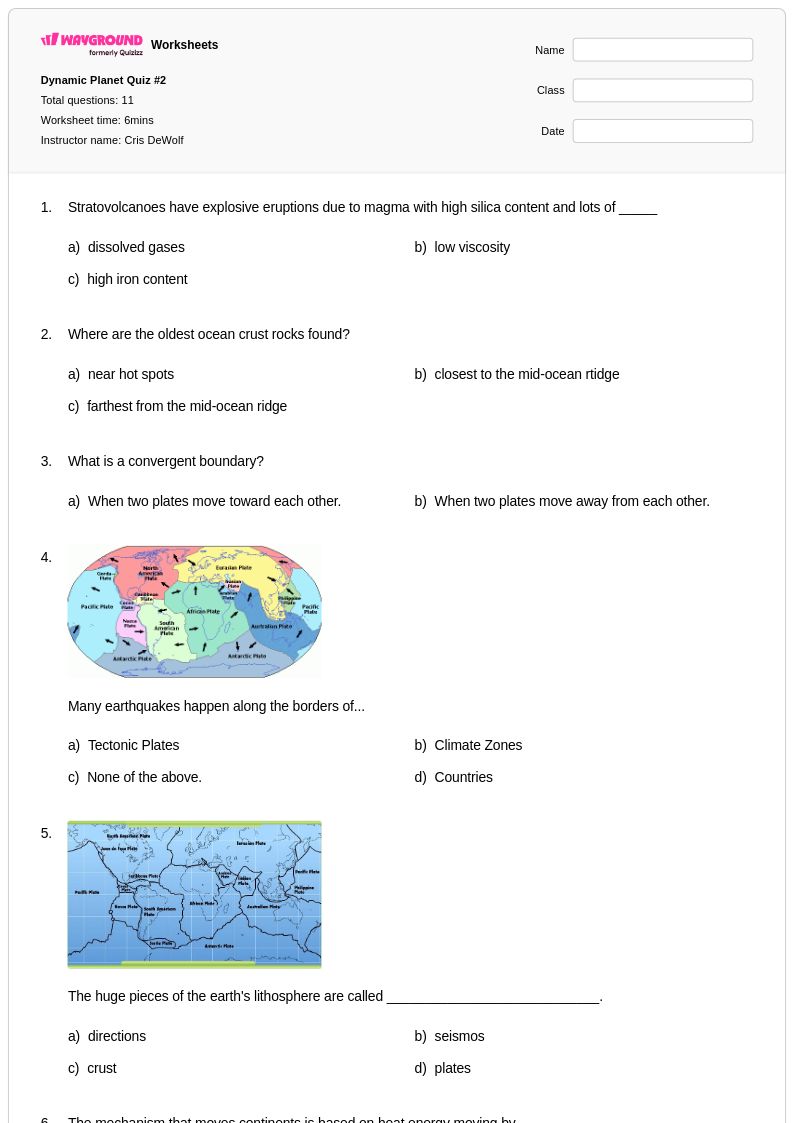
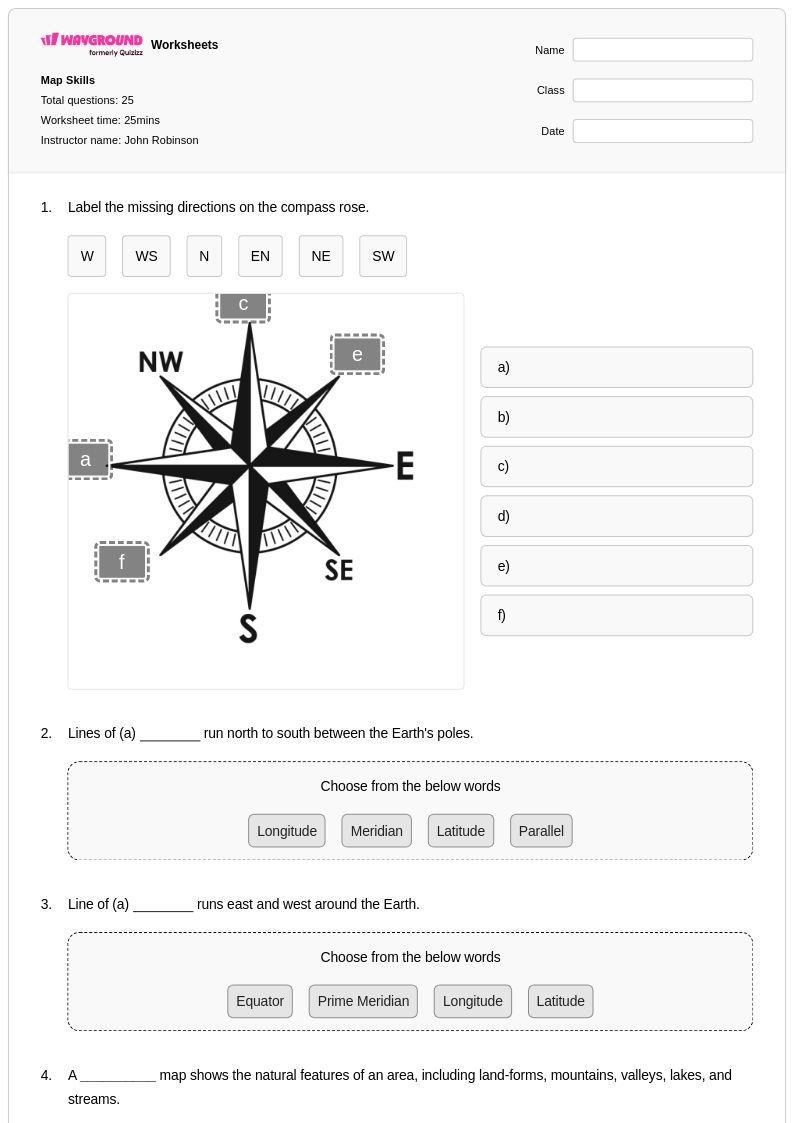
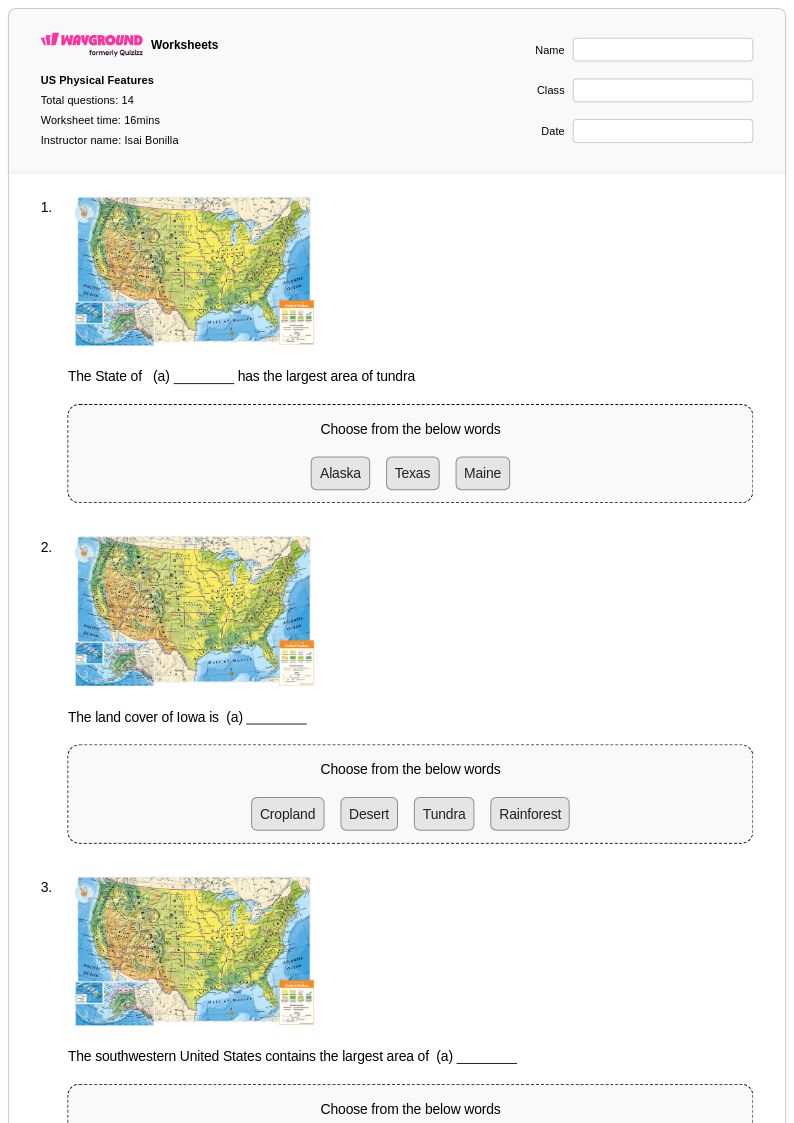
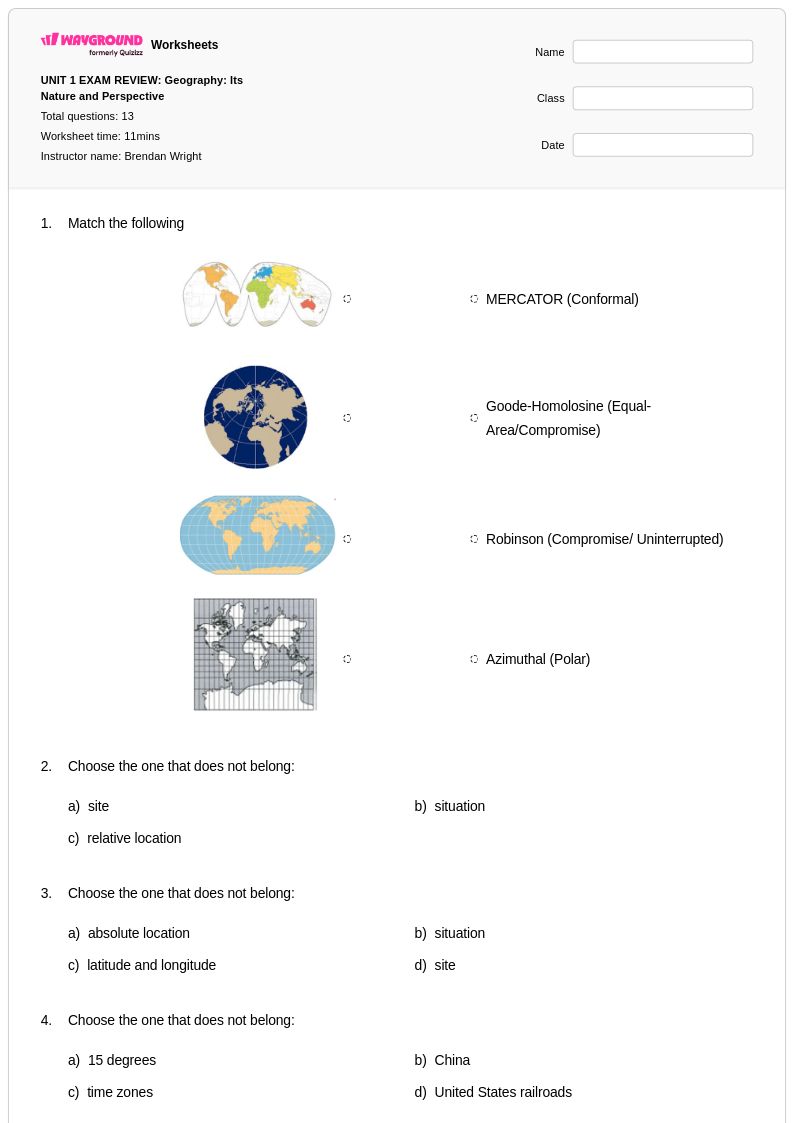
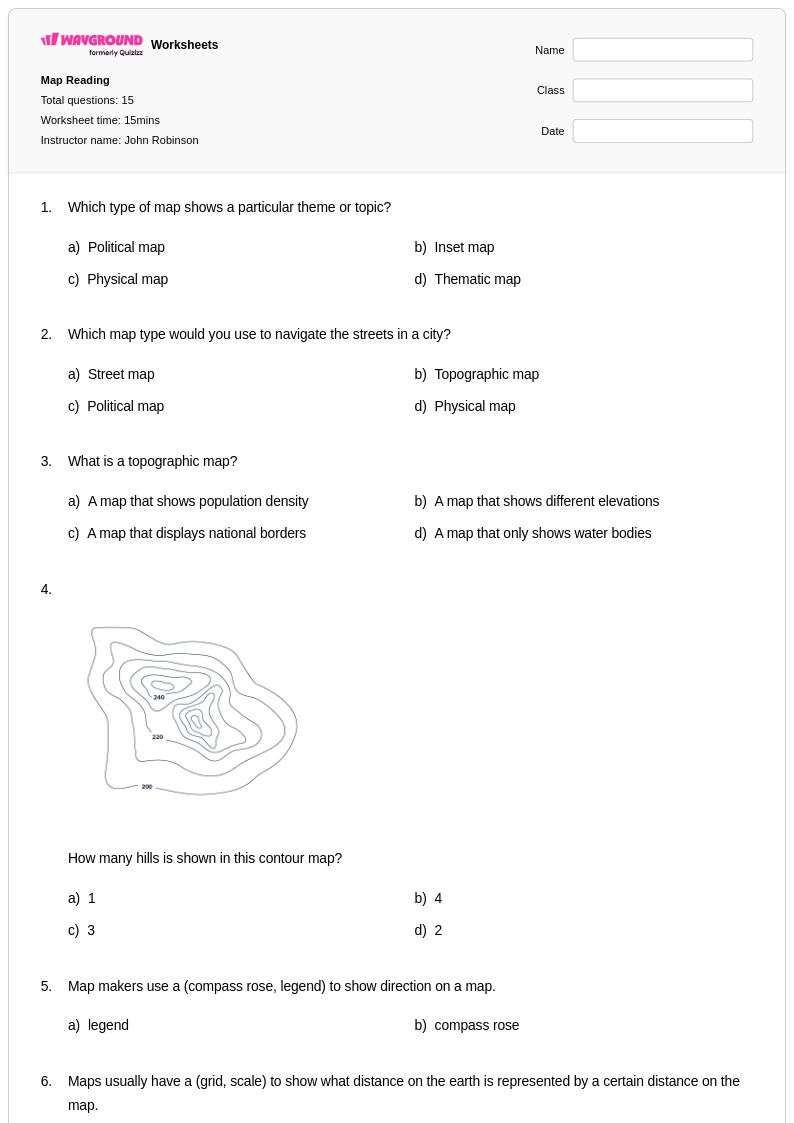
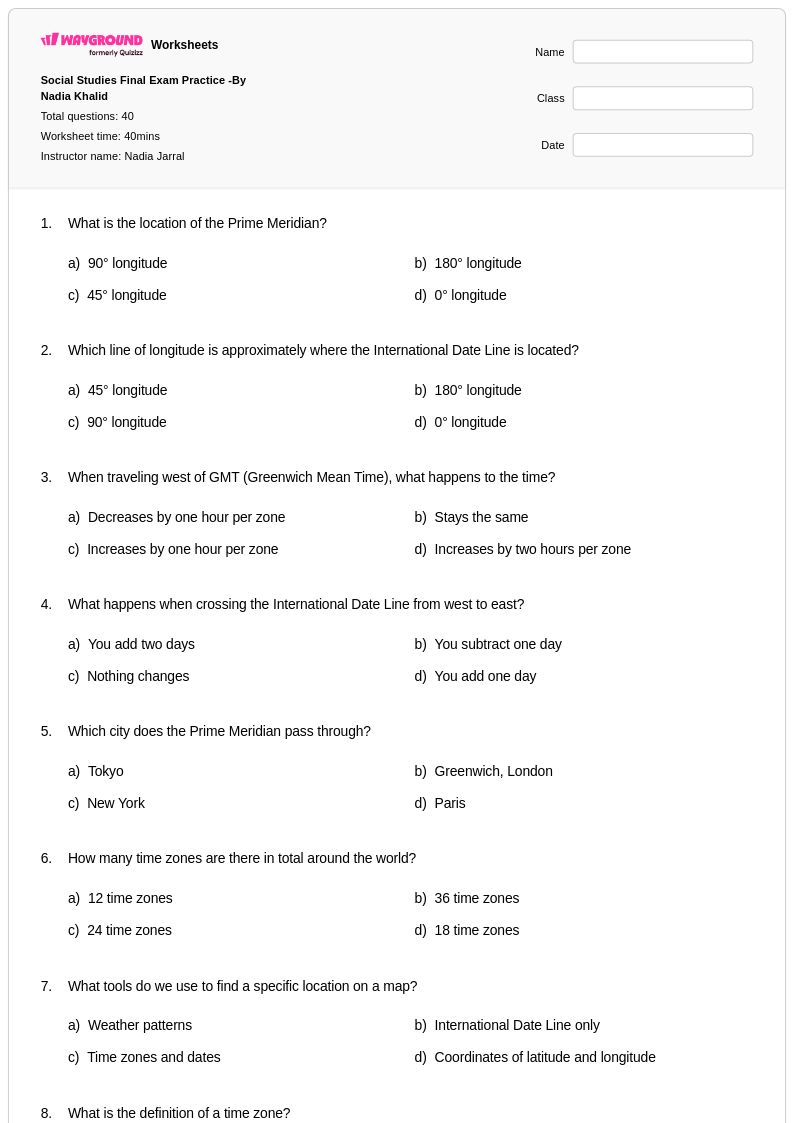
Free Printable Climate Zones Worksheets for Class 11
Class 11 Climate Zones worksheets from Wayground offer comprehensive printables and practice problems with answer keys to help students master global climate patterns, temperature zones, and precipitation distribution through engaging free PDF activities.
Explore printable Climate Zones worksheets for Class 11
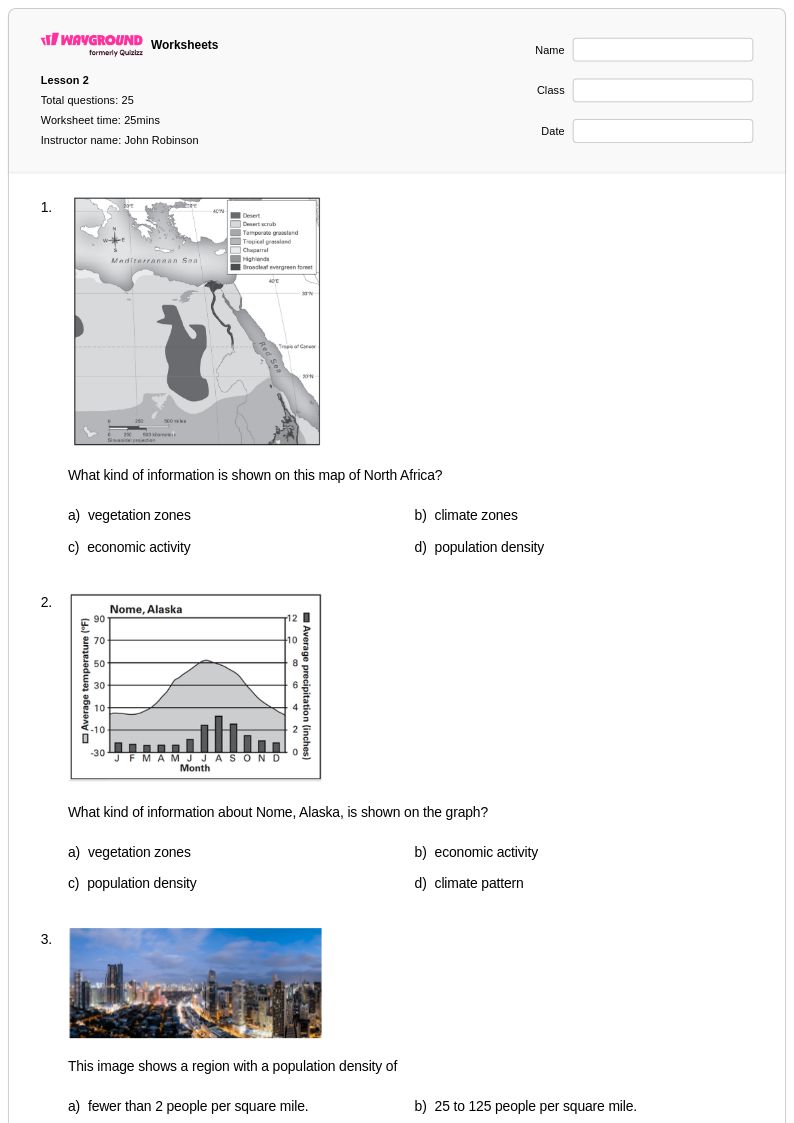
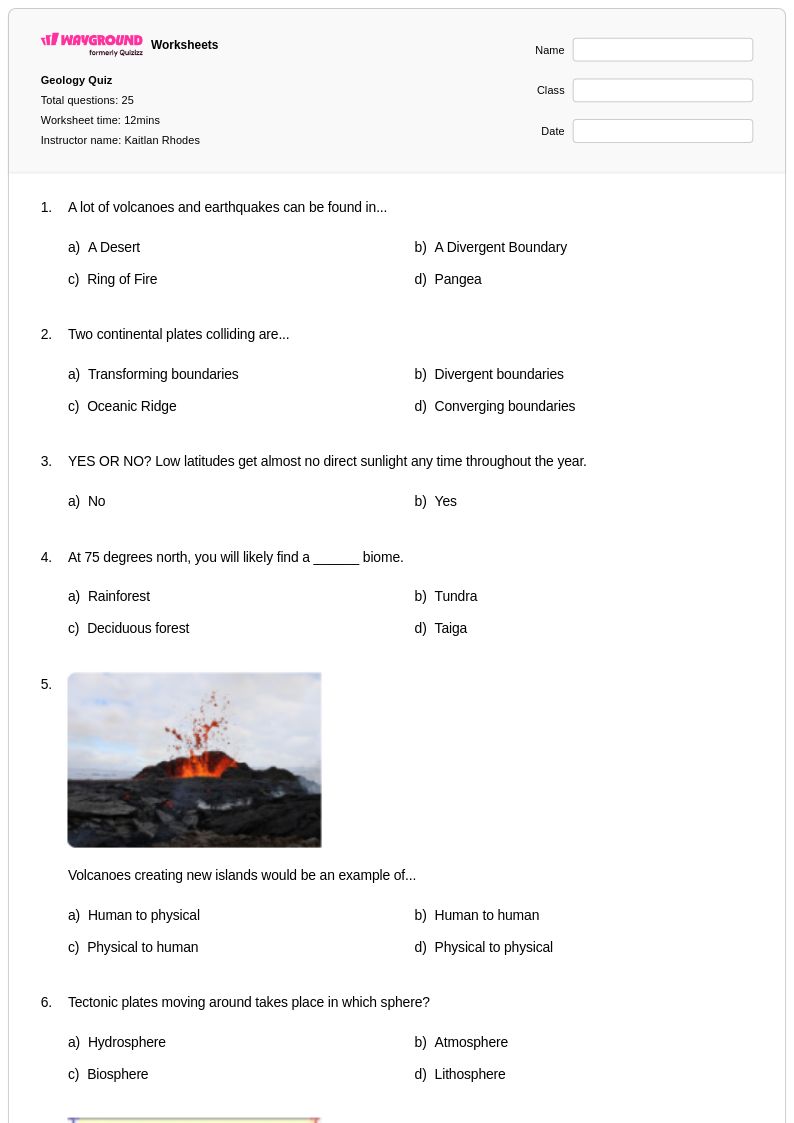
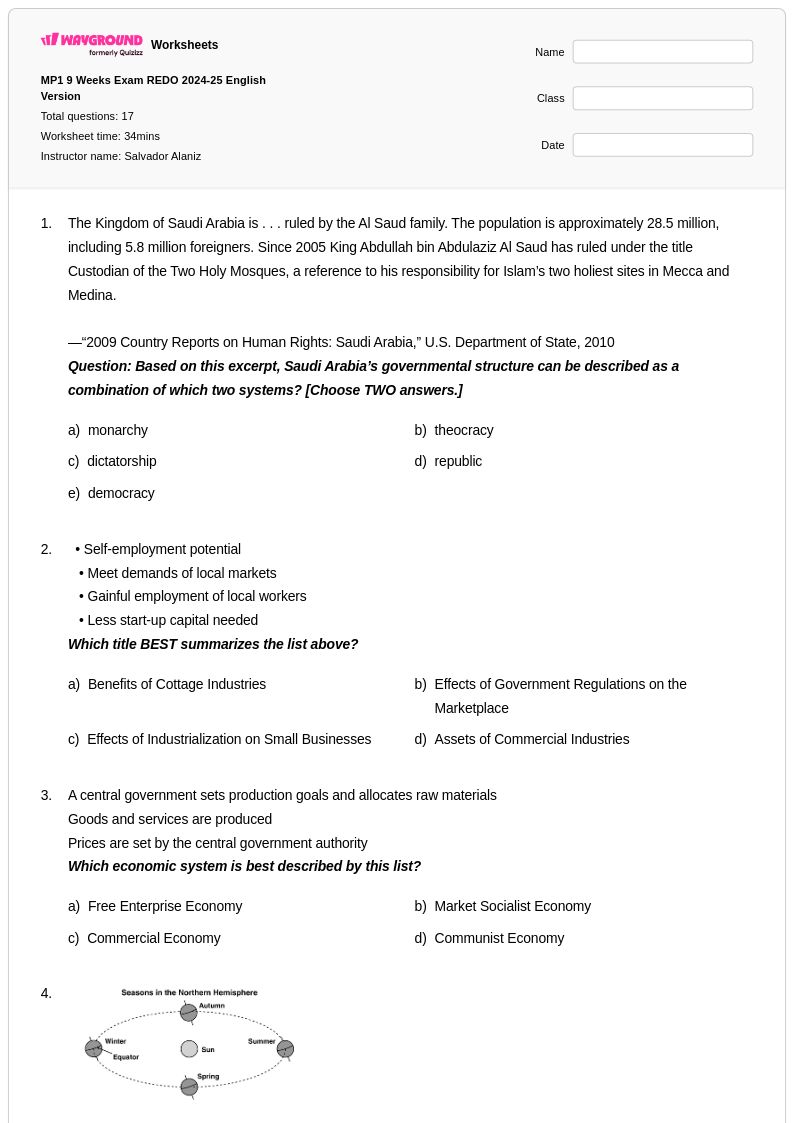
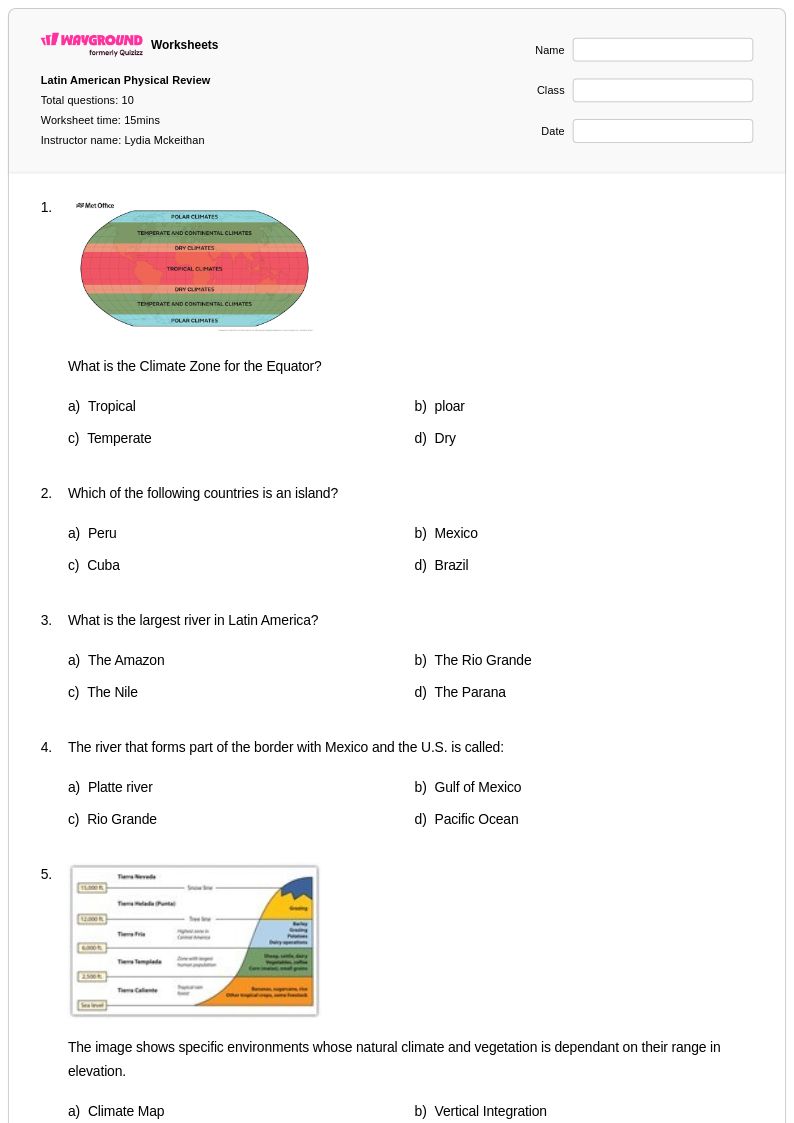
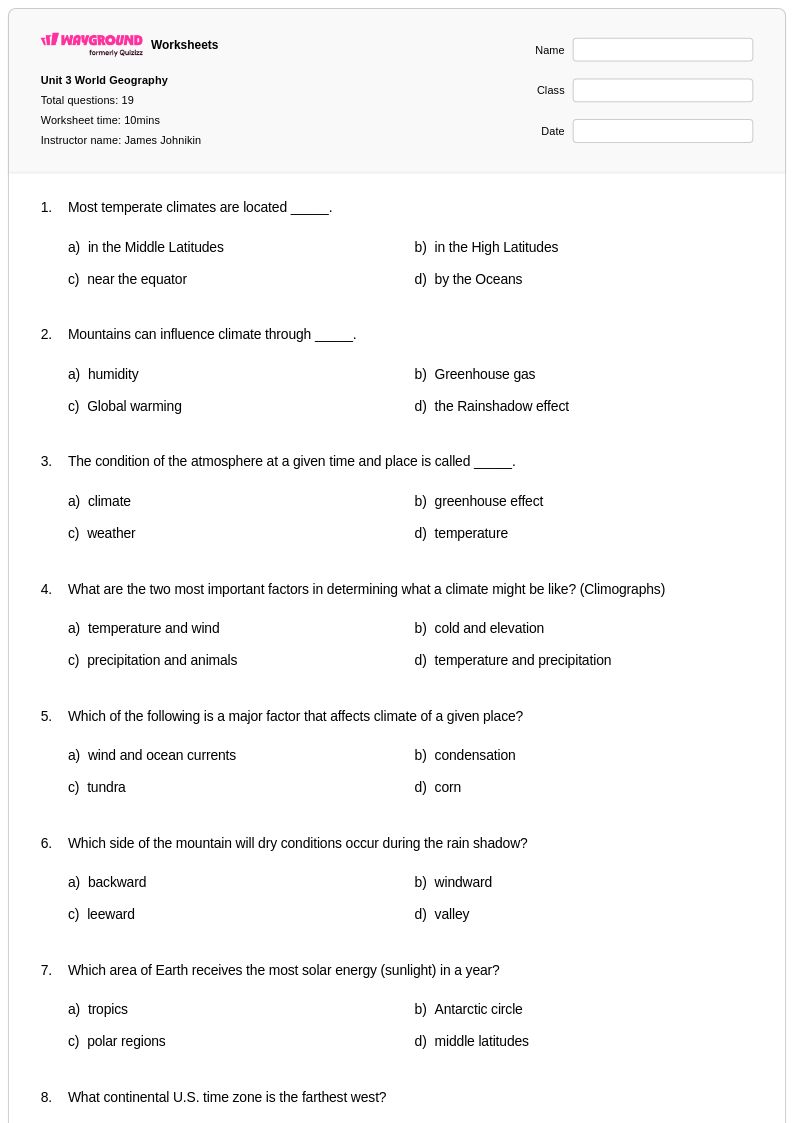
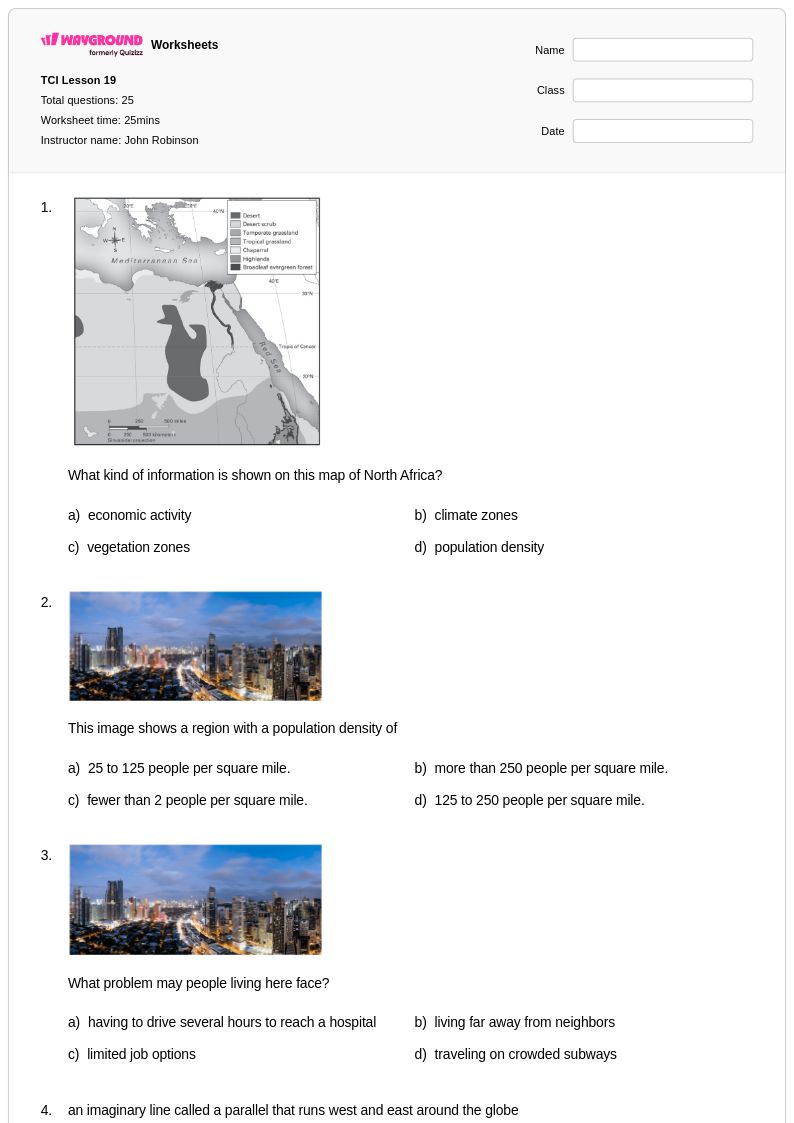
Class 11 climate zones worksheets available through Wayground (formerly Quizizz) provide comprehensive practice materials that help students master the complex relationships between latitude, altitude, ocean currents, and atmospheric patterns that determine Earth's diverse climatic regions. These expertly designed resources strengthen critical geographic analysis skills by challenging students to identify characteristics of tropical, temperate, polar, and highland climate zones while examining how factors like precipitation patterns, temperature ranges, and seasonal variations influence regional ecosystems and human settlements. Each worksheet collection includes detailed answer keys and practice problems that guide students through interpreting climate data, analyzing Köppen climate classification systems, and understanding how climate zones impact agricultural practices, population distribution, and economic development across different continents.
Wayground's extensive library of millions of teacher-created climate zones resources supports educators with powerful search and filtering capabilities that make it easy to locate materials aligned with specific curriculum standards and learning objectives. Teachers can access differentiated worksheets in both printable pdf formats and interactive digital versions, allowing for seamless customization based on individual student needs and classroom technology availability. These flexible tools prove invaluable for lesson planning, targeted remediation for students struggling with geographic concepts, and enrichment activities for advanced learners ready to explore connections between climate patterns and global environmental challenges. The platform's comprehensive collection enables educators to provide varied skill practice opportunities that reinforce understanding of how climate zones influence everything from vegetation patterns to urban planning decisions worldwide.
FAQs
How do I teach climate zones to middle school students?
Start by grounding students in the three major climate zone categories — tropical, temperate, and polar — before introducing subcategories like arid and continental. Use latitude and solar energy as the anchoring explanation, then layer in geographic factors like elevation, ocean currents, and mountain ranges to show why climate varies even within the same latitude band. Climate graphs and world maps are especially effective tools for building visual understanding of how temperature and precipitation patterns define each zone.
What activities help students practice identifying climate zones?
The most effective practice activities ask students to classify regions using real temperature and precipitation data rather than simply memorizing zone names. Climate graph analysis, map labeling tasks, and data-interpretation exercises that connect geographic features to climate outcomes all build the analytical skills students need. These tasks mirror the kinds of reasoning students encounter on standardized assessments and reinforce the ability to apply zone criteria flexibly across unfamiliar examples.
What mistakes do students commonly make when classifying climate zones?
The most common error is treating latitude as the only determinant of climate, which leads students to misclassify coastal, high-altitude, or rain-shadow regions that do not fit the expected pattern for their latitude. Students also frequently confuse weather with climate, applying short-term conditions to long-term zone classifications. A targeted misconception is conflating arid and polar climates as both being 'cold and dry,' when the underlying causes and temperature profiles are quite different.
How do climate zones worksheets connect to human geography topics?
Climate zones directly shape where and how humans settle, which makes them a natural bridge between physical and human geography. Worksheets that ask students to analyze relationships between climate characteristics and settlement patterns, agricultural practices, or population density help students see climate as a driver of human decision-making rather than an isolated physical concept. This cross-disciplinary framing also strengthens reading and data analysis skills in a geographic context.
How do I use Wayground's climate zones worksheets in my classroom?
Wayground's climate zones worksheets are available as downloadable printable PDFs for traditional classroom use and in digital formats for technology-integrated instruction, giving teachers flexibility to assign them as independent practice, guided review, or homework. Teachers can also host worksheets directly as a quiz on Wayground, allowing students to complete work online while the platform tracks responses. Each worksheet includes a complete answer key, which supports self-paced study, peer review, or efficient teacher grading.
How can I differentiate climate zones instruction for students at different skill levels?
For students who need support, reduce the complexity of data sets used in classification tasks and focus on the three broad zone categories before introducing subcategories. For advanced learners, introduce climate anomalies caused by ocean currents or orographic lift and ask students to explain deviations from expected patterns. On Wayground, teachers can apply accommodations such as reduced answer choices, extended time, and read-aloud support to individual students, making it straightforward to address varied needs without disrupting the rest of the class.