Free Printable Columbus Day Worksheets for Kindergarten
Discover free Columbus Day worksheets and printables for kindergarten students that introduce young learners to this important historical figure through engaging activities, practice problems, and comprehensive answer keys.
Explore printable Columbus Day worksheets for Kindergarten
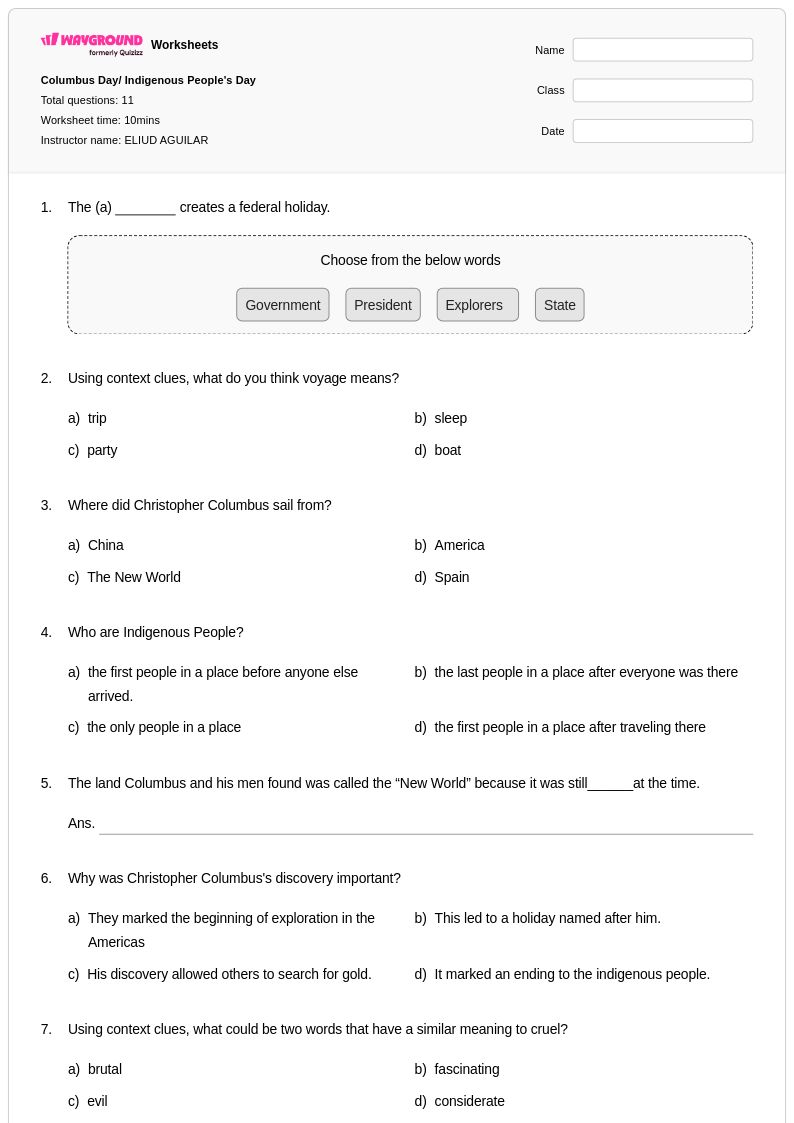
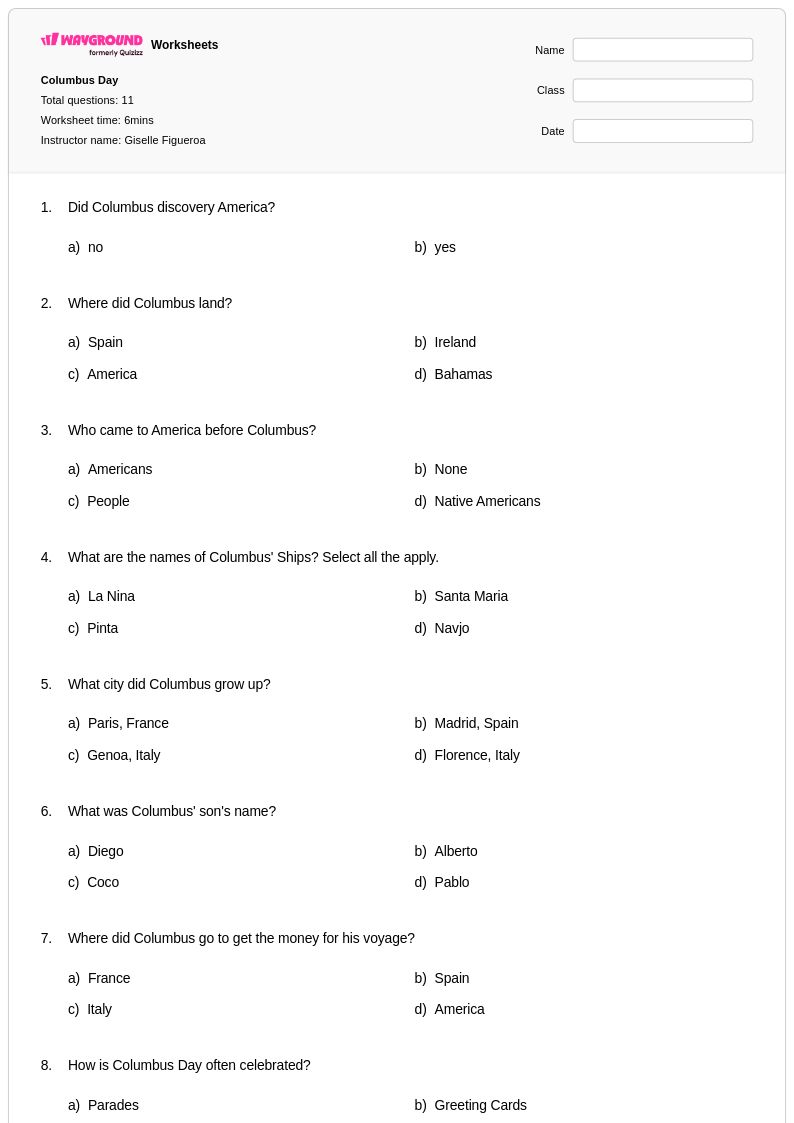
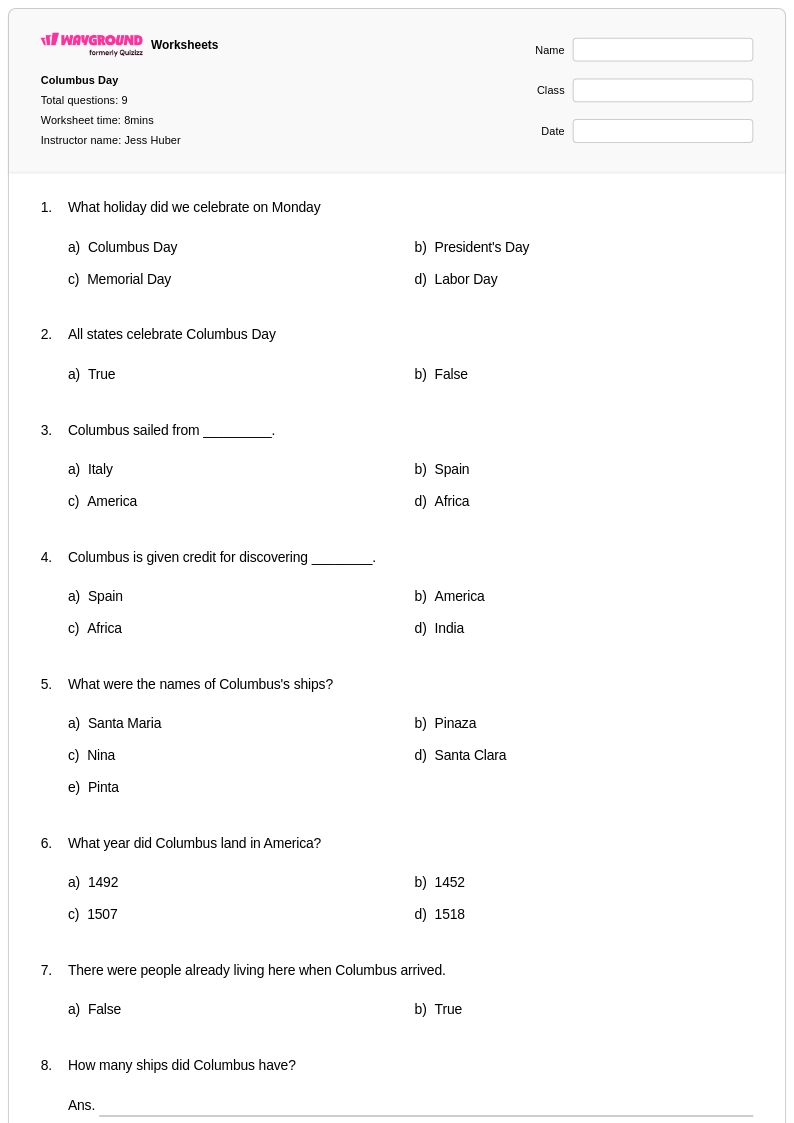
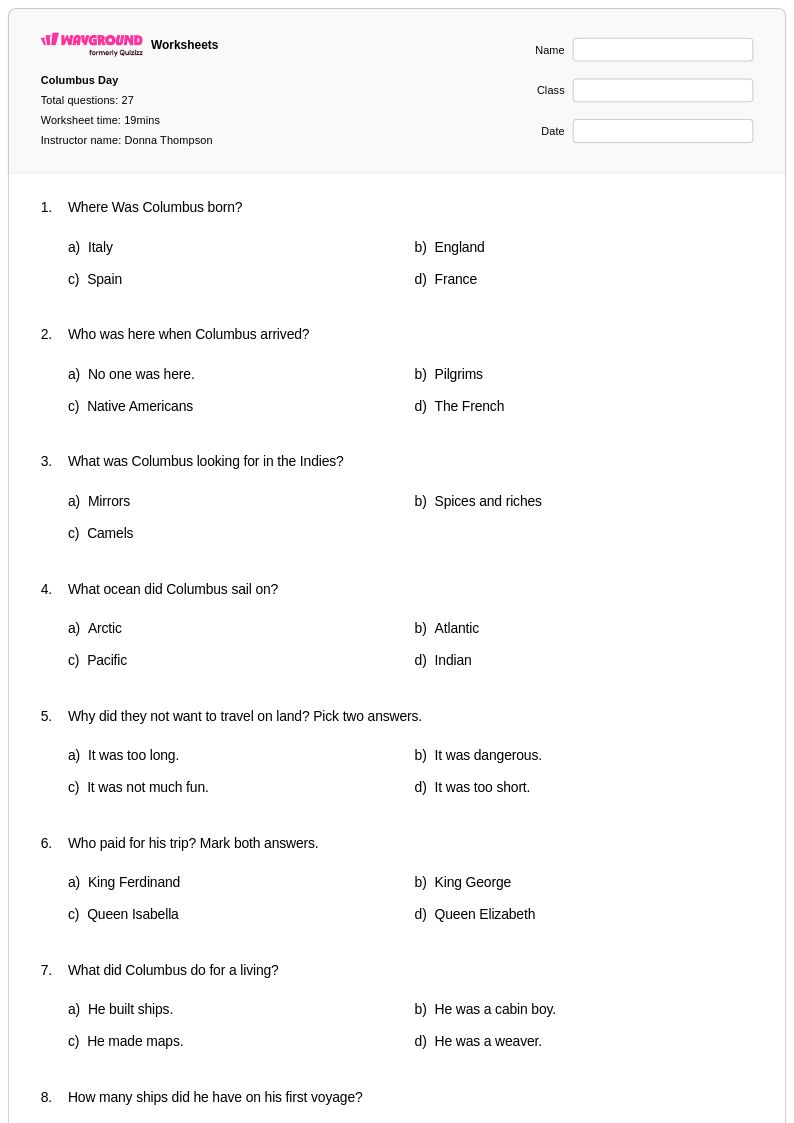
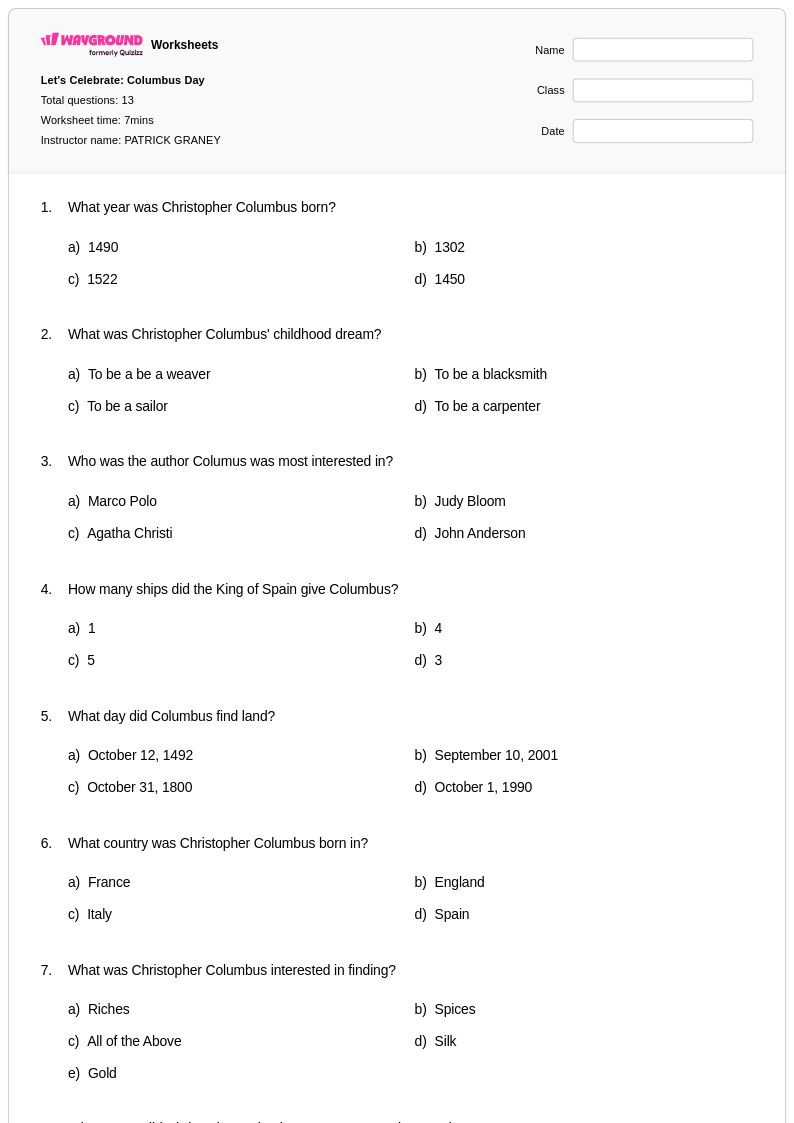
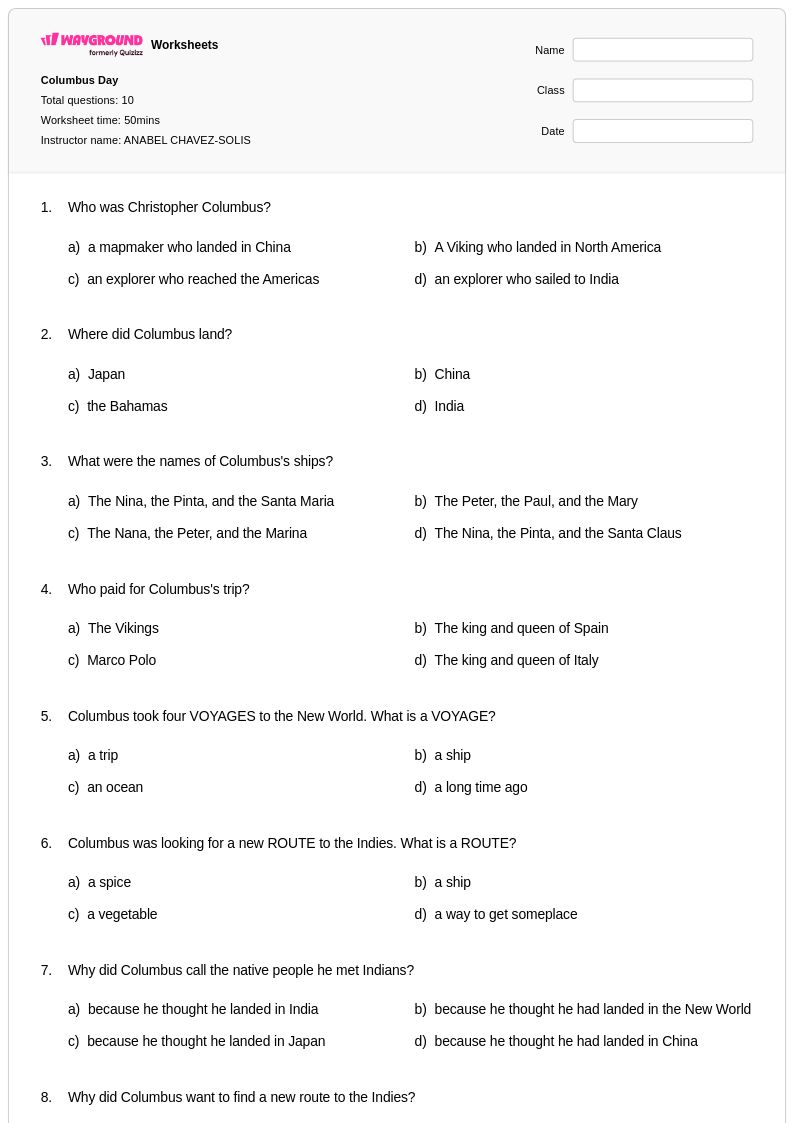
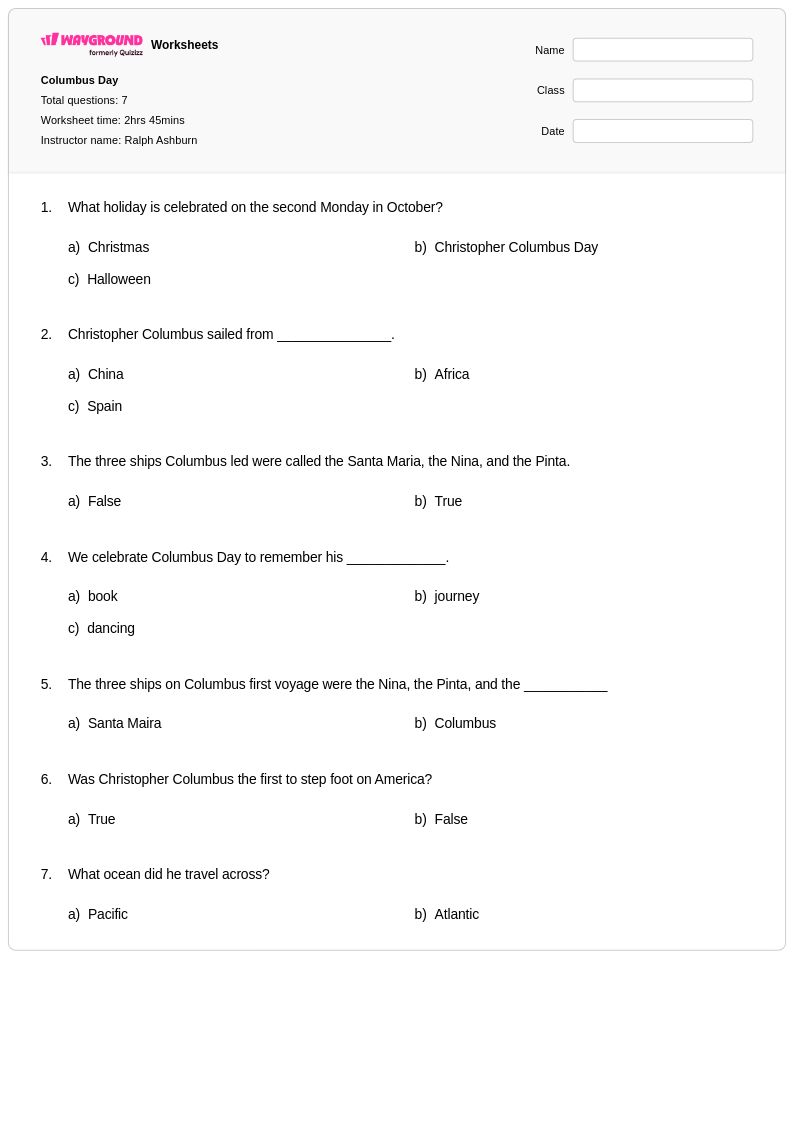
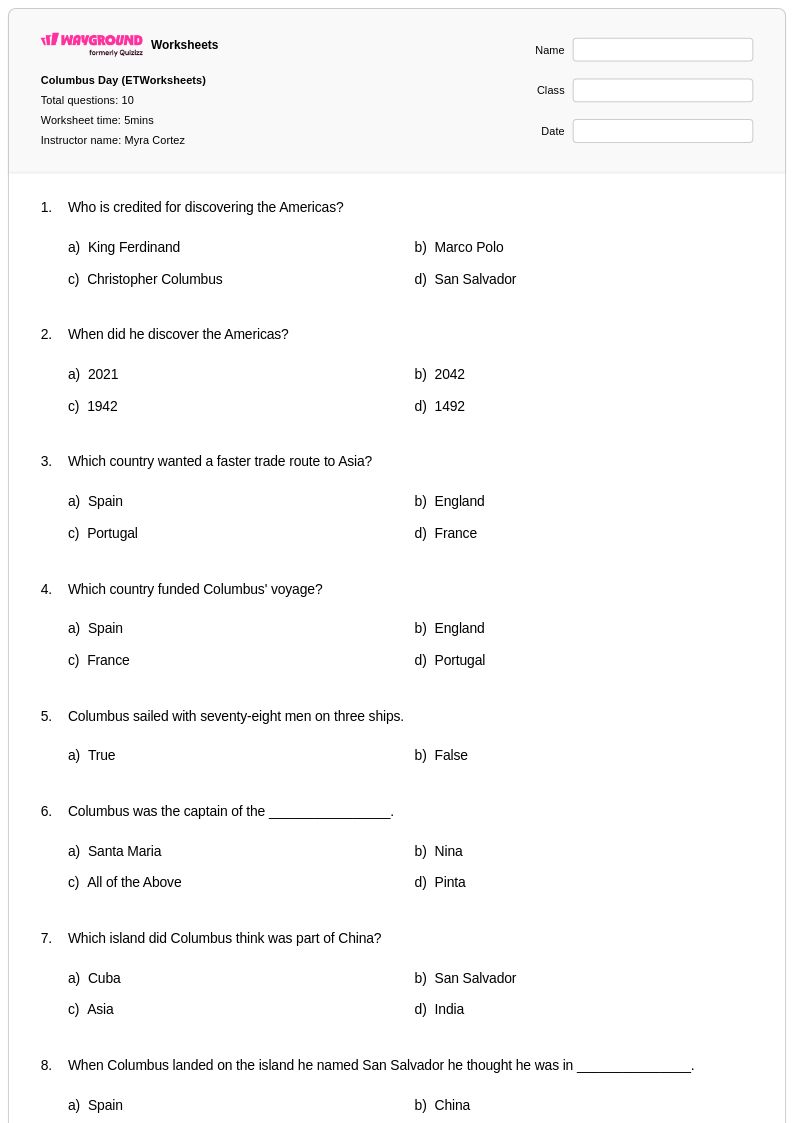
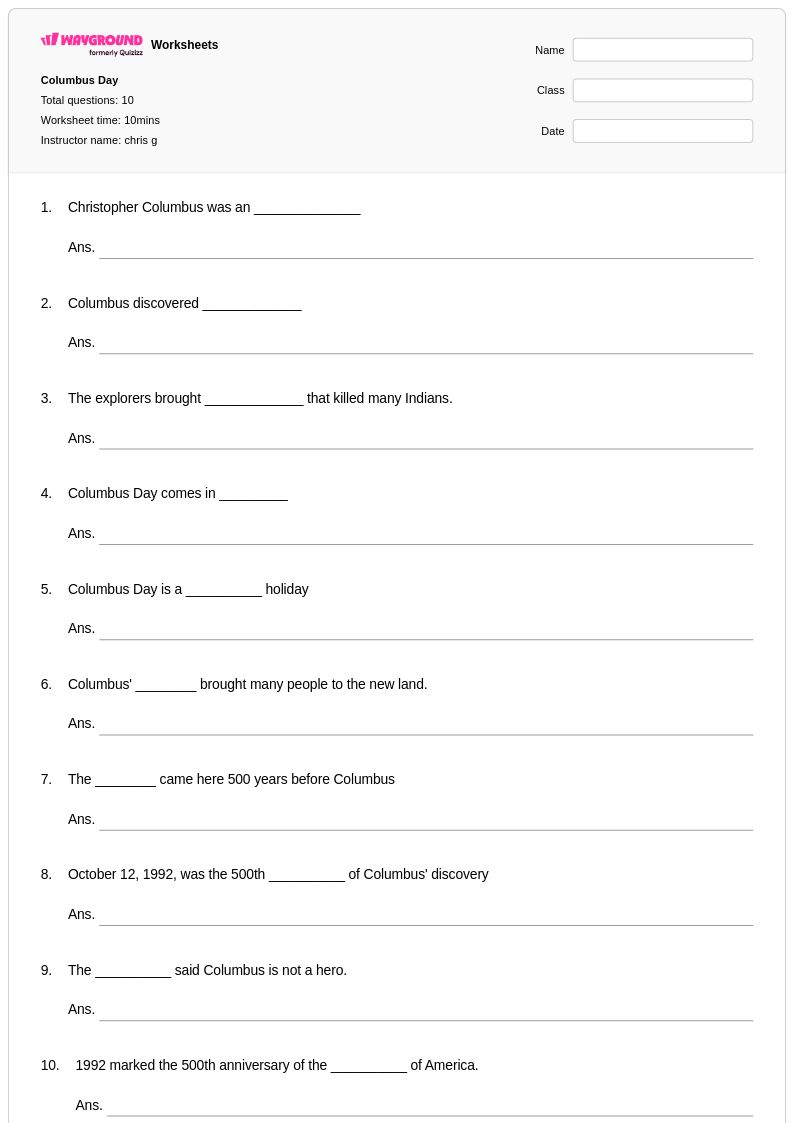
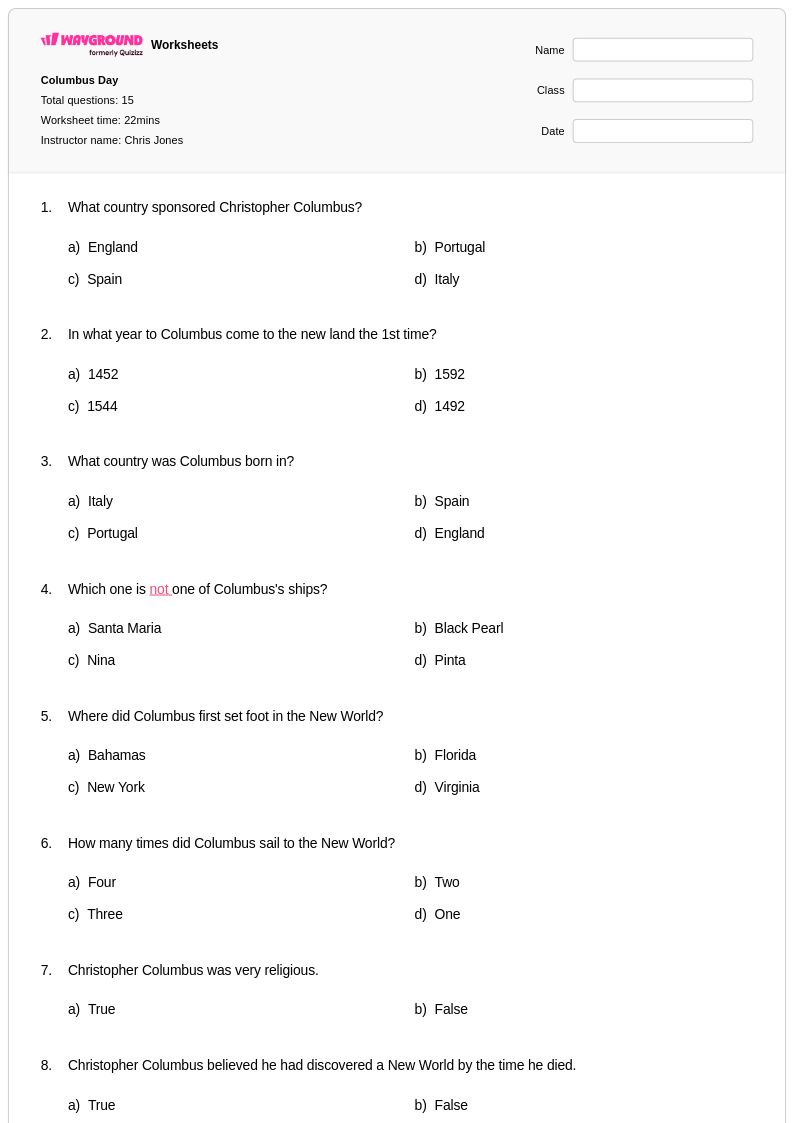
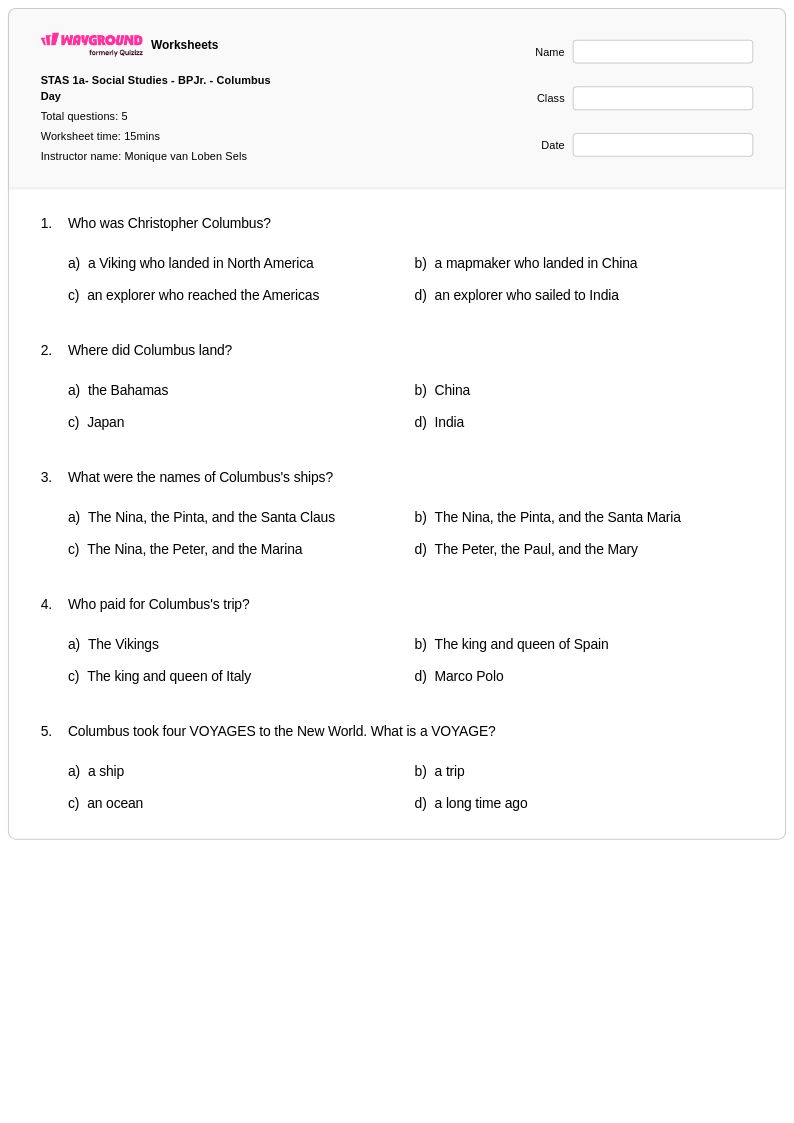
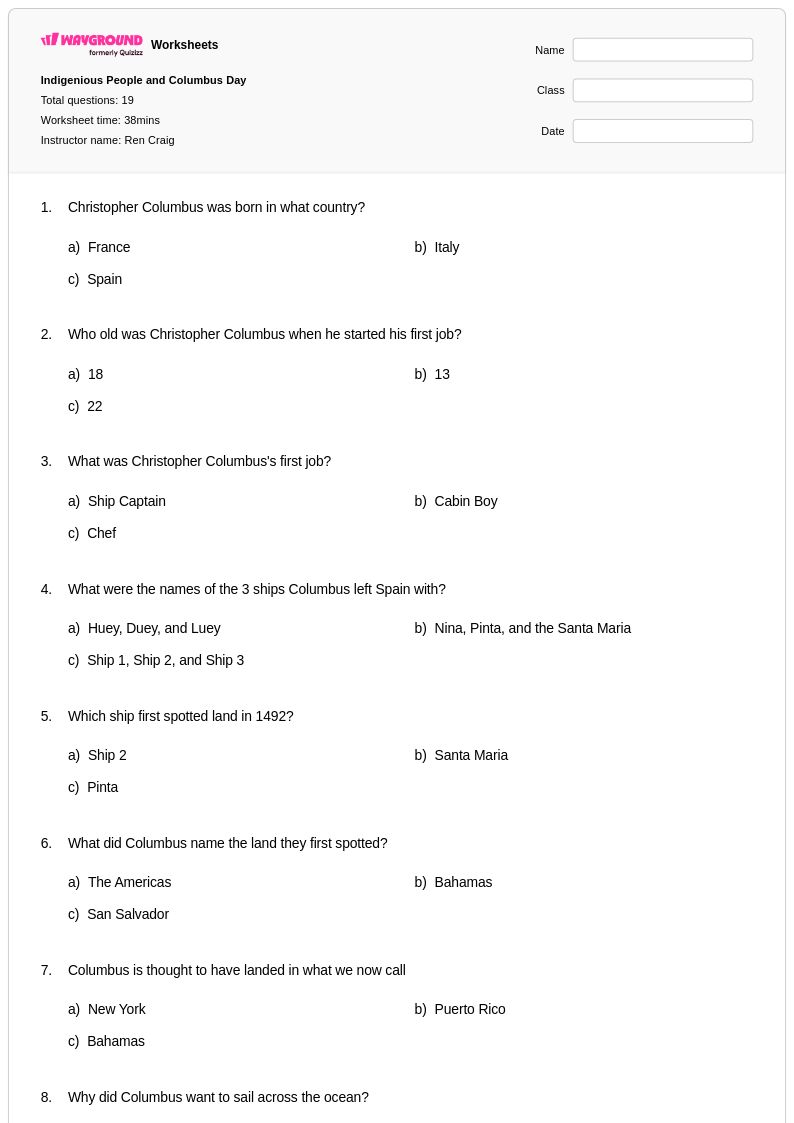
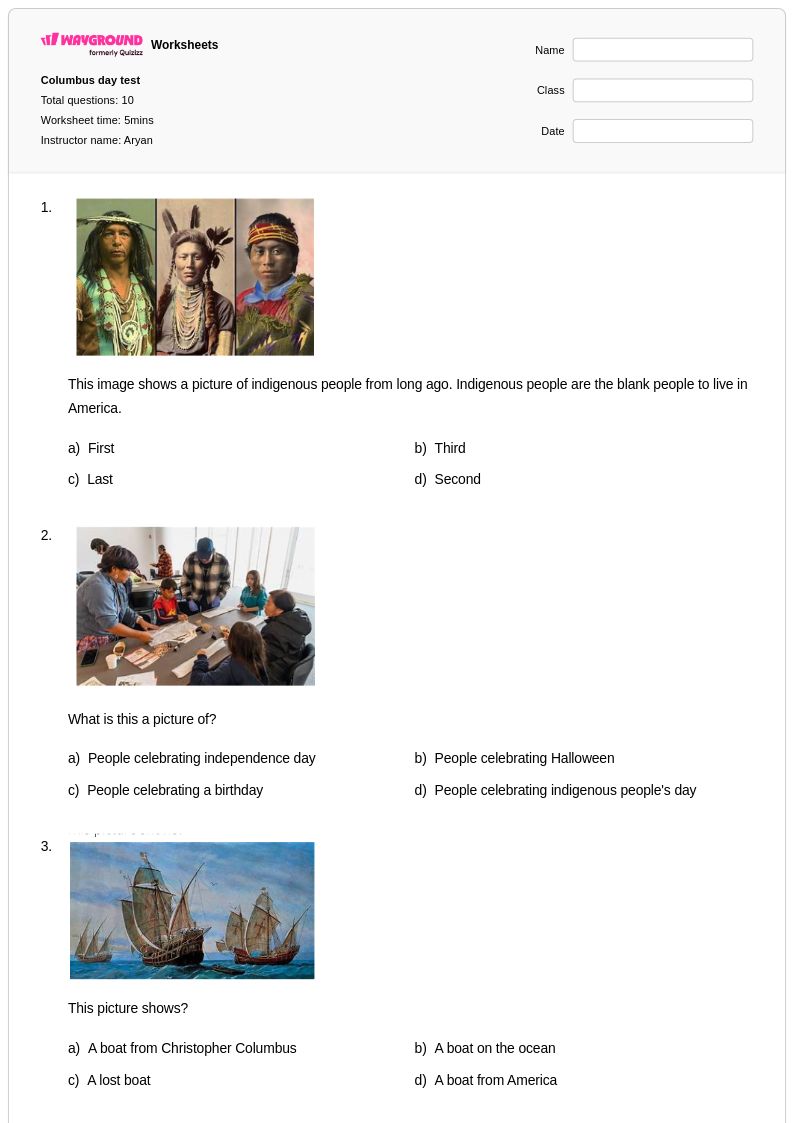
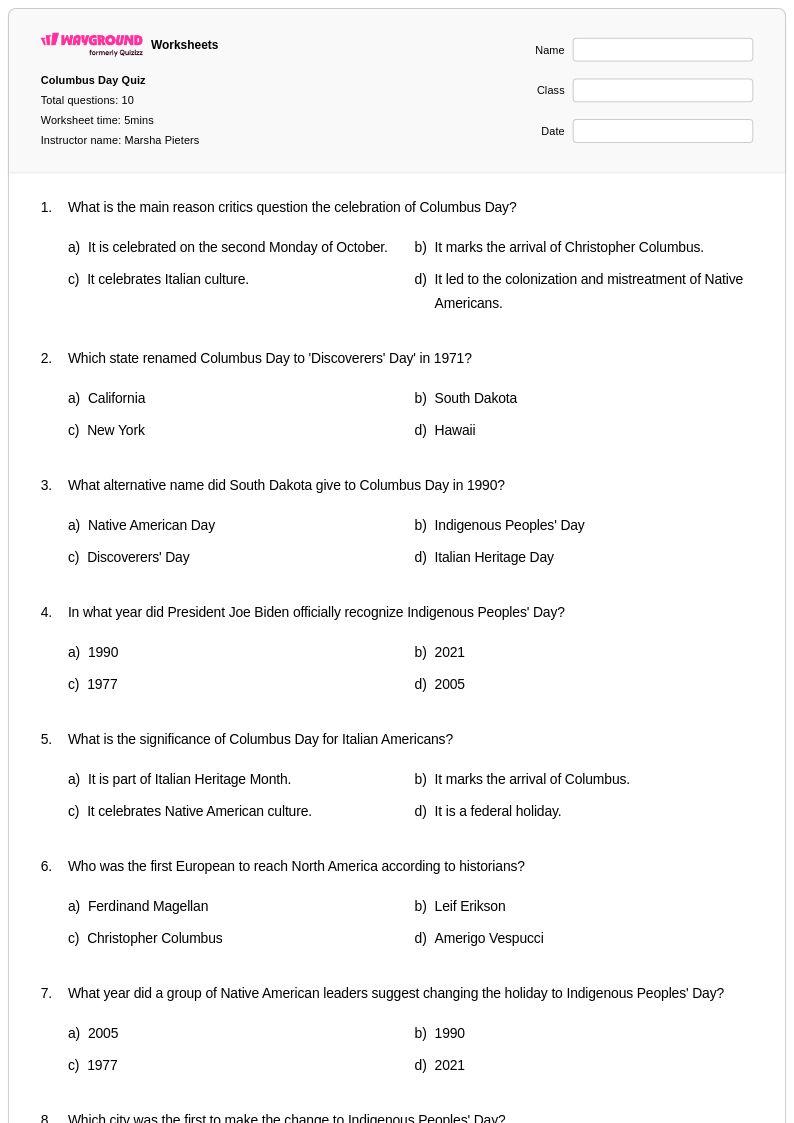
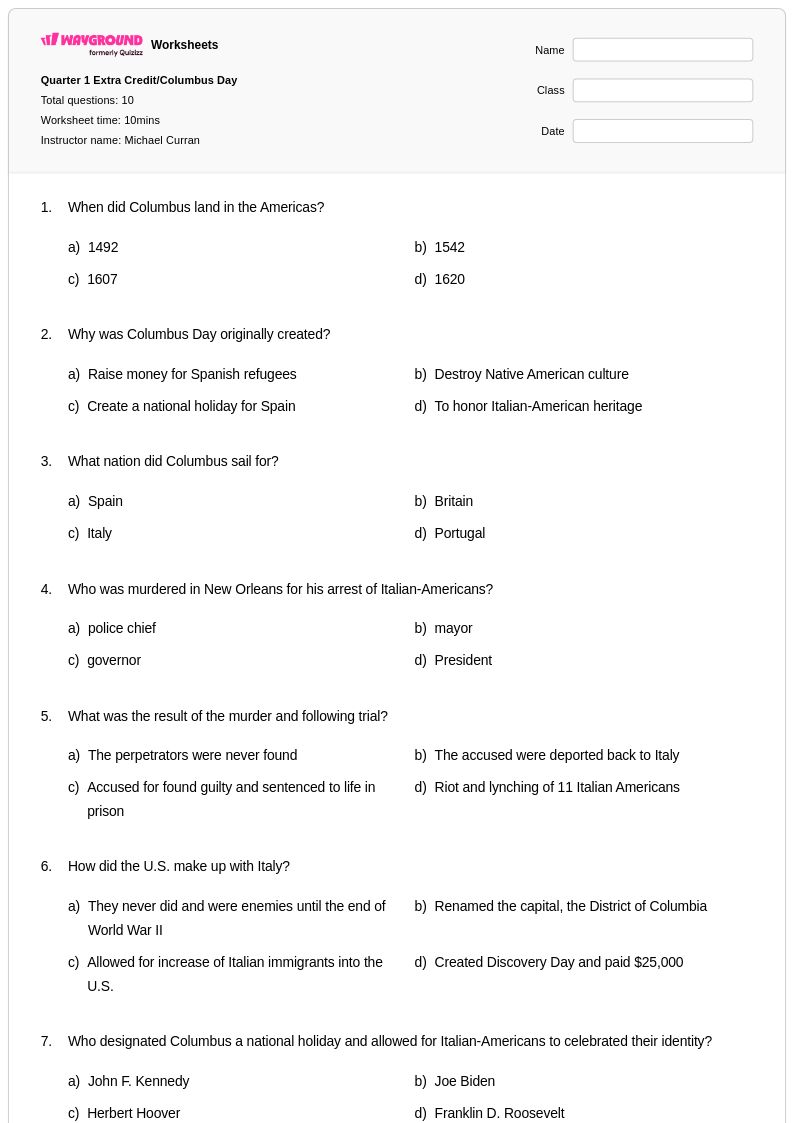
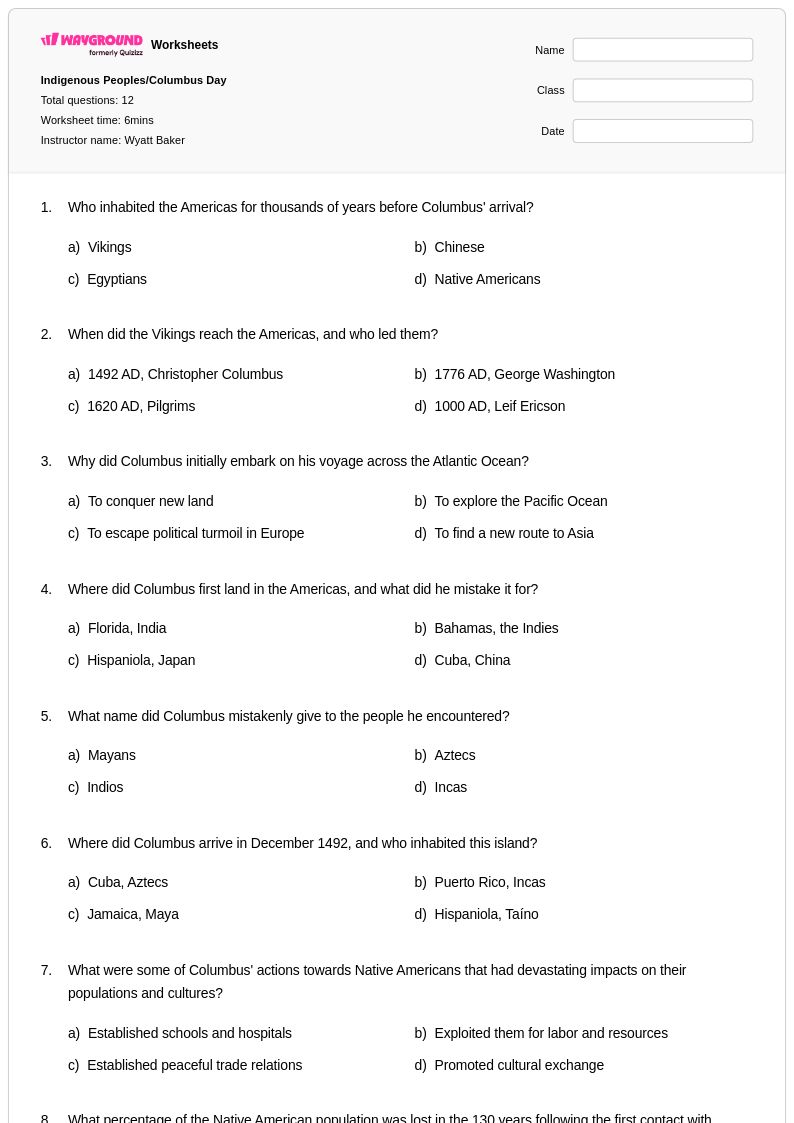
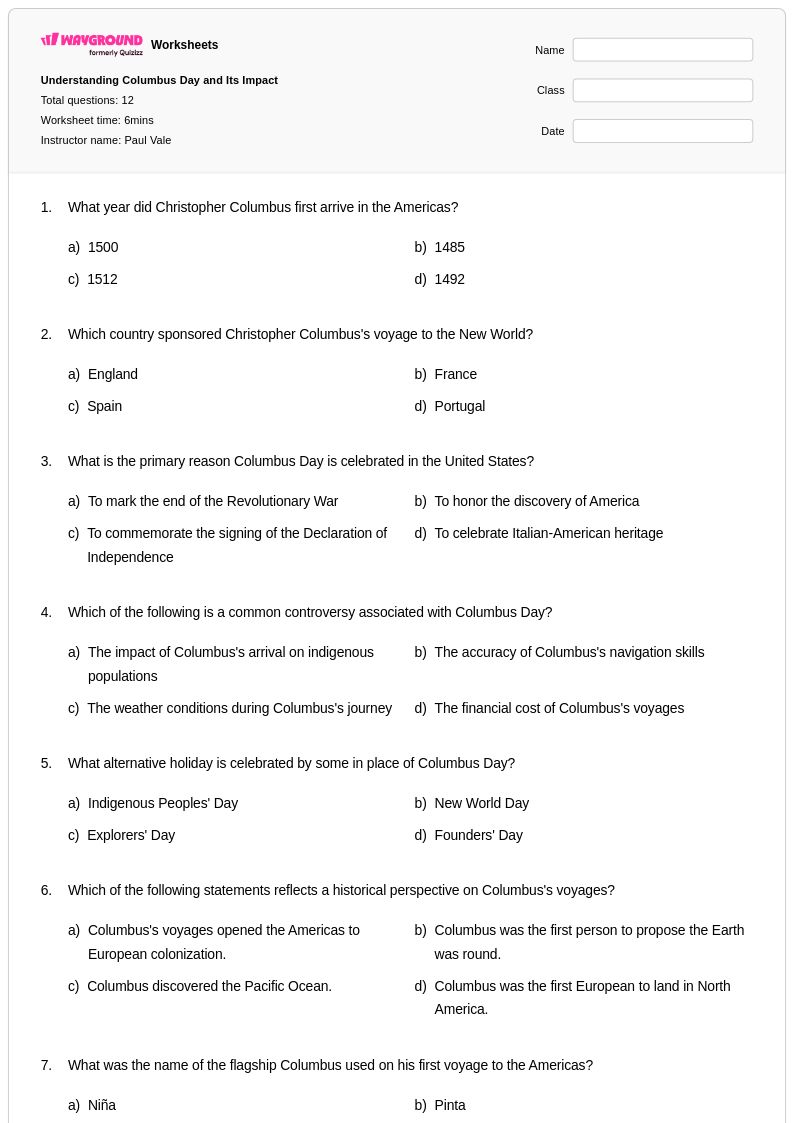
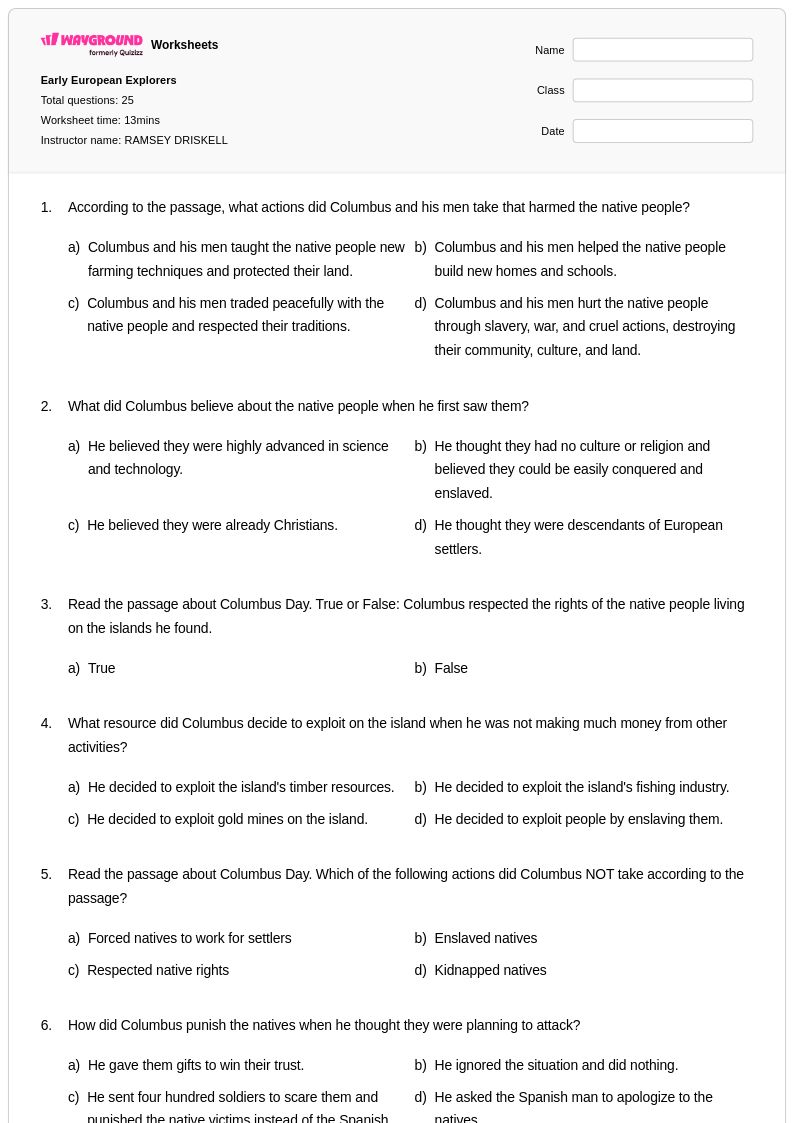
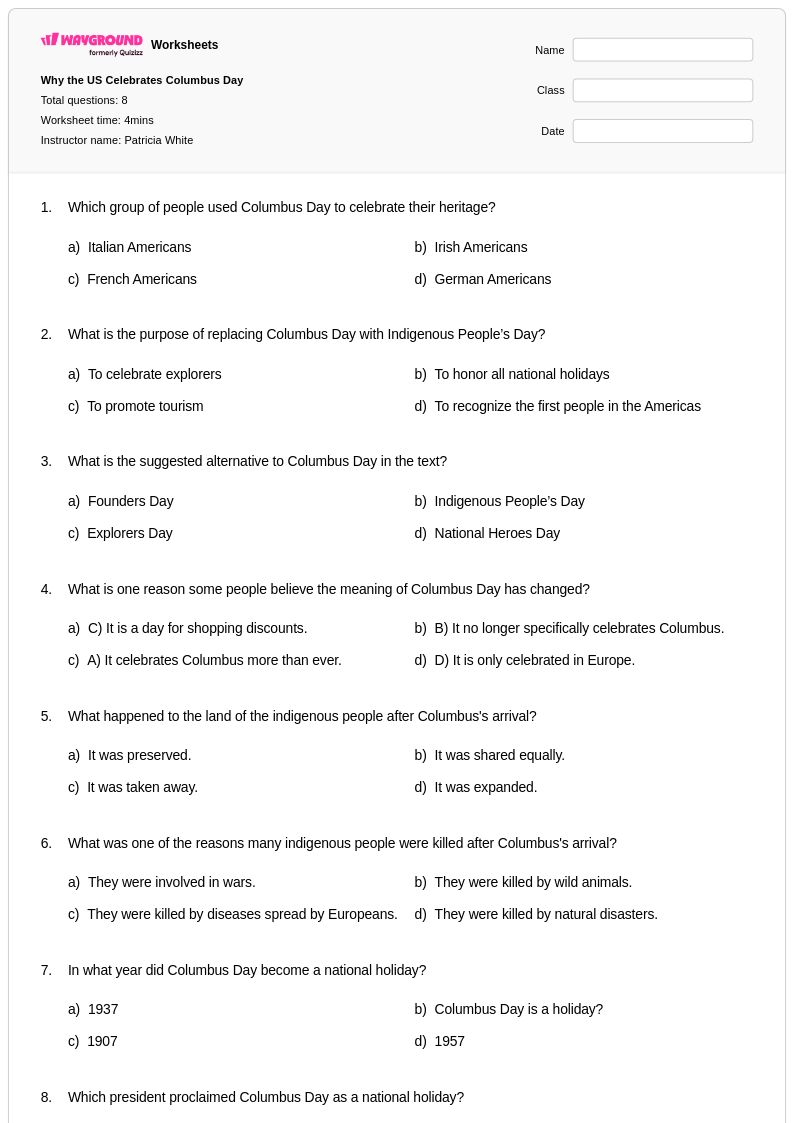
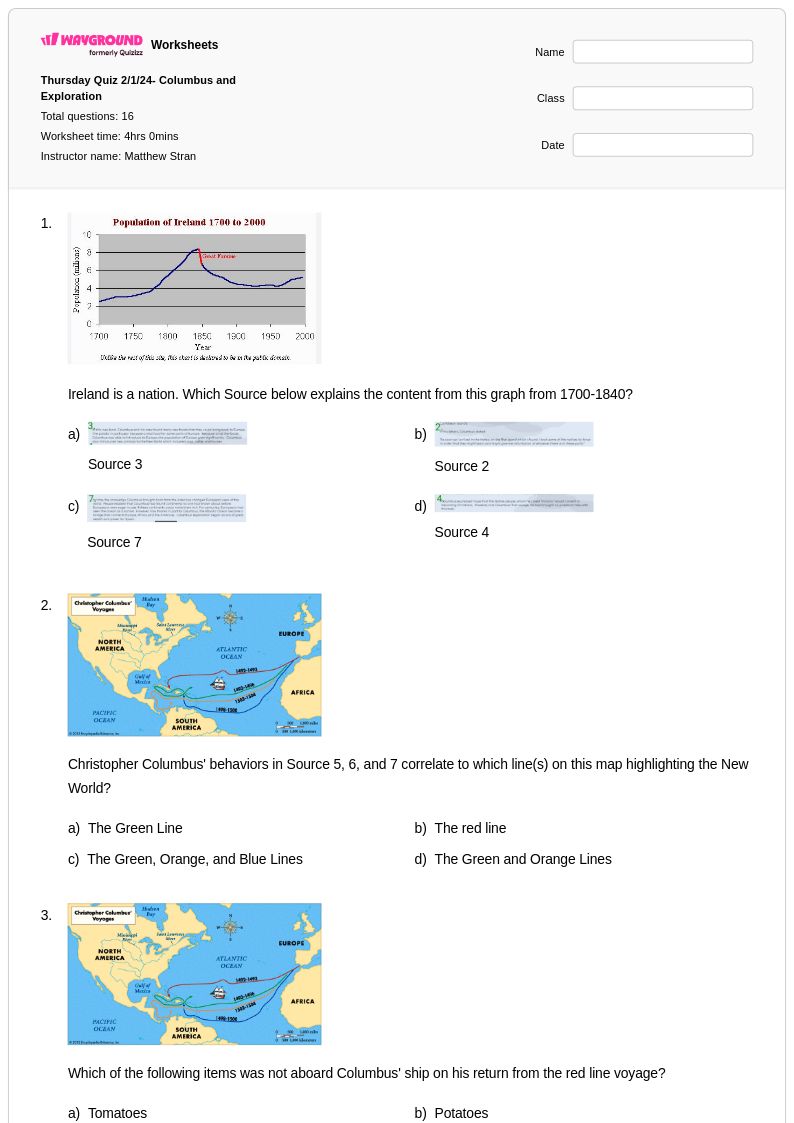
Columbus Day worksheets for kindergarten students available through Wayground (formerly Quizizz) introduce young learners to this significant historical observance through age-appropriate activities and educational materials. These carefully designed worksheets help kindergarten students develop foundational social studies skills while exploring the basic concepts surrounding Christopher Columbus and his voyage to the Americas. The collection includes engaging printables that combine simple reading comprehension, basic geography awareness, and cultural understanding exercises suitable for early elementary learners. Each worksheet comes with a comprehensive answer key to support educators in assessment and instruction, and the free pdf format ensures easy access and distribution for classroom use and home practice problems.
Wayground (formerly Quizizz) empowers teachers with an extensive collection of millions of teacher-created resources specifically designed for kindergarten Columbus Day instruction and broader U.S. History education. The platform's robust search and filtering capabilities allow educators to quickly locate worksheets that align with curriculum standards and match their students' developmental needs. Teachers can easily differentiate instruction by selecting from various difficulty levels and activity types, while the flexible customization tools enable modification of existing materials to meet specific classroom requirements. Available in both printable and digital pdf formats, these resources support comprehensive lesson planning and provide valuable options for skill practice, remediation activities, and enrichment opportunities that enhance student understanding of this important historical topic.
FAQs
How do I teach Columbus Day in a way that presents multiple perspectives?
Teaching Columbus Day effectively means going beyond a single narrative and presenting students with the perspectives of both European explorers and the indigenous peoples who were affected by Columbus's arrival. Structure lessons around primary source analysis, comparing European accounts of the voyages with indigenous oral histories and modern scholarly critiques. Encourage students to examine the Age of Exploration's broader context, including the political, economic, and social forces driving European expansion, so they can evaluate Columbus's legacy with nuance rather than accepting a simplified version of events.
What exercises help students practice analyzing the historical impact of Columbus's voyages?
Effective practice activities for this topic include timeline construction exercises that map Columbus's four voyages alongside key events in indigenous history, map work tracing his routes across the Atlantic, and primary source analysis tasks that ask students to evaluate firsthand accounts. Comparative studies examining how different communities commemorate or critique Columbus Day push students to apply critical thinking to real historical debates. These structured exercises reinforce cause-and-effect reasoning and help students connect Columbus's expeditions to their long-term consequences in the Americas.
What common misconceptions do students have about Columbus and his voyages?
A frequent misconception is that Columbus 'discovered' America in the sense that it was previously unknown, ignoring the millions of indigenous people already living there and earlier Norse contact. Students also often conflate Columbus Day with a celebration of American history broadly, missing the specific and contested nature of his legacy. Another common error is treating Columbus's four voyages as a single event rather than understanding their distinct routes, purposes, and outcomes. Addressing these misconceptions early helps students develop more accurate and critical historical thinking.
How do I address the ongoing debate around Columbus Day versus Indigenous Peoples' Day in my classroom?
Frame the debate as a genuine historical and civic question rather than a settled controversy, which makes it both age-appropriate and academically rigorous. Present students with evidence about the impact of Columbus's voyages on indigenous communities alongside arguments made by advocates on both sides of the commemorative debate. Structured activities like Socratic seminars, evidence-based writing prompts, or comparative analysis worksheets give students a framework for forming and defending informed opinions without the lesson becoming purely political.
How do I use Wayground's Columbus Day worksheets in my classroom?
Wayground's Columbus Day worksheets are available as printable PDFs for traditional classroom use and in digital formats for technology-integrated environments, making them flexible for in-person, hybrid, and remote instruction. Teachers can also host the worksheets as a live or self-paced quiz directly on Wayground, which allows for real-time student responses and automatic grading. Each worksheet includes a detailed answer key, so teachers can use them for direct instruction, independent practice, homework assignments, or remediation without additional preparation.