Free Printable Commas After an Introductory Phrase Worksheets for Class 4
Wayground's free Class 4 printable worksheets help students master commas after introductory phrases through engaging practice problems, complete with PDF downloads and answer keys for effective learning.
Explore printable Commas After an Introductory Phrase worksheets for Class 4
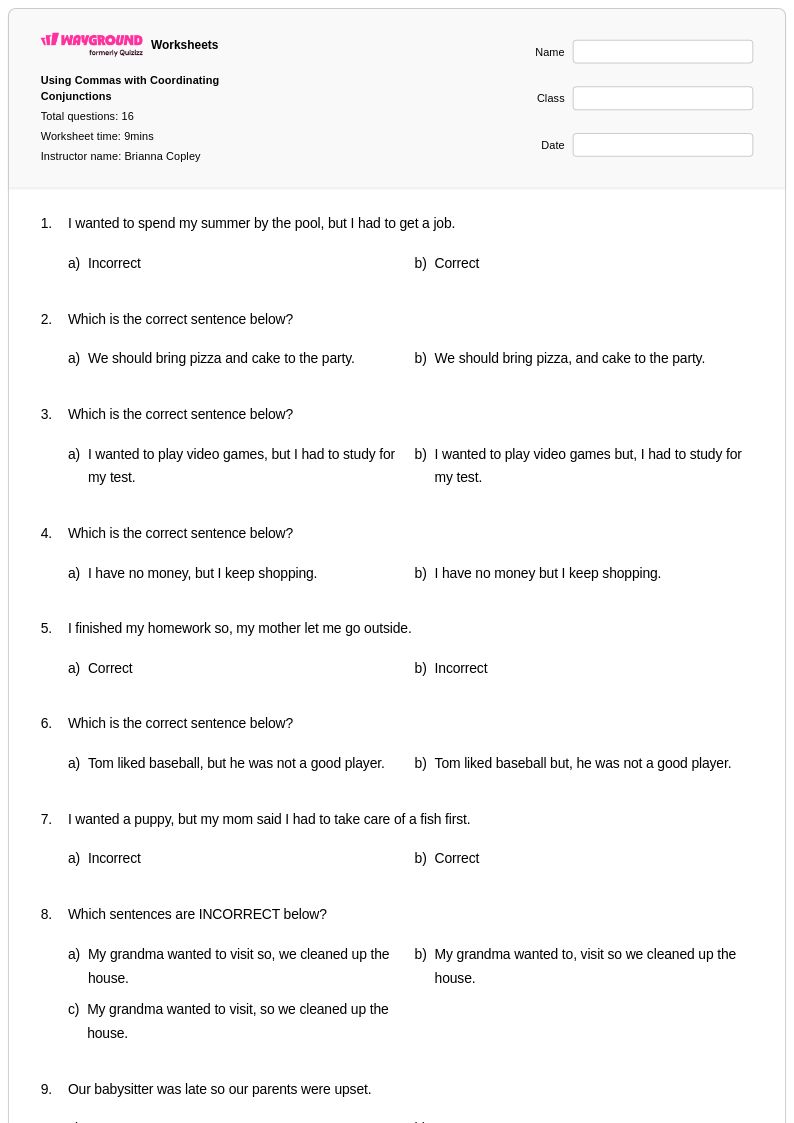
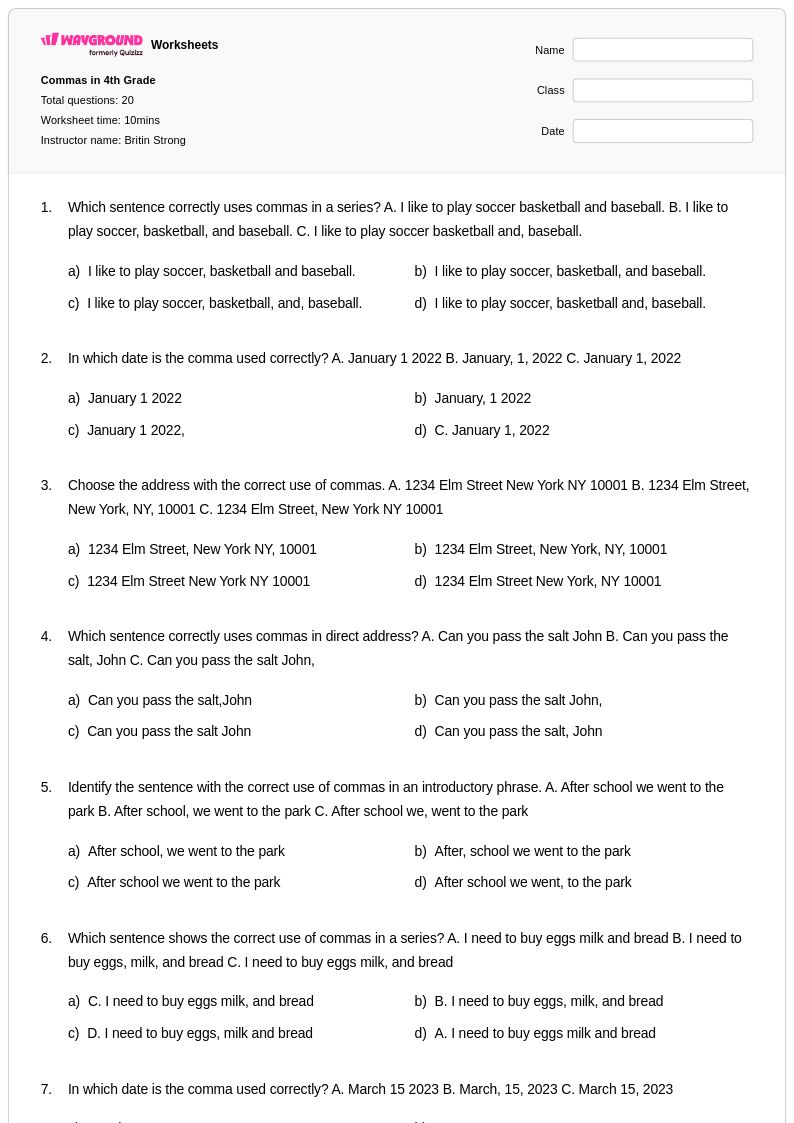
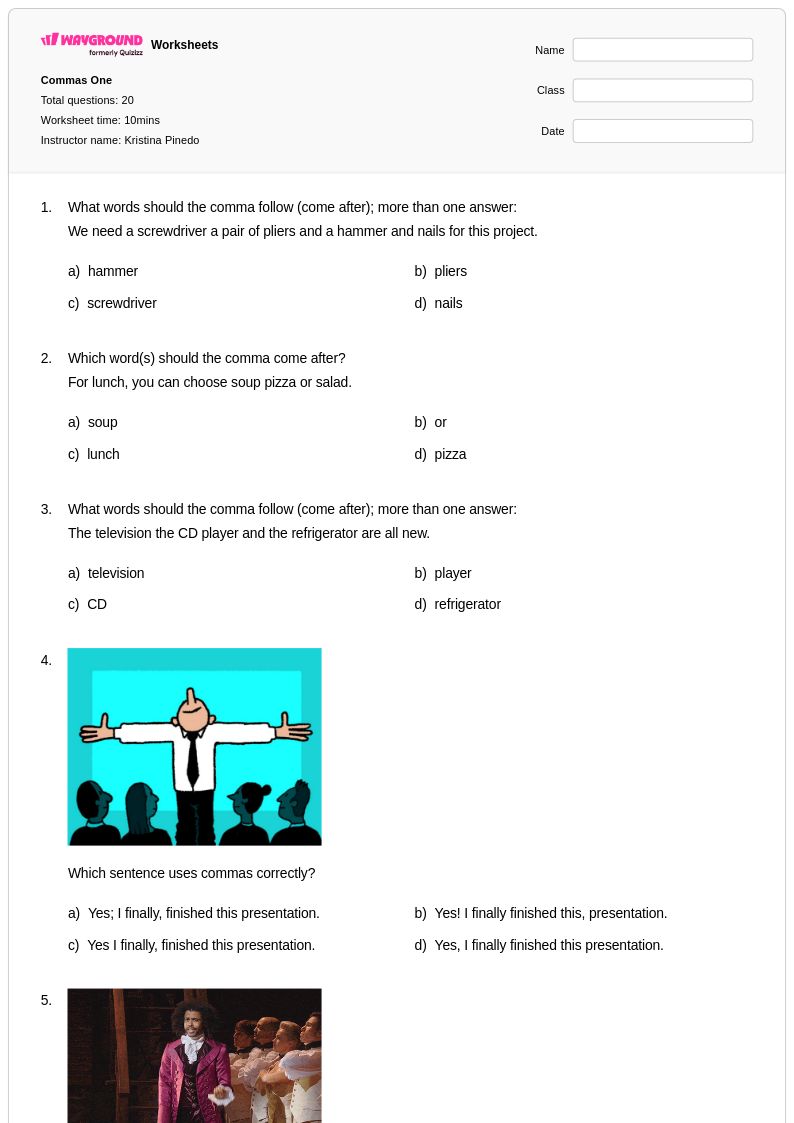
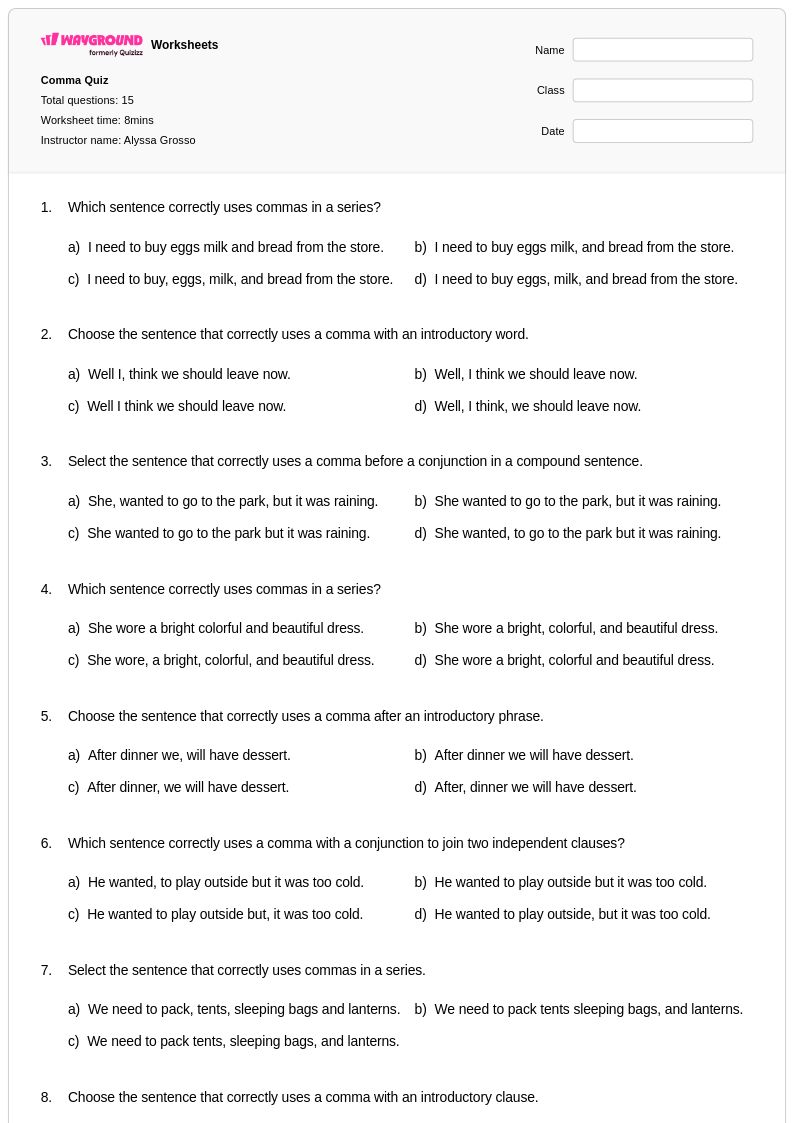
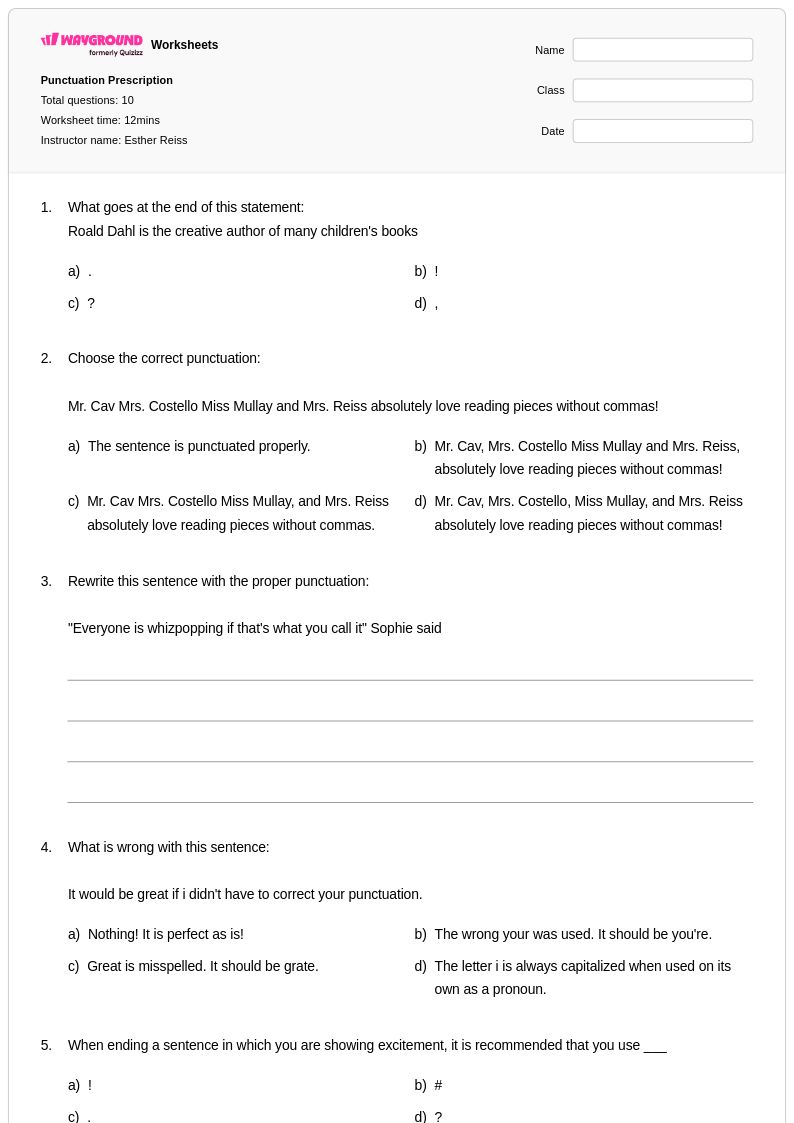
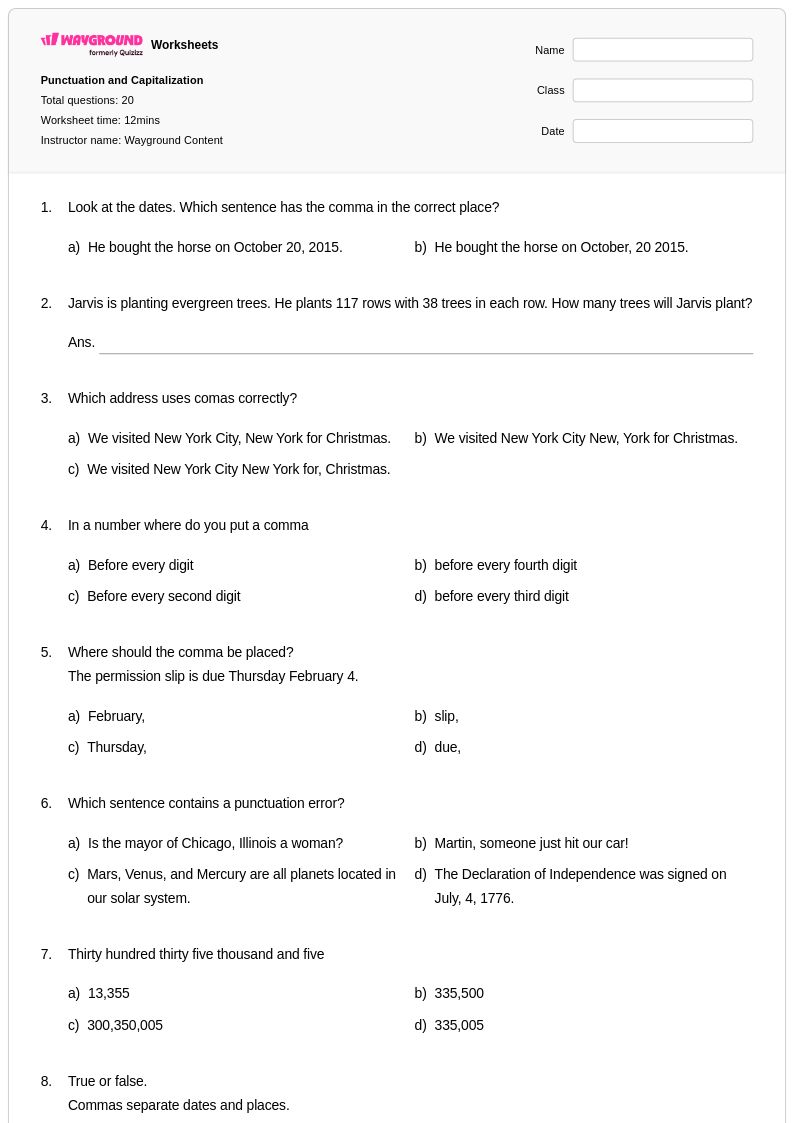
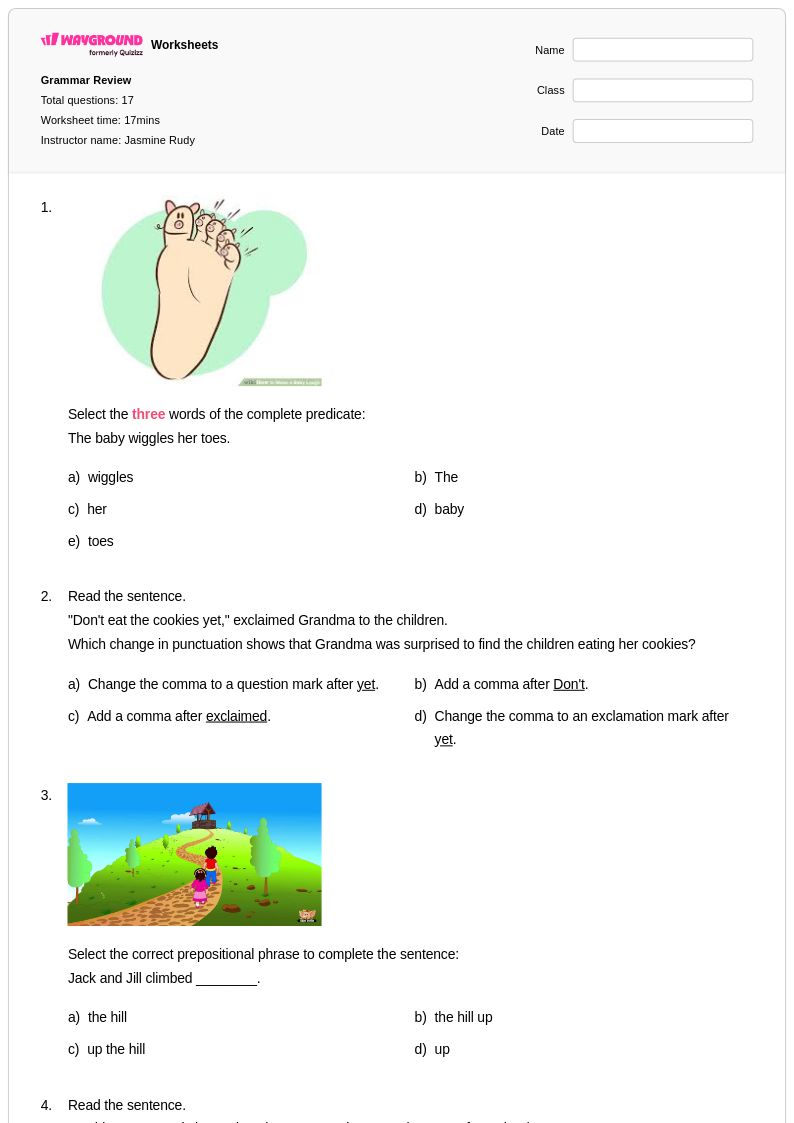
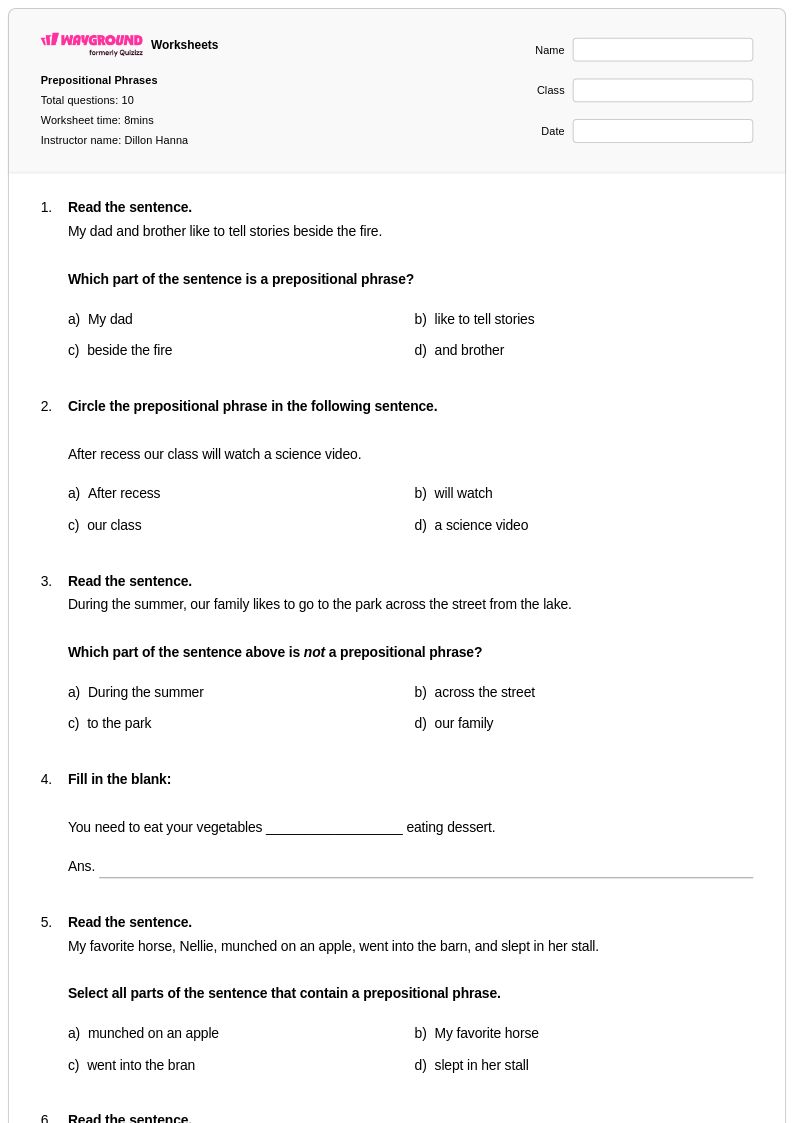
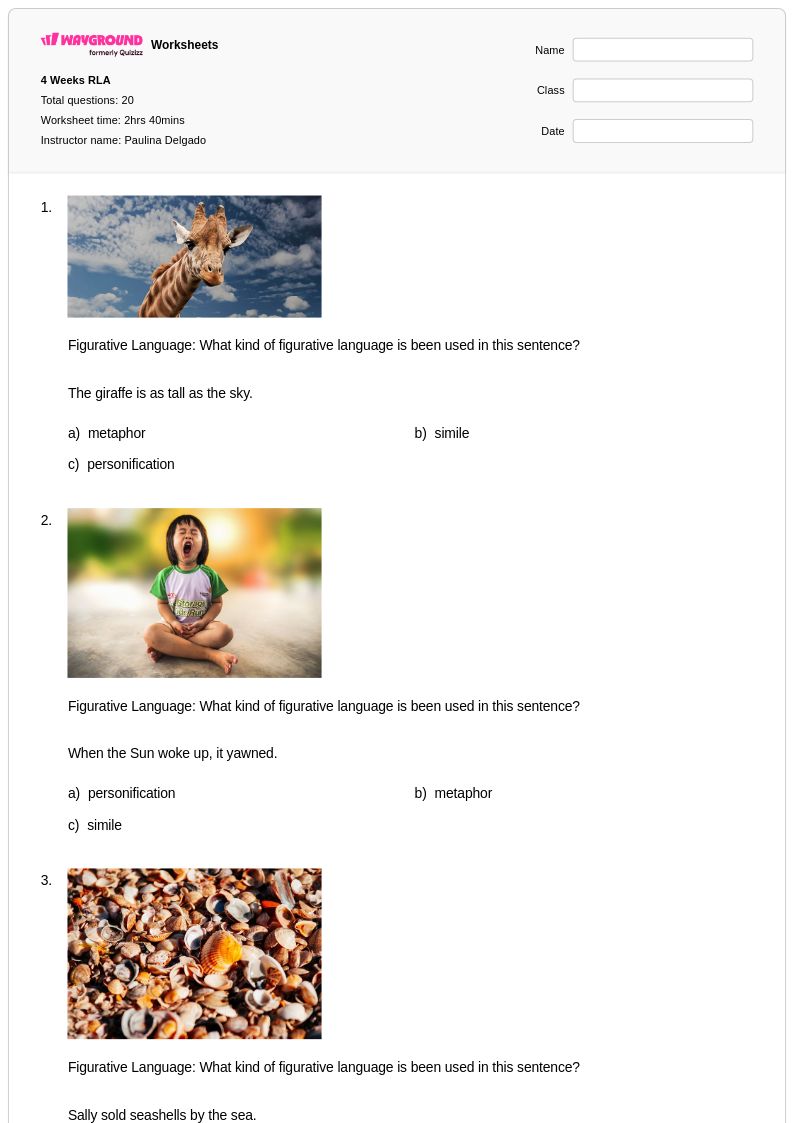
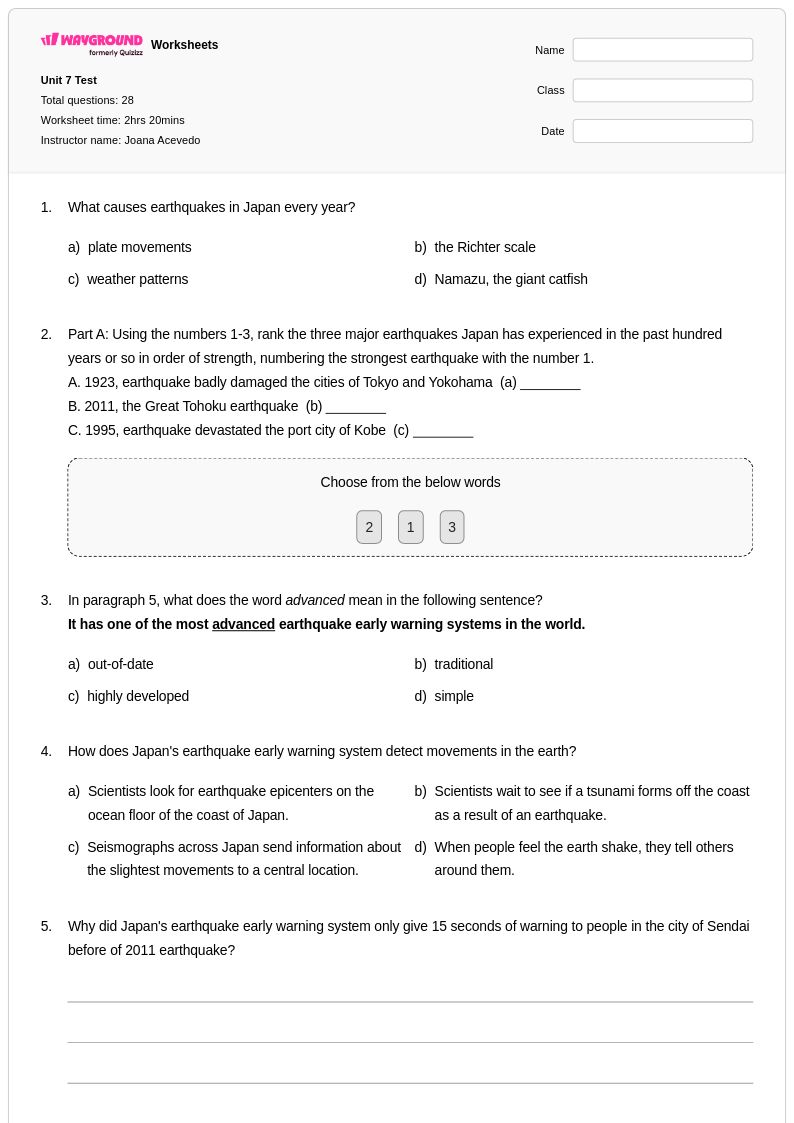
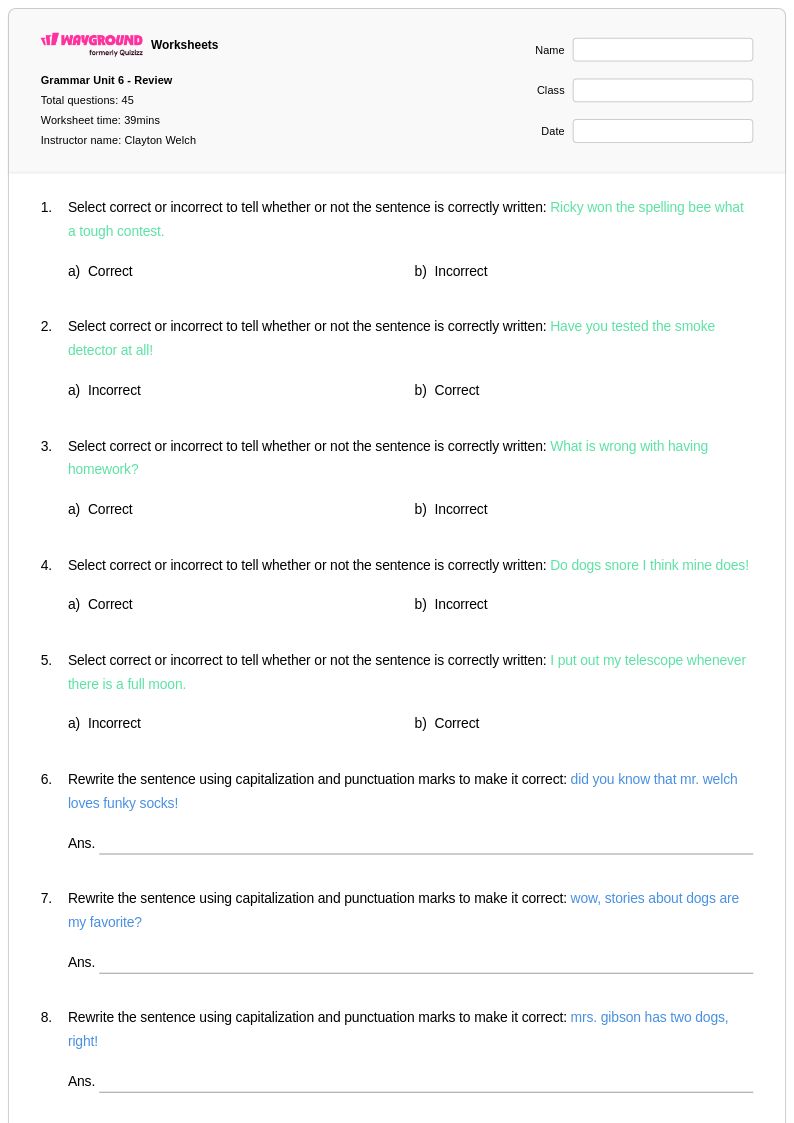
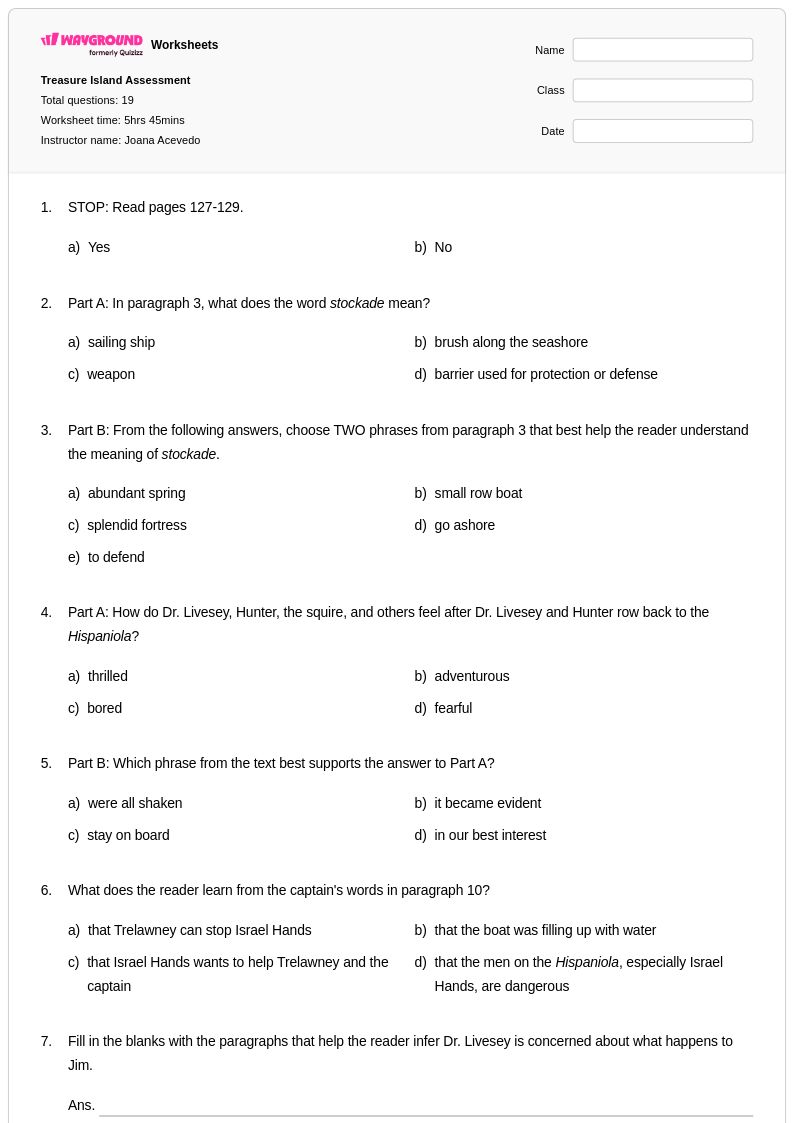
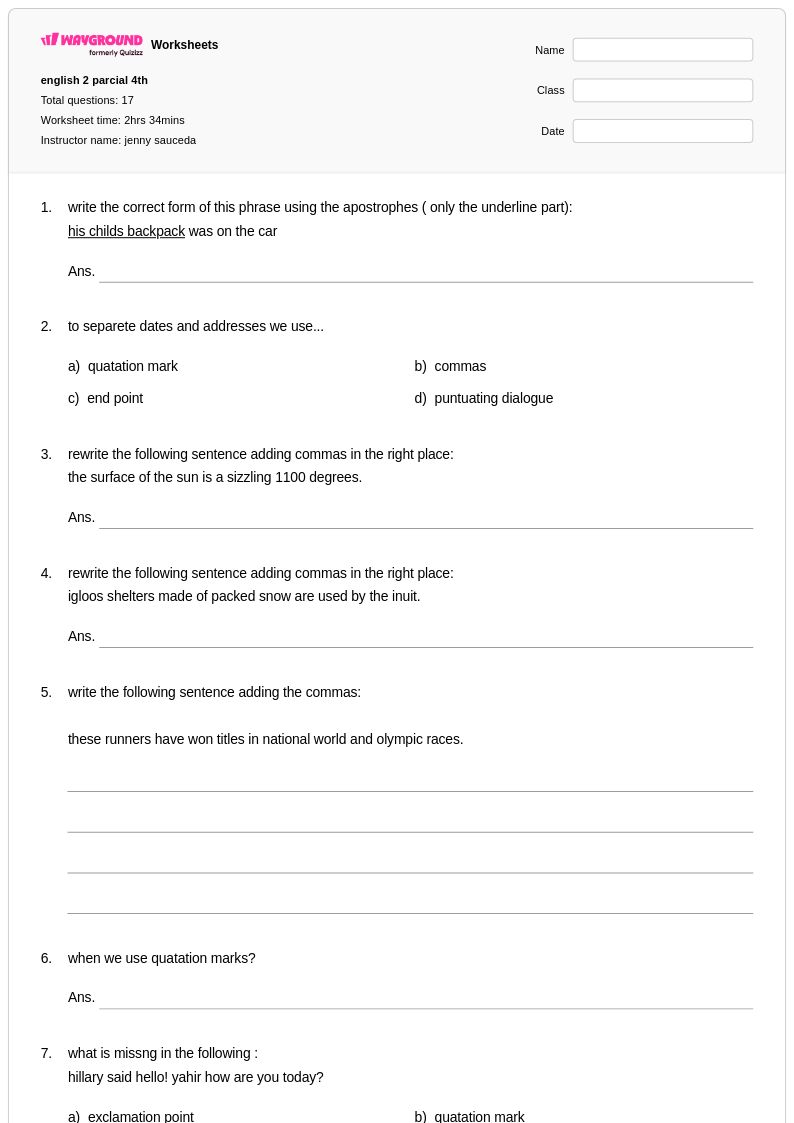
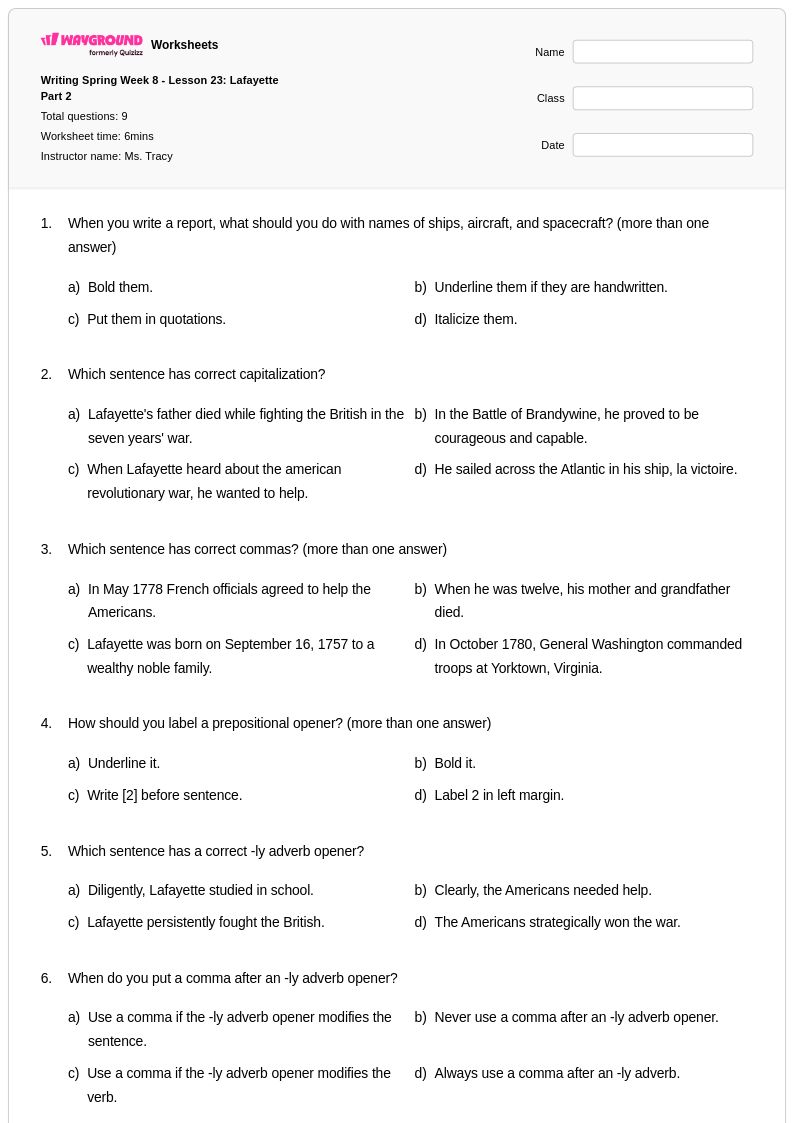
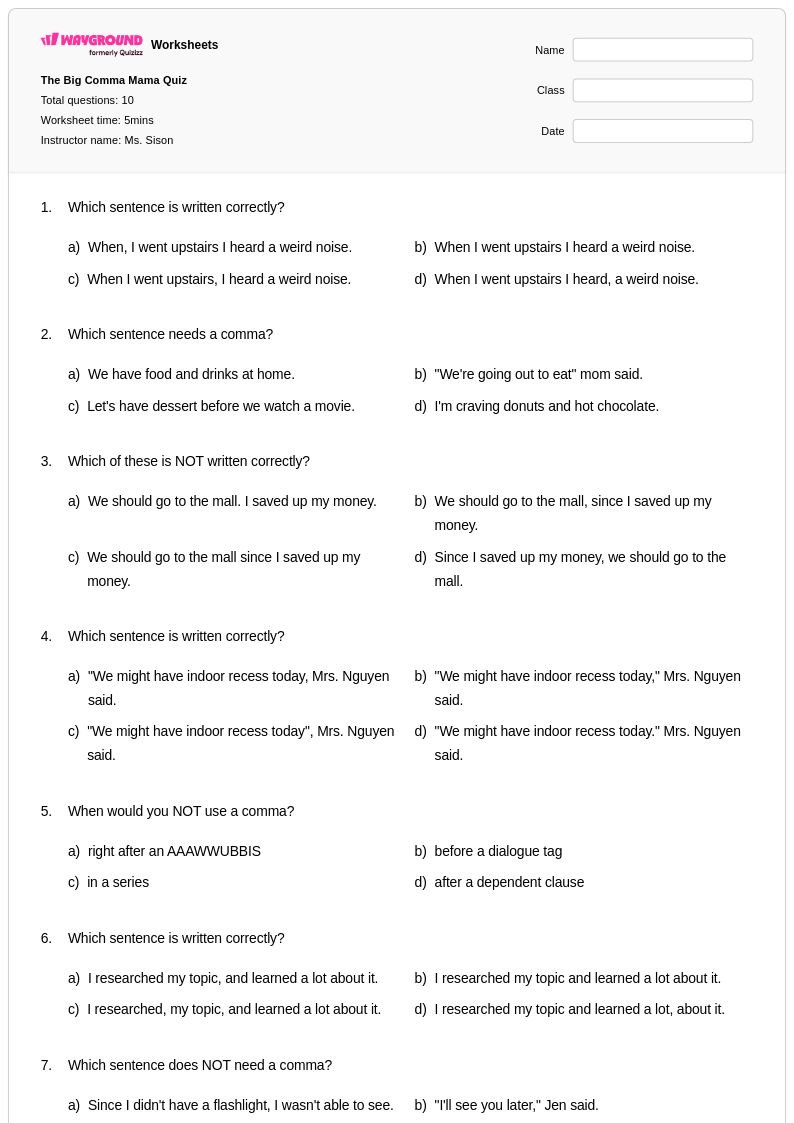
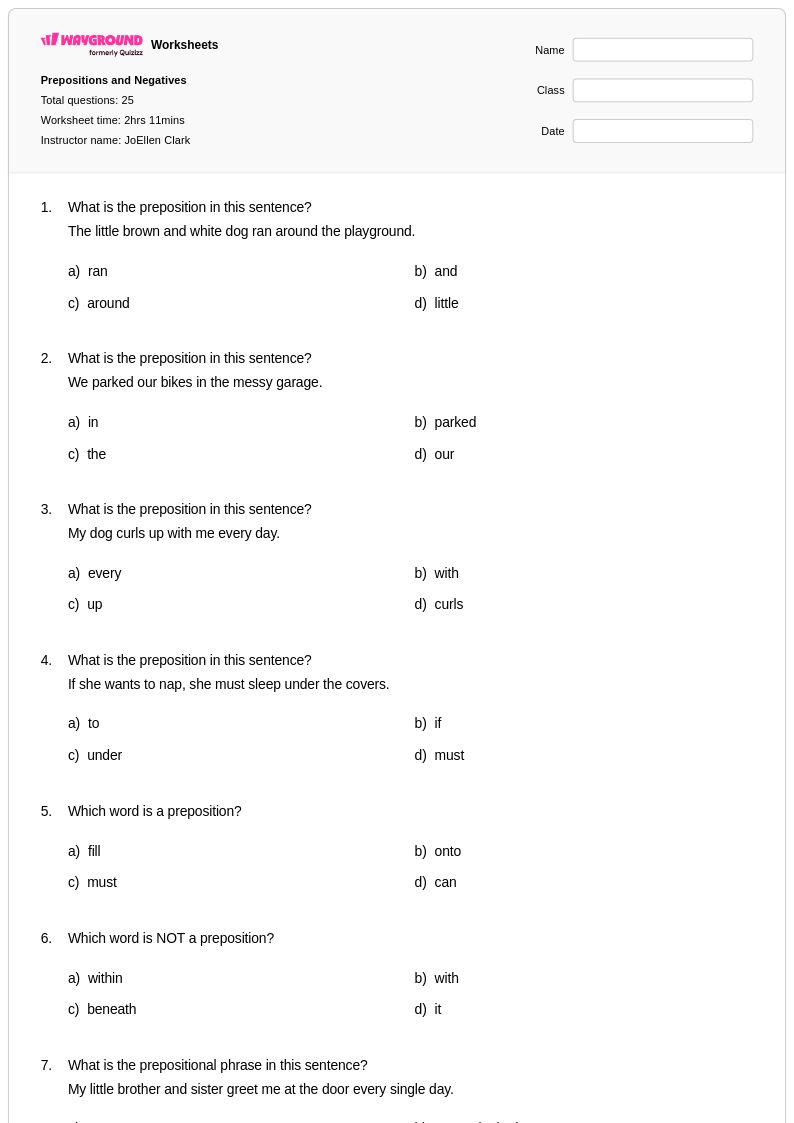
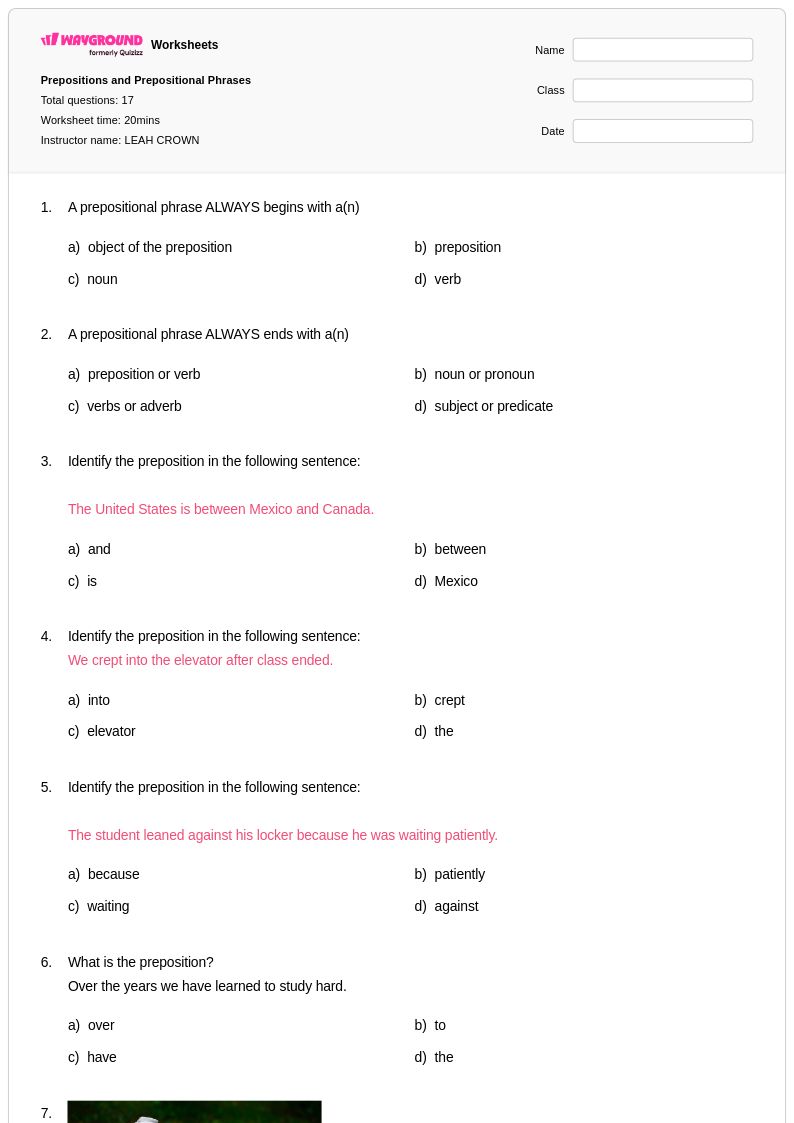
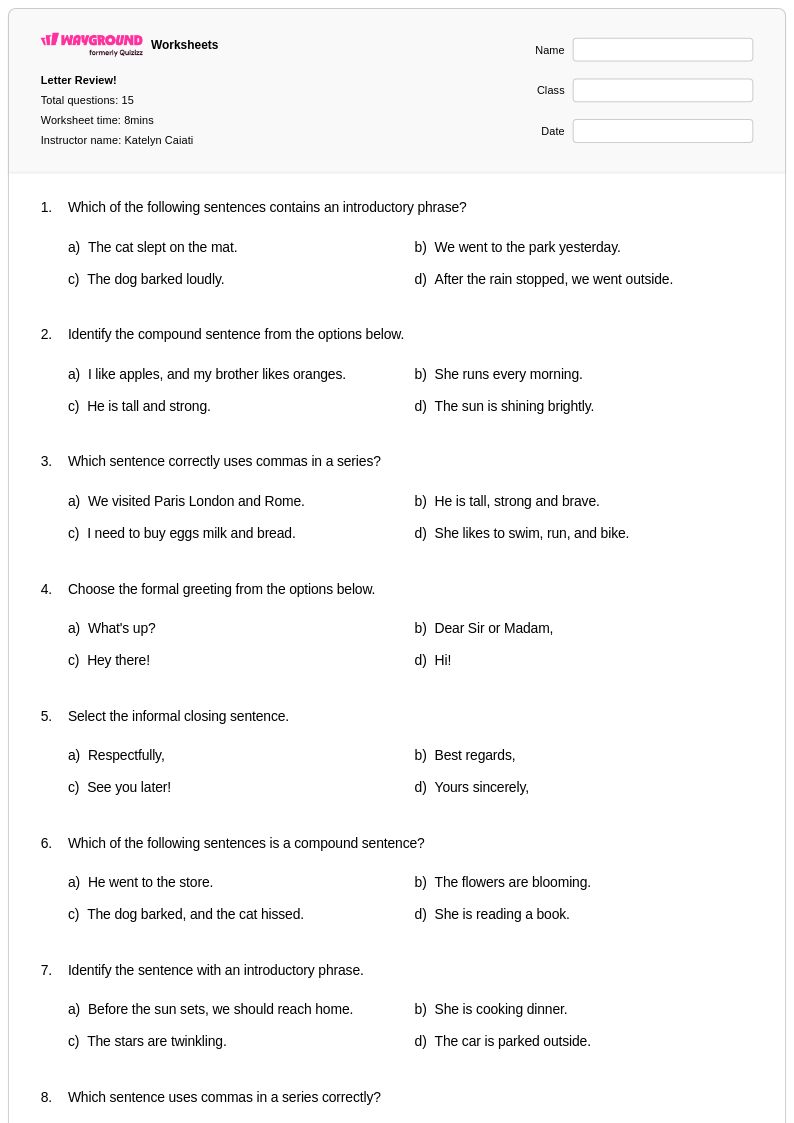
Commas after an introductory phrase represent a fundamental punctuation concept that Class 4 students must master to develop clear, professional writing skills. Wayground's comprehensive worksheet collection focuses specifically on this critical grammar rule, providing students with structured practice in identifying when introductory elements require comma placement. These carefully designed worksheets strengthen students' understanding of sentence structure while building confidence in punctuation usage through varied practice problems that range from simple prepositional phrases to more complex introductory clauses. Each worksheet includes a detailed answer key and is available as a free printable pdf, making it easy for educators to incorporate targeted comma instruction into their language arts curriculum and assess student progress effectively.
Wayground, formerly Quizizz, empowers teachers with millions of educator-created resources specifically designed for grammar instruction, including extensive collections focused on comma usage and punctuation rules. The platform's advanced search and filtering capabilities allow teachers to quickly locate worksheets that align with specific grade-level standards and learning objectives, while built-in differentiation tools enable customization for students with varying skill levels. Whether teachers need materials for initial instruction, targeted remediation, or enrichment activities, these comma worksheets are available in both printable and digital formats, including downloadable pdf versions that facilitate seamless lesson planning. The platform's flexible customization options support diverse teaching approaches, allowing educators to modify worksheets to match their students' specific needs while maintaining focus on this essential punctuation skill that forms the foundation for advanced writing proficiency.
FAQs
How do I teach students when to use a comma after an introductory phrase?
Start by helping students identify what counts as an introductory element: prepositional phrases, adverbial clauses, and transitional expressions that appear before the main clause. Teach a consistent rule first — if a phrase or clause opens the sentence and is followed by a subject and verb, a comma typically follows. Once students can identify the introductory element and locate where the main clause begins, comma placement becomes a structural decision rather than a guess.
What exercises help students practice using commas after introductory phrases?
The most effective practice moves from identification to application. Begin with exercises where students underline the introductory phrase and insert the missing comma, then progress to rewriting sentences or constructing original ones using specified phrase types. Varied formats, including multiple-choice, editing passages, and sentence-building tasks, reinforce the rule across different contexts and prevent rote memorization without comprehension.
What mistakes do students commonly make with commas after introductory phrases?
The most common error is omitting the comma entirely, especially after short prepositional phrases like 'In the morning' or 'At school,' where students assume brevity eliminates the need for punctuation. A second frequent mistake is placing the comma after the subject rather than after the introductory phrase, which disrupts the sentence's grammatical structure. Students also struggle to distinguish introductory clauses from mid-sentence modifiers, leading to misplaced or unnecessary commas.
How do I differentiate comma instruction for students at different skill levels?
For struggling students, isolate one phrase type at a time, such as prepositional phrases only, before introducing adverbial clauses or transitional expressions. Provide sentence frames with the introductory phrase already supplied so students focus solely on punctuation decisions. For advanced learners, shift to open-ended tasks where they write their own sentences using a variety of introductory elements, then peer-review for correct comma placement. On Wayground, teachers can apply accommodations such as reduced answer choices or read-aloud support to individual students without alerting the rest of the class.
How do I use Wayground's commas after an introductory phrase worksheets in my classroom?
Wayground's worksheets are available as downloadable PDF files for traditional classroom use and in digital formats for technology-integrated environments, including the option to host them as a quiz directly on the platform. Each worksheet includes an answer key, making them practical for independent practice, homework, or small-group instruction. The varied problem formats, from identification exercises to sentence construction tasks, allow teachers to select the right level of complexity for a given lesson or student group.
How do I help students recognize whether a short introductory phrase still needs a comma?
Teach students that comma usage after short introductory phrases, typically fewer than five words, is often a matter of clarity rather than strict rule. If omitting the comma could cause a reader to misread the sentence, the comma is necessary. A reliable classroom strategy is to have students read the sentence aloud and identify where a natural pause occurs before the subject — that pause often signals where the comma belongs.