Free Printable Communication Skills Worksheets for Class 11
Class 11 communication skills worksheets and printables help students master effective verbal and written expression through targeted practice problems, free PDF resources, and comprehensive answer keys.
Explore printable Communication Skills worksheets for Class 11
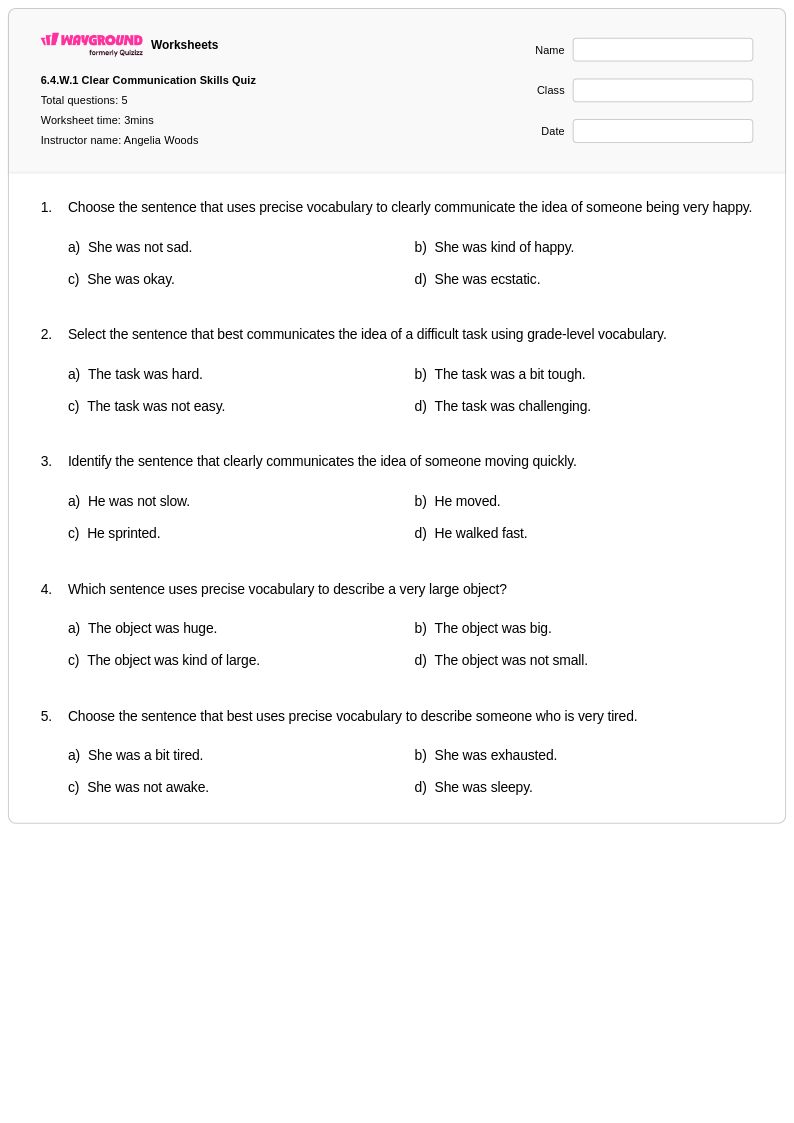
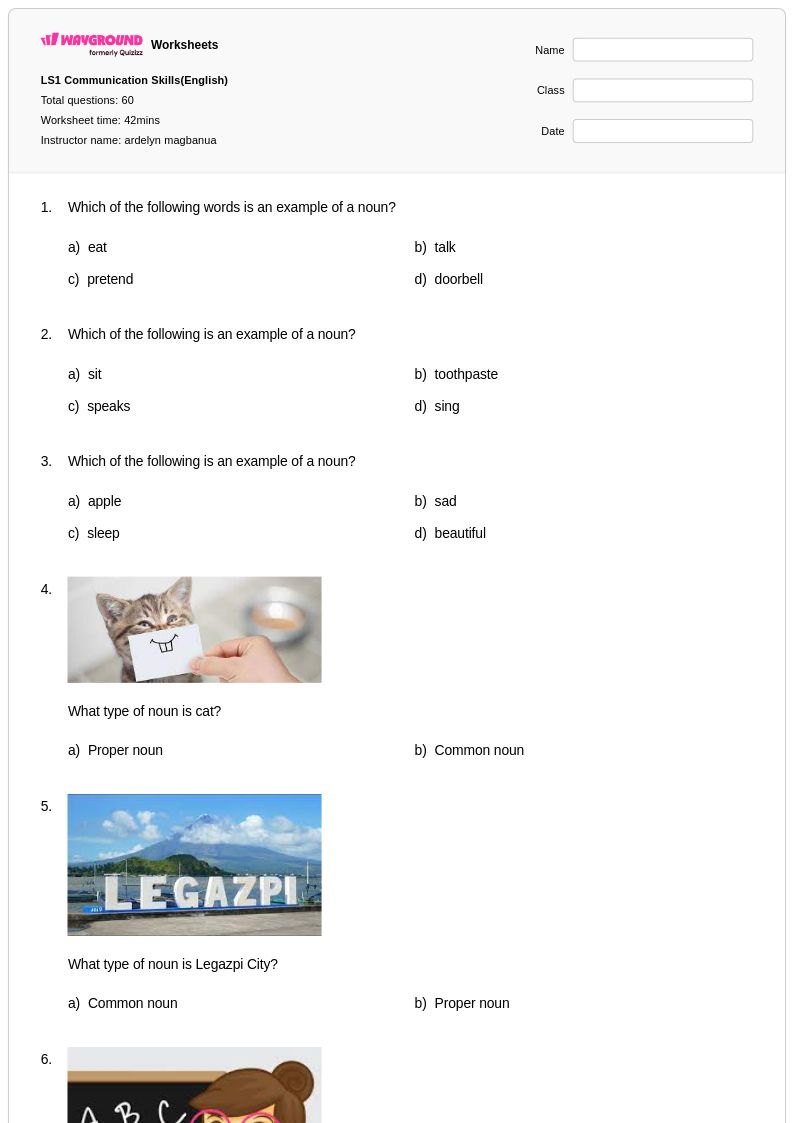
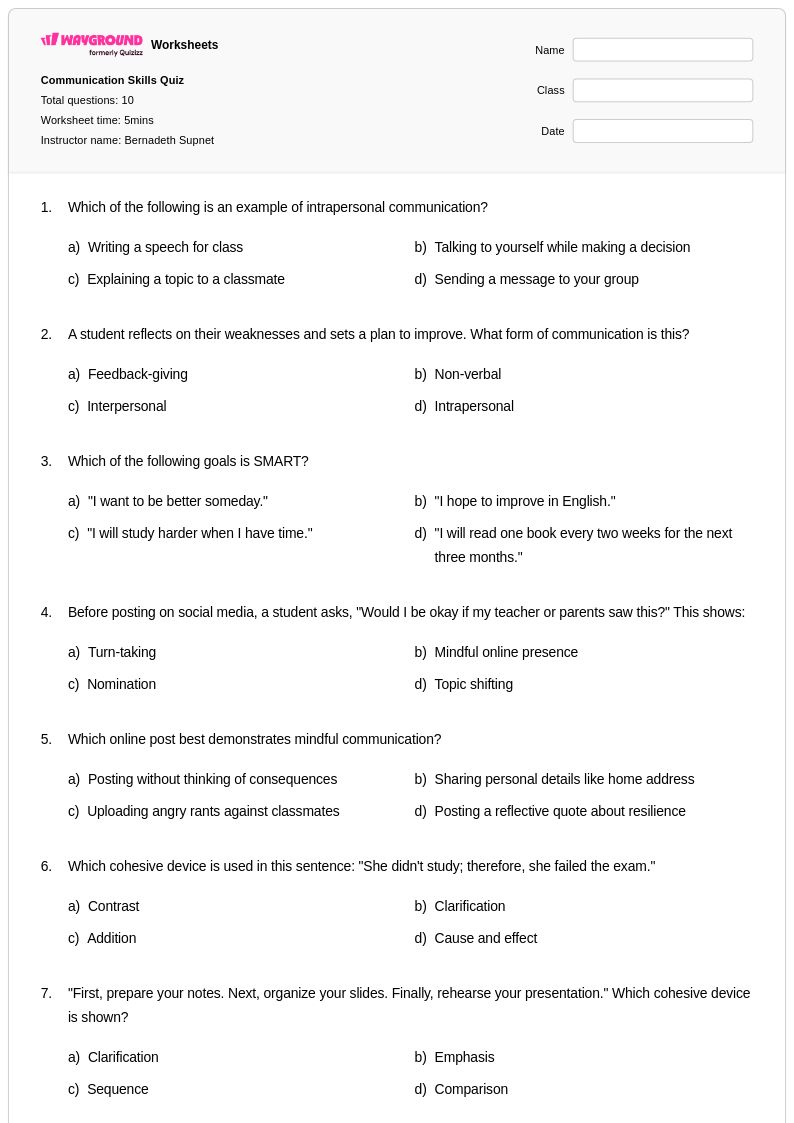
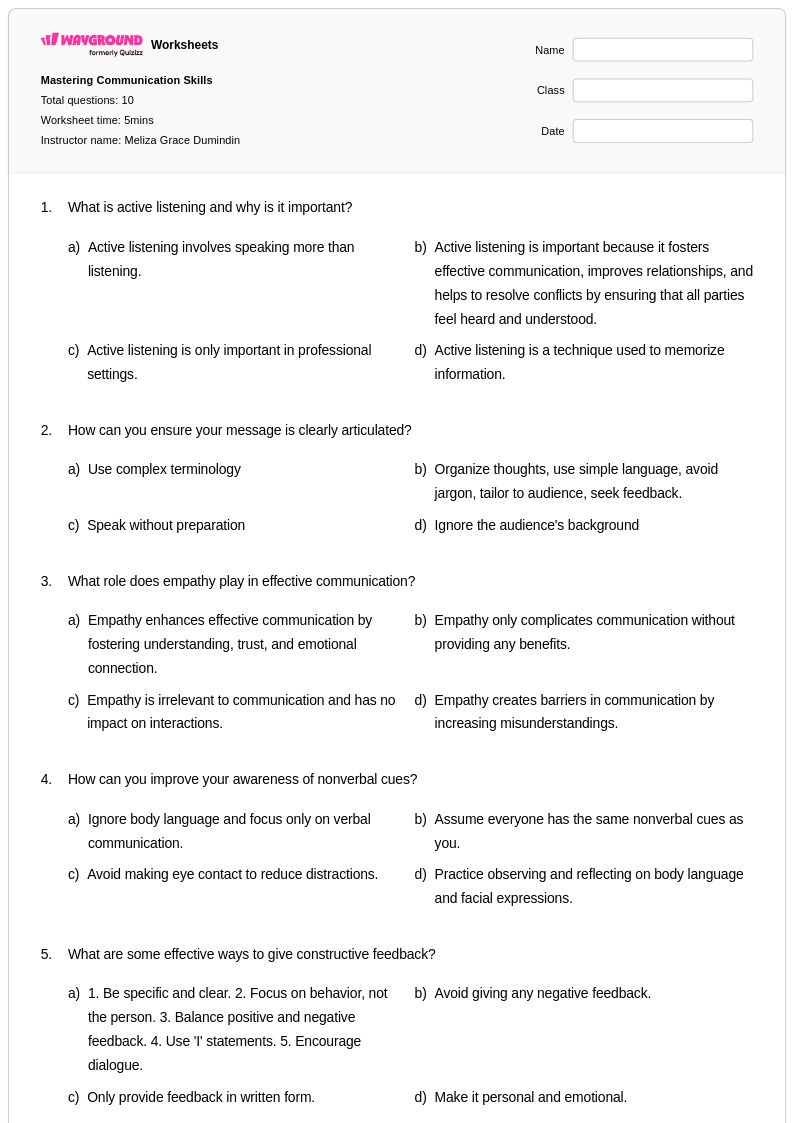
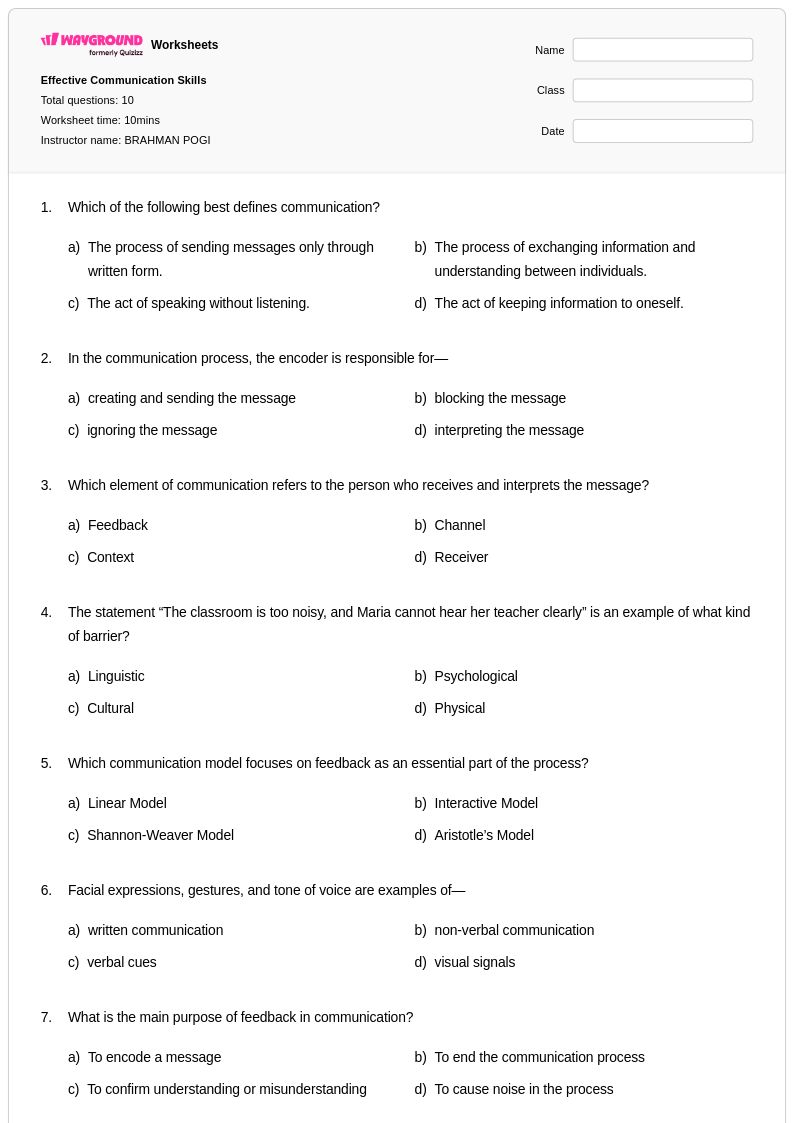
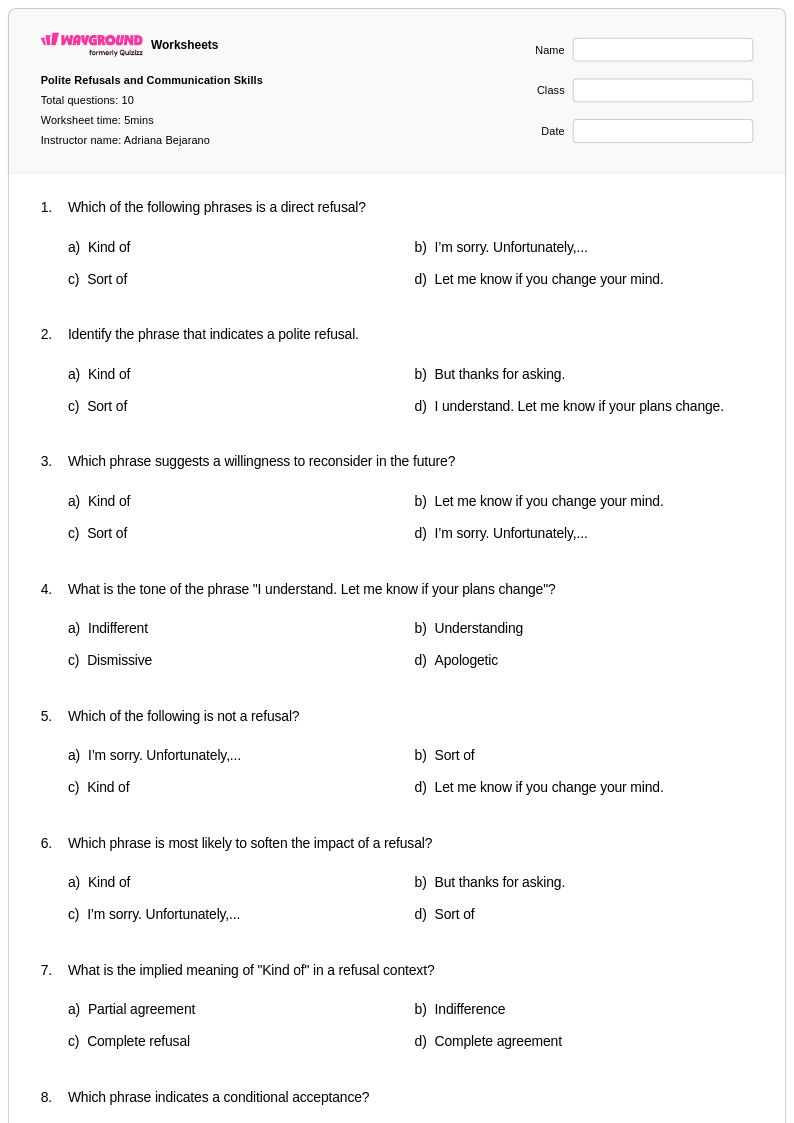
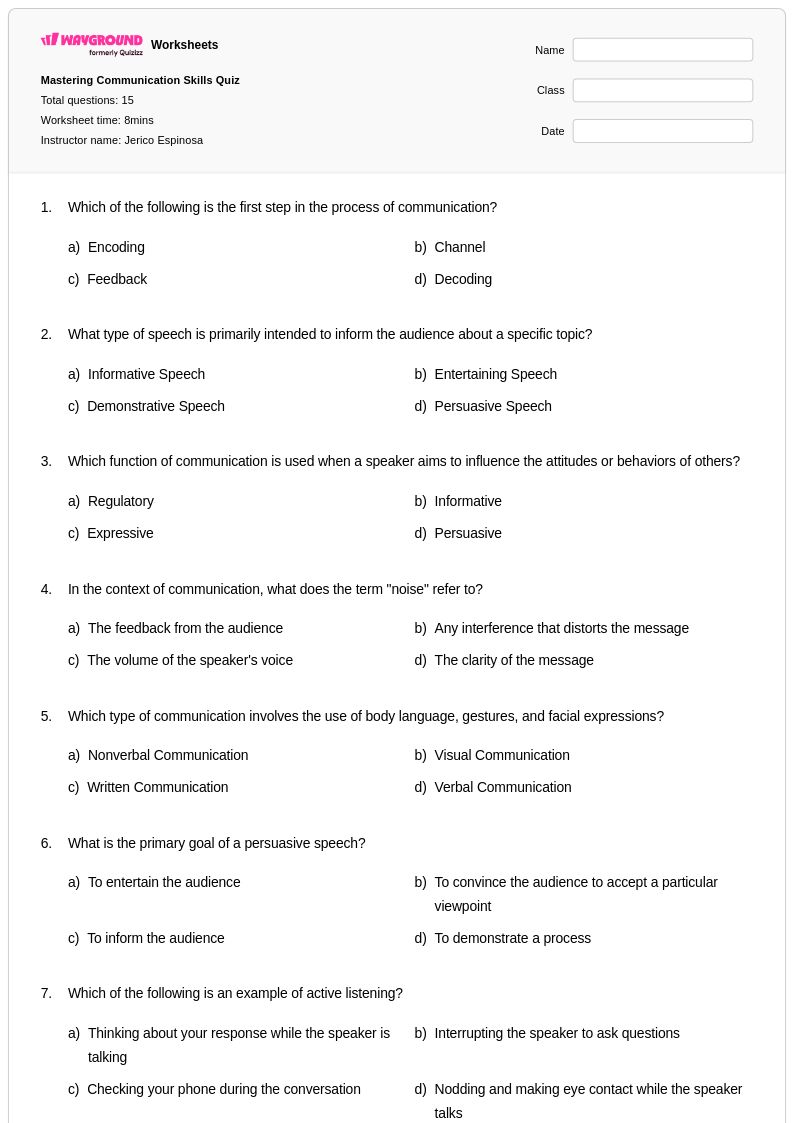
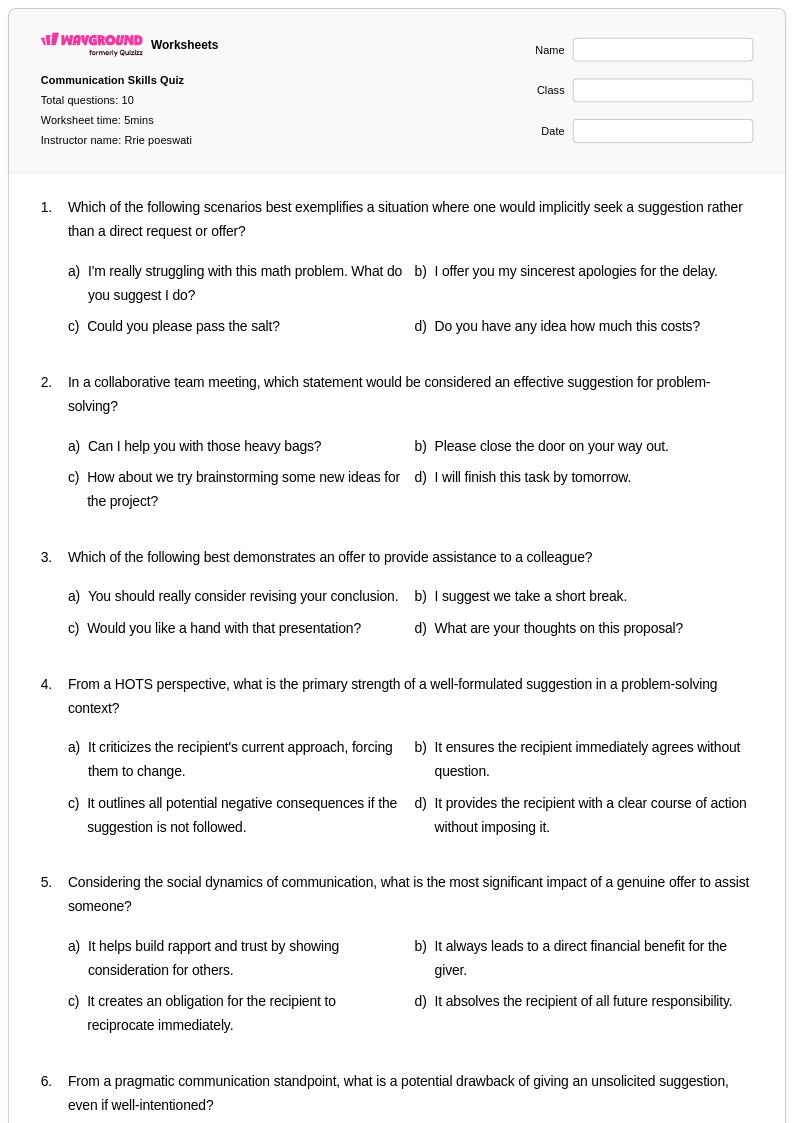
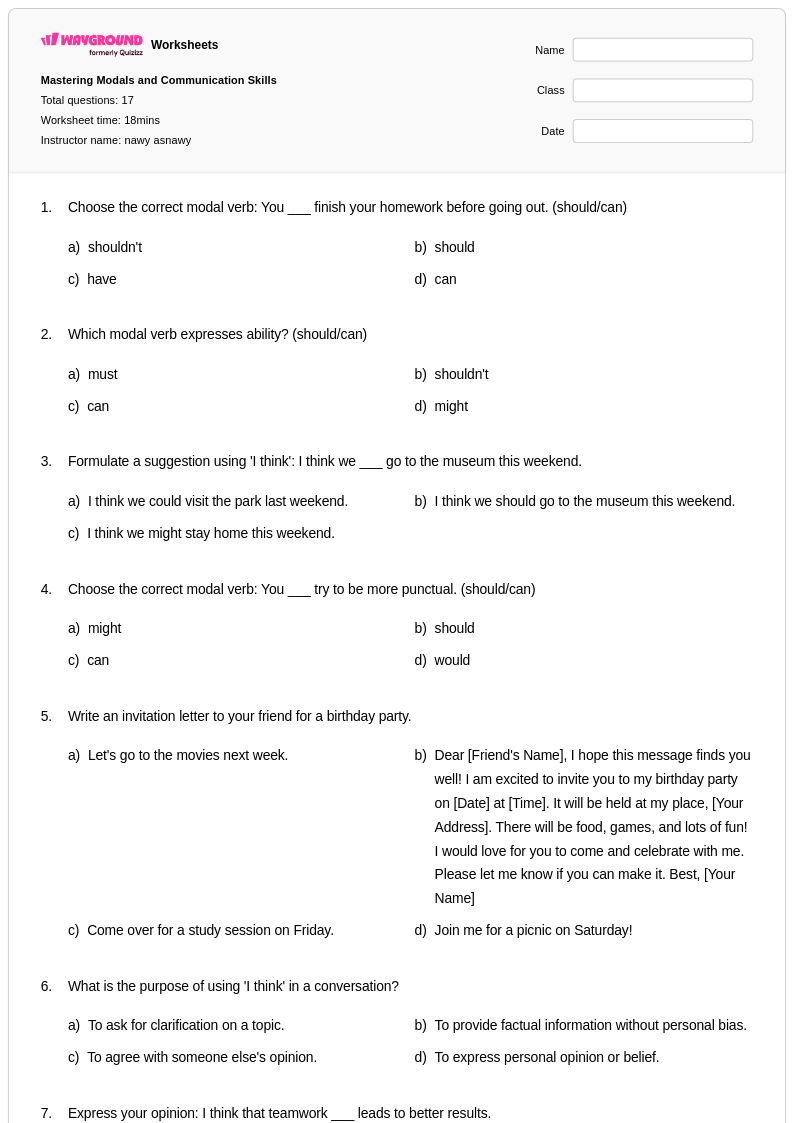
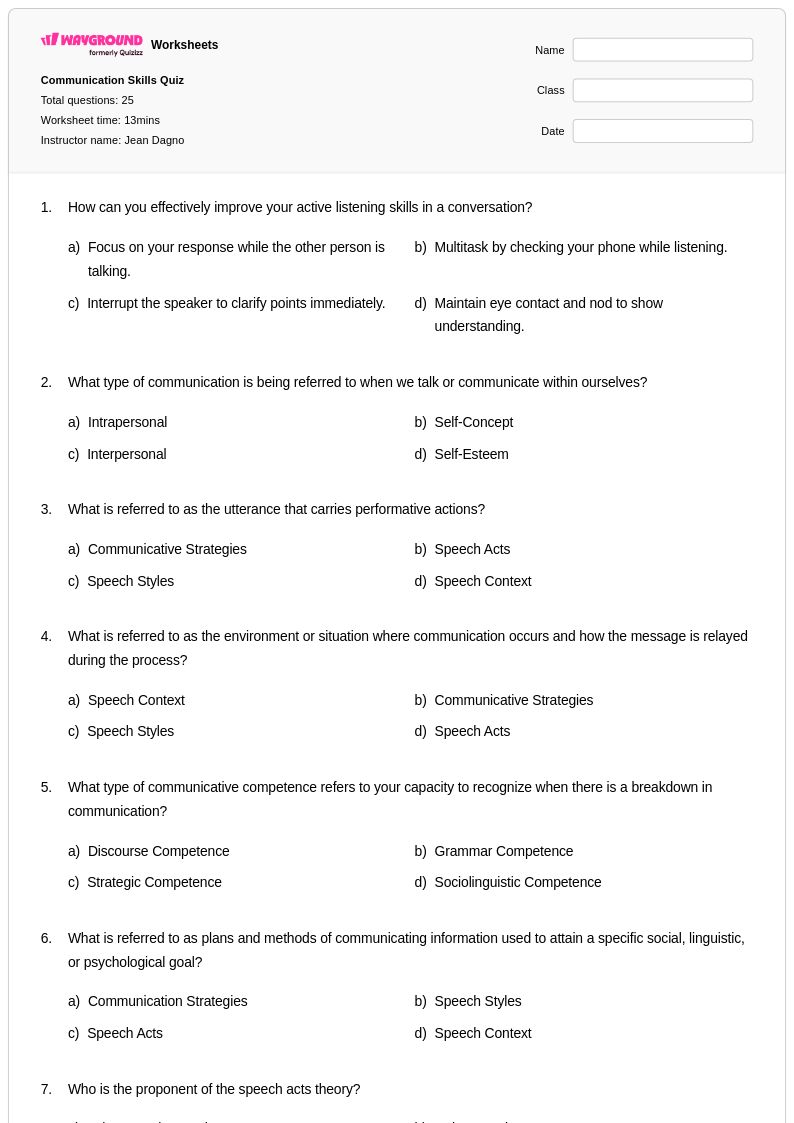
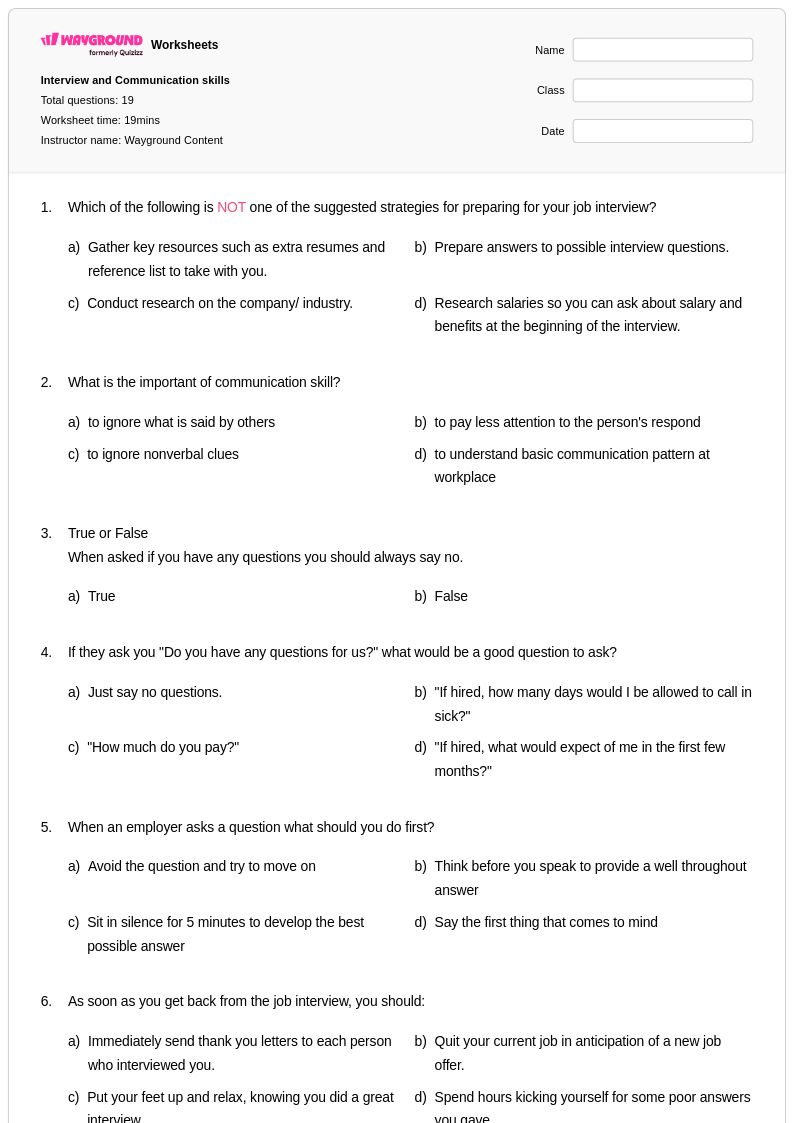
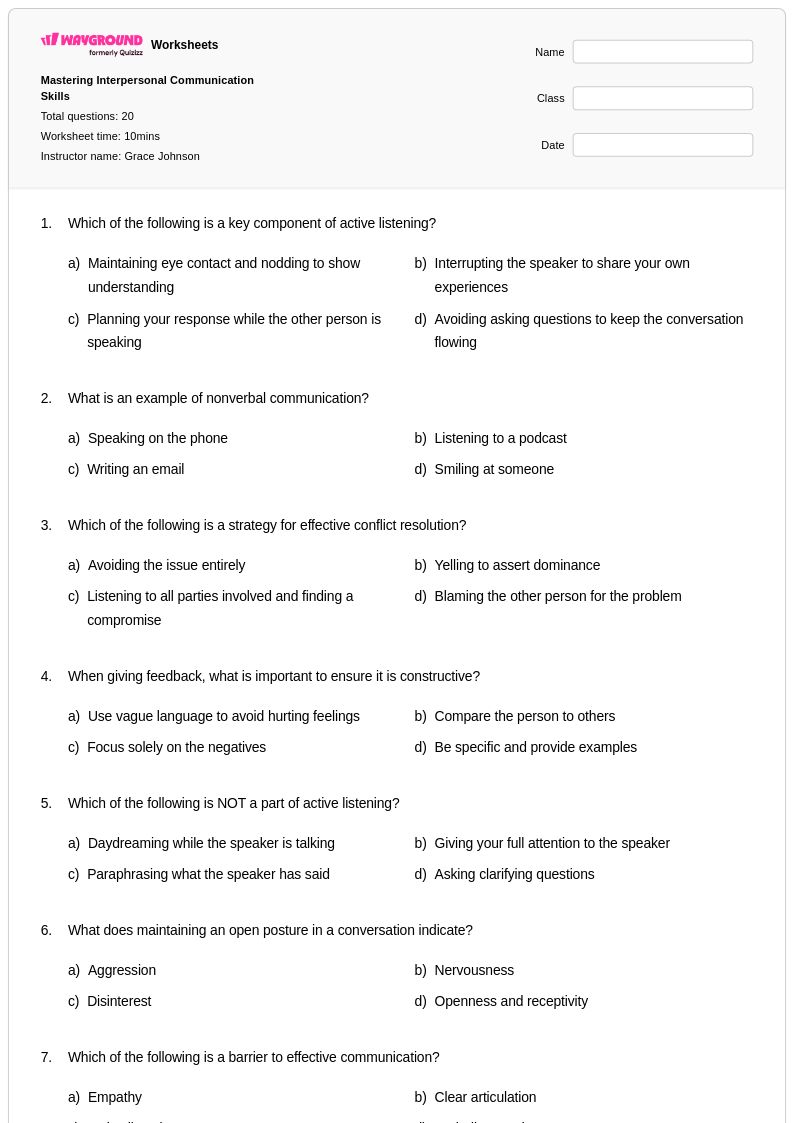
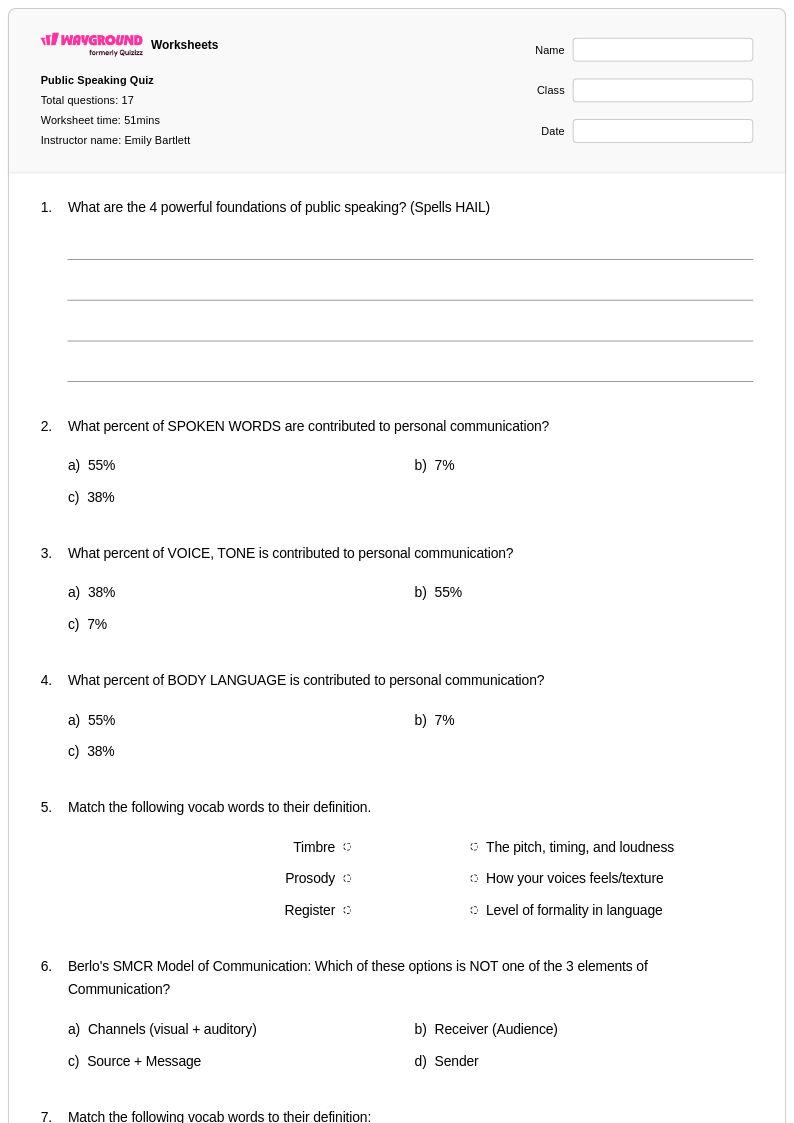
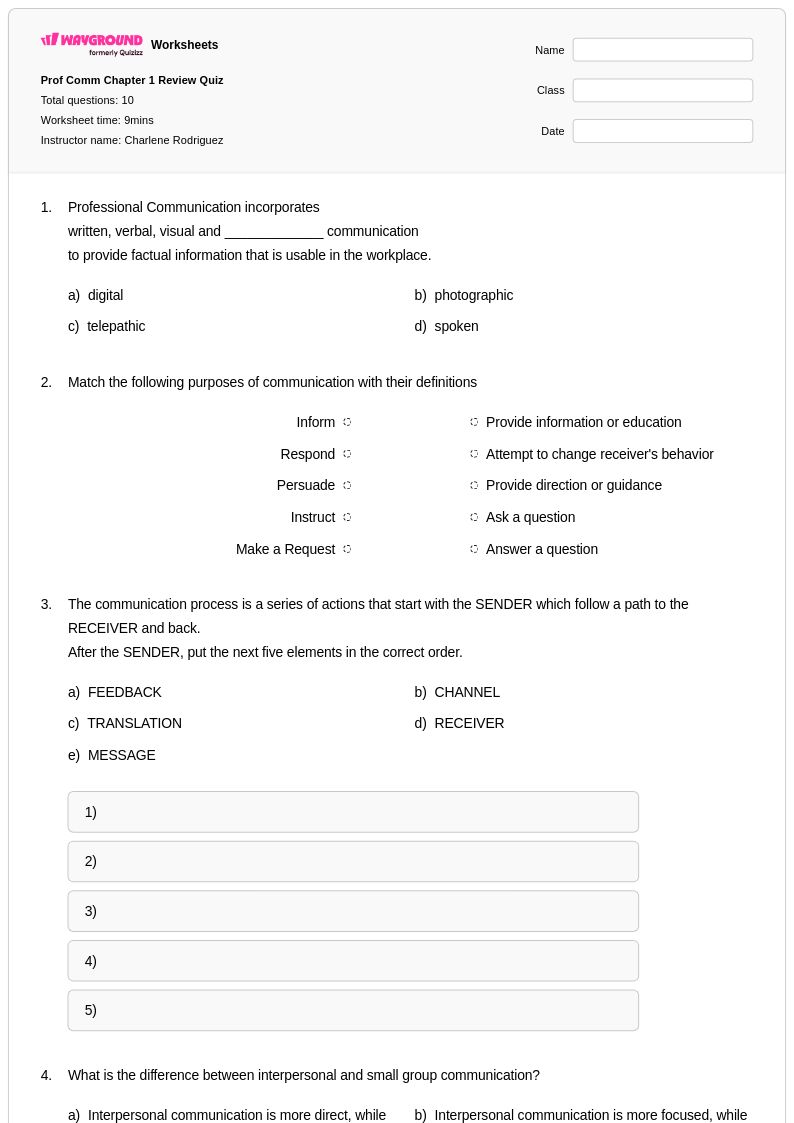
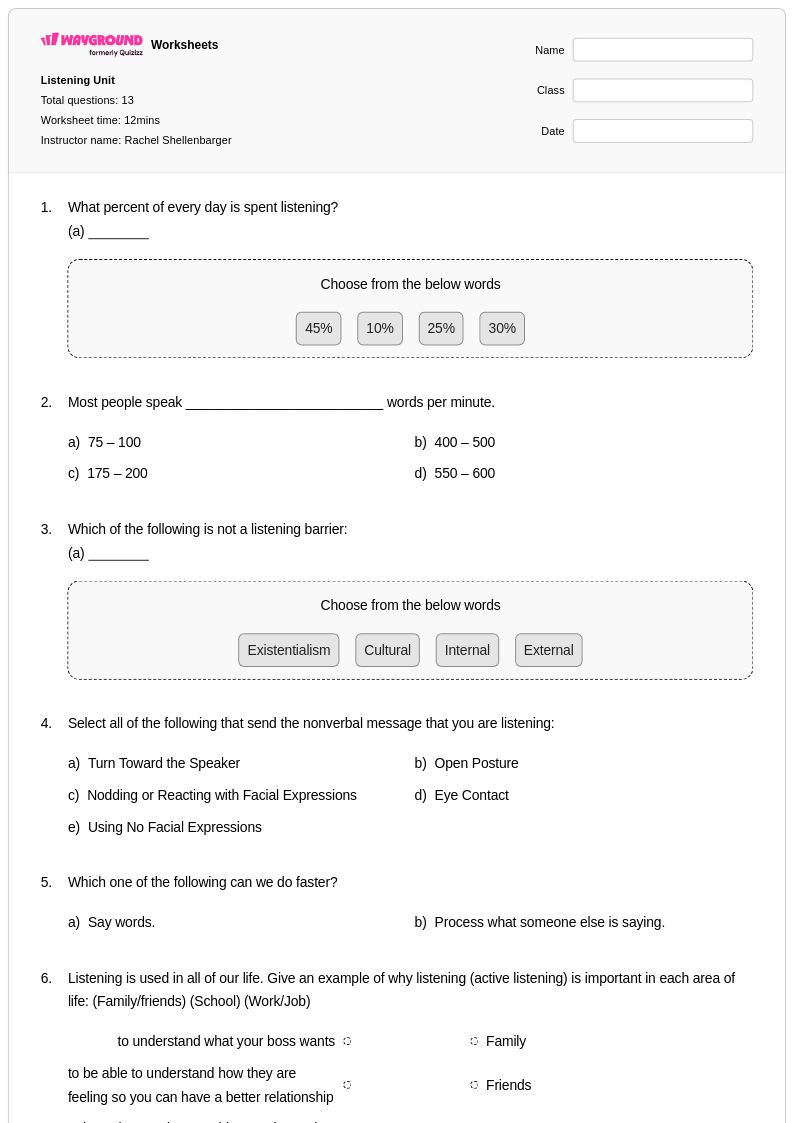
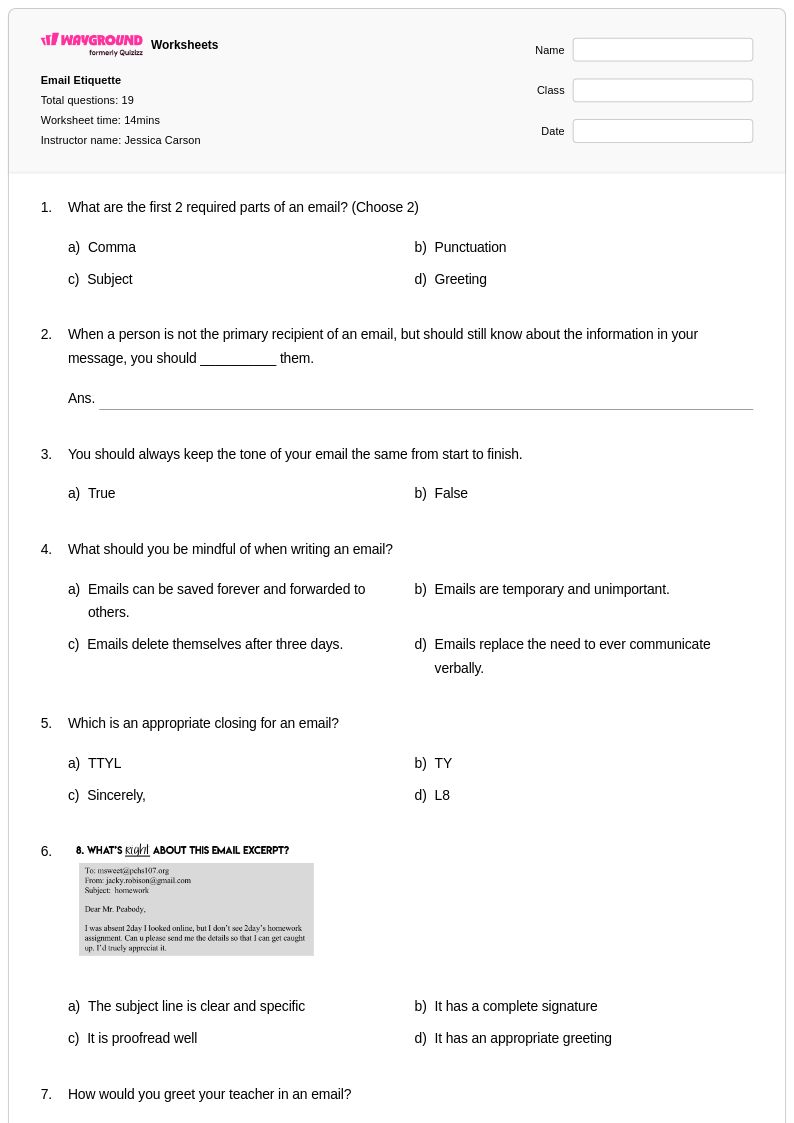
Communication skills worksheets for Class 11 students available through Wayground (formerly Quizizz) provide comprehensive practice in essential verbal and written communication competencies that prepare students for college and career success. These expertly designed resources target critical areas including audience analysis, tone and register adaptation, persuasive techniques, nonverbal communication awareness, and professional correspondence formats. Students engage with practice problems that simulate real-world communication scenarios, from crafting effective presentations to analyzing rhetorical strategies in various media. Each worksheet includes detailed answer keys that guide students through proper communication protocols and help them understand the reasoning behind effective communication choices, while free printable pdf formats ensure accessibility for diverse learning environments.
Wayground's extensive collection of millions of teacher-created communication skills resources empowers educators to deliver targeted instruction that meets individual student needs in Class 11 English classrooms. The platform's robust search and filtering capabilities allow teachers to quickly locate worksheets aligned with specific communication standards, whether focusing on interpersonal skills, public speaking fundamentals, or digital communication literacy. Advanced differentiation tools enable instructors to customize content difficulty levels and modify assignments for diverse learners, while the flexible availability of both printable and digital formats, including downloadable pdfs, supports various teaching modalities. These comprehensive resources streamline lesson planning while providing effective options for skill remediation, advanced enrichment activities, and consistent practice opportunities that build students' confidence in all communication contexts.
FAQs
How do I teach communication skills in the classroom?
Effective communication skills instruction combines explicit modeling with structured practice across multiple modes: verbal, written, and nonverbal. Teachers should build lessons around discrete competencies such as active listening, audience awareness, and constructive feedback, rather than treating communication as a single undifferentiated skill. Role-play scenarios, peer discussion protocols, and reflective writing tasks give students low-stakes opportunities to practice before applying skills in higher-stakes contexts.
What exercises help students practice active listening and verbal expression?
Structured exercises such as paraphrase-and-respond activities, partner interviews, and Socratic seminars build active listening alongside verbal expression. Written reflection prompts that ask students to summarize what a peer said reinforce listening comprehension as an accountable skill. Combining these with worksheets that focus on organizing ideas before speaking helps students understand that effective verbal communication starts with coherent thinking.
What common mistakes do students make when learning communication skills?
Students frequently conflate speaking fluently with communicating effectively, overlooking the role of audience analysis, tone, and nonverbal cues. A common error in written and verbal tasks is failing to organize ideas before expressing them, which produces responses that are unfocused rather than unclear. Students also tend to underestimate the impact of body language and often need explicit instruction to recognize that nonverbal signals can contradict or reinforce spoken content.
How can I differentiate communication skills instruction for students at different proficiency levels?
Differentiation in communication skills instruction works best when it targets the specific sub-skill a student is struggling with, such as audience adaptation or constructive feedback, rather than simplifying the task wholesale. On Wayground, teachers can apply accommodations like Read Aloud for students who need questions read to them, reduced answer choices to lower cognitive load for developing learners, and extended time for students who need additional processing time. These settings can be assigned to individual students without notifying the rest of the class, so all students engage with the same material under conditions that suit their needs.
How do I use Wayground's communication skills worksheets in my classroom?
Wayground's communication skills worksheets are available as printable PDFs for traditional classroom use and in digital formats for technology-integrated environments, giving teachers flexibility regardless of their classroom setup. Teachers can also host worksheets as a live or asynchronous quiz directly on Wayground, which makes formative assessment straightforward. Answer keys are included with every worksheet, so teachers can use these materials for guided practice, independent work, or targeted remediation without additional preparation time.
How do I assess whether students have mastered communication skills?
Communication skills are best assessed through a combination of performance tasks and structured observation, since isolated recall questions rarely capture whether a student can actually apply these skills. Rubric-based assessments tied to specific competencies, such as clarity of expression, use of appropriate tone, or quality of listening responses, give students transparent criteria and teachers actionable data. Worksheet-based practice with detailed answer keys helps teachers identify recurring gaps before moving to summative assessment.