Free Printable Comparing Amount Worksheets for Class 3
Explore Wayground's free Class 3 comparing amount worksheets with printable PDFs, practice problems, and answer keys to help students master measurement comparison skills through engaging mathematical exercises.
Explore printable Comparing Amount worksheets for Class 3
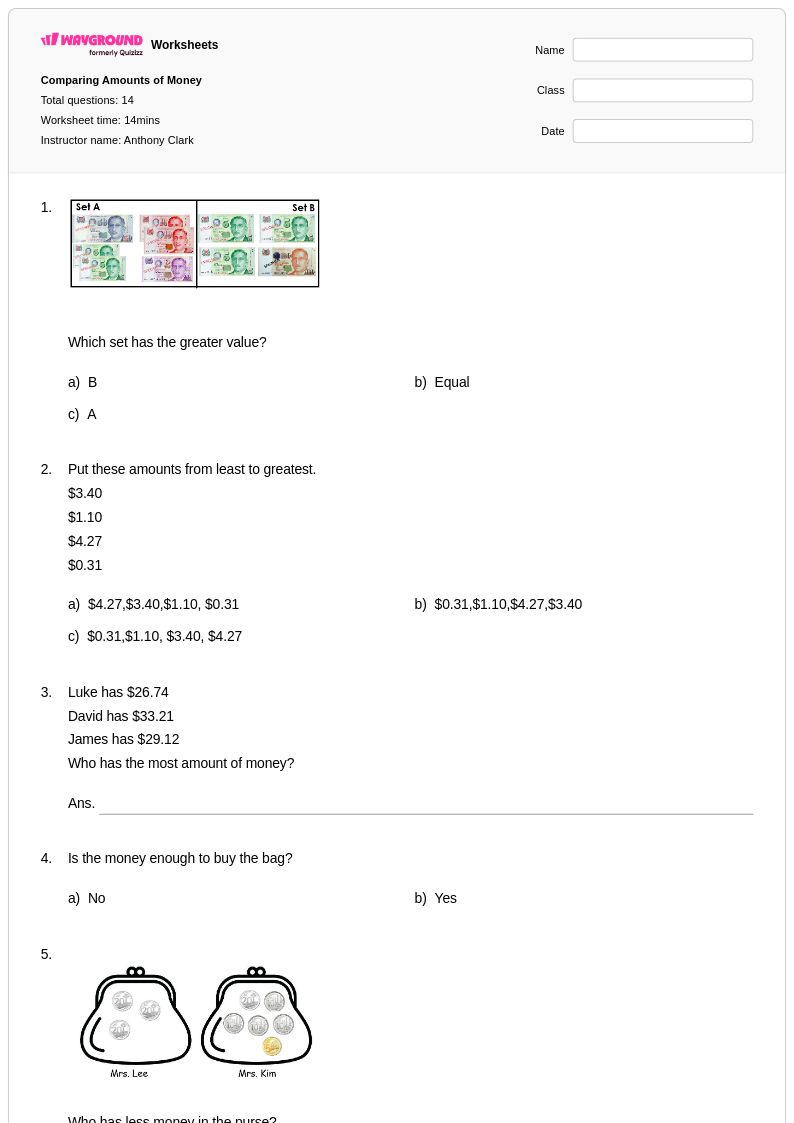
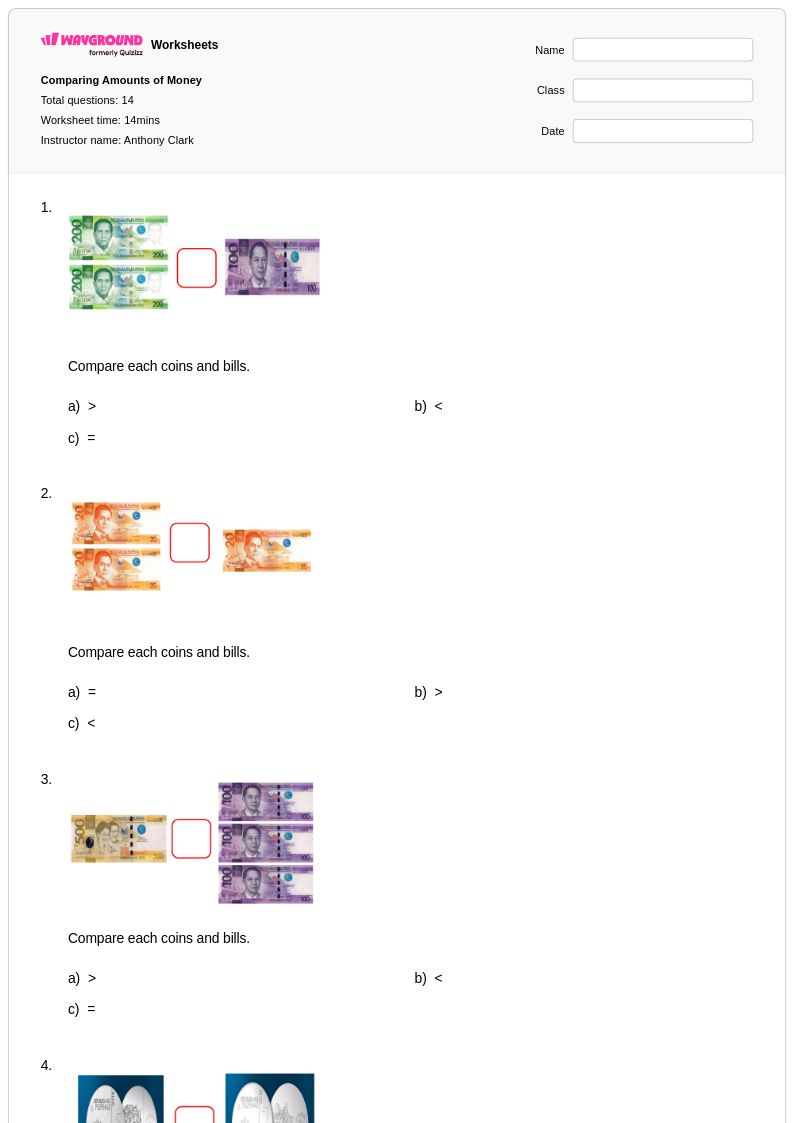
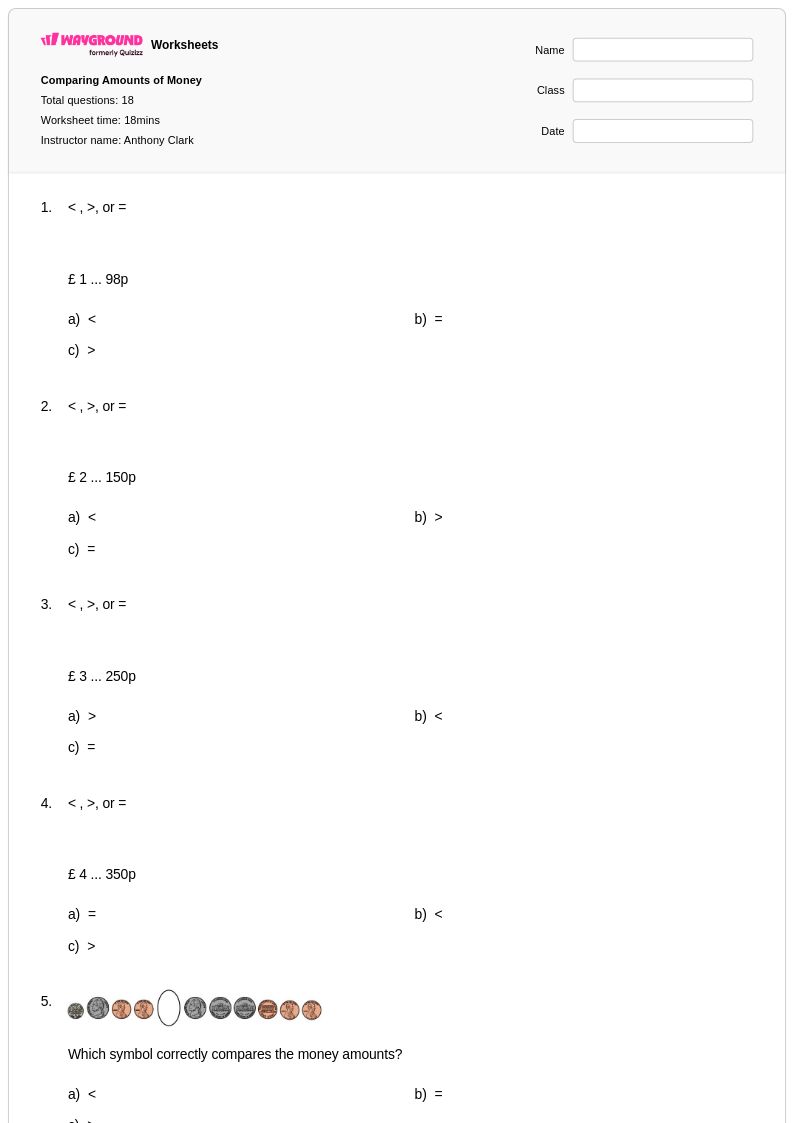
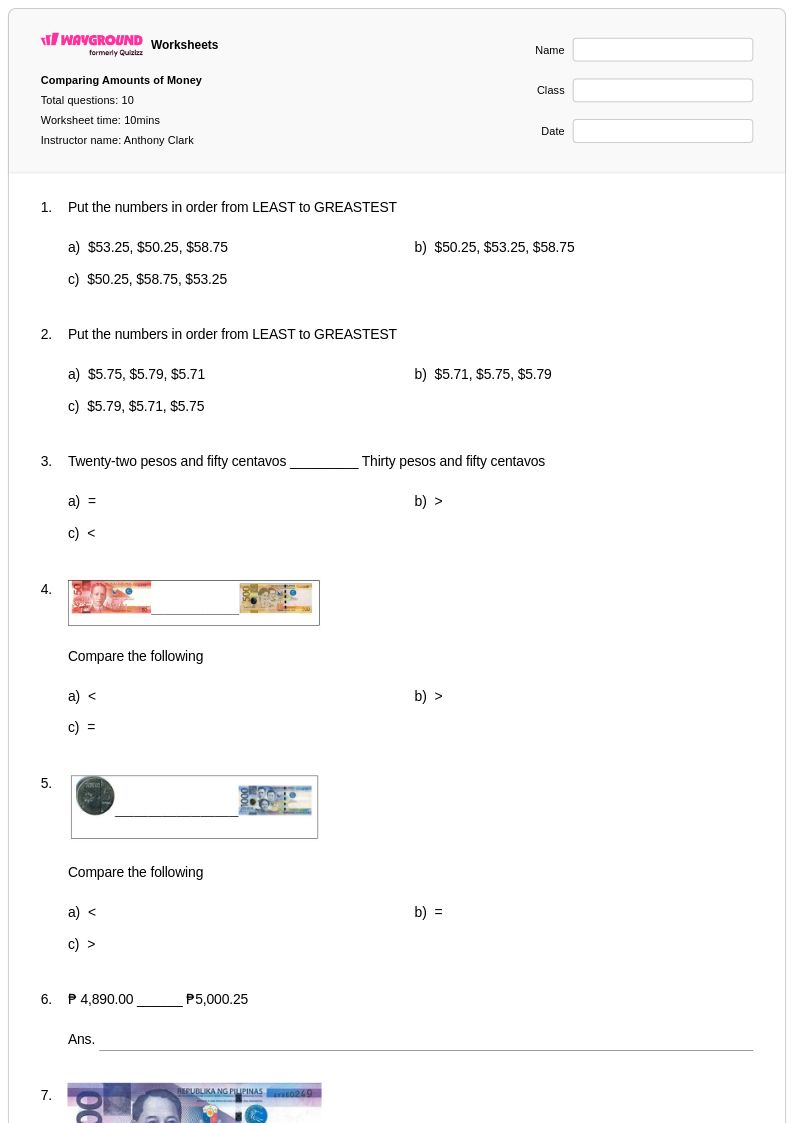
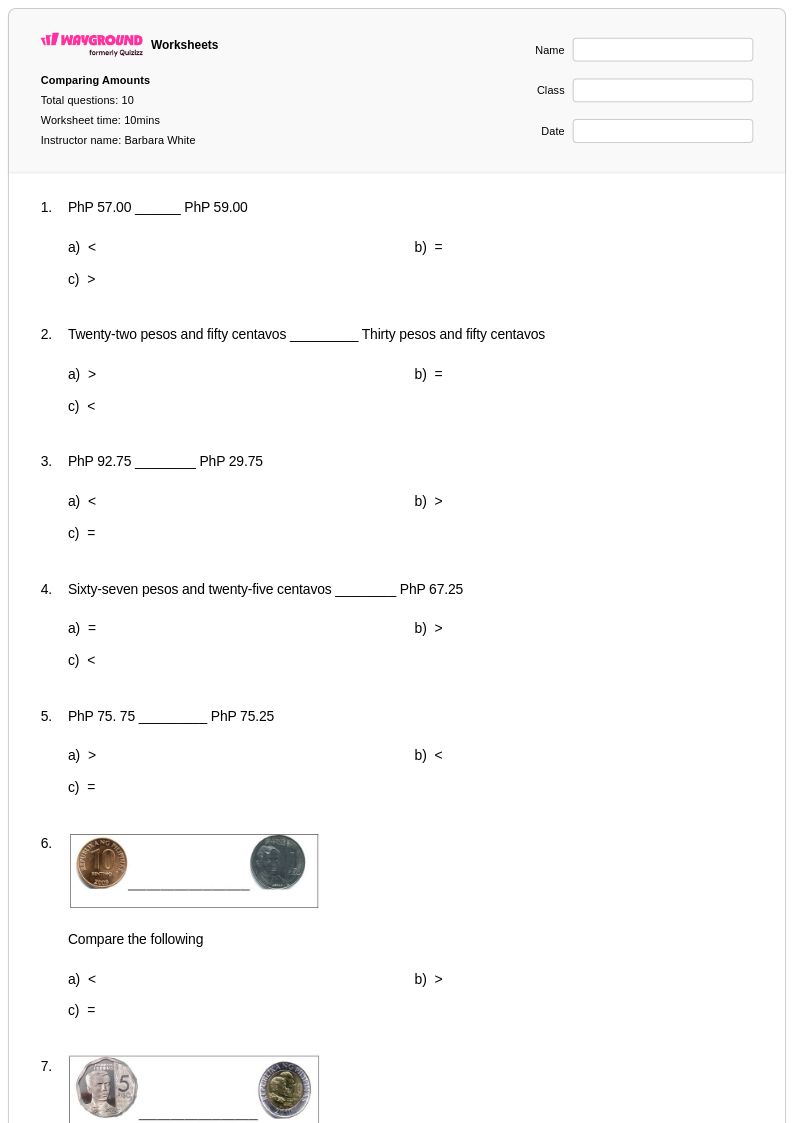
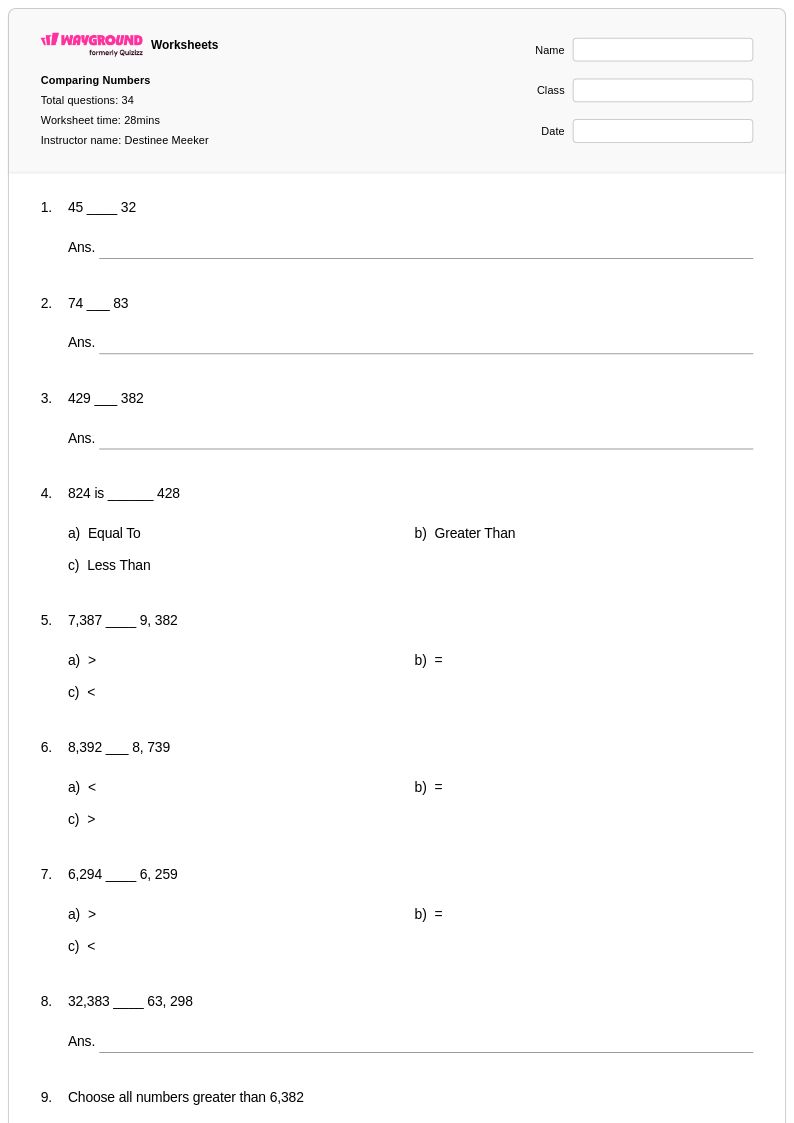
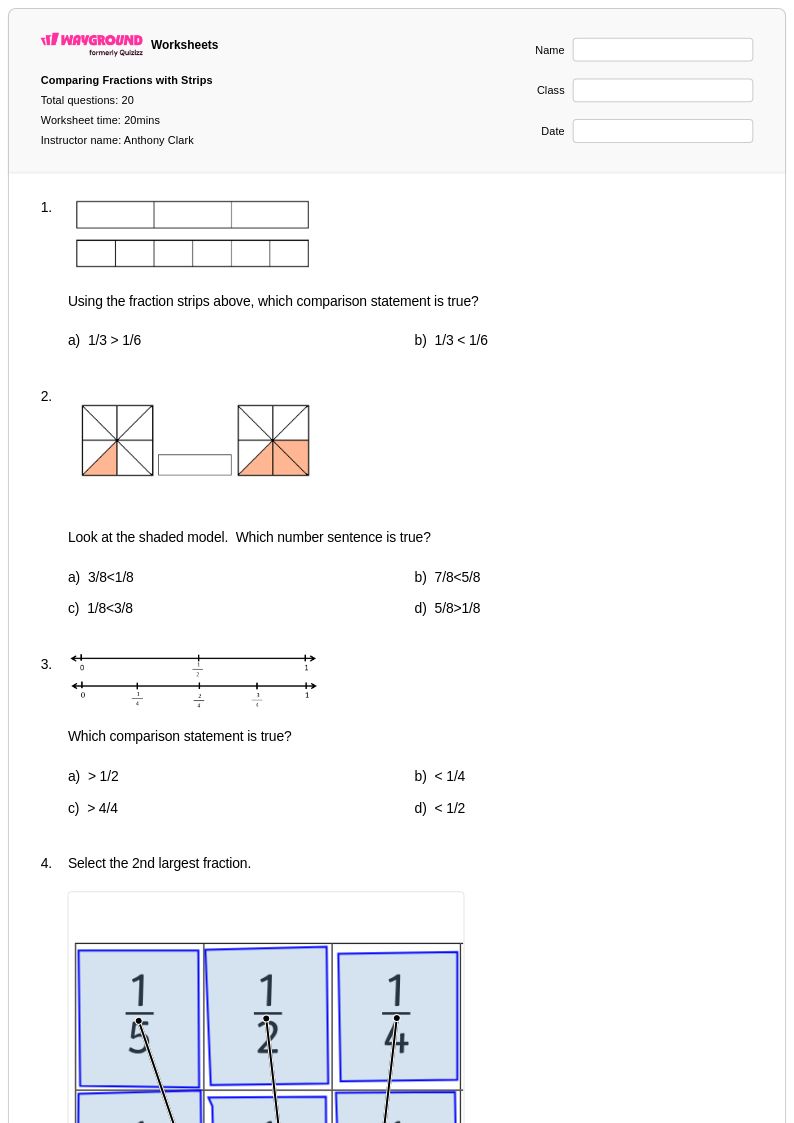
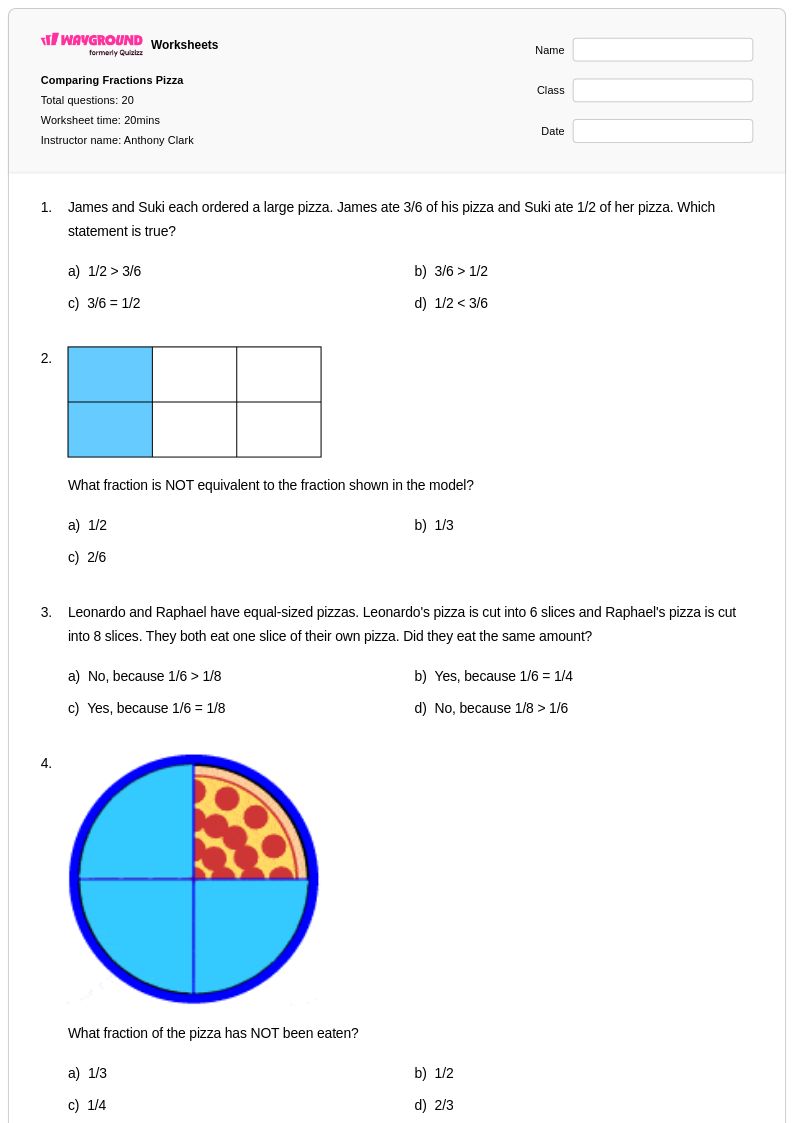
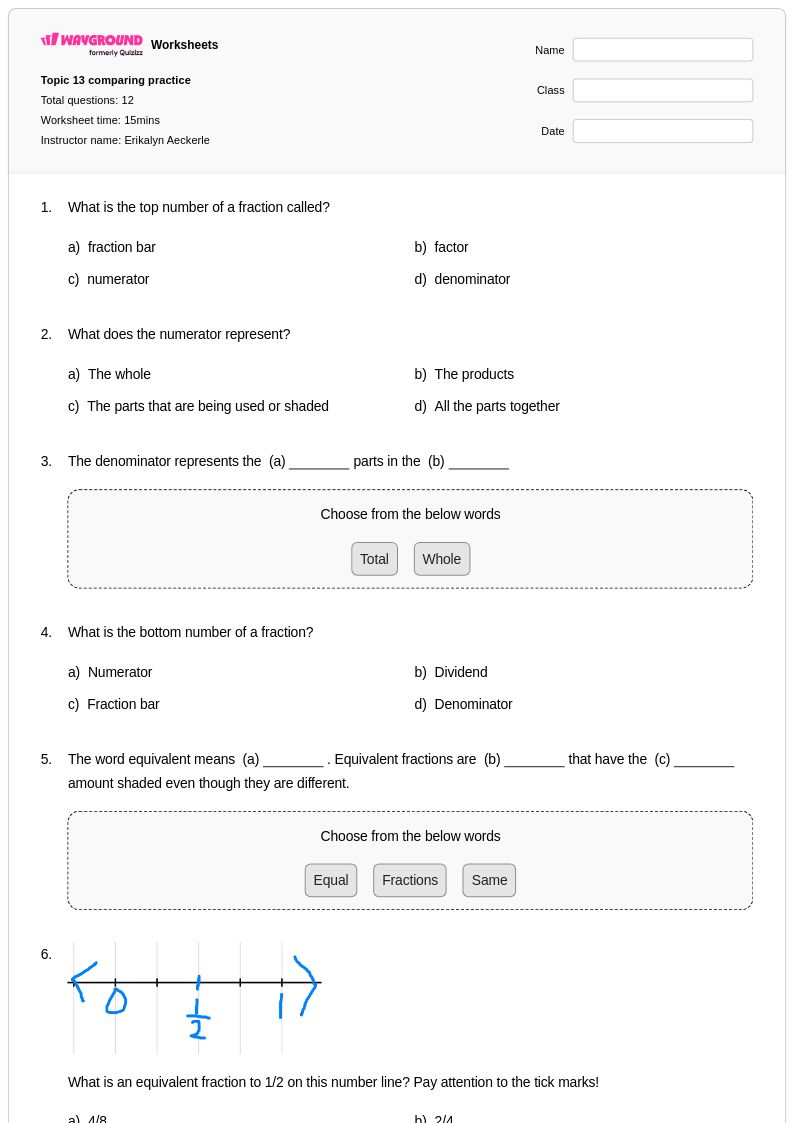
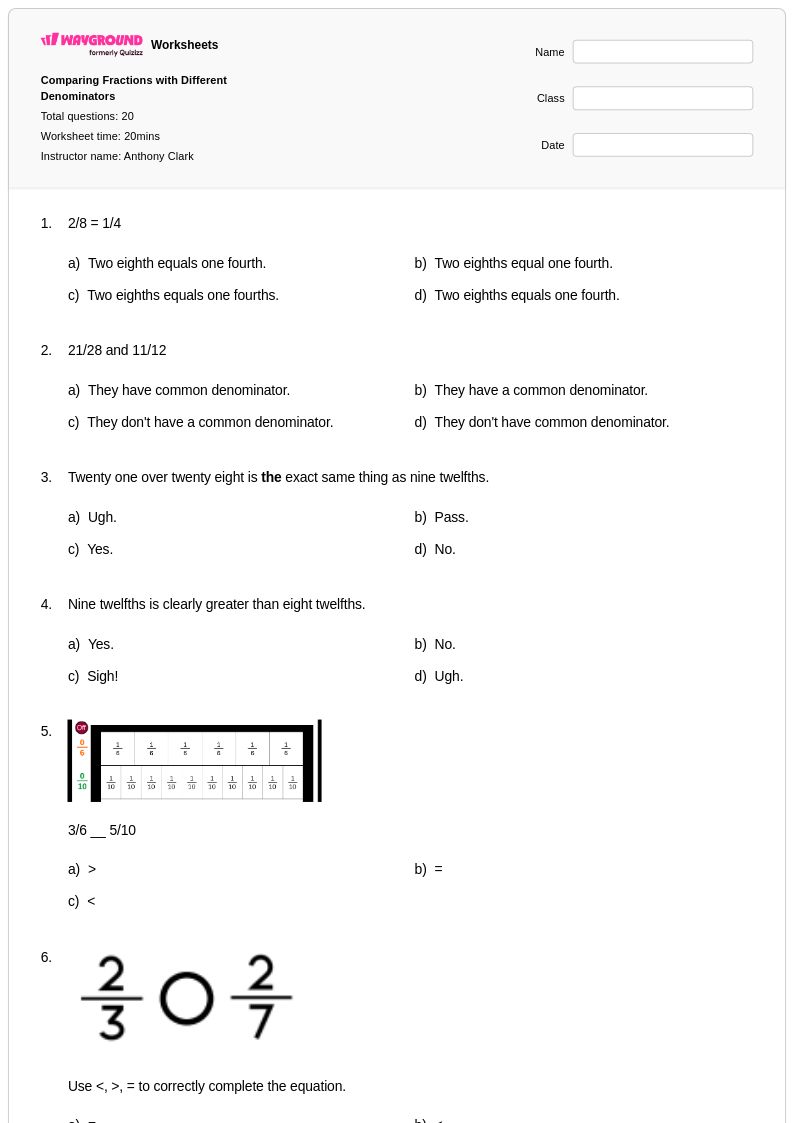
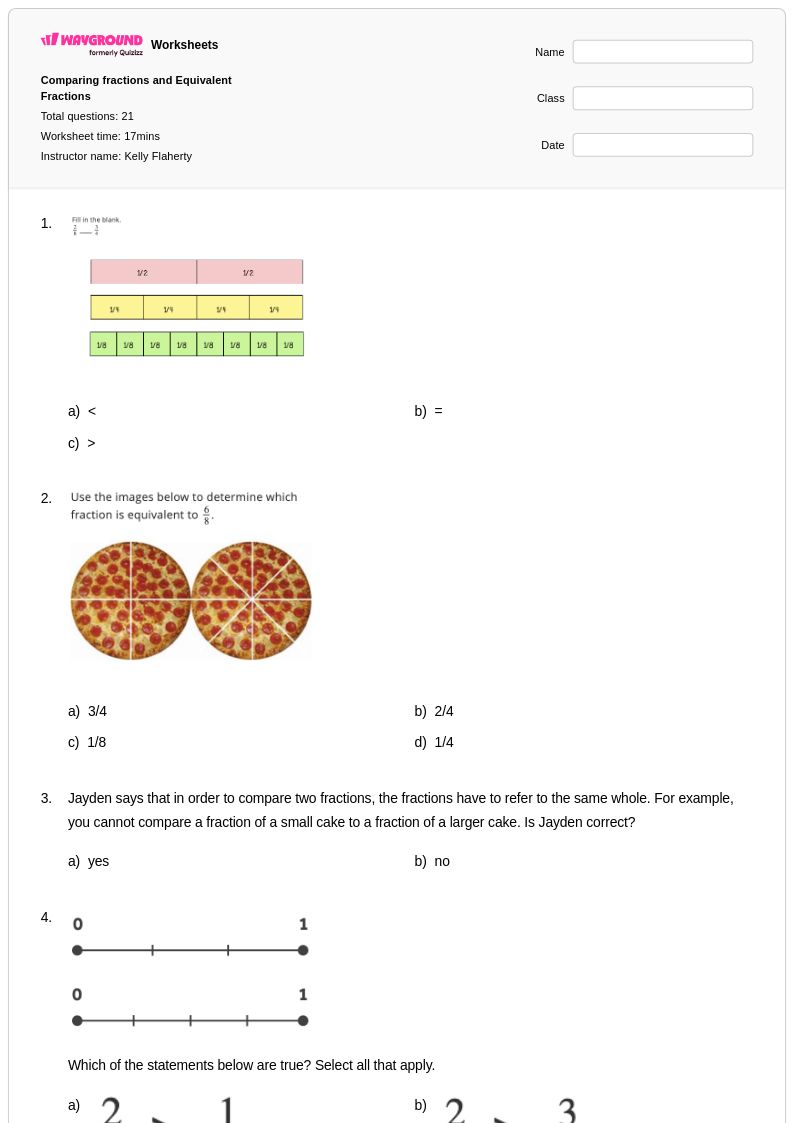
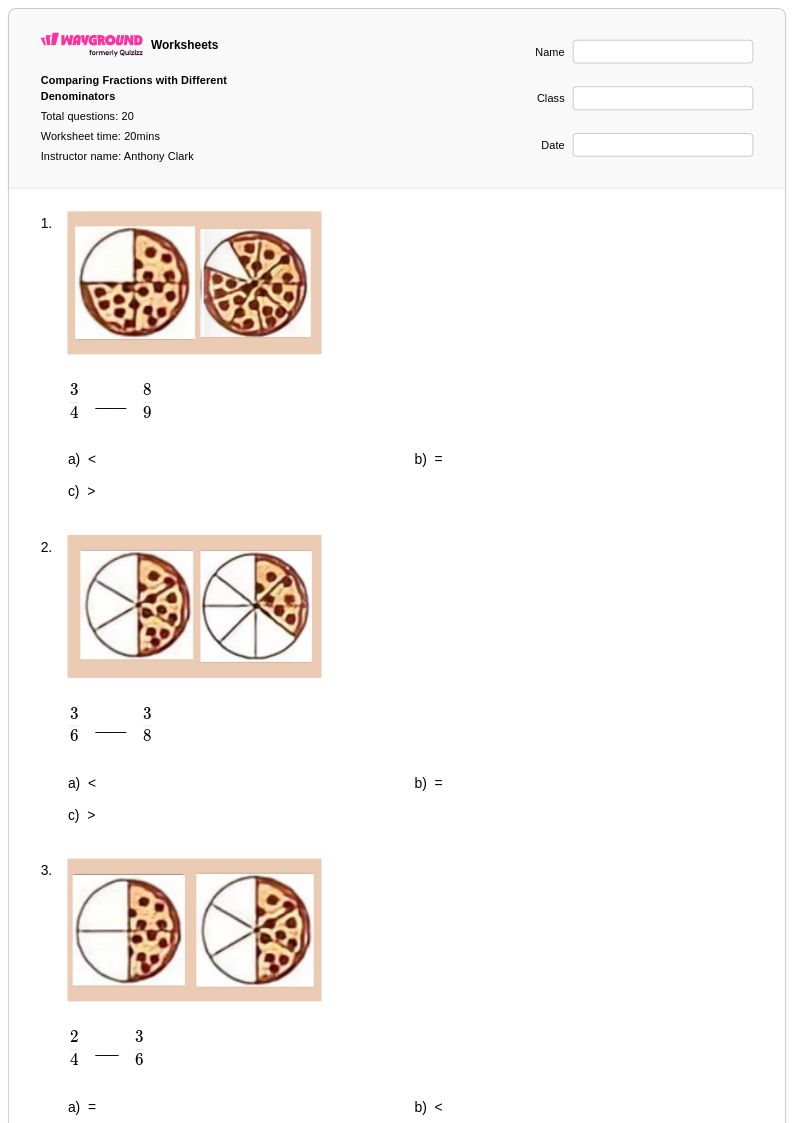
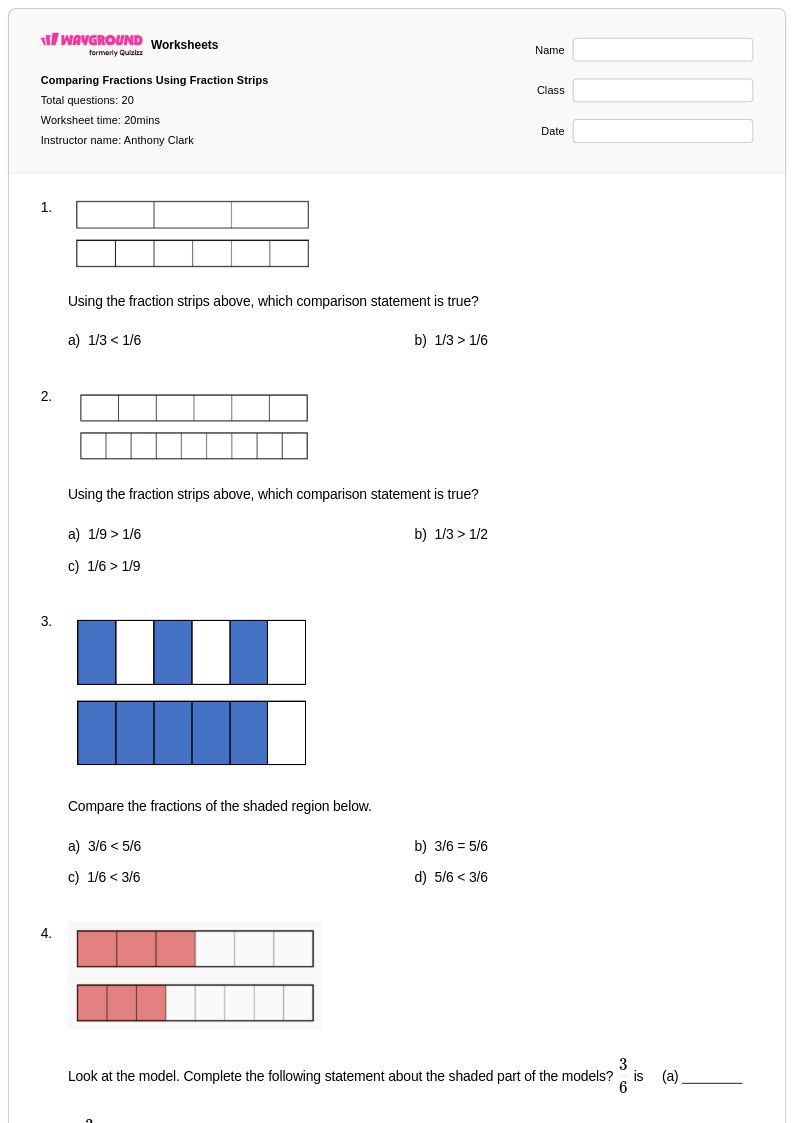
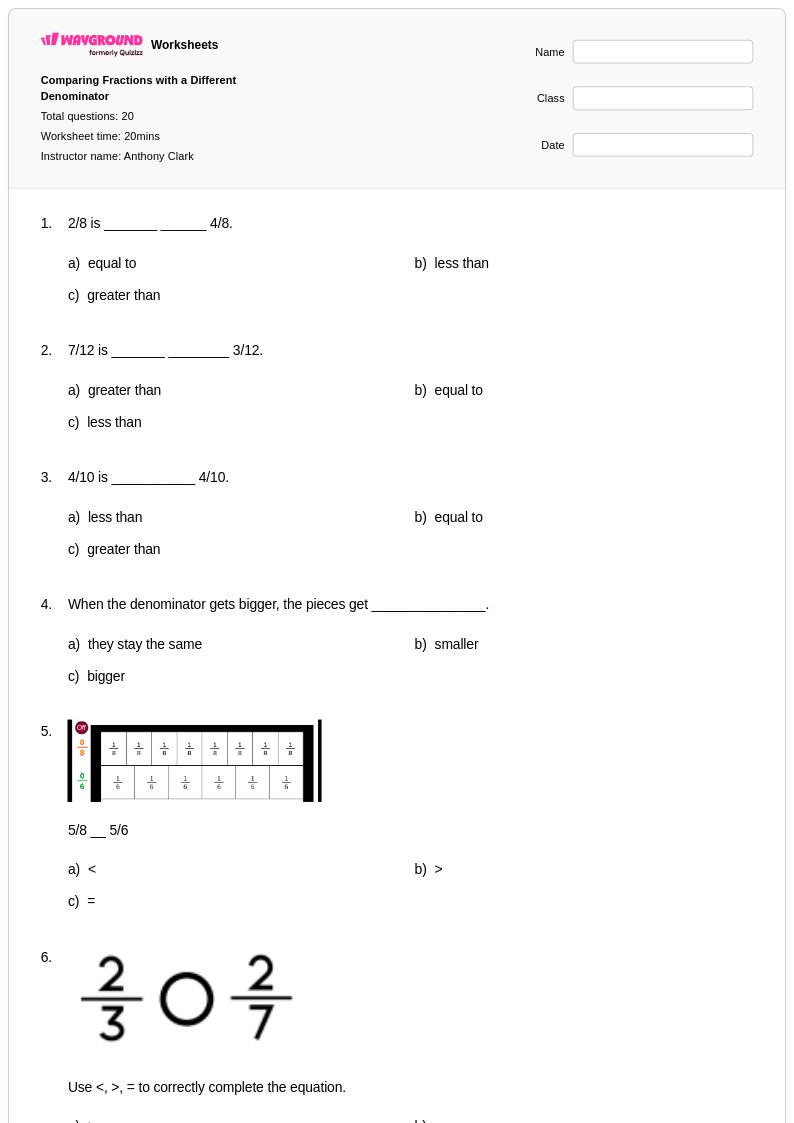
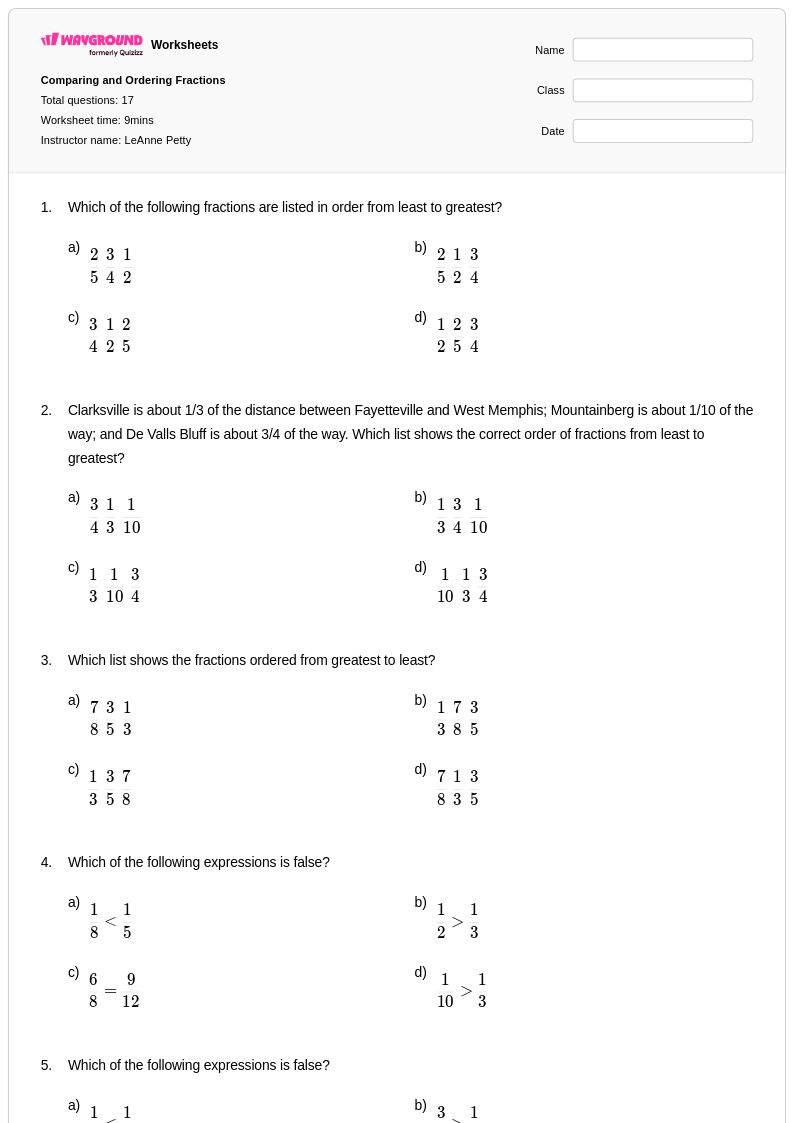
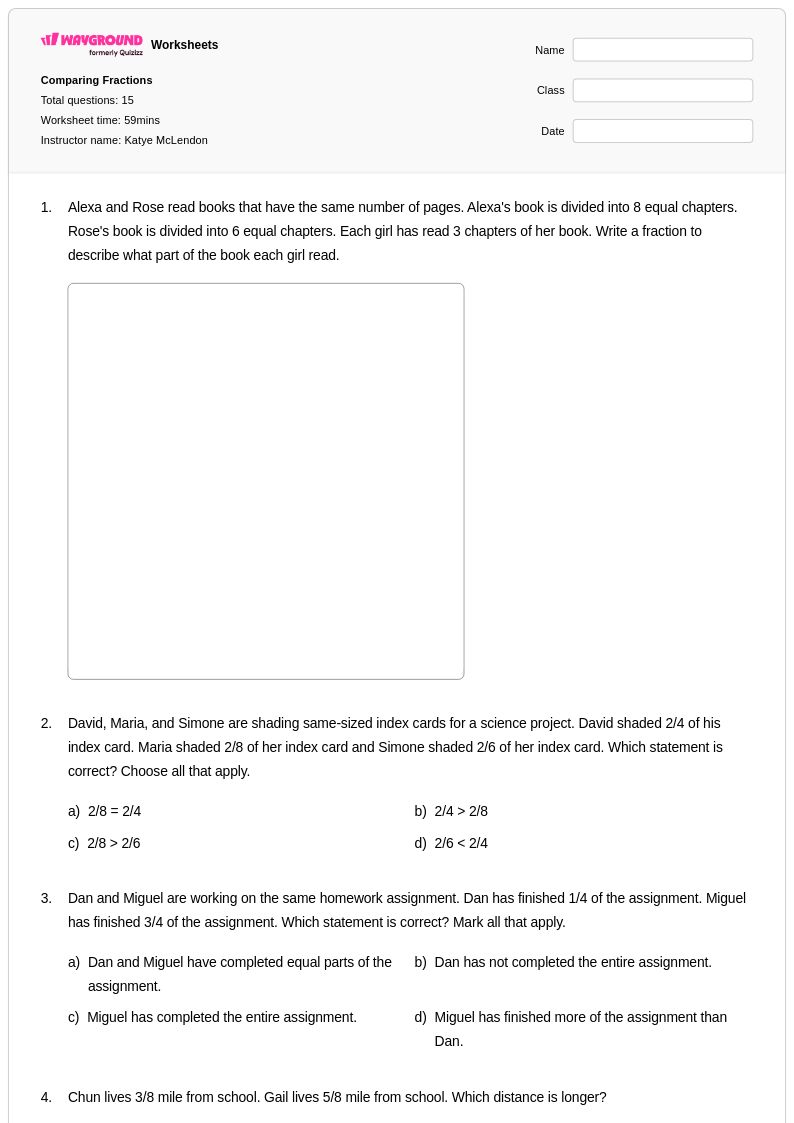
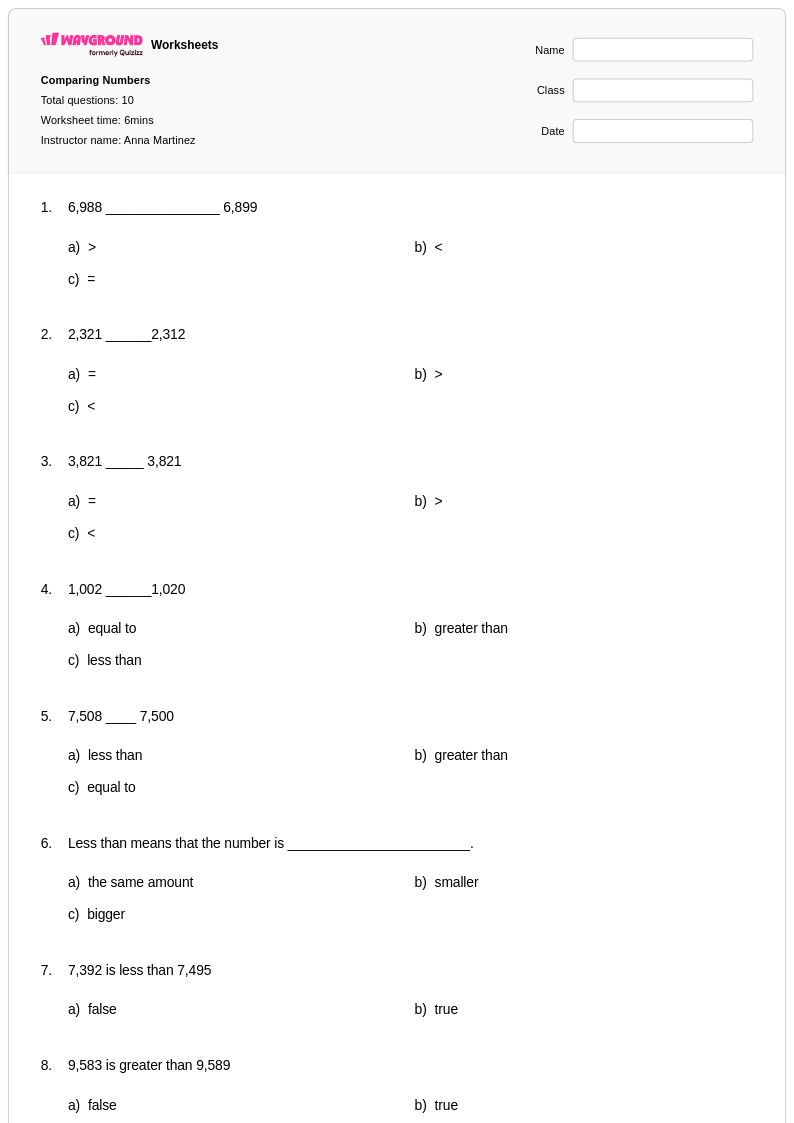
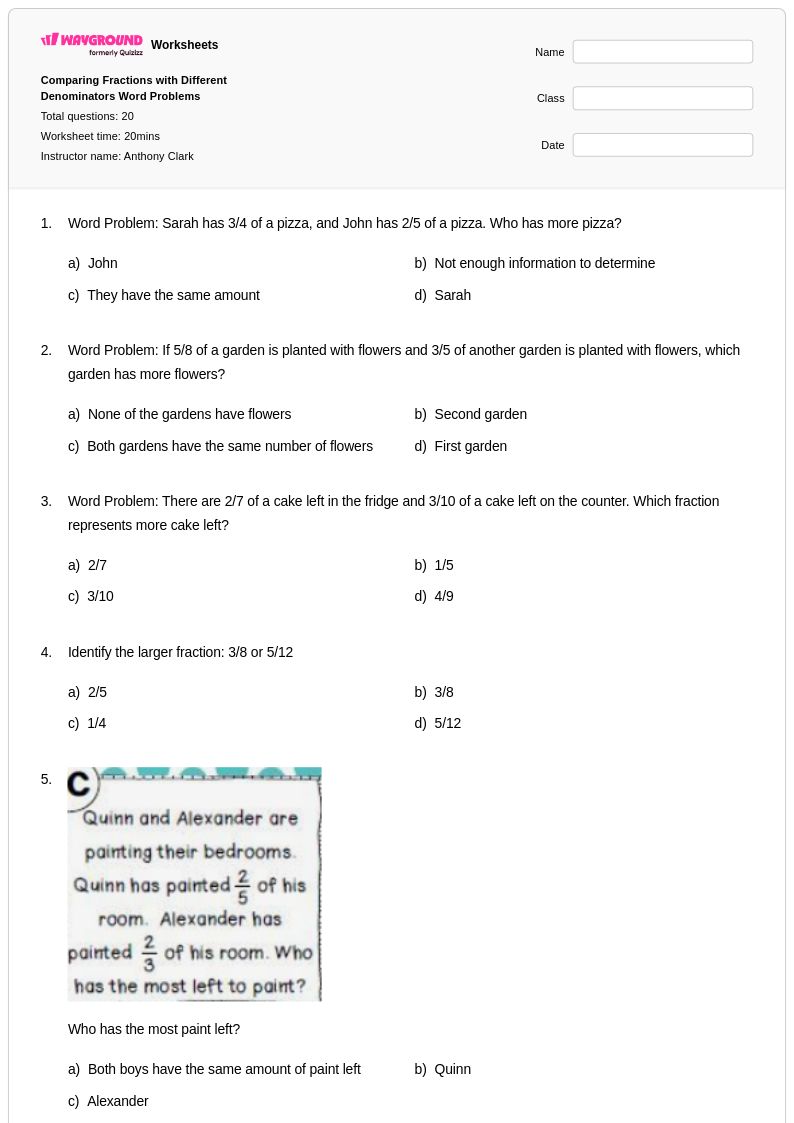
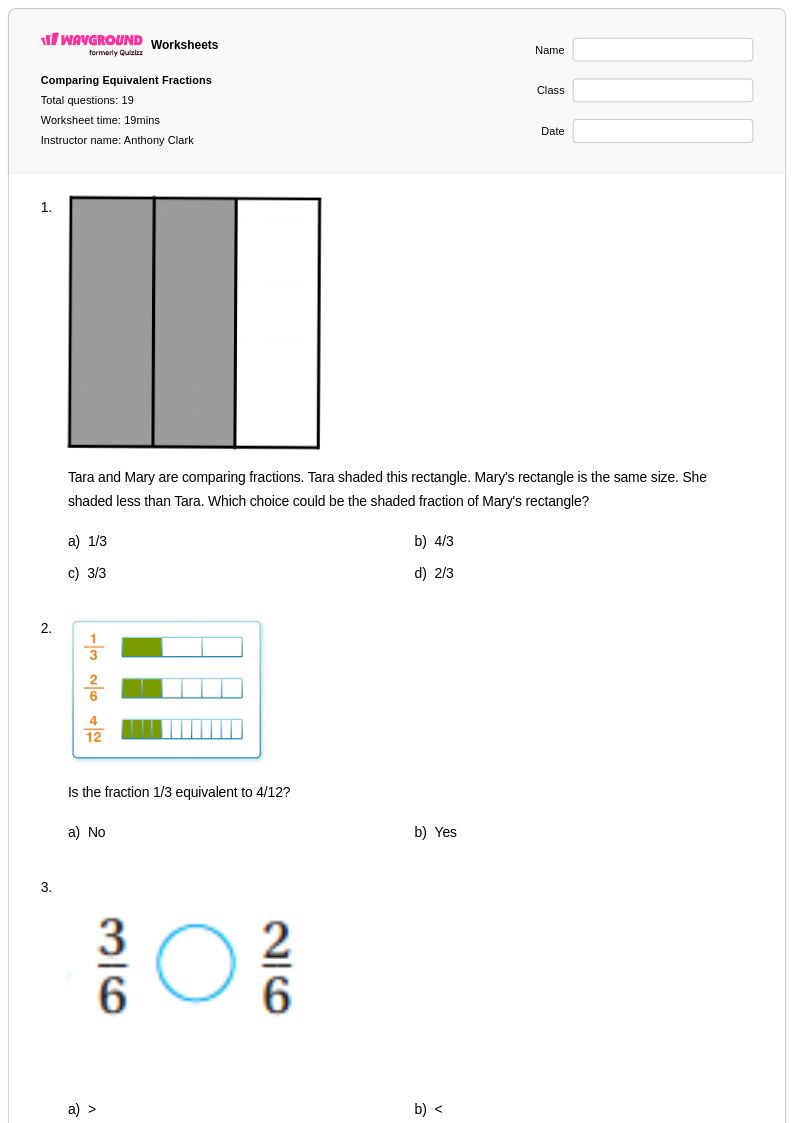
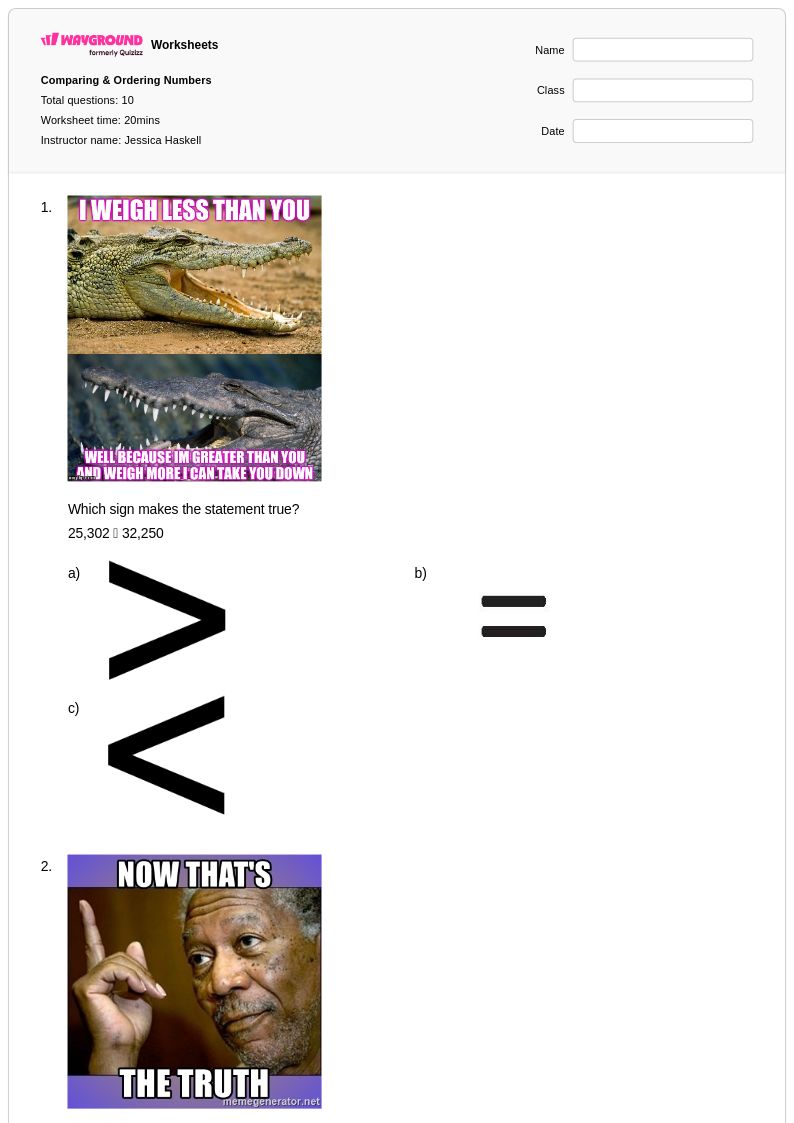
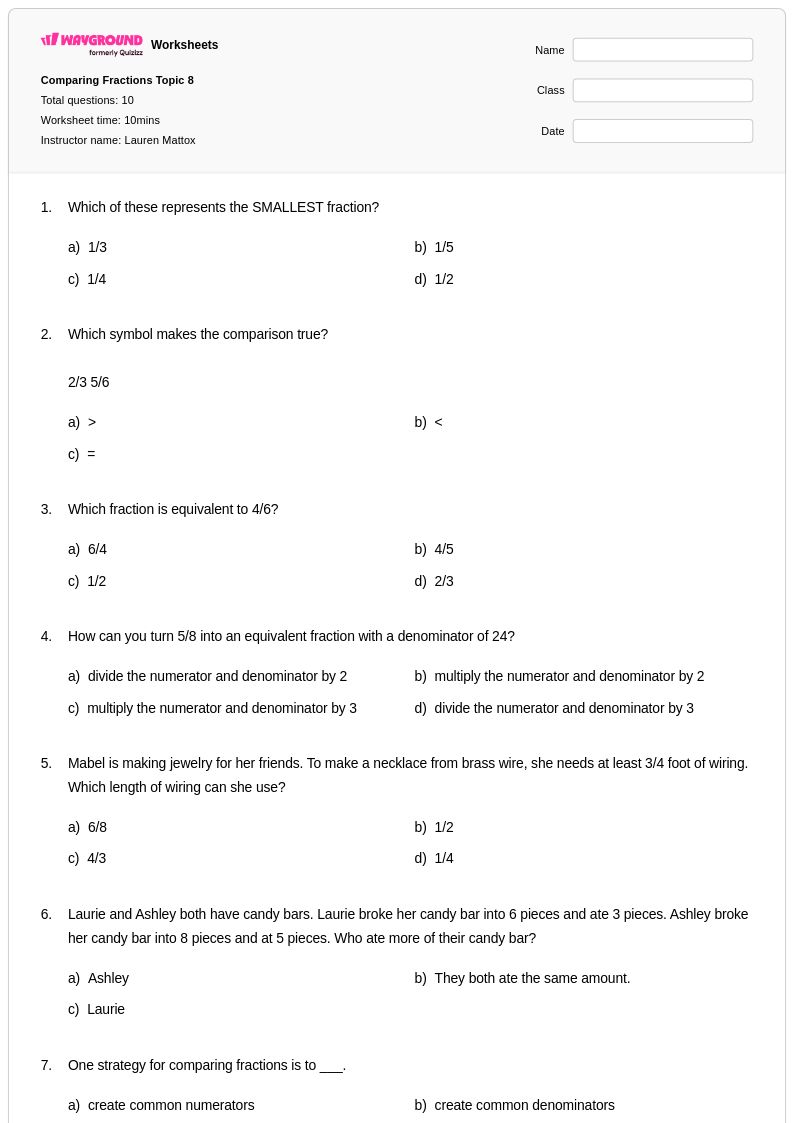
Comparing amount worksheets for Class 3 through Wayground (formerly Quizizz) provide essential practice for young mathematicians developing foundational measurement comparison skills. These comprehensive printables focus on helping students analyze and compare quantities using various units of measurement, including capacity, weight, length, and volume. Students work through engaging practice problems that challenge them to determine which containers hold more liquid, which objects weigh less, or which measurements represent greater amounts. Each worksheet includes a detailed answer key that supports both independent learning and teacher-guided instruction, while the free pdf format ensures easy access for classroom use and home practice.
Wayground (formerly Quizizz) empowers educators with millions of teacher-created comparing amount resources that streamline lesson planning and differentiated instruction for Class 3 mathematics. The platform's robust search and filtering capabilities allow teachers to quickly locate worksheets aligned with specific standards and learning objectives, while customization tools enable modifications to match diverse student needs and abilities. These versatile materials are available in both printable and digital formats, including downloadable pdfs, making them perfect for in-class activities, homework assignments, remediation sessions, and enrichment opportunities. Teachers can efficiently address varying skill levels within their classrooms by selecting from graduated difficulty levels and multiple problem types, ensuring every student receives appropriate challenge and support in mastering measurement comparison concepts.
FAQs
How do I teach comparing amounts in third grade?
Teach students to identify the attribute being compared—such as capacity, weight, length, or volume—and then examine the numerical value and unit. Use real containers and objects before moving to diagrams and word problems, and require students to justify comparisons with measurements rather than appearance.
What exercises help third graders practice comparing amounts?
Grade 3 practice should include ordering measurements, comparing container capacities, identifying heavier or lighter objects, and solving word problems involving greater or lesser amounts. Include problems with varied representations so students must interpret labels, units, diagrams, and numerical measurements.
What mistakes do Grade 3 students make when comparing amounts?
Students may compare numerical values without accounting for units, confuse capacity with the current amount of liquid in a container, or assume a taller object has greater volume. They should first identify the measured attribute, confirm compatible units, and then explain the comparison using the given data.
How can I use Wayground Grade 3 comparing amount worksheets?
Wayground worksheets are available as printable PDFs and digital formats, so teachers can host them as digital quizzes or print them for guided practice, homework, remediation, enrichment, or off-screen work. Every worksheet includes a complete answer key. Teachers can grade physical submissions by scanning or capturing the completed worksheets with the Wayground for Teachers app.
How does comparing amounts in Grade 3 align with Common Core math?
Comparing measured amounts supports Common Core's Grade 3 emphasis on solving problems involving quantities such as mass, volume, length, and capacity-related contexts. Students extend earlier measurement skills by interpreting units, comparing values, and applying quantitative reasoning in multi-step situations.
How can I differentiate comparing amount practice in Grade 3?
Students needing support can work with one measurement attribute and consistent units, while advanced learners can compare multiple quantities, interpret less familiar representations, or justify solutions in writing. Wayground provides extended time, Read Aloud, reduced answer choices, and reading mode, and teachers can create alternate worksheet versions with adjusted spacing, larger text, a dyslexia-friendly font, or translation.
What comparing amount skills are expected in Grade 3?
Grade 3 students compare and order quantities involving measurements such as length, weight, capacity, and volume. They are expected to interpret units, use numerical evidence, and solve comparison problems that may require more than one reasoning step.