Free Printable Customary Capacity Worksheets for Class 3
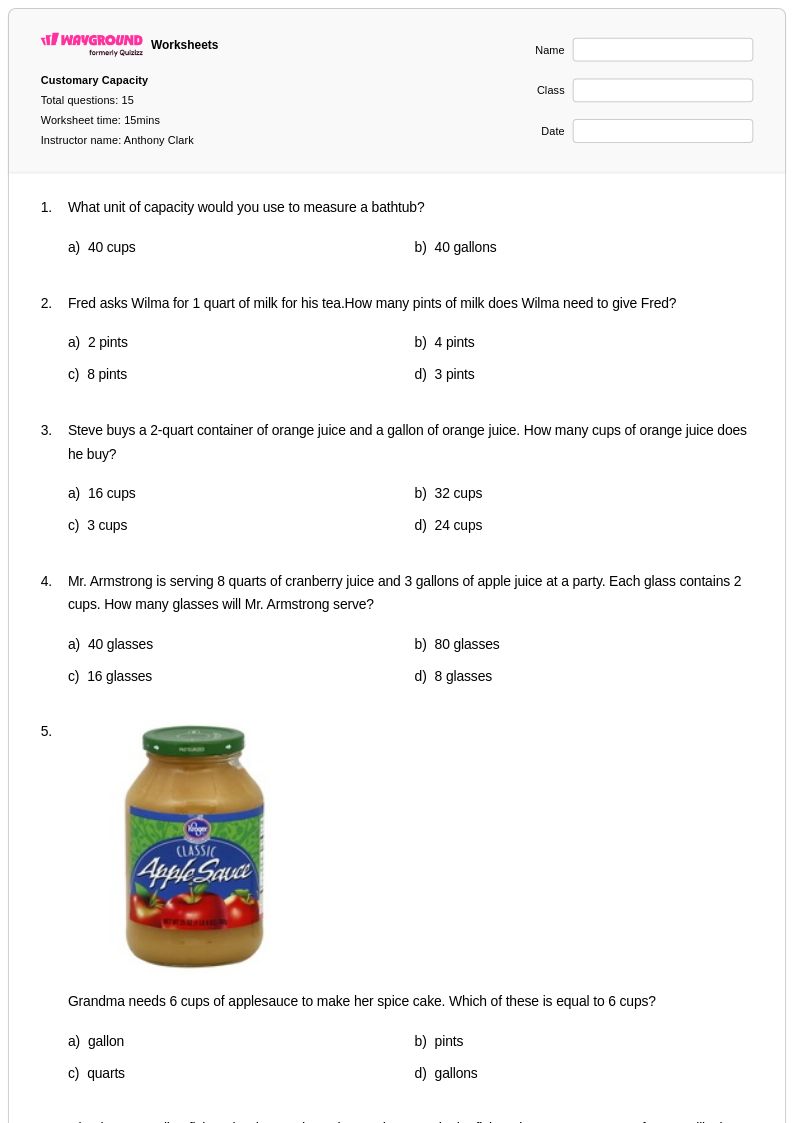
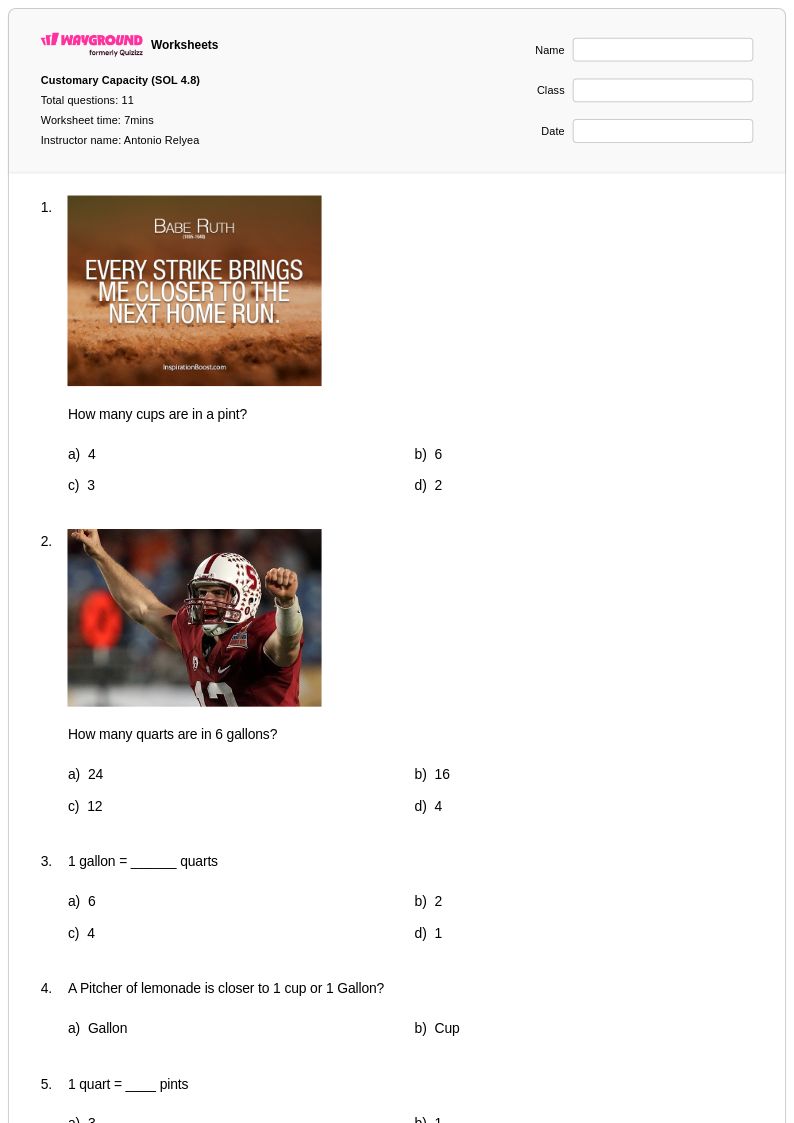
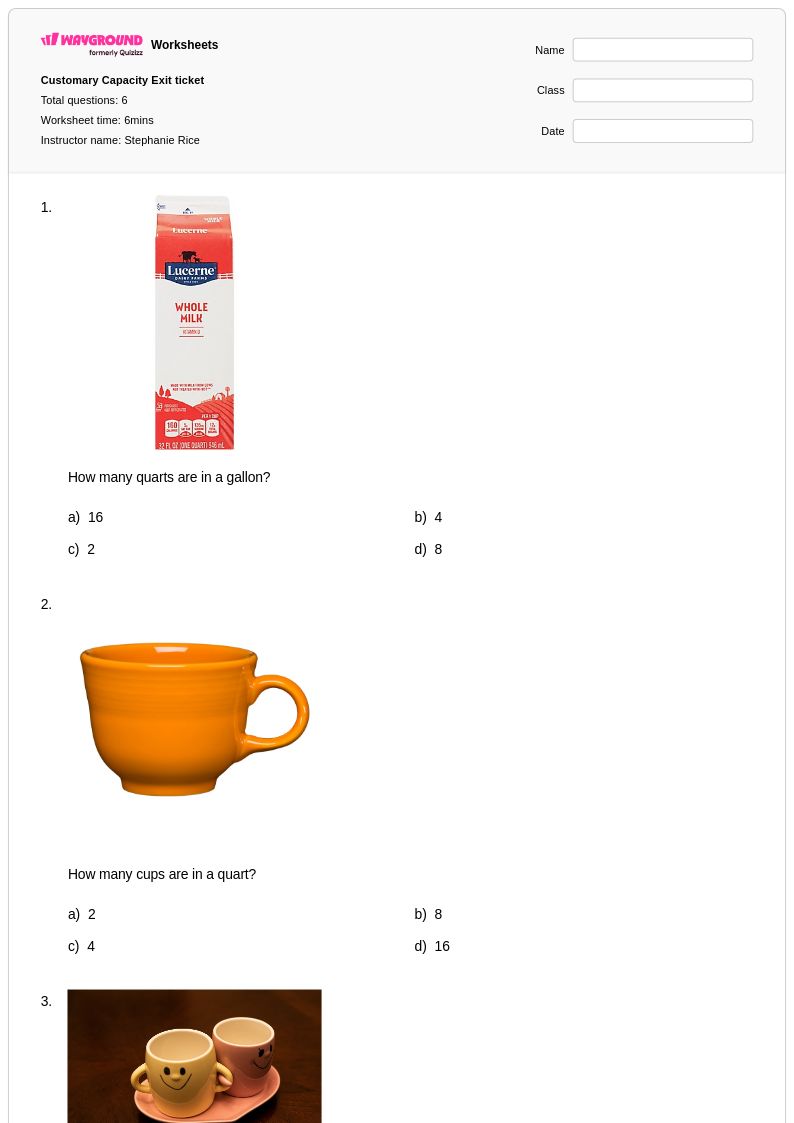
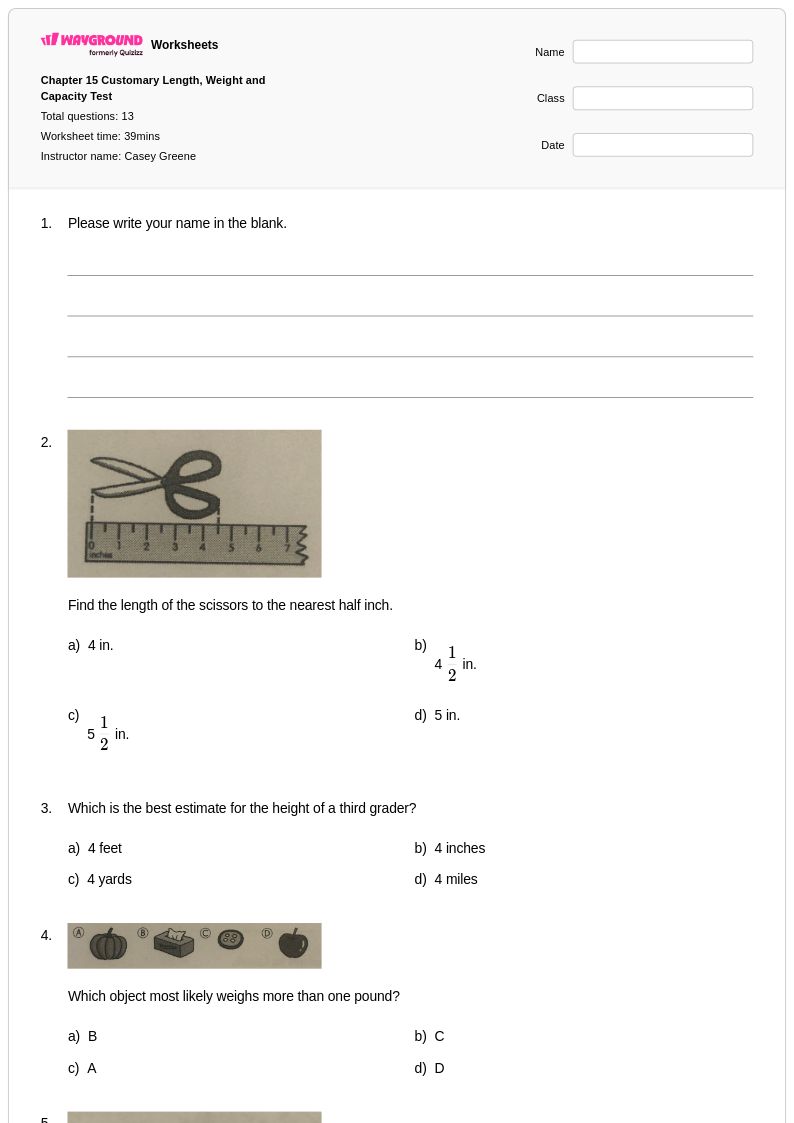
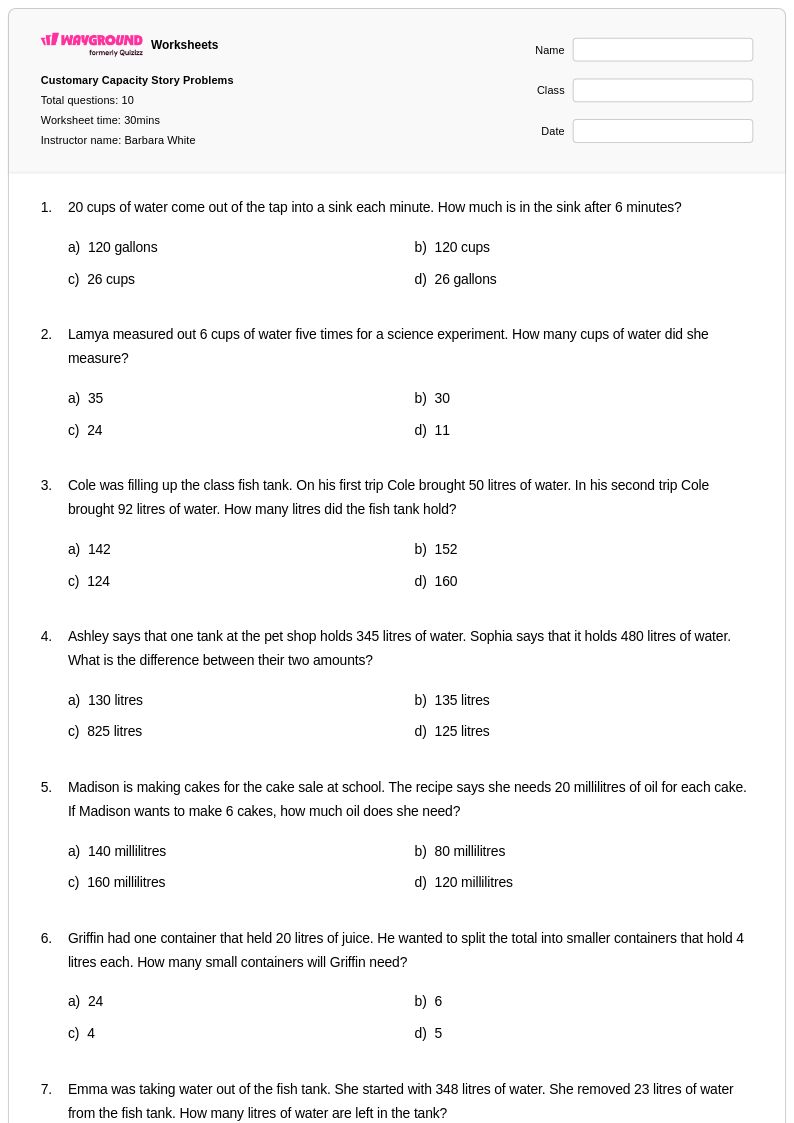
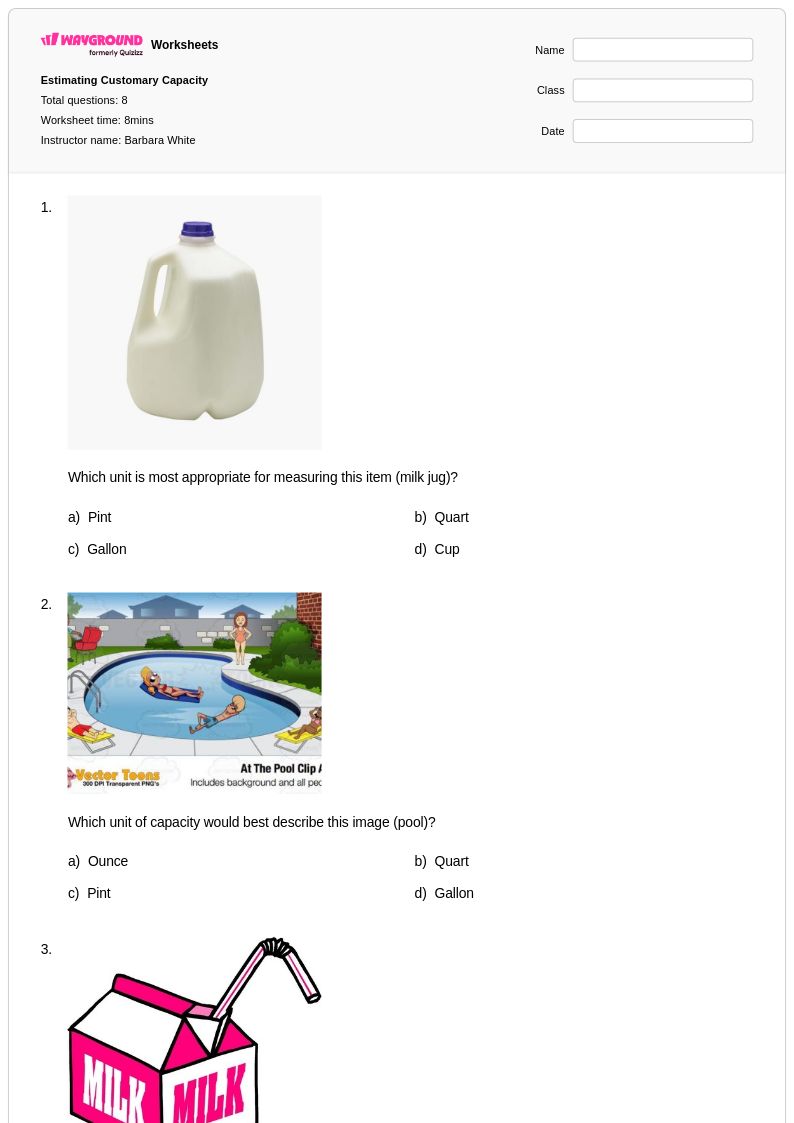
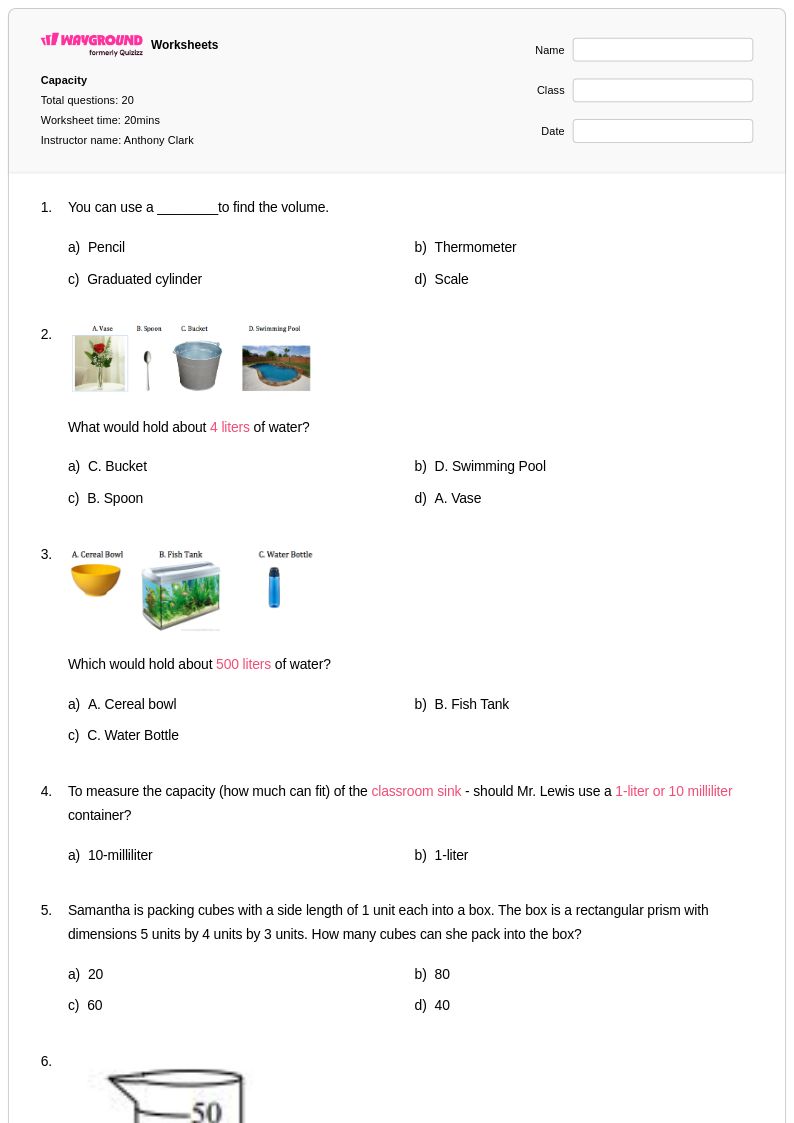
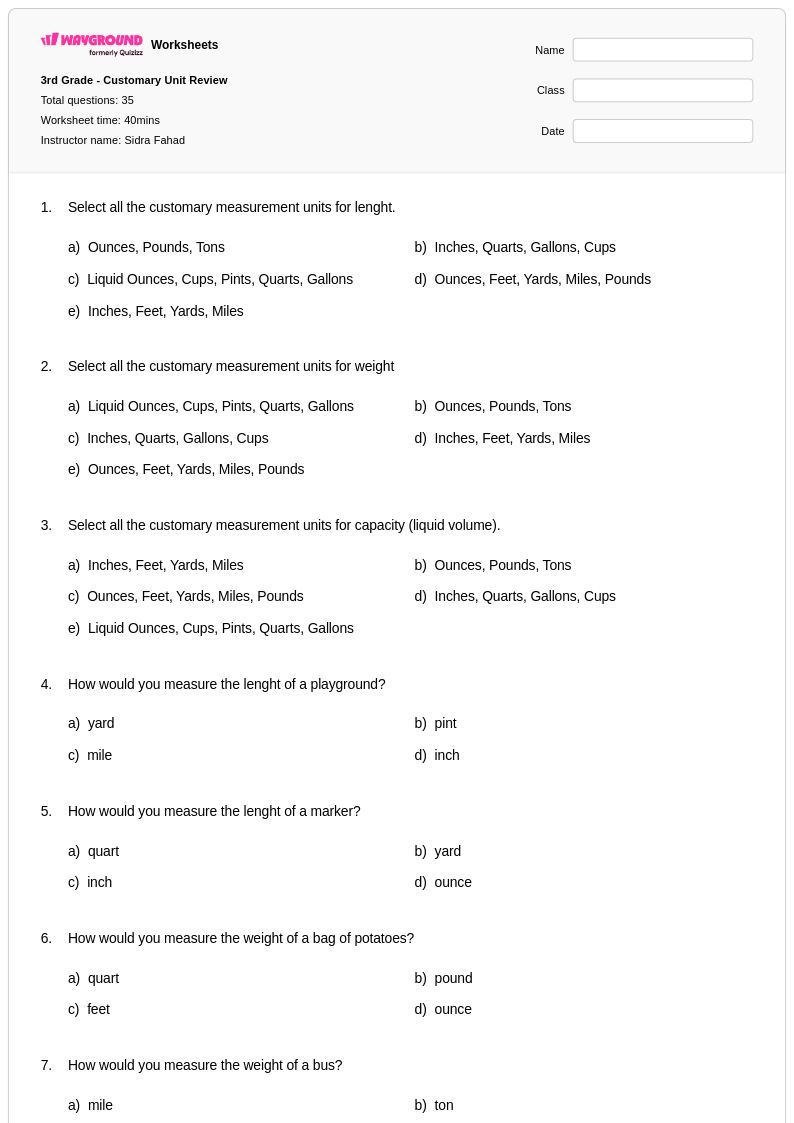
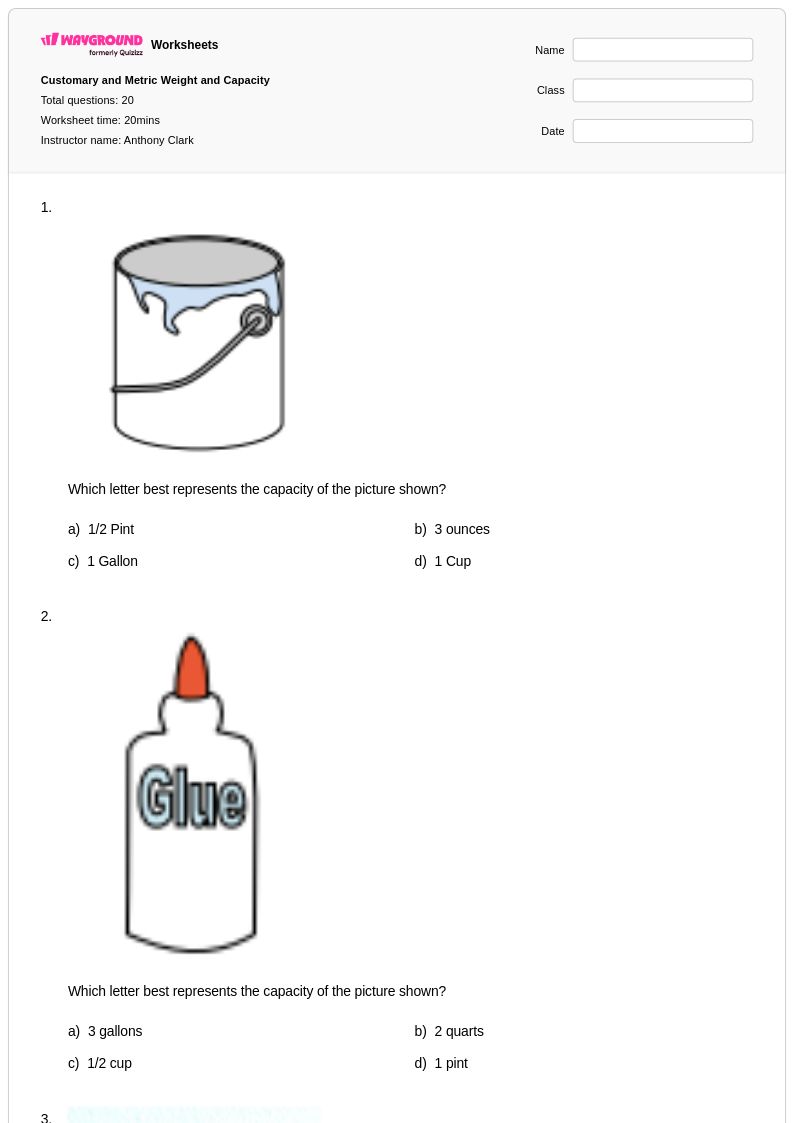
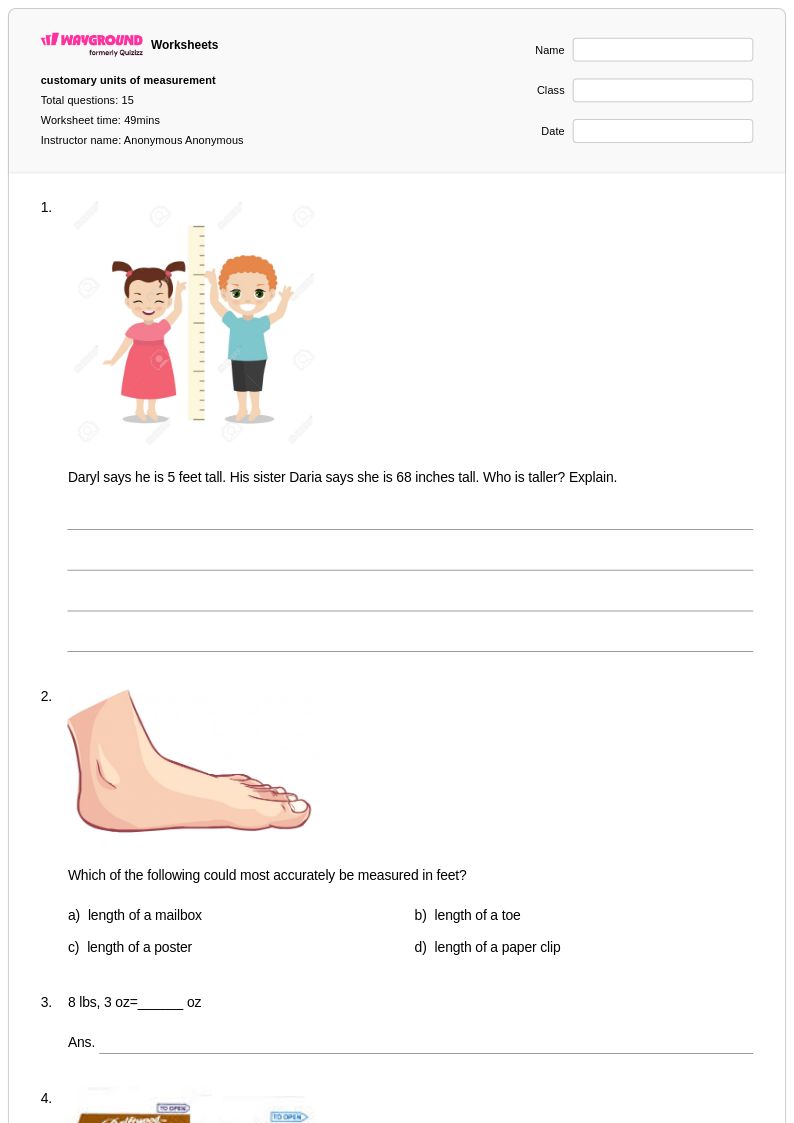
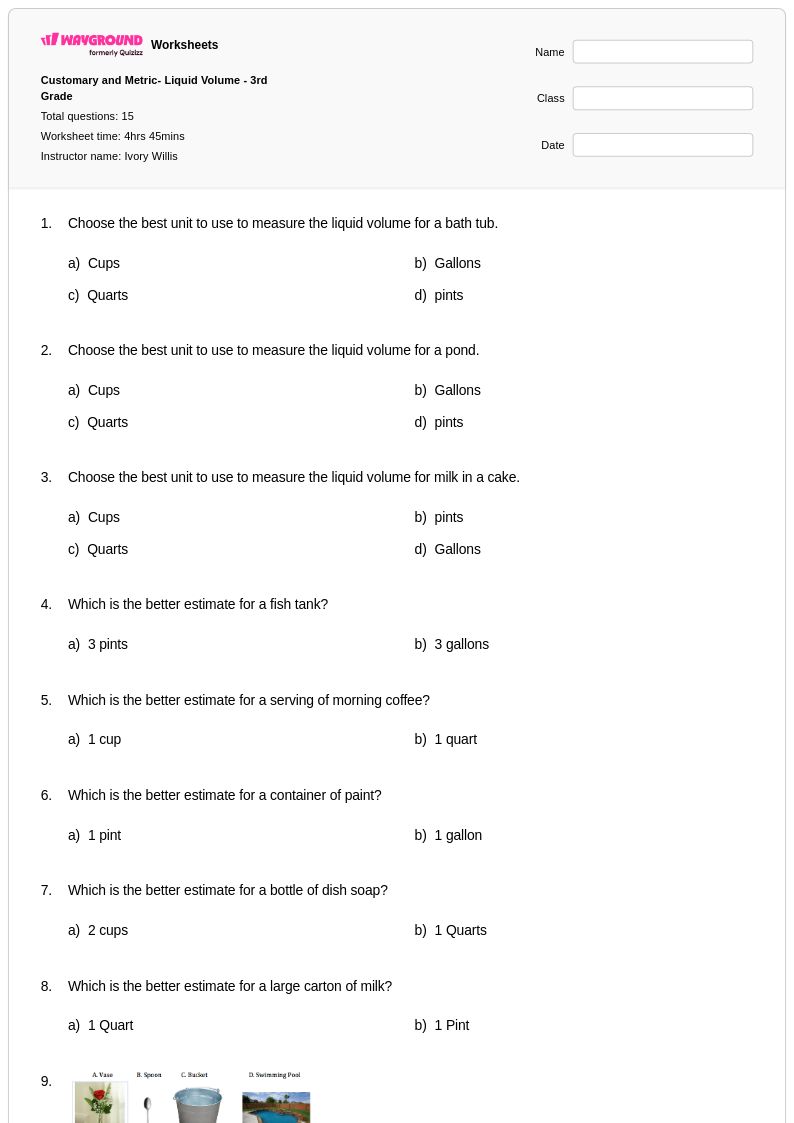
Wayground's free Class 3 customary capacity worksheets provide printable PDF practice problems with answer keys to help students master measuring liquid volume using cups, pints, quarts, and gallons.
Explore printable Customary Capacity worksheets for Class 3
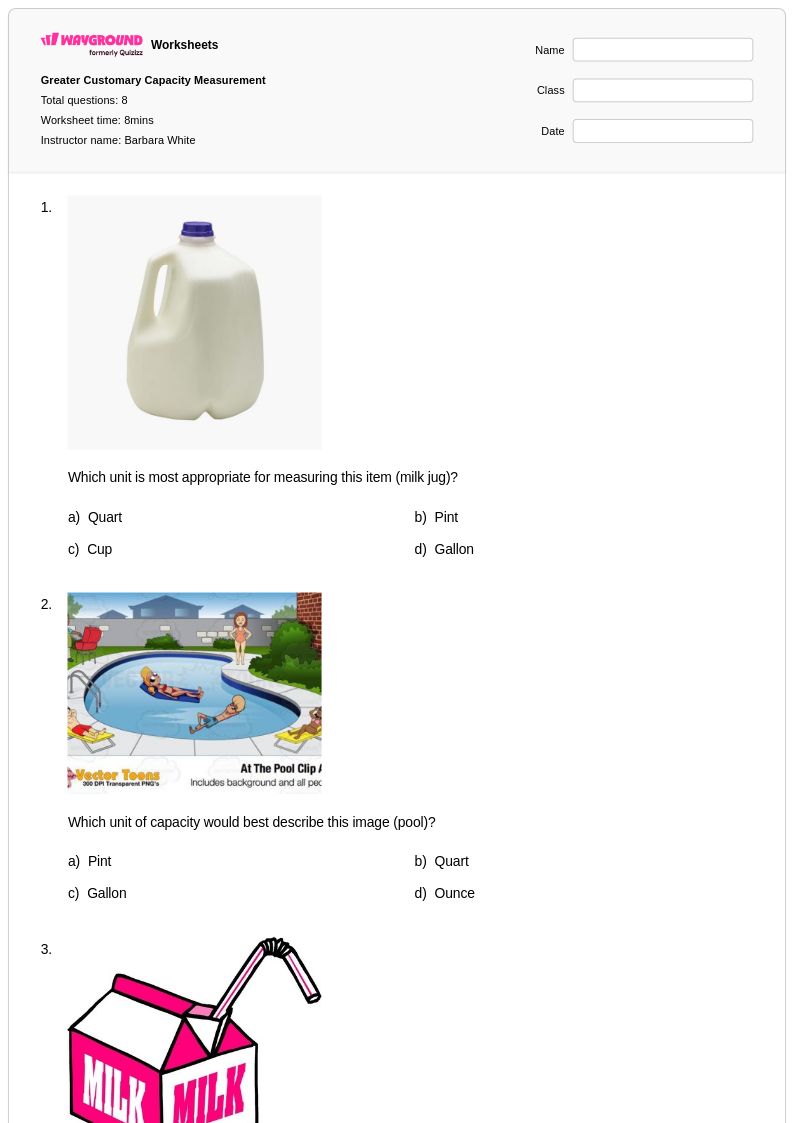
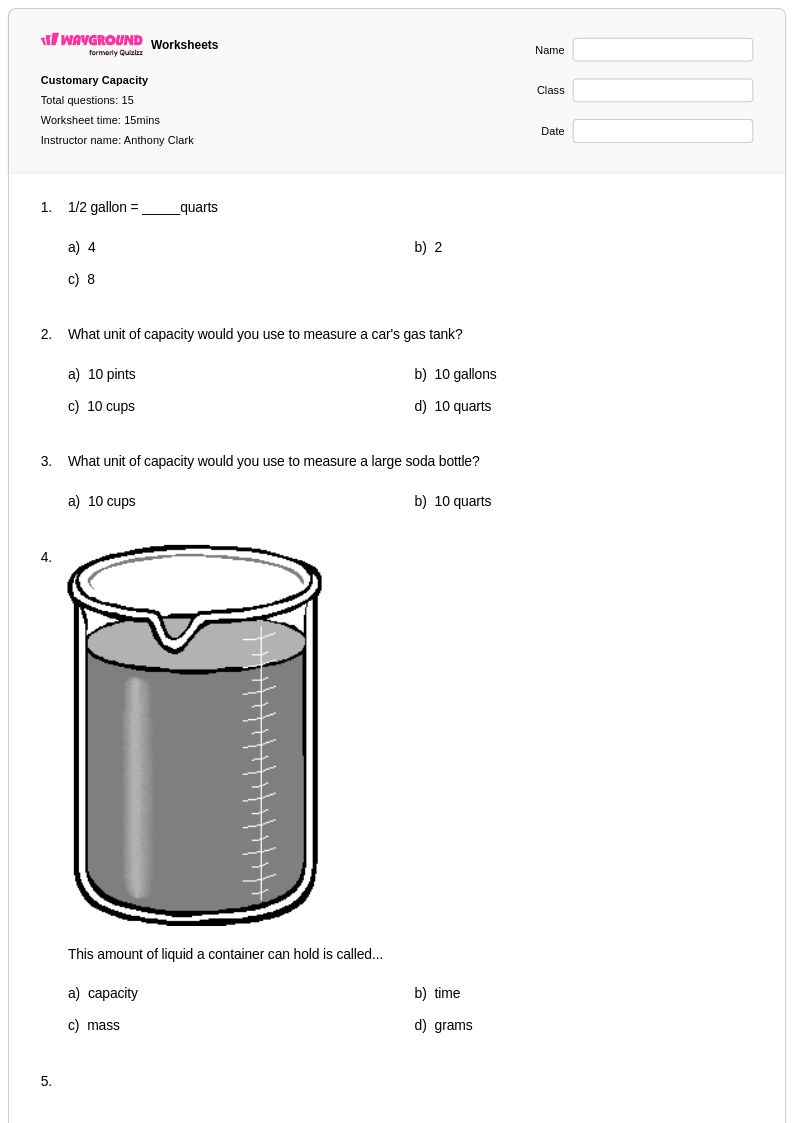
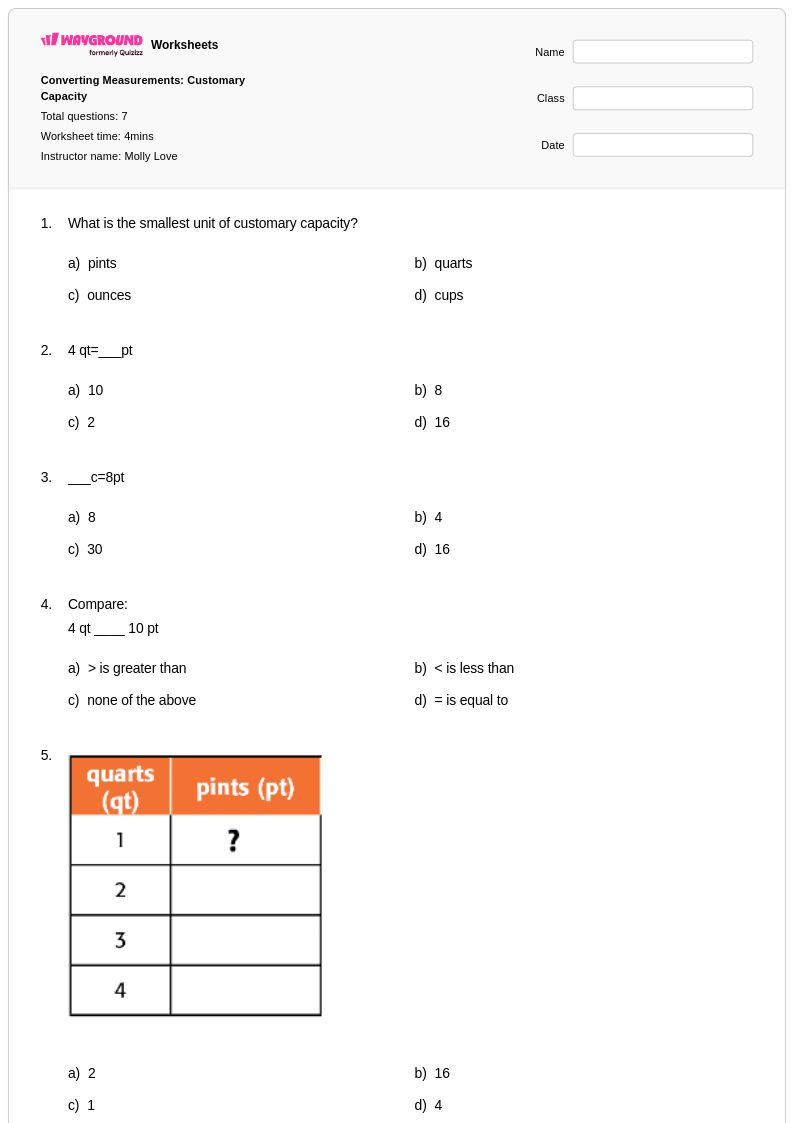
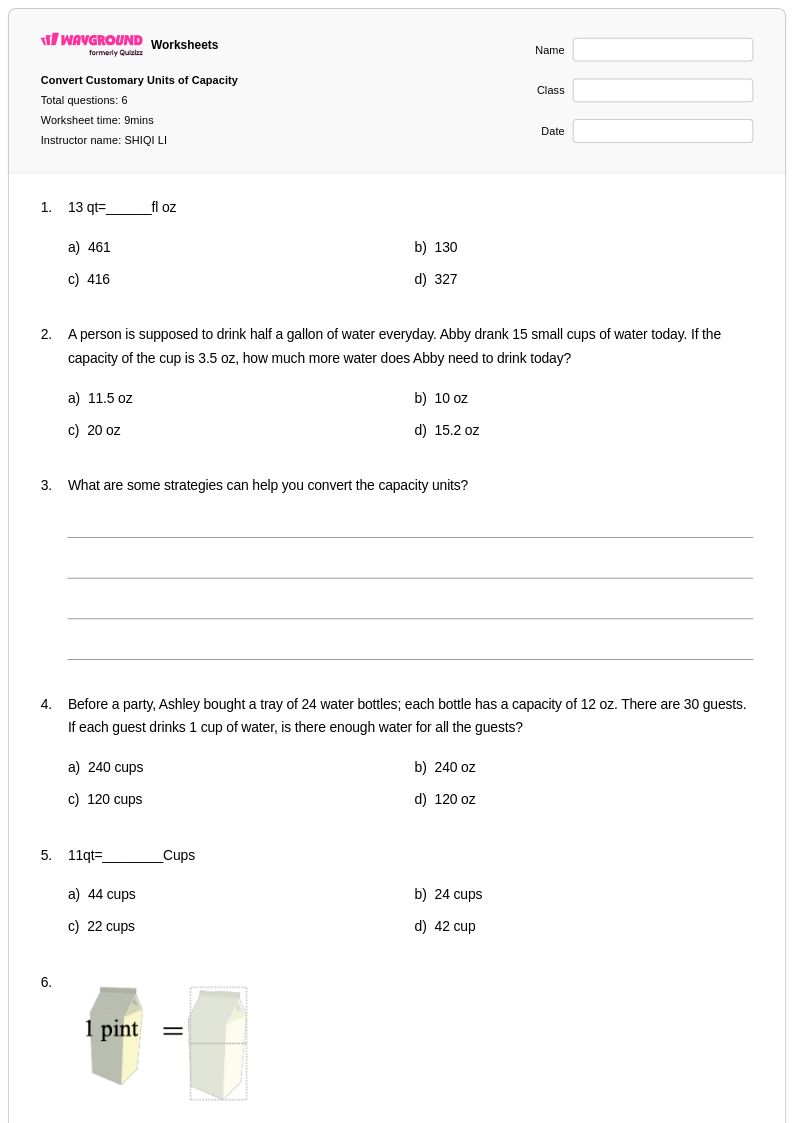
Customary capacity worksheets for Class 3 students available through Wayground (formerly Quizizz) provide comprehensive practice with fundamental measurement skills involving cups, pints, quarts, and gallons. These educational resources strengthen students' understanding of liquid measurement relationships and conversion techniques essential for mathematical literacy. The practice problems guide third-grade learners through systematic exploration of capacity relationships, helping them master concepts like recognizing that four cups equal one quart and four quarts equal one gallon. Each worksheet includes detailed answer keys that enable teachers to quickly assess student progress, while the free printable format makes these valuable resources accessible for classroom instruction, homework assignments, and independent study sessions.
Wayground (formerly Quizizz) empowers educators with millions of teacher-created customary capacity worksheets designed specifically for Class 3 mathematics instruction. The platform's advanced search and filtering capabilities allow teachers to locate materials aligned with state and national mathematics standards, ensuring curriculum coherence and academic rigor. These differentiation tools support diverse learning needs through customizable difficulty levels and problem types, making remediation and enrichment seamless within existing lesson plans. Teachers can access these resources in both printable pdf format for traditional classroom use and digital formats for interactive learning experiences, providing the flexibility needed for effective skill practice across various instructional settings and student learning preferences.
FAQs
How do I teach customary capacity conversions in Grade 3?
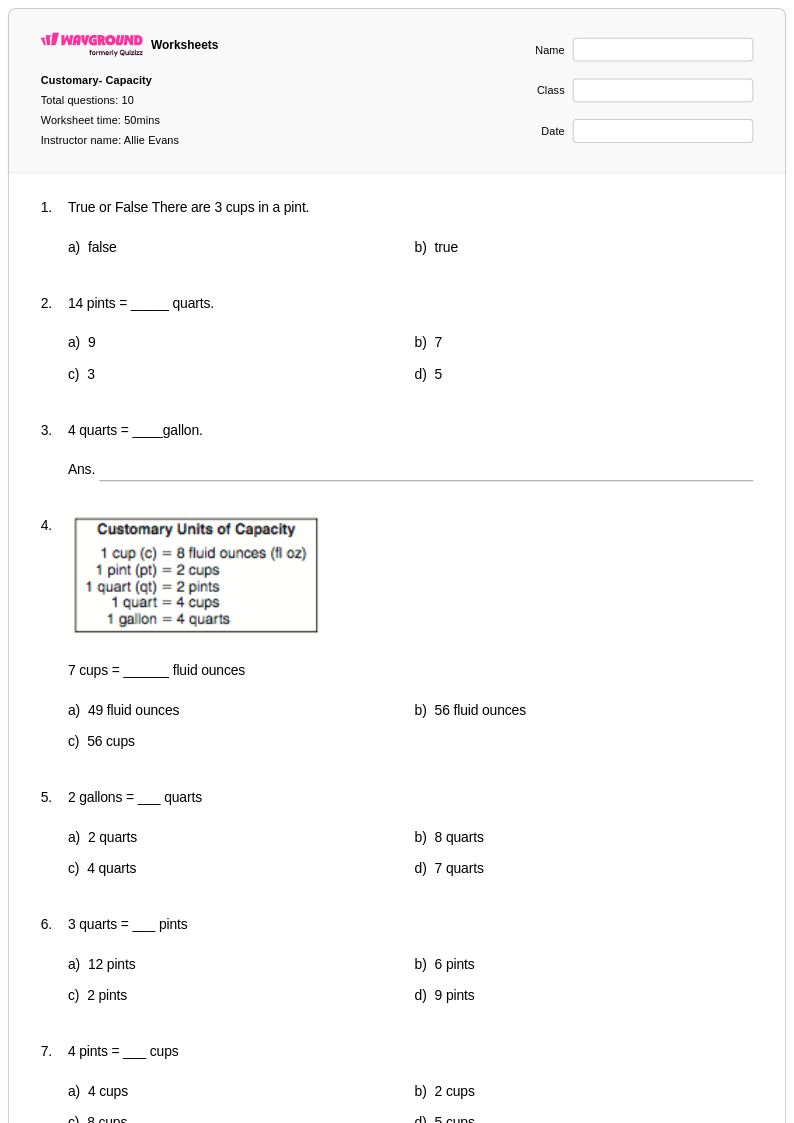
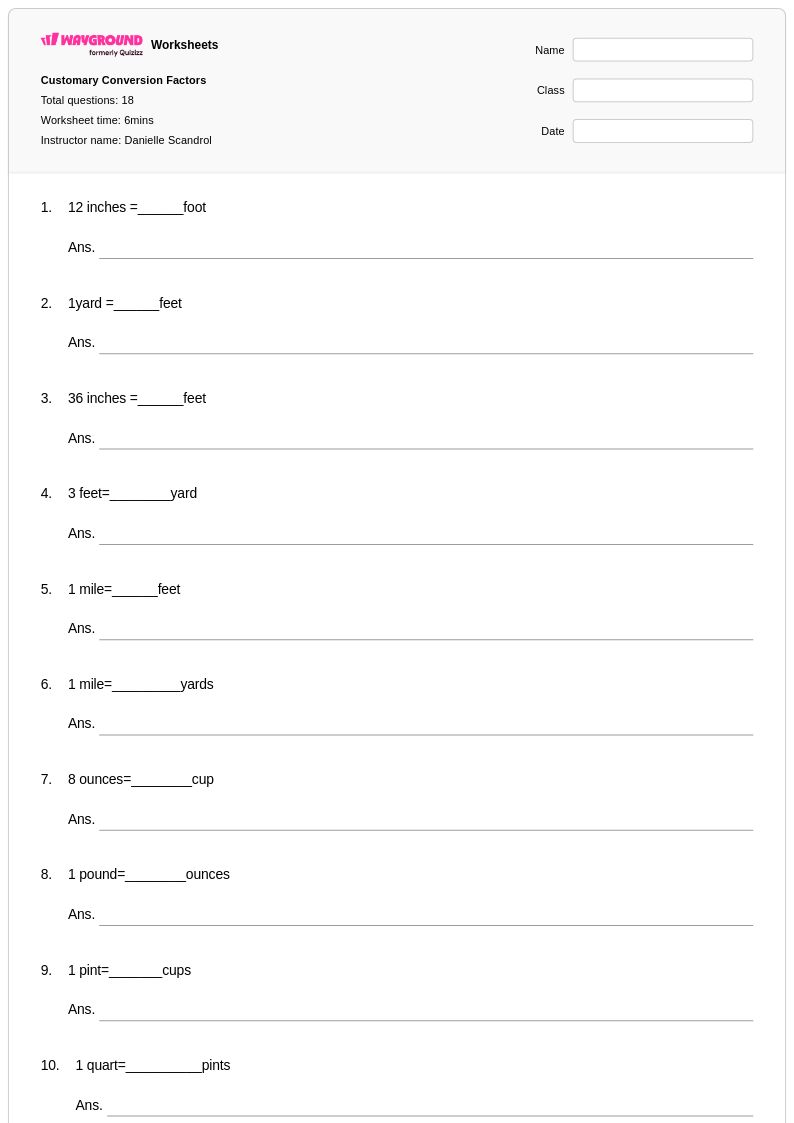
Use measuring tools and a visual conversion model to establish that 2 cups make 1 pint, 2 pints make 1 quart, and 4 quarts make 1 gallon. After students explain these relationships with models, progress from one-step conversions to real-world problems involving multiple units.
What exercises help third graders practice customary capacity?
Third graders benefit from completing conversion tables, comparing capacities after converting to a common unit, and solving problems involving recipes or containers. Include both forward and reverse conversions so students practice deciding whether to multiply or divide.
What mistakes do third graders make with customary capacity?
Students commonly confuse the conversion factors, multiply when they should divide, or compare unlike units without converting first. Multi-step problems also expose skipped steps and missing unit labels, so requiring students to show a conversion equation can make errors easier to diagnose.
How can I use these Grade 3 customary capacity worksheets?
The worksheets are available as printable PDFs and digital formats, allowing teachers to run a digital quiz on Wayground or assign paper copies; every worksheet includes a complete answer key. Printable PDFs provide structured offline practice, and teachers can grade physical work by scanning or capturing submissions with the Wayground for Teachers app.
How does customary capacity fit into the Common Core Grade 3 curriculum?
Common Core Grade 3 measurement emphasizes solving real-world problems with measurement quantities and representing mathematical reasoning clearly. Work with cups, pints, quarts, and gallons supports this progression through estimation, unit relationships, operations, and one- or multi-step applications.
What should Grade 3 students know about customary capacity?
Grade 3 students should recognize the relationships among cups, pints, quarts, and gallons and use them to compare or convert liquid measurements. They should also select reasonable units and solve practical problems that may require more than one conversion step.
How can I differentiate Grade 3 customary capacity worksheets?
Teachers can scaffold practice with conversion charts or simpler one-step problems, then provide mixed-unit and multi-step challenges for enrichment. Alternate worksheet versions can use different font sizes, spacing, dyslexia-friendly text, or translations, while digital sessions can provide individual Read Aloud, extended time, reduced choices, and reading-mode accommodations.