

16 Q
5th
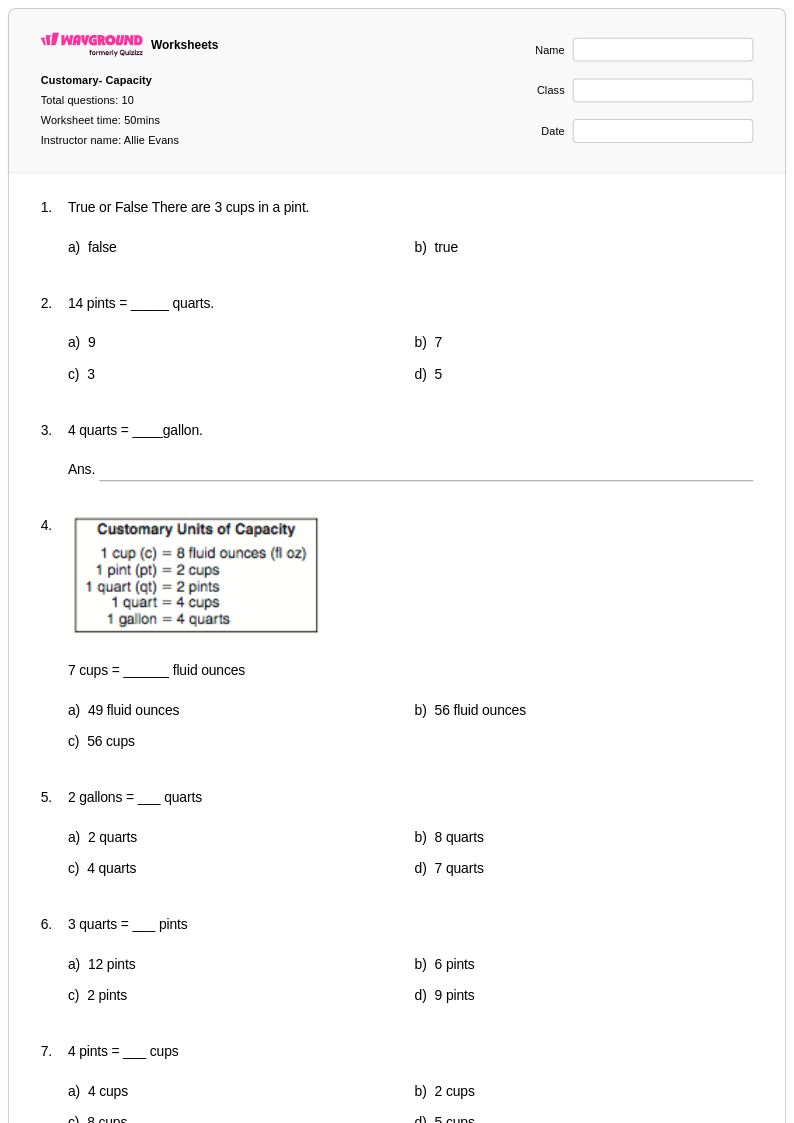
10 Q
3rd - 5th

14 Q
5th

18 Q
3rd - Uni
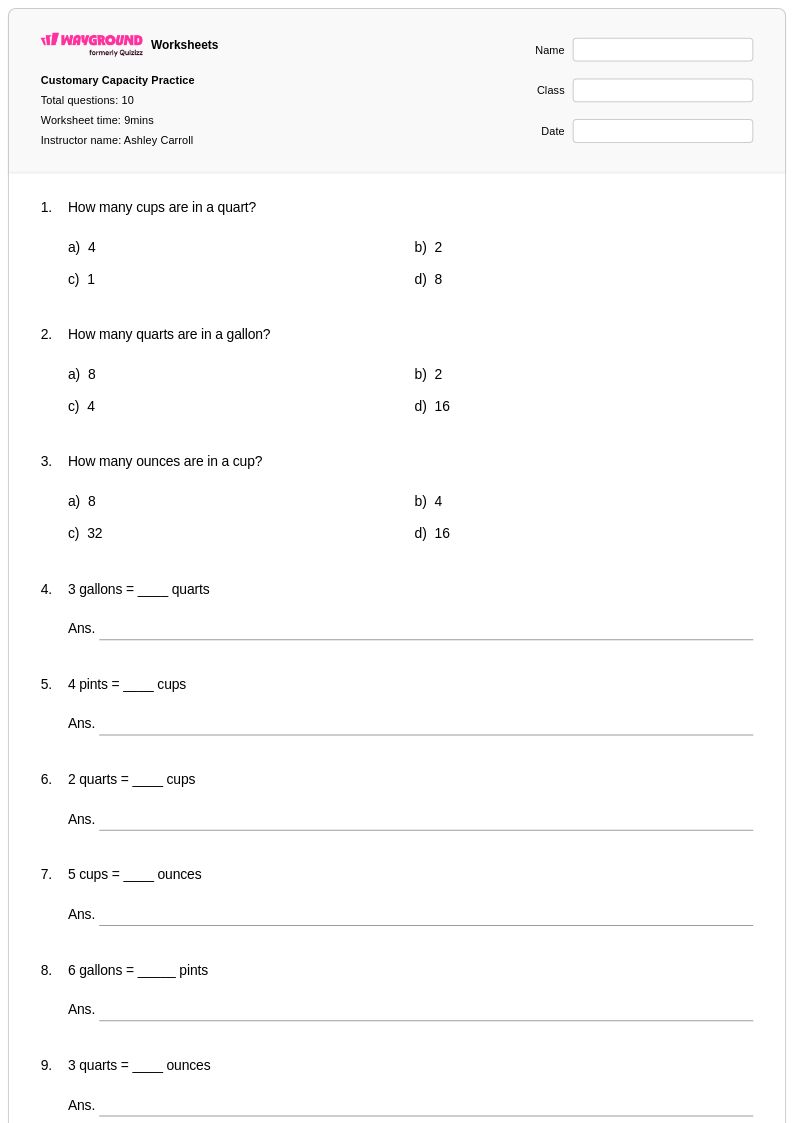
10 Q
4th

20 Q
5th - Uni

22 Q
5th

8 Q
3rd
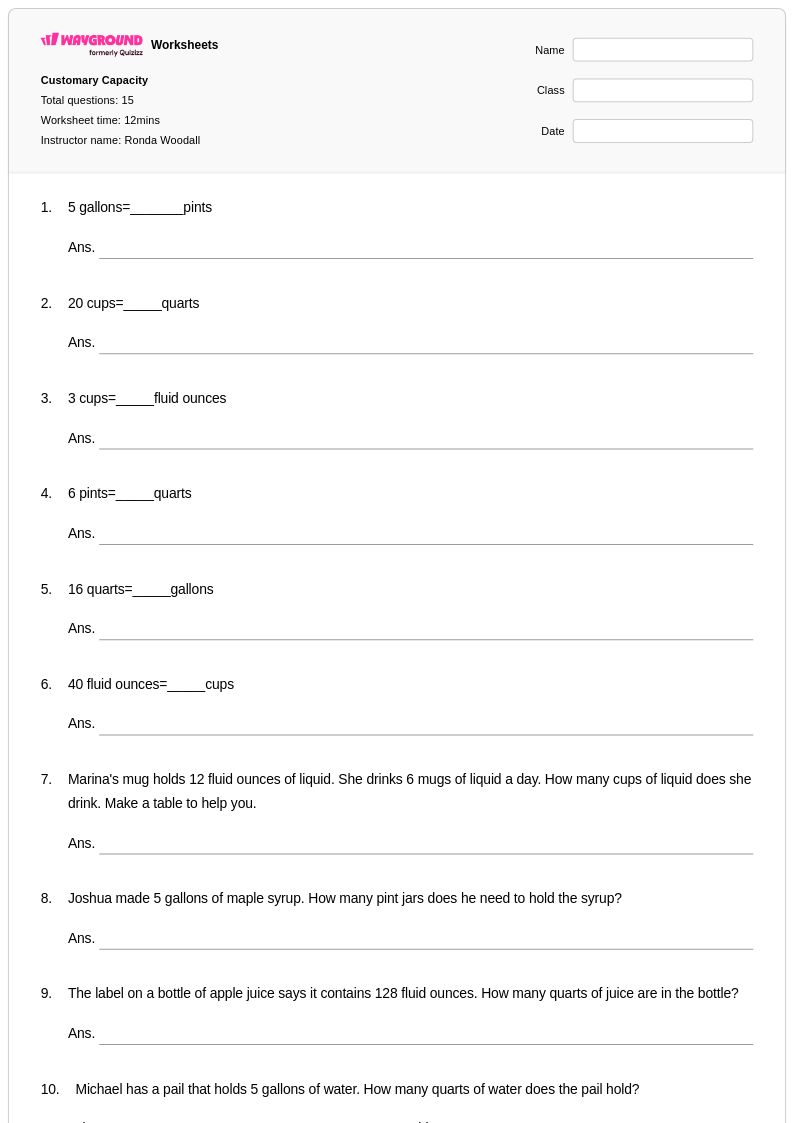
15 Q
4th

14 Q
5th

14 Q
5th
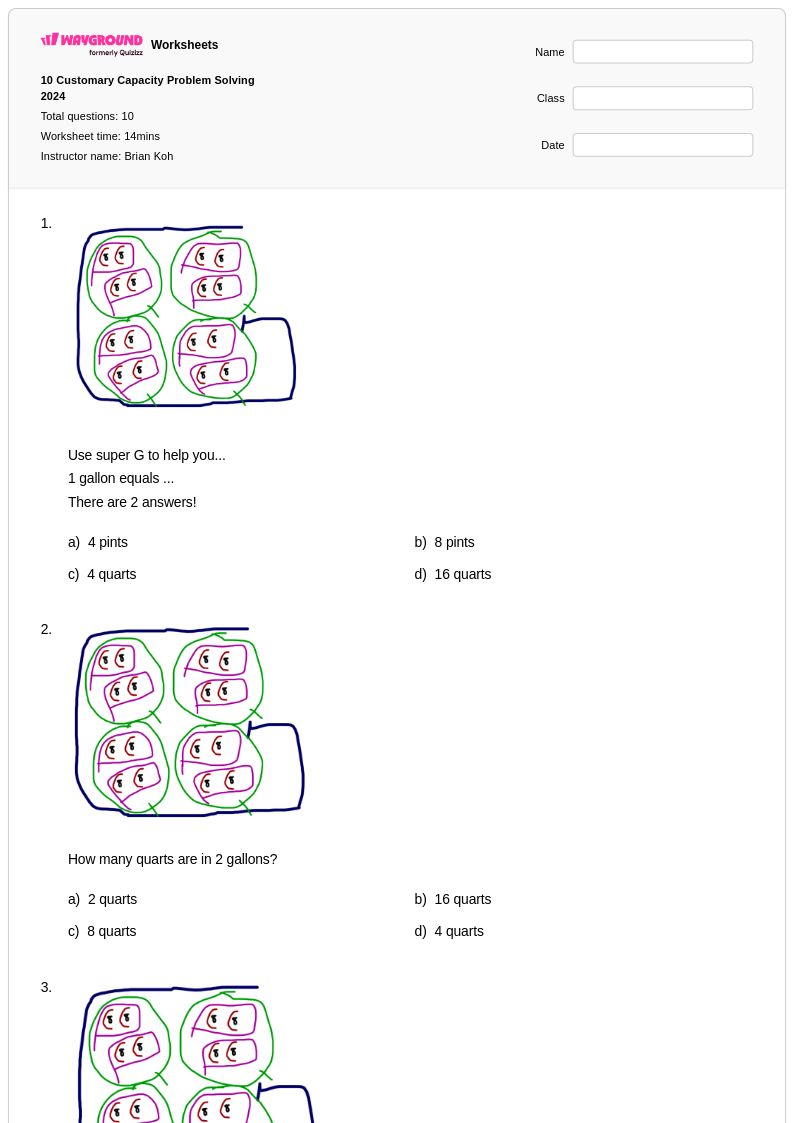
10 Q
5th

19 Q
5th - Uni

12 Q
5th

14 Q
5th

13 Q
3rd

20 Q
5th - Uni

8 Q
5th - 6th

10 Q
3rd

8 Q
5th

10 Q
5th

14 Q
5th

15 Q
5th - Uni

19 Q
5th - Uni
Explore Other Subject Worksheets for kindergarten
Explore printable Customary Capacity worksheets for Kindergarten
Customary capacity worksheets for kindergarten students available through Wayground (formerly Quizizz) introduce young learners to fundamental measurement concepts using familiar units like cups, pints, quarts, and gallons. These carefully designed practice problems help kindergarteners develop essential skills in comparing liquid volumes, understanding relative sizes of containers, and making real-world connections to measurement in their daily lives. The free printables focus on visual learning through colorful illustrations and hands-on activities that make abstract capacity concepts concrete and accessible for early learners. Each worksheet comes with a comprehensive answer key, allowing teachers and parents to provide immediate feedback and support student understanding of these foundational measurement skills.
Wayground (formerly Quizizz) empowers educators with millions of teacher-created customary capacity resources specifically designed for kindergarten mathematics instruction. The platform's robust search and filtering capabilities enable teachers to quickly locate worksheets that align with specific learning standards and match their students' developmental needs. Advanced differentiation tools allow educators to customize content difficulty levels, while flexible formatting options provide both printable pdf versions for traditional classroom use and digital formats for interactive learning experiences. These comprehensive features streamline lesson planning and enable teachers to efficiently address diverse learning styles through targeted skill practice, remediation activities, and enrichment opportunities that build strong foundational understanding of measurement concepts.
FAQs
How do I teach customary capacity in kindergarten?
What customary capacity activities are appropriate for kindergarten?
What mistakes do kindergarteners make when comparing capacity?
How can I use these kindergarten customary capacity worksheets?
How does capacity measurement fit into the Common Core kindergarten curriculum?
What grade do students begin learning customary capacity?
How can I differentiate kindergarten capacity practice?