
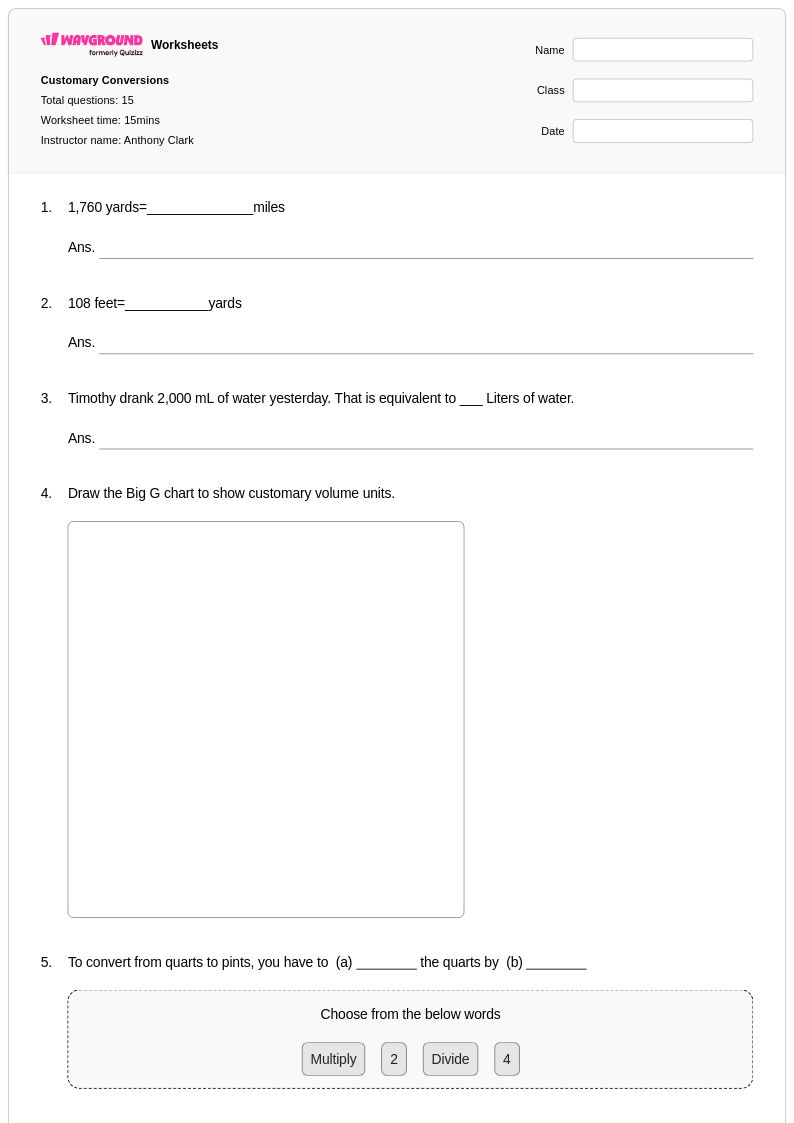
15 Q
5th - Uni
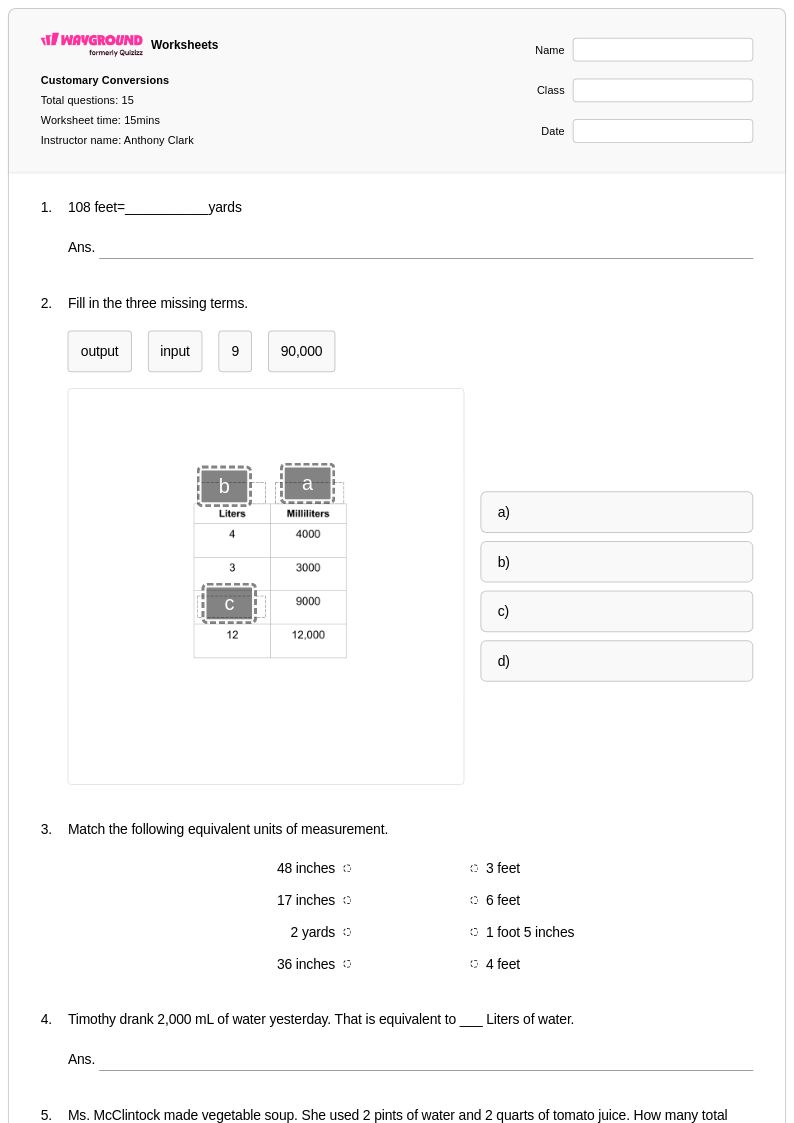
15 Q
5th - Uni
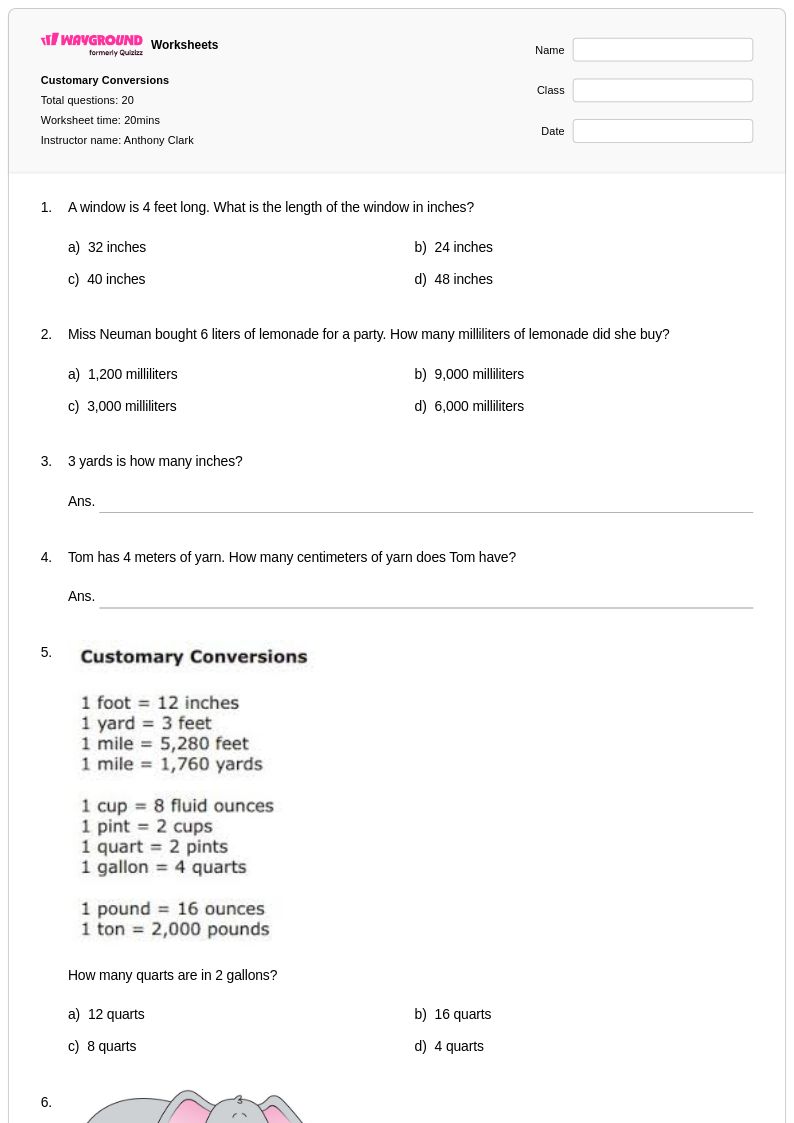
20 Q
5th - Uni
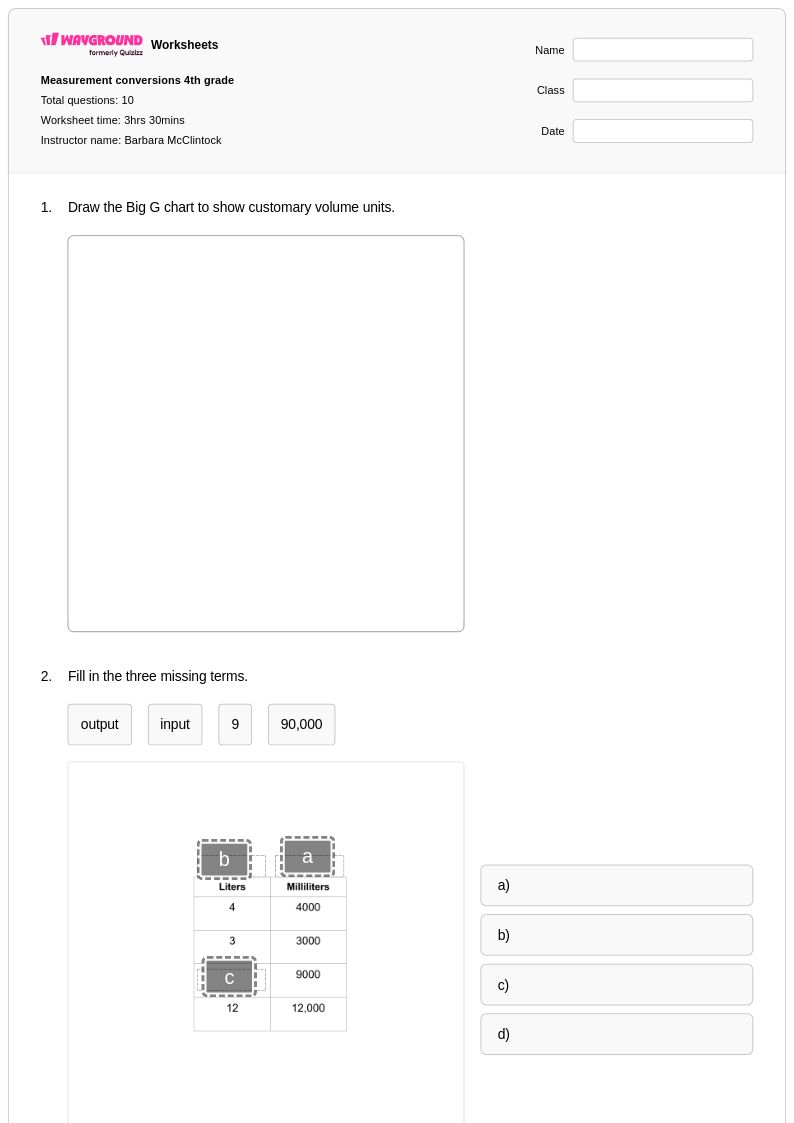
10 Q
4th
20 Q
5th - Uni
20 Q
5th - Uni
12 Q
5th
10 Q
5th
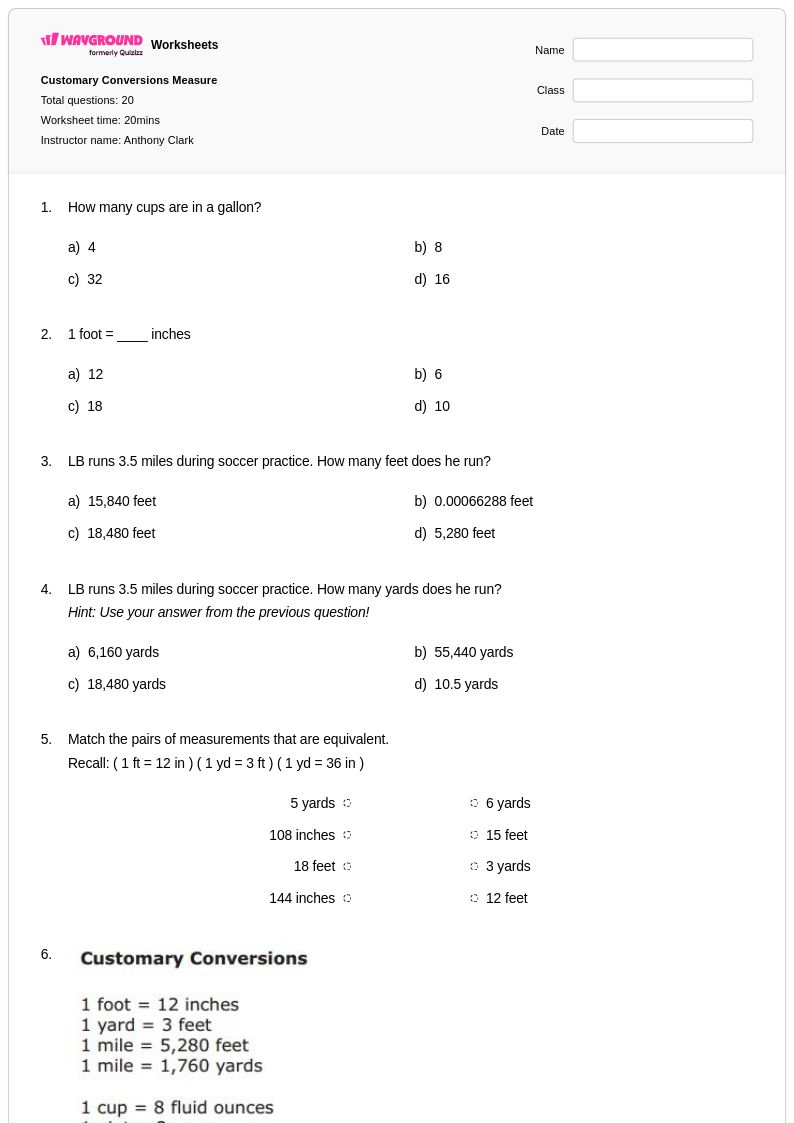
20 Q
5th - Uni
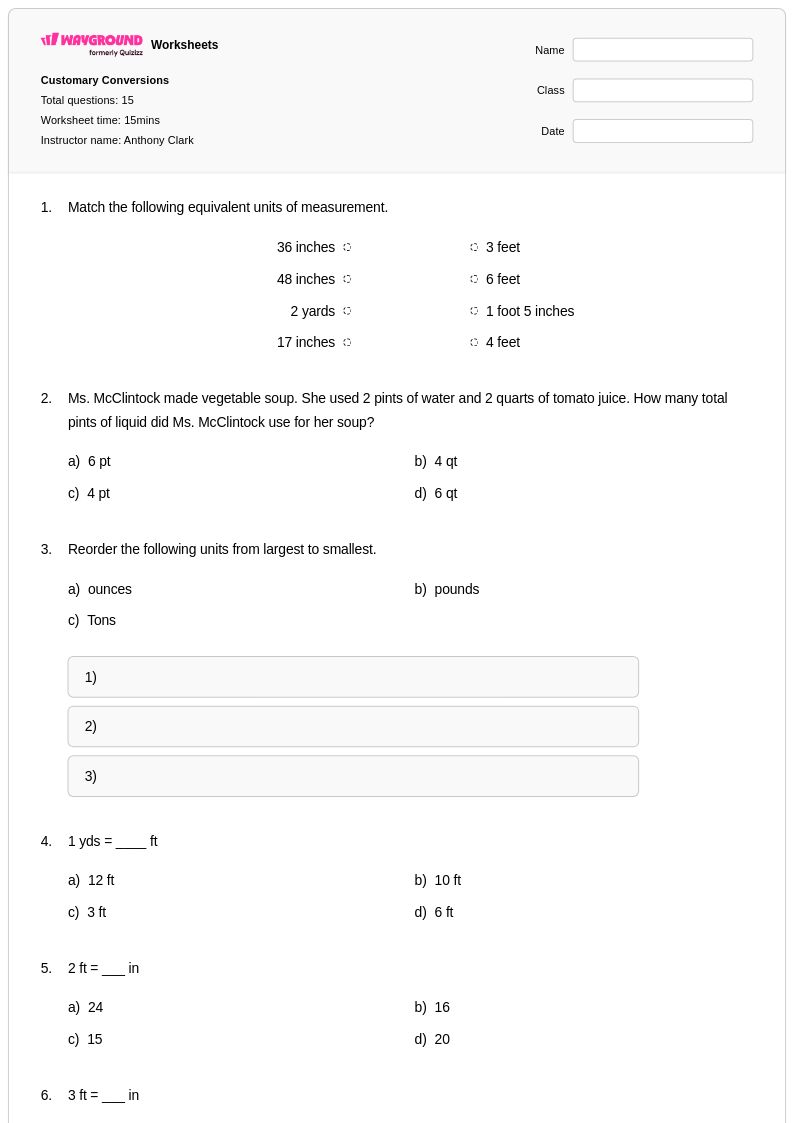
15 Q
5th - Uni
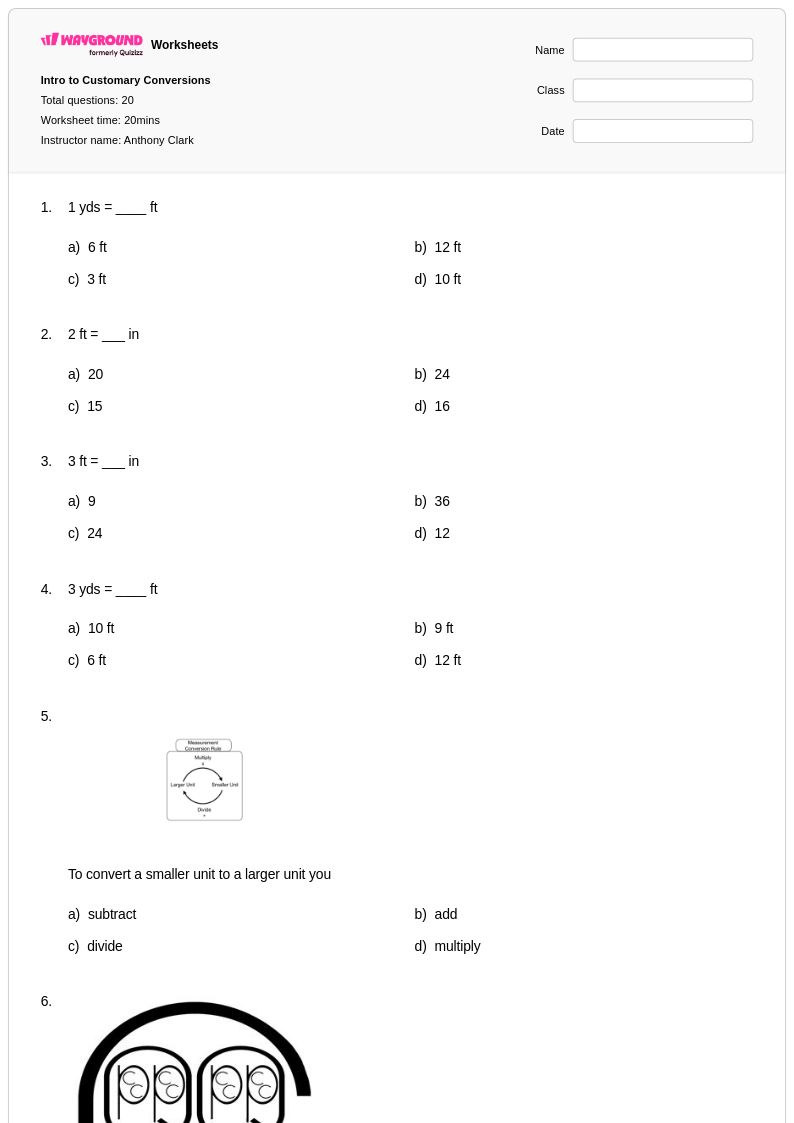
20 Q
5th - Uni
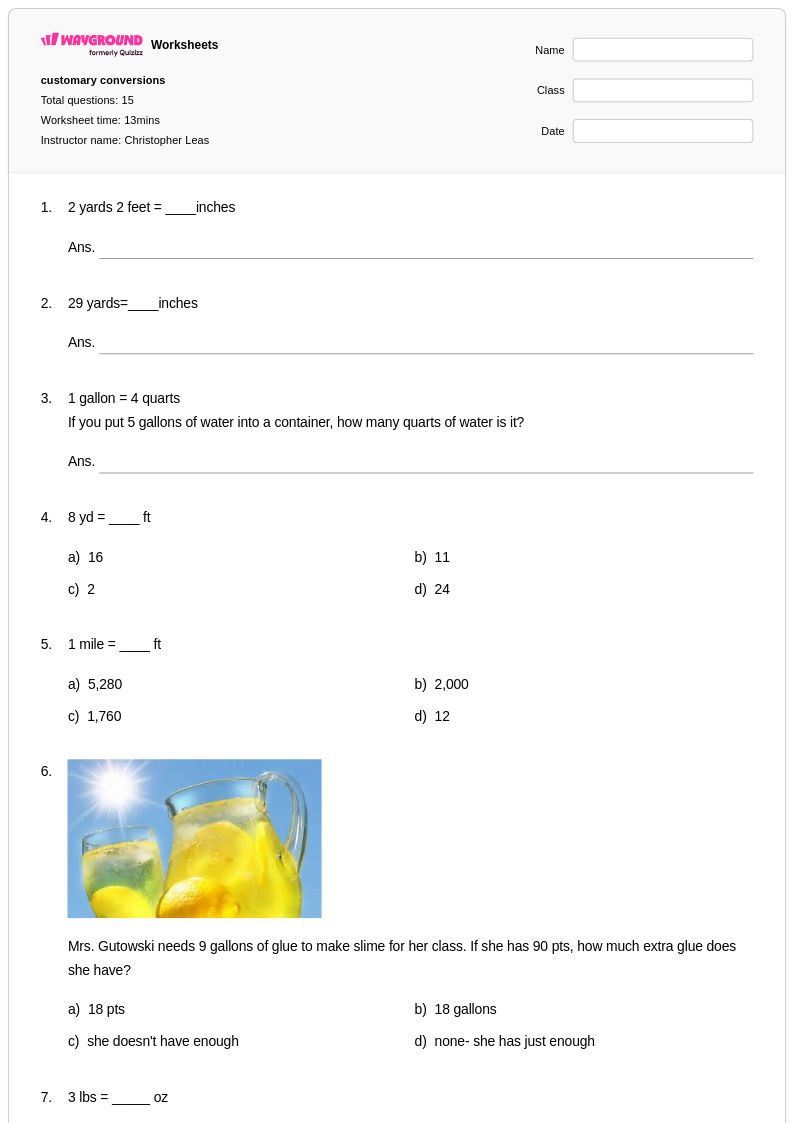
15 Q
5th
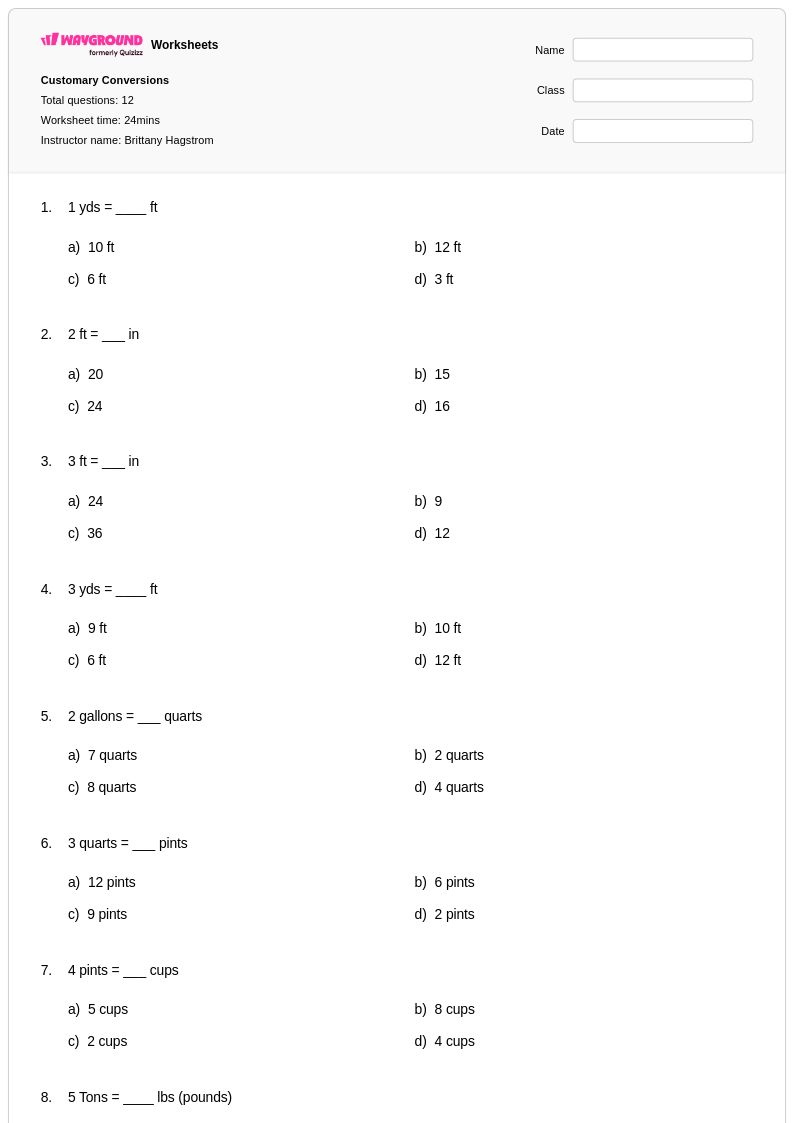
12 Q
5th
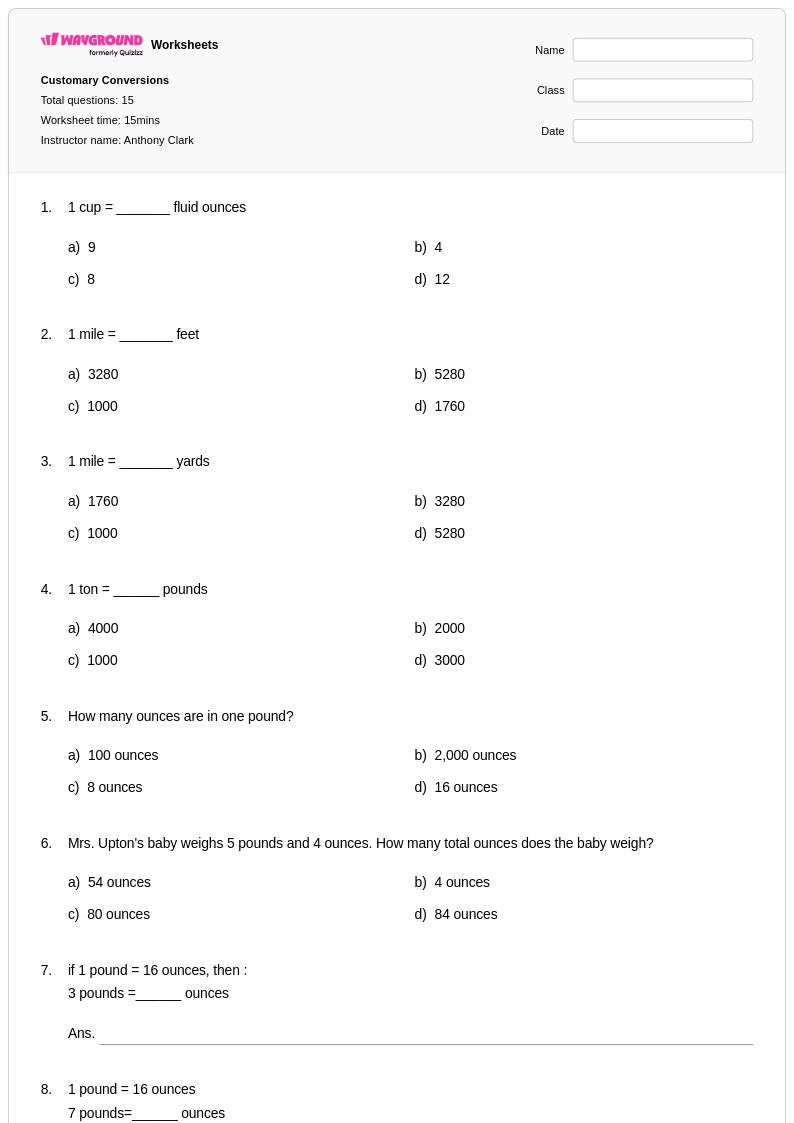
15 Q
5th - Uni
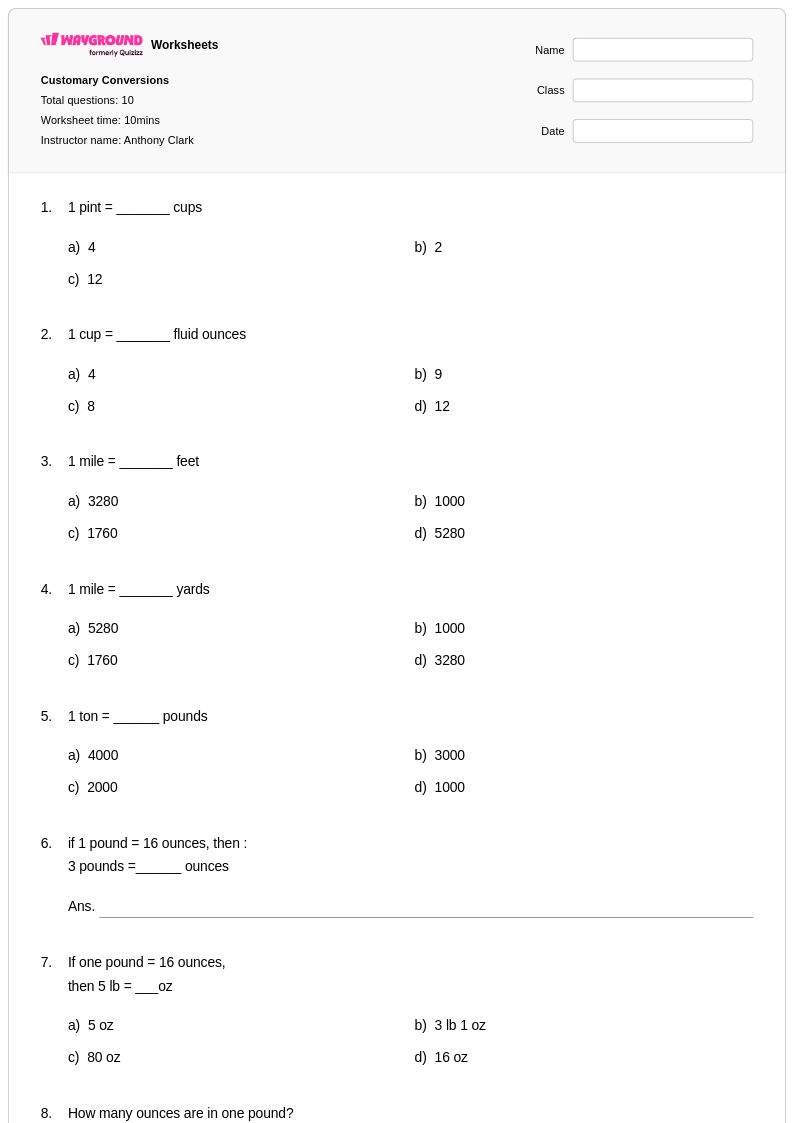
10 Q
5th - Uni
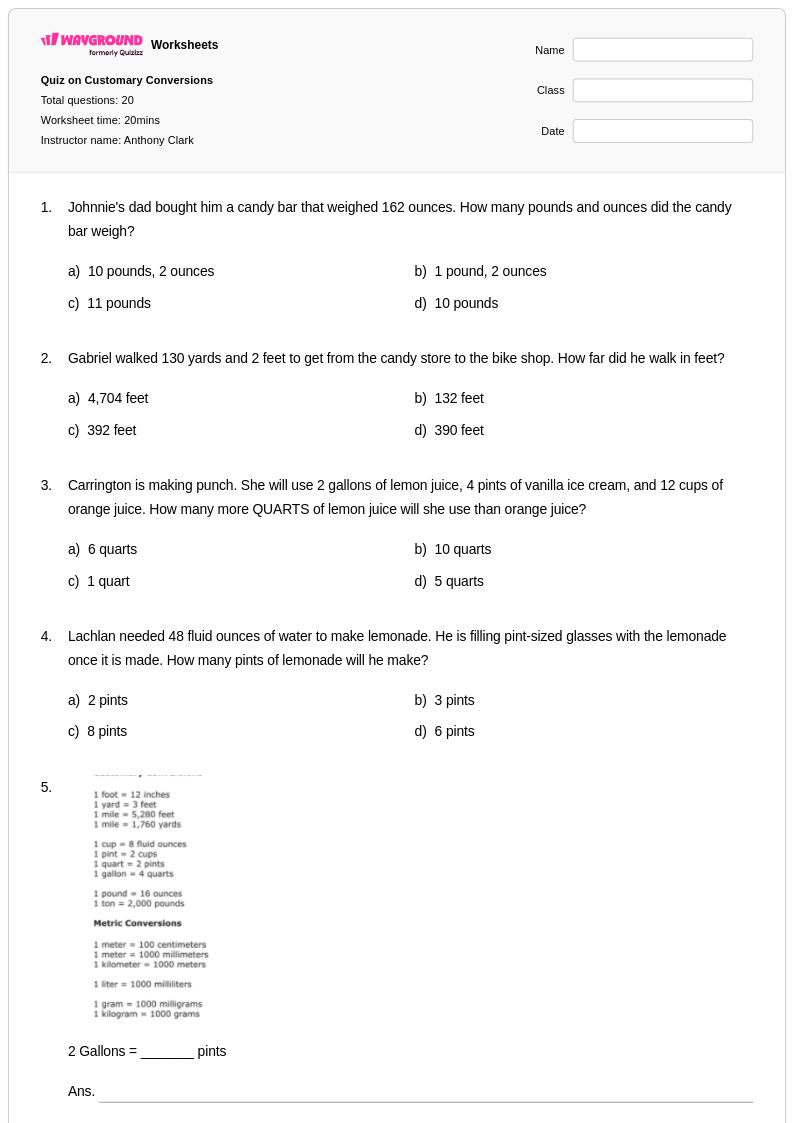
20 Q
5th - Uni
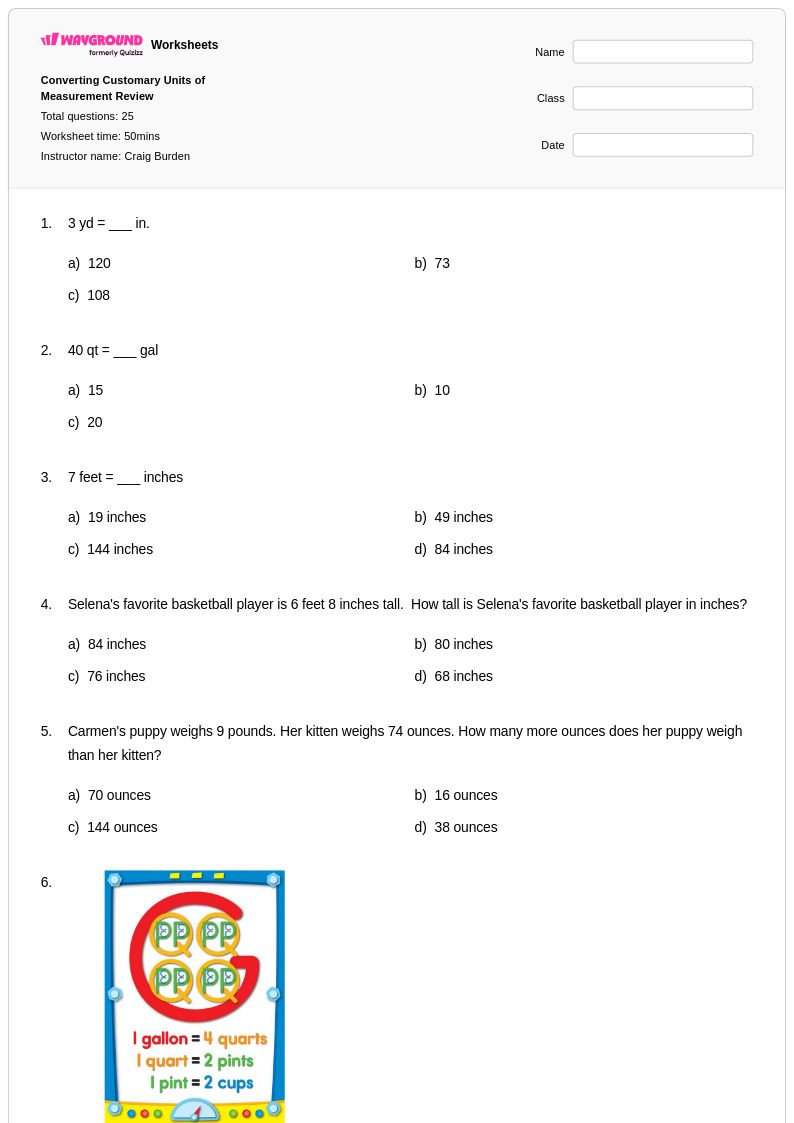
25 Q
5th
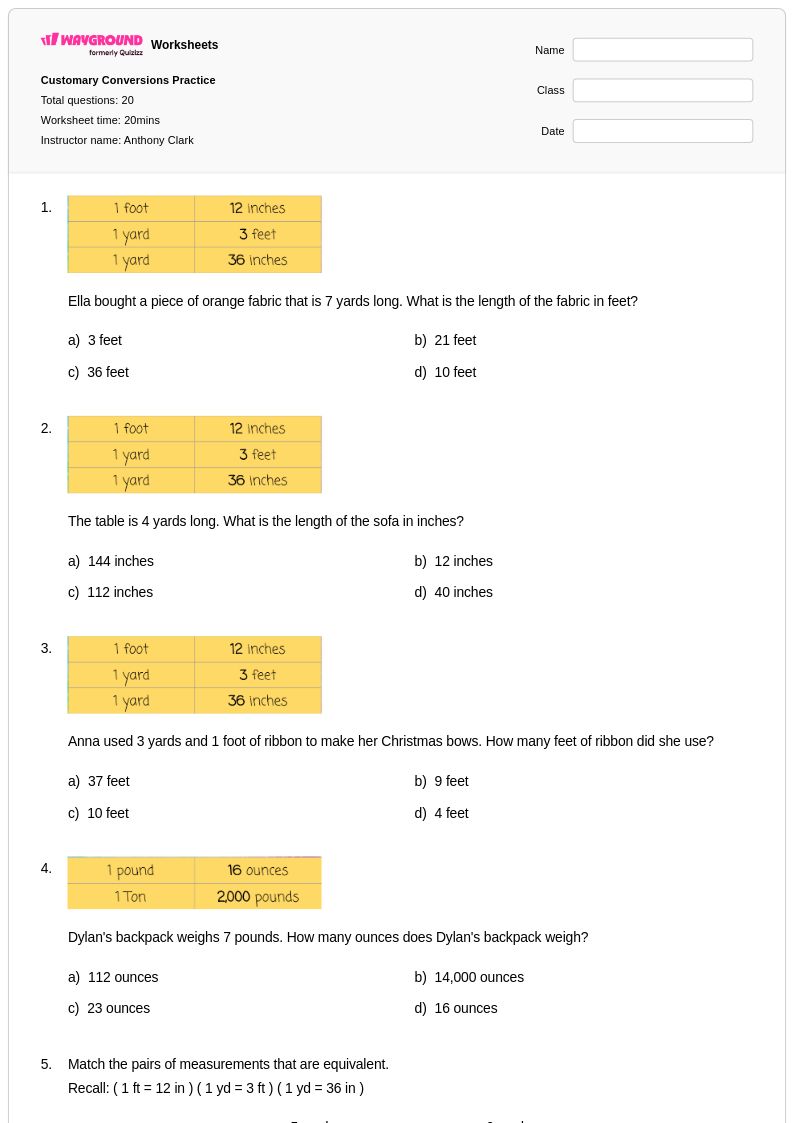
20 Q
5th - Uni
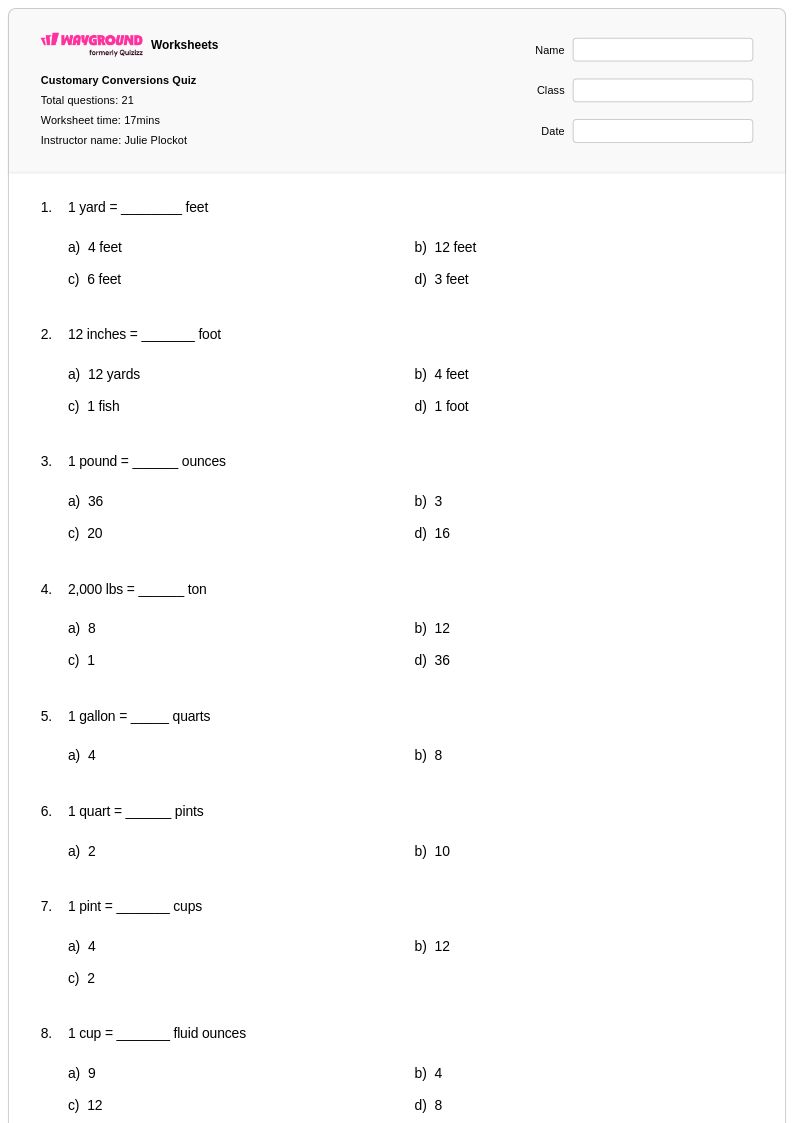
21 Q
5th
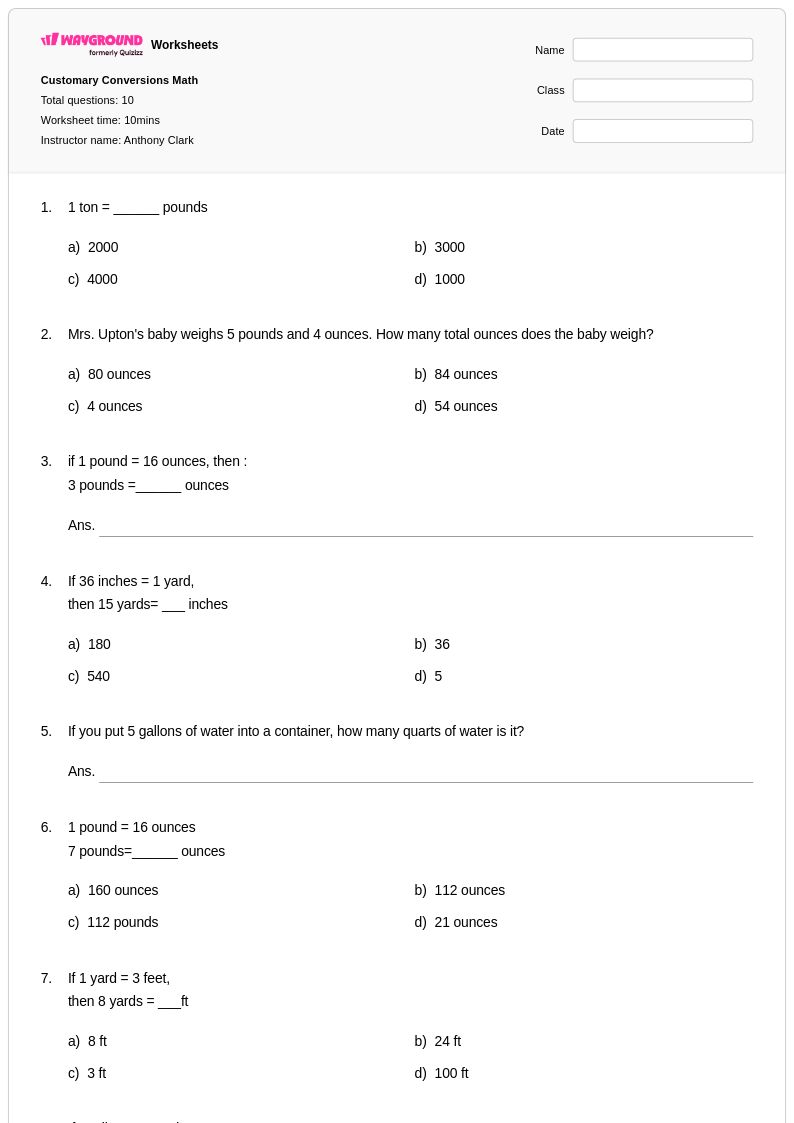
10 Q
5th - Uni
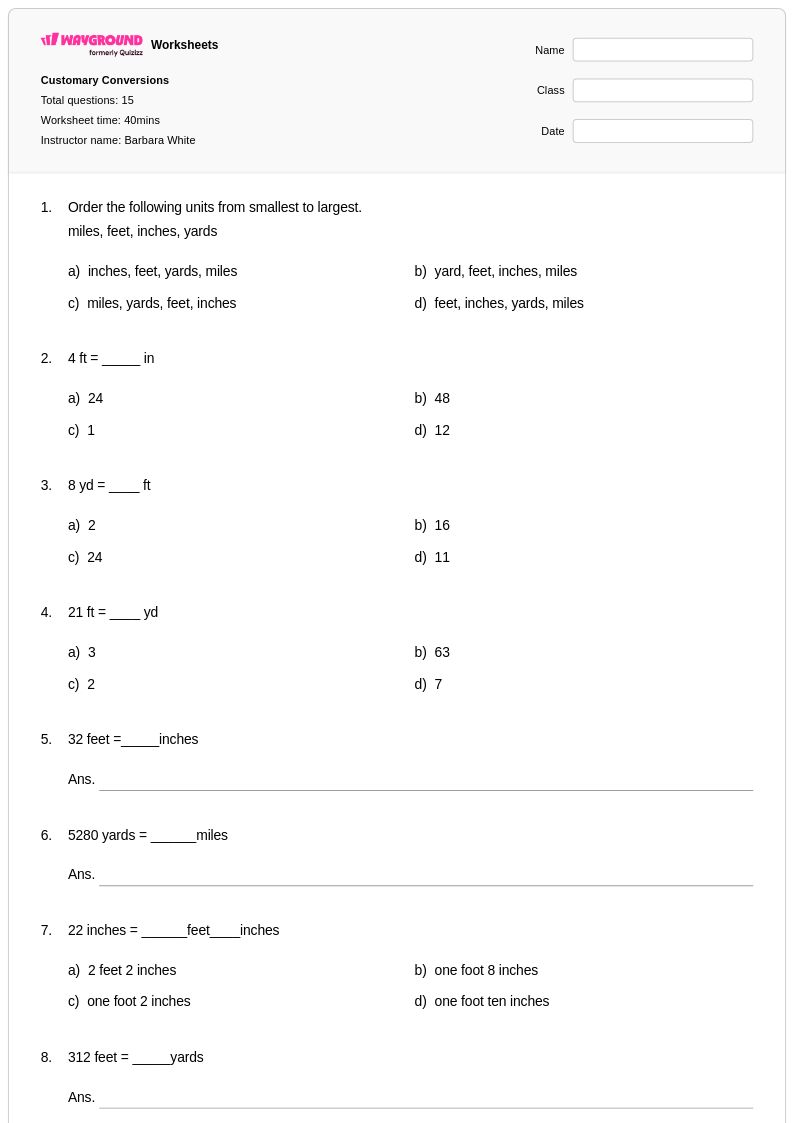
15 Q
5th
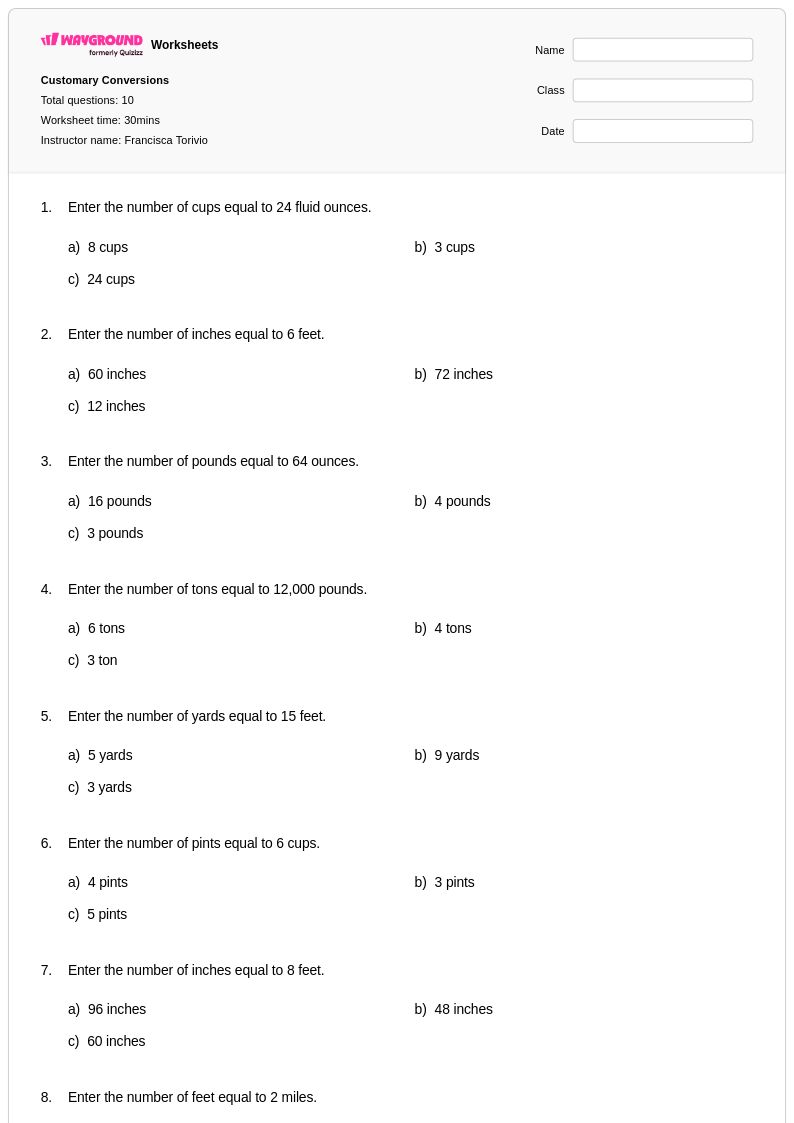
10 Q
5th
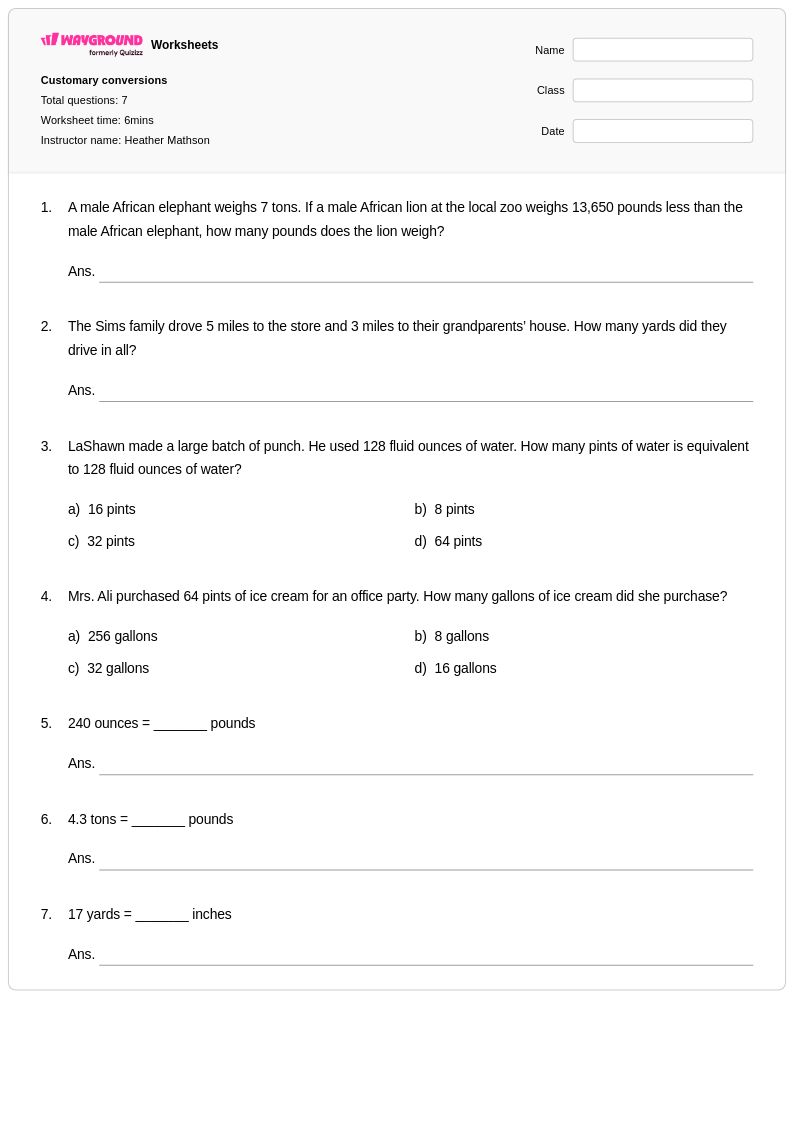
7 Q
5th
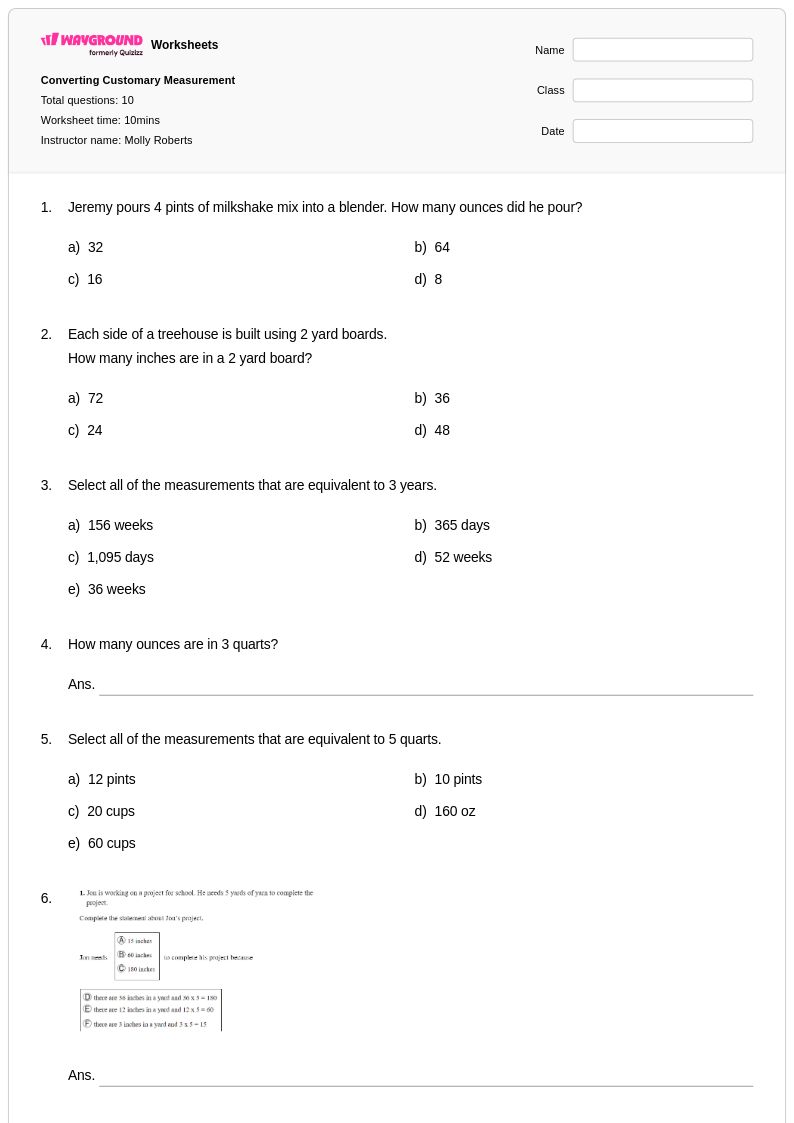
10 Q
4th
Explore Other Subject Worksheets for kindergarten
Explore printable Customary Conversions worksheets for Kindergarten
Customary conversions worksheets for kindergarten students available through Wayground (formerly Quizizz) introduce young learners to the foundational concepts of measurement relationships within the imperial system. These carefully designed practice problems help kindergarteners develop early understanding of how different units relate to each other, such as recognizing that there are 12 inches in a foot or 3 feet in a yard through hands-on activities and visual representations. The worksheets strengthen essential mathematical skills including number recognition, counting, and basic comparison abilities while building measurement vocabulary that students will use throughout their academic careers. Each printable resource comes with a comprehensive answer key, making it easy for educators to assess student progress and provide immediate feedback during these critical early learning experiences.
Wayground (formerly Quizizz) supports kindergarten teachers with an extensive collection of millions of teacher-created customary conversion resources that can be easily accessed through robust search and filtering capabilities. The platform's standards-aligned materials ensure that worksheets meet grade-appropriate learning objectives while offering flexible customization options that allow educators to differentiate instruction based on individual student needs and abilities. Teachers can seamlessly integrate these materials into their lesson planning for skill practice, remediation, or enrichment activities, with resources available in both digital and printable PDF formats to accommodate various classroom environments and teaching preferences. This comprehensive approach enables educators to provide targeted measurement instruction that builds confidence and competency in young mathematicians as they explore the relationships between customary units of measurement.
FAQs
How do I introduce customary measurement relationships in kindergarten?
What customary measurement exercises are appropriate for kindergarten?
What mistakes do kindergarteners make with customary measurement units?
How can I use kindergarten customary conversions worksheets on Wayground?
How do customary measurement activities fit the Common Core kindergarten progression?
How can I differentiate customary measurement practice for kindergarteners?
What grade level are these customary conversions worksheets designed for?