Free Printable Estimating Length Worksheets for Kindergarten
Wayground's free kindergarten estimating length worksheets provide printable PDF practice problems and answer keys to help young learners develop foundational measurement skills through hands-on activities and visual comparisons.
Explore printable Estimating Length worksheets for Kindergarten
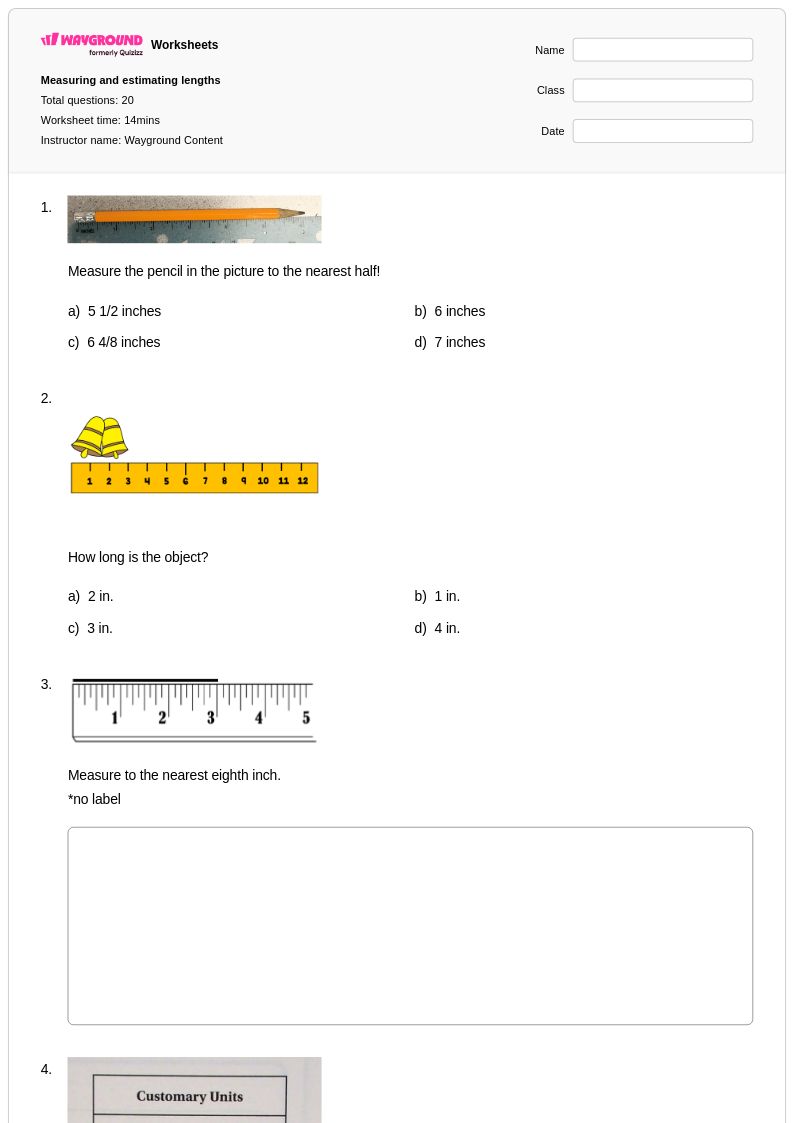
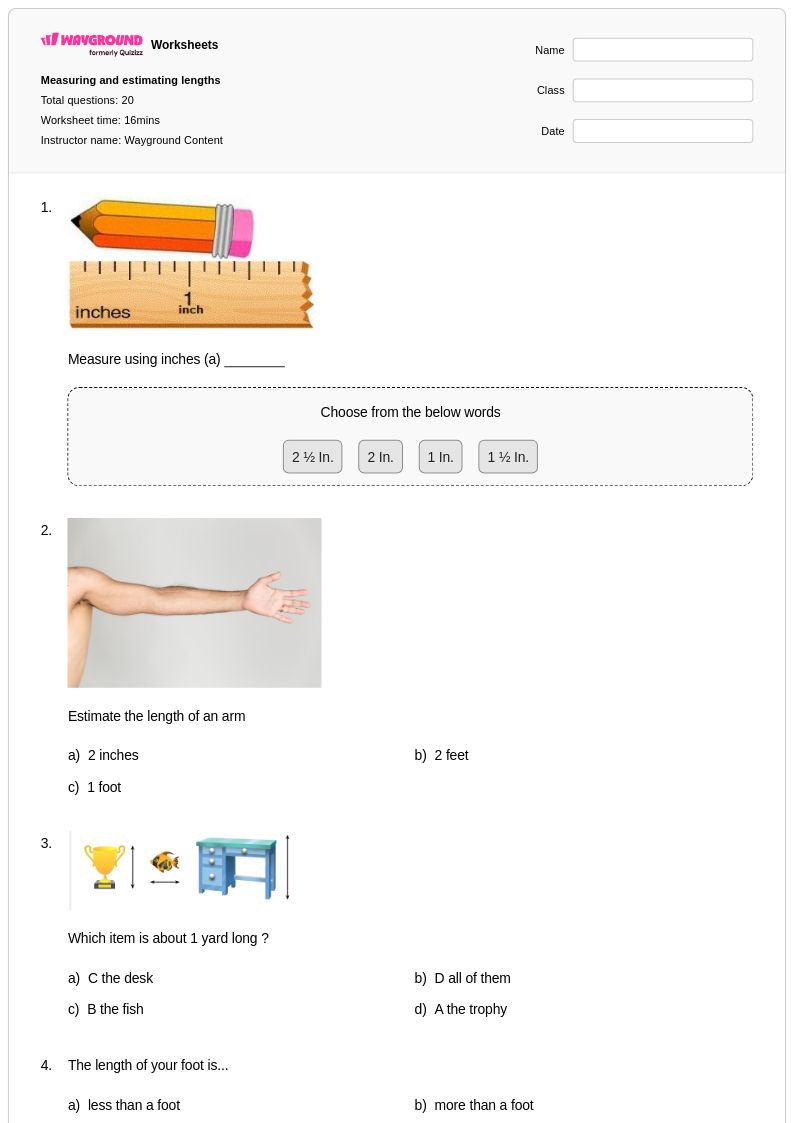
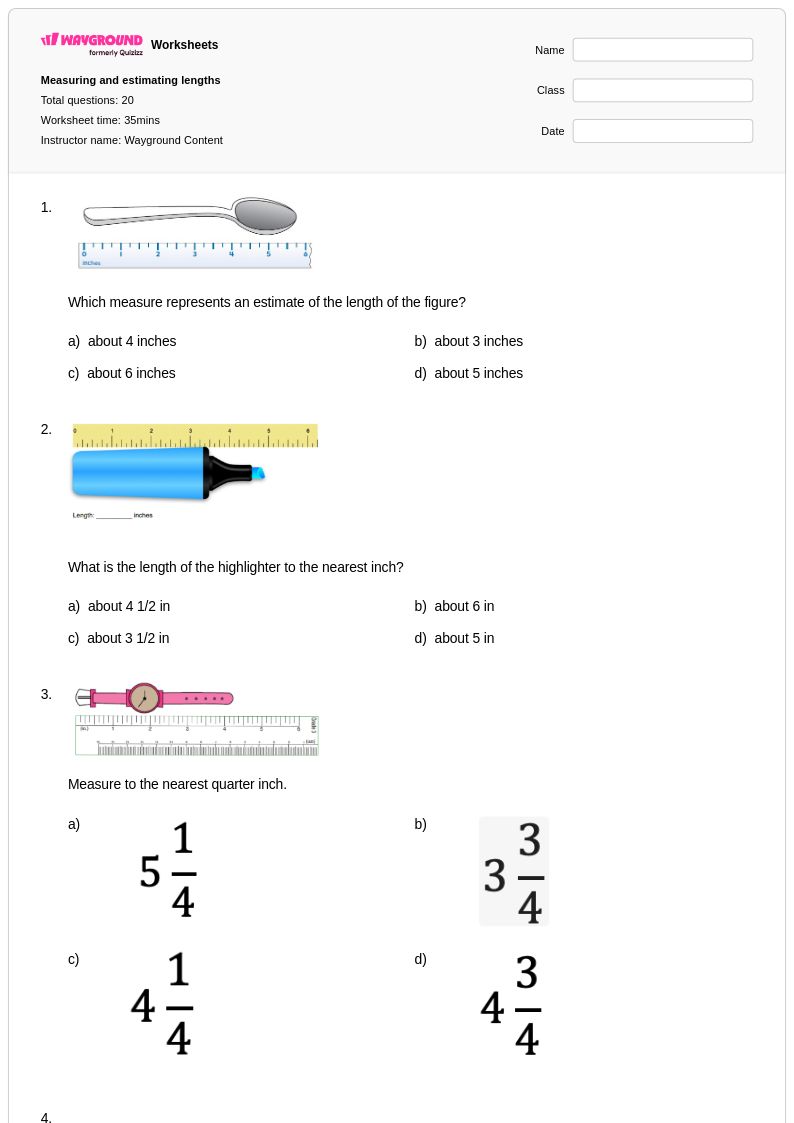
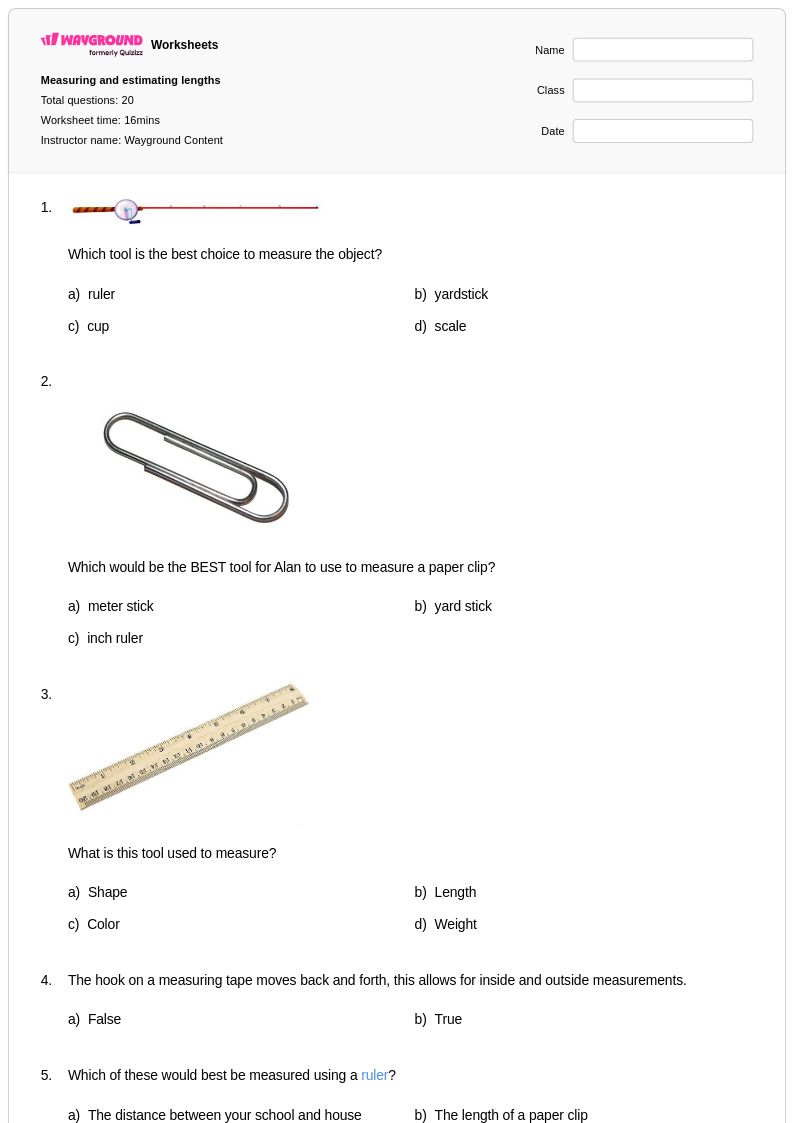
Estimating length worksheets for kindergarten students available through Wayground (formerly Quizizz) provide essential foundational experiences in developing spatial reasoning and measurement concepts. These carefully designed practice problems introduce young learners to comparing objects using non-standard units like paper clips, blocks, or hand spans, while building critical visual estimation skills that form the basis for future mathematical understanding. The comprehensive collection includes free printables with answer keys that guide students through hands-on activities where they predict, measure, and compare the lengths of familiar classroom and household objects, strengthening their ability to make reasonable approximations and understand relative size relationships.
Wayground (formerly Quizizz) empowers teachers with access to millions of educator-created resources specifically focused on kindergarten measurement concepts, featuring robust search and filtering capabilities that allow quick identification of materials aligned to specific learning standards and developmental stages. The platform's differentiation tools enable seamless customization of estimating length activities to meet diverse classroom needs, while flexible formatting options provide both digital interactive experiences and downloadable pdf versions for traditional worksheet distribution. These comprehensive features streamline lesson planning by offering ready-to-use materials for skill practice, targeted remediation for students who need additional support, and enrichment opportunities for advanced learners, ensuring that every kindergarten student can develop confidence in making length estimates through engaging, developmentally appropriate mathematical experiences.
FAQs
How do I teach estimating length to kindergarteners?
At this age, estimation is really about building a sense of 'longer' and 'shorter' before any numbers enter the picture. Use non-standard units — paper clips, blocks, hand spans — and make it physical: have students line up objects, predict which is longer, then check. The goal isn't accuracy; it's getting kids to look carefully and make a reasoned guess before they verify.
What exercises help kindergarteners practice estimating length?
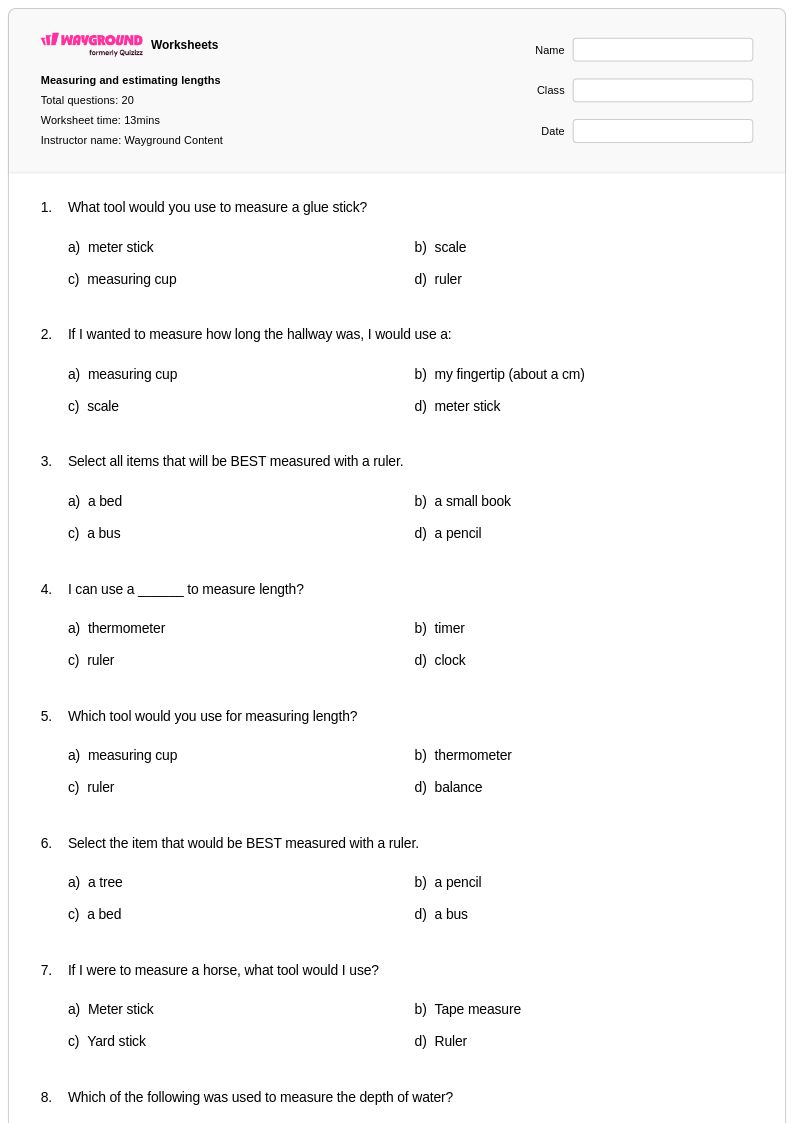
The best exercises at this level are concrete and visual: predict how many cubes long a crayon is, then count; circle the longer object in a pair; order three items from shortest to longest by eye. These worksheets use familiar classroom and household objects so students can connect the activity to things they've actually held and compared.
What misconceptions do kindergarteners have about length?
The biggest one is alignment — students often compare lengths without lining objects up at the same starting point, so they judge the wrong end as longer. A related issue is conflating length with size overall: a wide, short box can look 'bigger' than a long, thin pencil. Both are worth addressing explicitly before moving to any kind of estimation.
How do I use these kindergarten estimating length worksheets?
Print the PDF and pair it with hands-on measuring — students estimate on the worksheet, then use actual blocks or paper clips to check their answers. The included answer key makes it easy to review as a class. For teachers whose schools are reducing screen time in early grades, paper-based practice like this keeps the activity tactile and age-appropriate.
Is estimating length part of the kindergarten Common Core math standards?
Common Core introduces measurement in kindergarten through direct comparison — students describe and compare measurable attributes like length and height using language such as longer, shorter, and taller. Formal estimation with units comes later, but the comparison work done in kindergarten is the foundation it builds on: students who can reliably judge 'which is longer' are ready to start asking 'how much longer' in first and second grade.
How can I support diverse learners with kindergarten length estimation activities?
For students still developing reading skills, Wayground's Read Aloud feature can voice the question prompts so the activity stays focused on measurement thinking rather than decoding. For students who need a less visually busy page, the worksheet-level font size and spacing adjustments help without requiring a separate version. These settings can be applied to individual students while the rest of the class works from the default layout.