
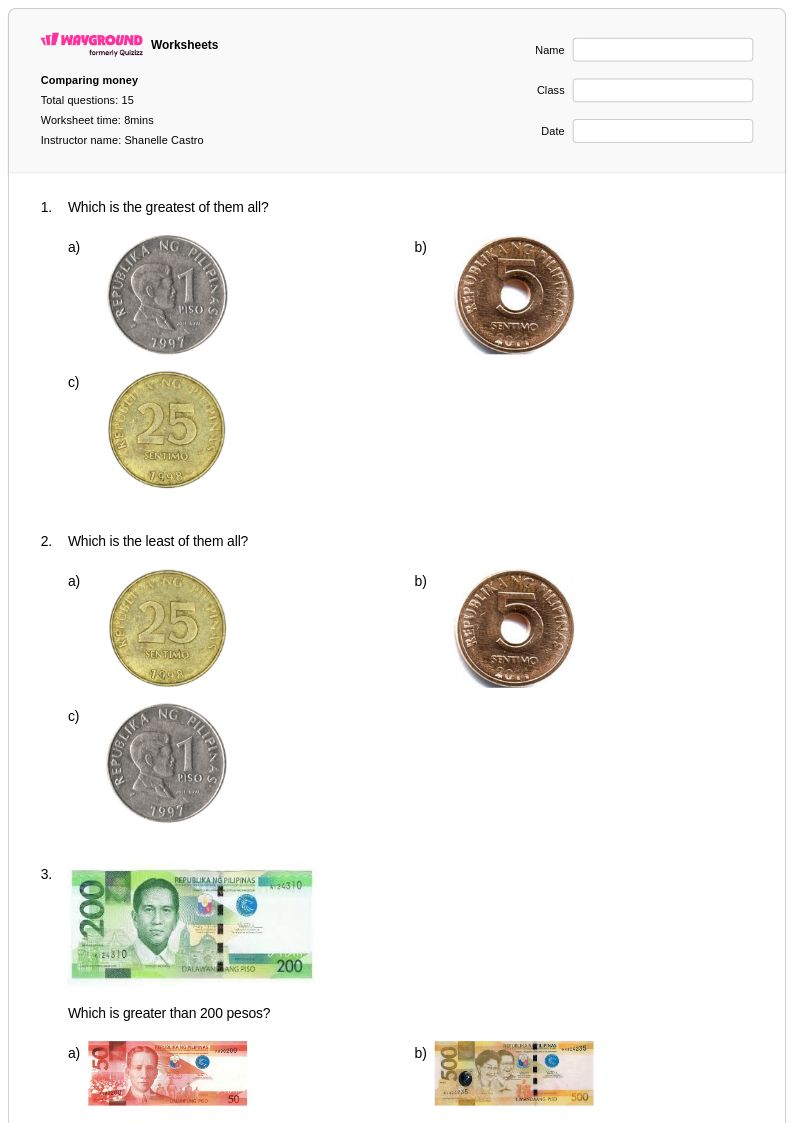
15 Q
1st - 2nd
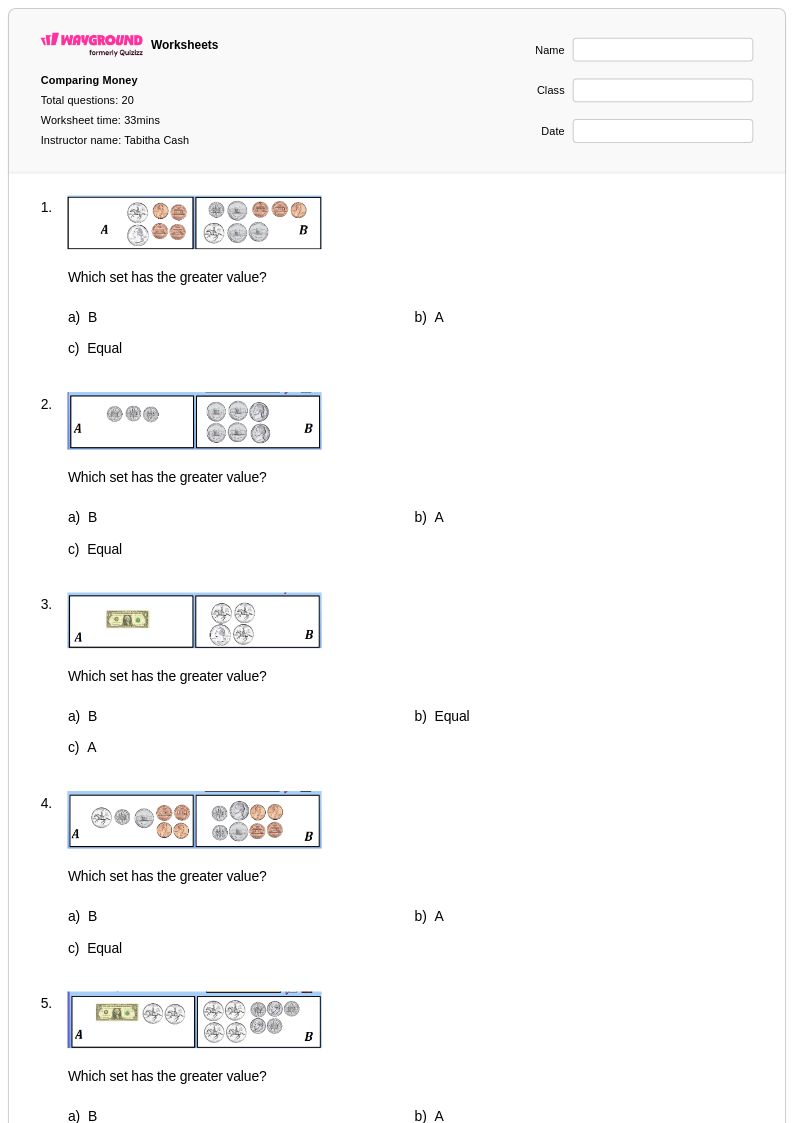
20 Q
2nd
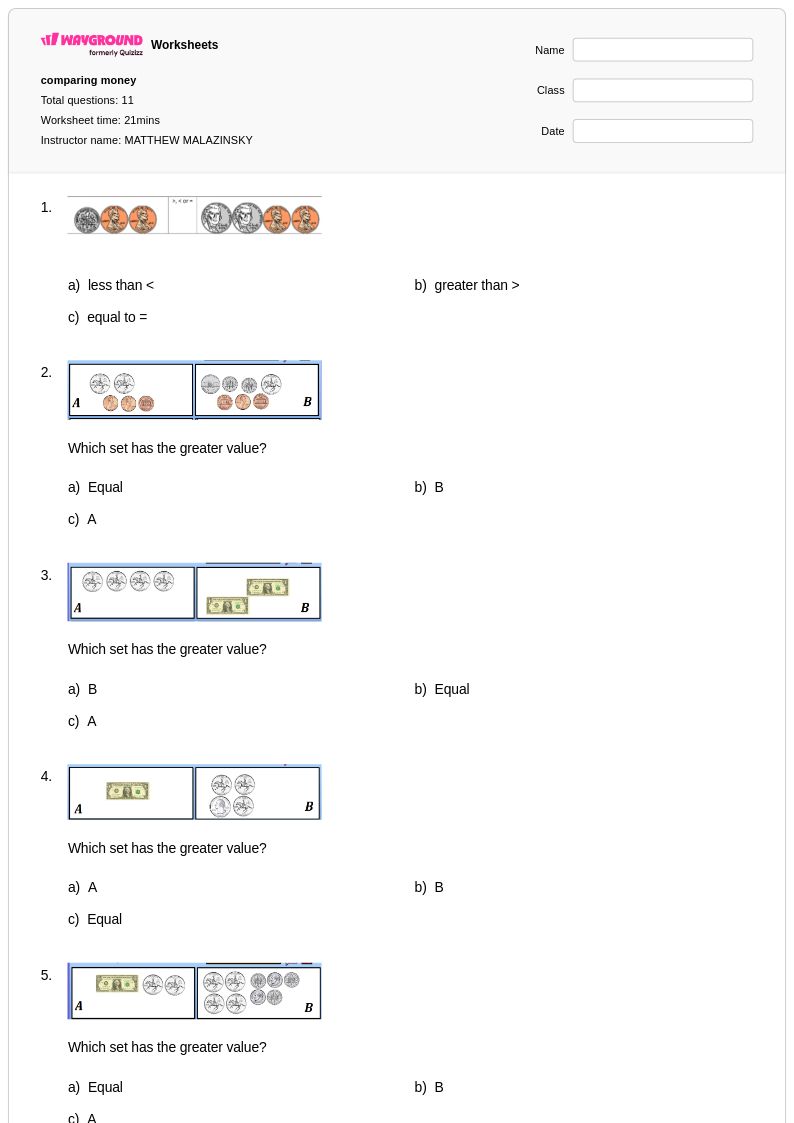
11 Q
2nd
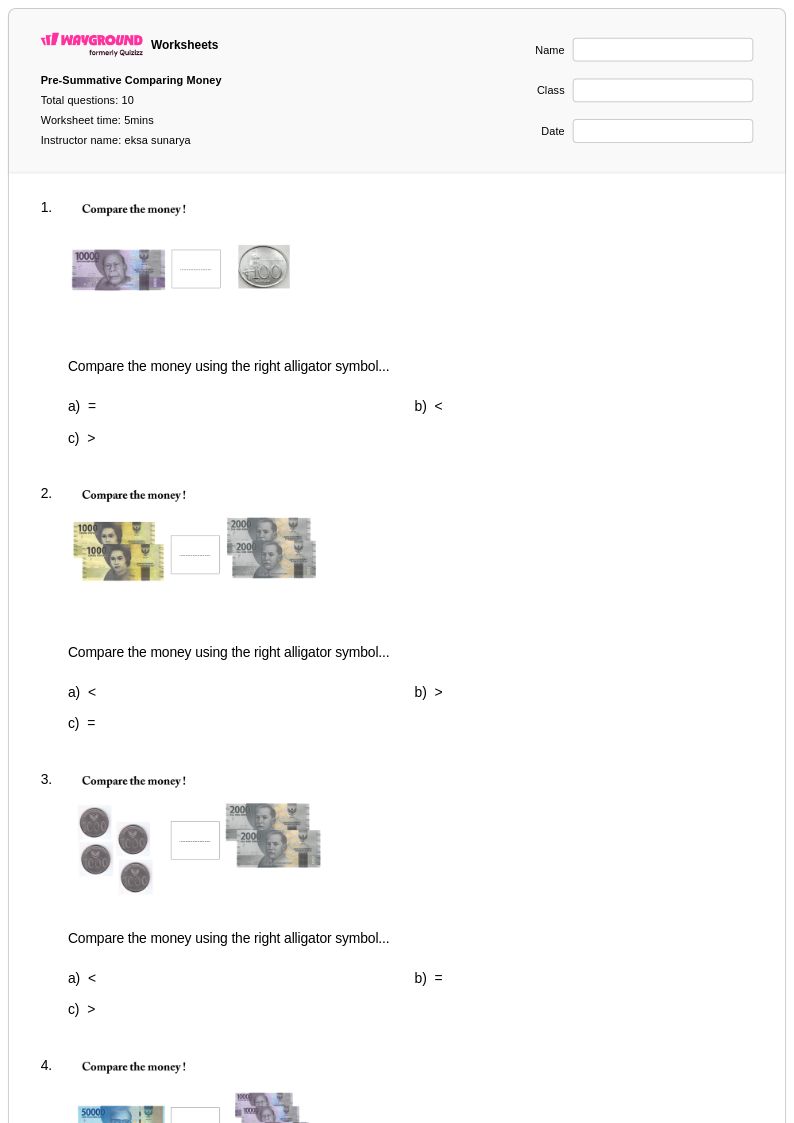
10 Q
KG - 1st
10 Q
2nd - 3rd
9 Q
2nd - 3rd
10 Q
KG - 1st
5 Q
2nd
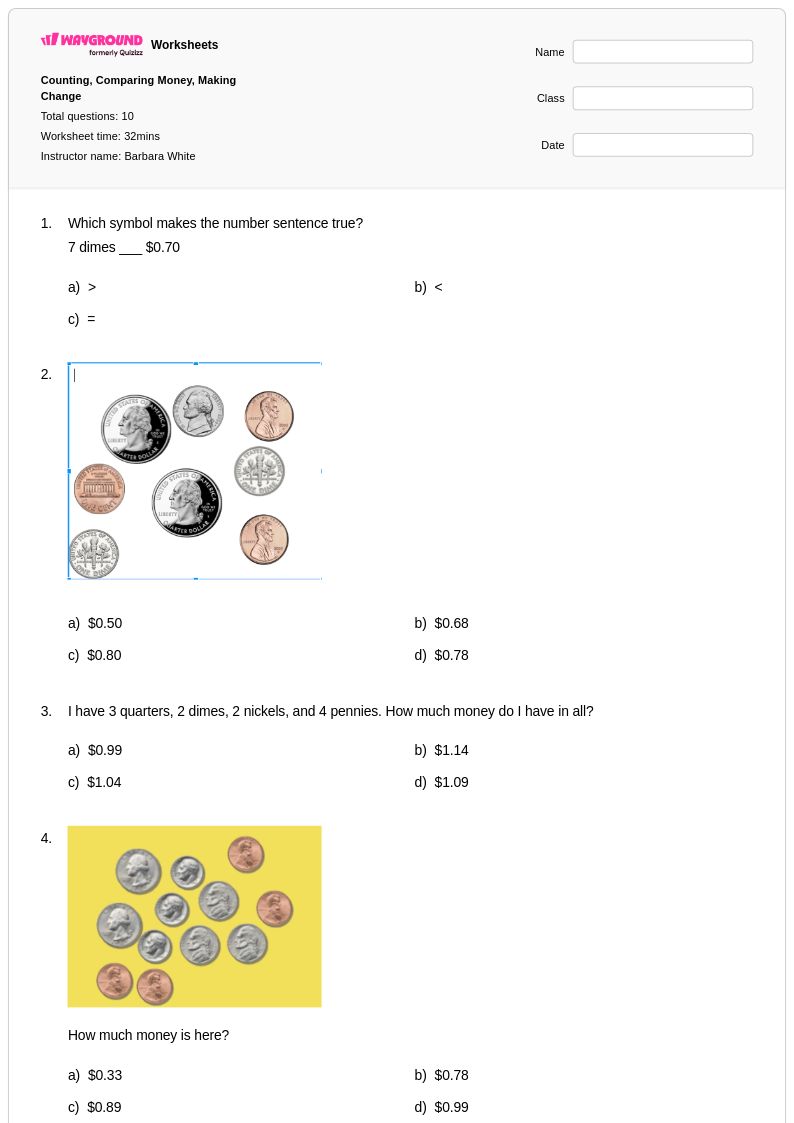
10 Q
3rd
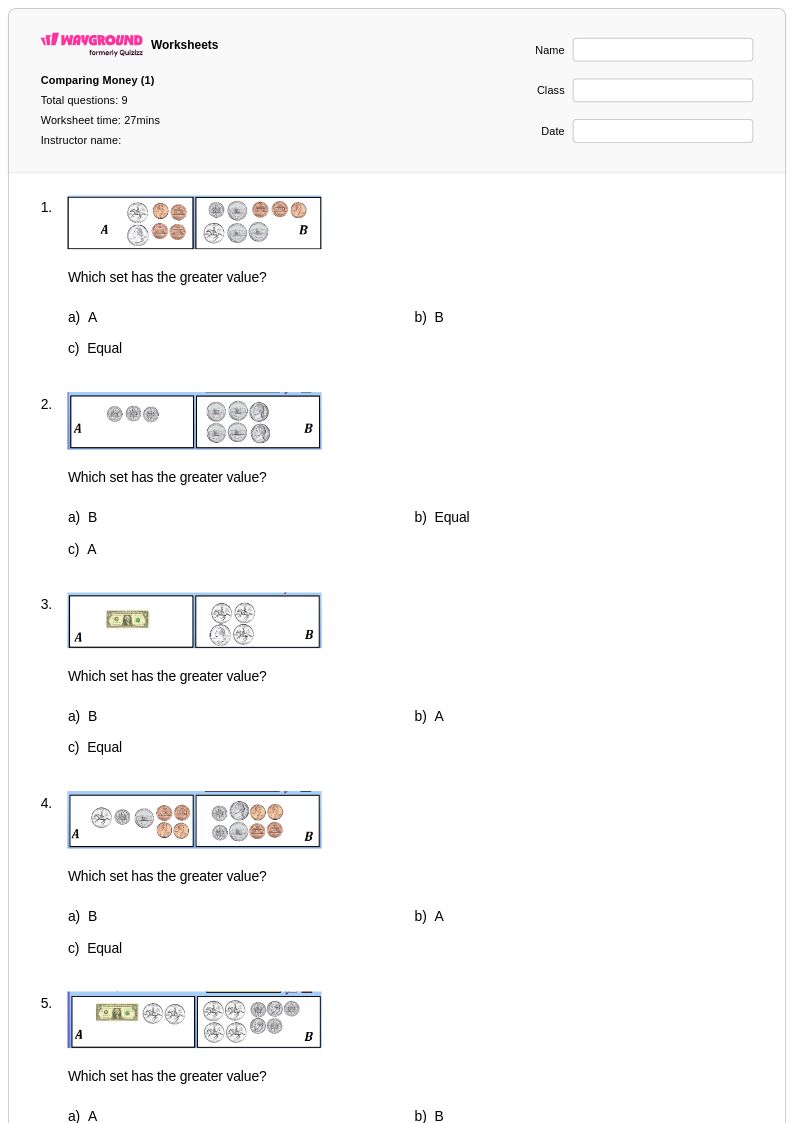
9 Q
2nd
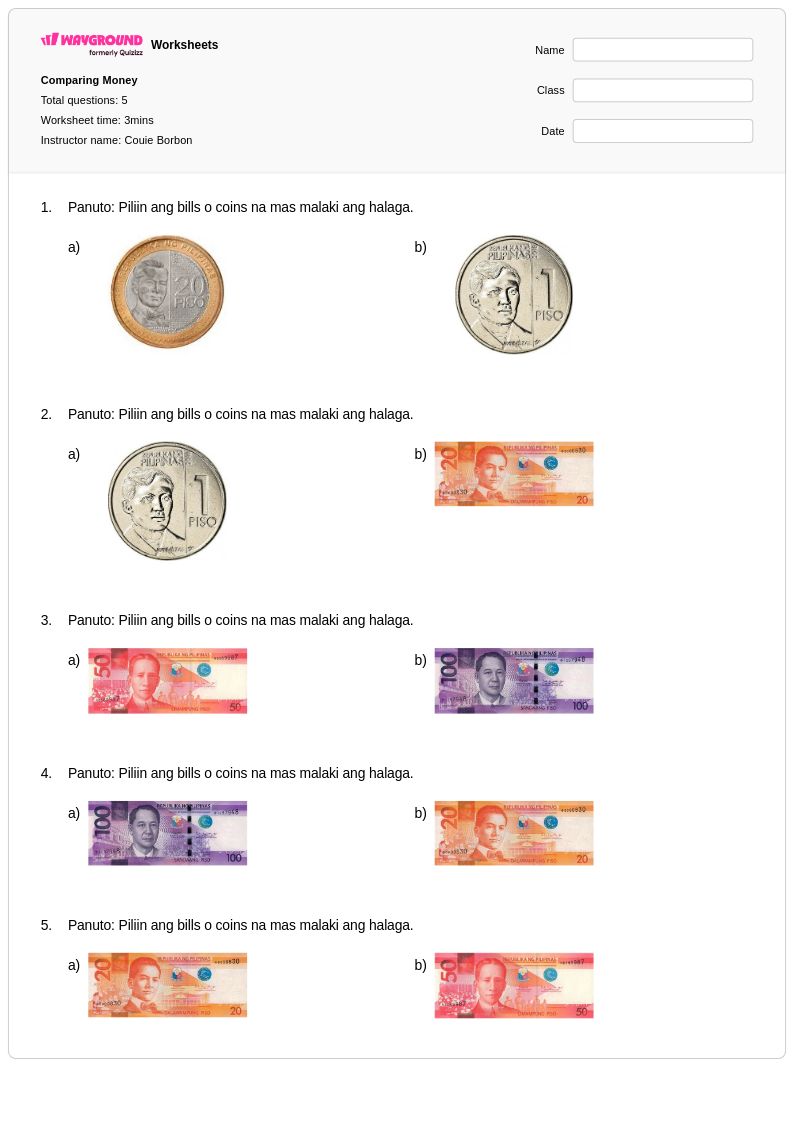
5 Q
1st
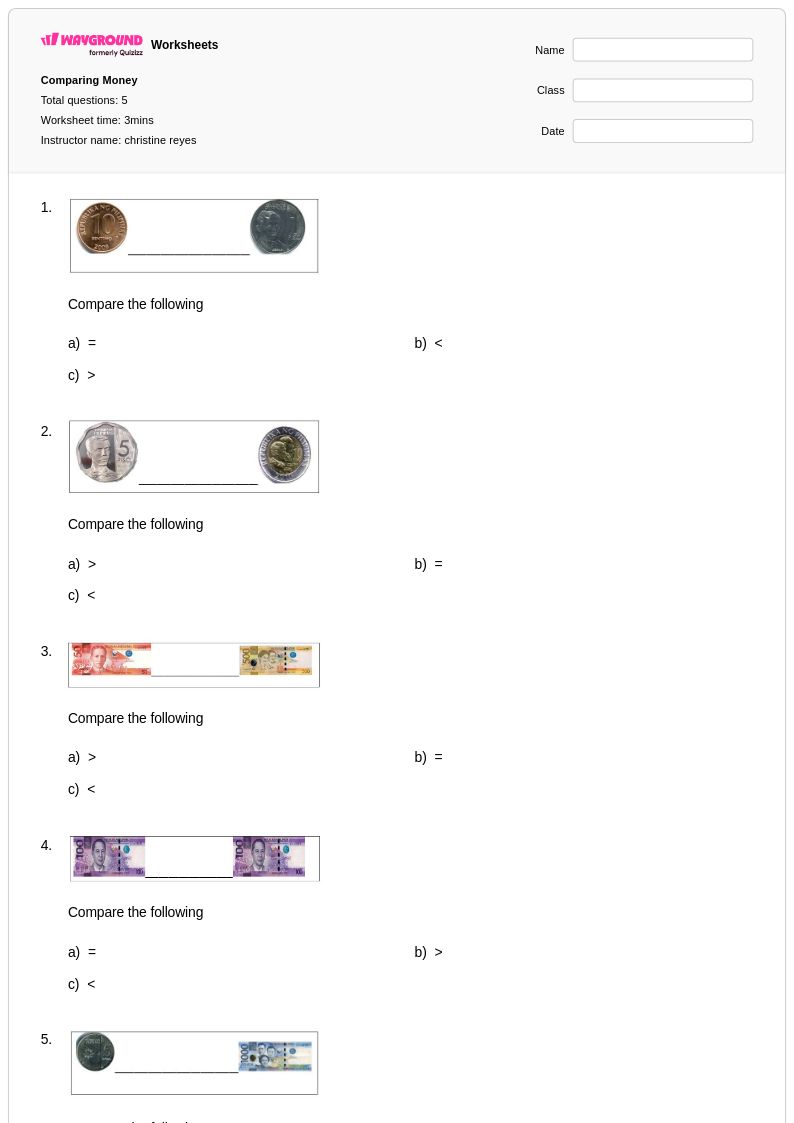
5 Q
1st - 3rd
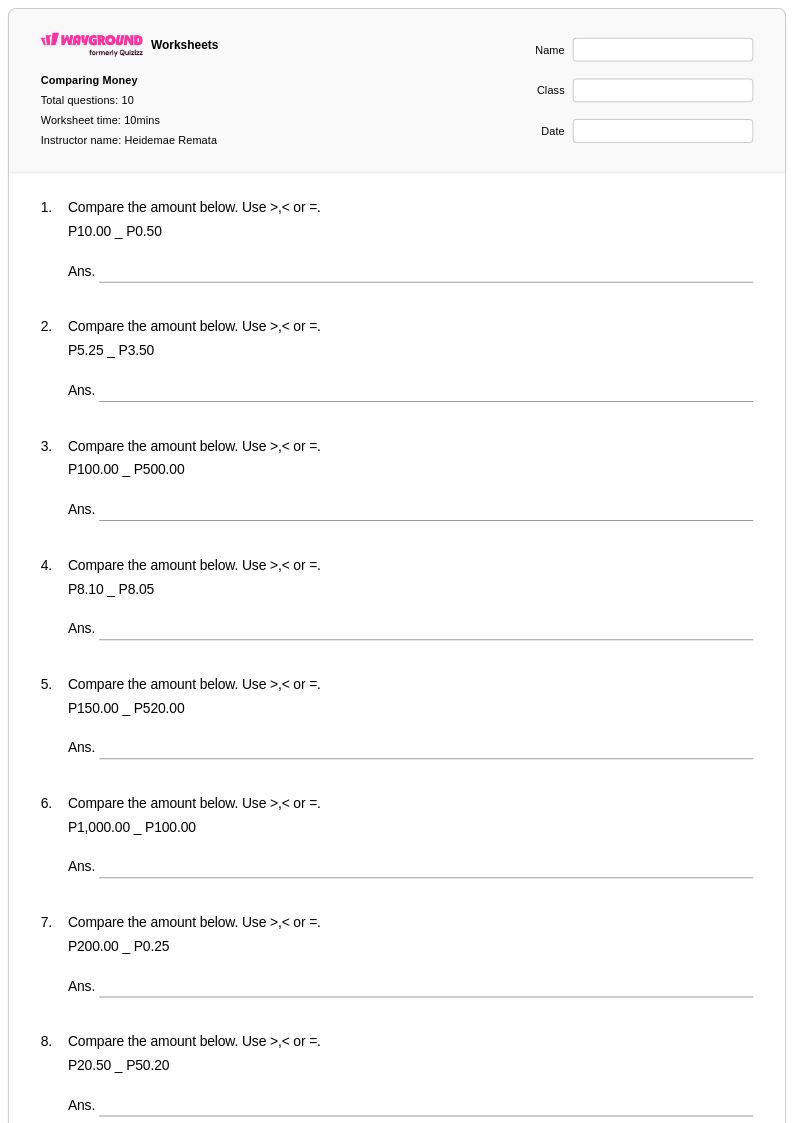
10 Q
3rd
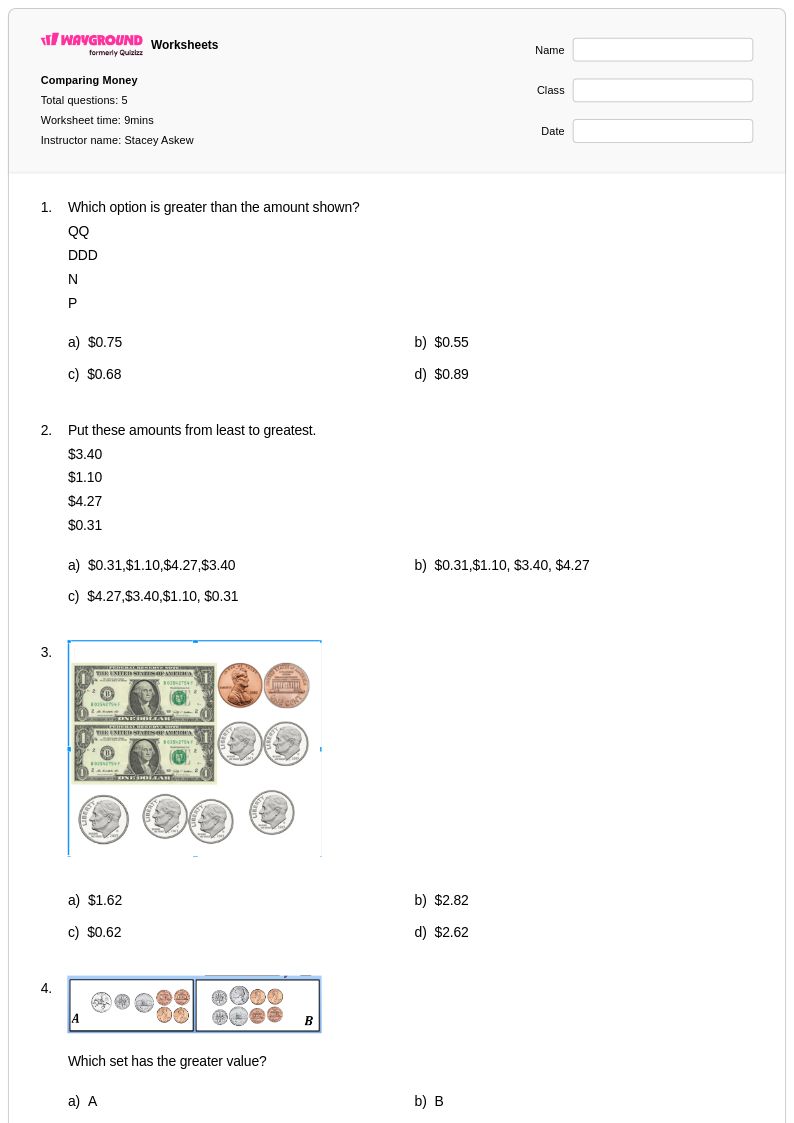
5 Q
3rd
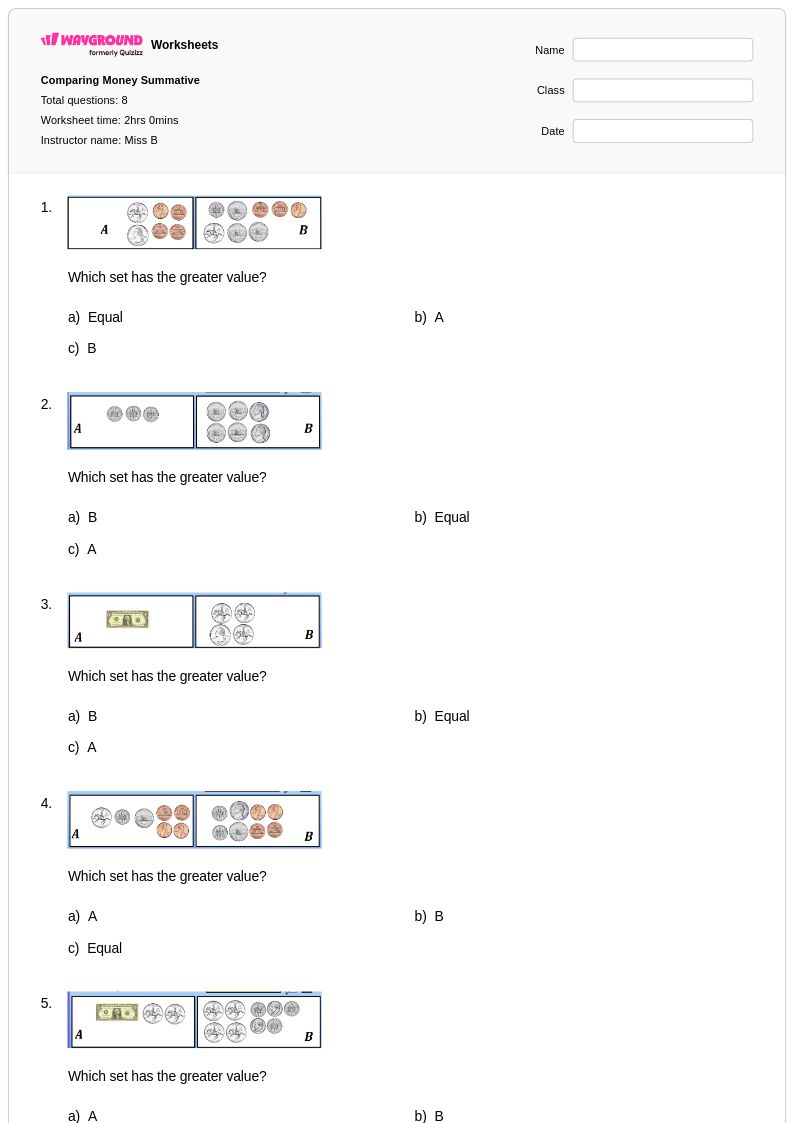
8 Q
3rd
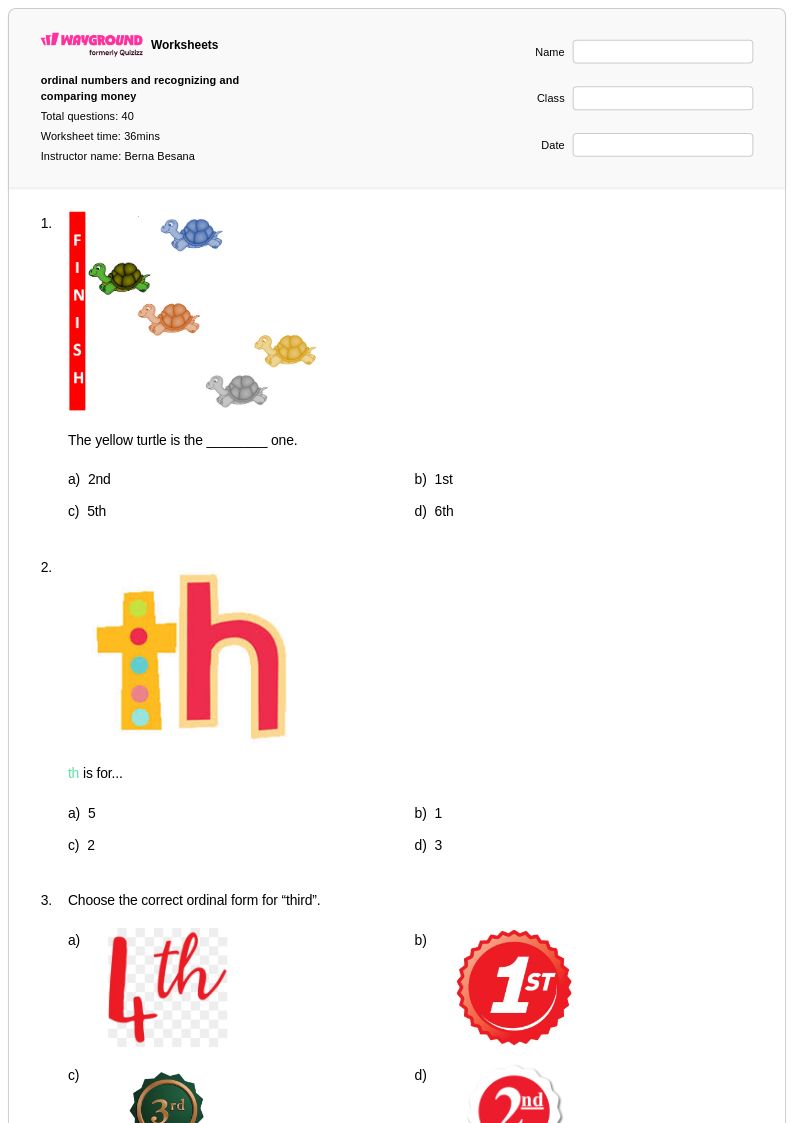
40 Q
3rd
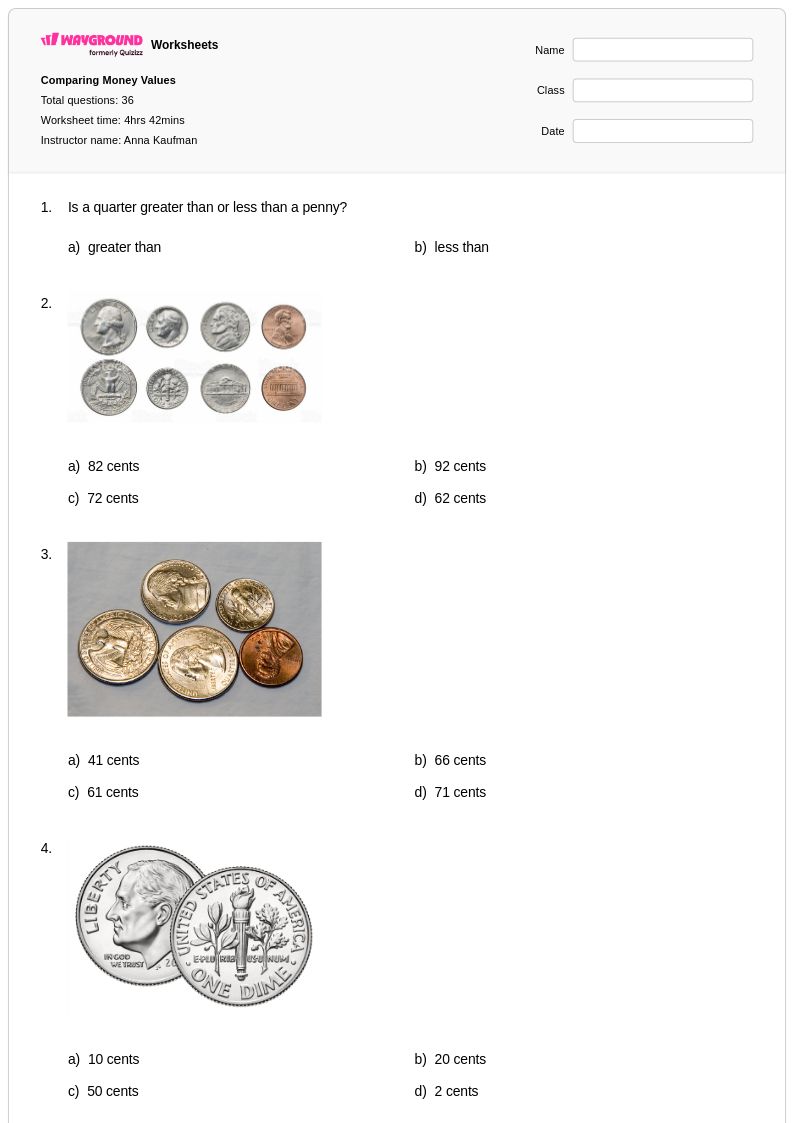
36 Q
2nd
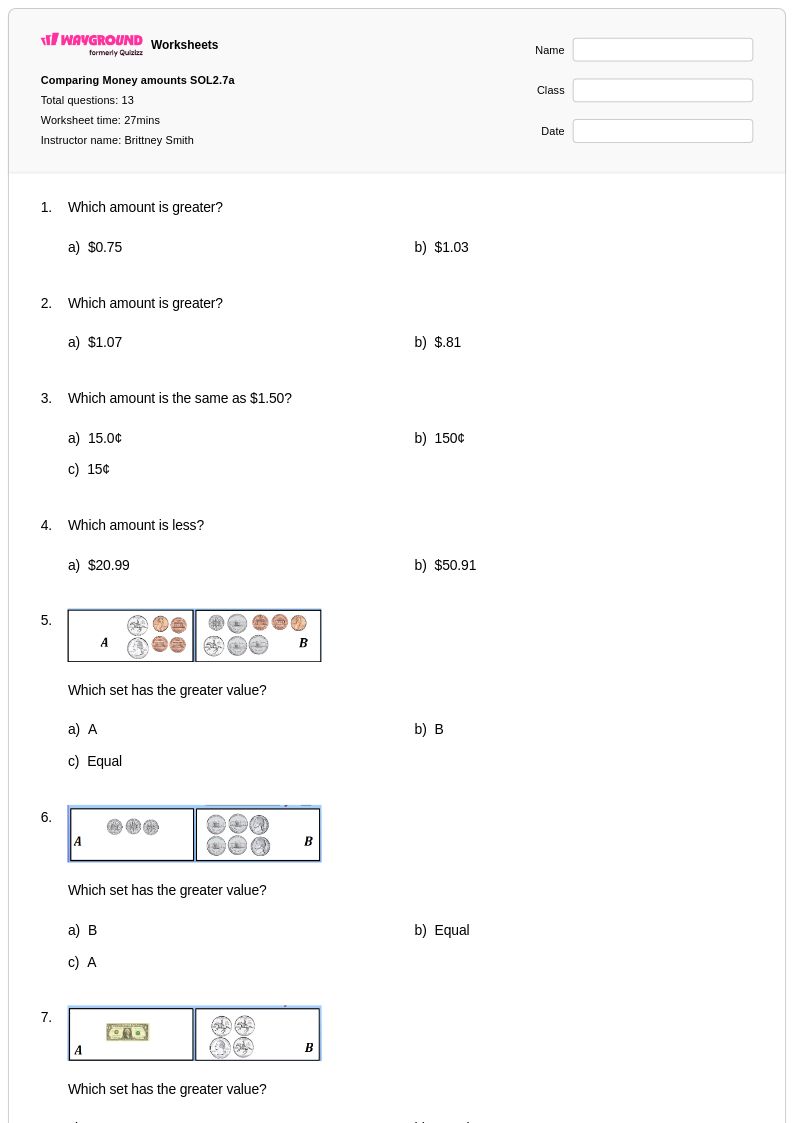
13 Q
2nd - 3rd
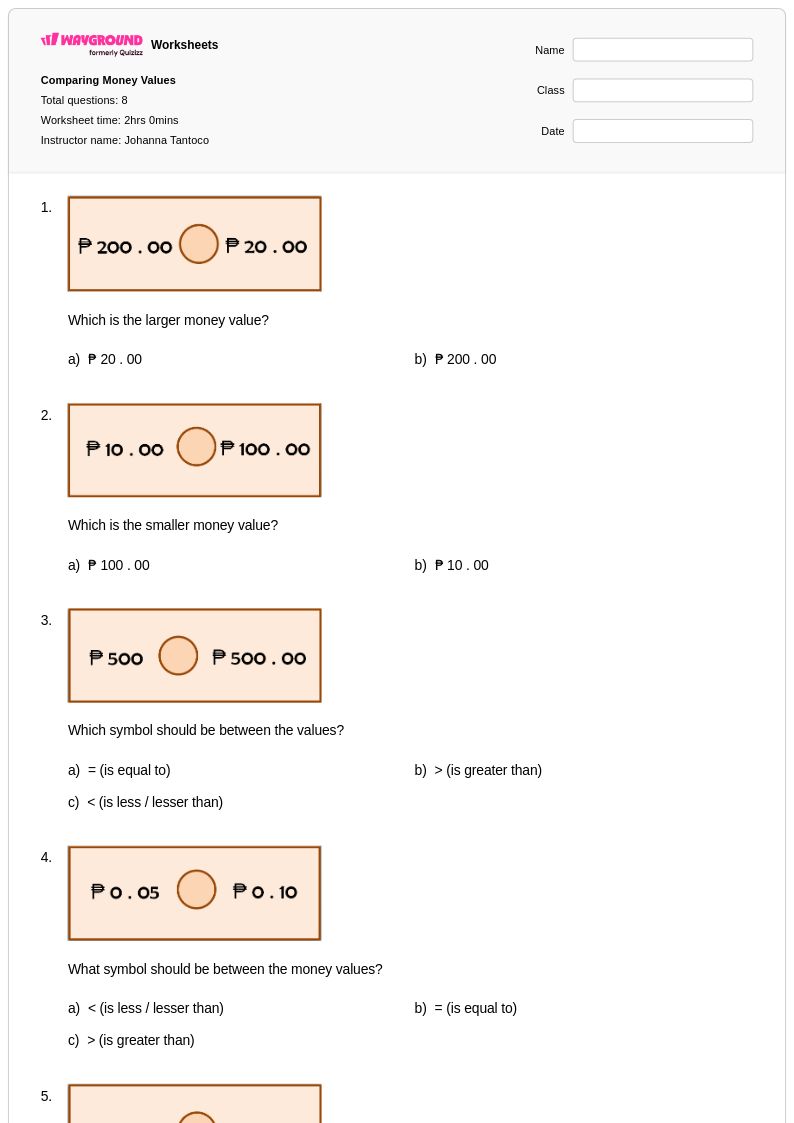
8 Q
3rd
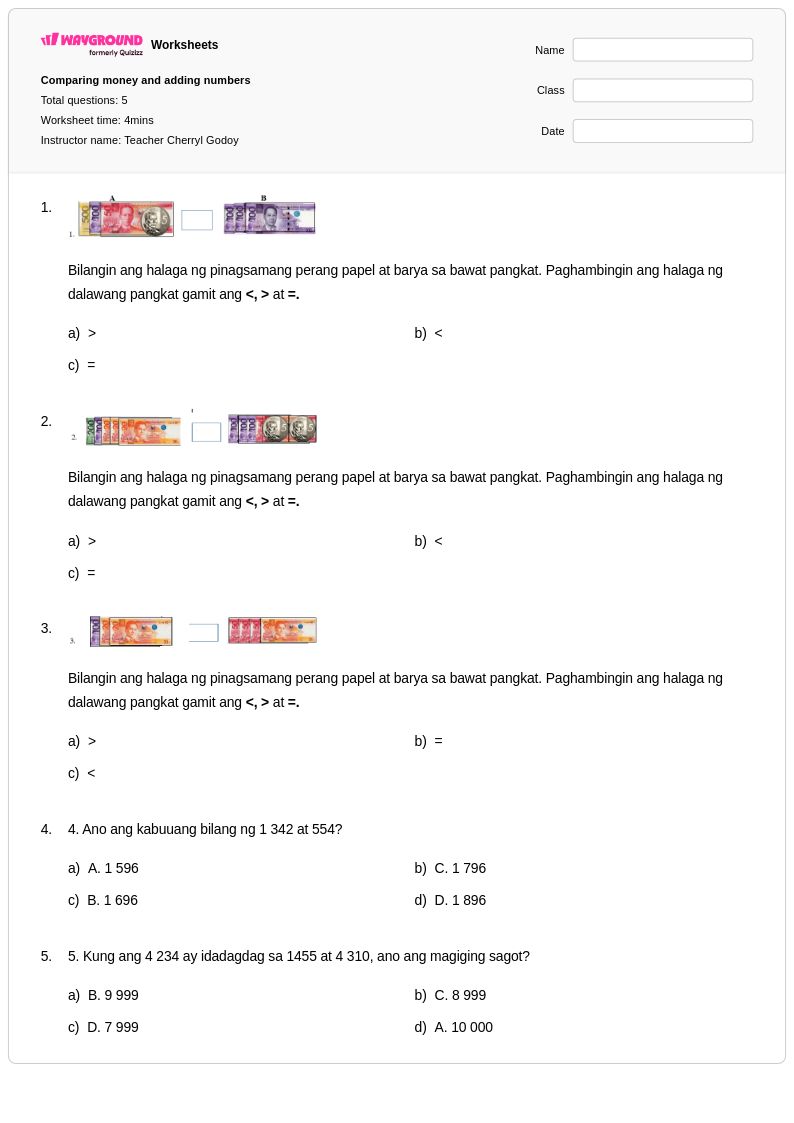
5 Q
3rd
5 Q
2nd
15 Q
3rd - Uni
15 Q
11th
Explore Comparing Money Worksheets by Grades
Explore Other Subject Worksheets for kindergarten
Explore printable Comparing Money worksheets for Kindergarten
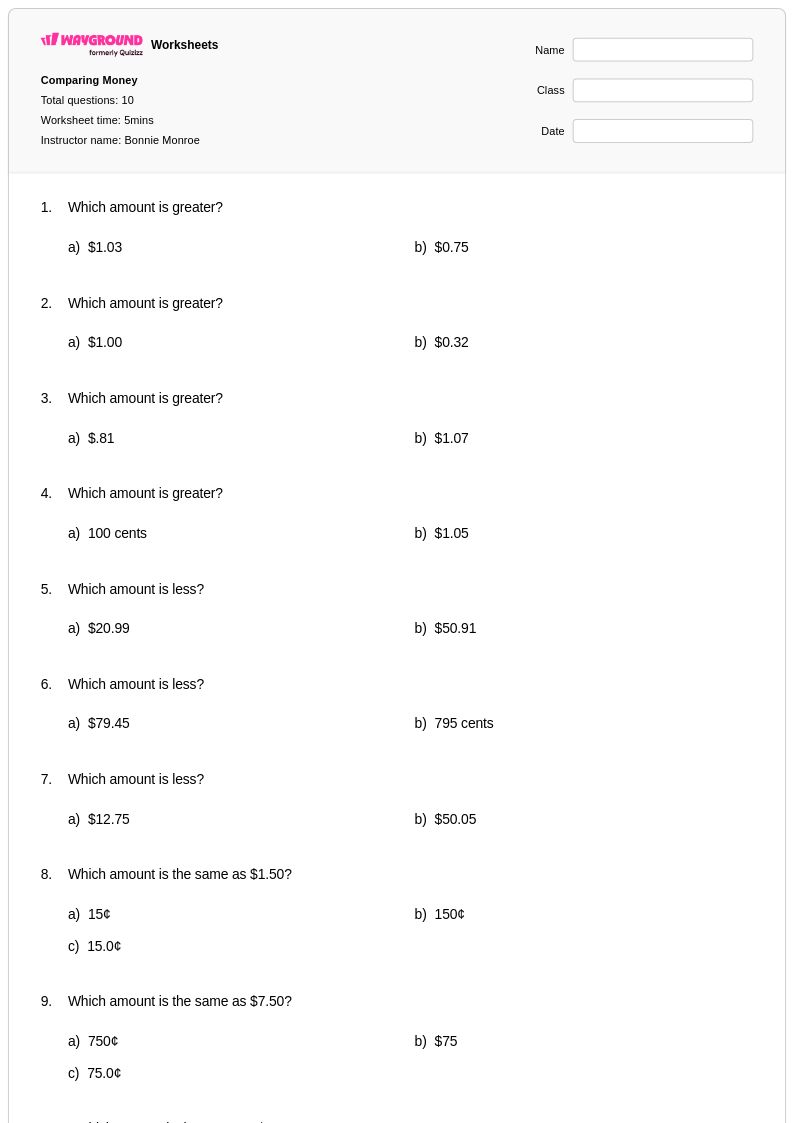
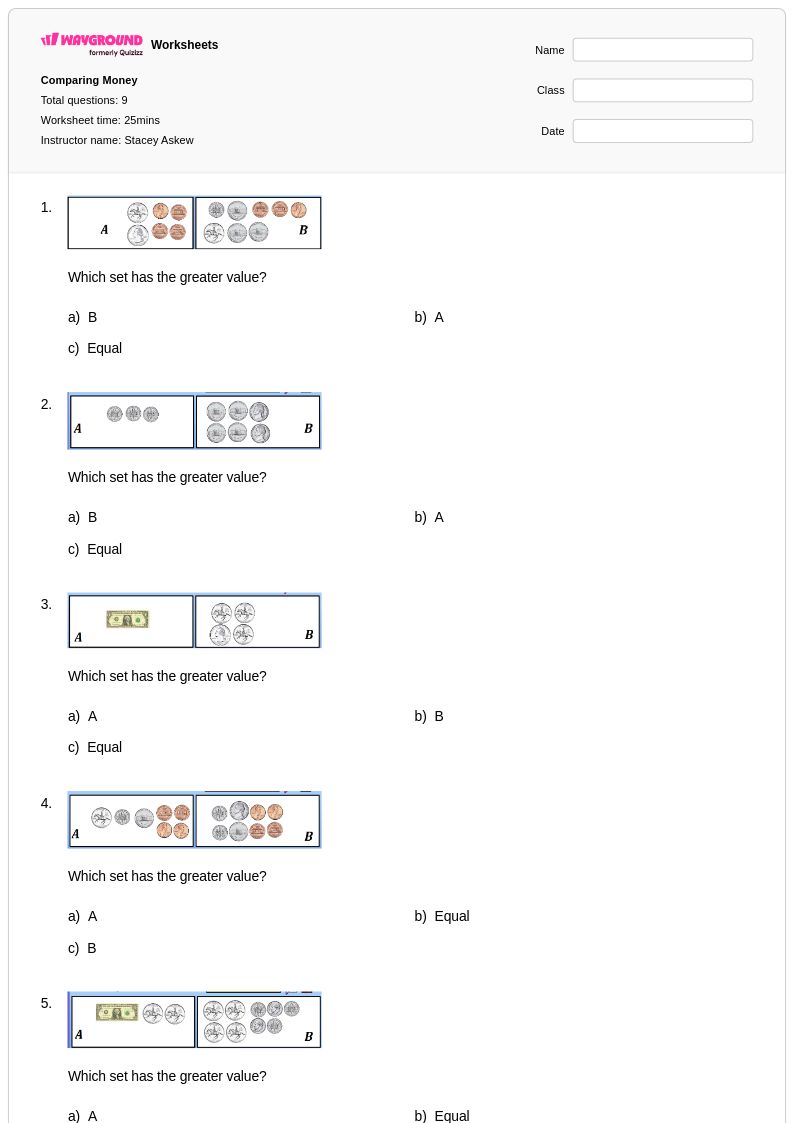
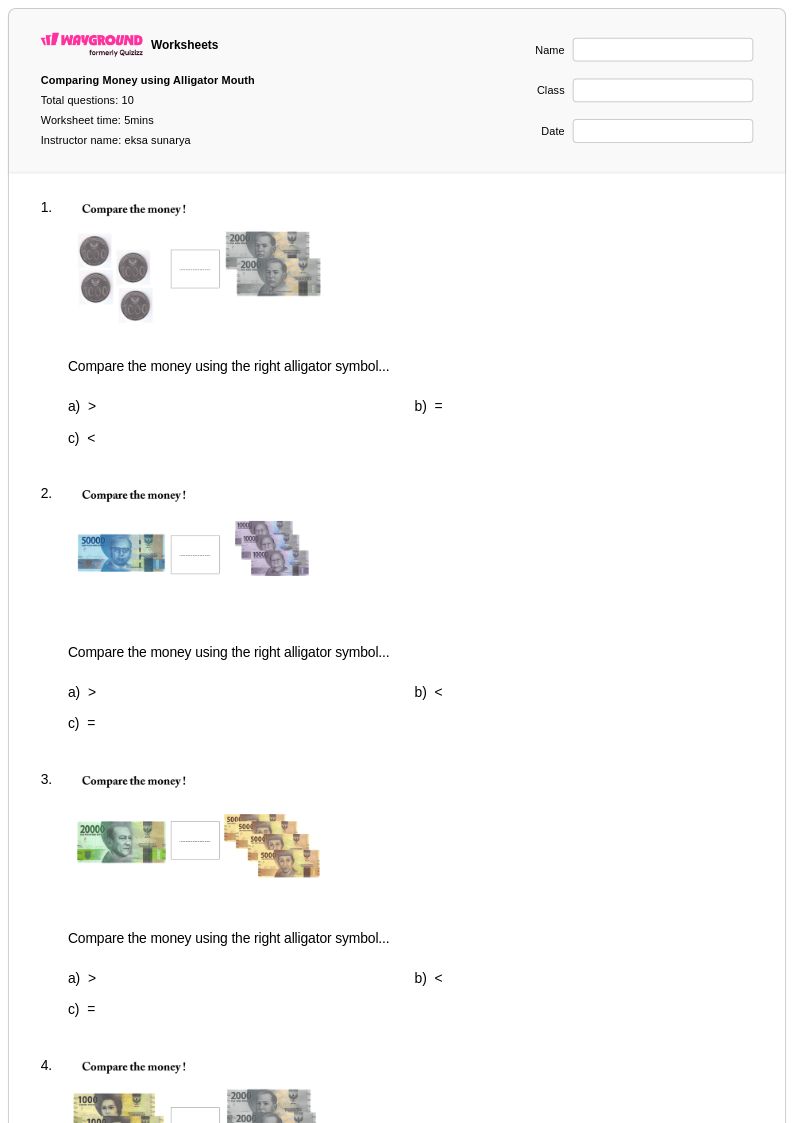
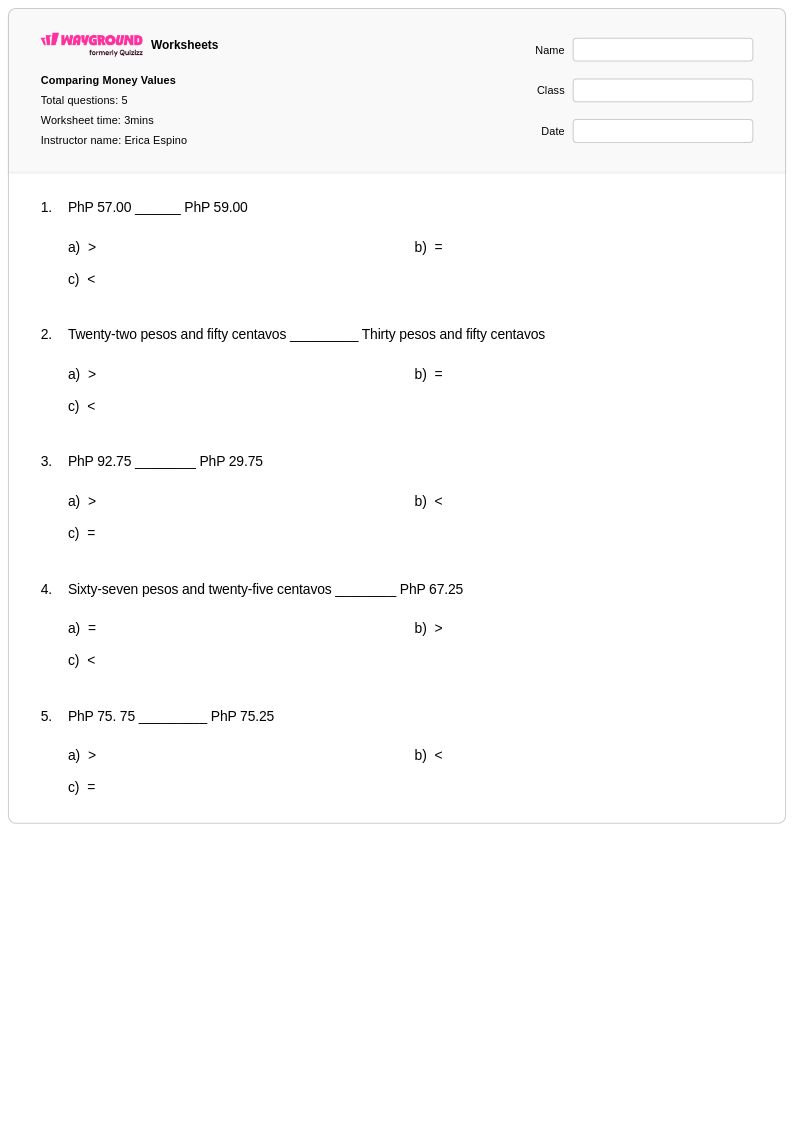
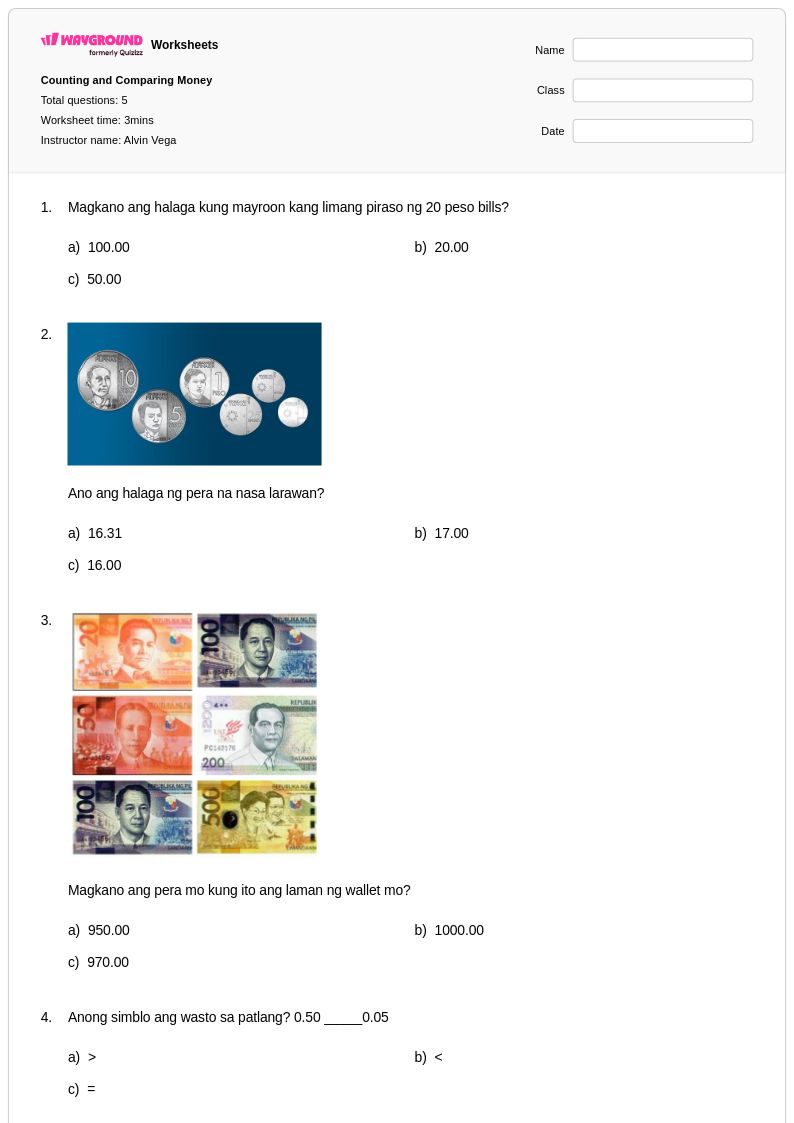
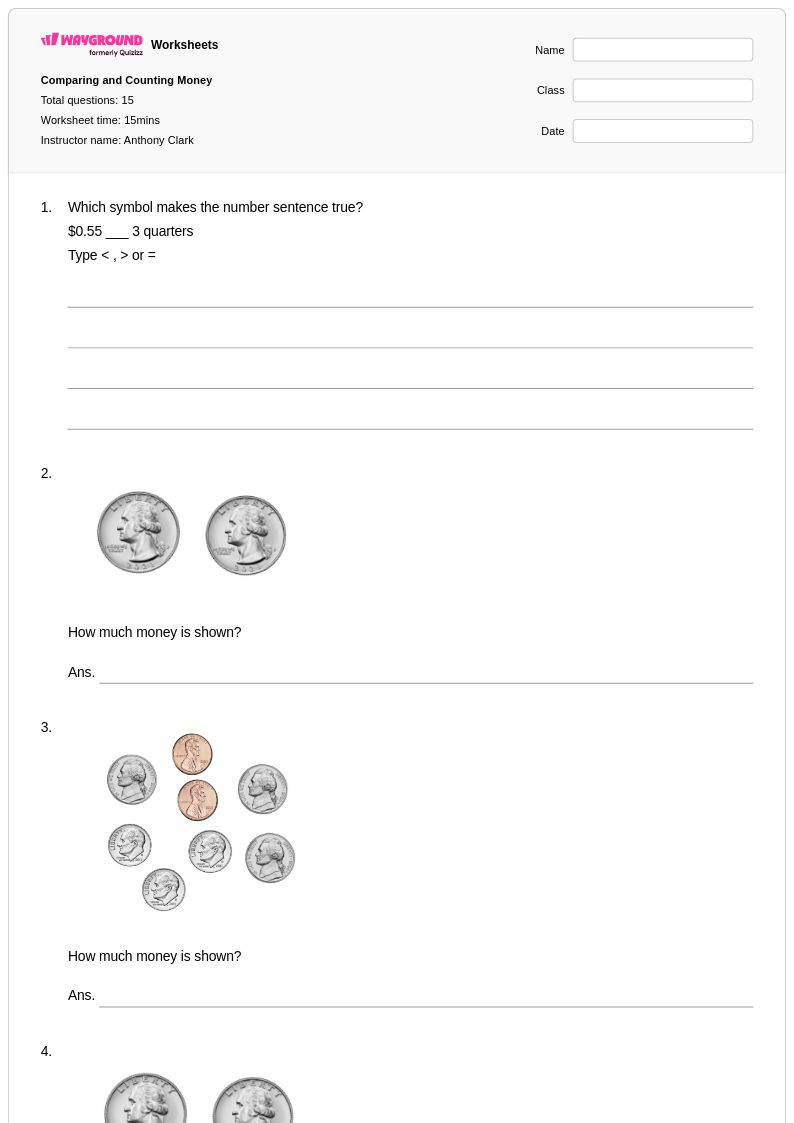
Comparing money worksheets for kindergarten students provide essential foundational practice in recognizing, identifying, and evaluating the relative values of coins and bills. These educational resources from Wayground (formerly Quizizz) help young learners develop critical mathematical reasoning skills by presenting visual comparisons between different denominations, teaching students to distinguish between pennies, nickels, dimes, and quarters while understanding concepts of "more than," "less than," and "equal to" in monetary contexts. The comprehensive collection includes free printables with answer keys, pdf downloads, and practice problems that guide kindergarteners through systematic coin recognition exercises, value comparison activities, and introductory money counting tasks that build confidence with early financial literacy concepts.
Wayground (formerly Quizizz) empowers educators with millions of teacher-created comparing money resources specifically designed to support kindergarten mathematics instruction through robust search and filtering capabilities that align with educational standards. Teachers can access differentiated worksheet collections that accommodate diverse learning needs, from basic coin identification exercises to more challenging value comparison activities, all available in both printable and digital pdf formats for maximum classroom flexibility. These comprehensive tools streamline lesson planning by providing ready-to-use materials for skill practice, targeted remediation for struggling learners, and enrichment opportunities for advanced students, while the platform's customization features allow educators to modify worksheets to match specific curriculum requirements and individual student progress levels.
FAQs
How do I teach comparing money in kindergarten?
What comparing money exercises work well for kindergarten students?
What mistakes do kindergarten students make when comparing coins?
How can I use a kindergarten comparing money worksheet from Wayground?
How does kindergarten money instruction connect to Common Core math?
How can I differentiate kindergarten comparing money worksheets?
What money comparison skills are appropriate for kindergarten?