
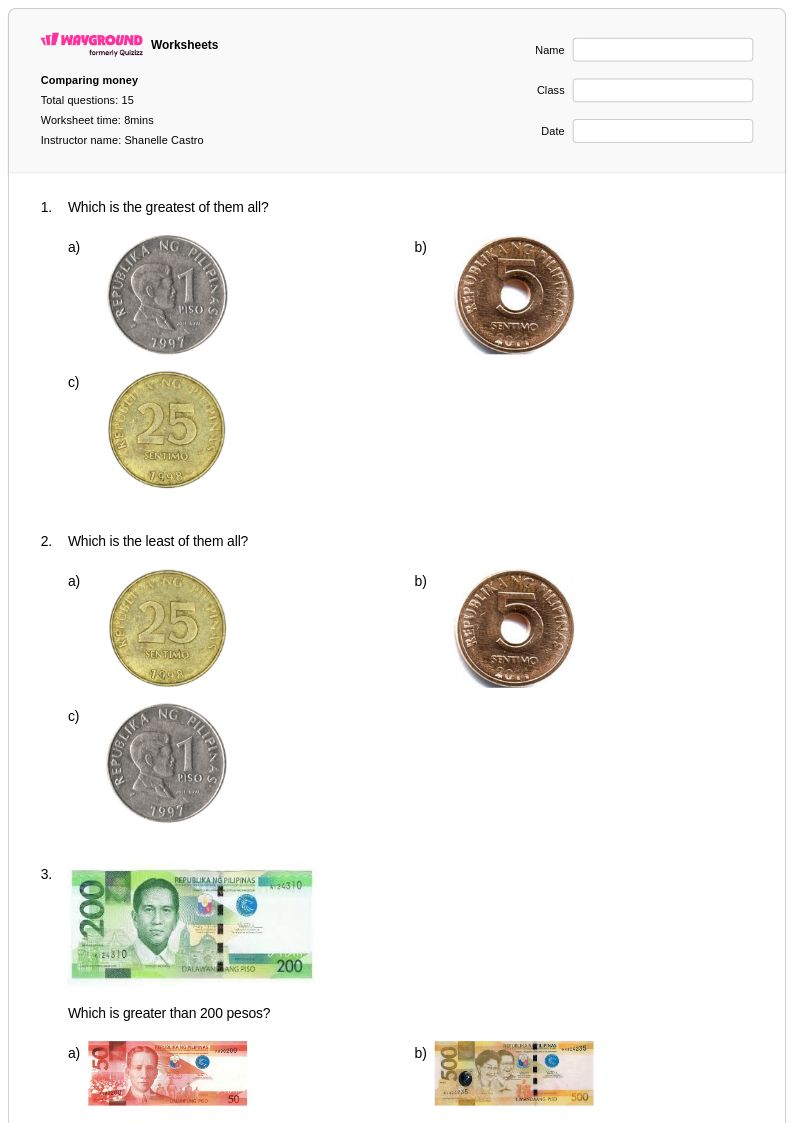
15Q
1st - 2nd
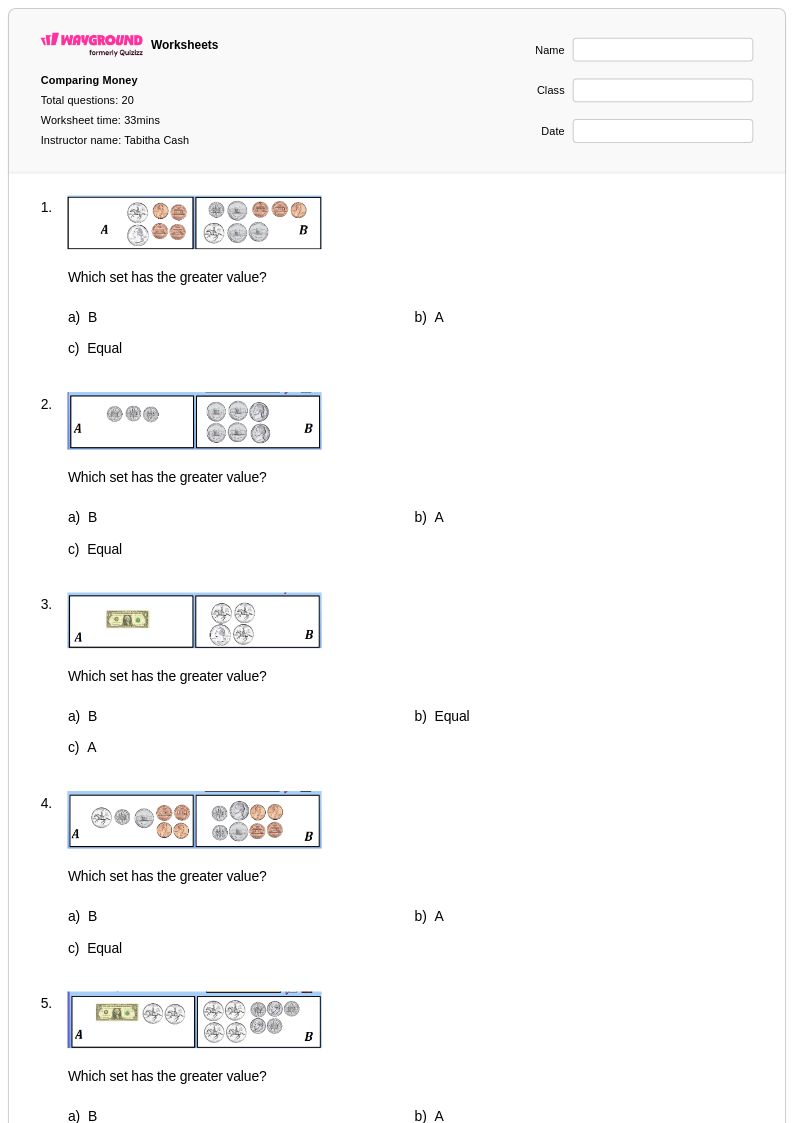
20Q
2nd
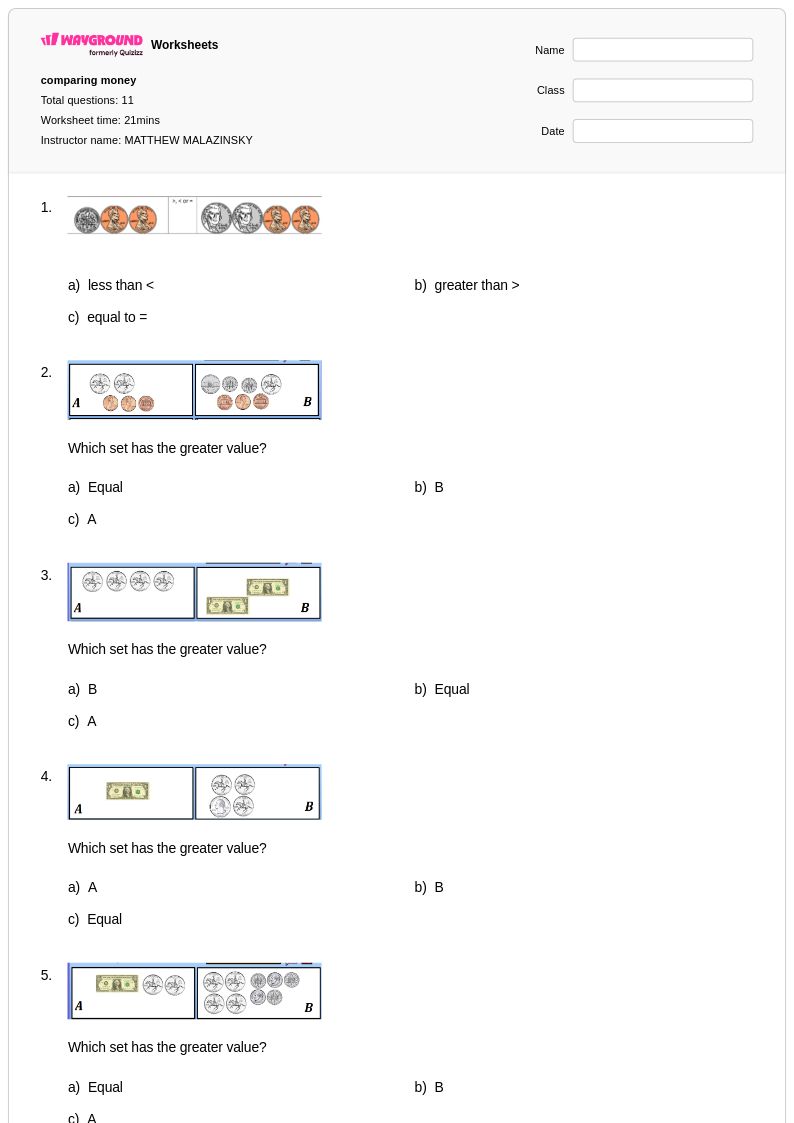
11Q
2nd
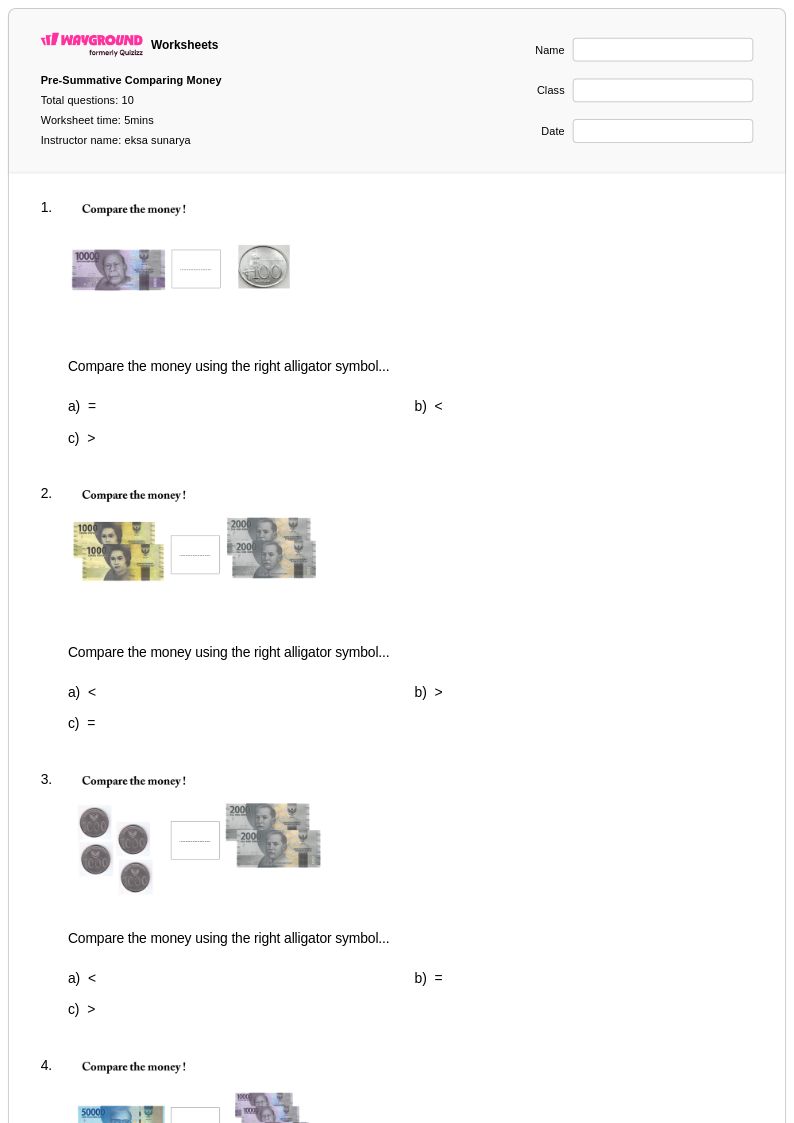
10Q
KG - 1st
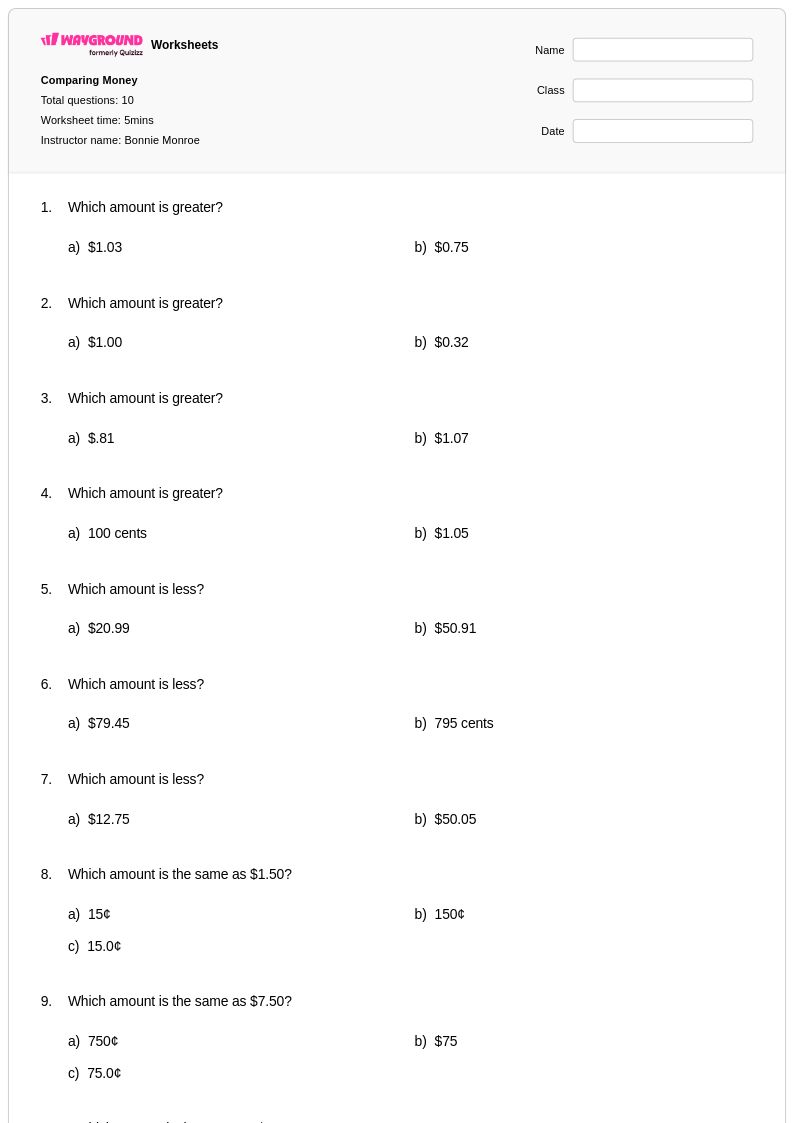
10Q
2nd - 3rd
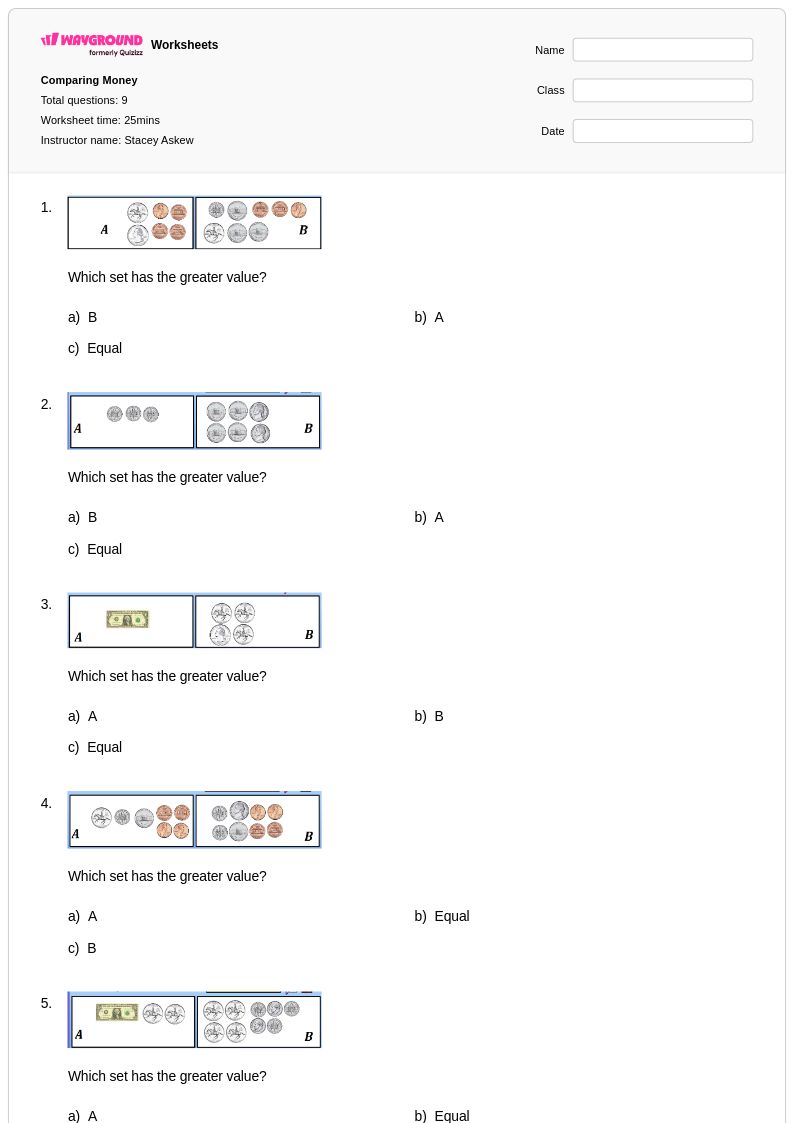
9Q
2nd - 3rd
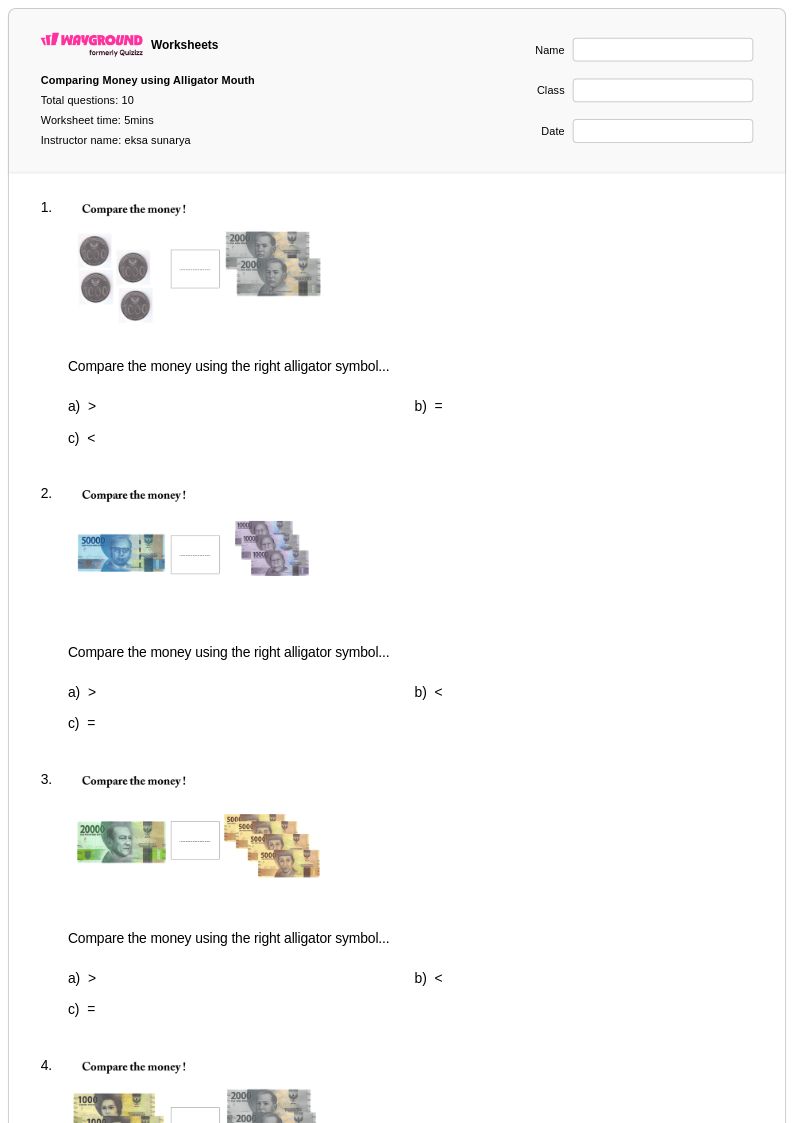
10Q
KG - 1st
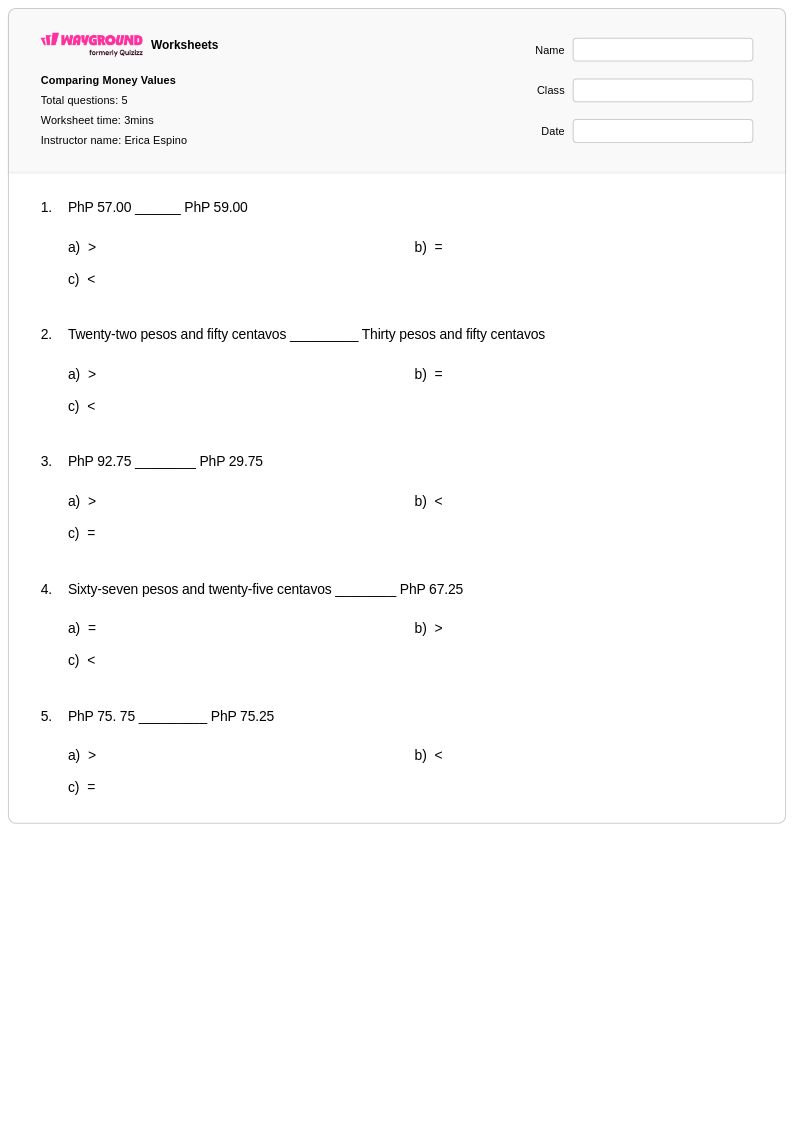
5Q
2nd
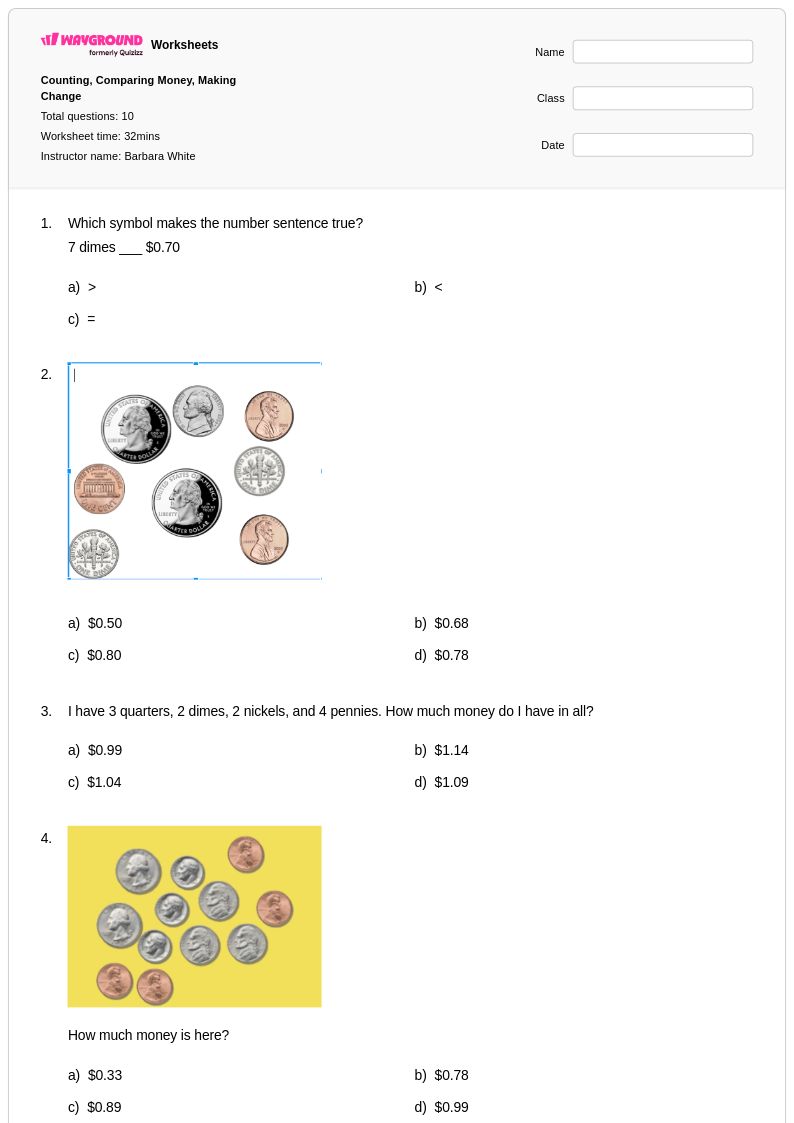
10Q
3rd
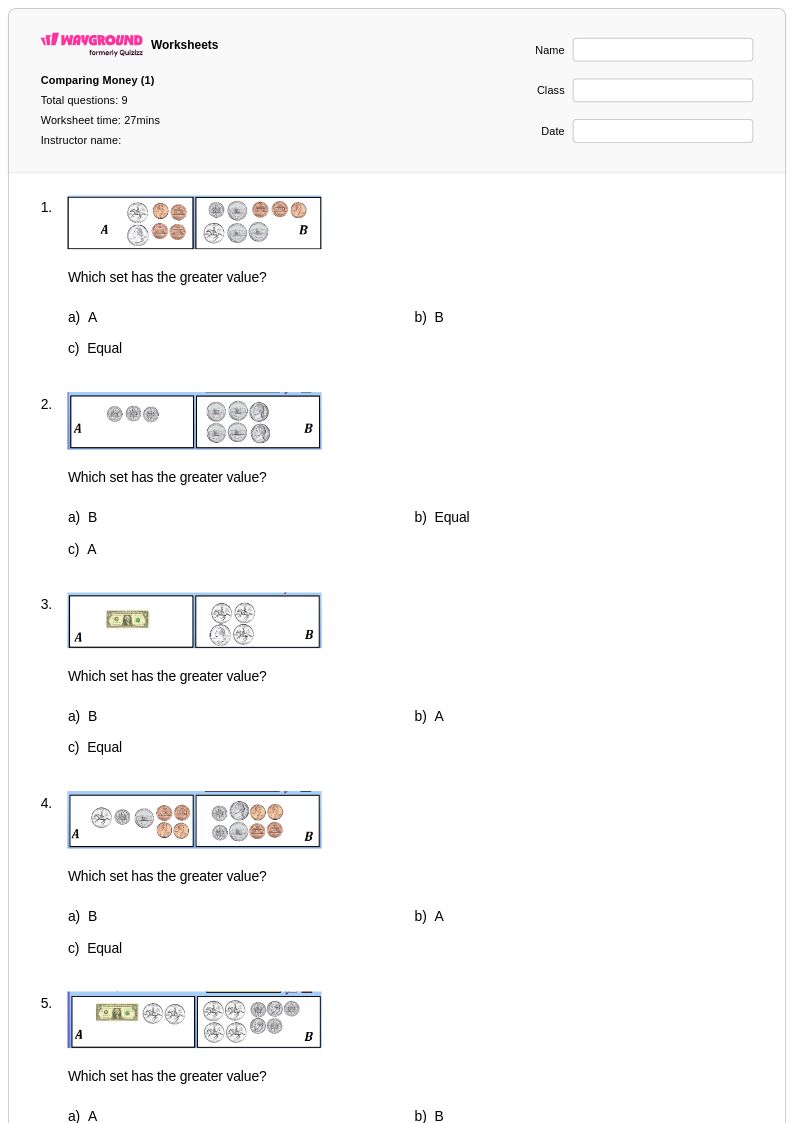
9Q
2nd
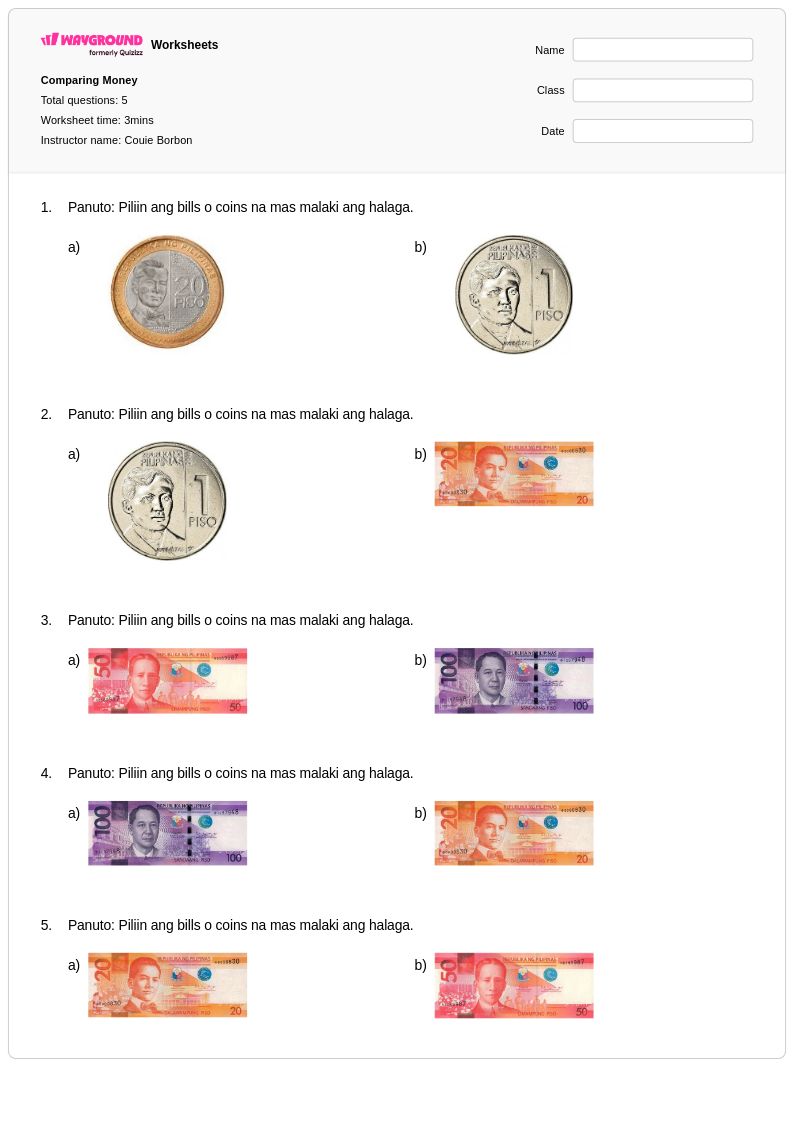
5Q
1st
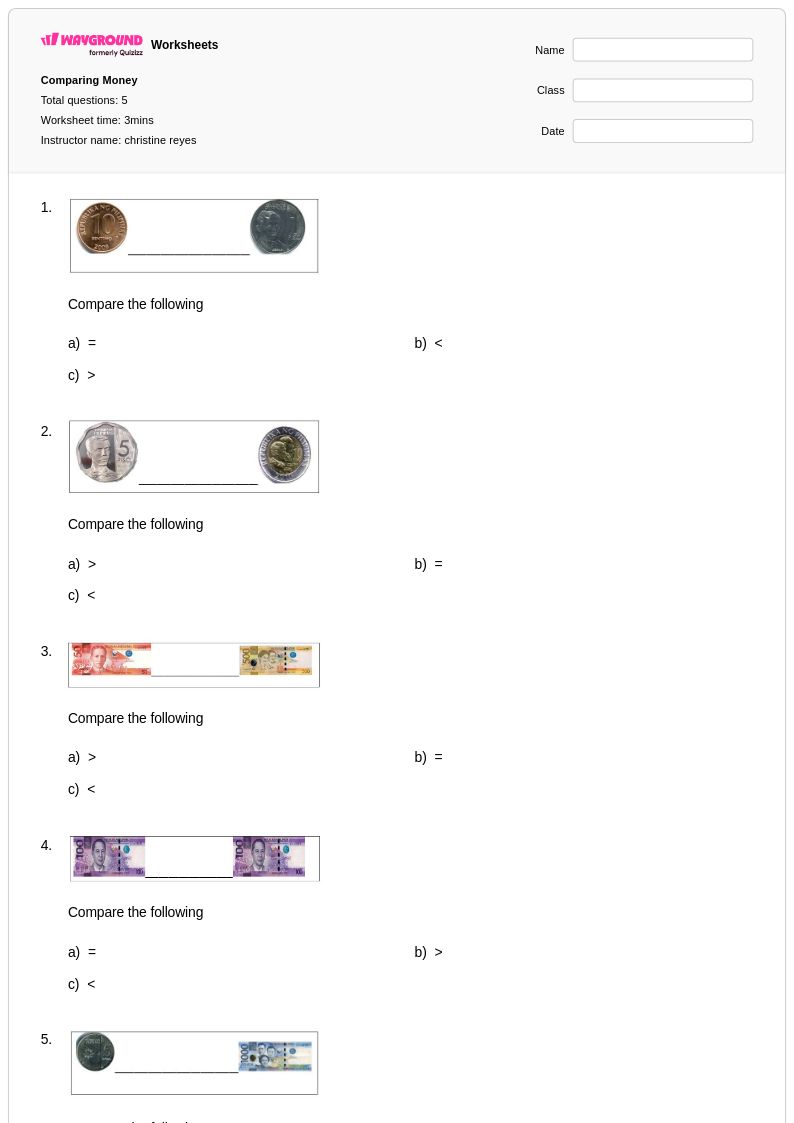
5Q
1st - 3rd
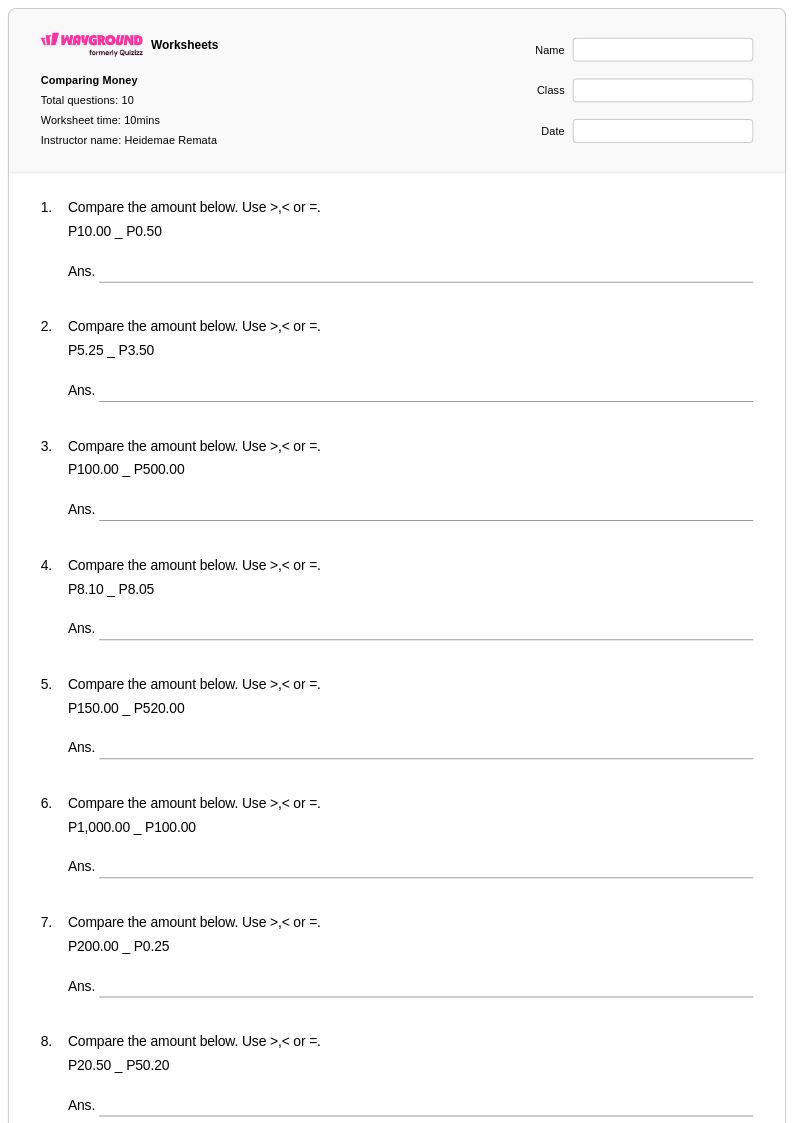
10Q
3rd
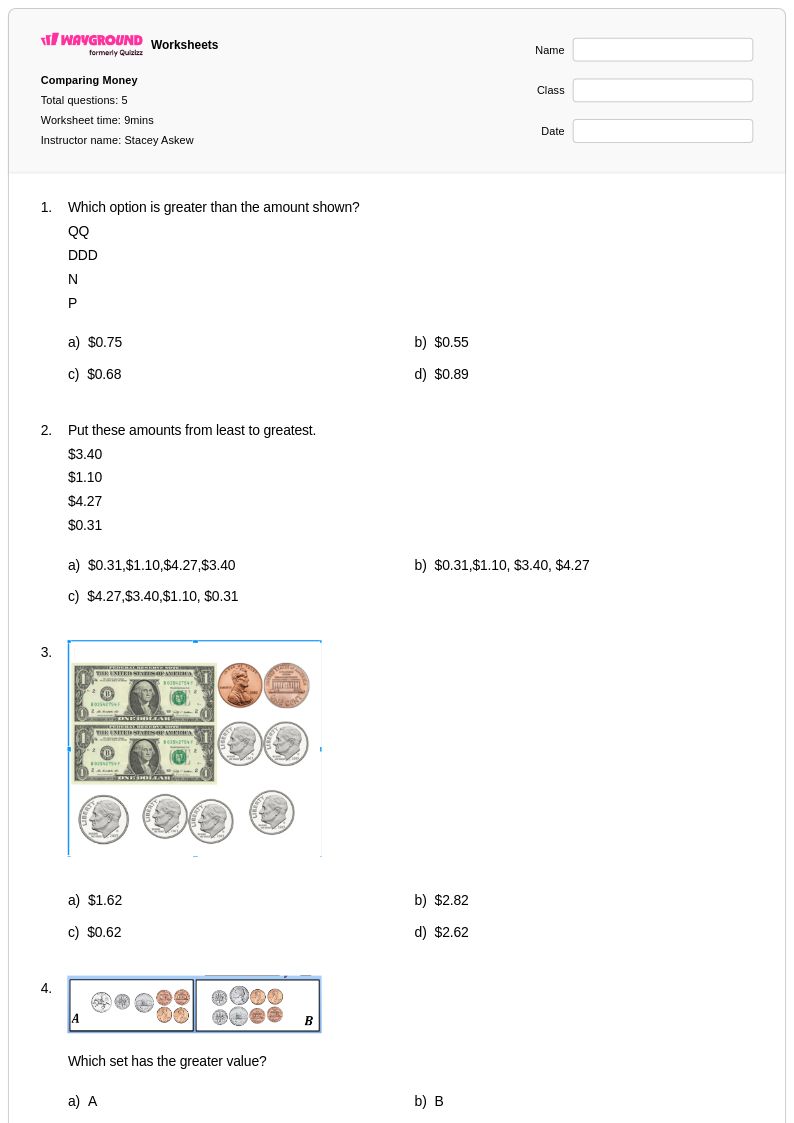
5Q
3rd
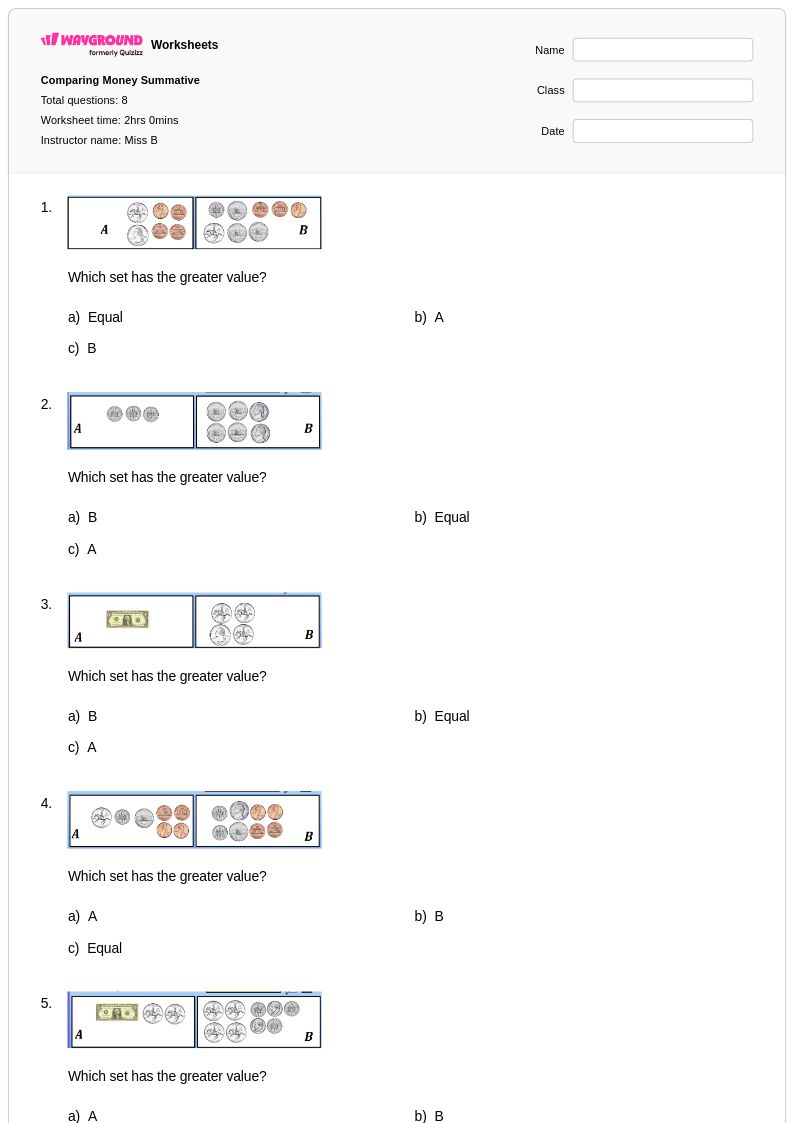
8Q
3rd
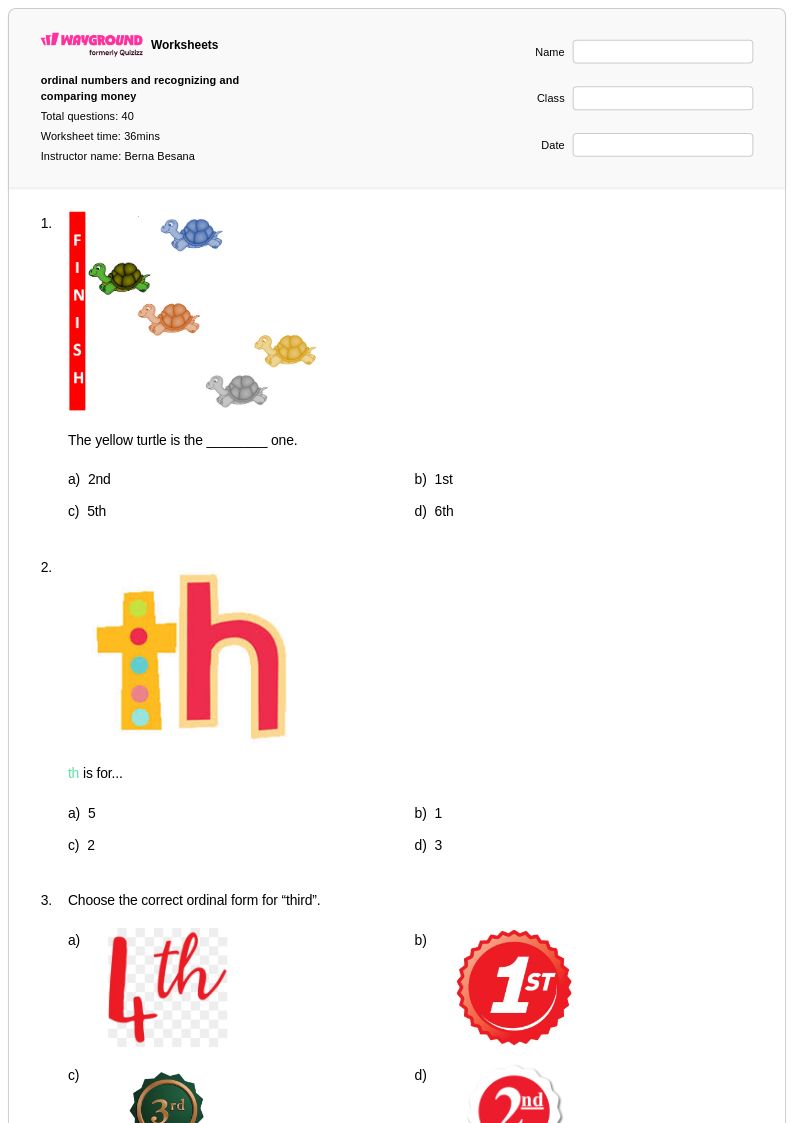
40Q
3rd
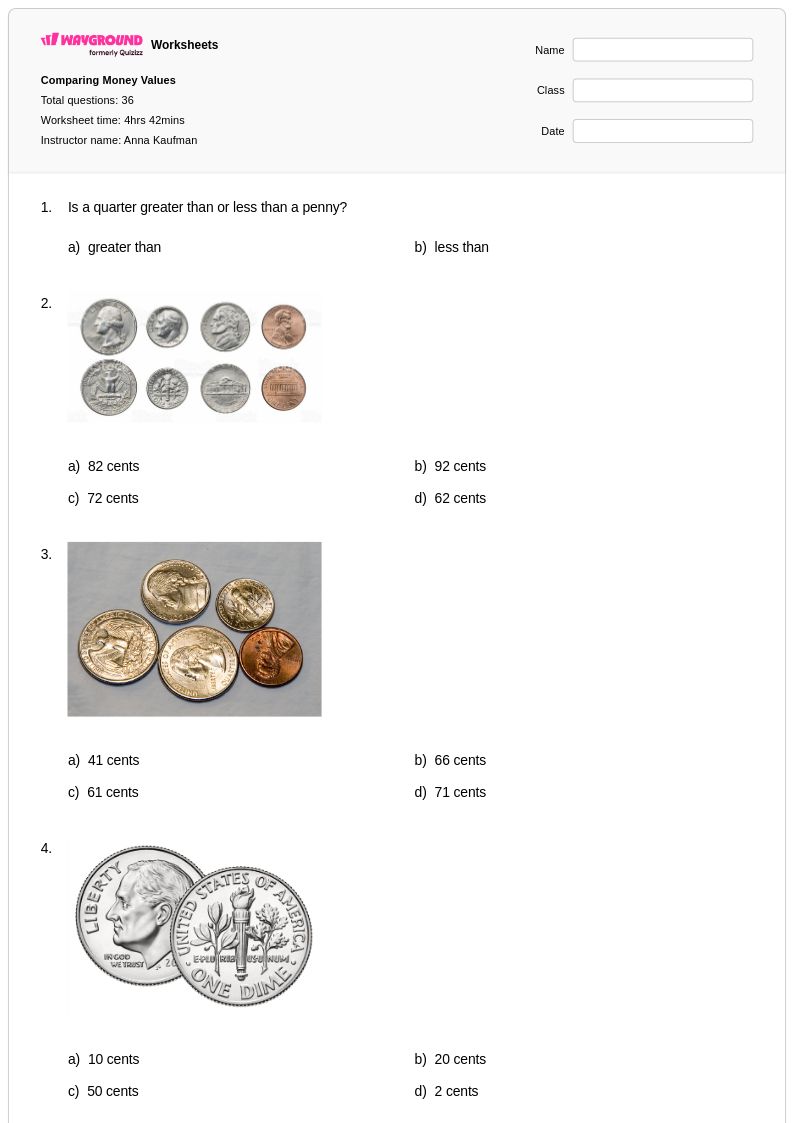
36Q
2nd
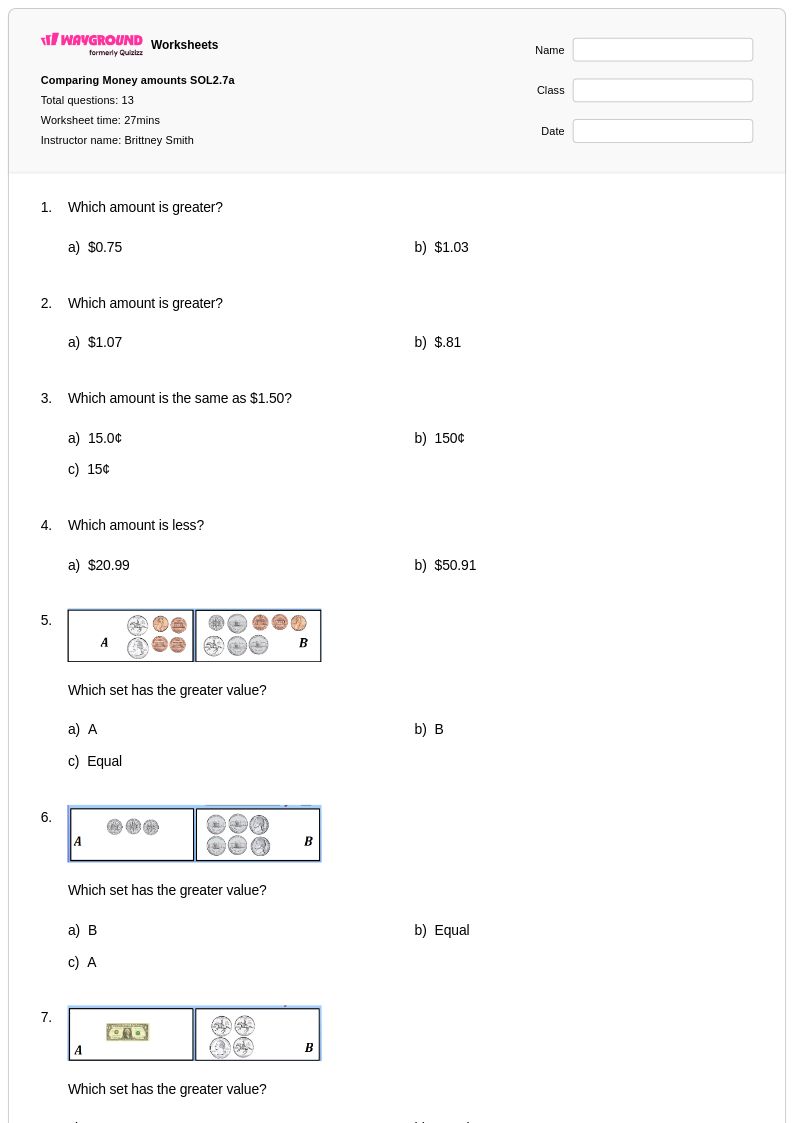
13Q
2nd - 3rd
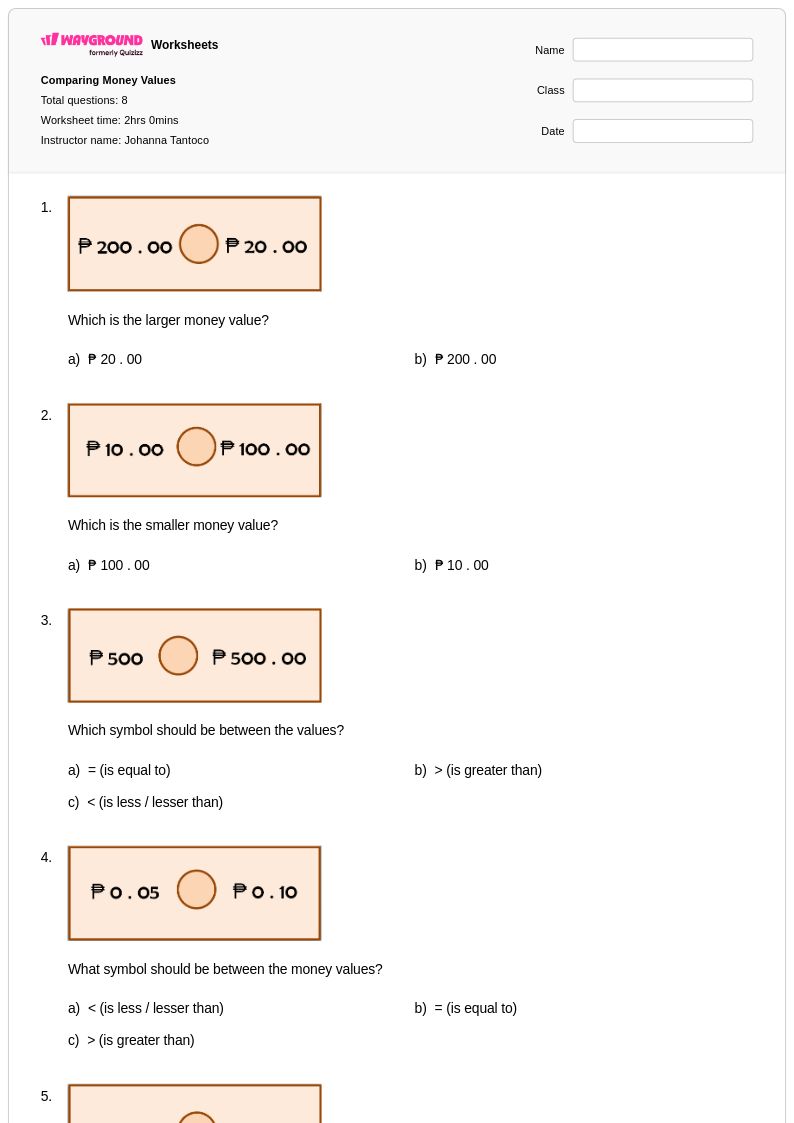
8Q
3rd
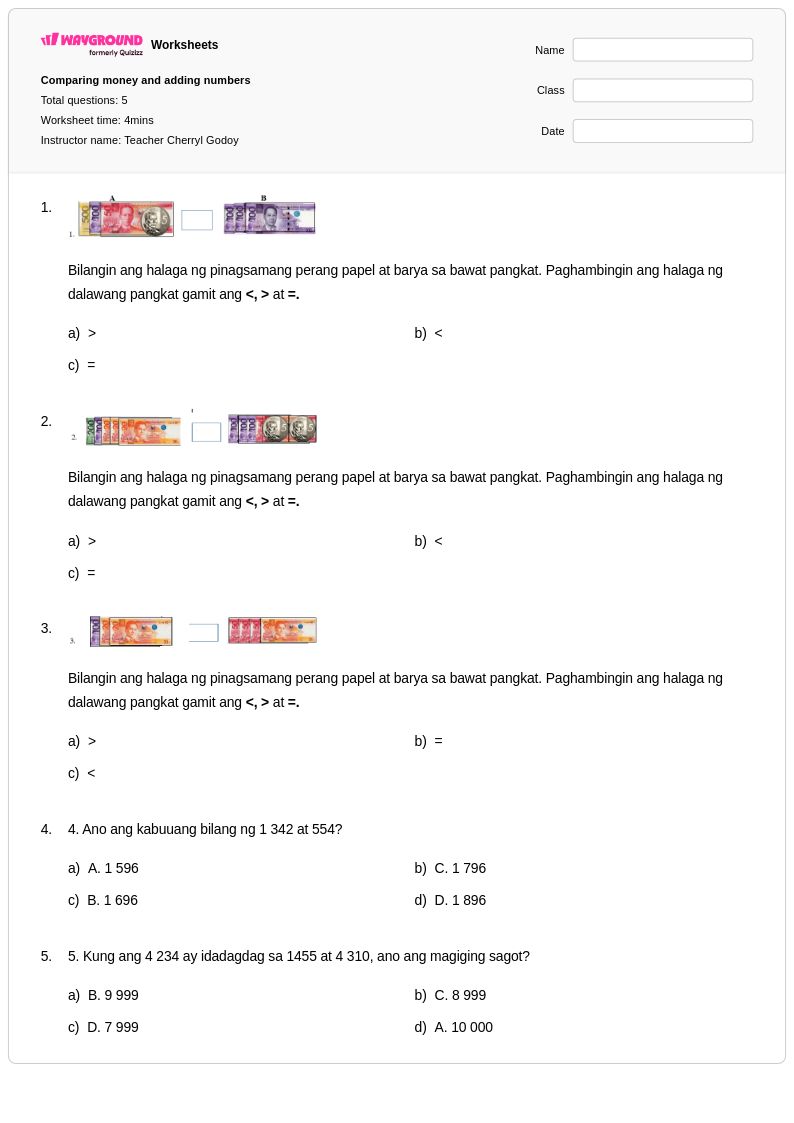
5Q
3rd
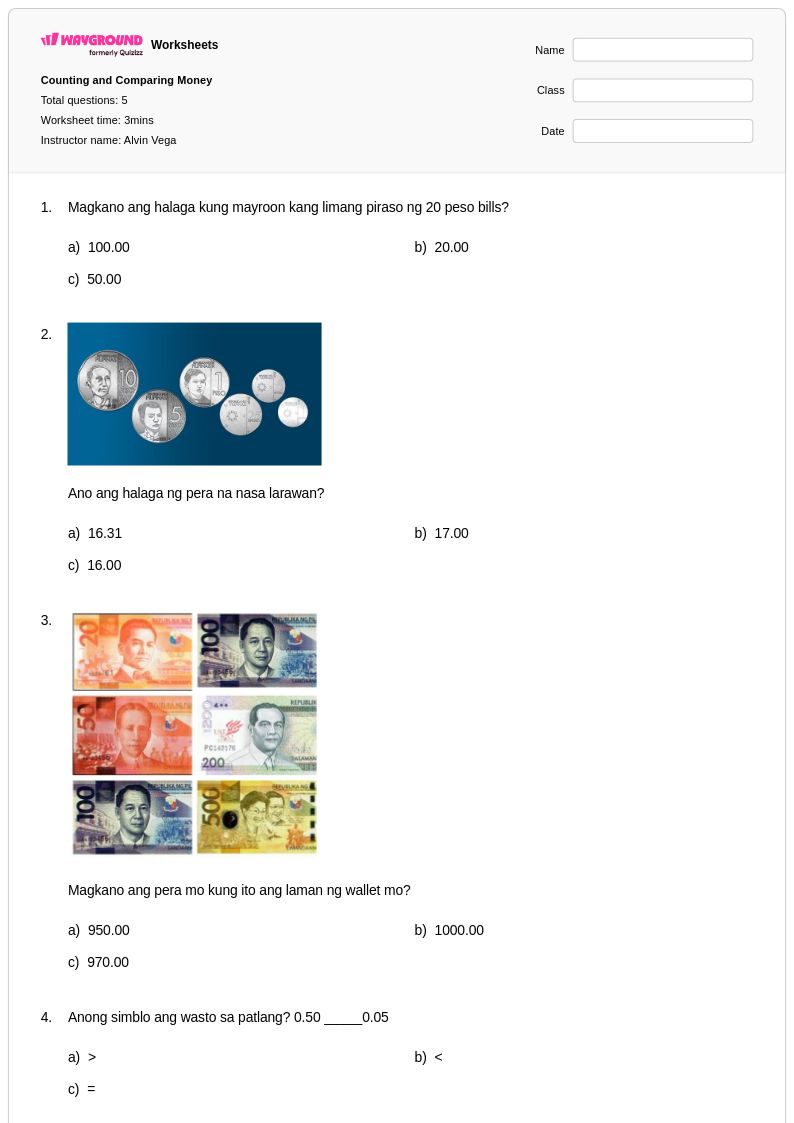
5Q
2nd
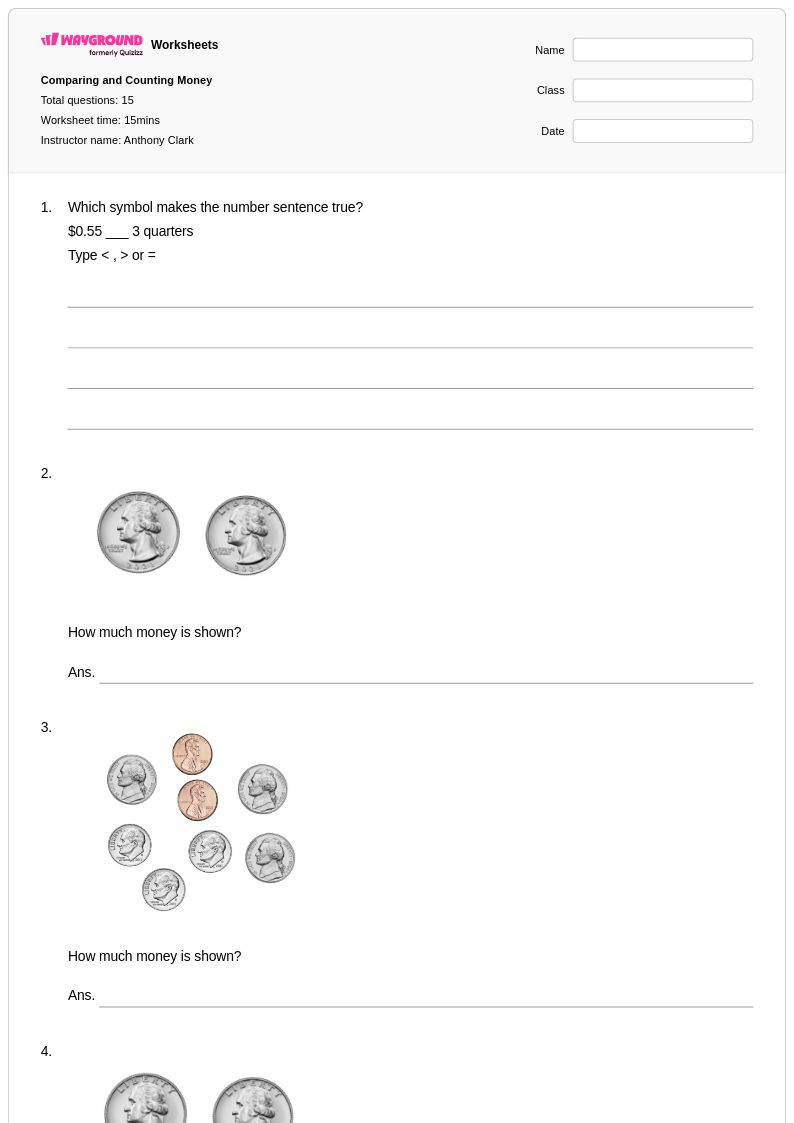
15Q
3rd - Uni
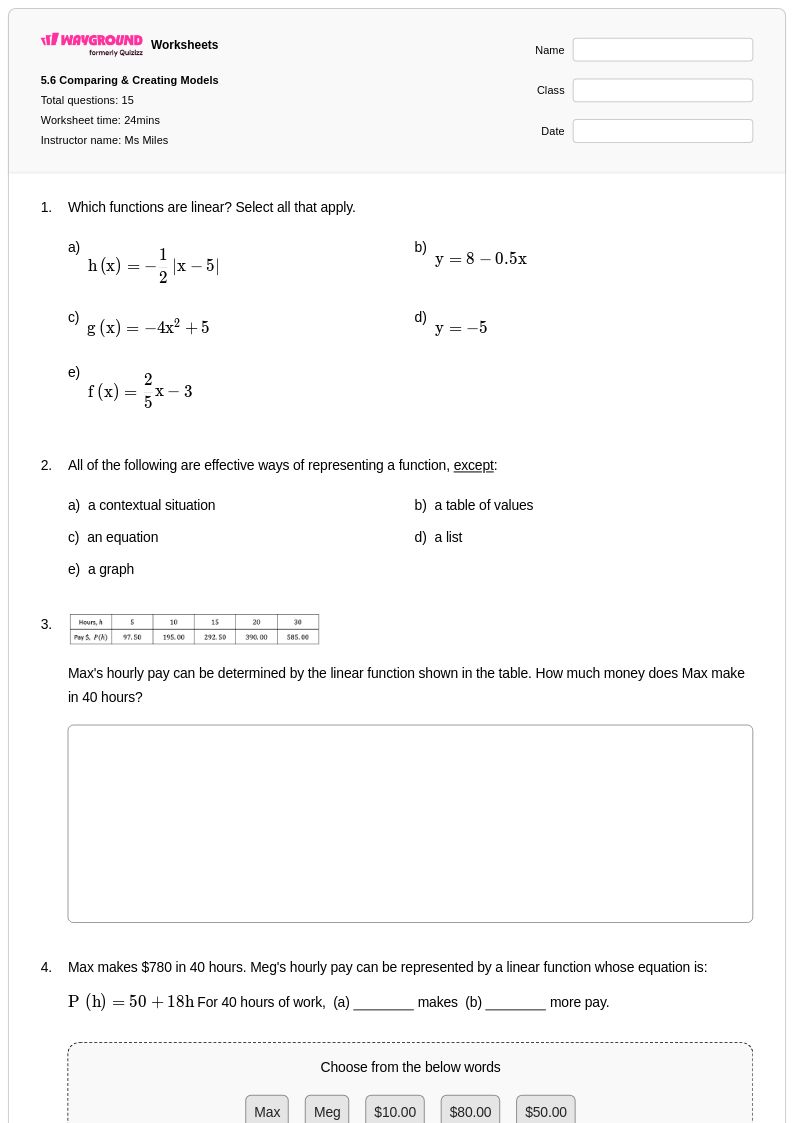
15Q
11th
Explore planilhas por série
Explore planilhas por assuntos
Explore printable Comparing Money worksheets
Comparing money worksheets available through Wayground (formerly Quizizz) provide students with essential practice in evaluating and contrasting monetary values, quantities, and denominations. These comprehensive worksheet collections strengthen critical mathematical skills including decimal comparison, value recognition, and logical reasoning with currency. Students work through carefully structured practice problems that progress from basic coin and bill identification to complex scenarios involving multiple denominations and mixed currency formats. Each worksheet includes a detailed answer key to support independent learning and self-assessment, while the free printables offer educators flexible options for classroom instruction, homework assignments, and skill reinforcement activities in convenient pdf format.
Wayground (formerly Quizizz) empowers teachers with access to millions of teacher-created resources specifically designed for comparing money instruction, featuring robust search and filtering capabilities that allow educators to quickly locate worksheets aligned with curriculum standards and student needs. The platform's differentiation tools enable seamless customization of content difficulty levels, ensuring appropriate challenge for learners across diverse skill ranges. Teachers can access these valuable resources in both printable and digital formats, including downloadable pdf versions that facilitate efficient lesson planning and classroom implementation. These versatile worksheet collections support targeted remediation for struggling students, enrichment opportunities for advanced learners, and consistent skill practice that builds confidence in money comparison concepts through systematic, repeated exposure to varied problem types.
FAQs
How do I teach students to compare money amounts?
What exercises help students practice comparing money?
What mistakes do students commonly make when comparing money?
How can I use a comparing money worksheet from Wayground?
How does comparing money fit into the Common Core math progression?
How can I differentiate comparing money practice for mixed-ability learners?