Free Printable Comparing Rates Worksheets for Class 8
Wayground's free Class 8 comparing rates worksheets provide comprehensive practice problems and answer keys to help students master rate comparisons through engaging printable PDFs and interactive activities.
Explore printable Comparing Rates worksheets for Class 8
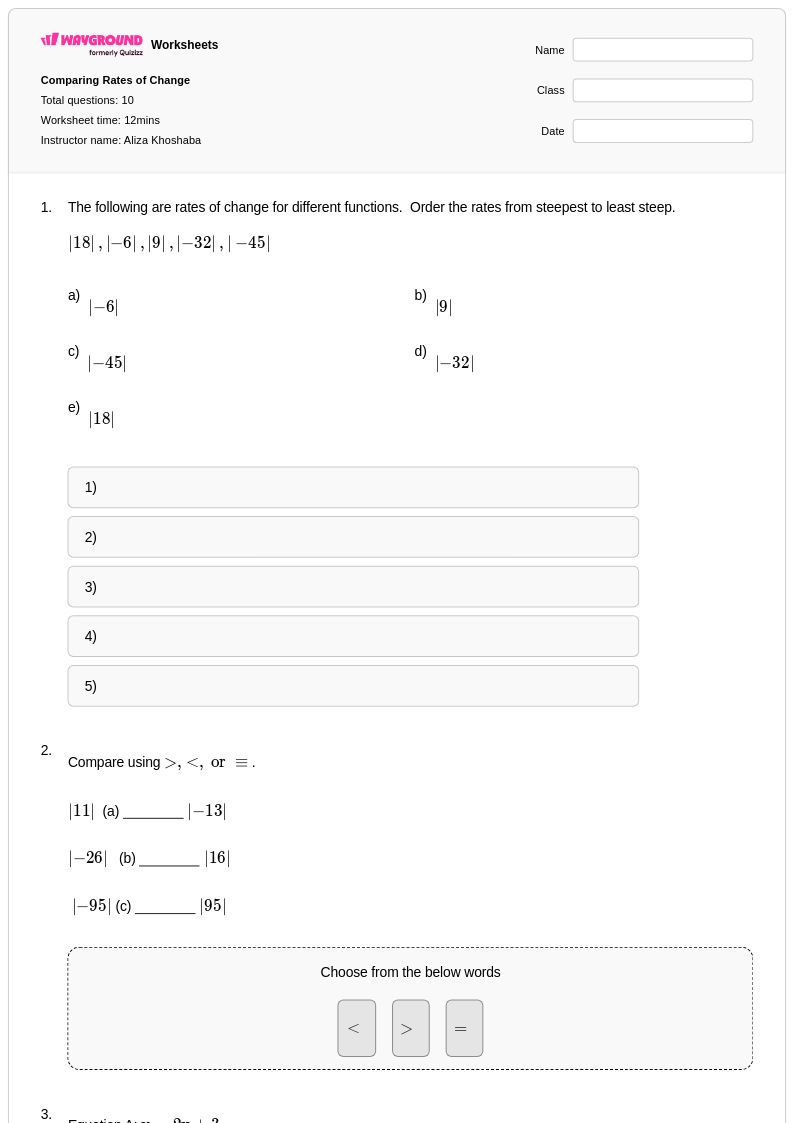
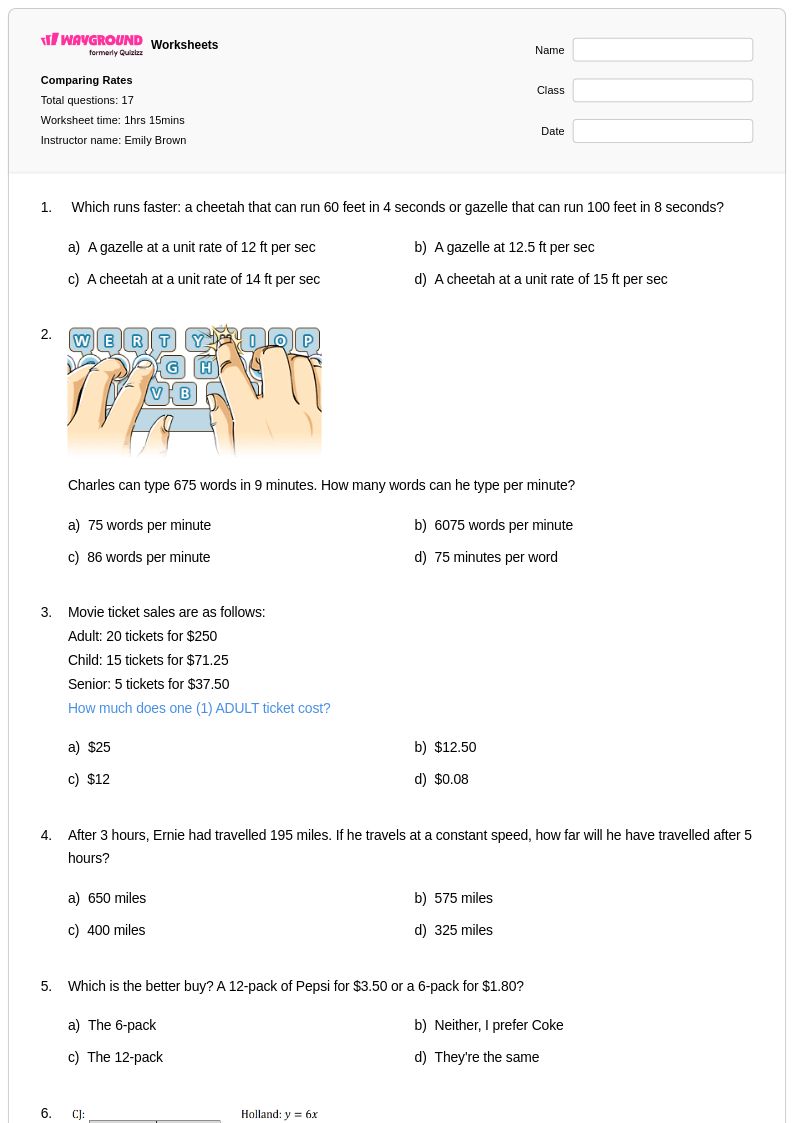
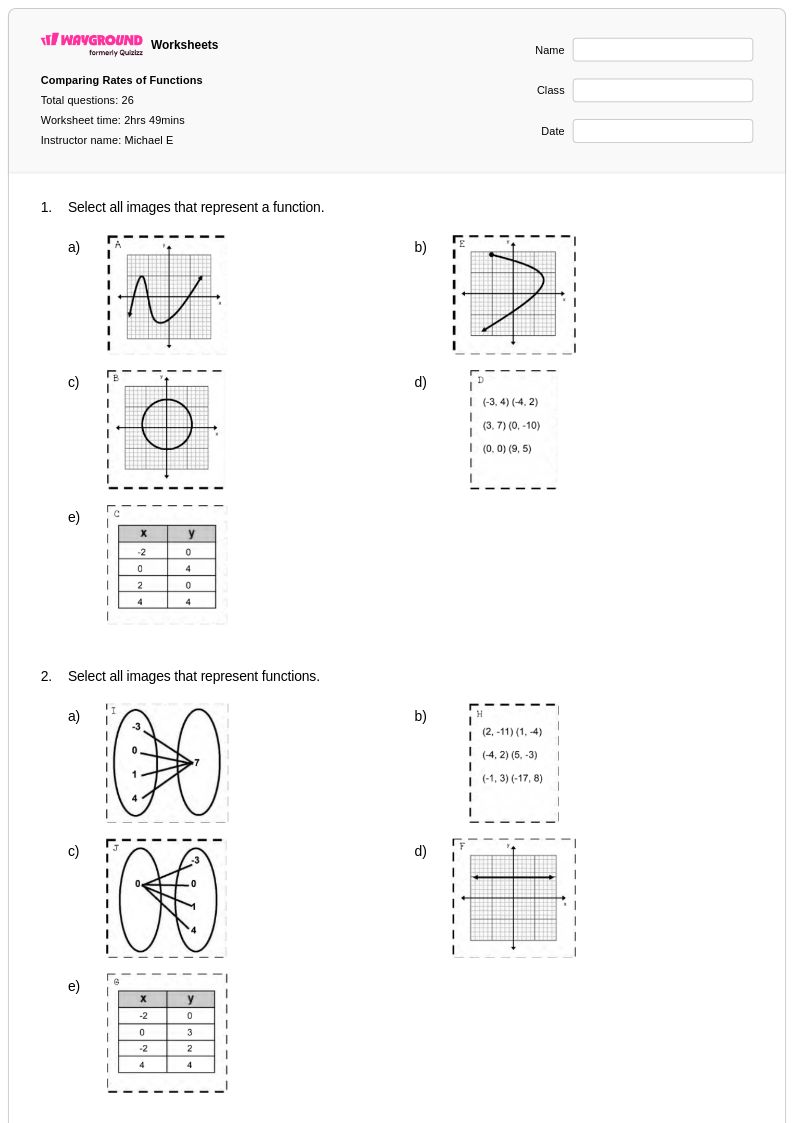
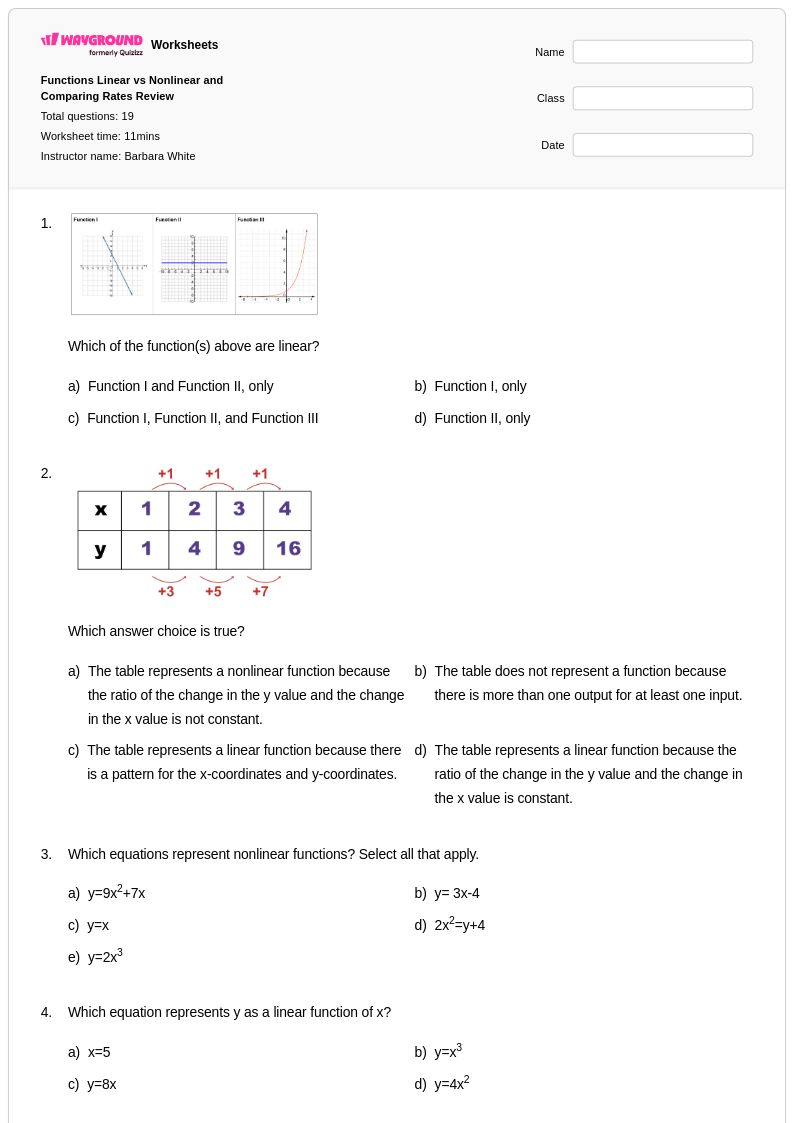
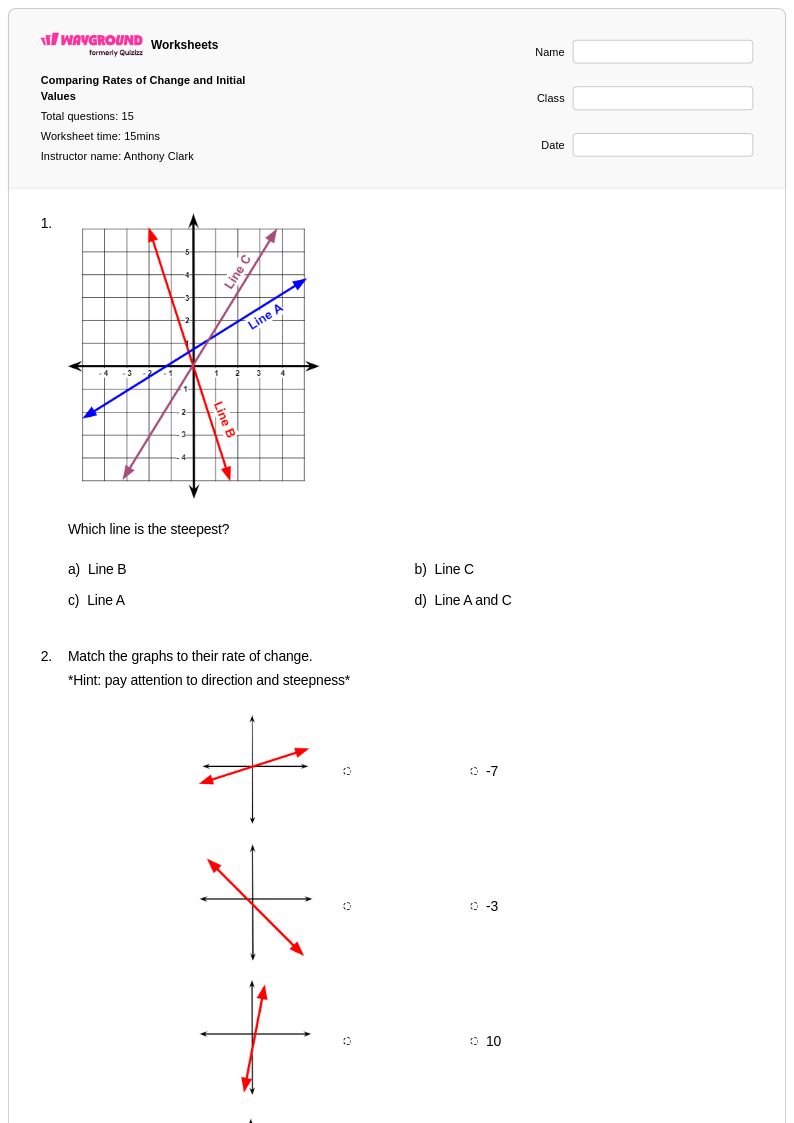
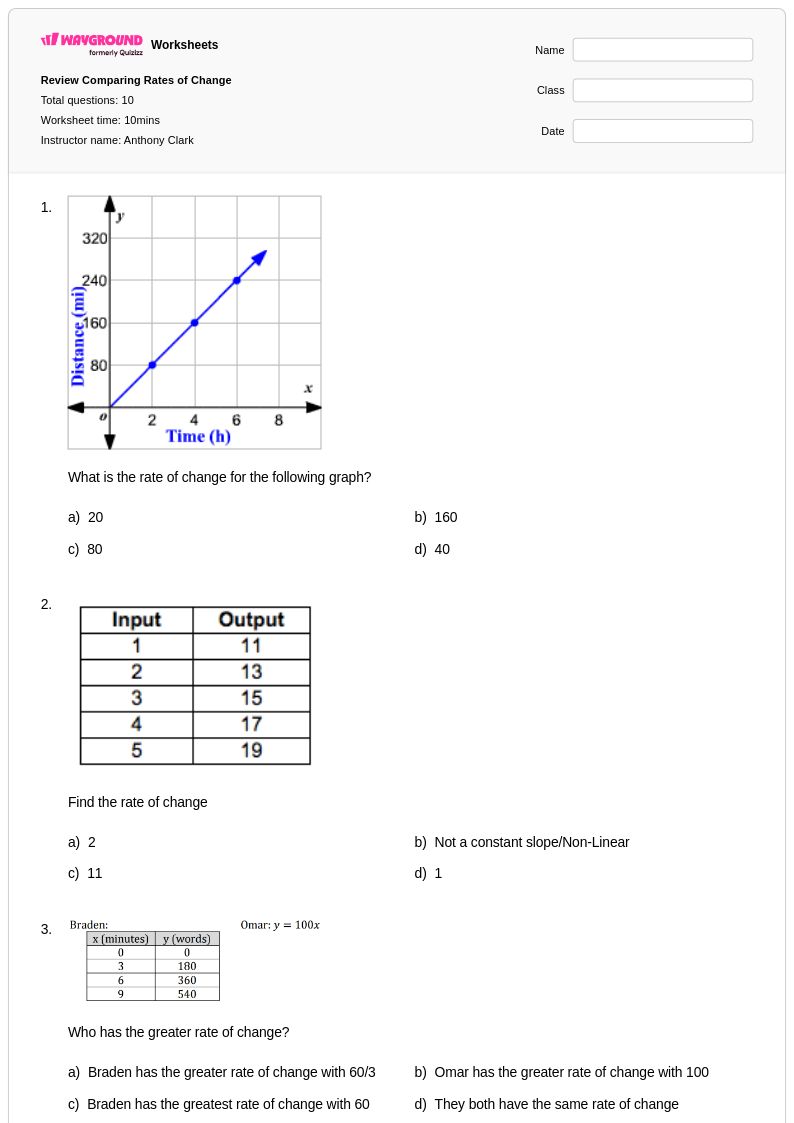
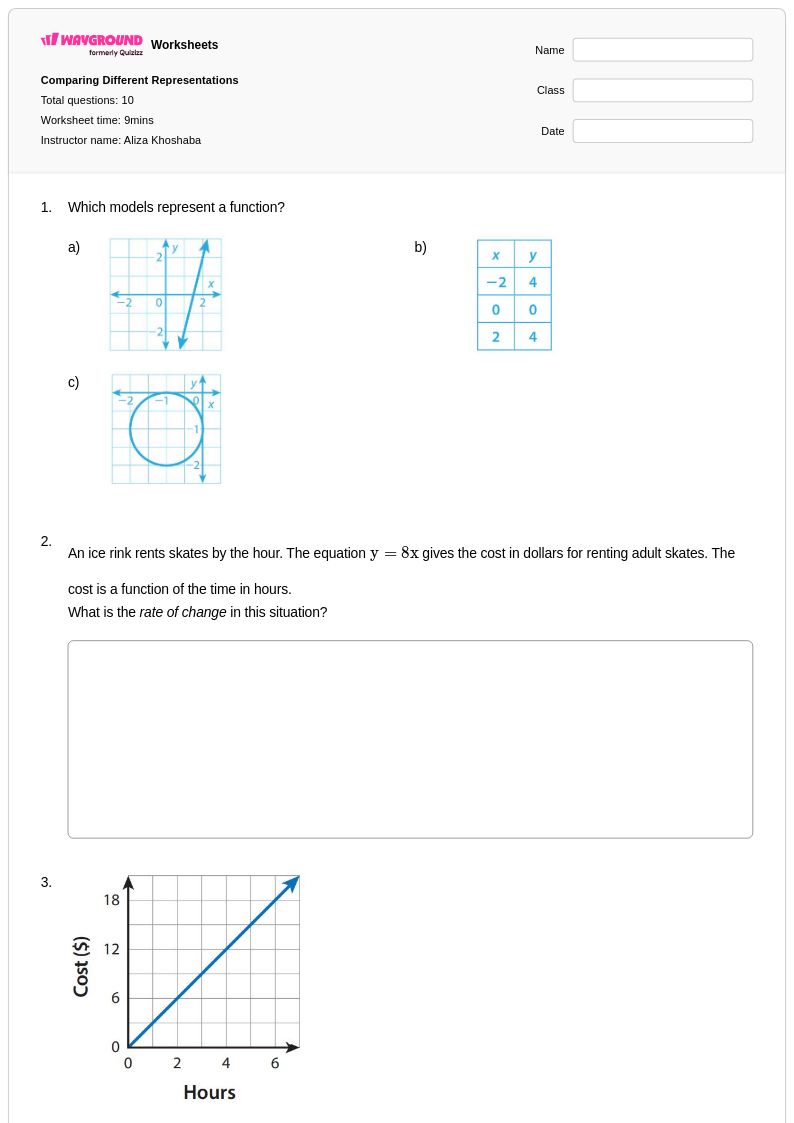
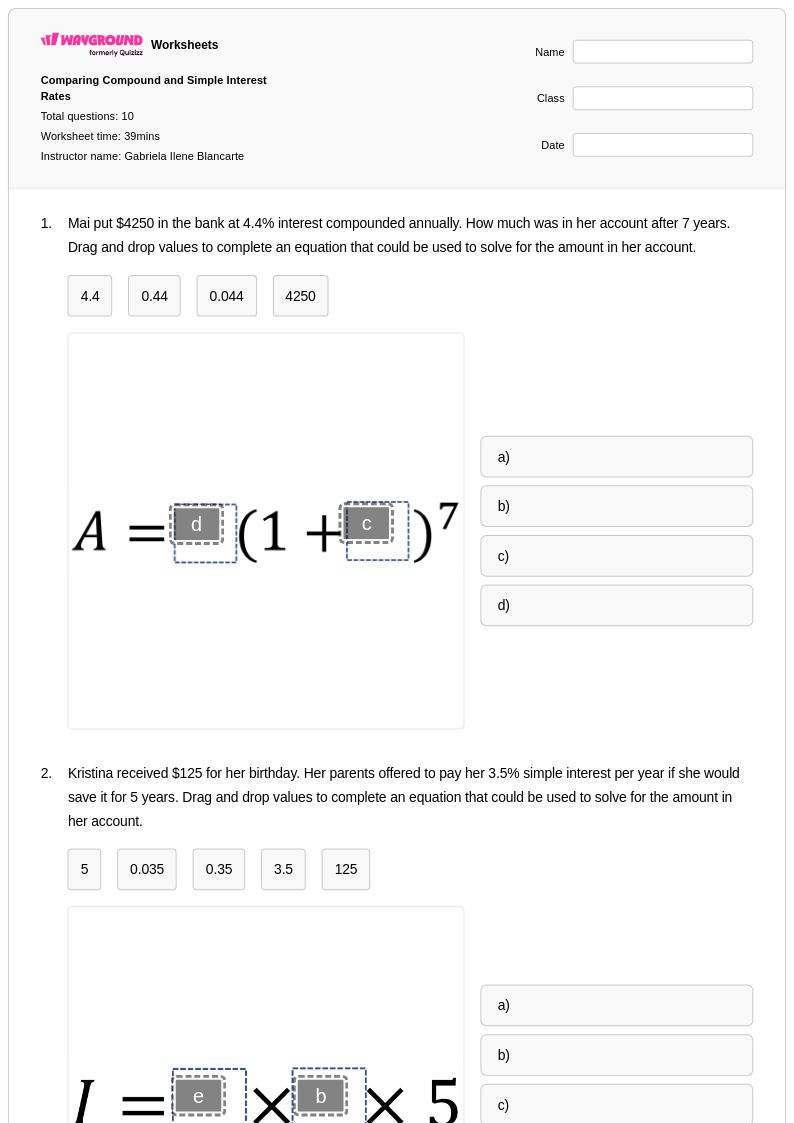
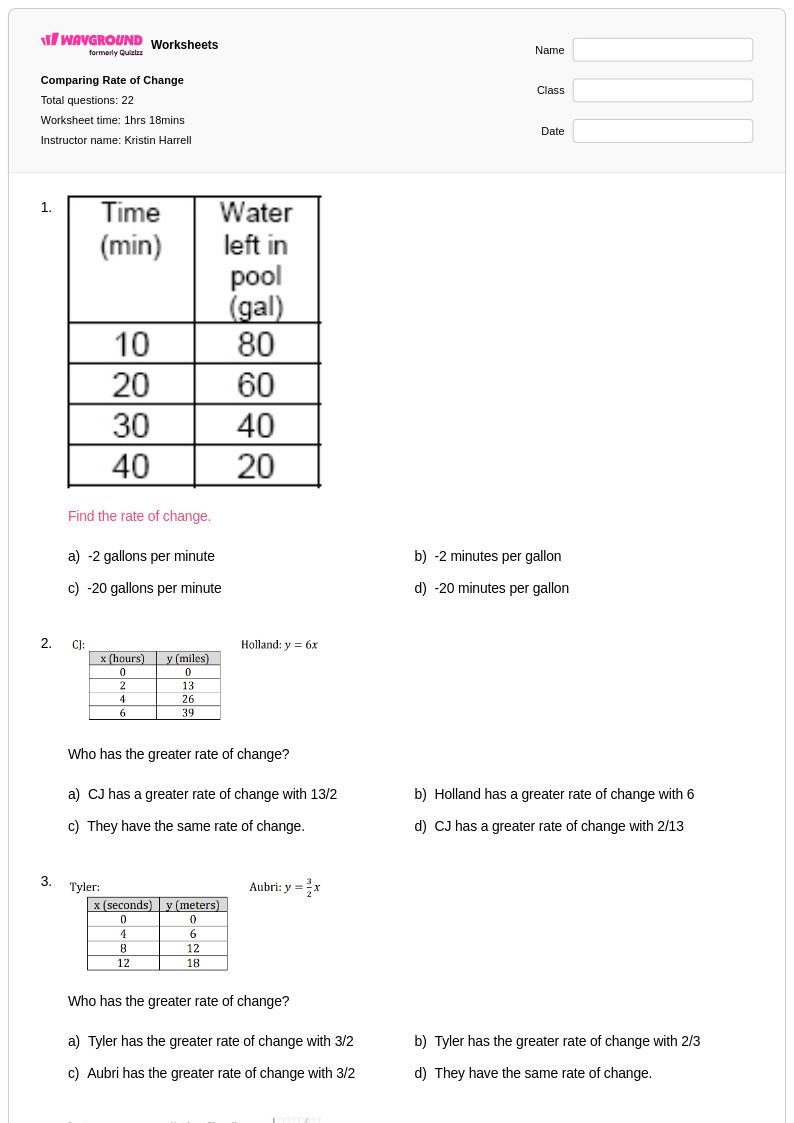
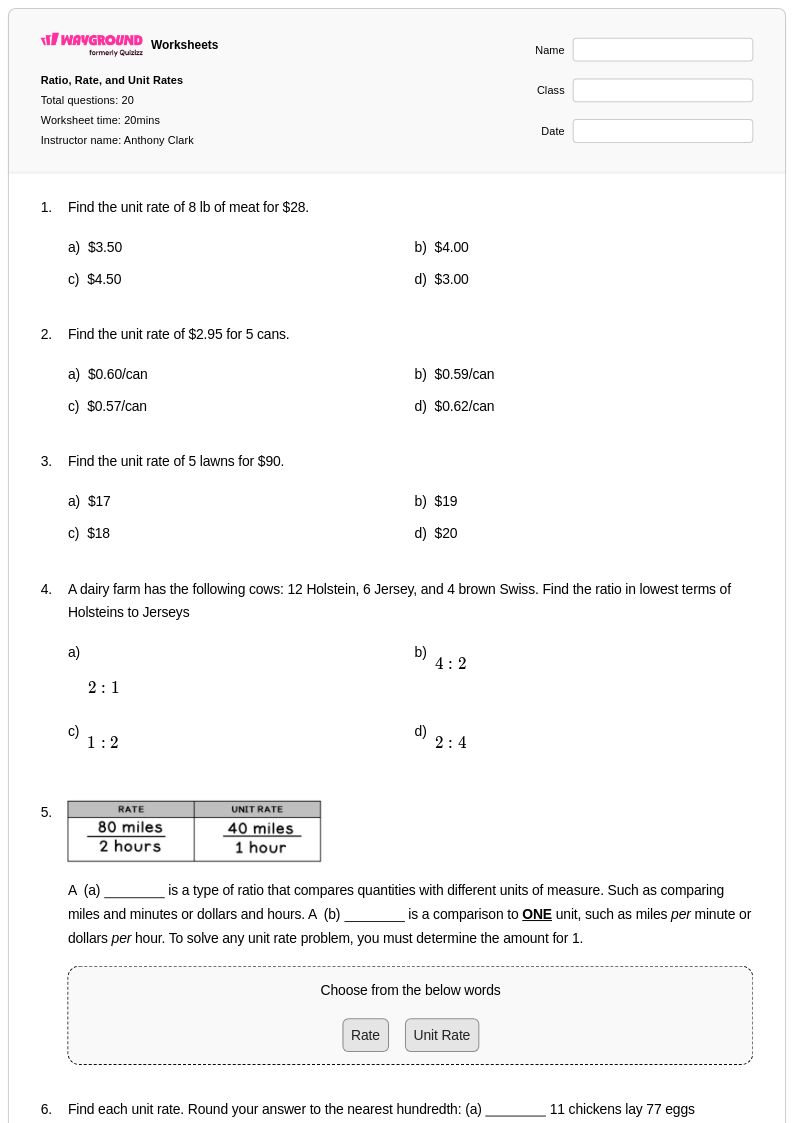
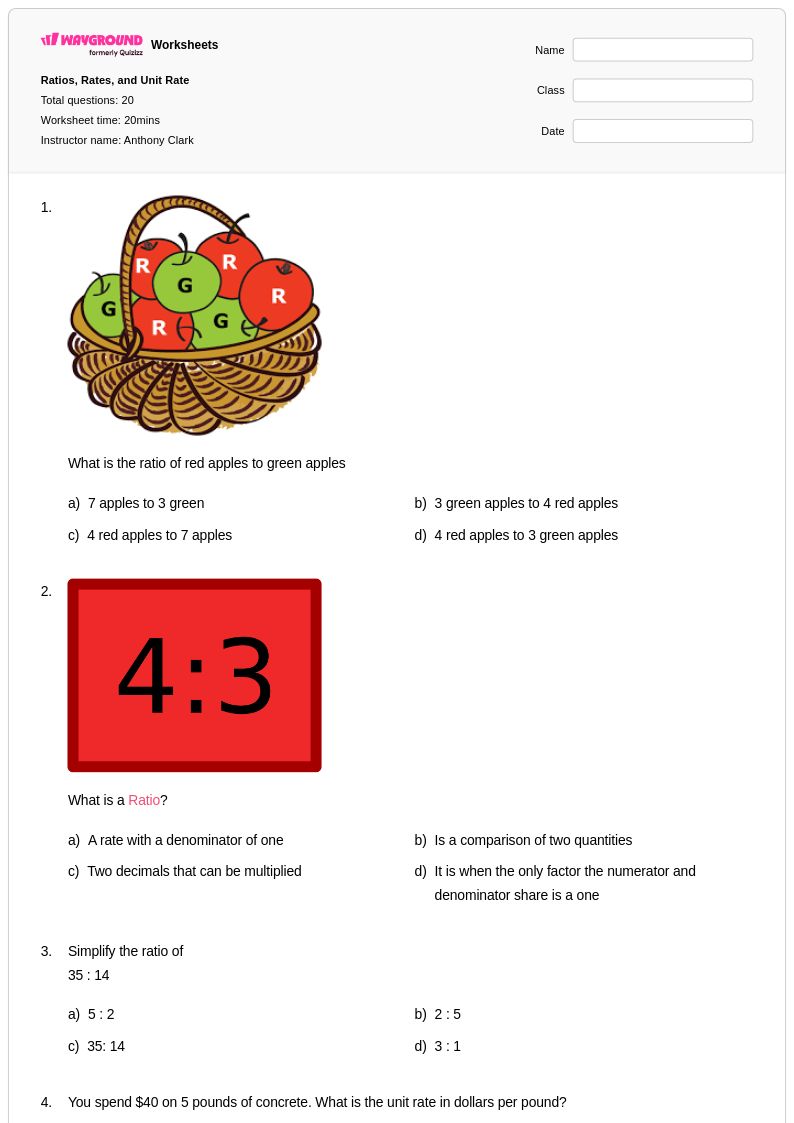
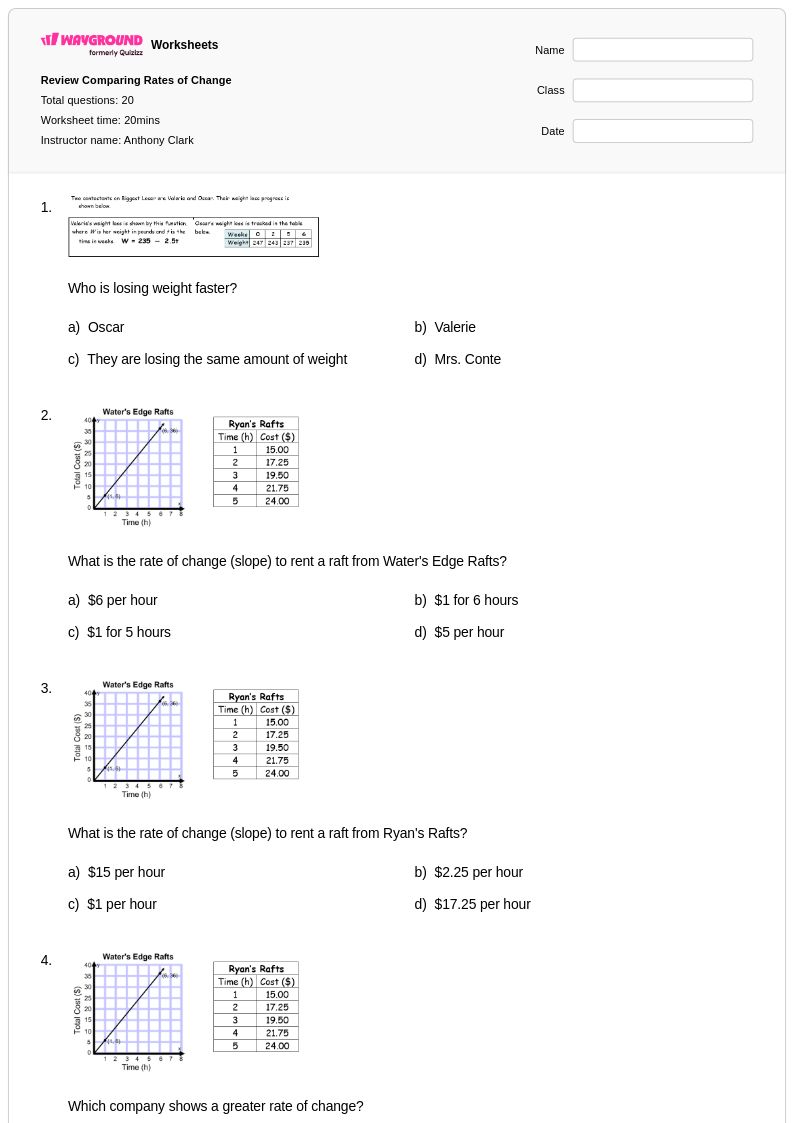
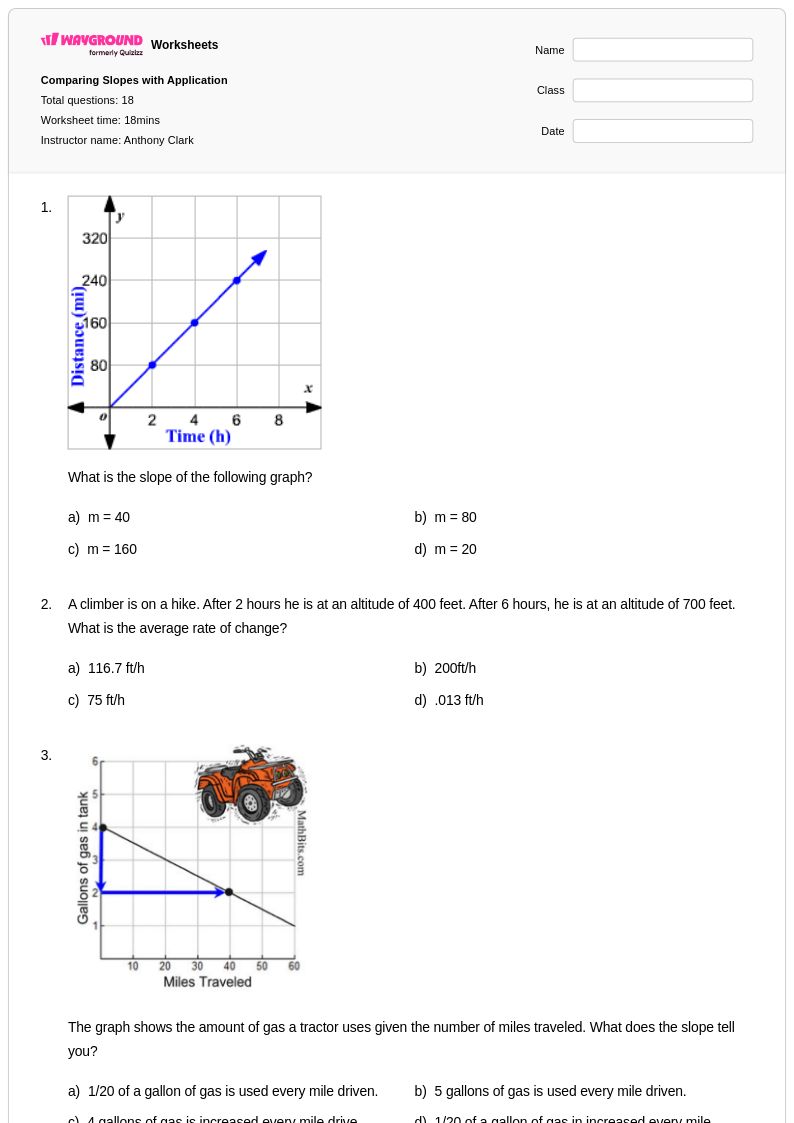
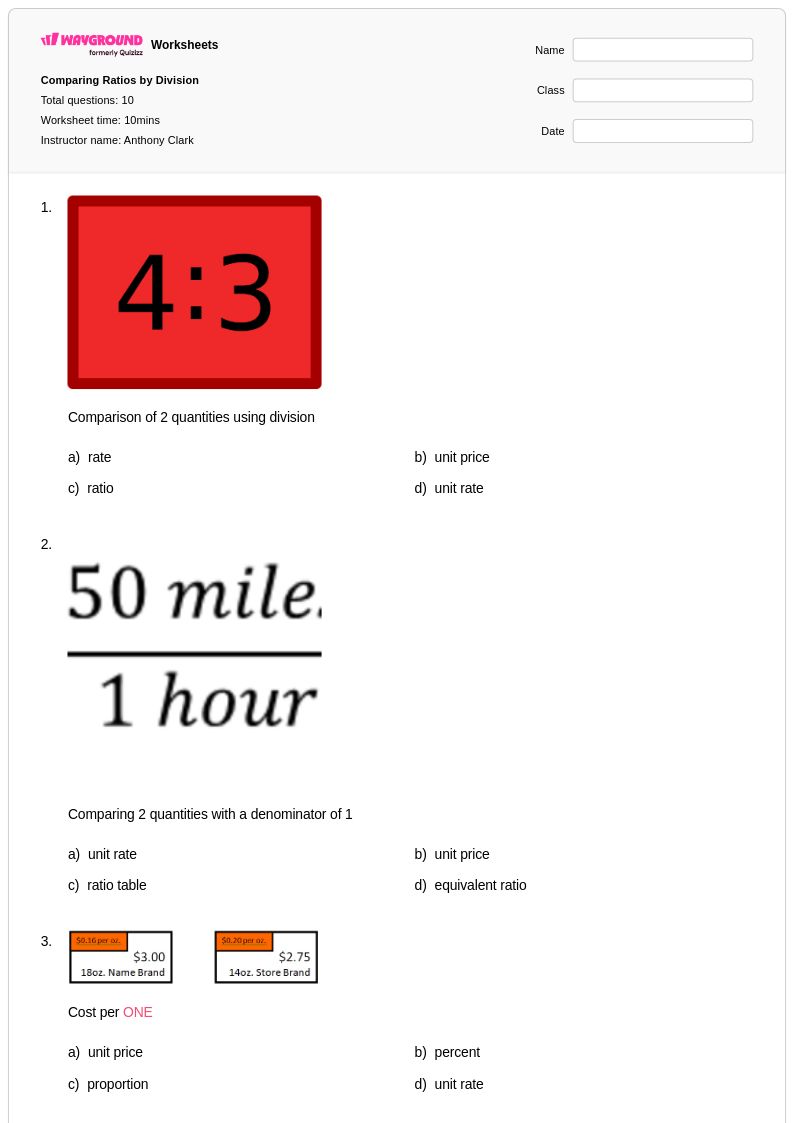
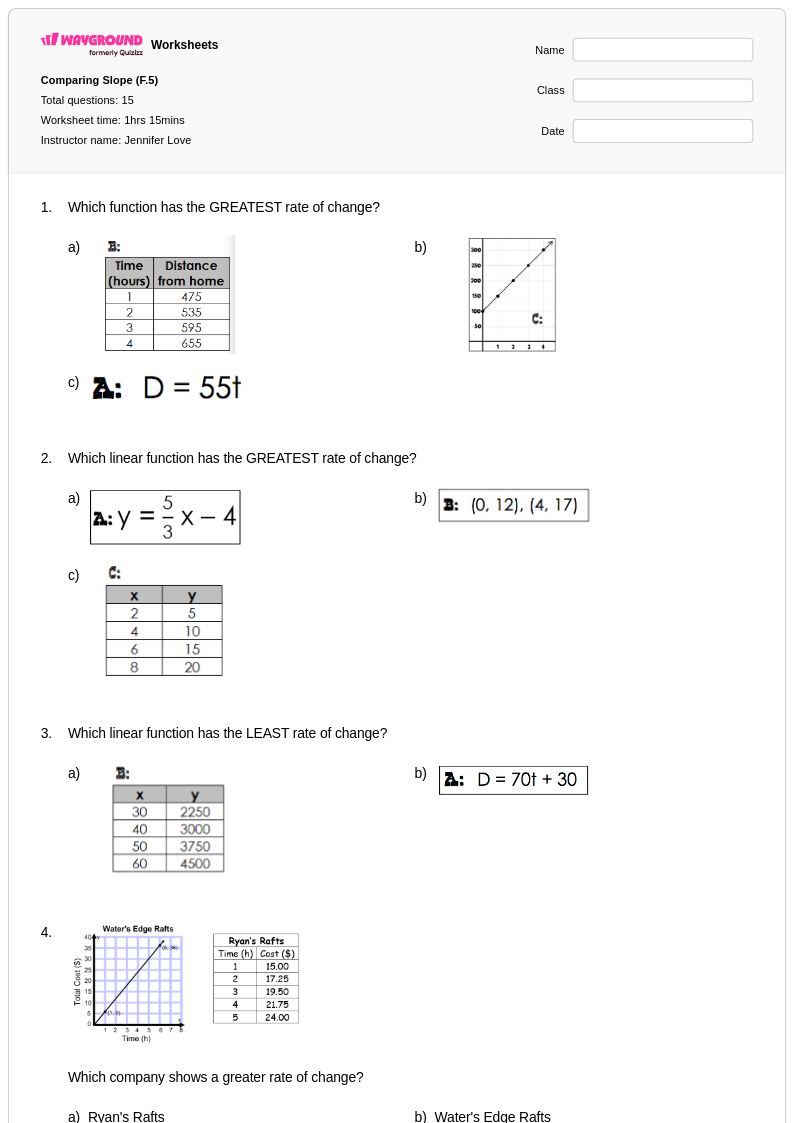
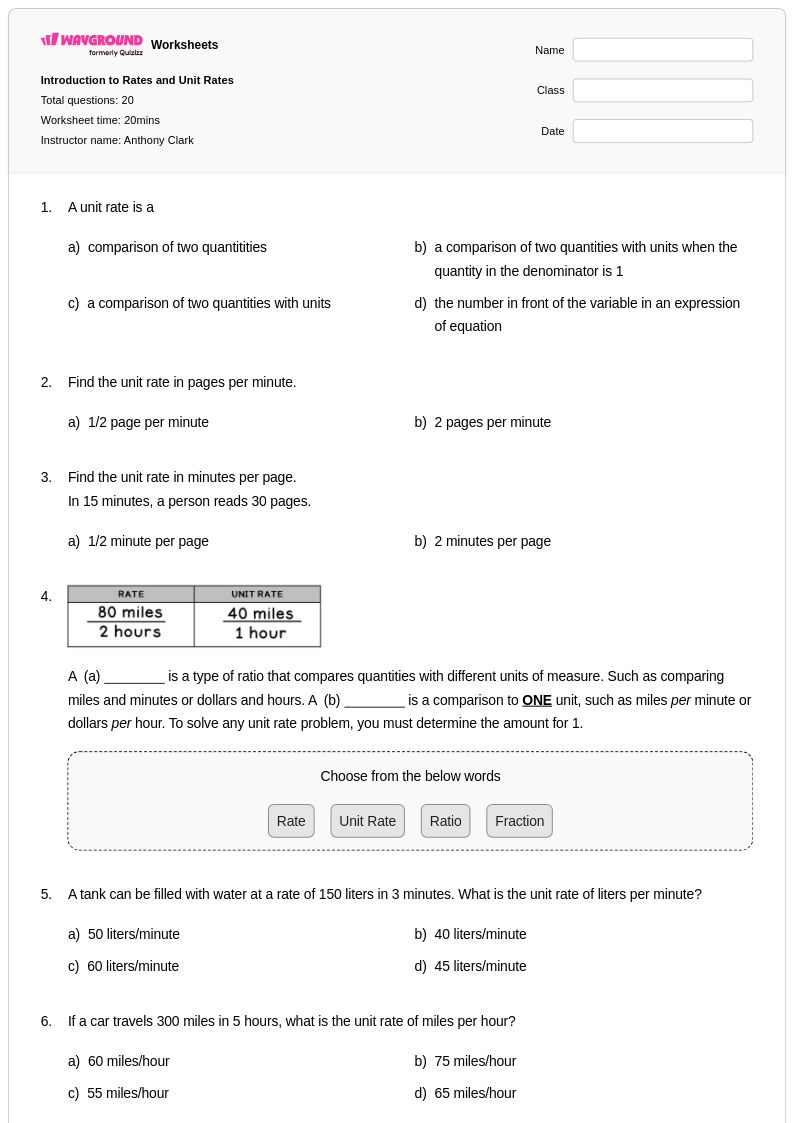
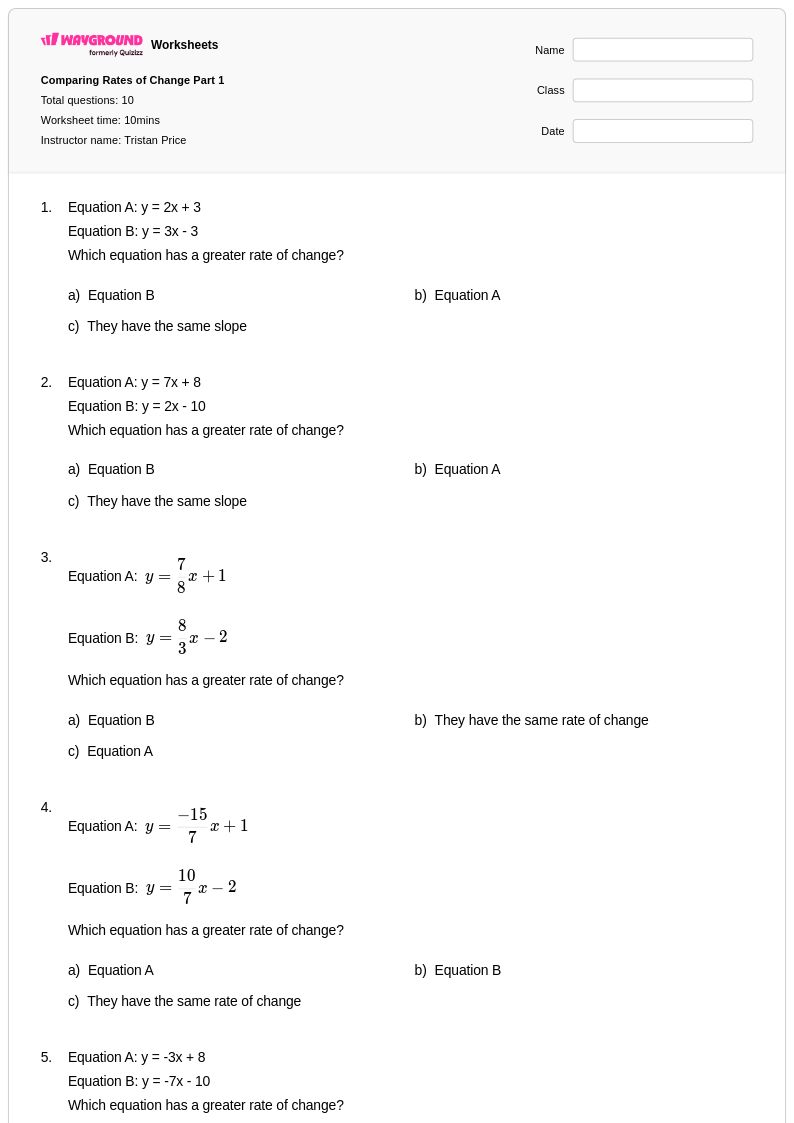
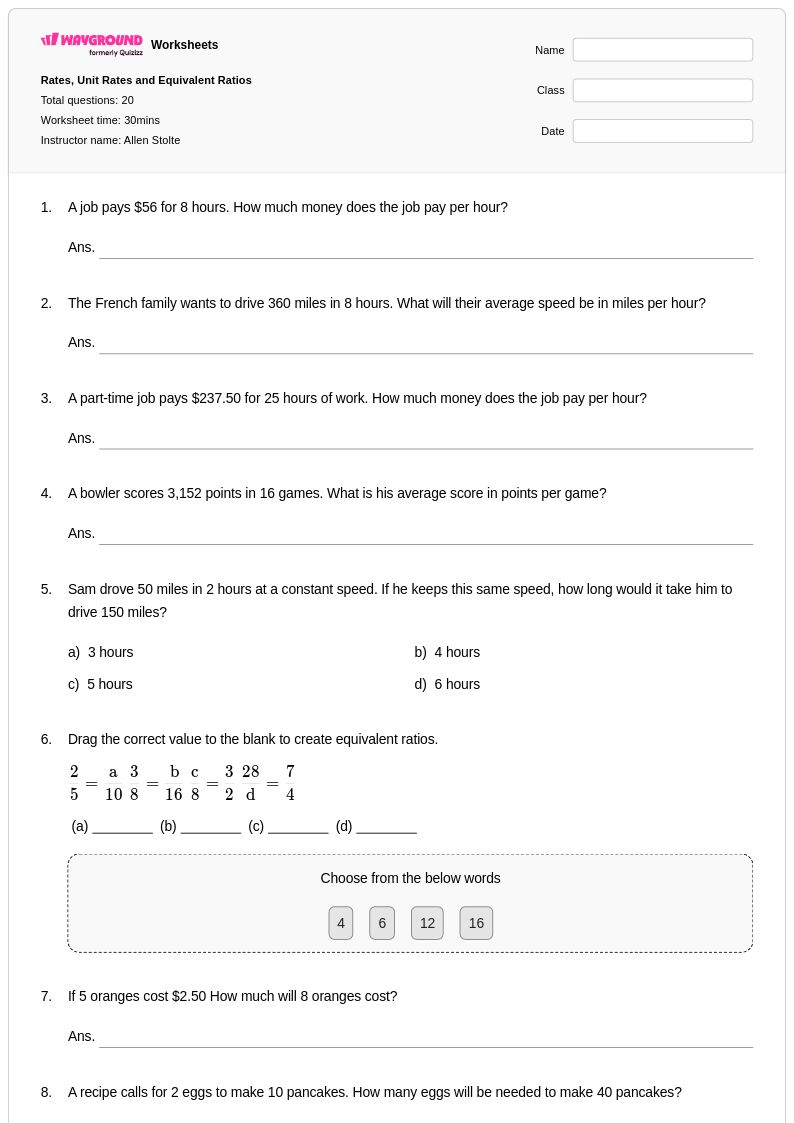
Comparing rates worksheets for Class 8 mathematics provide students with essential practice in analyzing and evaluating different rates to determine which is greater, lesser, or equivalent. These comprehensive worksheets available through Wayground (formerly Quizizz) focus on developing critical thinking skills as students learn to compare unit rates, speed calculations, price per unit comparisons, and other real-world rate scenarios. Students strengthen their ability to convert rates to common units, simplify complex ratios, and make informed decisions based on rate comparisons through carefully structured practice problems. Each worksheet collection includes detailed answer keys and is available as free printable PDFs, allowing educators to seamlessly integrate rate comparison exercises into their mathematics curriculum while providing students with immediate feedback on their problem-solving approaches.
Wayground (formerly Quizizz) empowers teachers with an extensive library of millions of educator-created comparing rates worksheets specifically designed for Class 8 mathematics instruction. The platform's robust search and filtering capabilities enable teachers to quickly locate worksheets that align with specific learning standards and match their students' current skill levels. Teachers can easily differentiate instruction by selecting from various difficulty levels, customizing existing worksheets, or combining multiple resources to create comprehensive practice sets that address diverse learning needs. These versatile resources are available in both printable and digital formats, including downloadable PDFs, making them ideal for classroom instruction, homework assignments, remediation sessions, and enrichment activities that reinforce students' mastery of rate comparison concepts across different mathematical contexts.
FAQs
How do I teach comparing rates in Grade 8?
Have Grade 8 students convert each rate to a common unit or unit rate, compare the values, and explain the result in the original context. Use increasingly complex examples involving speed, price per unit, and simplified ratios so students connect procedural accuracy with informed decision-making.
What exercises help Grade 8 students practice comparing rates?
Grade 8 students benefit from problems that combine unit-rate calculations, measurement conversions, complex ratios, speed comparisons, and price-per-unit decisions. Include multi-step scenarios in which students must choose a comparison method, show the conversion, and defend which rate is greater, lesser, equivalent, or the better value.
What mistakes do Grade 8 students make when comparing rates?
Common errors include comparing rates before converting to compatible units, reversing numerator and denominator, mishandling decimal division, and simplifying only one rate. Students may also overlook context, such as treating the highest number as best when the goal is to minimize cost per unit.
How can I use a Grade 8 comparing rates worksheet?
Grade 8 comparing rates worksheets are available as printable PDFs and in digital formats, accommodating classroom practice, homework, remediation, and enrichment. Teachers can host a worksheet as a digital quiz on Wayground or print and assign it on paper; every worksheet includes a complete answer key, and printed submissions can be scanned or captured for grading with the Wayground for Teachers app.
How does comparing rates align with Common Core in Grade 8?
Comparing rates reinforces Common Core's progression from ratio and proportional reasoning toward interpreting relationships between quantities in more advanced mathematical contexts. Grade 8 practice strengthens students' ability to convert units, compare rates accurately, and use quantitative evidence when modeling and evaluating real-world situations.
What grade do students learn to compare rates?
Formal work with unit rates typically begins in Grade 6 and becomes more sophisticated through Grades 7 and 8. Grade 8 students use earlier proportional-reasoning skills to compare complex rates, handle unit conversions, and evaluate multi-step situations involving speed, cost, and other measured quantities.
How can I differentiate a Grade 8 comparing rates worksheet?
Teachers can scaffold the same content through alternate versions with larger text, wider spacing, a dyslexia-friendly font, or translation, while enrichment tasks can add complex ratios and unfamiliar unit conversions. For digital practice, Wayground supports reusable accommodations including extended time, Read Aloud, reduced answer choices, and reading mode for individual students or the whole class.