
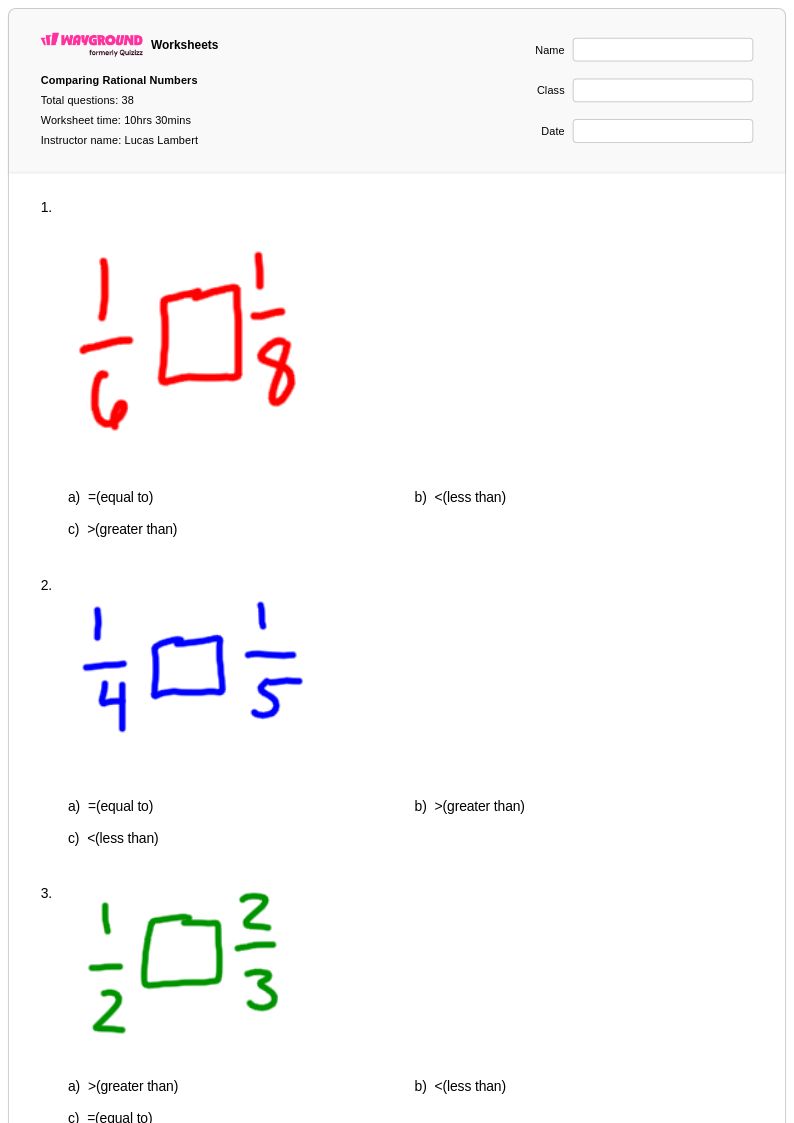
38 Q
5th - 7th
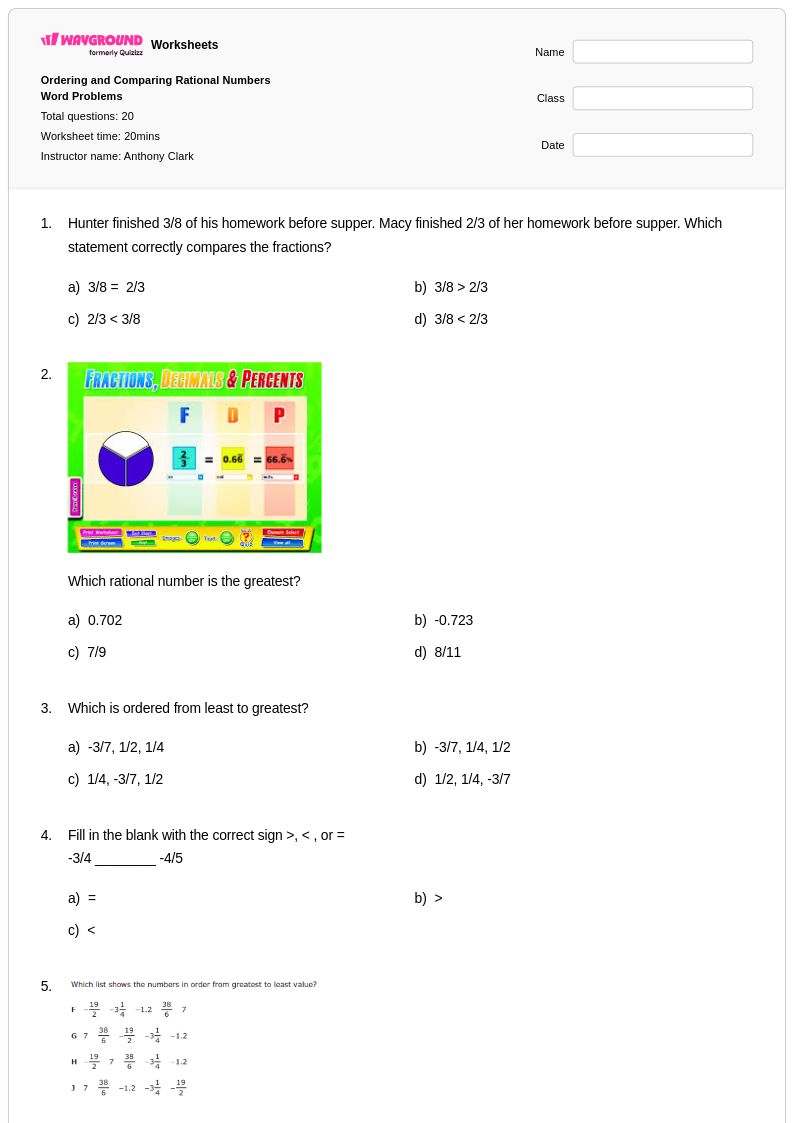
20 Q
6th - Uni
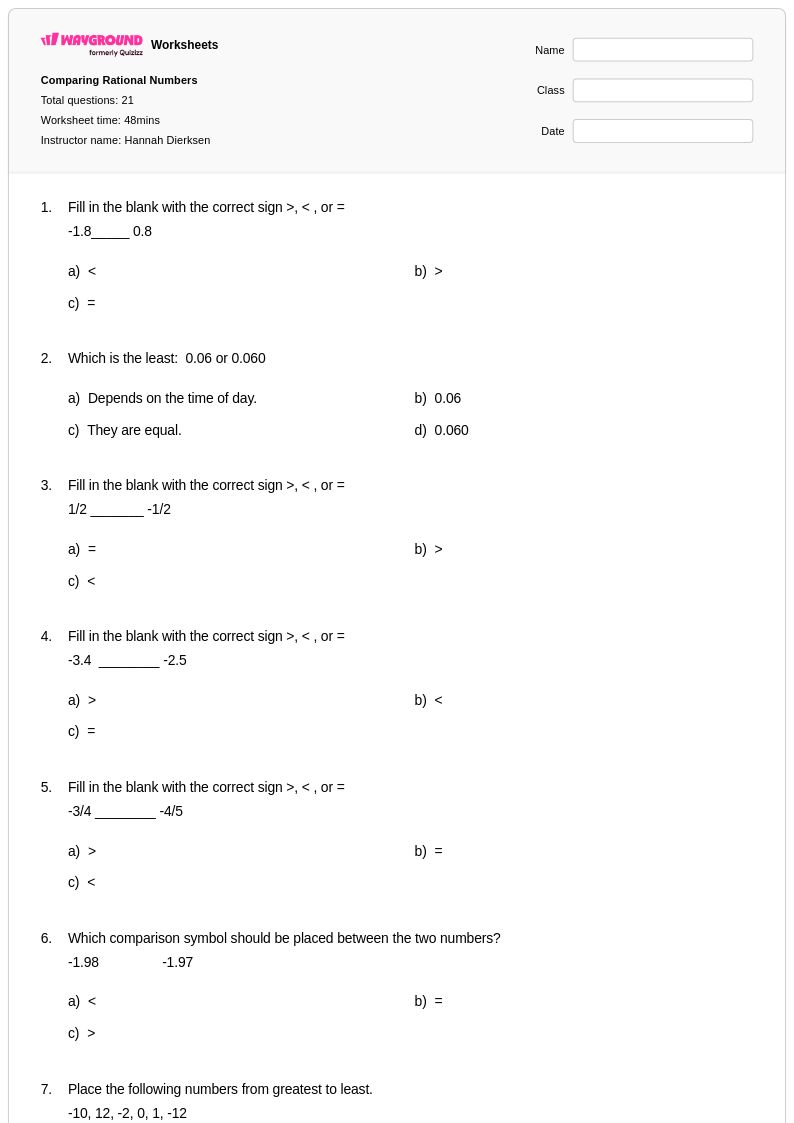
21 Q
5th - 7th
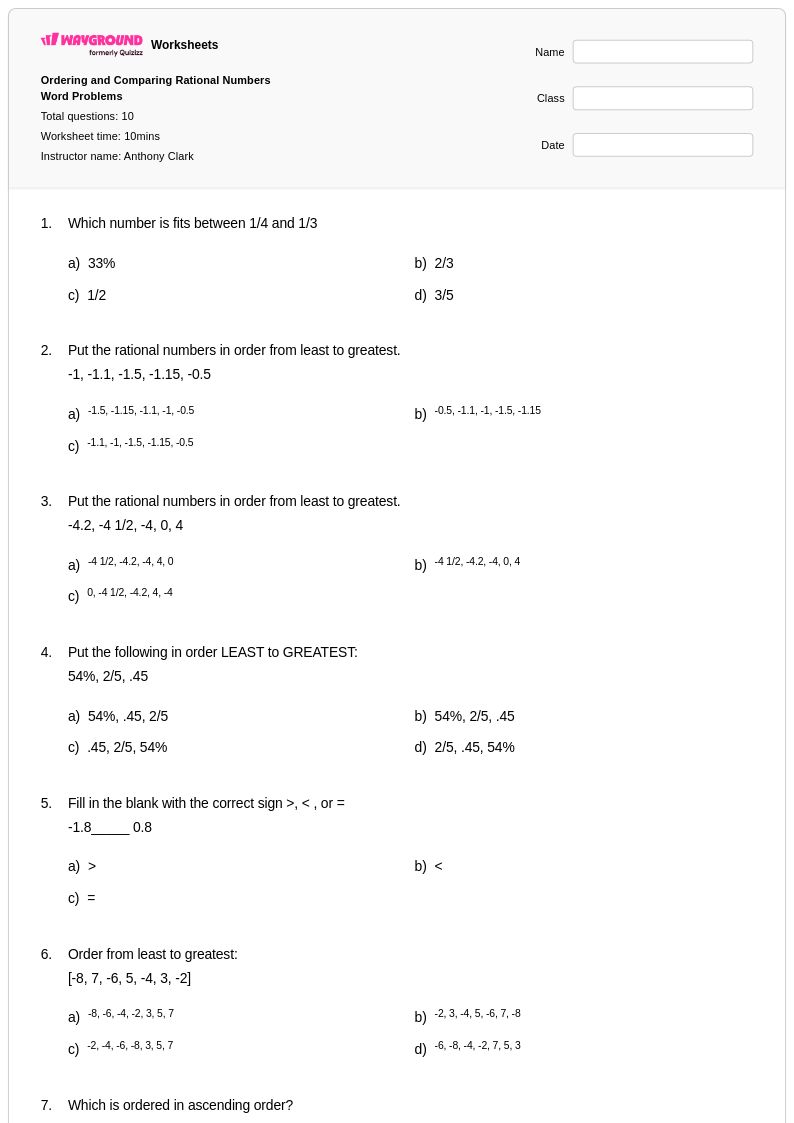
10 Q
6th - Uni
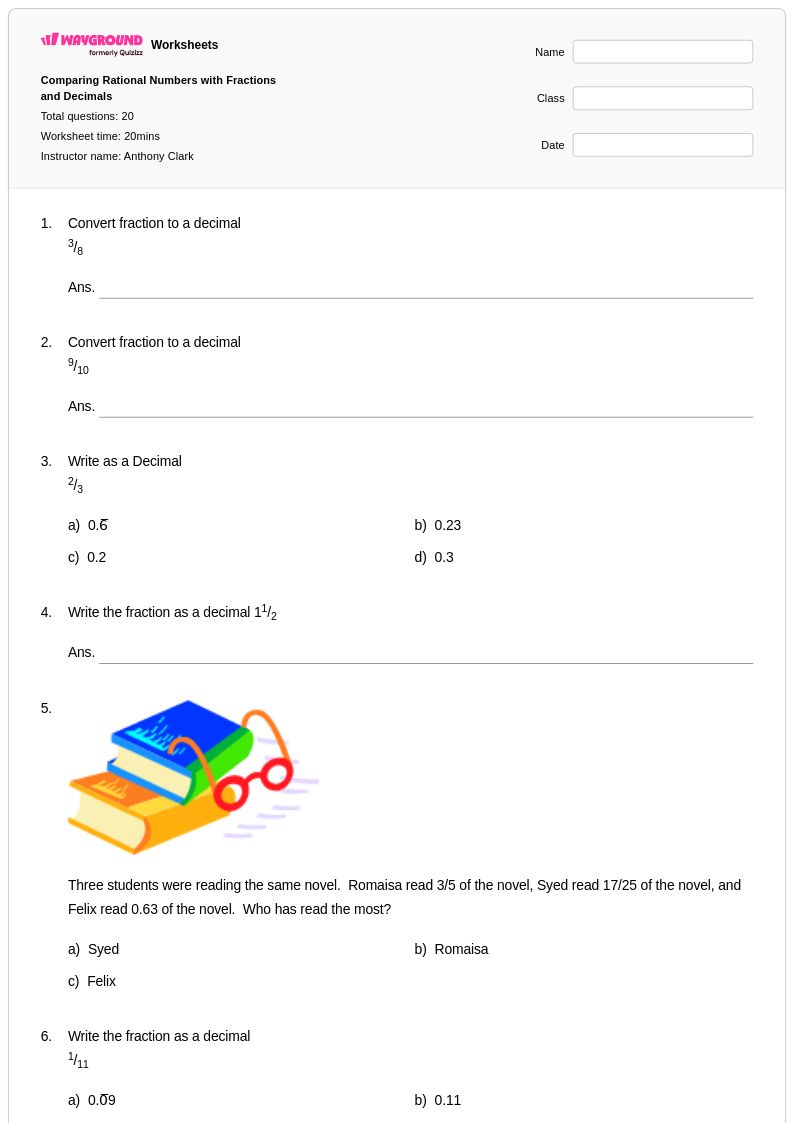
20 Q
7th - Uni
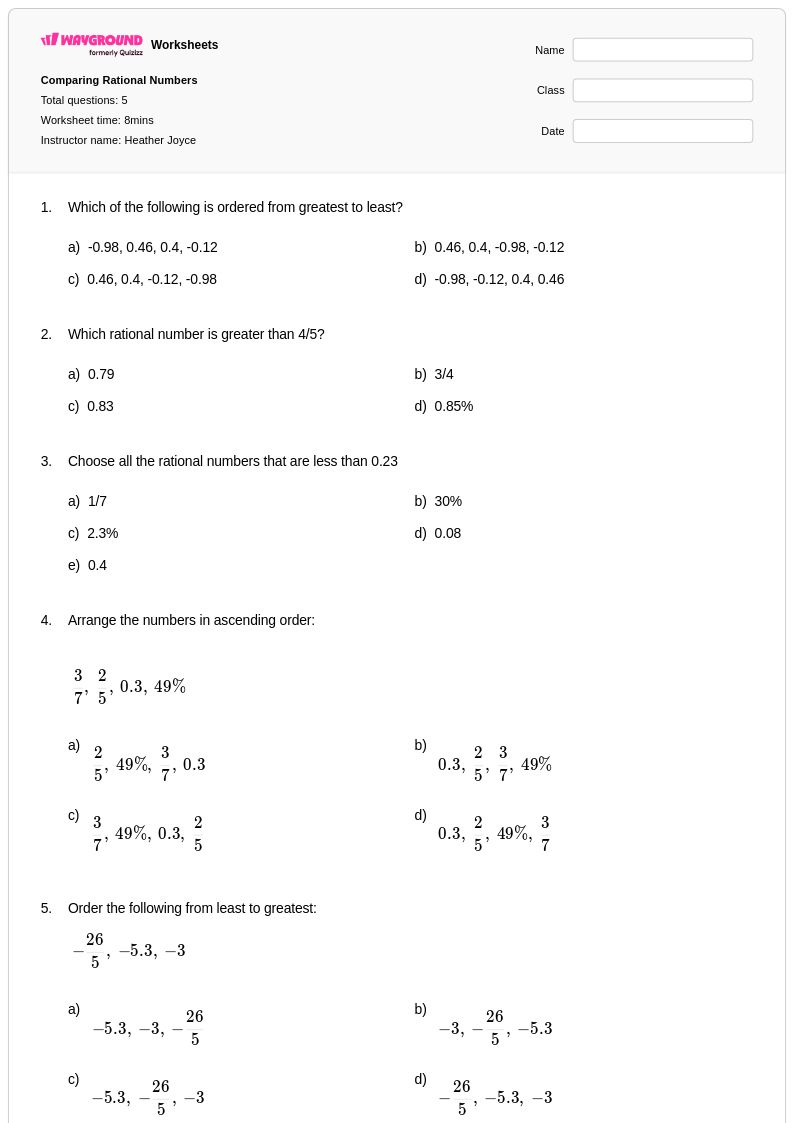
5 Q
7th - 8th
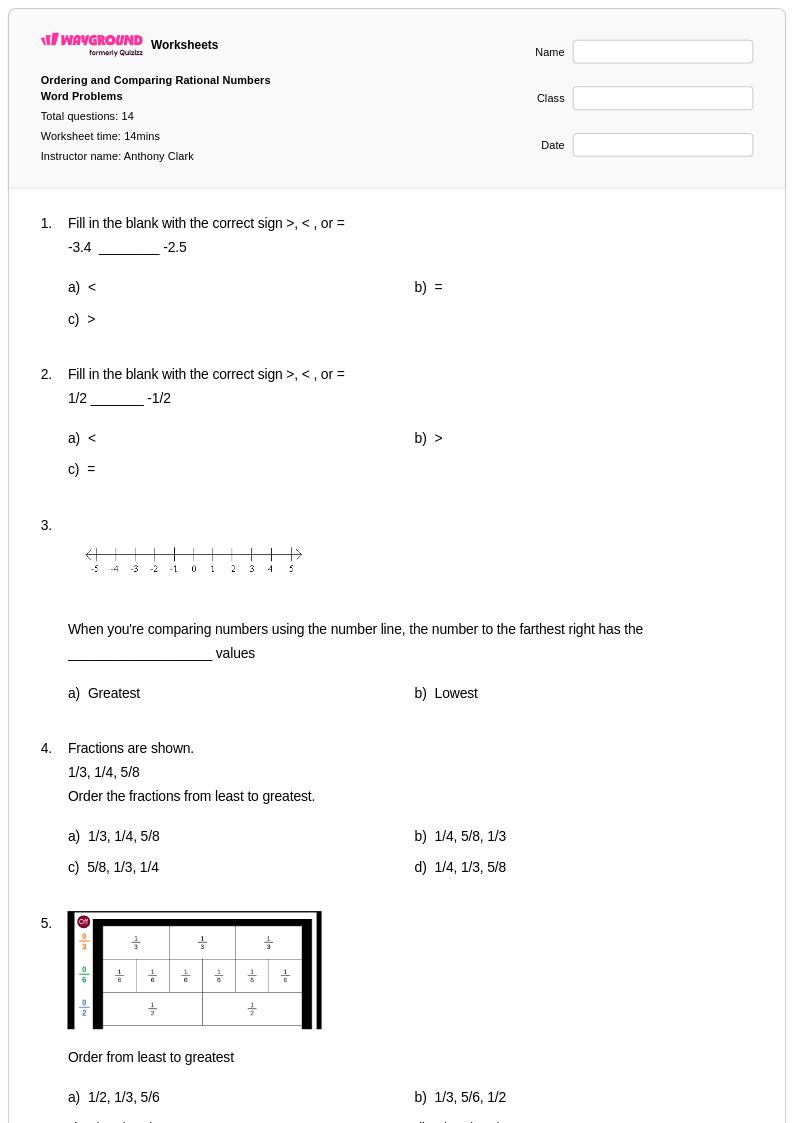
14 Q
6th - Uni
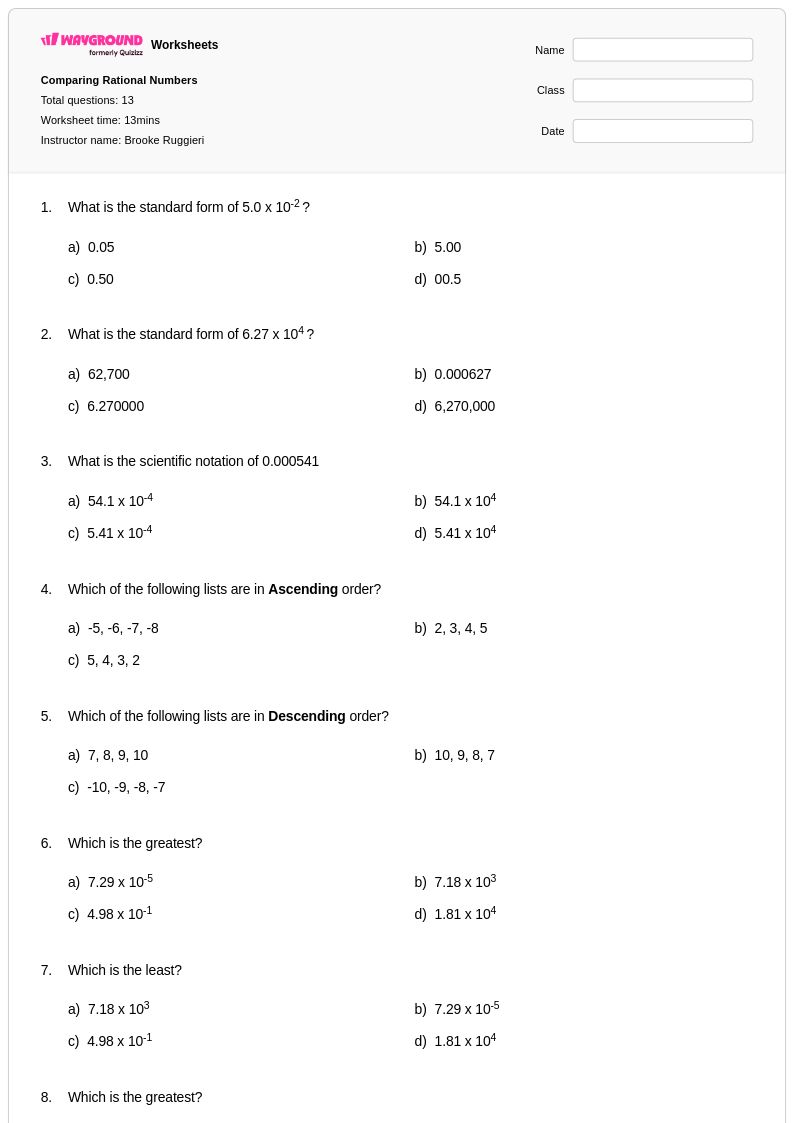
13 Q
7th
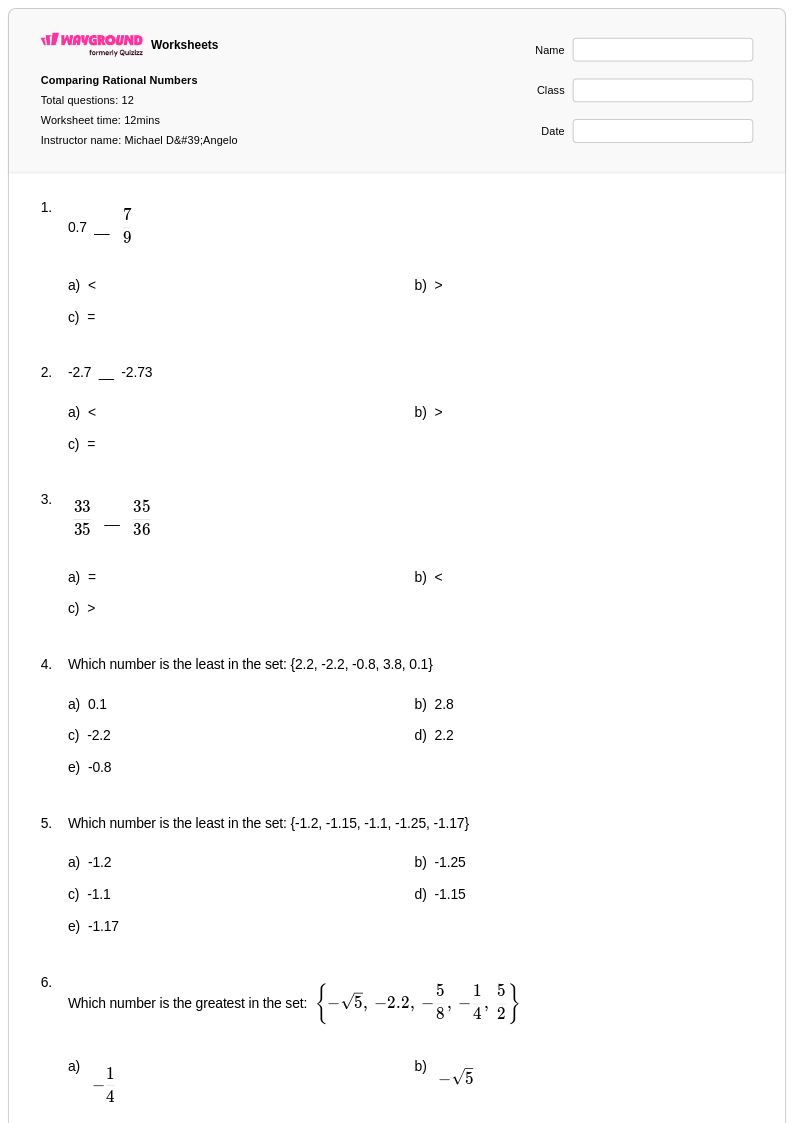
12 Q
7th - 9th
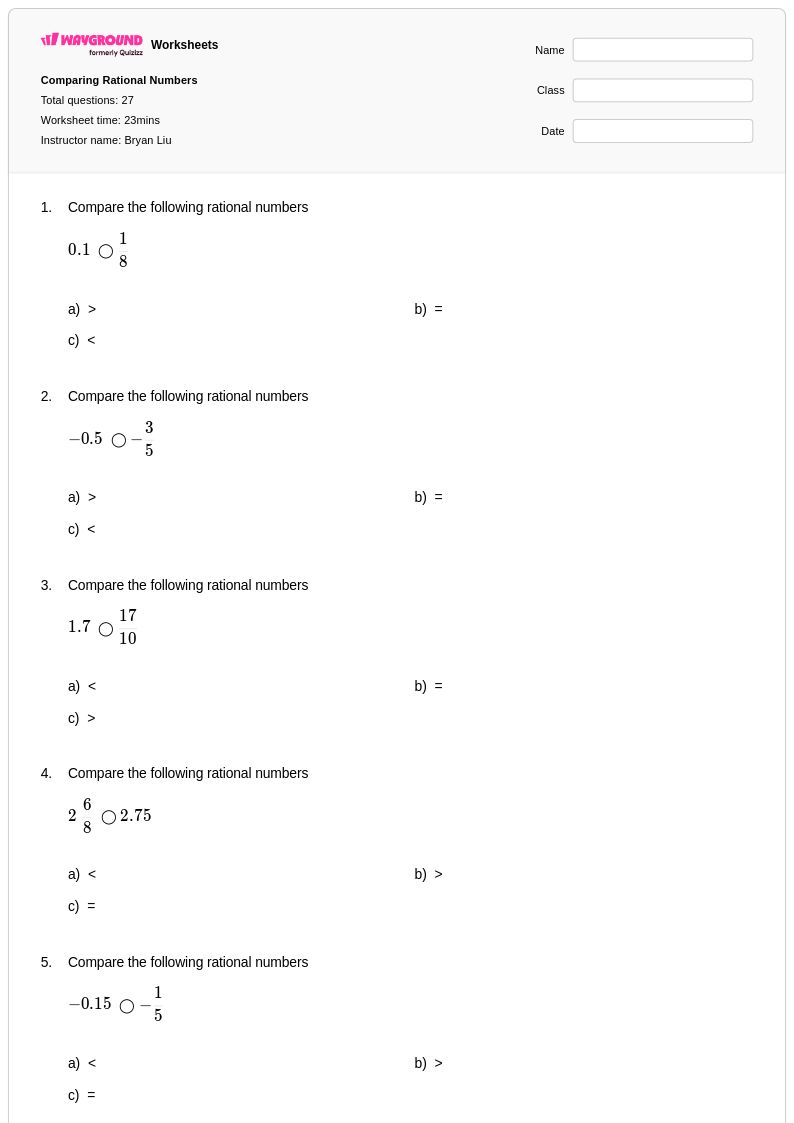
27 Q
6th - 7th
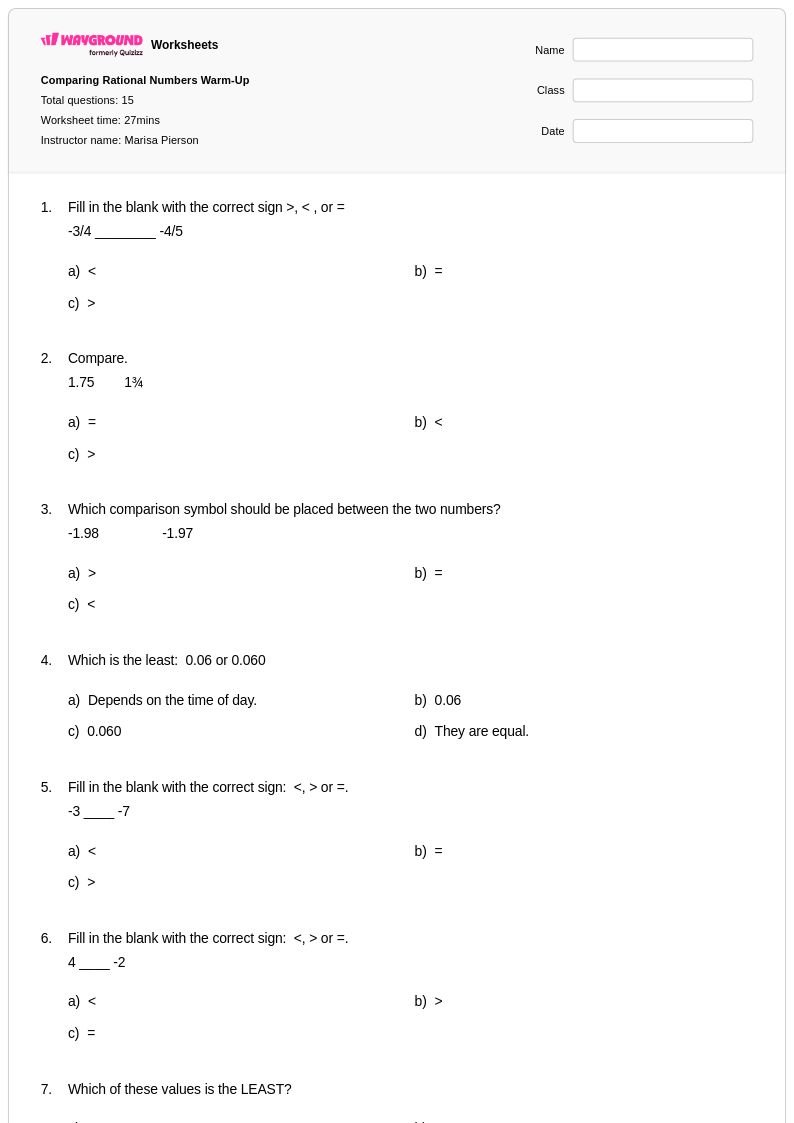
15 Q
7th - 8th
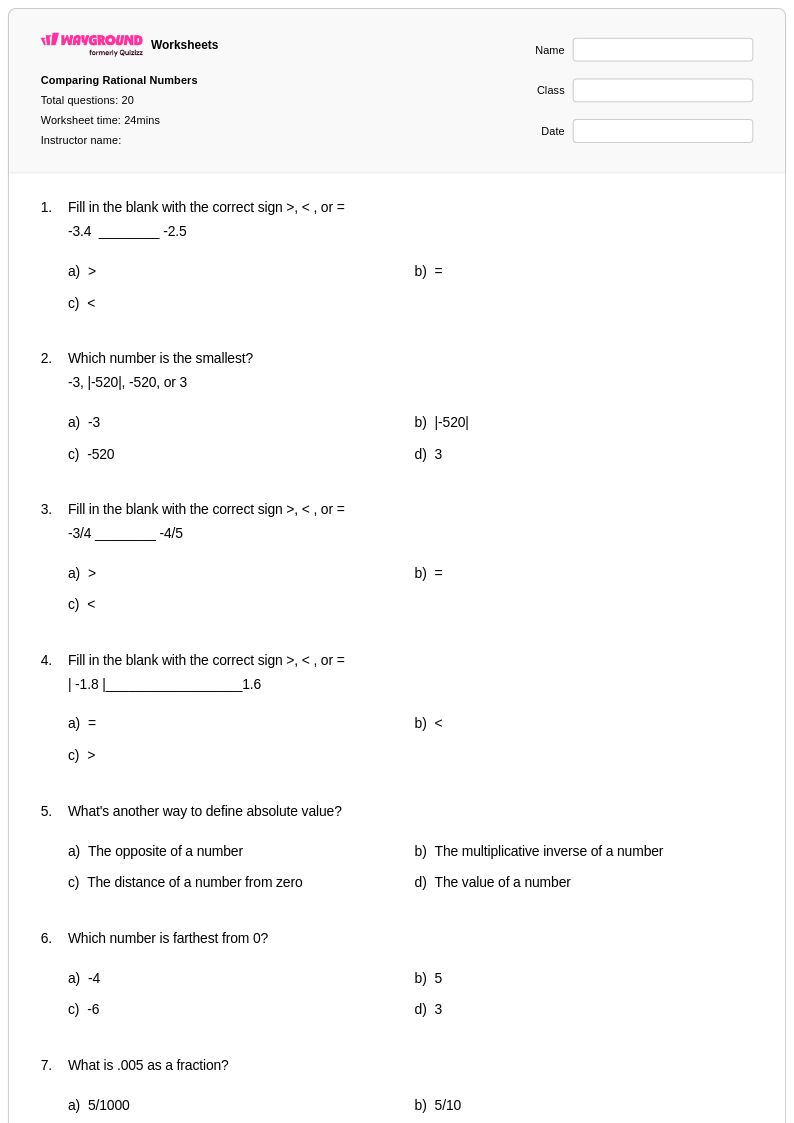
18 Q
6th - 7th
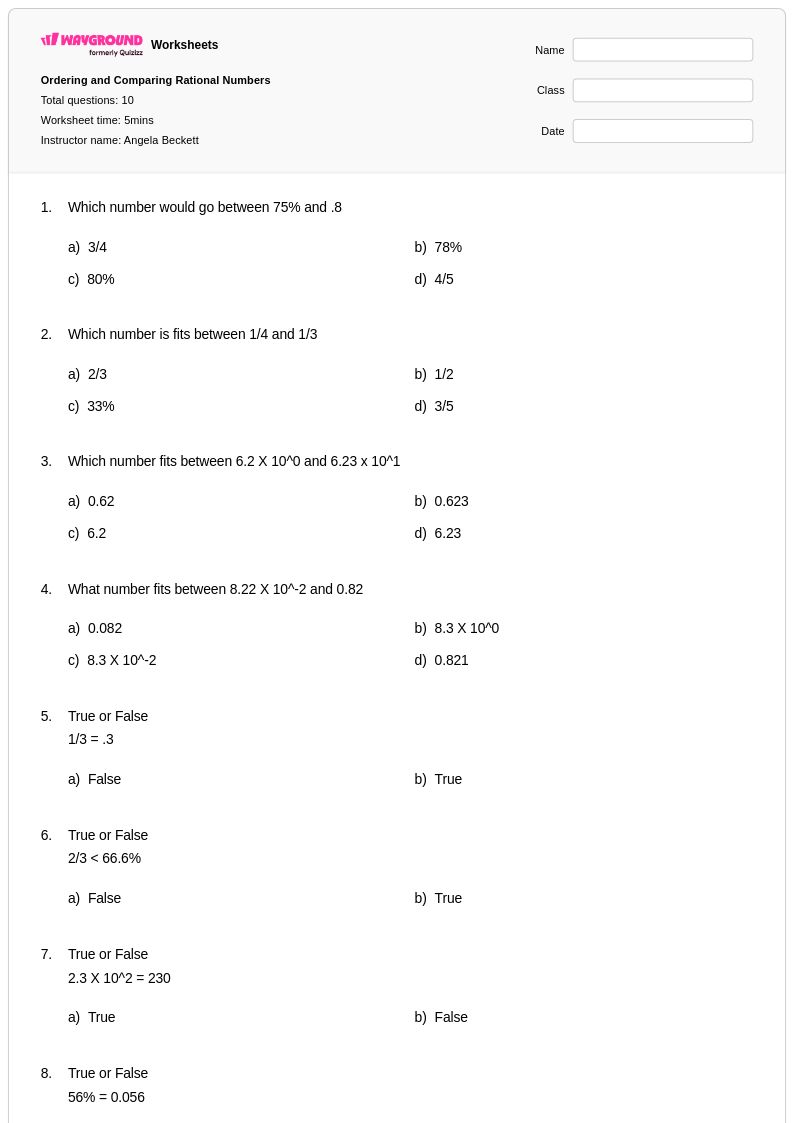
10 Q
7th - 9th
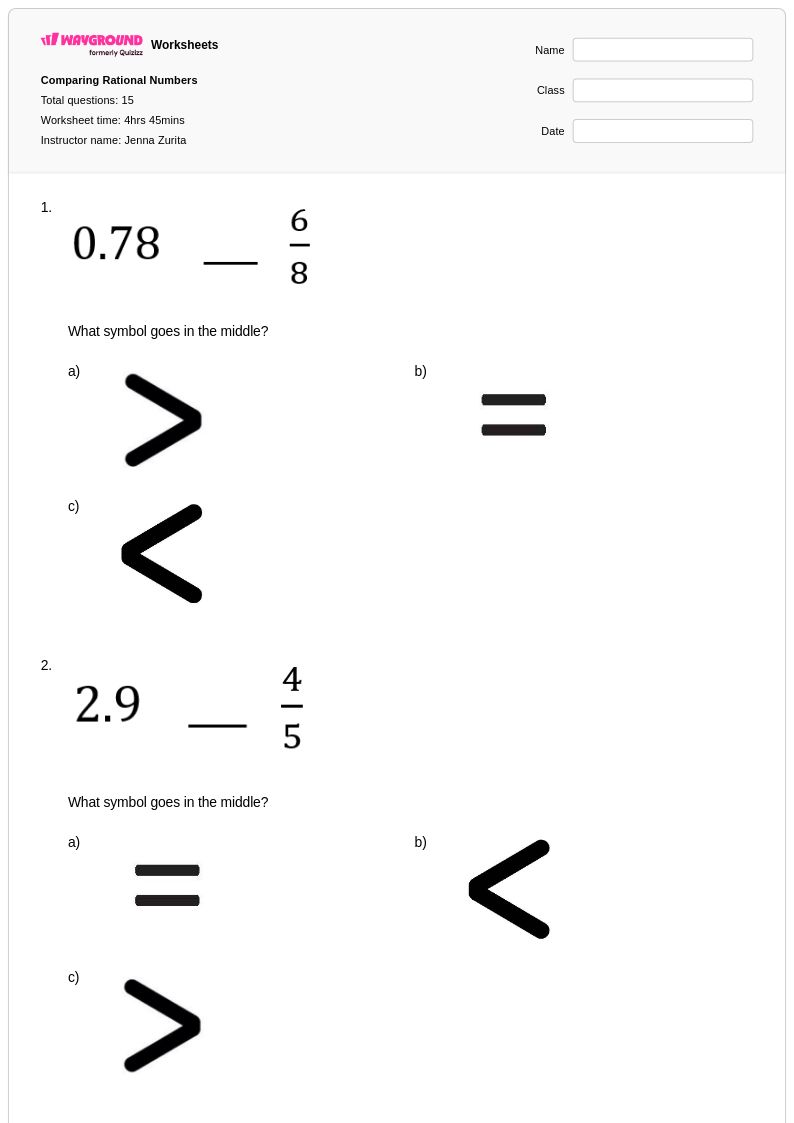
15 Q
5th - 9th
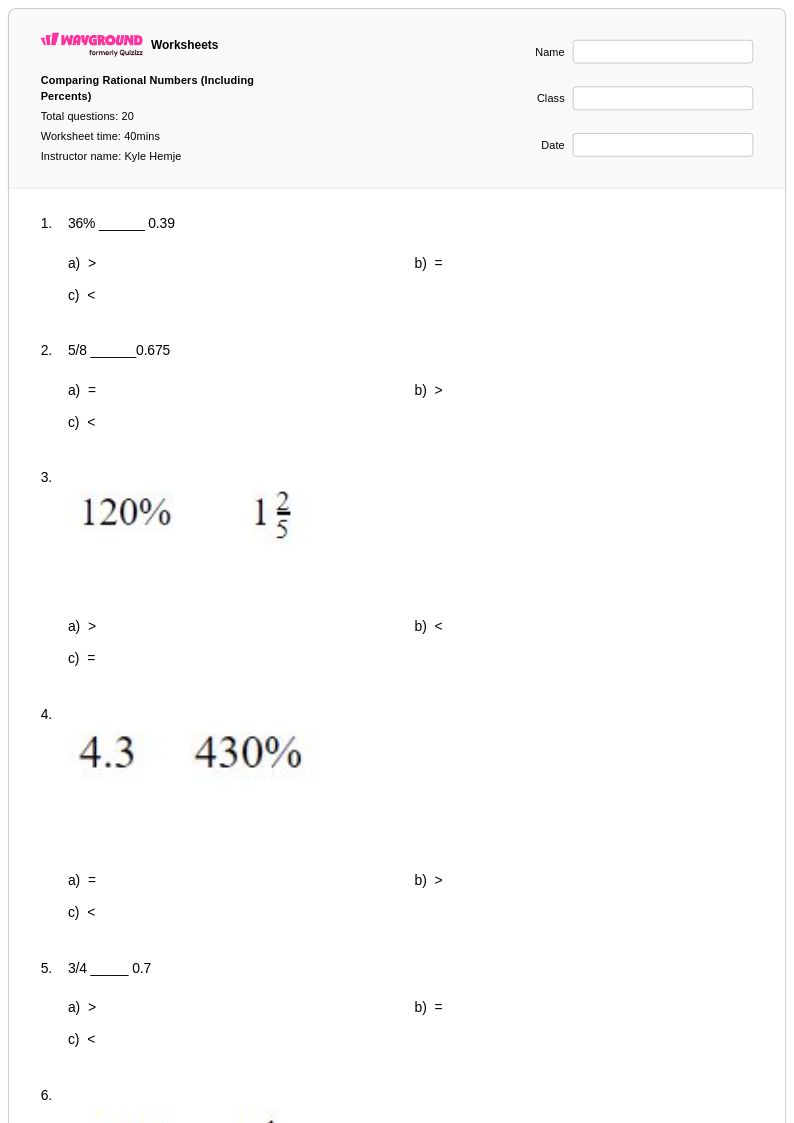
20 Q
7th - 8th
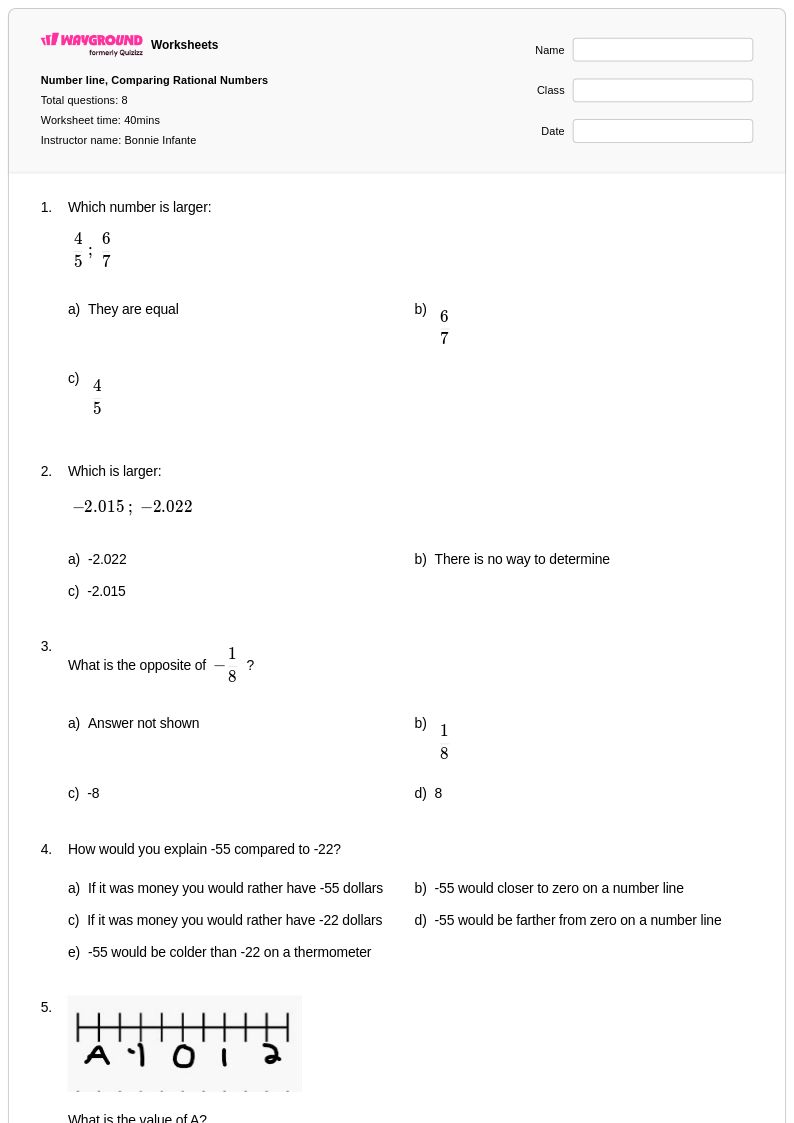
8 Q
7th
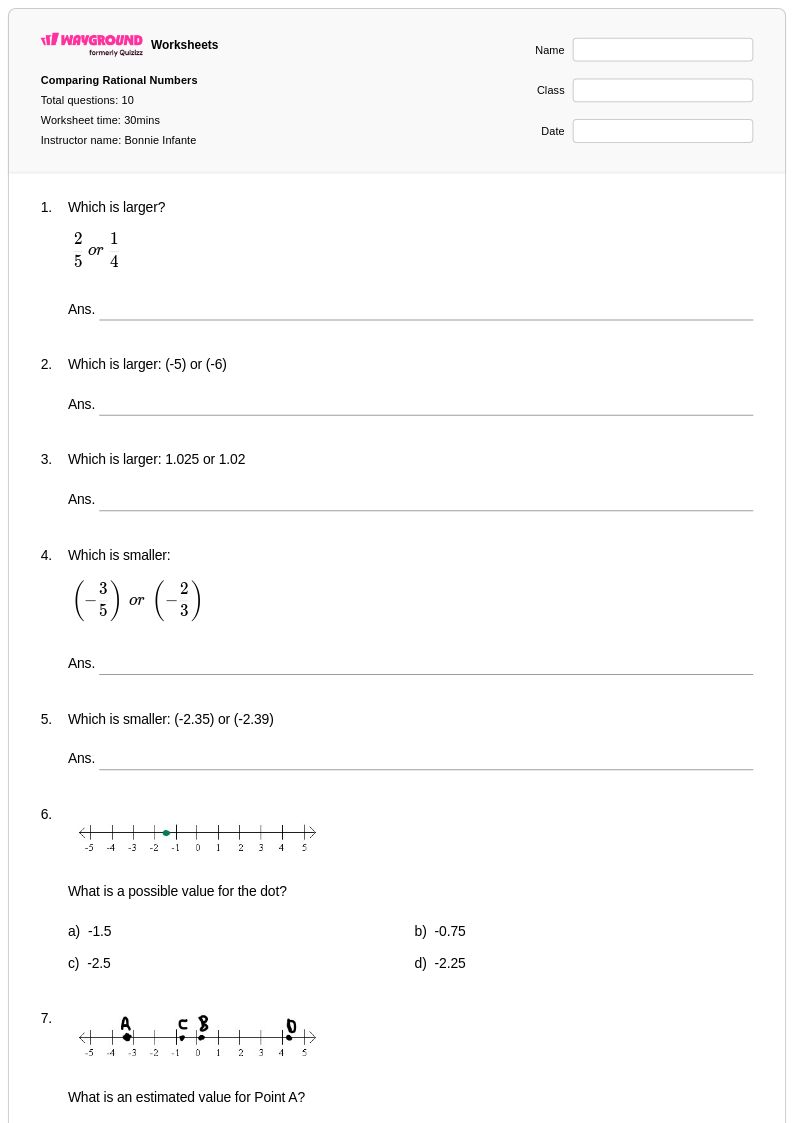
10 Q
4th - 8th
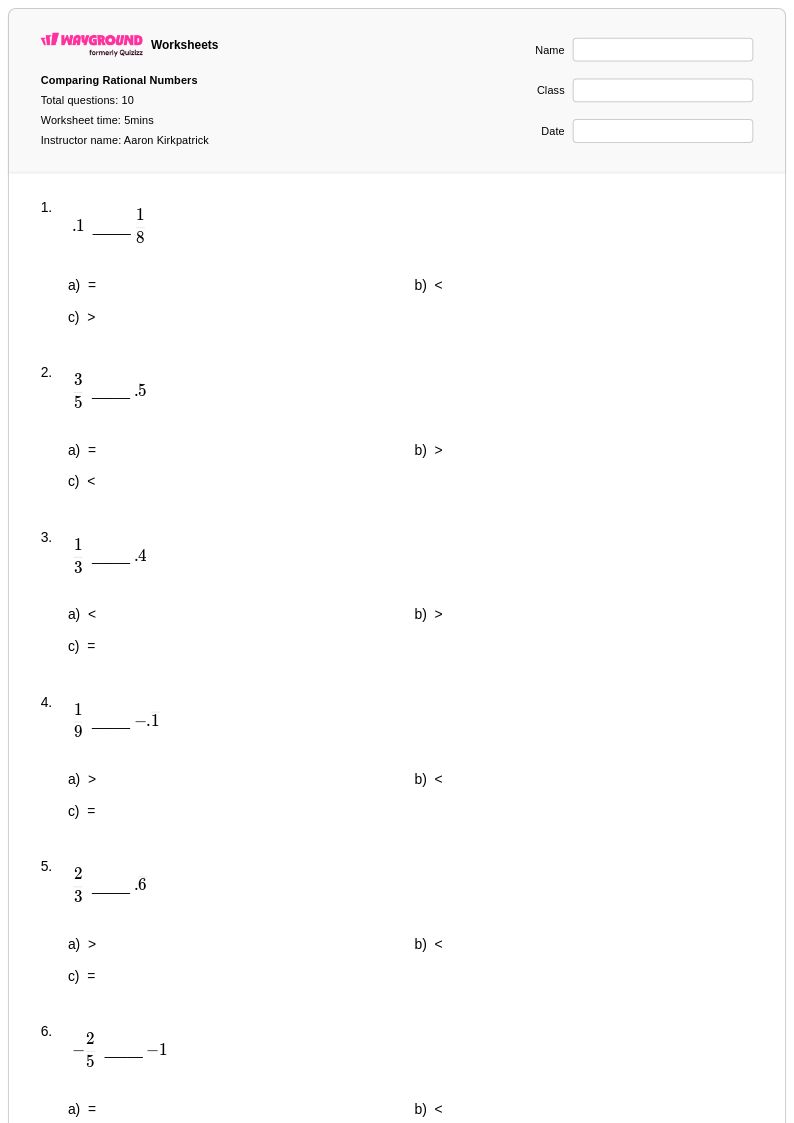
10 Q
5th - 8th
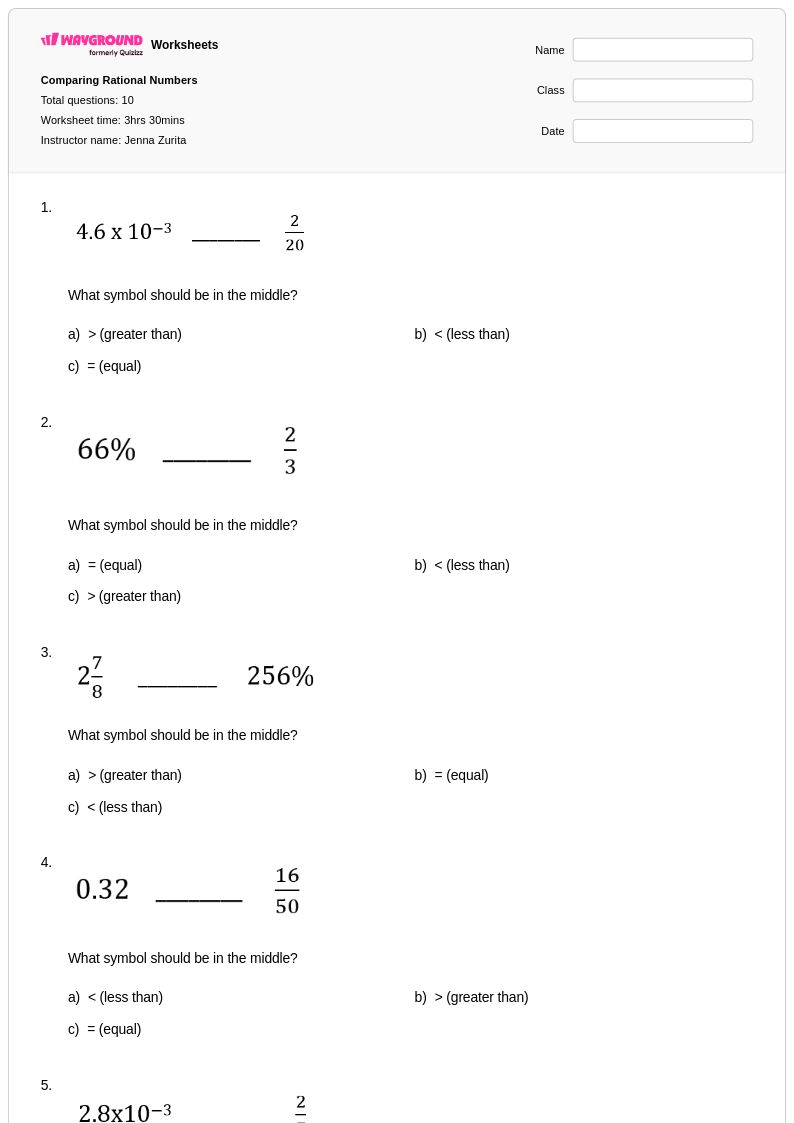
10 Q
6th - 9th
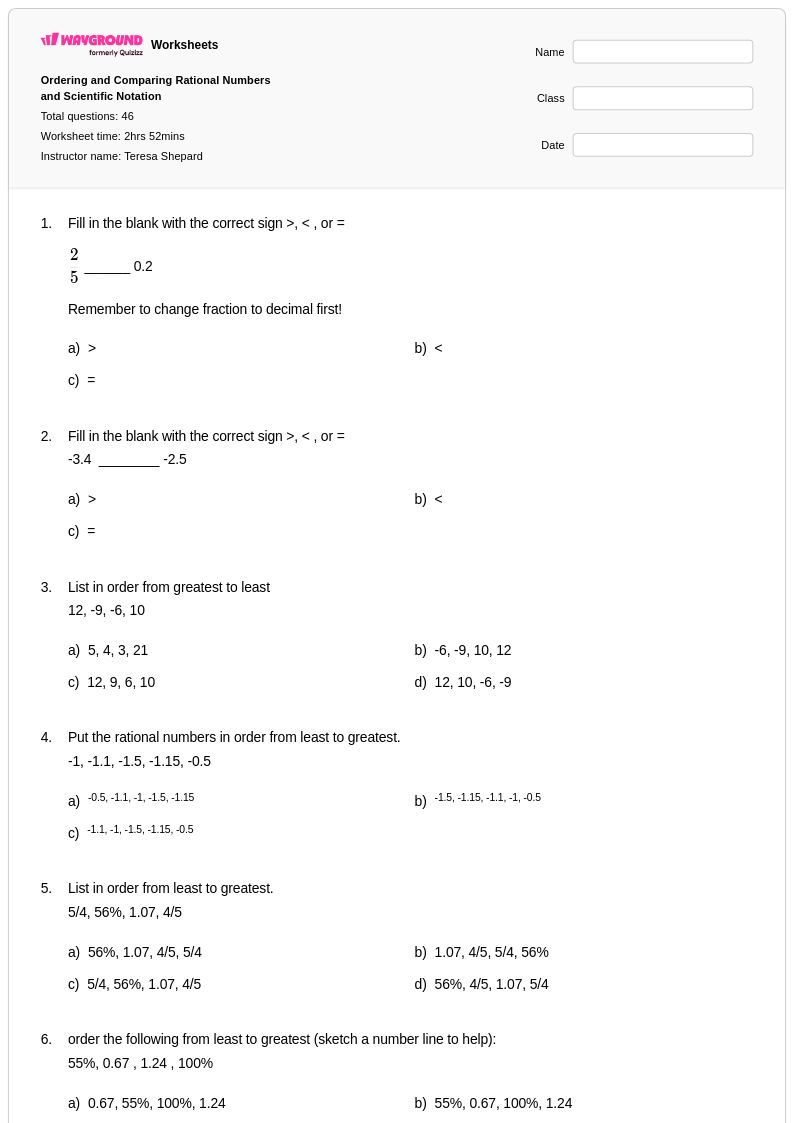
46 Q
7th - 8th
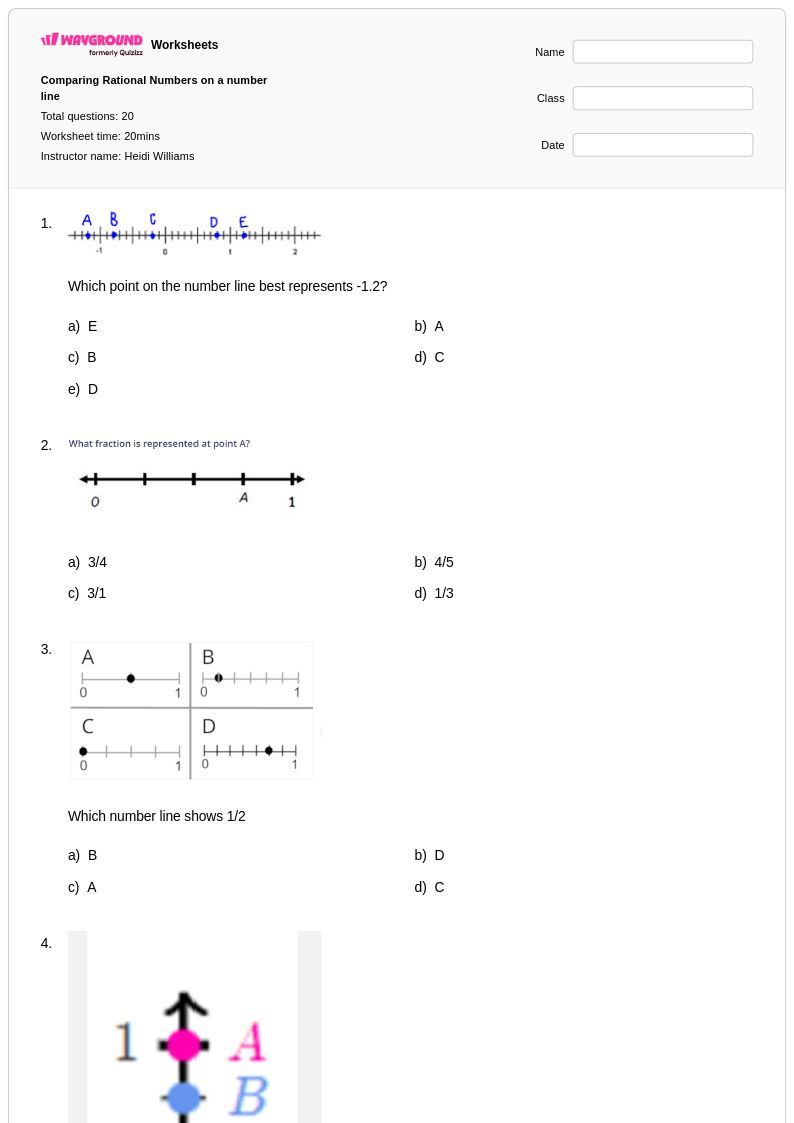
20 Q
6th - 7th
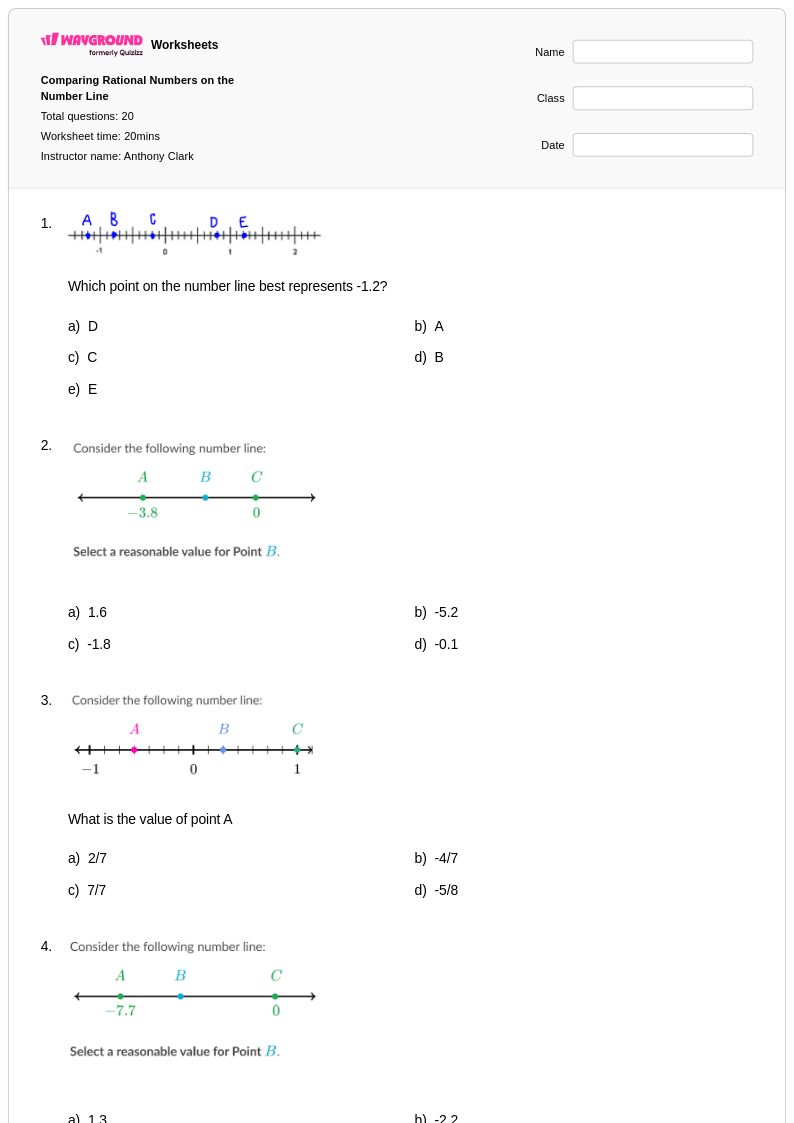
20 Q
6th - Uni
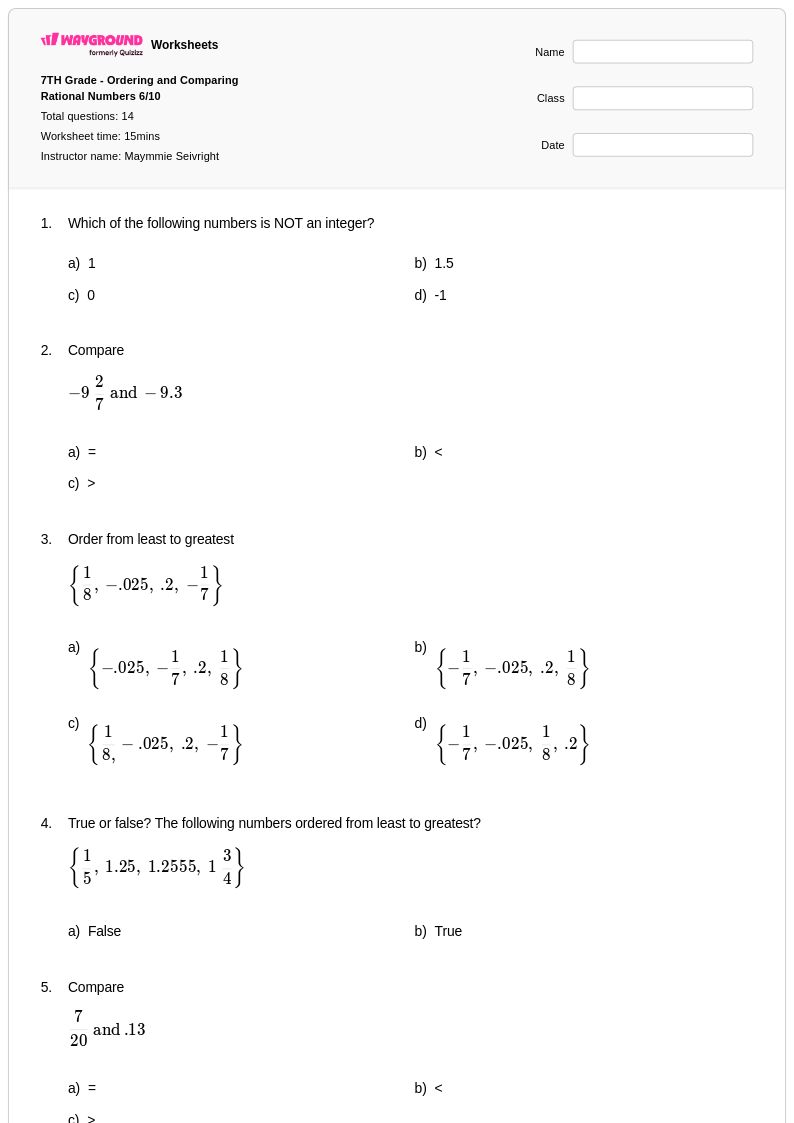
14 Q
7th
Explore Comparing Rational Numbers Worksheets by Grades
Explore Other Subject Worksheets for class 7
Explore printable Comparing Rational Numbers worksheets for Class 7
Comparing Rational Numbers worksheets for Class 7 students available through Wayground (formerly Quizizz) provide comprehensive practice with ordering, evaluating, and analyzing positive and negative fractions, decimals, and integers on the number line. These carefully designed resources strengthen students' ability to use inequality symbols, convert between different rational number forms, and apply comparison strategies across various mathematical contexts. The worksheets feature diverse practice problems that progress from basic ordering tasks to complex real-world applications, ensuring students develop fluency with absolute value concepts and distance relationships between rational numbers. Each worksheet collection includes detailed answer keys and is available as free printables, allowing educators to seamlessly integrate targeted skill practice into their mathematics instruction.
Wayground (formerly Quizizz) supports mathematics teachers with an extensive library of millions of teacher-created worksheet resources specifically focused on comparing rational numbers and other Class 7 mathematical concepts. The platform's robust search and filtering capabilities enable educators to quickly locate materials aligned with state and national mathematics standards, while built-in differentiation tools allow for seamless customization based on individual student needs and learning objectives. These worksheet collections are available in both printable pdf formats and interactive digital versions, providing flexibility for classroom instruction, homework assignments, remediation sessions, and enrichment activities. Teachers can efficiently modify content difficulty levels, select specific problem types, and organize resources to support comprehensive lesson planning that addresses diverse learning styles and mathematical proficiency levels.
FAQs
How do I teach Grade 7 students to compare rational numbers?
What exercises help Grade 7 students practice comparing rational numbers?
What mistakes do Grade 7 students make when comparing rational numbers?
How can I use a Grade 7 comparing rational numbers worksheet on Wayground?
How does comparing rational numbers fit into the Grade 7 Common Core math progression?
How can I differentiate Grade 7 rational-number comparison practice?
What grade level is comparing rational numbers taught at?