Free Printable Compound and Continuous Interest Worksheets for Class 8
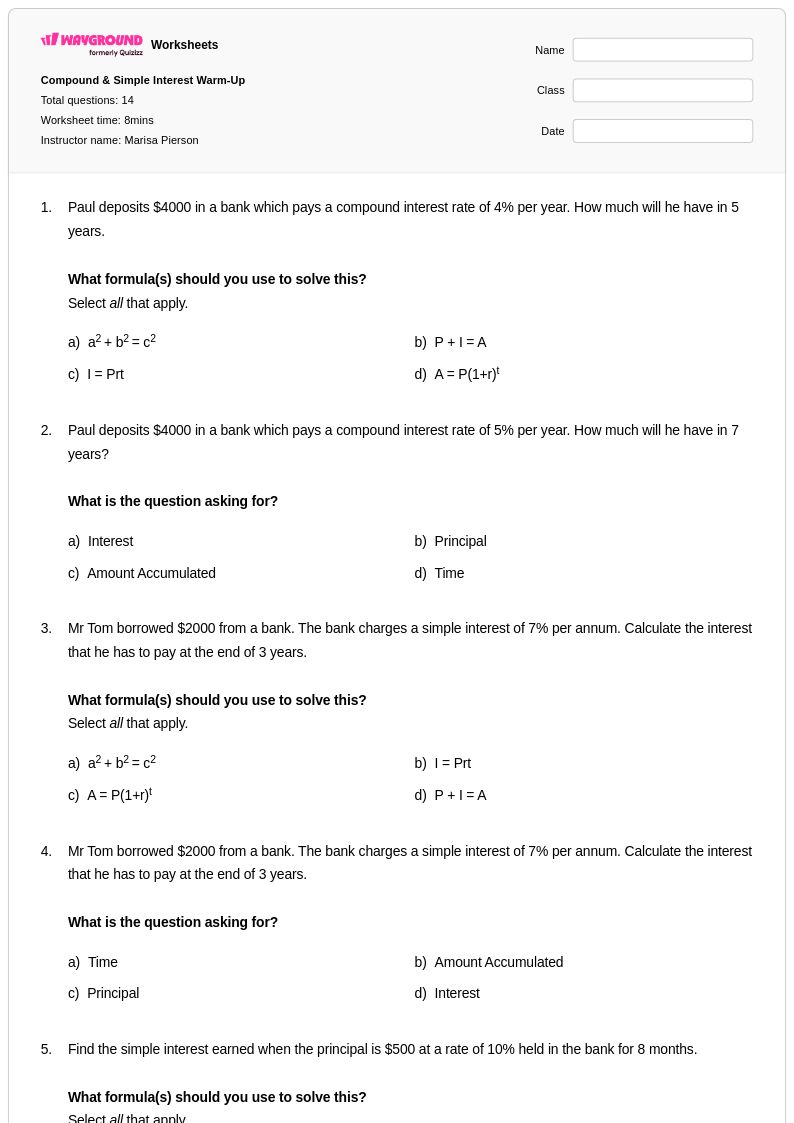
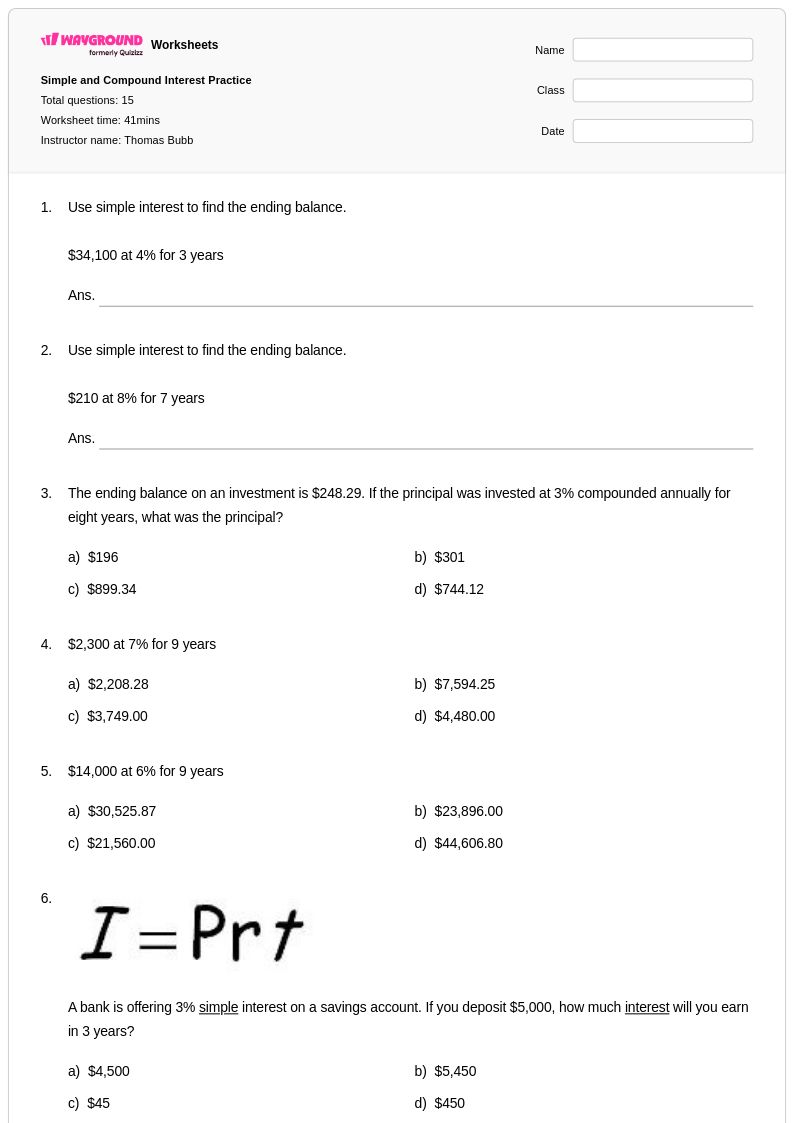
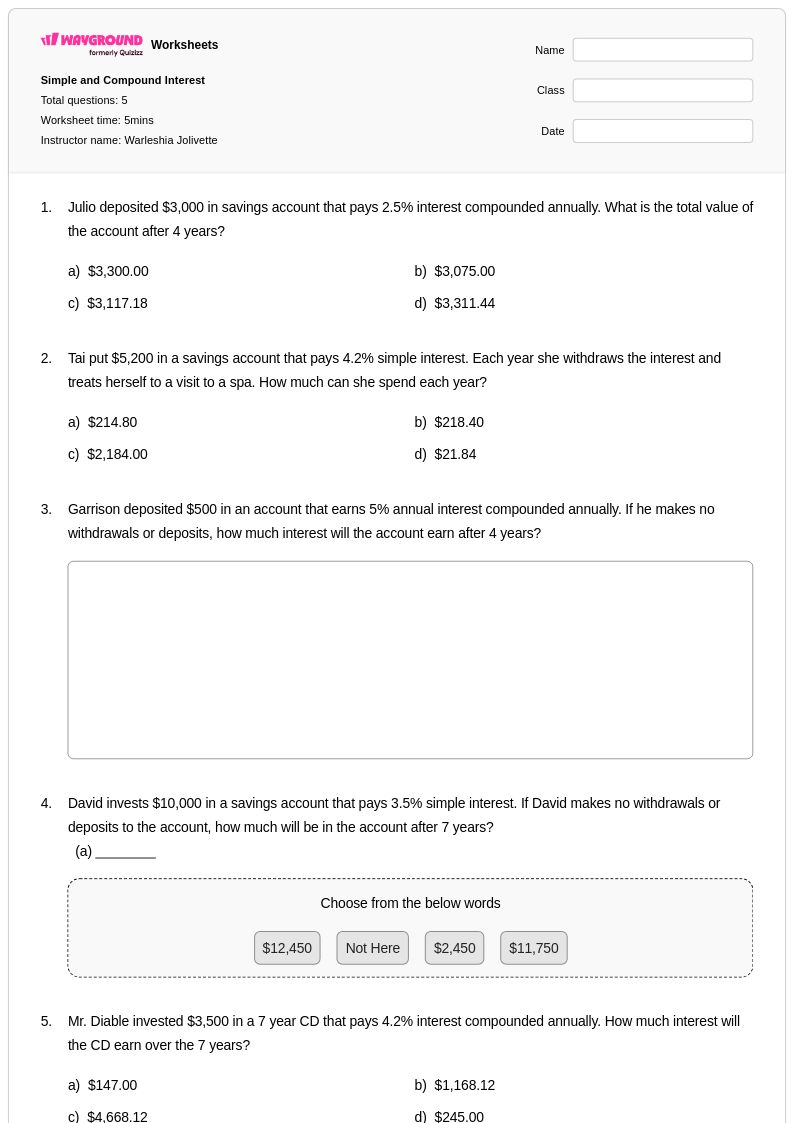
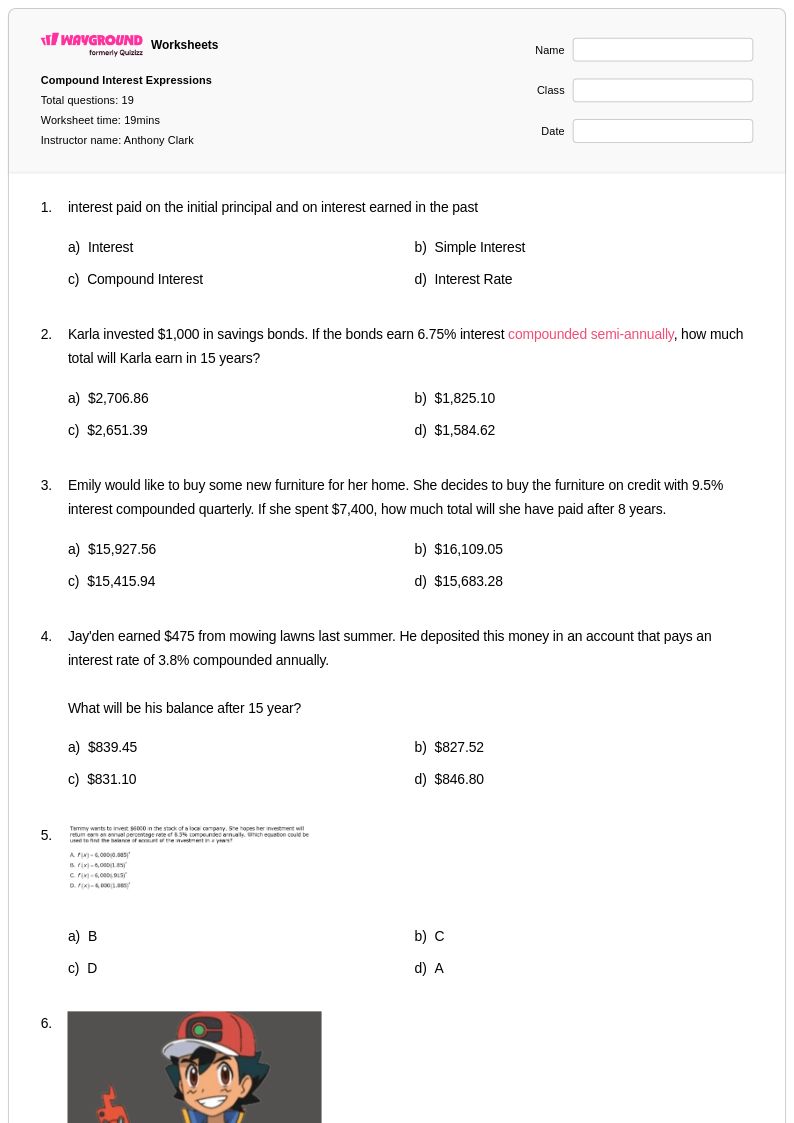
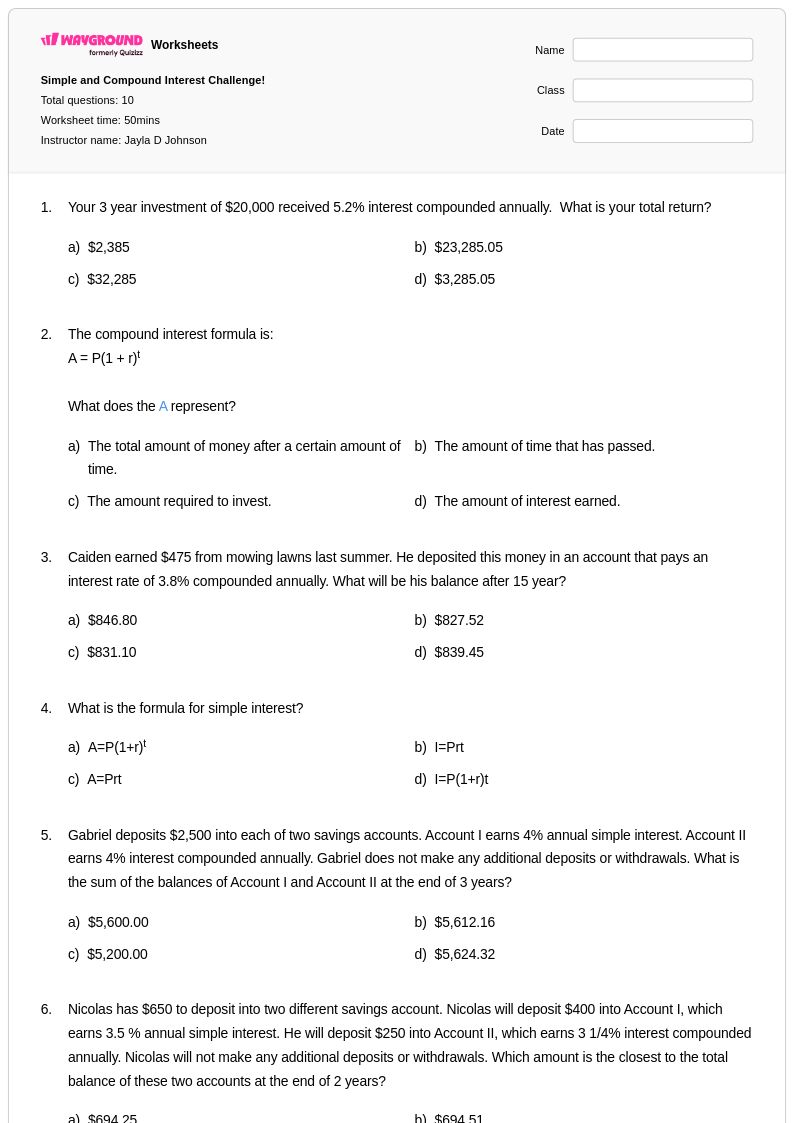
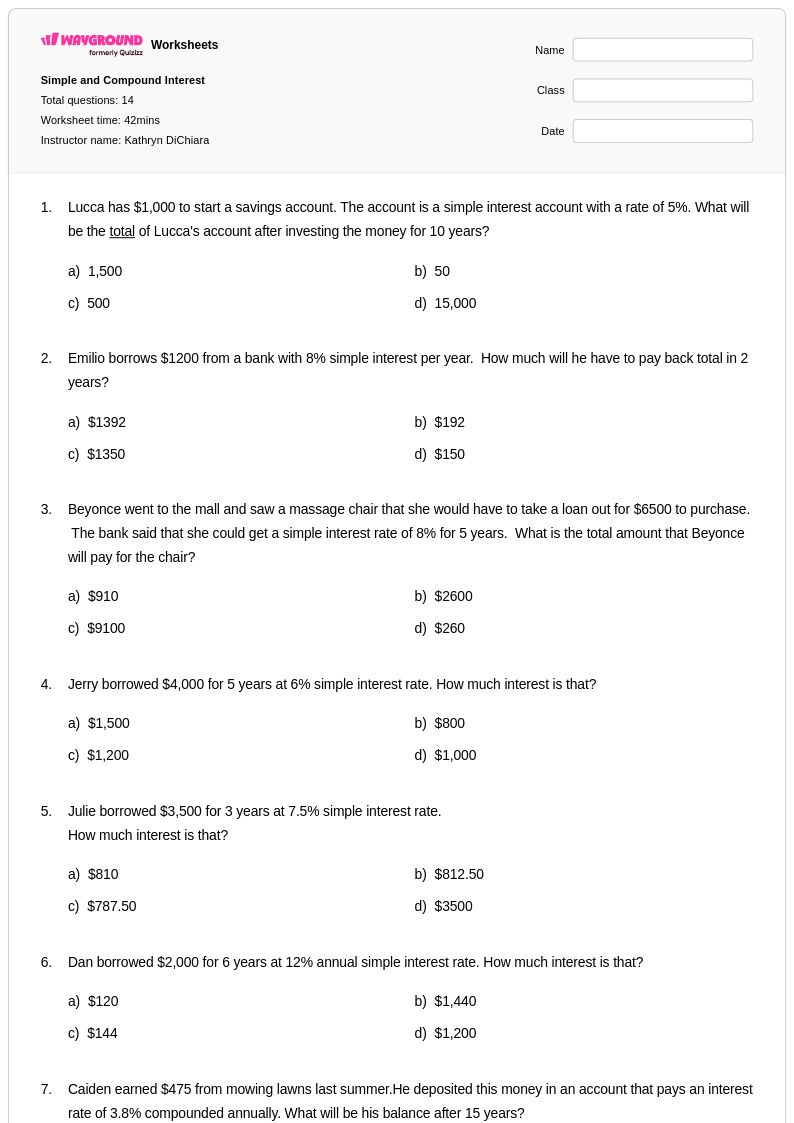
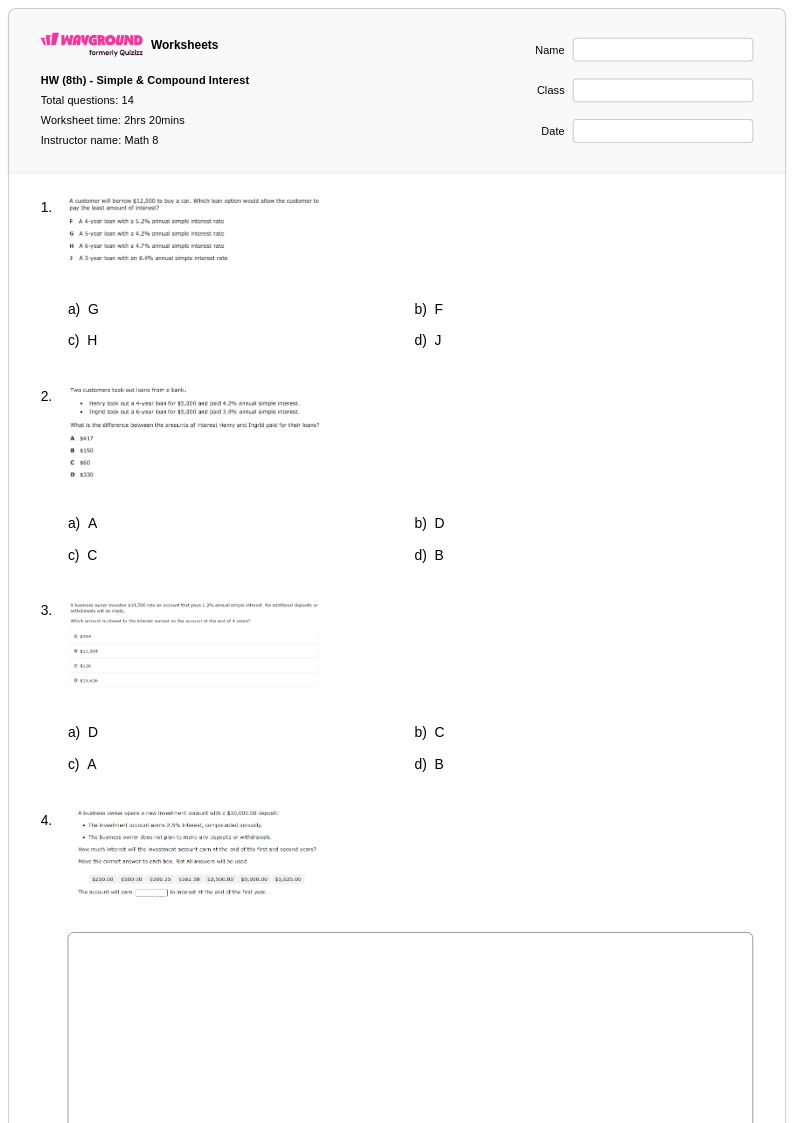
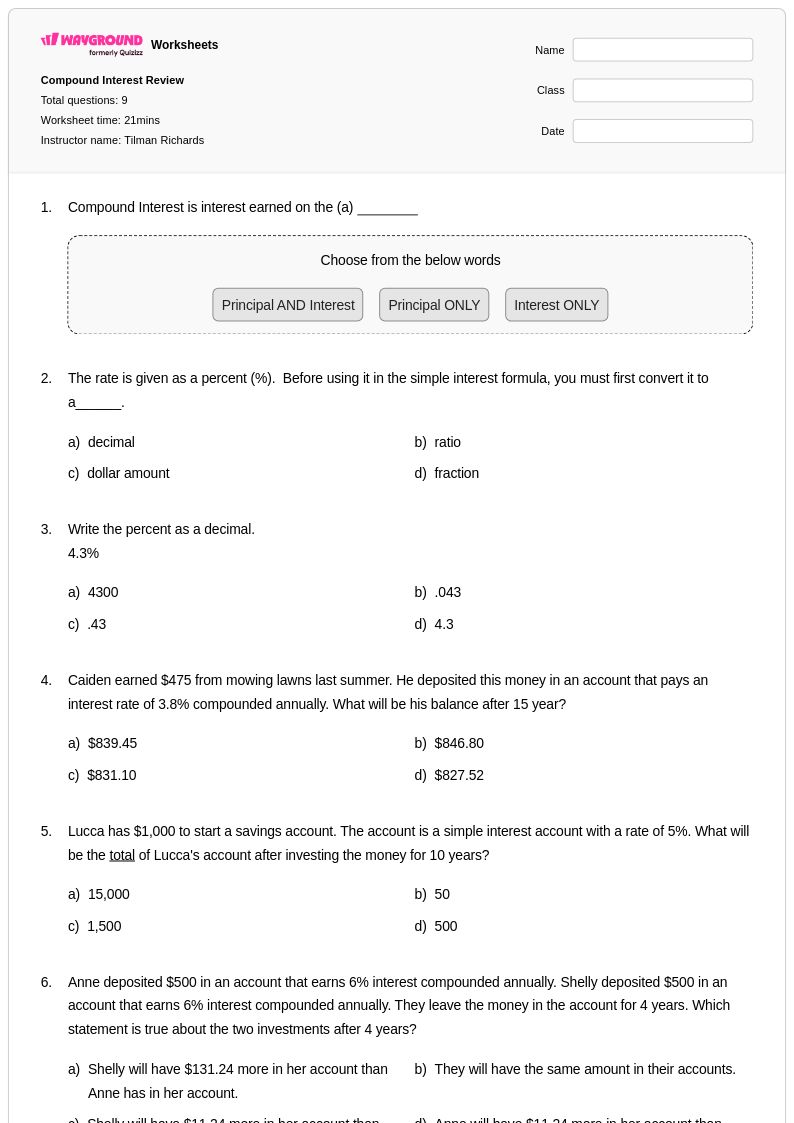
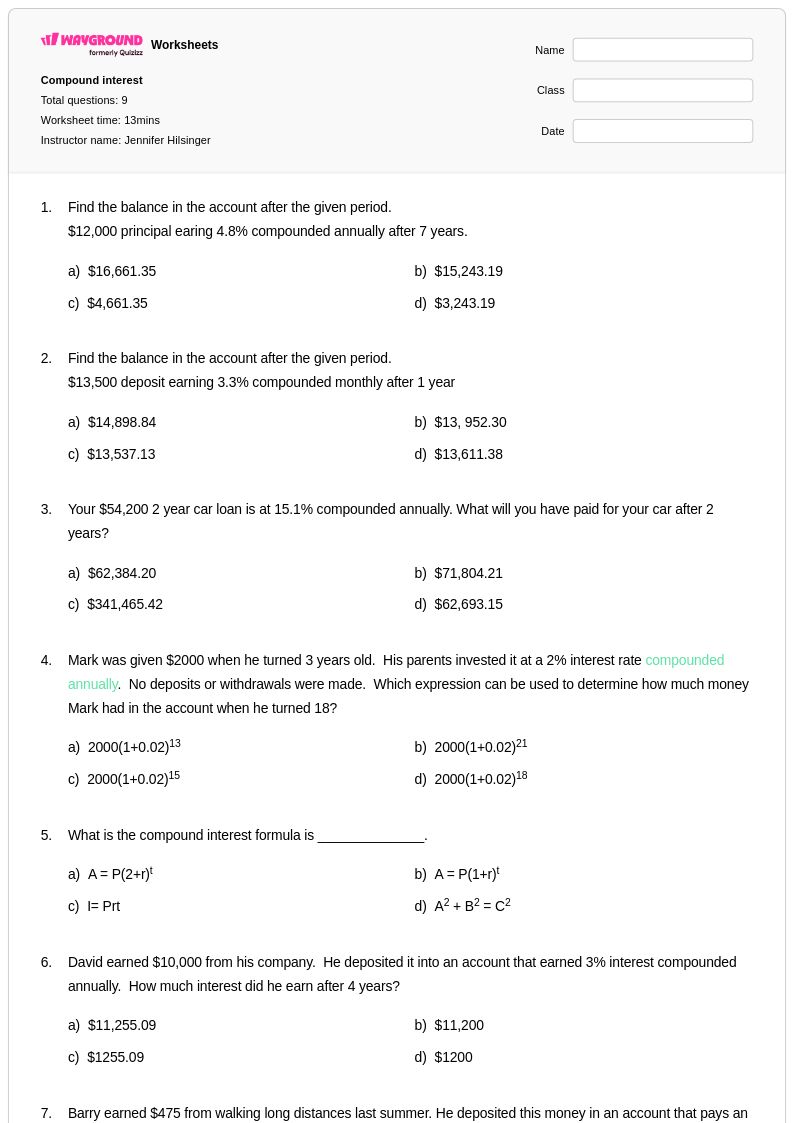
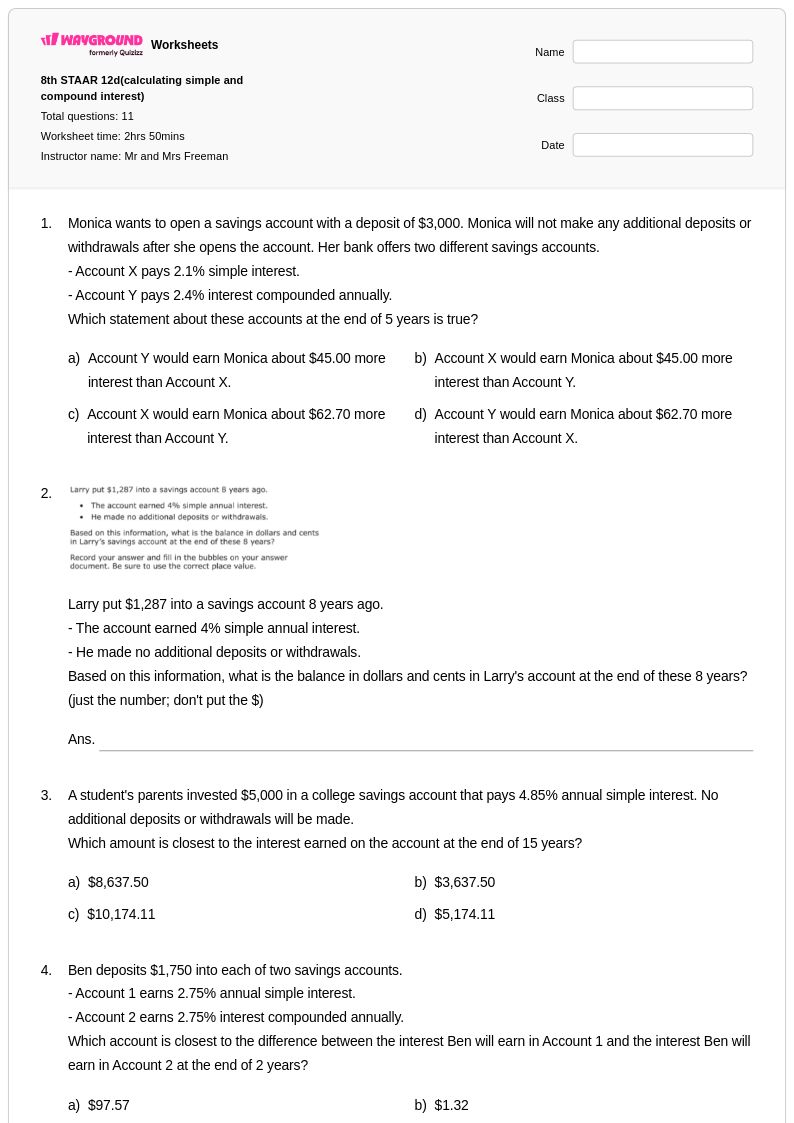
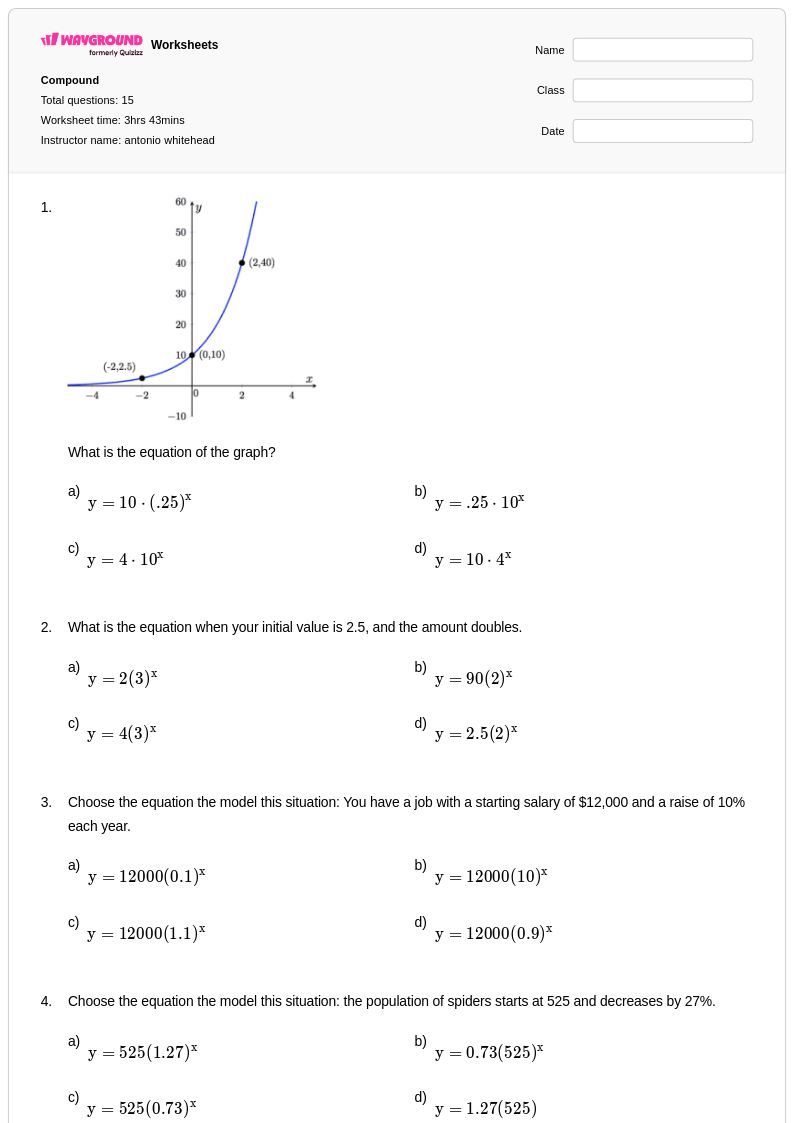
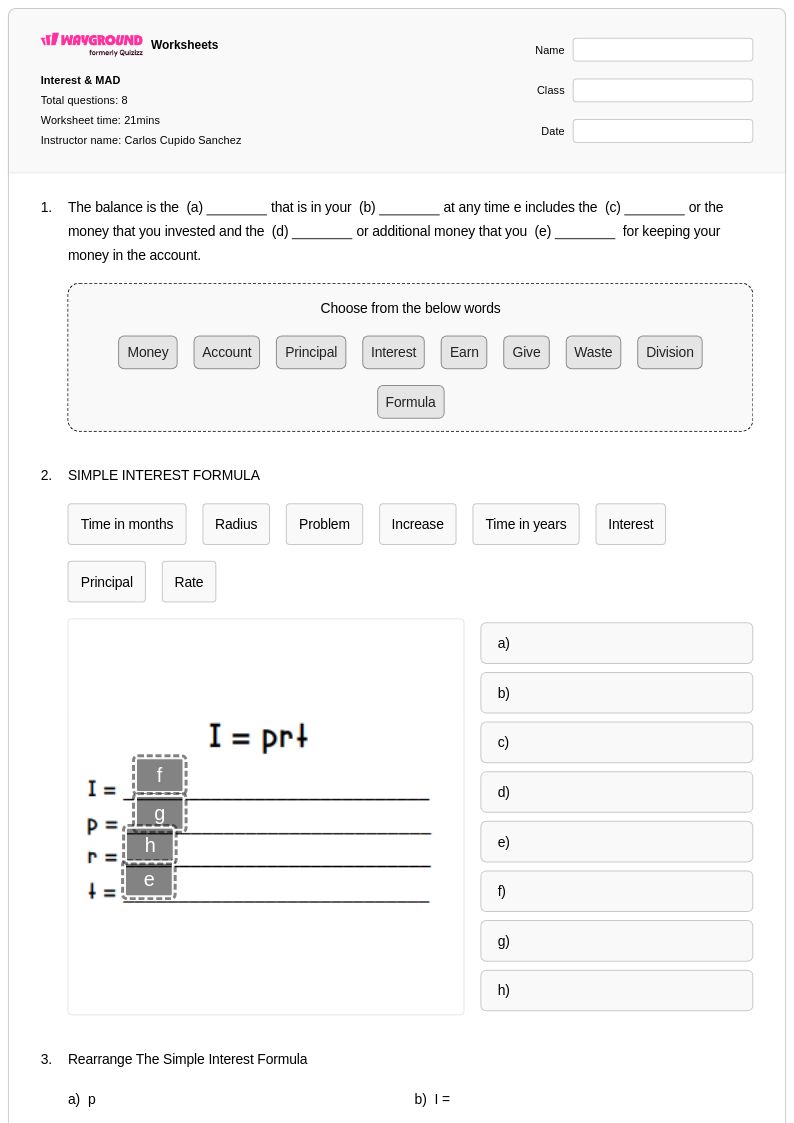
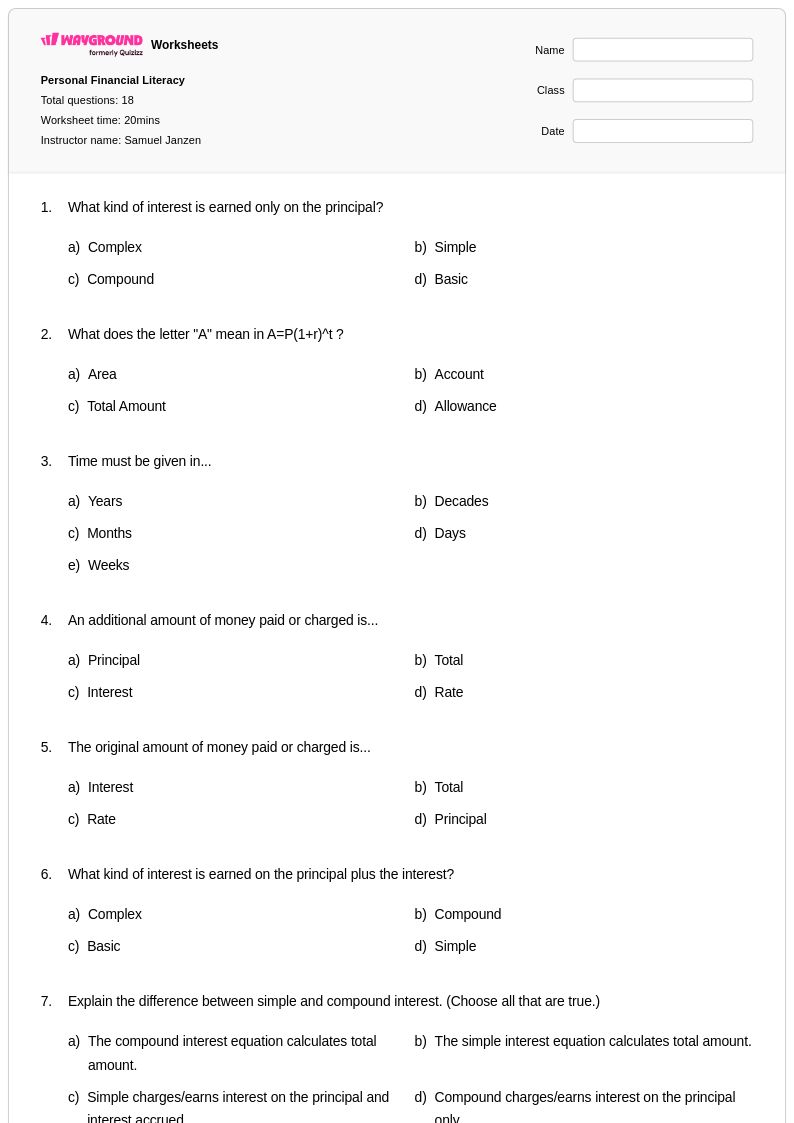
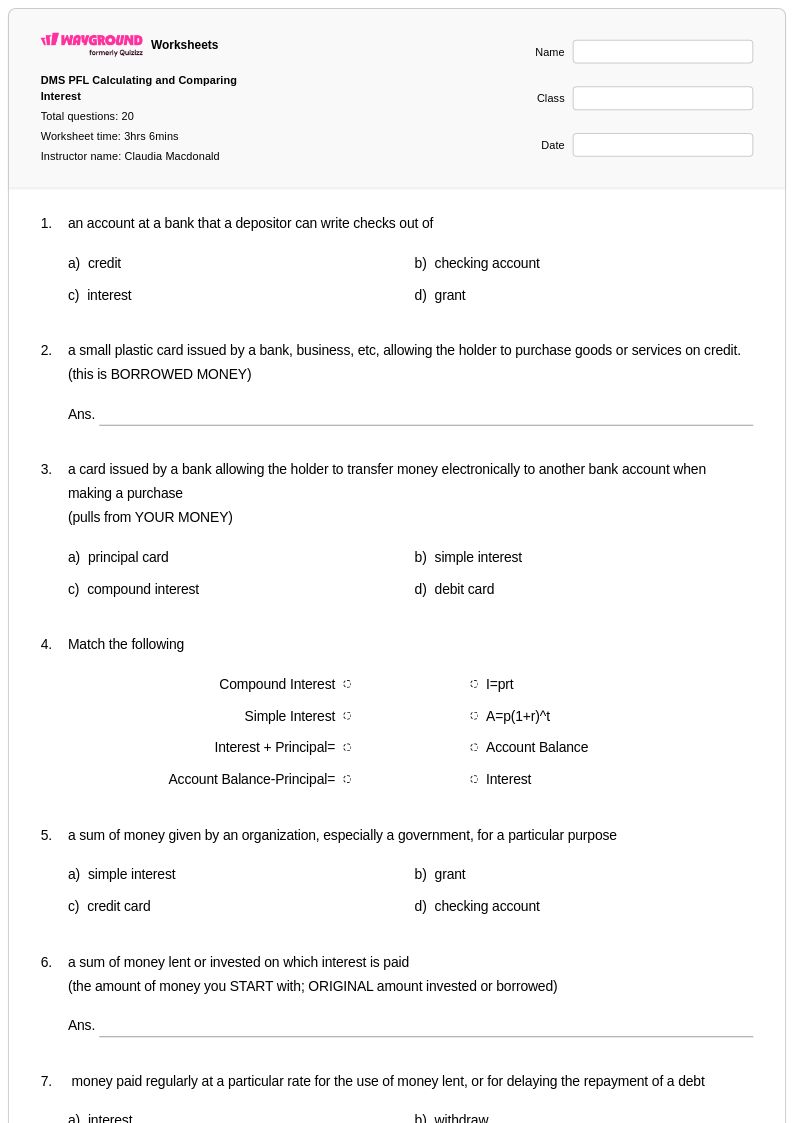
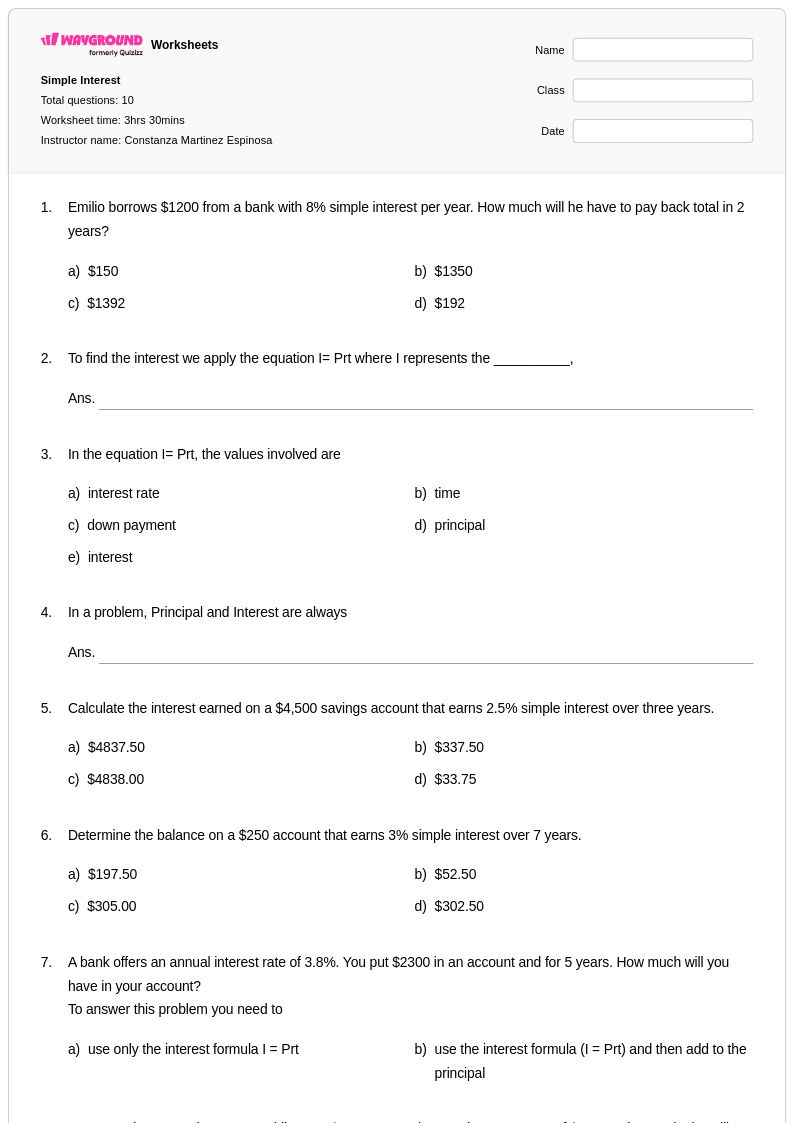
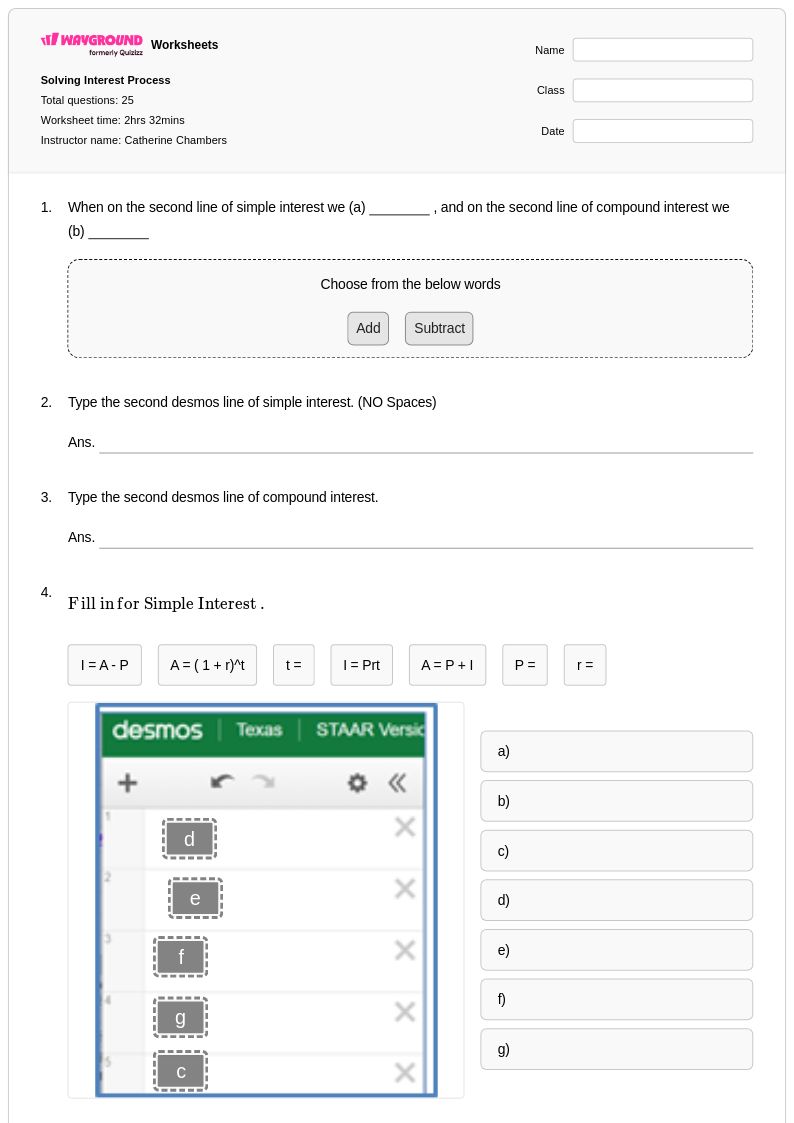
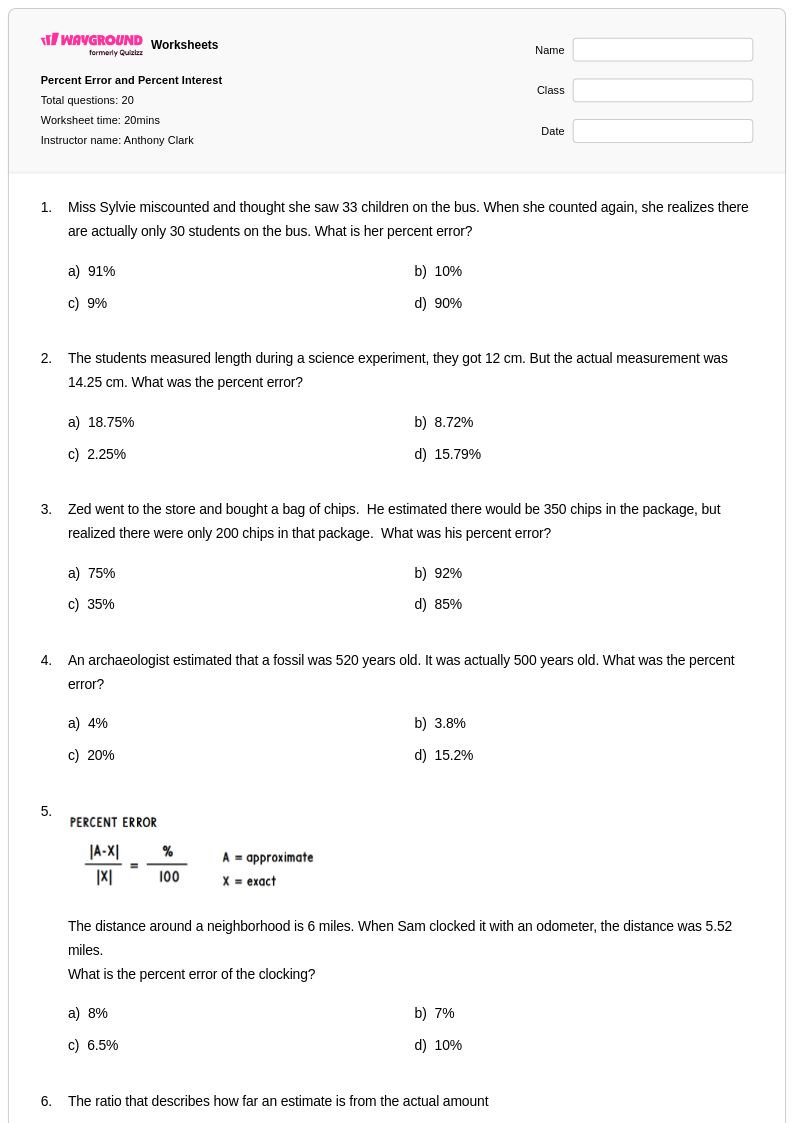
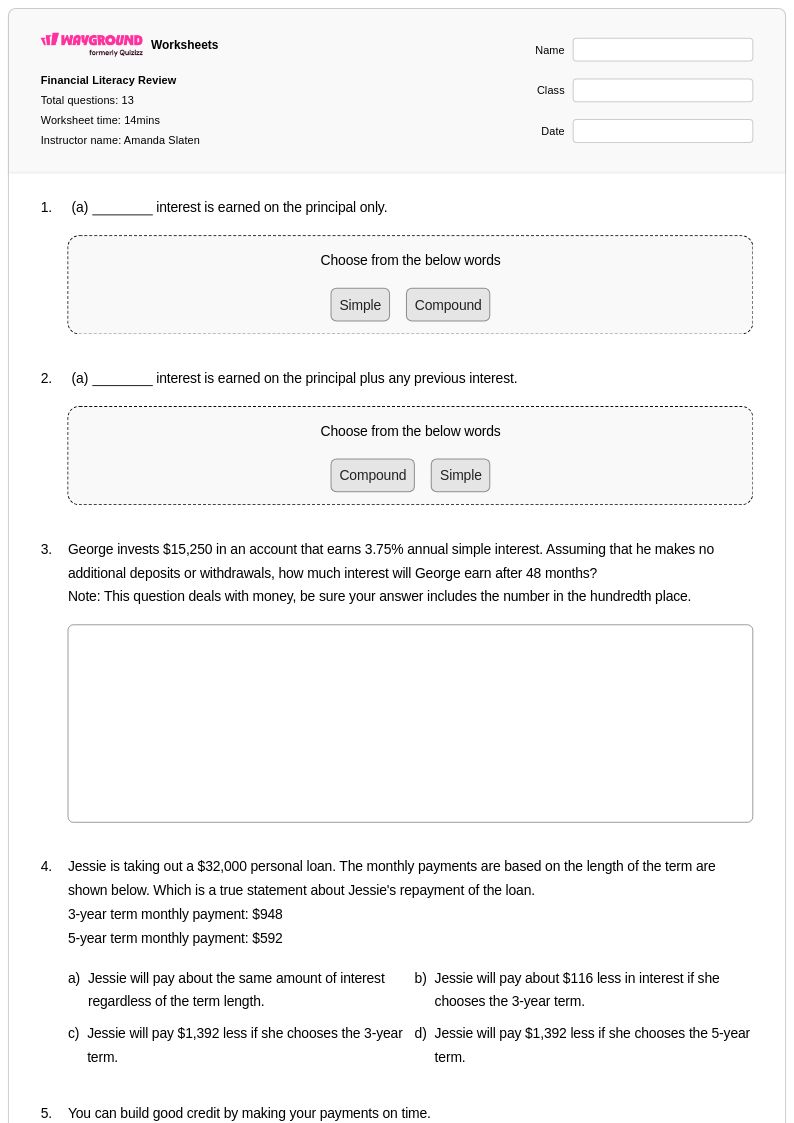
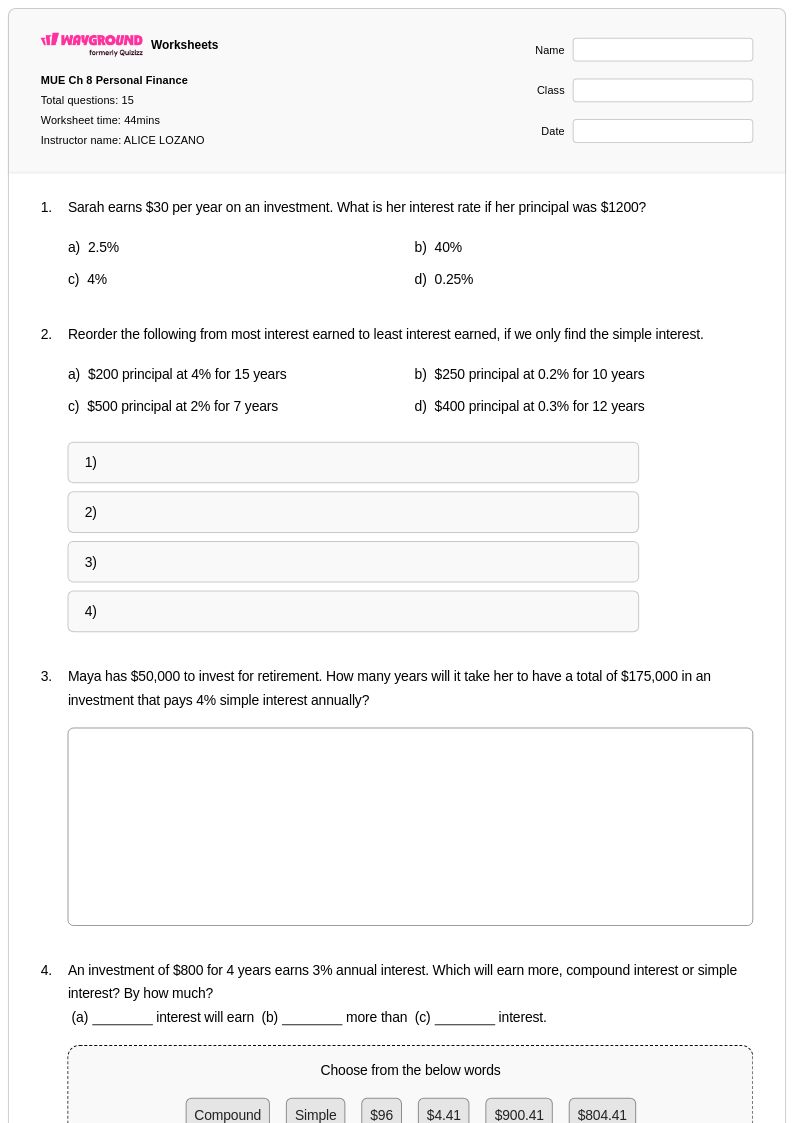
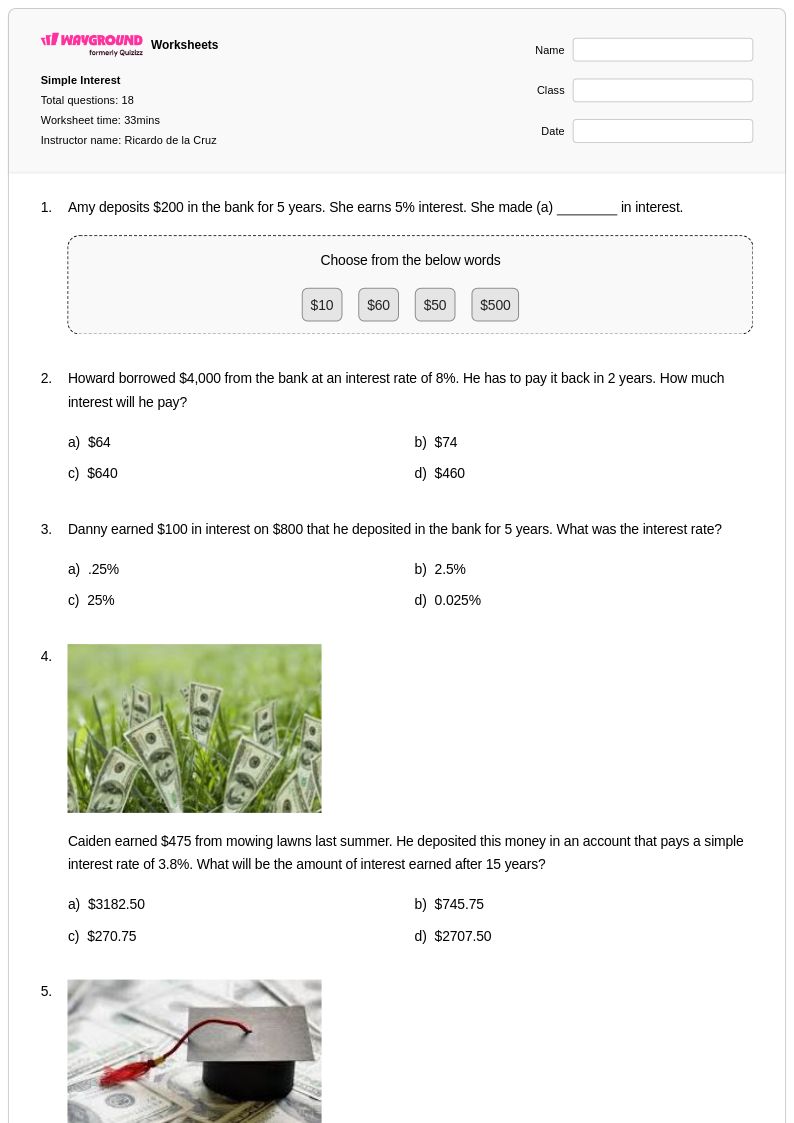
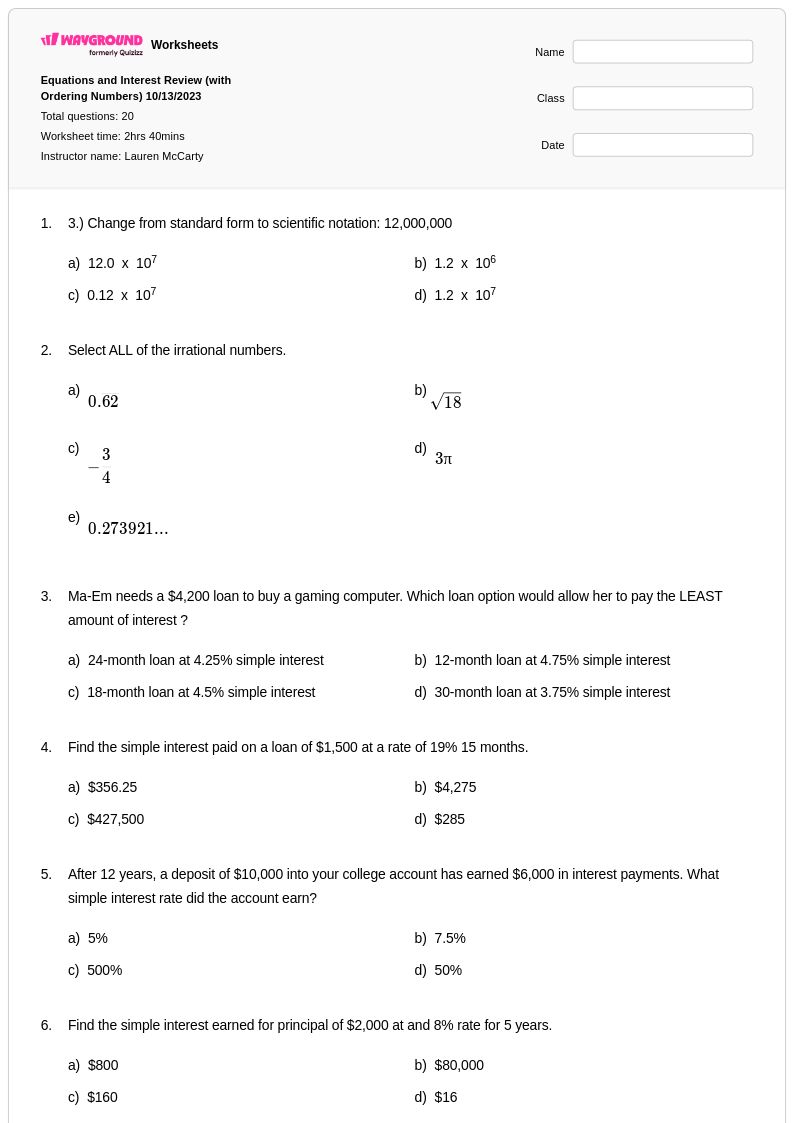
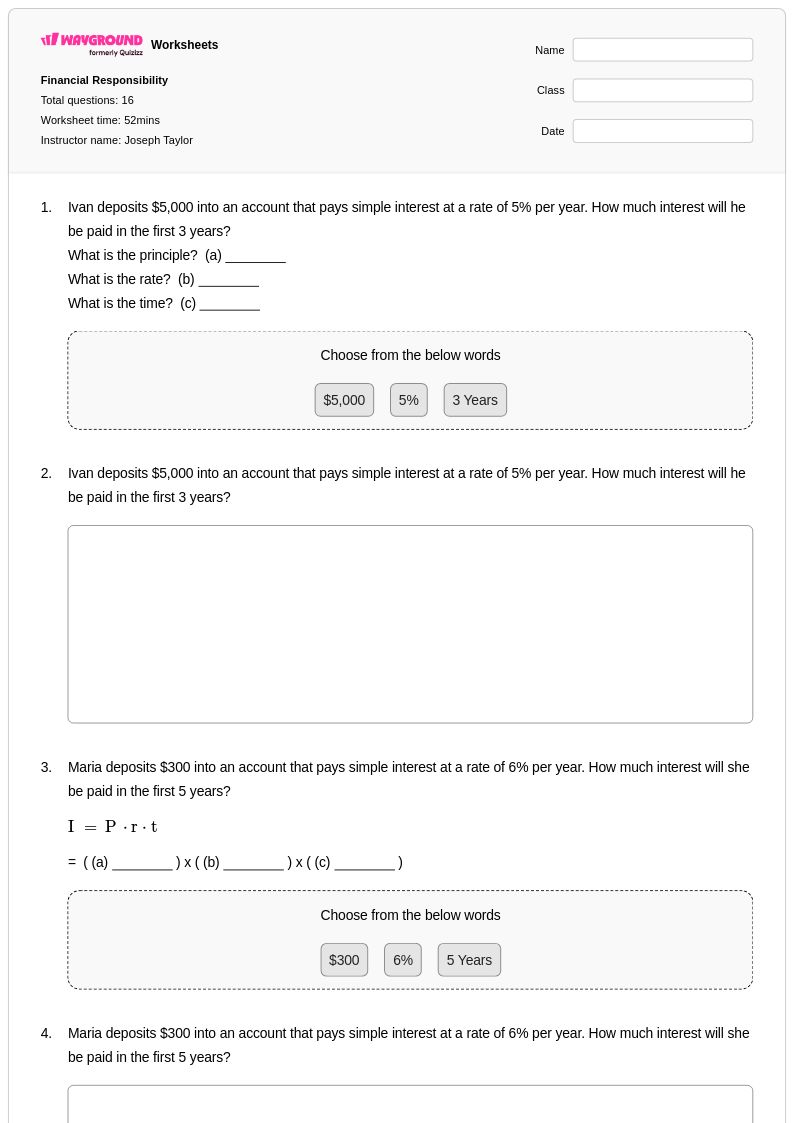
Class 8 compound and continuous interest free worksheets and printables help students master advanced financial calculations through comprehensive practice problems with detailed answer keys in convenient PDF format.
Explore printable Compound and Continuous Interest worksheets for Class 8
Compound and continuous interest worksheets for Class 8 students through Wayground (formerly Quizizz) provide comprehensive practice with these advanced financial concepts that form the foundation of sophisticated money management skills. These carefully designed resources help eighth-grade students master the mathematical formulas and real-world applications of compound interest calculations, including annual, quarterly, and monthly compounding scenarios, as well as continuous interest models used in advanced financial planning. The worksheets strengthen critical thinking abilities through step-by-step practice problems that demonstrate how small differences in interest rates and compounding frequency create significant long-term financial impacts, while accompanying answer keys allow students to verify their calculations and understand common computational errors in complex interest scenarios.
Wayground (formerly Quizizz) empowers educators with millions of teacher-created compound and continuous interest resources that support differentiated instruction across varying skill levels within Class 8 mathematics classrooms. The platform's robust search and filtering capabilities enable teachers to quickly locate worksheets aligned with specific financial literacy standards, while customization tools allow for modification of problem sets to match individual student needs for remediation or enrichment activities. These comprehensive collections are available in both printable pdf formats for traditional classroom use and digital formats for technology-enhanced learning environments, providing the flexibility teachers need for effective lesson planning and targeted skill practice that prepares students for advanced mathematical finance concepts in high school and beyond.
FAQs
How do I teach compound and continuous interest to Grade 8 students?
Begin with tables and graphs that show how a fixed percentage produces exponential rather than linear growth. Connect those patterns to annual, quarterly, and monthly compounding, then introduce A = Pe^(rt) as the limiting model and ask students to explain how rate, time, and frequency affect the outcome.
What exercises help Grade 8 students practice compound and continuous interest?
Students benefit from calculating balances under different compounding schedules, comparing investment options, and analyzing how small changes in rates affect long-term returns. Include reverse and comparison problems that require students to identify the principal, rate, time, compounding frequency, or more advantageous financial option.
What mistakes do Grade 8 students make when calculating compound interest?
Students often fail to convert percentages to decimals, apply n to only one part of A = P(1 + r/n)^(nt), or round intermediate values too early. They may also confuse interest earned with the ending balance or choose the continuous formula for a monthly or quarterly compounding problem.
How can I use Wayground’s Grade 8 compound and continuous interest worksheets?
The worksheets are available as printable PDFs and digital formats, enabling teachers to host a digital quiz on Wayground or assign printed paper practice; every worksheet includes a complete answer key. Teachers can grade physical submissions by scanning or capturing them with the Wayground for Teachers app, while printed materials also provide a rigorous offline option.
How does compound interest fit into the Grade 8 Common Core curriculum?
Compound-interest modeling connects with Common Core’s Grade 8 progression in integer exponents, equations, functions, and comparisons of linear and nonlinear relationships. Formal exponential functions and continuous compounding anticipate high school mathematics, so these problems can bridge Grade 8 concepts with later financial modeling.
How can I differentiate compound interest worksheets for Grade 8 learners?
Provide formula guides and annual-compounding problems for students needing support, then increase complexity through quarterly, monthly, and continuous models for students ready for enrichment. Wayground supports extended time, Read Aloud, reduced answer choices, and reading mode, and teachers can produce alternate worksheets with modified spacing, larger fonts, dyslexia-friendly text, or translation.
Is compound and continuous interest appropriate for Grade 8?
Compound interest is a useful Grade 8 application of percentages, exponents, and nonlinear growth. Continuous interest is generally an advanced extension because it introduces the constant e and more formal exponential modeling, but it can prepare students for high school algebra and financial mathematics.