Free Printable Correlative Conjunctions Worksheets for Class 3
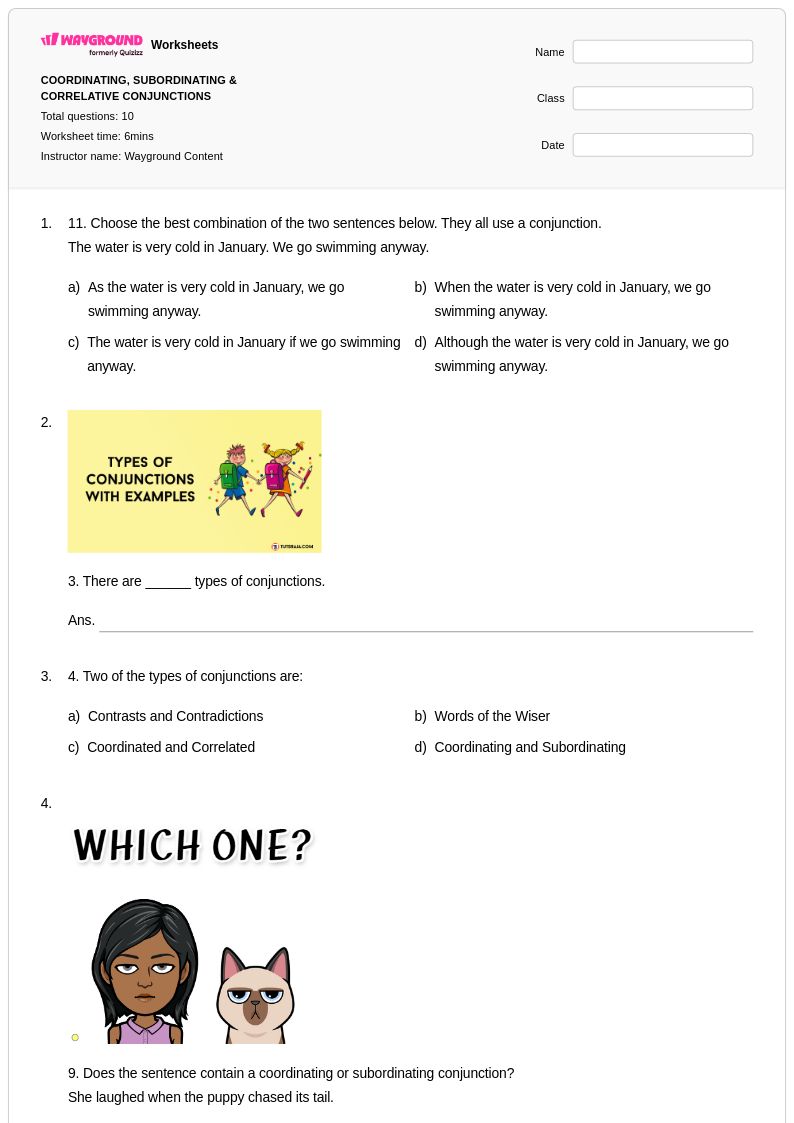
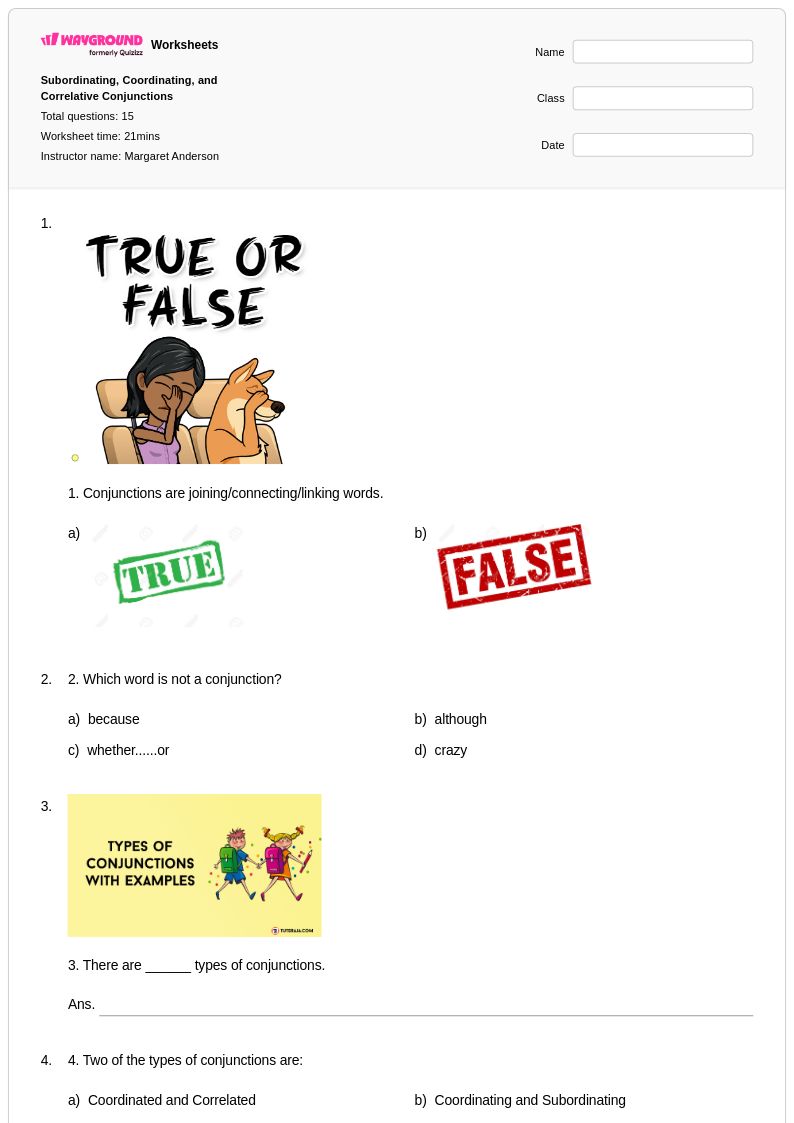
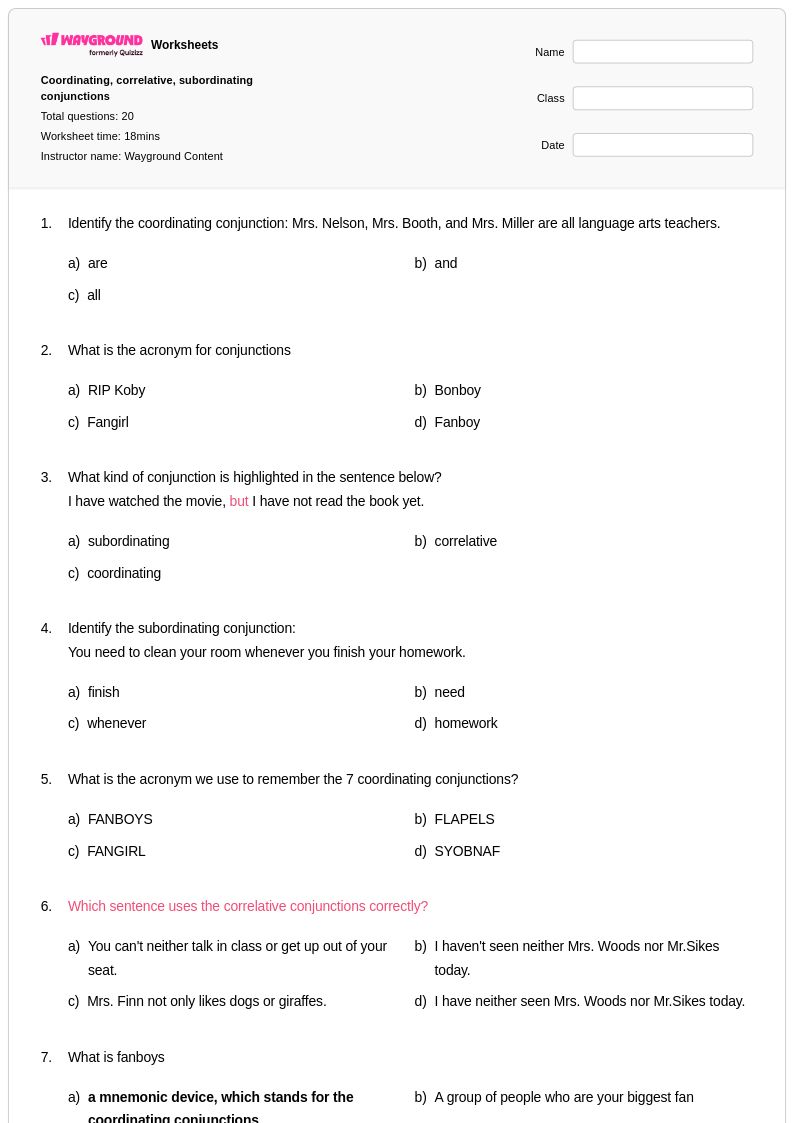
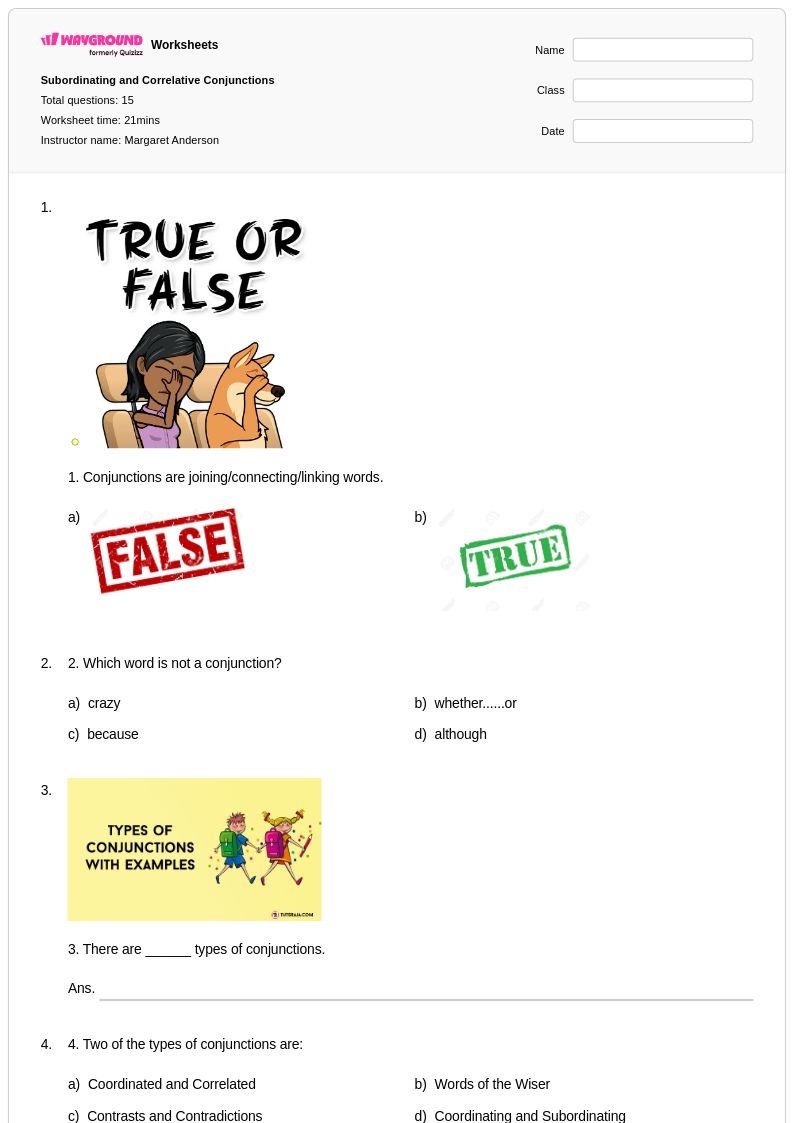
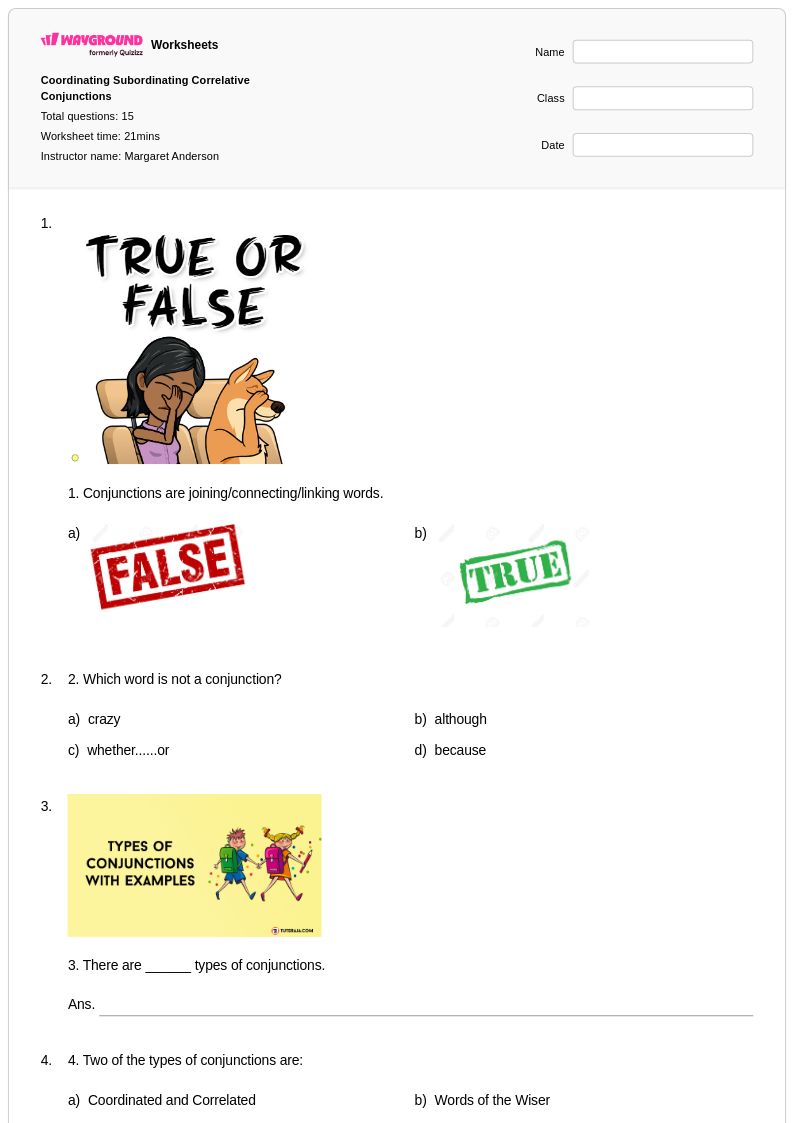
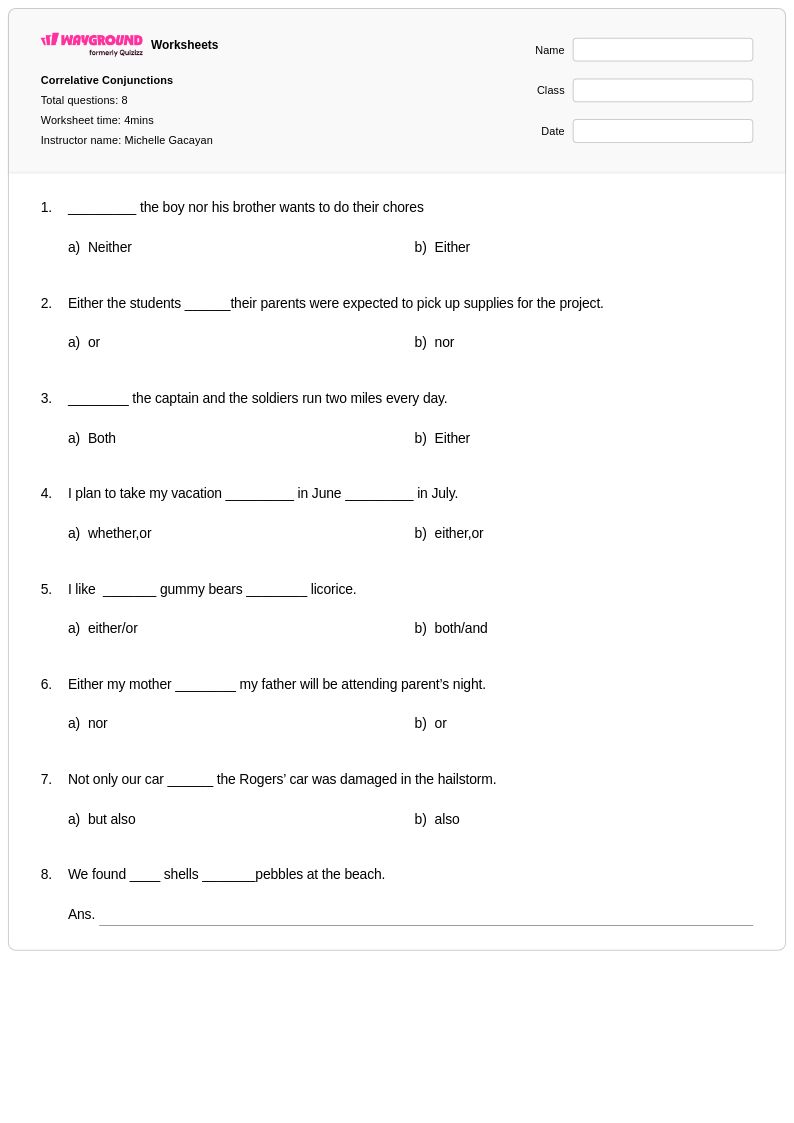
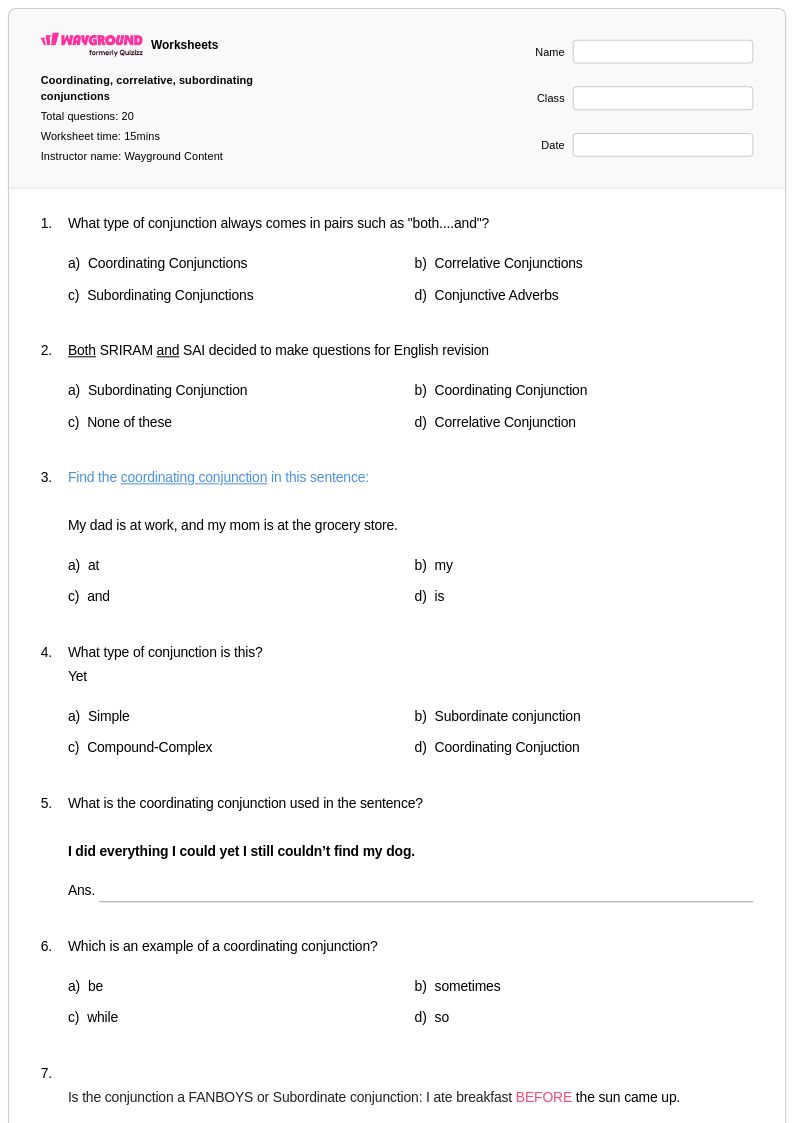
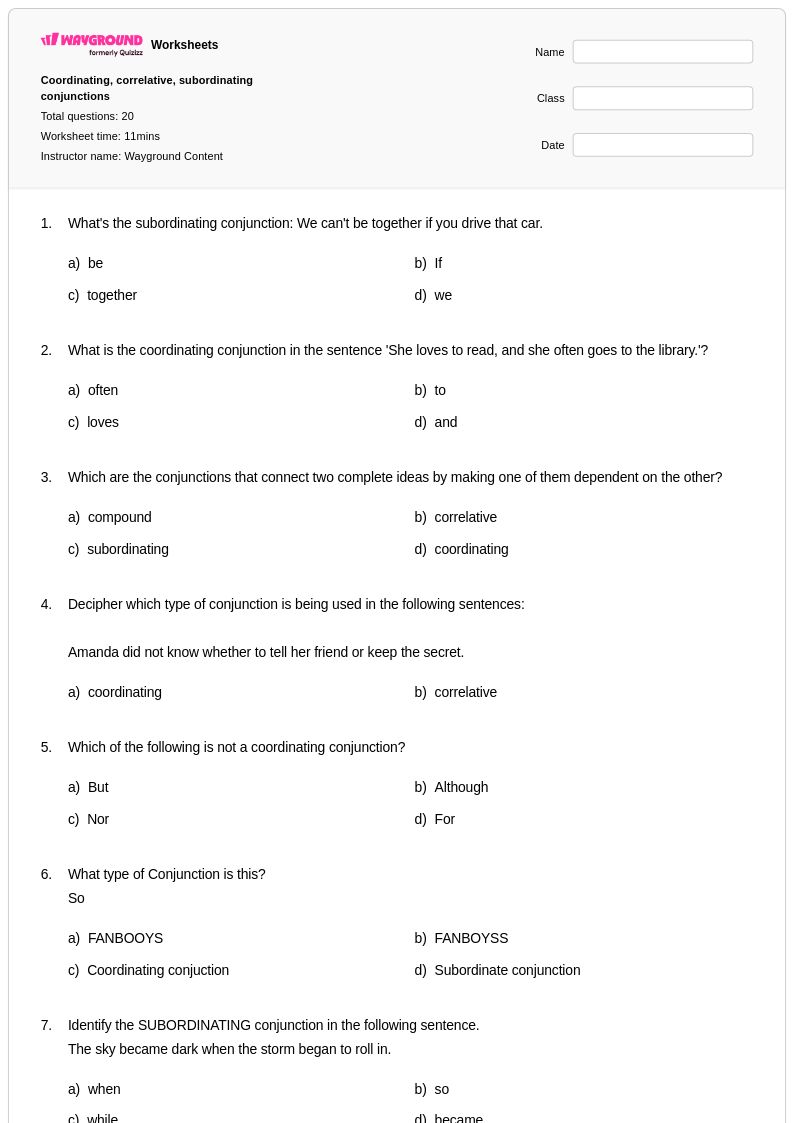
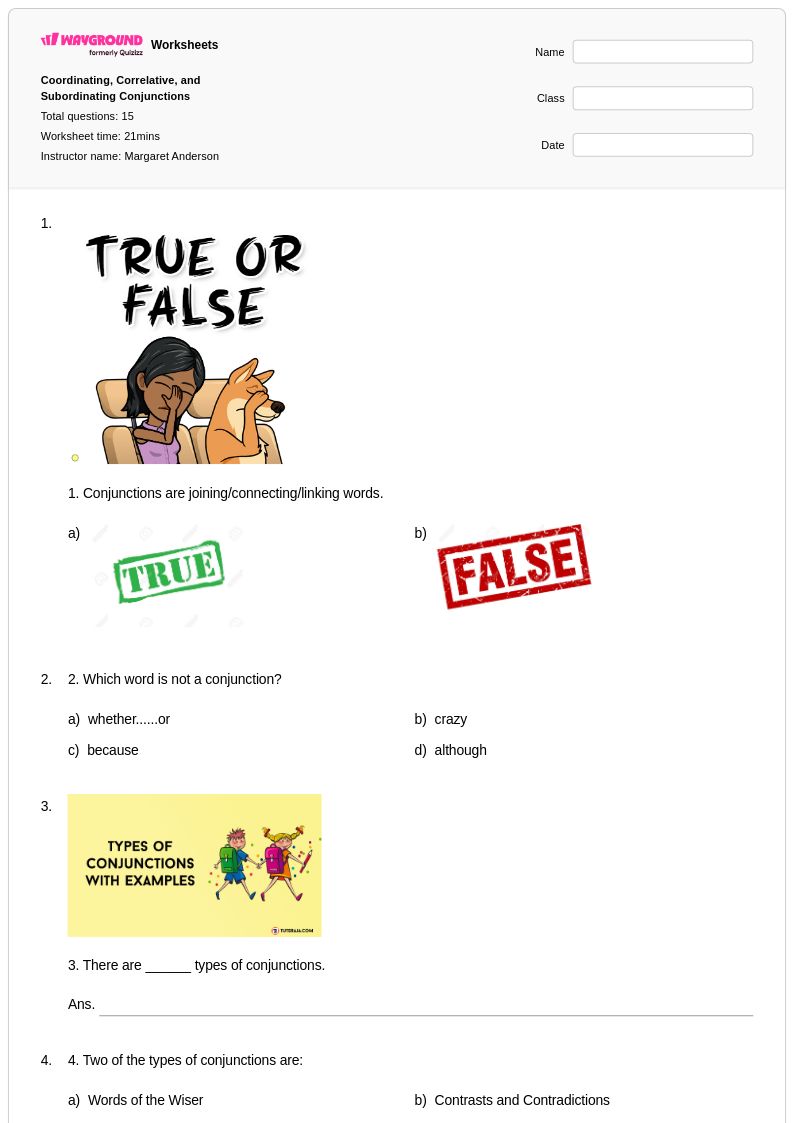
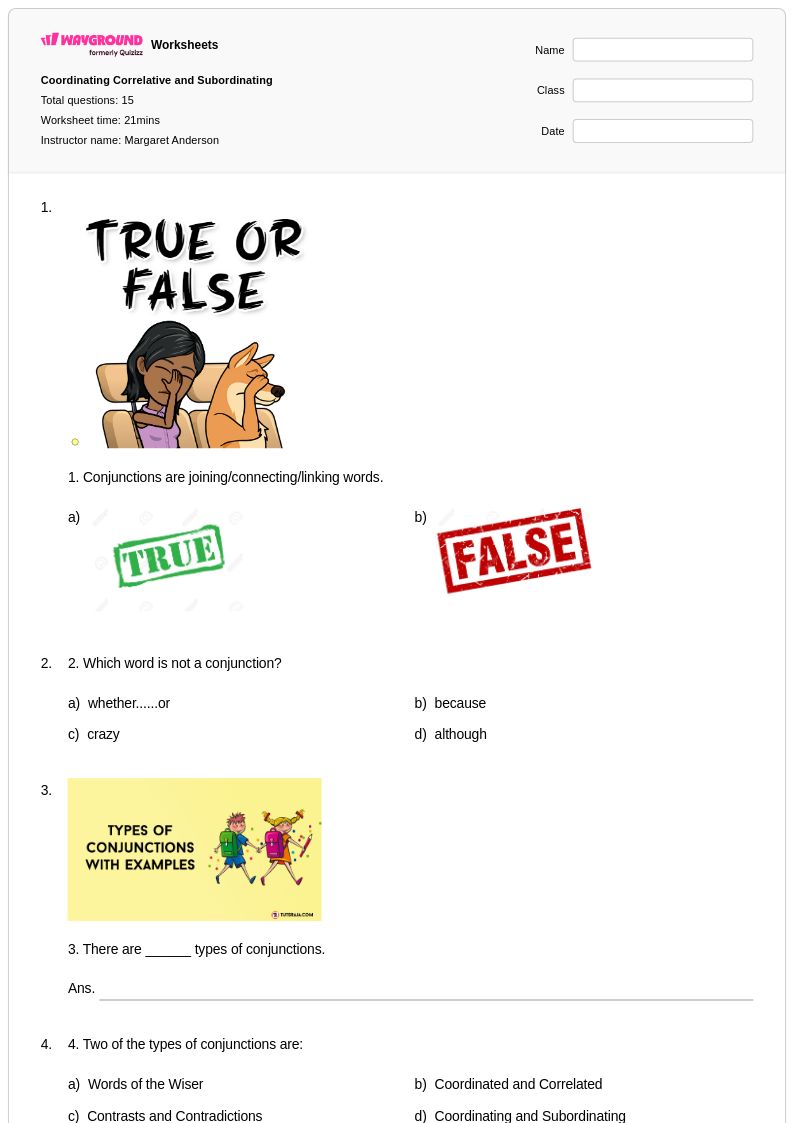
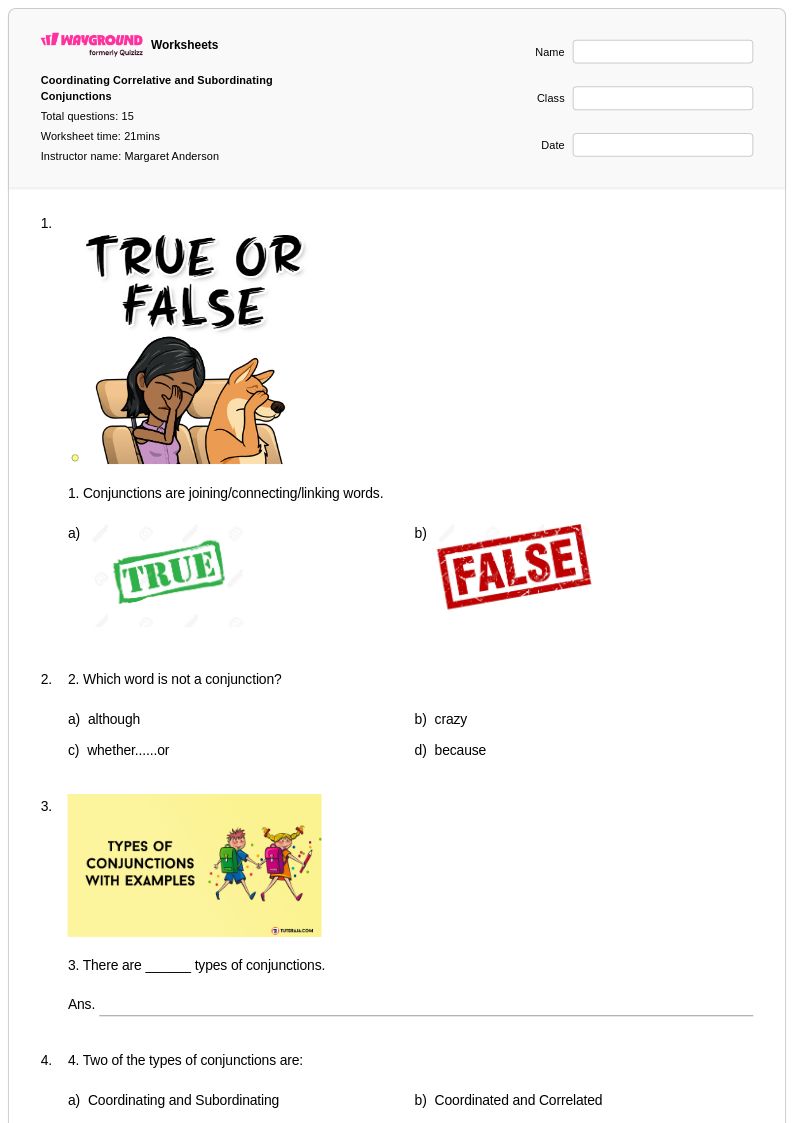
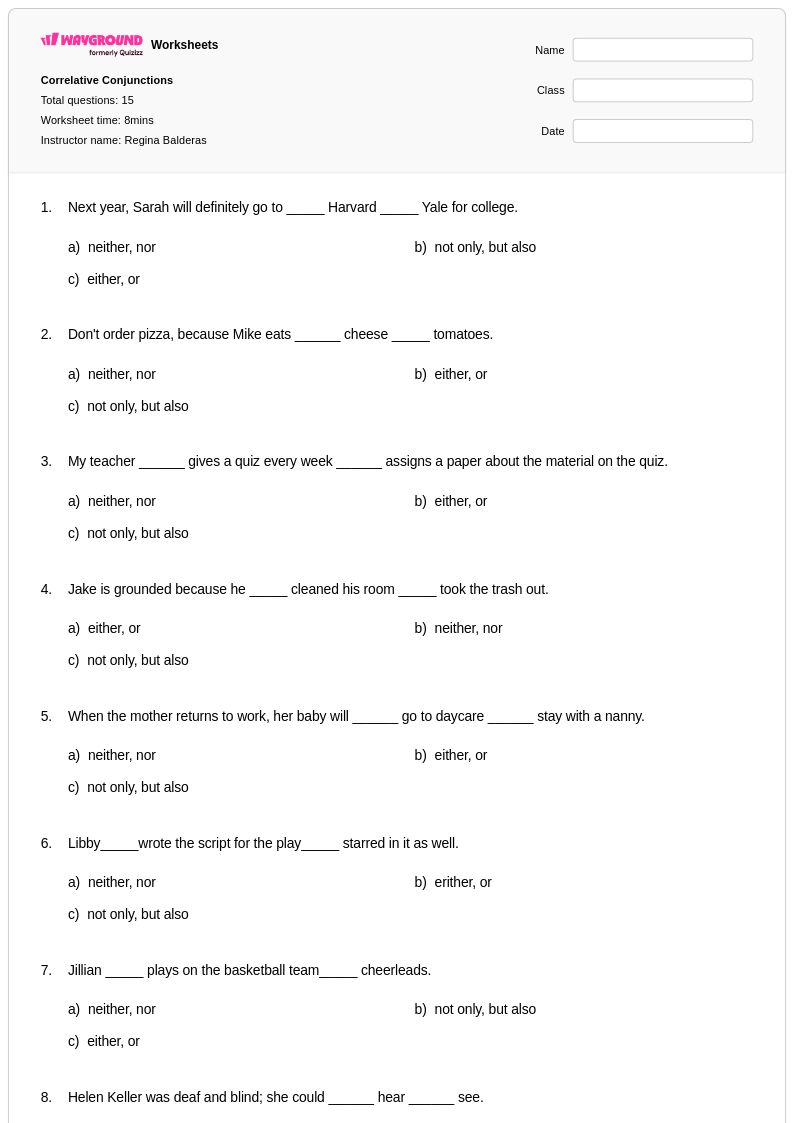
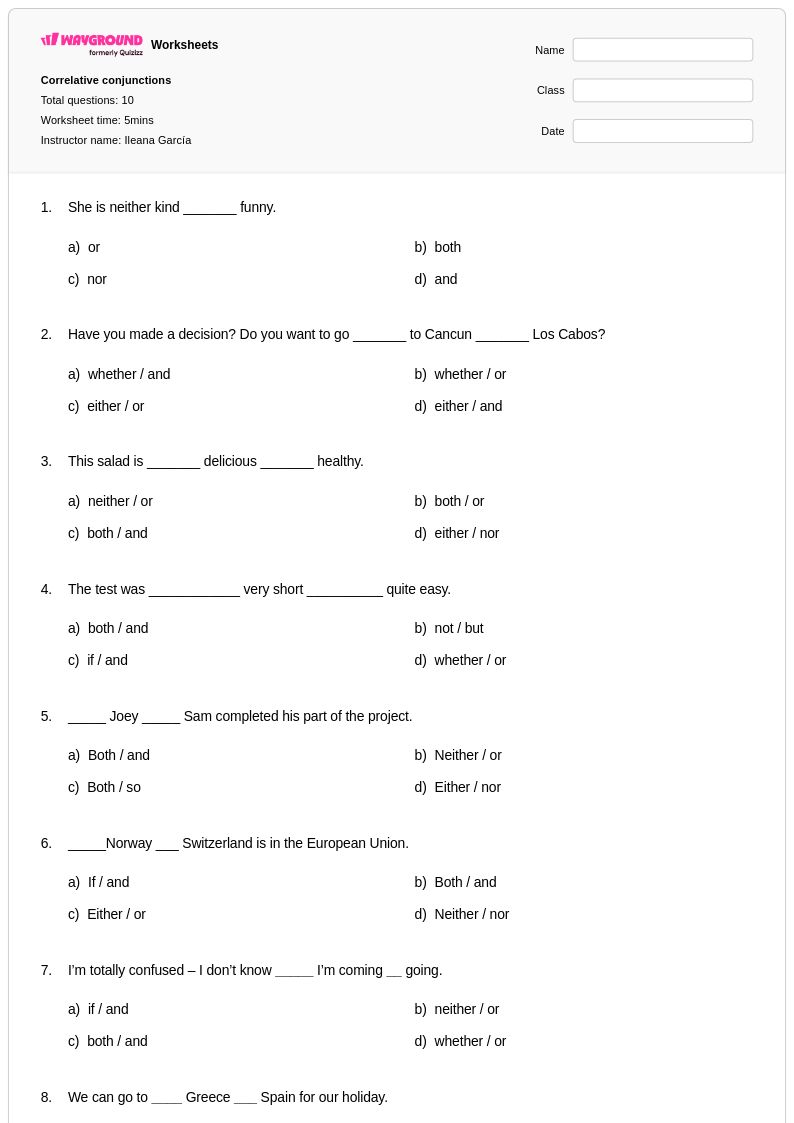
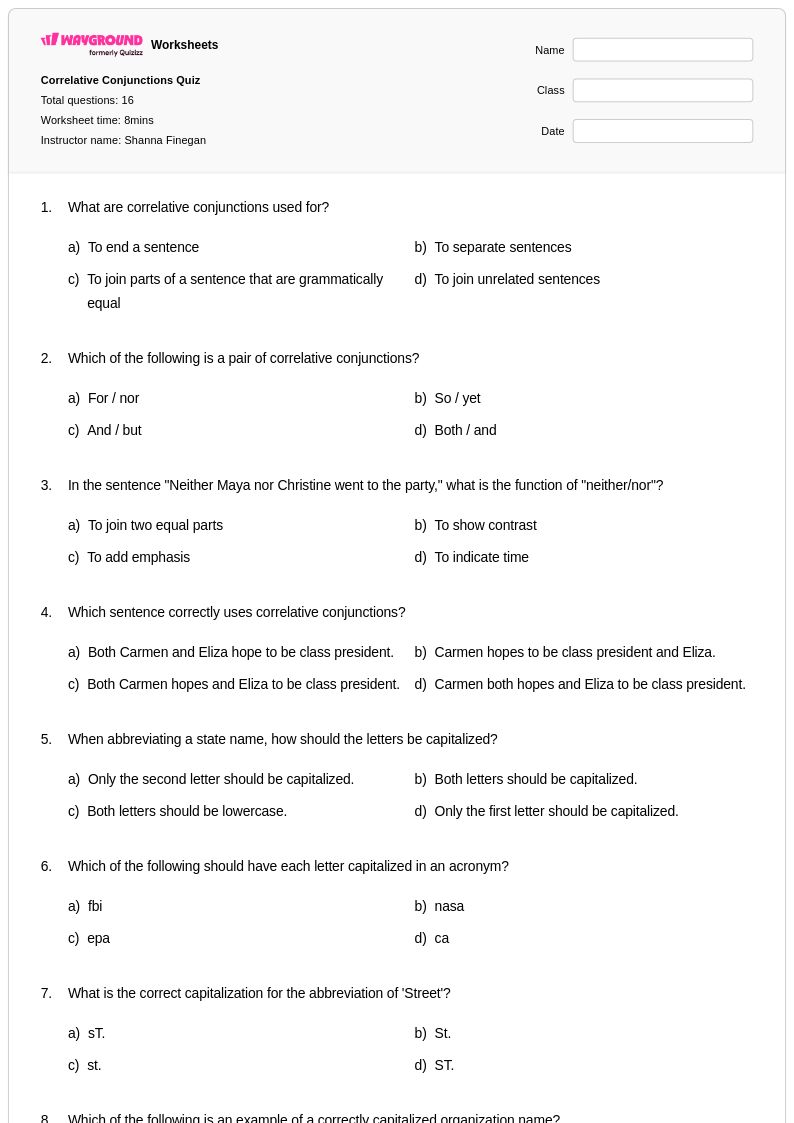
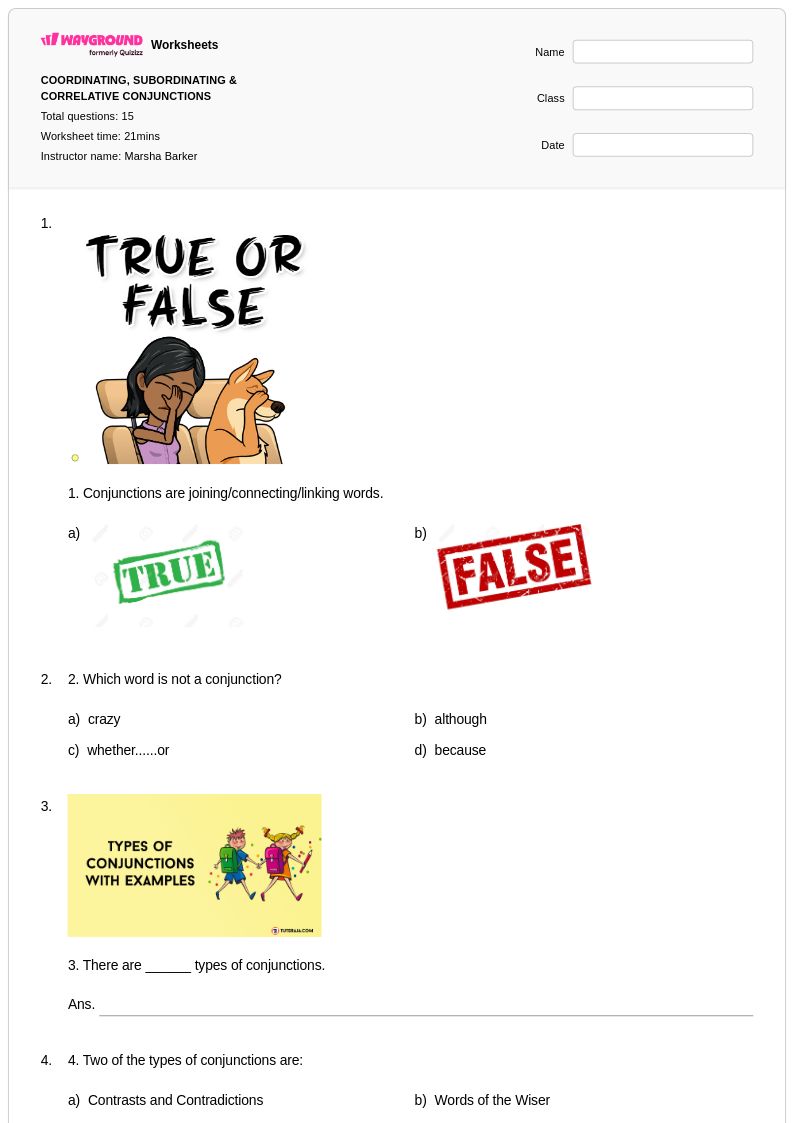
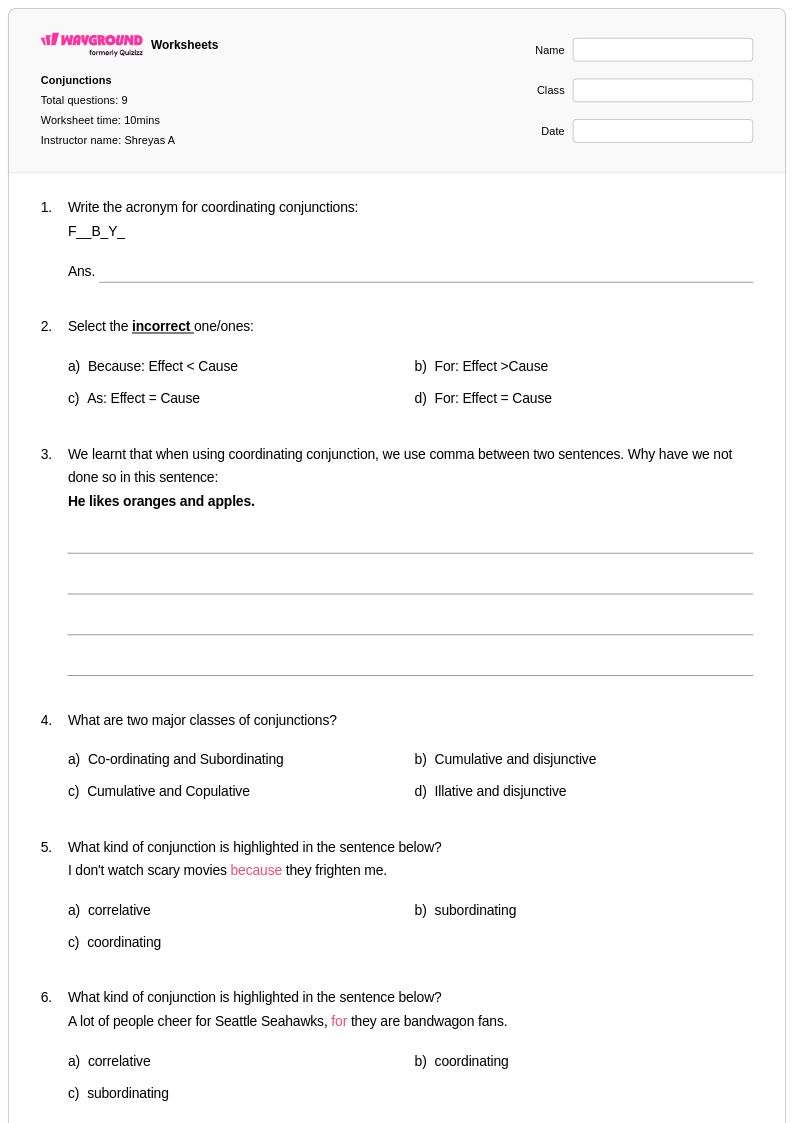
Class 3 correlative conjunctions worksheets from Wayground help students master paired connecting words like "both...and" and "either...or" through engaging printable practice problems with complete answer keys.
Explore printable Correlative Conjunctions worksheets for Class 3
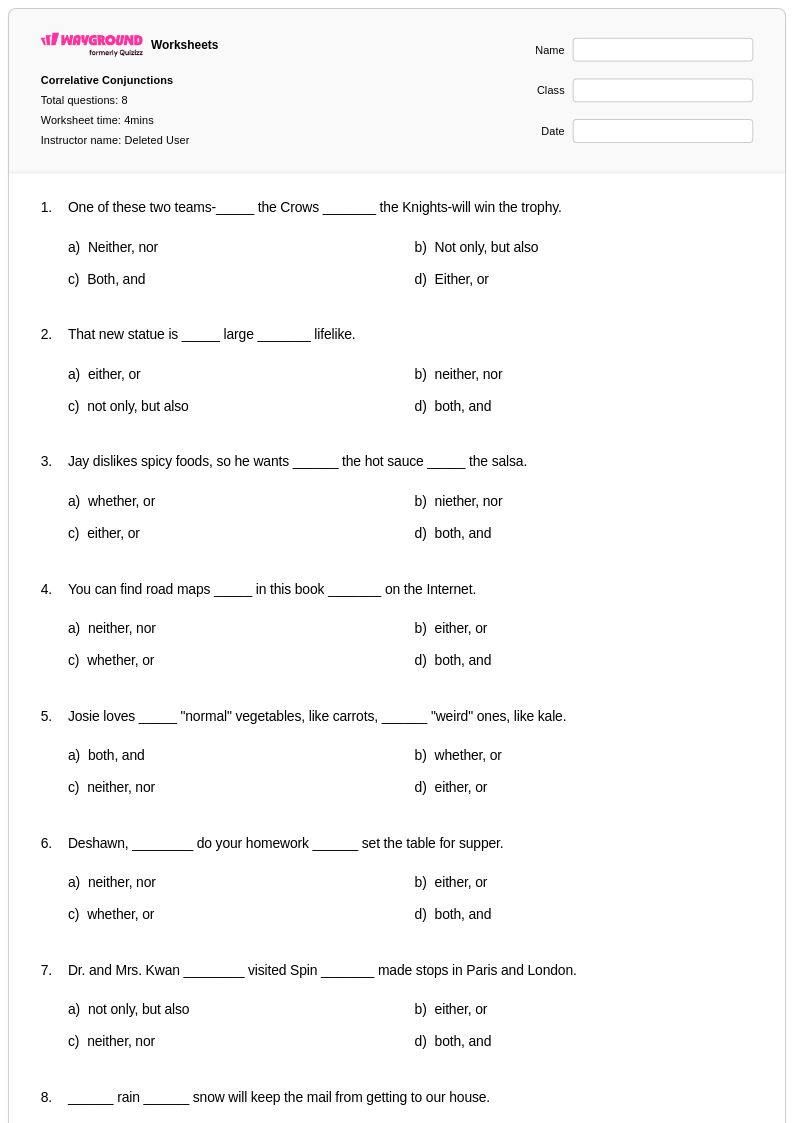
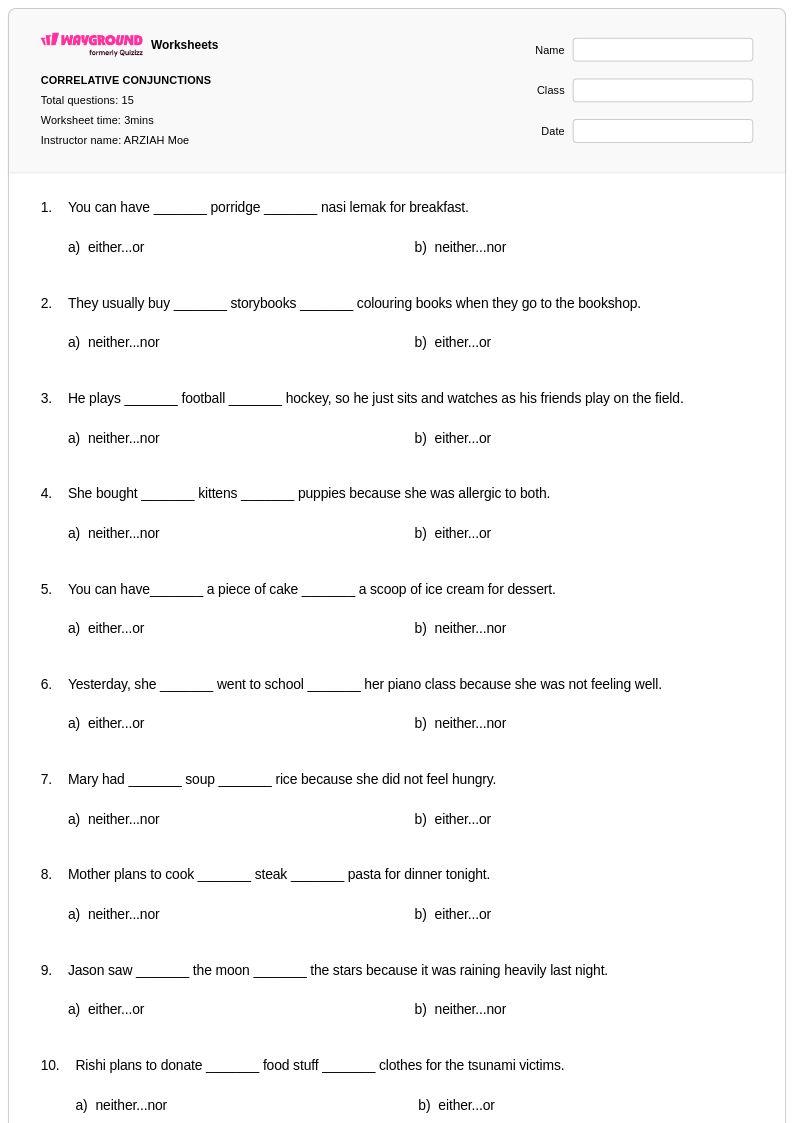
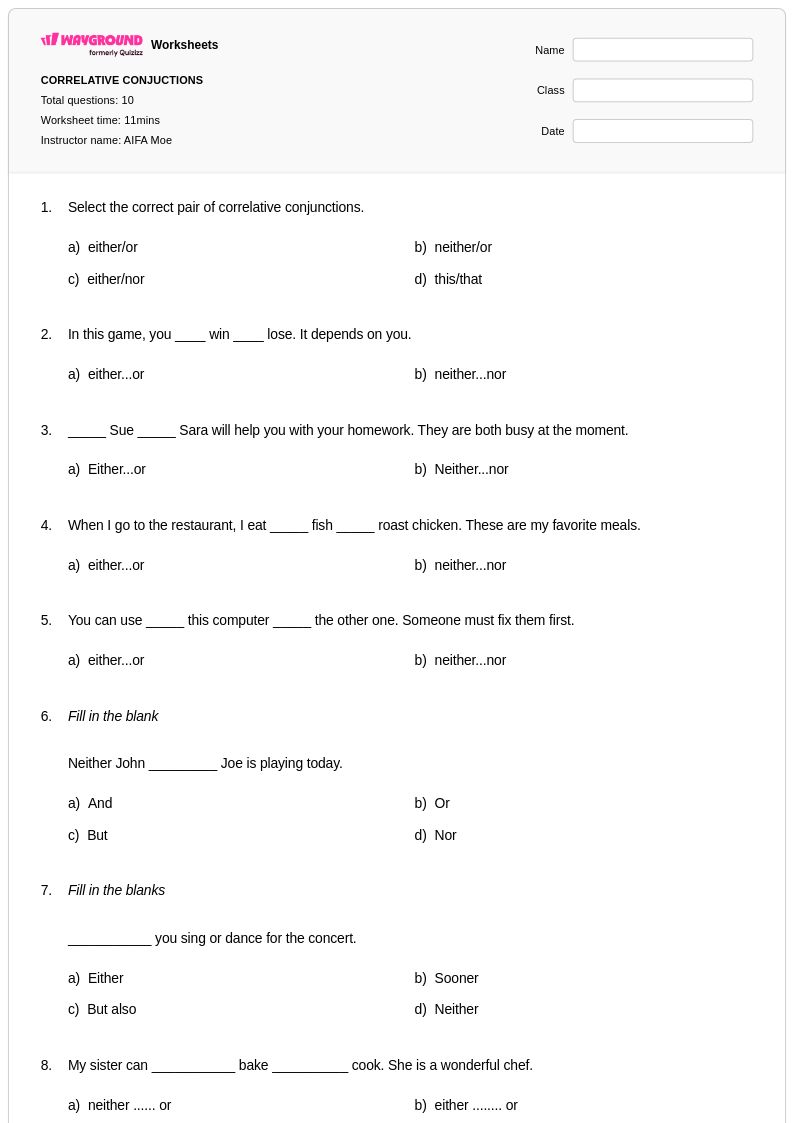
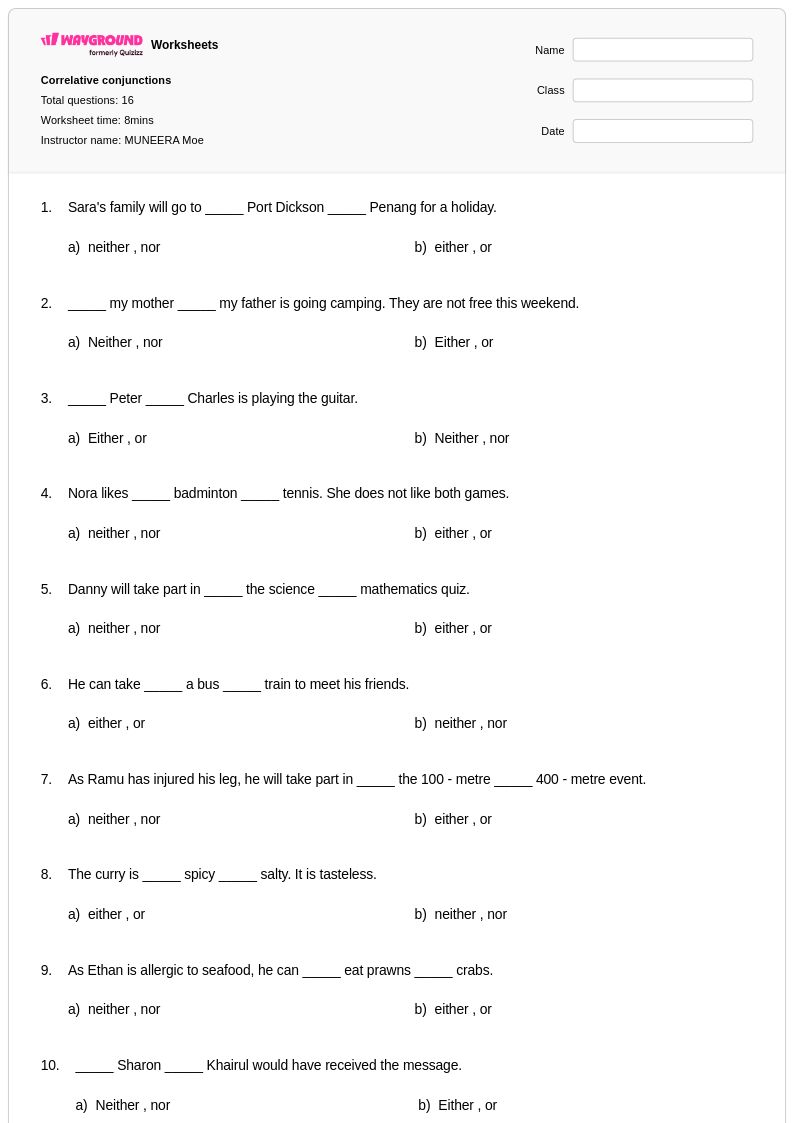
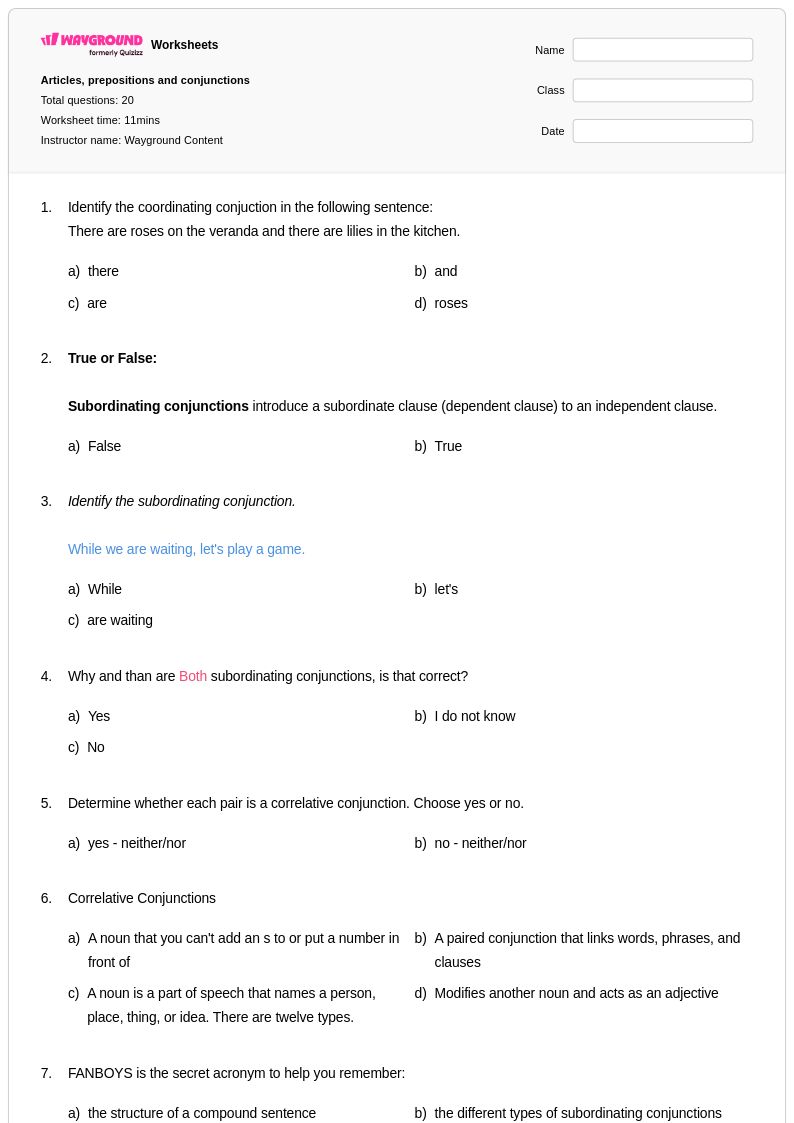
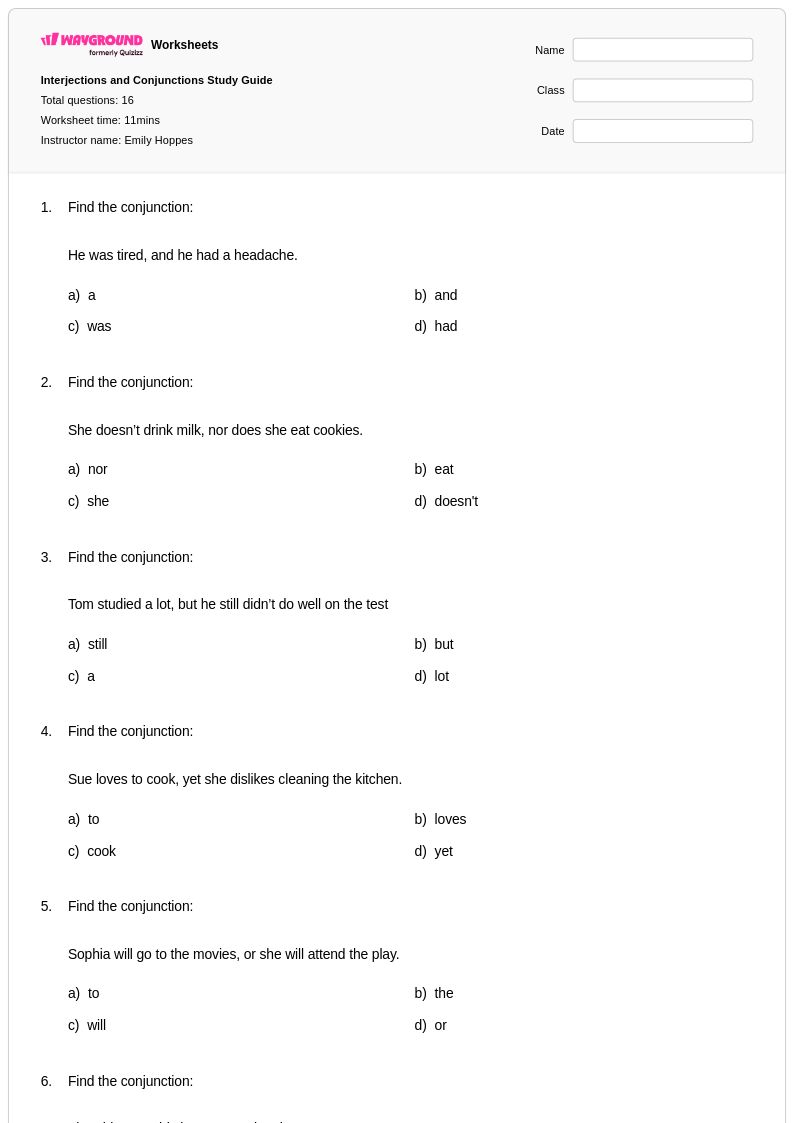
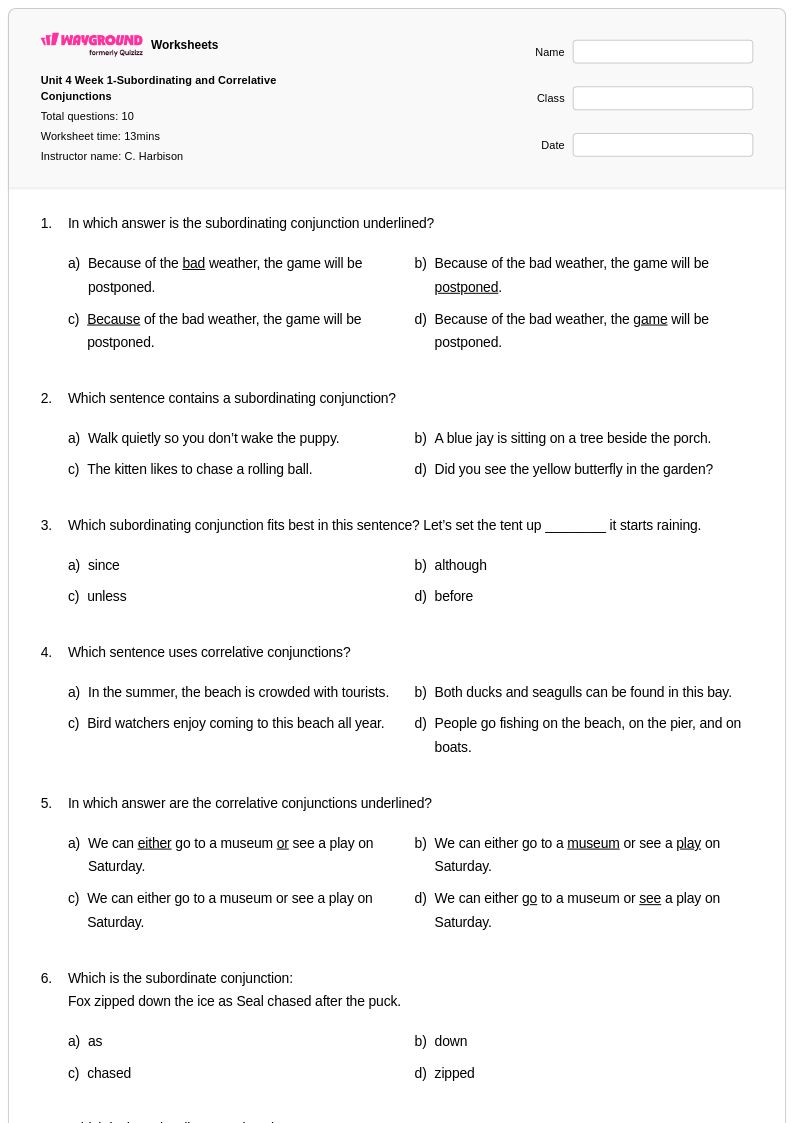
Correlative conjunctions for Class 3 students represent a foundational step in understanding how pairs of connecting words work together to join ideas in sentences. Wayground's extensive collection of correlative conjunctions worksheets provides young learners with structured practice in identifying and using common pairs like "both...and," "either...or," and "not only...but also" within age-appropriate contexts. These carefully designed printables strengthen students' ability to recognize how these word pairs create balanced sentence structures while building their overall writing fluency. Each worksheet includes an answer key to support independent learning and features practice problems that gradually increase in complexity, allowing third graders to master this essential grammar concept through repeated application in both recognition and construction exercises.
Wayground, formerly Quizizz, empowers educators with millions of teacher-created correlative conjunctions resources specifically tailored for elementary grammar instruction. The platform's robust search and filtering capabilities enable teachers to quickly locate materials that align with curriculum standards and match their students' specific learning needs. These comprehensive worksheet collections support effective lesson planning by offering both printable pdf formats for traditional classroom use and digital versions for technology-integrated instruction. Teachers can easily customize existing materials or create differentiated assignments that provide targeted remediation for struggling learners while offering enrichment opportunities for advanced students, ensuring that every third grader receives appropriate skill practice in mastering correlative conjunctions within meaningful sentence contexts.
FAQs
How do I teach correlative conjunctions to my students?
Start by introducing correlative conjunctions as paired connecting words that always appear together and join grammatically equal elements, such as 'both...and,' 'either...or,' and 'neither...nor.' Use mentor sentences from familiar texts to show each pair in context before asking students to construct their own. Once students can identify the pairs, shift focus to parallel construction — the most important rule governing their correct use — by having students compare correct and incorrect sentence examples side by side.
What exercises help students practice correlative conjunctions?
Effective practice moves from recognition to production: begin with identification exercises where students locate and label both parts of each pair in a sentence, then progress to sentence-completion tasks where one half of the pair is provided. Follow this with sentence composition tasks that require students to join two ideas using a specified pair. This sequenced approach builds both accuracy and flexibility with all major correlative conjunction pairs.
What mistakes do students commonly make with correlative conjunctions?
The most frequent error is faulty parallelism — placing the two parts of a correlative pair before elements that are not grammatically equal, such as 'She likes both swimming and to run' instead of 'She likes both swimming and running.' Students also mix up 'neither...nor' and 'either...or,' using them interchangeably without regard for positive or negative meaning. A third common mistake is omitting the second half of the pair entirely, particularly with 'not only...but also.'
How can I use Wayground's correlative conjunctions worksheets in my classroom?
Wayground's correlative conjunctions worksheets are available as printable PDFs for traditional classroom use and in digital formats for technology-integrated environments, giving you flexibility regardless of your classroom setup. You can assign them as independent practice, small-group work, or homework, and host them as a quiz directly on Wayground for instant data on student performance. Each worksheet includes a complete answer key, so grading and immediate feedback require no additional preparation.
How do I differentiate correlative conjunctions instruction for students at different skill levels?
For students who are still building foundational grammar skills, begin with just two or three high-frequency pairs — 'both...and' and 'either...or' — using short, simple sentences before introducing the full range. More advanced students can work on sentence-combining tasks that require maintaining parallel structure across longer, more complex constructions. On Wayground, teachers can also adjust question types and difficulty levels within the platform's worksheet collection to match individual student needs.
At what grade level should correlative conjunctions be introduced?
Correlative conjunctions are typically introduced in upper elementary grades, around grades 4 and 5, where students begin working with more complex sentence structures. However, formal instruction on parallel construction — the key grammatical principle governing correct use — is usually deepened in middle school, grades 6 through 8. Teachers can adjust the complexity of practice tasks to make correlative conjunctions accessible at multiple grade levels.