
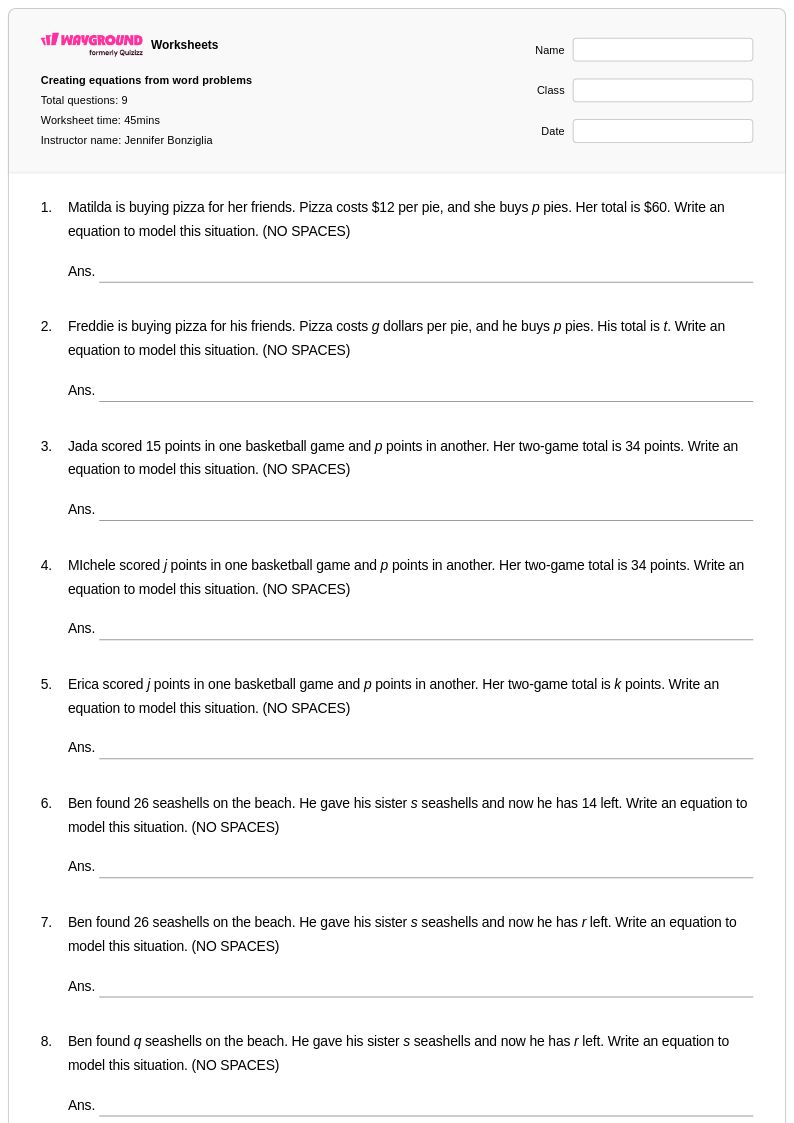
9 Q
9th
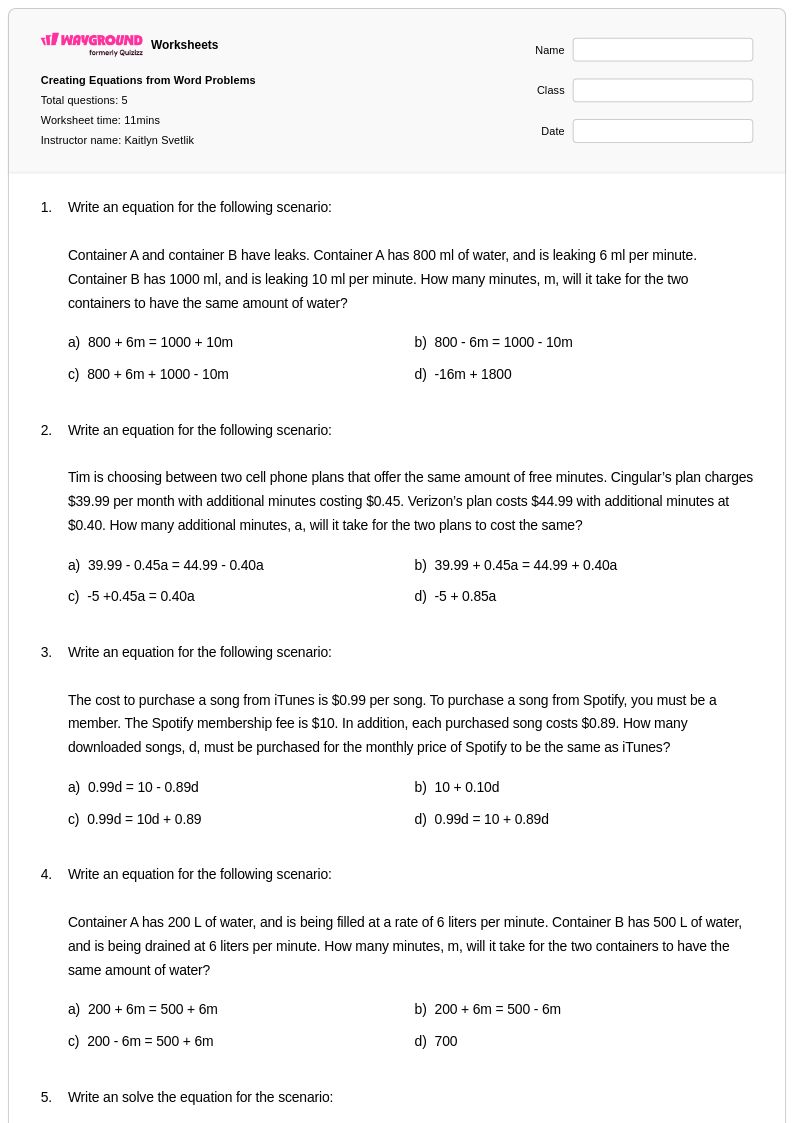
5 Q
8th
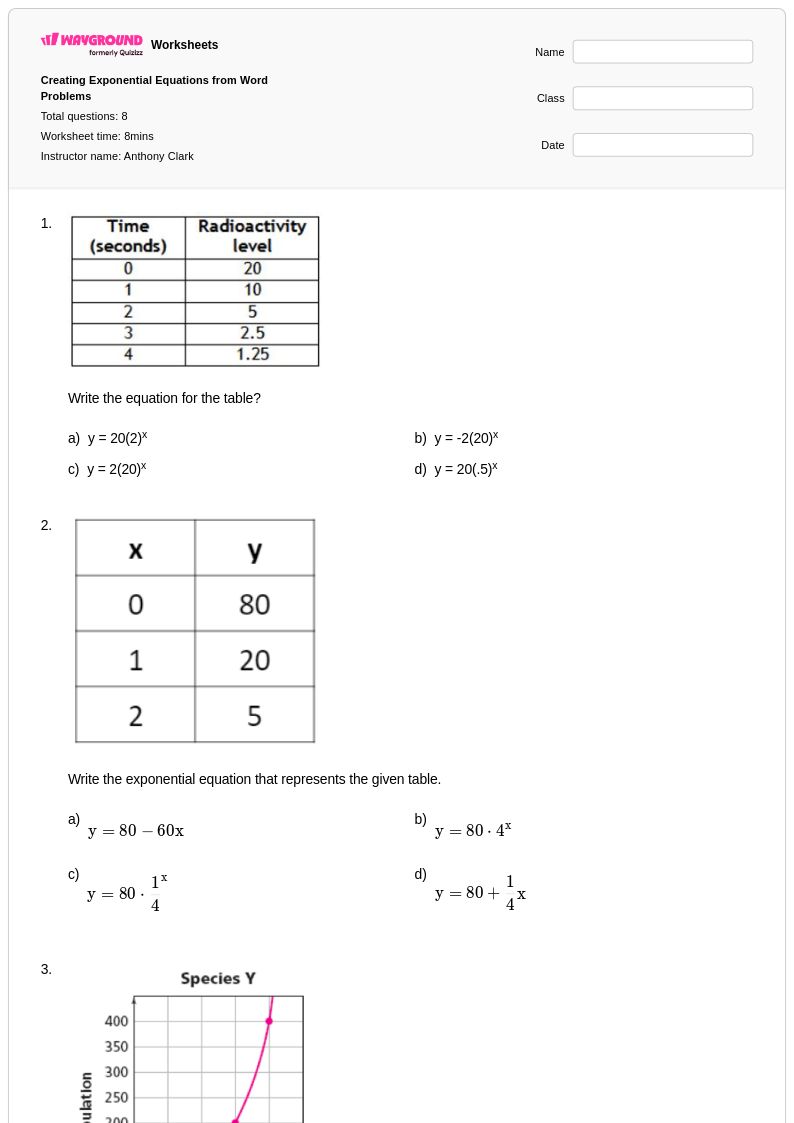
8 Q
9th - Uni
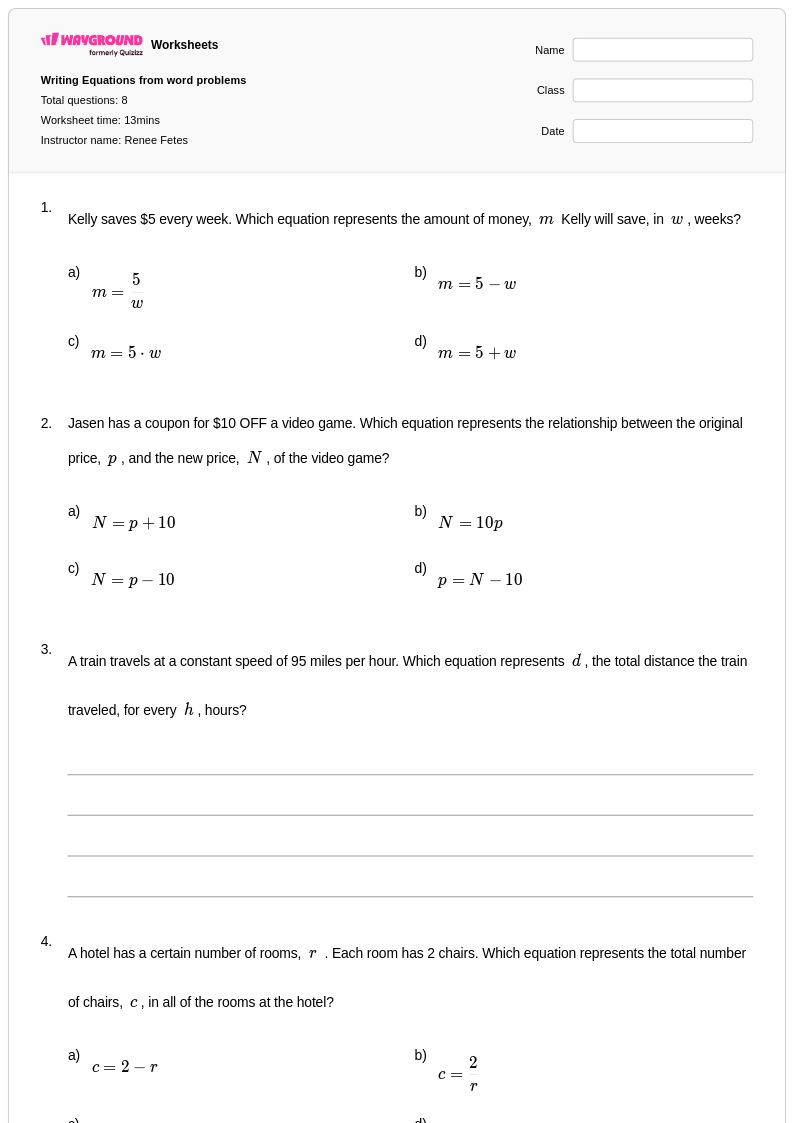
8 Q
6th
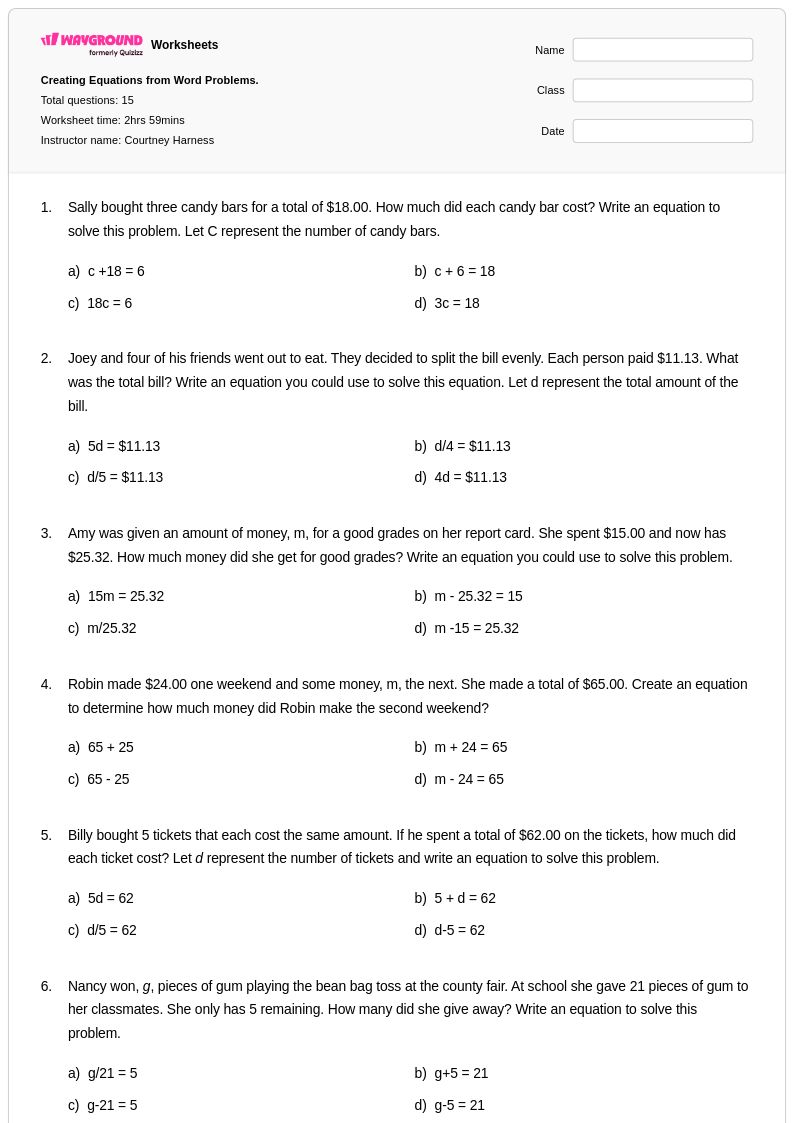
15 Q
6th
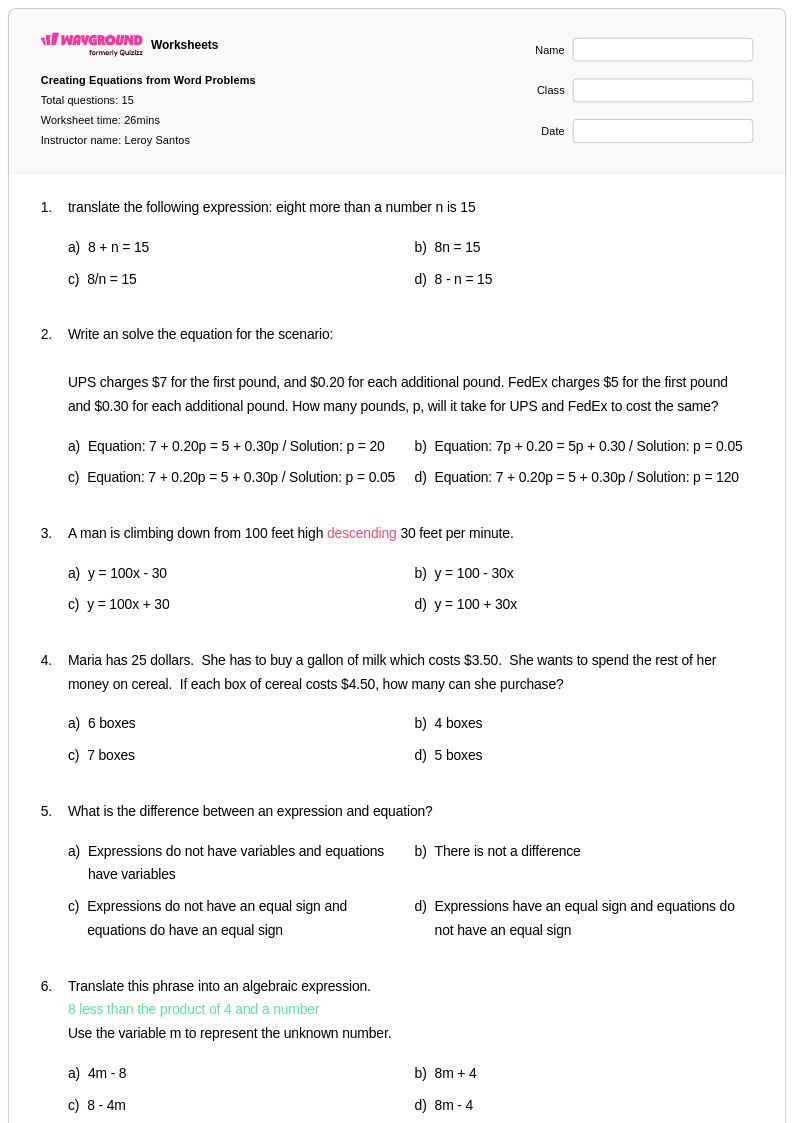
15 Q
9th - 12th
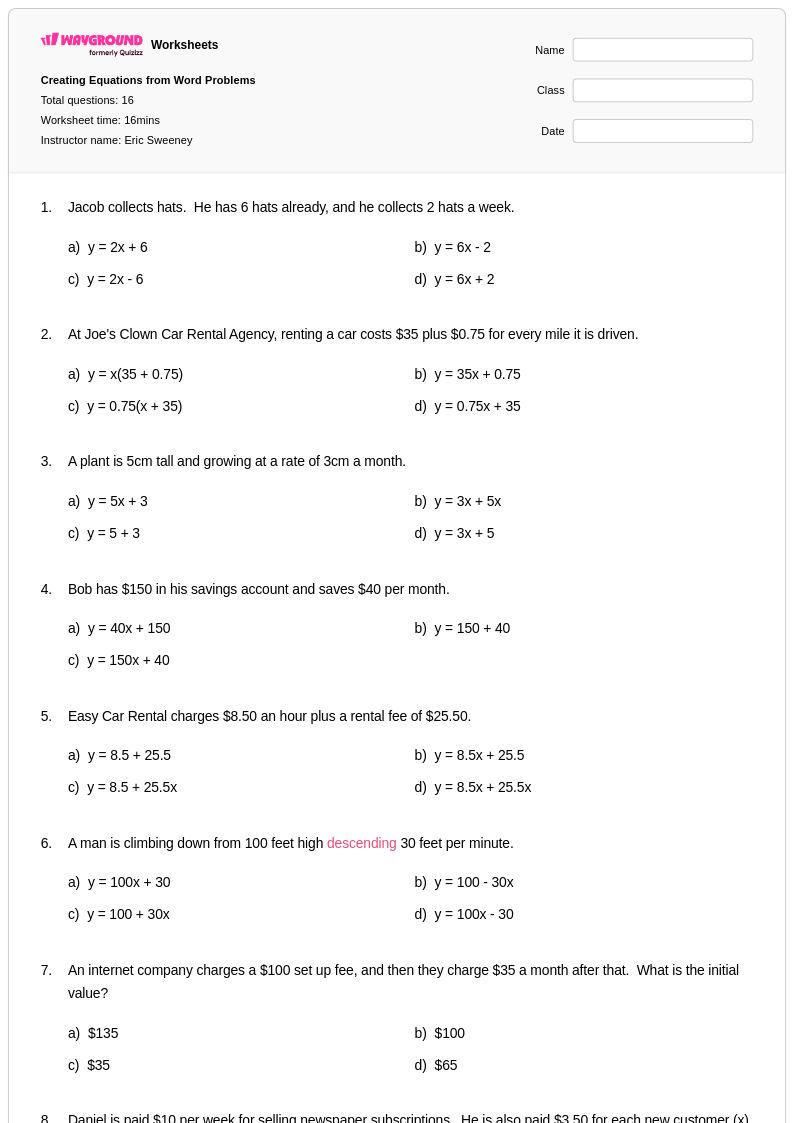
16 Q
8th
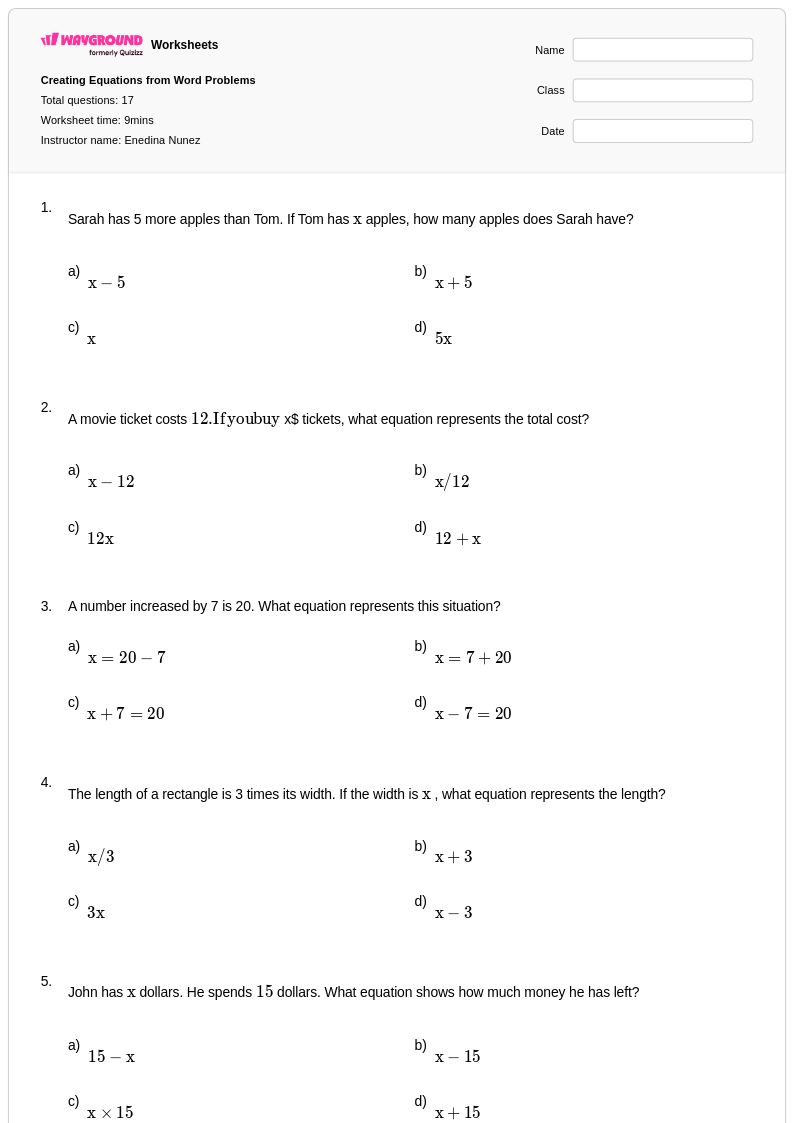
17 Q
8th
9 Q
9th - 12th
15 Q
7th
14 Q
9th - 12th
14 Q
1st
20 Q
8th
6 Q
8th
11 Q
11th
14 Q
9th - 12th
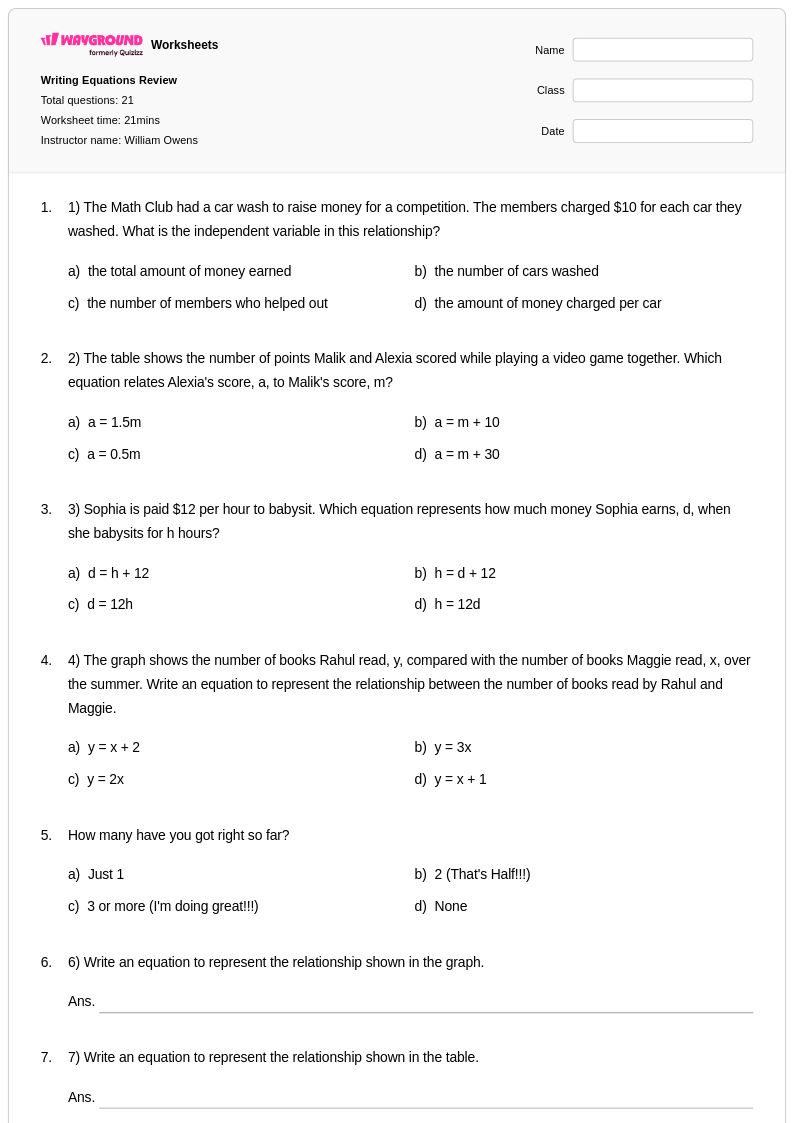
21 Q
8th
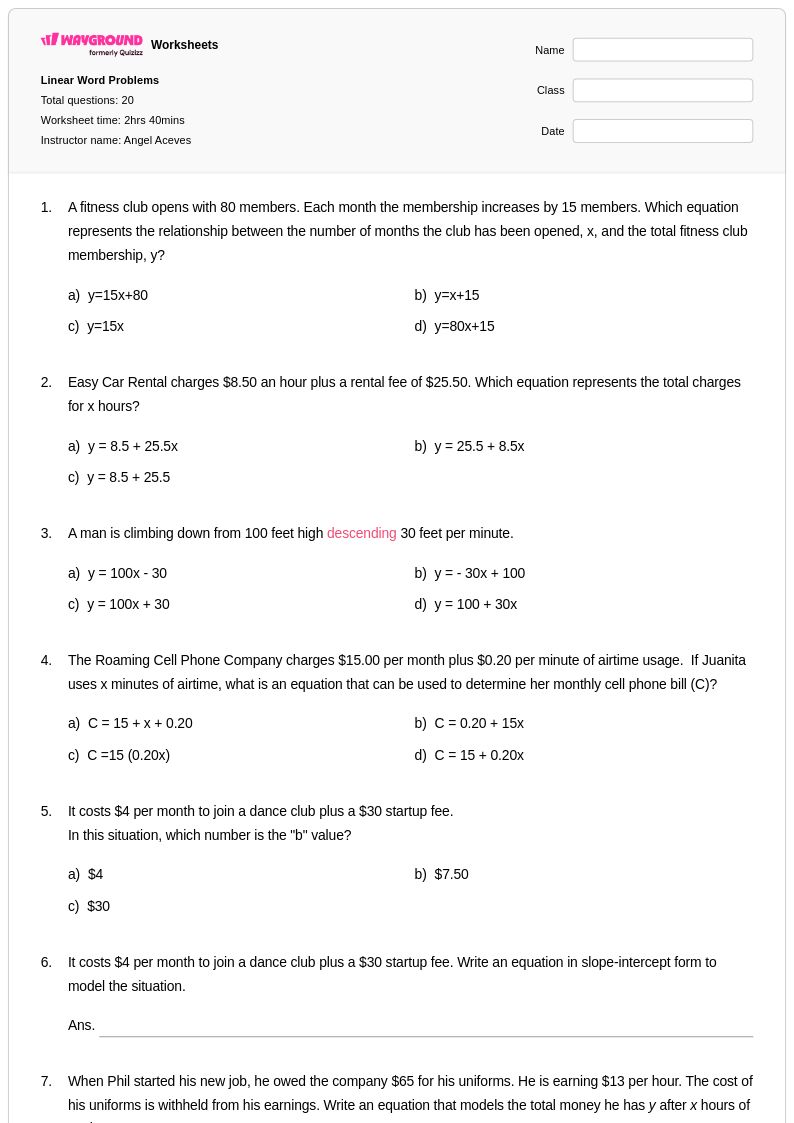
20 Q
9th
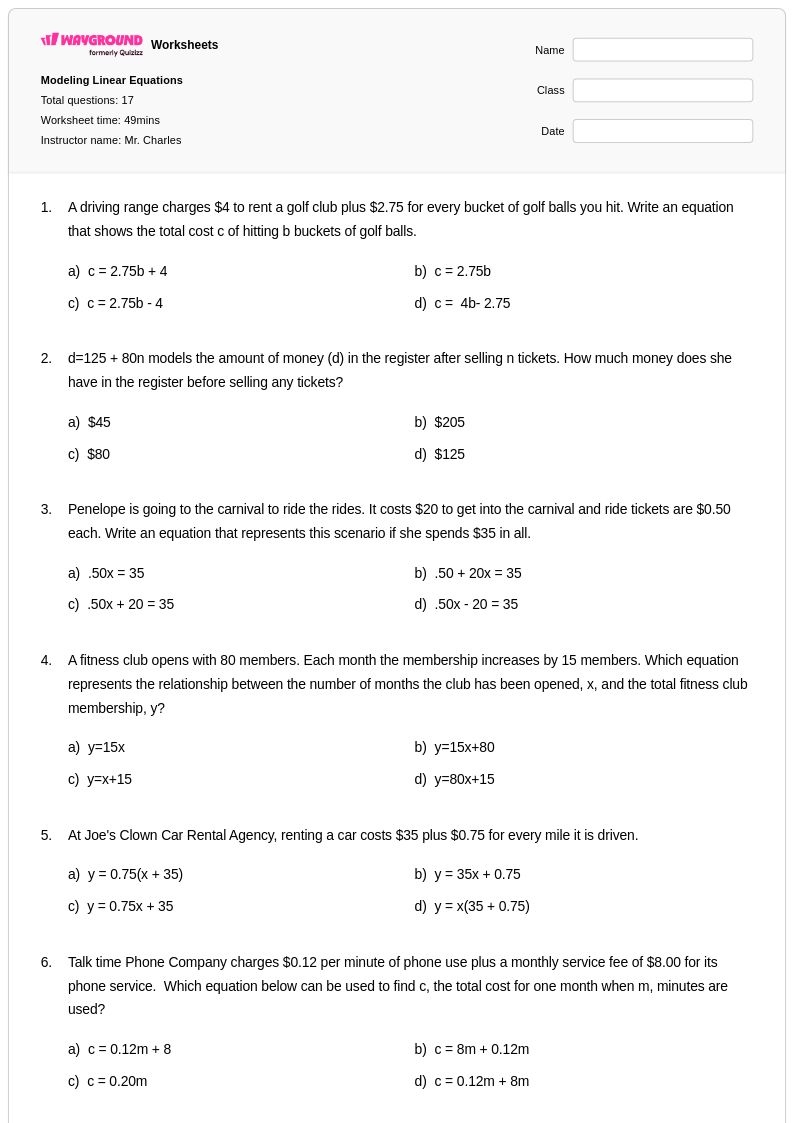
17 Q
9th
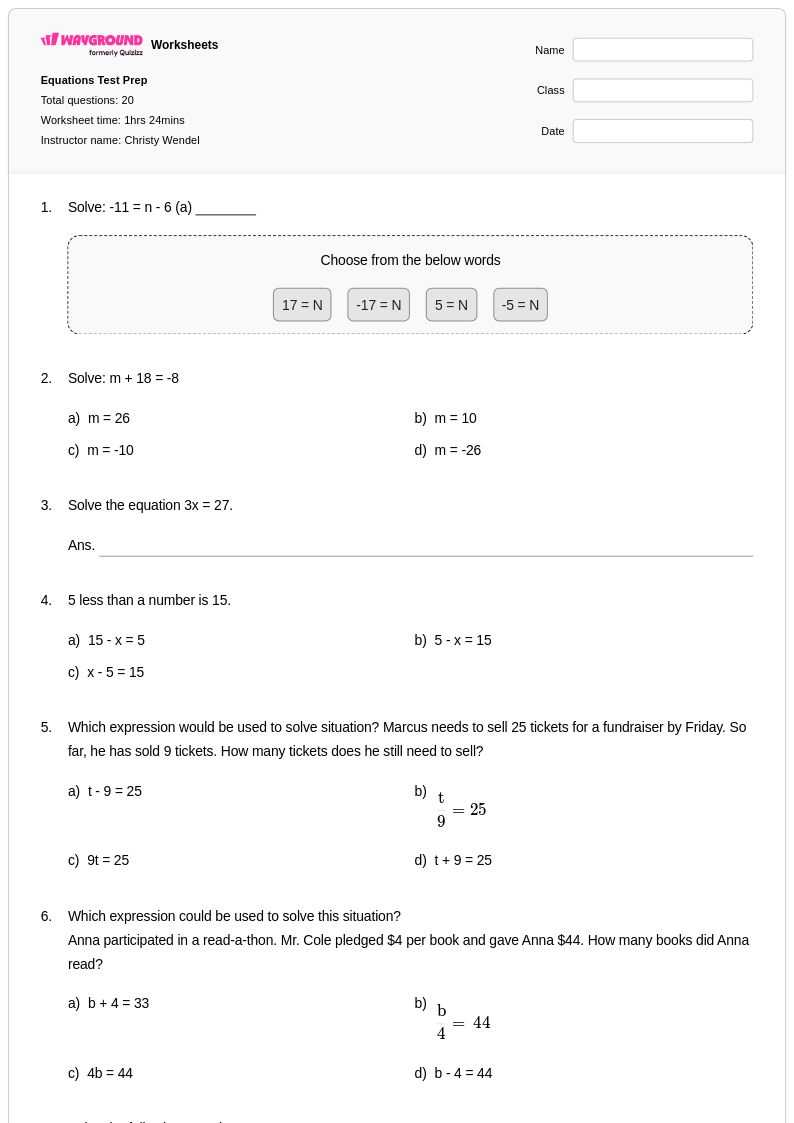
20 Q
6th
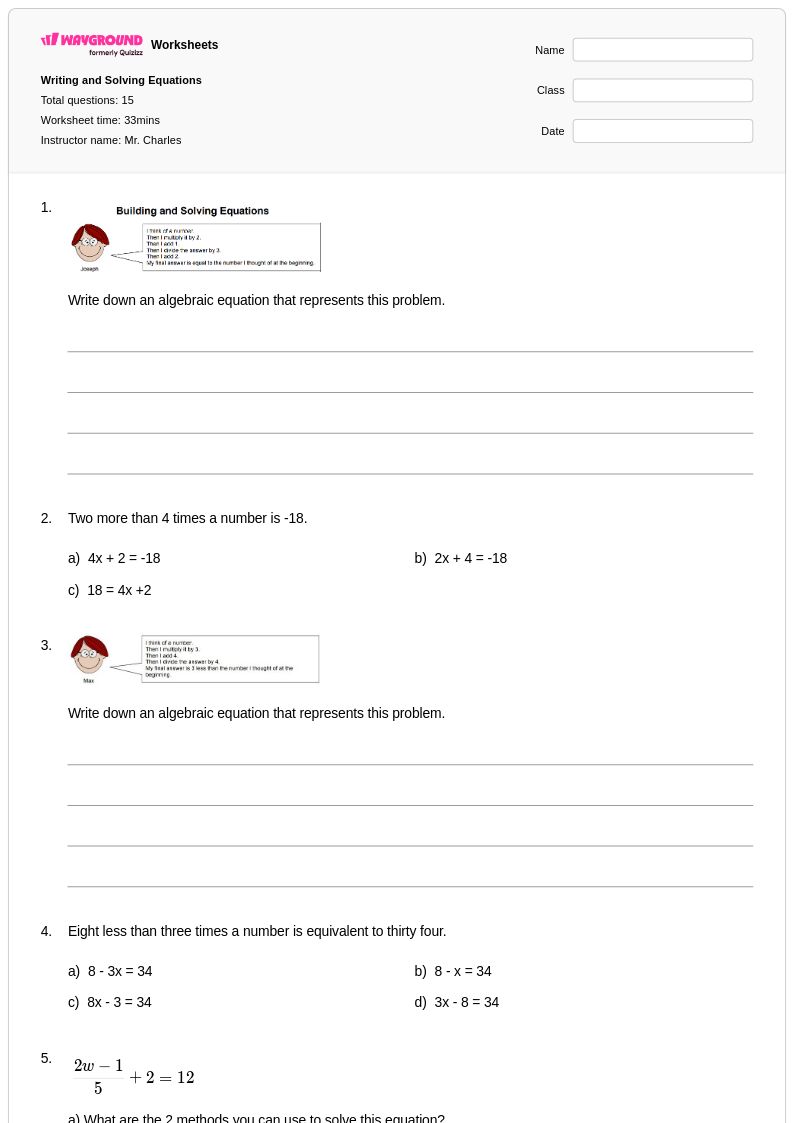
15 Q
9th - 10th
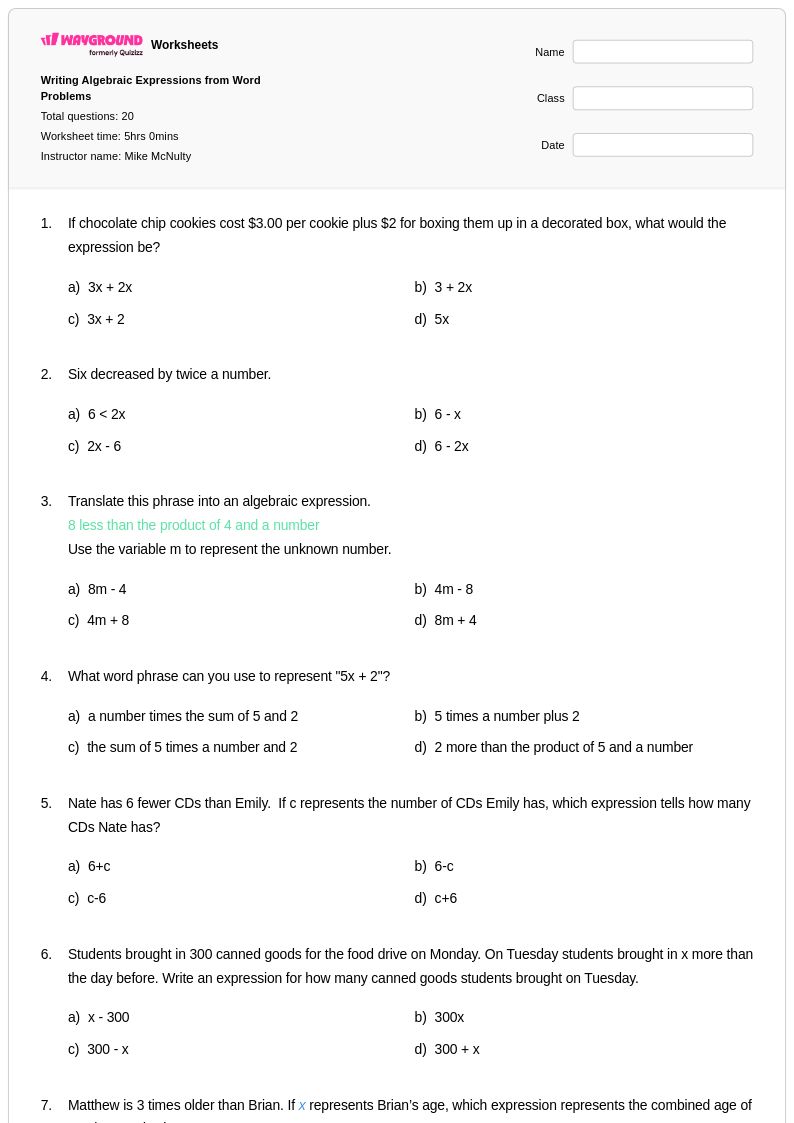
20 Q
6th - 7th
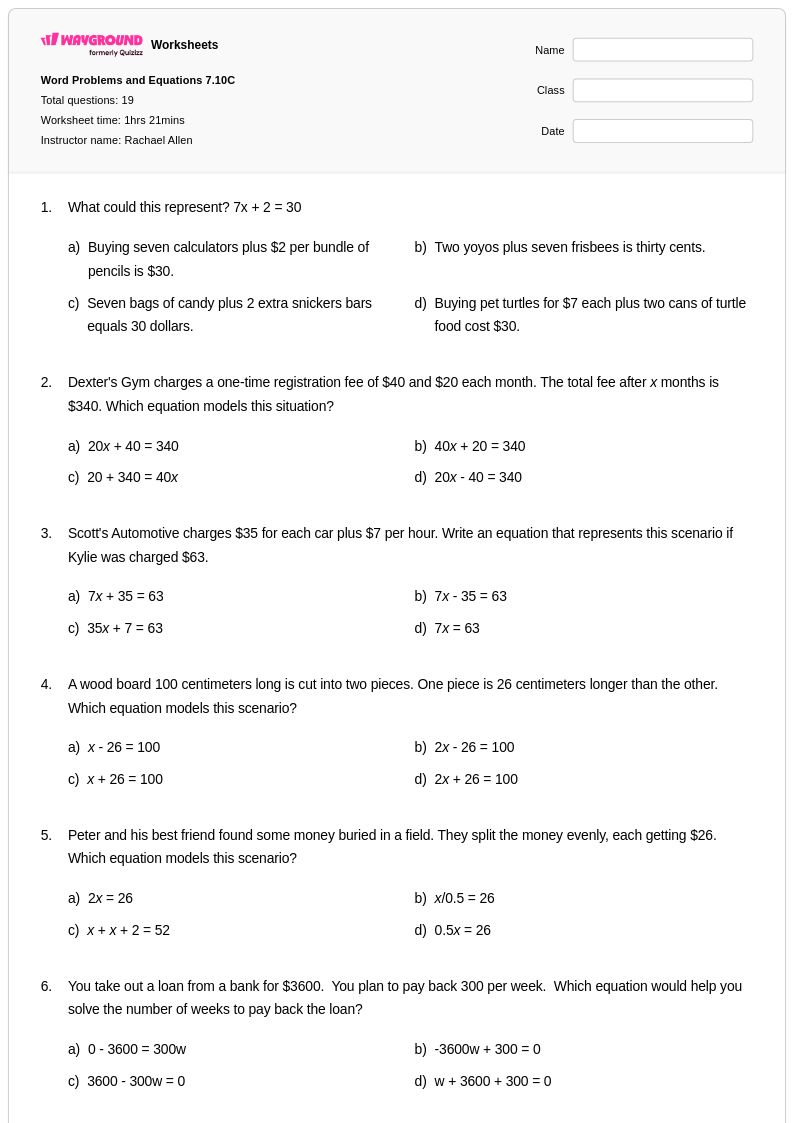
19 Q
7th
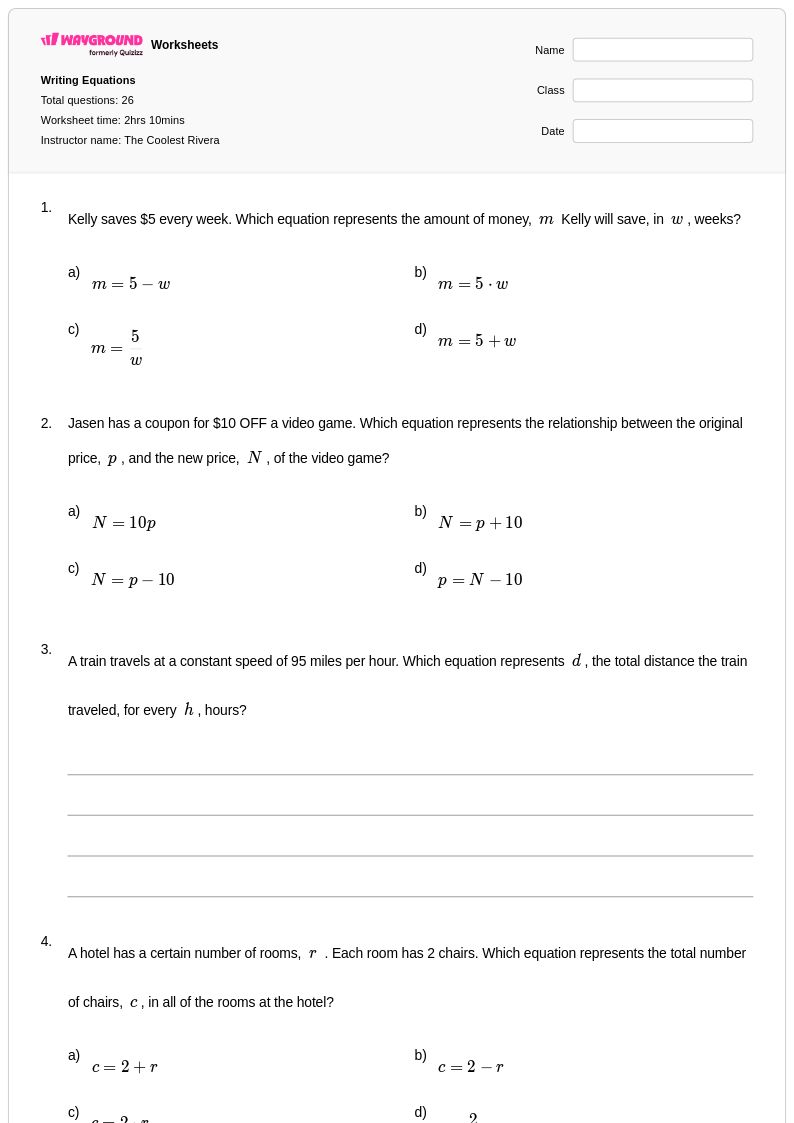
26 Q
6th - 7th
Explore Worksheets by Subjects
Explore printable Creating Equations from Word Problems worksheets
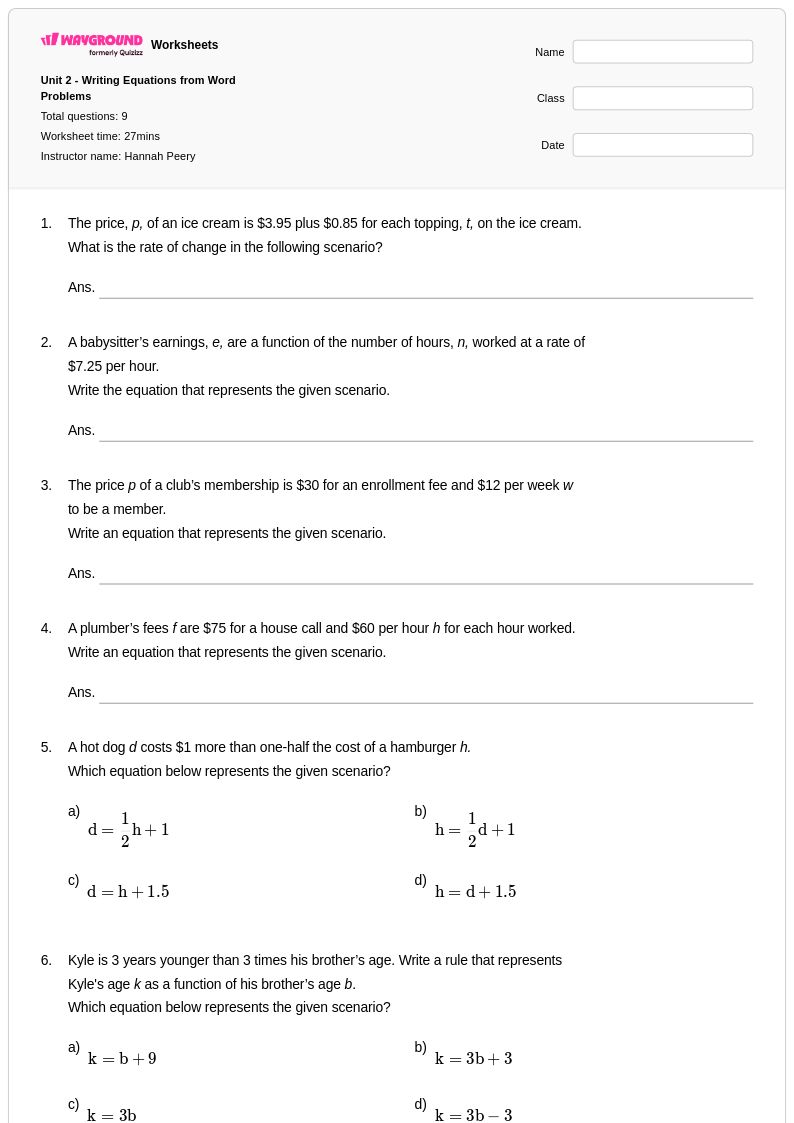
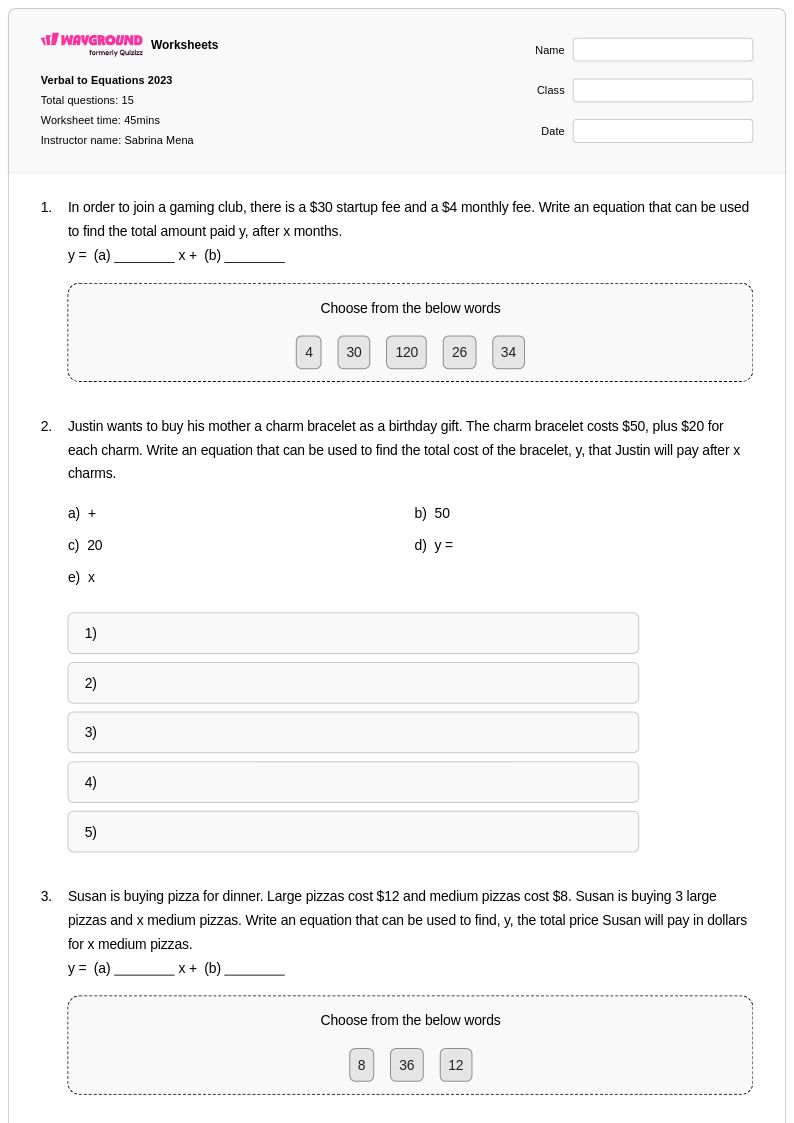
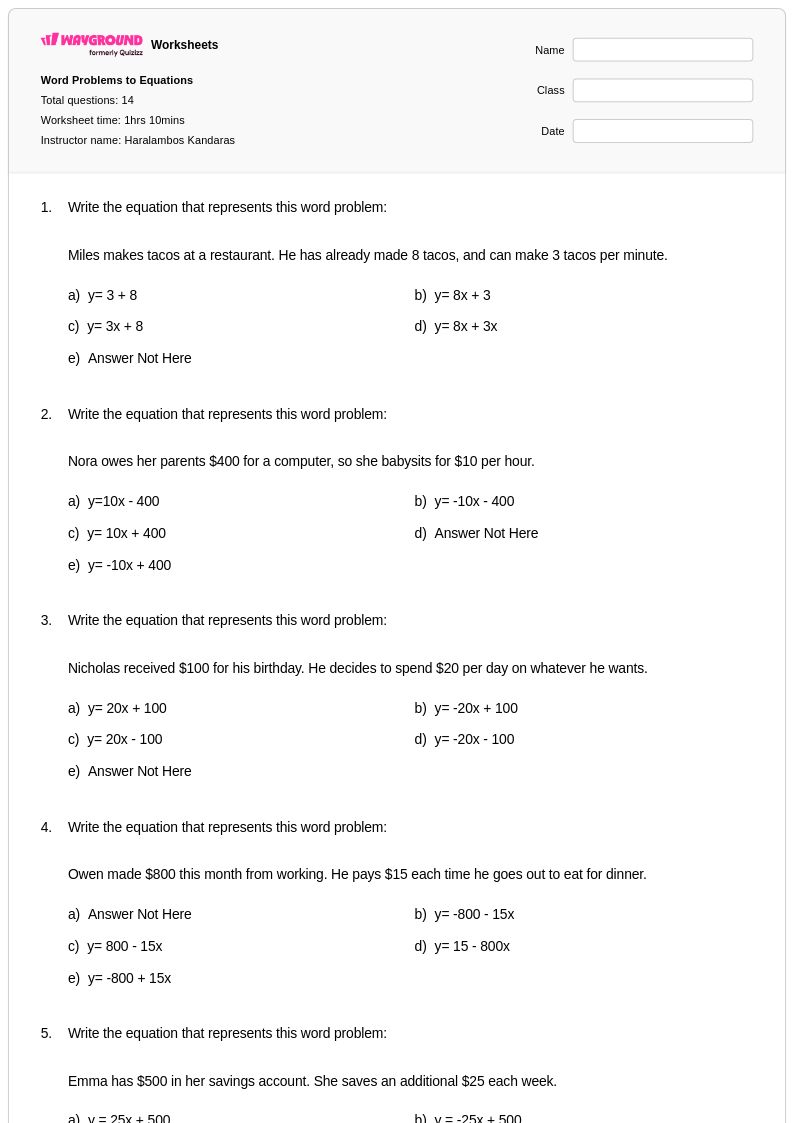
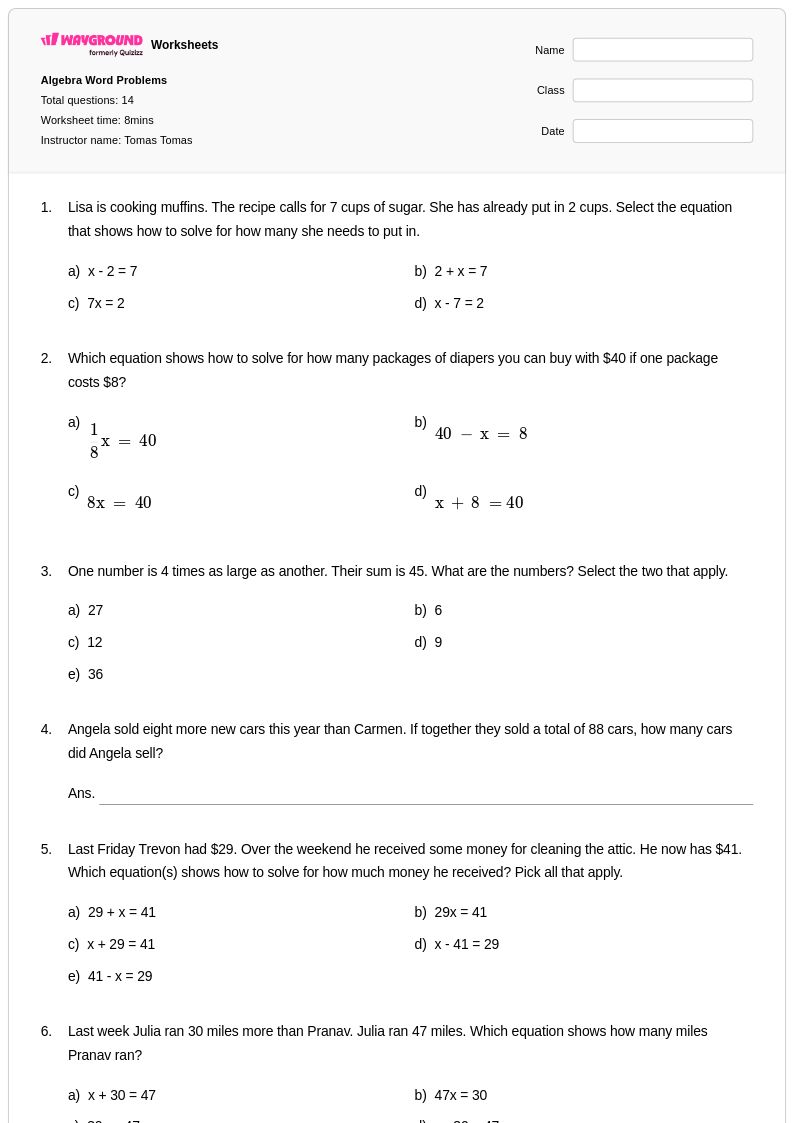
Creating equations from word problems represents a fundamental mathematical skill that bridges the gap between abstract algebraic thinking and real-world problem solving. Wayground (formerly Quizizz) offers comprehensive worksheets that guide students through the systematic process of translating written scenarios into mathematical expressions and equations. These carefully crafted practice problems strengthen critical analytical skills including identifying unknown variables, recognizing mathematical relationships within text, and determining appropriate operational structures. The available printables feature diverse word problem scenarios spanning topics from basic arithmetic applications to complex multi-step algebraic situations, with each worksheet including a complete answer key to support independent learning and immediate feedback. Students develop proficiency in parsing linguistic clues, extracting numerical information, and constructing accurate mathematical representations through these free pdf resources.
Wayground (formerly Quizizz) empowers educators with millions of teacher-created worksheet collections specifically designed for equation creation instruction, featuring robust search and filtering capabilities that allow precise targeting of skill levels and mathematical concepts. The platform's extensive differentiation tools enable teachers to customize worksheets according to individual student needs, whether for remediation of foundational skills or enrichment of advanced problem-solving techniques. These resources align with mathematical standards and are available in both printable pdf format and interactive digital versions, providing flexibility for various classroom environments and teaching approaches. Teachers can efficiently plan targeted skill practice sessions, identify students requiring additional support through diagnostic assessments, and implement systematic progression through increasingly complex word problem scenarios, all while accessing professionally developed materials that have been tested and refined by the educational community.
FAQs
How do I teach students to create equations from word problems?
What exercises help students practice writing equations from word problems?
What mistakes do students commonly make when creating equations from word problems?
How can I use Wayground worksheets for equation-writing practice?
How does creating equations from word problems fit into the Common Core math progression?
How can I differentiate equation-writing worksheets for mixed-ability students?