Free Printable Density Column Worksheets for Class 9
Class 9 density column worksheets from Wayground provide free printables and practice problems that help students explore layered liquid experiments, with comprehensive answer keys and PDF resources for mastering physical science concepts.
Explore printable Density Column worksheets for Class 9
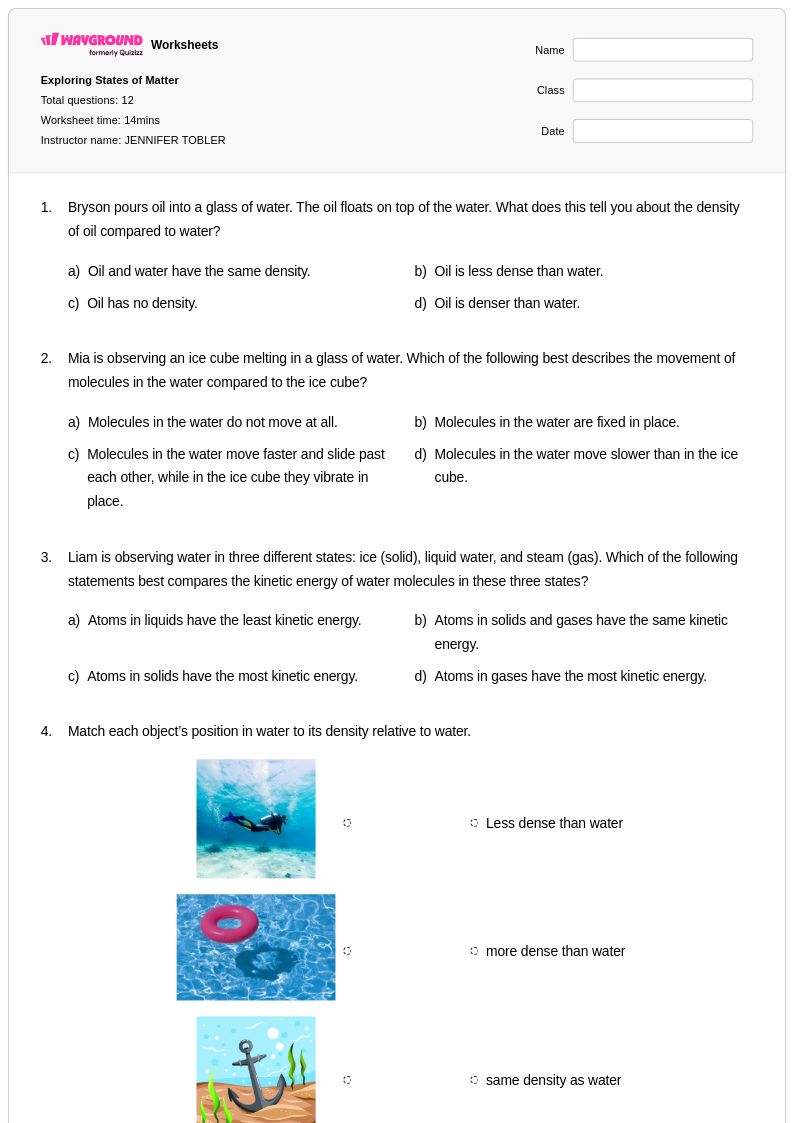
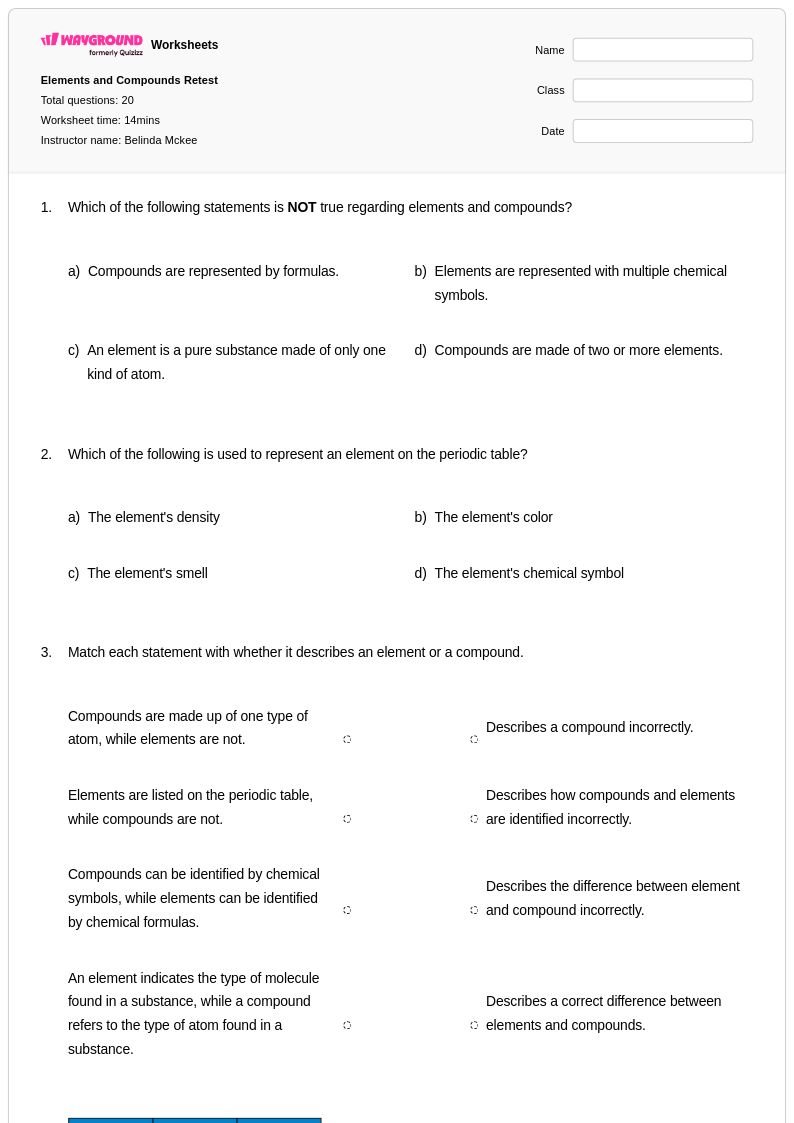
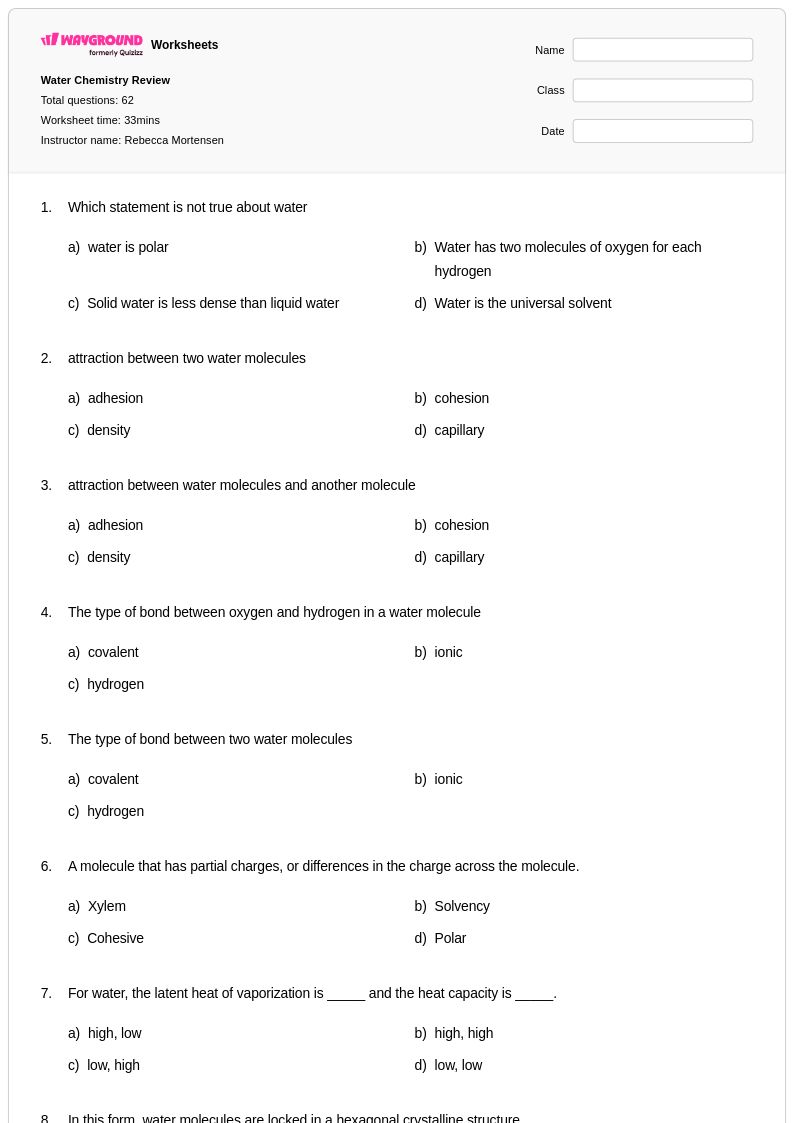
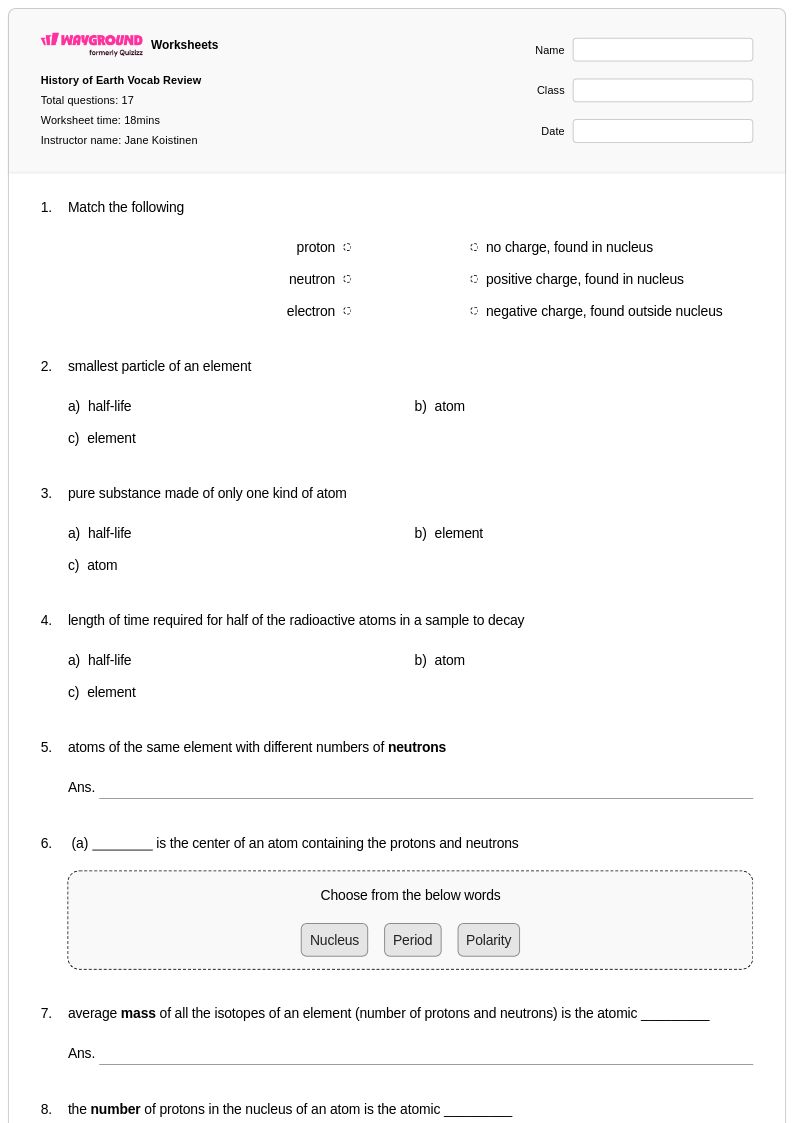
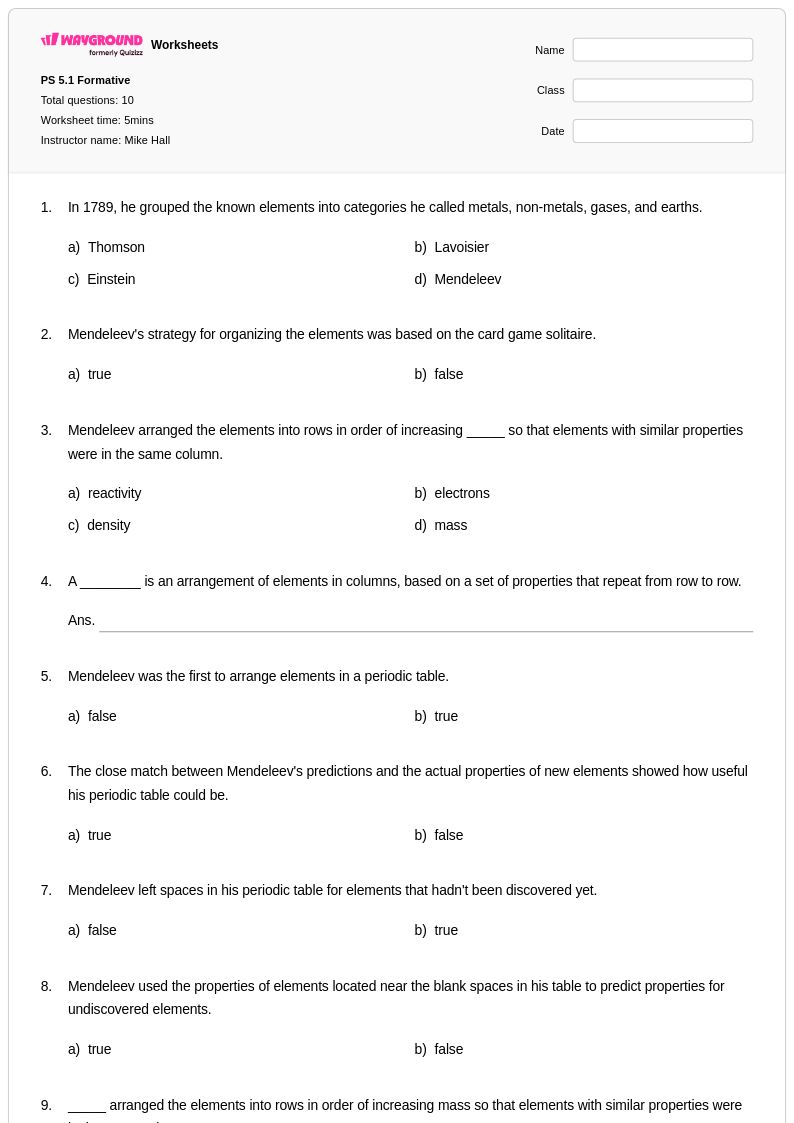
Class 9 density column worksheets available through Wayground (formerly Quizizz) provide comprehensive practice for students learning this fundamental physical science concept that demonstrates how liquids of different densities layer according to their mass per unit volume. These educational resources strengthen critical analytical skills as students predict layering patterns, calculate density values, and understand the relationship between molecular structure and physical properties of various substances. The worksheet collections include detailed answer keys and are available as free printables in pdf format, offering practice problems that range from basic density calculations to complex multi-liquid column predictions that challenge students to apply density principles in real-world scenarios.
Wayground (formerly Quizizz) supports educators with an extensive library of millions of teacher-created density column resources that can be easily located through robust search and filtering capabilities aligned to state and national science standards. Teachers benefit from powerful differentiation tools that allow customization of worksheet difficulty levels, ensuring appropriate challenge levels for diverse learners while maintaining focus on essential Class 9 physical science objectives. These versatile materials are available in both printable pdf formats for traditional classroom use and digital formats for interactive learning, enabling seamless integration into lesson planning, targeted remediation sessions, enrichment activities, and regular skill practice that builds student confidence in understanding density relationships and liquid behavior.
FAQs
How do I teach density columns in a science class?
Start by building students' understanding of density as mass per unit volume before introducing how density differences cause liquids and solids to layer. A hands-on density tower demonstration using common household liquids like honey, dish soap, water, and oil makes the concept concrete and observable. From there, guide students through predicting layer order based on density values before confirming with experimental results. Connecting the visual outcome to the underlying math helps students move from observation to explanation.
What practice problems help students understand density column layering?
Effective practice problems ask students to rank substances by density and predict the order in which they will layer in a column, then verify their predictions against experimental data. Problems that require calculating density from given mass and volume values, followed by placing those substances in the correct sequence, reinforce both the math and the concept simultaneously. Including real-world scenarios, such as oil spills or salinity gradients in the ocean, gives students meaningful context for applying their understanding.
What mistakes do students commonly make when working with density columns?
The most common misconception is that heavier objects always sink and lighter ones always float, without accounting for volume. Students often confuse mass with density, leading to incorrect predictions about layer order. Another frequent error is assuming that the color or viscosity of a liquid determines its position in the column rather than its density value. Explicitly addressing these misconceptions before and during practice helps prevent students from anchoring incorrect reasoning.
How can I differentiate density column worksheets for students at different skill levels?
For foundational learners, begin with problems that provide density values directly and ask students only to rank and arrange layers, removing the calculation step. More advanced students can be given mass and volume data and asked to calculate density before predicting the column. On Wayground, teachers can apply accommodations such as reduced answer choices or read-aloud support to individual students without disrupting the rest of the class, making it straightforward to support diverse learners within a single assignment.
How do I use density column worksheets on Wayground in my classroom?
Density column worksheets on Wayground are available as printable PDFs for traditional classroom use and in digital formats for technology-integrated environments, including the option to host them as a live quiz on the platform. Printable versions work well as lab companion sheets or homework reinforcement, while the digital format allows for real-time data on student performance. Teachers can also customize materials to align with specific standards or adjust difficulty to match their students' current skill level.
How do I assess whether students truly understand density columns or are just memorizing layer order?
Present students with an unfamiliar set of substances and ask them to calculate density values and construct the column without relying on a provided ranking. If students can only recall a memorized sequence but struggle when given novel data, they have not internalized the underlying principle. Assessment tasks that combine calculation, prediction, and written explanation of why each layer falls where it does give a much clearer picture of conceptual understanding versus surface-level recall.

![Matter (particles, states) [Back from break] - Printable Density-column Worksheets Class 9 - Wayground](https://quizizz-static.s3.amazonaws.com/_media/worksheets-new/6383dbae60fc83001da74b23-matter-particles-states-back-from-break)