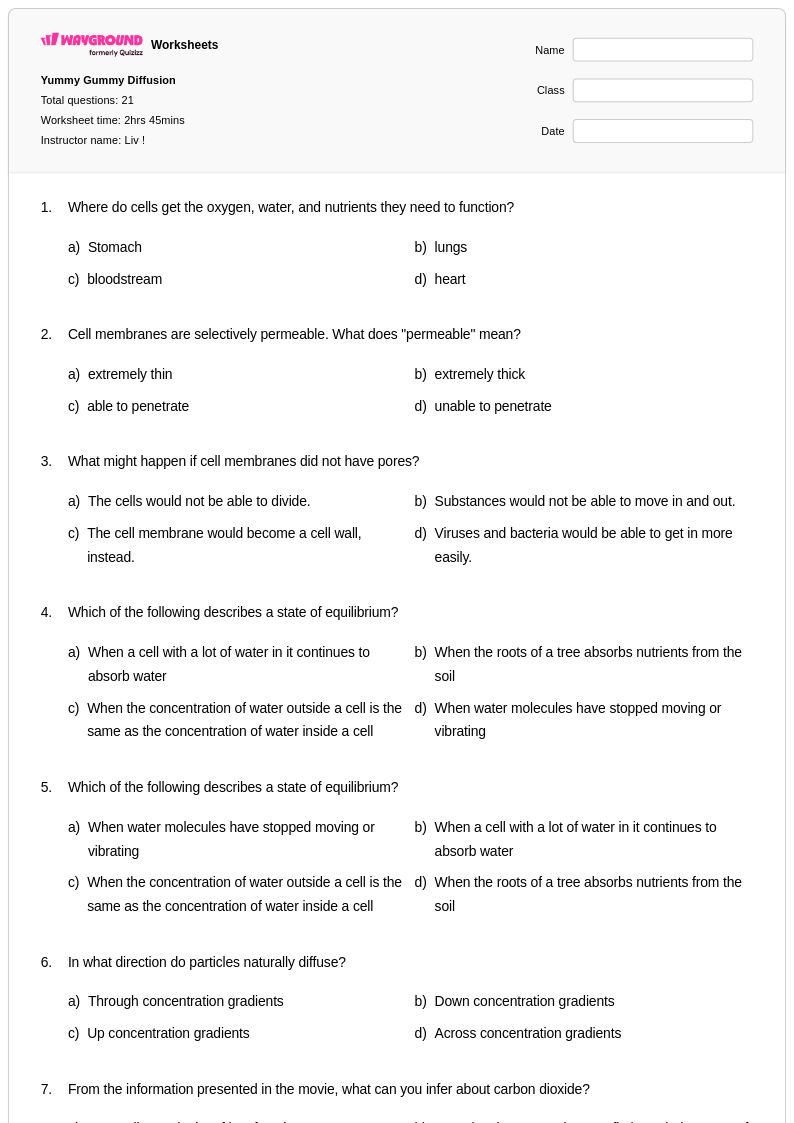
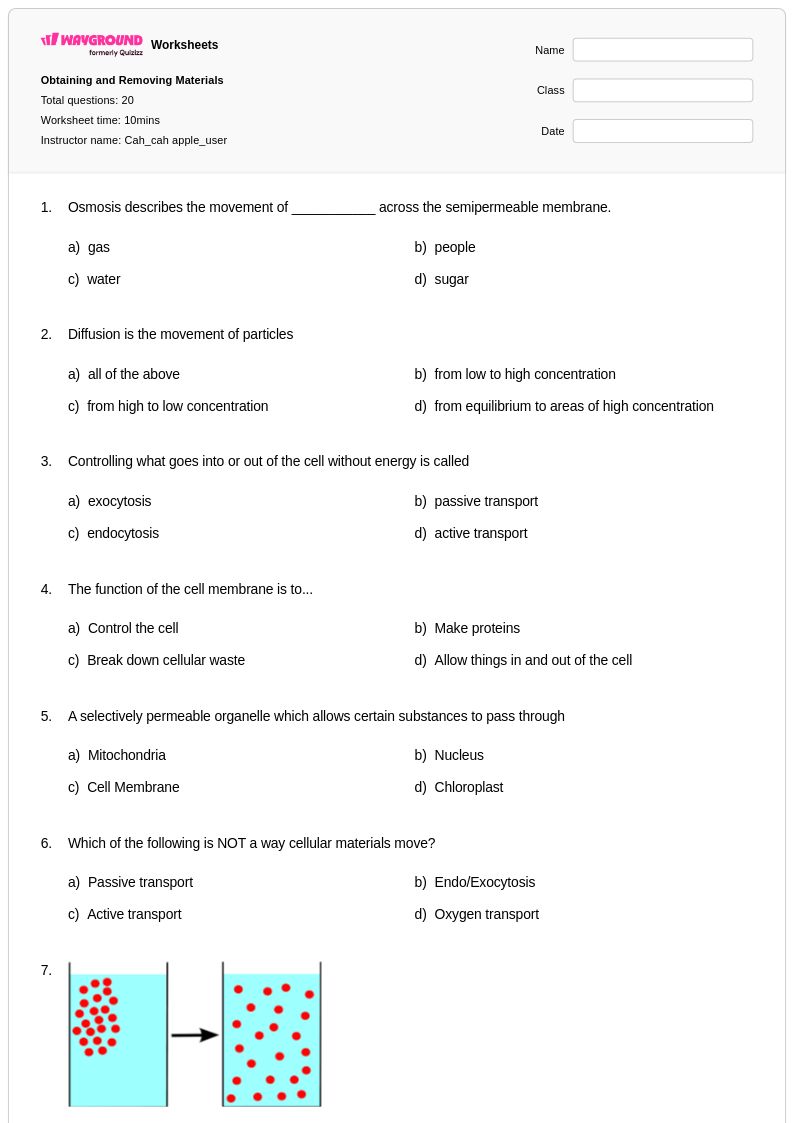
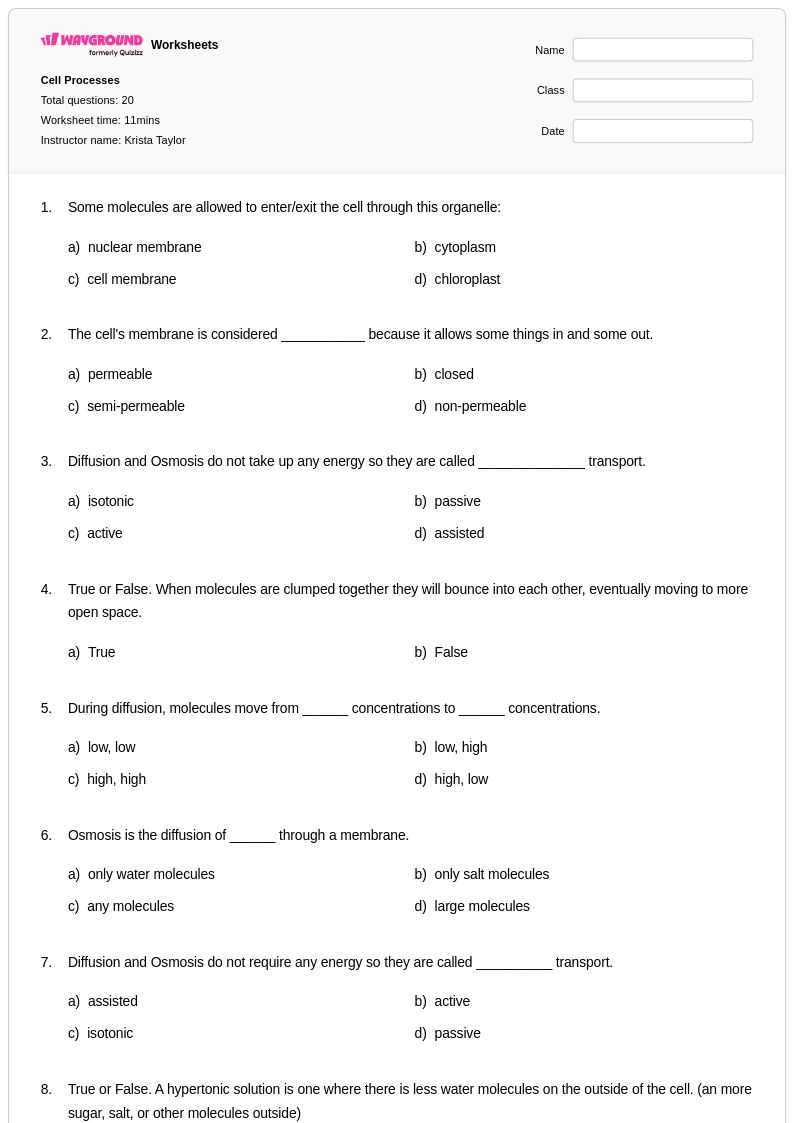
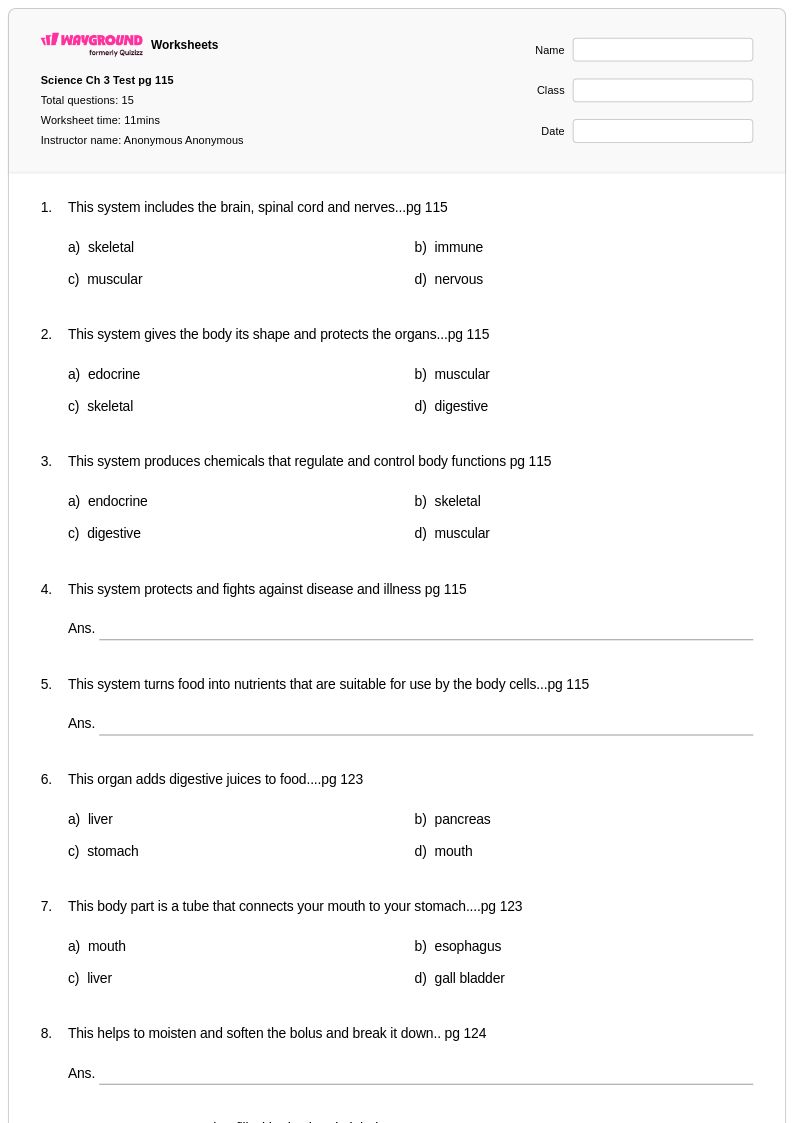
Explore Wayground's free Class 5 diffusion worksheets and printables that help students understand how particles move and spread through different materials with engaging practice problems and complete answer keys.
Explore printable Diffusion worksheets for Class 5
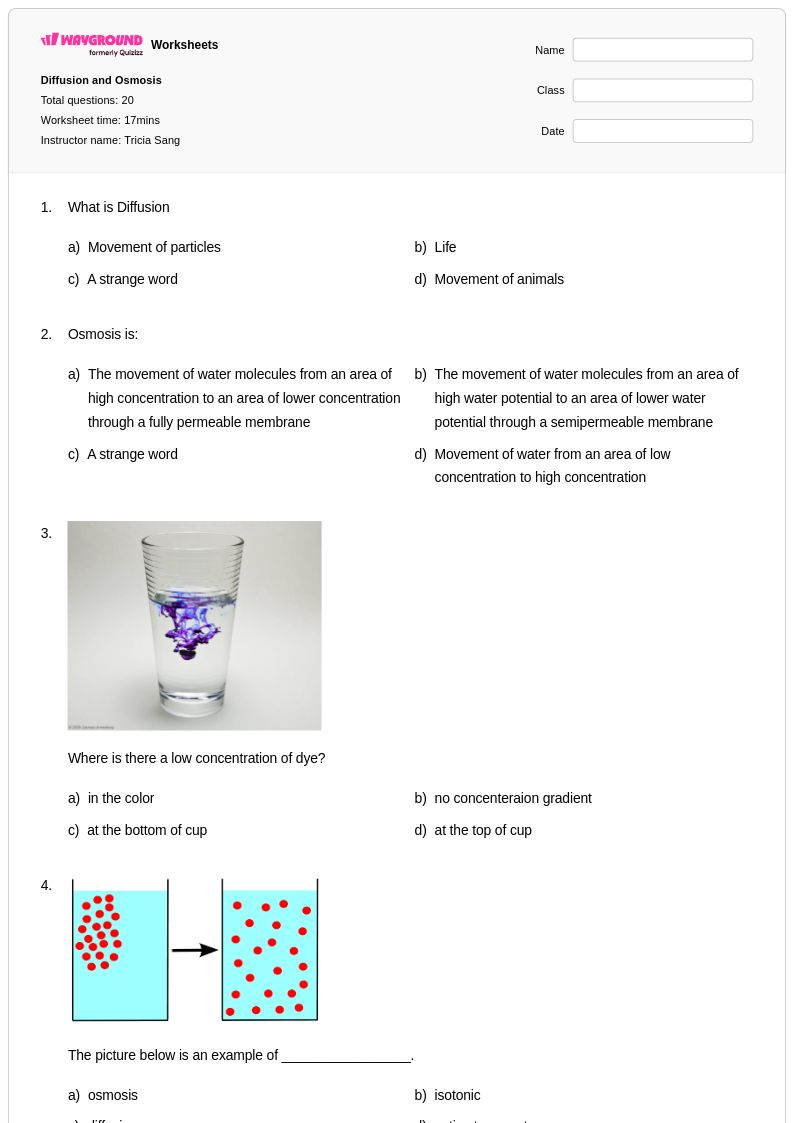
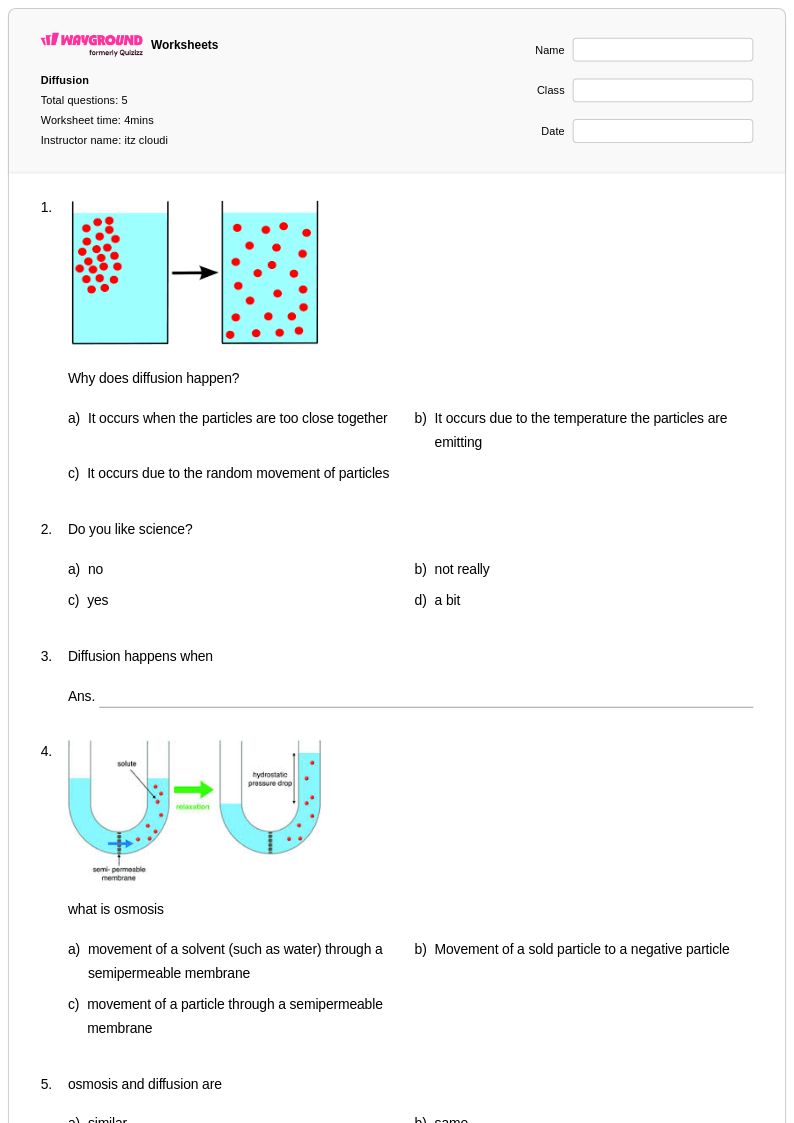
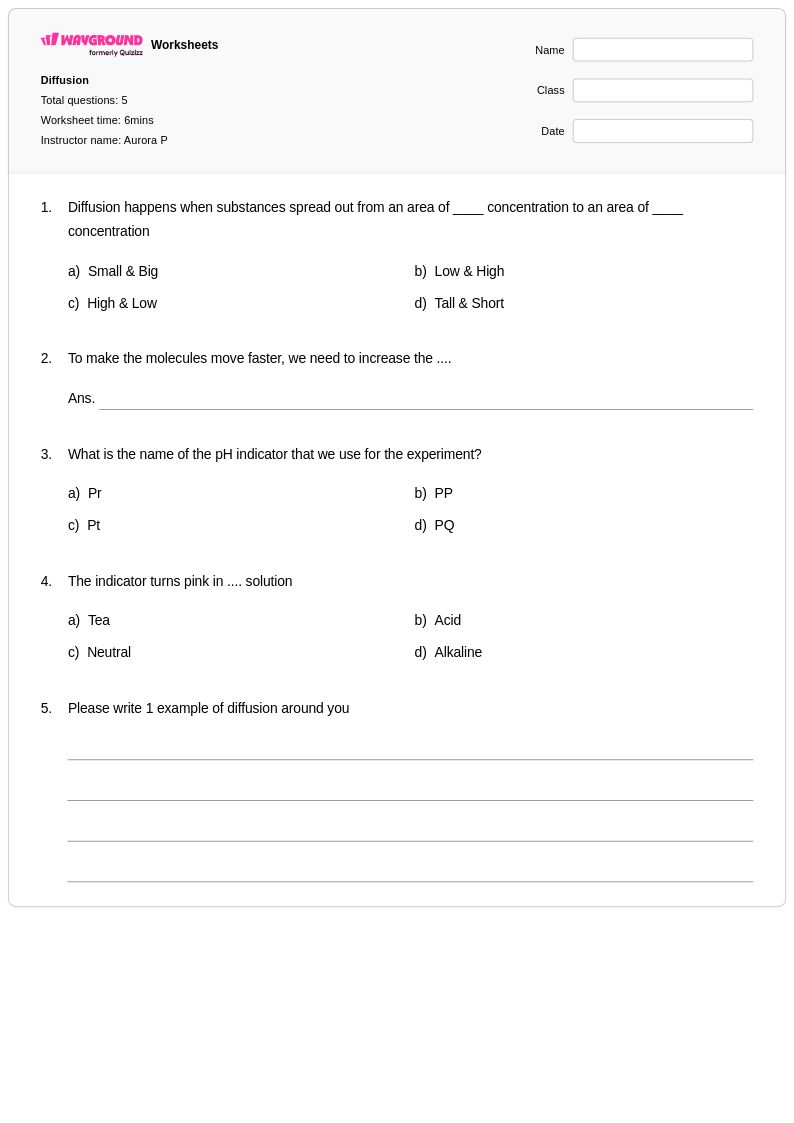
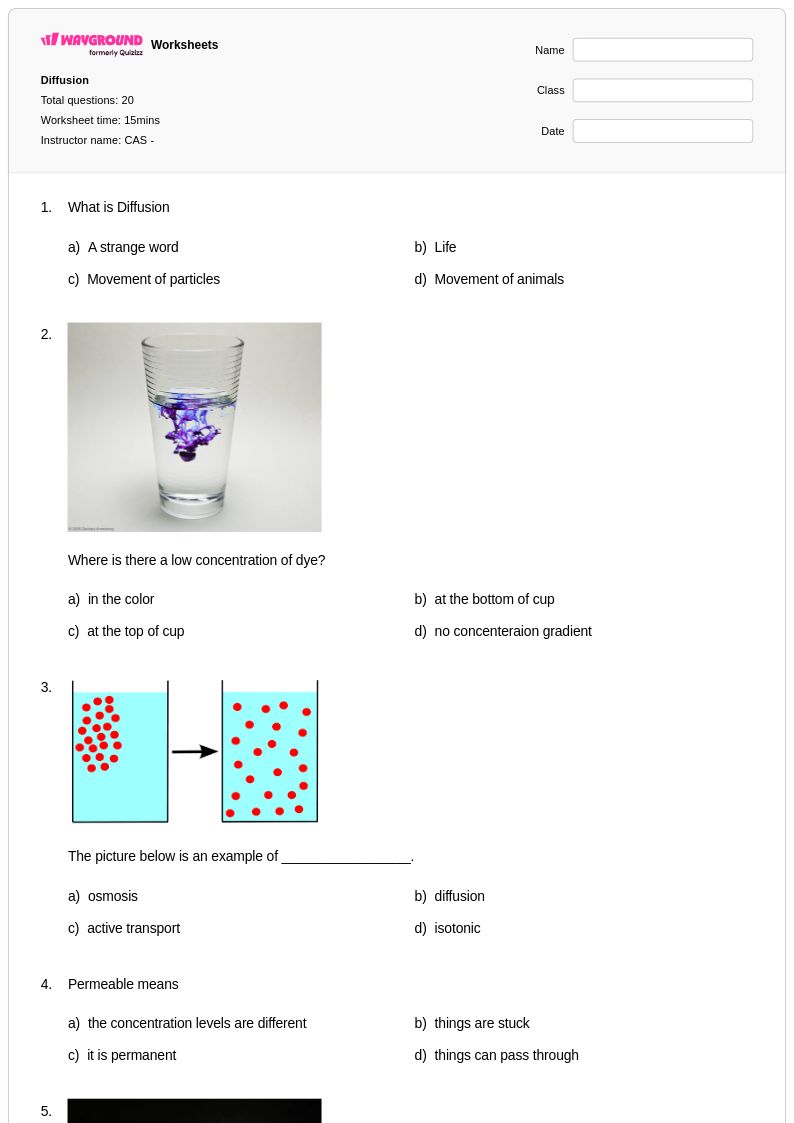
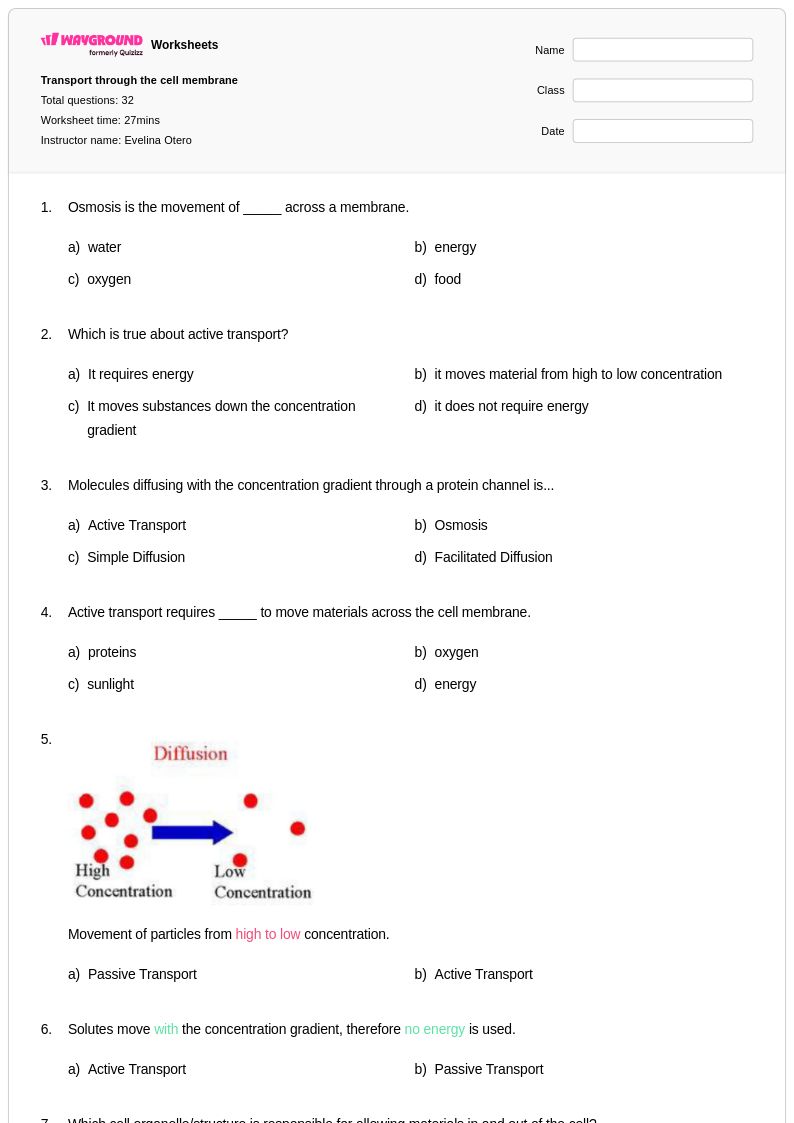
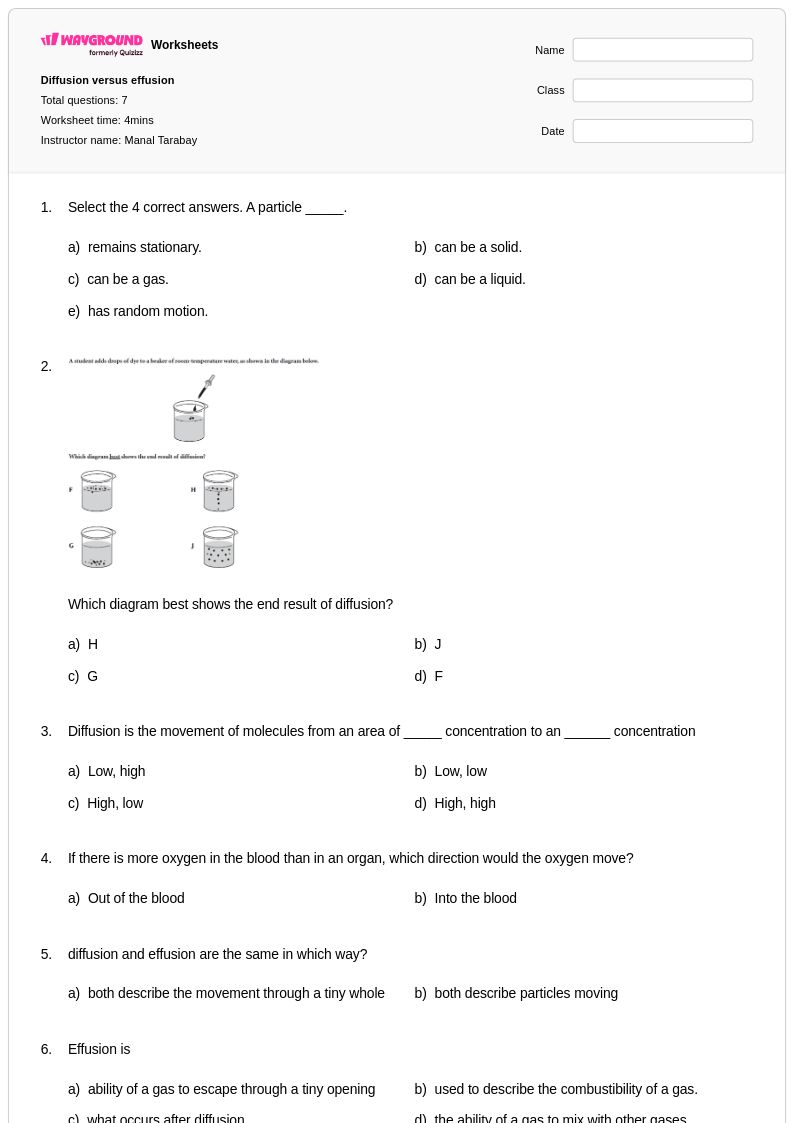
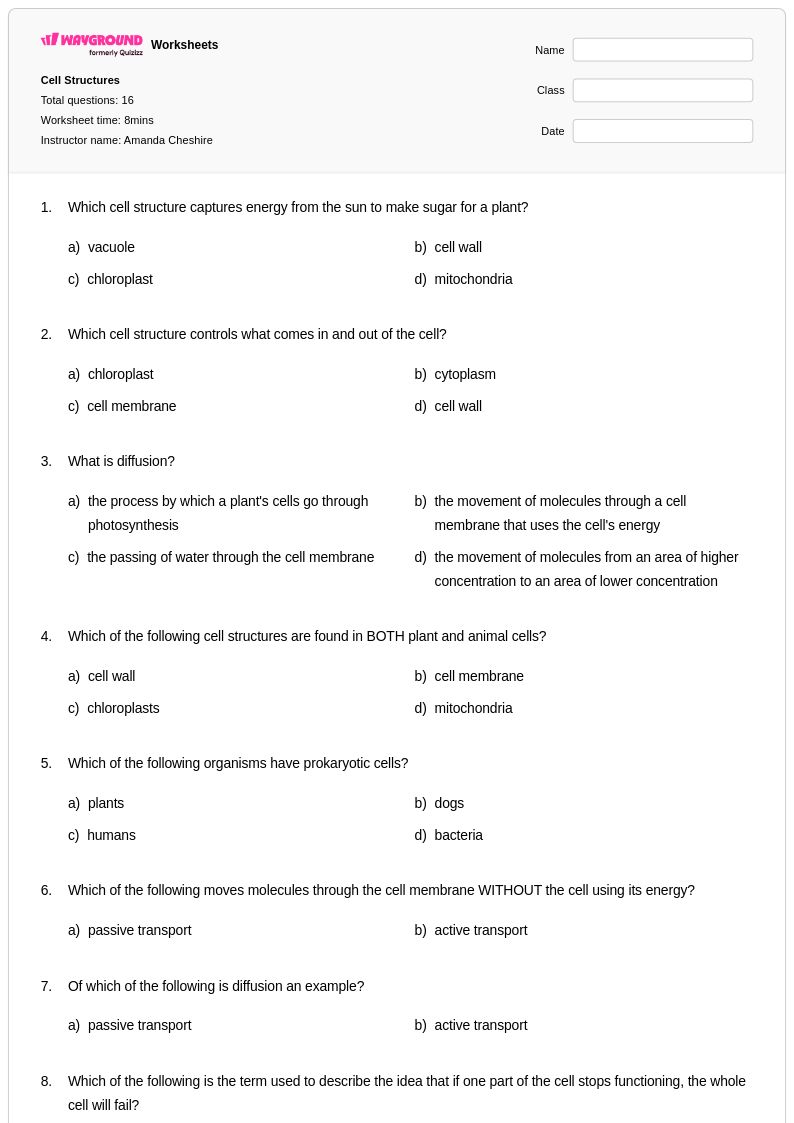
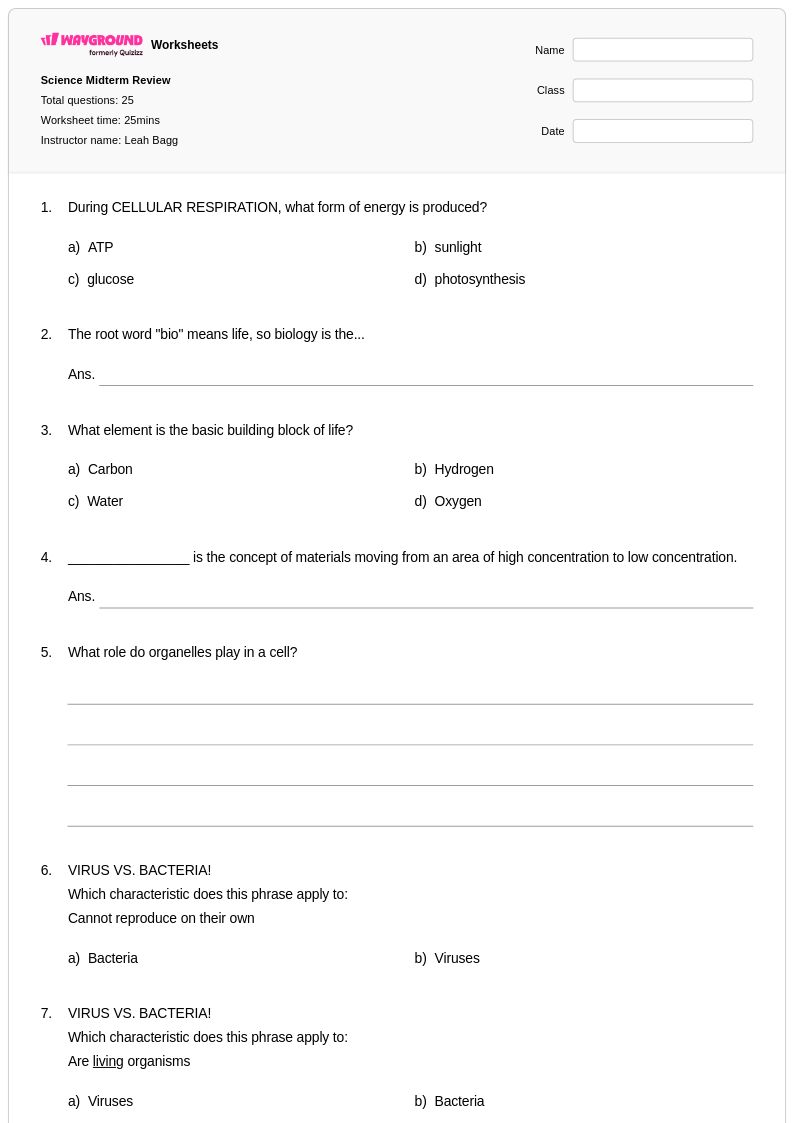
Class 5 diffusion worksheets available through Wayground (formerly Quizizz) provide students with essential practice in understanding how particles move and spread through different materials and states of matter. These comprehensive printables strengthen foundational chemistry concepts by guiding students through observations of real-world diffusion examples, from food coloring spreading in water to the scent of perfume traveling across a room. Each worksheet collection includes detailed answer keys and free practice problems that help students visualize molecular movement, compare diffusion rates in liquids and gases, and predict how temperature and concentration affect particle distribution. The pdf format ensures easy classroom distribution while maintaining high-quality diagrams and illustrations that make abstract scientific concepts accessible to elementary learners.
Wayground (formerly Quizizz) supports teachers with millions of teacher-created diffusion resources that streamline lesson planning and enhance student understanding of particle behavior. The platform's robust search and filtering capabilities allow educators to quickly locate worksheets aligned with specific learning standards and differentiate instruction based on individual student needs. Teachers can customize existing materials or combine multiple worksheet sets to create comprehensive practice sessions that address varying skill levels within their Class 5 classrooms. Available in both printable and digital formats including pdf downloads, these resources facilitate flexible implementation whether used for initial concept introduction, targeted remediation for struggling learners, or enrichment activities for advanced students ready to explore more complex diffusion scenarios.
FAQs
How do I teach diffusion to students who struggle with the concept?
Start with a concrete, observable demonstration such as dropping food coloring into still water and asking students to predict and then observe how it spreads. This anchors the abstract idea of particles moving from high to low concentration in something students can see. From there, introduce concentration gradients using labeled diagrams before moving to quantitative problems. Connecting diffusion to familiar real-world scenarios, like the smell of perfume spreading across a room, helps students internalize the concept before tackling biological applications like cell membranes.
What factors that affect diffusion should students understand before moving on?
Students should be able to explain how temperature, molecular size, and concentration gradient each independently influence diffusion rate. Higher temperatures increase kinetic energy and speed up particle movement, while larger molecules diffuse more slowly. A steeper concentration gradient drives faster net movement. Students who cannot explain these relationships are likely to struggle with osmosis, active transport, and gas exchange, so it is worth assessing these factors explicitly before advancing.
What practice exercises help students understand diffusion rates and concentration gradients?
Effective practice includes diagram interpretation tasks where students identify the direction of net particle movement, calculation problems involving diffusion rates across different mediums, and scenario-based questions that ask students to predict what happens when temperature or molecular size changes. Problems that require students to distinguish between diffusion in gases, liquids, and across cell membranes build the versatility needed for both chemistry and biology assessments.
What mistakes do students commonly make when learning about diffusion?
The most common misconception is that diffusion requires energy, which causes students to confuse it with active transport. Students also frequently describe particles as 'wanting' to move to equilibrium, which reflects a misunderstanding of random molecular motion rather than directed movement. Another persistent error is assuming that diffusion stops at equilibrium, when in reality particles continue moving but at equal rates in both directions. Targeted practice problems that directly address these distinctions can correct these errors before they become entrenched.
How can I use diffusion worksheets to support students at different skill levels?
Differentiation works best when lower-level tasks focus on diagram labeling and directional questions, while higher-level tasks require calculation and real-world application. On Wayground, teachers can apply accommodations such as reduced answer choices for students who need additional scaffolding and read-aloud support for those with reading difficulties, without other students being made aware of those adjustments. This allows a single worksheet session to serve the full range of learners in one class.
How do I use Wayground's diffusion worksheets in my classroom?
Wayground's diffusion worksheets are available as printable PDFs, making them easy to use in traditional classroom settings, and in digital formats that work for blended or fully online instruction. Teachers can also host the worksheets as a live or asynchronous quiz directly on Wayground, which enables real-time progress tracking. Each worksheet includes a complete answer key, so students can self-check their work and teachers can focus review time on the specific concepts where errors cluster.