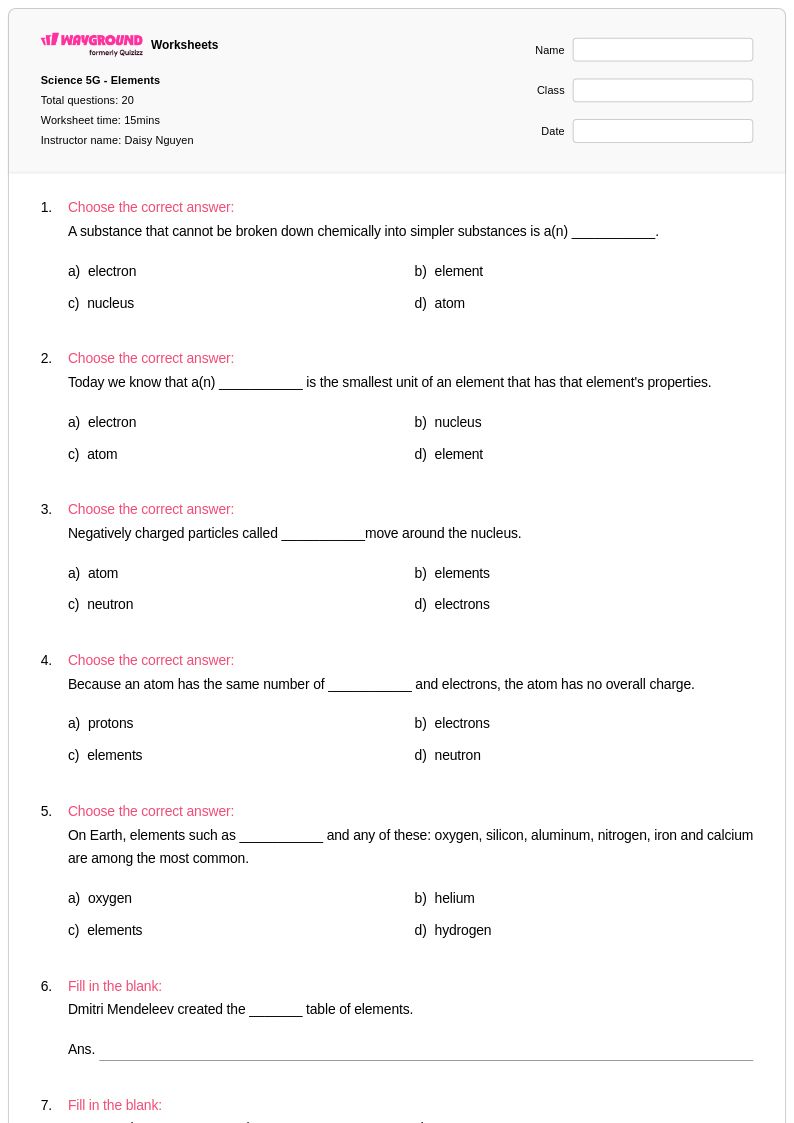
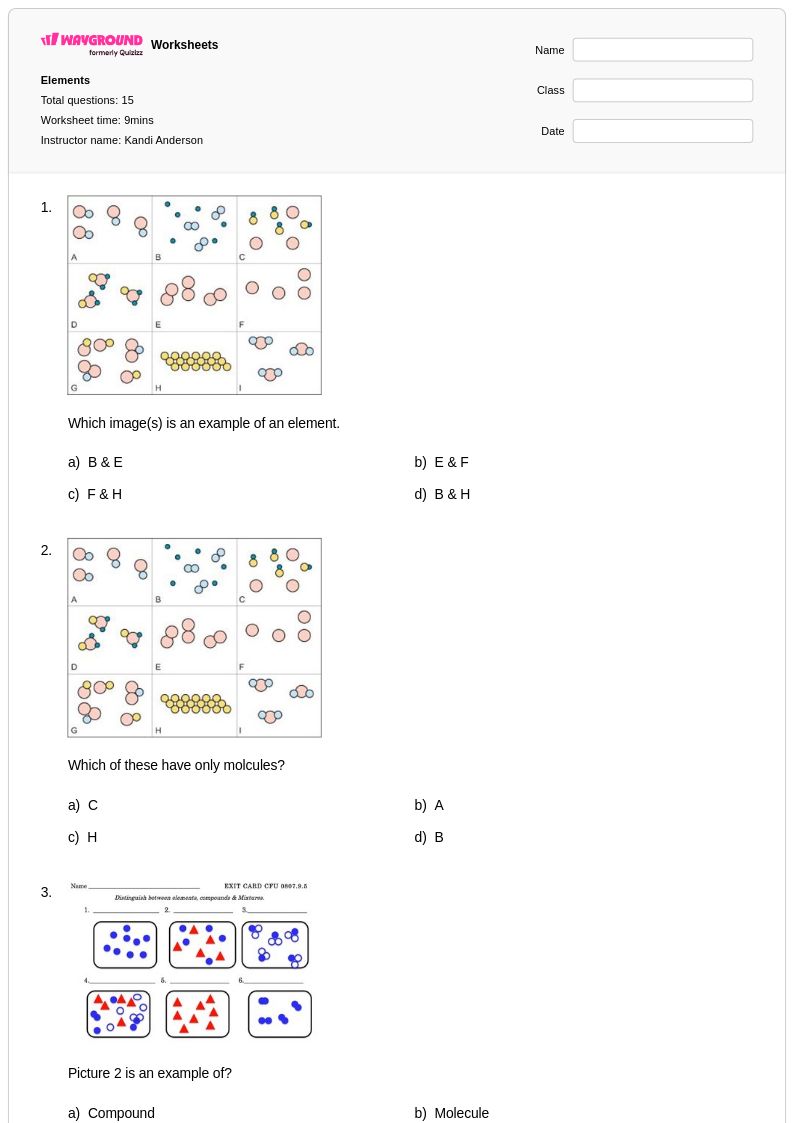
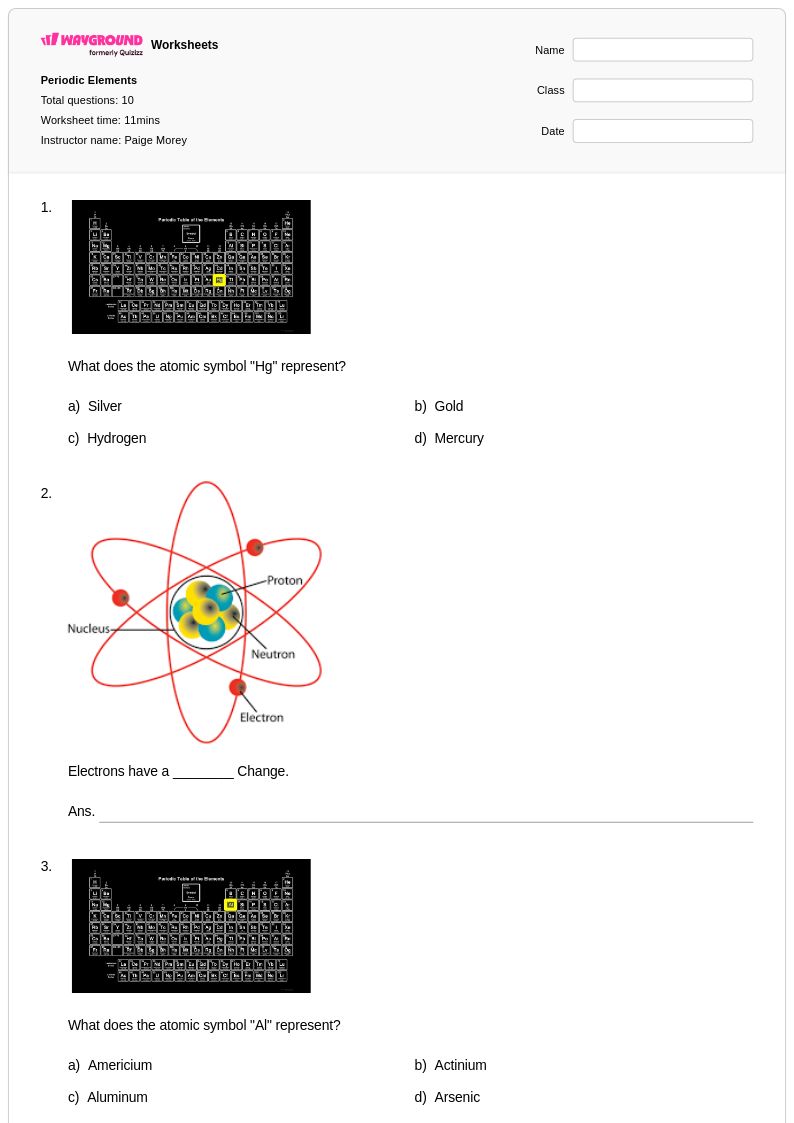
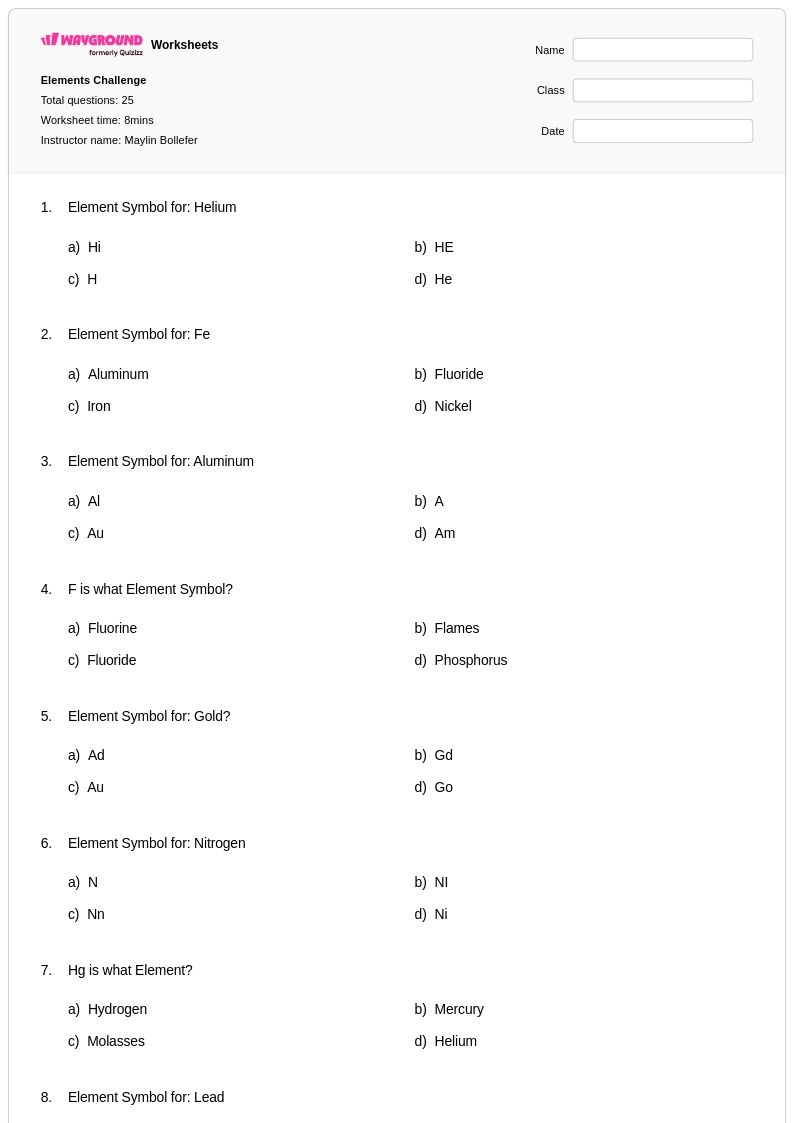
Explore Wayground's free Class 5 elements worksheets and printables that help students discover the building blocks of matter through engaging practice problems and comprehensive answer keys.
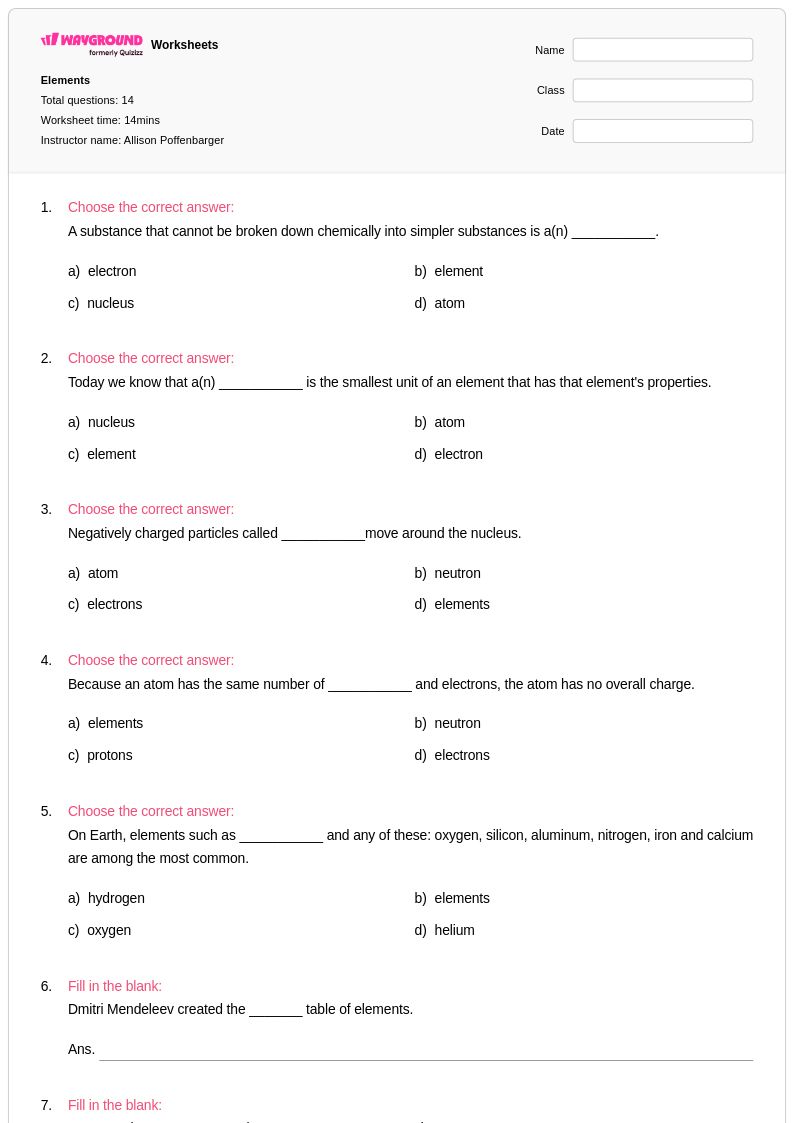
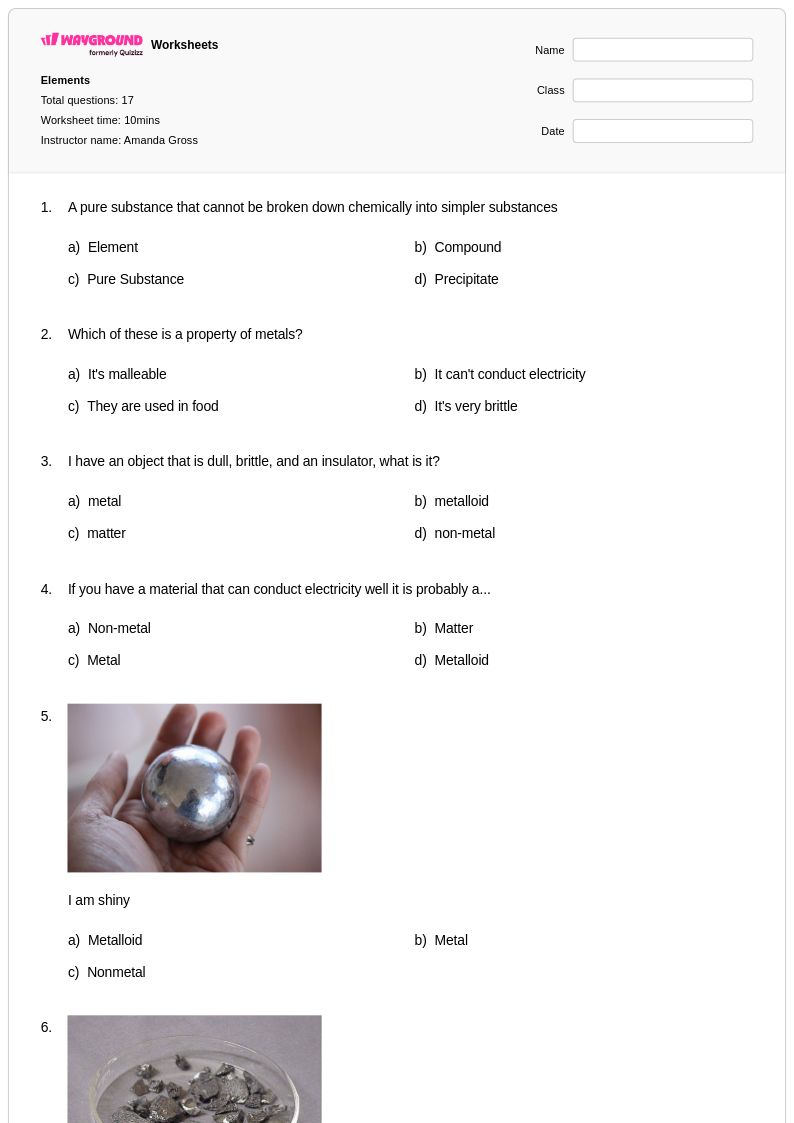
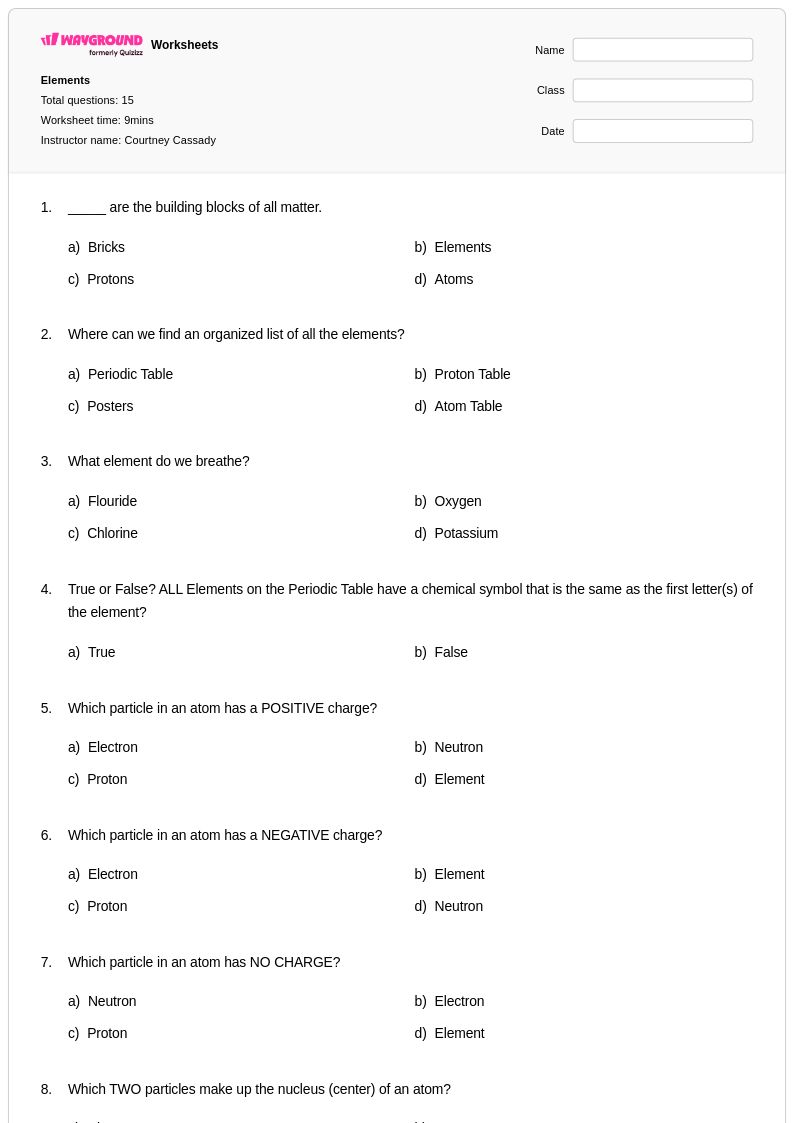
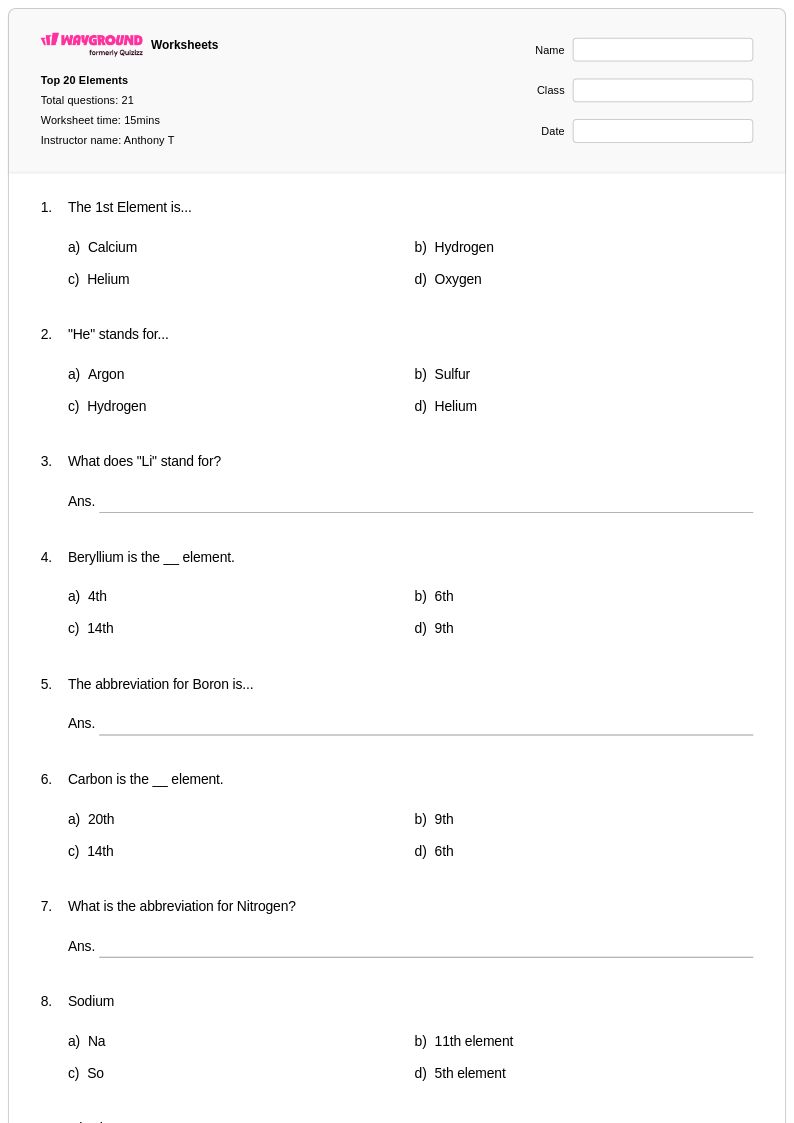
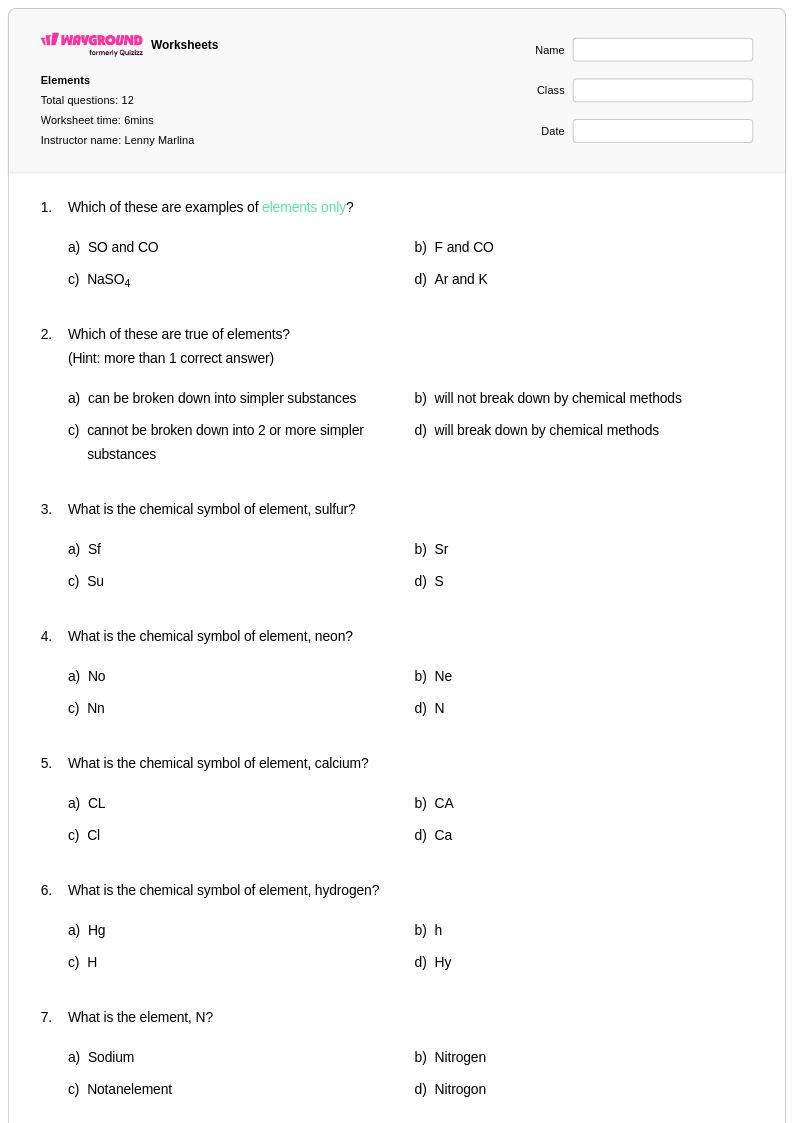
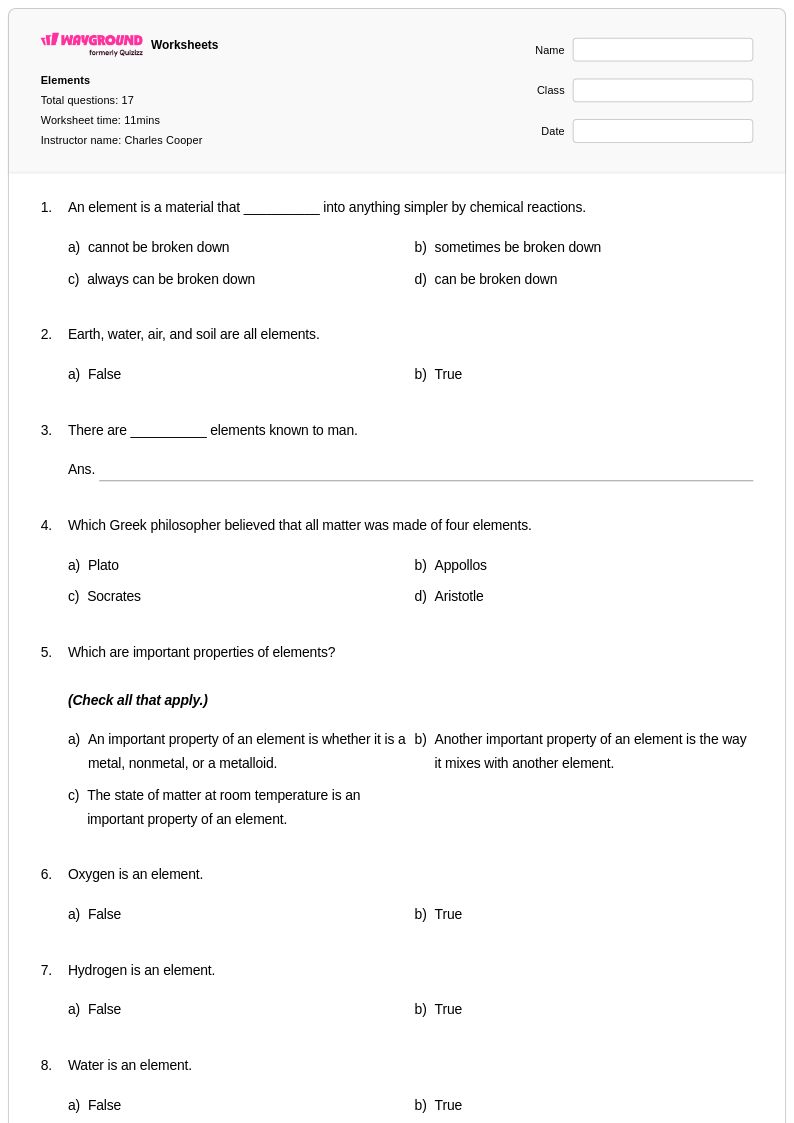
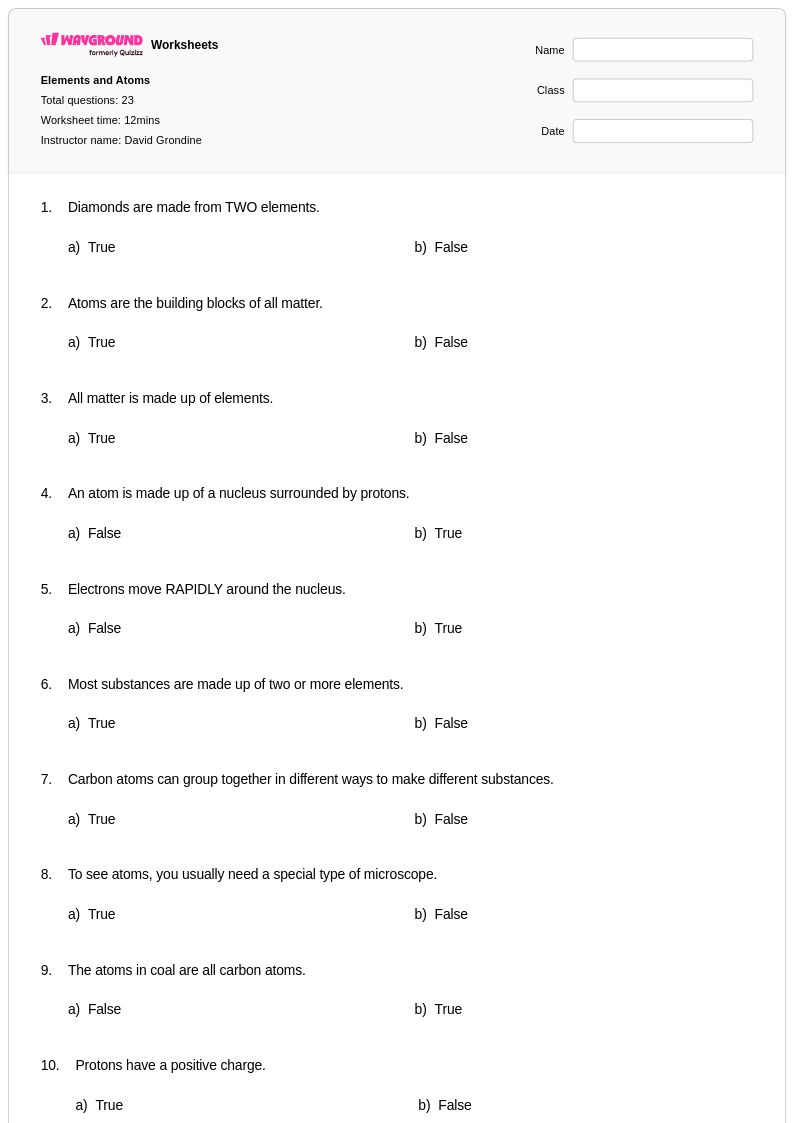
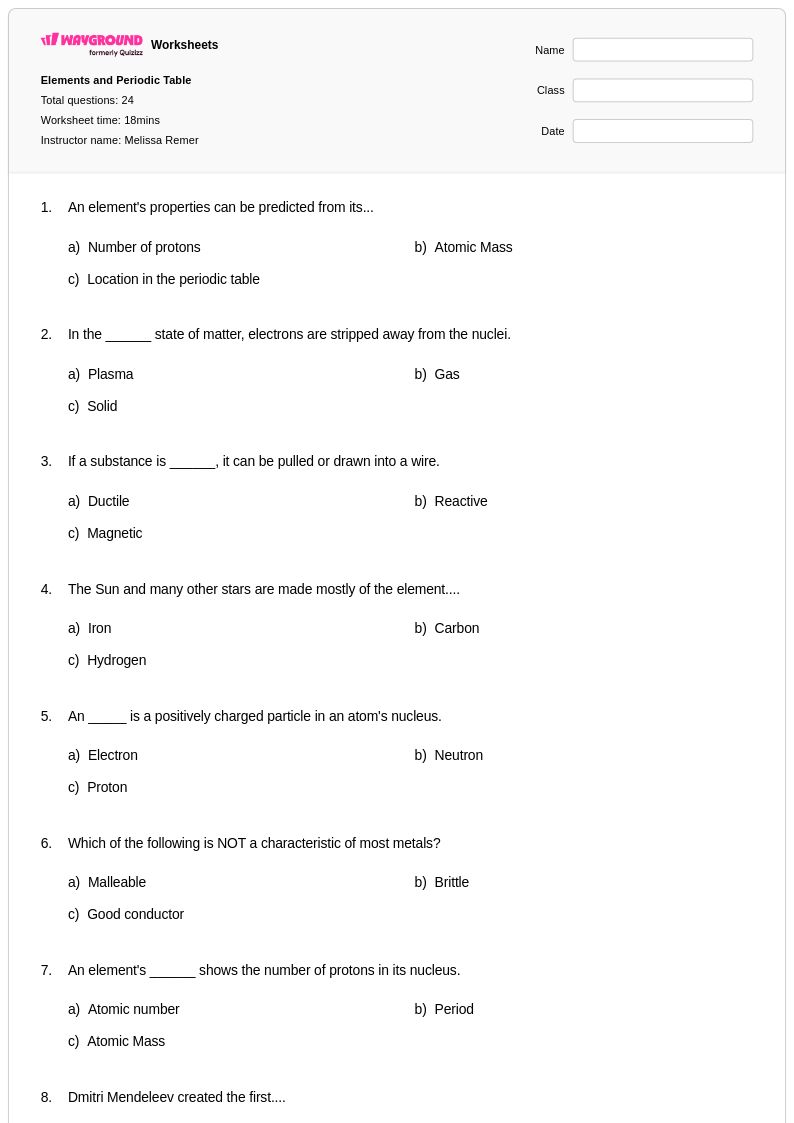
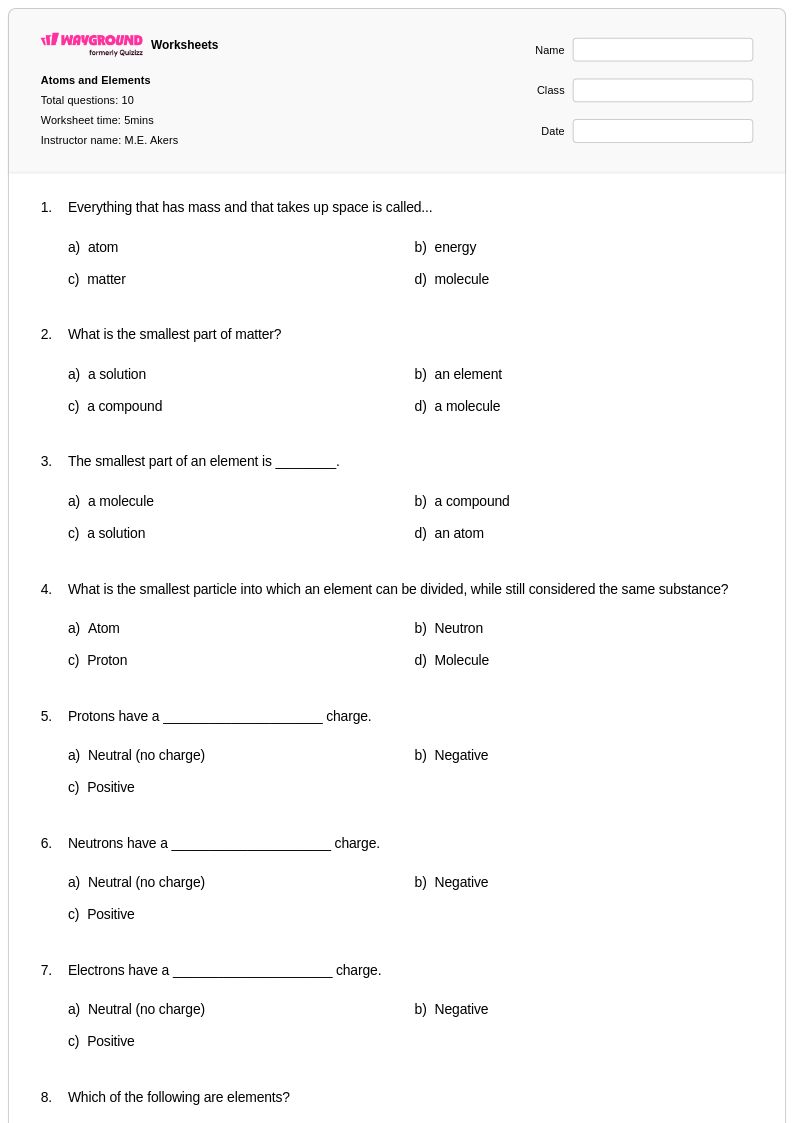
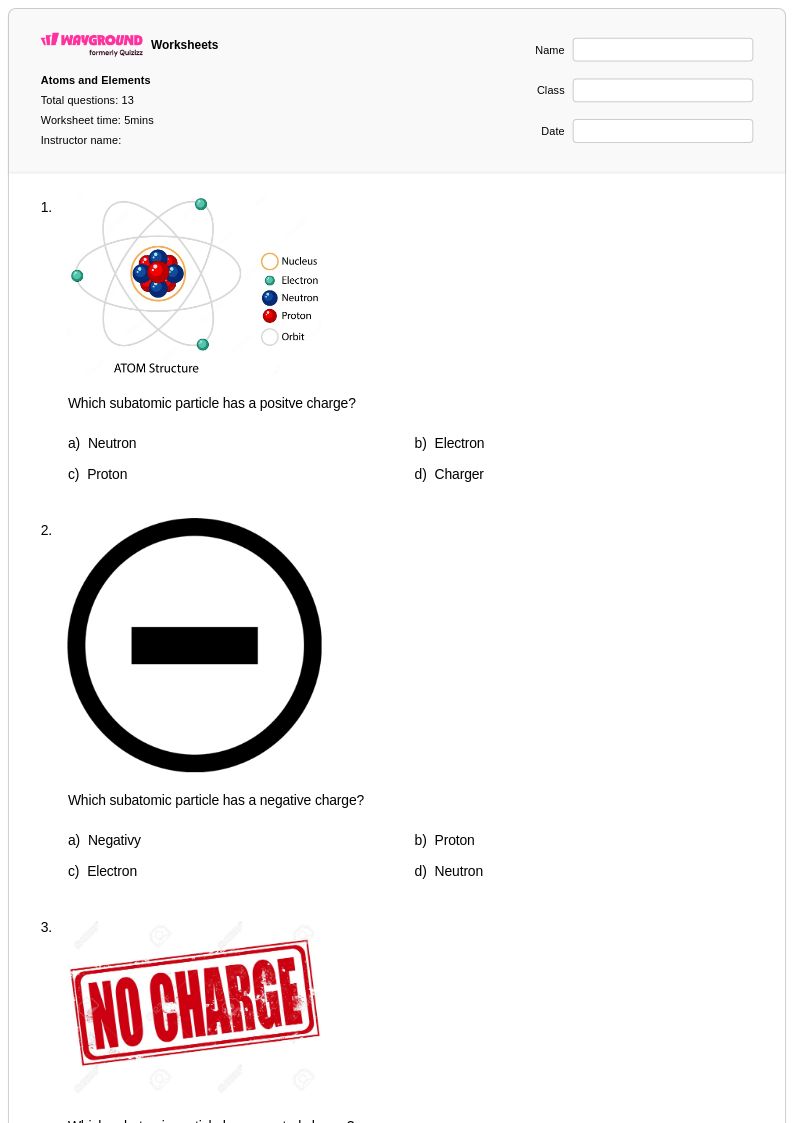
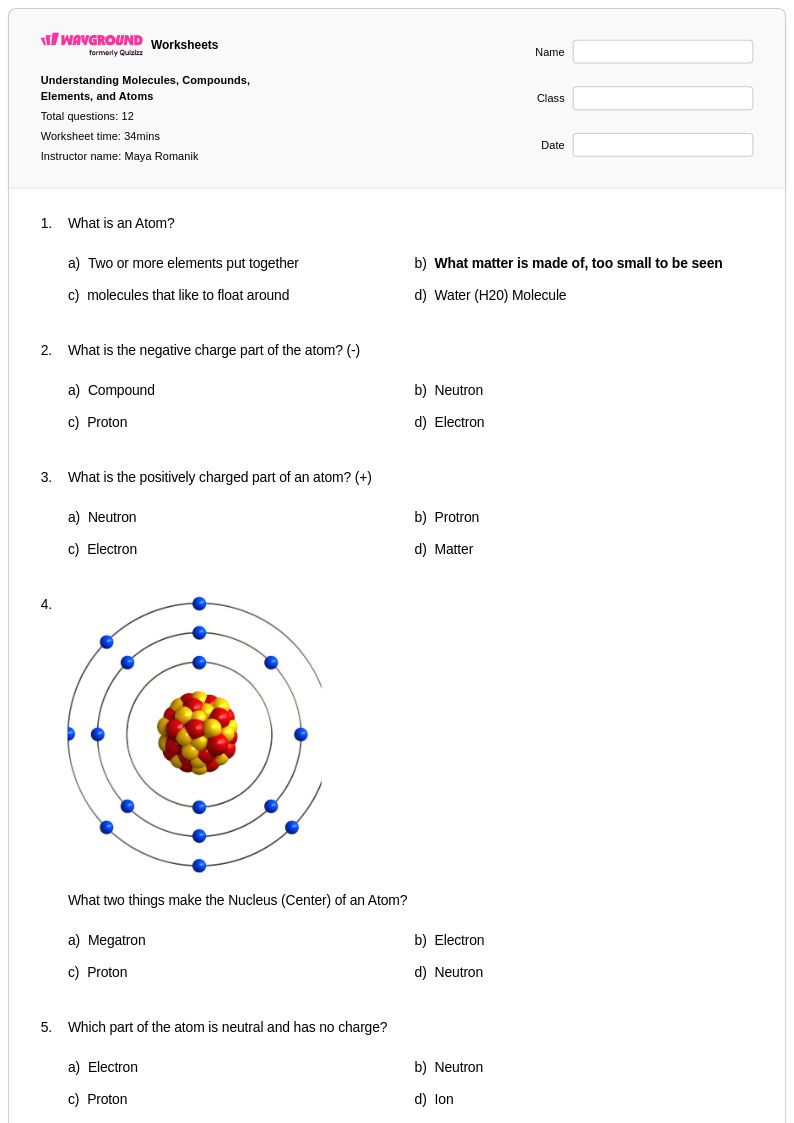
Elements worksheets for Class 5 students available through Wayground (formerly Quizizz) provide comprehensive practice opportunities for young learners to explore the fundamental building blocks of matter. These educational resources strengthen essential chemistry skills by introducing students to the periodic table, element symbols, and basic atomic properties through age-appropriate activities and practice problems. The worksheets feature diverse question formats that help students identify common elements, understand the difference between elements and compounds, and recognize how elements combine to form everyday materials. Each worksheet includes an answer key to support independent learning and comes in convenient pdf format, making these free printables accessible for both classroom instruction and home study reinforcement.
Wayground's extensive collection of teacher-created resources offers educators millions of chemistry worksheets specifically designed to support Class 5 element instruction across various learning objectives. The platform's robust search and filtering capabilities enable teachers to quickly locate materials aligned with curriculum standards while providing differentiation tools to meet diverse student needs. These customizable worksheets are available in both printable pdf formats and interactive digital versions, allowing educators to seamlessly integrate element practice into lesson planning, targeted remediation sessions, and enrichment activities. The comprehensive nature of these resources supports systematic skill development, from basic element recognition to more complex concepts about atomic structure, empowering teachers to create engaging chemistry experiences that build foundational scientific understanding in their students.
FAQs
How do I teach the periodic table and element properties to my students?
Start by grounding students in atomic structure before introducing periodic trends, since understanding protons, electrons, and neutrons helps explain why elements behave the way they do. Organize instruction around the table's groups and periods so students learn to predict properties like reactivity, electronegativity, and atomic radius rather than memorizing isolated facts. Connecting element behavior to real-world examples, such as why noble gases are inert or why alkali metals react violently with water, reinforces conceptual understanding and makes abstract chemistry tangible.
What worksheet exercises best help students practice identifying element properties and periodic trends?
Exercises that ask students to identify element characteristics from partial data, predict chemical behavior based on position in the periodic table, and apply atomic theory to unfamiliar scenarios are the most effective for building analytical chemistry skills. Practice problems focused on electron configurations, atomic structure diagrams, and periodic trend comparisons require students to actively apply knowledge rather than recall definitions. Elements worksheets on Wayground cover these practice types systematically, with answer keys that allow students to self-check and teachers to quickly assess comprehension.
What mistakes do students commonly make when learning about atomic structure and the periodic table?
A frequent misconception is confusing atomic number with atomic mass, which leads to errors when identifying elements or calculating neutron counts. Students also commonly struggle with electron configuration, particularly when filling subshells, and may incorrectly predict chemical bonding behavior as a result. Another persistent error is treating periodic trends as absolute rules rather than general patterns, which causes students to misapply concepts like ionization energy or electronegativity when comparing elements across periods and groups.
How can I use elements worksheets to differentiate instruction for students at different ability levels?
For students who need additional support, worksheets that scaffold from atomic structure basics to more complex periodic trend analysis allow gradual concept building without overwhelming foundational gaps. On Wayground, teachers can apply accommodations such as Read Aloud for students who benefit from audio support, reduced answer choices to lower cognitive load for struggling learners, and extended time settings configurable per student. These accommodations can be assigned individually while the rest of the class works under default settings, making differentiation seamless and unobtrusive.
How do I use Wayground's elements worksheets in my classroom?
Wayground's elements worksheets are available as printable PDFs for traditional classroom use and in digital formats for technology-integrated learning environments, giving teachers flexibility depending on their setup. The digital format allows teachers to host worksheets as a quiz on Wayground, enabling students to complete work online with immediate feedback. All worksheets include complete answer keys, making them practical for independent practice, formative assessment, homework, or targeted remediation of challenging chemistry concepts.
How do I assess whether my students understand element properties and periodic trends?
Effective assessment goes beyond asking students to name elements and should require them to predict behavior, explain periodic trends, or interpret atomic structure data. Look for whether students can apply electron configuration rules correctly, distinguish between metals, nonmetals, and metalloids based on properties, and explain why reactivity changes across a period or down a group. Common error patterns, such as misidentifying valence electrons or confusing ionization energy trends, are reliable indicators of where instruction needs to be reinforced.