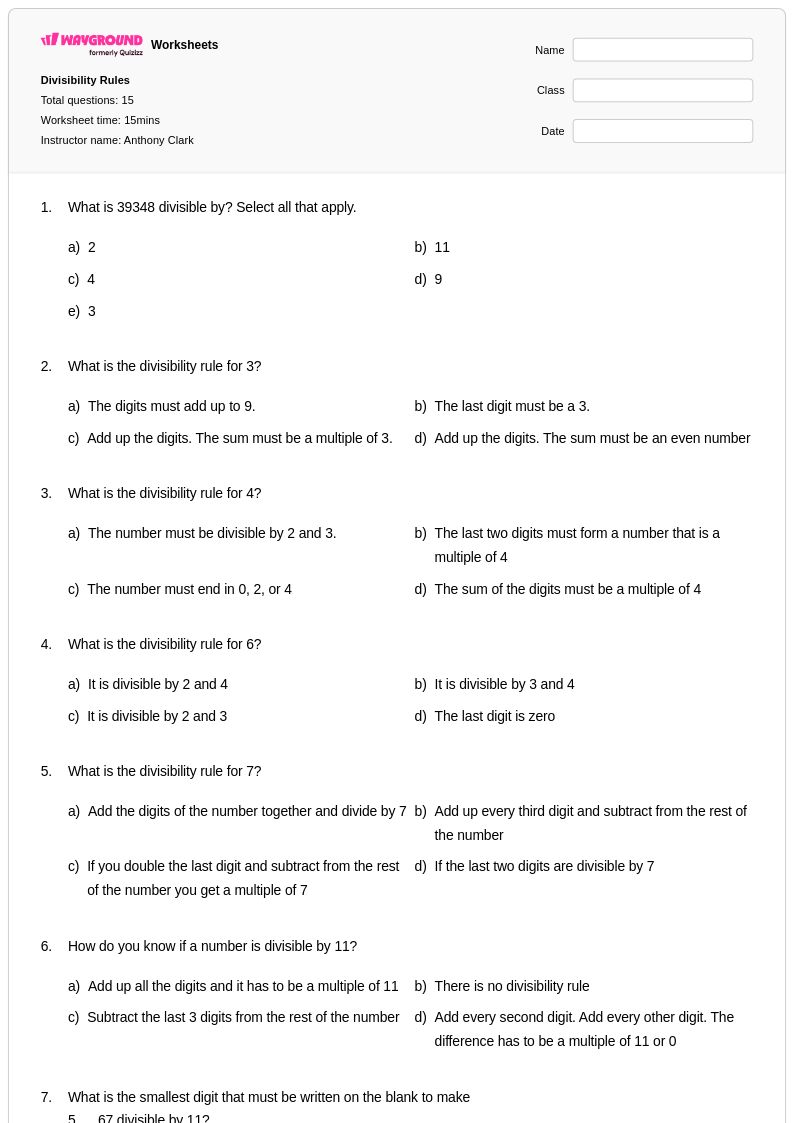
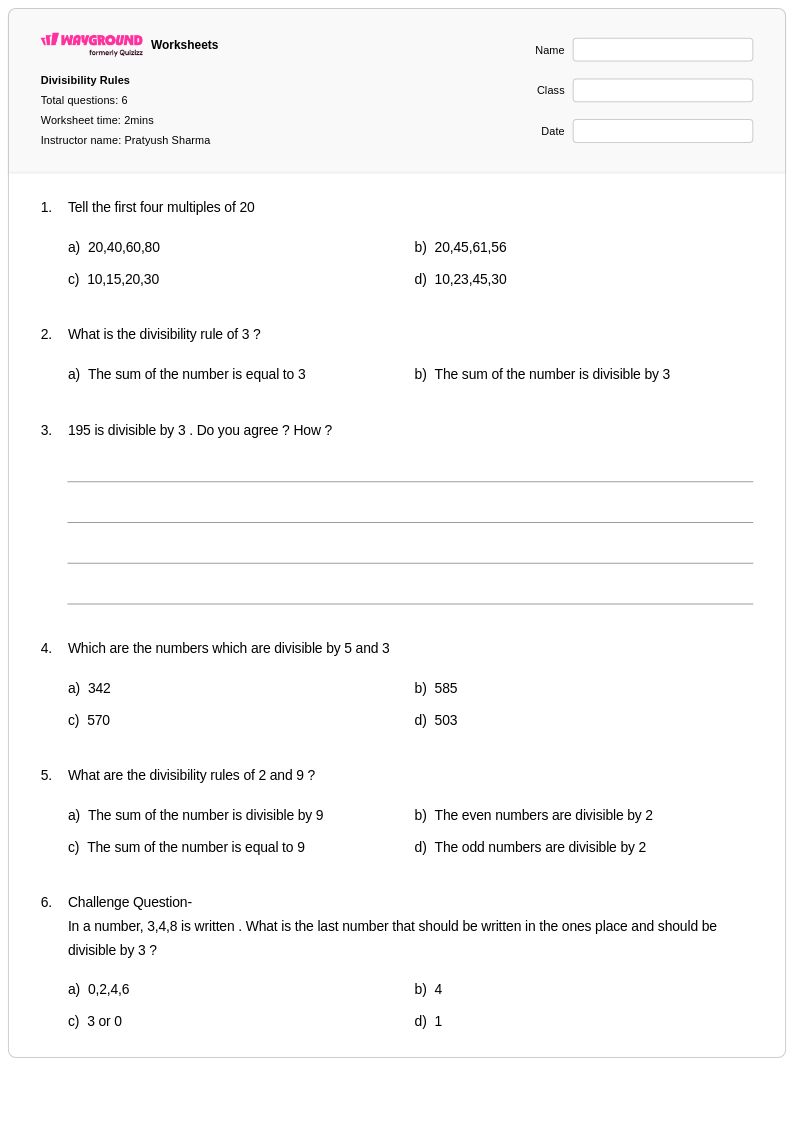
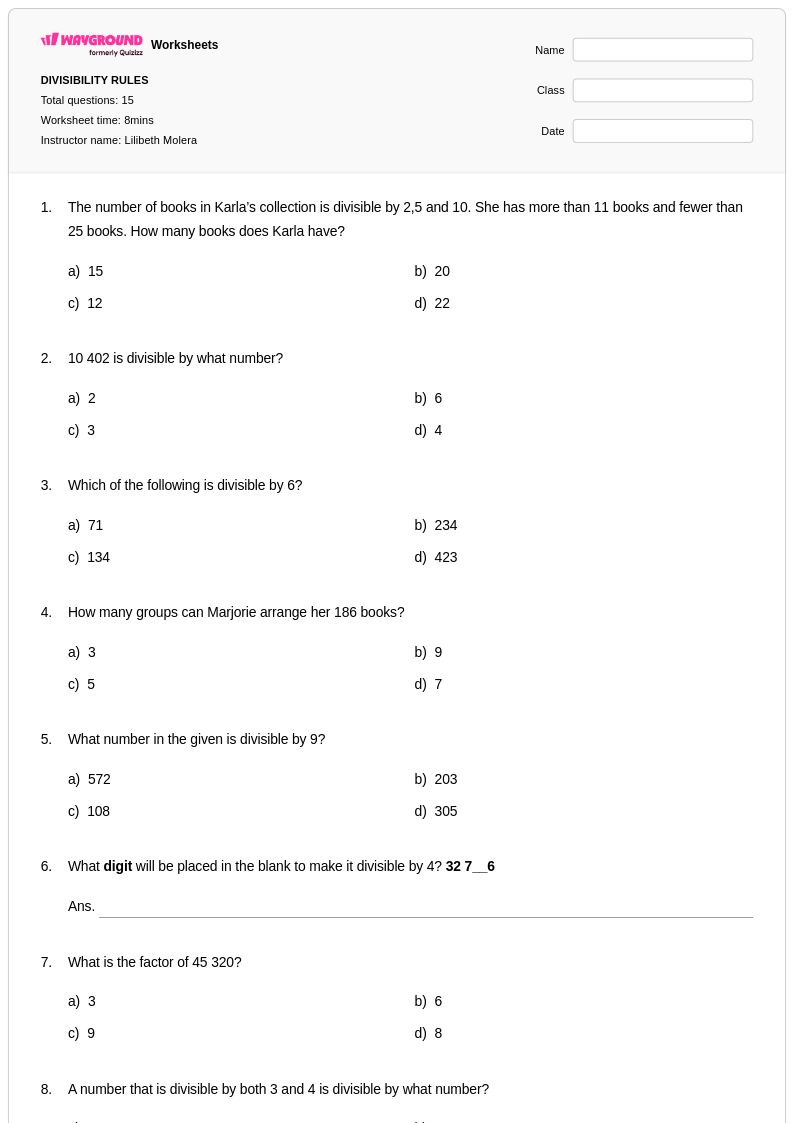
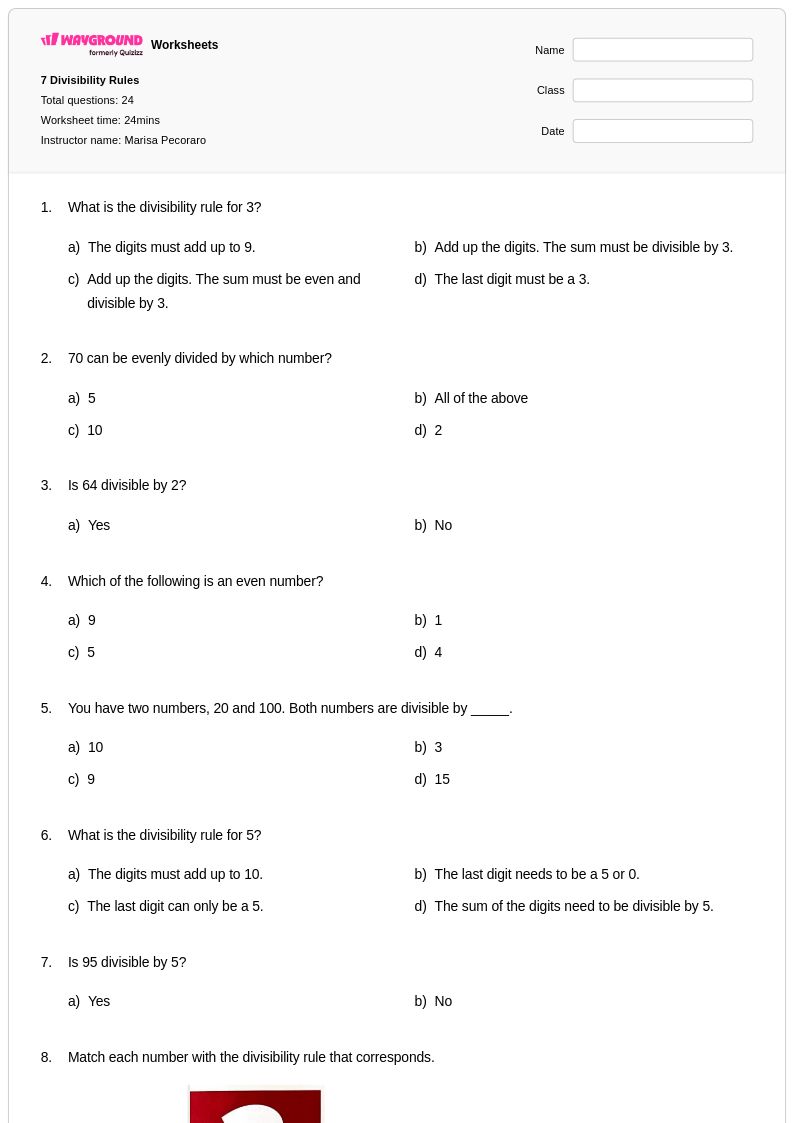
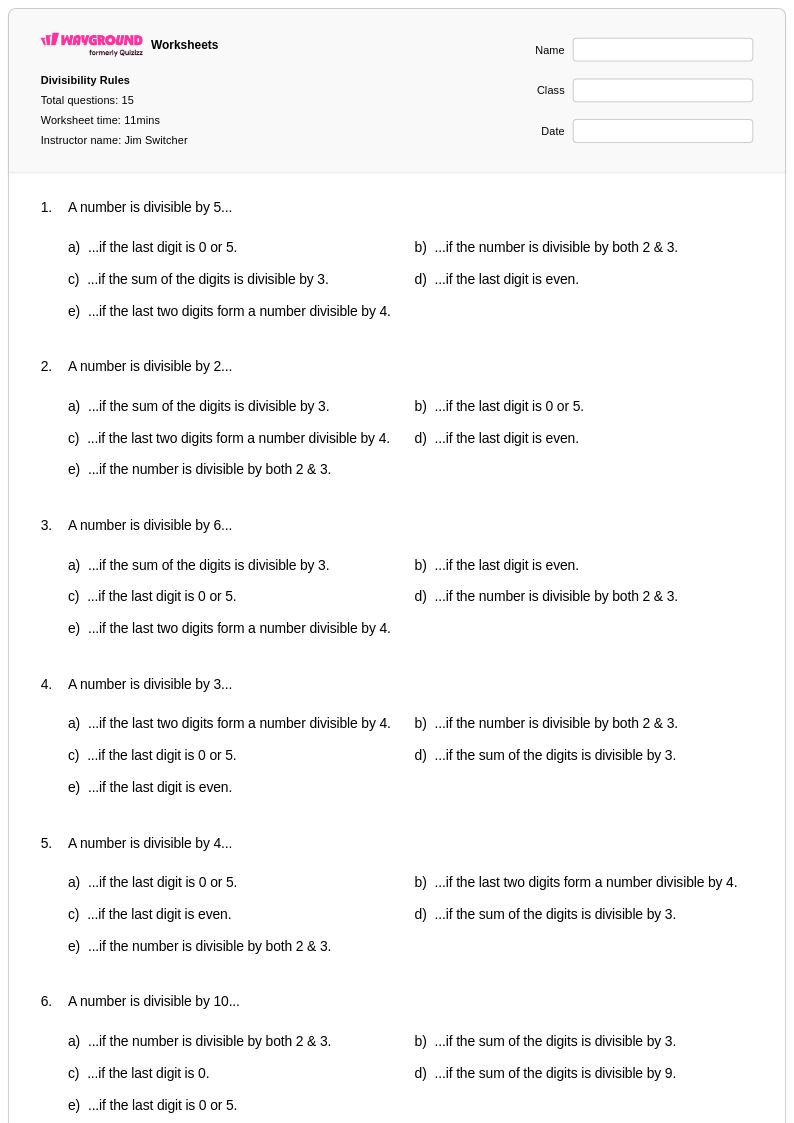
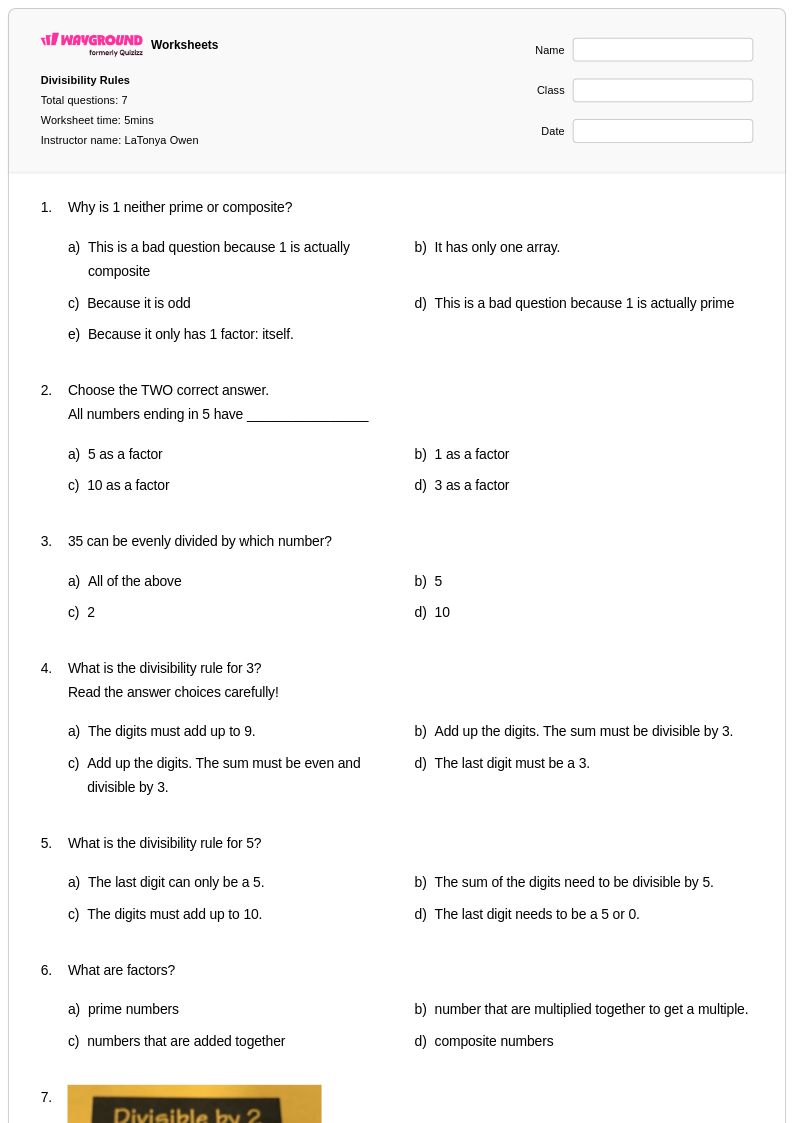
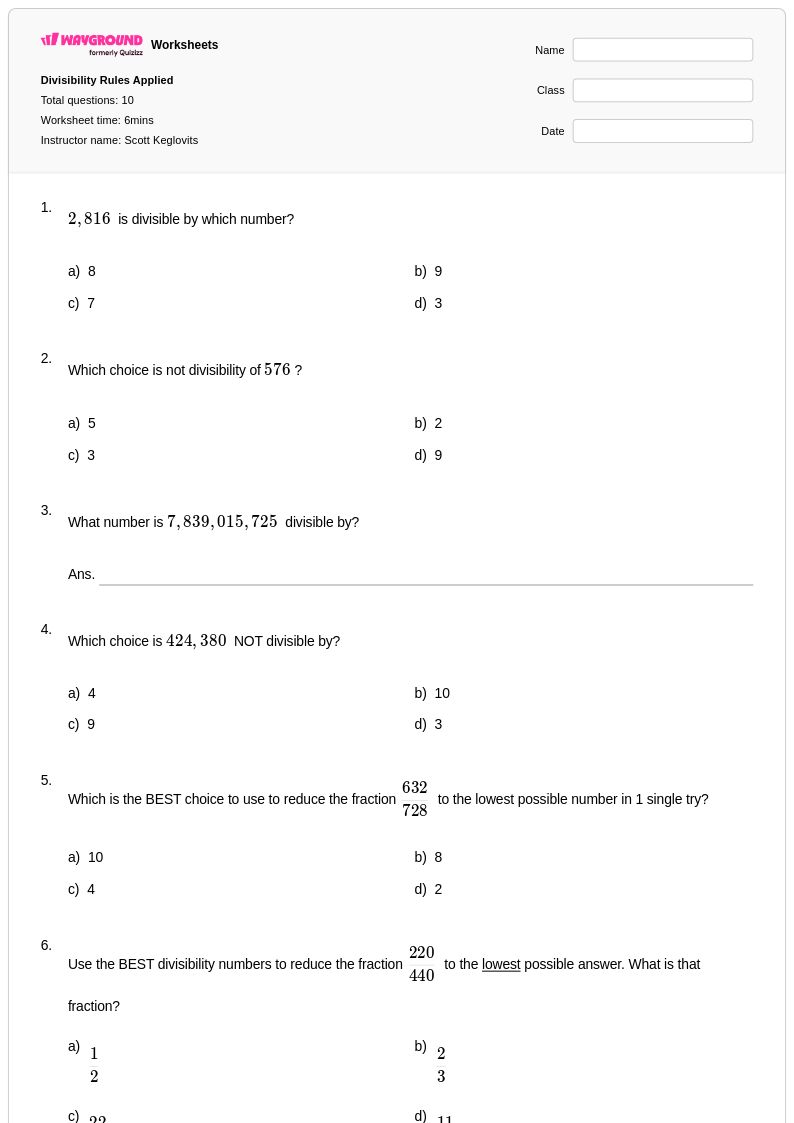
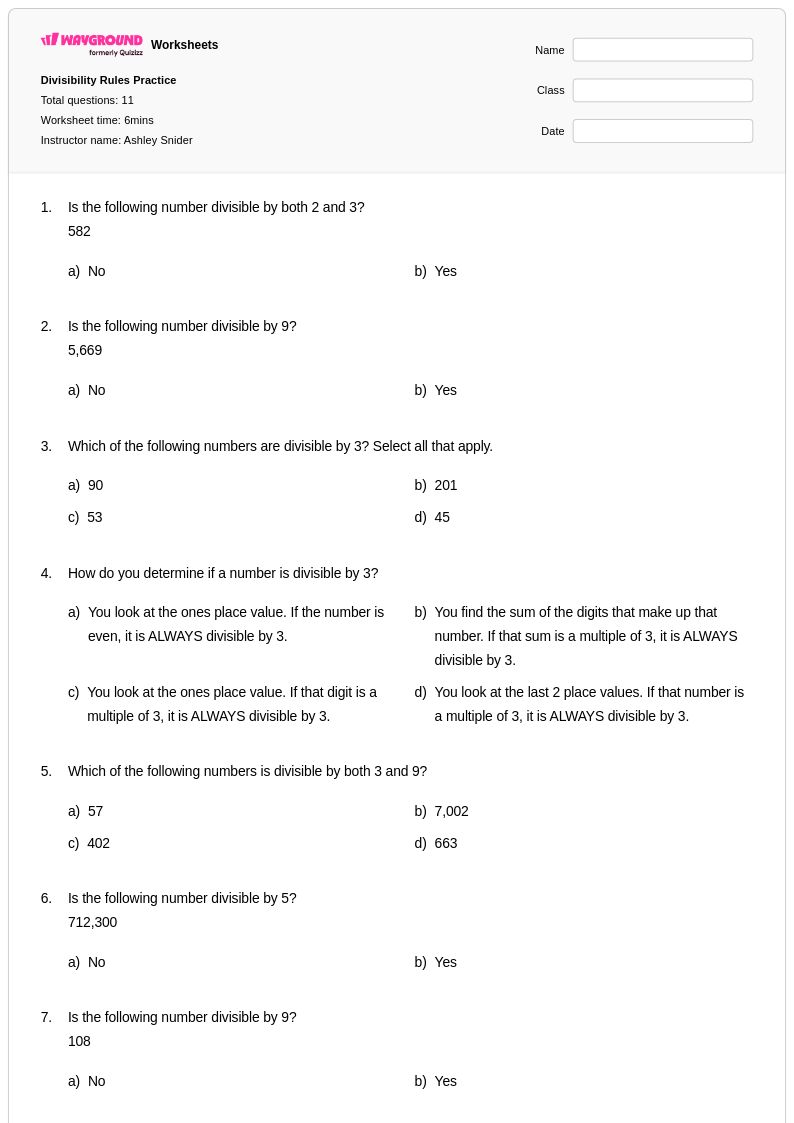
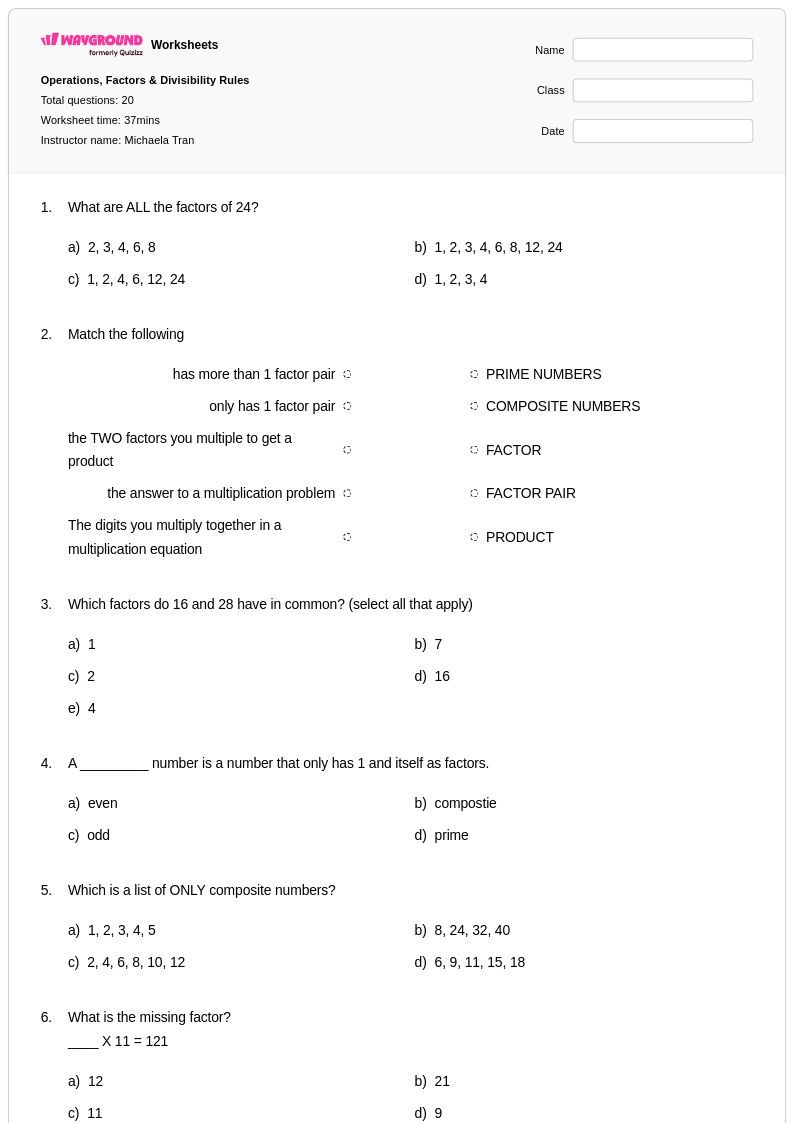
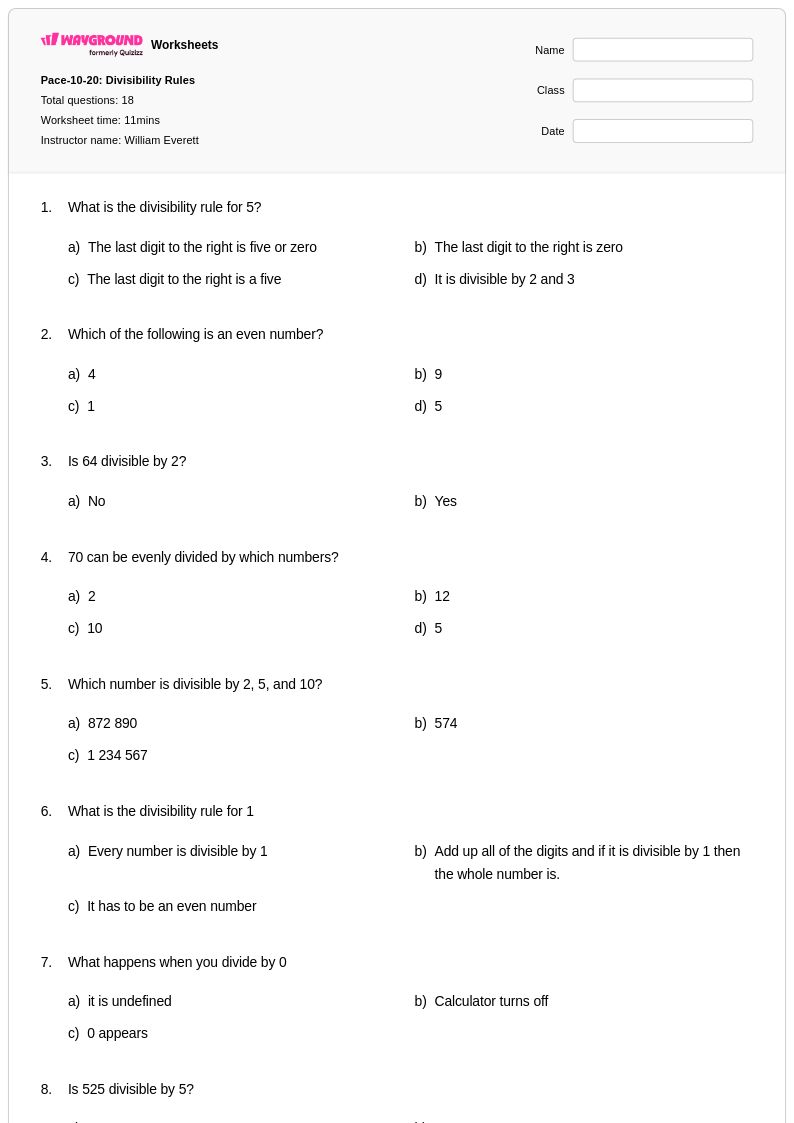
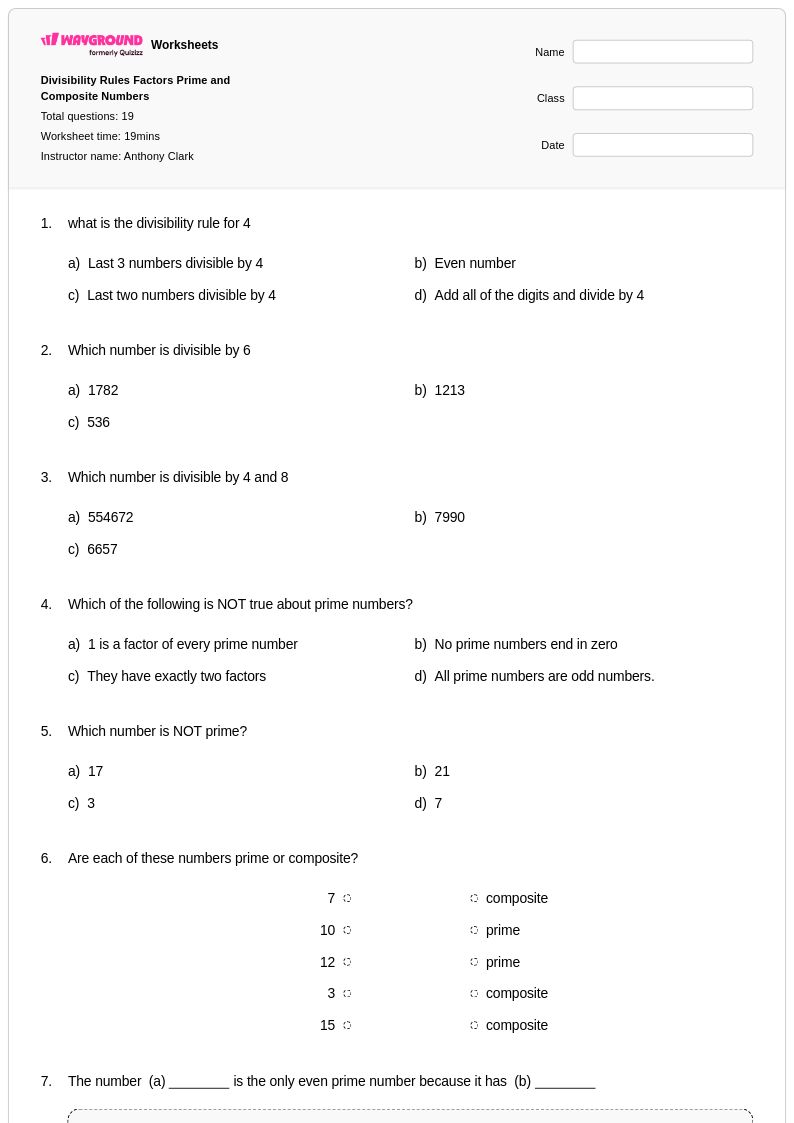
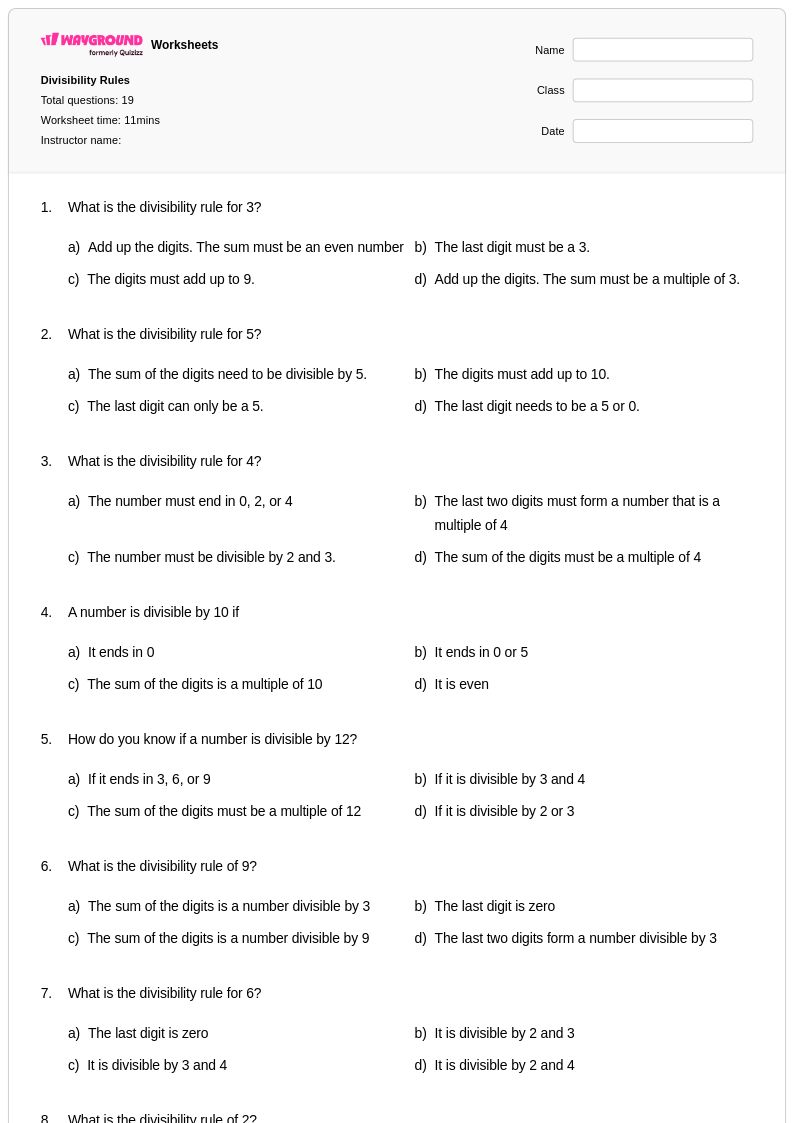
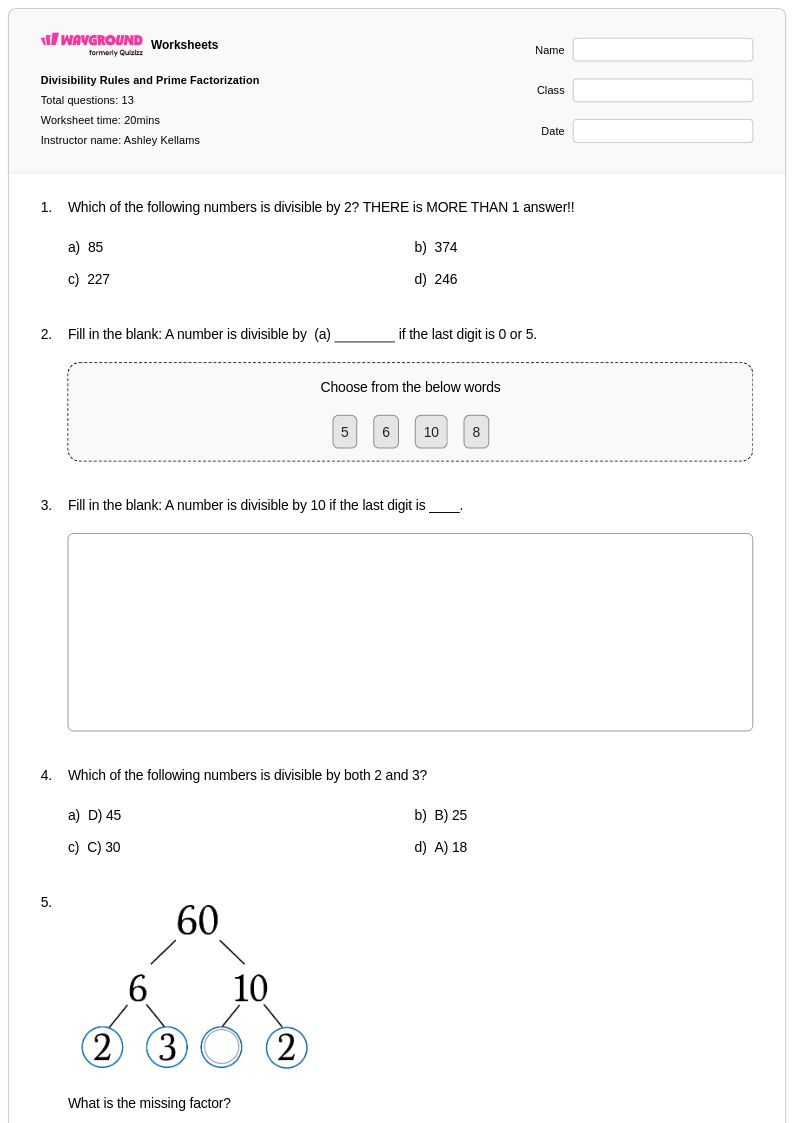
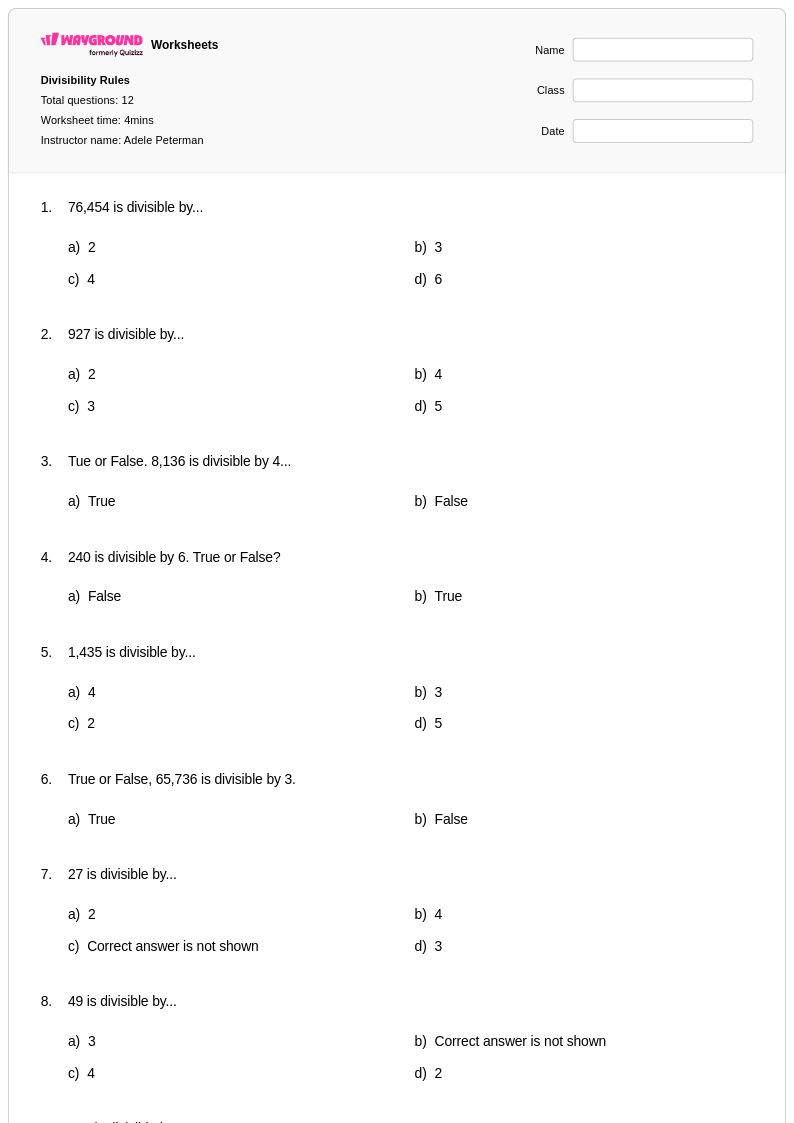
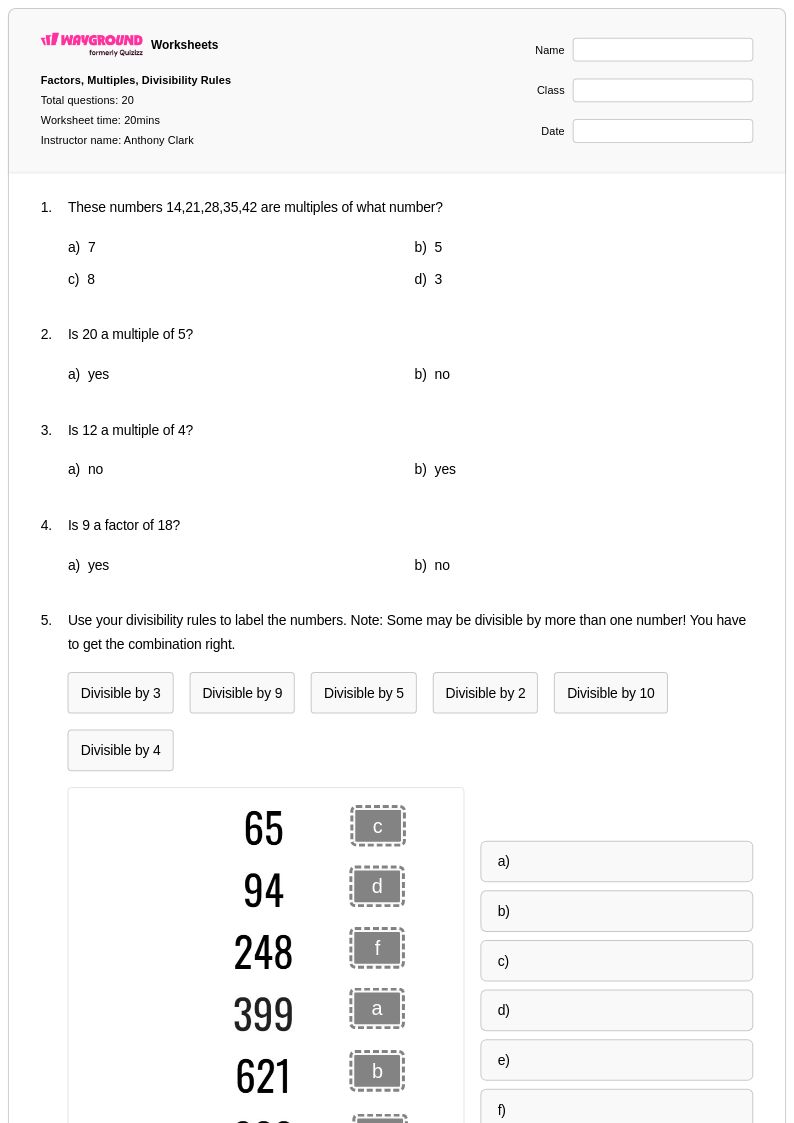
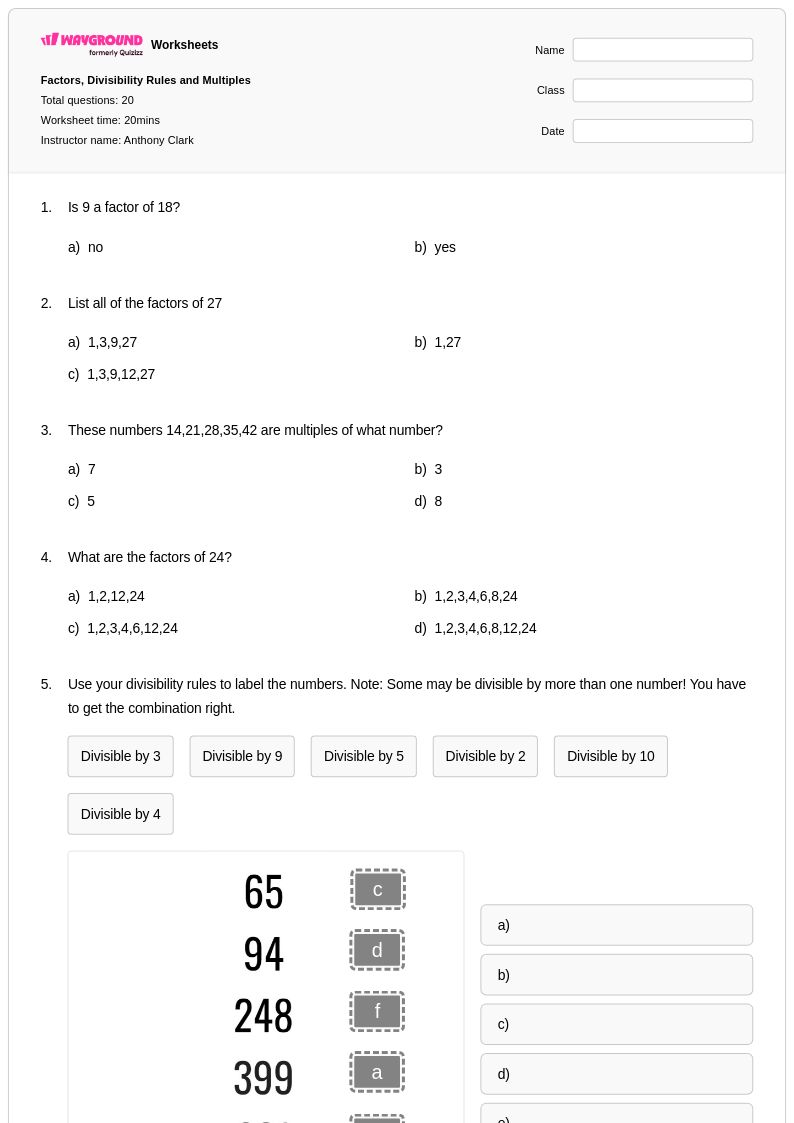
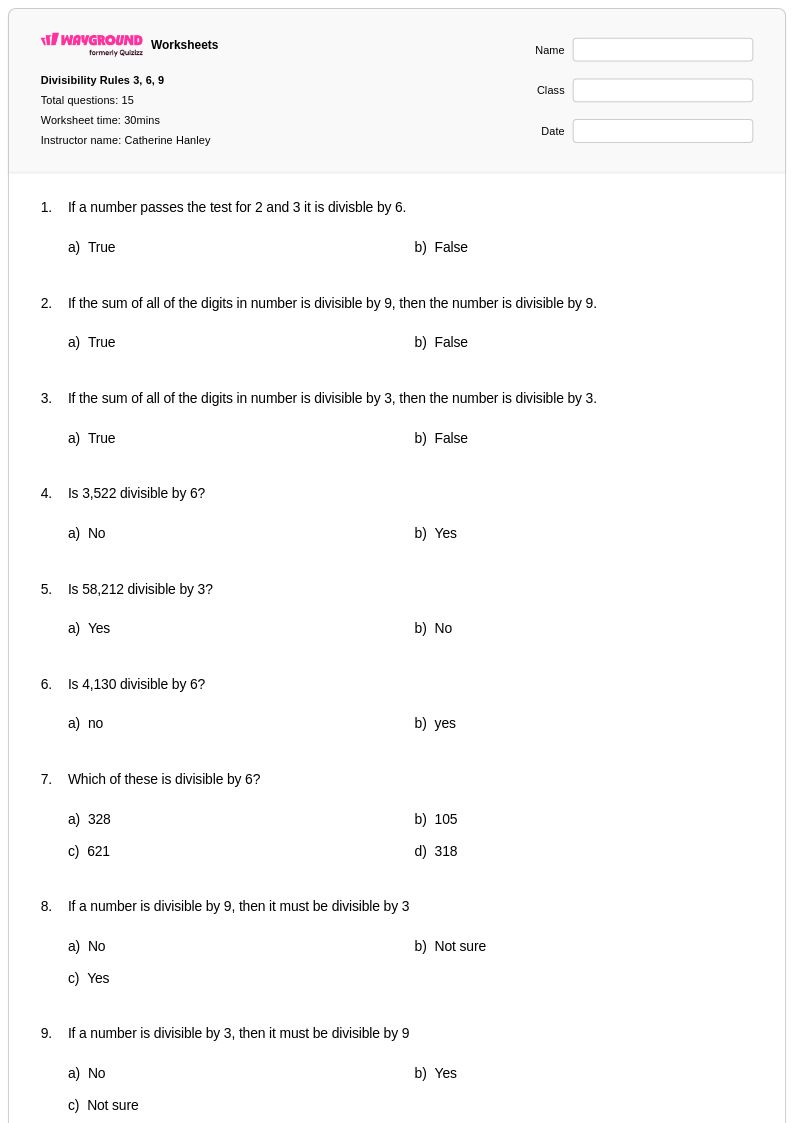
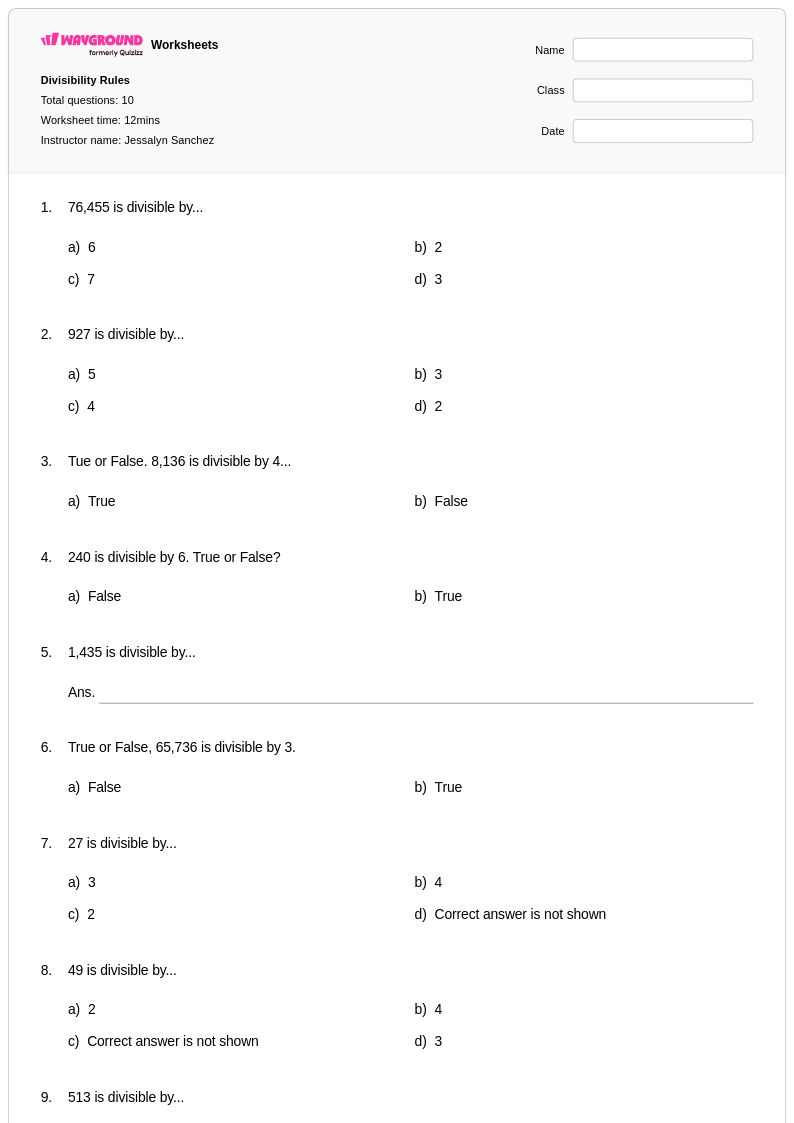
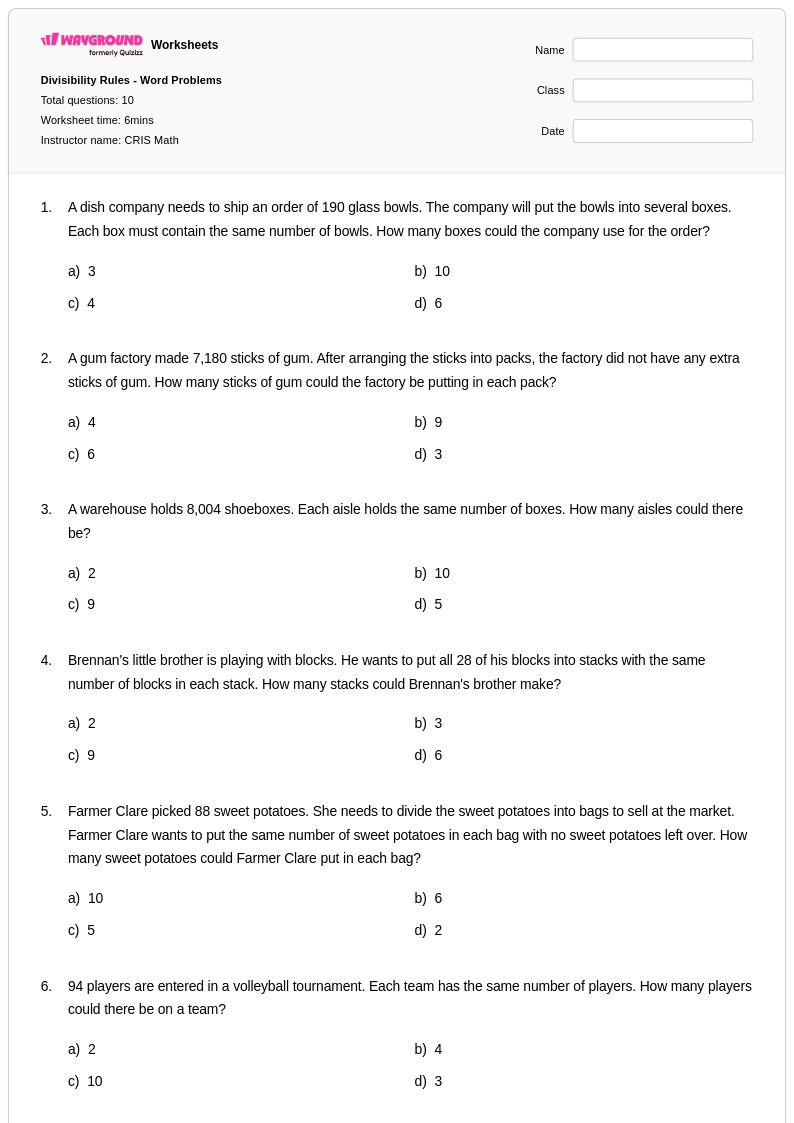
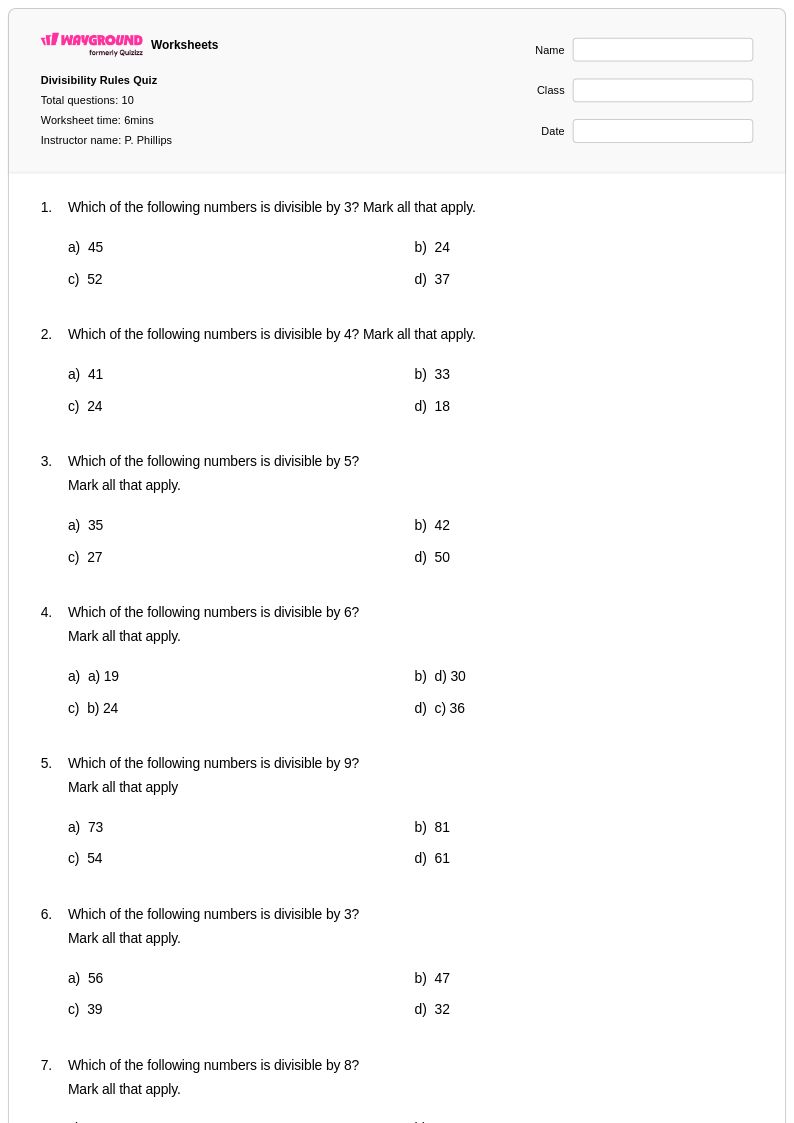
Master divisibility rules with Wayground's comprehensive collection of free worksheets and printables, featuring practice problems and answer keys to help students quickly determine if numbers are divisible without performing actual division calculations.
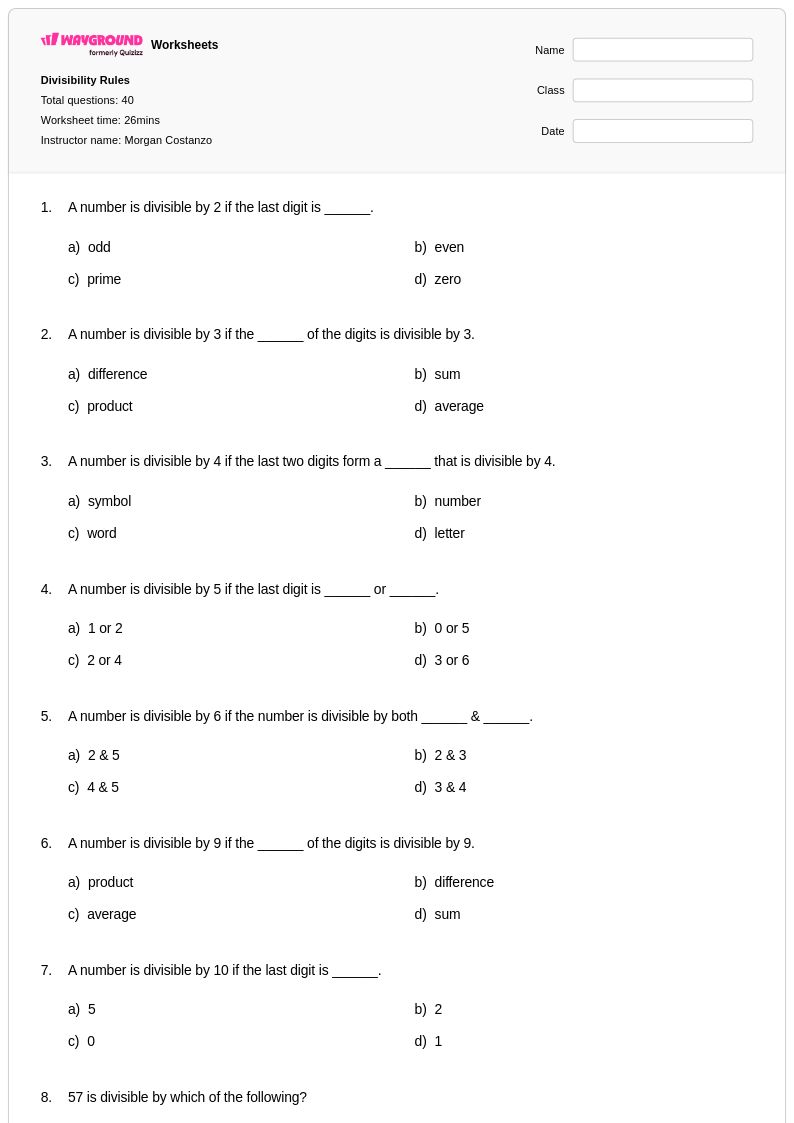
Divisibility rules worksheets available through Wayground (formerly Quizizz) provide students with structured practice in mastering essential mathematical shortcuts that determine whether numbers can be divided evenly without performing lengthy calculations. These comprehensive resources strengthen critical number sense skills by teaching students to recognize patterns and apply specific tests for divisibility by 2, 3, 4, 5, 6, 8, 9, 10, and other key numbers. Each worksheet includes carefully crafted practice problems that progress from basic single-digit divisors to more complex multi-step applications, complete with detailed answer keys that support independent learning and self-assessment. The free printable materials cover fundamental concepts like identifying even and odd numbers, applying the sum-of-digits rule for divisibility by 3 and 9, and using place value understanding to test divisibility by powers of 10.
Wayground (formerly Quizizz) supports mathematics educators with an extensive collection of teacher-created divisibility rules resources drawn from millions of high-quality materials that can be easily located through advanced search and filtering capabilities. Teachers benefit from standards-aligned content that connects divisibility concepts to broader mathematical reasoning skills, while built-in differentiation tools allow for customized instruction that meets diverse student needs within the same classroom. The platform's flexible format options include both printable pdf versions for traditional paper-and-pencil practice and interactive digital worksheets that provide immediate feedback, making these resources invaluable for lesson planning, targeted remediation of computational weaknesses, enrichment activities for advanced learners, and ongoing skill reinforcement across various mathematical contexts.
FAQs
How do I teach divisibility rules effectively?
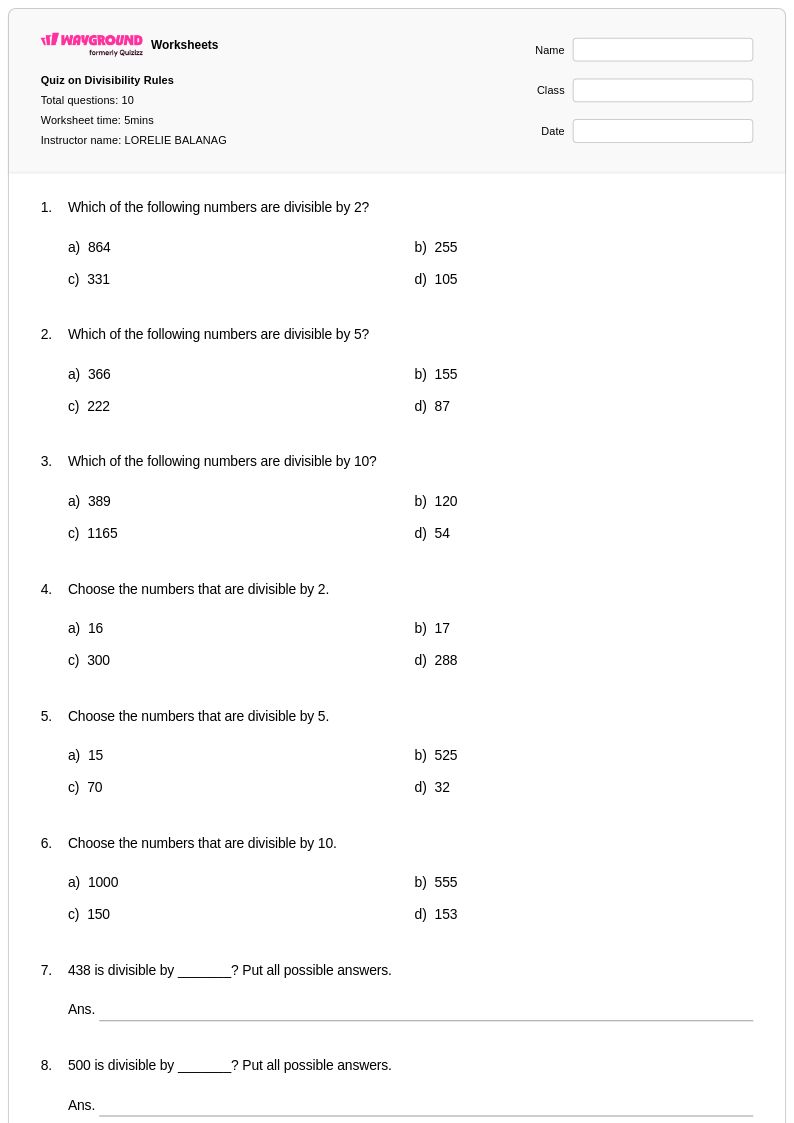
Start with the rules students can see immediately — divisibility by 2, 5, and 10 — because the patterns live in the last digit and students can verify them fast. Once those click, introduce the sum-of-digits rules for 3 and 9, which require a different kind of thinking. The key is connecting each rule to place value rather than presenting it as a trick to memorize: when students understand *why* a number divisible by 10 always ends in zero, the rule sticks.
What exercises help students practice divisibility rules?
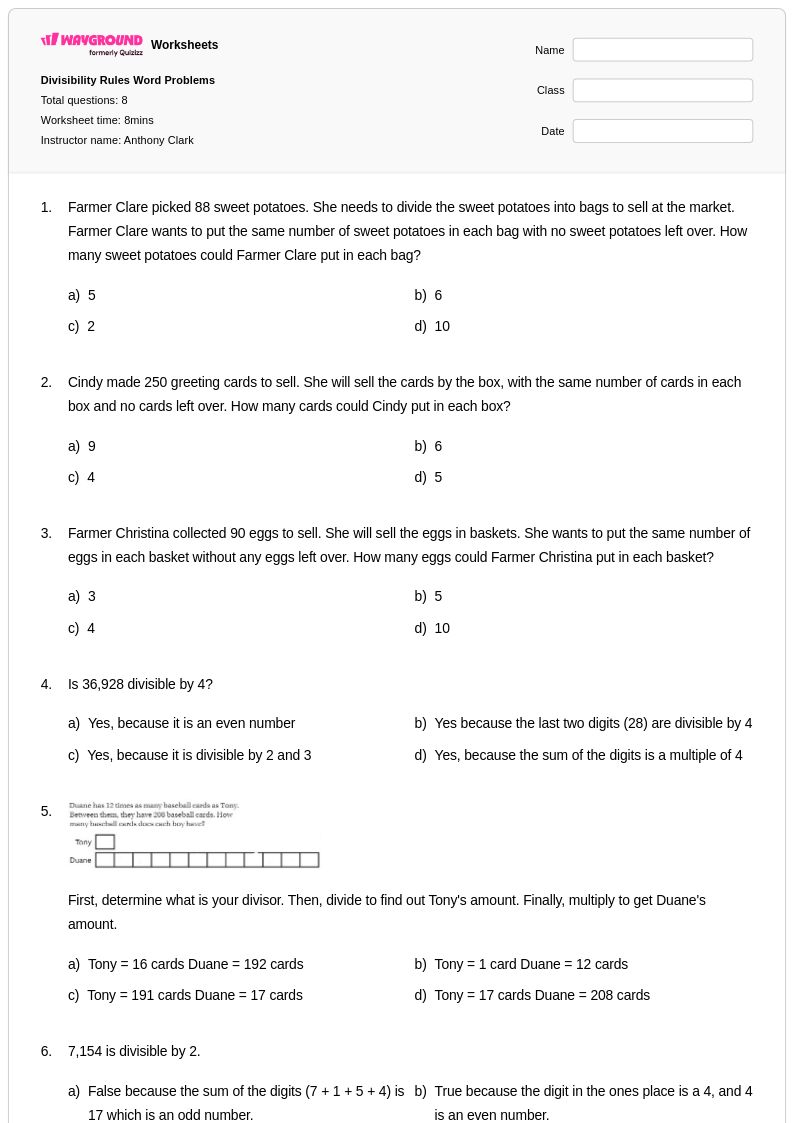
The most effective practice moves through three stages: identifying whether a single rule applies (is 84 divisible by 4?), sorting a set of numbers by multiple rules at once, and applying rules to solve a real problem like finding common factors. Wayground's divisibility rules worksheets are structured to progress from basic single-digit divisors to multi-step applications, so students build confidence before the problems get harder.
What mistakes do students commonly make with divisibility rules?
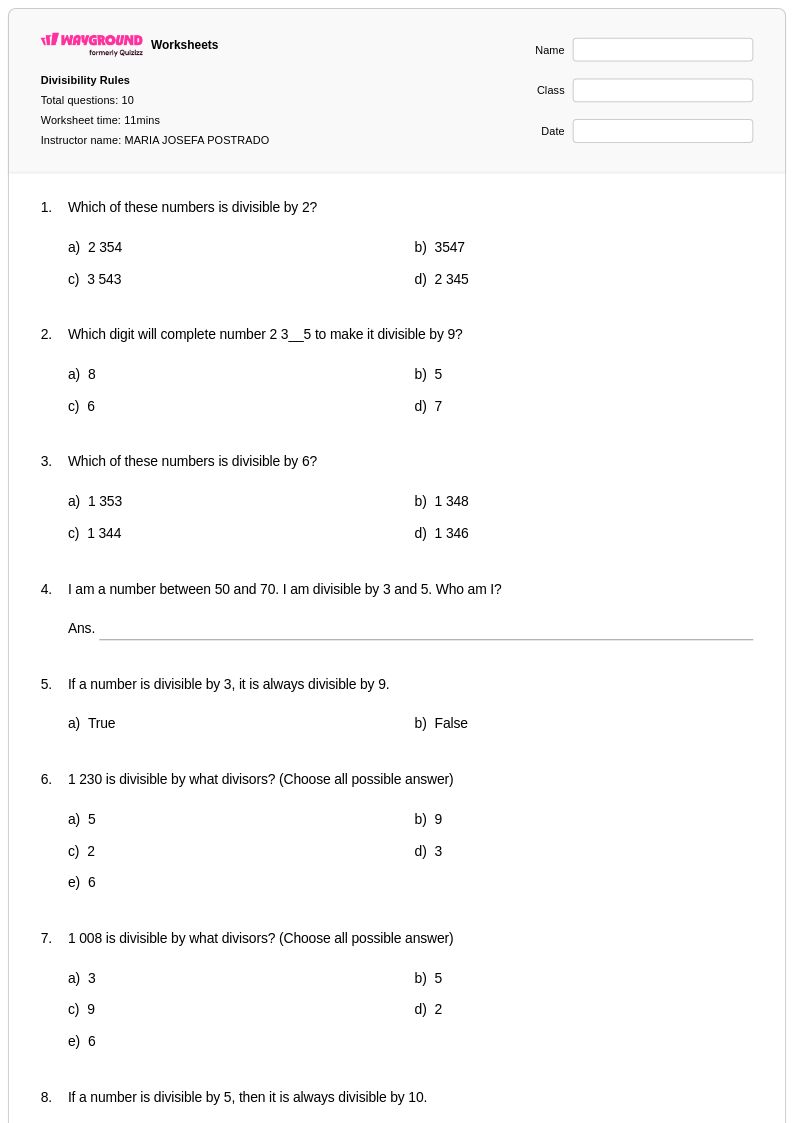
Three errors come up repeatedly. First, students confuse the rules for 3 and 9 — they know to add the digits but forget that divisibility by 9 requires the sum to be a multiple of 9, not just 3. Second, they misapply the rule for 4, checking only the last digit instead of the last two digits. Third, they treat the rules as isolated facts rather than tools they can combine, so they struggle when a problem asks whether a number is divisible by 6 (which requires both the rule for 2 and the rule for 3).
How do I use Wayground's divisibility rules worksheets in my class?
You can run these as a digital quiz hosted on Wayground — students submit answers online and get immediate feedback — or download the PDF and assign it on paper. Every worksheet includes a complete answer key, so paper submissions are easy to review. If you go the printable route, the Wayground for Teachers app lets you scan or capture student work directly for grading, which saves time when you're working through a whole class set.
How do divisibility rules fit into the Common Core math progression?
Common Core builds toward divisibility through its emphasis on factors, multiples, and place value in the upper elementary grades. Students are expected to find factor pairs and recognize multiples before they're asked to reason about divisibility patterns — so divisibility rules land naturally as a shortcut that formalizes what students already know about how numbers are structured. From there, the concept feeds directly into work with fractions (simplifying by finding common factors) and, later, prime factorization.
How can I differentiate divisibility rules practice for mixed-ability classes?
For students who are still shaky on the concept, Wayground's reduced answer choices accommodation lowers the cognitive load so they can focus on applying the rule rather than managing too many options at once. For students with reading challenges, the Read Aloud feature ensures the problem text isn't a barrier to demonstrating number sense. At the worksheet level, you can also generate an alternate version with a larger font or a dyslexia-friendly font — same problems, adjusted presentation — without creating a separate assignment from scratch.