Free Printable Division As Repeated Subtraction Worksheets for Kindergarten
Wayground's free kindergarten division as repeated subtraction worksheets and printables help young learners understand basic division concepts through hands-on practice problems with complete answer keys.
Explore printable Division As Repeated Subtraction worksheets for Kindergarten
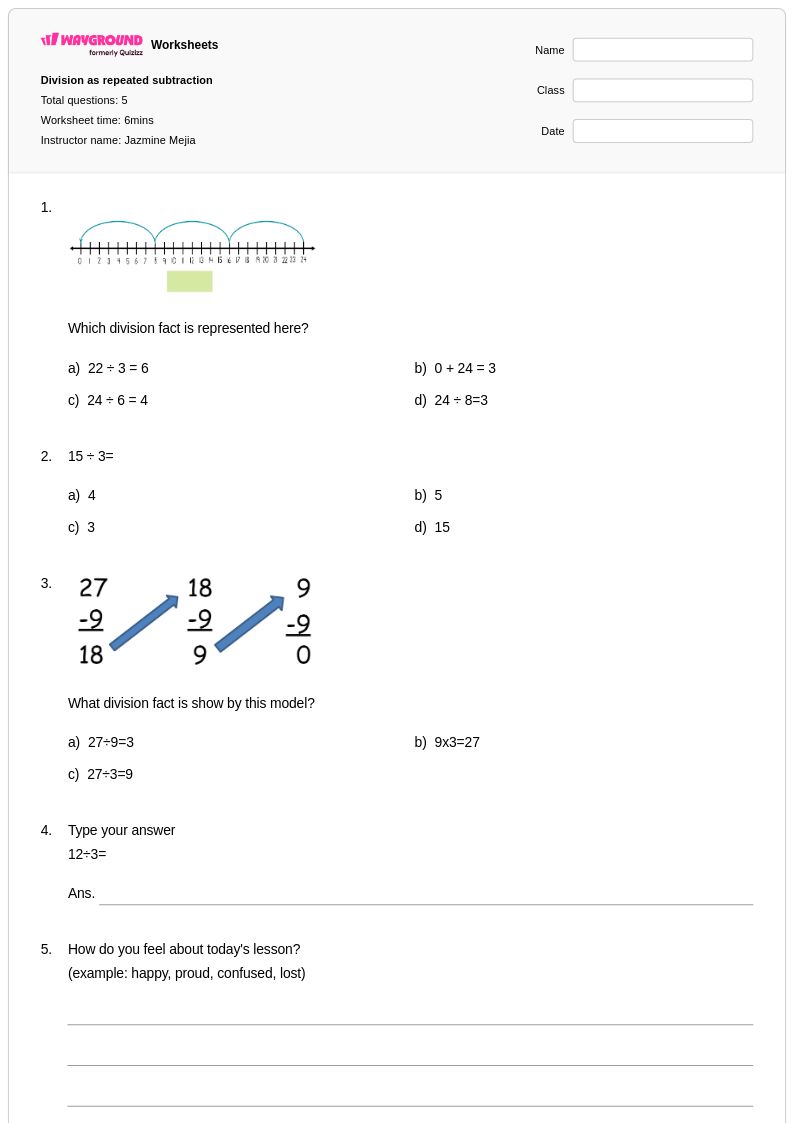
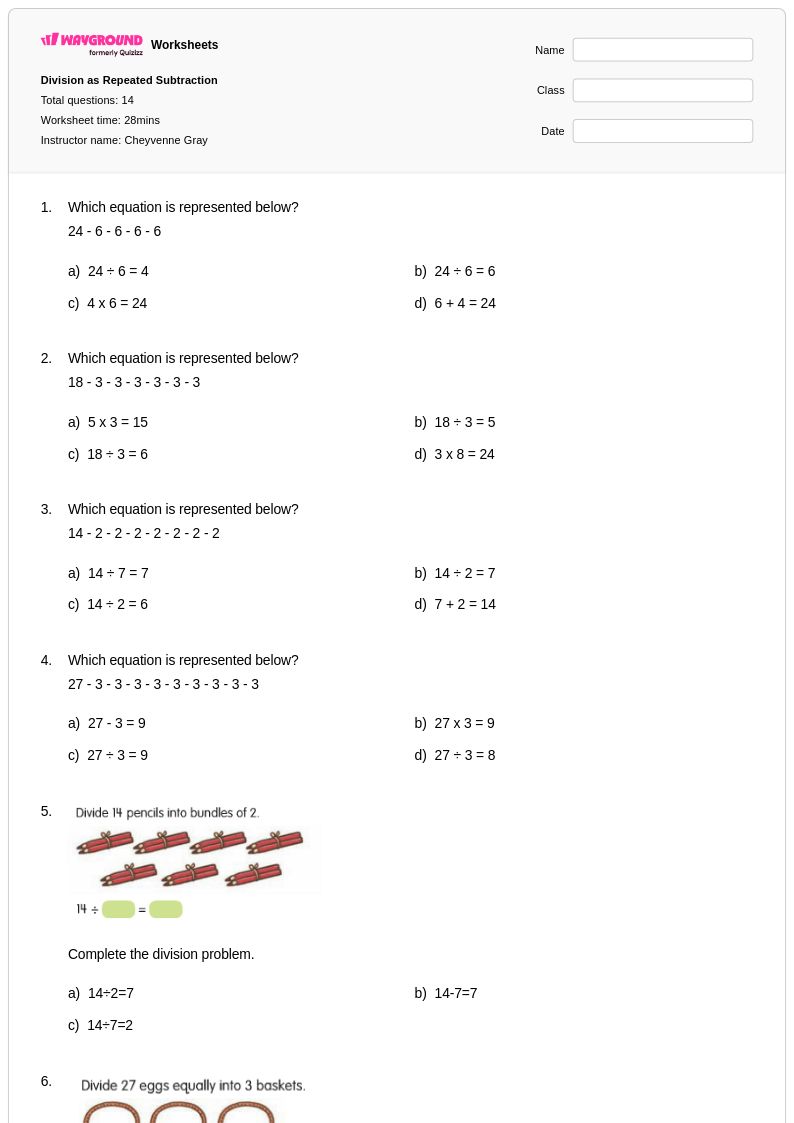
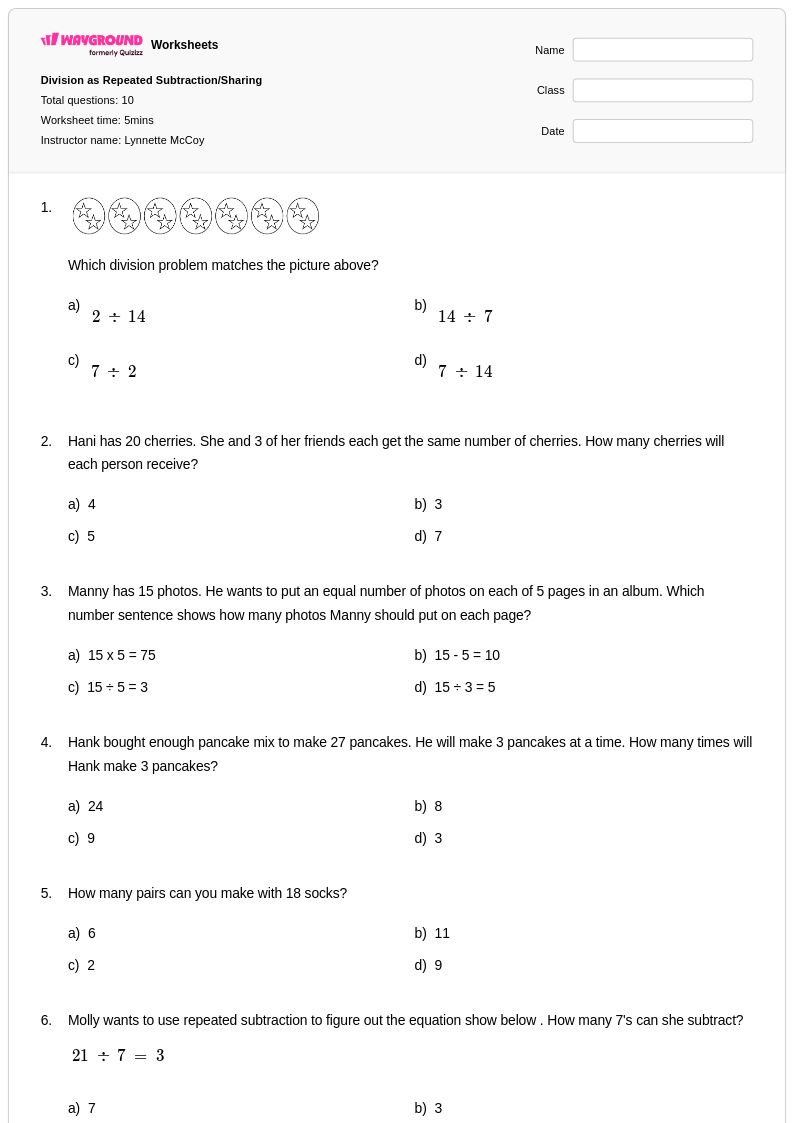
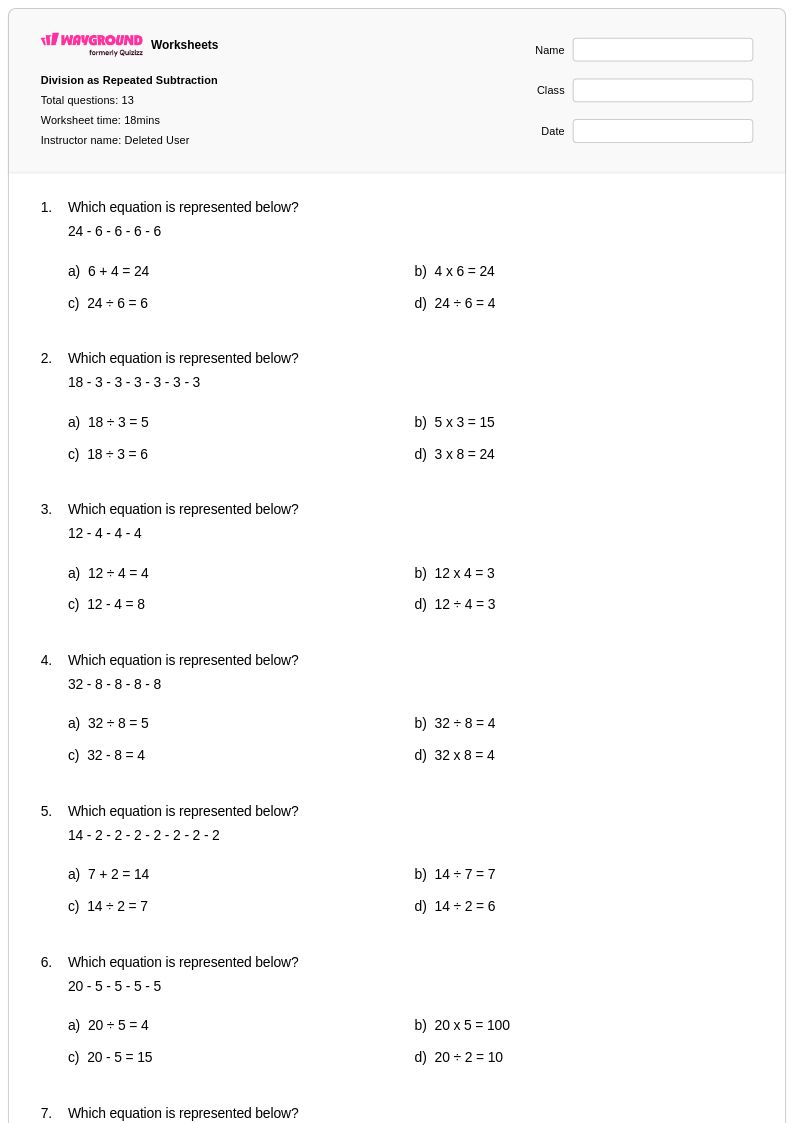
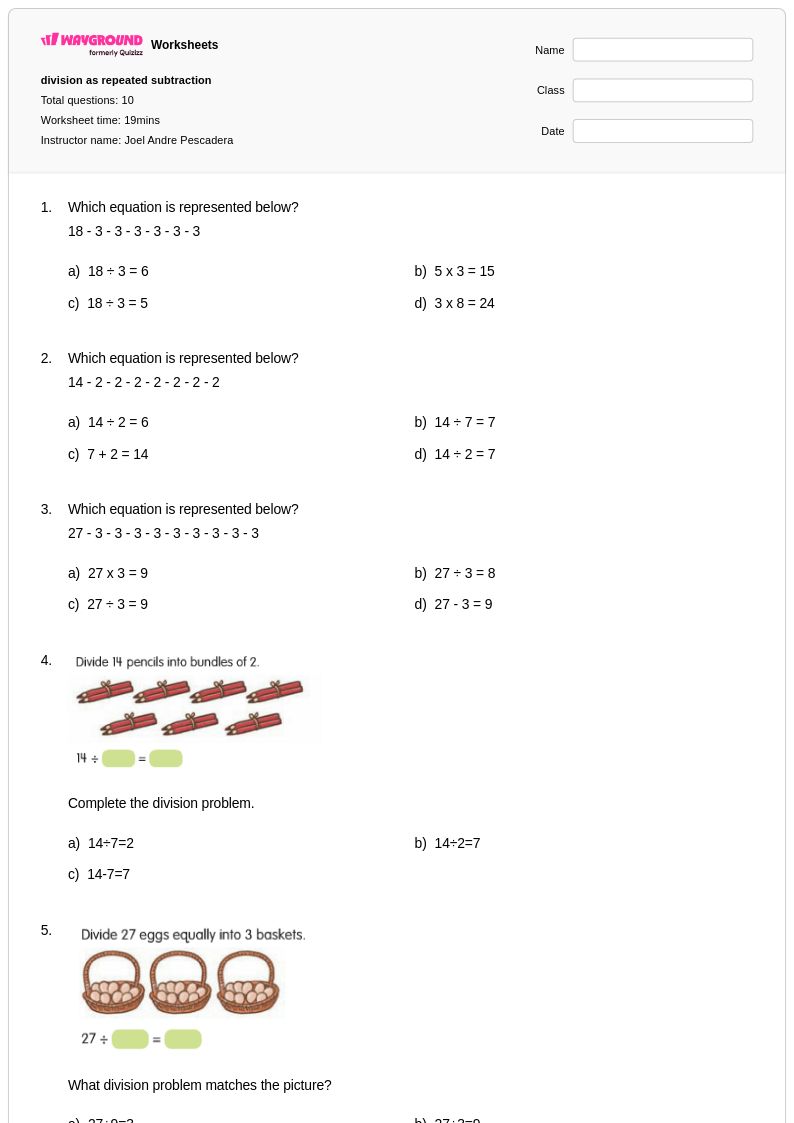
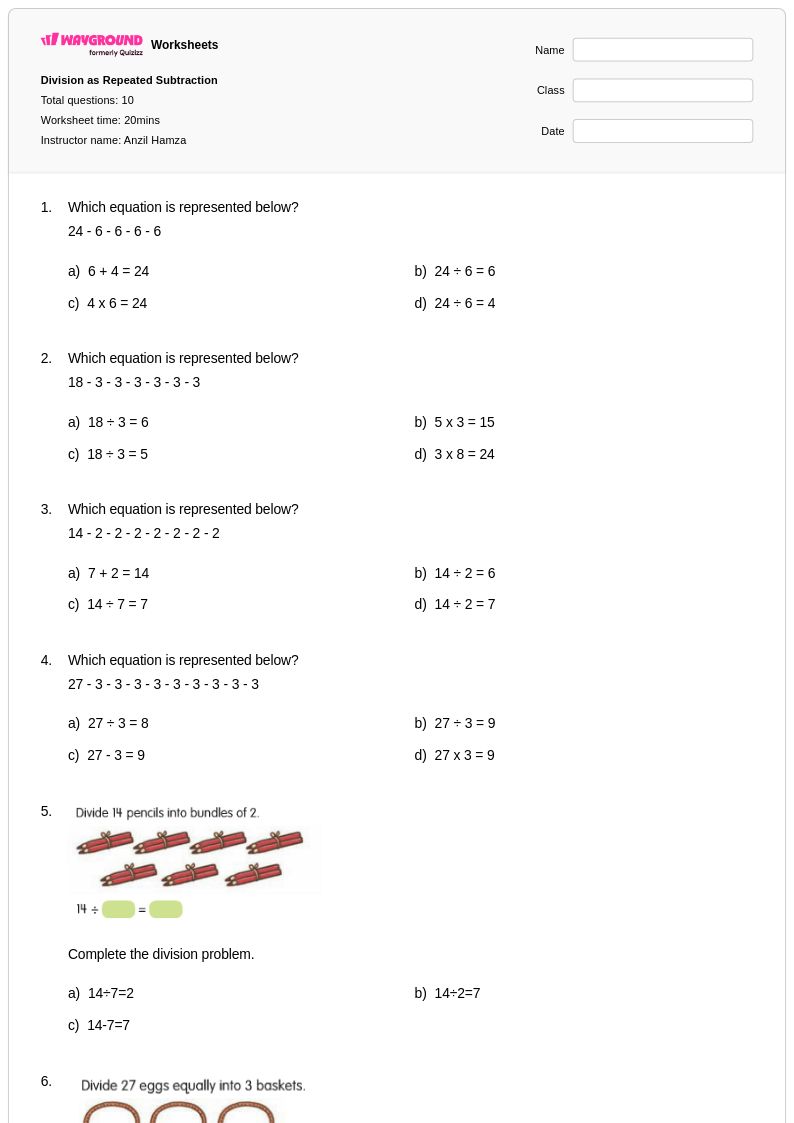
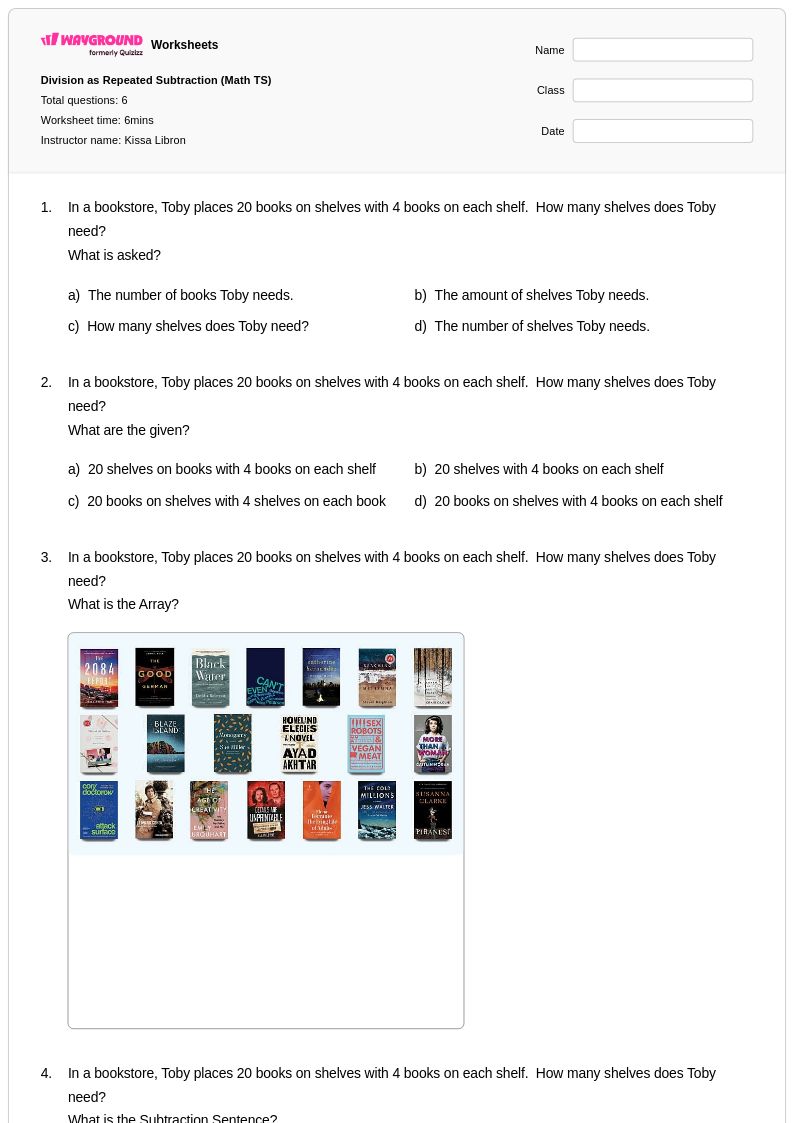
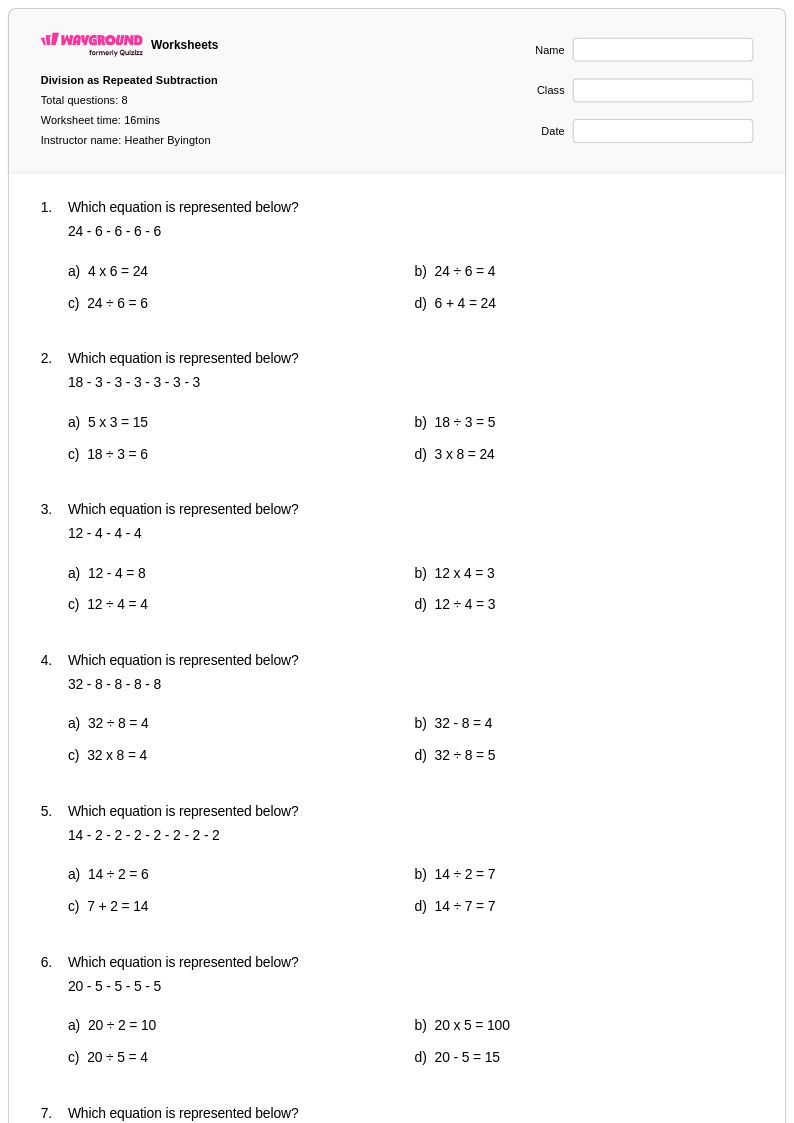
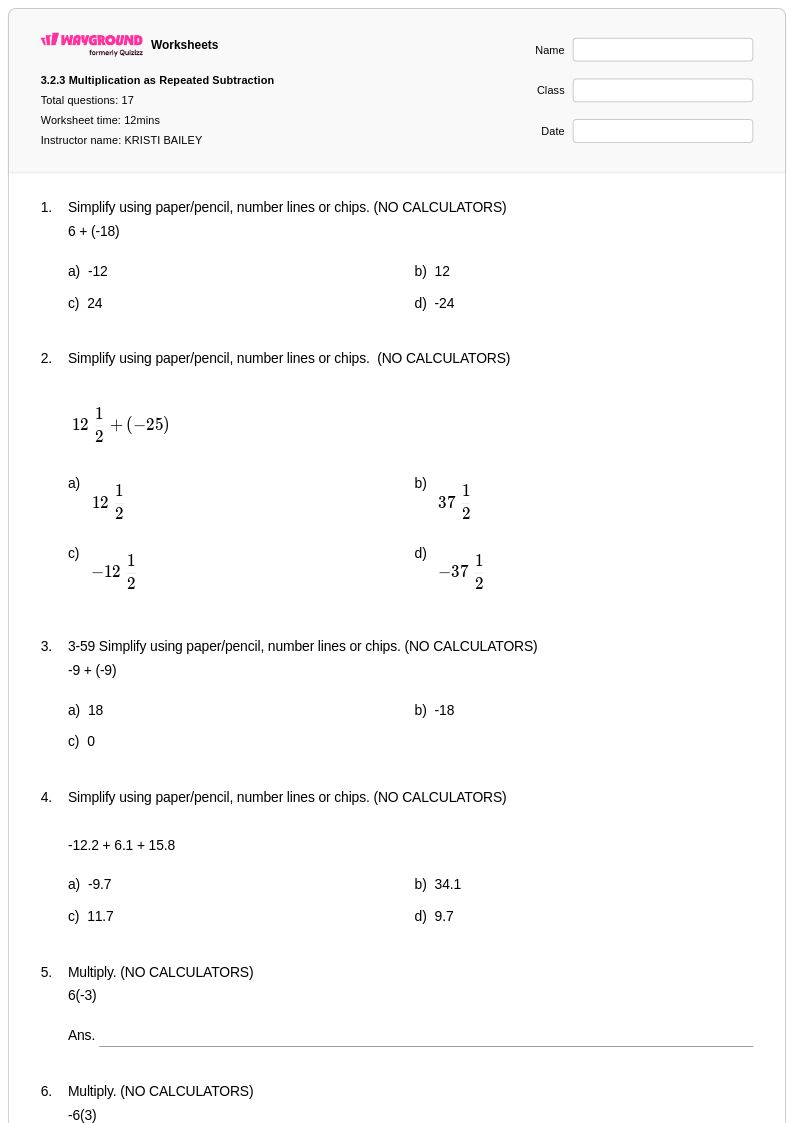
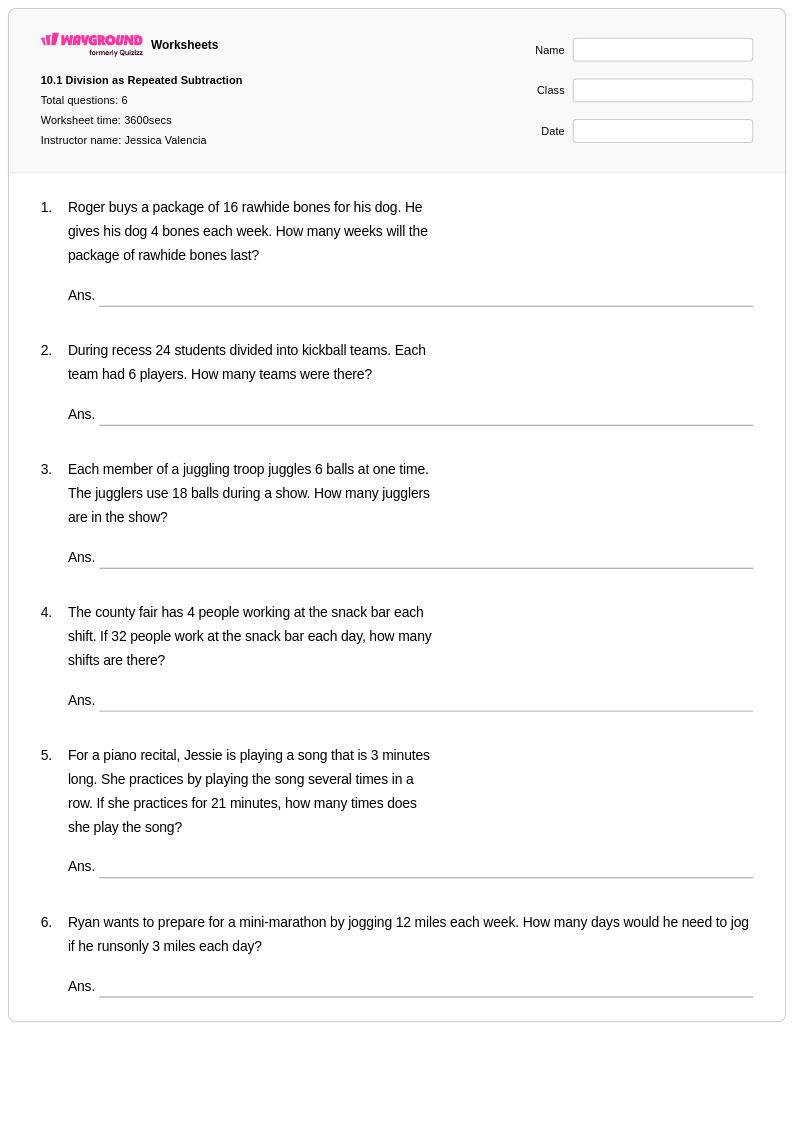
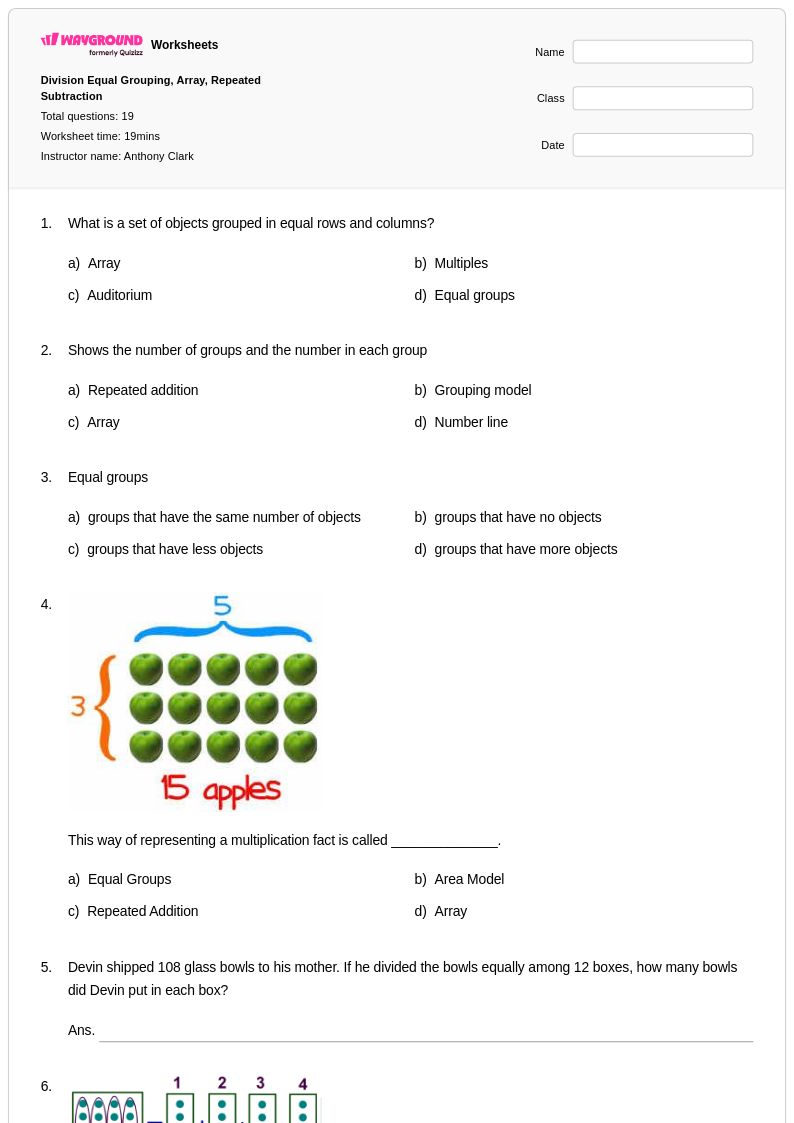
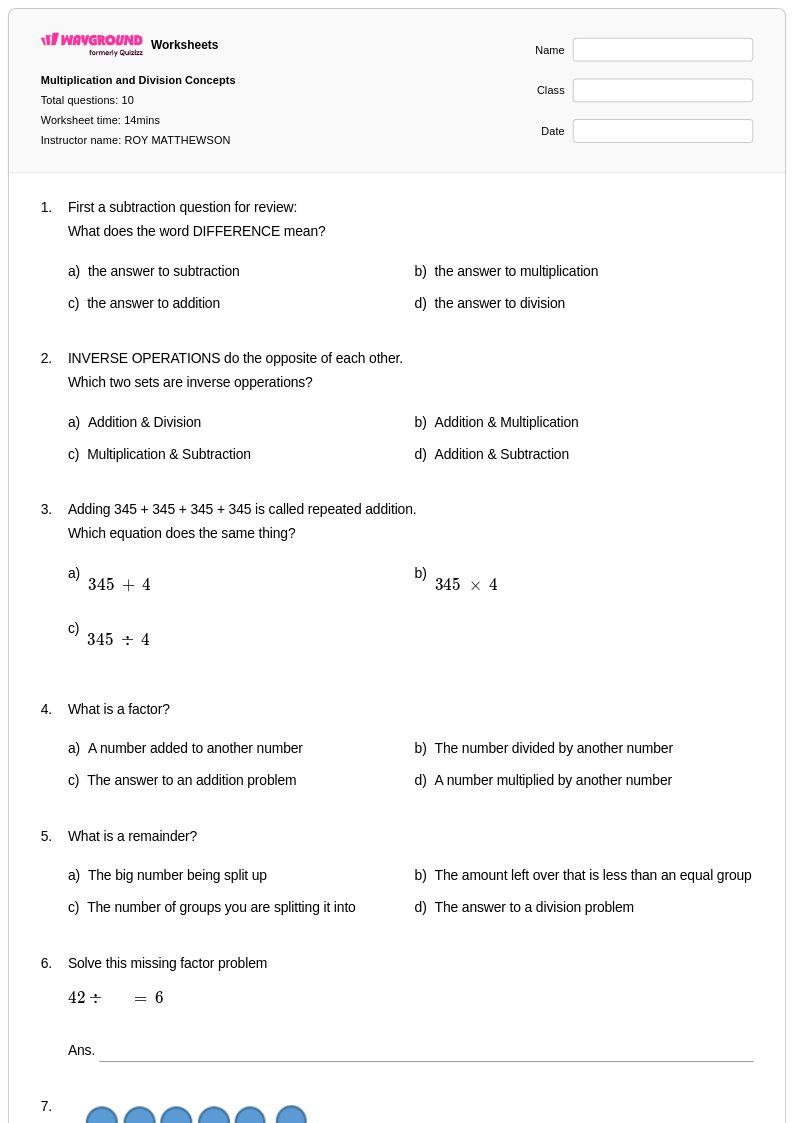
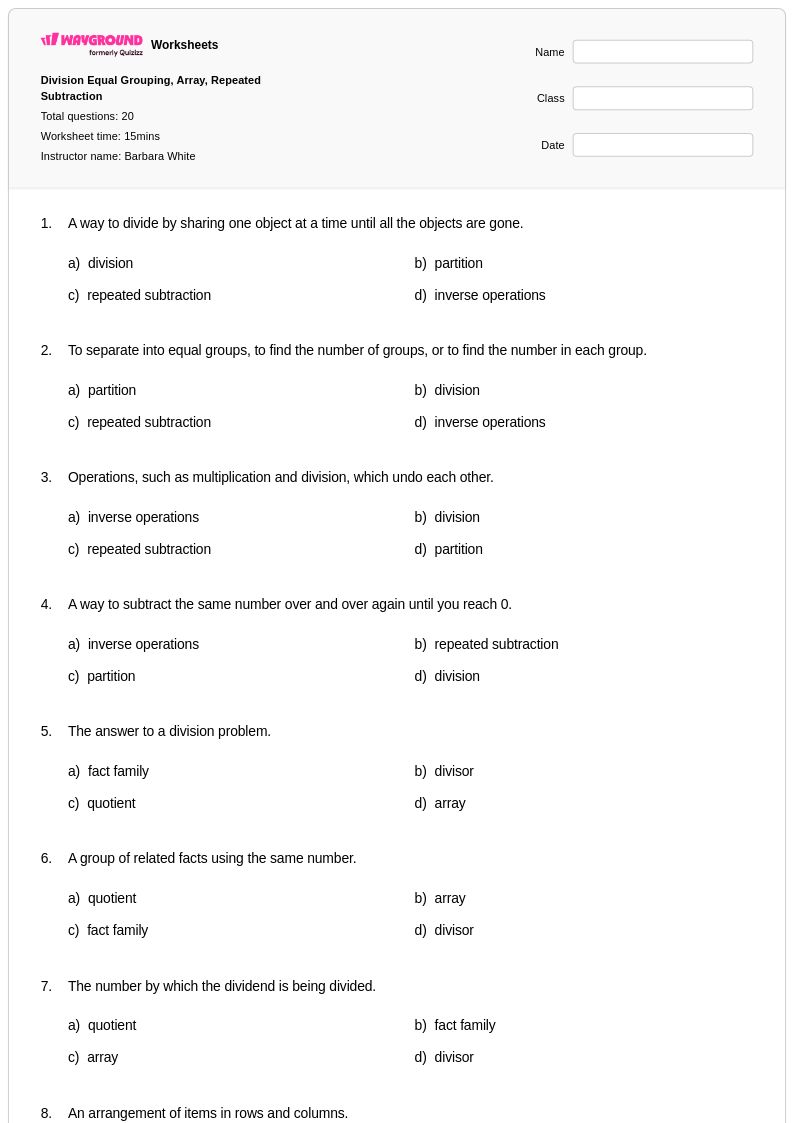
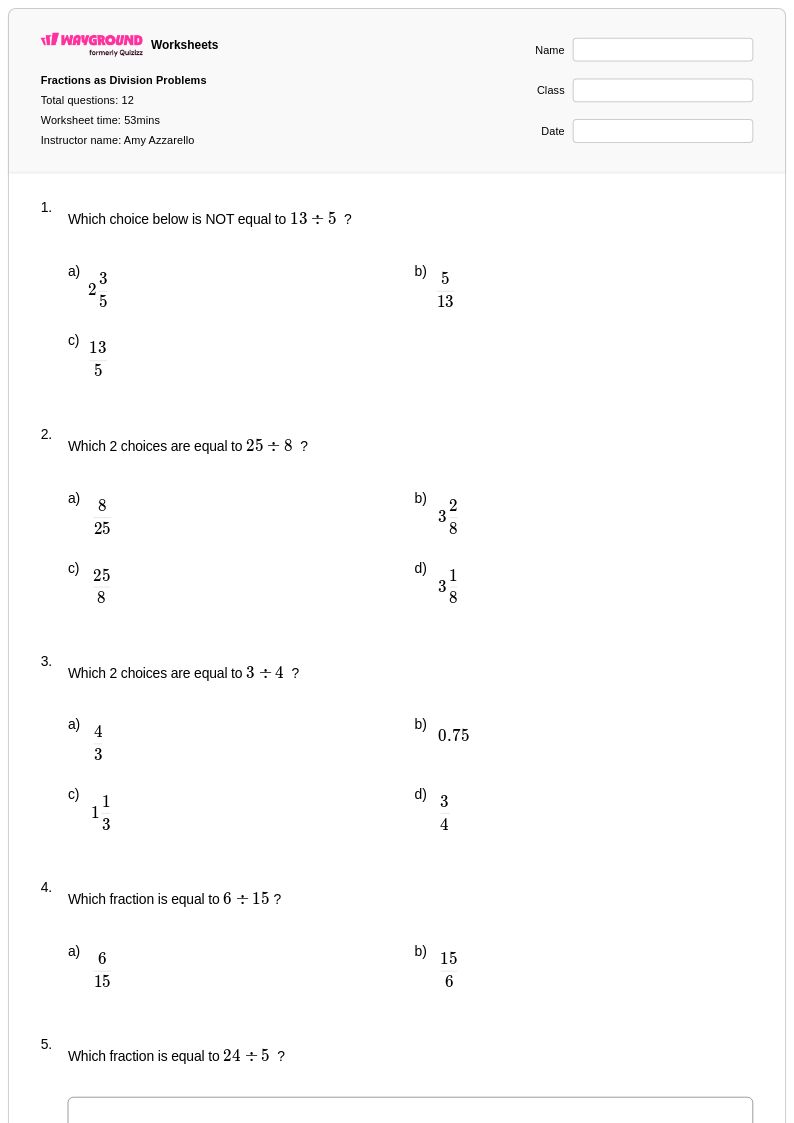
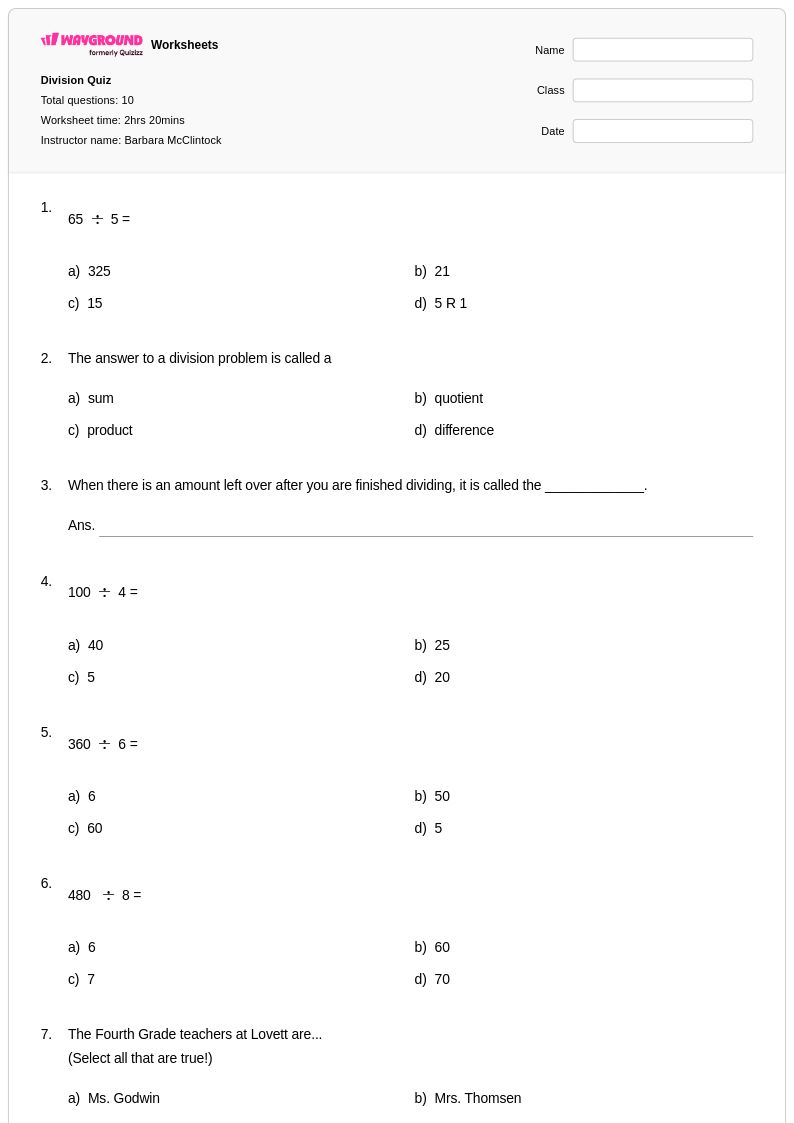
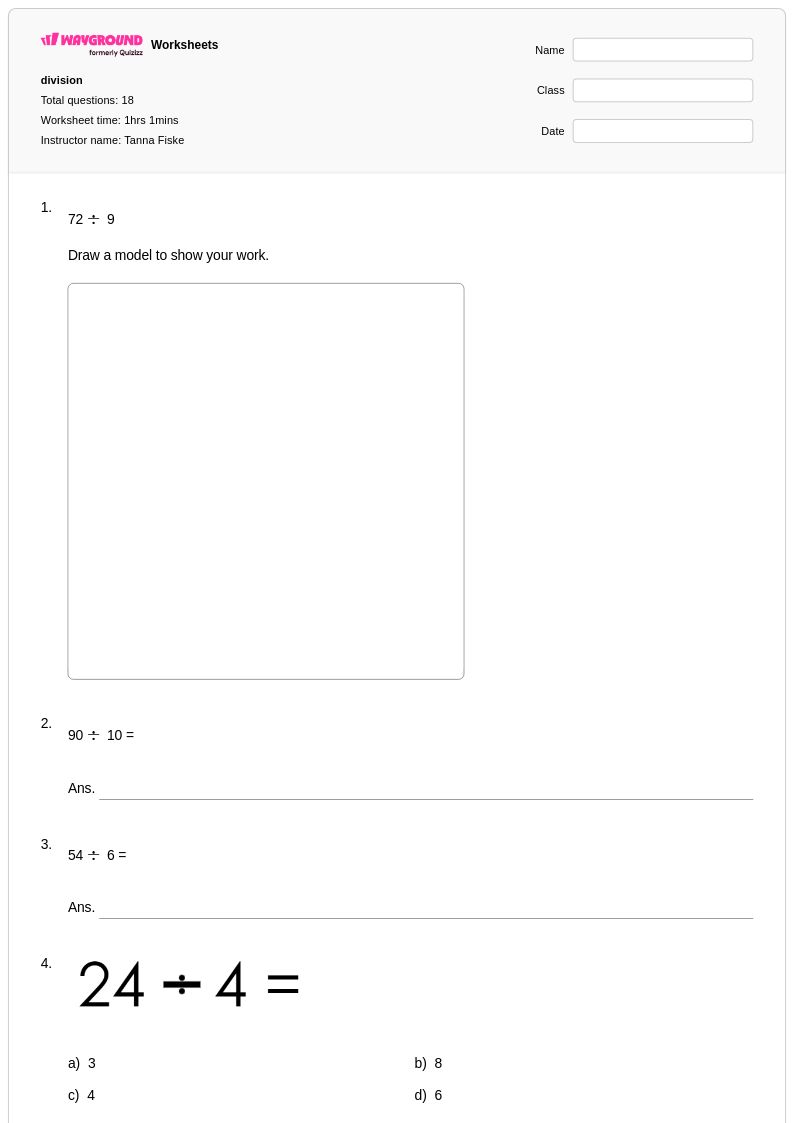
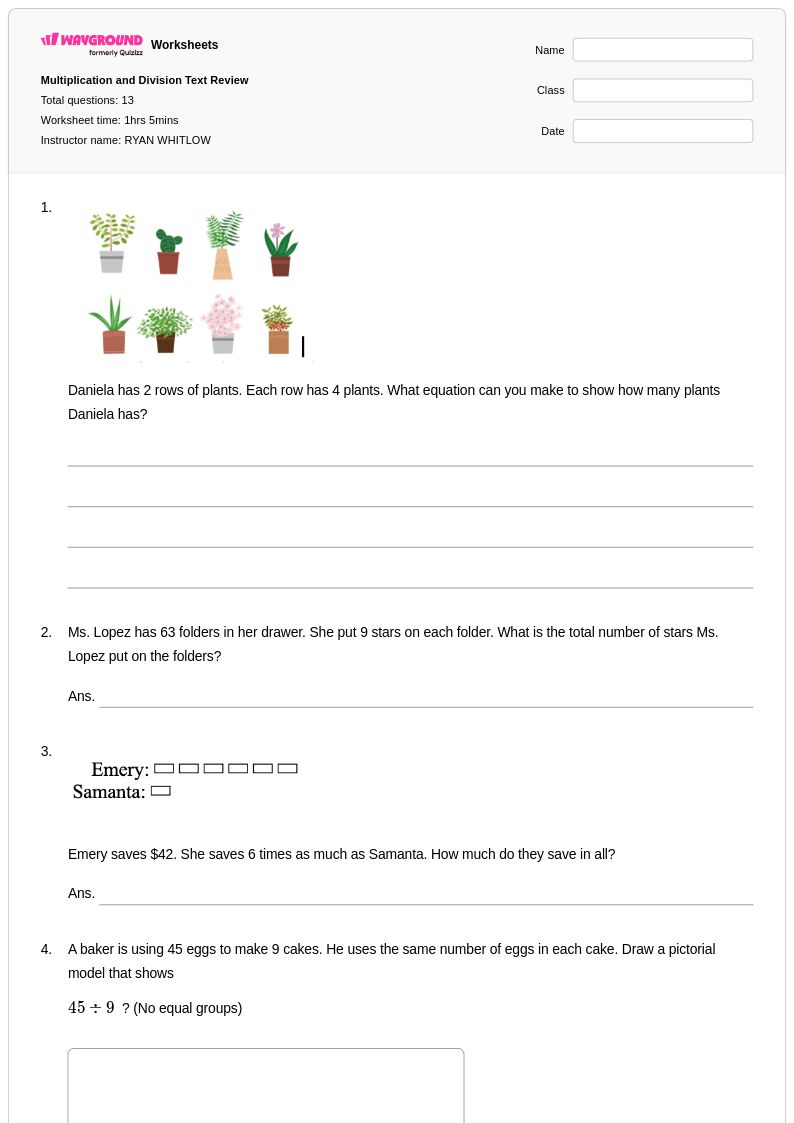
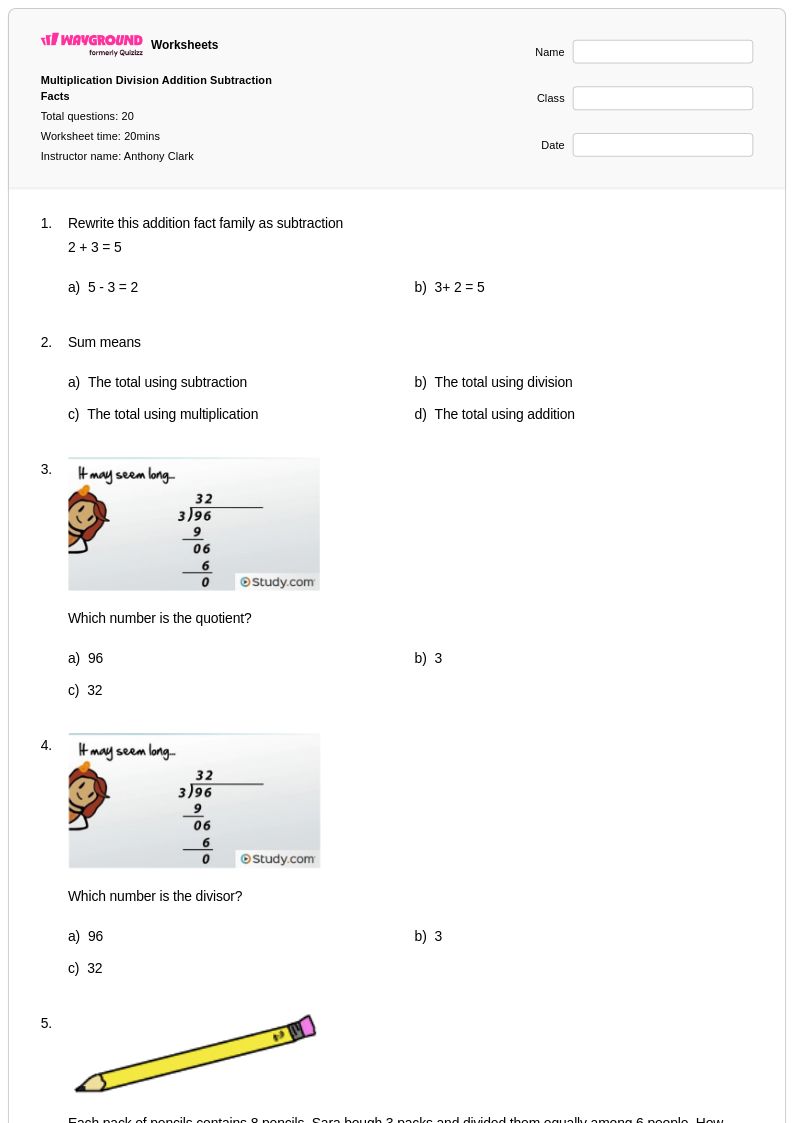
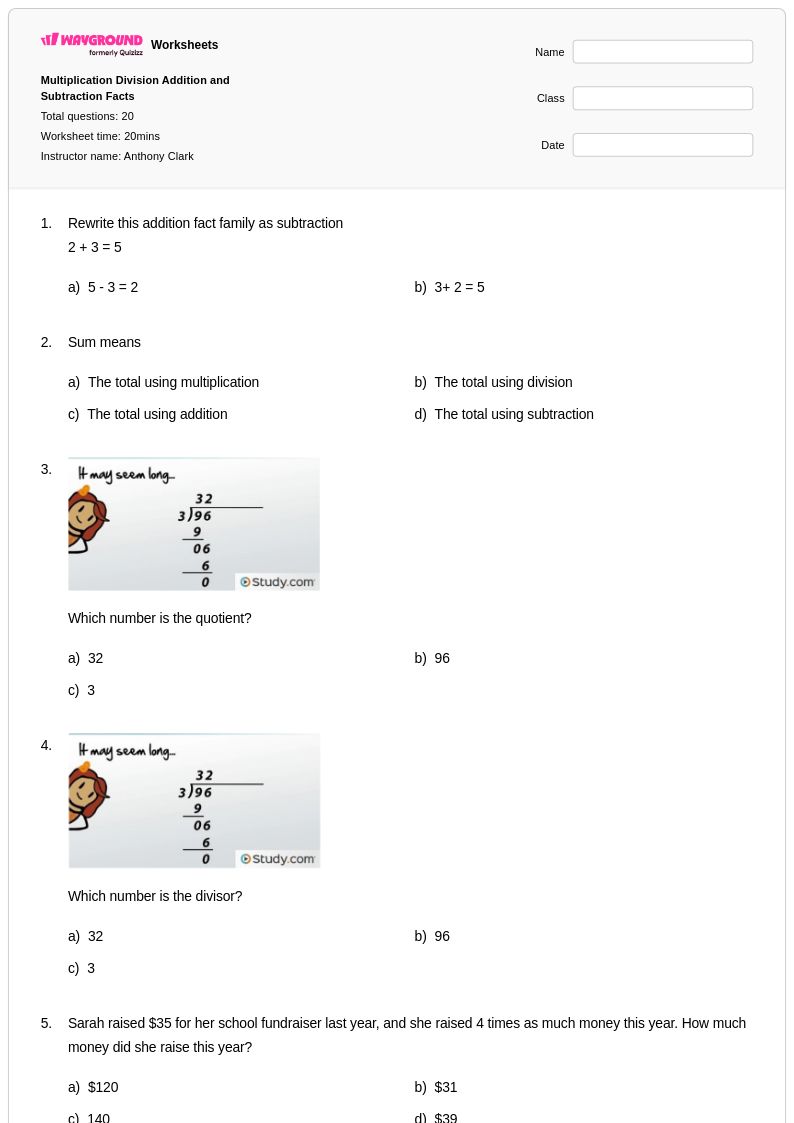
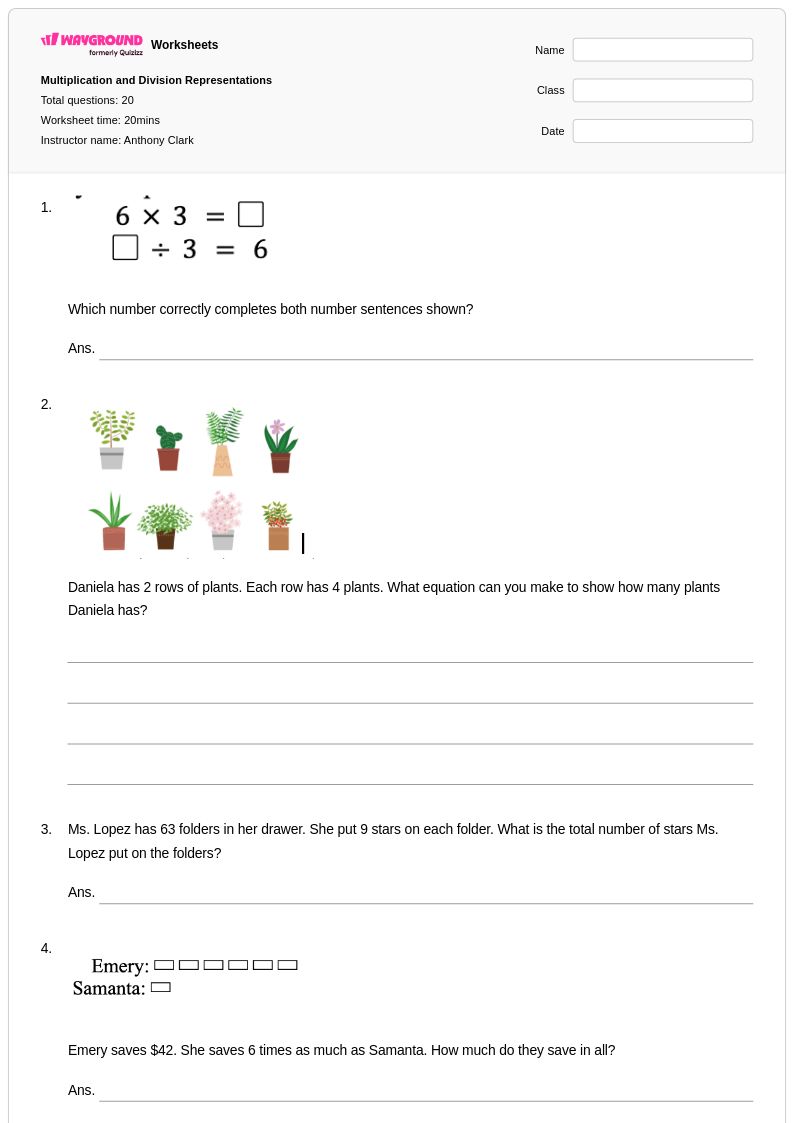
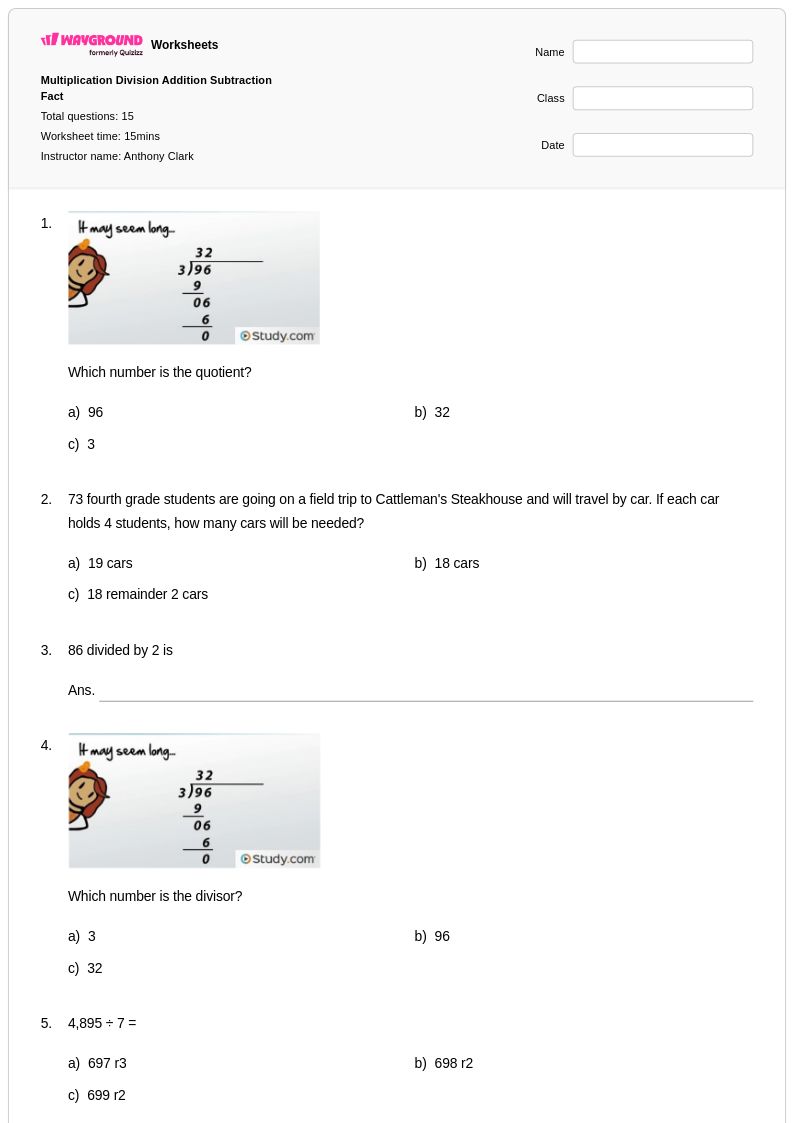
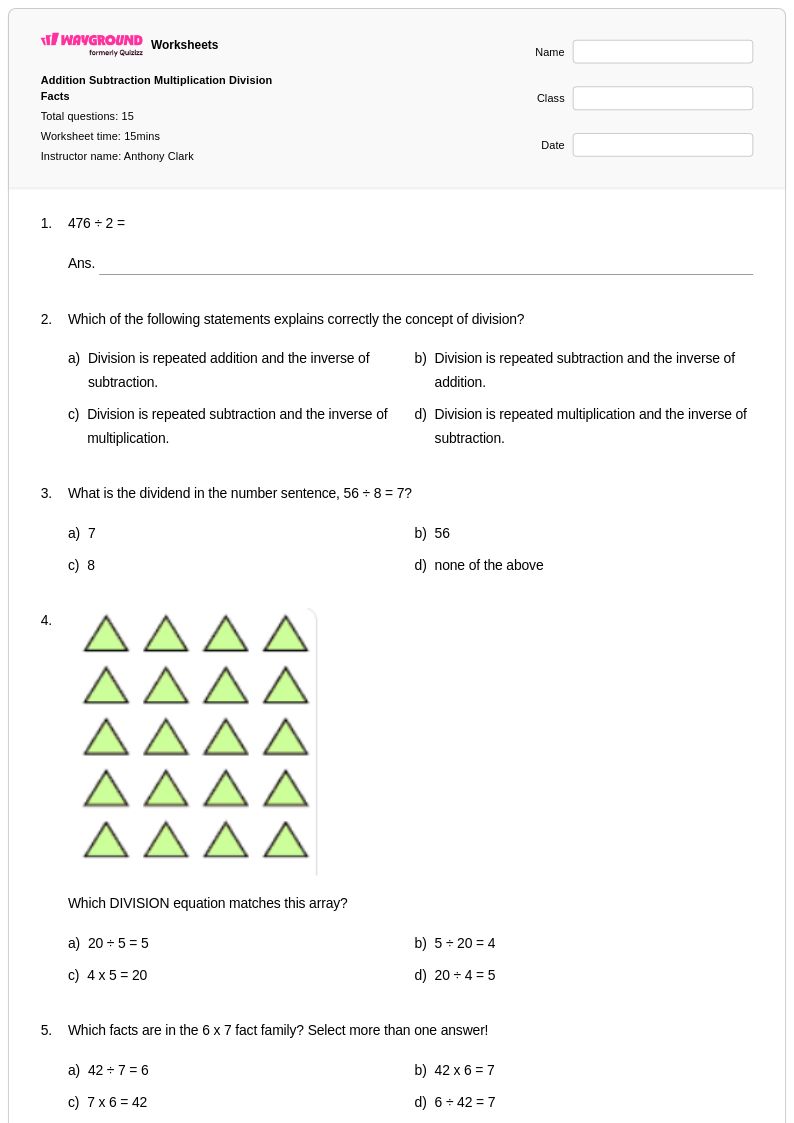
Division as repeated subtraction worksheets for kindergarten students available through Wayground (formerly Quizizz) introduce young learners to foundational division concepts through hands-on visual and manipulative-based activities. These carefully designed practice problems help kindergarten students understand that division represents taking away equal groups repeatedly until no items remain, building essential number sense and early algebraic thinking skills. The comprehensive collection includes free printables with clear answer keys that guide students through concrete examples using familiar objects like toys, snacks, and classroom materials, making abstract mathematical concepts accessible to developing minds. Each pdf worksheet incorporates age-appropriate illustrations and step-by-step visual representations that demonstrate how repeated subtraction connects to division, strengthening students' conceptual understanding before they encounter traditional division algorithms in later grades.
Wayground (formerly Quizizz) empowers kindergarten teachers with millions of educator-created resources specifically designed for teaching division as repeated subtraction, featuring robust search and filtering capabilities that help locate materials aligned with early childhood mathematics standards. The platform's differentiation tools allow teachers to customize worksheets based on individual student needs, providing multiple entry points for learners at various developmental stages while maintaining focus on the core concept of division through repeated subtraction. Teachers can access these resources in both printable and digital pdf formats, enabling flexible implementation whether students are working independently, in small groups, or during whole-class instruction. This versatility supports comprehensive lesson planning while providing targeted materials for remediation, enrichment, and ongoing skill practice that meets the diverse learning needs of kindergarten mathematics classrooms.
FAQs
How do you introduce division as repeated subtraction to kindergarteners?
Keep it entirely concrete. Give students 10 blocks and ask them to keep taking away 2 until none are left, counting each removal aloud. They're doing division — they just don't need that word yet. The goal at this stage is building the intuition that a quantity can be broken into equal groups by repeatedly removing the same amount, which is the conceptual core they'll formalize later.
Is division as repeated subtraction appropriate for kindergarten?
It is, as long as it stays at the informal, hands-on level. Kindergarteners aren't expected to write division equations, but they can absolutely explore equal sharing and repeated removal with manipulatives and pictures. This kind of early exposure builds number sense and lays groundwork for the multiplication and division concepts they'll encounter formally in Grades 2 and 3.
What exercises help kindergarteners practice division as repeated subtraction?
Picture-based worksheets work best at this age — problems where students cross out equal groups of objects (3 fish at a time from a pond of 12, for example) and count how many times they crossed out. The visual record of each removal is what makes the concept stick. Avoid bare number problems entirely at this stage; the concrete representation is the practice.
What misconceptions do kindergarteners have about repeated subtraction and equal groups?
The most common one: students remove different amounts each time instead of the same amount. They'll cross out 2 objects, then 3, then 1, and still expect to get a meaningful answer. Reinforcing that each group must be the same size — before any subtraction happens — is the key correction. Sorting objects into equal piles physically before doing any crossing-out helps make this concrete.
How do I use these kindergarten division worksheets in my classroom?
Print the PDF and use it alongside manipulatives so students can act out each problem before marking the page — at this age, the worksheet works best as a recording tool, not the primary activity. Every worksheet includes an answer key for quick review. For small-group rotations, the Wayground for Teachers app lets you capture and grade completed pages without a separate scoring session.
How can I accommodate diverse learners in kindergarten with these worksheets?
For students still developing fine motor skills or print awareness, larger font sizes and wide spacing (both available in Wayground's worksheet settings) reduce the visual clutter on the page. The Read Aloud accommodation is especially useful in kindergarten, where decoding a problem direction can be a bigger obstacle than the math itself. For English language learners, translating the worksheet into a student's home language lets you assess the math concept without the language barrier getting in the way.