Master the Dollar Up Method with Wayground's comprehensive collection of free worksheets and printables that help students practice this essential money math strategy through engaging problems and complete answer keys.
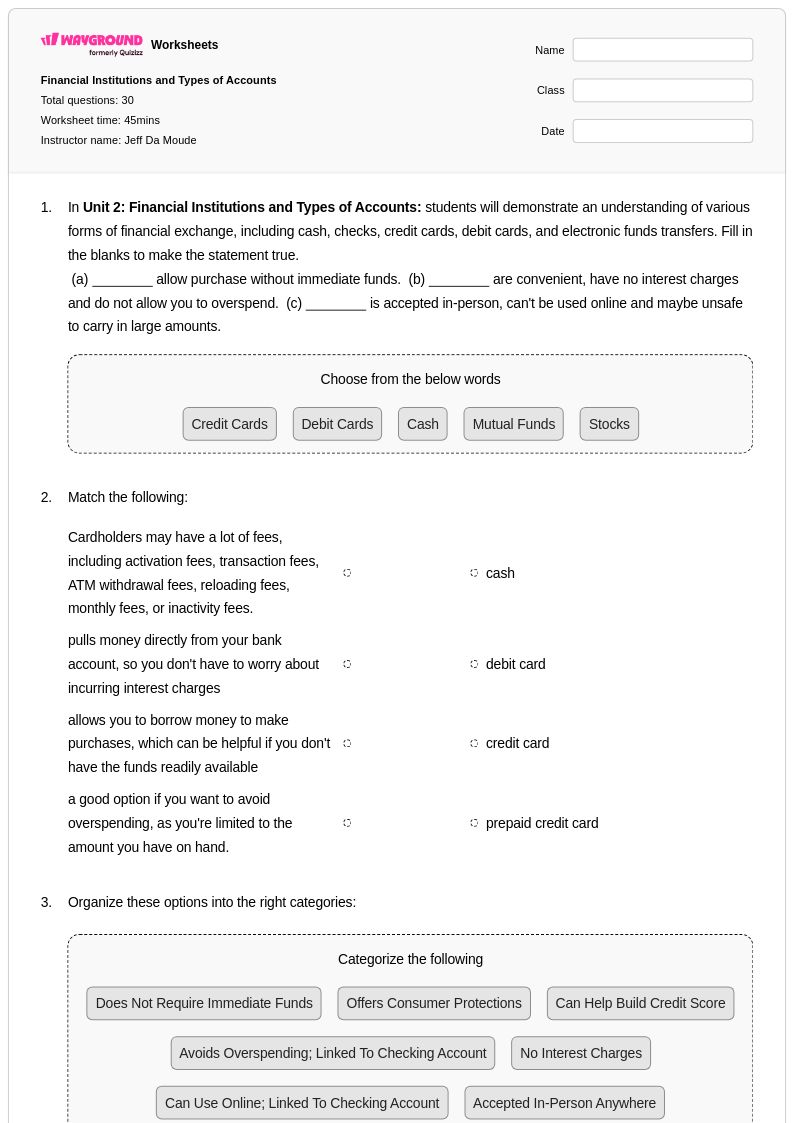
Dollar up method worksheets available through Wayground (formerly Quizizz) provide students with systematic practice in making change and counting money using this essential mathematical strategy. The dollar up method teaches learners to calculate change by counting forward from the purchase price to the amount paid, starting with coins to reach the next dollar amount and then adding bills to complete the transaction. These comprehensive worksheets strengthen critical money math skills including coin and bill recognition, addition and subtraction with decimal values, and real-world problem-solving abilities that students will use throughout their lives. Each worksheet collection includes detailed answer keys and is available as free printables in convenient pdf format, offering educators ready-to-use practice problems that reinforce proper change-making techniques and build computational fluency with monetary values.
Wayground (formerly Quizizz) supports mathematics educators with an extensive collection of teacher-created dollar up method resources, drawing from millions of high-quality worksheets and activities developed by experienced classroom professionals. The platform's robust search and filtering capabilities allow teachers to quickly locate materials that align with their specific curriculum standards and student needs, while built-in differentiation tools enable seamless customization for learners at varying skill levels. These versatile resources are available in both printable and digital formats, including downloadable pdf versions that facilitate flexible lesson planning and implementation. Whether used for initial skill introduction, targeted remediation, enrichment activities, or ongoing practice, these dollar up method worksheets provide educators with the comprehensive support needed to develop students' money math competencies and prepare them for practical financial literacy applications.
FAQs
How do I teach the dollar up method?
Start with a concrete scenario: a student buys something for $1.37 and hands over $2. Walk them through counting forward from $1.37 — adding coins first (three pennies to reach $1.40, then a dime to $1.50, then two quarters to $2.00) — before introducing the shorthand of rounding up to the next dollar and bridging with bills. Physical coins and a simple price tag help students see the logic before they practice it on paper. Once the counting-up sequence clicks, move to problems where students record each step, which builds the habit of working smallest denomination to largest.
What exercises help students practice the dollar up method?
The most effective practice problems mirror real transactions: a price ending in an odd cent amount, a single bill tendered, and a blank for each coin or bill in the change. Start with problems that require only coins (change under $1), then add problems where students must bridge to a second or third dollar. Timed drills work well once the sequence is solid — speed builds the mental math fluency students need at an actual register.
What mistakes do students commonly make with the dollar up method?
Three errors come up repeatedly. First, students start with the largest coin rather than the smallest, which breaks the counting-up logic and often produces the wrong total. Second, they confuse the purchase price with the amount of change owed — they subtract instead of counting forward. Third, when the price ends in a round amount like $2.50, students skip the coin step entirely and miss that no coins are needed, then miscount the bills. Catching the second error early matters most: if a student doesn't understand they're counting up to the amount paid, the whole method falls apart.
How do I use Wayground's dollar up method worksheets in my classroom?
You can run these as a digital quiz hosted on Wayground — students work through problems on their devices and answers are captured automatically — or download the PDF and print a class set for paper practice, which works well for schools managing screen time. Either way, every worksheet includes a complete answer key. If you go the print route, the Wayground for Teachers app lets you scan or photograph student work to grade submissions without re-entering answers by hand.
How can I use dollar up method worksheets with students who have different skill levels?
For students who struggle with coin recognition or decimal values, Wayground's Read Aloud accommodation reads problem text aloud, and reduced answer choices lower the cognitive load on multiple-choice items so students can focus on the counting sequence itself. For students with visual processing needs, you can generate an alternate version of the same worksheet with a dyslexia-friendly font or larger text — same problems, more accessible format. Advanced students can be assigned problems with larger purchase amounts and mixed bill combinations without any of these supports applied, and neither group sees the other's settings.
Is the dollar up method part of the standard math curriculum?
Common Core addresses money and making change in the early elementary grades, with students expected to solve problems involving dollar bills, quarters, dimes, nickels, and pennies by second and third grade. The dollar up method is a specific counting strategy that supports this standard — it gives students a reliable procedure for counting forward to find change rather than relying on subtraction with decimals, which many students find harder. It builds directly toward the multi-step money word problems students encounter in grades 3 and 4.
What grade level is the dollar up method taught?
The dollar up method is most commonly introduced in grades 2 and 3, when students are first learning to make change and work with coin and bill combinations. It stays relevant through grade 4 and into grade 5 for students who need a concrete strategy before moving to decimal subtraction. Some special education curricula use it well beyond fifth grade as a functional life-skills tool.