Free Printable Double and Half Angle Identities Worksheets for Class 10
Explore Wayground's free Class 10 double and half angle identities worksheets with printable PDFs, practice problems, and answer keys to help students master these essential trigonometric concepts.
Explore printable Double and Half Angle Identities worksheets for Class 10
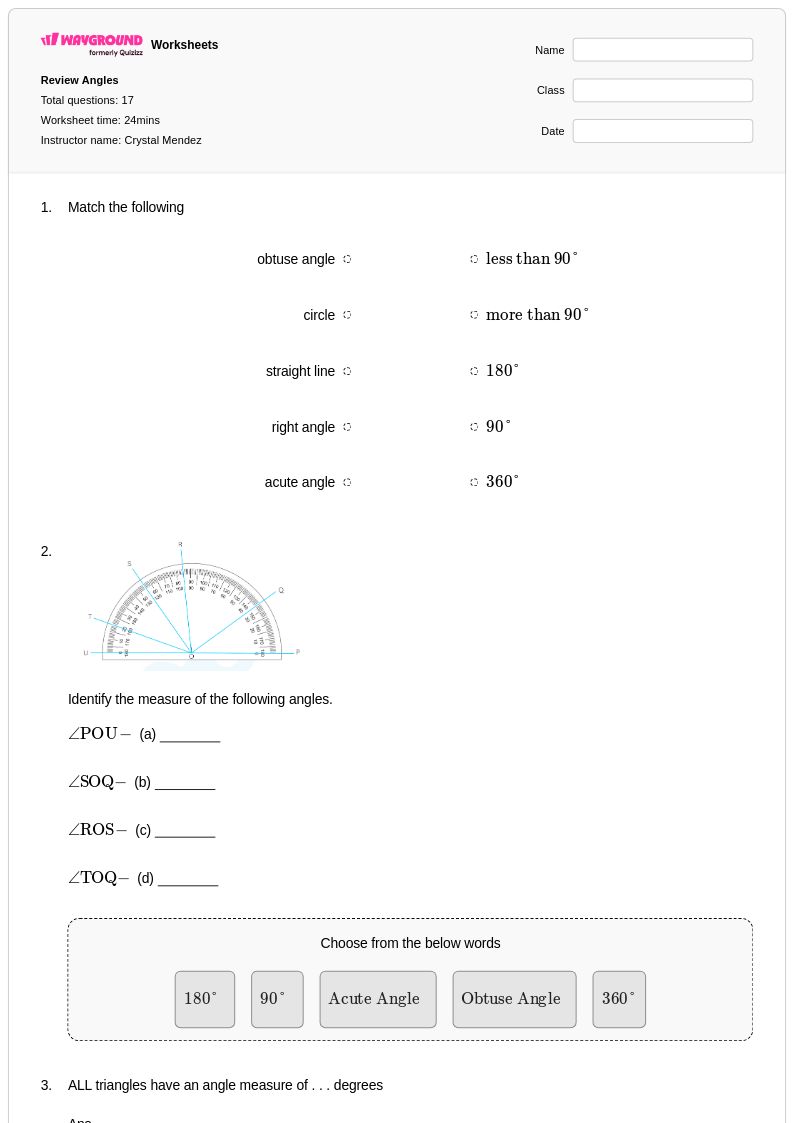
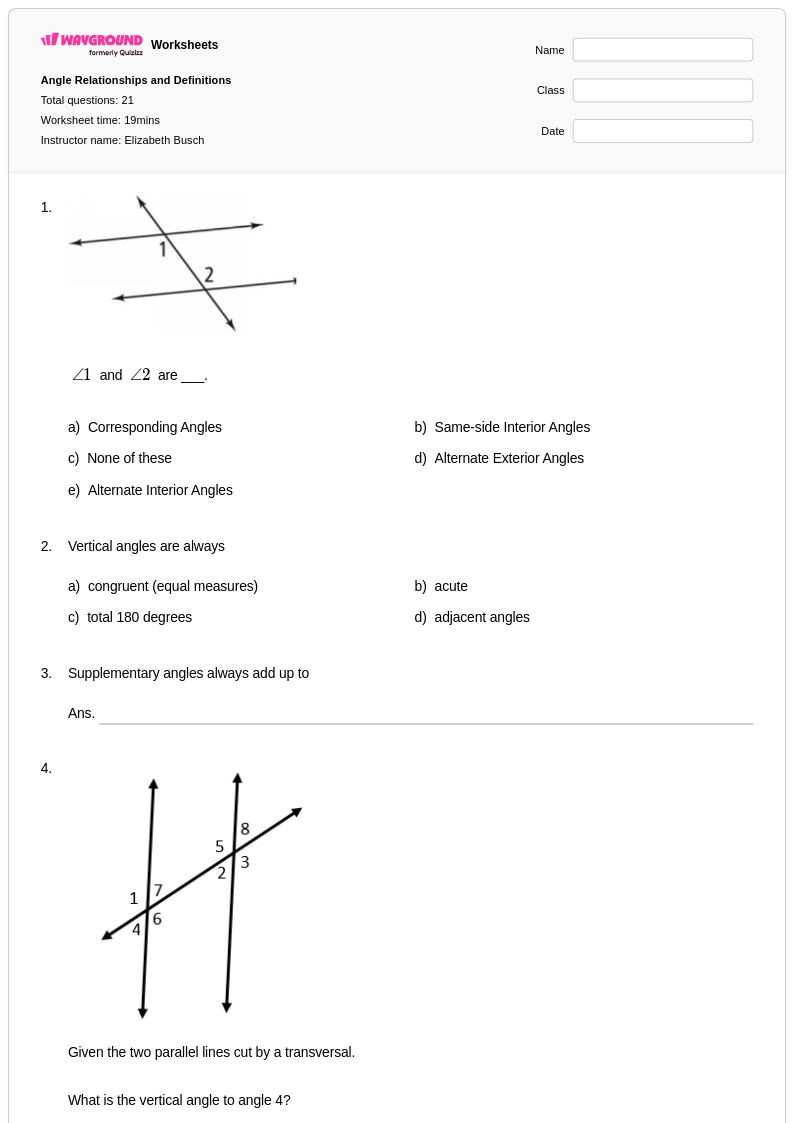
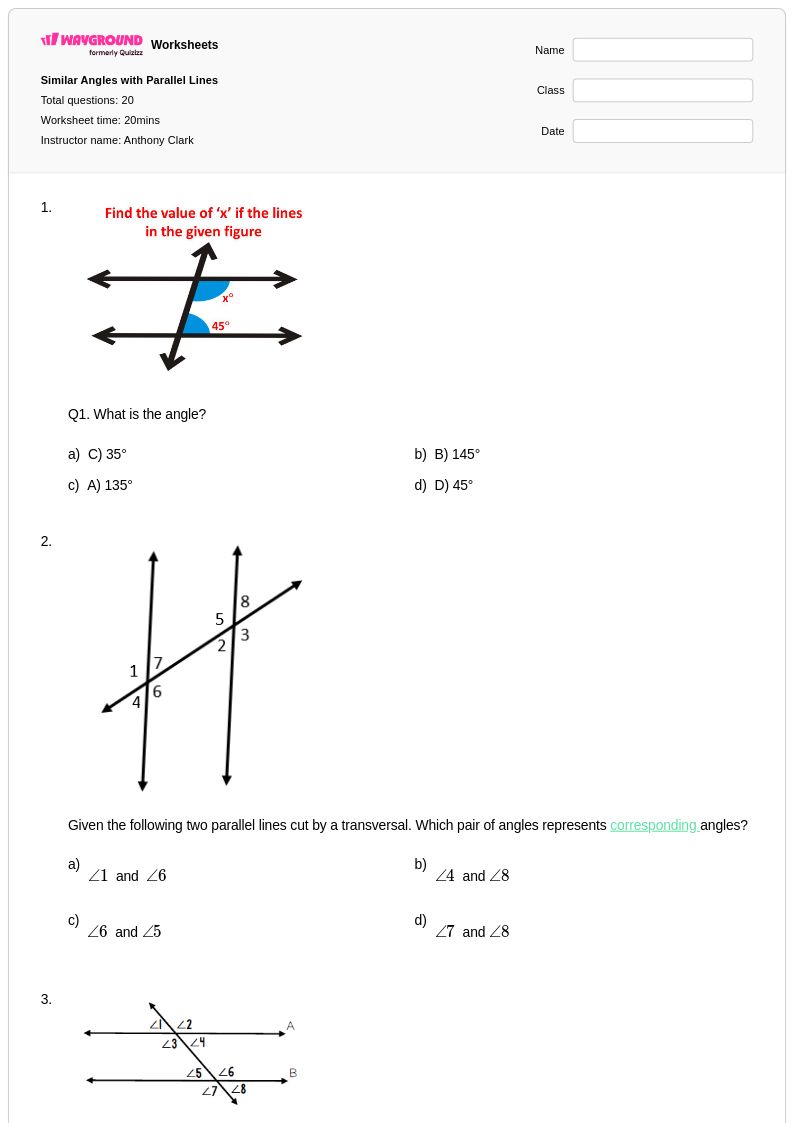
Double and half angle identities represent a crucial milestone in Class 10 trigonometry, building upon foundational trigonometric concepts to explore more sophisticated relationships between angles and their trigonometric functions. Wayground's comprehensive collection of double and half angle identity worksheets provides students with structured practice opportunities to master these complex formulas, including sin(2θ), cos(2θ), tan(2θ), and their corresponding half angle counterparts. These carefully designed practice problems guide students through systematic applications of identities like cos(2θ) = cos²θ - sin²θ and sin(θ/2) = ±√[(1-cosθ)/2], reinforcing both conceptual understanding and computational fluency. Each worksheet comes with a detailed answer key, enabling students to verify their work and identify areas requiring additional focus, while the free printable format ensures accessibility for both classroom instruction and independent study sessions.
Wayground's extensive library of teacher-created resources offers mathematics educators an invaluable toolkit for delivering effective double and half angle identity instruction to Class 10 students. The platform's millions of expertly crafted worksheets feature robust search and filtering capabilities, allowing teachers to quickly locate materials aligned with specific curriculum standards and learning objectives. Advanced differentiation tools enable educators to customize worksheet difficulty levels, ensuring appropriate challenge levels for diverse student needs, while the dual availability in both digital and printable PDF formats provides maximum flexibility for various instructional settings. These comprehensive resources streamline lesson planning by offering ready-to-use materials for initial skill introduction, targeted remediation sessions, and enrichment activities, empowering teachers to provide consistent, high-quality practice opportunities that strengthen student mastery of these essential trigonometric relationships.
FAQs
How do I teach double and half angle identities in Grade 10?
By Grade 10, students should have the angle addition identities in hand — use those as the starting point and derive sin(2θ) and cos(2θ) in front of the class rather than presenting them as given facts. Students who see where the formulas come from are far less likely to misremember them. For cos(2θ), explicitly teach all three forms and show when each one is strategically useful: the cos²θ - sin²θ form is cleanest for simplification, while 1 - 2sin²θ or 2cos²θ - 1 are better when you need to eliminate one function entirely.
What exercises help Grade 10 students practice double and half angle identities?
Three problem types build the skill progressively: evaluation (find cos(2θ) given a trig value and quadrant), simplification (reduce a multi-term expression to a single trig function using a double or half angle form), and verification (prove that two expressions are equal). Most Grade 10 students are ready for all three, but verification proofs should come last — they require students to hold a strategy in mind across multiple steps, which is harder than it looks. Wayground's worksheets include detailed answer keys that show the full solution path, not just the final answer.
What errors do Grade 10 students typically make with double and half angle identities?
The persistent error is sin(2θ) = 2sin(θ) — students apply scalar distribution where it doesn't belong. On half-angle problems, the ± sign is the main stumbling block: students either always choose positive or skip the quadrant check entirely. A third common issue is algebraic rather than conceptual — students lose track of signs when substituting into cos(2θ) = cos²θ - sin²θ, especially when the given values are negative. Requiring students to write out the substitution step explicitly before simplifying catches most of these.
How do I use Wayground's Grade 10 double and half angle identity worksheets?
You can run these as a digital quiz on Wayground or print them as PDFs — both formats contain the same problems. Every worksheet comes with a complete answer key showing step-by-step solutions, which is particularly useful for identity verification problems where the path to the answer matters as much as the answer itself. For printed assignments, the Wayground for Teachers app lets you scan student work to grade it, making it practical to assign these as homework and review error patterns before the next class.
How do double and half angle identities fit into the Common Core high school math progression?
Within Common Core's high school Functions domain, double and half angle identities build directly on the angle addition identities and the Pythagorean identity. Students are expected to move from recognizing basic trig relationships to proving and applying more complex ones — double angle formulas are a key step in that progression. Mastery here sets up the work that follows: solving equations of the form cos(2θ) = cos(θ) requires students to choose the right form of cos(2θ) strategically, which is exactly the kind of reasoning Common Core's Functions standards are building toward.
How can I differentiate double and half angle identity practice for my Grade 10 class?
For students who need scaffolding, Wayground's reduced answer choices accommodation is effective here — half-angle problems with four similar-looking options can overwhelm students who are still shaky on sign determination, and fewer choices let them focus on the math. For students with visual processing needs, generating an alternate worksheet version with wider font spacing or a larger font size reduces the clutter that comes with fraction-heavy trig expressions. Advanced students can be pushed toward multi-step verification proofs, which the worksheet collection also covers.