Free Printable Elements, Compounds, and Mixtures Worksheets for Kindergarten
Kindergarten students explore elements, compounds, and mixtures through engaging free worksheets and printables that introduce basic chemistry concepts with simple practice problems and answer keys.
Explore printable Elements, Compounds, and Mixtures worksheets for Kindergarten
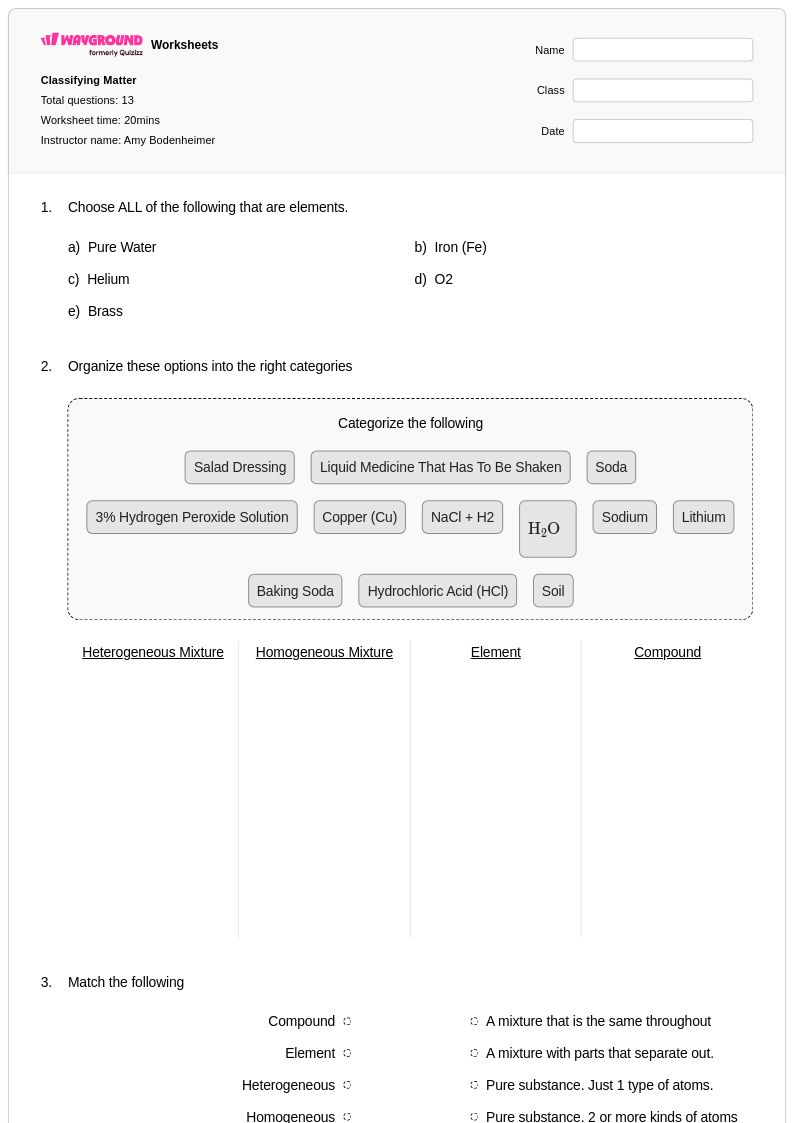
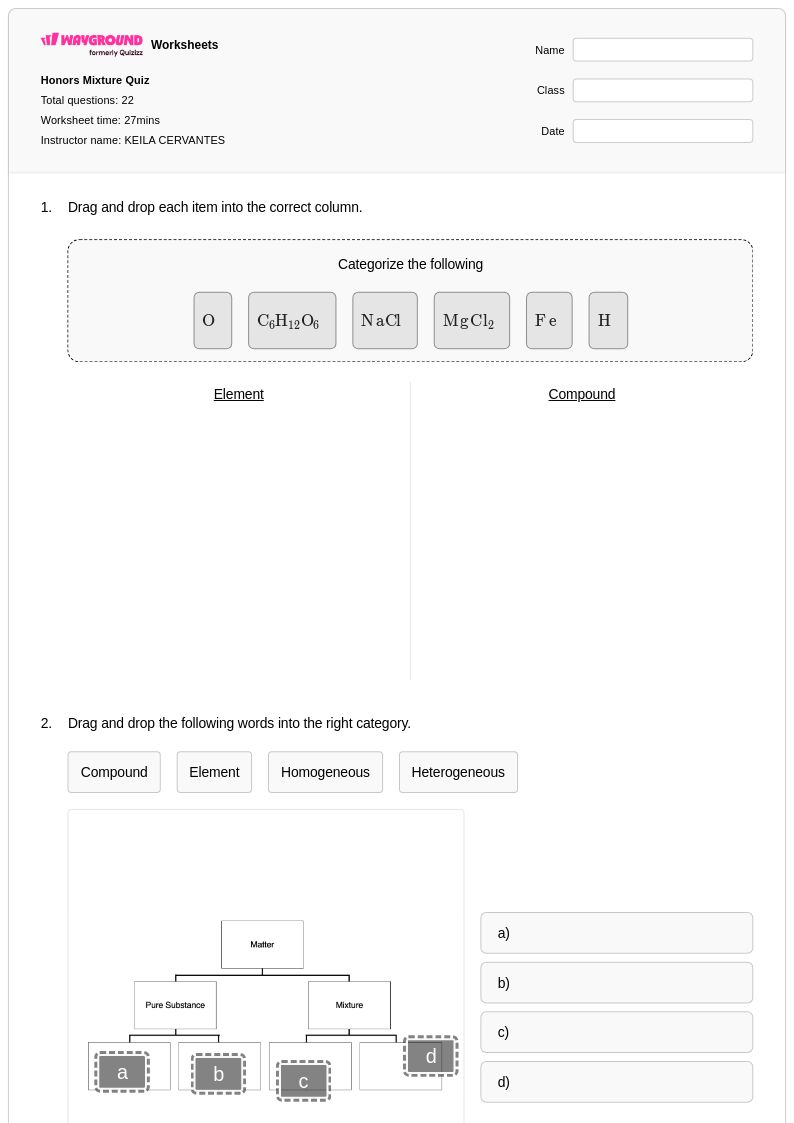
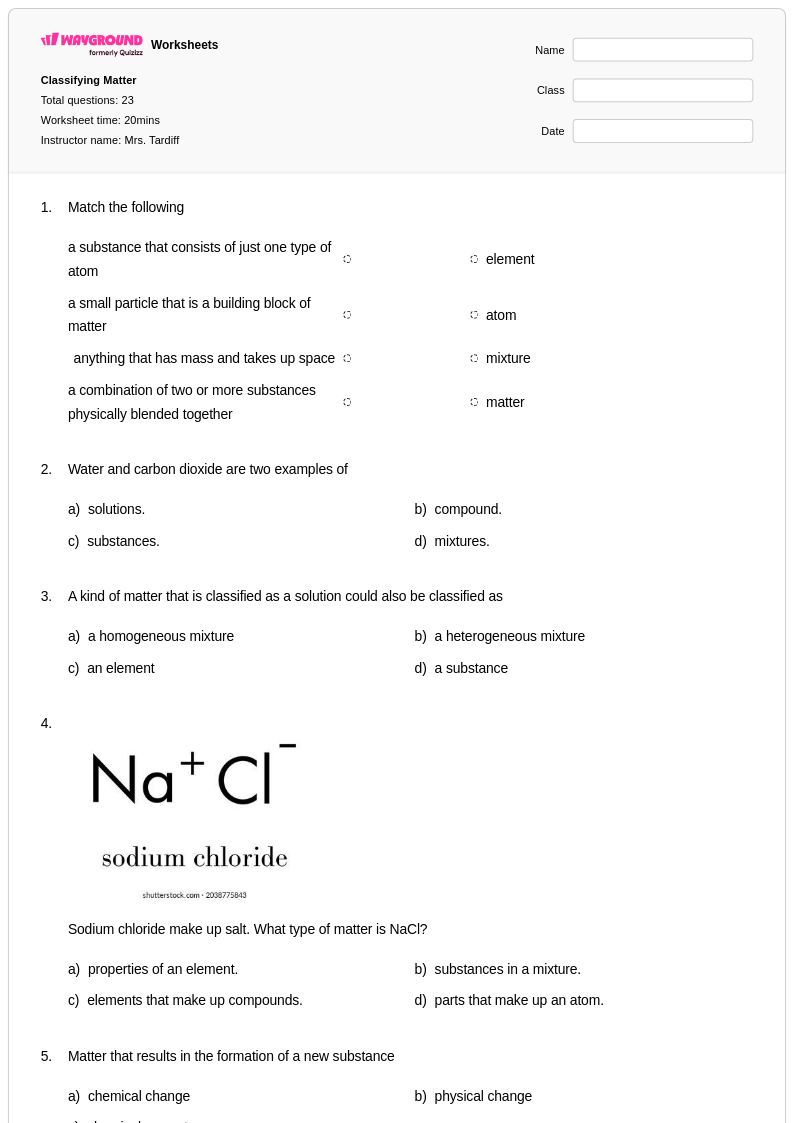
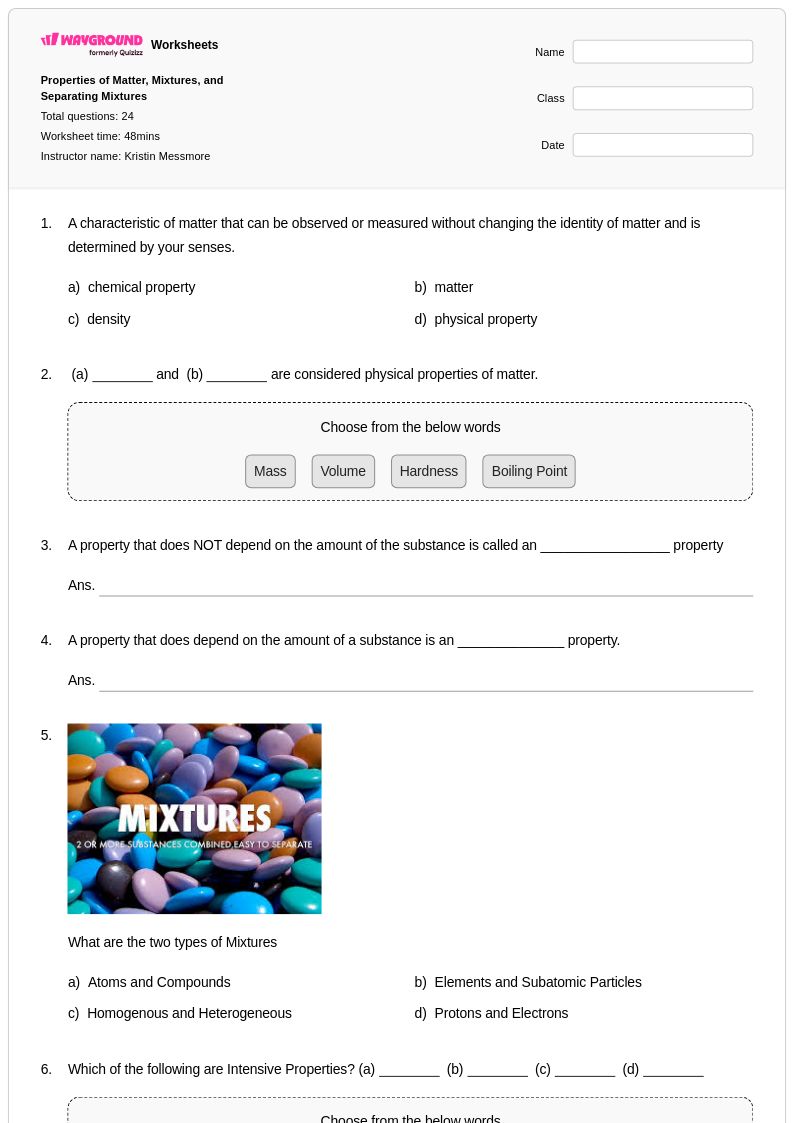
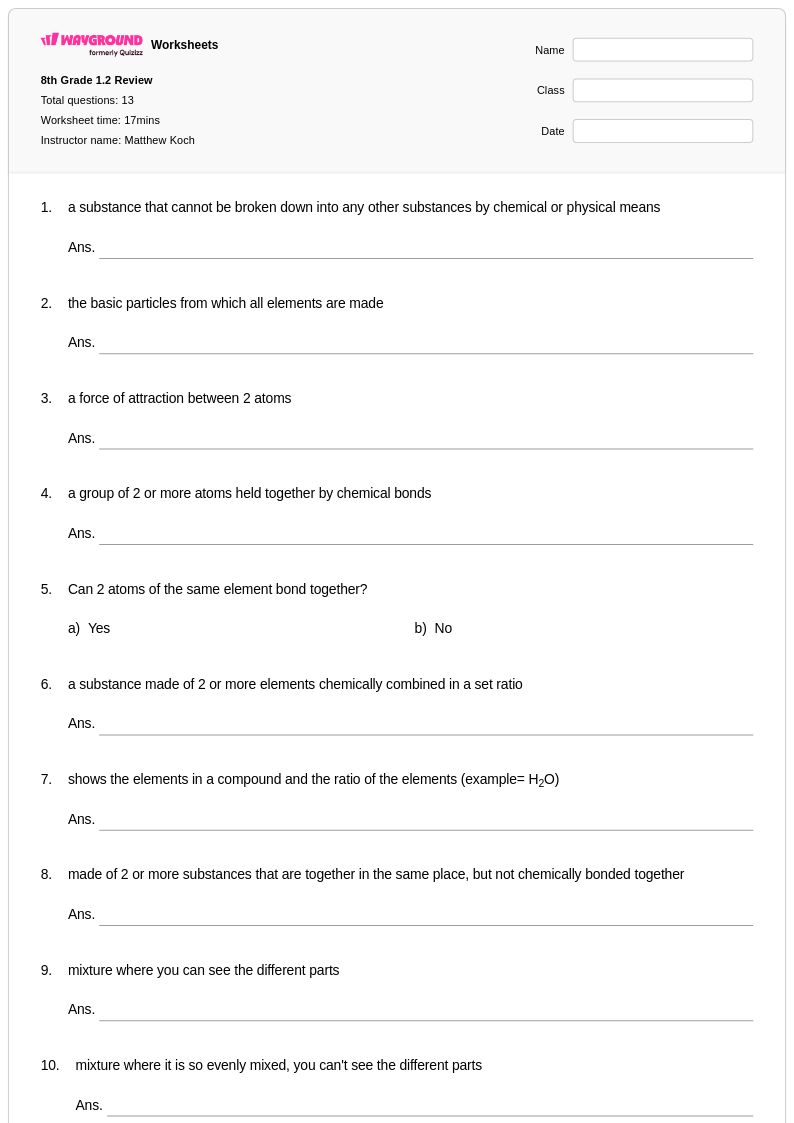
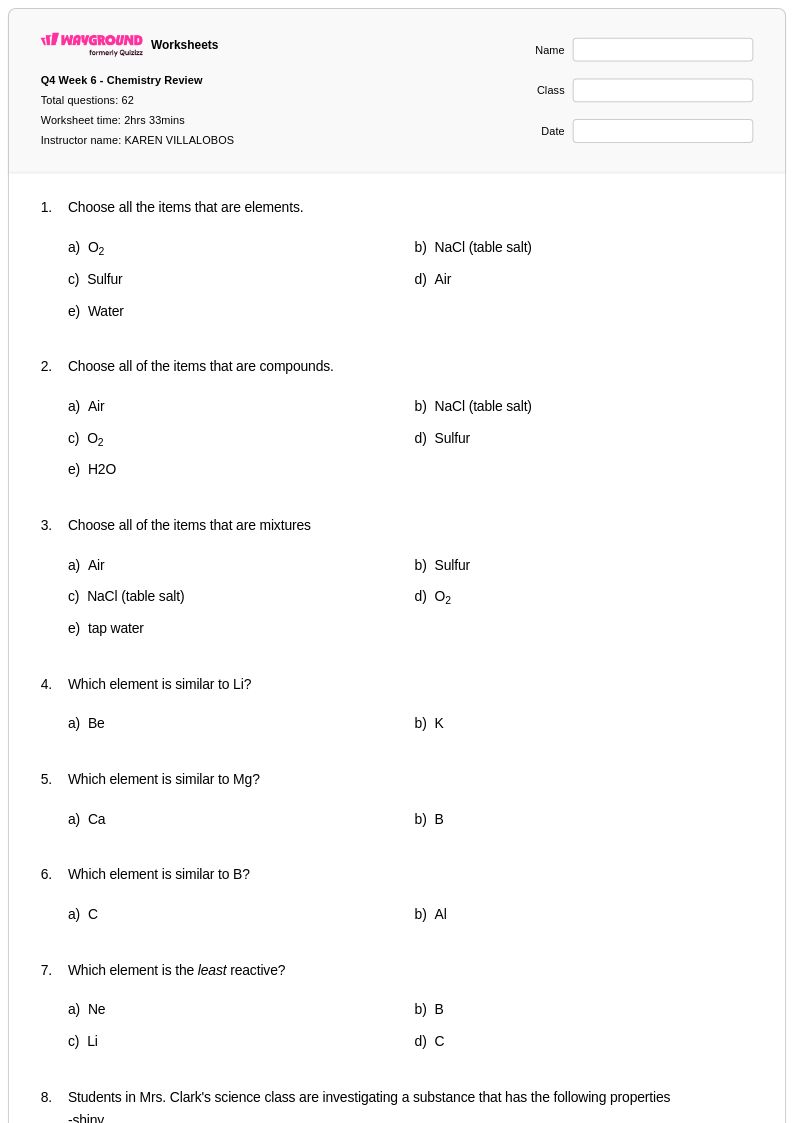
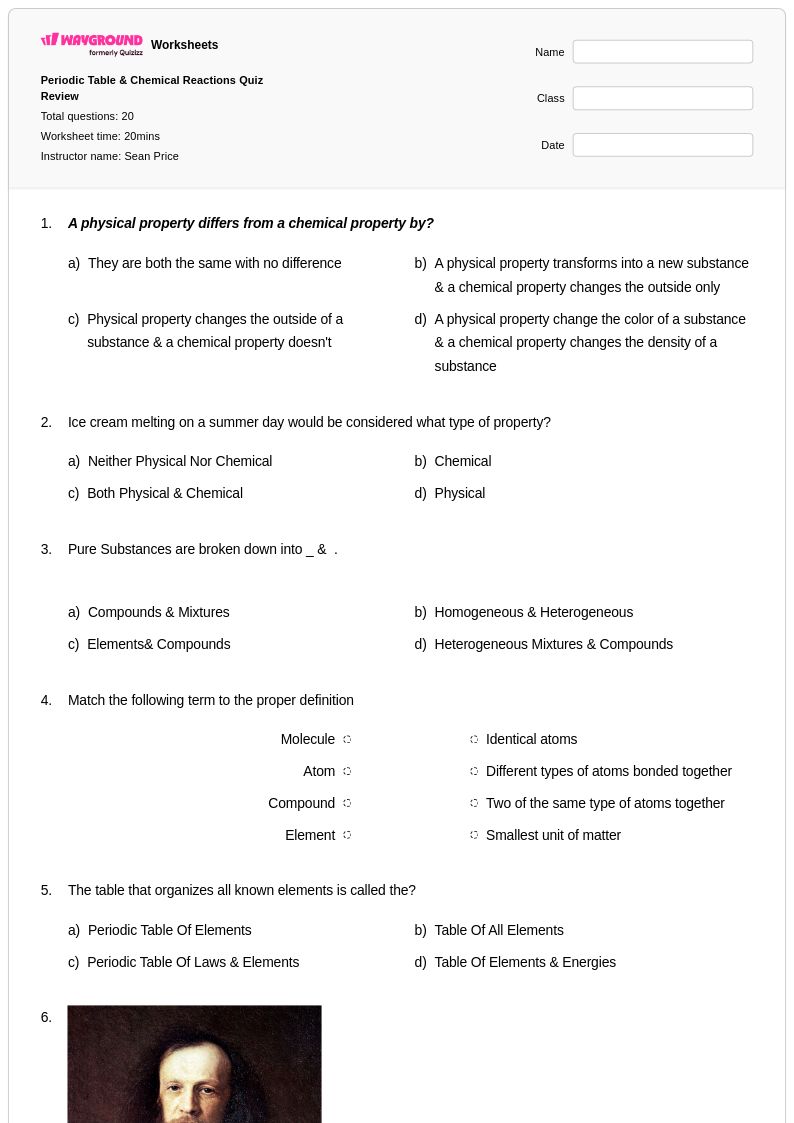
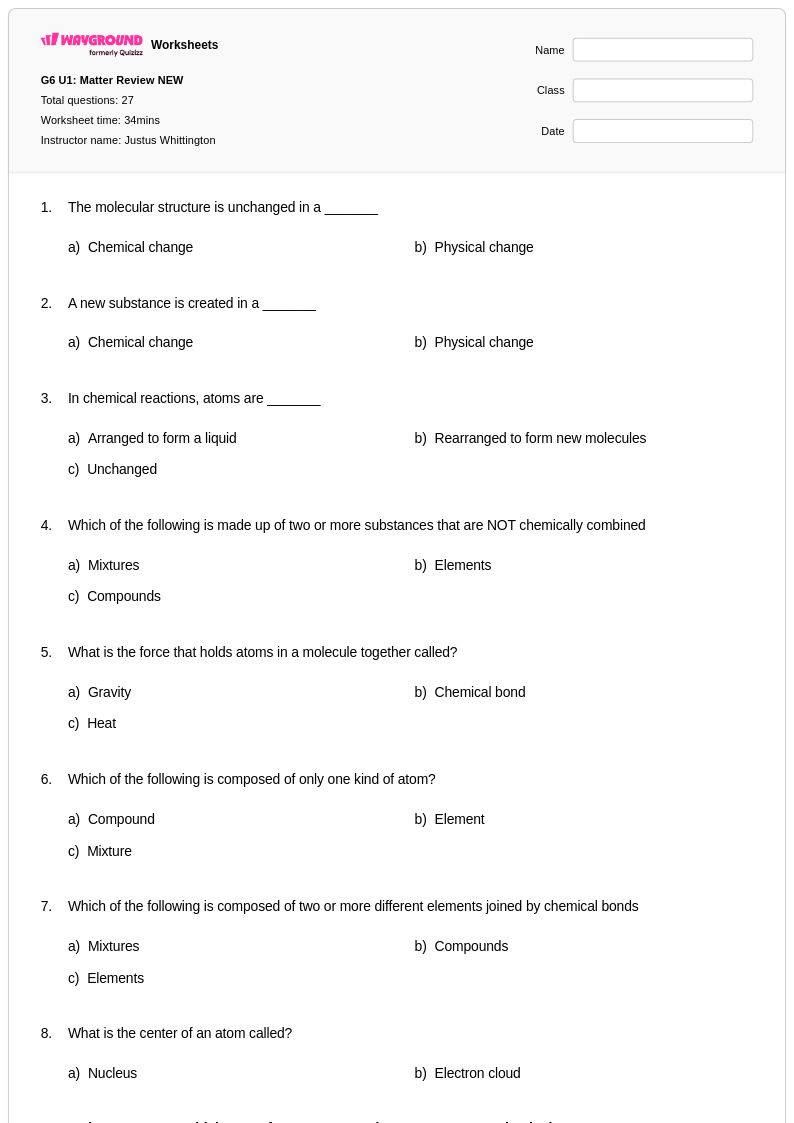
Elements, compounds, and mixtures worksheets for kindergarten students available through Wayground (formerly Quizizz) introduce young learners to foundational chemistry concepts through age-appropriate activities and visual learning experiences. These carefully designed worksheets help kindergarten students develop essential scientific observation skills while building their understanding of how different materials can be combined, separated, and classified in the world around them. Each printable resource focuses on hands-on exploration and simple categorization exercises that strengthen critical thinking abilities and scientific vocabulary through engaging practice problems. Teachers can access comprehensive materials including detailed answer keys and free pdf downloads that support early chemistry education while making abstract concepts concrete and accessible for developing minds.
Wayground (formerly Quizizz) empowers educators with millions of teacher-created resources specifically designed to support kindergarten chemistry instruction, offering robust search and filtering capabilities that help locate materials perfectly aligned with early childhood science standards. The platform's differentiation tools enable teachers to customize worksheet collections based on individual student needs, while flexible formatting options provide both printable and digital pdf versions for seamless classroom integration. These comprehensive features streamline lesson planning by offering educators quick access to remediation materials for struggling learners, enrichment activities for advanced students, and consistent skill practice opportunities that reinforce fundamental concepts about elements, compounds, and mixtures throughout the academic year.
FAQs
How do I teach students the difference between elements, compounds, and mixtures?
Start by anchoring instruction in particle-level thinking: elements contain only one type of atom, compounds contain two or more elements chemically bonded in fixed ratios, and mixtures combine substances without chemical bonding. Using molecular diagrams alongside everyday examples — such as oxygen (element), water (compound), and saltwater (mixture) — helps students visualize what distinguishes each category. Progressing from macroscopic observations to symbolic representations like chemical formulas builds the conceptual scaffolding students need to classify matter accurately.
What exercises help students practice classifying elements, compounds, and mixtures?
Effective practice includes classifying everyday materials by category, interpreting chemical formulas to distinguish elements from compounds, and analyzing particle diagrams to identify pure substances versus mixtures. Students also benefit from exercises that require them to differentiate homogeneous mixtures (like saltwater) from heterogeneous mixtures (like trail mix) based on observable properties. Scaffolded problem sets that move from identification tasks to explanation tasks reinforce classification skills progressively.
What mistakes do students commonly make when classifying elements, compounds, and mixtures?
A frequent misconception is conflating physical mixing with chemical bonding — students often classify a compound as a mixture because it contains more than one type of atom. Another common error is assuming all pure substances are elements, failing to recognize that compounds are also pure substances with fixed composition. Students also struggle to distinguish homogeneous from heterogeneous mixtures when the heterogeneous nature isn't visually obvious, such as with fine suspensions or alloys.
How do I help struggling students understand particle arrangements in elements, compounds, and mixtures?
Visual scaffolding is key: particle diagrams that show atom types and arrangements make abstract differences concrete. Color-coding atom types within diagrams and pairing them with macroscopic photos of the substance helps students connect symbolic and real-world representations. For students who need additional support, Wayground's Read Aloud feature can narrate question content during digital practice sessions, and reduced answer choices can lower cognitive load while students build foundational understanding.
How can I use elements, compounds, and mixtures worksheets in my classroom?
These worksheets are available as printable PDFs for traditional classroom use and in digital formats for technology-integrated learning environments, including the option to host them as a quiz on Wayground. Printable versions work well for guided notes, bell-ringers, and homework assignments, while digital formats allow for immediate feedback during independent practice. Each worksheet includes a complete answer key, making them practical for self-assessment or station-based activities without requiring teacher facilitation at every step.
How do I assess student understanding of elements, compounds, and mixtures?
Effective assessment tasks include asking students to classify a list of substances with justification, interpret unfamiliar chemical formulas, and explain why a given separation technique works for a specific mixture type. Open-ended questions that require students to draw particle models push beyond recall and reveal whether students understand the underlying structure of matter. Reviewing student errors on classification tasks — particularly confusion between pure substances and mixtures — provides targeted data for remediation.