Free Printable Elimination Method Worksheets for Class 11
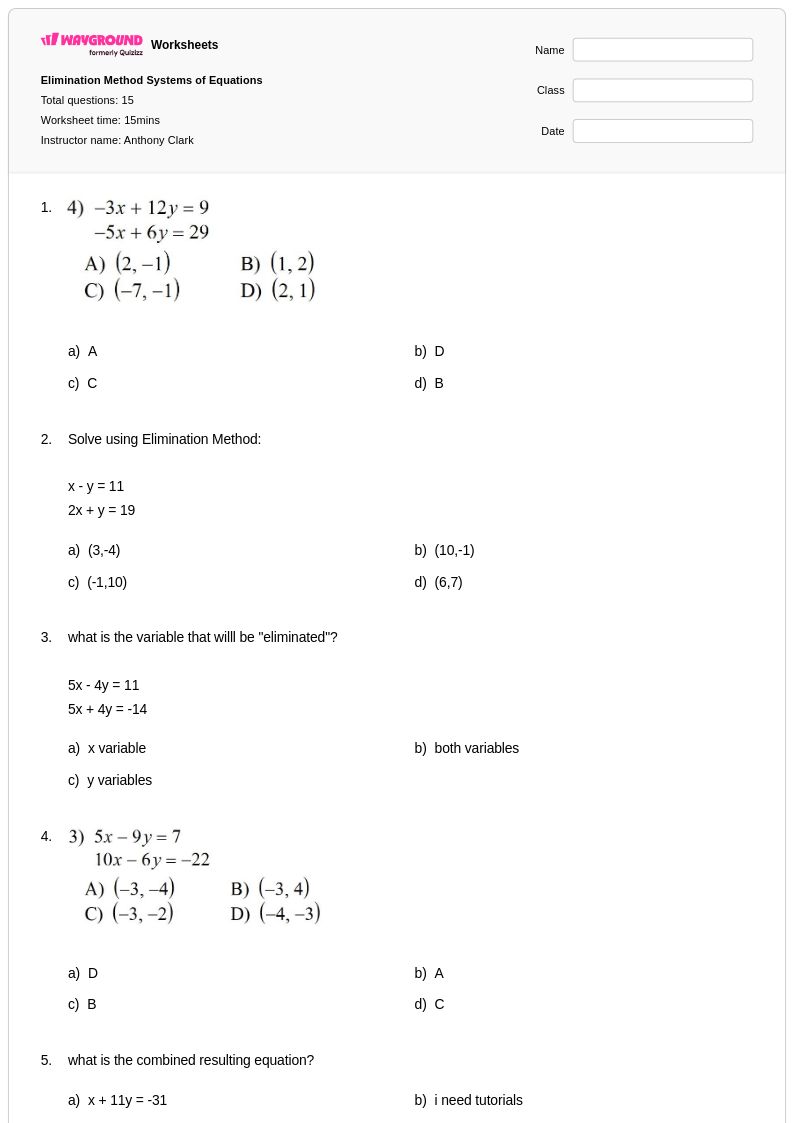
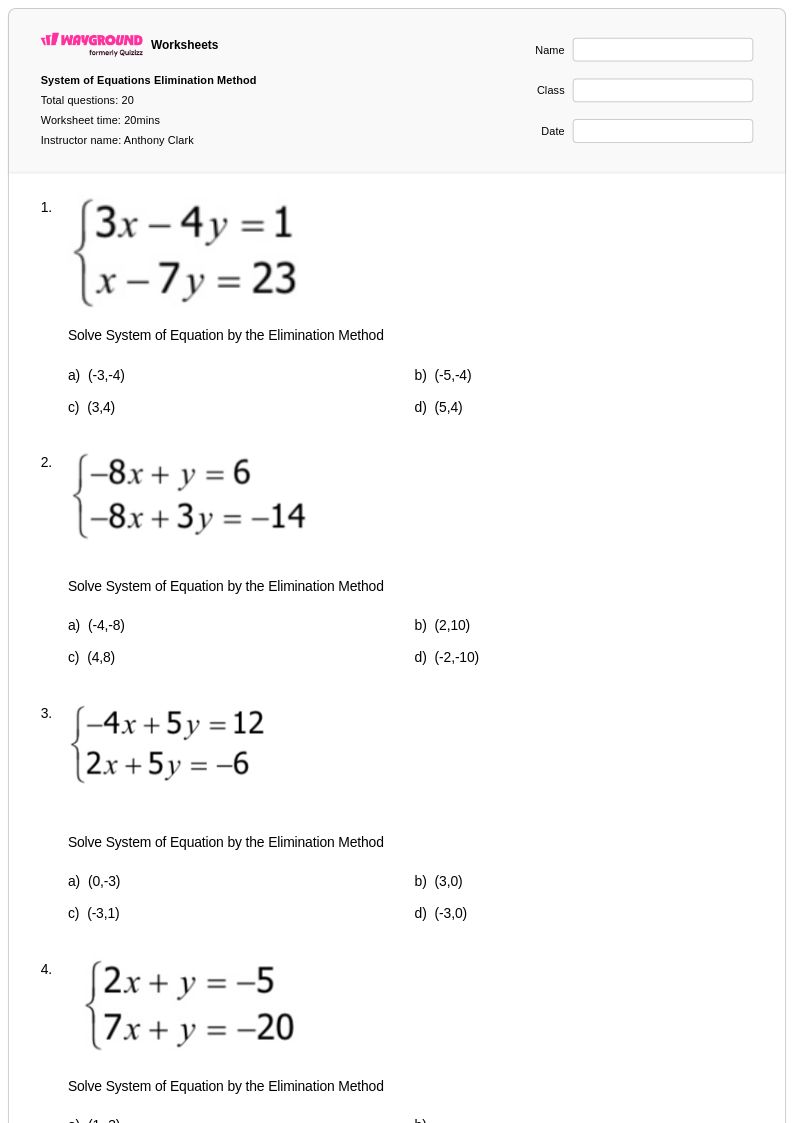
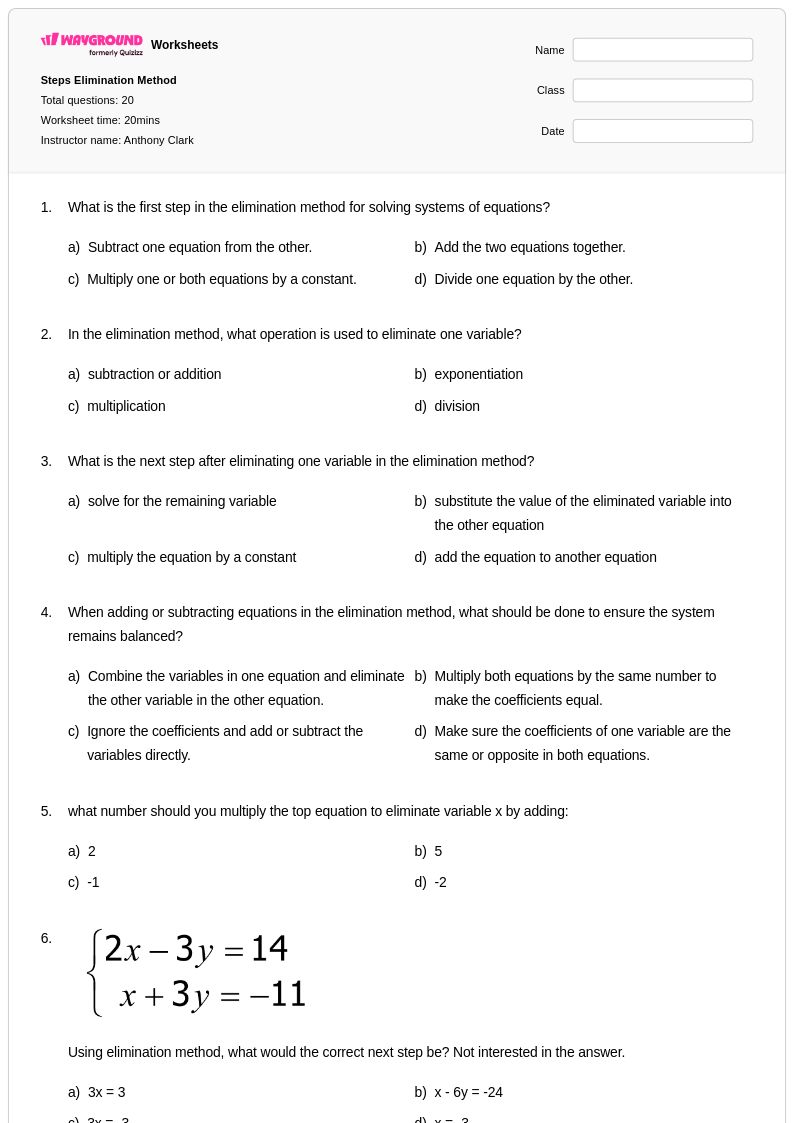
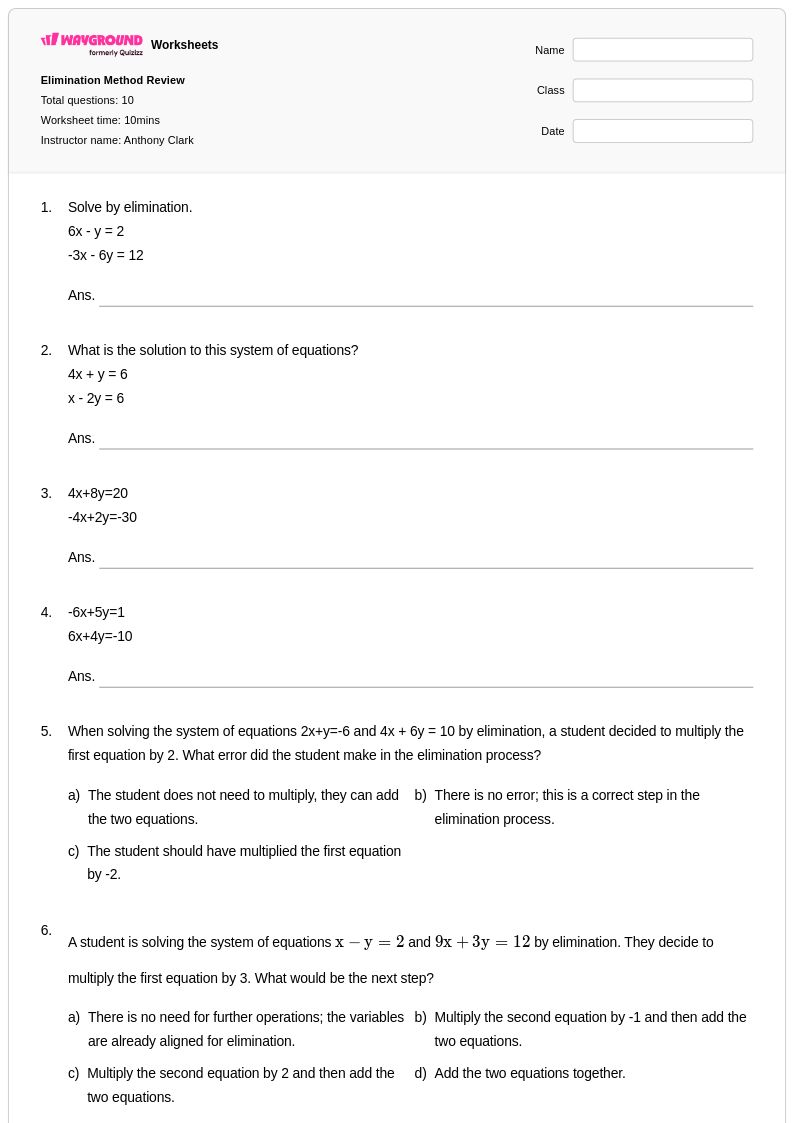
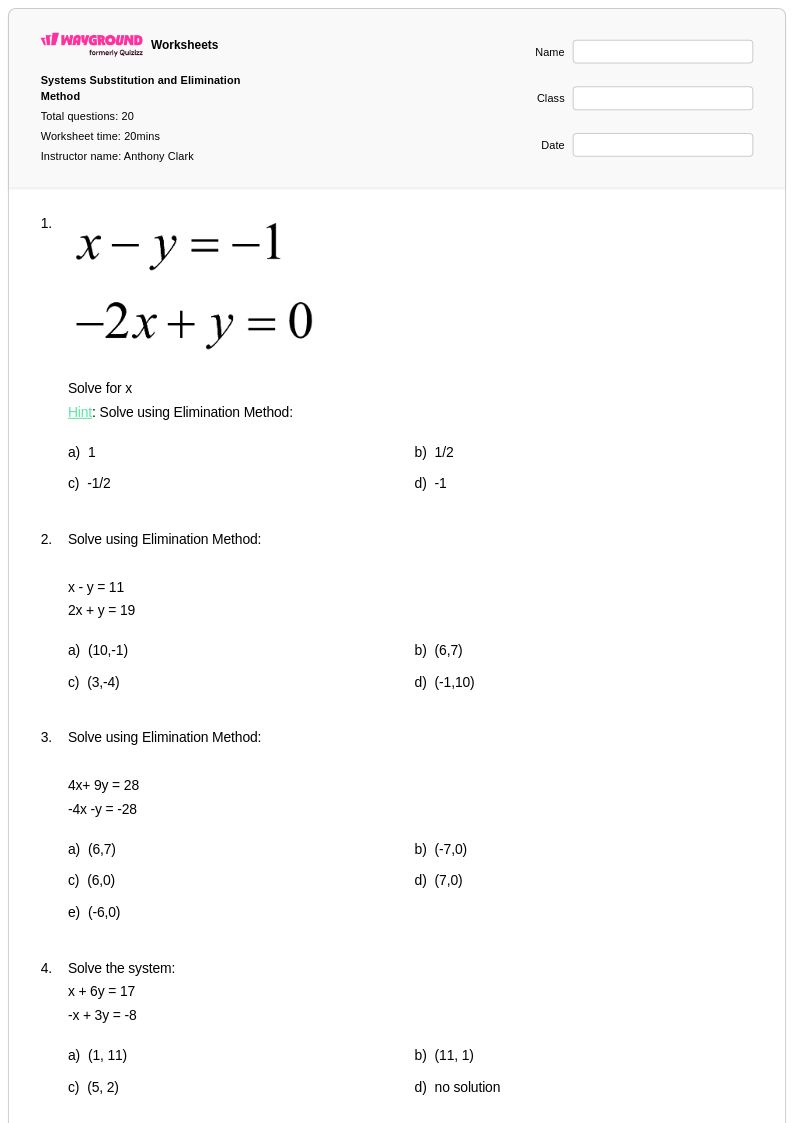
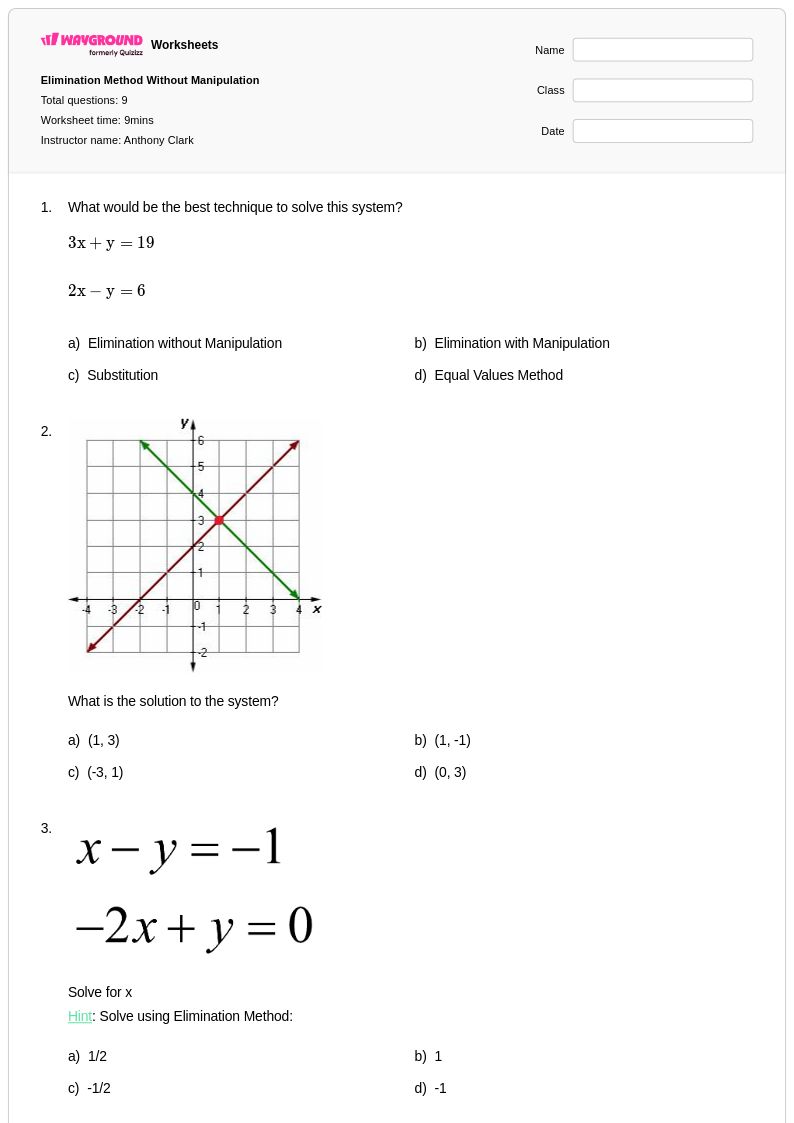
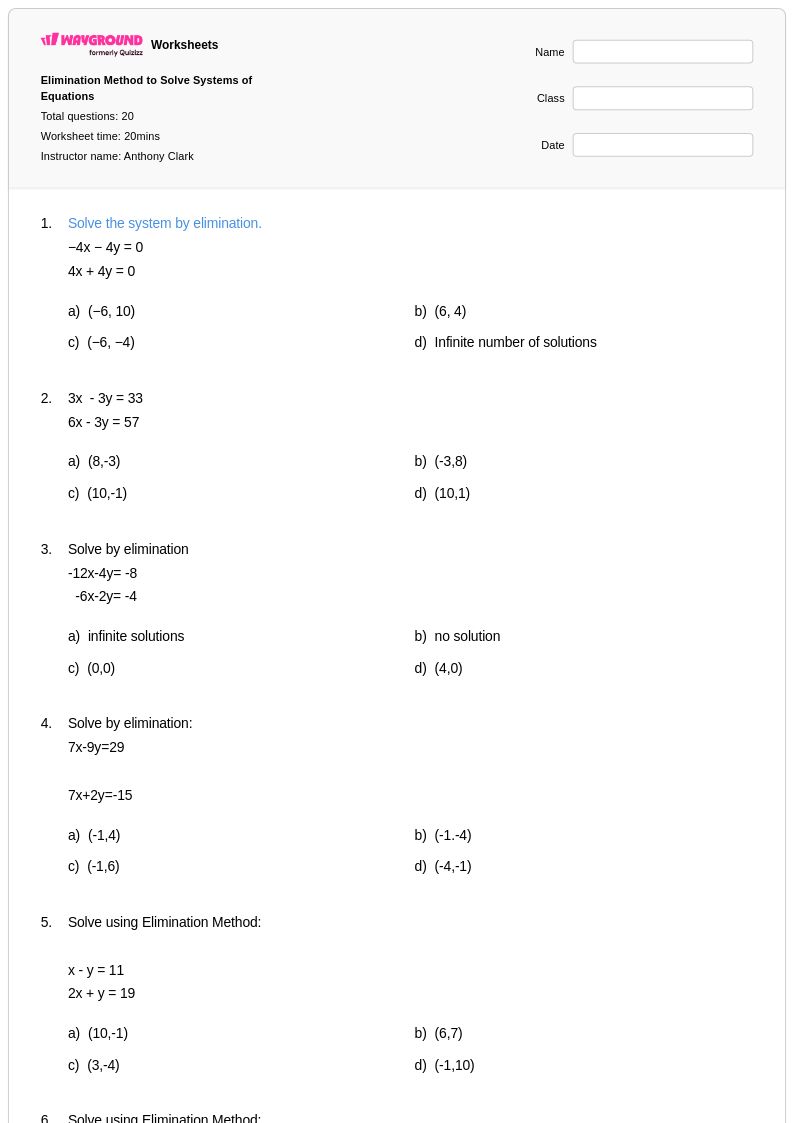
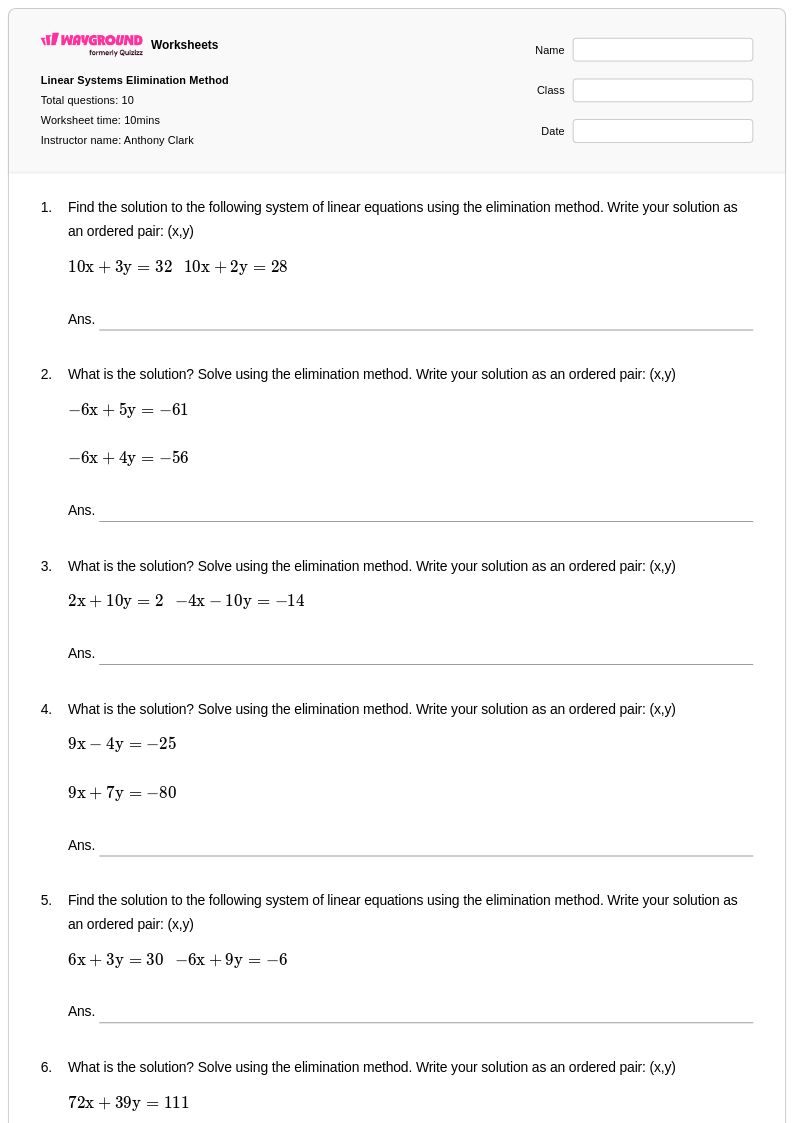
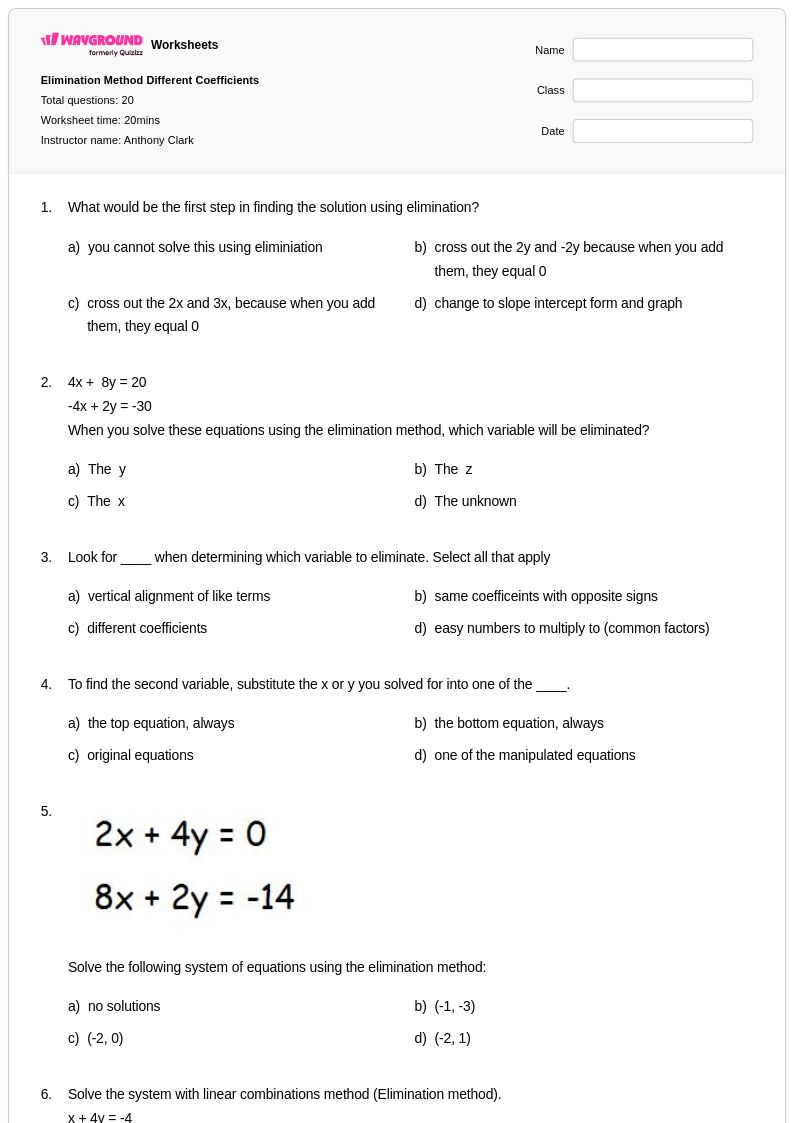
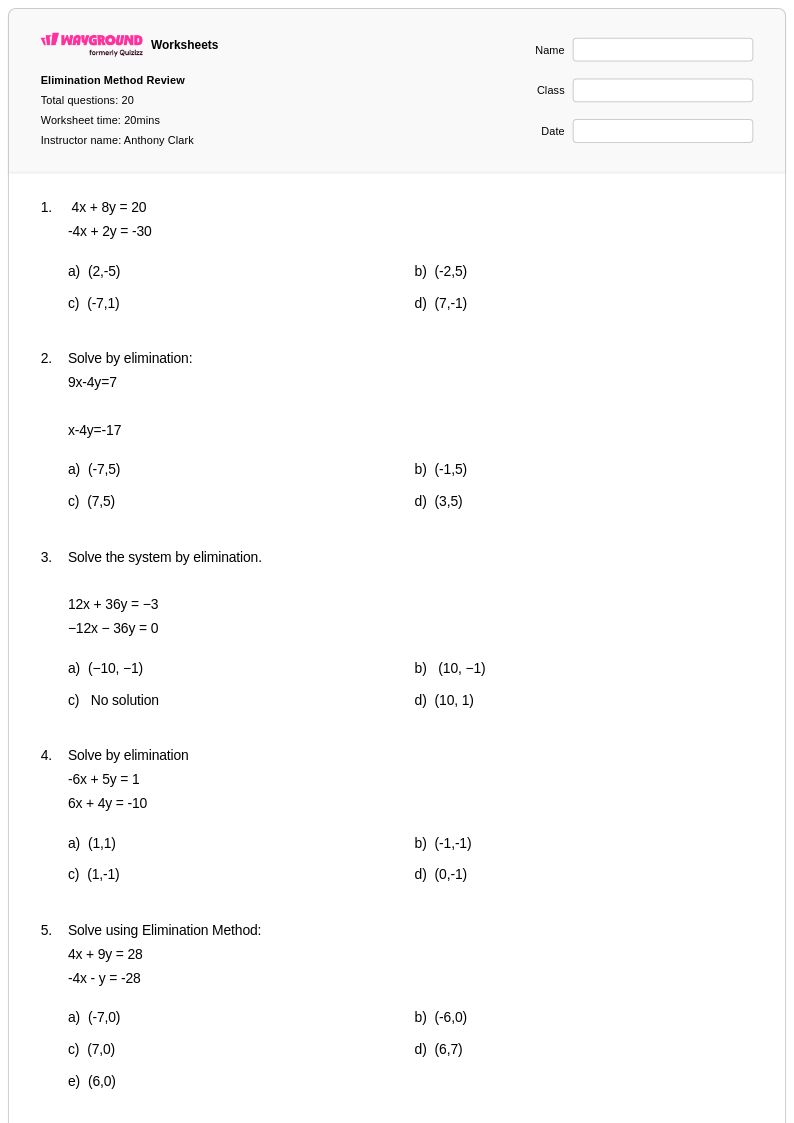
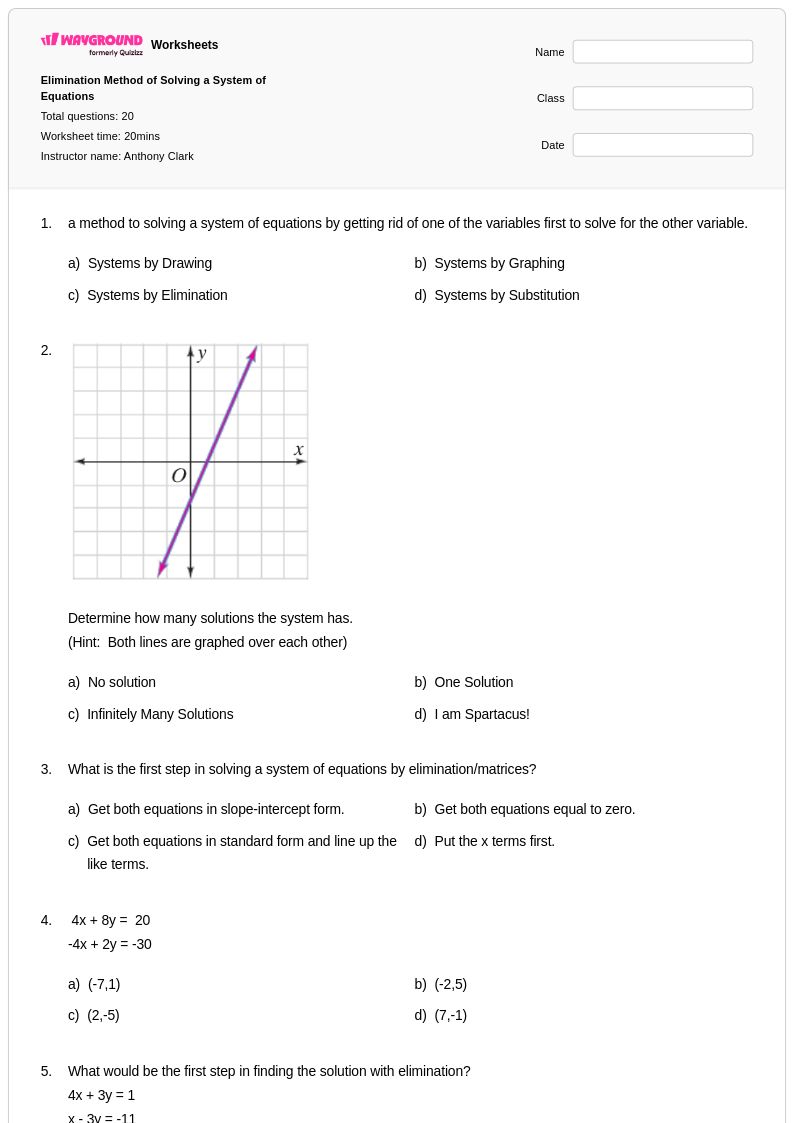
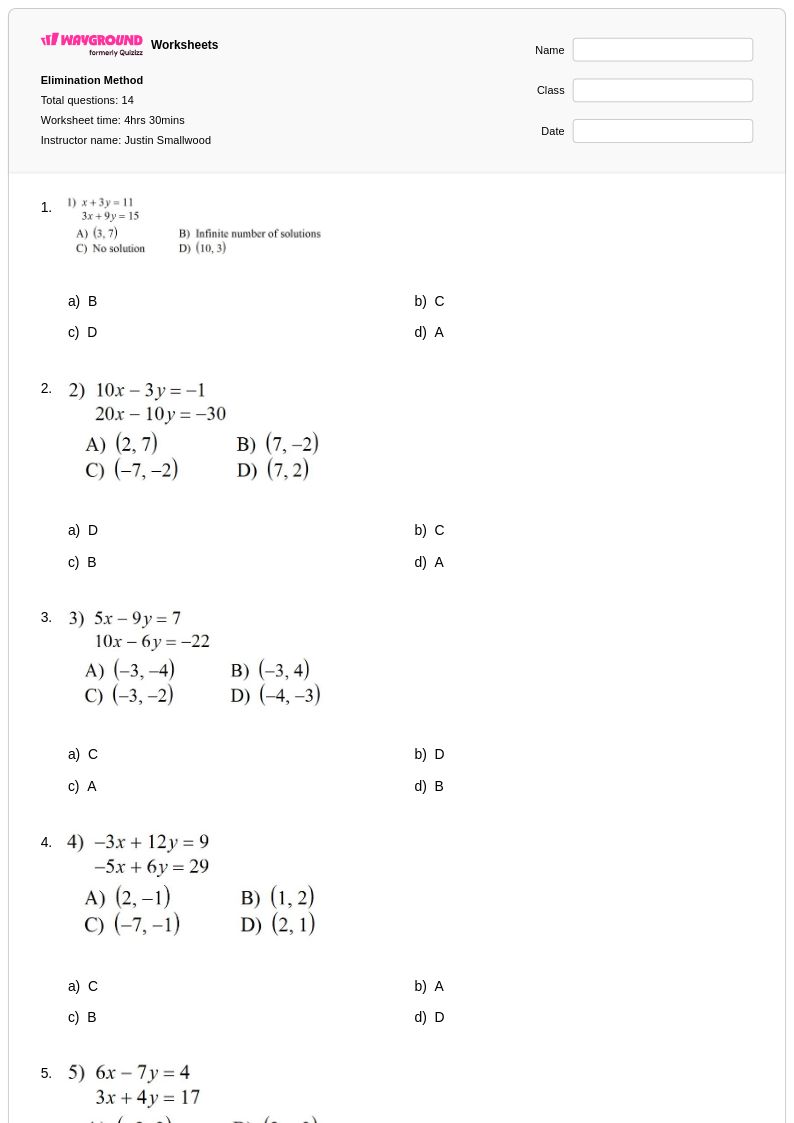
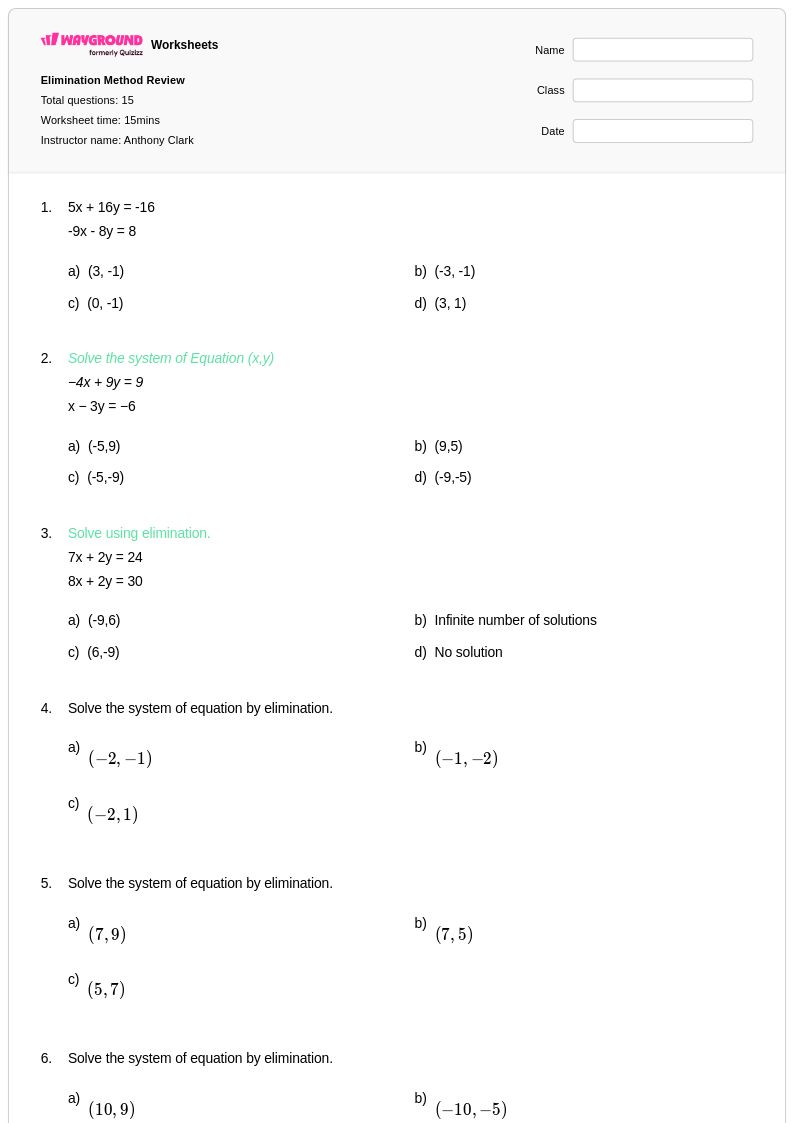
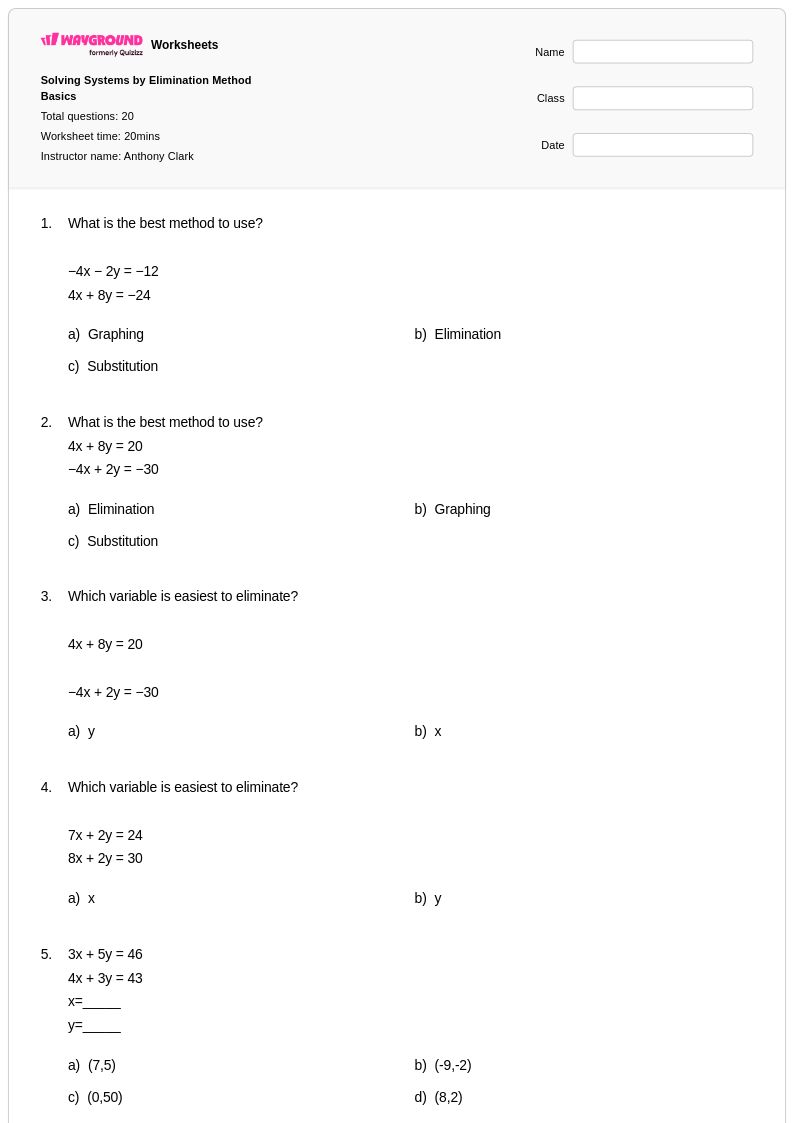
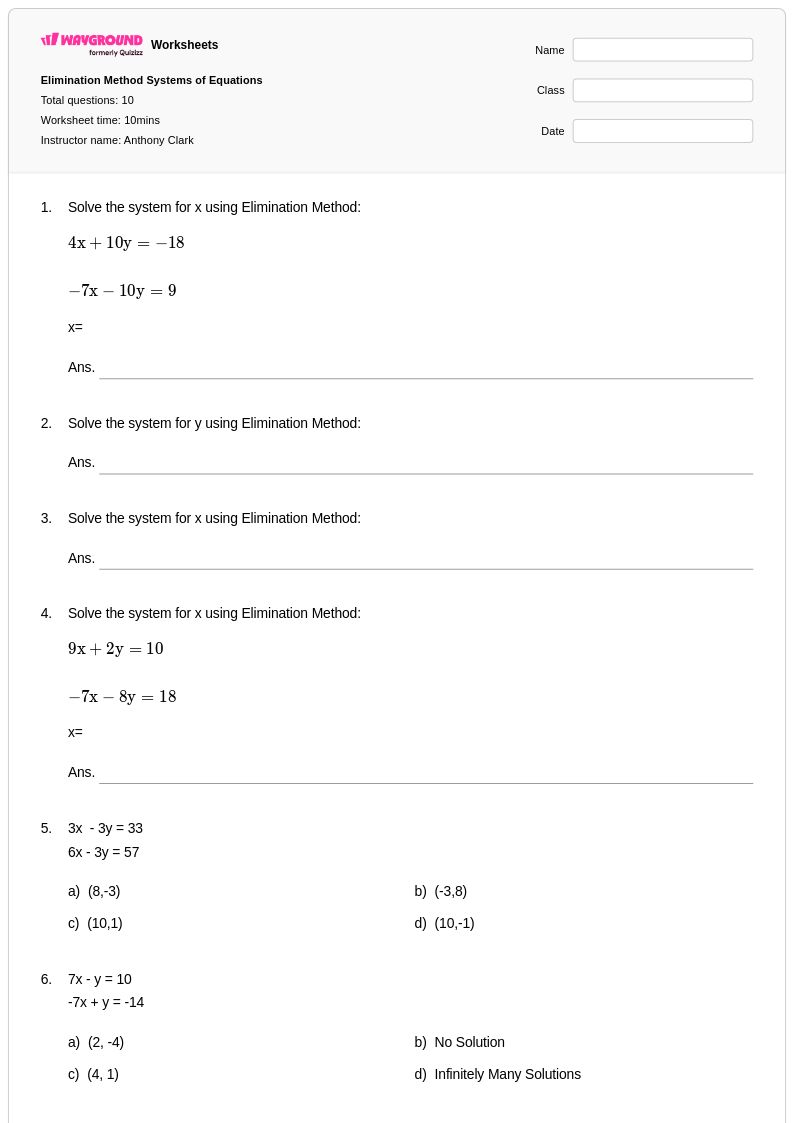
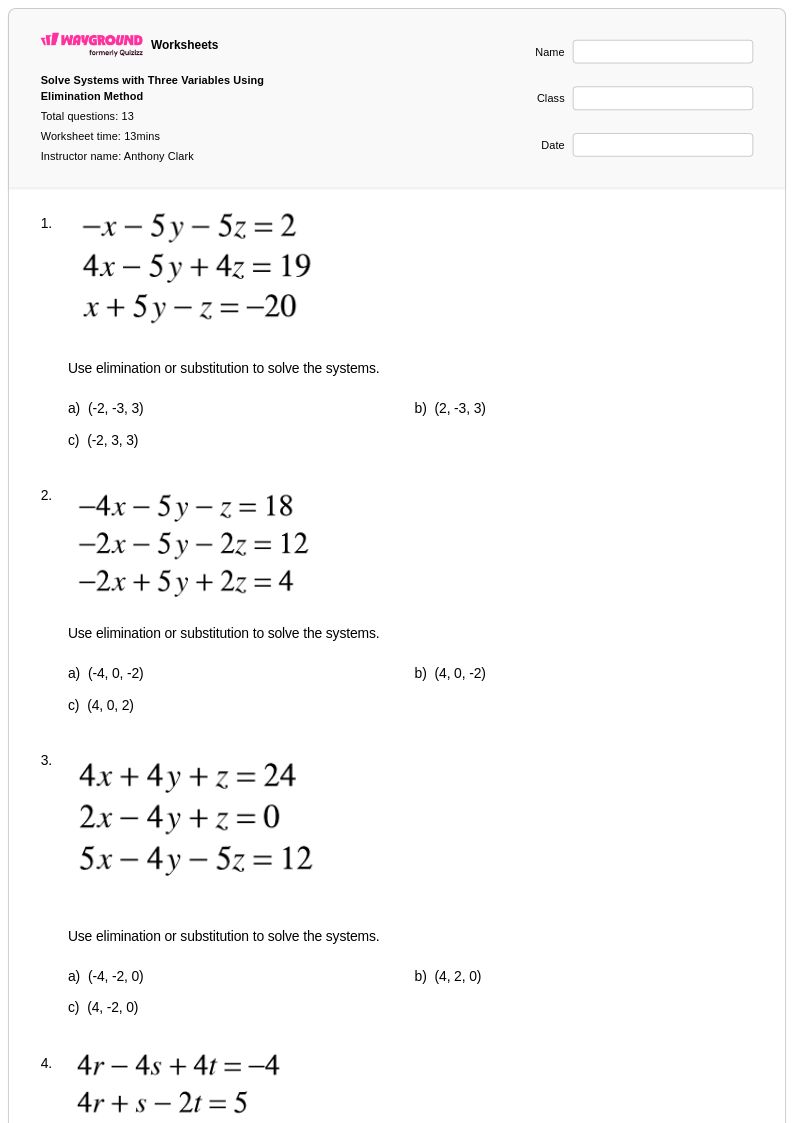
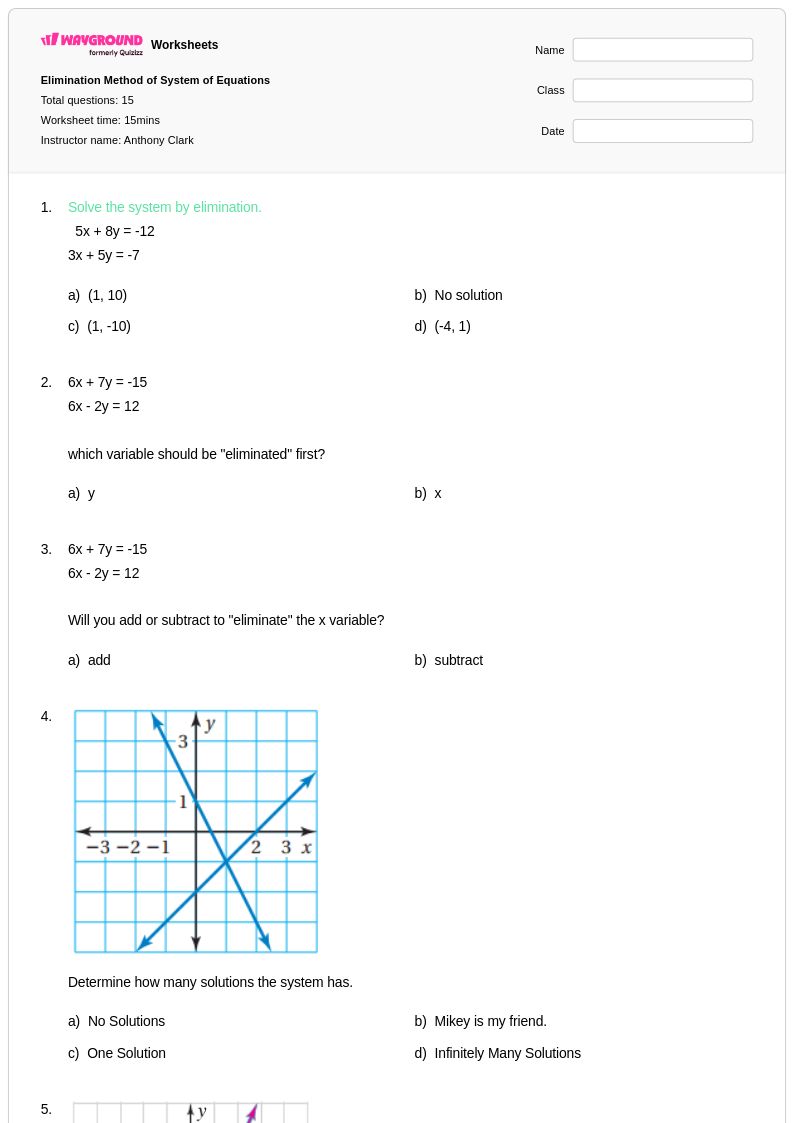
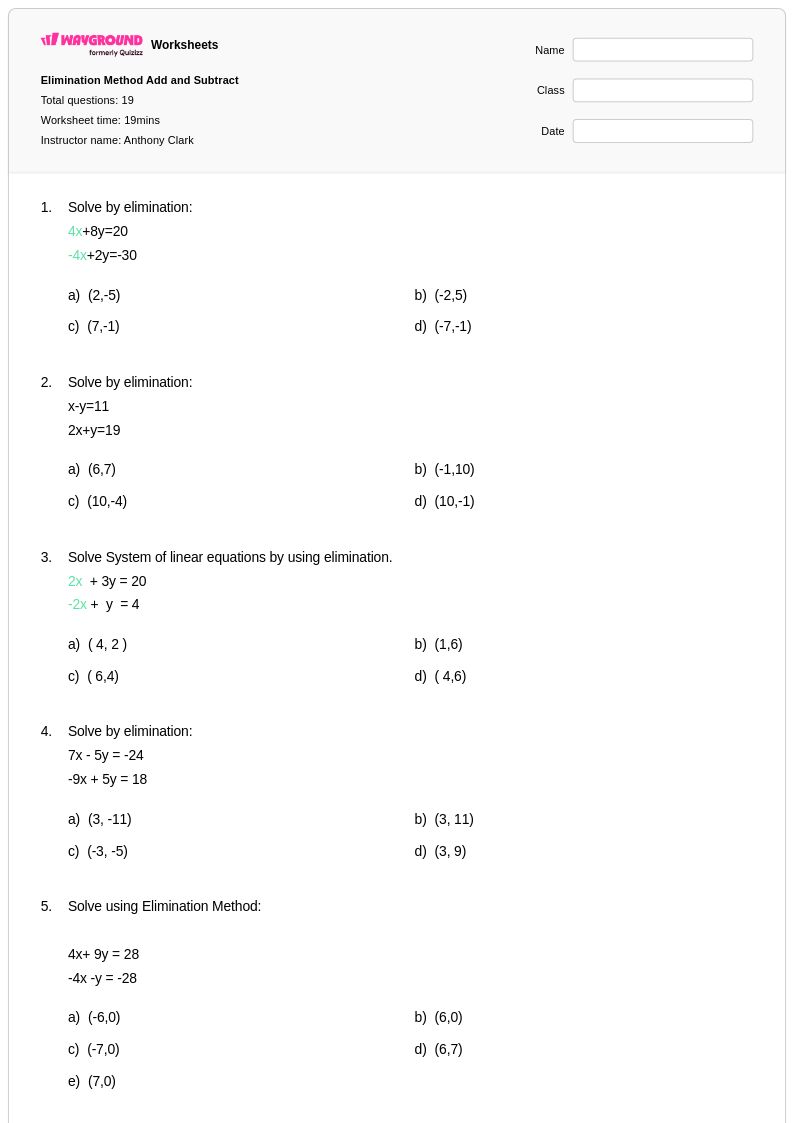
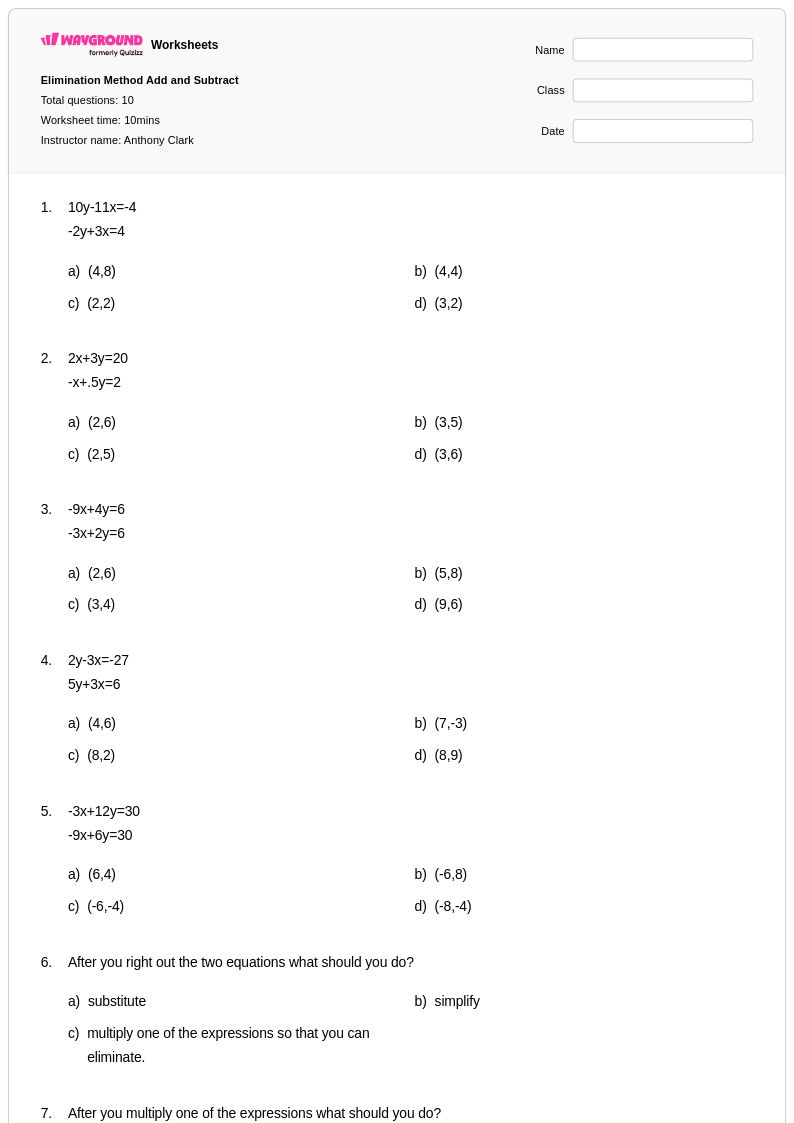
Class 11 elimination method worksheets from Wayground provide comprehensive practice problems and printables with answer keys to help students master solving systems of equations through strategic variable elimination techniques.
Explore printable Elimination Method worksheets for Class 11
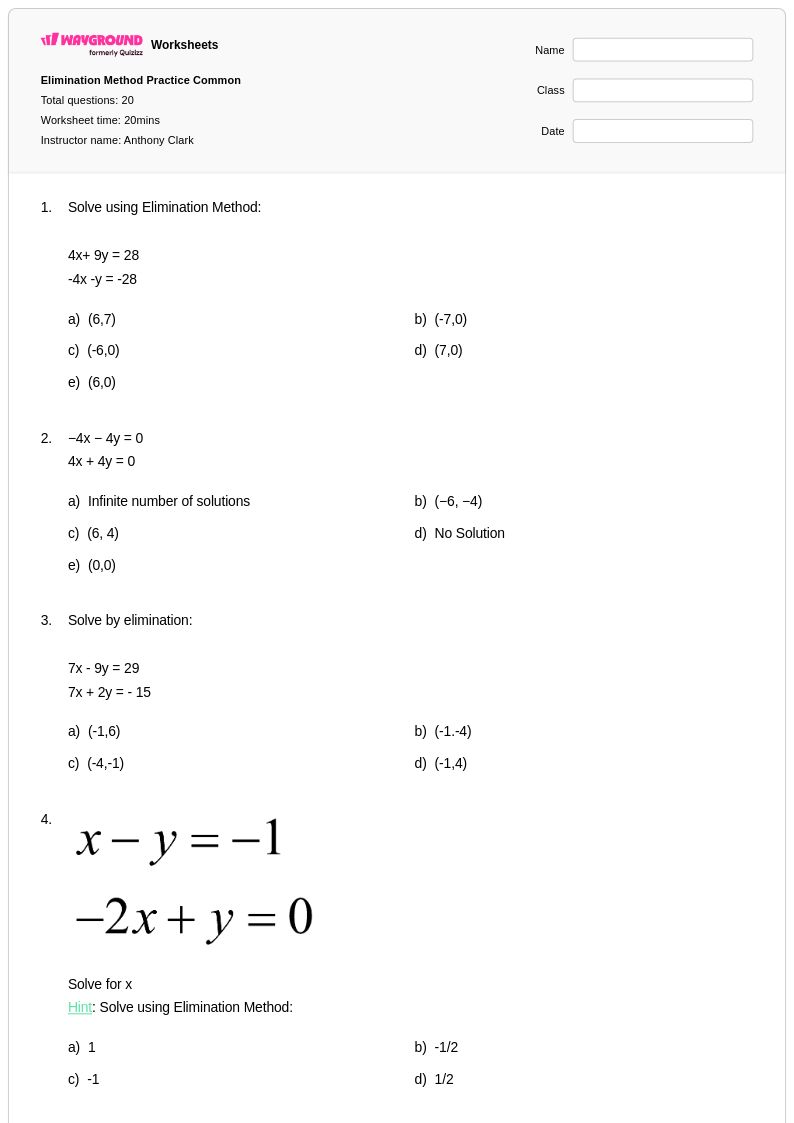
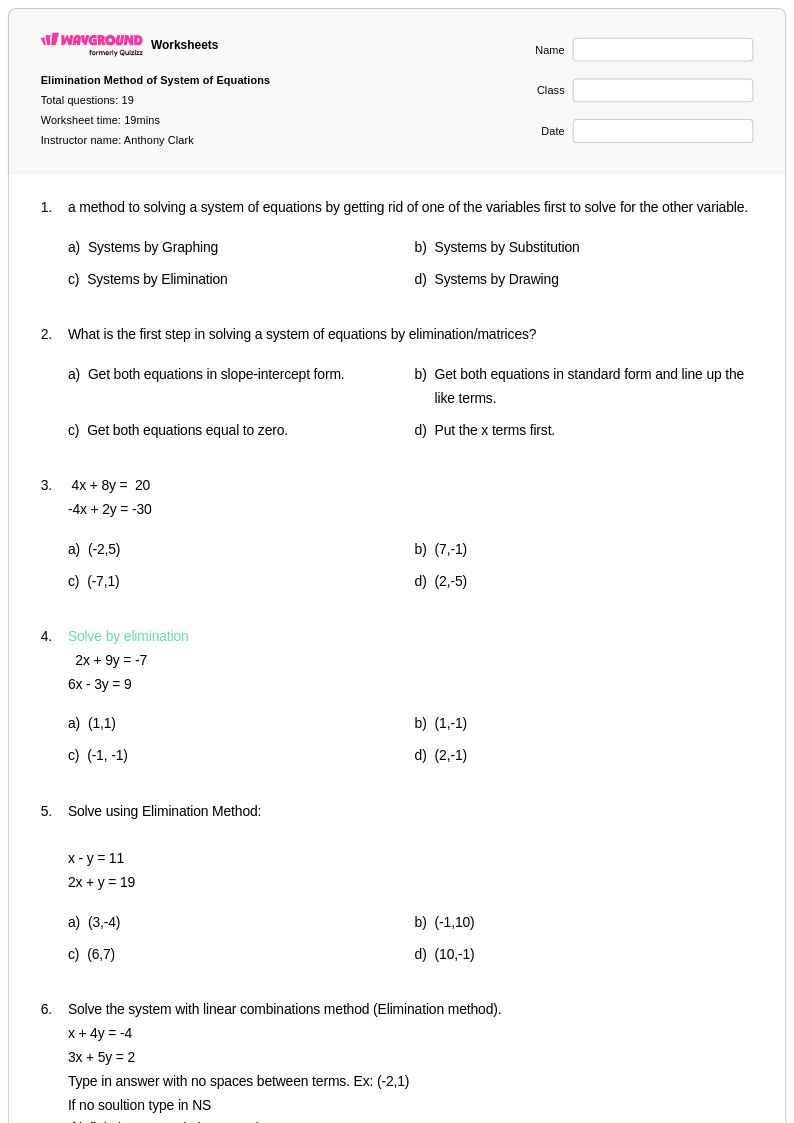
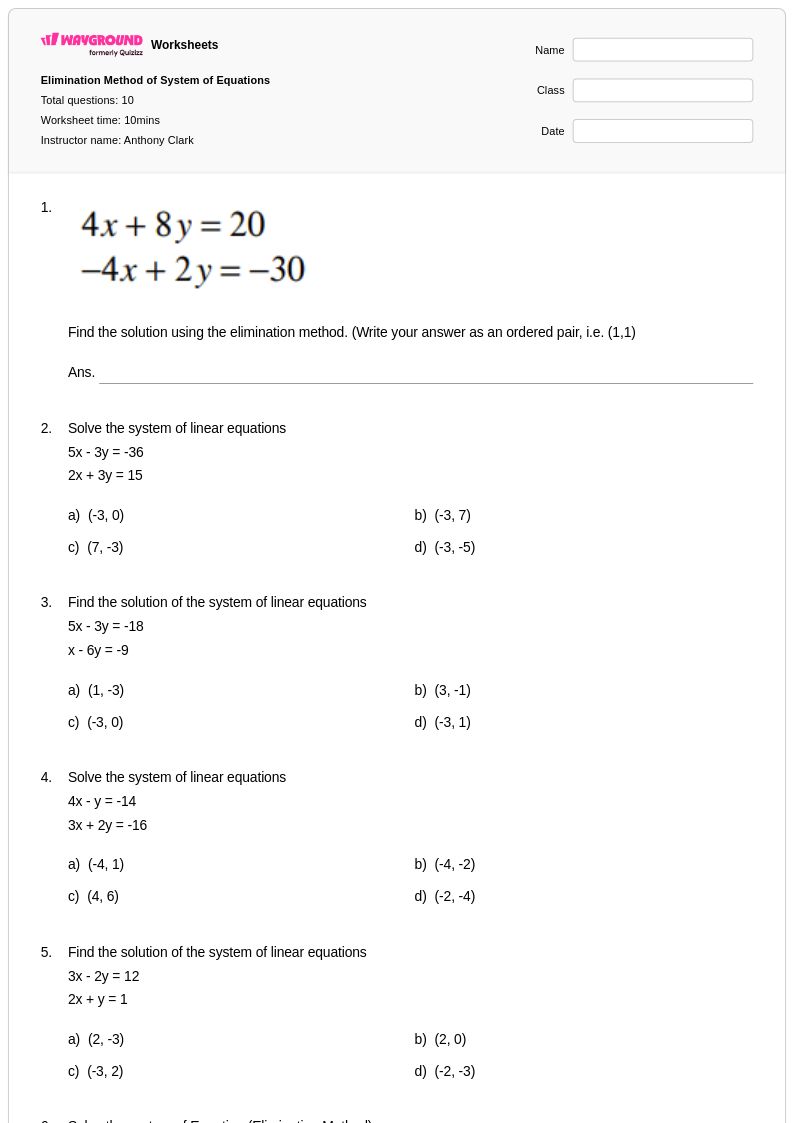
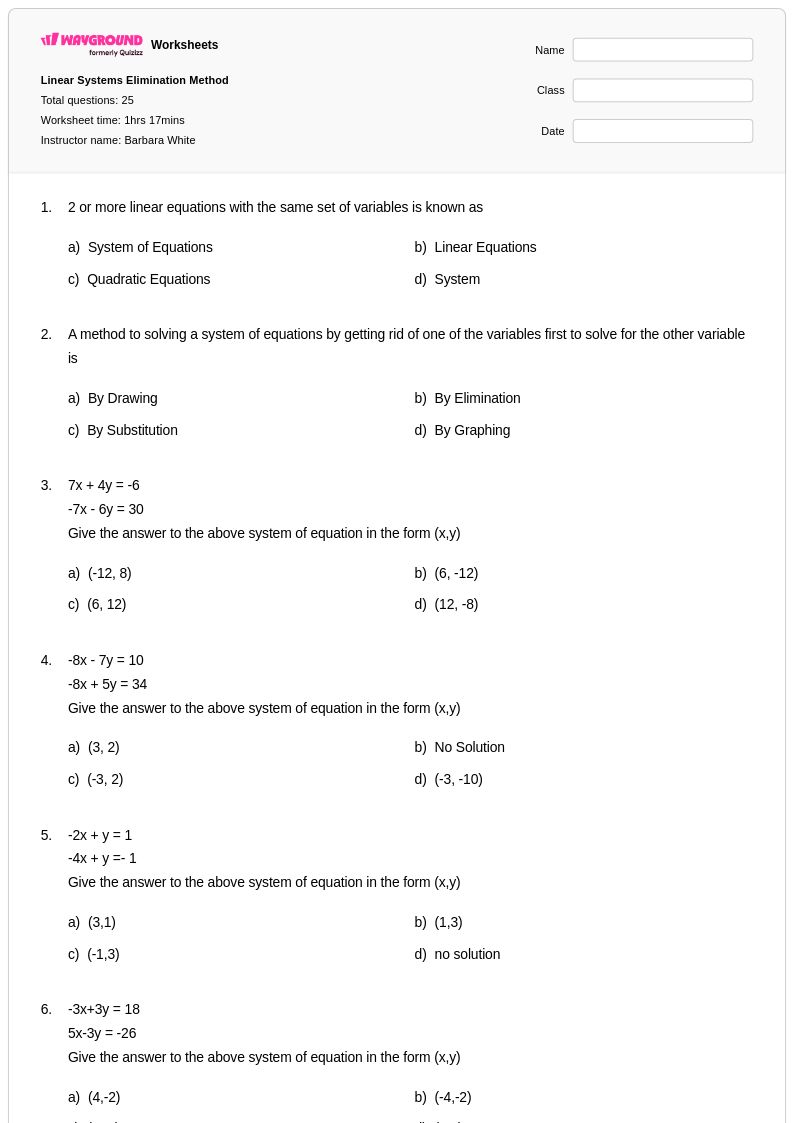
Elimination Method worksheets for Class 11 mathematics provide students with comprehensive practice in solving systems of equations by strategically eliminating variables through addition, subtraction, or multiplication techniques. These worksheets available through Wayground (formerly Quizizz) are designed to strengthen students' algebraic reasoning skills and their ability to manipulate equations systematically to find unique solutions, infinite solutions, or no solution scenarios. The practice problems progress from basic two-variable systems to more complex applications involving fractions, decimals, and real-world contexts, with each worksheet including a detailed answer key to support independent learning. Students work through carefully scaffolded exercises that reinforce the fundamental steps of the elimination method: aligning like terms, creating opposite coefficients, combining equations to eliminate variables, and solving for the remaining unknowns. These free printables in pdf format ensure students develop fluency in recognizing when elimination is the most efficient solution strategy compared to substitution or graphing methods.
Wayground (formerly Quizizz) supports mathematics educators with an extensive collection of teacher-created elimination method resources that seamlessly integrate into Class 11 algebra curricula. The platform's millions of worksheets feature robust search and filtering capabilities that allow teachers to locate materials aligned with specific mathematical standards and differentiated for various skill levels within their classrooms. Teachers can customize existing worksheets or create original practice sets that target specific aspects of the elimination method, whether focusing on integer coefficients for developing learners or incorporating complex rational numbers for advanced students. The flexible digital and printable pdf formats enable educators to implement these resources across diverse learning environments, supporting everything from initial concept introduction and guided practice to remediation for struggling students and enrichment challenges for accelerated learners. This comprehensive worksheet collection streamlines lesson planning while providing the systematic practice essential for students to master the elimination method as a powerful tool for solving systems of equations.
FAQs
How do I teach the elimination method at the 11th grade level?
By Grade 11, the method itself shouldn't be new — the teaching focus is on extending it to harder problem types: systems with rational or decimal coefficients, systems embedded in applied contexts, and recognizing when a system yields no solution or infinitely many solutions rather than a unique one. It's also worth explicitly comparing elimination to substitution and graphing so students can articulate why they'd choose one over another for a given system, which is the kind of reasoning that shows up on standardized assessments.
What exercises help 11th grade students sharpen their elimination method skills?
The most productive practice at this level combines technical complexity with decision-making. Good problem sets include: systems with fractional or decimal coefficients, real-world applications (mixture, investment, or rate problems), and systems that produce a contradiction or identity — so students have to interpret the result, not just report a number. Wayground's Grade 11 worksheets progress through these types with detailed answer keys that show full working, which matters when students are self-checking multi-step problems.
What mistakes do 11th graders make with the elimination method?
At this level, pure mechanical errors are less common than interpretive ones. Students often solve the algebra correctly but misread a "no solution" result — they'll recheck their arithmetic rather than recognizing that parallel lines don't intersect. With word problems, the frequent error is solving for both variables but then answering the wrong question (e.g., reporting x when the problem asked for x + y). Building a habit of re-reading the question after solving catches most of these.
How do I use Wayground's Grade 11 elimination method worksheets?
You can assign these as a digital quiz on Wayground — students work through problems online and you get results without manual collection — or print the PDF for paper-based practice. Every worksheet includes a complete answer key. For paper submissions, the Wayground for Teachers app lets you scan and grade student work directly, which keeps the workflow efficient even when you're not running a digital session.
How does the elimination method fit into the 11th grade Common Core math progression?
Common Core's high school algebra standards expect students to solve systems fluently and to use that skill in modeling real-world situations — by Grade 11, the expectation is that elimination is a tool students reach for confidently, not a procedure they're still learning. At this stage, the progression points toward systems involving nonlinear equations and, in some courses, an introduction to matrix methods where elimination is the underlying logic. The Grade 11 focus is on applying the method accurately in complex, multi-step contexts rather than building it from scratch.
How can I support diverse learners in my 11th grade class with these worksheets?
Wayground's worksheet tools let you produce an alternate version with larger font, wider spacing, or a dyslexia-friendly font — useful for students whose difficulty is navigating dense multi-step notation rather than the algebra itself. For English language learners working through applied problems, the platform's translation feature can render the worksheet in another language without changing the mathematical content. These versions can be prepared before class and assigned to specific students without drawing attention to the accommodation.