Free Printable Exponential Growth and Decay Worksheets for Class 11
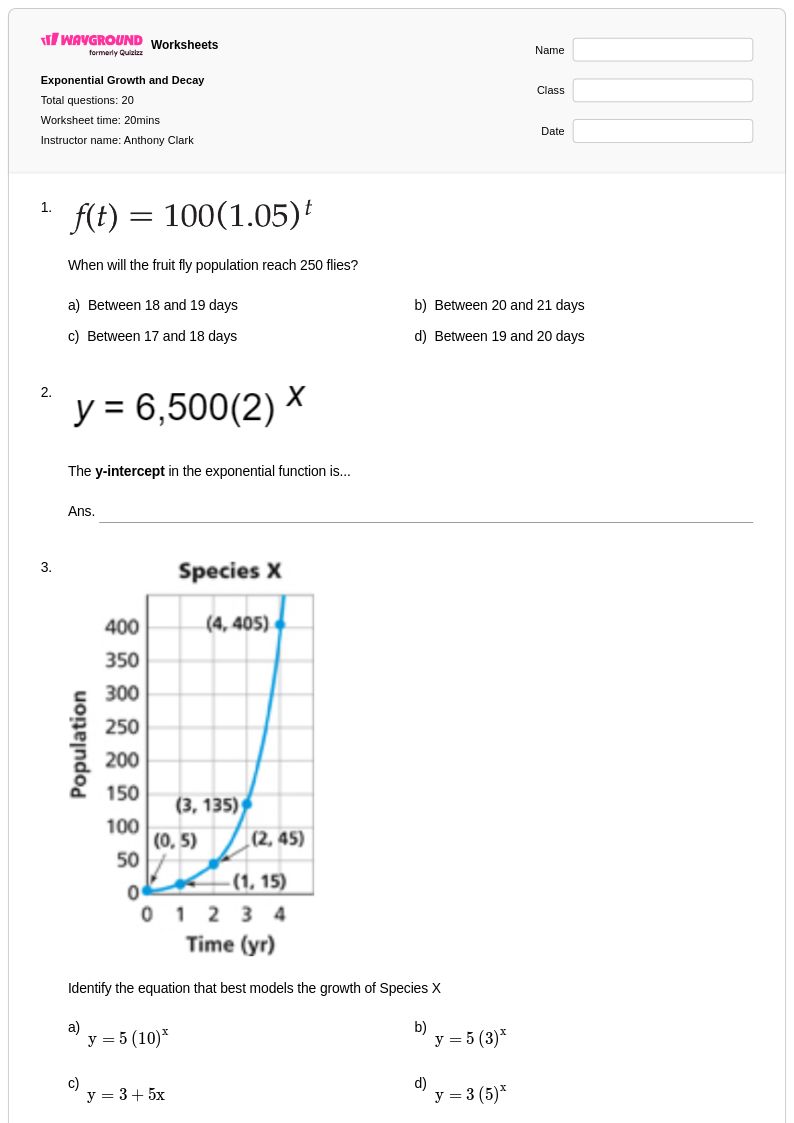
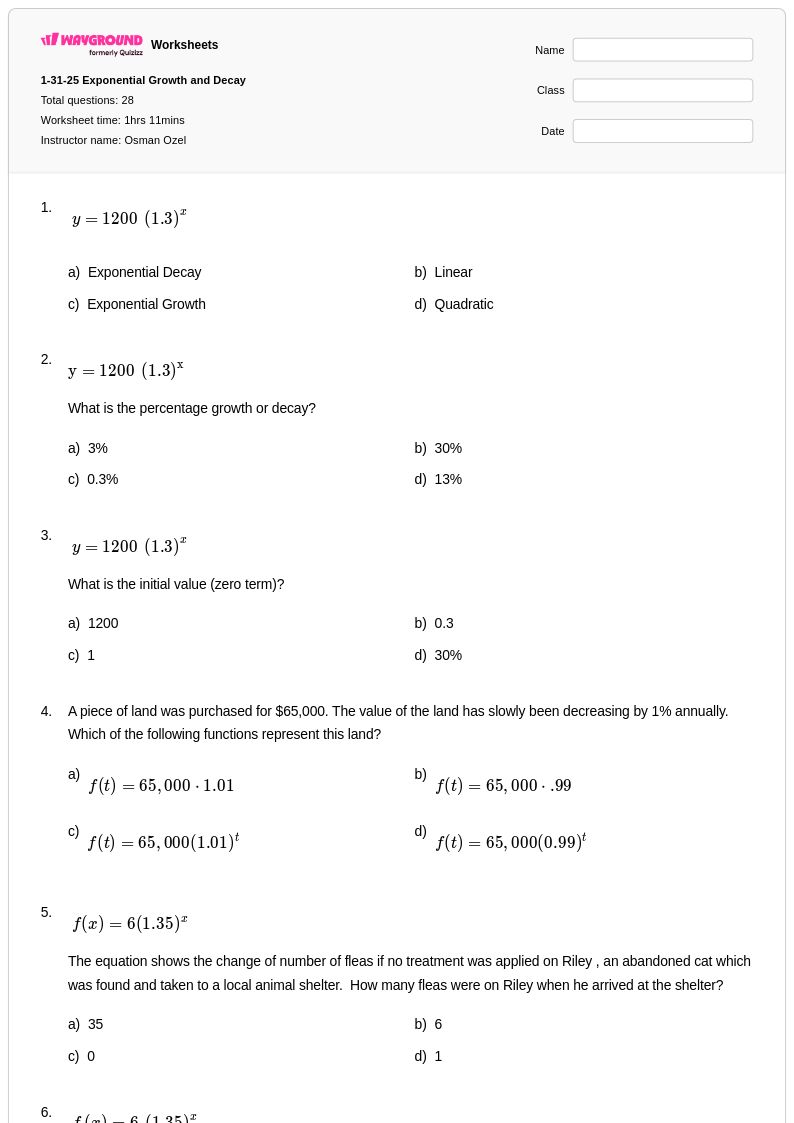
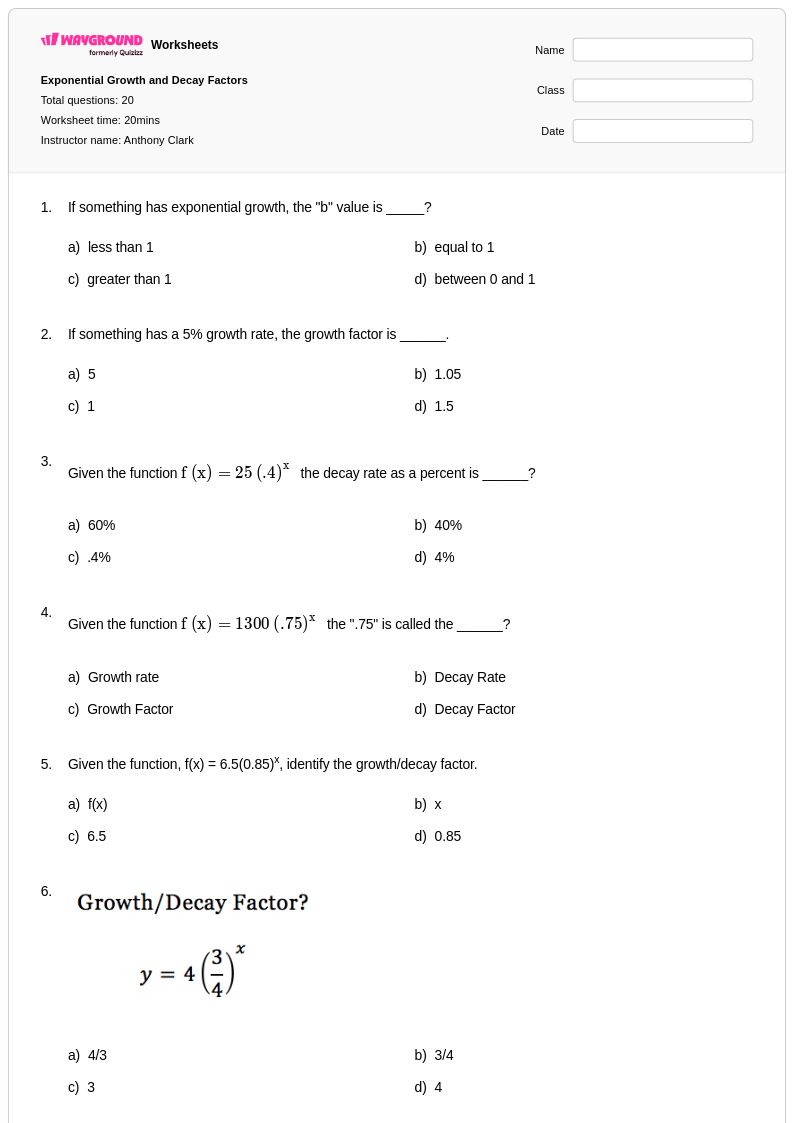
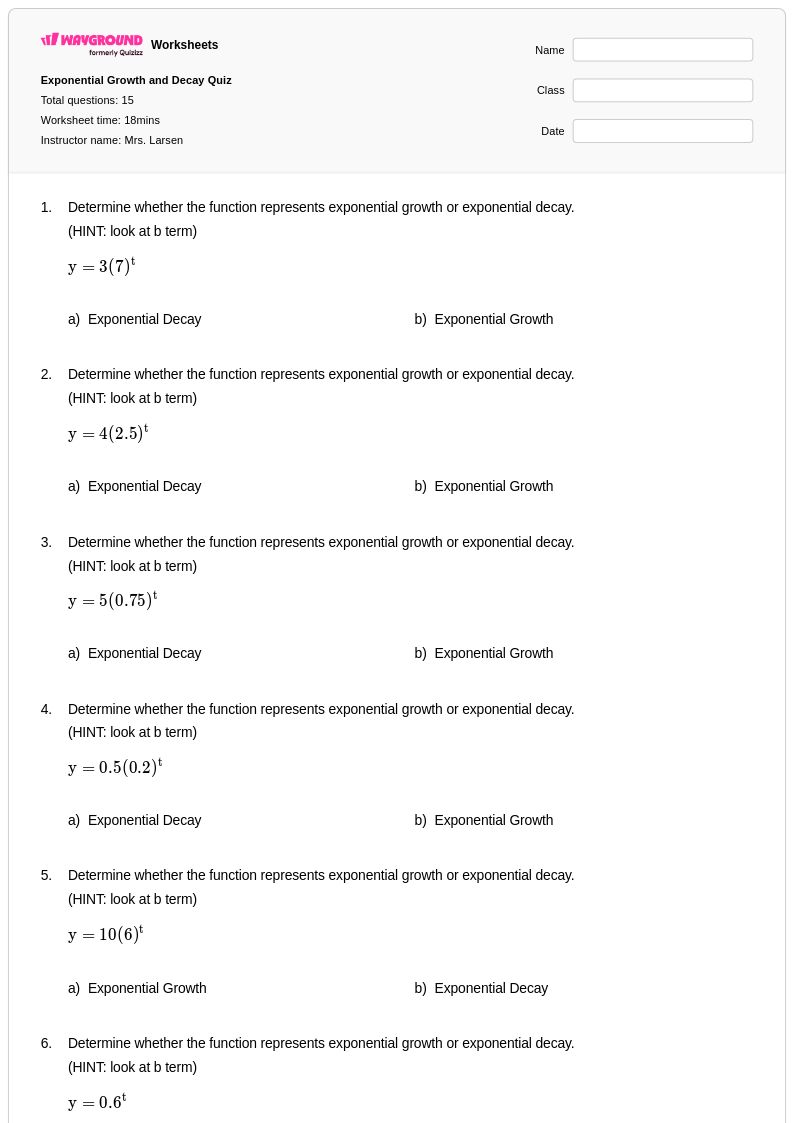
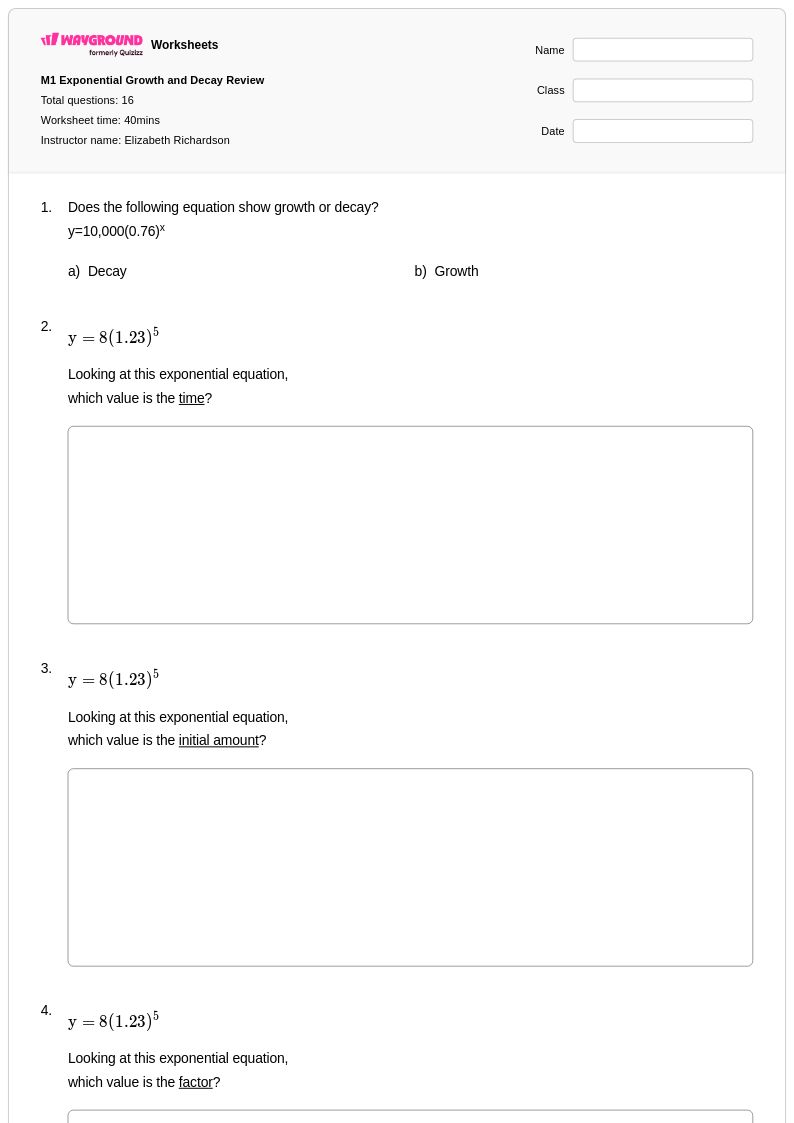
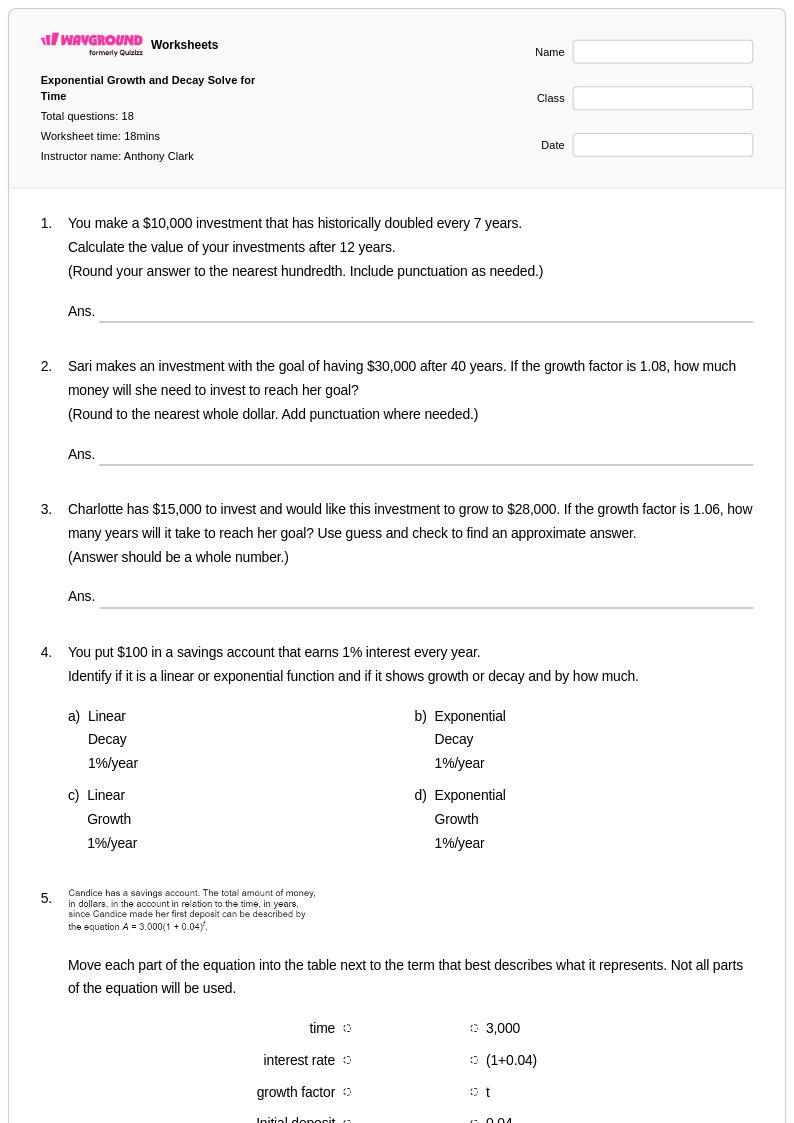
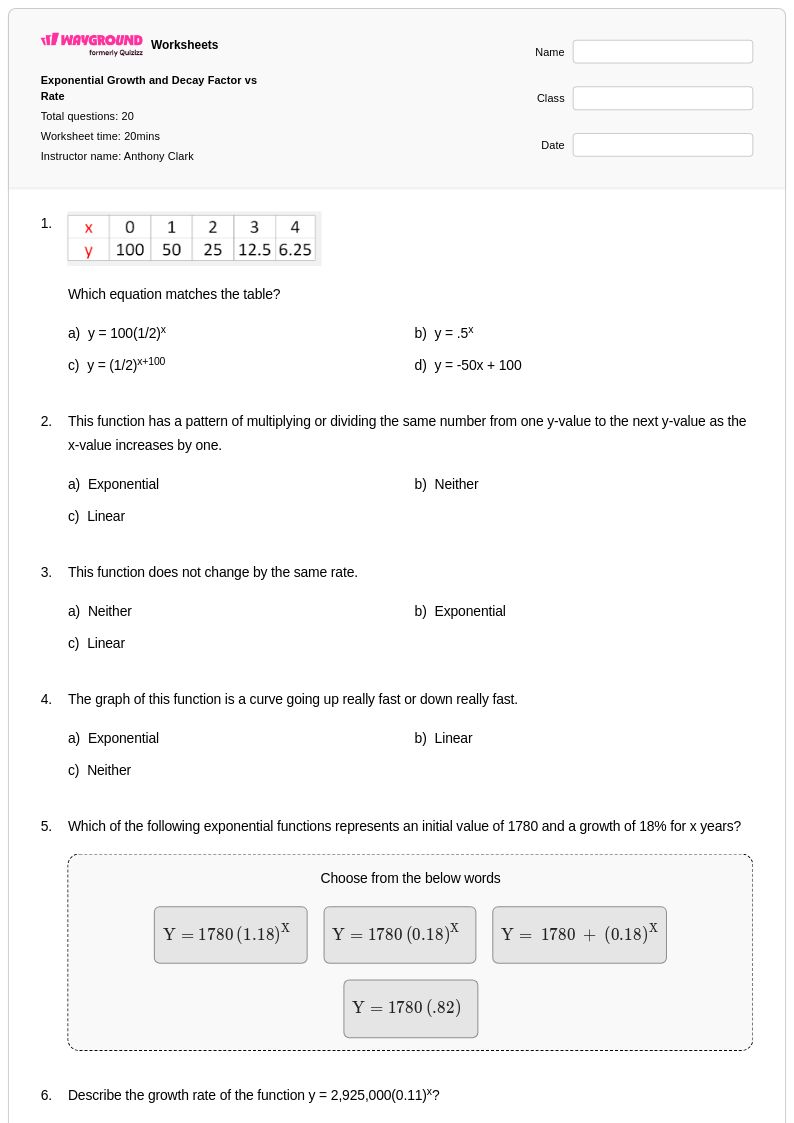
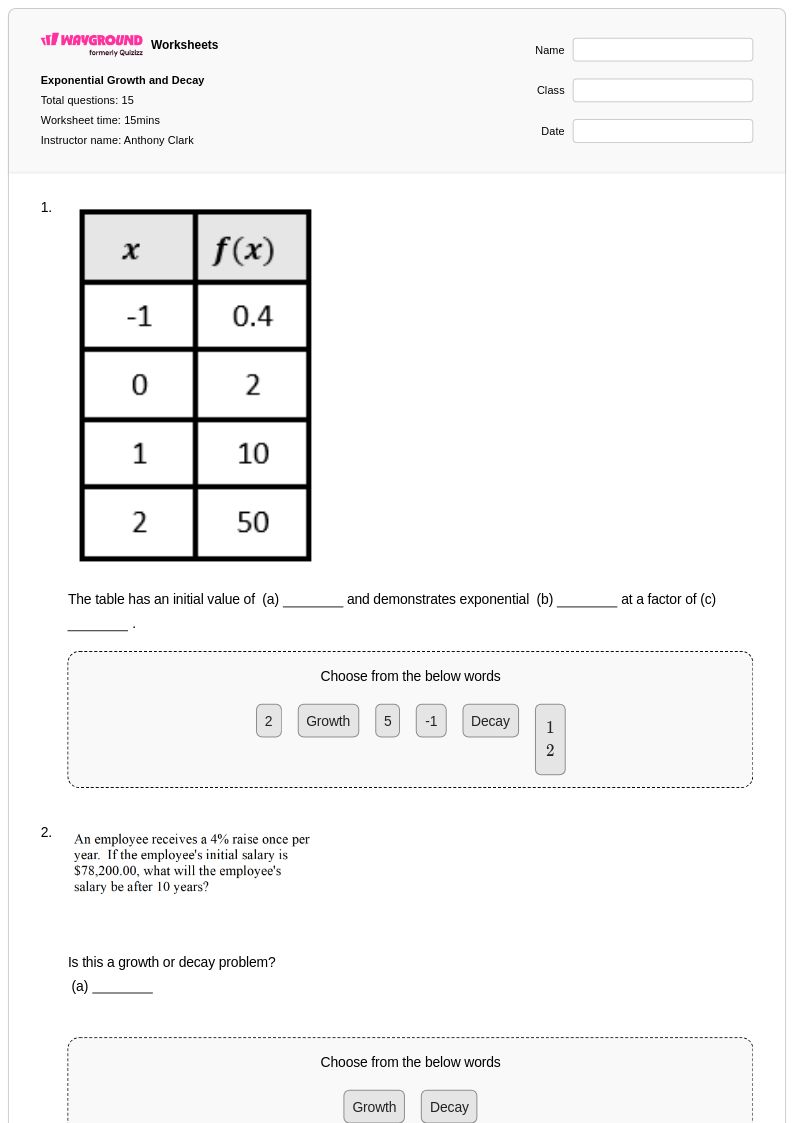
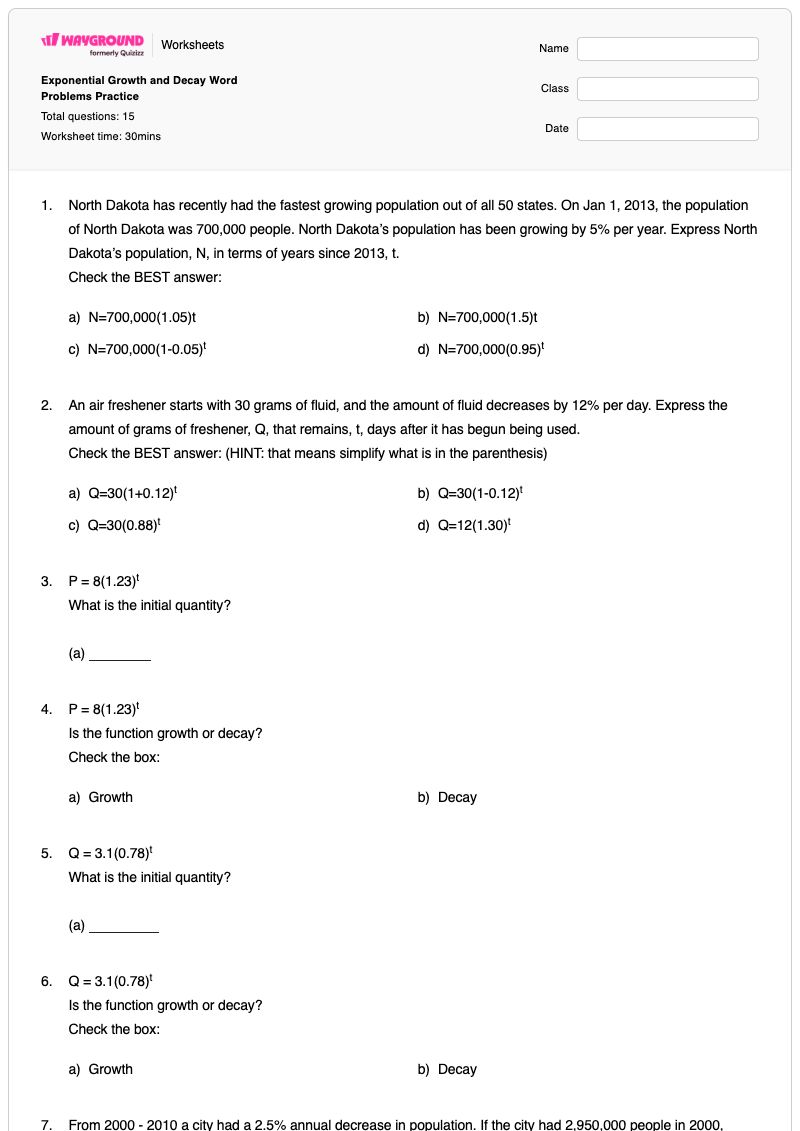
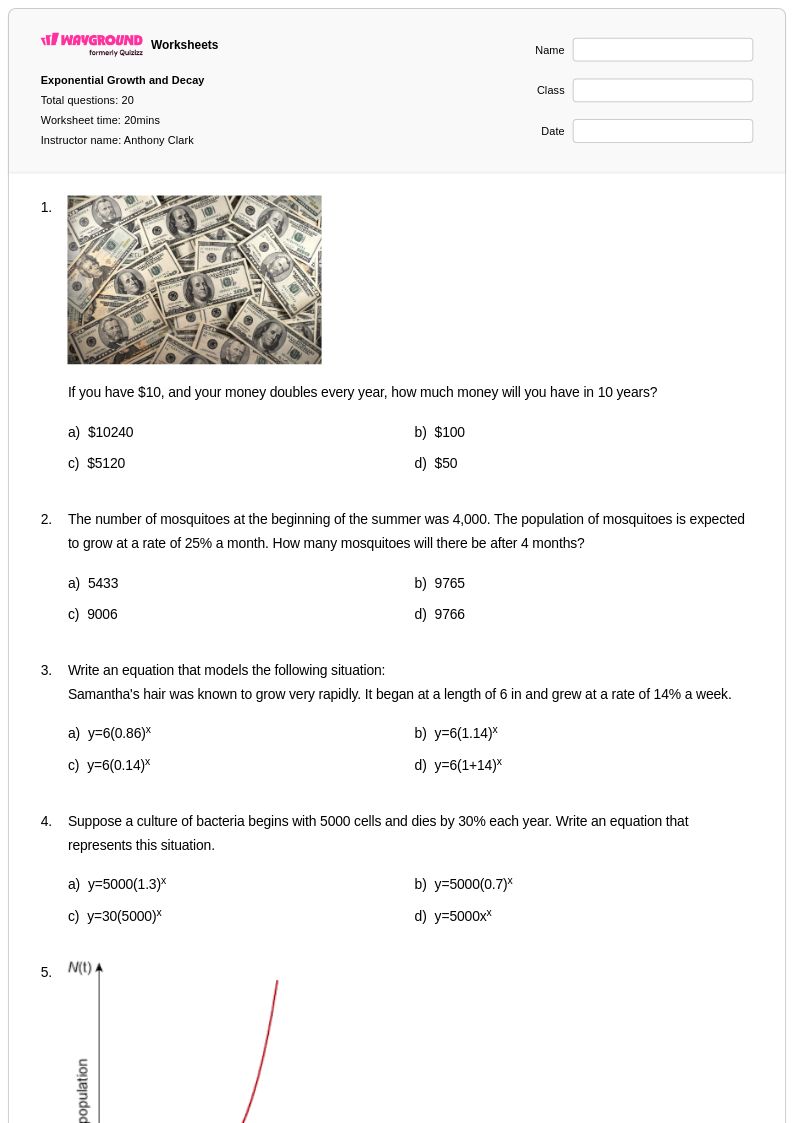
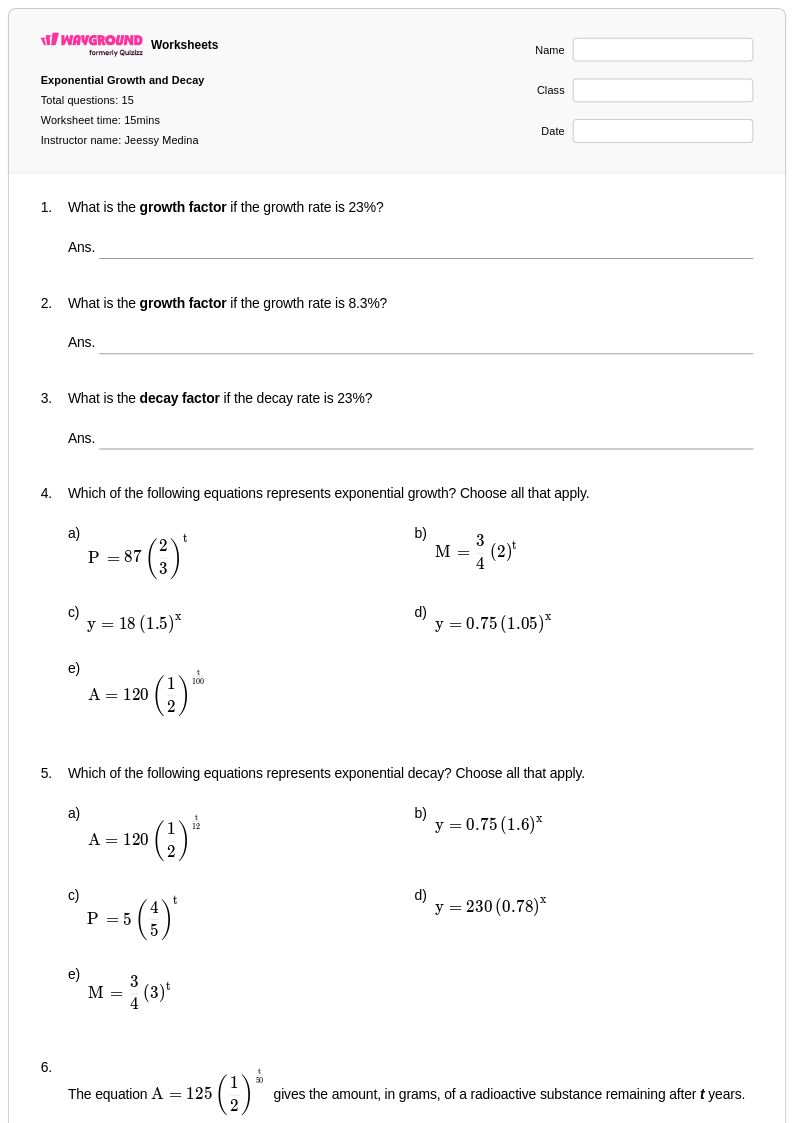
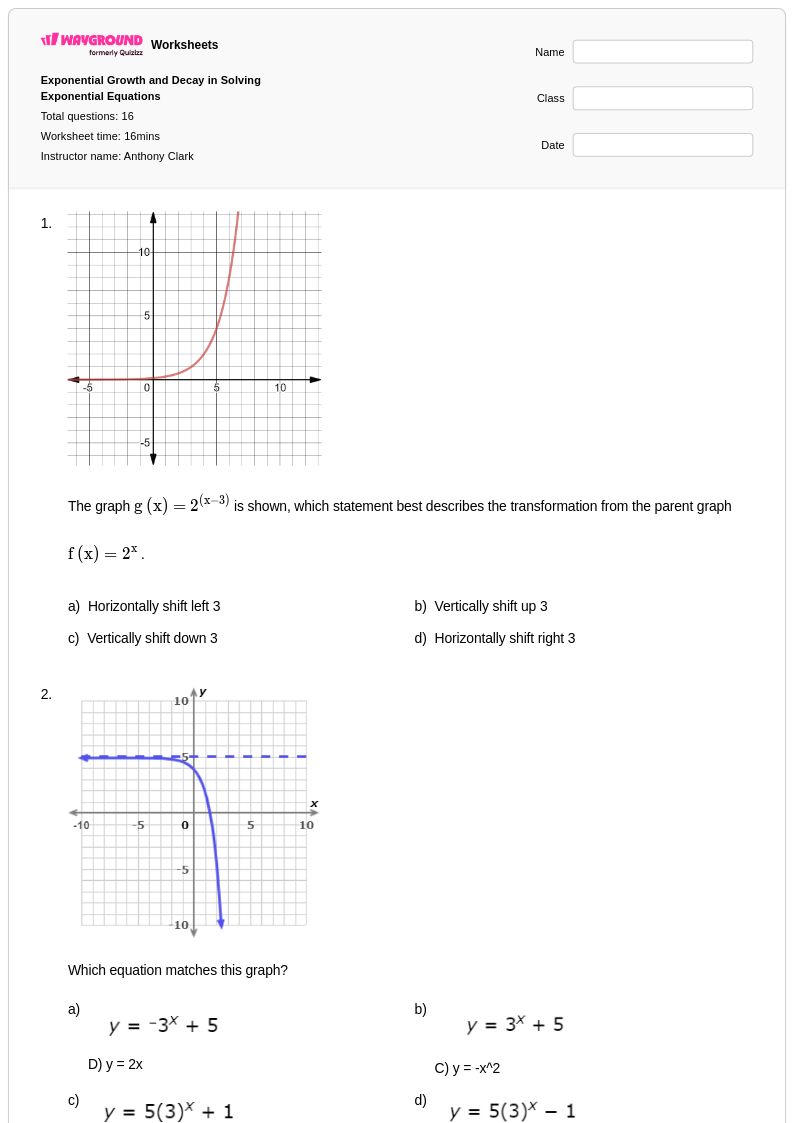
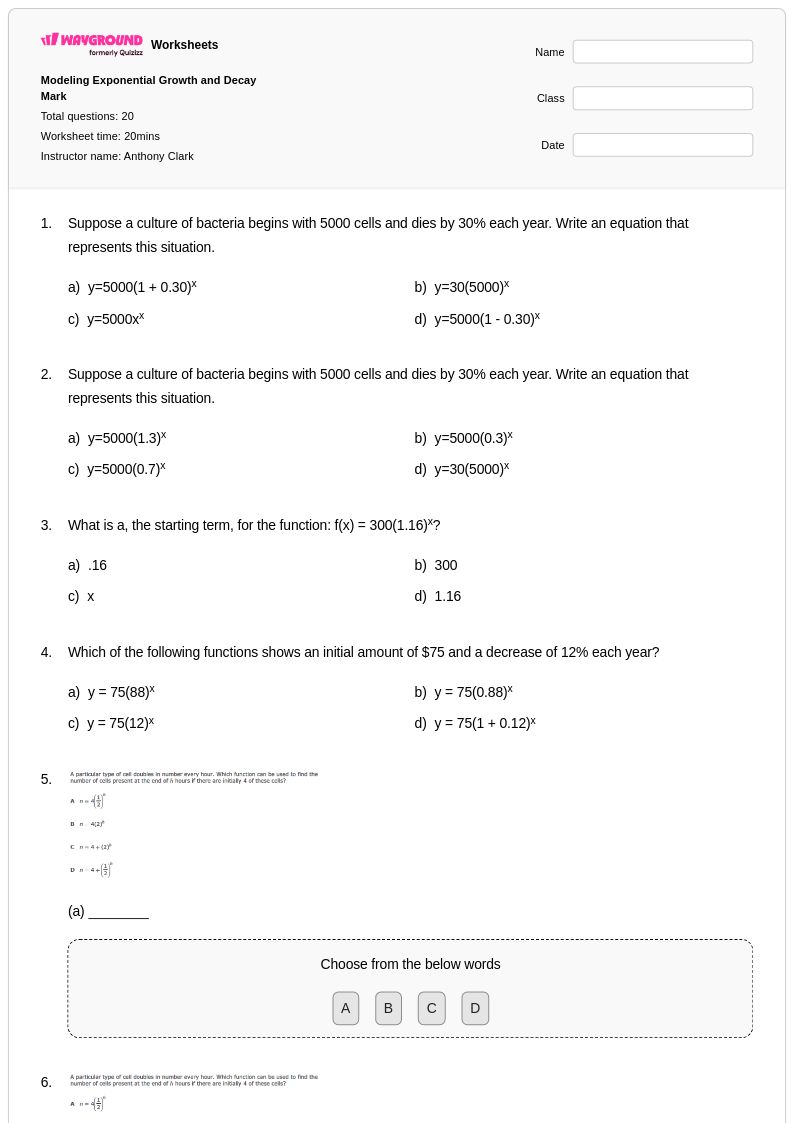
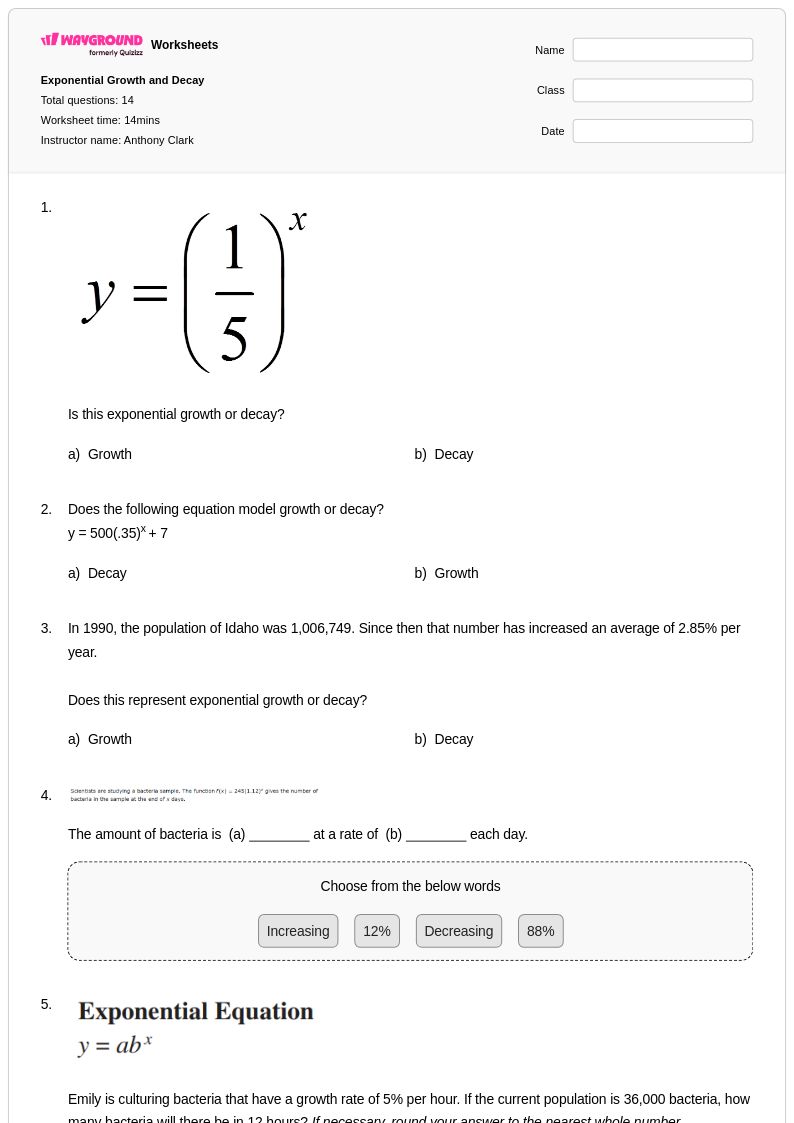
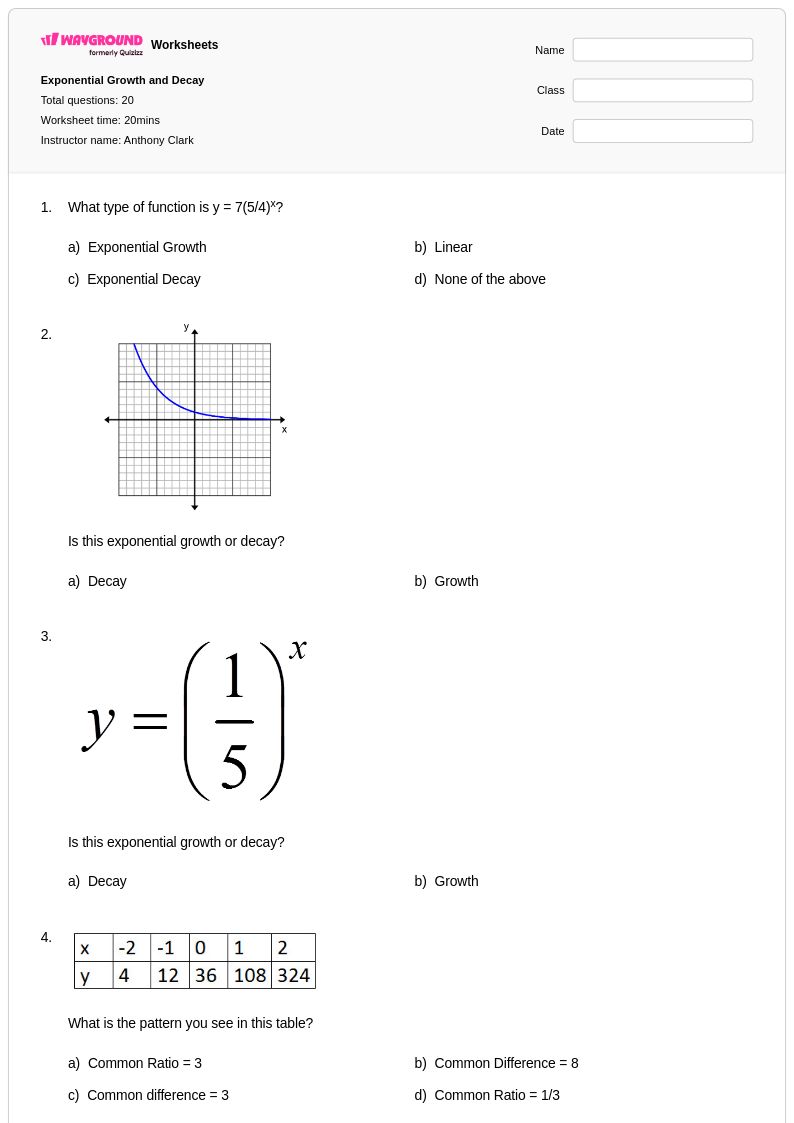
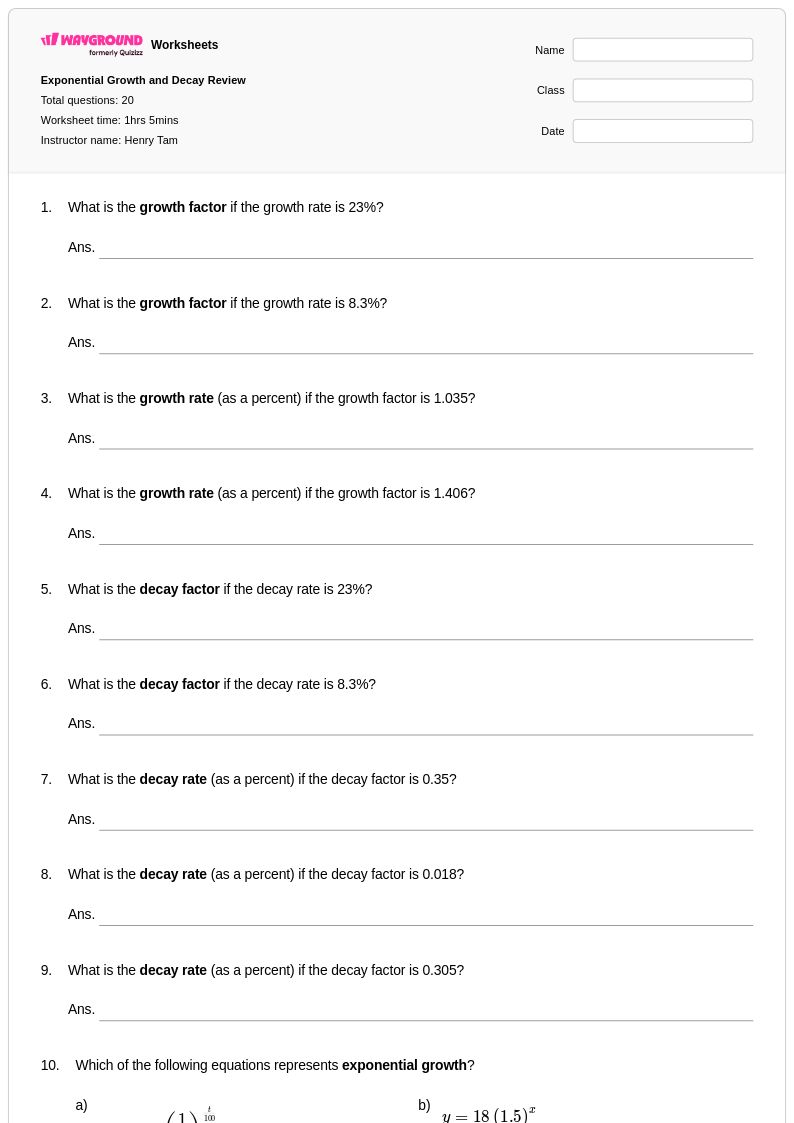
Wayground's free Class 11 exponential growth and decay worksheets provide comprehensive printables with practice problems and answer keys to help students master exponential functions, modeling real-world scenarios, and calculating growth rates.
Explore printable Exponential Growth and Decay worksheets for Class 11
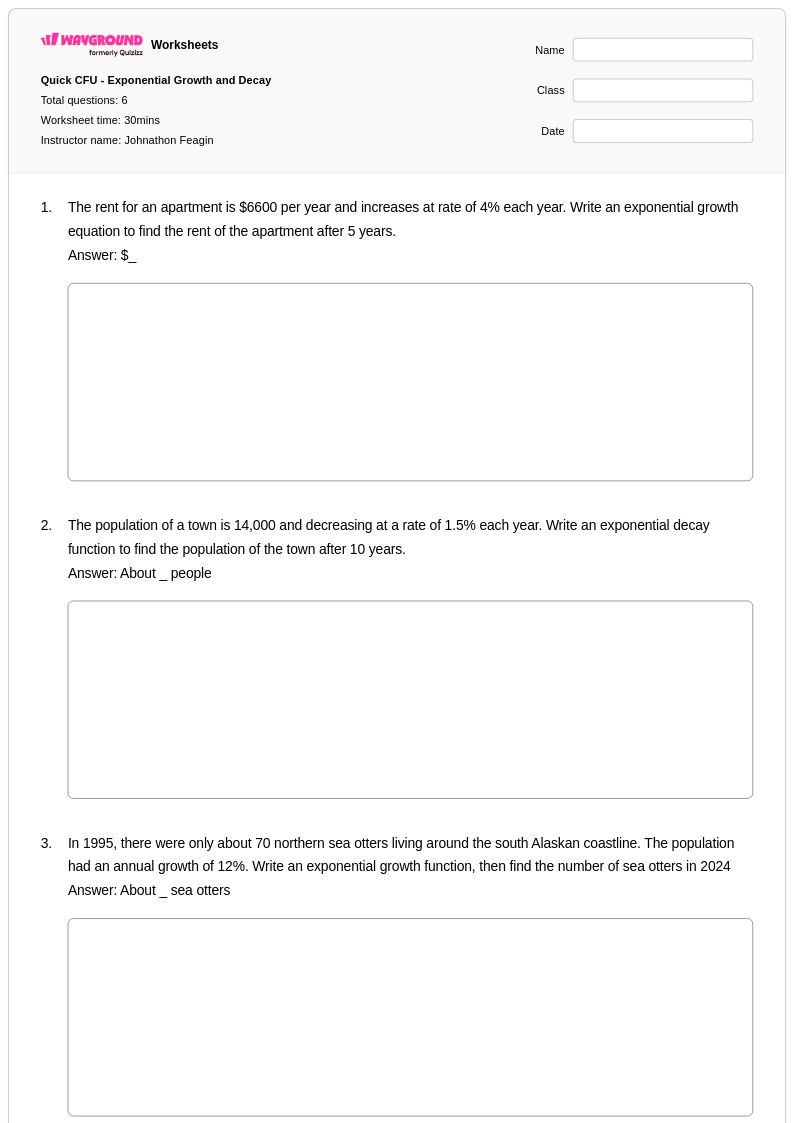
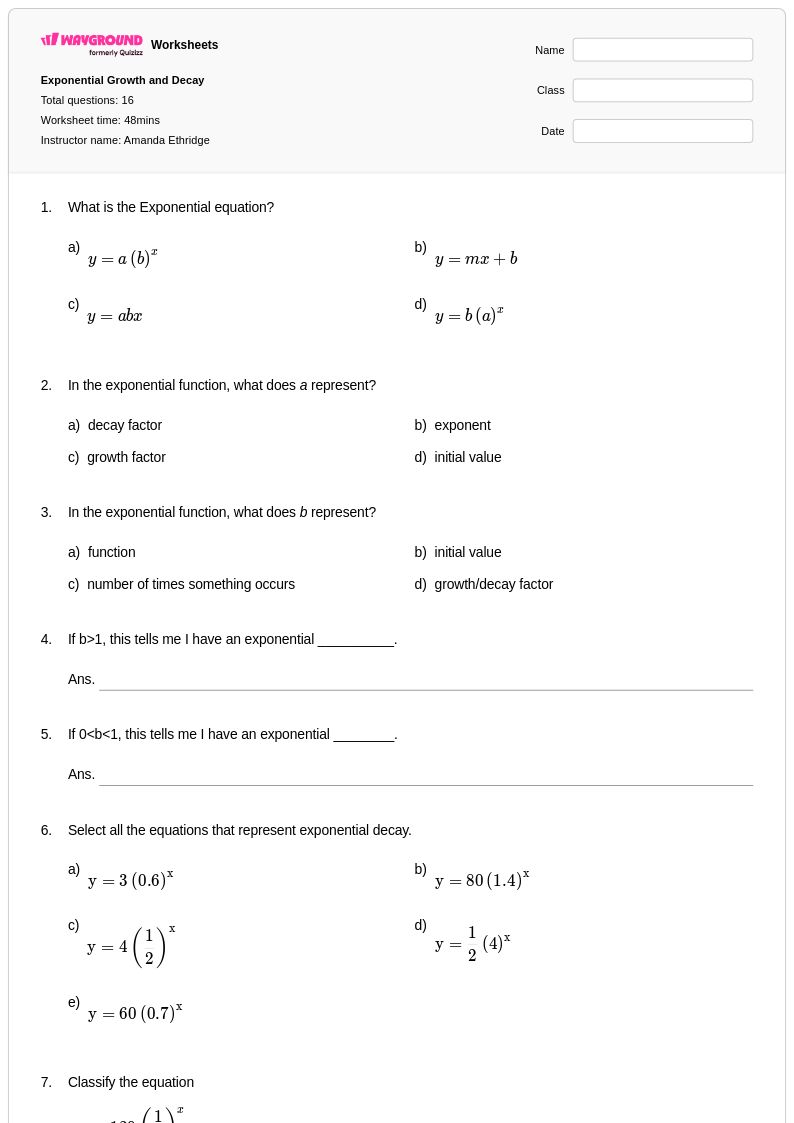
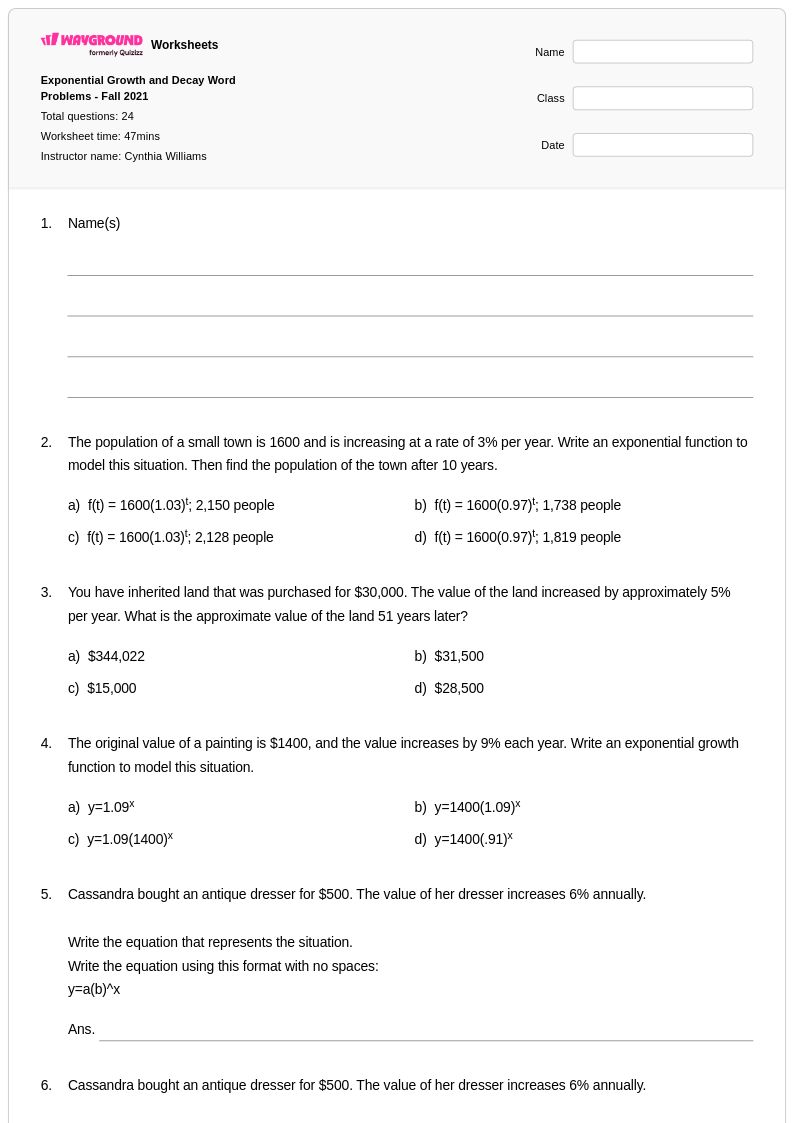
Exponential growth and decay worksheets for Class 11 students available through Wayground (formerly Quizizz) provide comprehensive practice with one of algebra's most practically relevant mathematical concepts. These carefully designed worksheets strengthen students' abilities to model real-world phenomena such as population dynamics, radioactive decay, compound interest, and bacterial growth through exponential functions. Students work through practice problems that develop their skills in identifying growth versus decay scenarios, calculating exponential rates, interpreting exponential graphs, and applying exponential models to solve complex word problems. Each worksheet collection includes detailed answer keys and is available as free printables in pdf format, allowing educators to seamlessly integrate these resources into their curriculum while supporting students' mastery of exponential function properties and applications.
Wayground (formerly Quizizz) empowers teachers with access to millions of teacher-created exponential growth and decay worksheet resources, featuring robust search and filtering capabilities that help educators quickly locate materials aligned with specific learning standards and student needs. The platform's differentiation tools enable teachers to customize worksheets for various skill levels within their Class 11 classrooms, while flexible formatting options provide both printable pdf versions for traditional assignments and digital formats for interactive learning experiences. These comprehensive features streamline lesson planning by offering ready-to-use materials for initial instruction, targeted remediation for struggling students, and enrichment activities for advanced learners, ensuring that all students receive appropriate skill practice with exponential functions regardless of their current mathematical proficiency level.
FAQs
How do I teach exponential growth and decay at the Grade 11 level?
Grade 11 is typically where exponential functions connect to logarithms, so teaching the two together pays off. Students should be comfortable solving exponential equations algebraically — which requires recognizing when to apply a logarithm — and interpreting exponential models in more complex contexts like continuous compounding or multi-stage decay. If students are shaky on the base mechanics from earlier years, a quick diagnostic on growth factor vs. growth rate is worth running before moving into logarithmic solving.
What exercises help 11th graders practice exponential growth and decay?
At Grade 11, practice should include: solving exponential equations where the variable is in the exponent (requiring logarithms), interpreting graphs of exponential functions including transformations, and working through multi-step word problems involving compound interest or half-life. Problems that ask students to compare two exponential models — which population grows faster, and when do they intersect? — push the kind of analytical thinking that shows up in Precalculus and beyond.
What mistakes do 11th graders make with exponential growth and decay?
The most common error at this level is misapplying logarithm rules when solving for an exponent — particularly confusing log(a·b) with log(a)·log(b). Students also struggle with continuous growth models (using e as the base) versus discrete models, often applying the wrong formula to a given scenario. Explicitly contrasting the two forms — and making students identify which applies before they calculate anything — reduces this error significantly.
How do I use these Grade 11 exponential growth and decay worksheets in my class?
You can assign them as printable PDFs for paper practice — each worksheet includes a complete answer key so students can check their work independently — or run them as digital quizzes on Wayground to collect results in real time. If you use the paper route, the Wayground for Teachers app lets you scan student submissions for grading, which saves time when you're working through a full class set of multi-step problems.
How does Common Core approach exponential growth and decay at the Grade 11 level?
By Grade 11, Common Core expects students to extend their work with exponential functions into solving equations where the unknown is in the exponent — which is precisely where logarithms enter the picture. Students are also expected to interpret the parameters of exponential models in context and to compare exponential and logarithmic functions as inverses. These worksheets align with that expectation by including problems that require students to move fluidly between exponential and logarithmic forms, not just evaluate or graph a given function.
How can I differentiate exponential growth and decay practice for my Grade 11 class?
For students who need more time working through multi-step problems, Wayground's extended time accommodation adds configurable extra seconds per question on digital assignments. For students whose challenge is language rather than math — particularly in word problems involving compound interest or population modeling — enabling Read Aloud removes the reading barrier. Both accommodations are set per student and don't affect how the assignment appears to the rest of the class.