Free Printable End Behavior of Polynomials Worksheets for Class 11
Master Class 11 end behavior of polynomials with Wayground's comprehensive collection of free worksheets, printables, and practice problems featuring detailed answer keys to strengthen algebraic understanding.
Explore printable End Behavior of Polynomials worksheets for Class 11
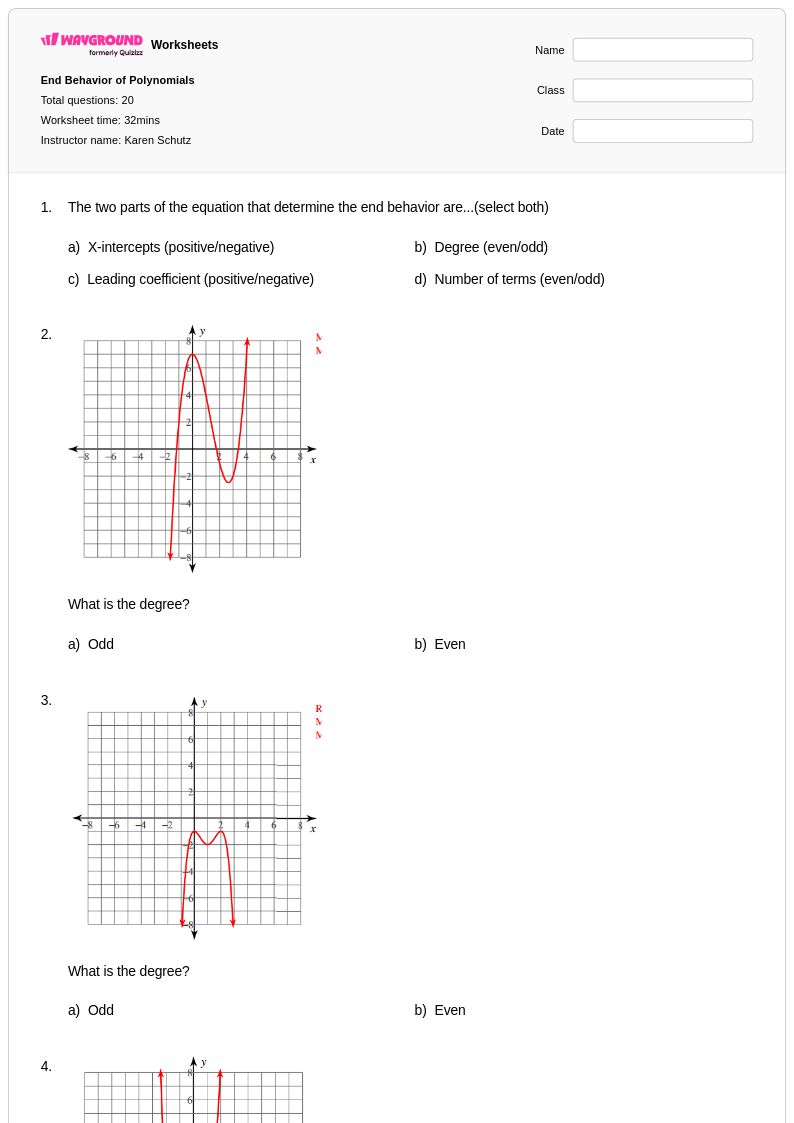
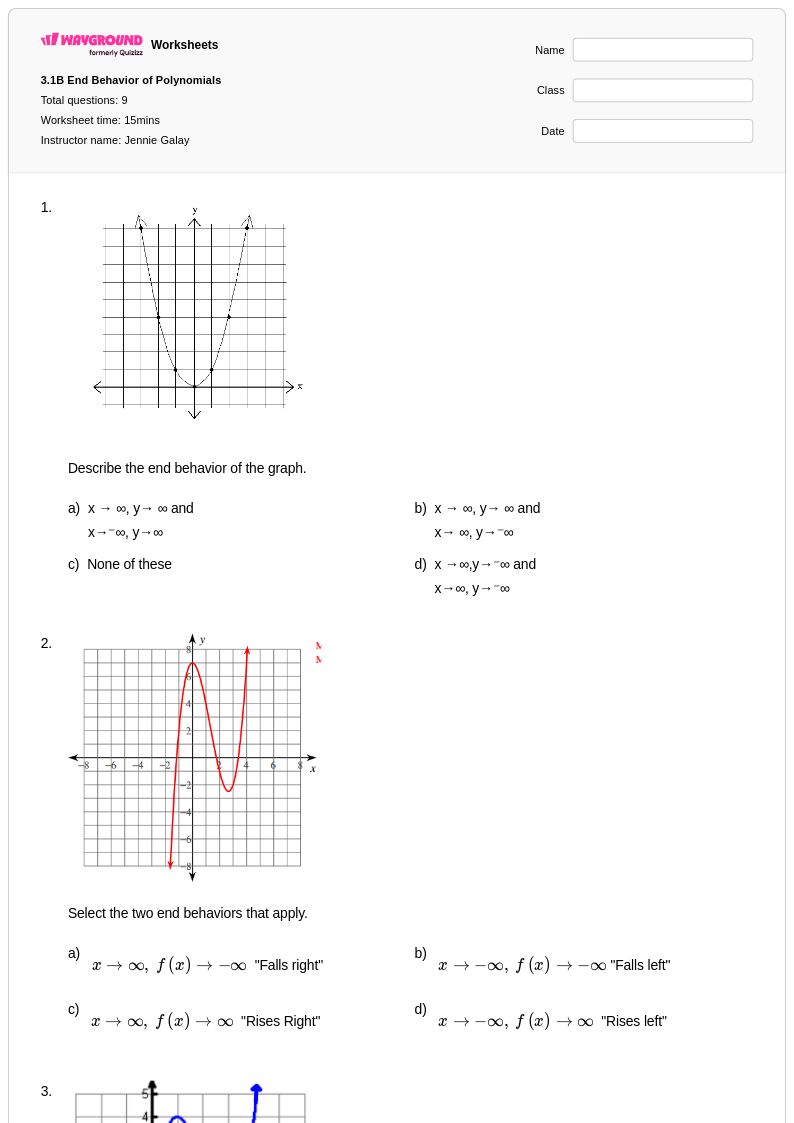
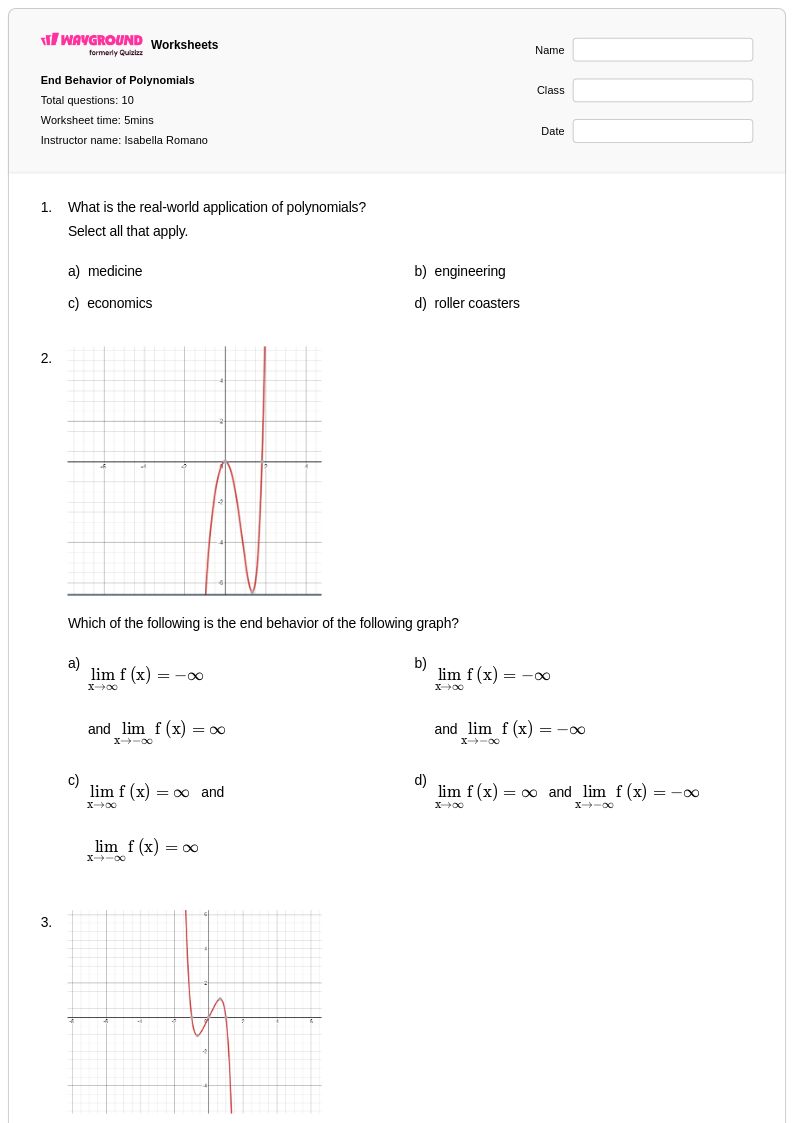
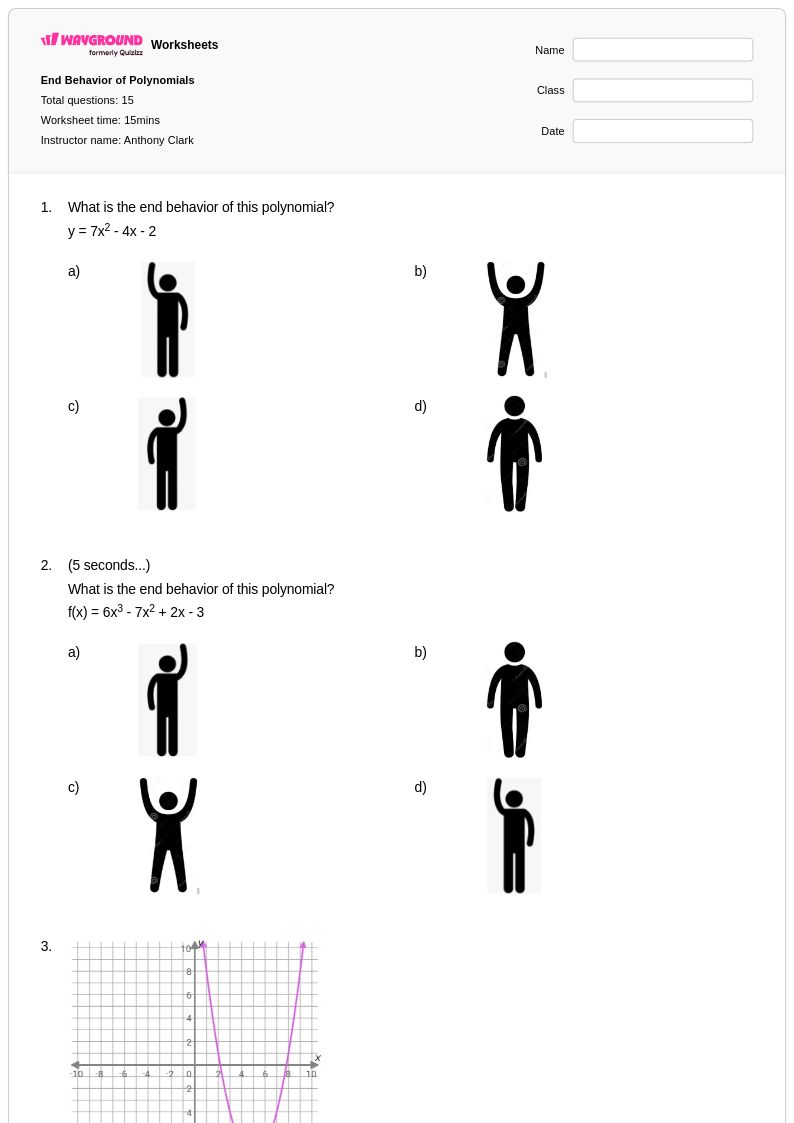
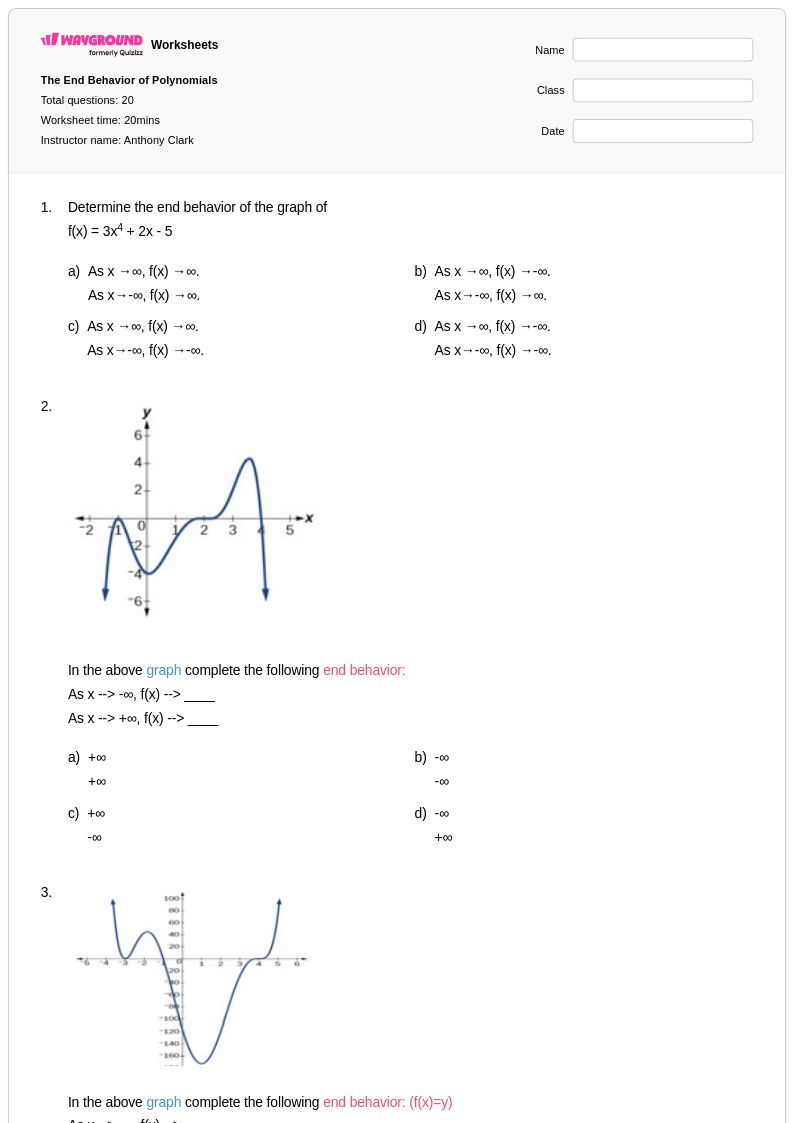
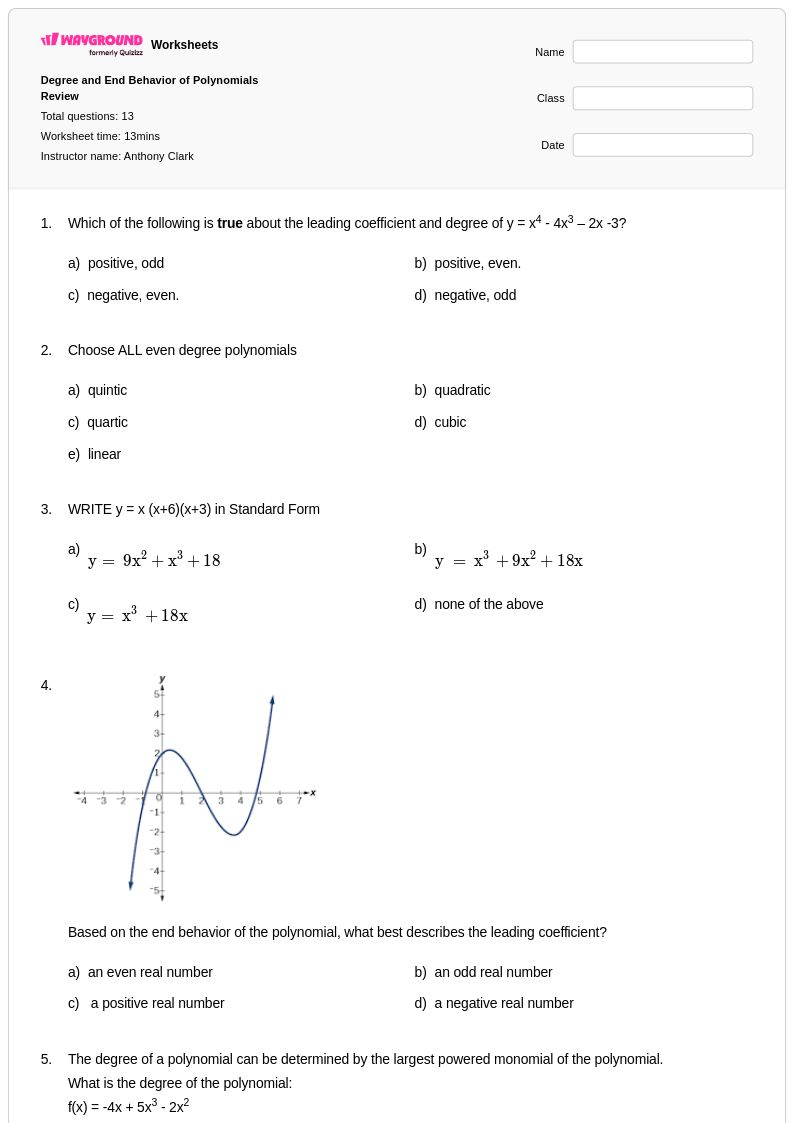
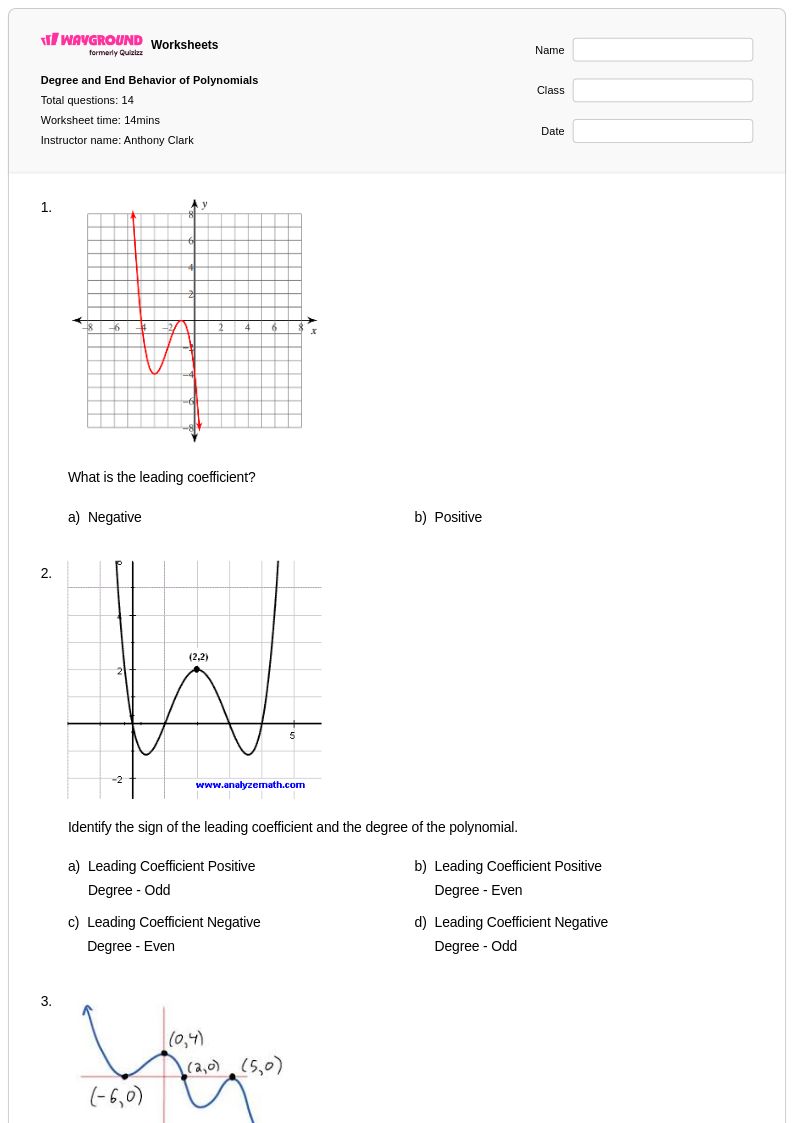
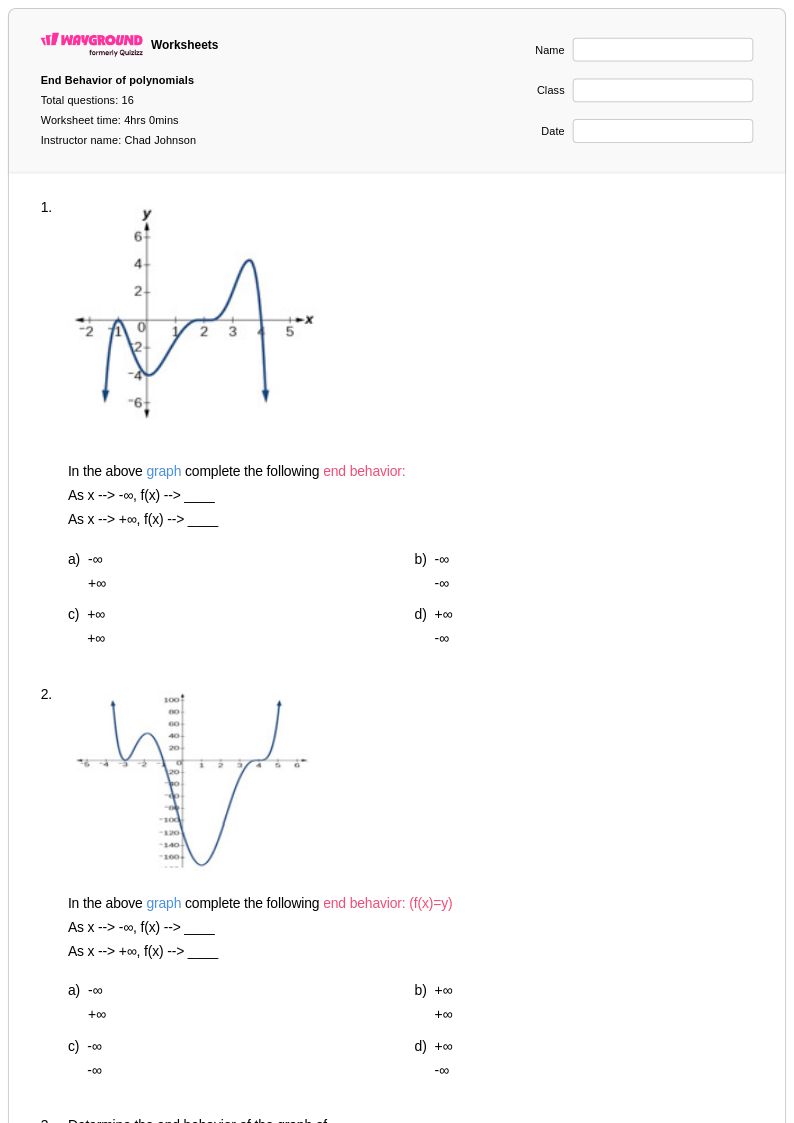
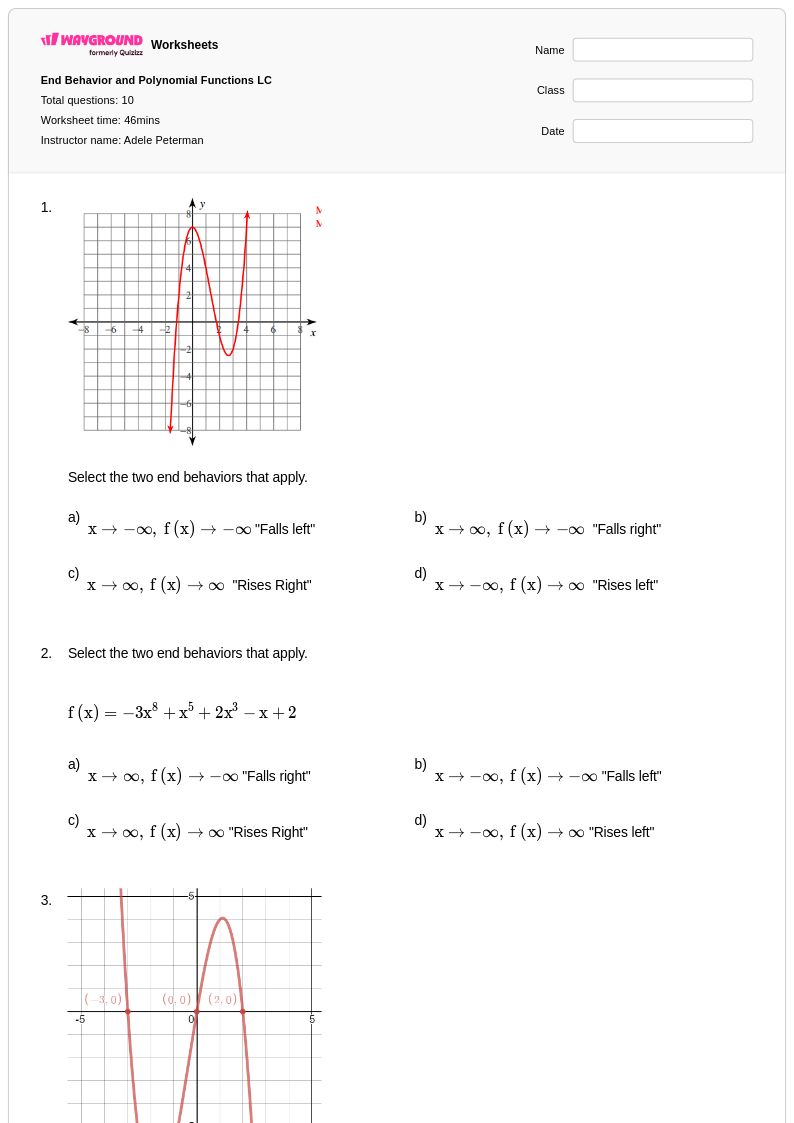
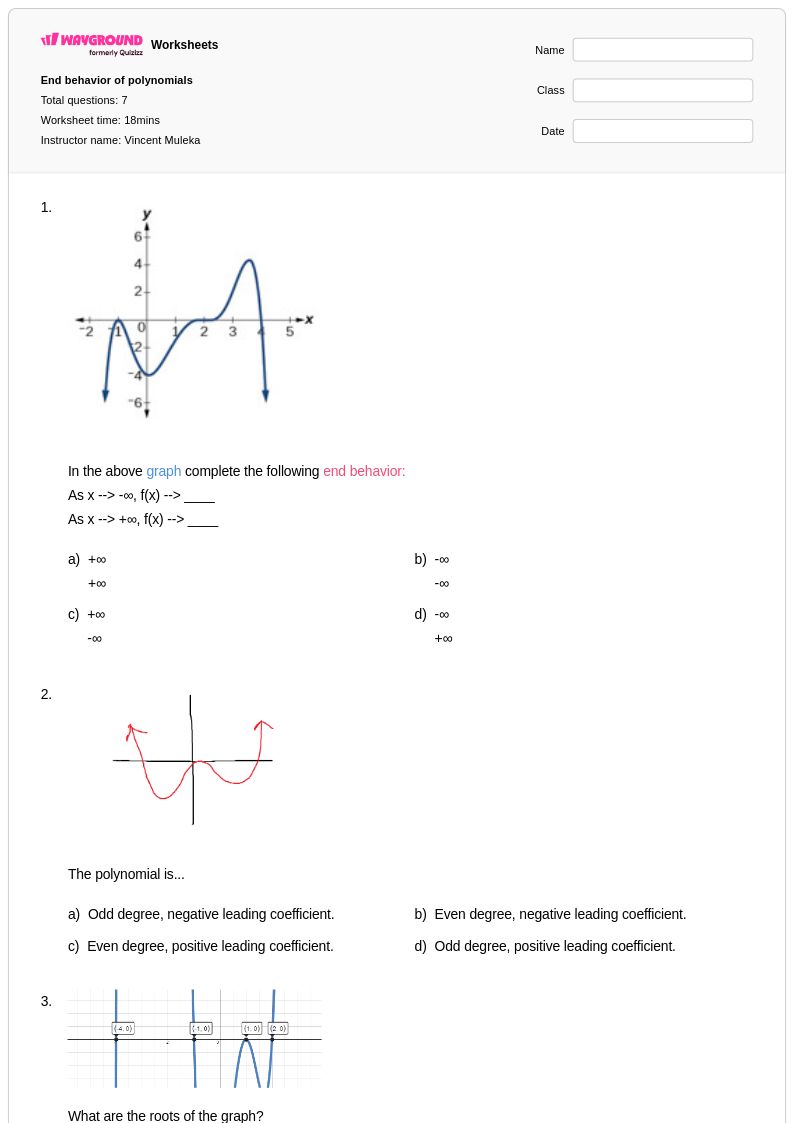
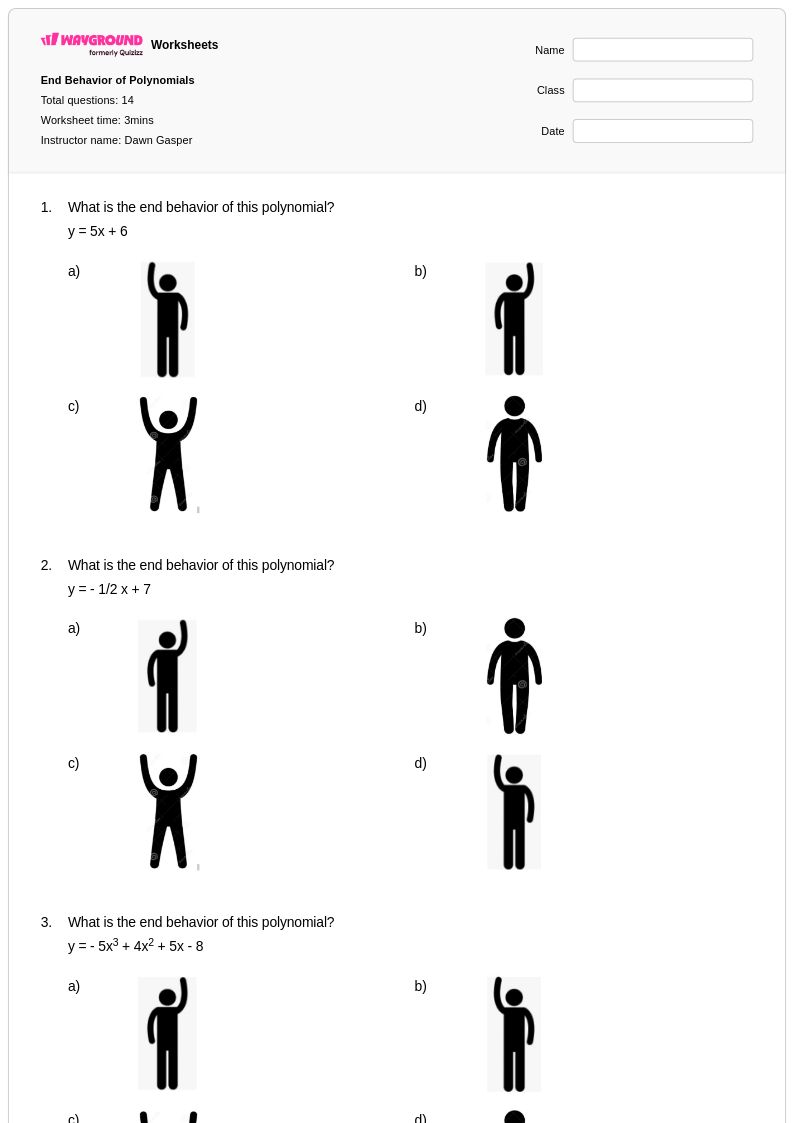
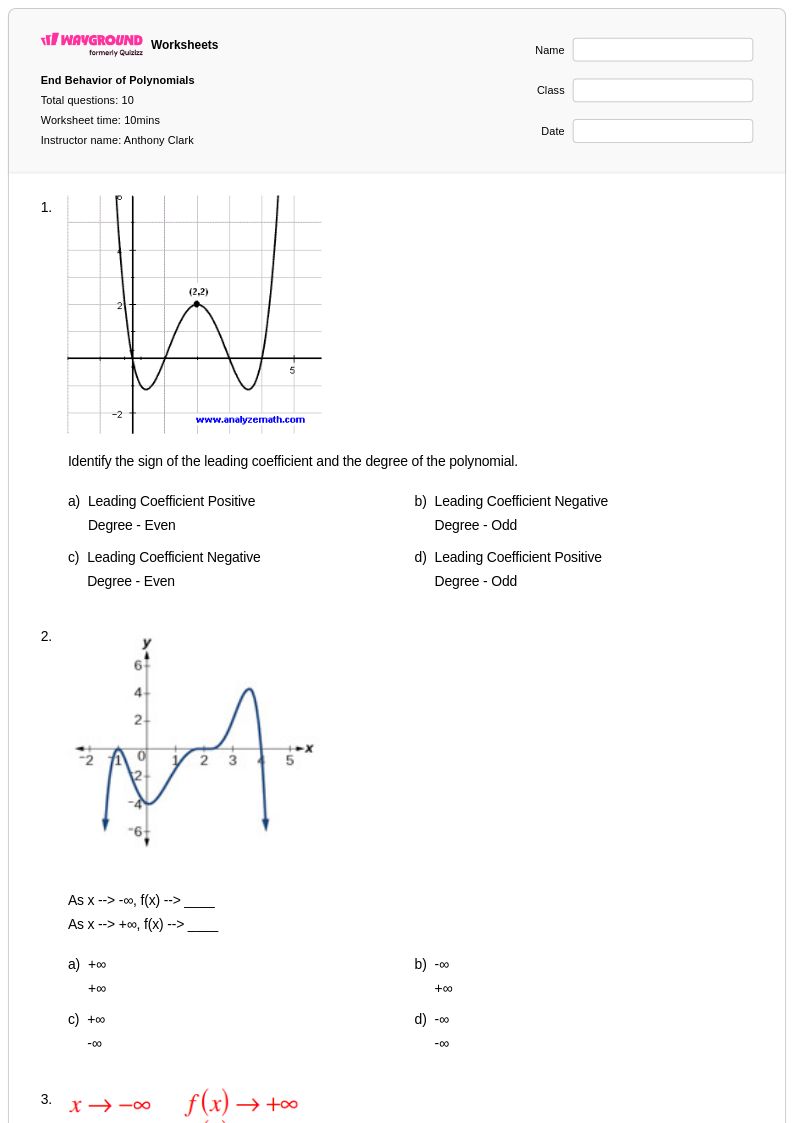
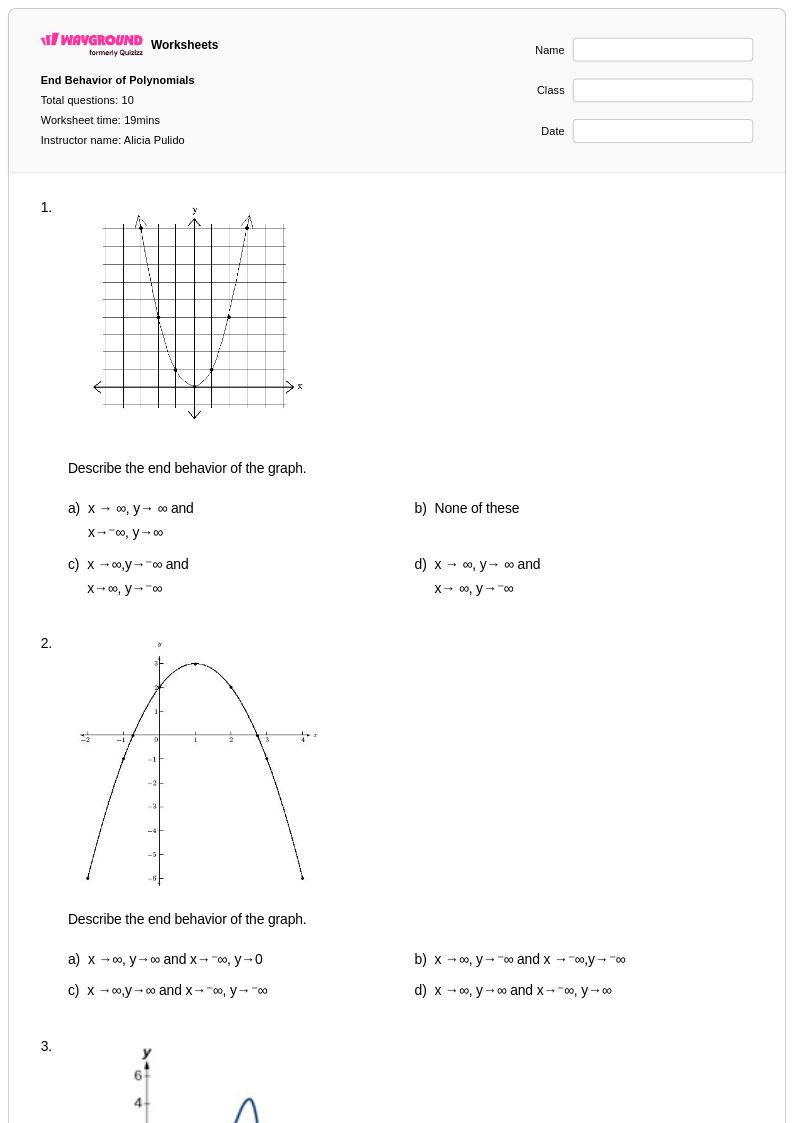
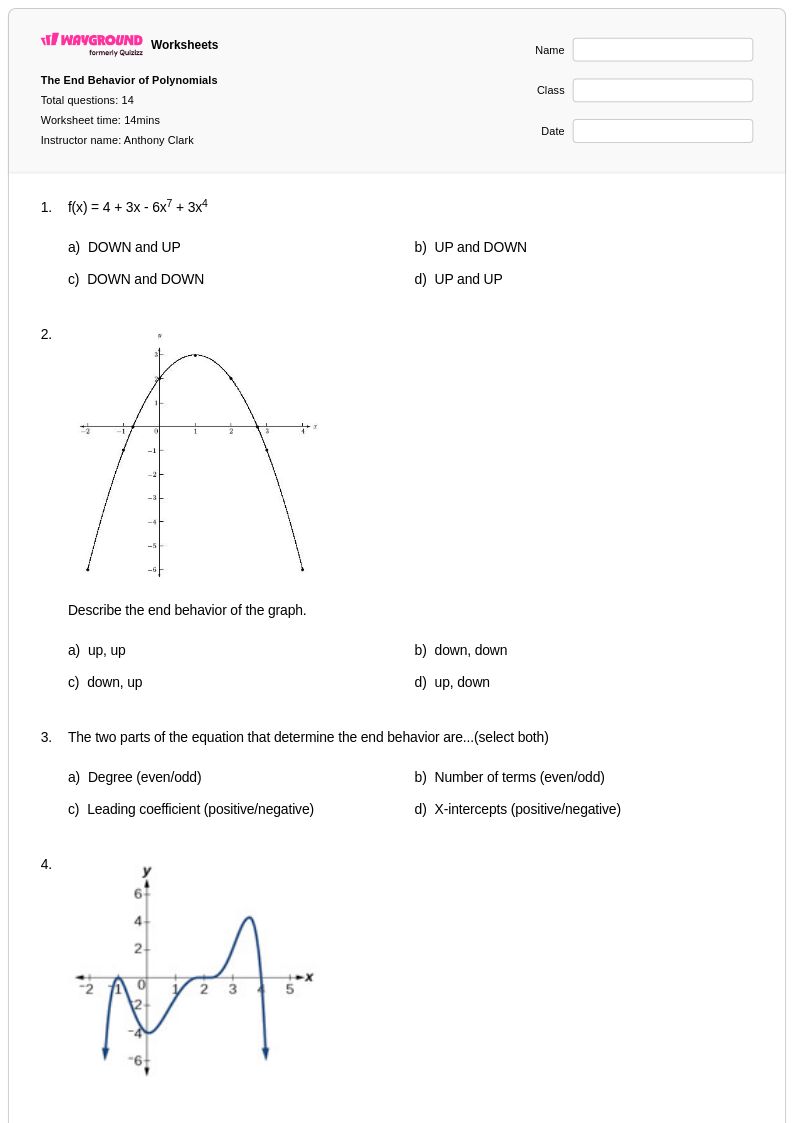
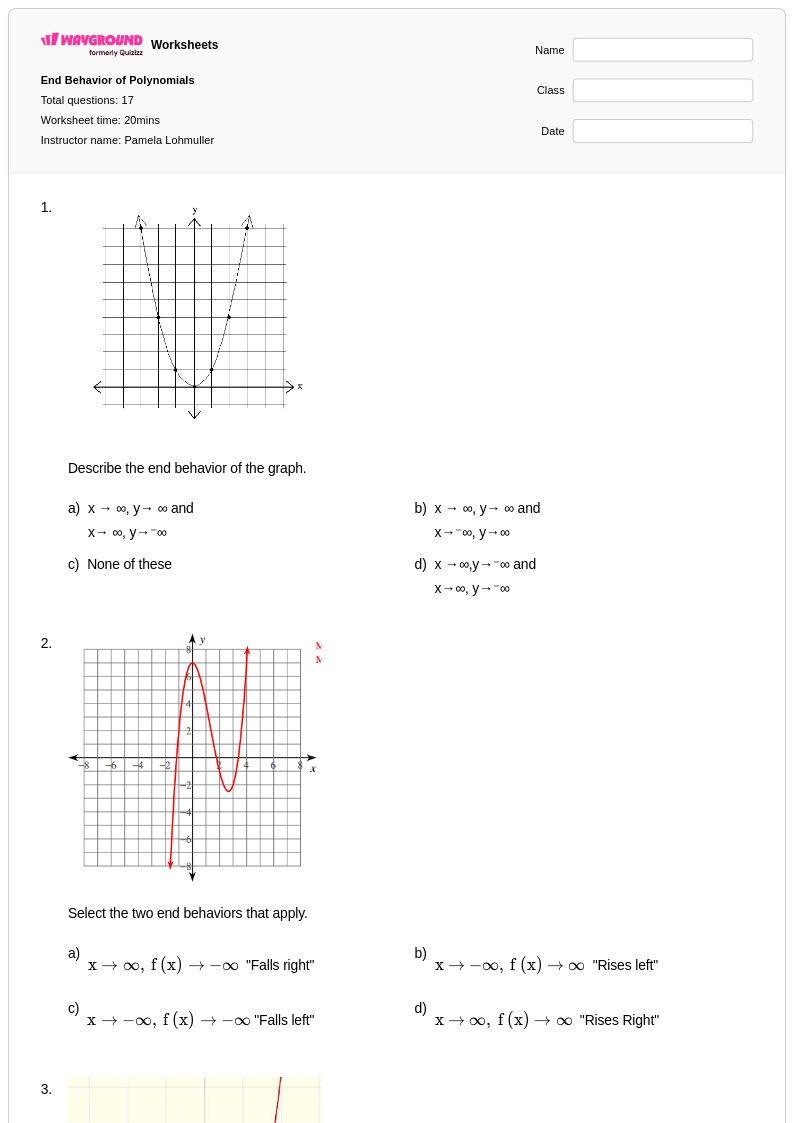
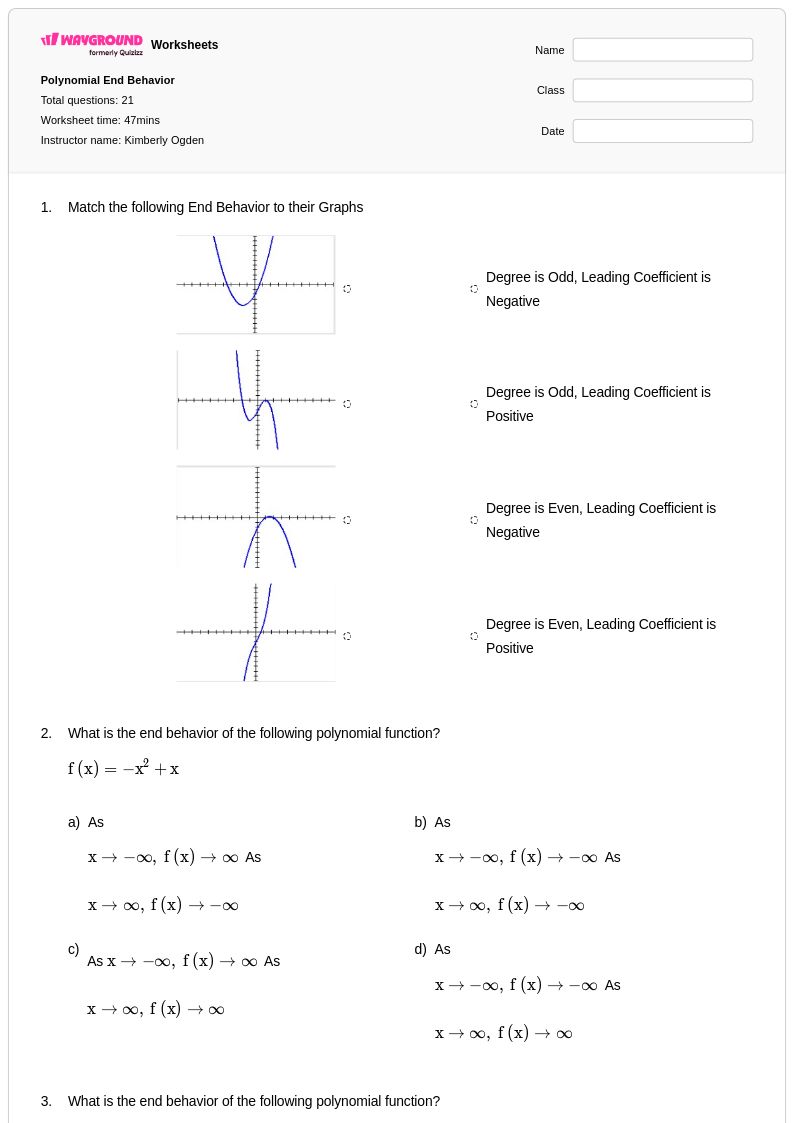
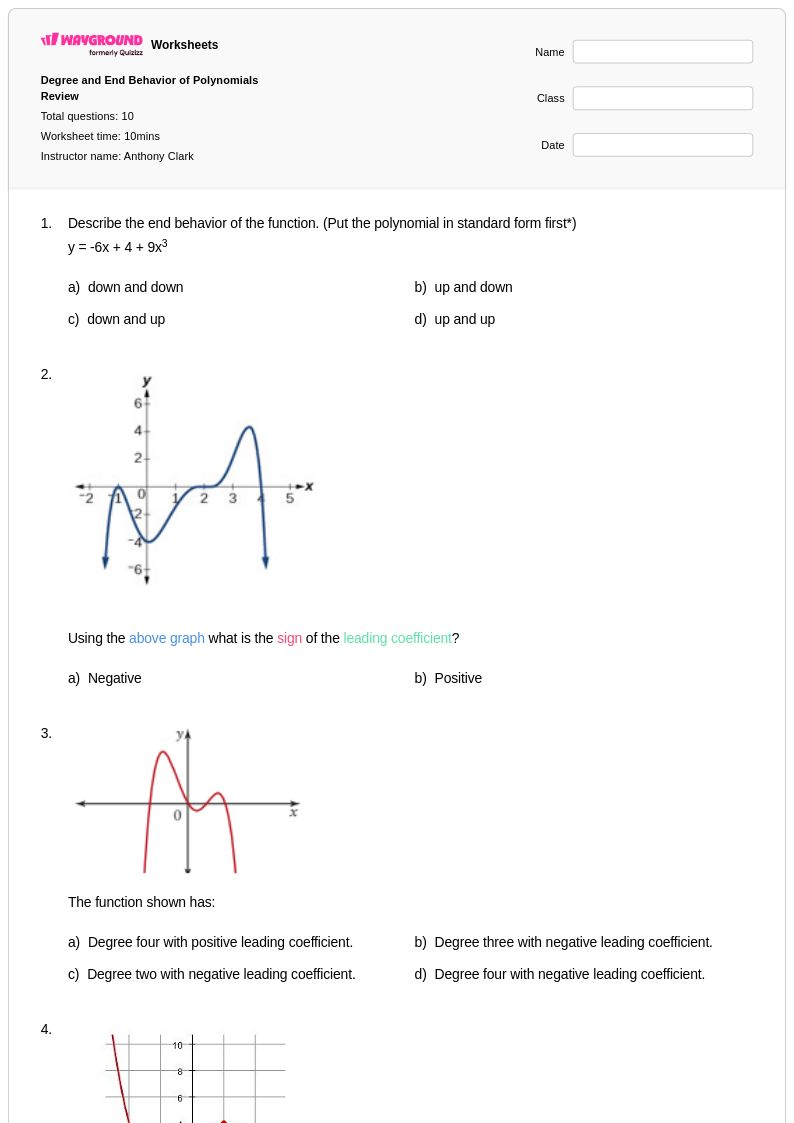
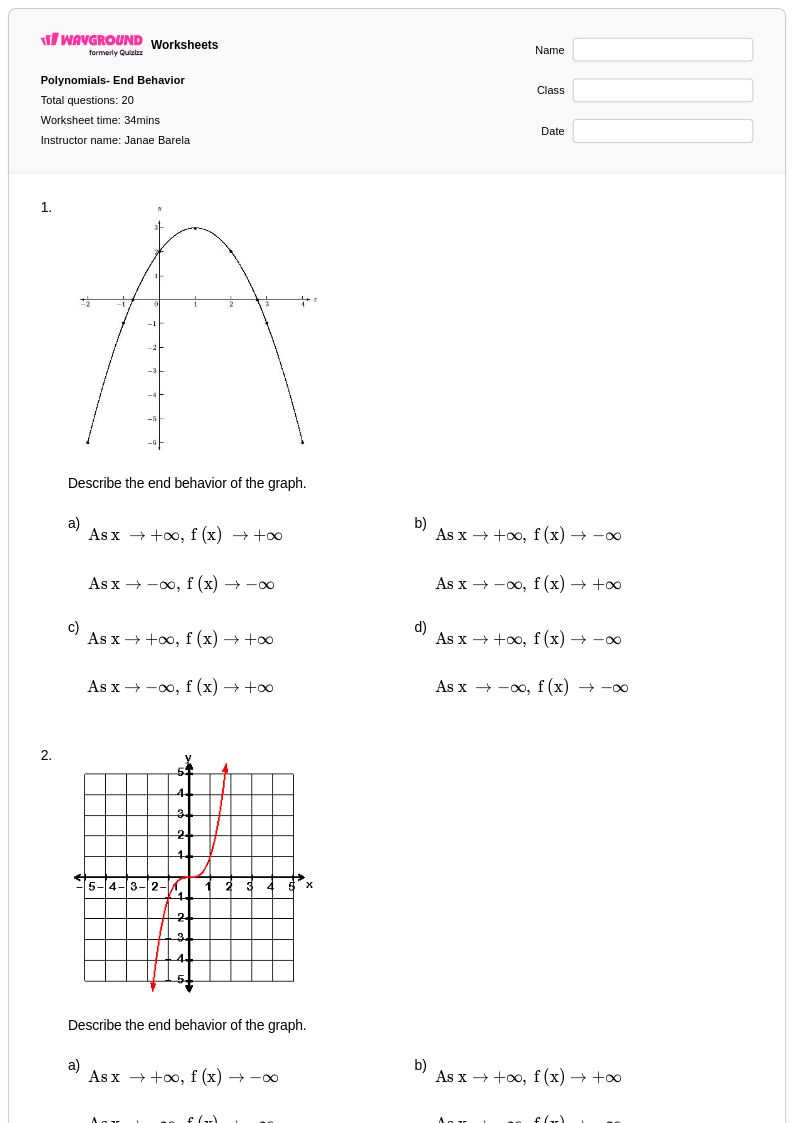
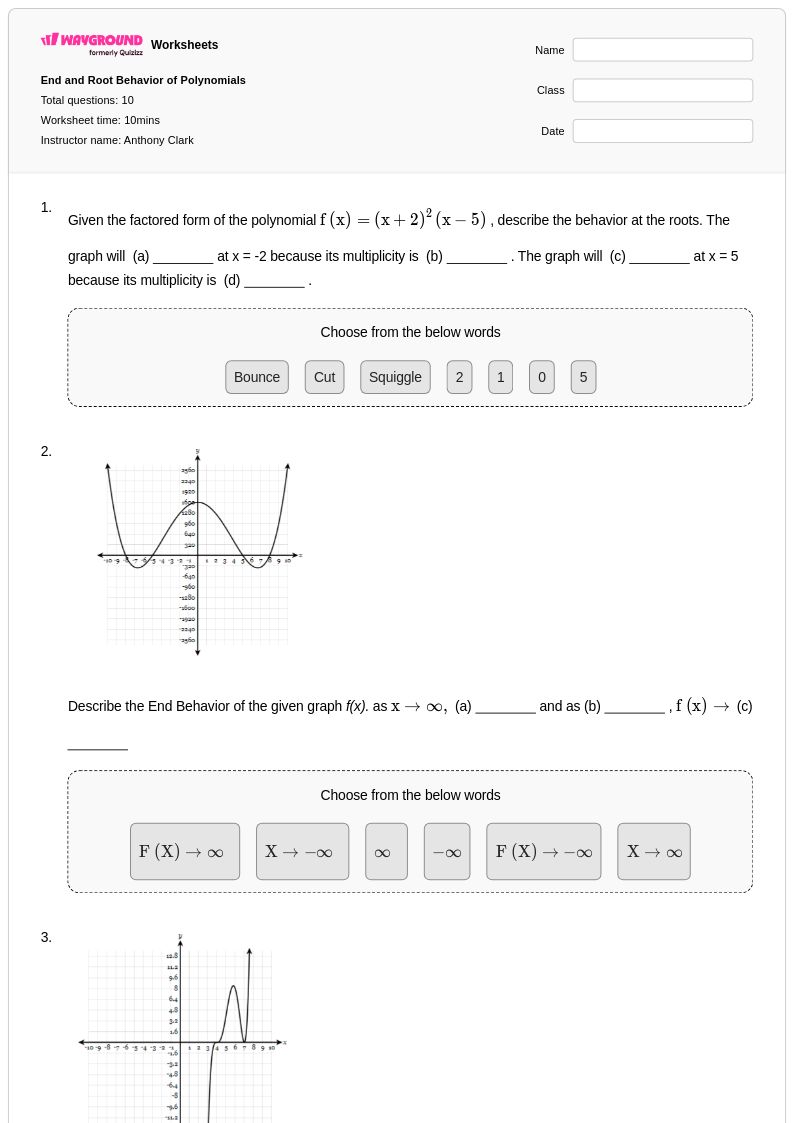
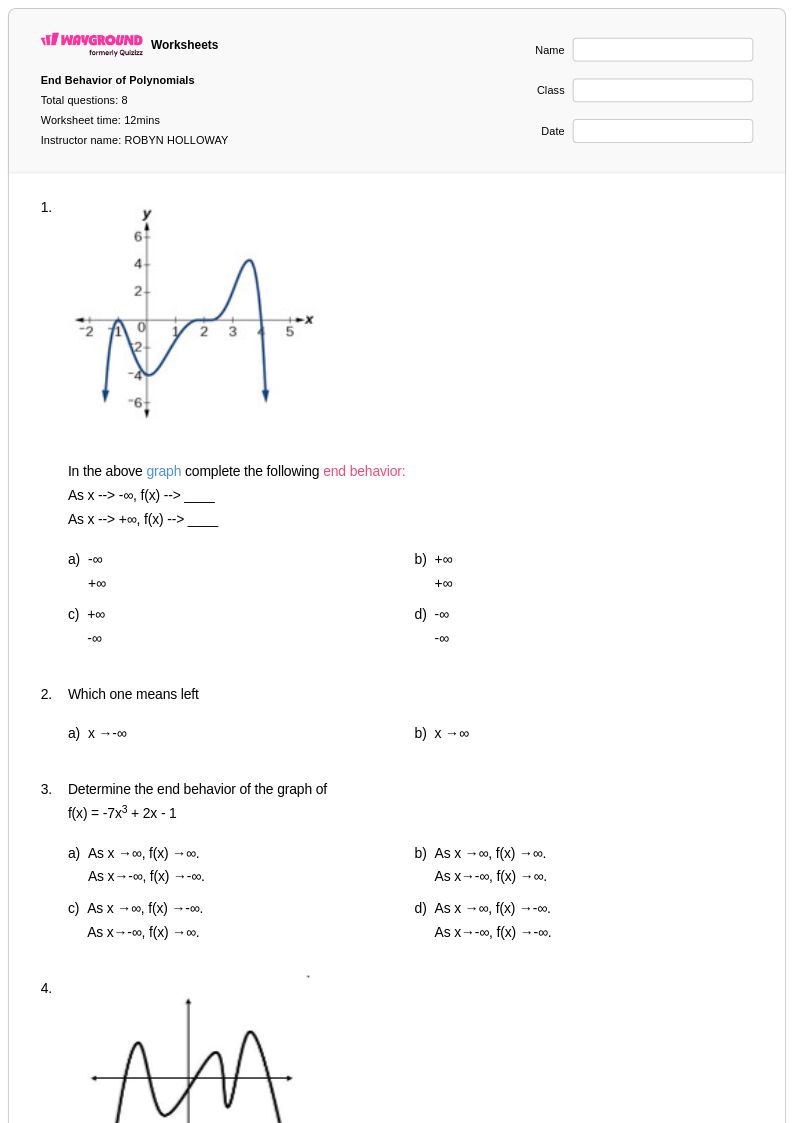
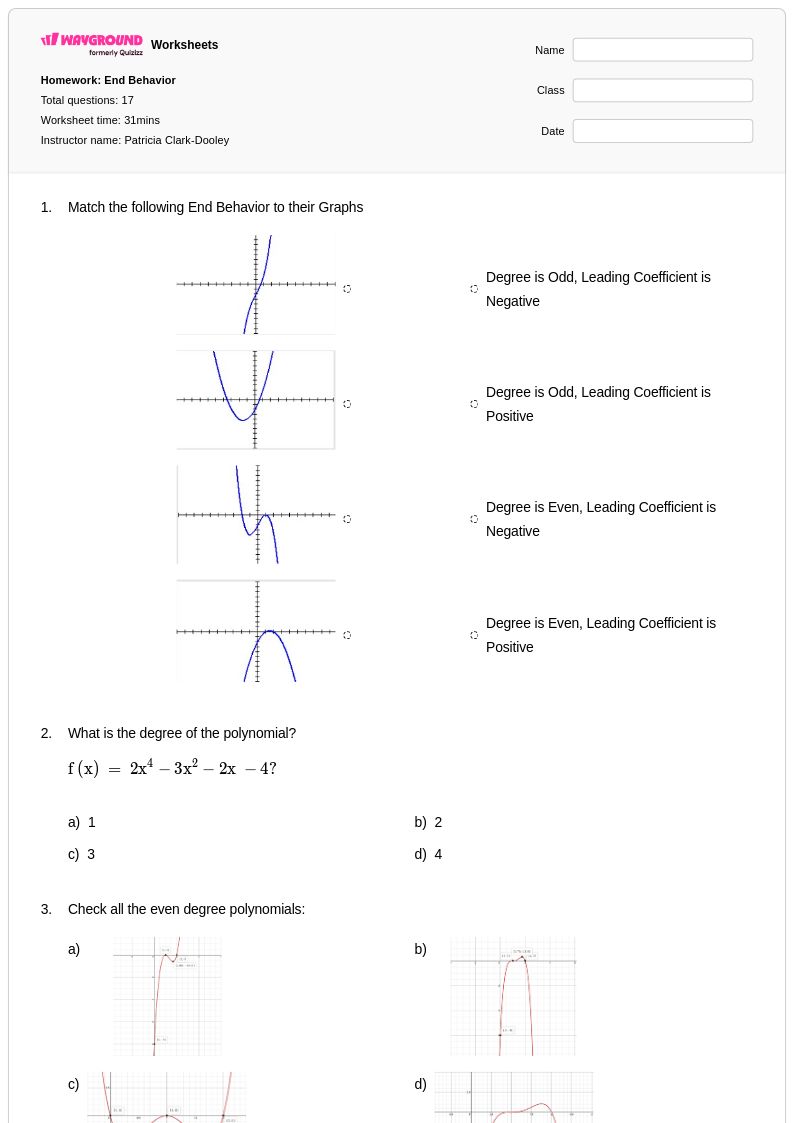
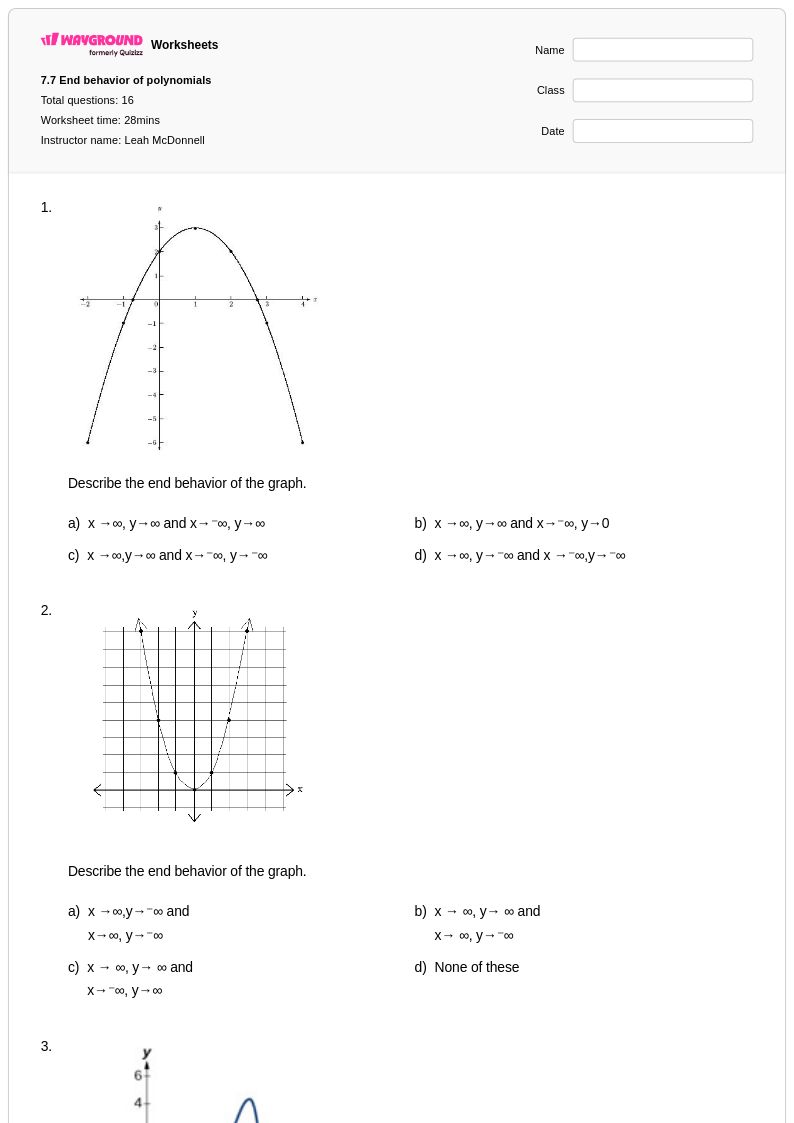
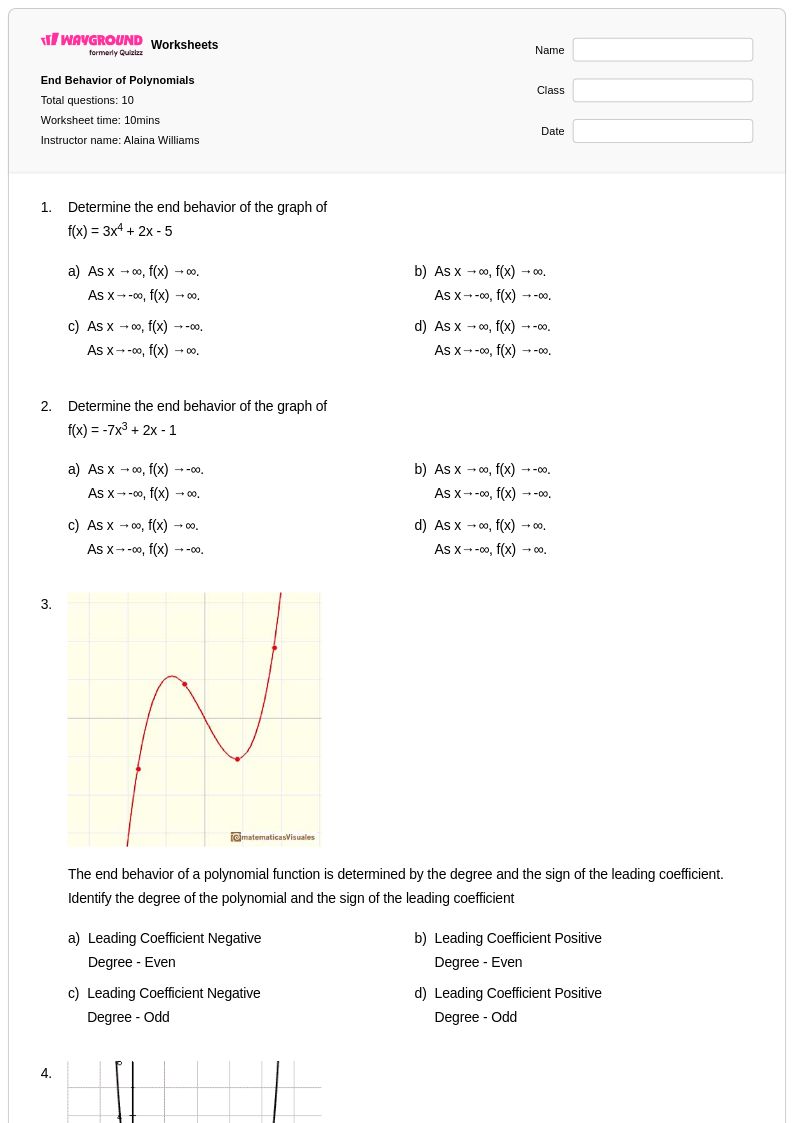
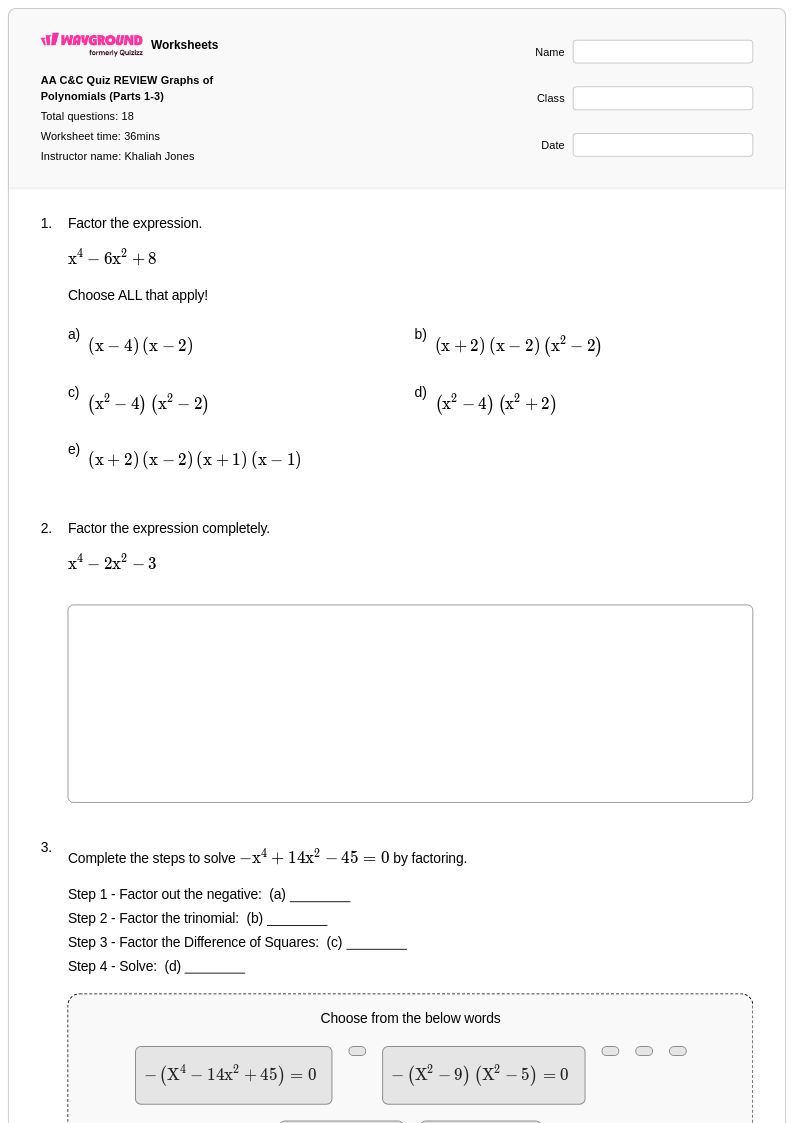
End behavior of polynomials worksheets for Class 11 students available through Wayground provide comprehensive practice in analyzing how polynomial functions behave as x approaches positive and negative infinity. These carefully designed worksheets strengthen students' ability to determine end behavior using leading coefficients and degrees, interpret graphical representations of polynomial functions, and apply algebraic reasoning to predict function behavior at extreme values. Each worksheet includes detailed answer keys that guide students through step-by-step solutions, while the free printables offer varied practice problems ranging from basic polynomial identification to complex multi-step analysis involving higher-degree functions and their corresponding graphs.
Wayground's extensive collection of teacher-created polynomial worksheets draws from millions of educational resources specifically designed to support Class 11 algebra instruction. Teachers can utilize advanced search and filtering tools to locate materials aligned with their curriculum standards, while differentiation features allow for customized assignments that meet diverse learning needs within the classroom. The platform's flexible format options include both printable pdf versions for traditional paper-based learning and digital interactive worksheets that can be adapted for online instruction. These comprehensive resources enable educators to efficiently plan lessons focused on polynomial end behavior, provide targeted remediation for struggling students, offer enrichment opportunities for advanced learners, and deliver consistent skill practice that builds mathematical confidence and competency.
FAQs
How do I teach end behavior of polynomials at the Grade 11 level?
By Grade 11, students should move beyond the four basic cases and work with end behavior as a tool for sketching and interpreting polynomial graphs more broadly. Push them to connect end behavior with multiplicity of zeros: a graph that flattens at a zero and turns back has a different story than one that crosses straight through, and end behavior tells you what happens after the last zero. At this level, the emphasis shifts from identifying end behavior in isolation to using it alongside other features — intercepts, turning points — to build a complete picture of a polynomial function.
What practice problems are most useful for 11th graders on polynomial end behavior?
Problems that integrate end behavior with graph sketching are the most valuable at this level. Give students a polynomial in factored form and ask them to sketch the graph using end behavior, zeros, and multiplicity — no calculator. Also useful: problems where students are given a partial graph and must determine constraints on the polynomial (minimum degree, sign of leading coefficient, possible number of turning points). These tasks require students to synthesize rather than just apply a rule, which is appropriate for Grade 11.
What mistakes do 11th graders still make with end behavior of polynomials?
At this level, the conceptual errors are mostly gone — students know the four cases. The errors that persist are execution errors under complexity: misidentifying the degree of a polynomial given in factored form (forgetting to add the exponents of each factor), or correctly stating end behavior but then drawing a graph whose tails contradict it. A targeted fix is to require students to write the end behavior in arrow notation before they start sketching, so the tails are committed to paper before the middle of the graph gets drawn.
How do I use these Grade 11 end behavior worksheets effectively?
The worksheets include complete answer keys and are available as printable PDFs or as digital quizzes hosted on Wayground. For a Grade 11 class, the digital format is particularly useful for mixed-review sessions — you get immediate scoring data that shows exactly which students are still making end behavior errors versus which are struggling with the broader graph-sketching task. That distinction matters for how you plan the next day's instruction.
How does end behavior fit into the Common Core progression for Grade 11?
Common Core's high school algebra and functions standards expect Grade 11 students to analyze polynomial functions in depth — interpreting structure, identifying key graph features, and building toward modeling applications. End behavior is foundational to that analysis: it's the first thing a student should establish when sketching a polynomial graph, before zeros or turning points. At Grade 11, the standard pushes students to use end behavior not just as a classification exercise but as part of a coherent strategy for understanding a function's global behavior, which directly prepares them for precalculus and the informal limit reasoning that precedes calculus.
How can I accommodate diverse learners on end behavior worksheets in Grade 11?
For students who process written math problems slowly, extended time per question — configurable per student in Wayground — prevents the pacing of a timed digital session from masking what they actually understand. For students with language barriers, Wayground can translate the worksheet, which is especially useful when the challenge is the mathematical reasoning, not English vocabulary. These accommodations are saved per student, so once you've set them up, they apply automatically to future sessions without any additional setup.