Free Printable End Behavior of Polynomials Worksheets for Class 9
Enhance Class 9 students' understanding of end behavior of polynomials with Wayground's comprehensive collection of free worksheets, printables, and practice problems featuring detailed answer keys and PDF formats.
Explore printable End Behavior of Polynomials worksheets for Class 9
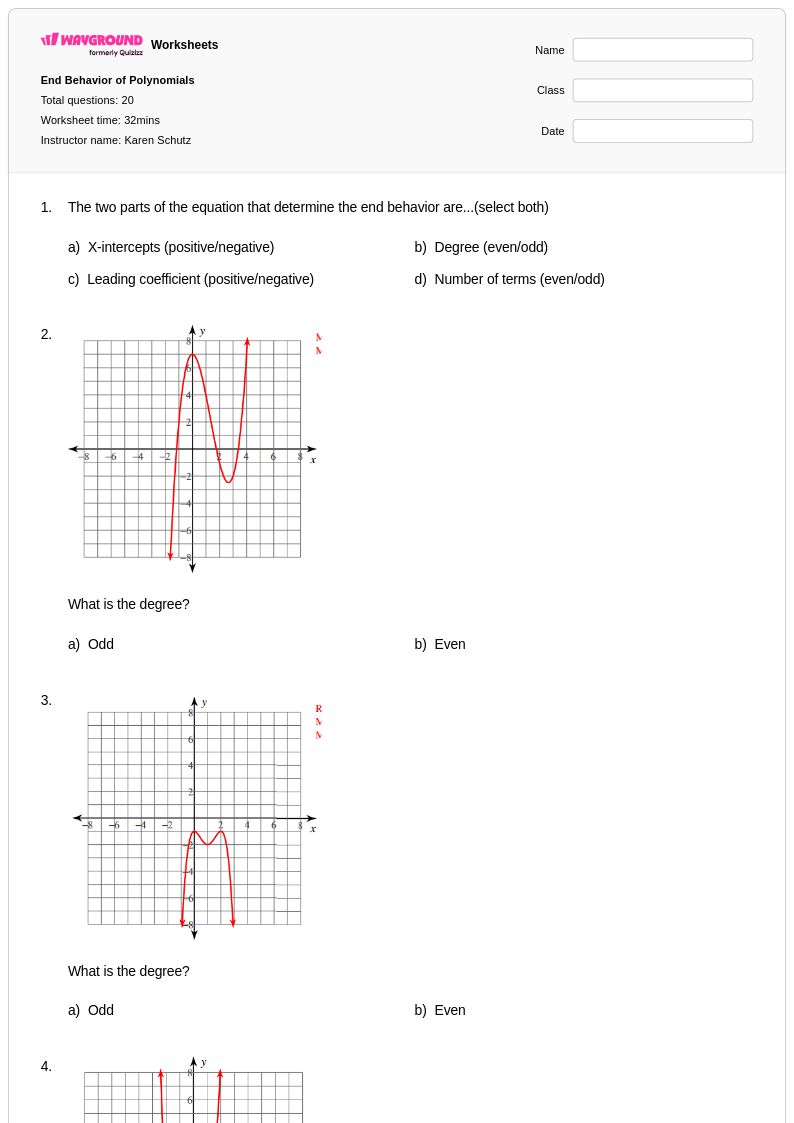
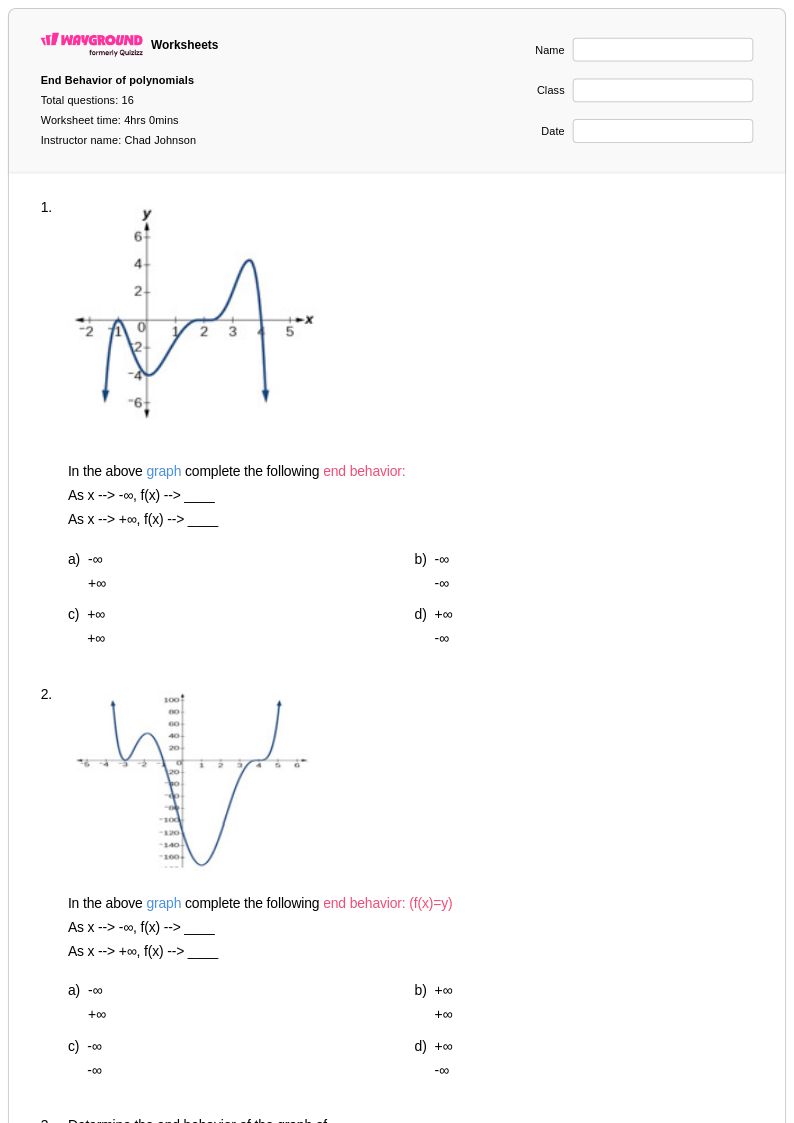
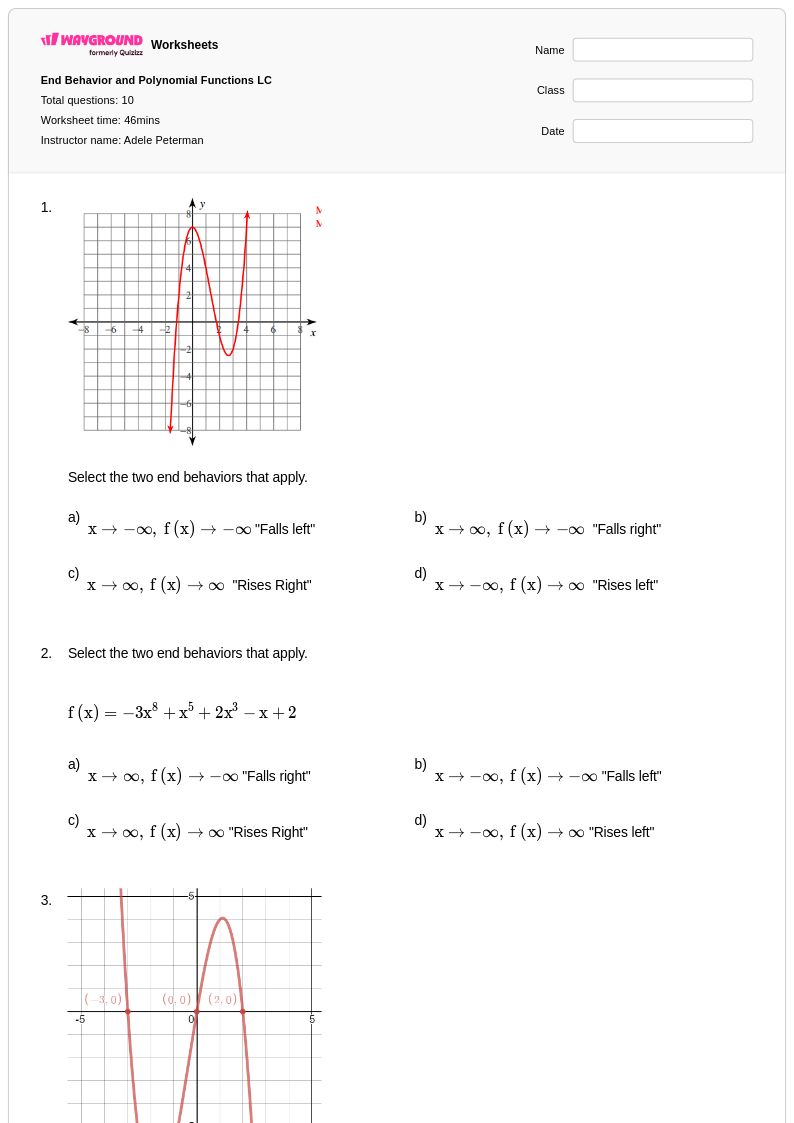
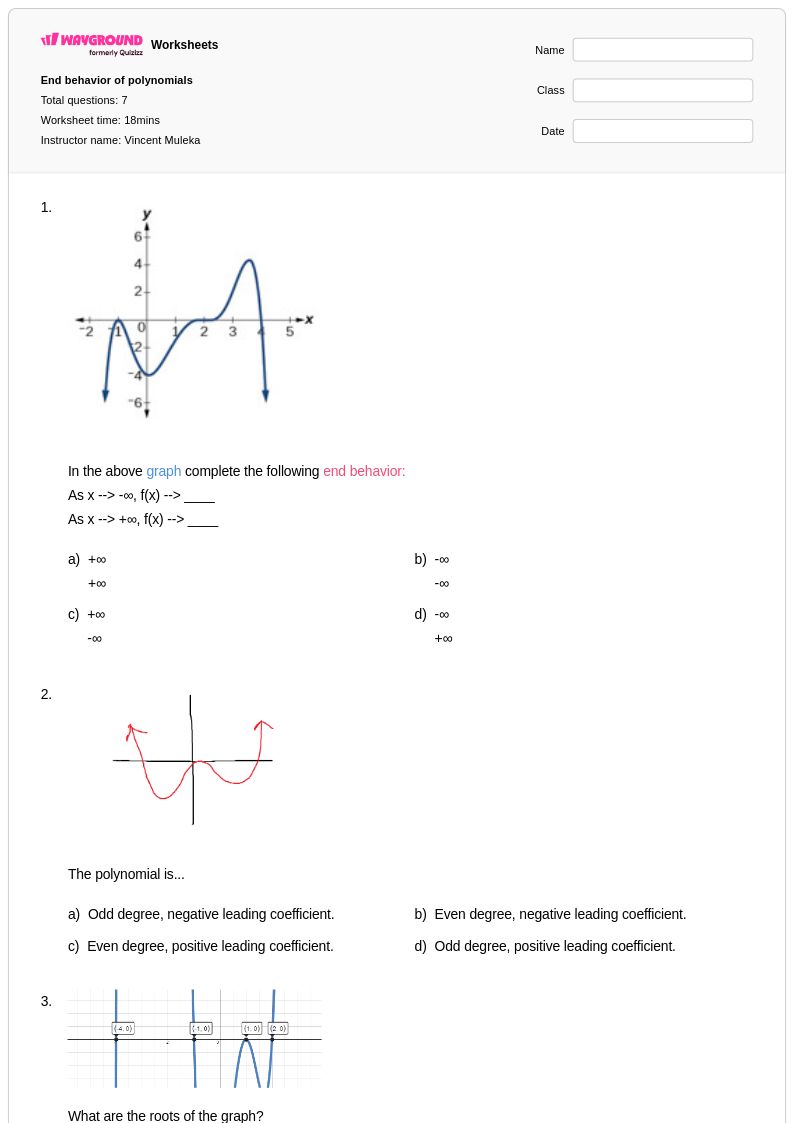
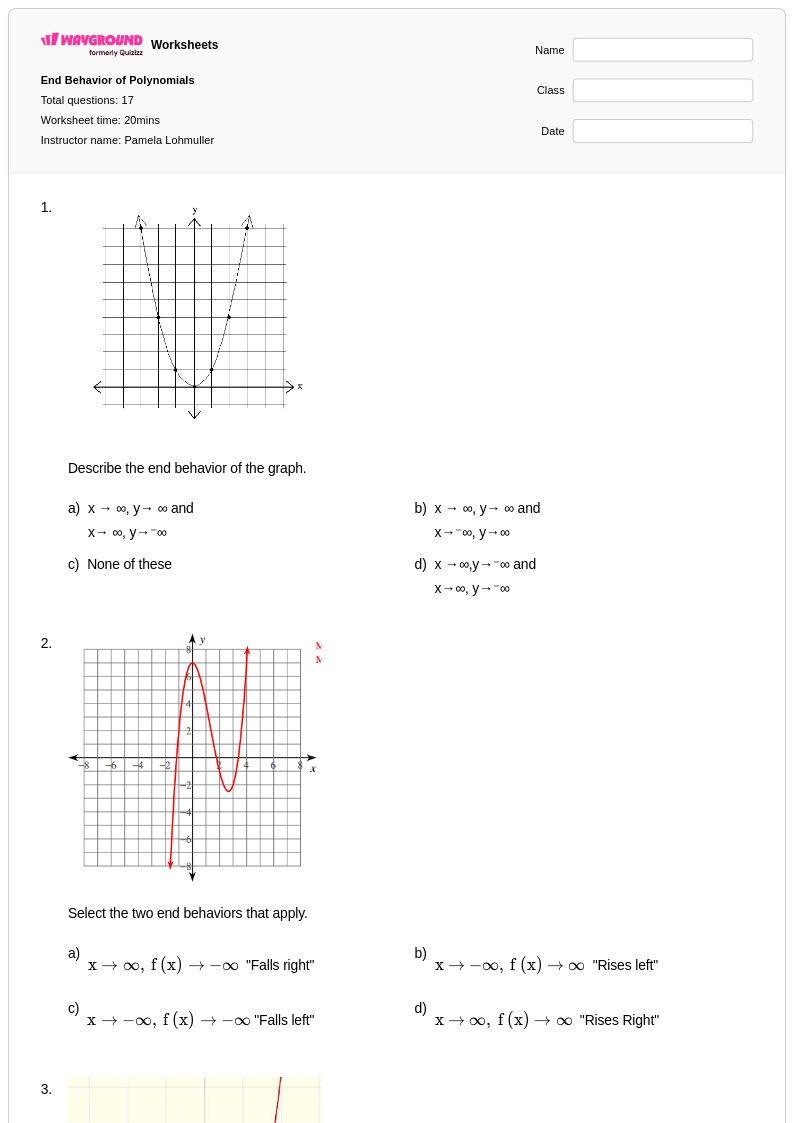
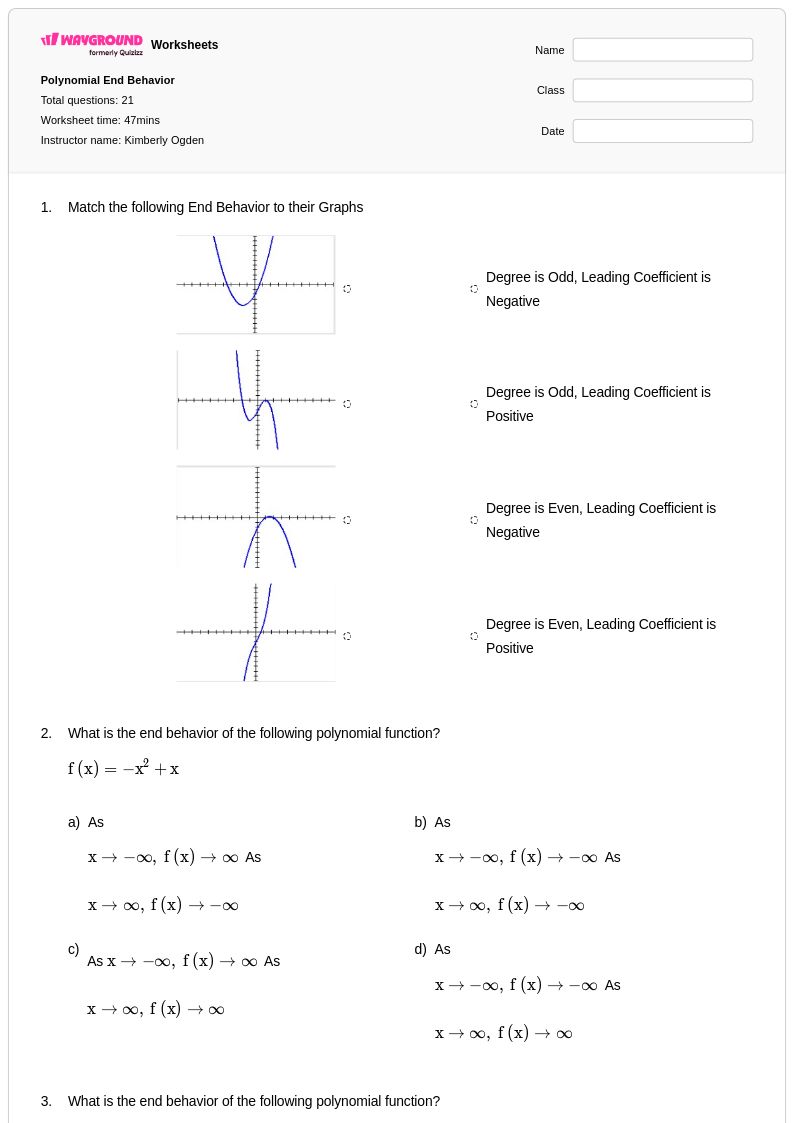
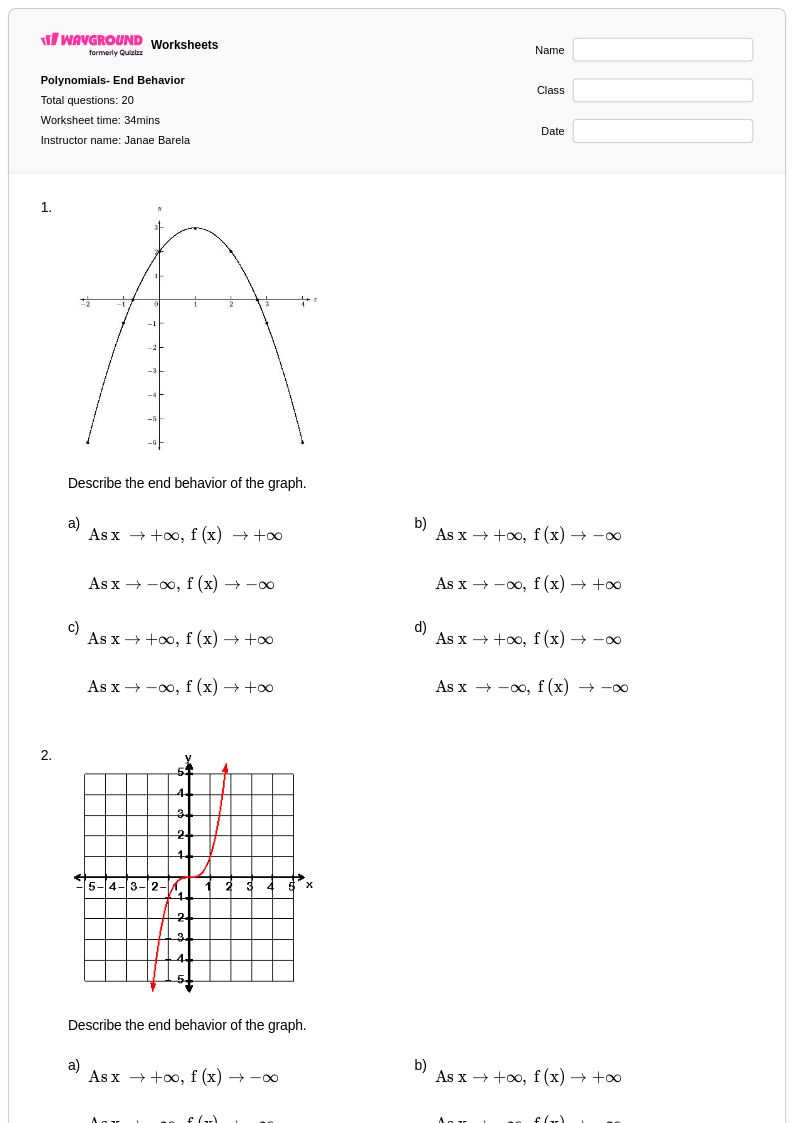
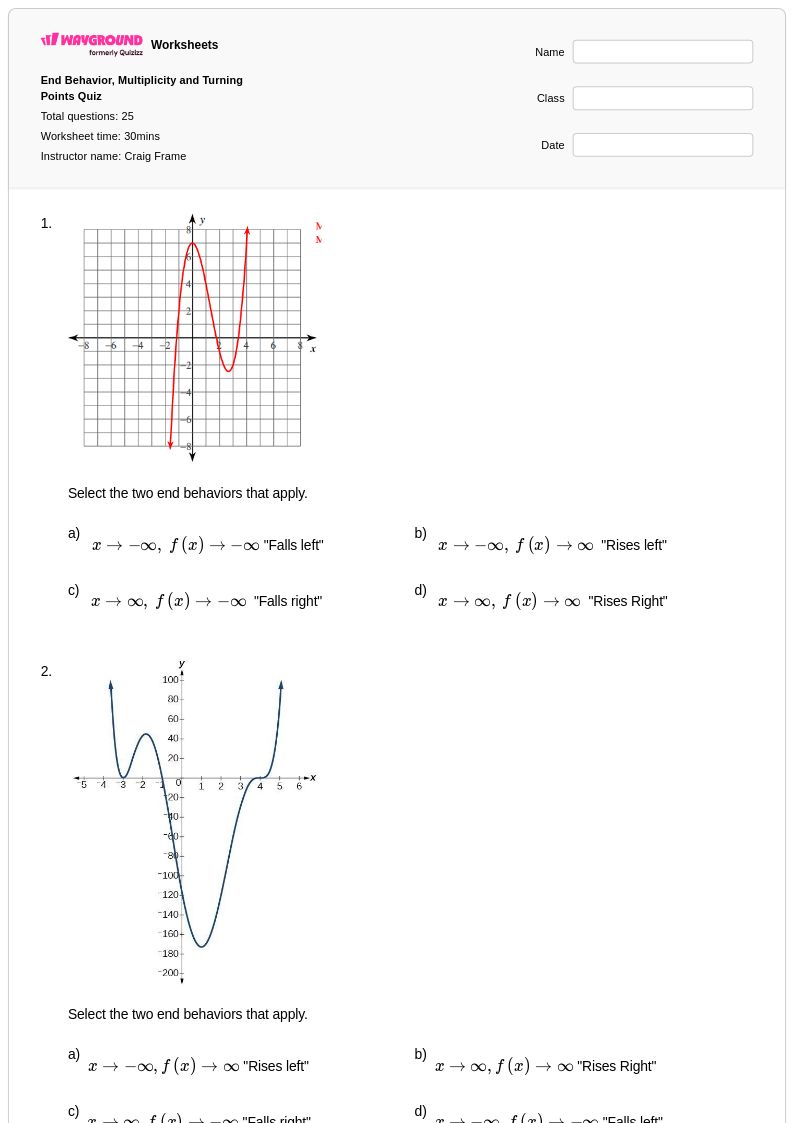
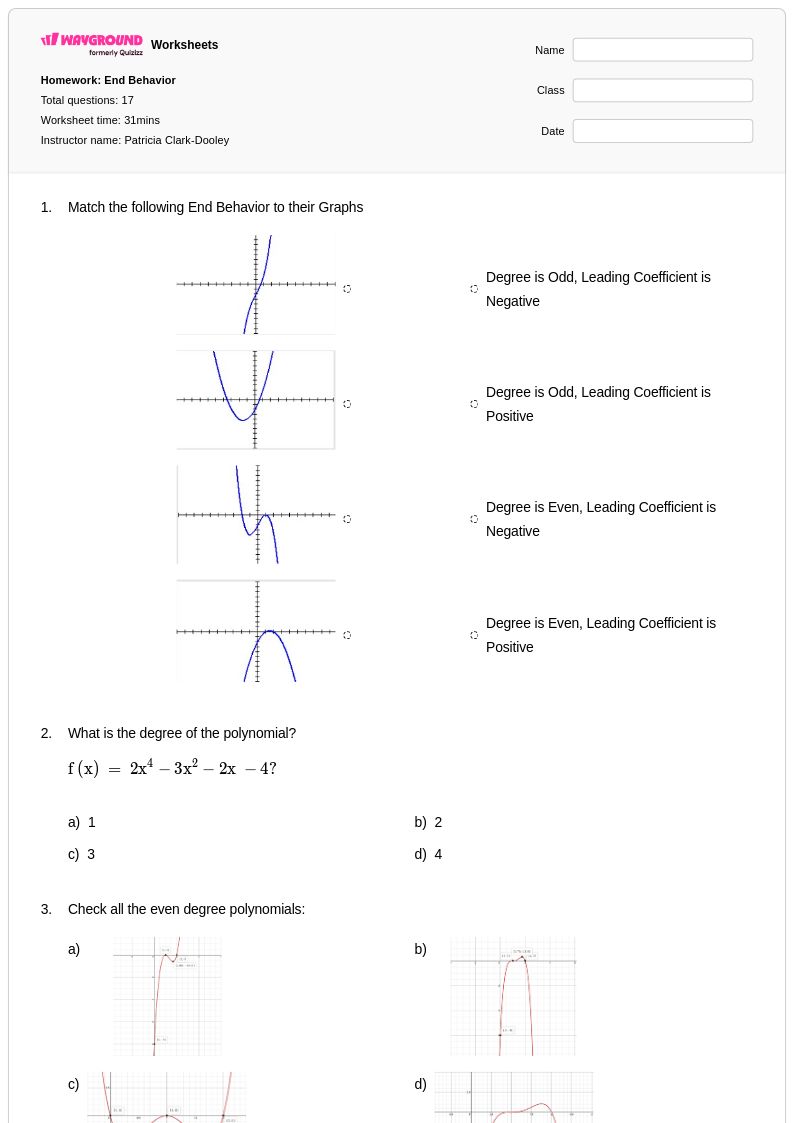
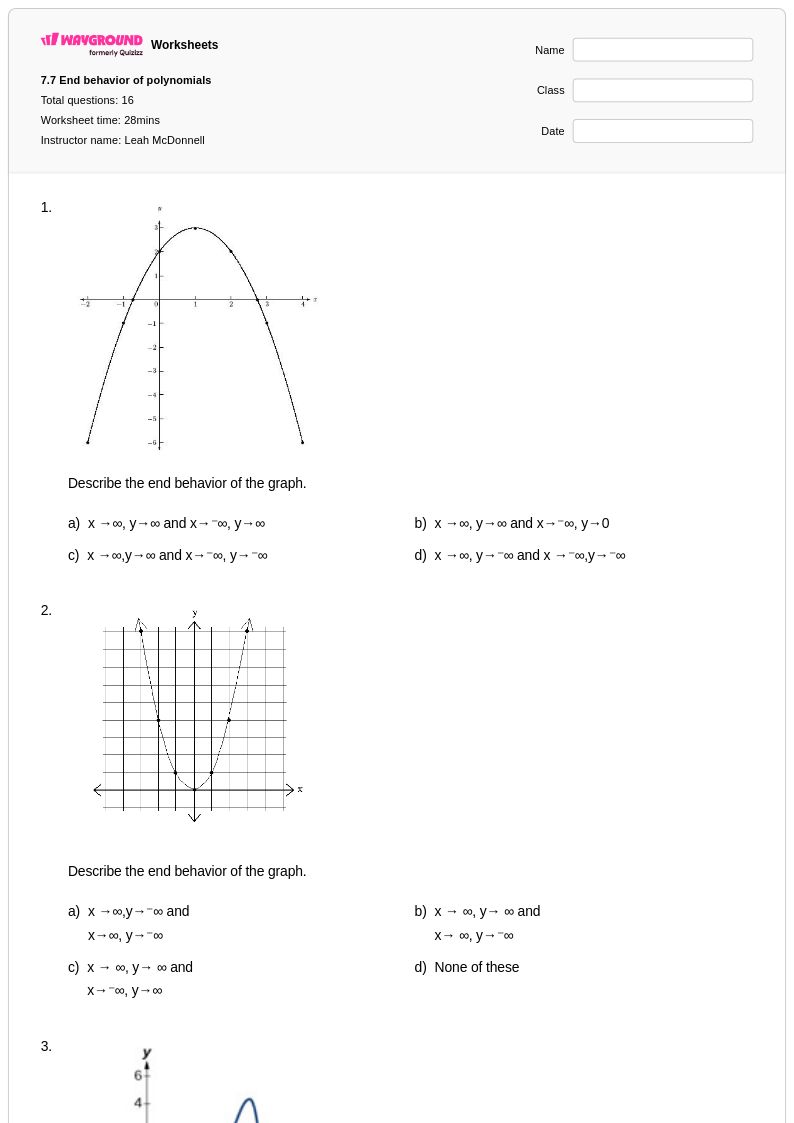
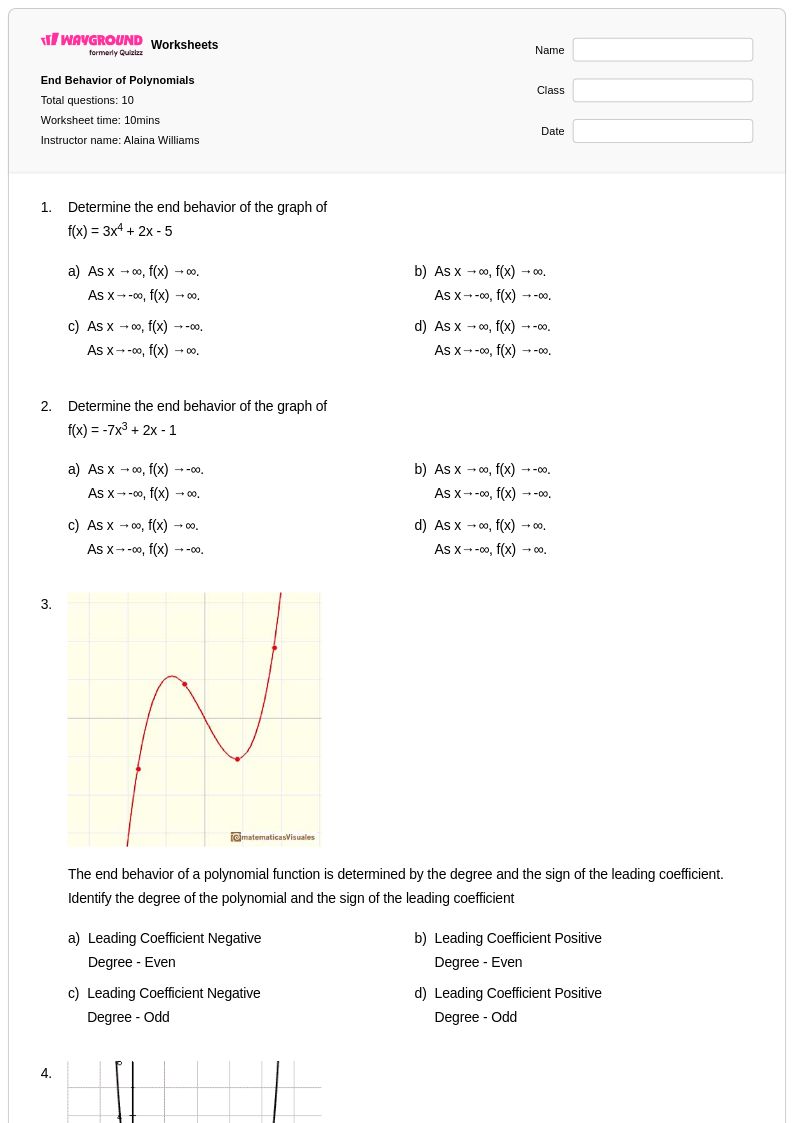
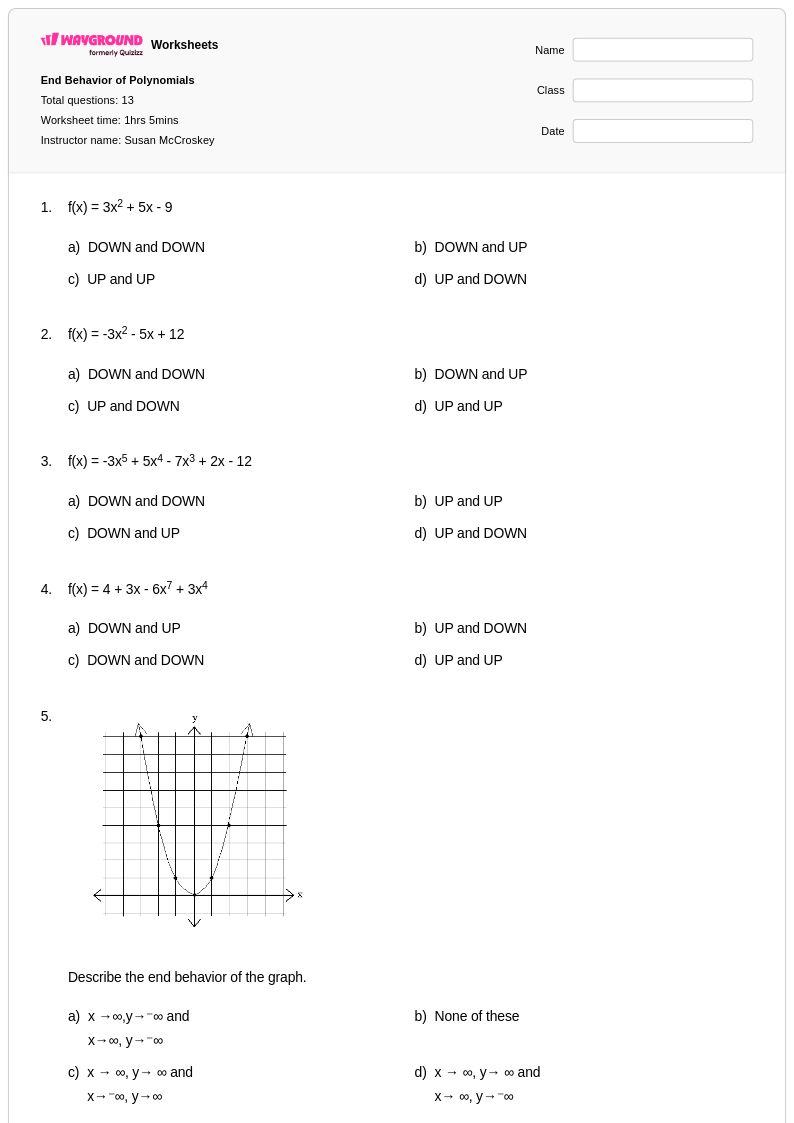
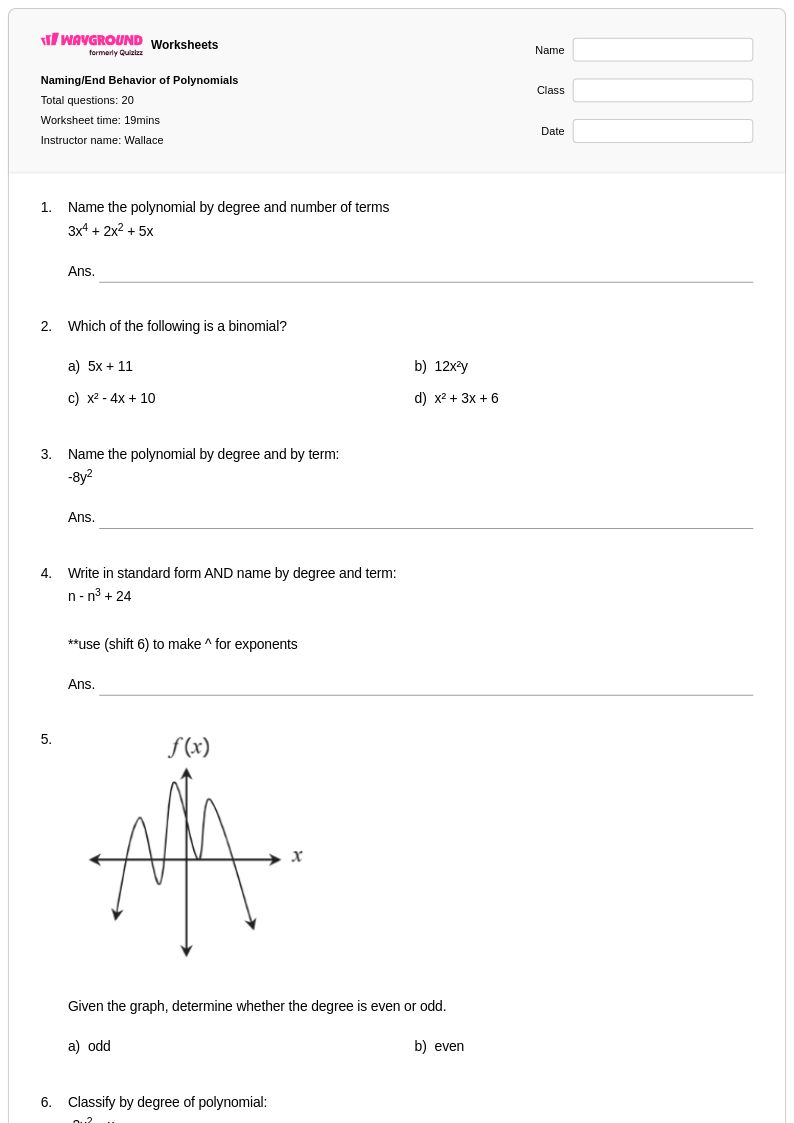
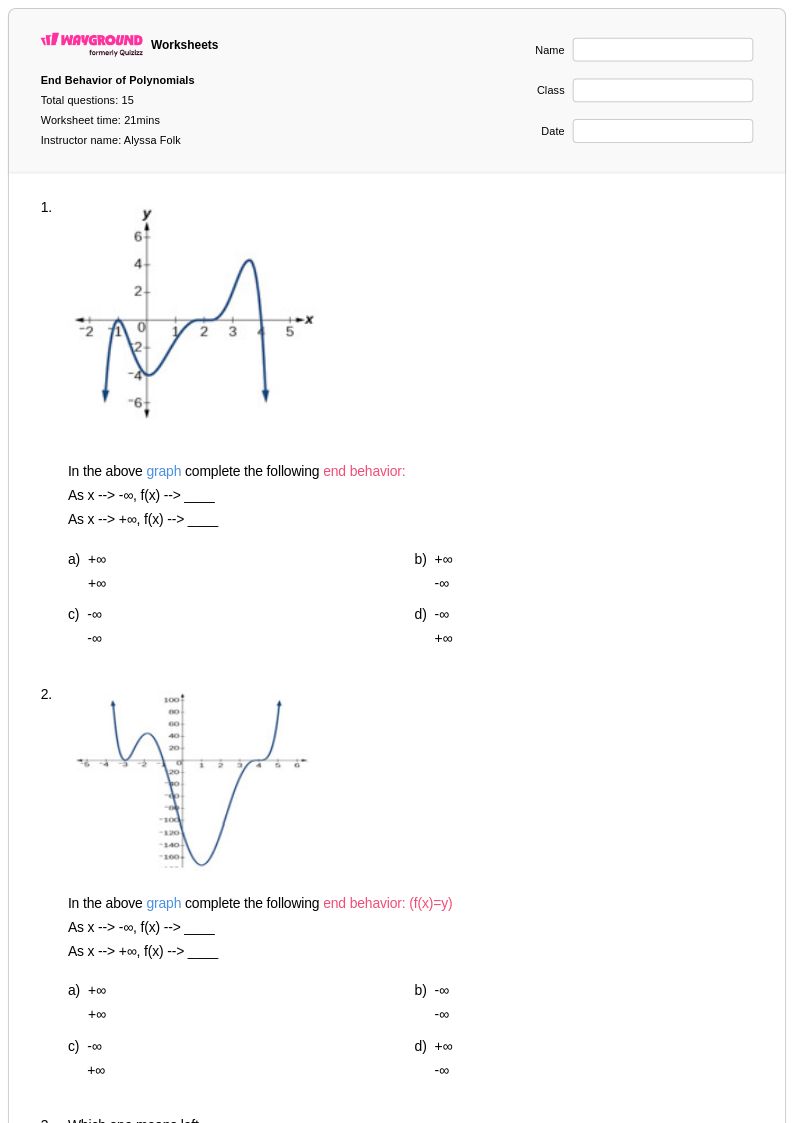
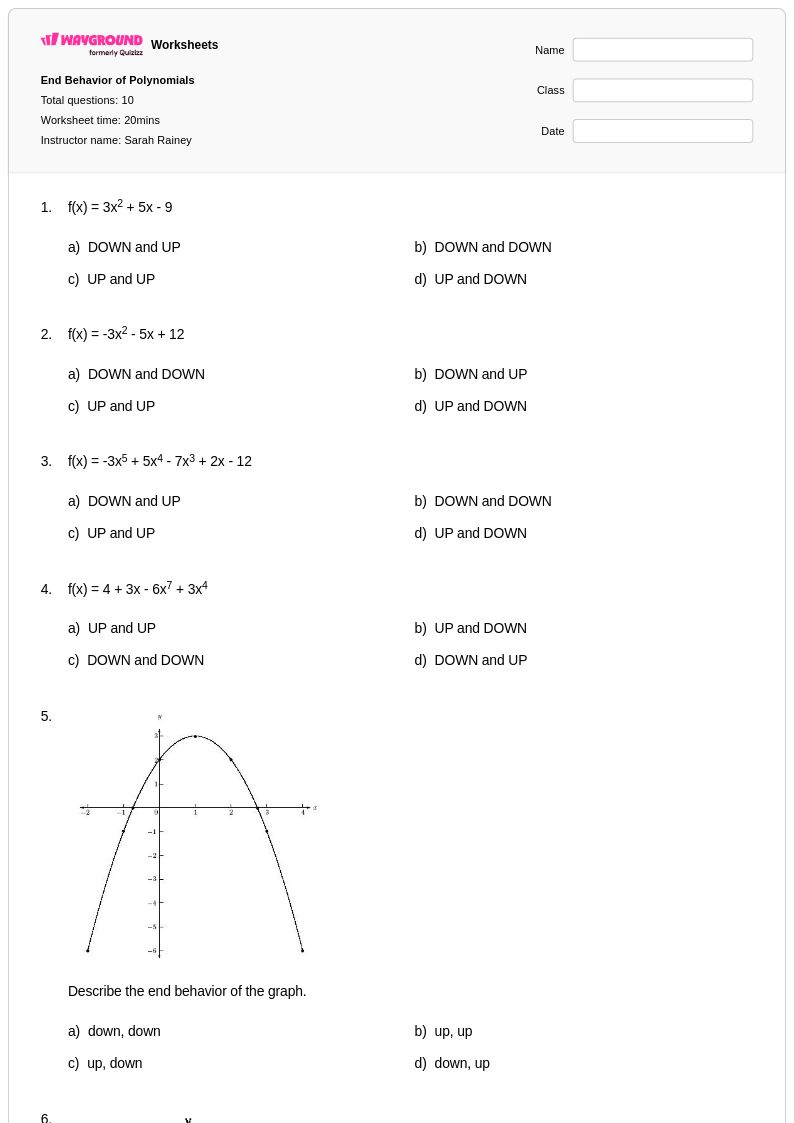
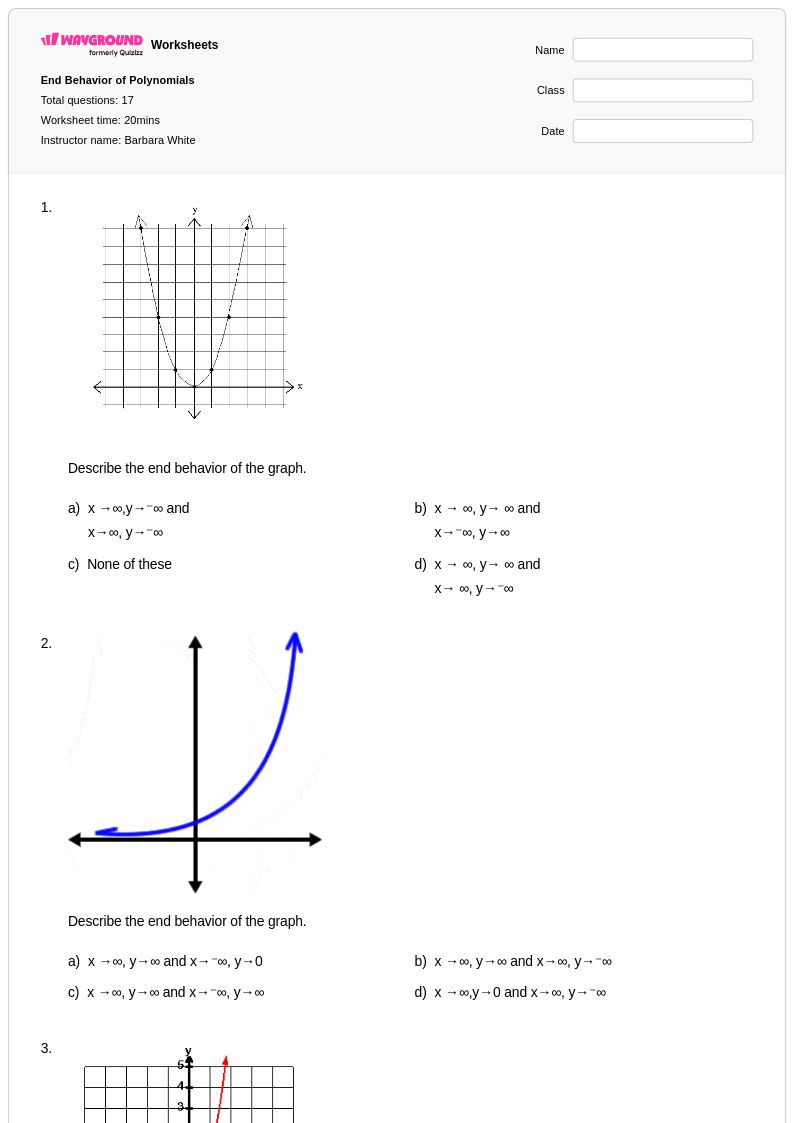
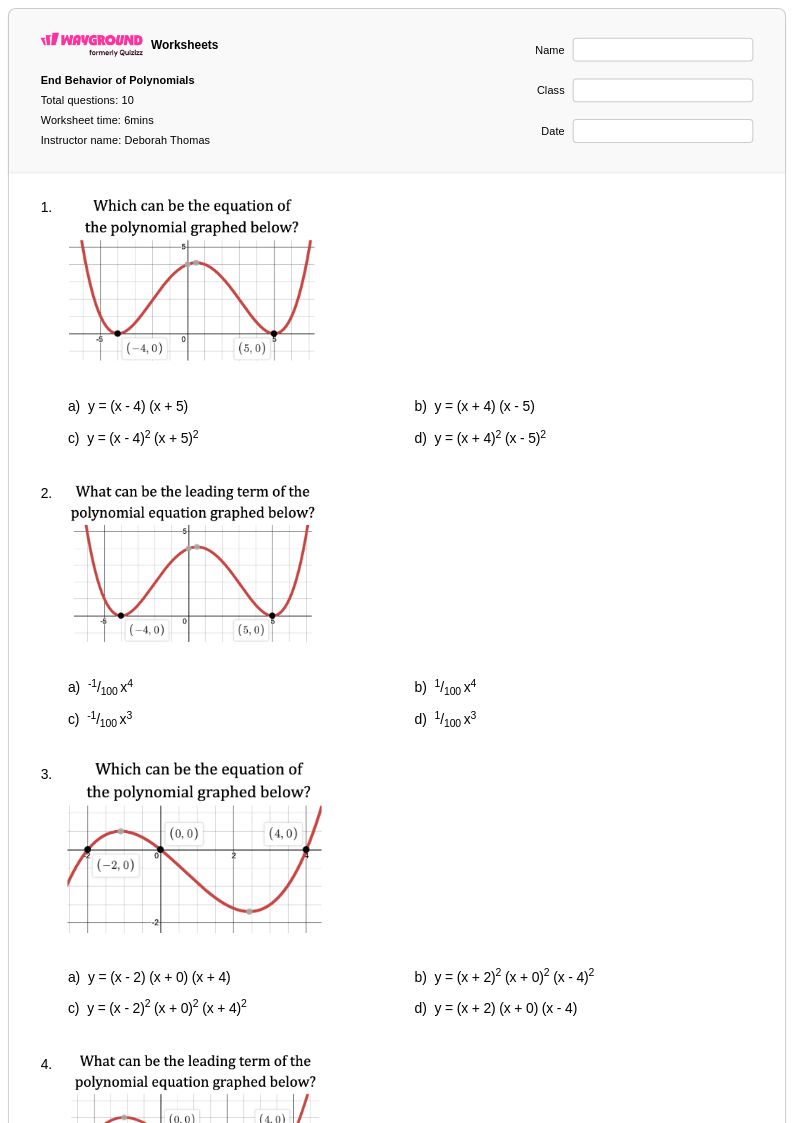
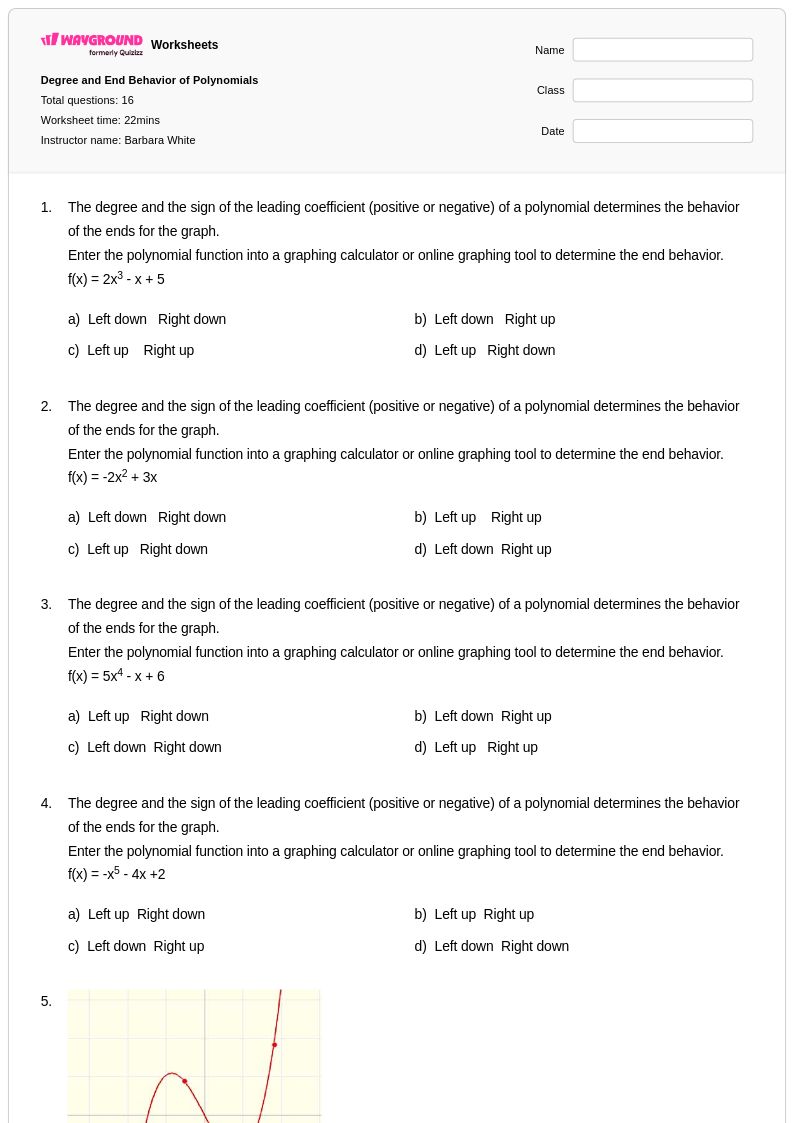
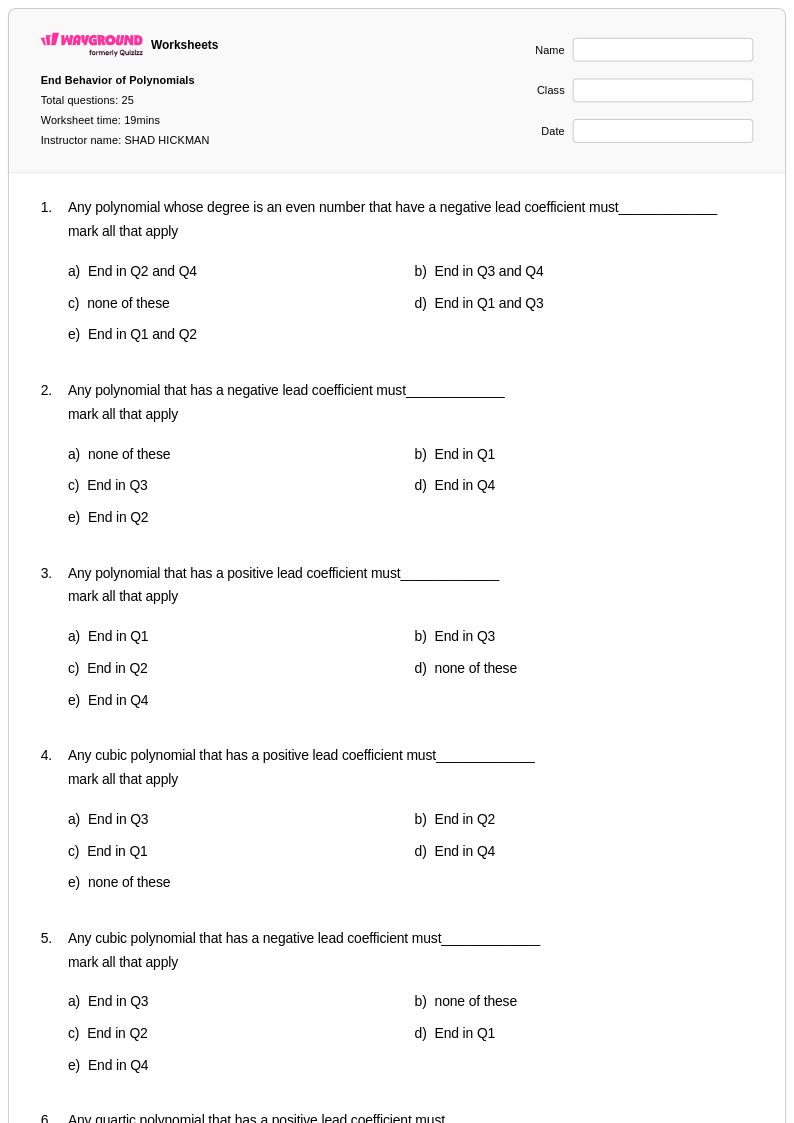
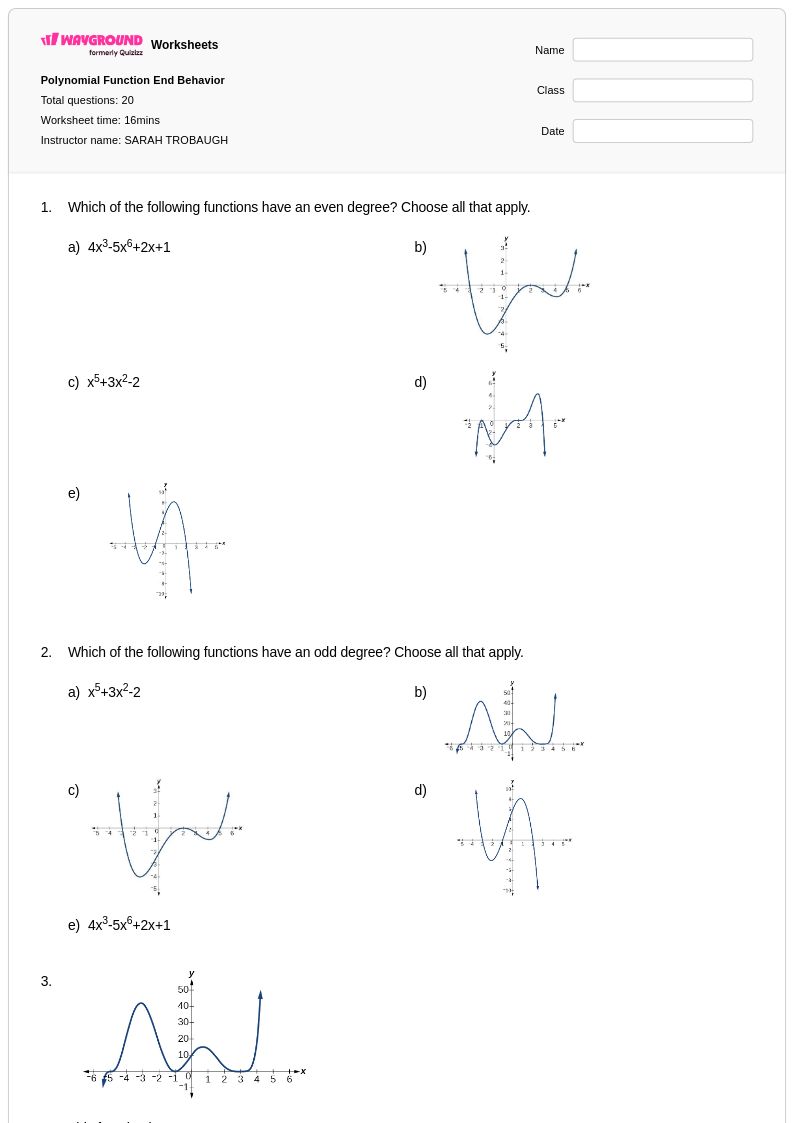
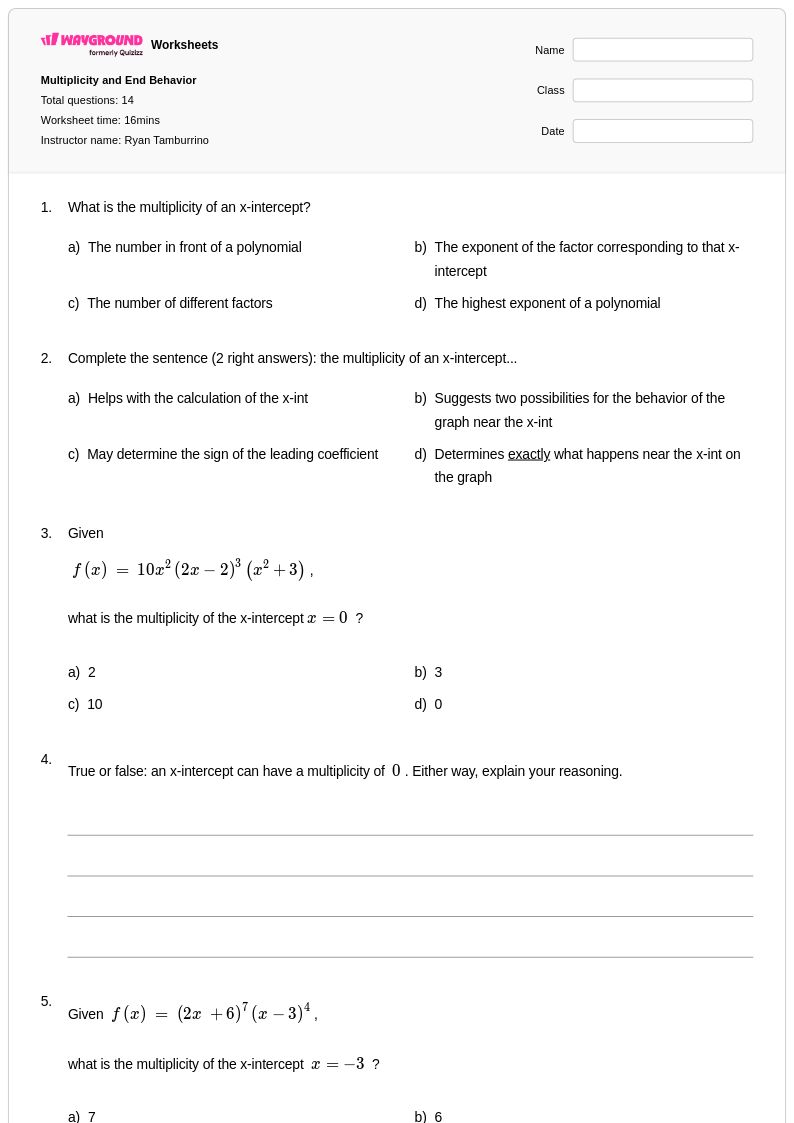
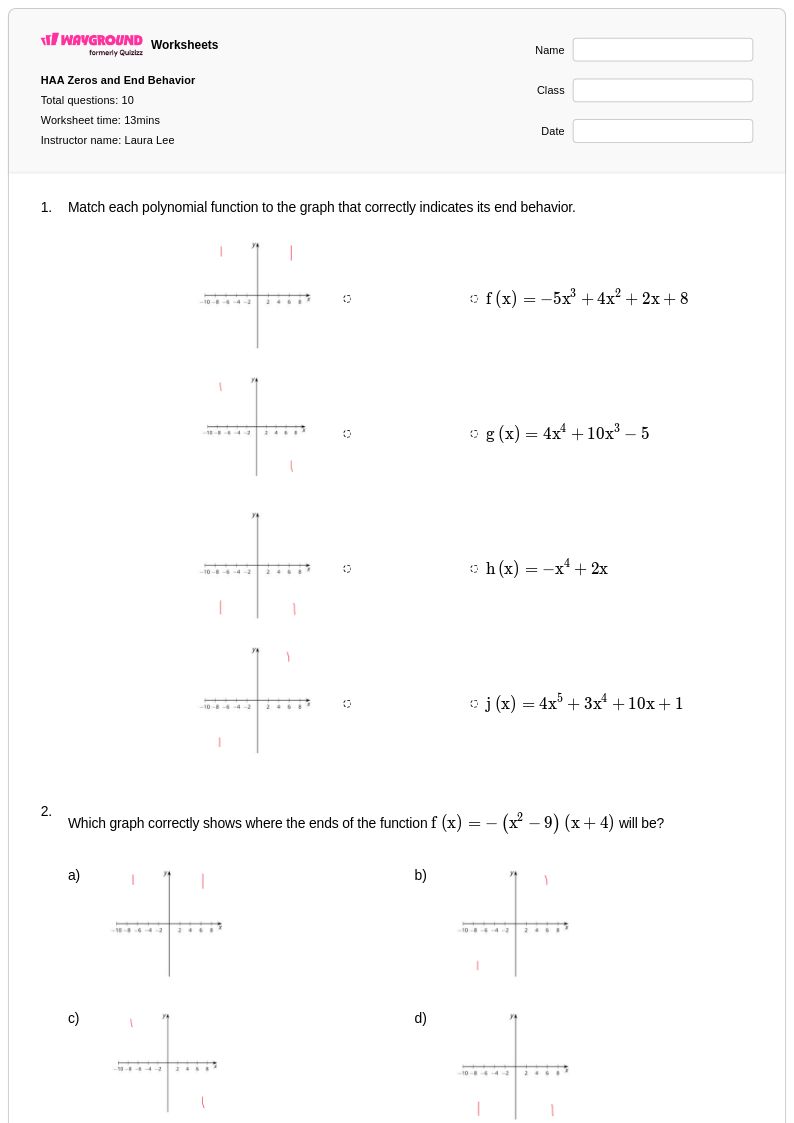
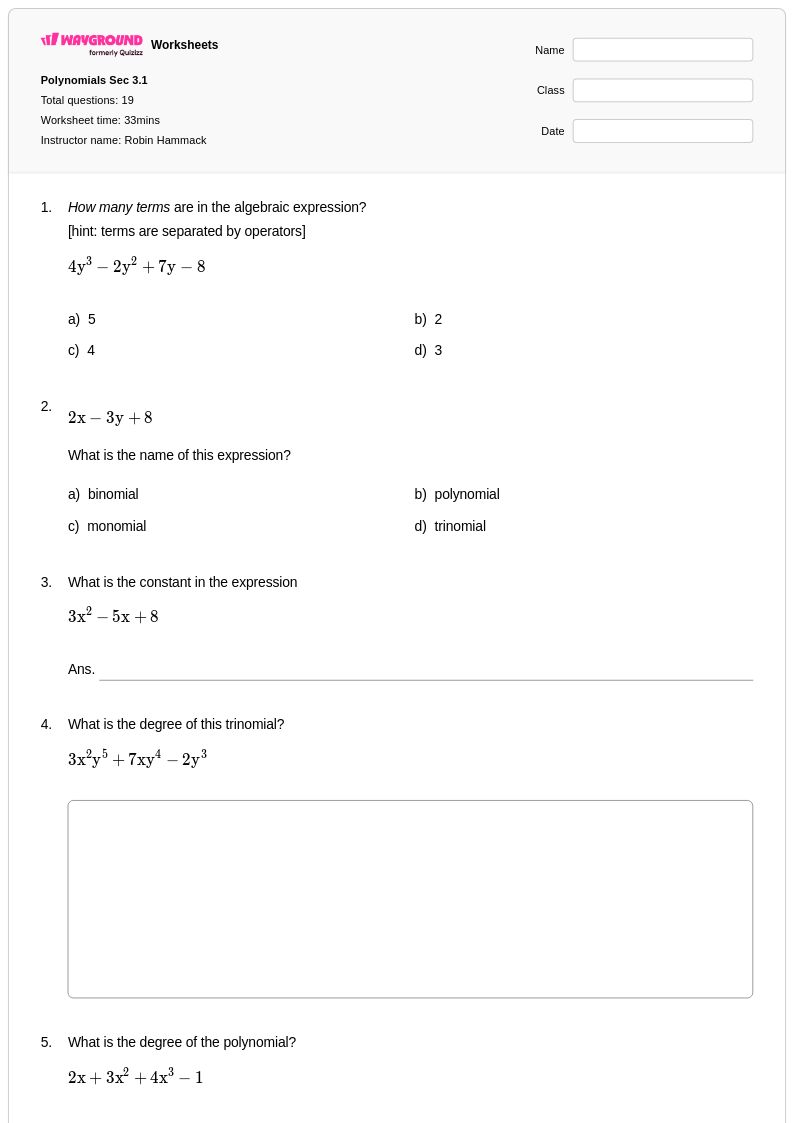
End behavior of polynomials worksheets available through Wayground (formerly Quizizz) provide Class 9 students with comprehensive practice in analyzing how polynomial functions behave as x approaches positive and negative infinity. These carefully designed worksheets strengthen critical algebraic reasoning skills by guiding students through the process of identifying leading coefficients, determining polynomial degrees, and predicting end behavior patterns across various polynomial types including linear, quadratic, cubic, and higher-degree functions. Students work through systematic practice problems that build their understanding of how the degree and leading coefficient work together to determine whether function values approach positive infinity, negative infinity, or exhibit contrasting behaviors at opposite extremes. Each worksheet collection includes detailed answer keys and is available as free printables in pdf format, making it easy for educators to provide targeted practice that reinforces this fundamental concept in polynomial analysis.
Wayground (formerly Quizizz) supports mathematics educators with an extensive collection of teacher-created resources specifically focused on polynomial end behavior, offering millions of worksheets that can be easily located through robust search and filtering capabilities. Teachers benefit from standards-aligned materials that support differentiation through multiple difficulty levels, allowing them to address varying student needs within the same classroom while maintaining focus on essential Class 9 algebraic concepts. The platform's flexible customization tools enable educators to modify existing worksheets or combine resources to create targeted practice sets for remediation, skill reinforcement, or enrichment activities. Available in both printable pdf format and digital formats, these worksheet collections streamline lesson planning by providing ready-to-use materials that can be seamlessly integrated into classroom instruction, homework assignments, or assessment preparation focused on polynomial function behavior.
FAQs
How do I introduce end behavior of polynomials to 9th graders?
Grade 9 students usually arrive with solid experience graphing linear and quadratic functions, so use that as the entry point. Ask them what happens to a parabola's y-values as x gets very large or very small — they already know both sides go up for y = x². From there, introduce the vocabulary (end behavior, leading term) and show how a negative leading coefficient flips both tails down. Once even-degree behavior makes sense, introduce a cubic so they can see what it looks like when the two tails point in opposite directions. Building from what they already know makes the four cases feel like a natural extension rather than new rules to memorize.
What practice problems work best for 9th graders learning end behavior?
Start with problems that isolate one variable at a time: first, hold the degree constant and change the sign of the leading coefficient; then hold the sign constant and change the degree from even to odd. Once students can handle those separately, give them mixed problems where both vary. Wayground's Grade 9 worksheets move through this progression — from linear and quadratic cases up to higher-degree polynomials — so students build the pattern recognition before they're asked to apply it under pressure.
What misconceptions do 9th graders have about end behavior of polynomials?
At this level, the most common confusion is treating the highest-value coefficient as the leading term rather than the highest-degree term. A student looking at 5x² + 2x³ will often focus on the 5 and call it a quadratic. The fix is deliberate practice rewriting polynomials in standard form before analyzing them — making that step automatic removes the source of the error. Students also frequently forget that odd-degree polynomials have opposite-direction tails, defaulting to the even-degree pattern they saw first with parabolas.
How do I use these Grade 9 end behavior worksheets in my classroom?
The worksheets include complete answer keys, which makes them practical for self-paced practice or homework where students need immediate feedback. For in-class use, hosting the worksheet as a digital quiz on Wayground gives you live scoring so you can see which students are stuck before the period ends. If you'd rather keep it on paper, the printable PDF works just as well — you can grade submissions later using the Wayground for Teachers app by scanning student work directly.
Is end behavior of polynomials part of the Common Core standards for Grade 9?
End behavior isn't always a Grade 9 standard under Common Core — it depends on whether students are in a standard Algebra 1 course or an accelerated pathway that reaches Algebra 2 content in 9th grade. Common Core's high school functions standards expect students to analyze polynomial graphs and connect algebraic structure to graphical behavior, which is exactly what end behavior practice develops. For accelerated 9th graders, this topic fits squarely into that progression, building from their earlier work with quadratic functions toward a general understanding of how degree and leading coefficient govern a polynomial's long-run behavior.
How can I support struggling 9th graders on end behavior worksheets?
Two accommodations make the biggest difference at this level. First, use reduced answer choices for students who are overwhelmed by the number of options — narrowing from four to two keeps the reasoning task intact while reducing decision fatigue. Second, if students are tripping over the written problem setup rather than the math itself, enable Read Aloud so the question is read to them. At the worksheet level, bumping up the font size or switching to a dyslexia-friendly font takes about thirty seconds and can meaningfully reduce friction for students who struggle with dense text.