Free Printable Direct and Inverse Variation Worksheets for Class 9
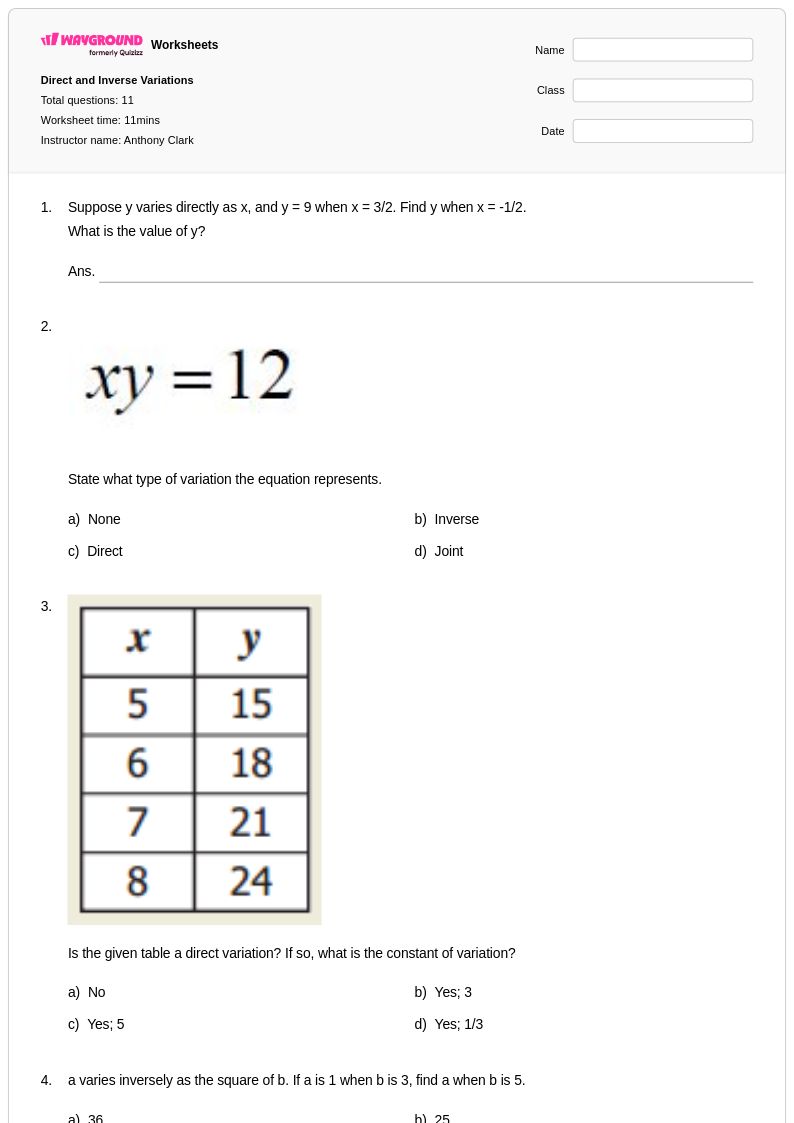
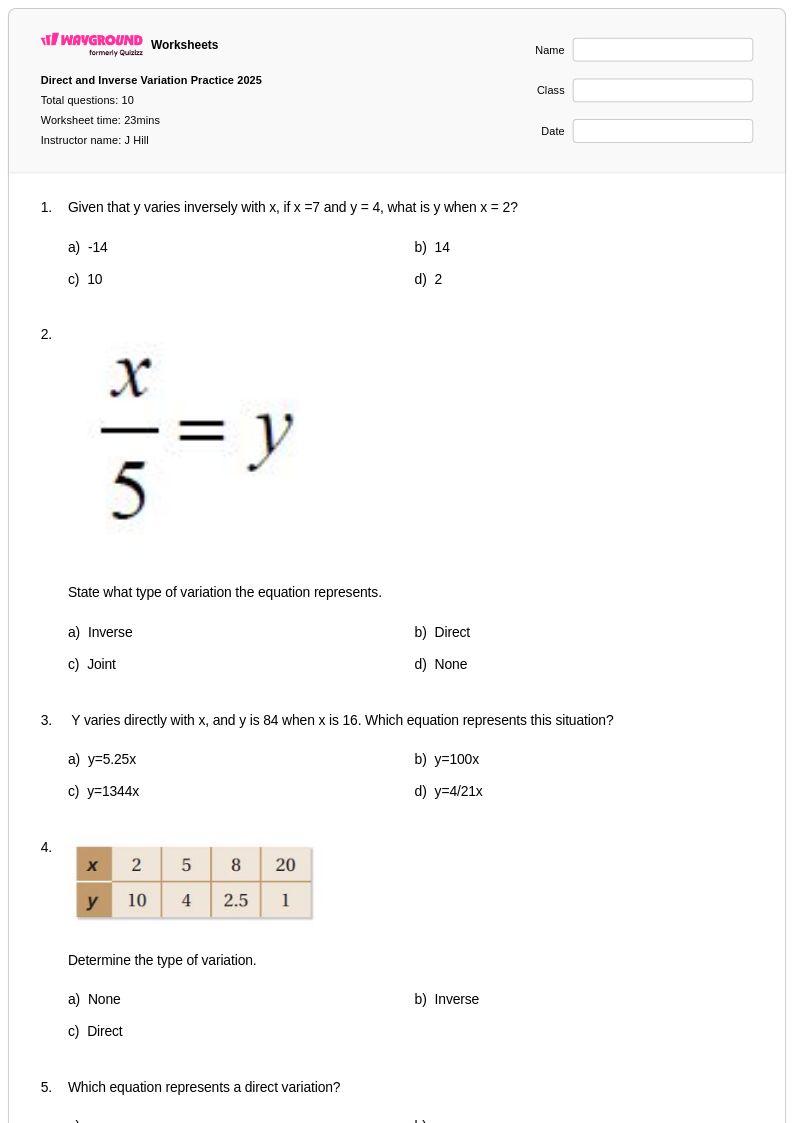
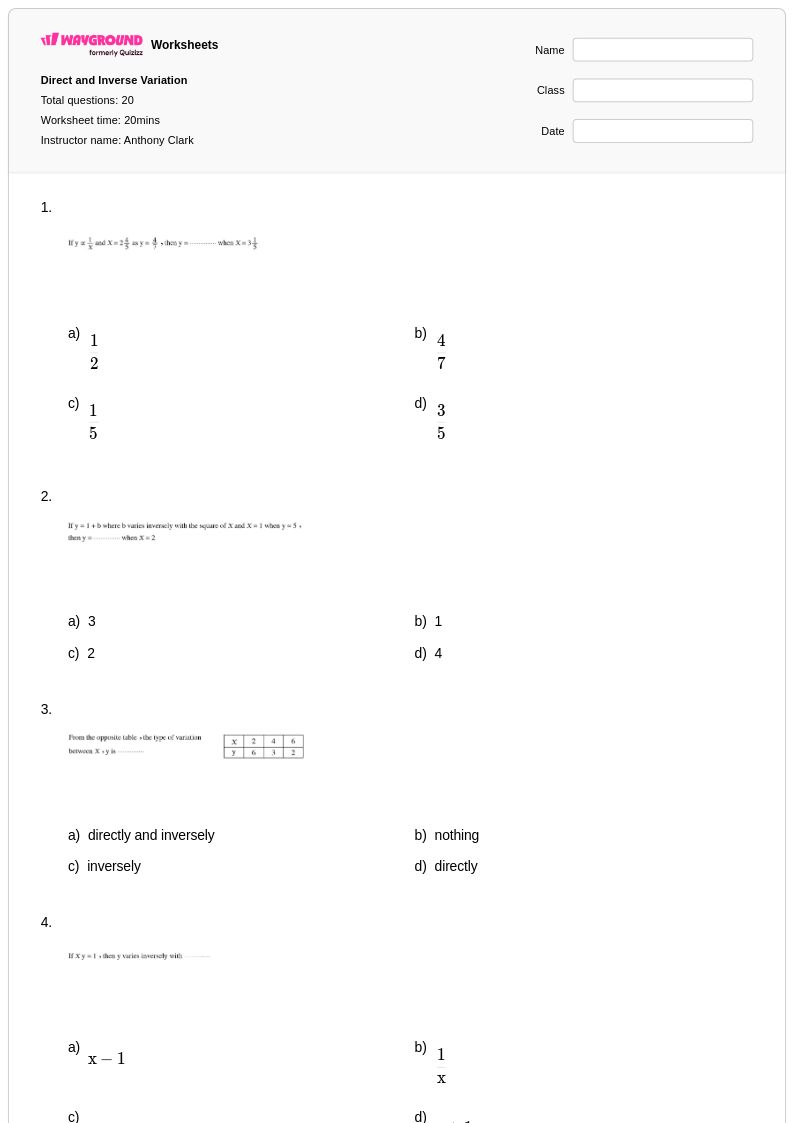
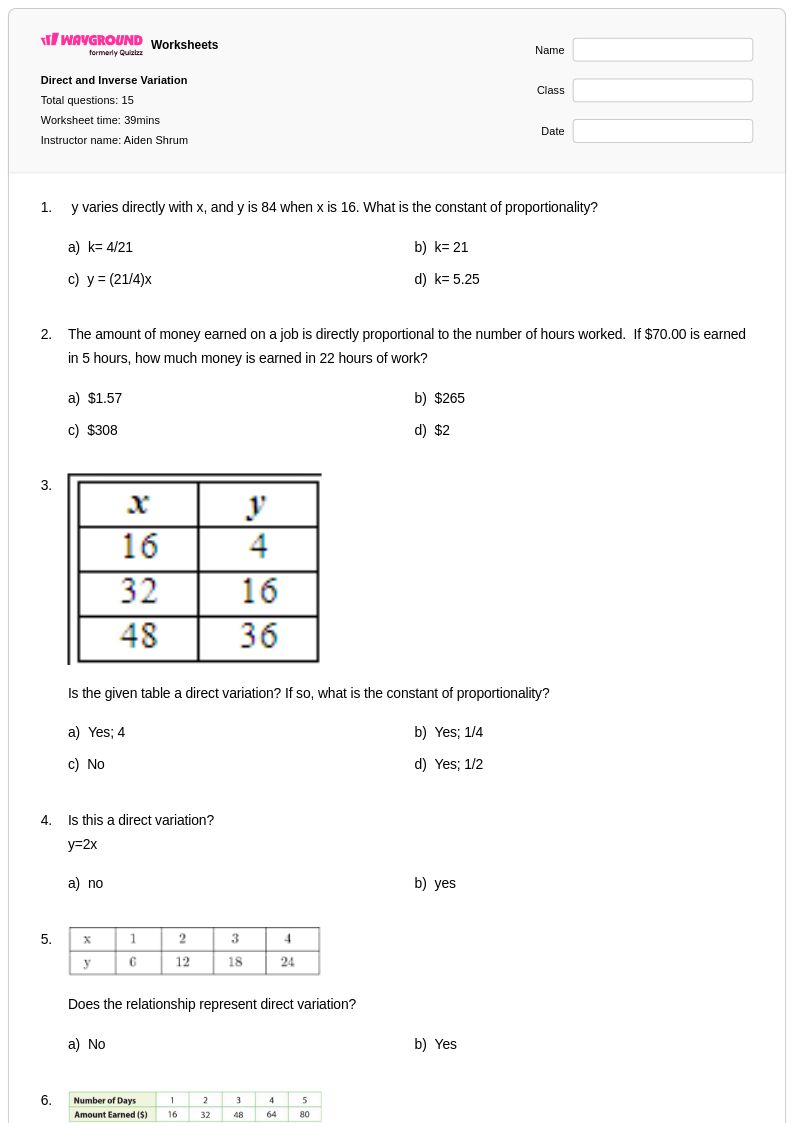
Explore Wayground's free Class 9 direct and inverse variation worksheets with printable PDFs, practice problems, and answer keys to help students master these fundamental algebraic relationships.
Explore printable Direct and Inverse Variation worksheets for Class 9
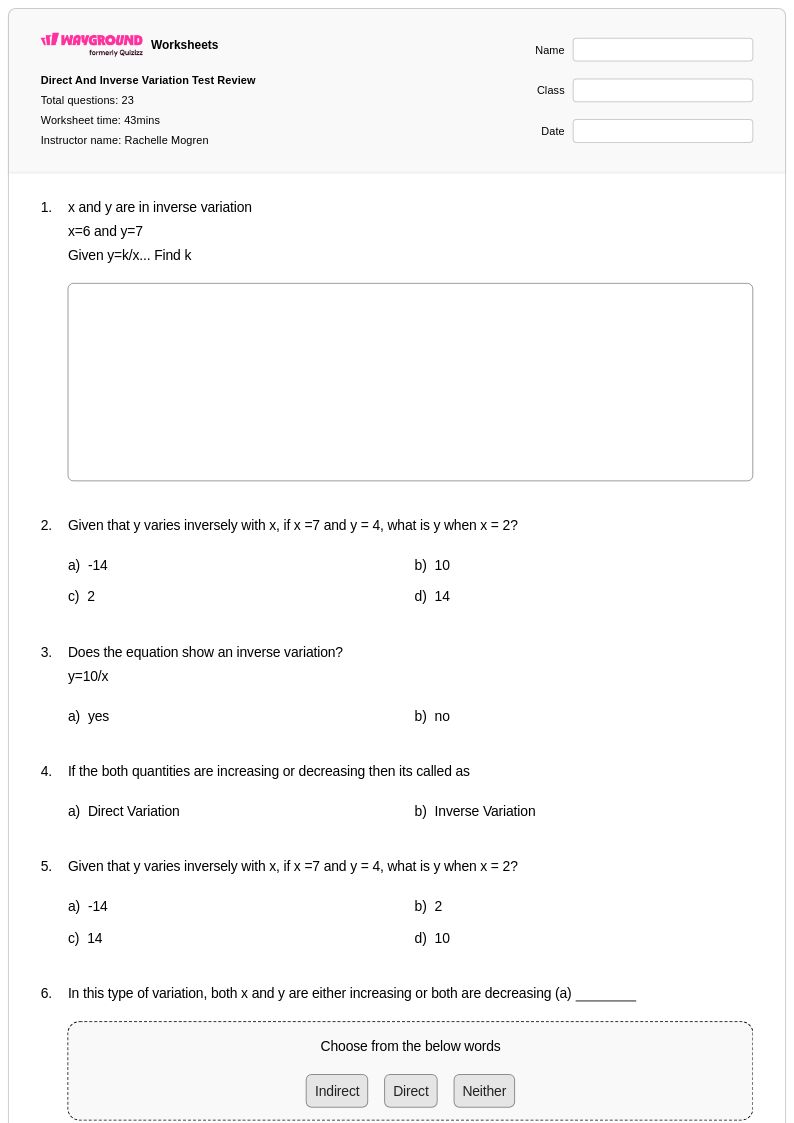
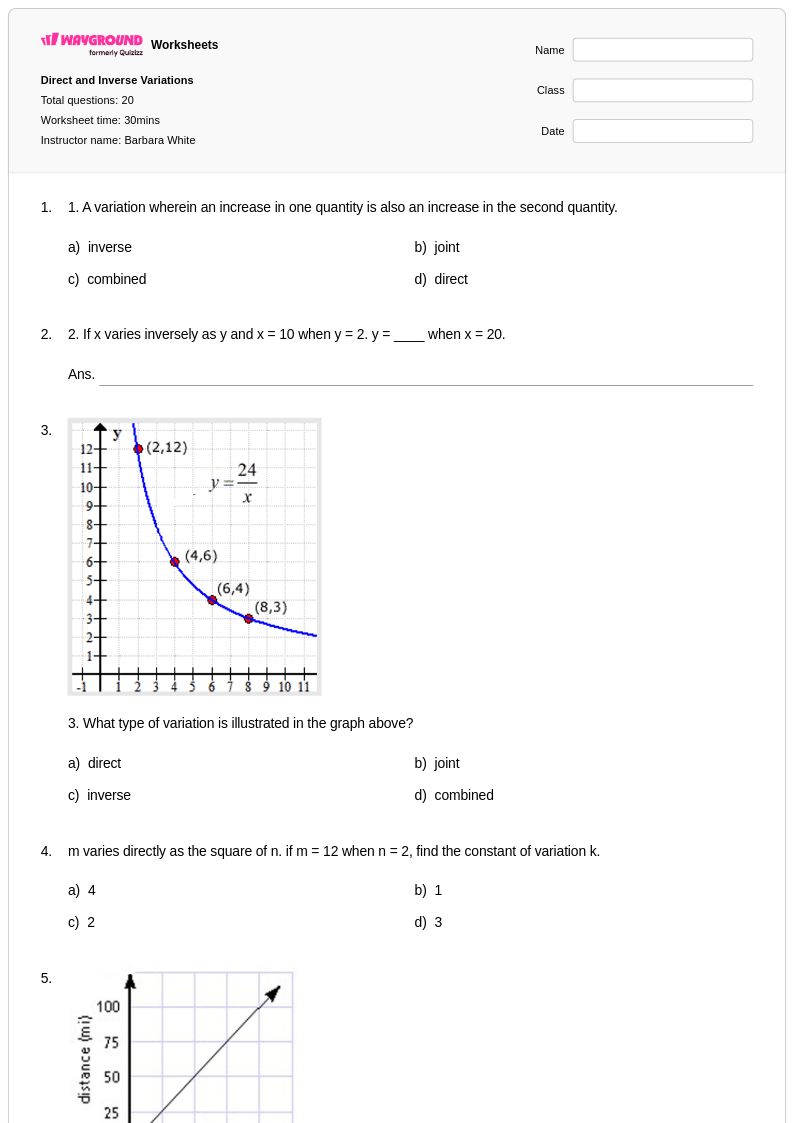
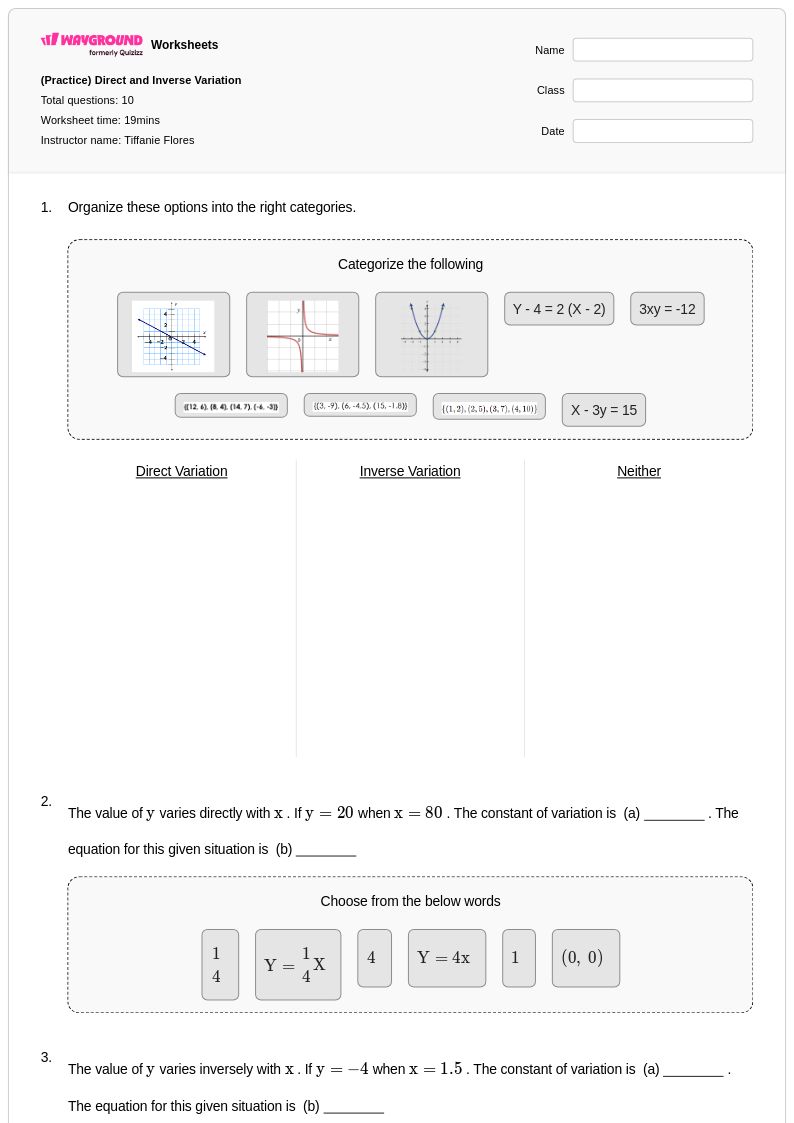
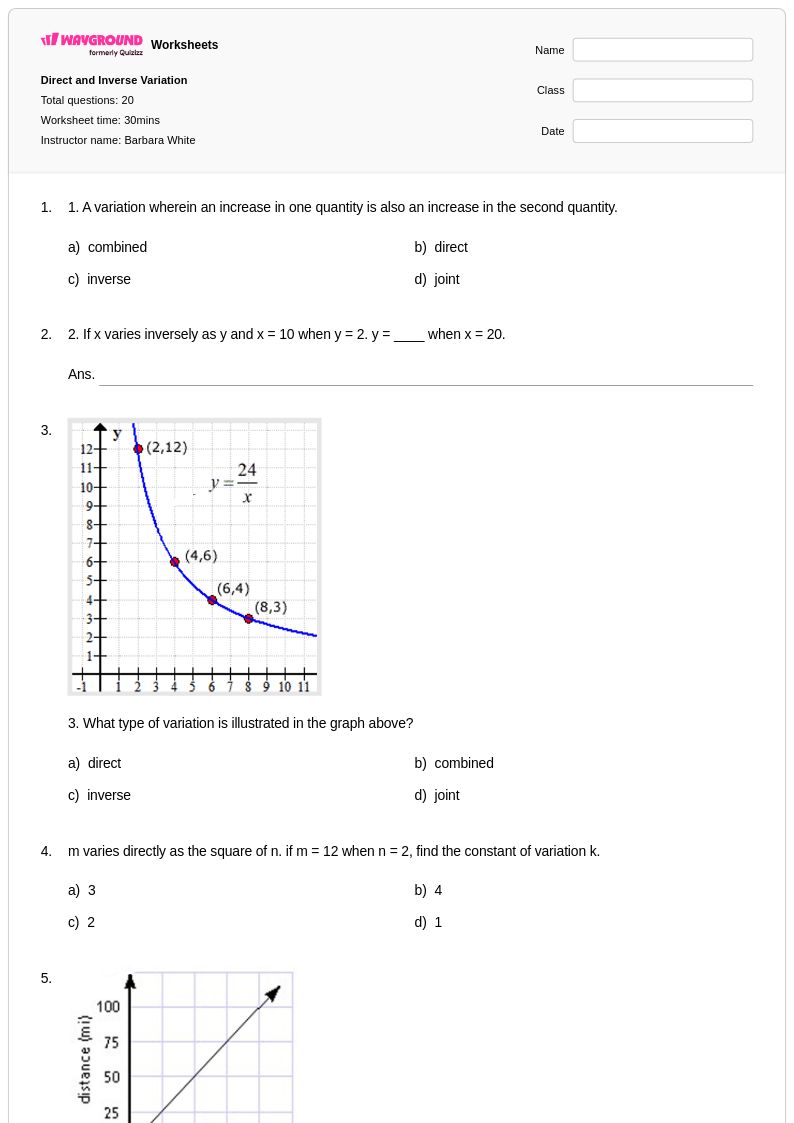
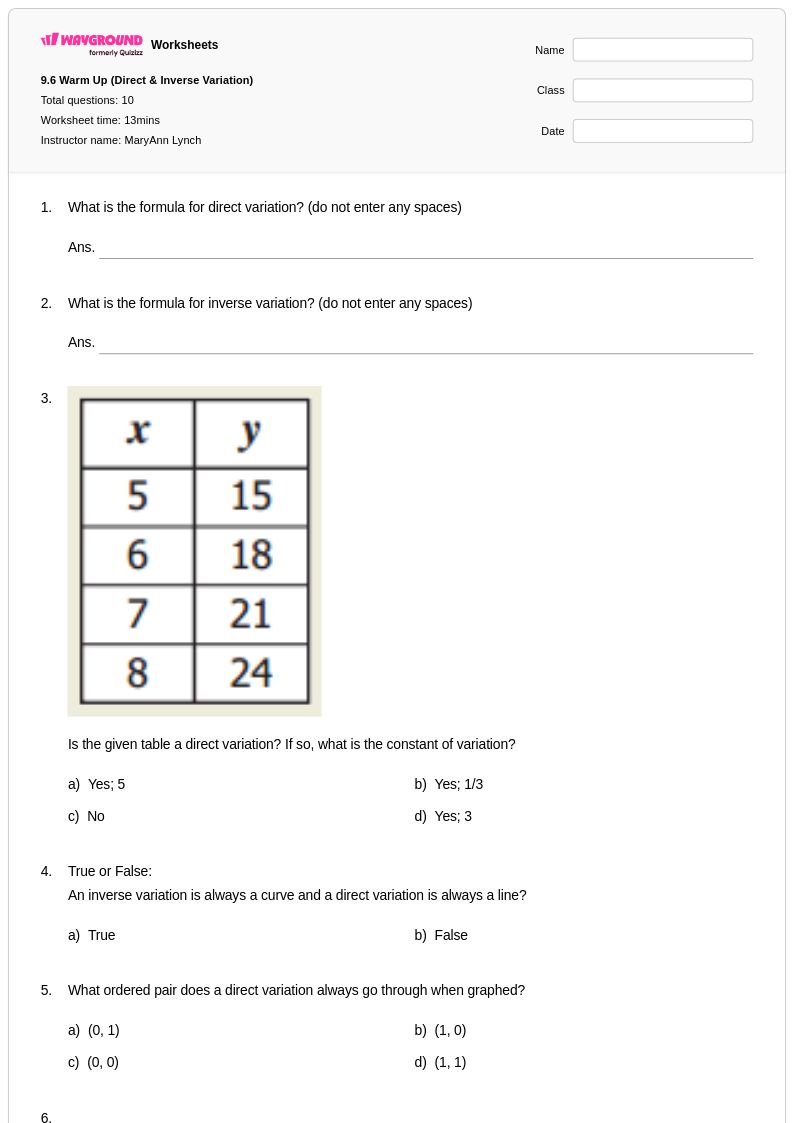
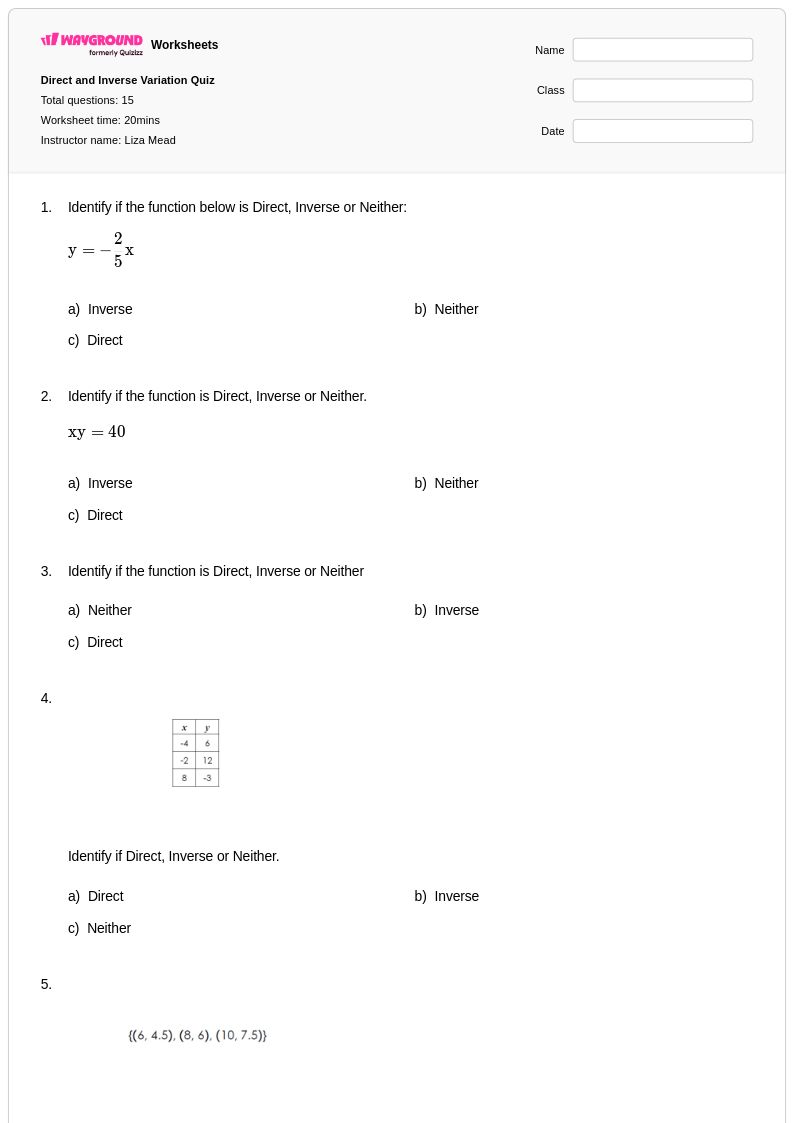
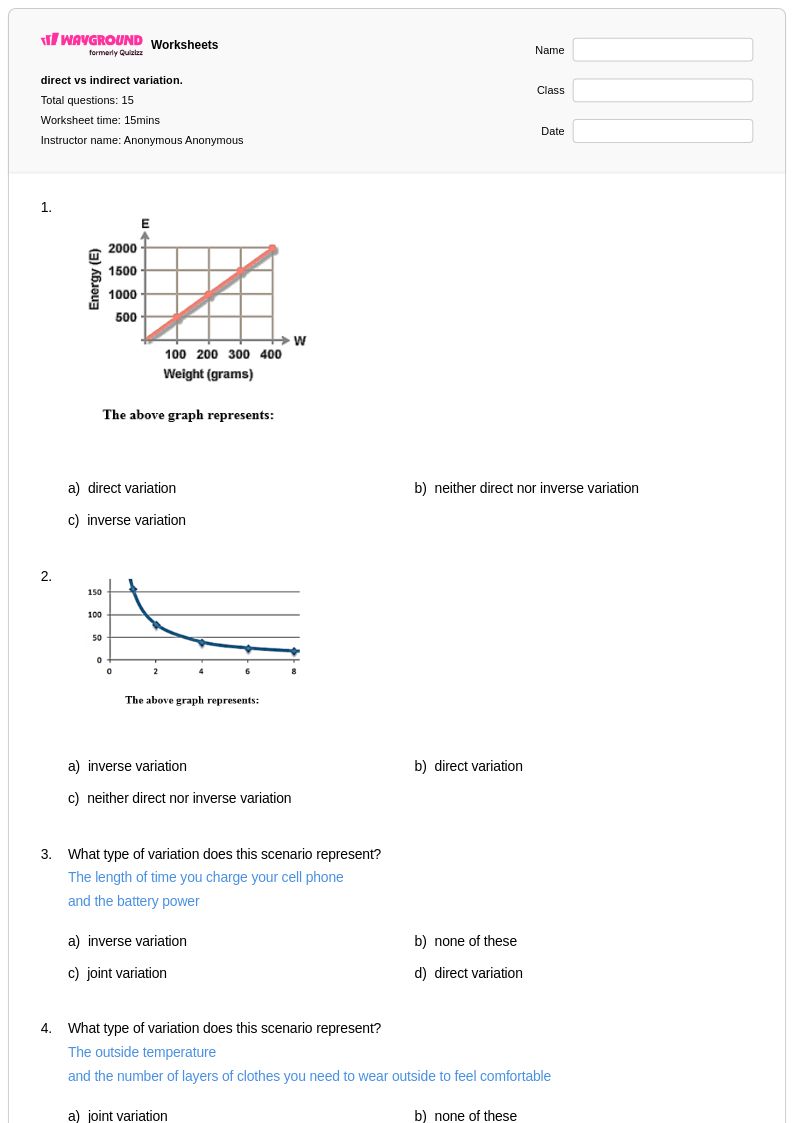
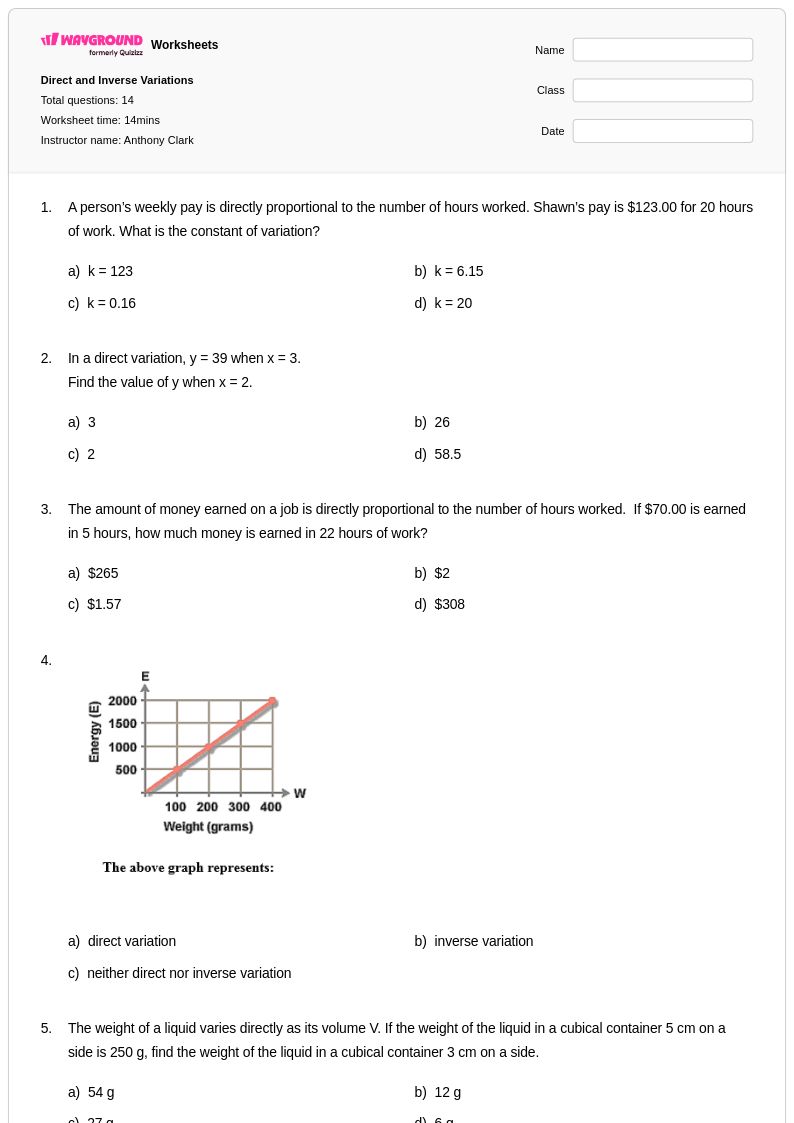
Direct and inverse variation worksheets for Class 9 students through Wayground (formerly Quizizz) provide comprehensive practice with these fundamental algebraic relationships that form the backbone of advanced mathematical reasoning. These carefully crafted resources help students master the critical skill of identifying, analyzing, and solving problems involving directly proportional relationships where variables increase or decrease together, and inversely proportional relationships where one variable increases as the other decreases. The worksheets strengthen students' ability to write variation equations, calculate constants of variation, and apply these concepts to real-world scenarios involving distance and time, work rates, and geometric relationships. Each worksheet includes detailed practice problems with corresponding answer keys, making them valuable free printables for both classroom instruction and independent study.
Wayground (formerly Quizizz) empowers mathematics teachers with millions of educator-created direct and inverse variation resources that streamline lesson planning and enhance student learning outcomes. The platform's robust search and filtering capabilities allow teachers to quickly locate worksheets aligned with specific curriculum standards and differentiated for various skill levels within Class 9 algebra courses. Teachers can seamlessly customize existing materials or create new variations to address individual student needs, whether for remediation of foundational concepts or enrichment of advanced applications. These versatile resources are available in both printable pdf formats for traditional paper-based practice and digital formats for technology-integrated classrooms, enabling flexible implementation across diverse learning environments and supporting targeted skill practice that builds students' confidence with proportional reasoning.
FAQs
How do I teach direct and inverse variation in a 9th grade algebra class?
By Grade 9, students have seen proportional relationships, so direct variation (y = kx) should feel like familiar ground — the focus here is on formalizing the constant of variation and connecting it to slope. Inverse variation is where most of the teaching work happens: students need to understand that y = k/x is a non-linear relationship, that its graph is a hyperbola, and that the product xy stays constant rather than the ratio. Grounding both types in real-world contexts — distance/time for inverse, unit rate problems for direct — before moving to abstract equation work tends to reduce the confusion between them.
What exercises help 9th graders practice direct and inverse variation?
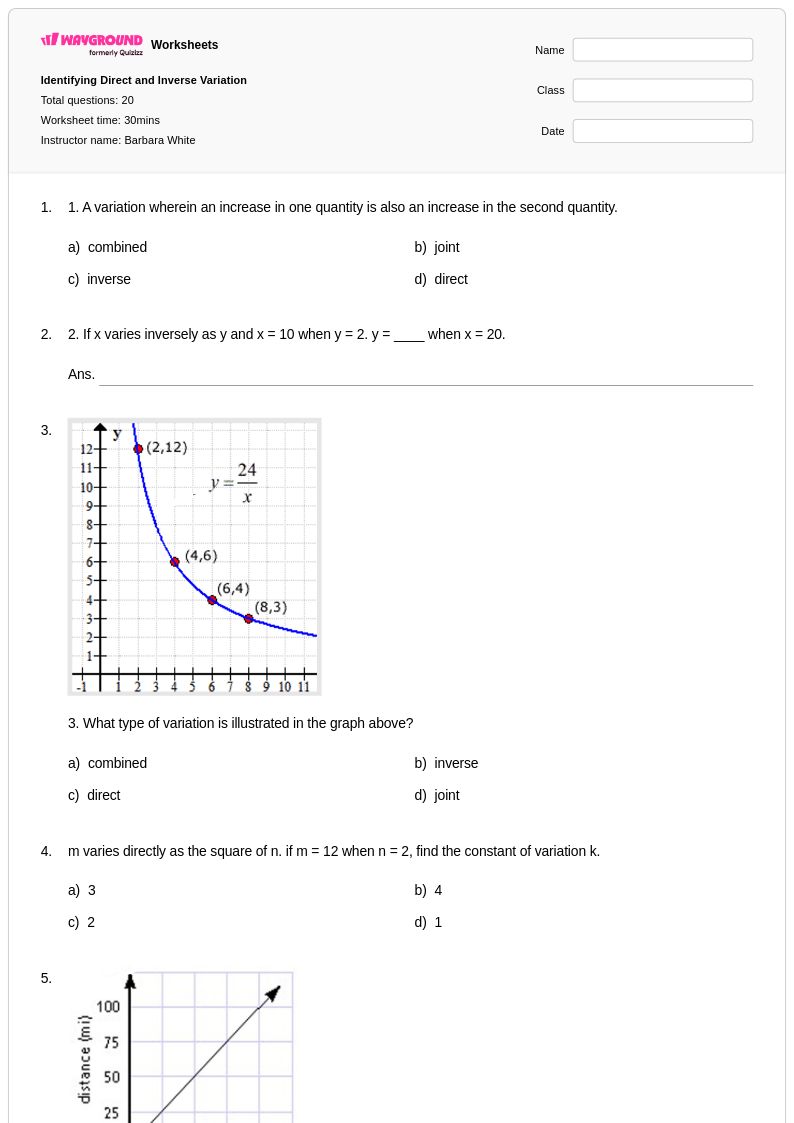
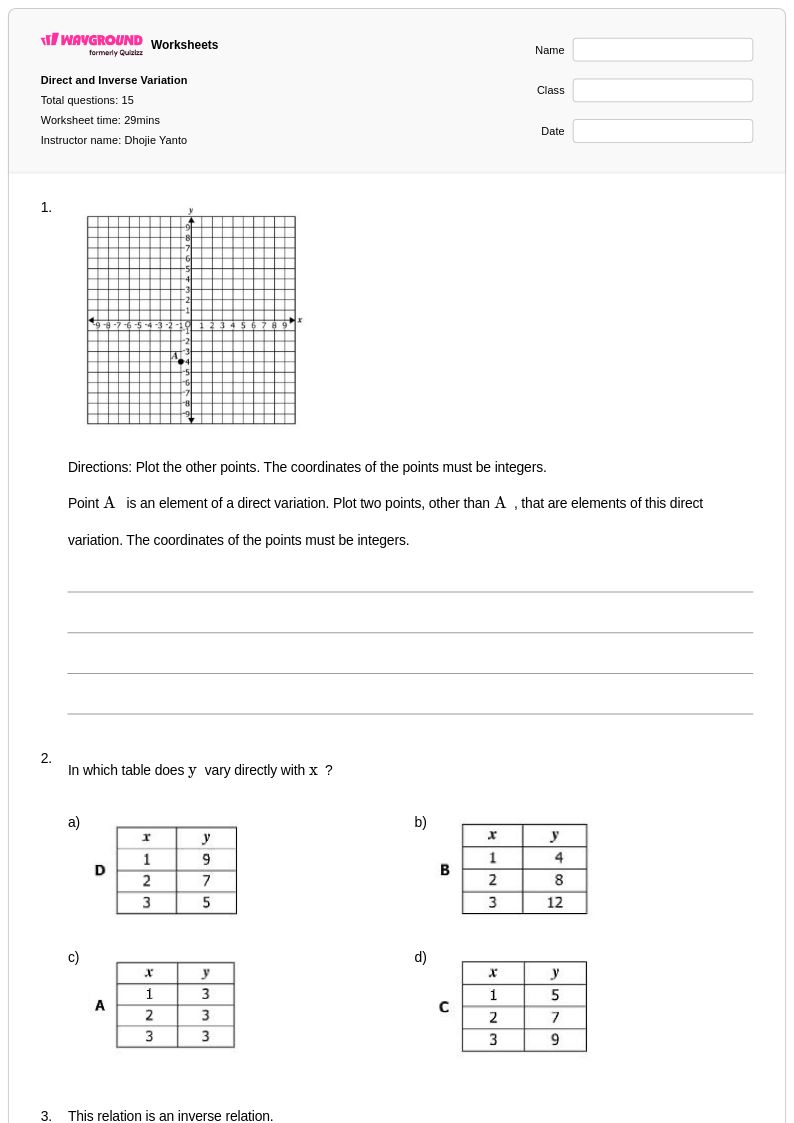
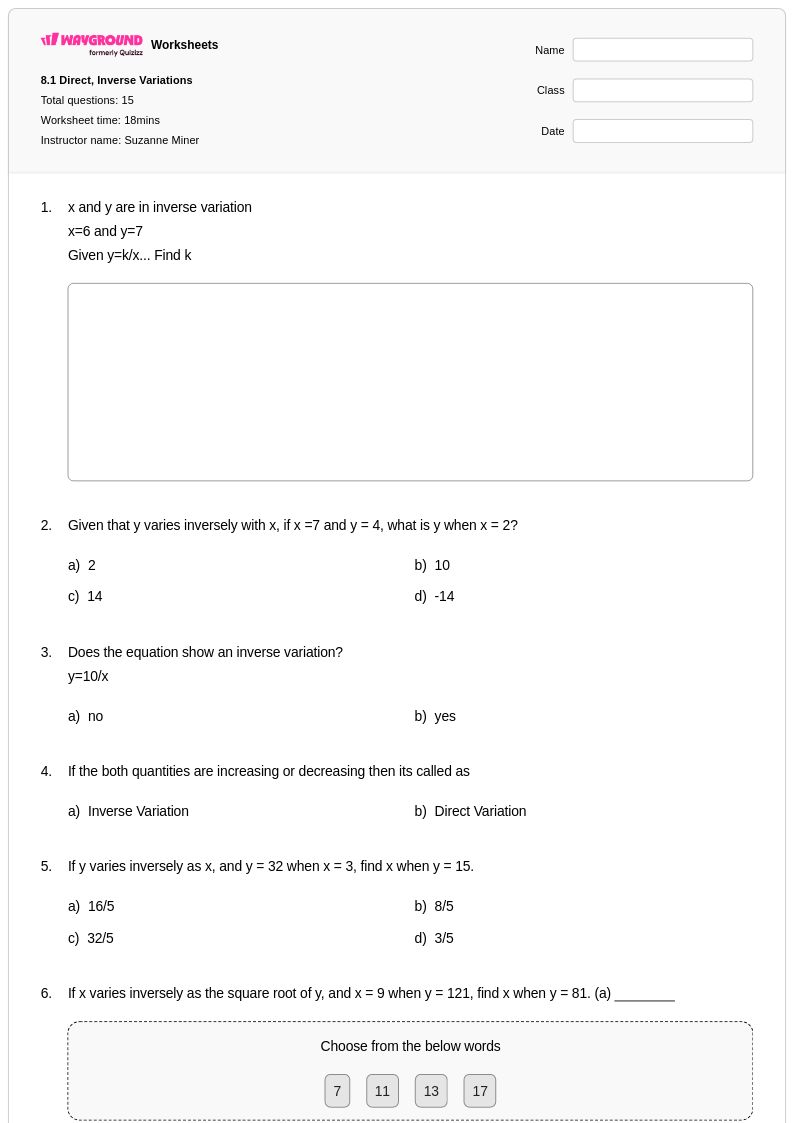
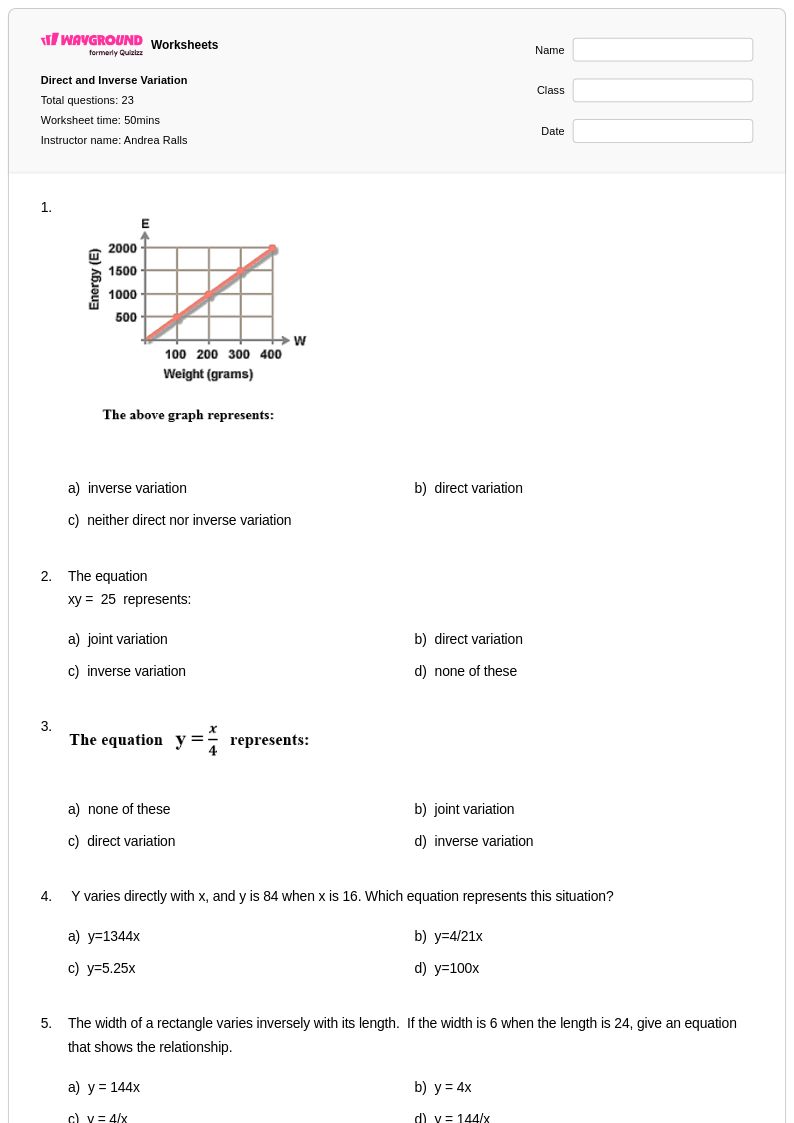
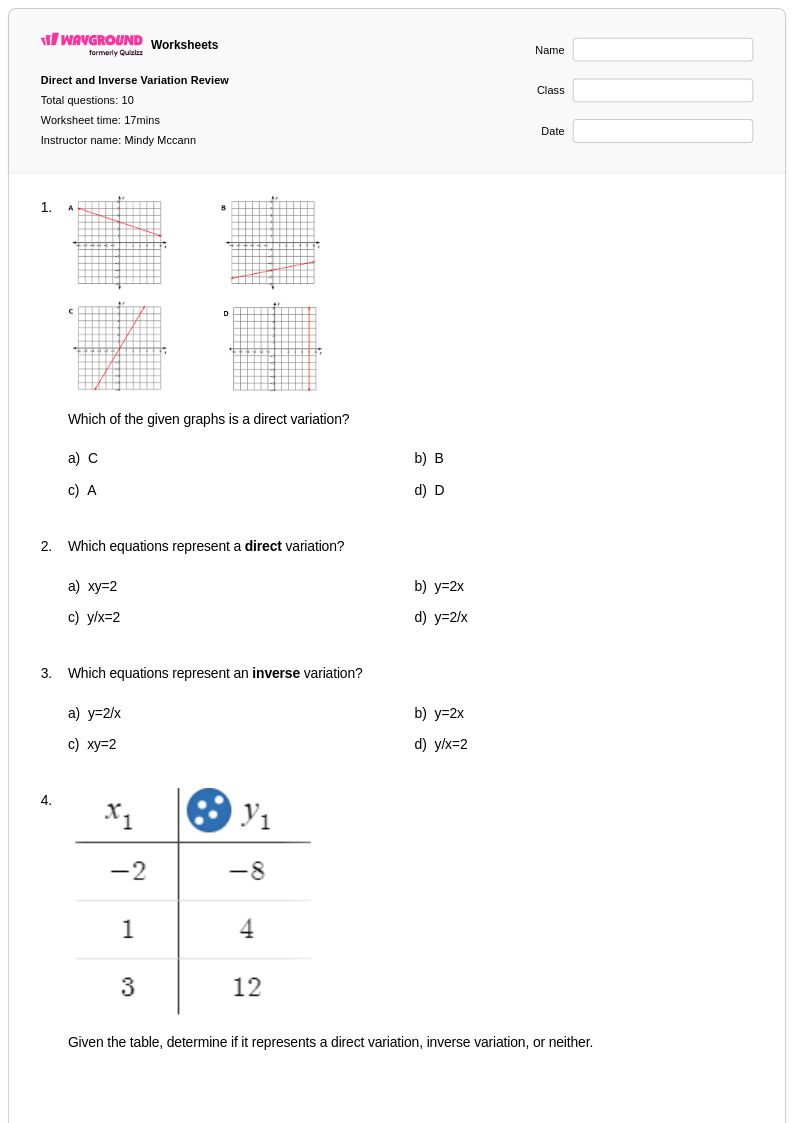
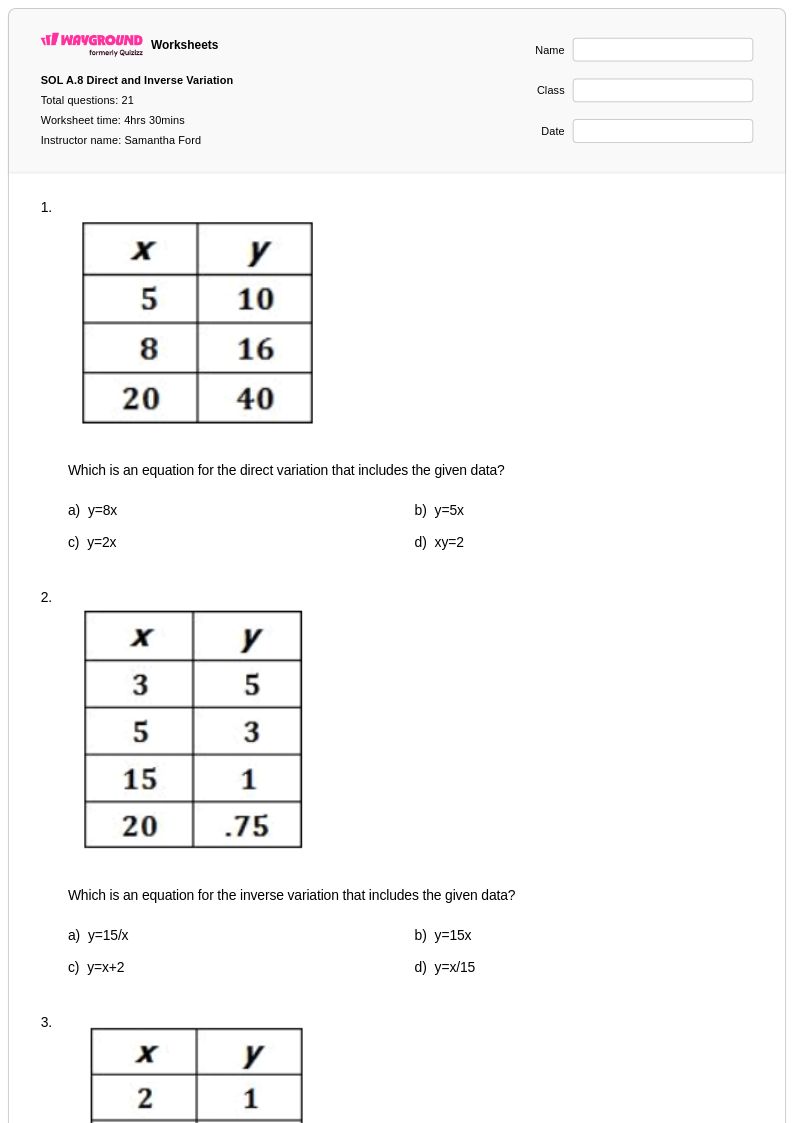
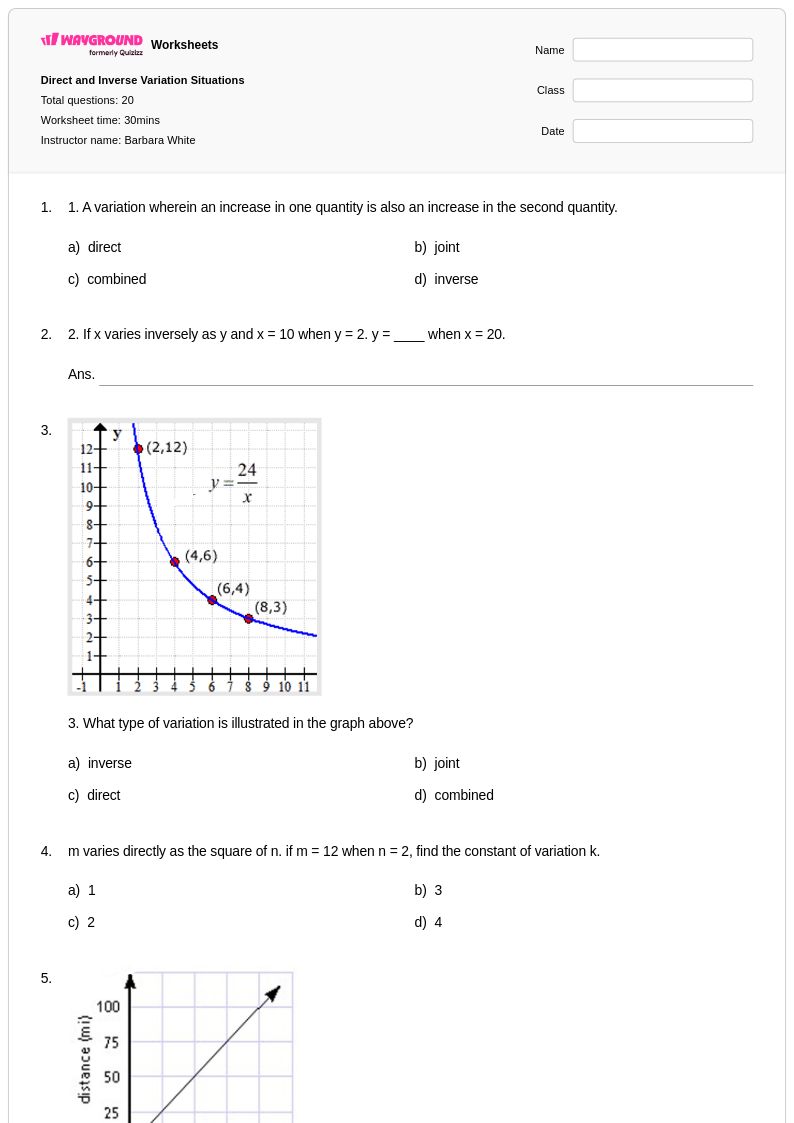
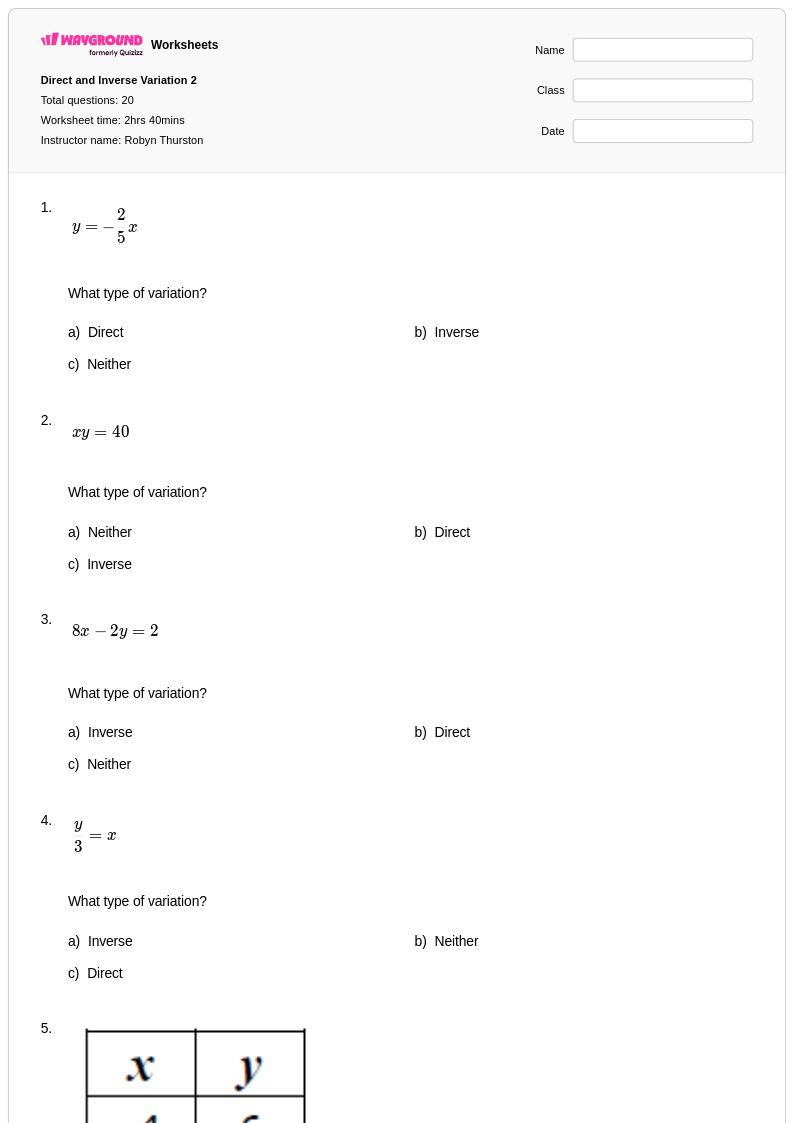
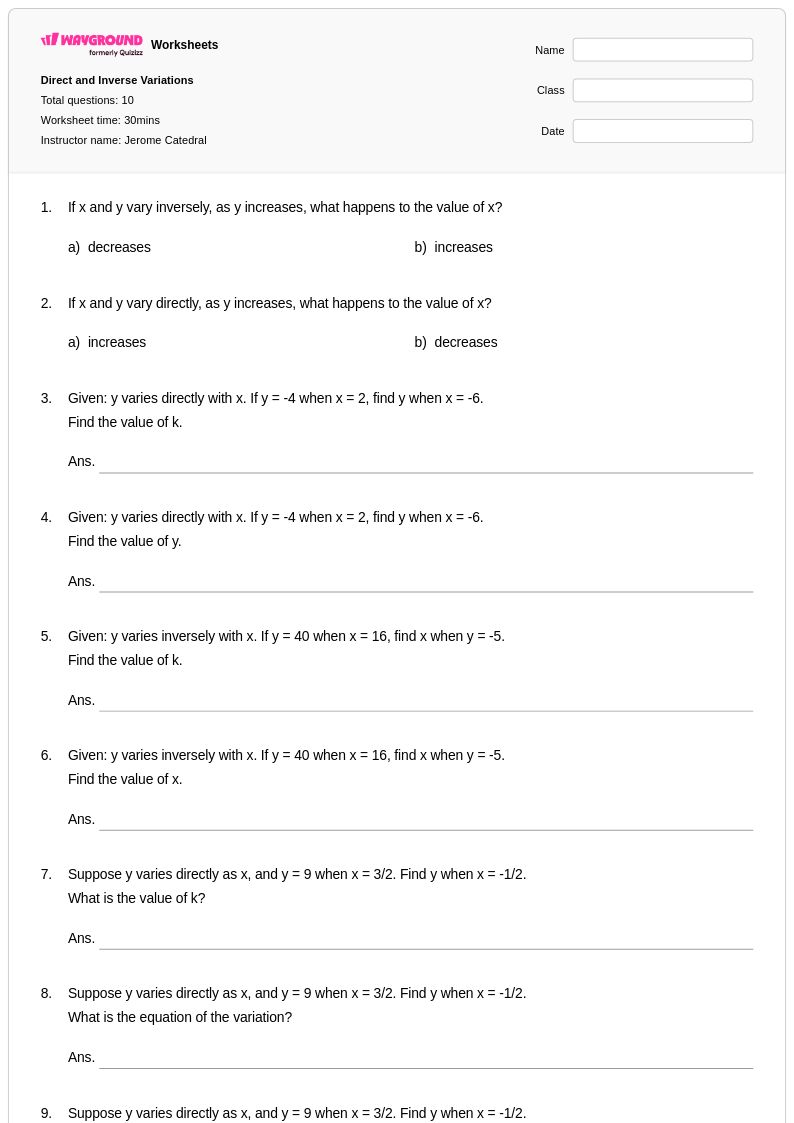
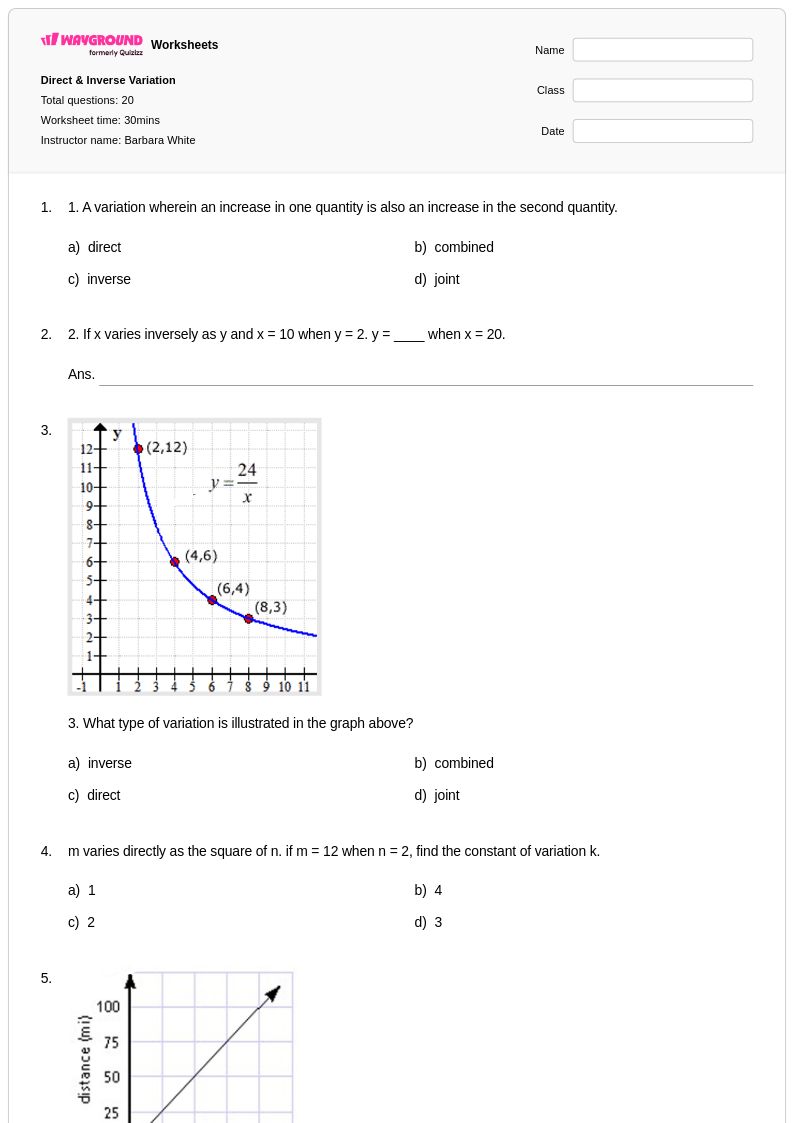
Three exercise types do the most work at this level: identifying variation type from a table, graph, or equation; solving for k given a pair of values; and applying the variation equation to find an unknown in a word problem. The word problems are the most important — they require students to recognize the relationship type on their own, which is the skill that transfers to later coursework. Wayground's Grade 9 worksheets include answer keys and progress from identification exercises to multi-step real-world applications.
What errors do 9th graders typically make with direct and inverse variation?
Confusing the two types is still the most common error at this level, especially when problems are presented as tables rather than equations. Students also frequently miscalculate k by using the wrong operation — dividing when they should multiply, or vice versa. A subtler mistake: students who can solve y = k/x algebraically sometimes don't recognize the same relationship when it's written as xy = k or presented as a hyperbolic graph.
How do I use Wayground's Grade 9 variation worksheets?
You can assign them as digital quizzes on Wayground for immediate feedback, or download the printable PDFs to use on paper — both formats cover the same problems. Every worksheet includes a complete answer key, which makes them practical for independent practice or homework. If you print and collect them, the Wayground for Teachers app lets you scan student work directly for grading rather than entering scores by hand.
How does direct and inverse variation fit into the 9th grade algebra curriculum under Common Core?
Common Core's algebra progression asks students to analyze and interpret functions, and direct variation is the entry point for understanding linear functions with a proportional structure. By Grade 9, students are expected to move beyond linear relationships, and inverse variation — a rational function — is one of the first non-linear relationships they formalize. Mastering both types here builds the foundation for rational functions and function transformations that appear in Algebra 2 and precalculus.
How can I differentiate direct and inverse variation practice for my Grade 9 class?
For students who struggle with the word problems specifically, enabling Read Aloud on Wayground removes the reading barrier so the math itself can be assessed. For students who need a gentler entry point, reducing answer choices helps them focus on distinguishing direct from inverse variation without being overwhelmed by similar-looking options. You can also generate a translated version of the worksheet for English language learners — same problems, different language — directly from the worksheet settings.