Free Printable Direct and Inverse Variation Worksheets for Class 10
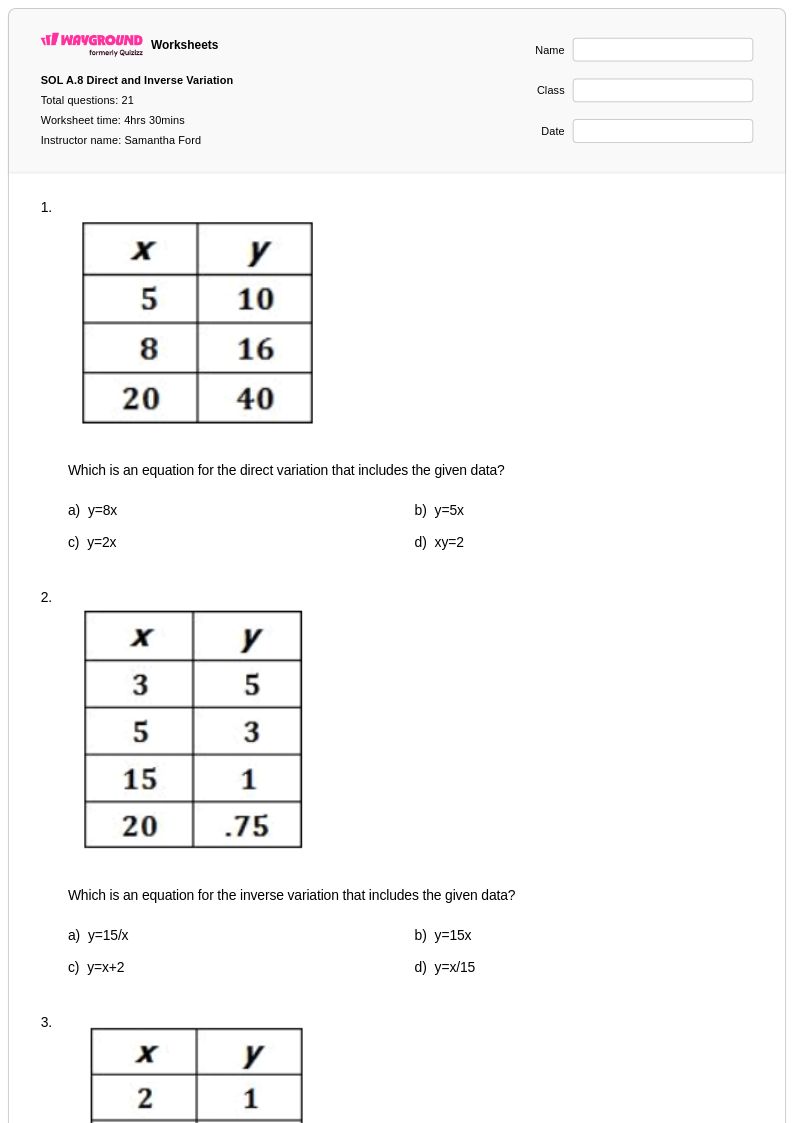
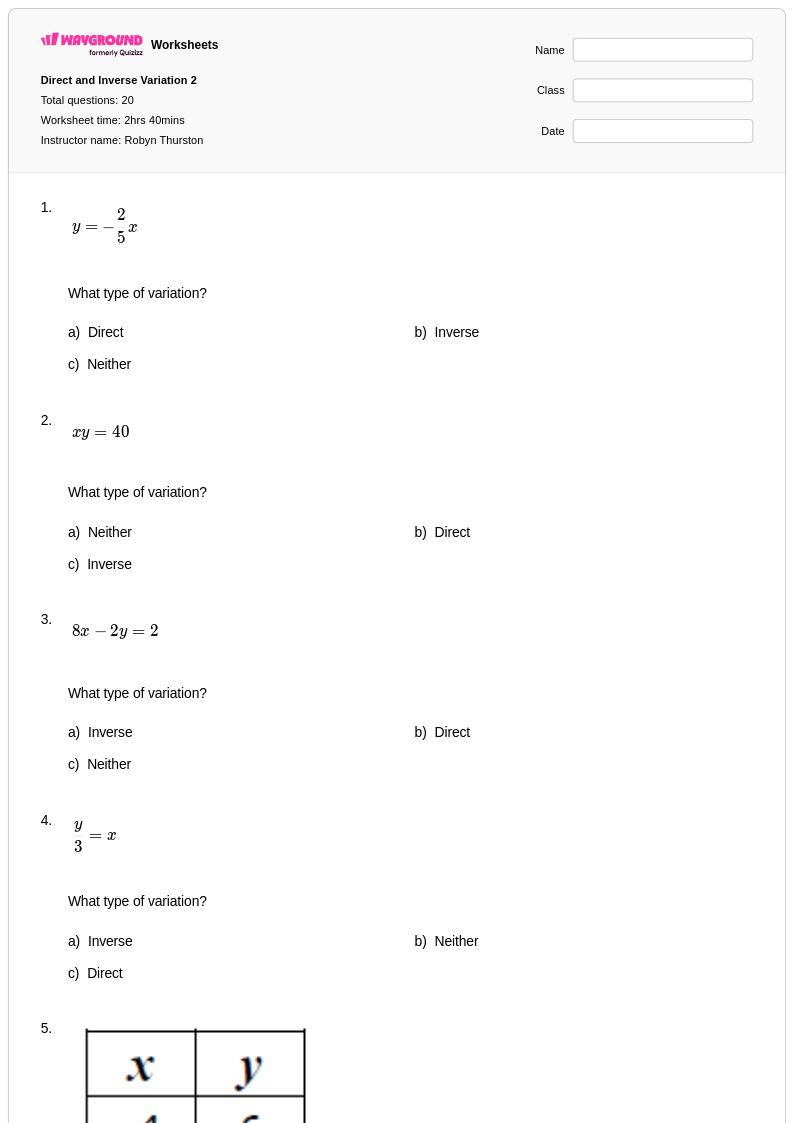
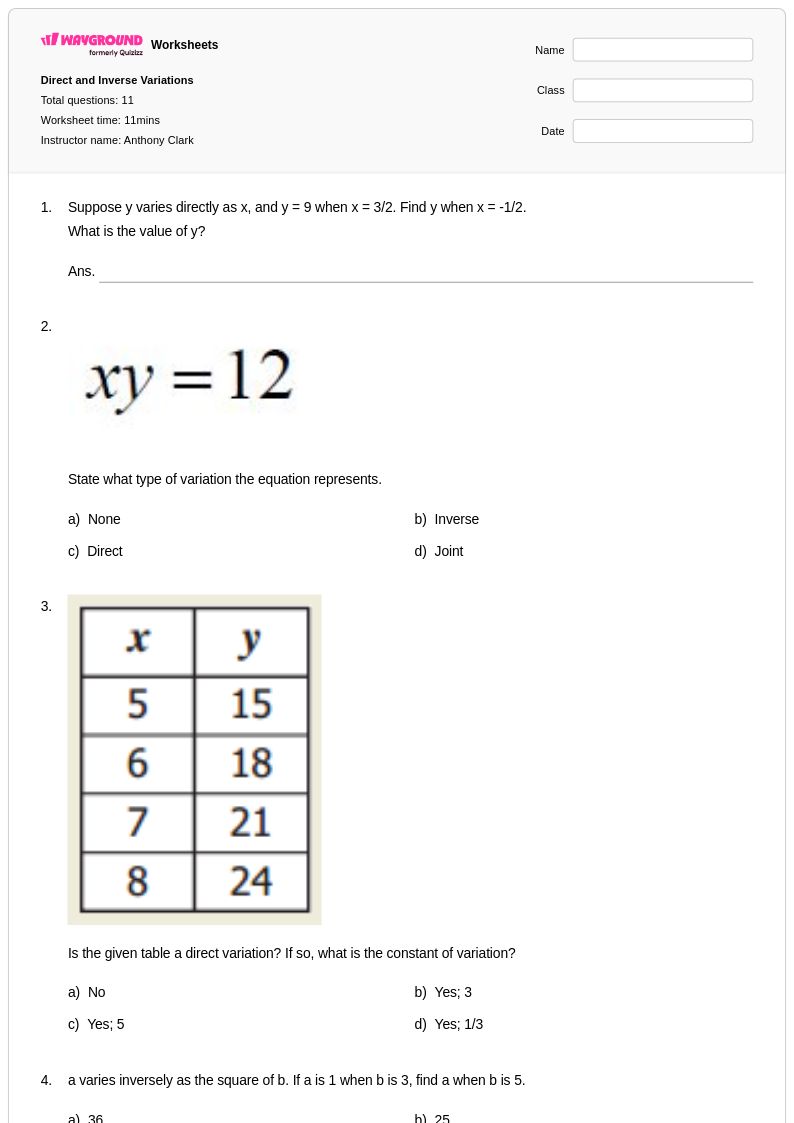
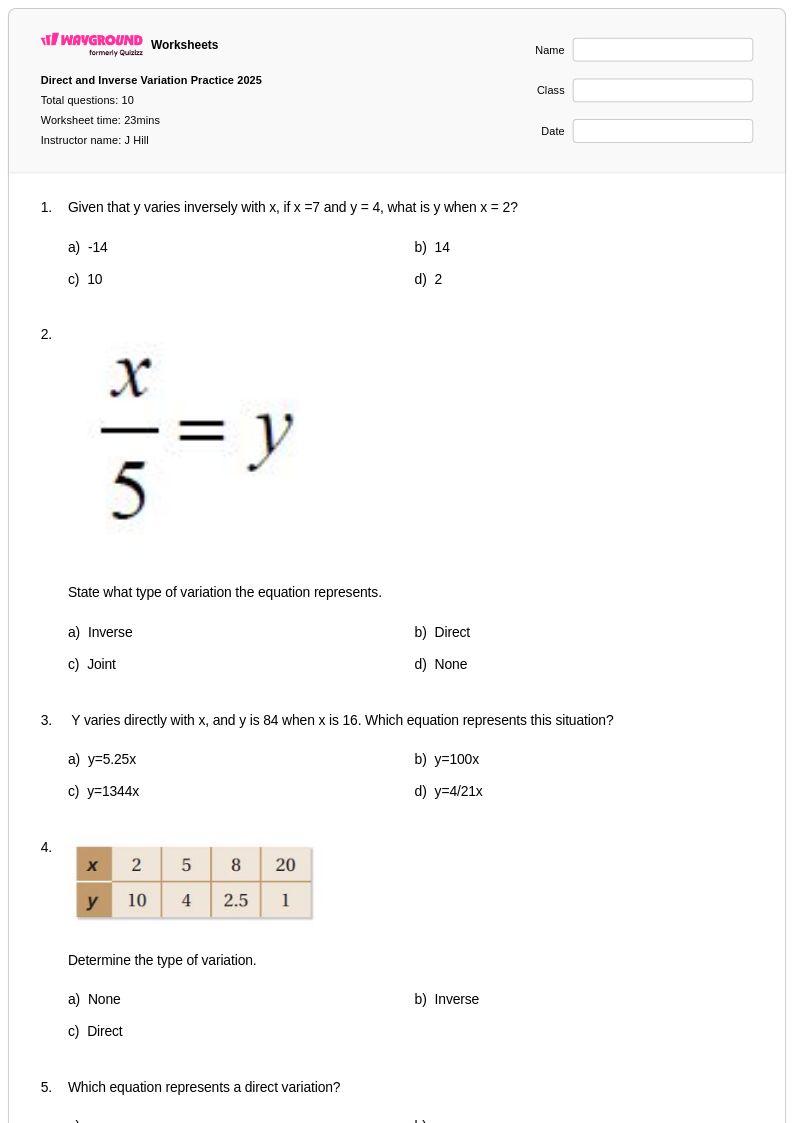
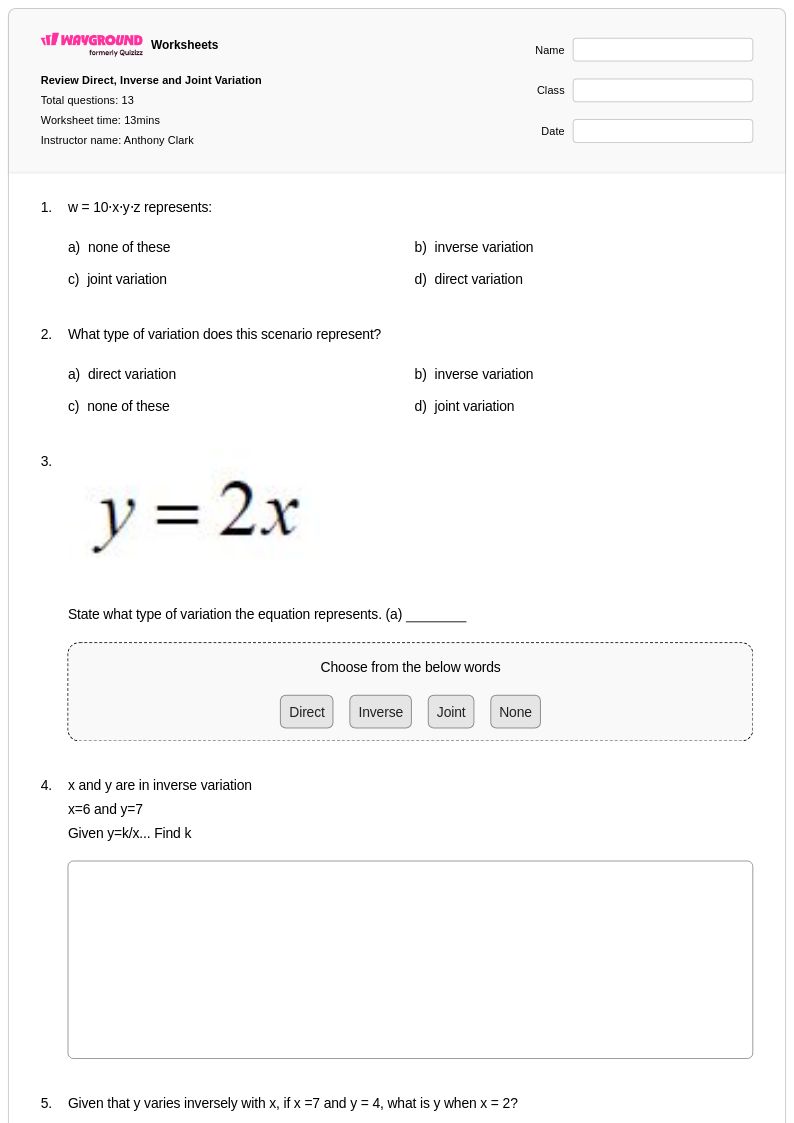
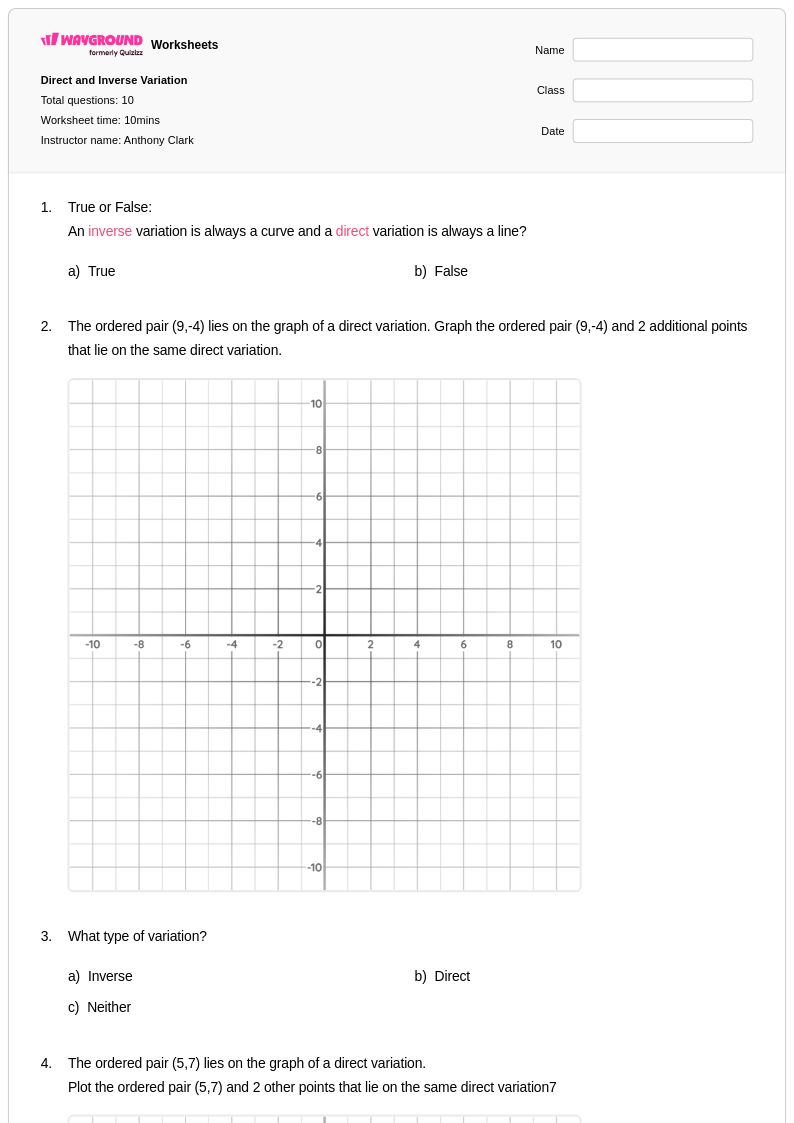
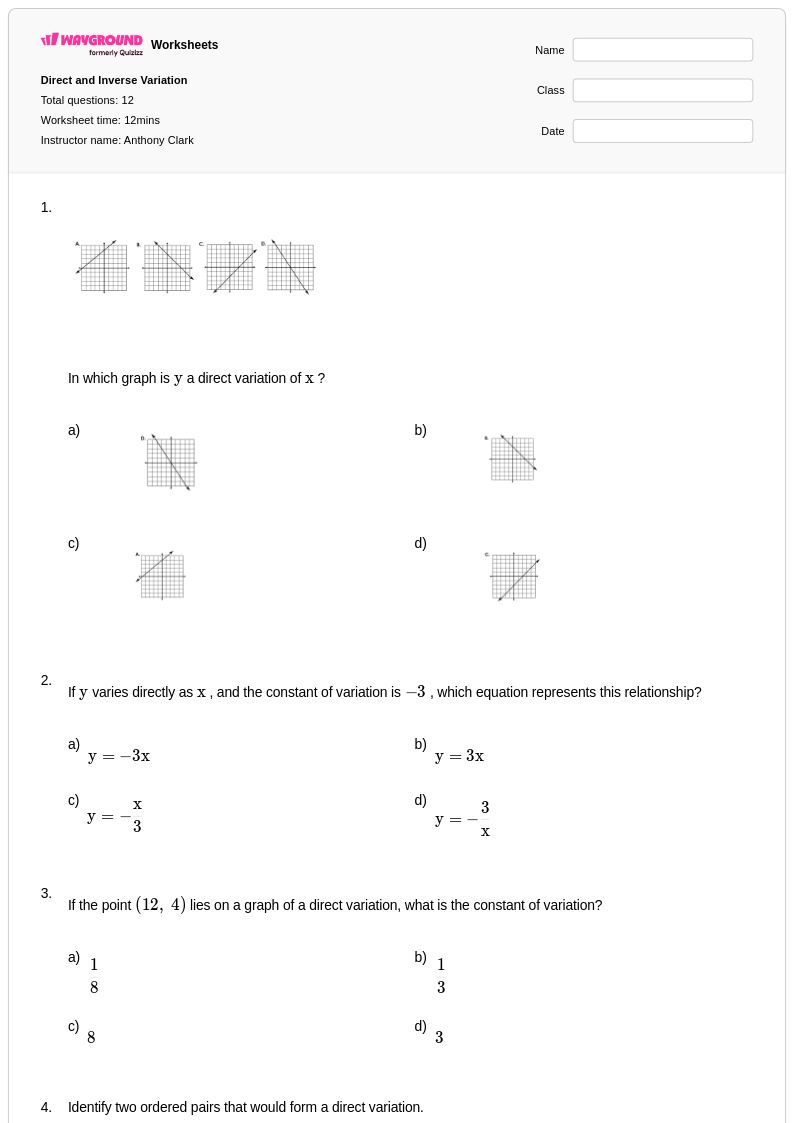
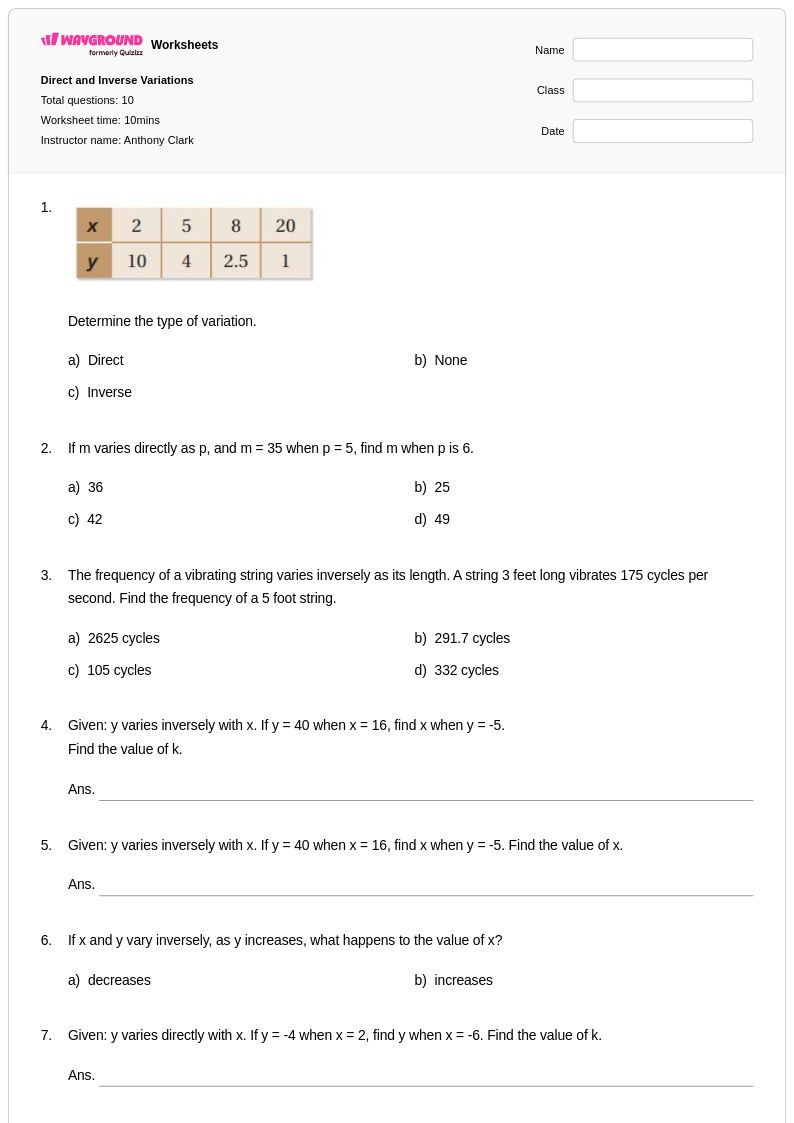
Class 10 direct and inverse variation worksheets from Wayground help students master proportional relationships through comprehensive printables, practice problems, and answer keys in convenient PDF format.
Explore printable Direct and Inverse Variation worksheets for Class 10
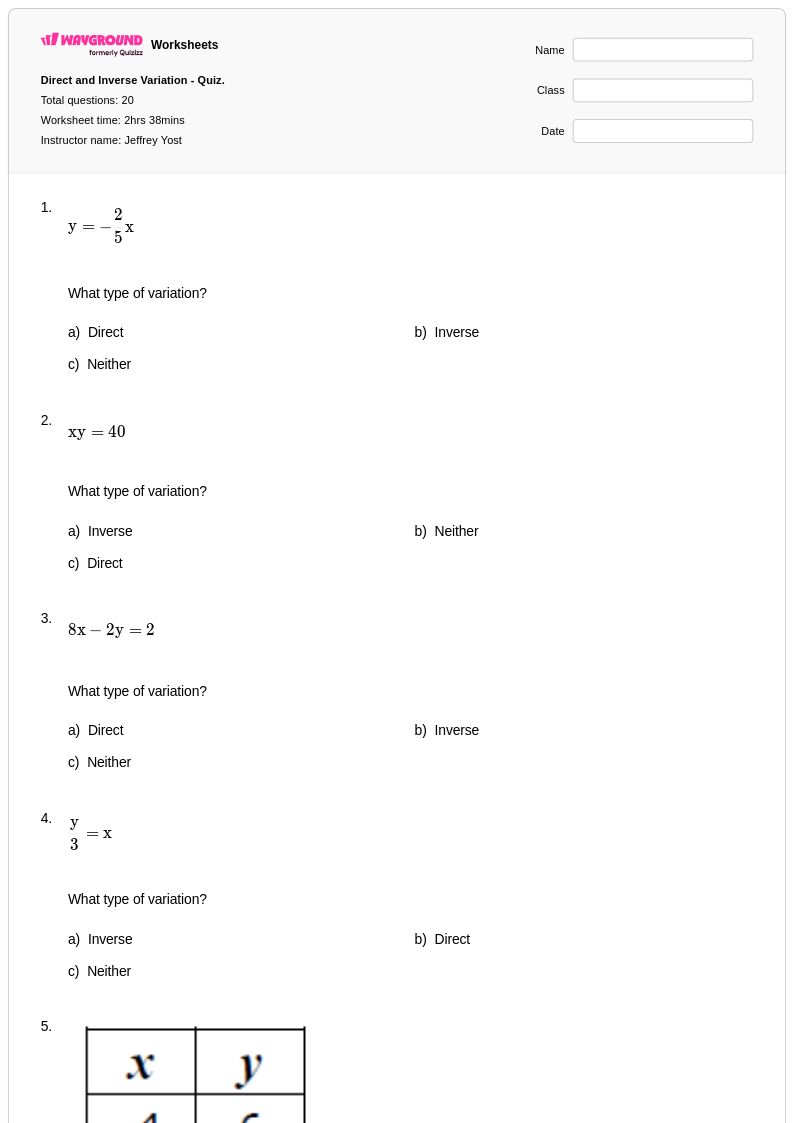
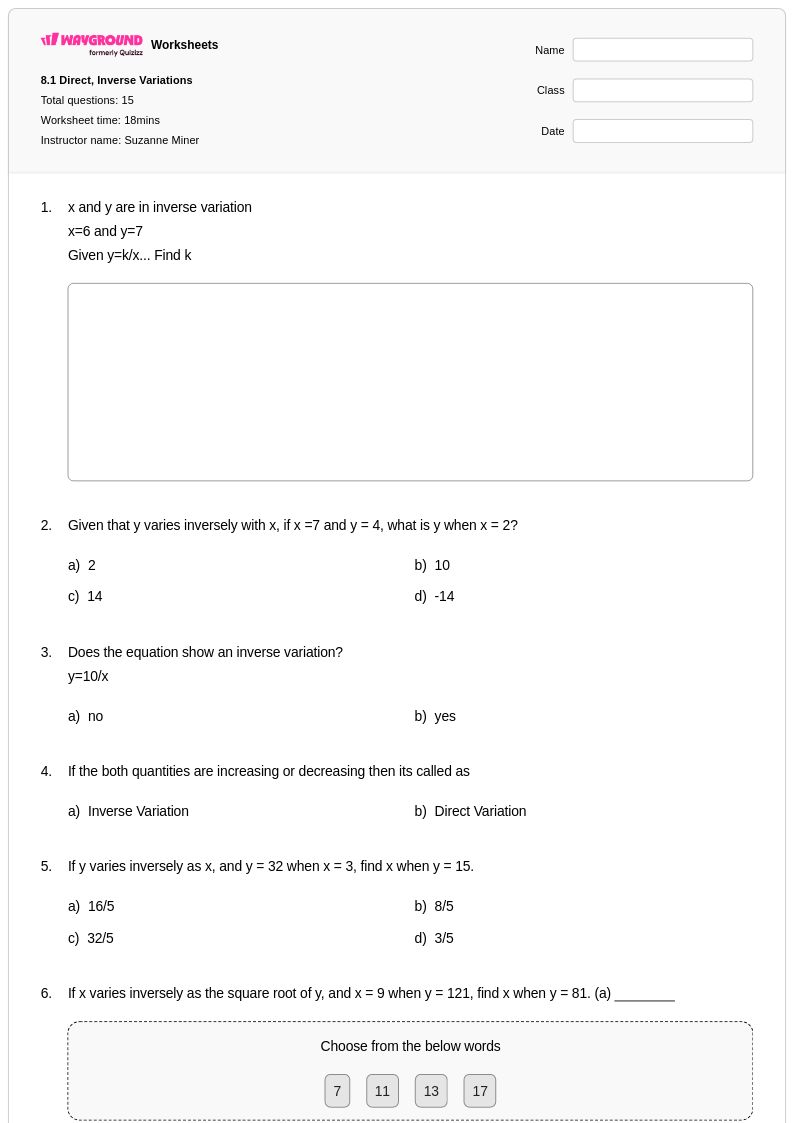
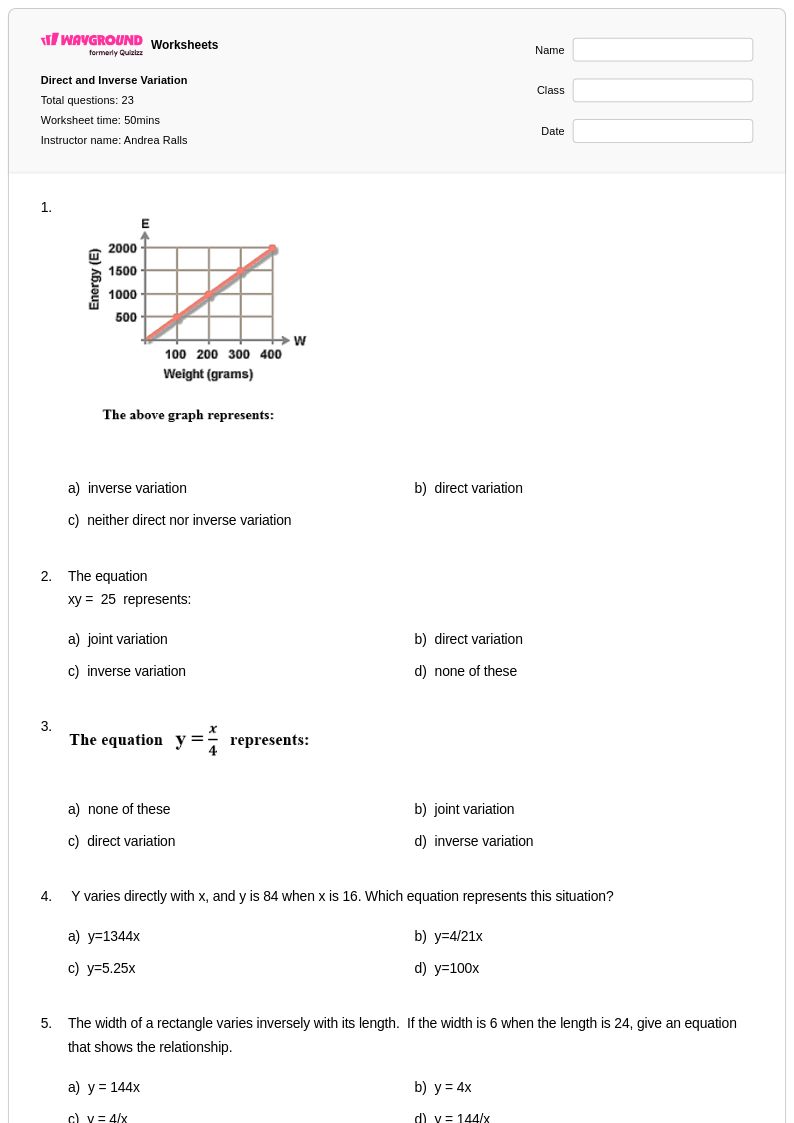
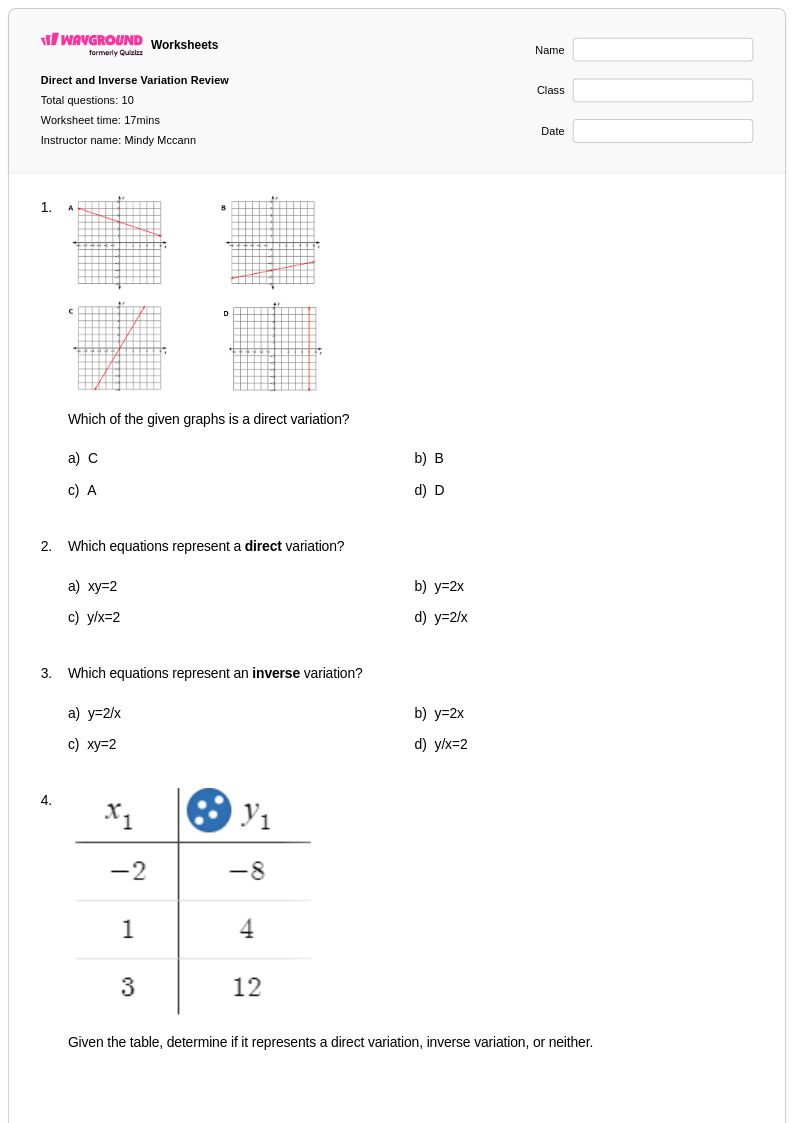
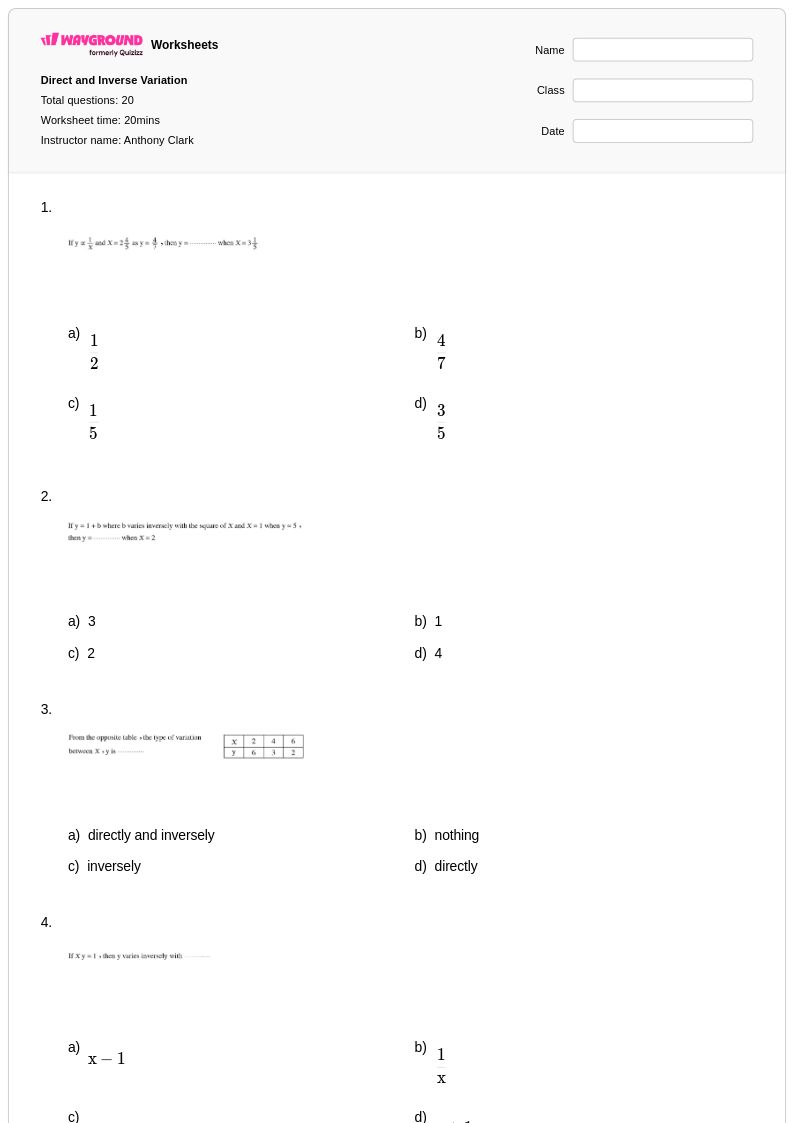
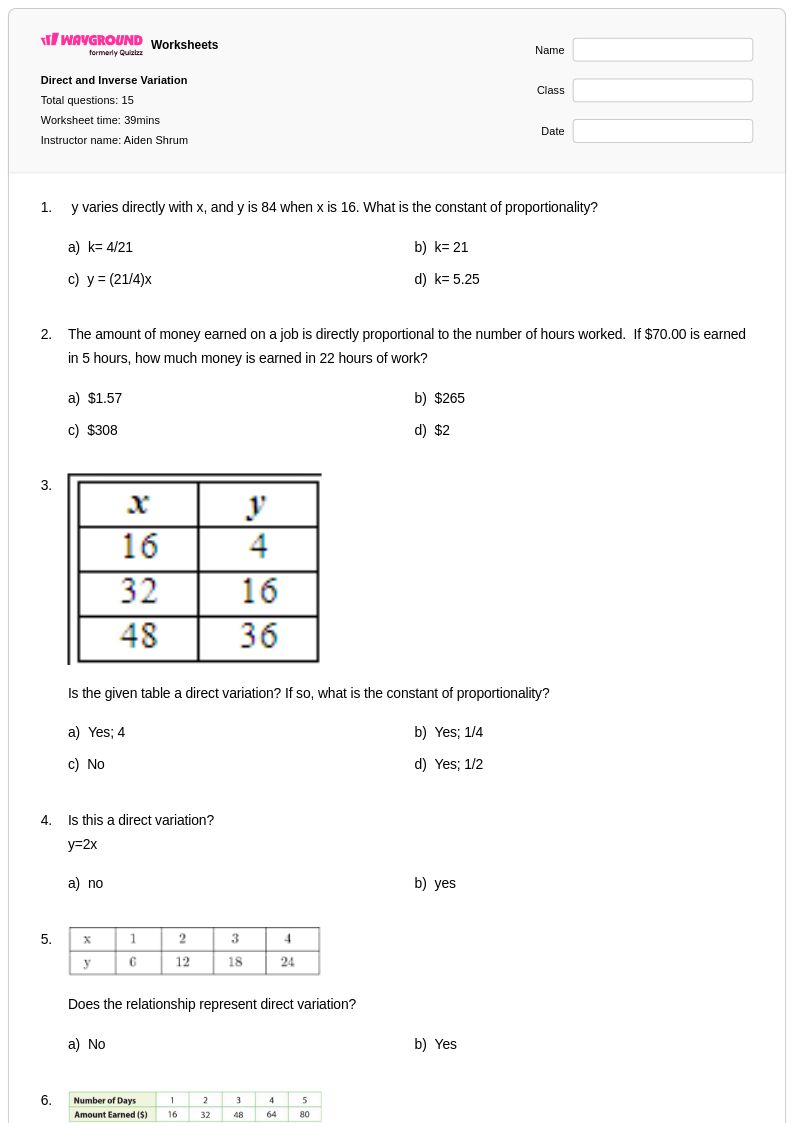
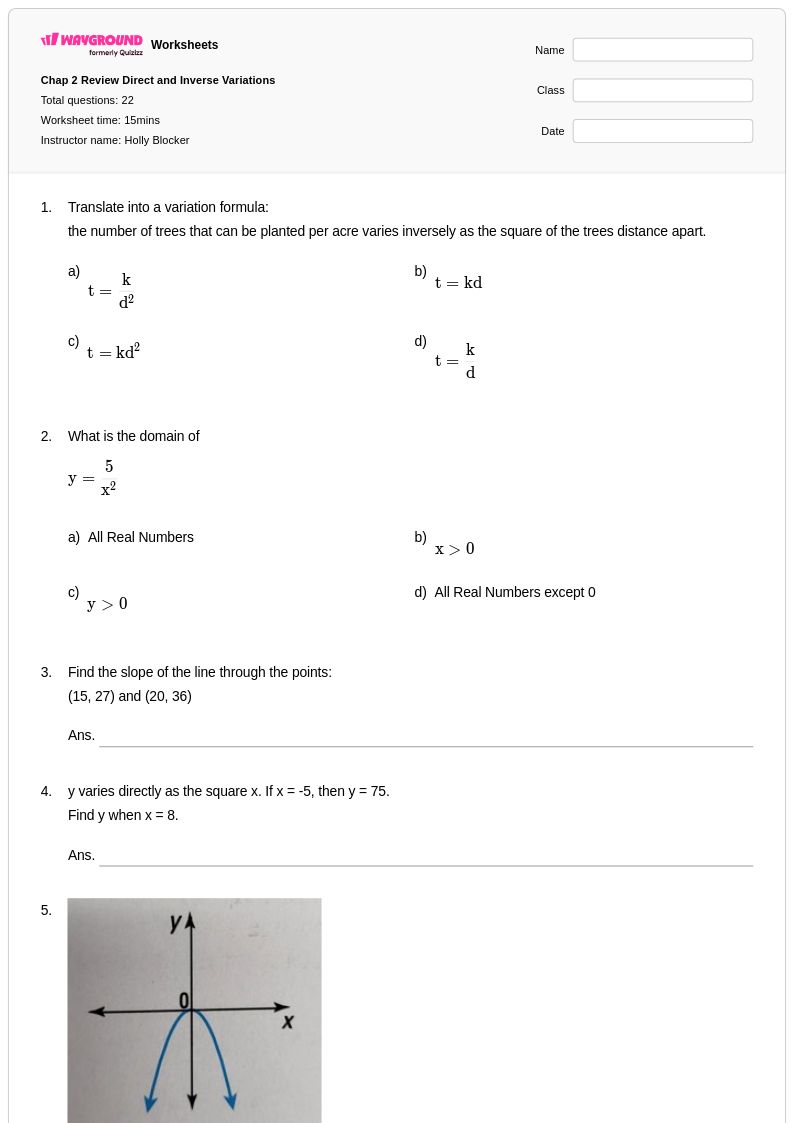
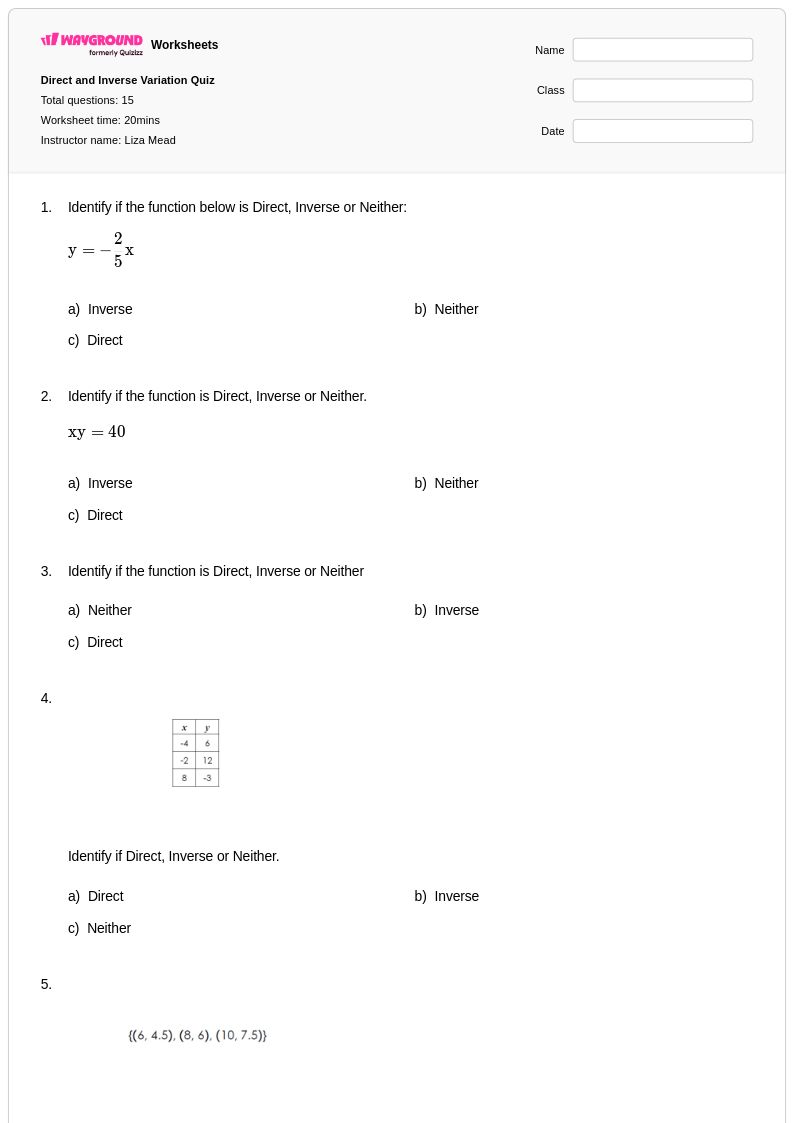
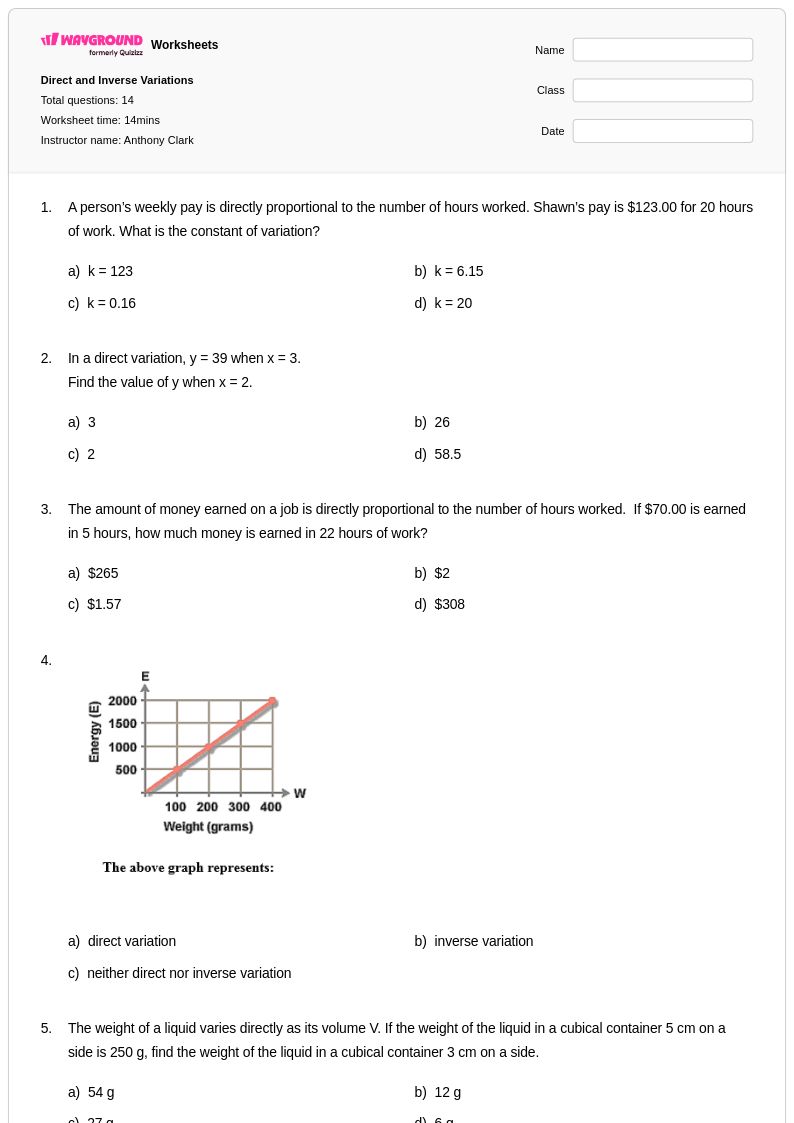
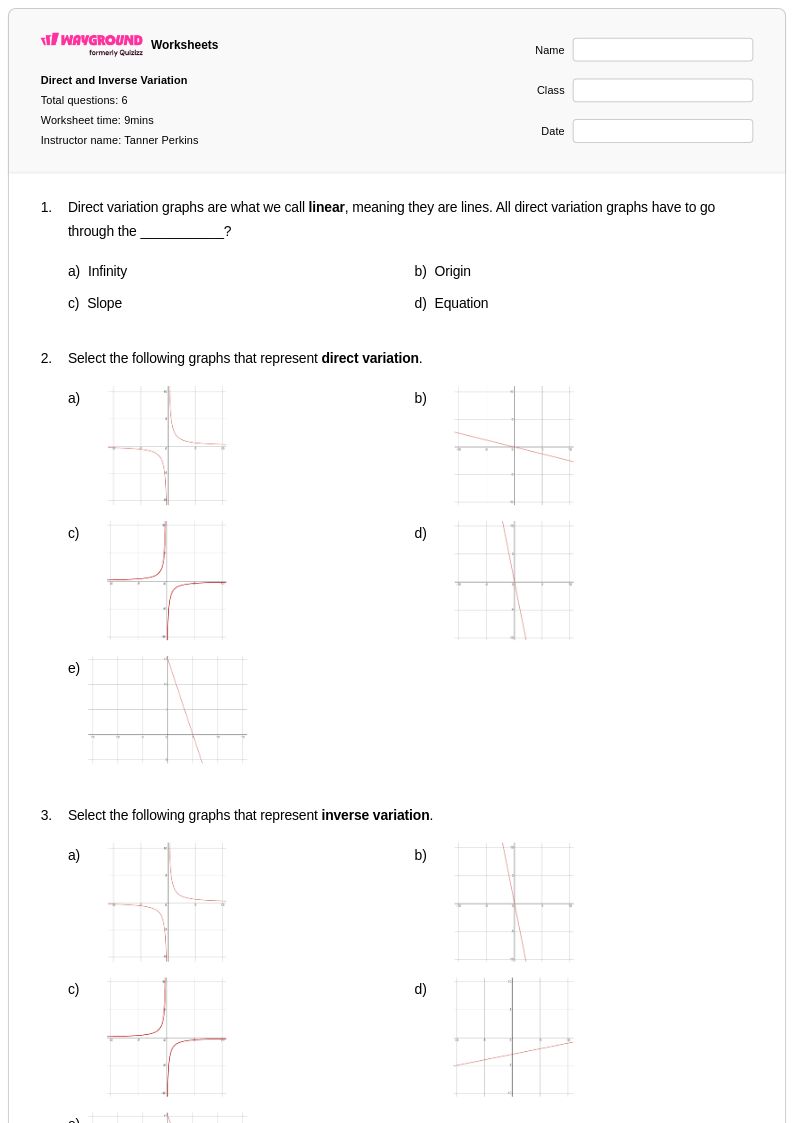
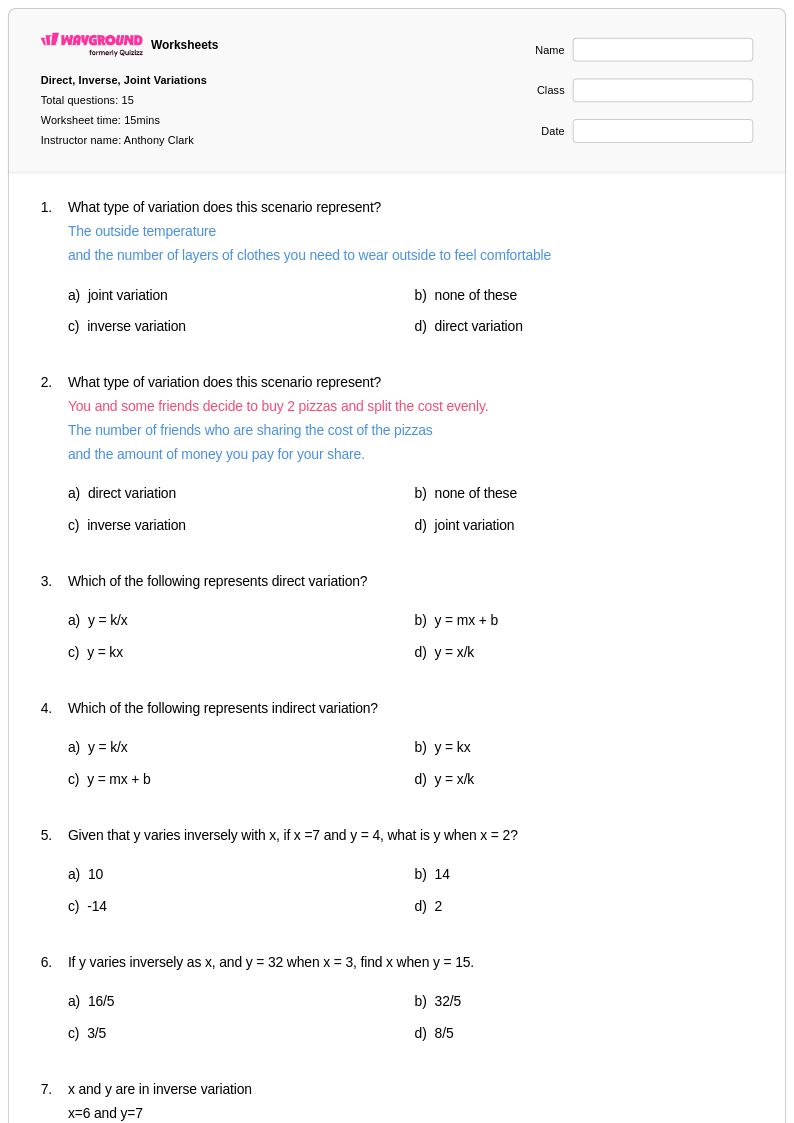
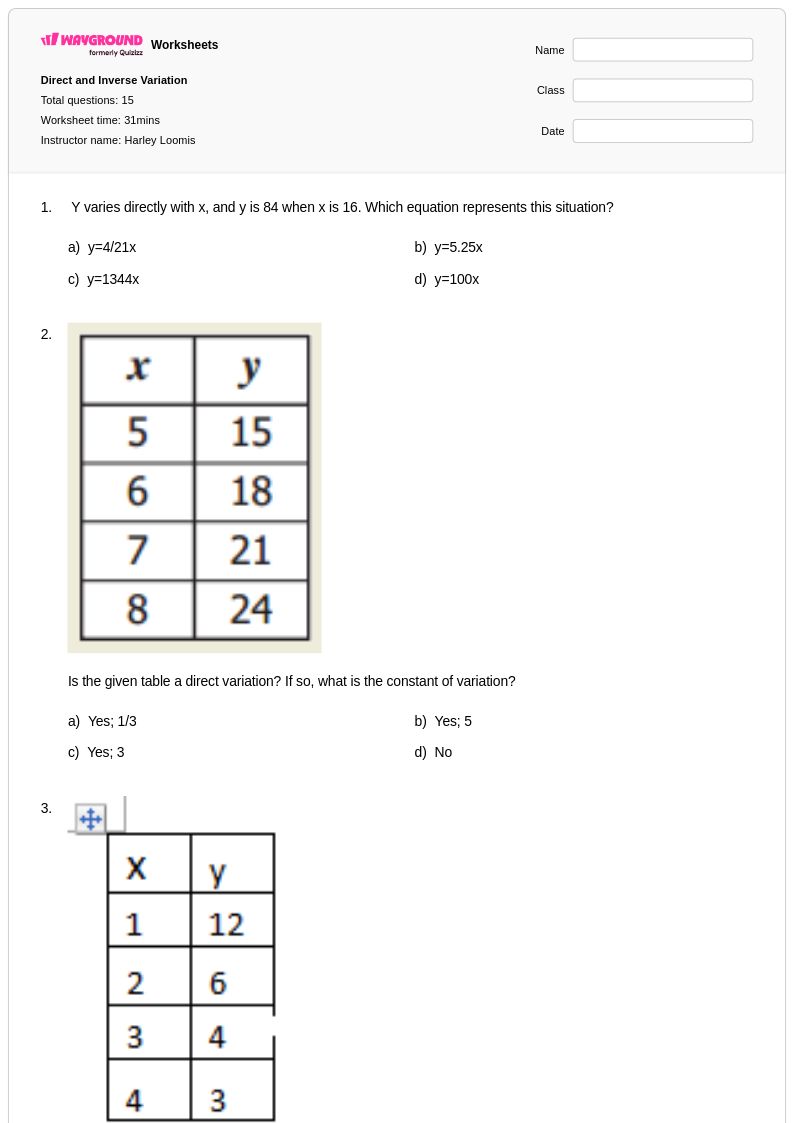
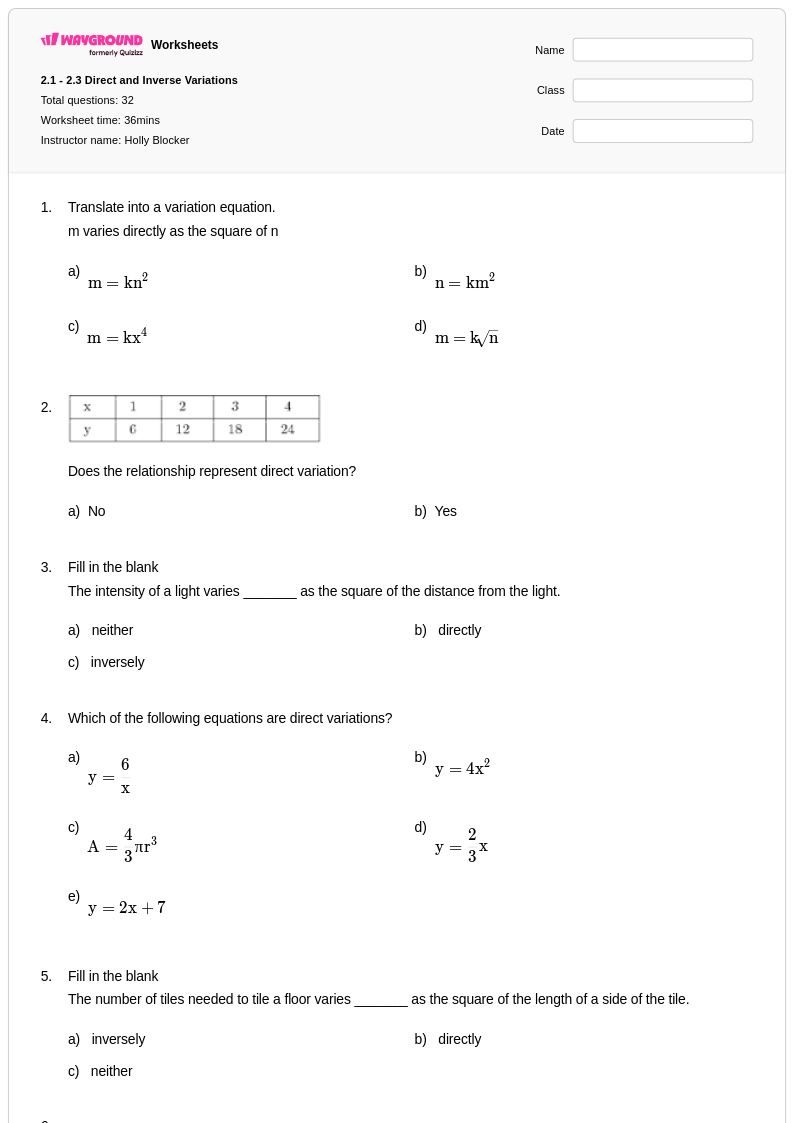
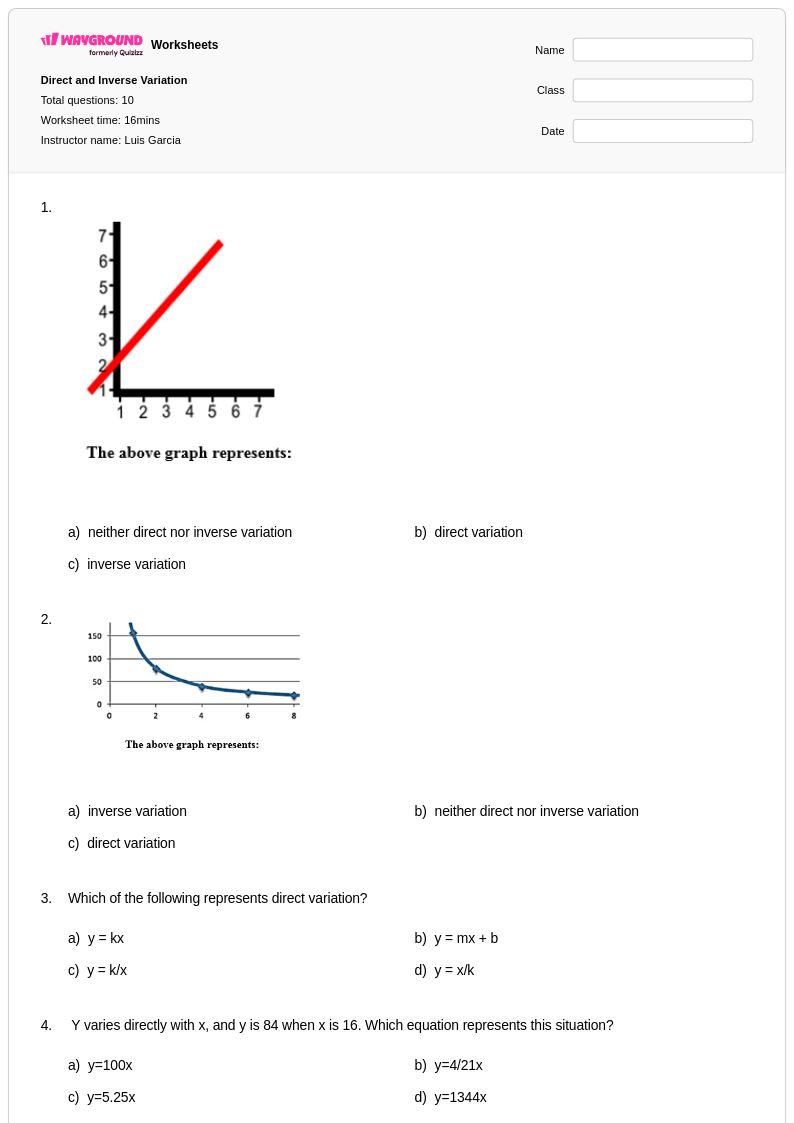
Direct and inverse variation worksheets for Class 10 students provide essential practice with fundamental algebraic relationships that form the cornerstone of advanced mathematical reasoning. These comprehensive printables guide students through recognizing, analyzing, and solving problems involving variables that change proportionally or inversely proportionally to one another. Students develop critical skills in identifying variation patterns, writing variation equations, calculating constants of variation, and applying these concepts to real-world scenarios such as physics problems involving speed and time or economics problems involving supply and demand. Each worksheet includes carefully scaffolded practice problems that progress from basic identification exercises to complex multi-step applications, supported by detailed answer keys that enable independent learning and self-assessment. These free resources strengthen students' ability to work with rational functions, understand graphical representations of variation relationships, and make connections between algebraic expressions and their practical applications.
Wayground, formerly Quizizz, empowers educators with an extensive collection of teacher-created direct and inverse variation worksheets drawn from millions of high-quality resources specifically designed for Class 10 mathematics instruction. The platform's robust search and filtering capabilities allow teachers to quickly locate materials that align with specific curriculum standards and match their students' varied learning needs and ability levels. Educators can seamlessly customize existing worksheets or create entirely new ones, incorporating differentiation tools that support both remediation for struggling learners and enrichment opportunities for advanced students. Available in both printable PDF format and interactive digital versions, these versatile resources facilitate flexible lesson planning whether teachers need quick warm-up activities, comprehensive skill practice sessions, or targeted intervention materials. The platform's organizational features streamline the process of building cohesive unit plans while ensuring that students receive consistent, standards-aligned practice with variation concepts that will prepare them for success in advanced algebra and calculus courses.
FAQs
How do I teach direct and inverse variation to 10th graders?
At Grade 10, students should already recognize the basic forms, so the teaching emphasis shifts to deeper analysis: interpreting graphs of y = kx and y = k/x, connecting inverse variation to rational functions, and applying both types to multi-step problems in physics and economics contexts. If students are still shaky on which type is which, a quick diagnostic using tables of values — checking whether y/x or xy is constant — resets the foundation before moving into more complex applications.
What exercises help 10th graders practice direct and inverse variation?
At this level, the most valuable practice involves multi-step word problems where students must first identify the variation type, then find k, then solve for an unknown — without being told which step to do first. Problems drawn from physics (speed, force, pressure) and economics (supply and demand) are especially effective because they show variation as a modeling tool, not just an algebra exercise. Graphical interpretation — reading k from a graph or sketching the curve given k — rounds out the practice.
What mistakes do 10th graders still make with direct and inverse variation?
The persistent error at this level is misidentifying variation type in applied problems, particularly when the context is unfamiliar. Students who can solve y = k/x mechanically sometimes don't recognize inverse variation when it appears as a table or a verbal description. A second issue: students occasionally find a correct value of k but then apply the wrong equation to solve for the unknown, mixing up the direct and inverse forms mid-problem.
How do I use Wayground's Grade 10 variation worksheets in my class?
Each worksheet includes a complete answer key, making it easy to assign as independent practice or a homework set. You can host it as a digital quiz on Wayground for online classes or download the printable PDF for paper-based work — the Wayground for Teachers app lets you scan and grade paper submissions without re-entering scores manually. Both routes work well depending on your classroom setup.
How does direct and inverse variation connect to the broader Grade 10 math curriculum?
Under Common Core's algebra and functions progression, Grade 10 students are expected to work with a wider range of function types, including rational functions. Inverse variation (y = k/x) is the simplest rational function, and fluency with it here directly supports the rational function unit in Algebra 2. Direct variation, meanwhile, reinforces linear function concepts and slope interpretation that underpin the entire algebra sequence. Getting both types solid at Grade 10 means students enter Algebra 2 with the proportional reasoning they need to handle more complex rational expressions.
How can I differentiate variation practice for my Grade 10 class?
For students who struggle with multi-step word problems, Wayground's Read Aloud feature removes the reading load so you can assess the math reasoning directly. For students who need layout support, you can generate an alternate version of the same worksheet with larger font or a dyslexia-friendly font — no separate assignment needed. Advanced students can be directed toward the application problems involving physics or economics contexts, which require more independent setup and reasoning.