
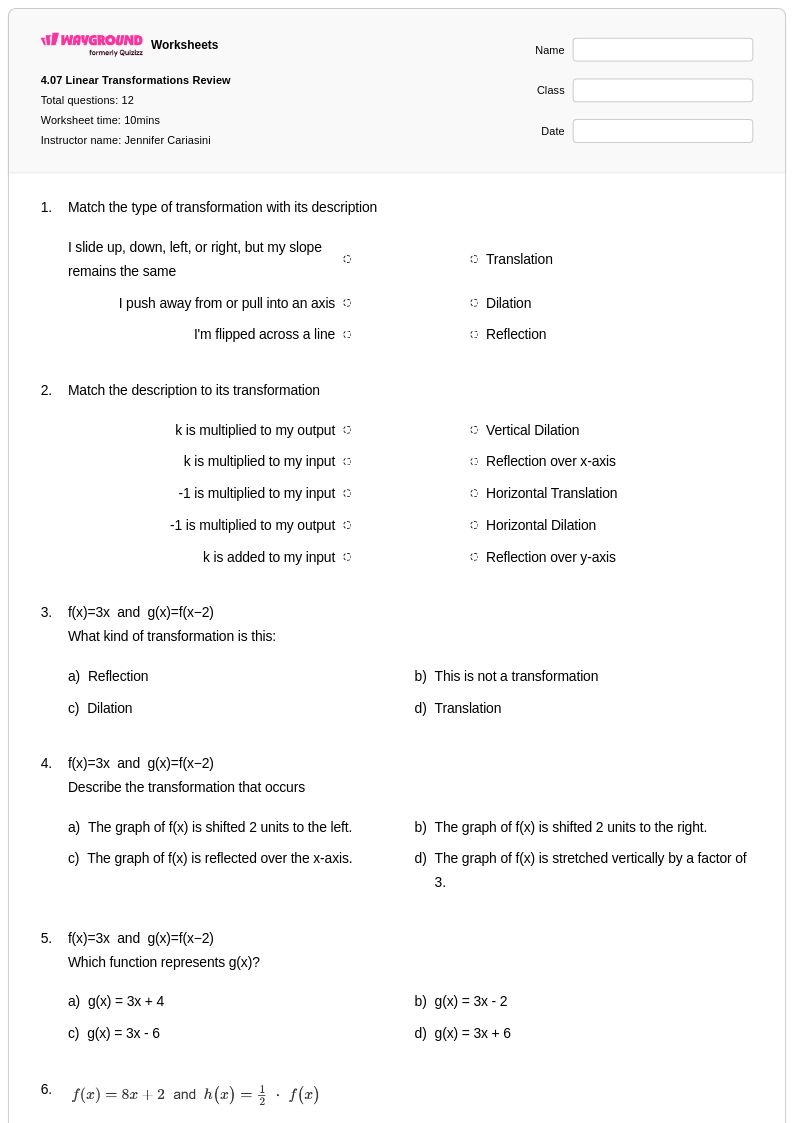
12 Q
9th - 12th
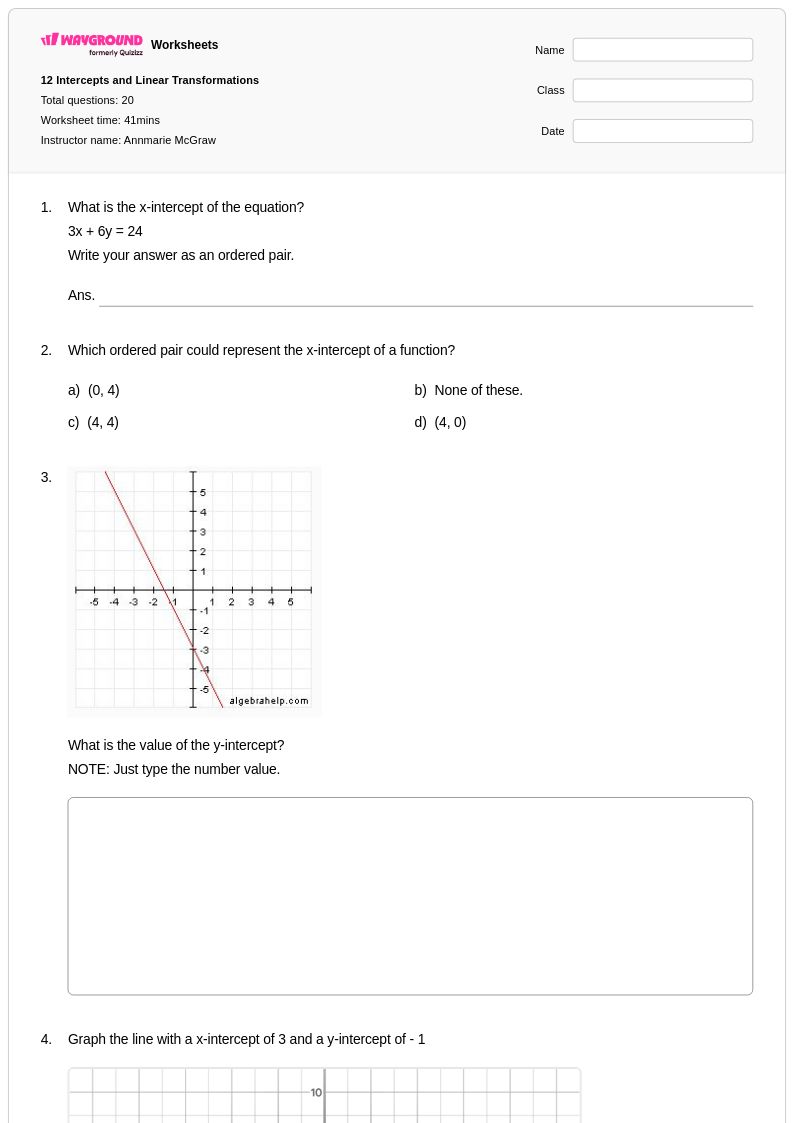
20 Q
9th - 12th
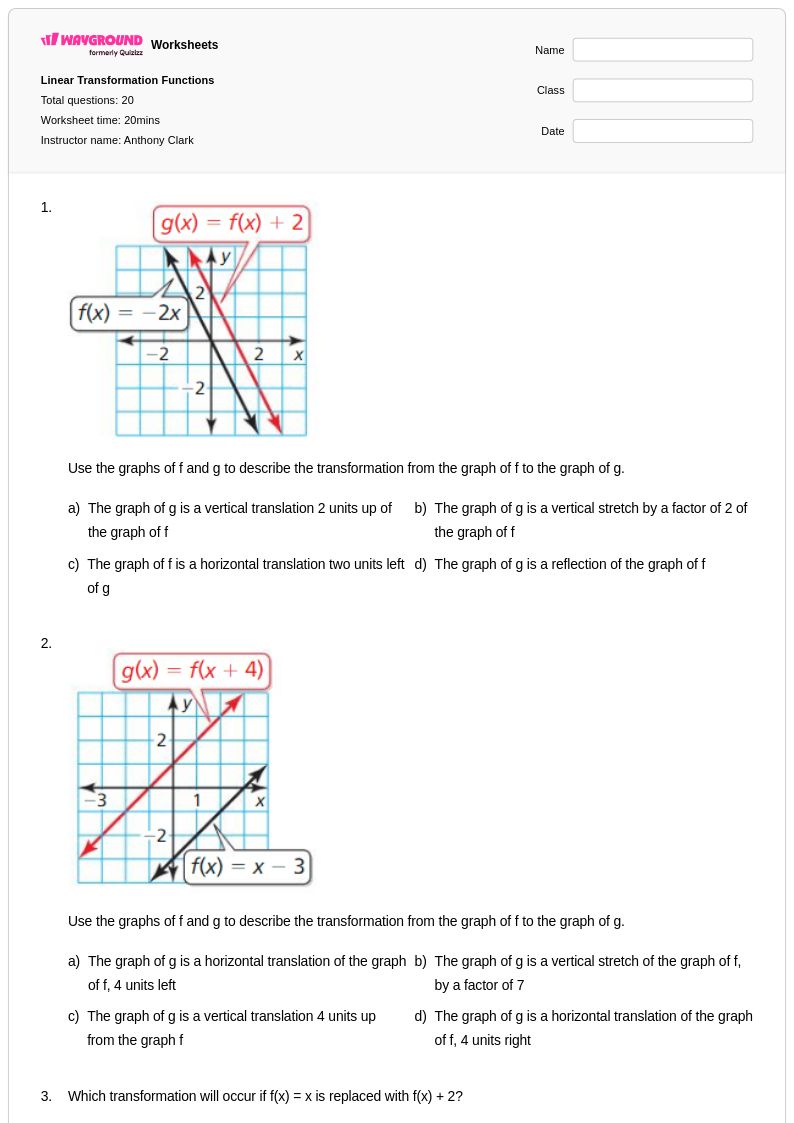
20 Q
9th - Uni
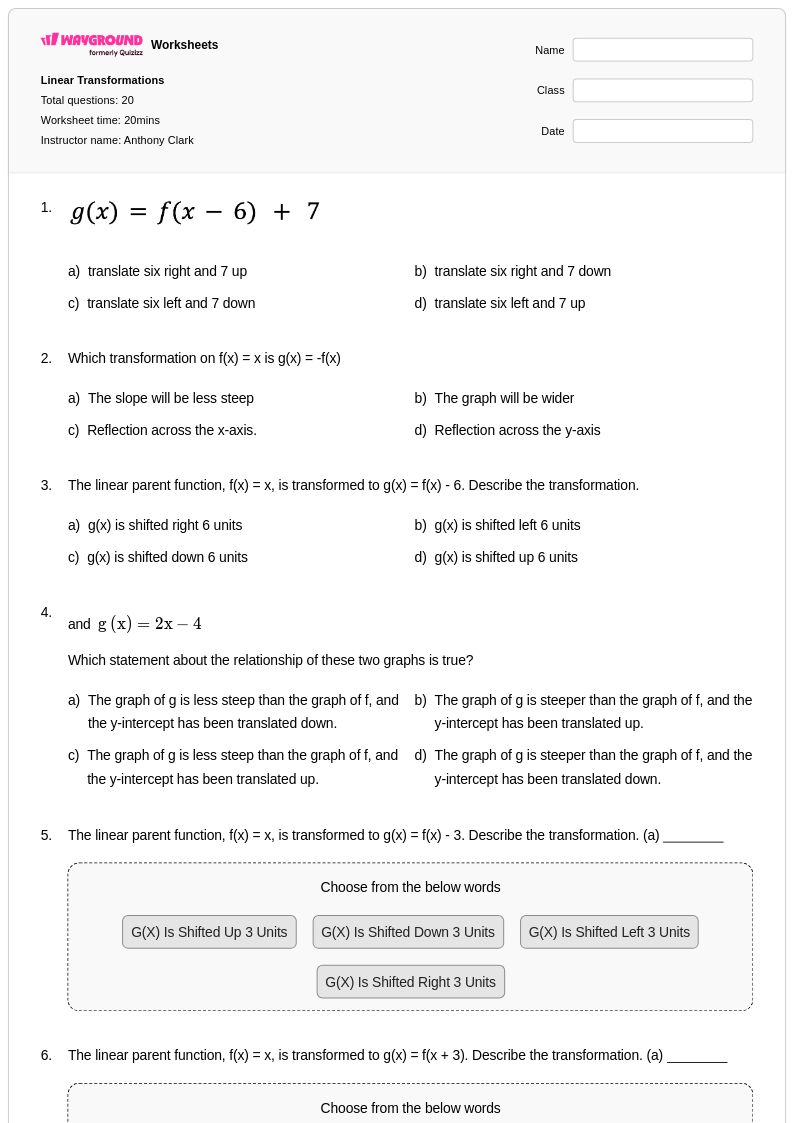
20 Q
9th - Uni
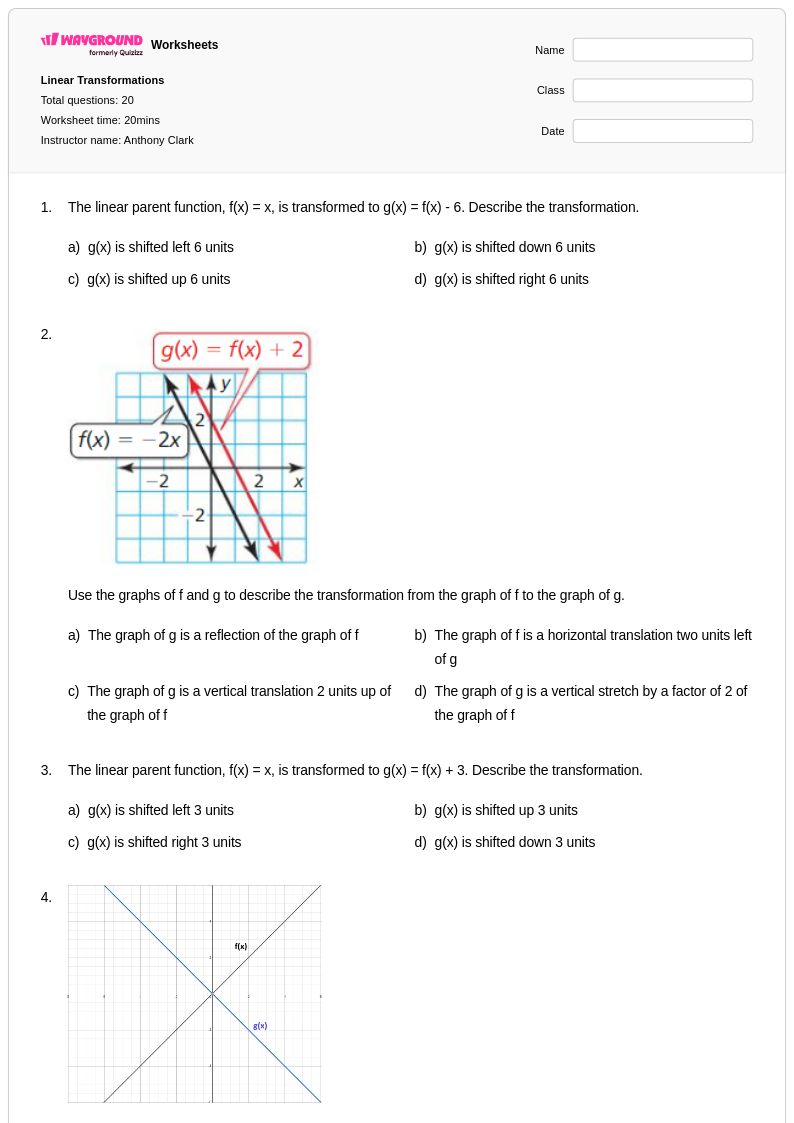
20 Q
9th - Uni
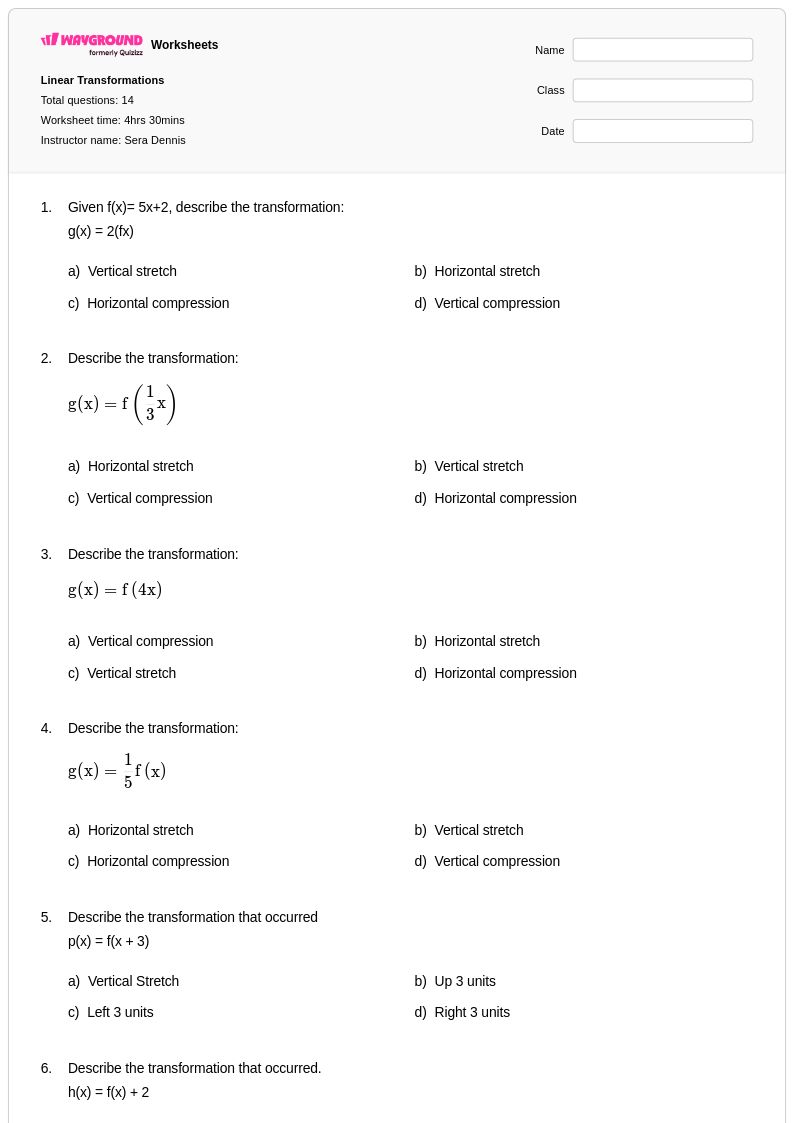
14 Q
9th - Uni
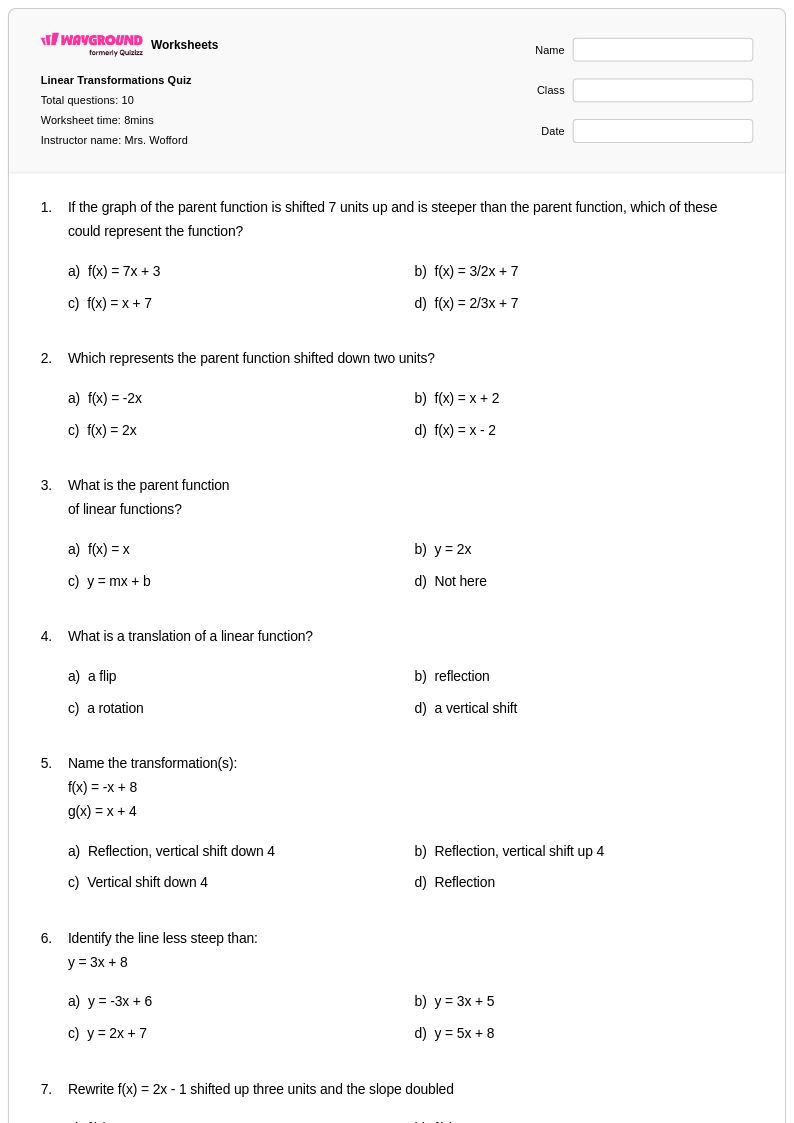
10 Q
7th - 10th
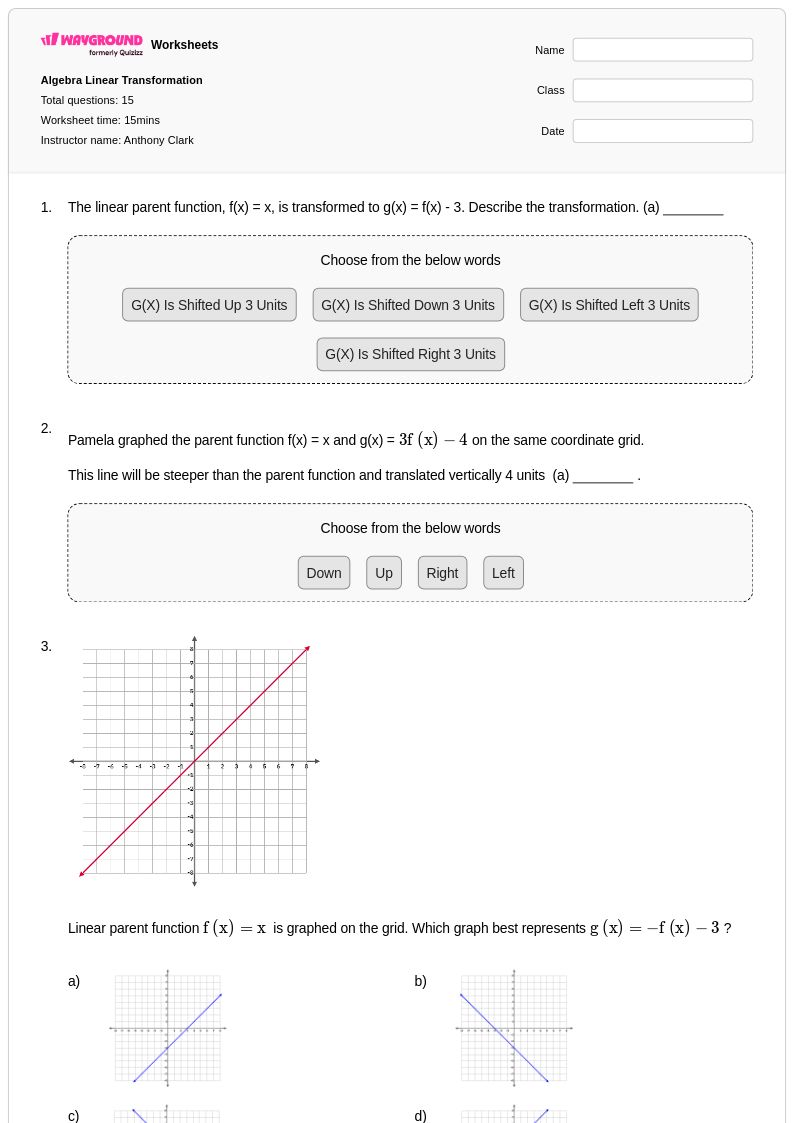
15 Q
9th - Uni
20 Q
9th - Uni
12 Q
9th - 12th
15 Q
9th - Uni
15 Q
9th - Uni
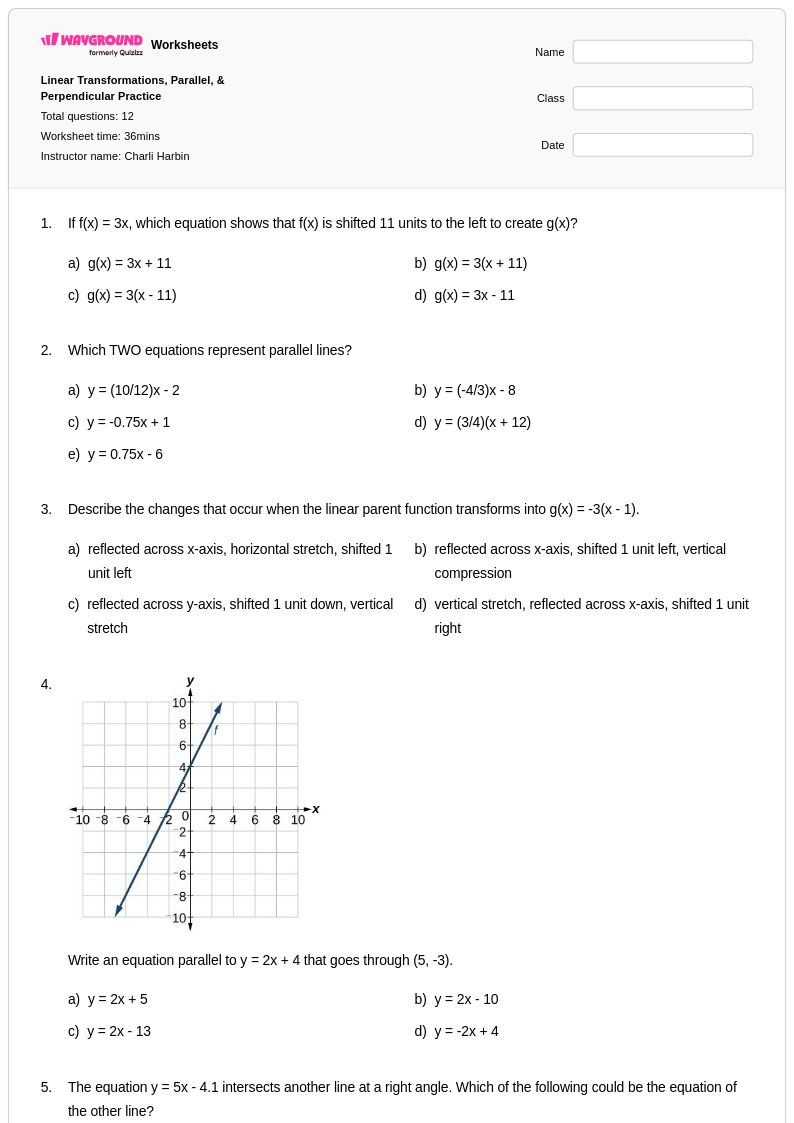
12 Q
8th - 10th
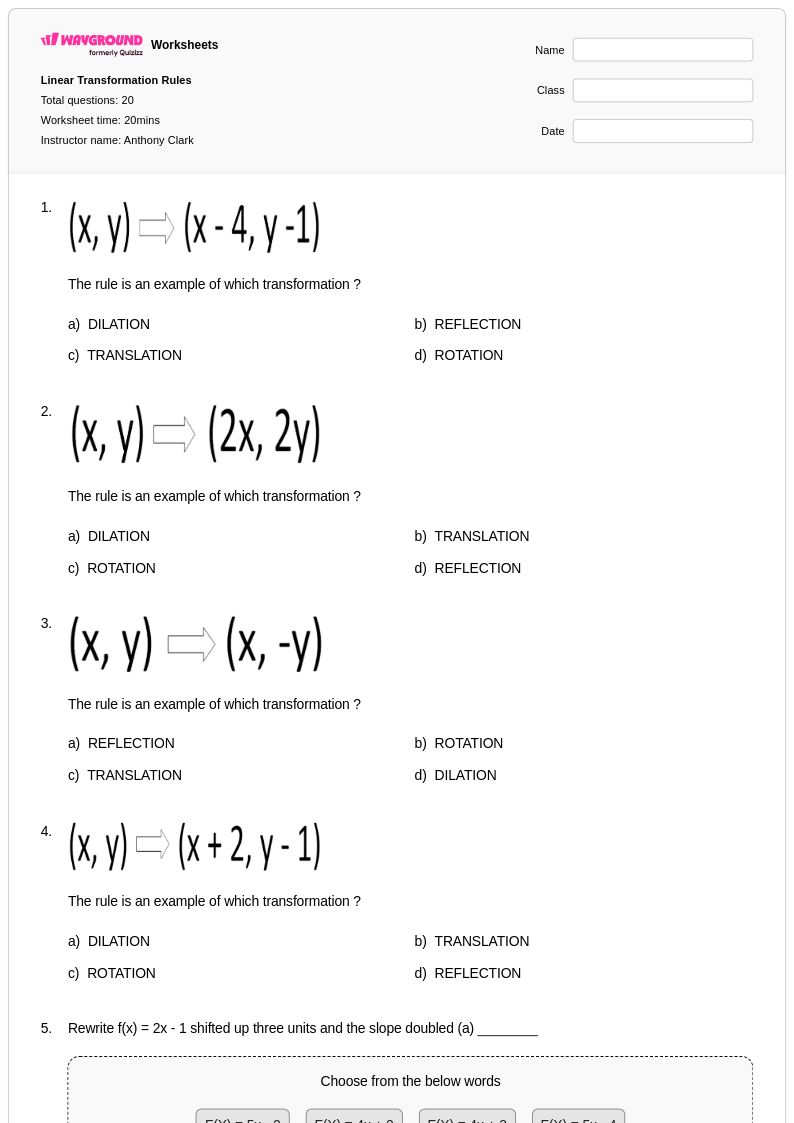
20 Q
8th - Uni
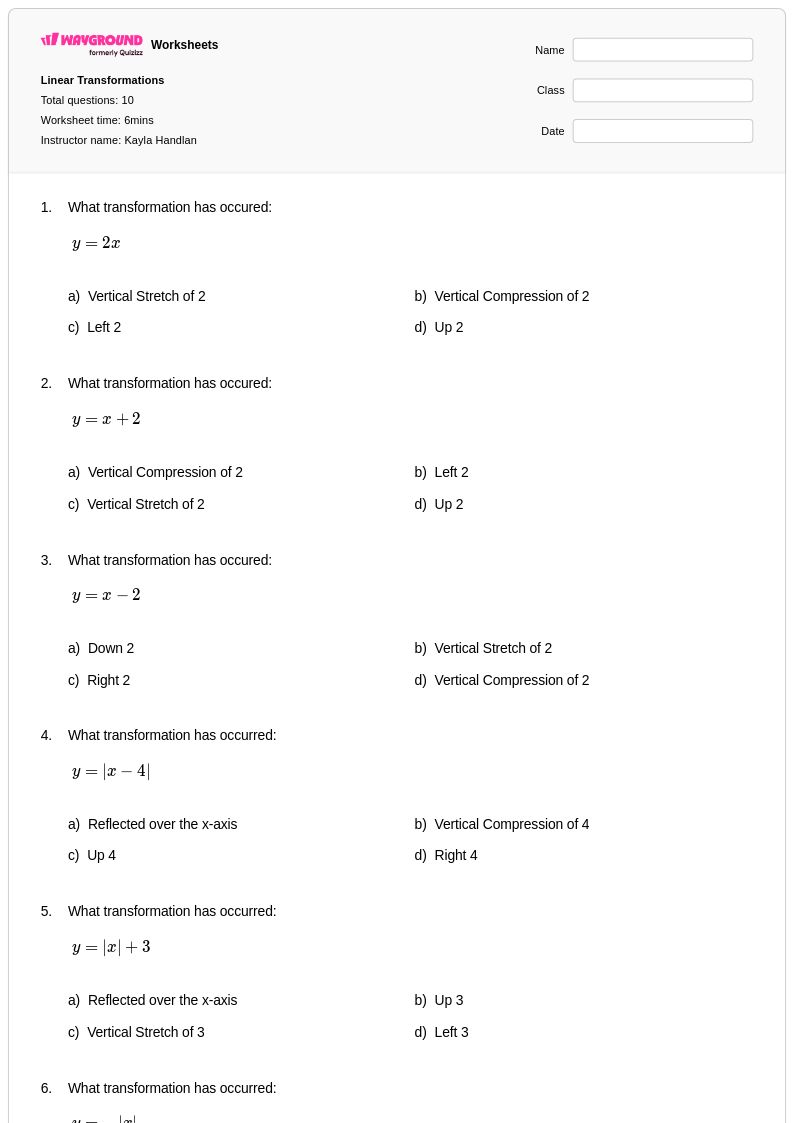
10 Q
9th - 11th
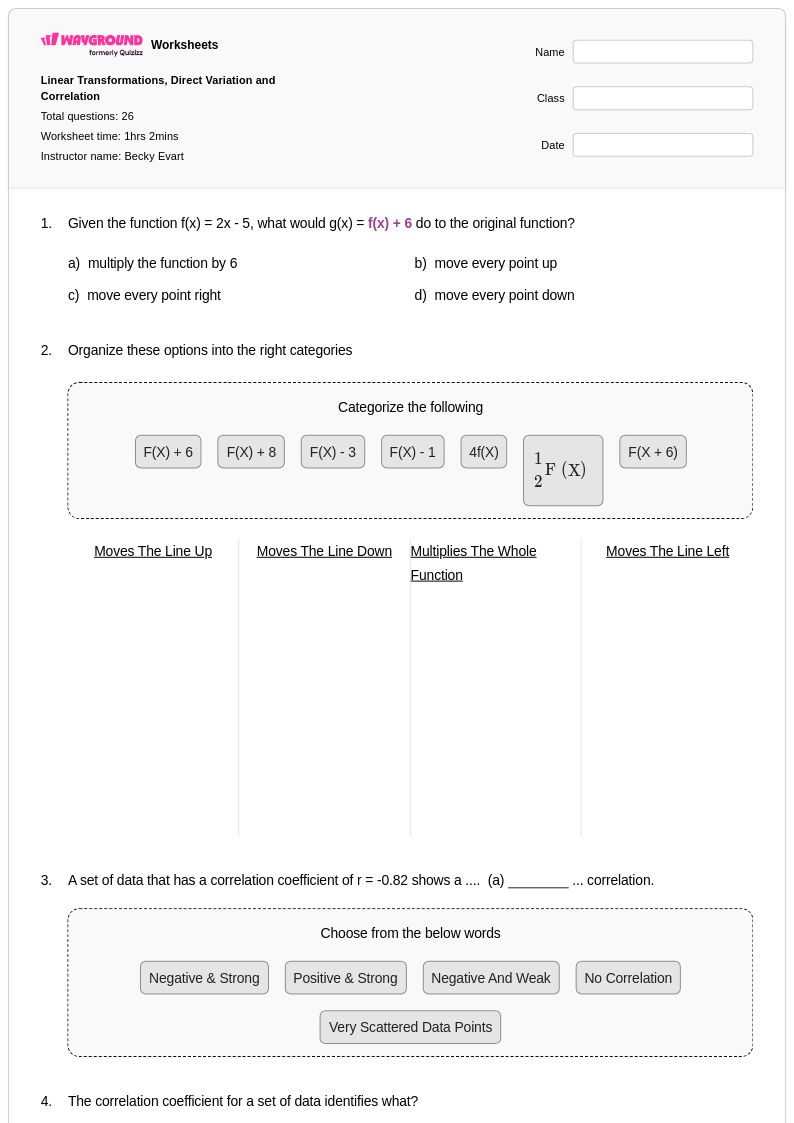
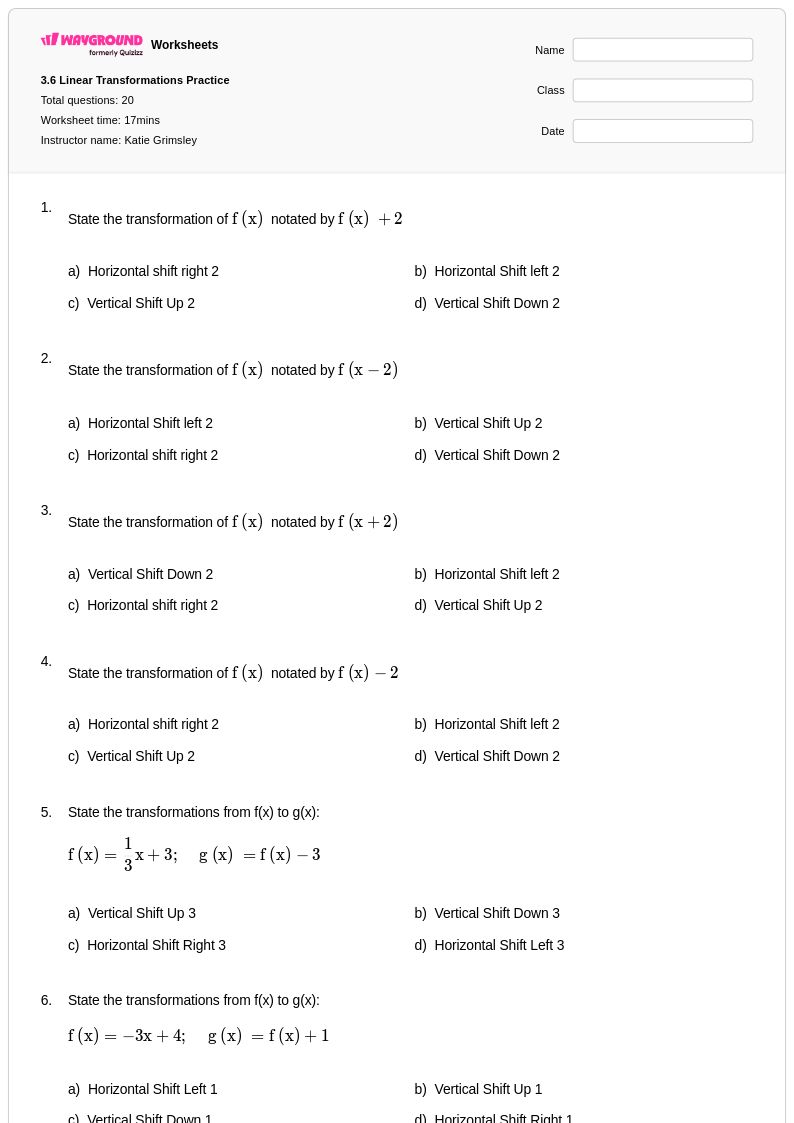
26 Q
9th - 12th
20 Q
9th - 12th
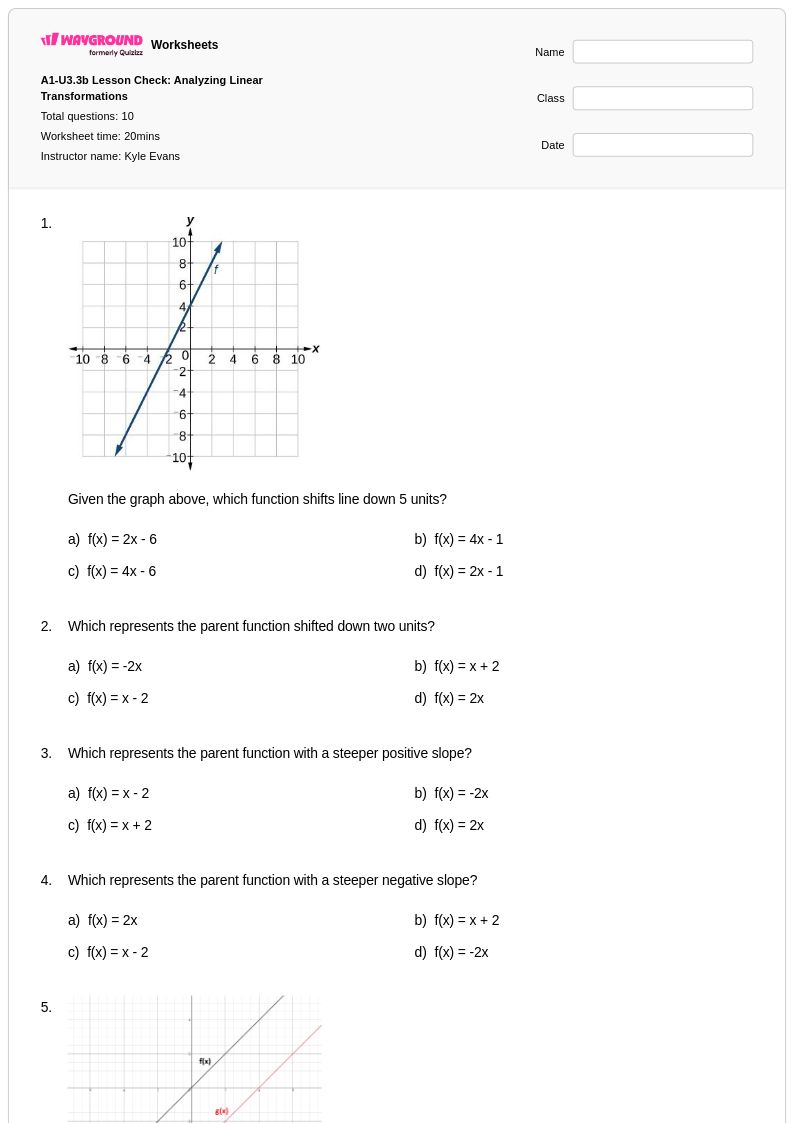
10 Q
9th - 12th
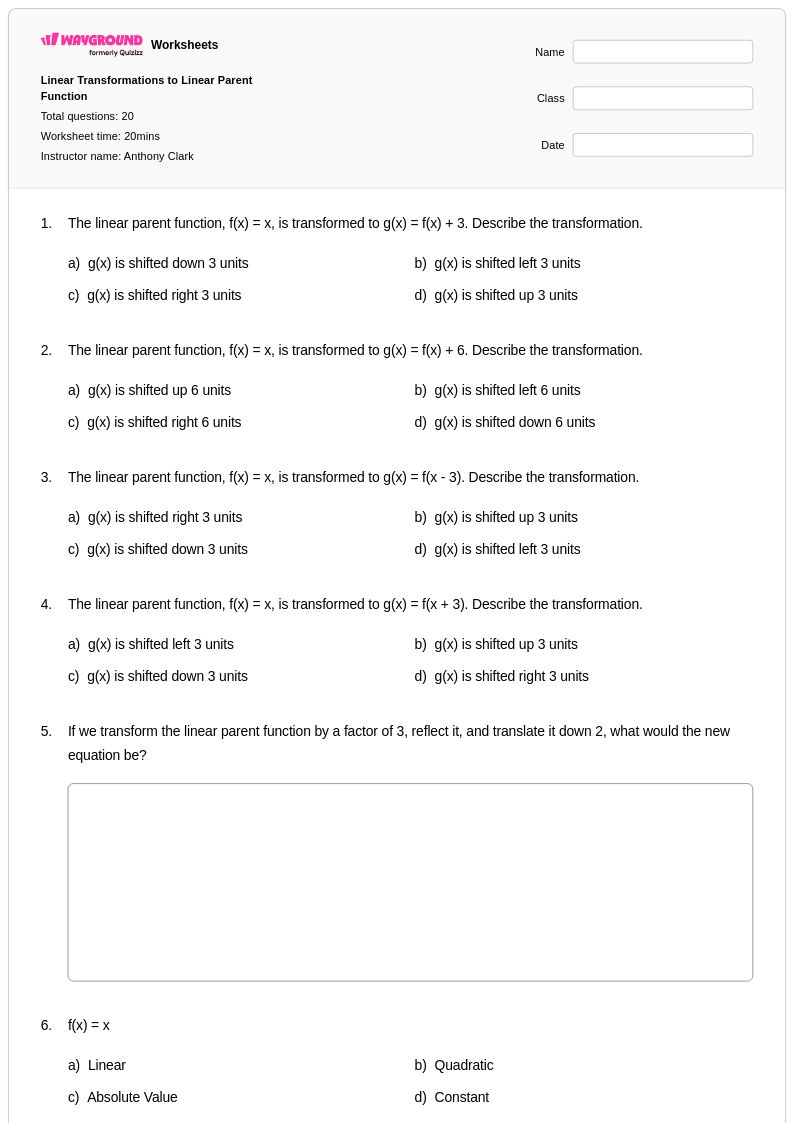
20 Q
9th - Uni
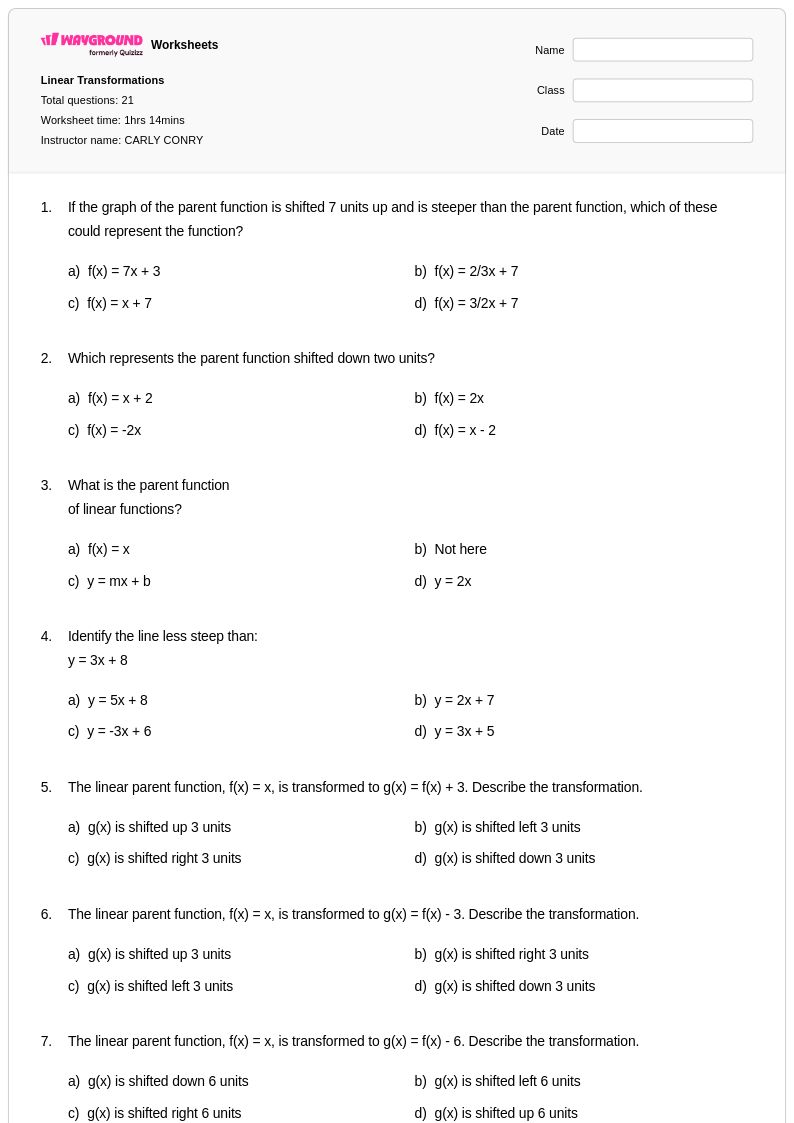
21 Q
8th - 10th
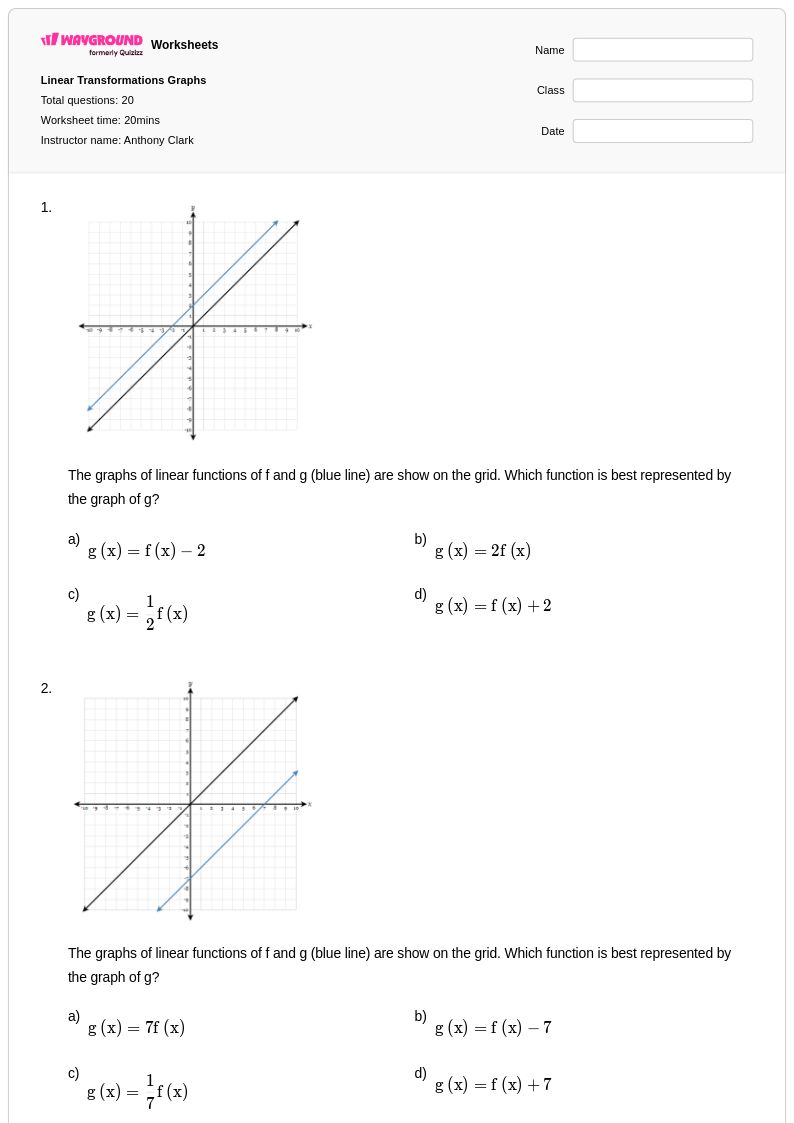
20 Q
9th - Uni
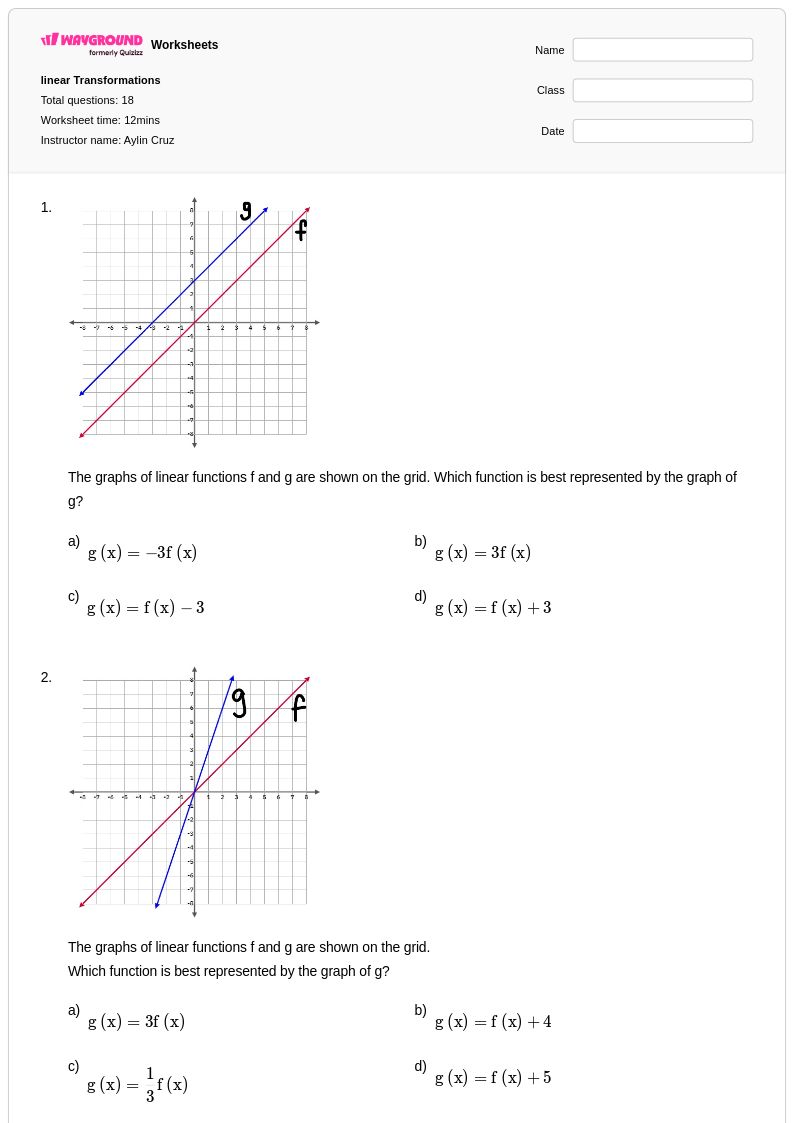
18 Q
9th - 12th
Explore Other Subject Worksheets for class 10
Explore printable Linear Transformation worksheets for Class 10
Linear transformation worksheets for Class 10 students through Wayground (formerly Quizizz) provide comprehensive coverage of this fundamental algebraic concept that bridges basic algebra with advanced mathematical thinking. These carefully designed practice problems help students master the essential skills of identifying, applying, and analyzing linear transformations including translations, reflections, rotations, and dilations in coordinate planes. The worksheet collections strengthen students' ability to work with transformation matrices, understand geometric interpretations of linear functions, and connect algebraic representations with visual transformations. Each printable resource includes detailed answer keys that support independent learning and self-assessment, while the free pdf format ensures accessibility for both classroom instruction and home practice.
Wayground's extensive library draws from millions of teacher-created resources, offering educators powerful search and filtering capabilities to locate Class 10 linear transformation materials that align with specific curriculum standards and learning objectives. The platform's differentiation tools enable teachers to customize worksheets based on individual student needs, whether providing additional scaffolding for struggling learners or enrichment activities for advanced students ready to explore more complex transformation compositions. Teachers can seamlessly transition between printable and digital formats, making these resources versatile for various instructional settings including traditional classrooms, hybrid learning environments, and remote instruction. This flexibility supports effective lesson planning while providing targeted remediation opportunities and systematic skill practice that builds student confidence in understanding how linear transformations function as both algebraic operations and geometric manipulations.
FAQs
What do students learn about linear transformations in Grade 10?
How can I teach the connection between geometry and matrices?
What types of exercises are on these Grade 10 worksheets?
What are common mistakes with geometric transformations?
How can I use this Grade 10 geometry worksheet?
How does this topic align with geometry standards?