
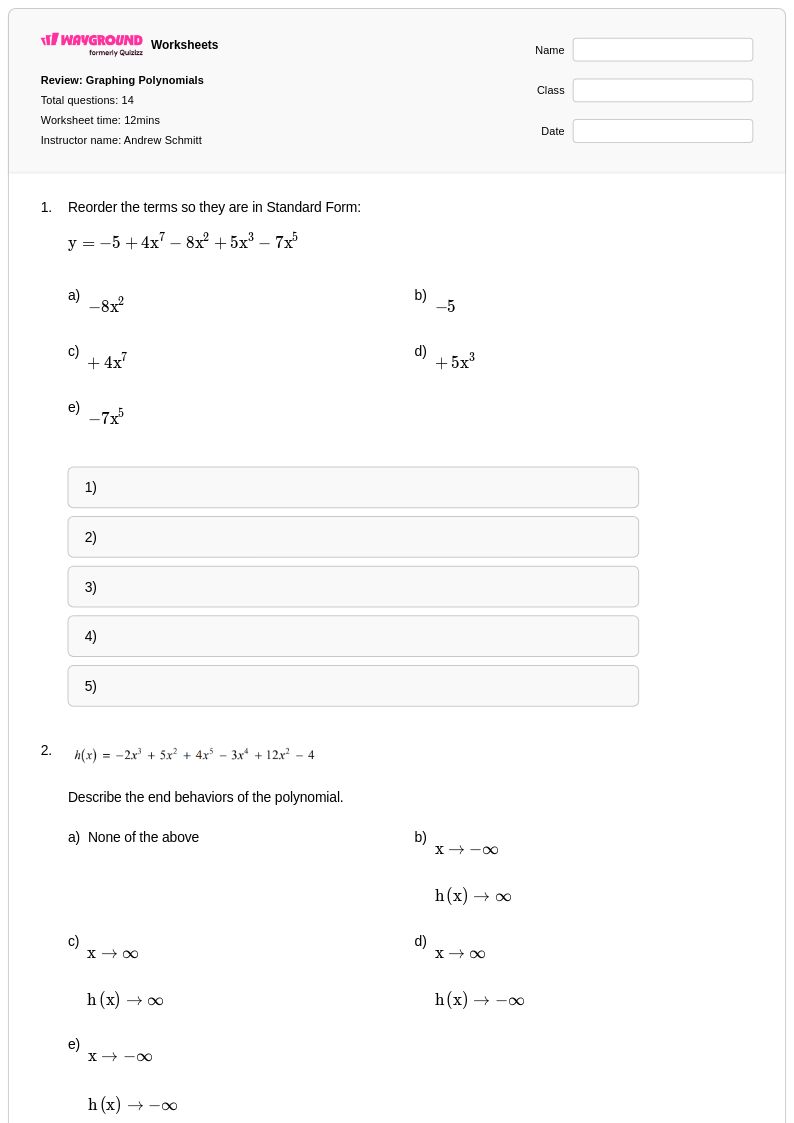
14 Hỏi
9th - 12th
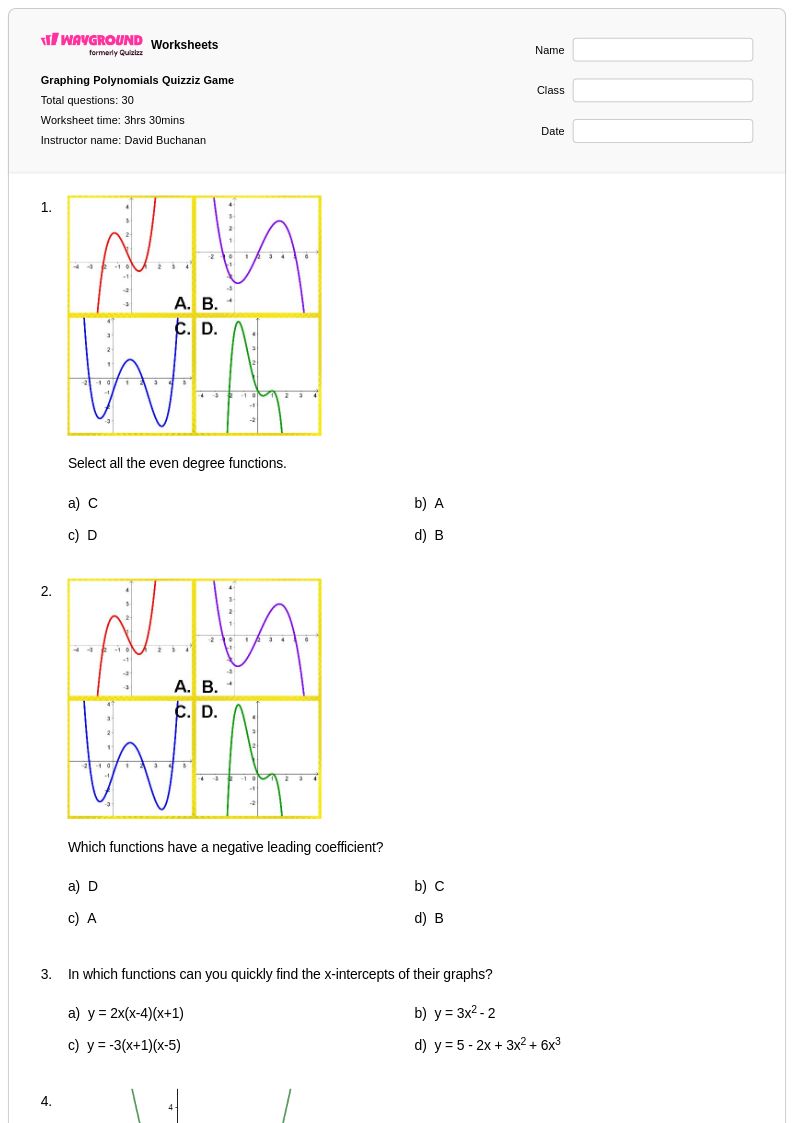
30 Hỏi
9th
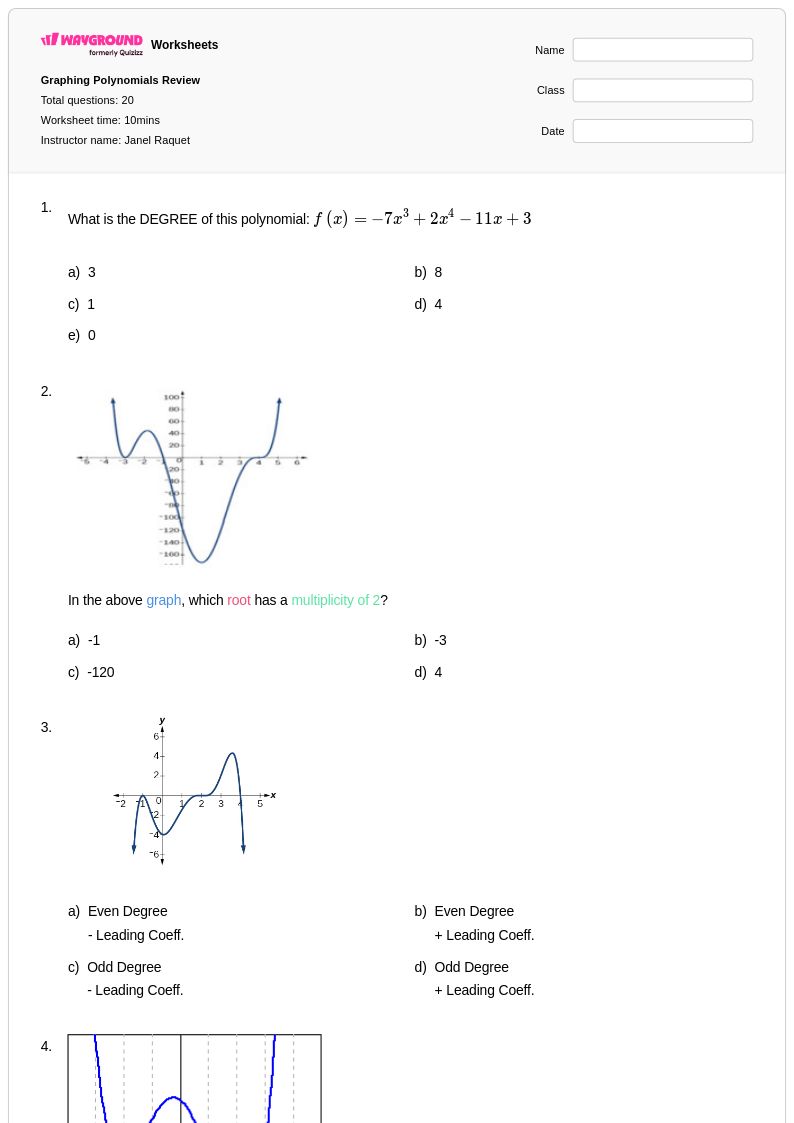
20 Hỏi
9th - 12th
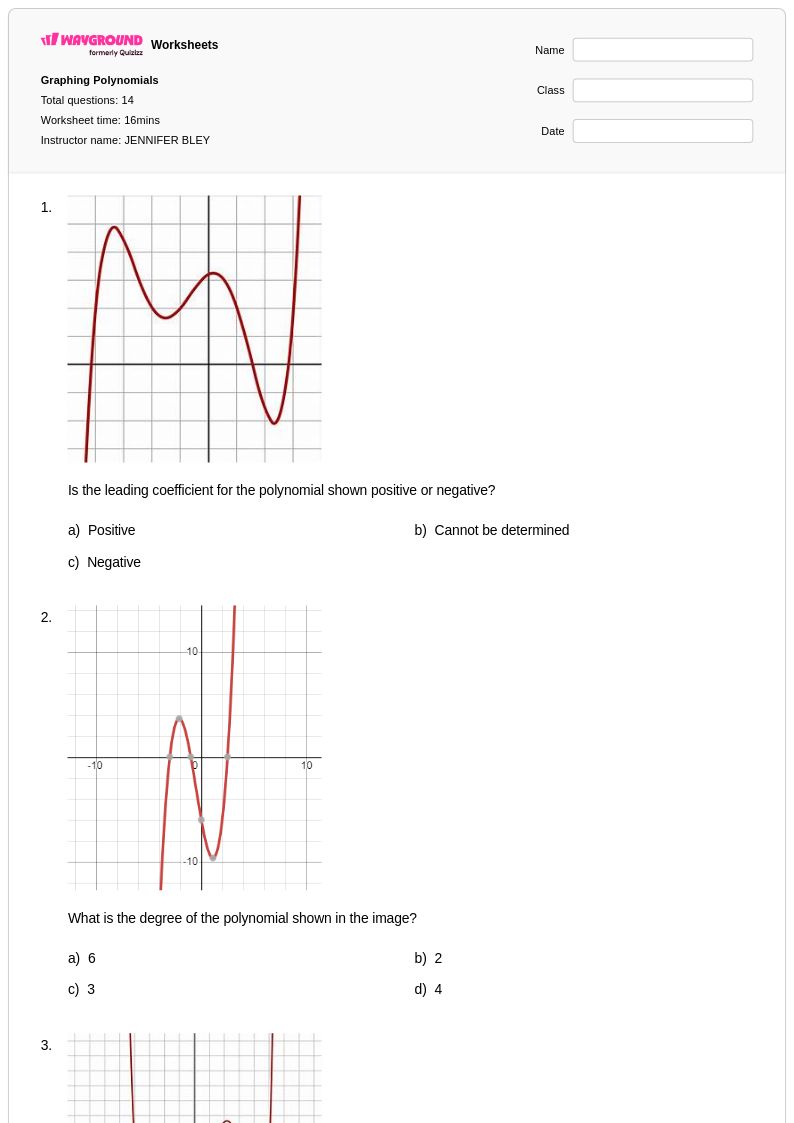
14 Hỏi
9th - 12th
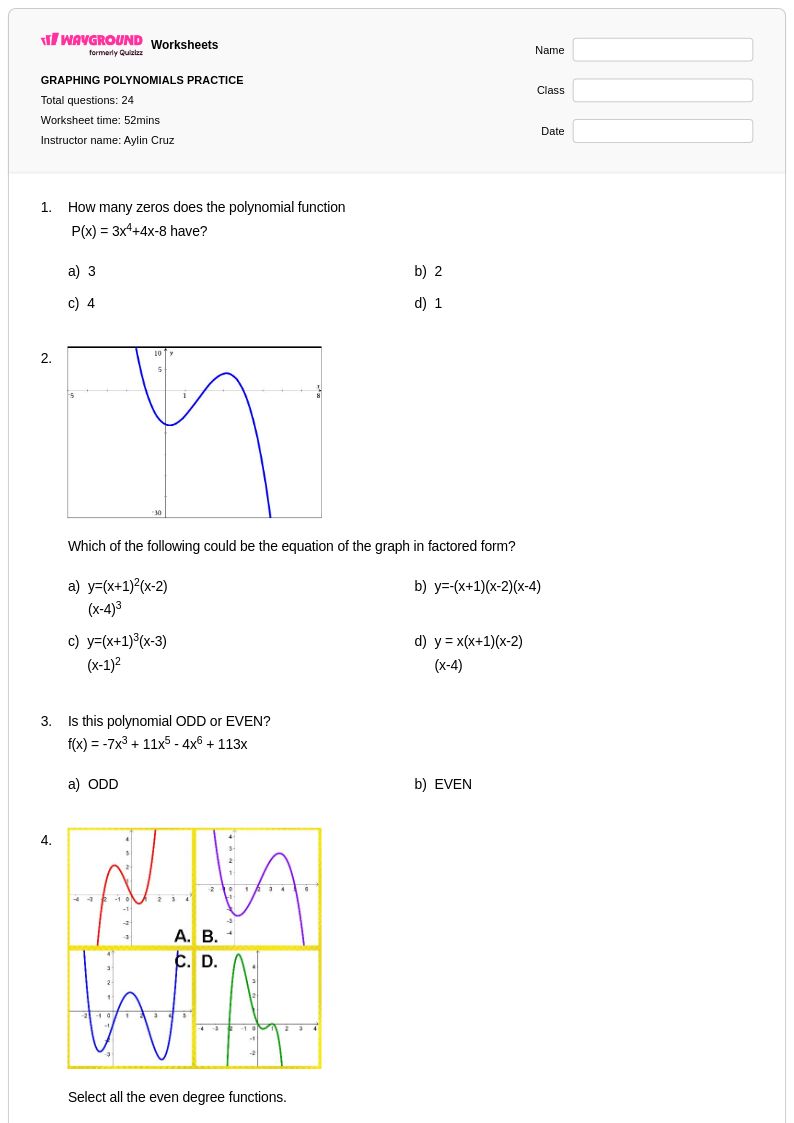
24 Hỏi
9th - 12th
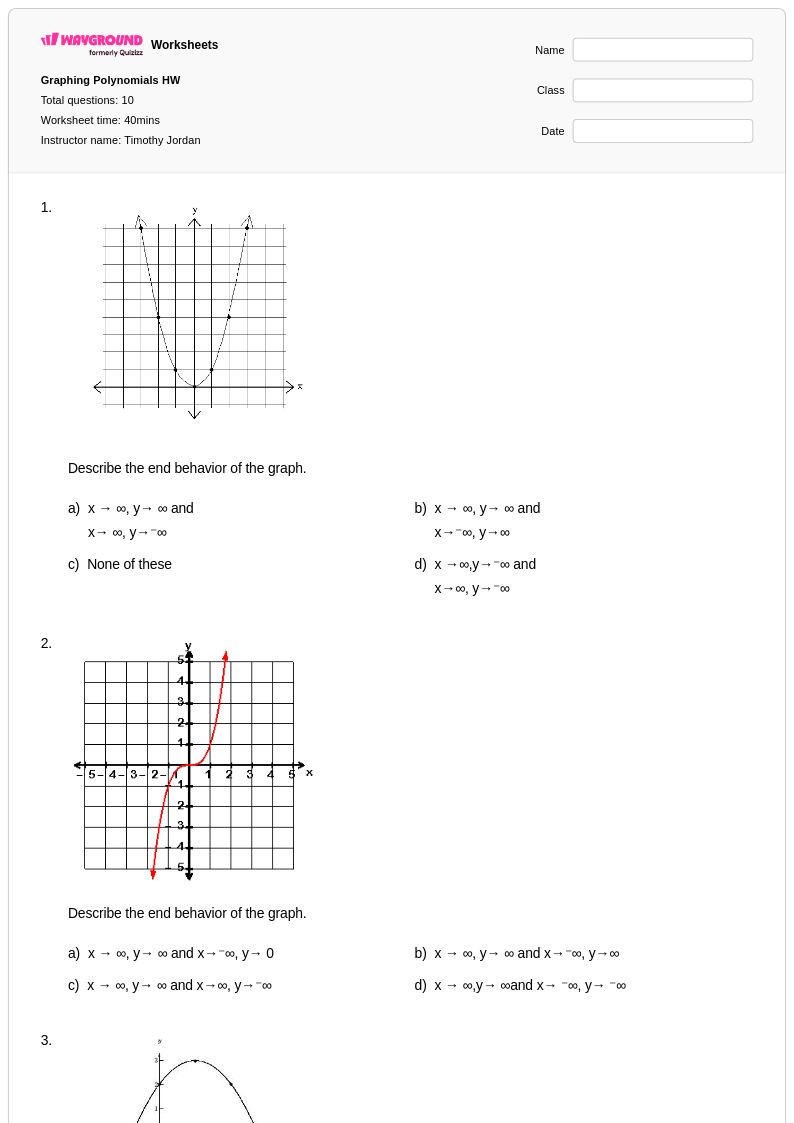
10 Hỏi
9th - 12th
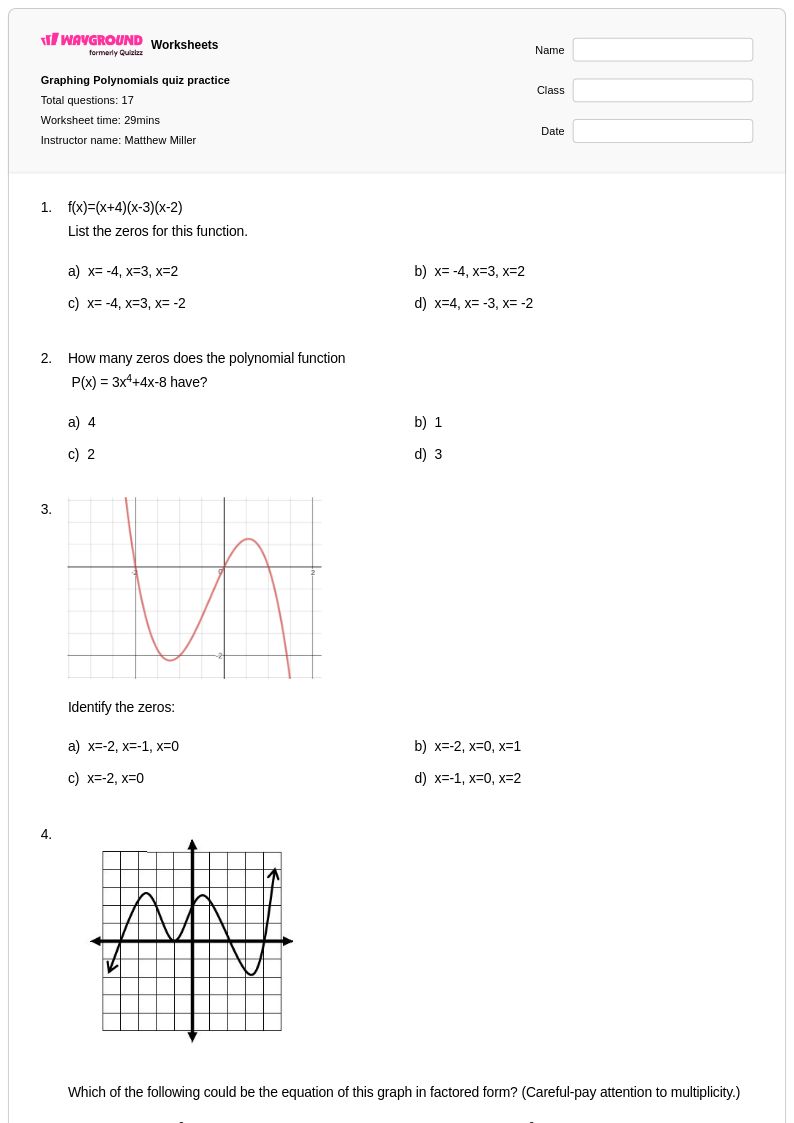
17 Hỏi
9th - 12th
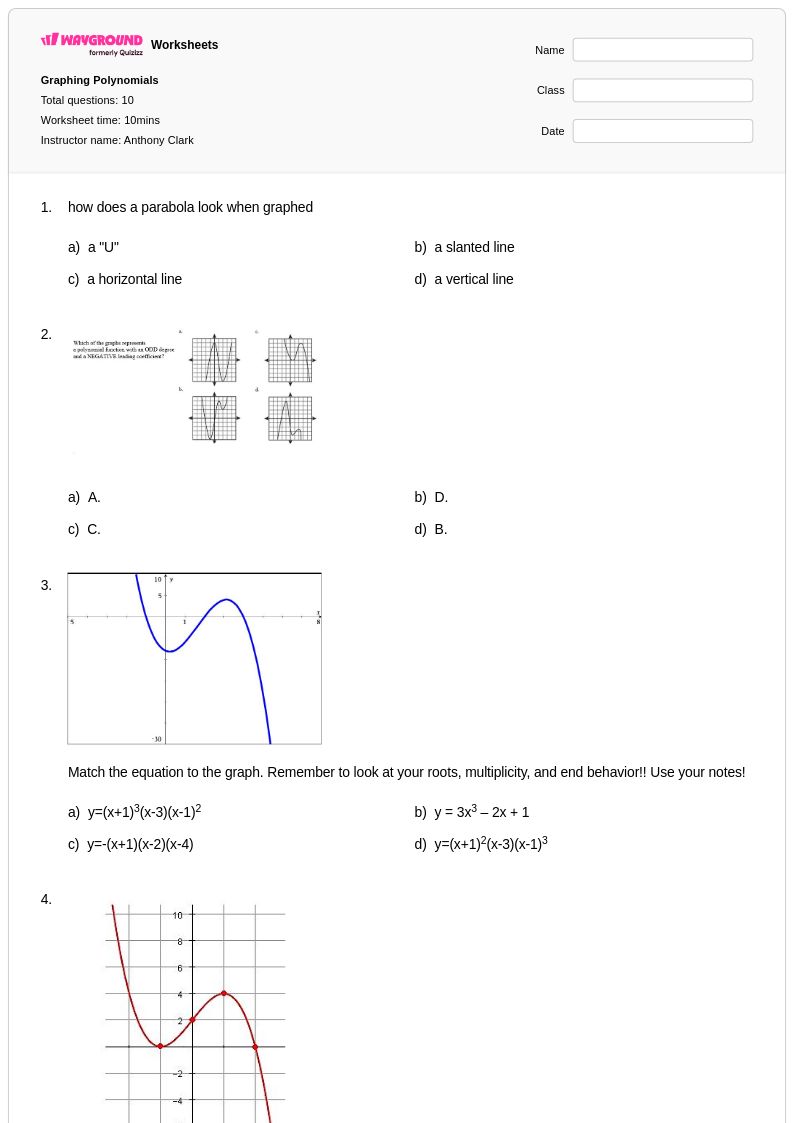
10 Hỏi
9th - Uni
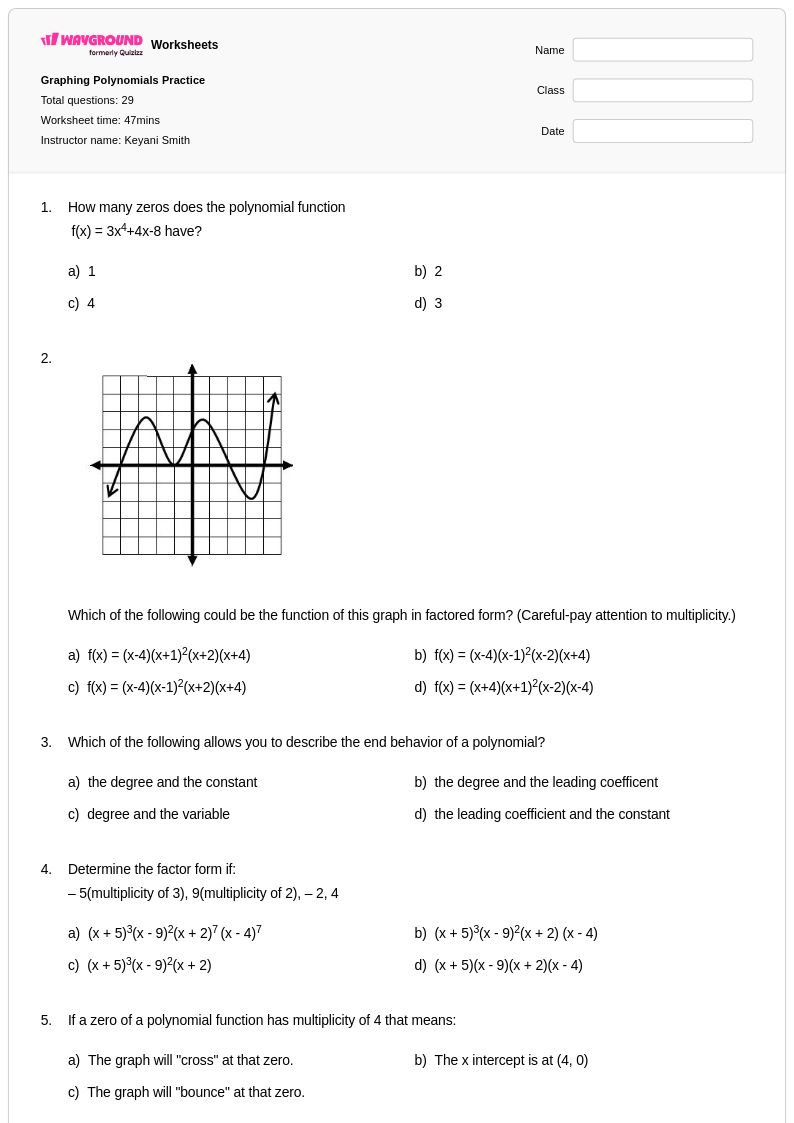
29 Hỏi
9th - 12th
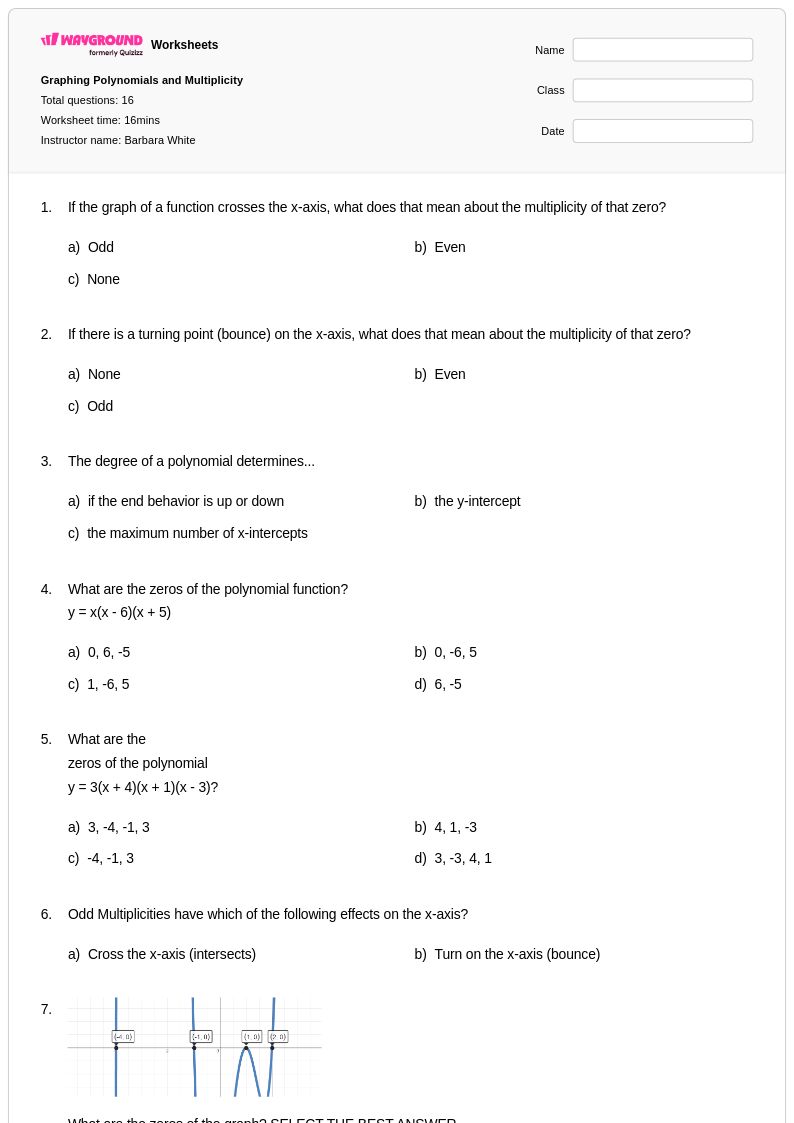
16 Hỏi
8th - 12th
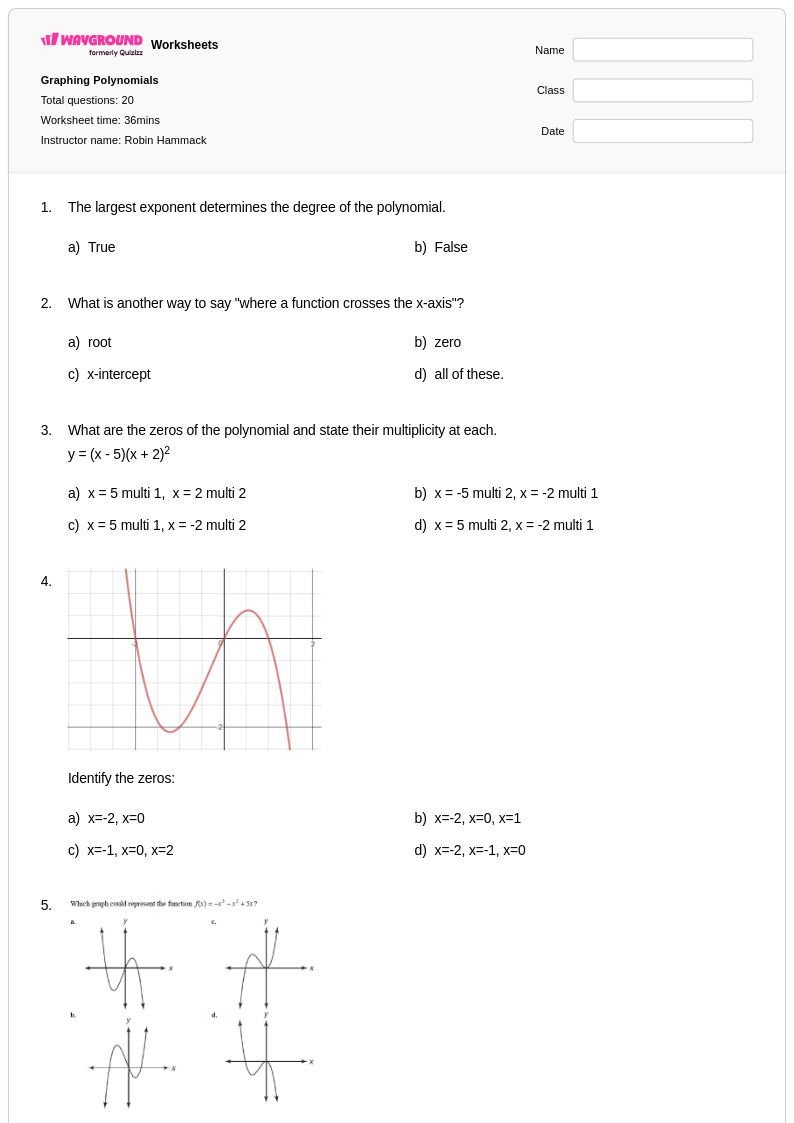
20 Hỏi
9th - Uni

50 Hỏi
9th - 12th
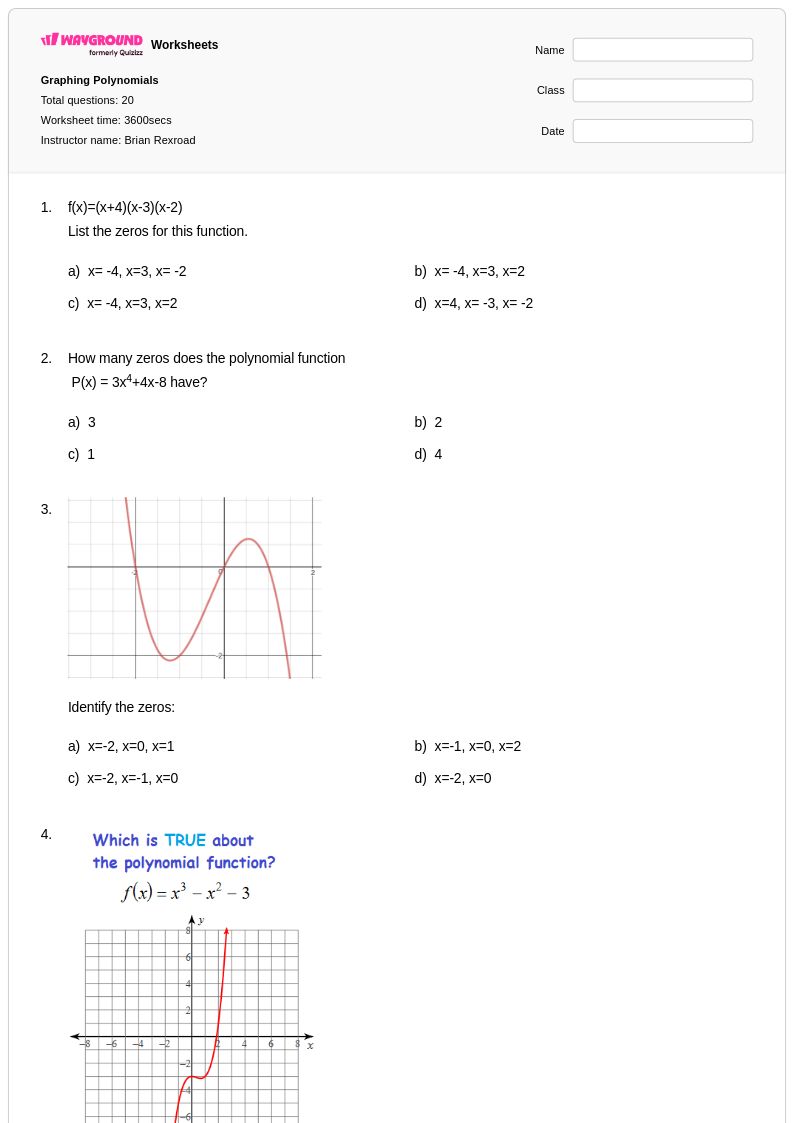
20 Hỏi
9th - 12th
18 Hỏi
9th - 12th
20 Hỏi
9th - 12th
11 Hỏi
9th - 12th
25 Hỏi
8th - 12th
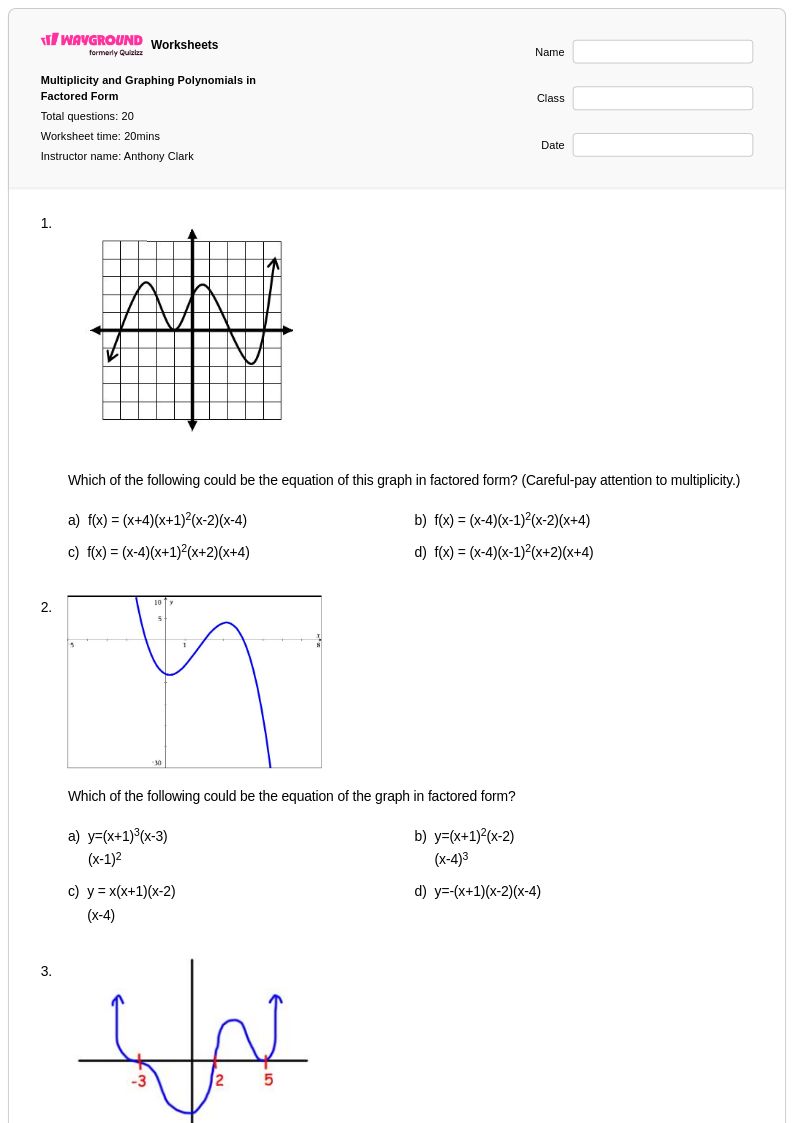
20 Hỏi
9th - Uni
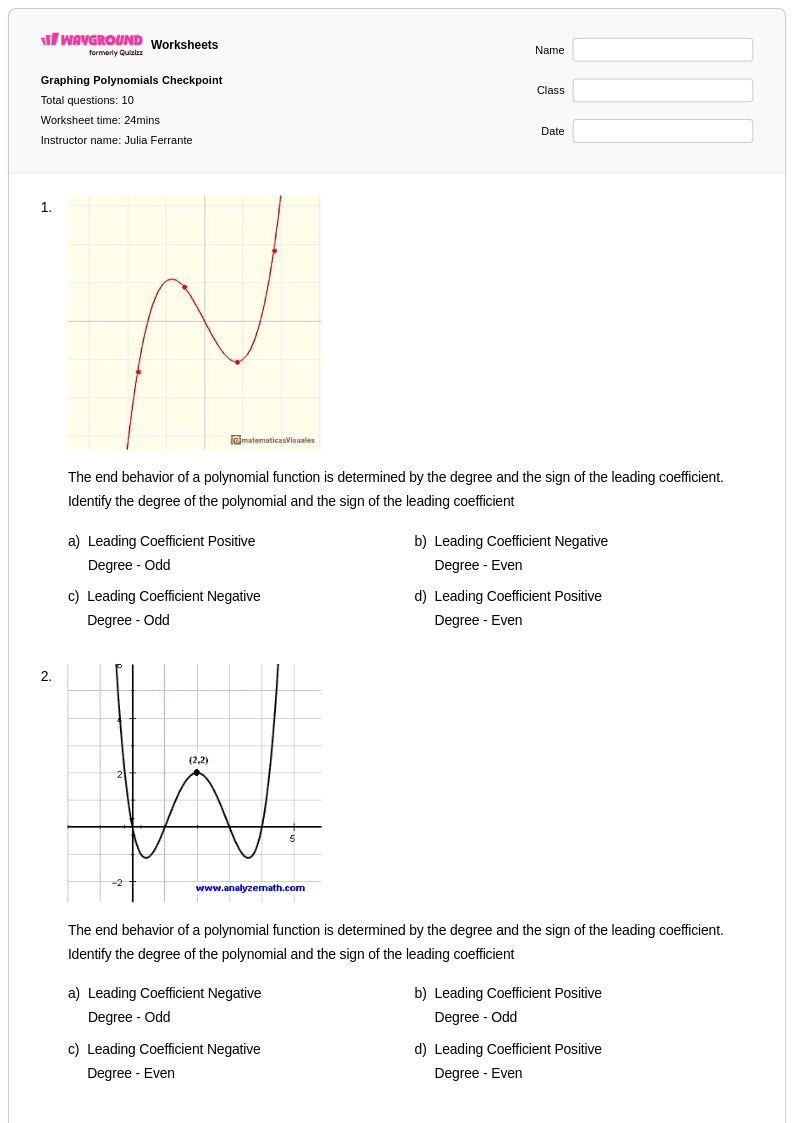
10 Hỏi
8th - 12th
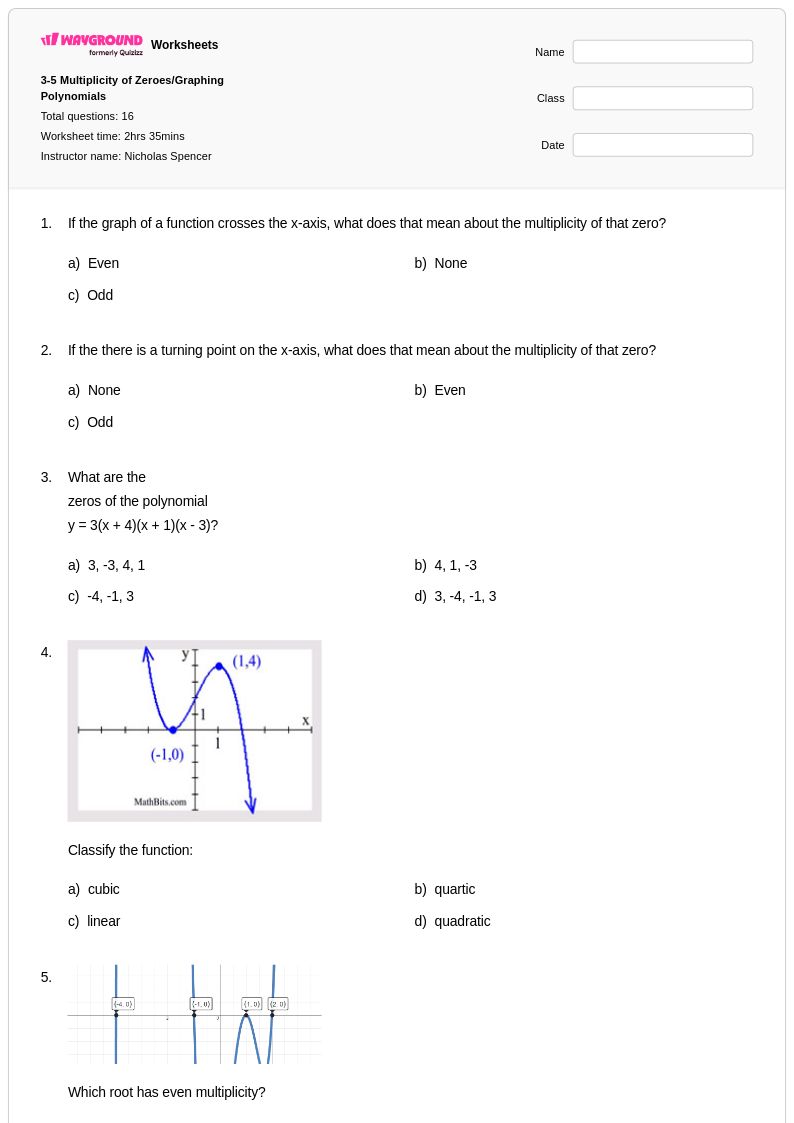
16 Hỏi
9th - 12th
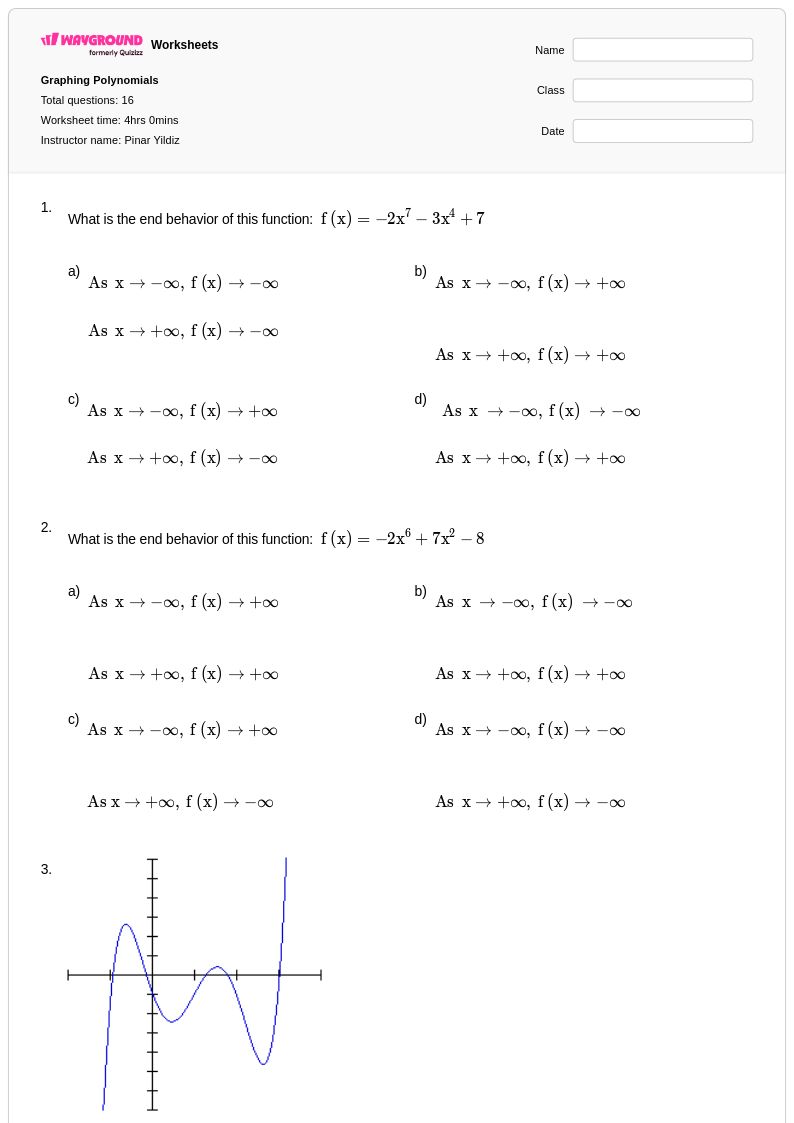
16 Hỏi
9th - Uni
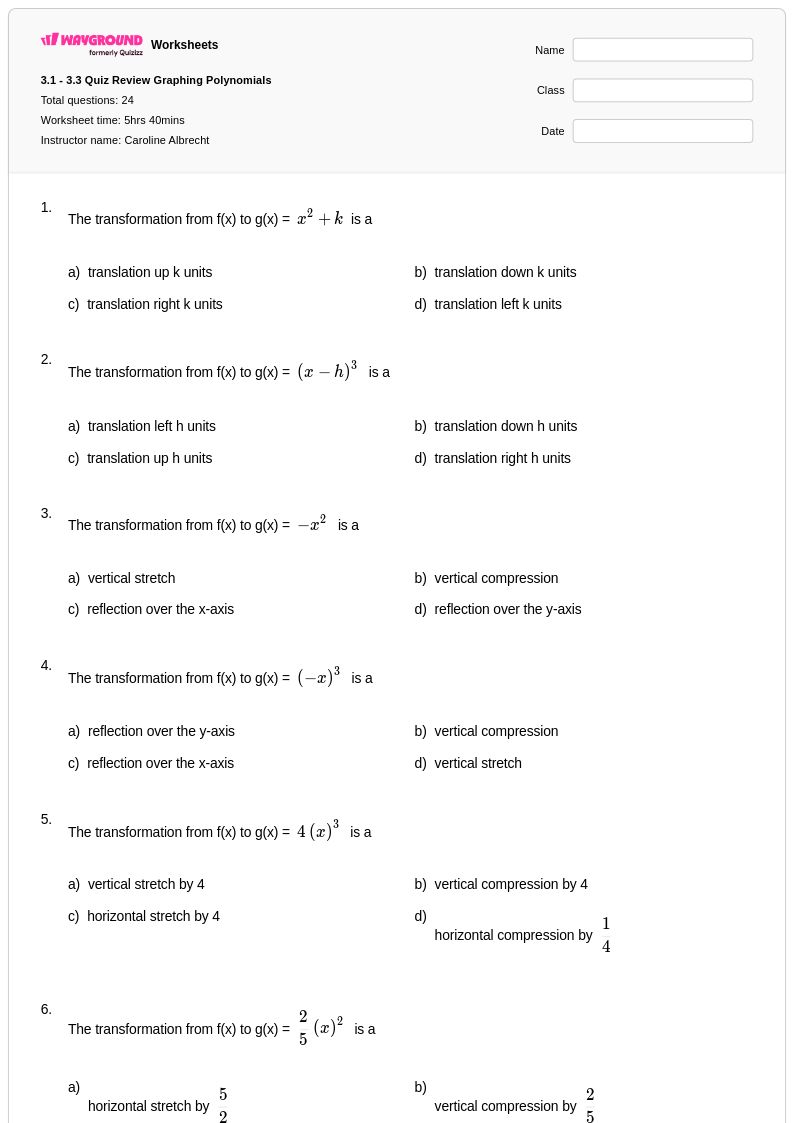
24 Hỏi
9th - 12th
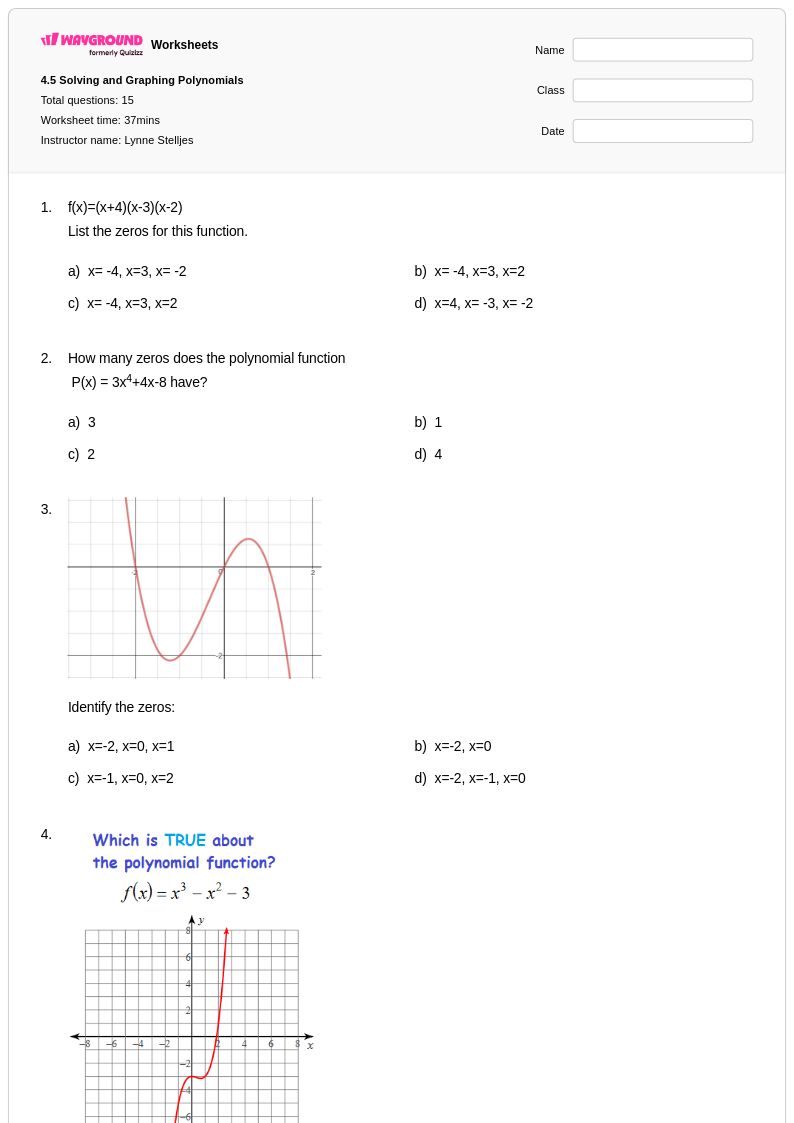
15 Hỏi
9th - 12th
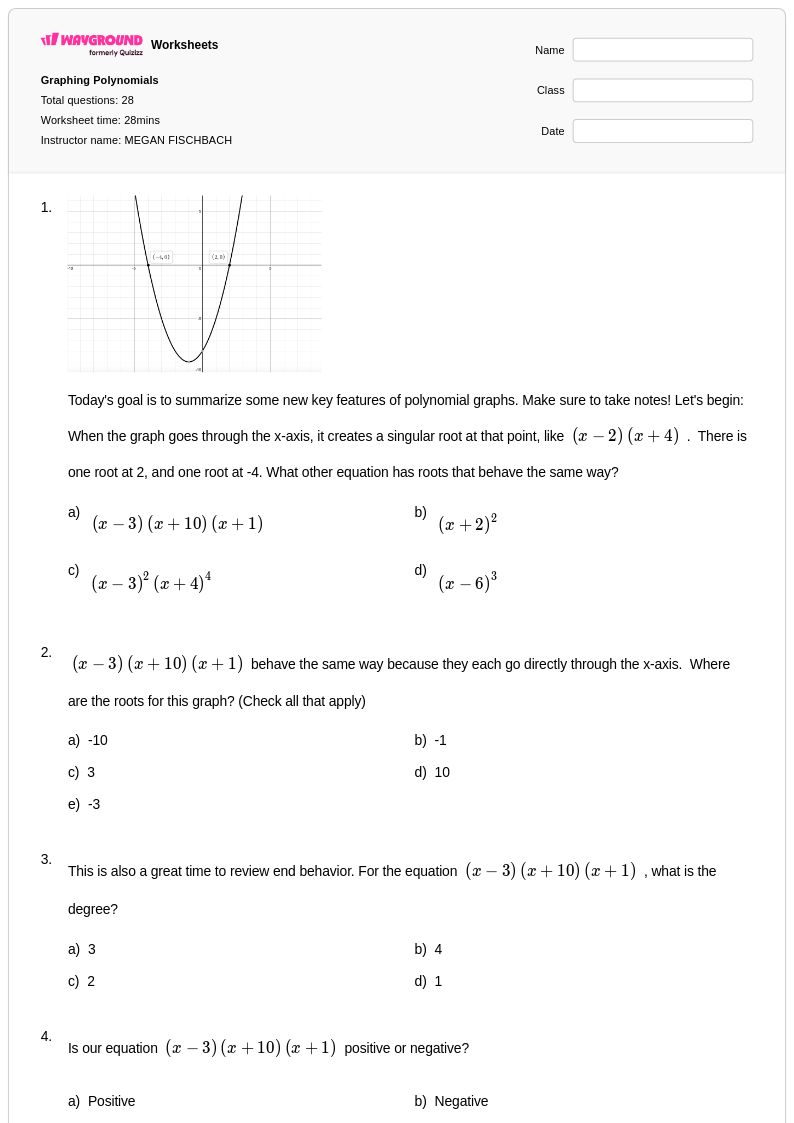
28 Hỏi
9th - 12th
Khám phá các bảng tính chủ đề khác cho class 9
Explore printable Graphing Polynomials worksheets for Class 9
Graphing polynomials represents a fundamental skill in Class 9 algebra that bridges abstract mathematical concepts with visual representation. Wayground's comprehensive collection of graphing polynomials worksheets provides students with structured practice in plotting quadratic, cubic, and higher-degree polynomial functions while developing essential skills in identifying key features such as intercepts, turning points, and end behavior. These carefully designed practice problems guide students through the systematic process of creating accurate graphs by evaluating function values, recognizing patterns in polynomial behavior, and understanding how coefficients affect curve shape and position. Each worksheet includes a complete answer key and is available as a free printable pdf, enabling students to work independently while building confidence in this challenging algebraic concept.
Wayground's extensive library draws from millions of teacher-created resources specifically focused on polynomial graphing, offering educators powerful search and filtering tools to locate materials that align with curriculum standards and match diverse student needs. Teachers can easily customize worksheets to provide targeted remediation for students struggling with basic polynomial evaluation or create enrichment activities that challenge advanced learners with complex polynomial transformations and real-world applications. The platform's differentiation tools allow instructors to modify difficulty levels, adjust problem types, and select from both printable and digital formats to accommodate various learning preferences and classroom environments. This flexibility supports comprehensive lesson planning while ensuring that all students receive appropriate skill practice in mastering the visual representation of polynomial functions.
FAQs
What is the focus of graphing polynomials in Grade 9?
How can I teach the basics of graphing polynomials effectively?
What exercises help 9th graders practice graphing polynomials?
What common misconceptions do 9th graders have with this topic?
How do I use this Grade 9 worksheet in my classroom?
How does this topic align with 9th-grade math standards?