Enhance Class 11 geometry skills with Wayground's comprehensive ellipses worksheets featuring free printables, practice problems, and answer keys to master conic sections, equations, and graphing techniques.
Explore printable Ellipses worksheets for Class 11
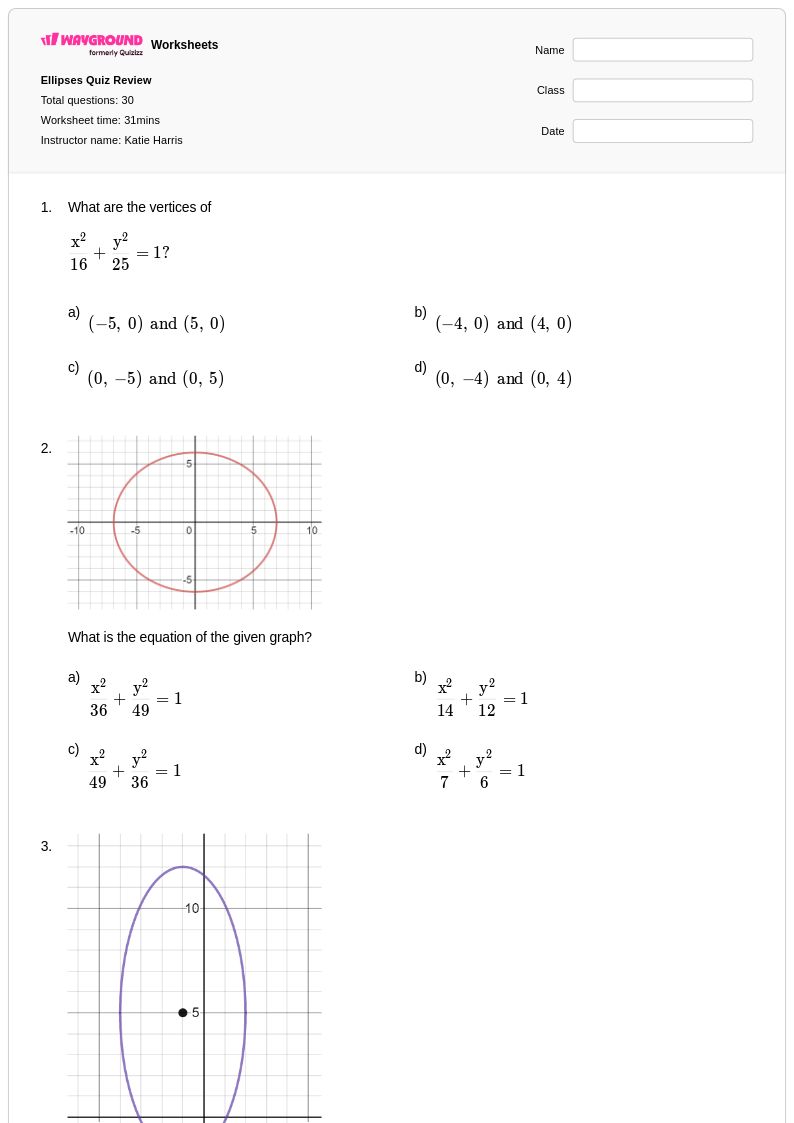
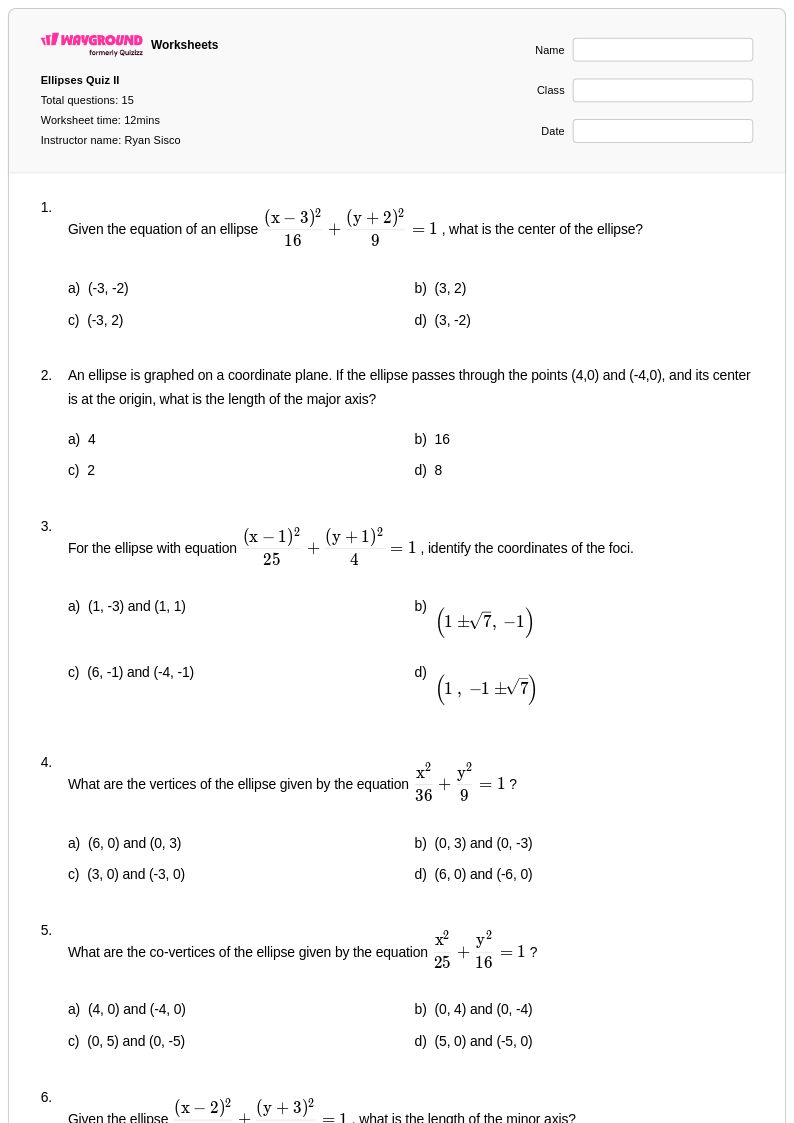
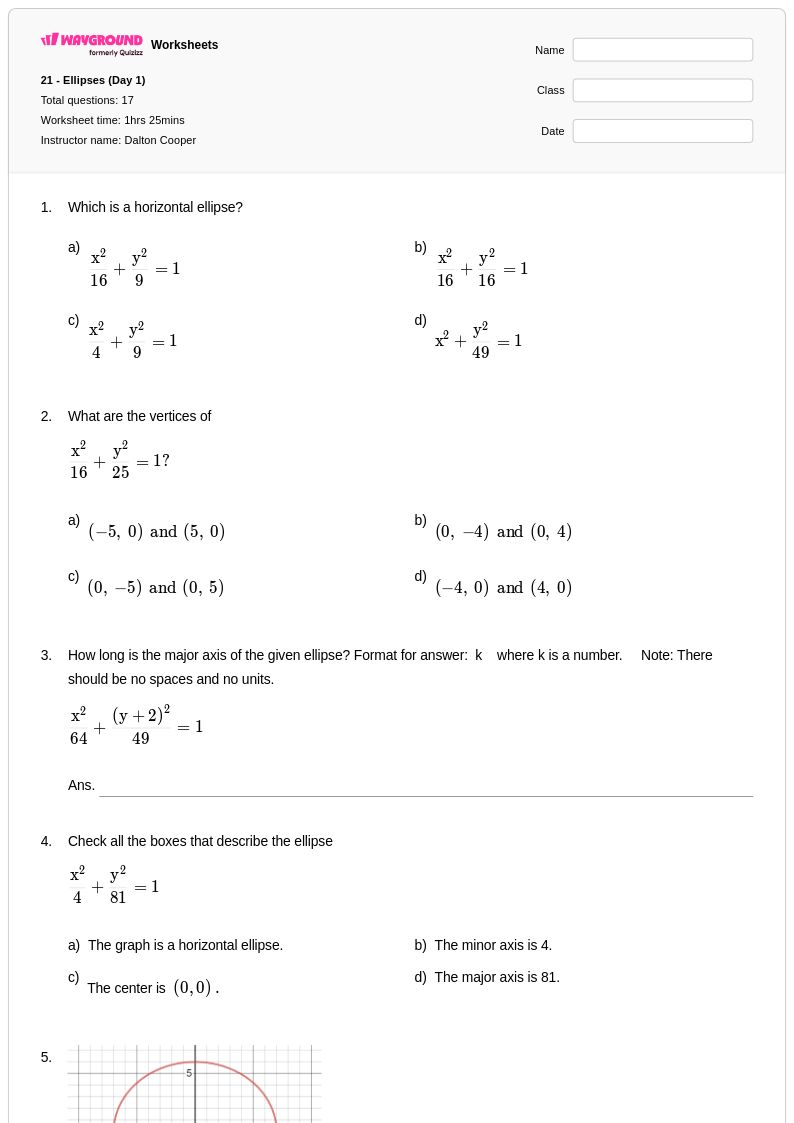
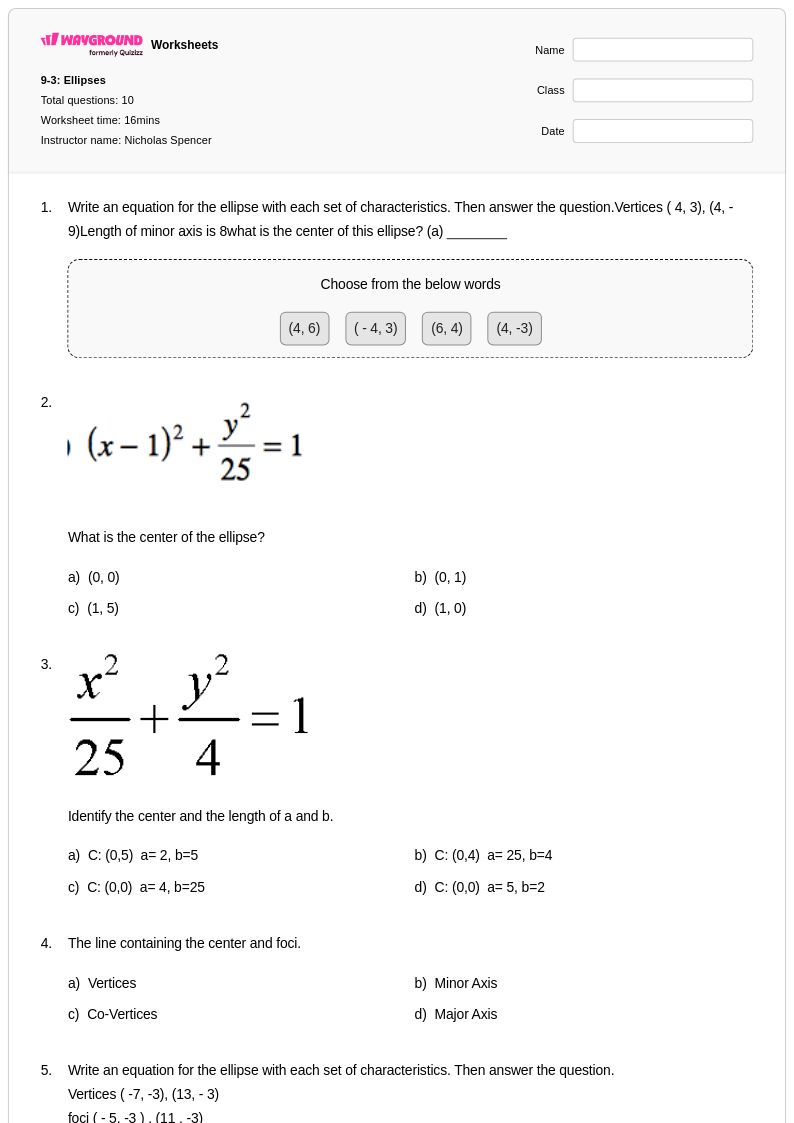
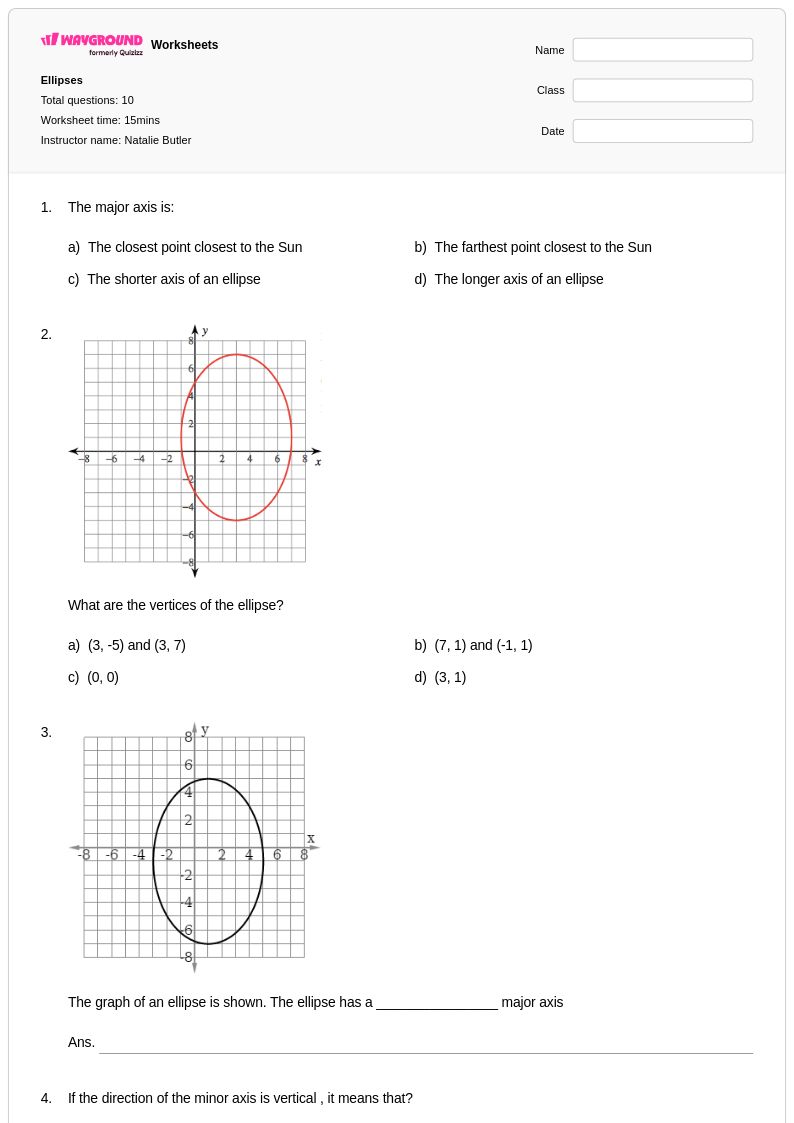
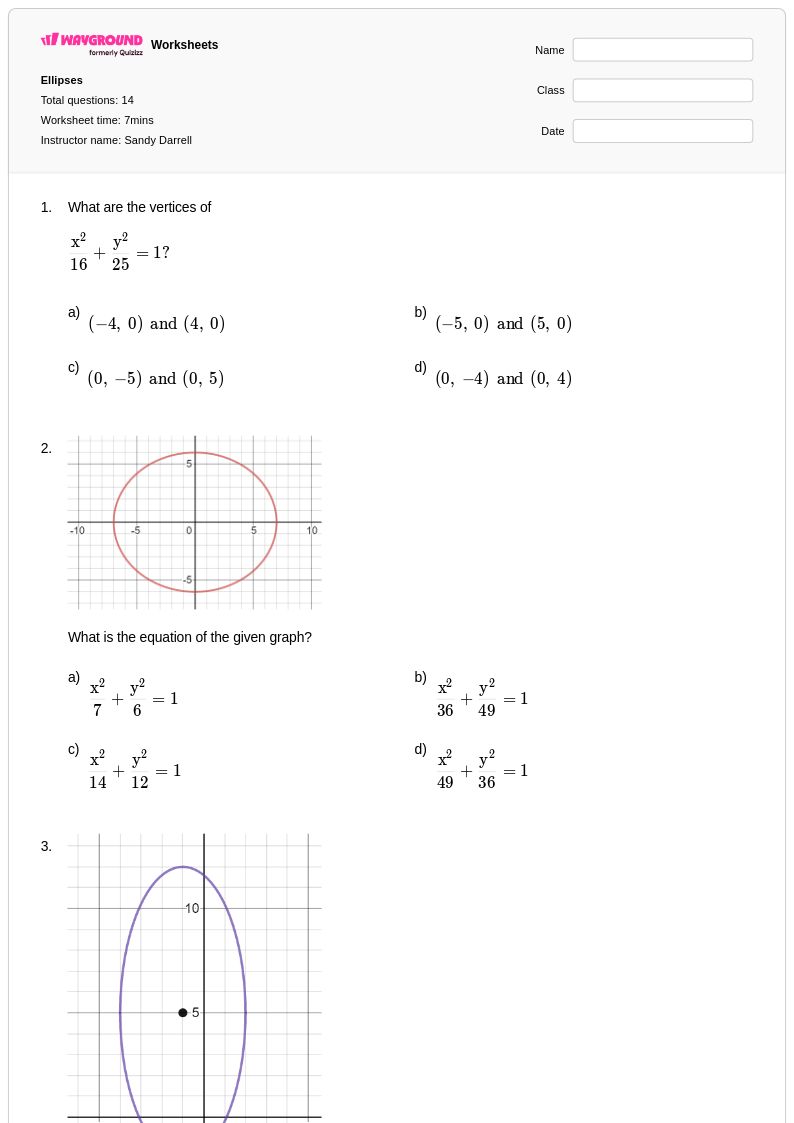
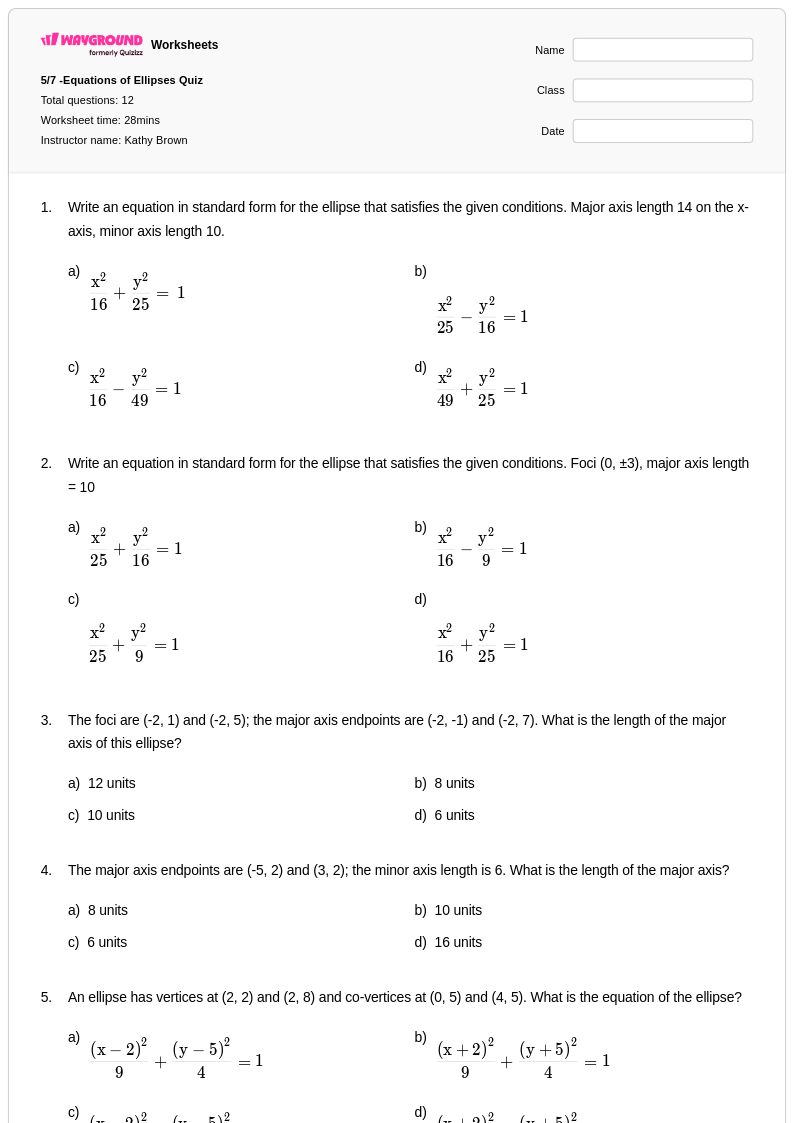
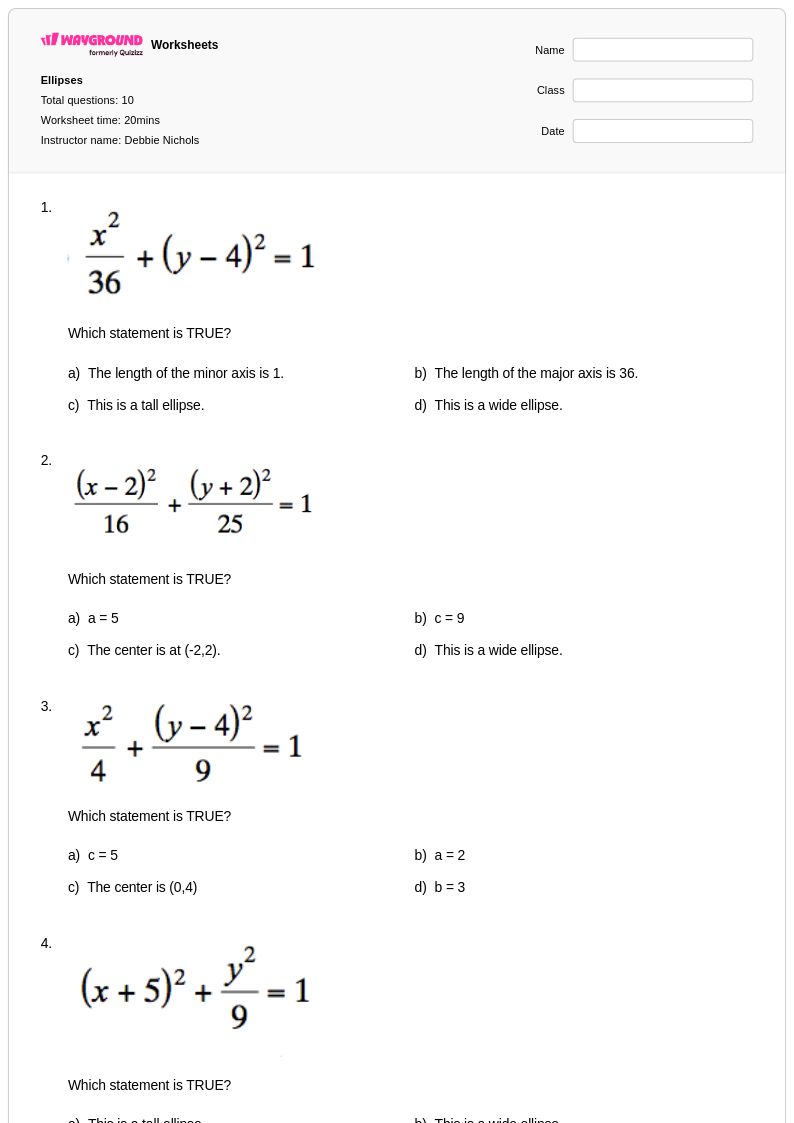
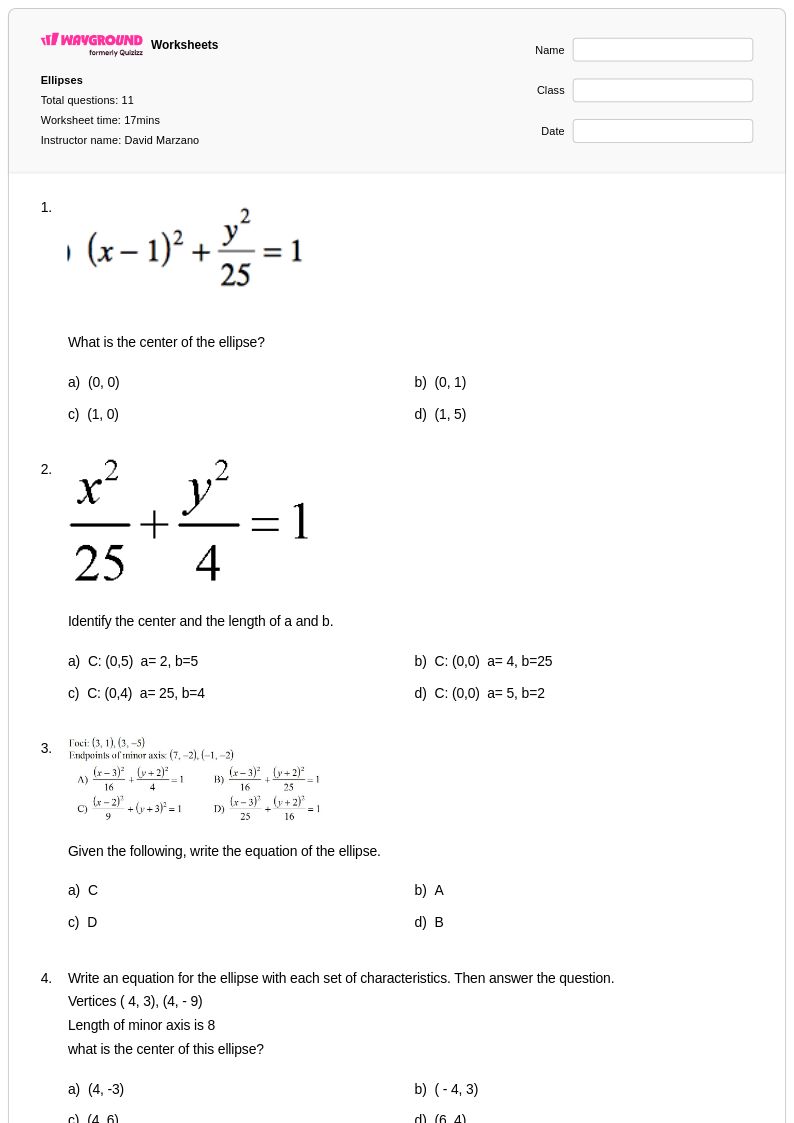
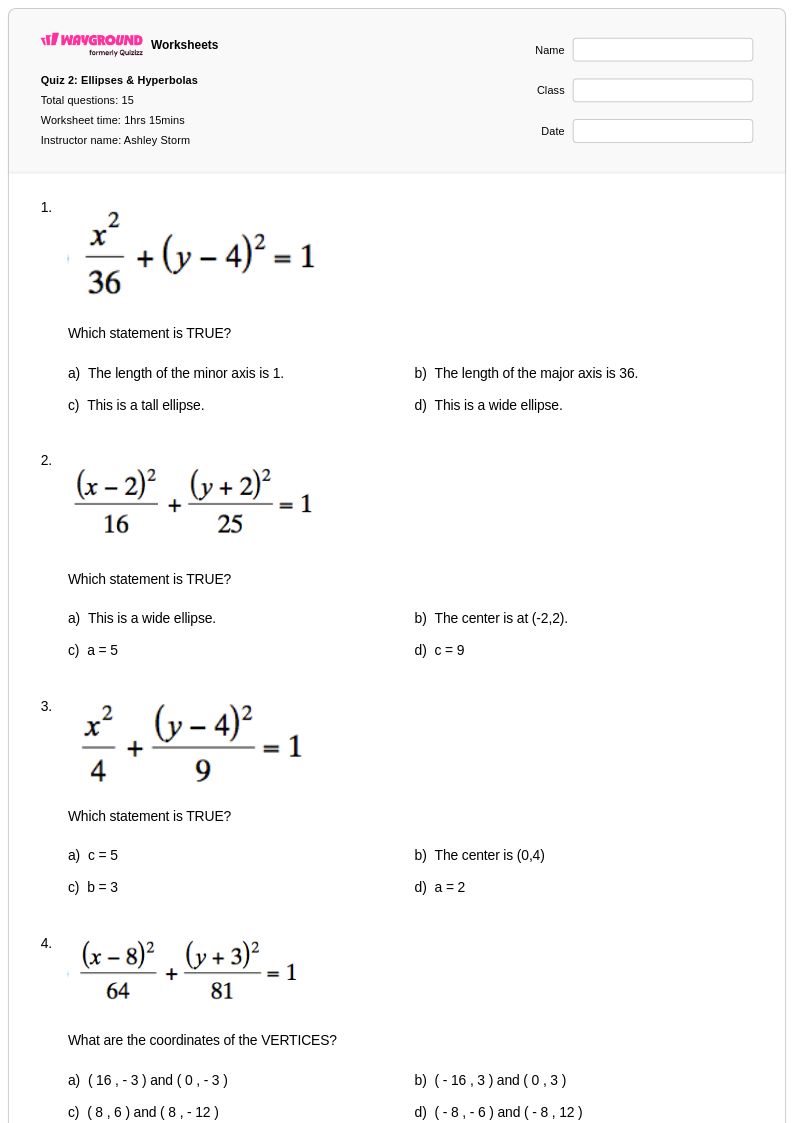
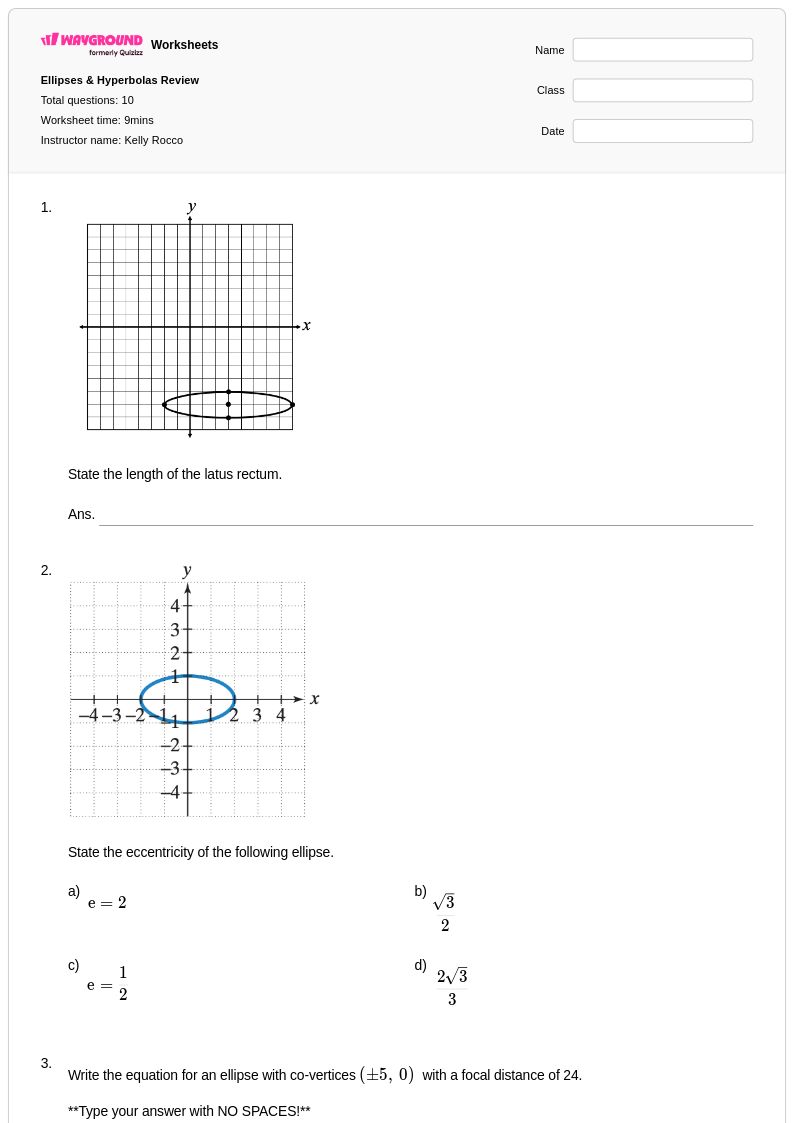
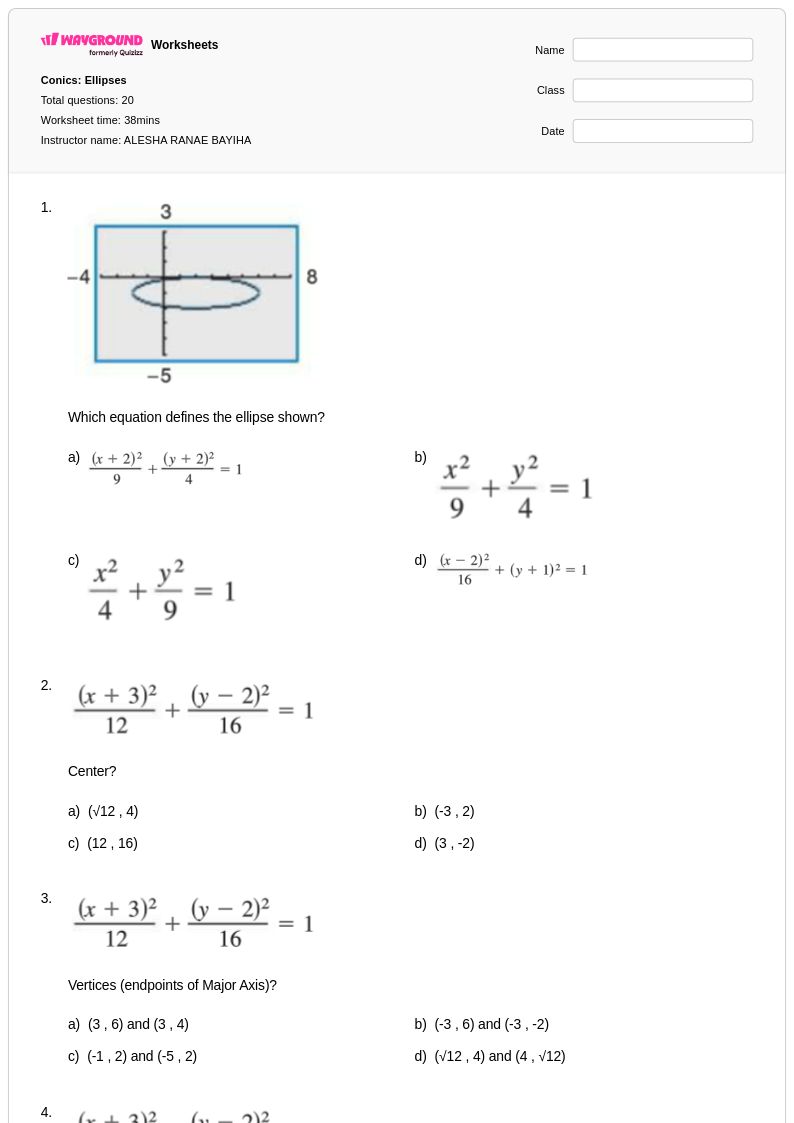
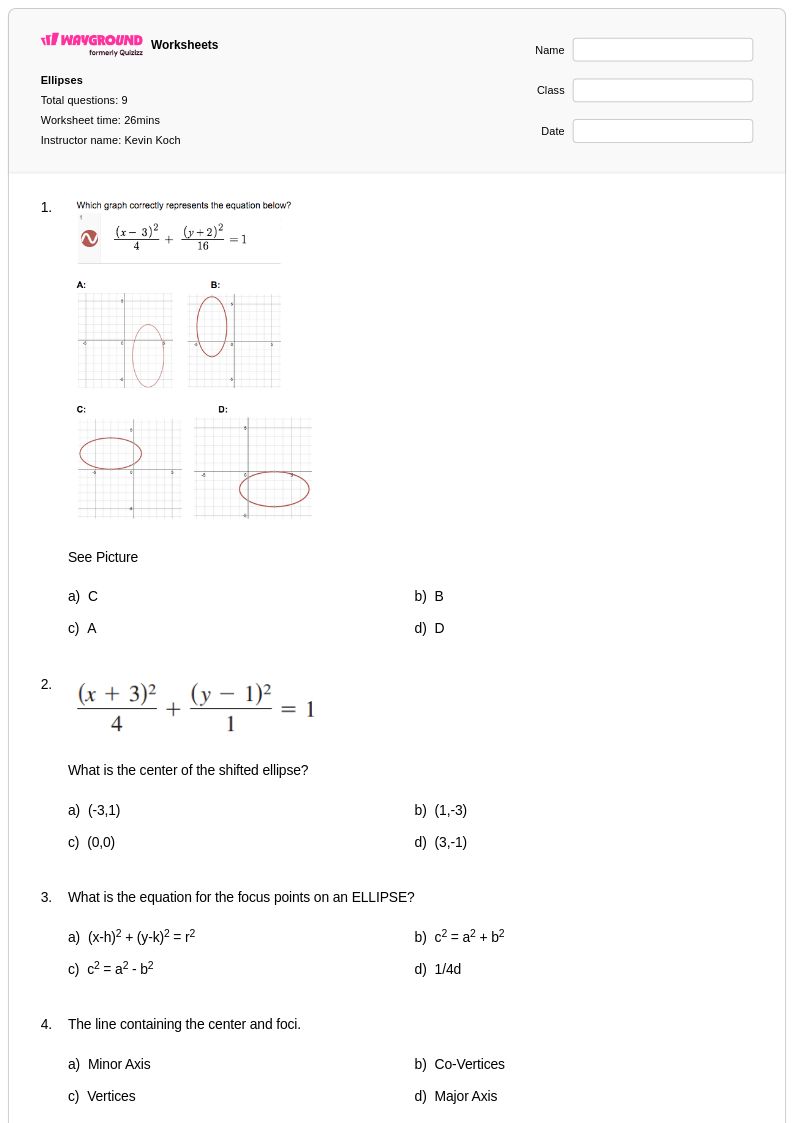
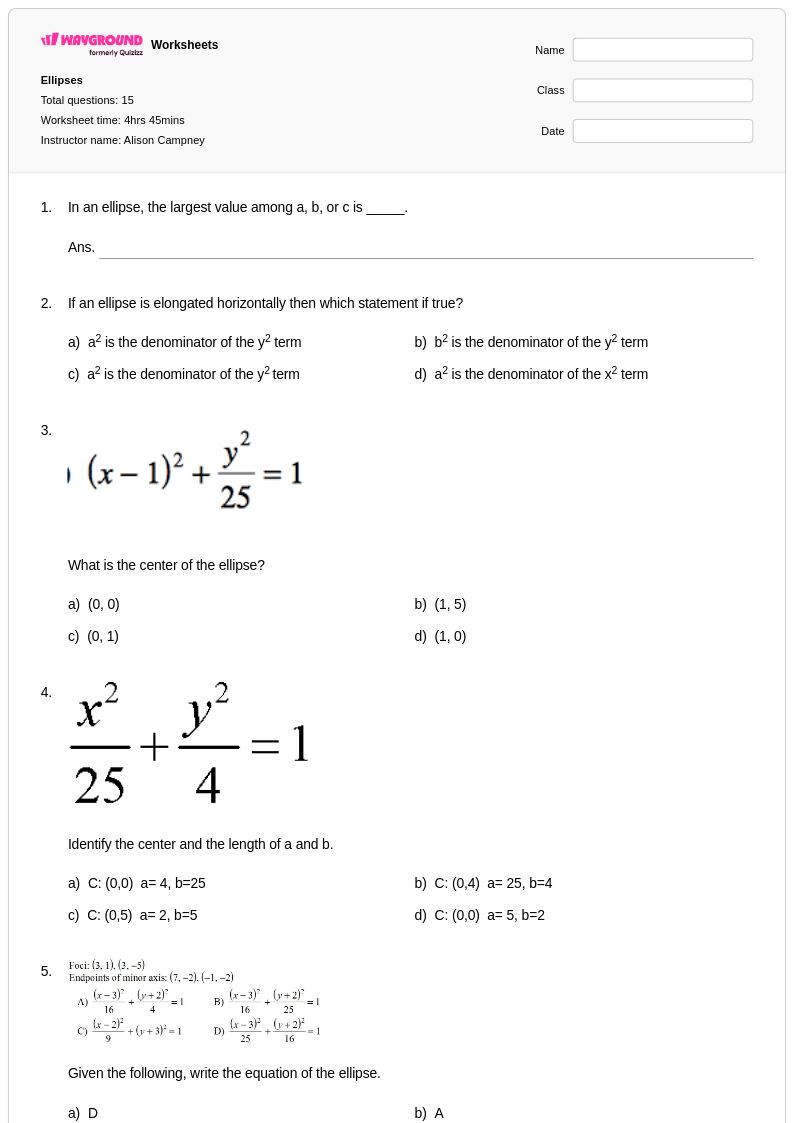
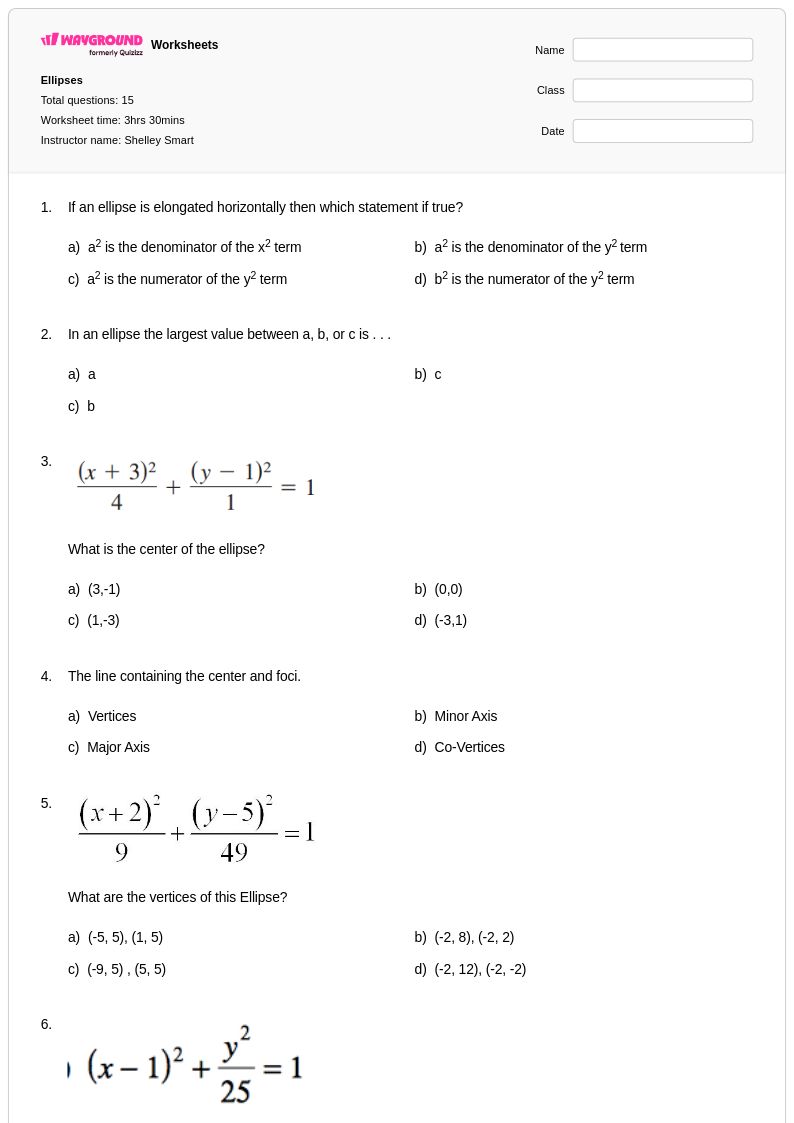
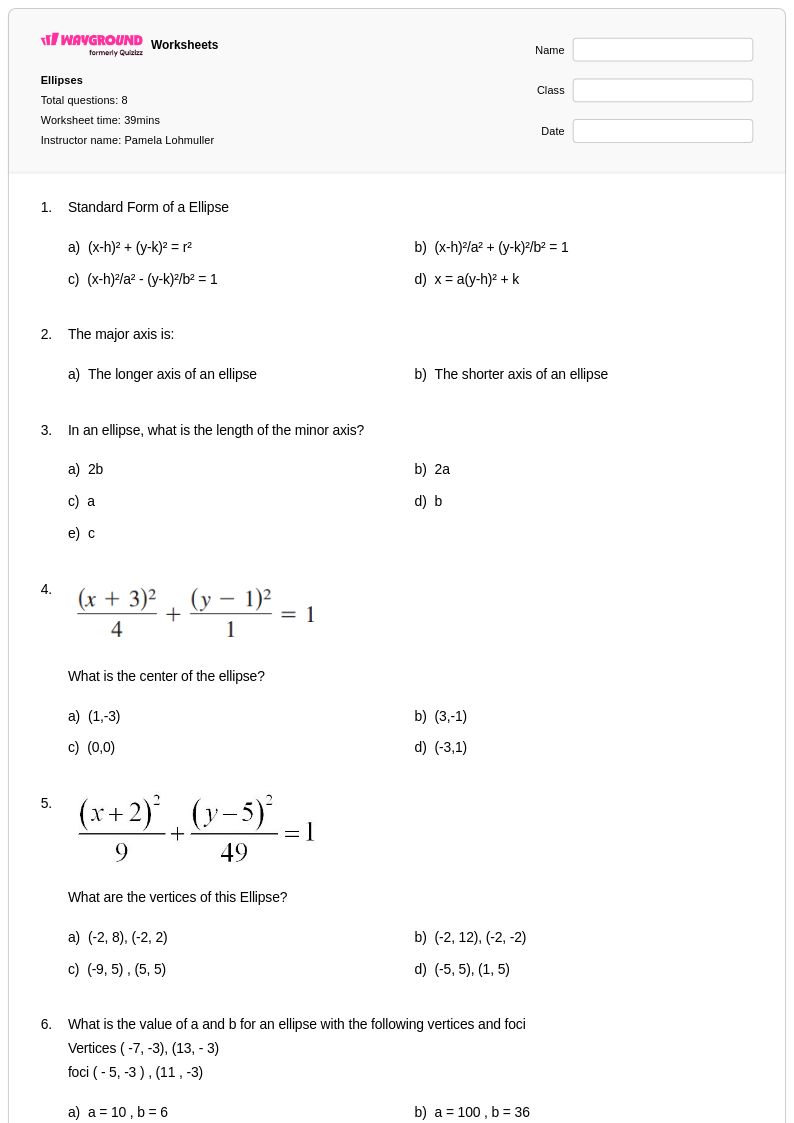
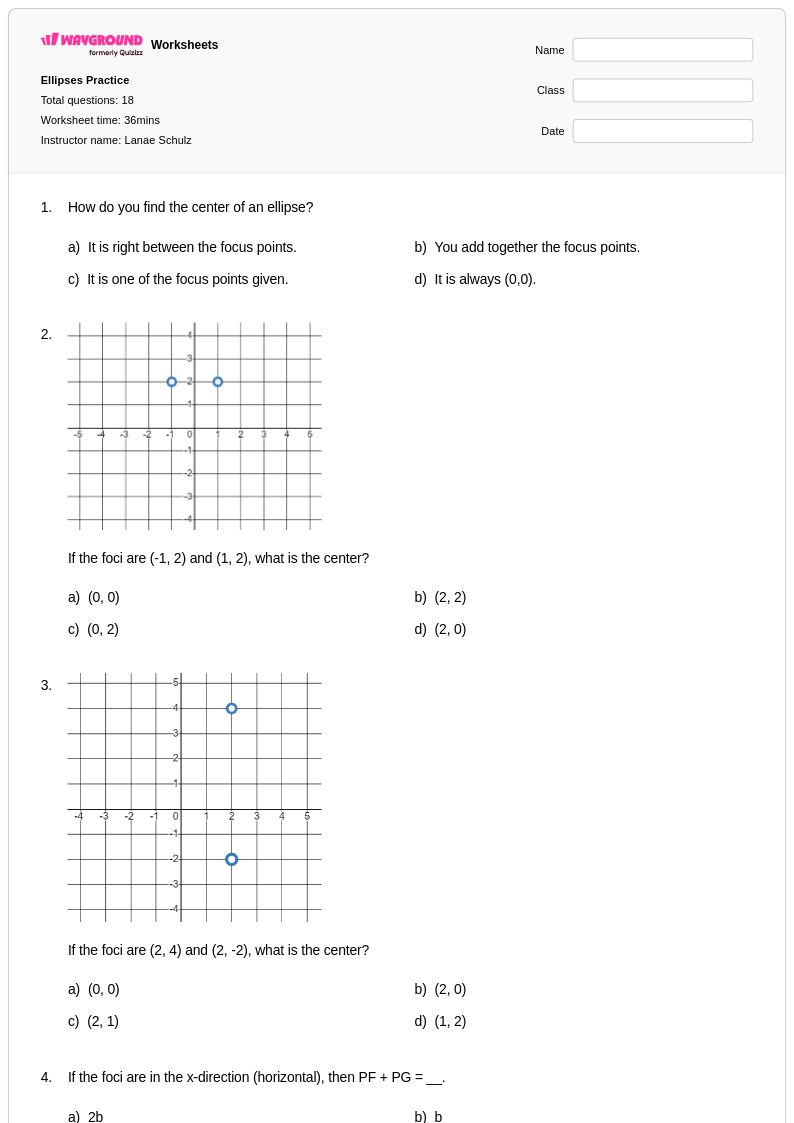
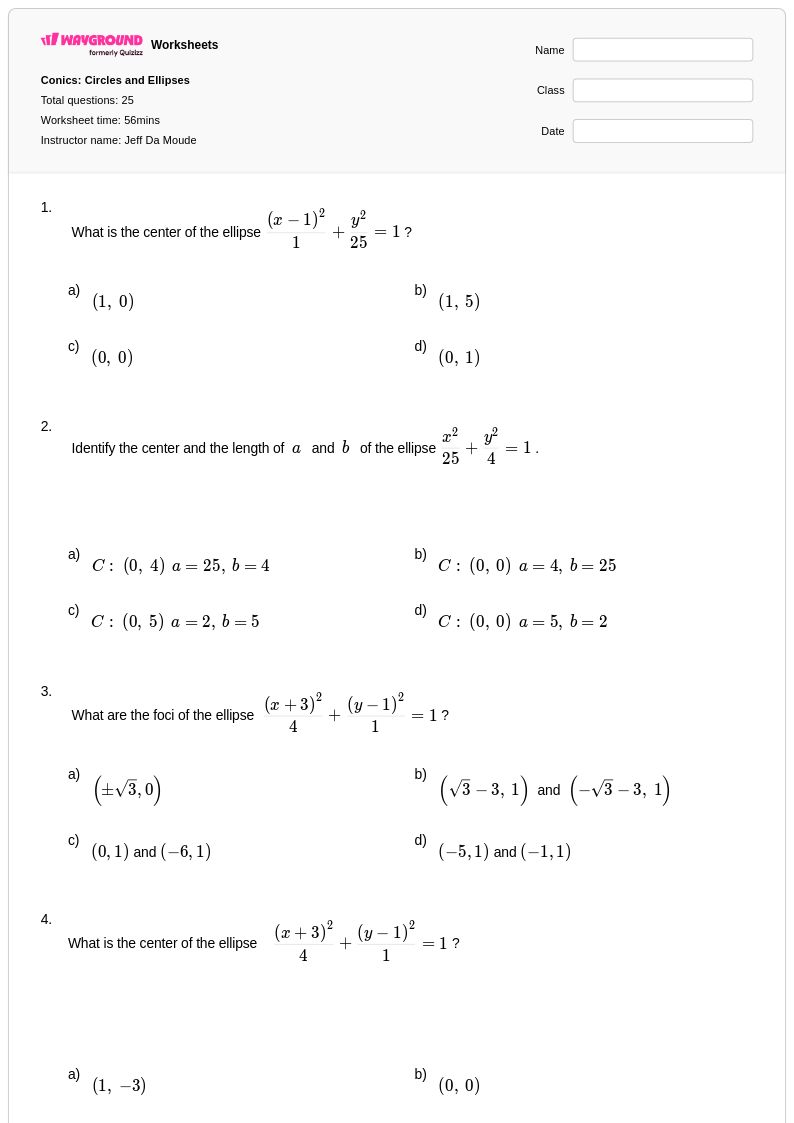
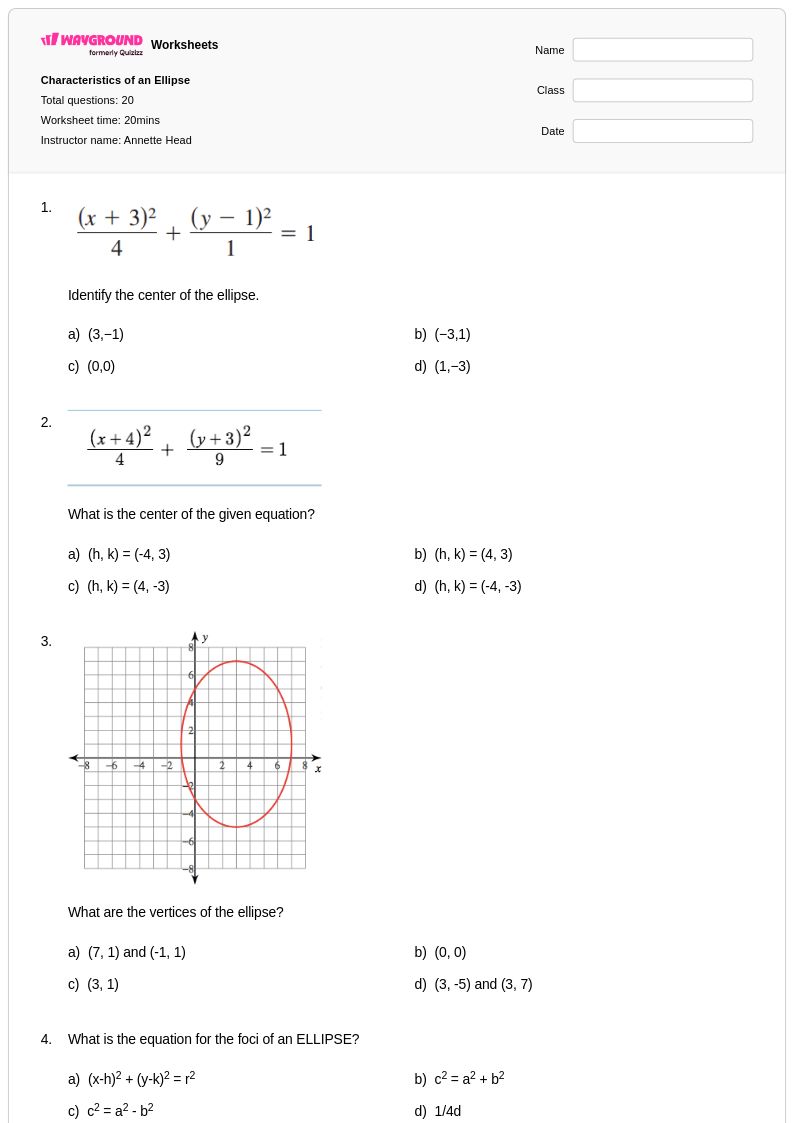
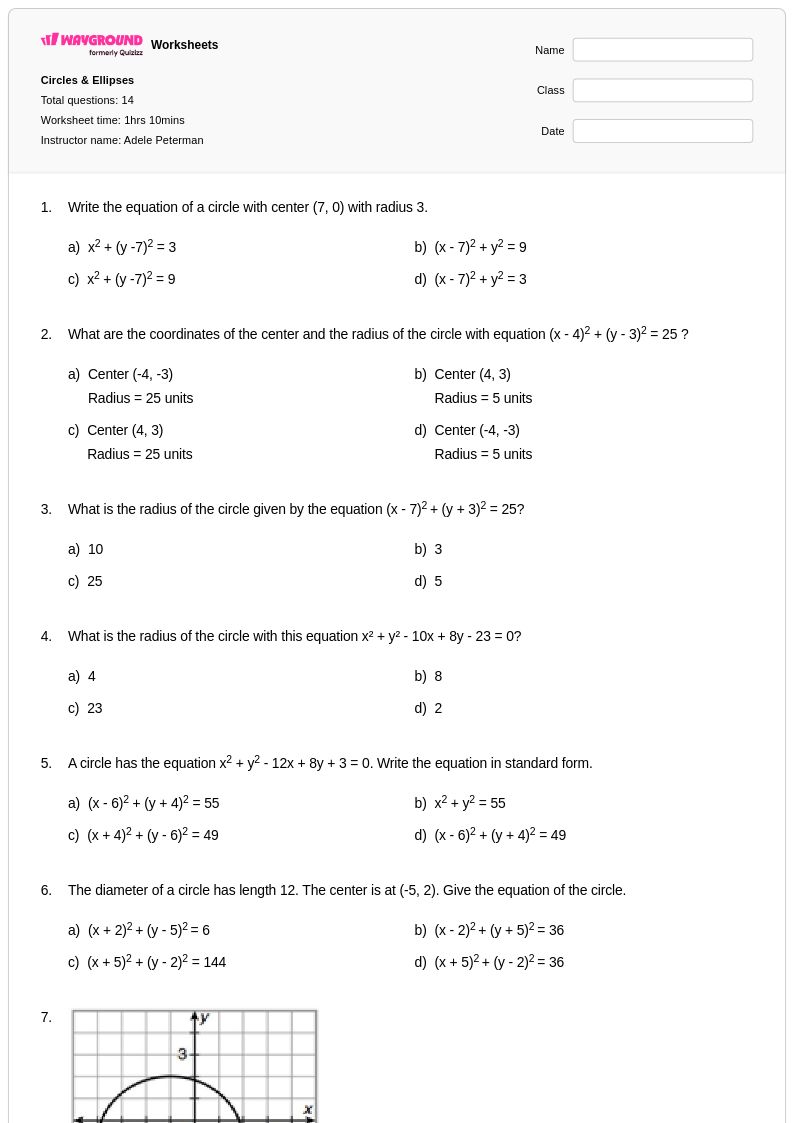
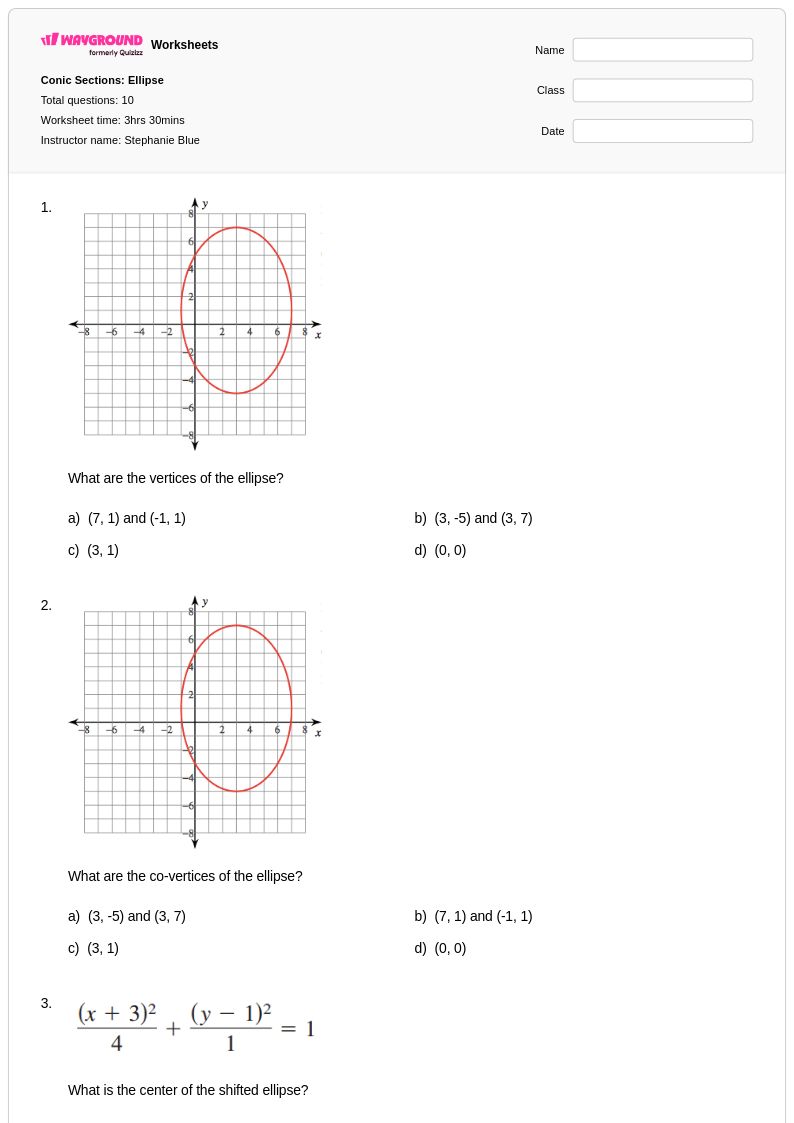
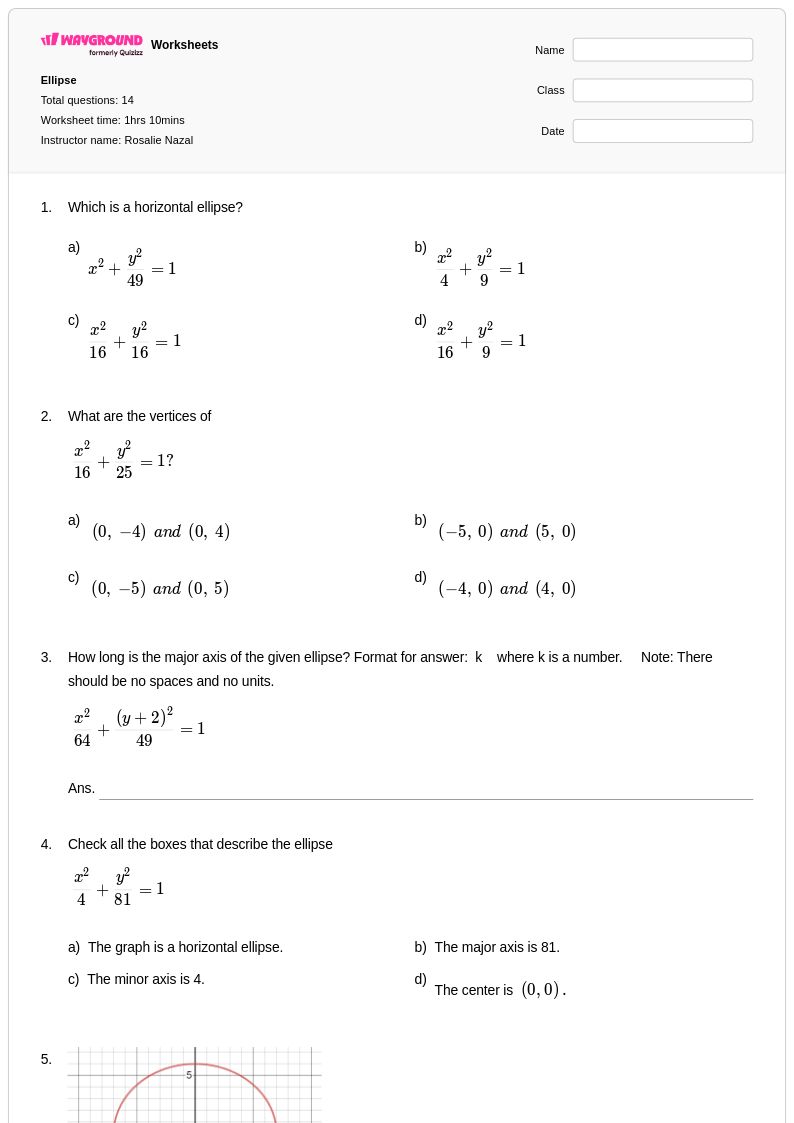
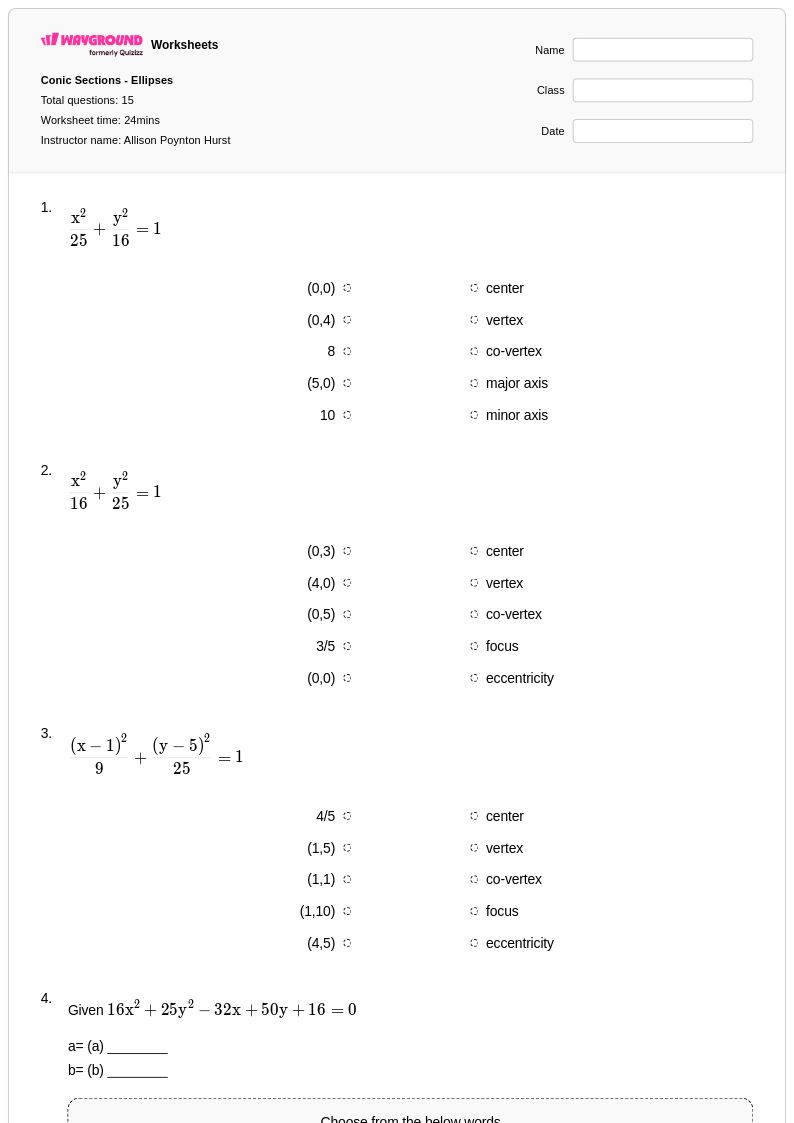
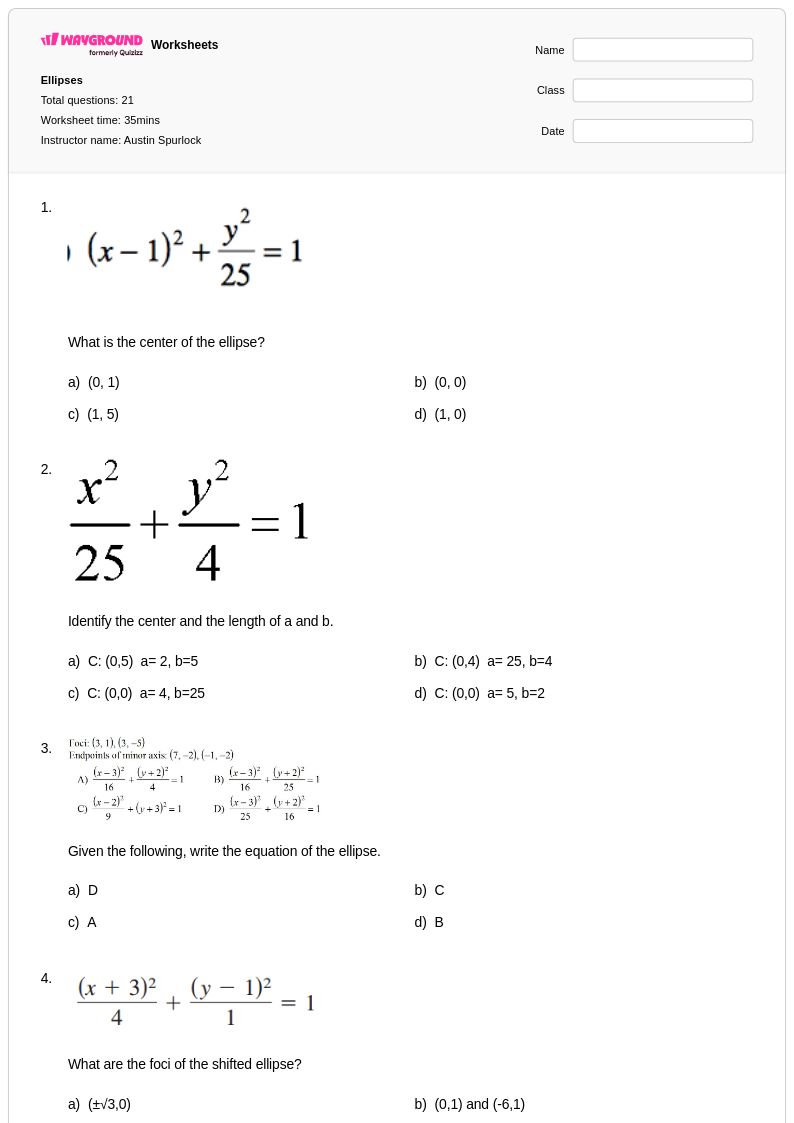
Class 11 ellipses worksheets available through Wayground (formerly Quizizz) provide comprehensive practice with the fundamental properties and applications of elliptical curves in coordinate geometry. These carefully designed resources strengthen students' understanding of ellipse equations in both standard and general forms, helping them master critical skills including identifying center coordinates, determining major and minor axis lengths, calculating eccentricity values, and graphing ellipses accurately on coordinate planes. The collection includes practice problems that guide students through finding foci locations, understanding the relationship between semi-major and semi-minor axes, and applying the distance formula to verify ellipse definitions. Each worksheet comes with detailed answer keys that support independent learning and self-assessment, while the free printable pdf format ensures accessibility for both classroom instruction and homework assignments.
Wayground (formerly Quizizz) empowers mathematics educators with millions of teacher-created ellipse resources that streamline lesson planning and enhance student learning outcomes. The platform's robust search and filtering capabilities allow teachers to quickly locate worksheets aligned with specific curriculum standards and learning objectives, while built-in differentiation tools enable customization for students at varying skill levels within Class 11 geometry courses. Teachers can access materials in both printable and digital formats, including professionally formatted pdf downloads that maintain consistent quality across different devices and printing systems. These versatile resources support targeted remediation for students struggling with conic sections, provide enrichment opportunities for advanced learners ready to explore ellipse applications in real-world contexts, and offer systematic skill practice that builds confidence in analytical geometry concepts essential for advanced mathematics courses.
FAQs
How do I teach ellipses to students who are new to conic sections?
Start by connecting ellipses to students' prior knowledge of circles, emphasizing that an ellipse is essentially a stretched circle defined by two focal points rather than one center point. Introduce the standard form equation and have students identify the center, vertices, and foci before moving to graphing. Building from concrete visual examples to algebraic representation helps students internalize the relationship between the equation's components and the ellipse's geometric properties.
What are the most common mistakes students make when working with ellipses?
The most frequent error is confusing the major and minor axes — students often misidentify which denominator corresponds to which axis, especially when the larger denominator appears under the y-term rather than the x-term. A second common mistake is calculating the foci incorrectly by adding a² and b² instead of finding their difference using c² = a² - b². Requiring students to label all key parts before writing or graphing any equation helps catch these errors early.
What exercises help students practice writing ellipse equations in standard form?
Effective practice includes converting equations from general form to standard form by completing the square, and working backward from given vertices and foci to construct the equation. Graphing exercises that require students to first extract center, a, b, and c values from the equation before plotting reinforce the connection between algebraic and geometric representations. Progressively challenging problems that shift from horizontal to vertical orientations help students avoid over-relying on a single equation template.
How can I help students understand the relationship between the foci and the shape of an ellipse?
A hands-on approach using string, two thumbtacks, and a pencil physically demonstrates the defining property that the sum of distances from any point on the ellipse to both foci is constant. Once students experience this geometrically, the algebraic relationship c² = a² - b² becomes much more intuitive. Comparing ellipses with different eccentricities side by side helps students see how moving the foci closer together or farther apart changes the ellipse's shape from nearly circular to highly elongated.
How do I use Wayground's ellipses worksheets in my classroom?
Wayground's ellipses worksheets are available as printable PDFs for traditional classroom use and in digital formats for technology-integrated environments, making them flexible for homework, in-class practice, or hybrid instruction. Each worksheet includes a complete answer key, supporting independent student work and efficient teacher grading. Teachers can also host worksheets as a quiz directly on Wayground, enabling real-time progress monitoring and immediate feedback for students.
How do ellipses appear in real-world applications I can use to motivate student learning?
Ellipses appear in planetary orbits, where the Sun sits at one focus of each planet's elliptical path, making them directly relevant to physics and astronomy curricula. Architectural applications include whispering galleries, where elliptical ceilings cause sound from one focus to be clearly heard at the other. Referencing these contexts before introducing the formal mathematics gives students a concrete reason to care about foci, axes, and eccentricity.
How can I differentiate ellipses instruction for students at different skill levels?
For students who are struggling, reduce complexity by starting with ellipses centered at the origin before introducing translations, and focus on identifying parts from a graph before requiring equation work. Advanced students can explore eccentricity calculations, parametric forms, or real-world applications in orbital mechanics and engineering. On Wayground, teachers can apply individual accommodations such as reduced answer choices or extended time to specific students, allowing the same worksheet to serve multiple skill levels simultaneously without singling anyone out.