
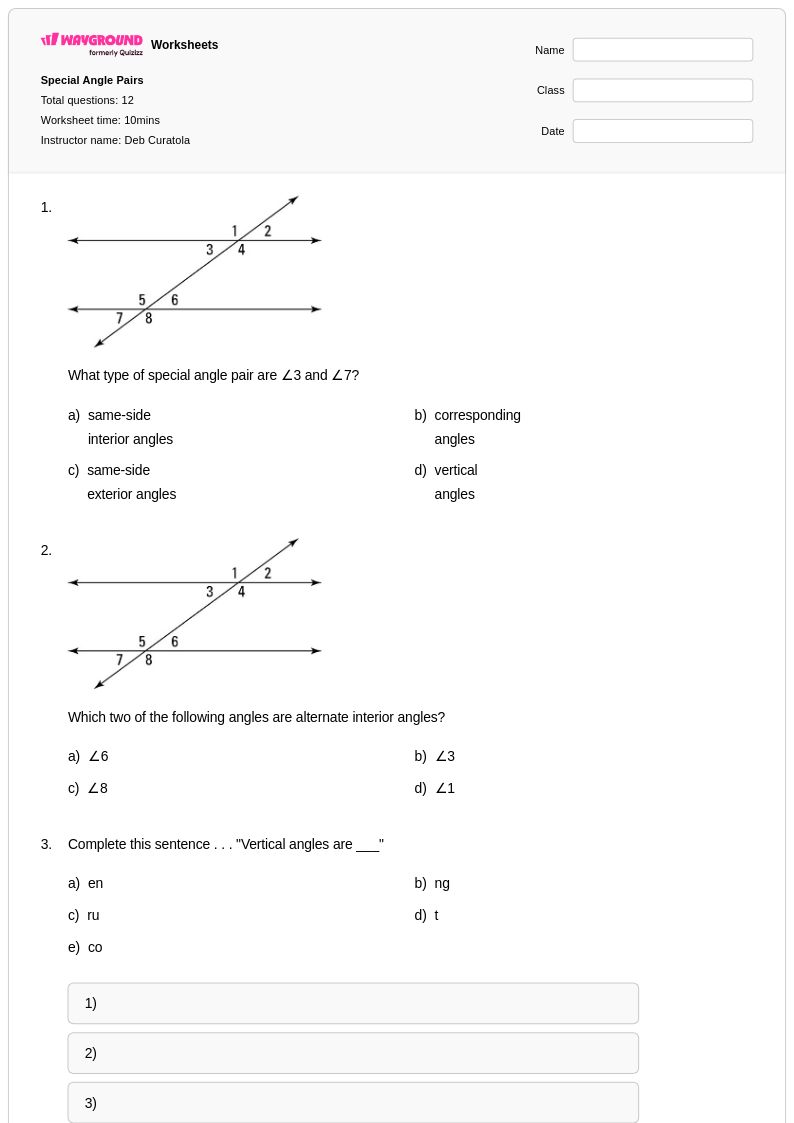
12 Q
9th - 12th
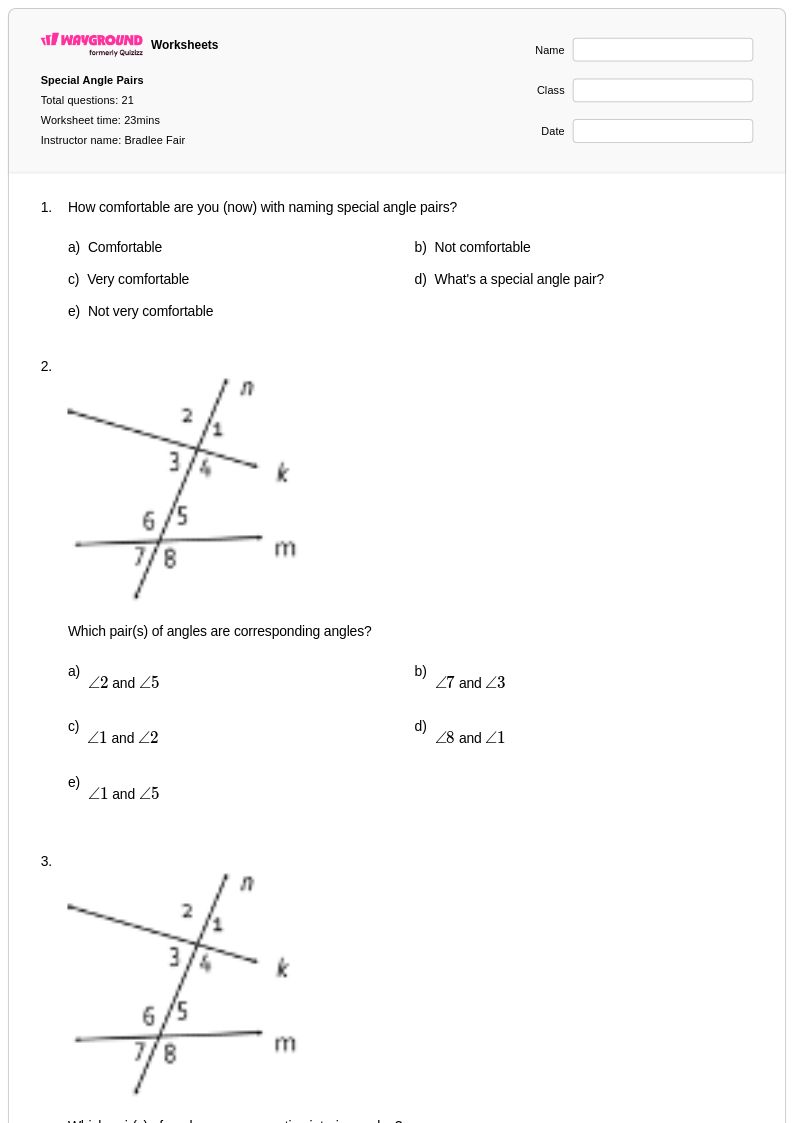
21 Q
9th - 12th
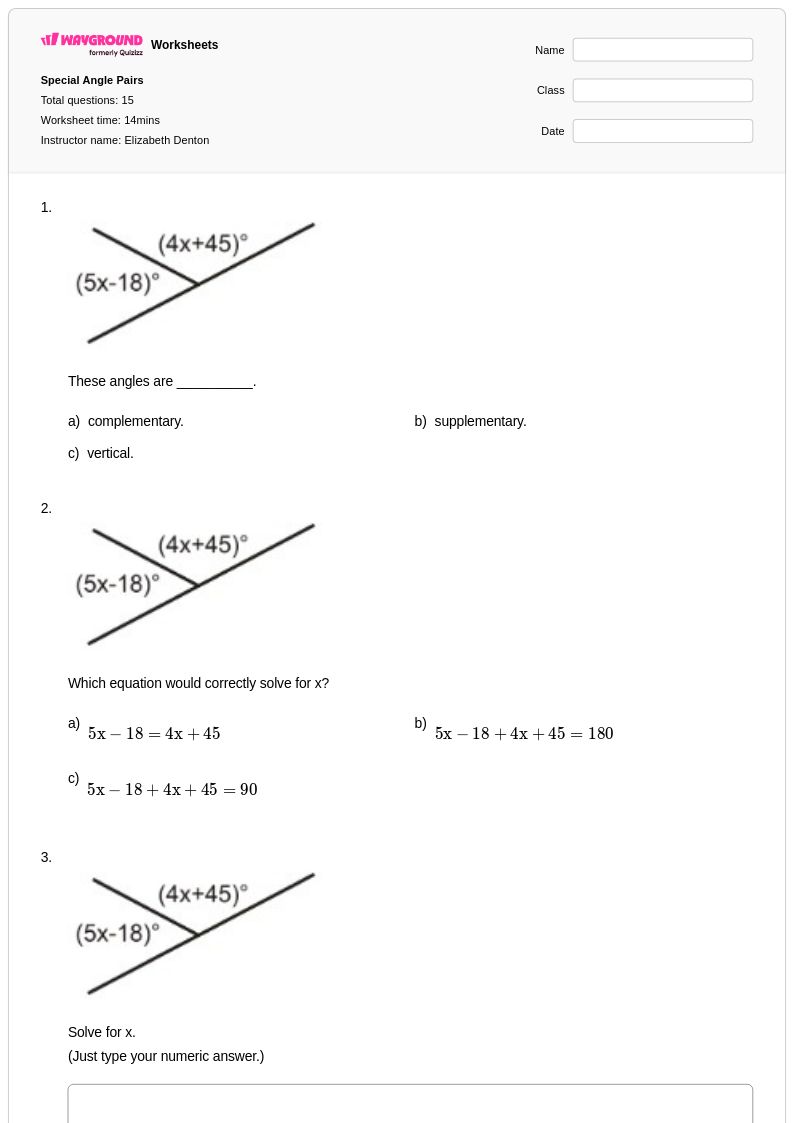
15 Q
9th - 12th
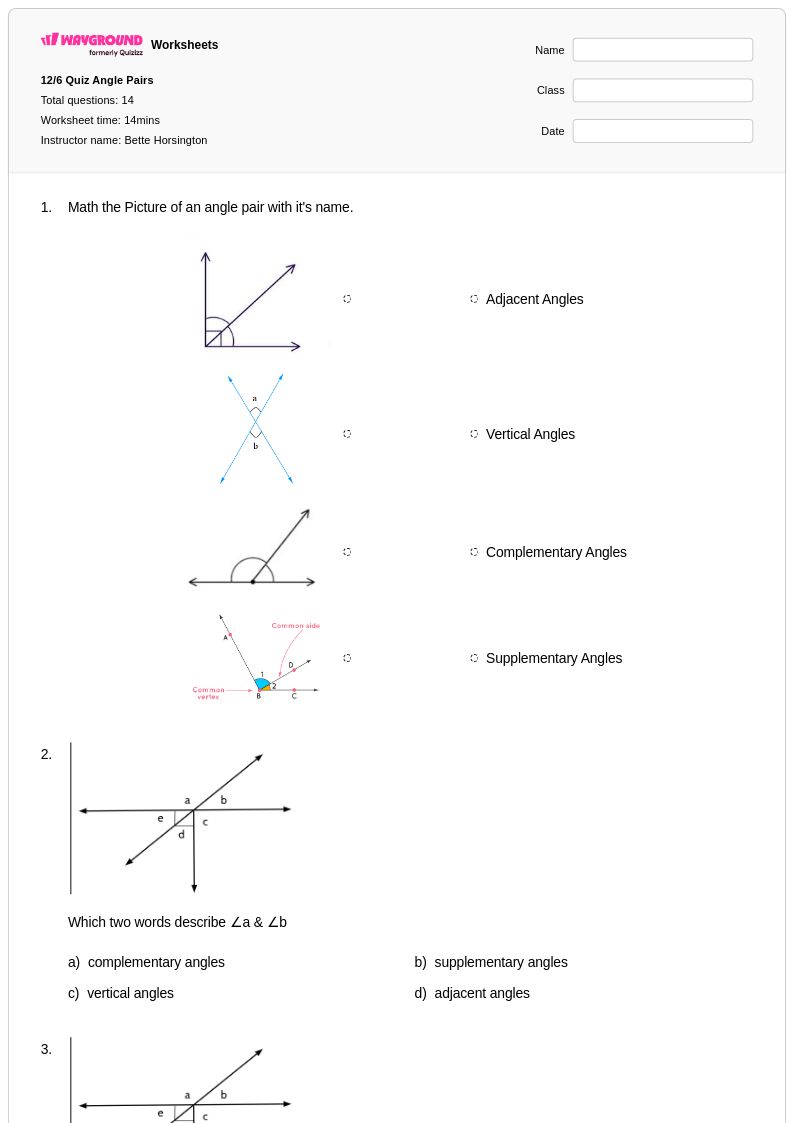
14 Q
8th - Uni
20 Q
9th - 12th
15 Q
9th - Uni
12 Q
9th - Uni
13 Q
9th - 12th
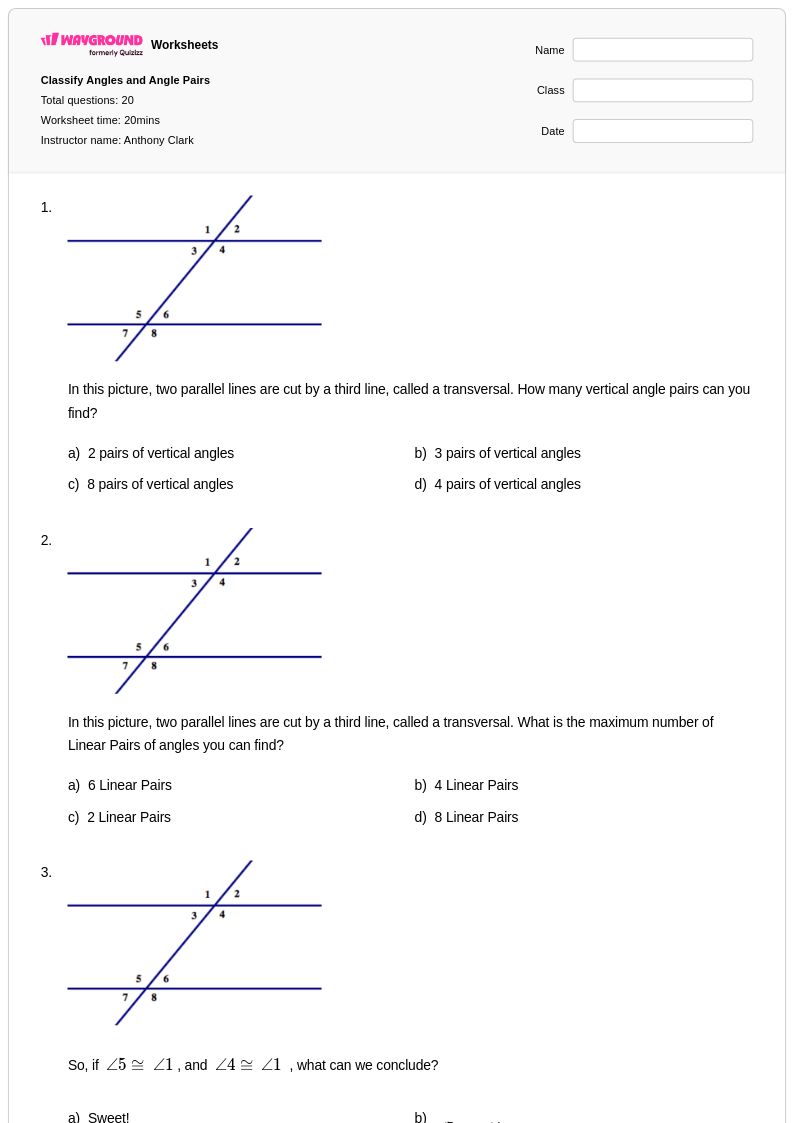
20 Q
9th - Uni
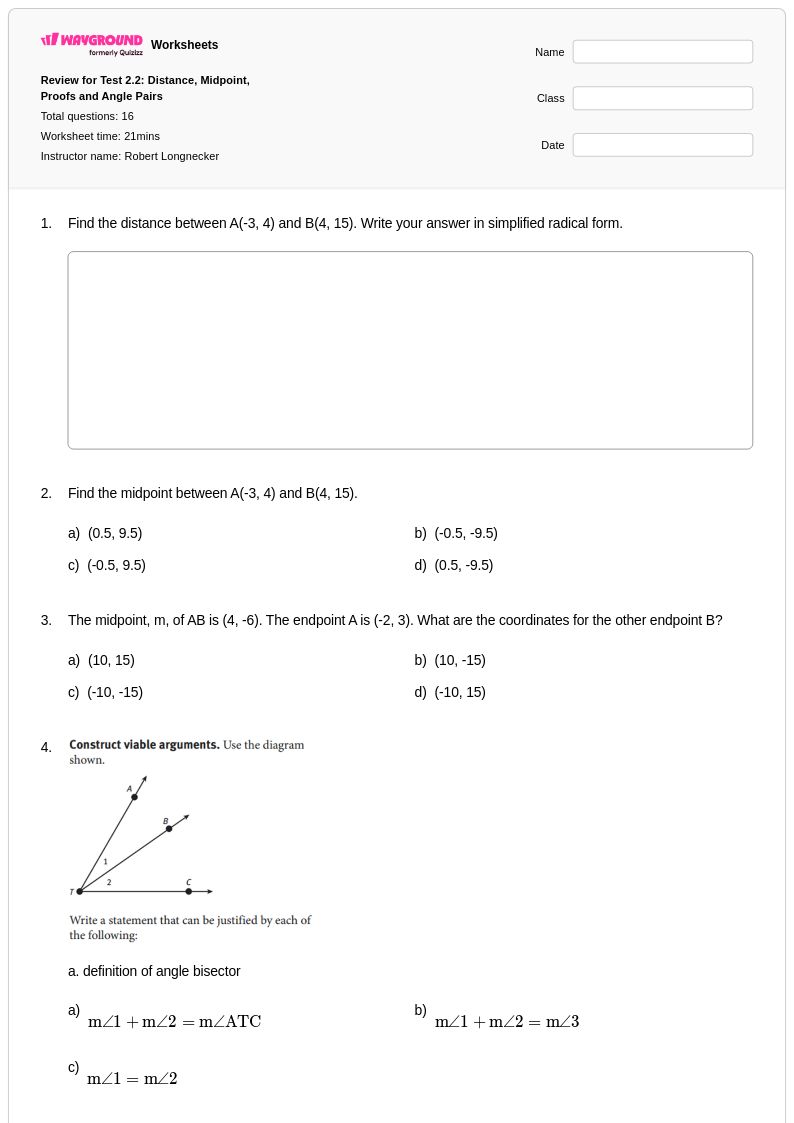
16 Q
9th - 12th
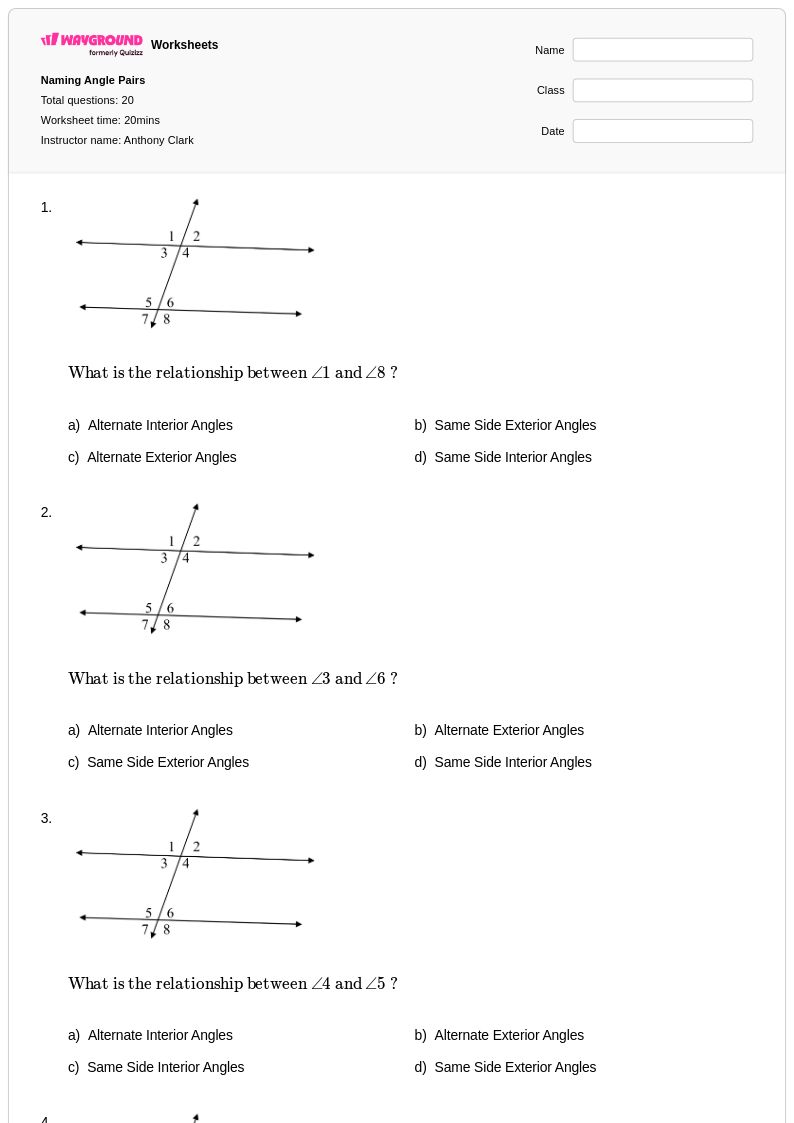
20 Q
9th - Uni
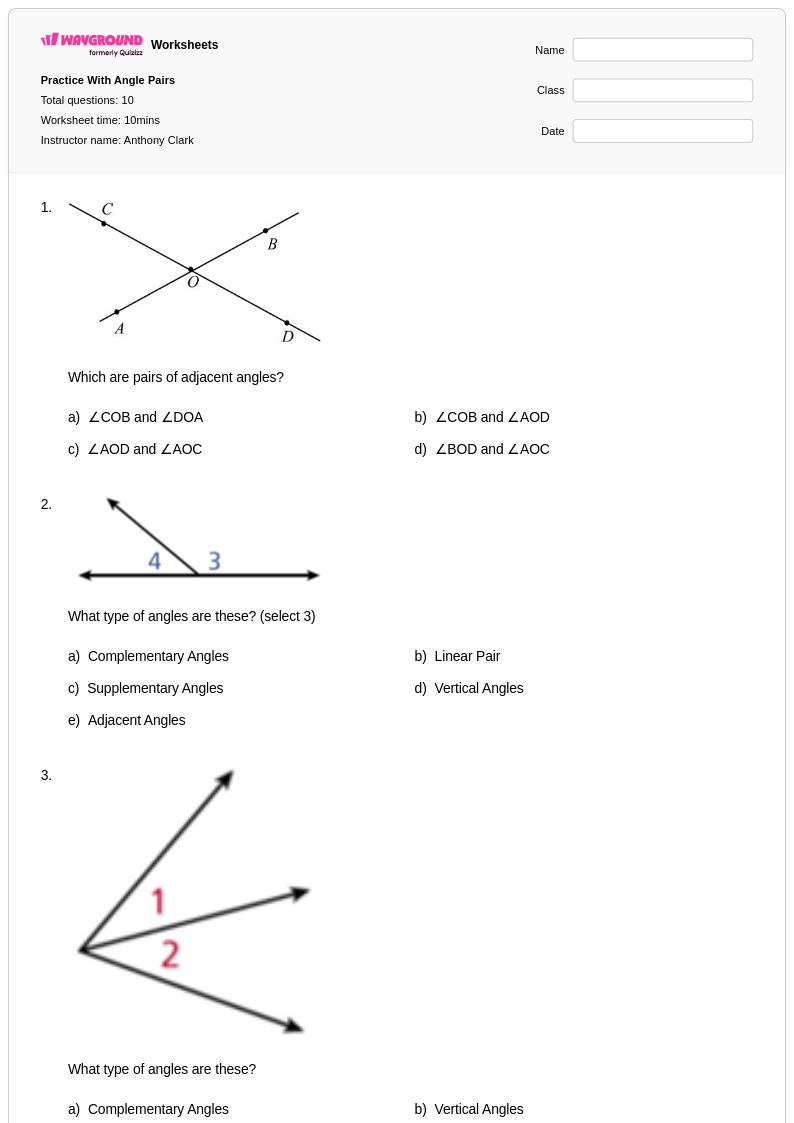
10 Q
9th - Uni
20 Q
9th - Uni
20 Q
9th - Uni
20 Q
9th - Uni
20 Q
9th - Uni
14 Q
9th - 12th
26 Q
9th - Uni
19 Q
8th - 11th
20 Q
9th - Uni
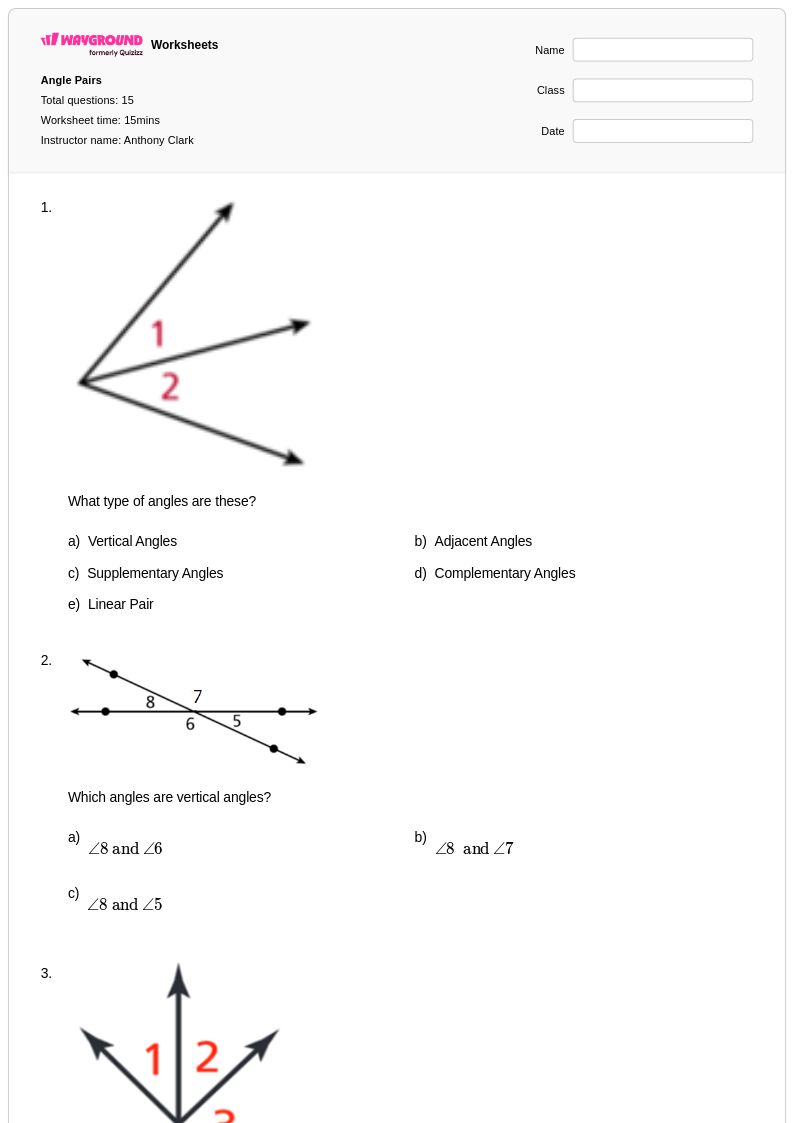
15 Q
9th - Uni
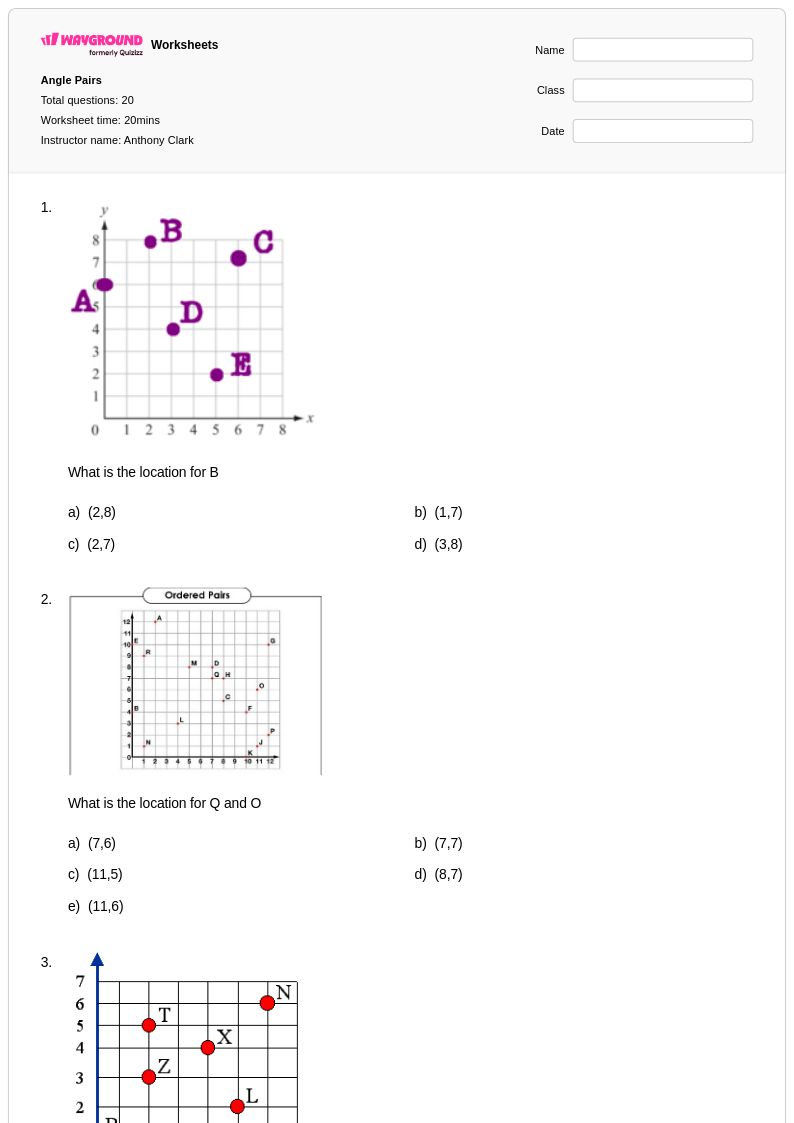
20 Q
7th - Uni
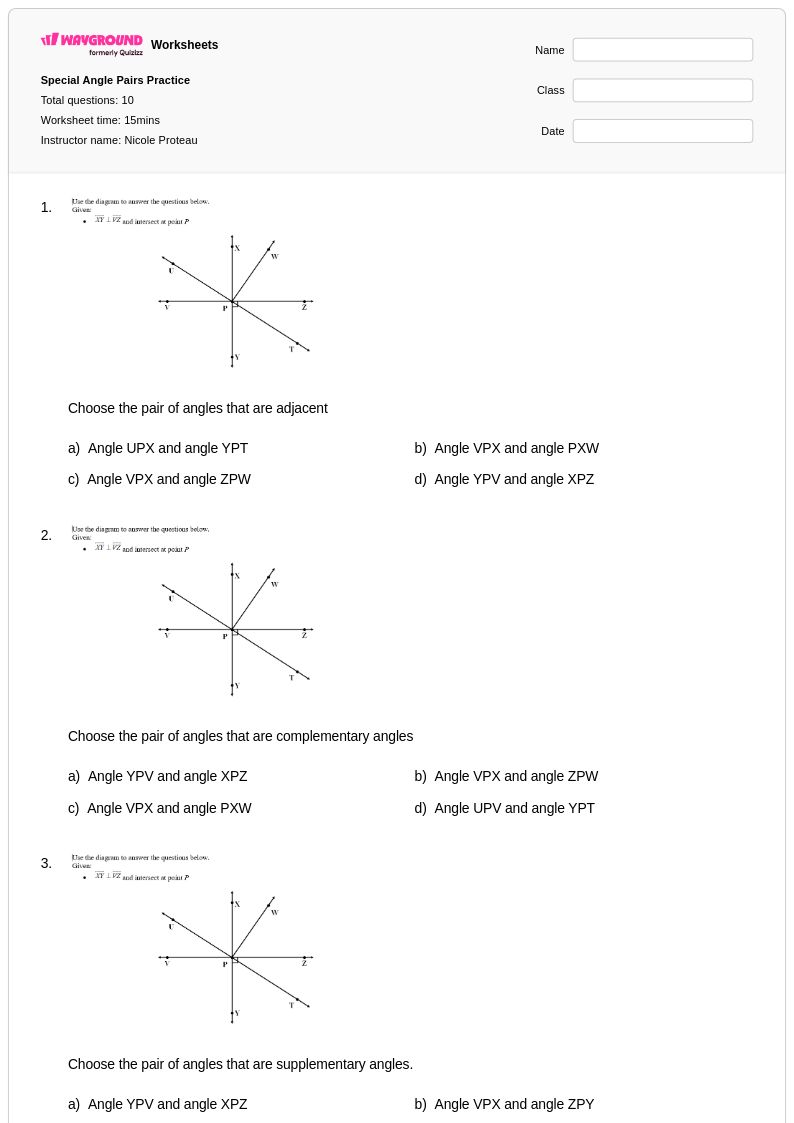
10 Q
8th - 11th
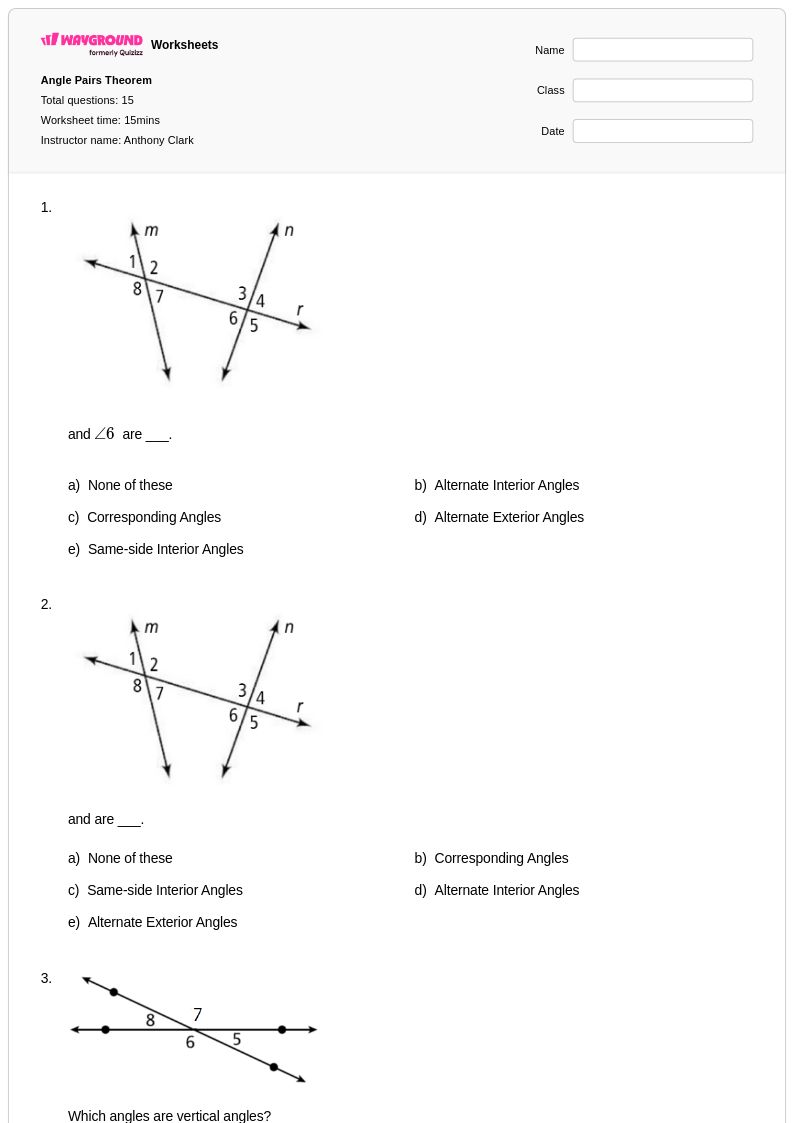
15 Q
10th - Uni
Explore Other Subject Worksheets for class 11
Explore printable Angle Pairs worksheets for Class 11
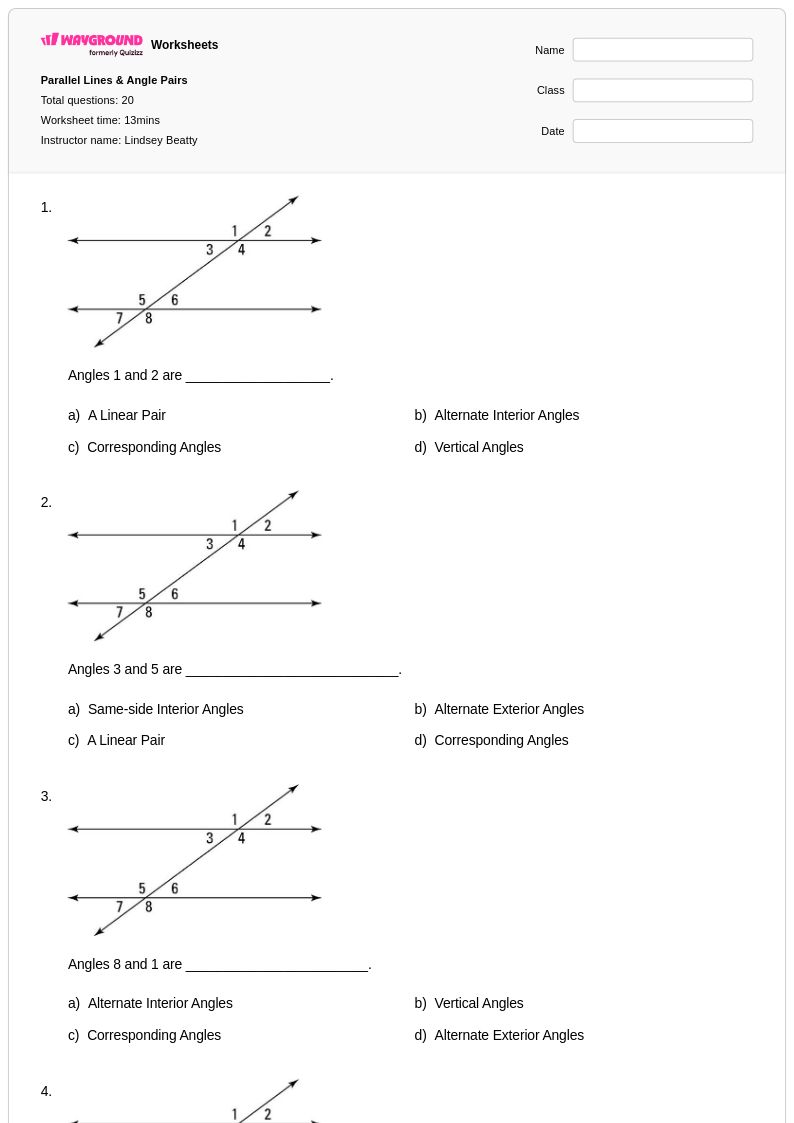
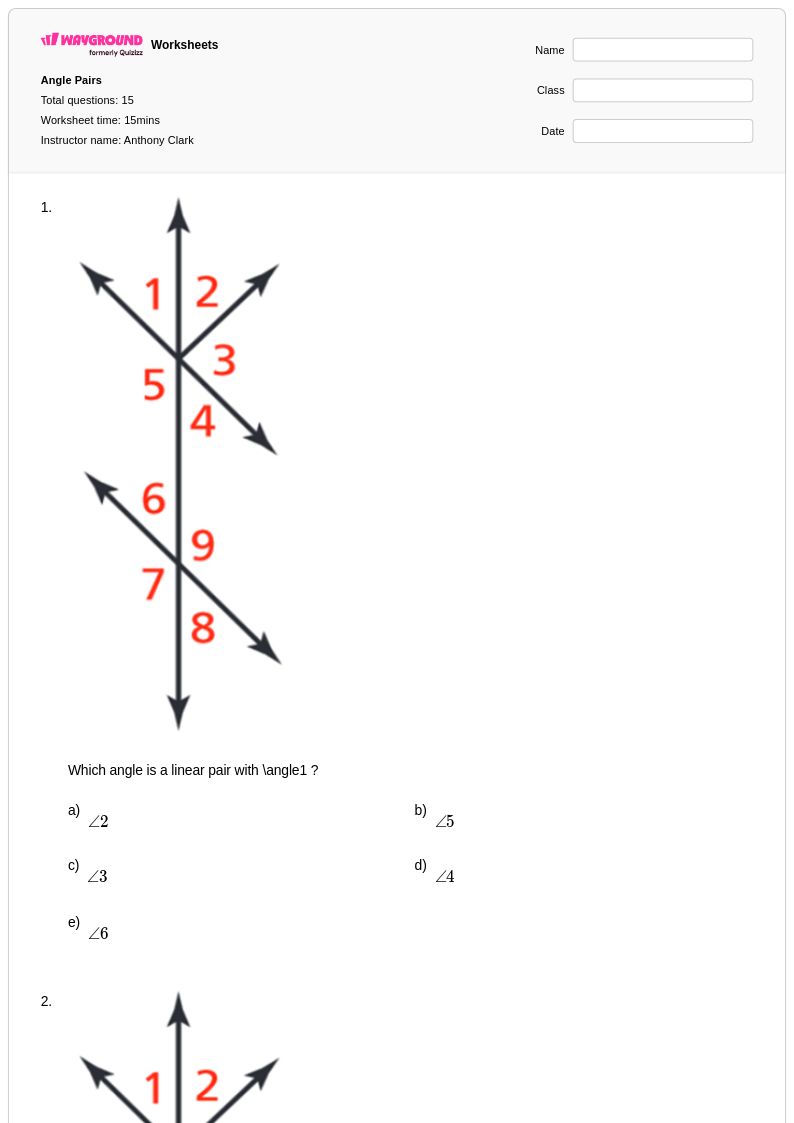
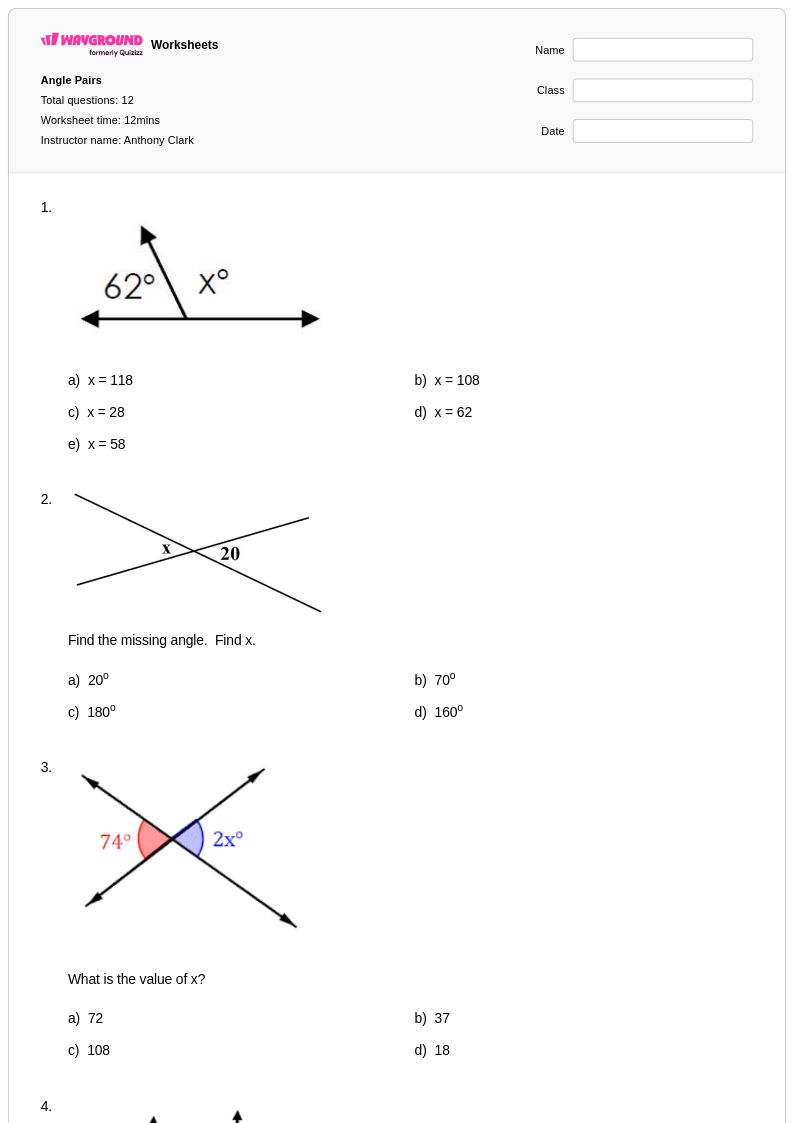
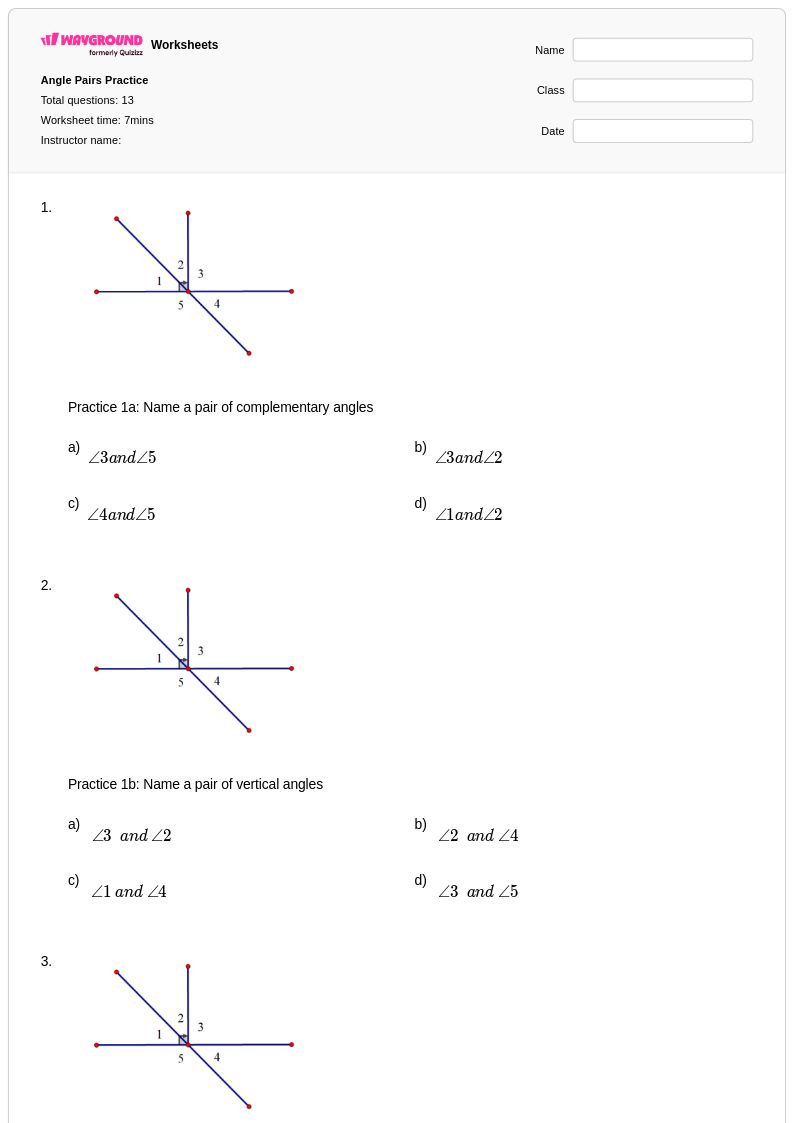
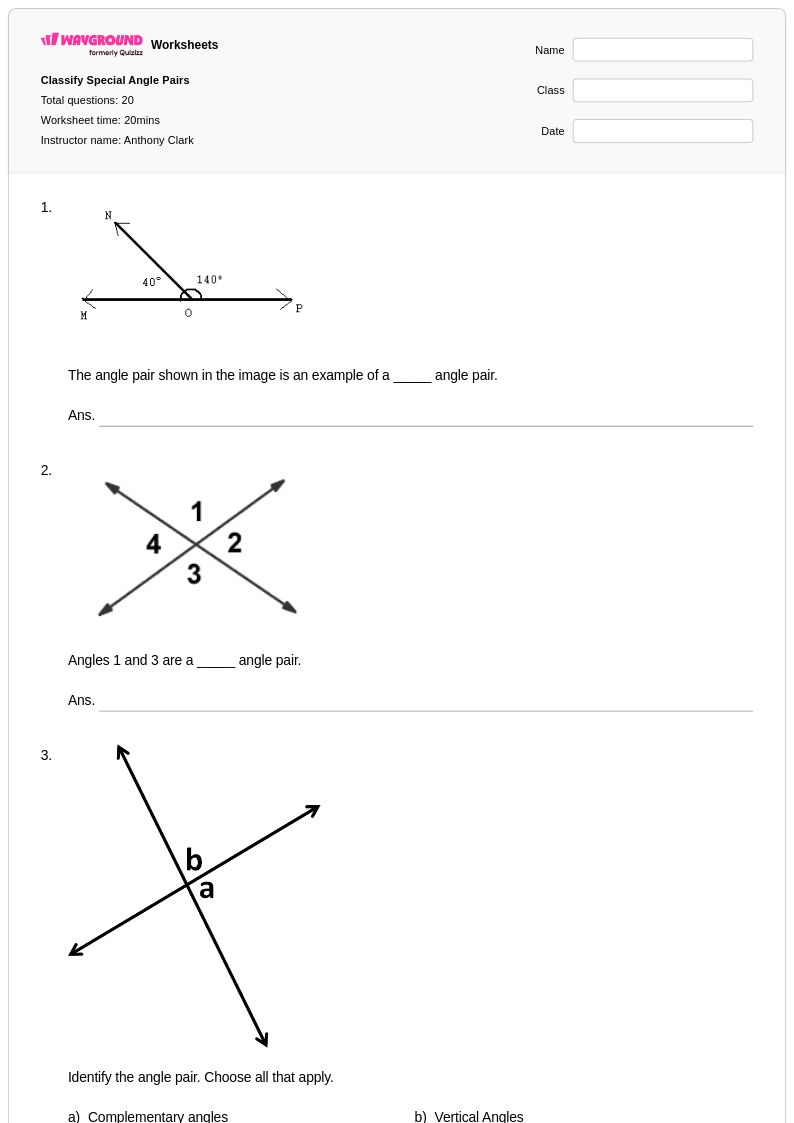
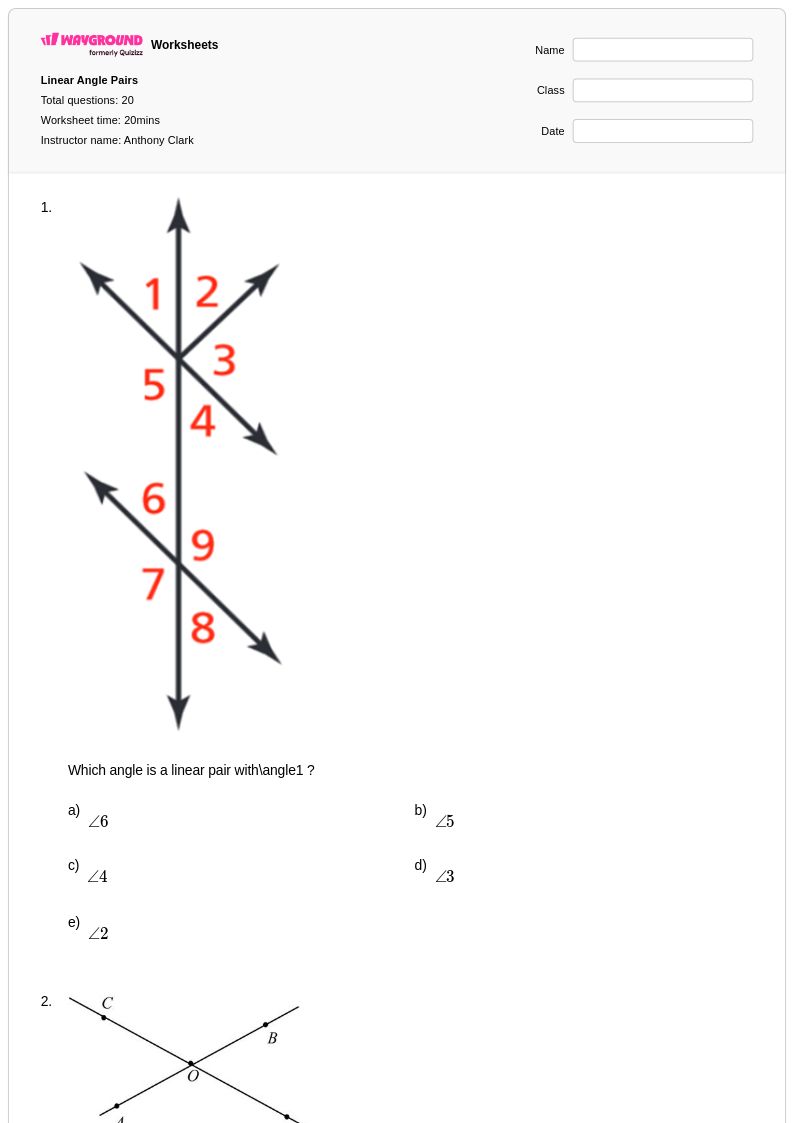
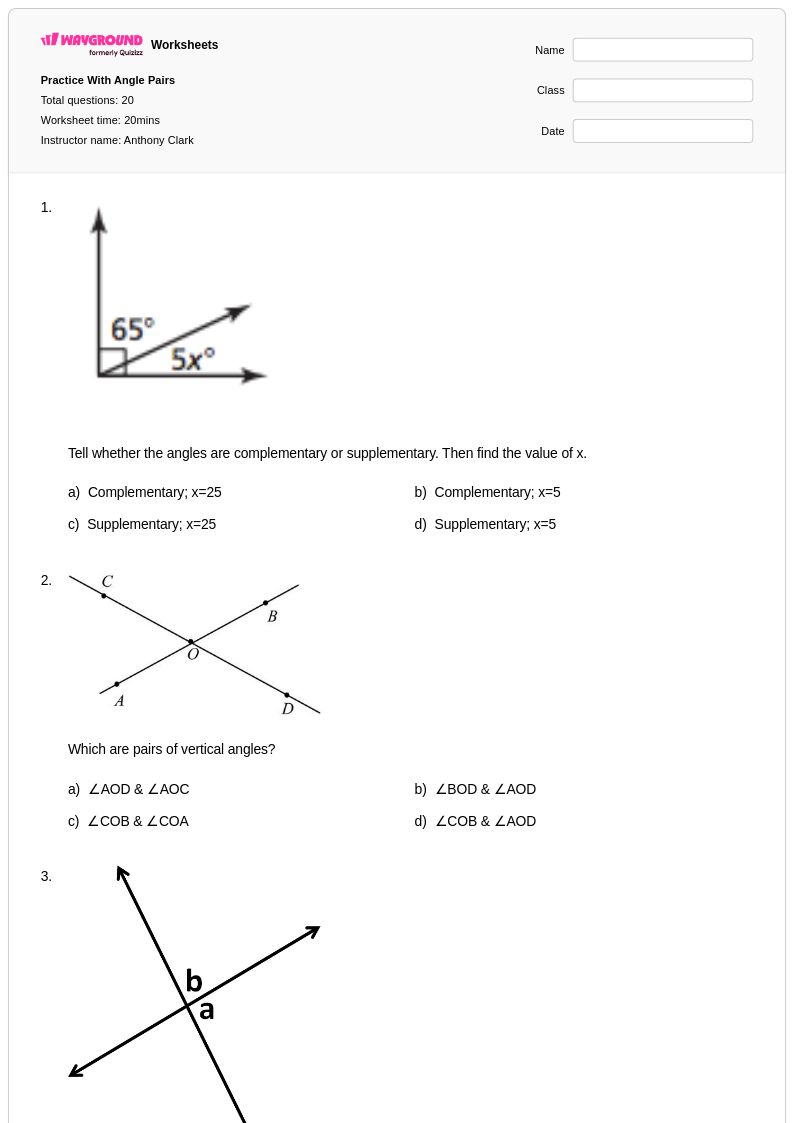
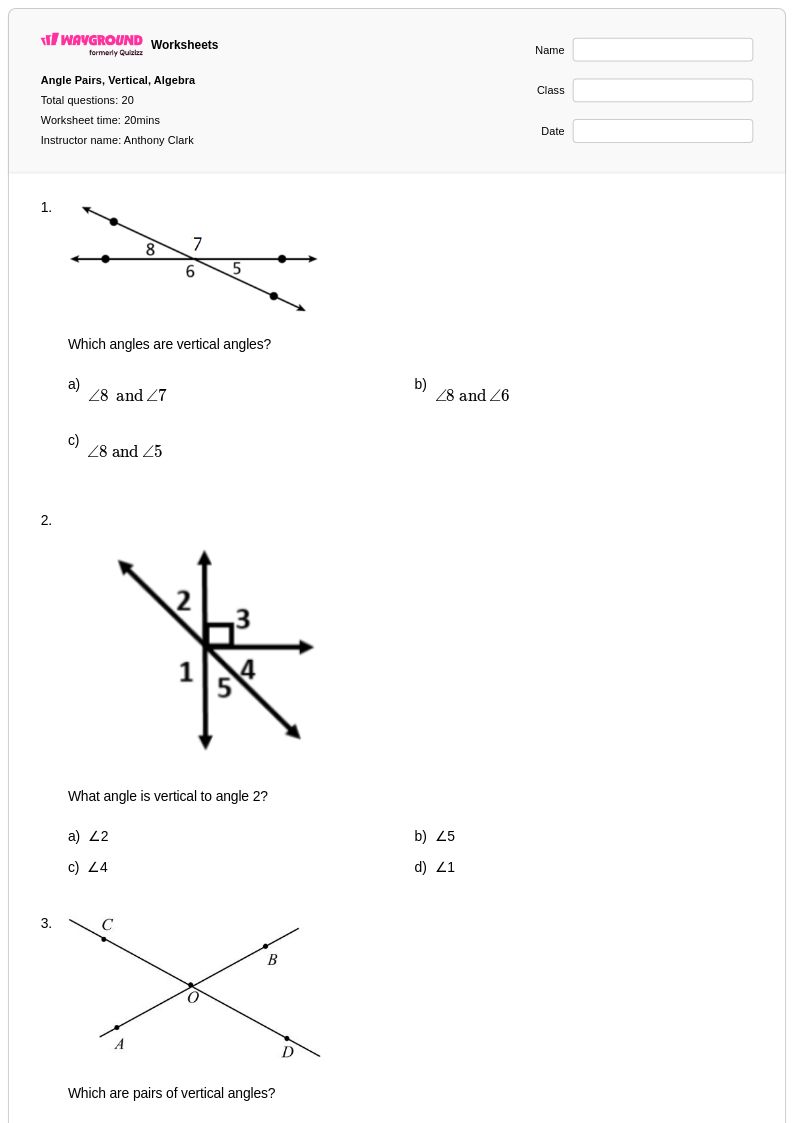
Angle pairs form a fundamental cornerstone of Class 11 geometry, requiring students to master the relationships between complementary, supplementary, vertical, and adjacent angles. Wayground's comprehensive collection of angle pairs worksheets provides structured practice problems that guide students through identifying, calculating, and applying these essential geometric relationships. These carefully crafted printables strengthen critical thinking skills while building fluency with angle measurements, linear pair relationships, and the properties that govern intersecting lines. Each worksheet includes a detailed answer key to support independent learning and self-assessment, with free pdf downloads making these valuable practice resources easily accessible for both classroom instruction and homework assignments.
Wayground's extensive library draws from millions of teacher-created resources, offering educators powerful search and filtering capabilities to locate angle pairs worksheets that align with specific curriculum standards and learning objectives. The platform's differentiation tools enable teachers to customize content difficulty levels, ensuring appropriate challenge for students at varying skill levels while supporting both remediation for struggling learners and enrichment opportunities for advanced students. Available in both printable pdf format and interactive digital versions, these angle pairs worksheets integrate seamlessly into lesson planning workflows, providing flexibility for immediate classroom use, independent practice sessions, or targeted skill development. The robust filtering system allows educators to quickly identify resources that match their specific teaching needs, streamlining the process of creating comprehensive geometry instruction that builds lasting conceptual understanding.
FAQs
How should I teach angle pairs to Grade 11 students?
What exercises help Grade 11 students practice angle pairs?
What mistakes do students commonly make with angle pairs?
How can I use an angle pairs worksheet in class or for homework?
How do angle pairs fit into the Common Core geometry progression?
How can I differentiate angle-pair practice for a mixed-ability class?
What grade do students learn angle pairs?