
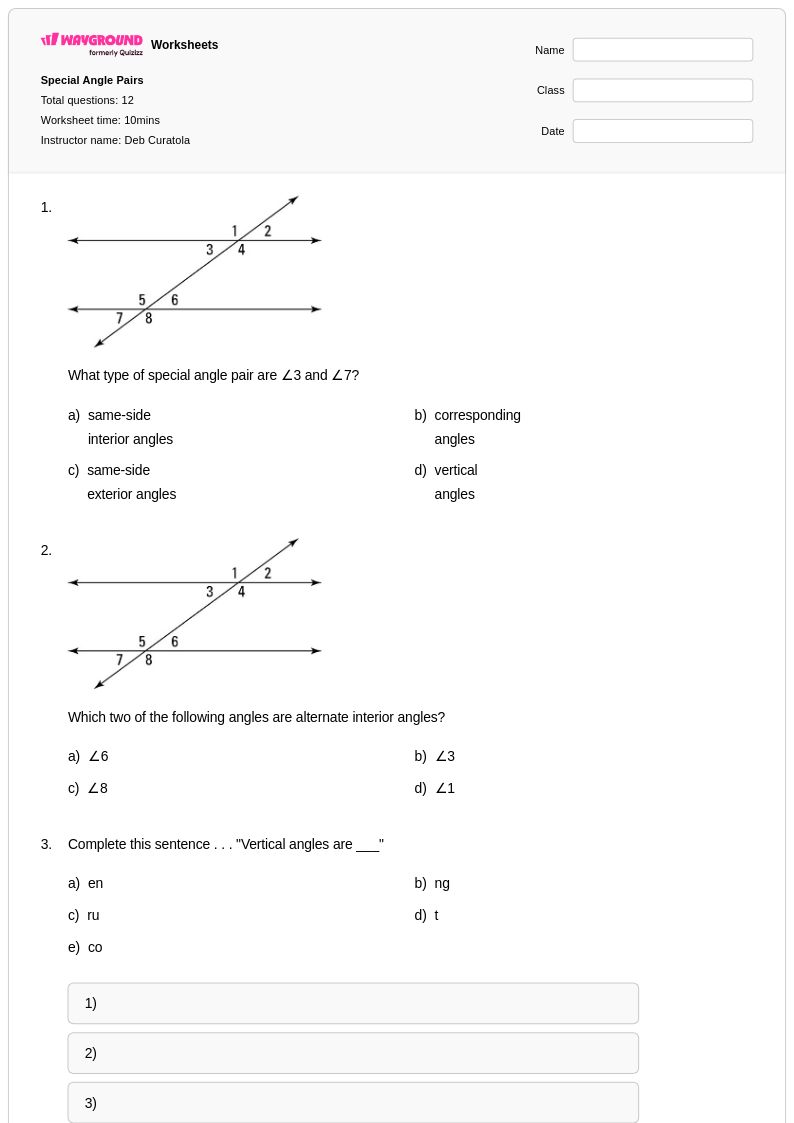
12 Q
9th - 12th
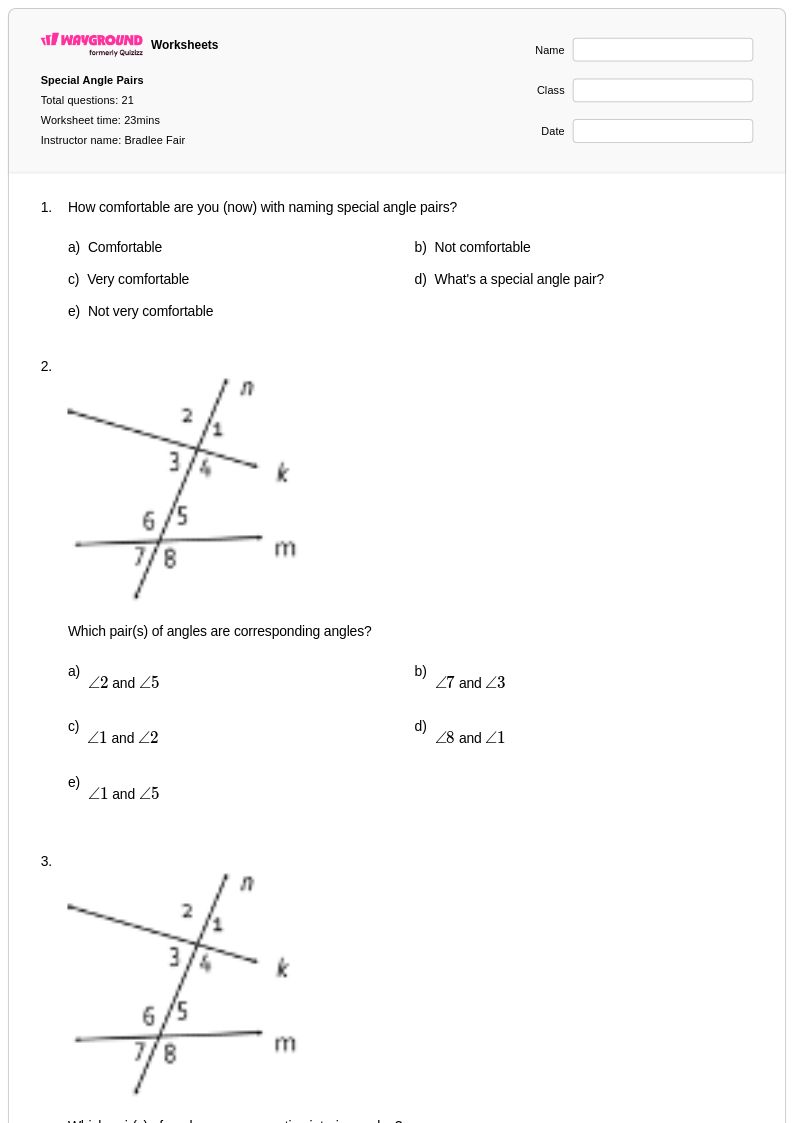
21 Q
9th - 12th
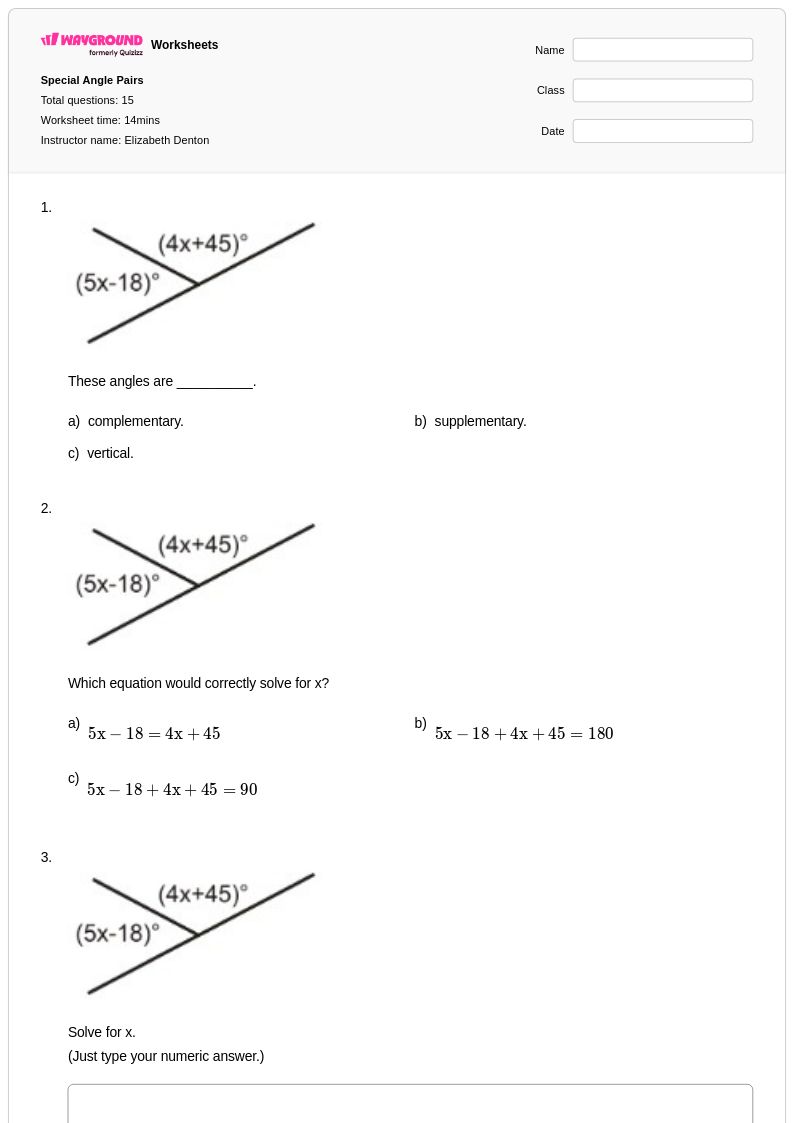
15 Q
9th - 12th
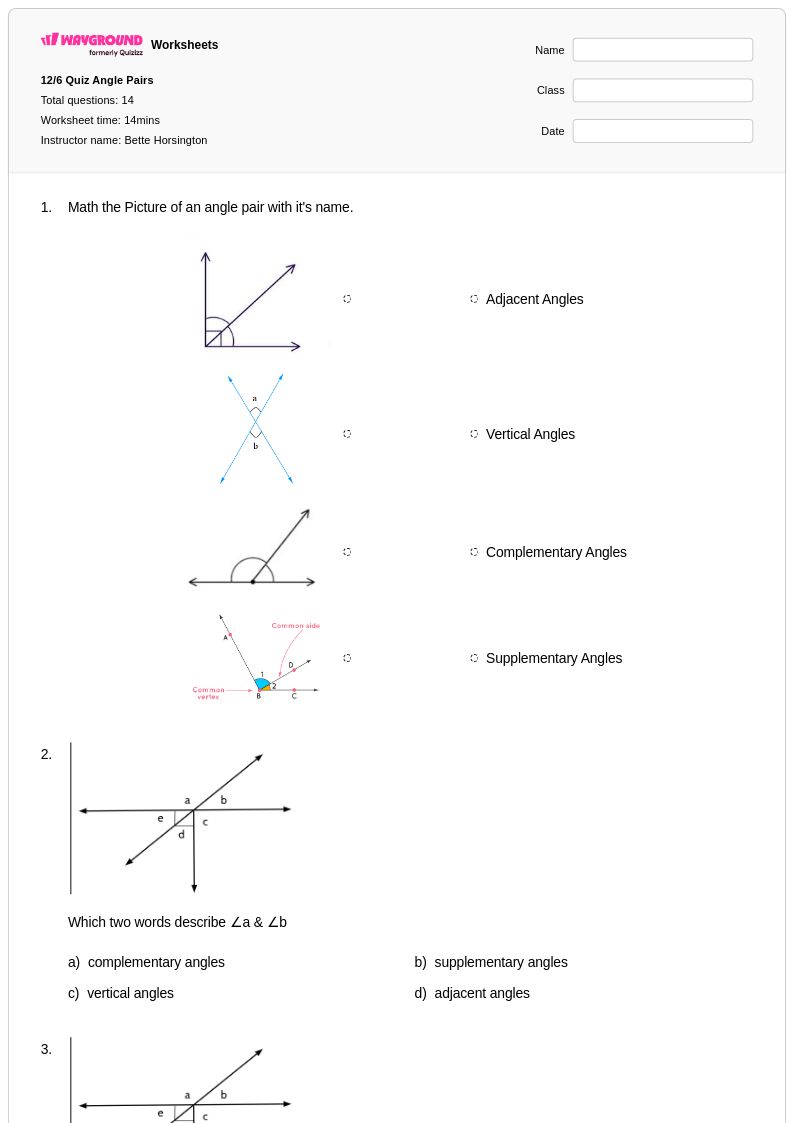
14 Q
8th - Uni
20 Q
9th - 12th
15 Q
9th - Uni
12 Q
9th - Uni
13 Q
9th - 12th
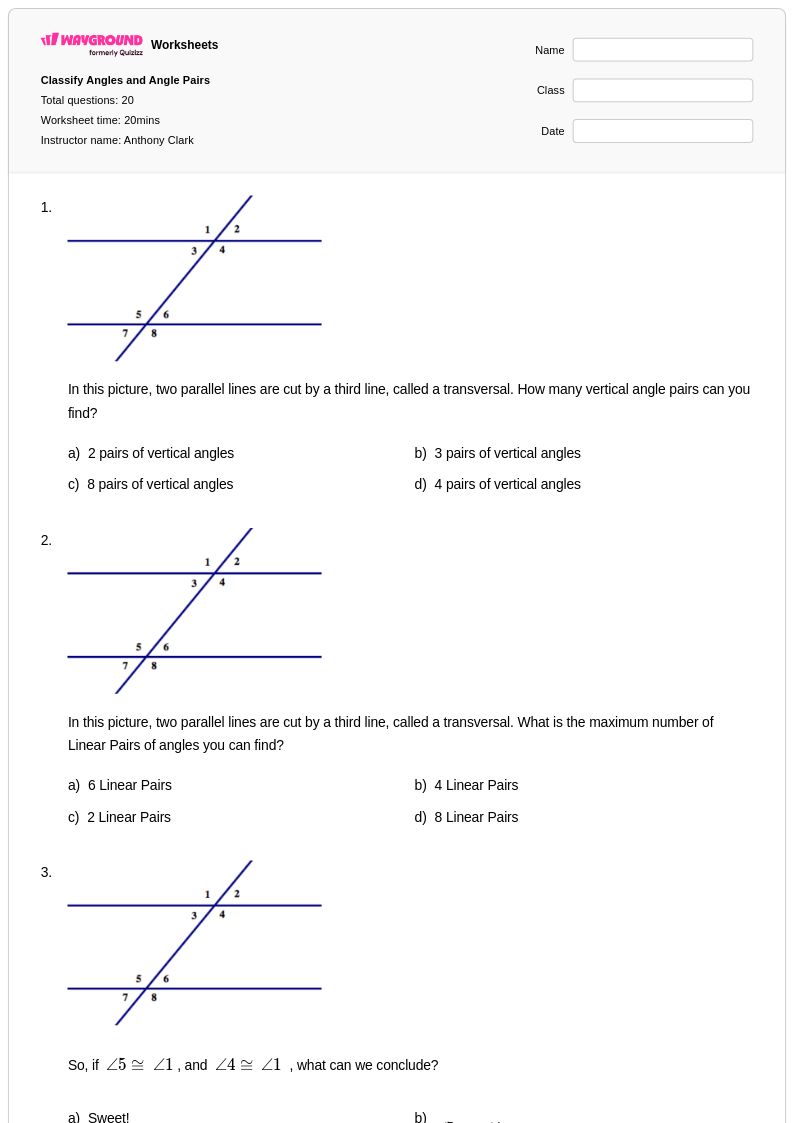
20 Q
9th - Uni
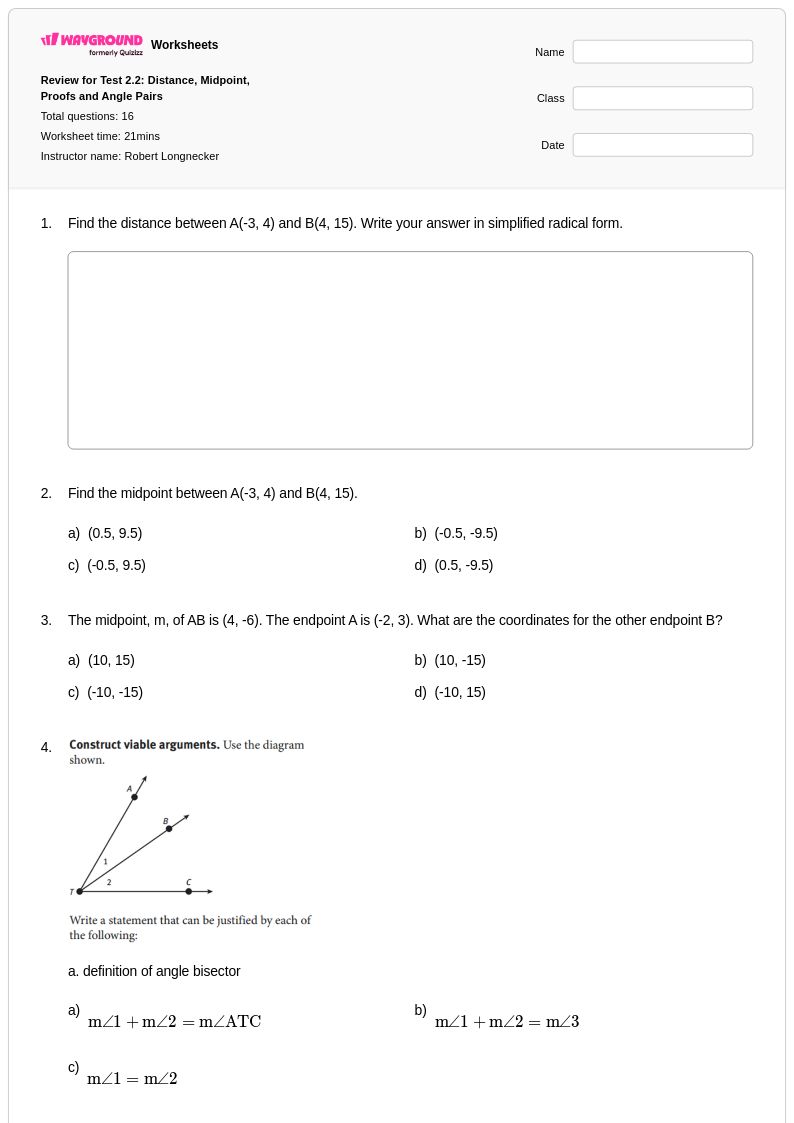
16 Q
9th - 12th
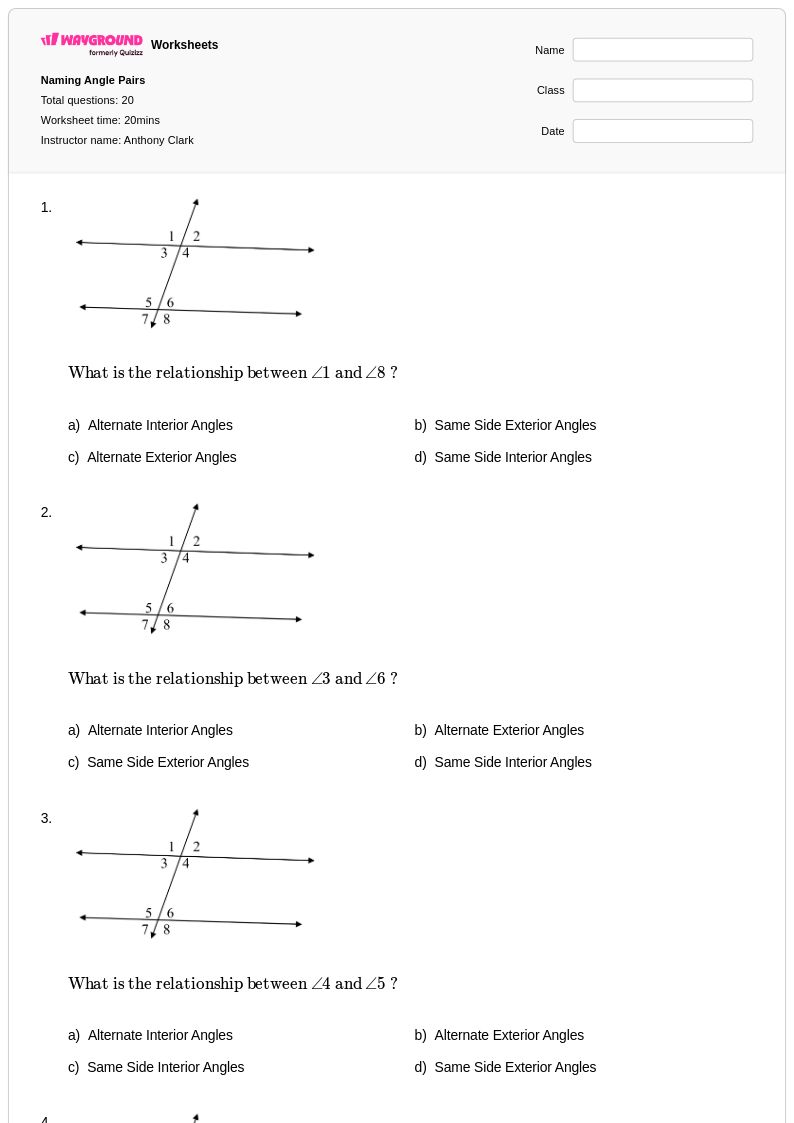
20 Q
9th - Uni
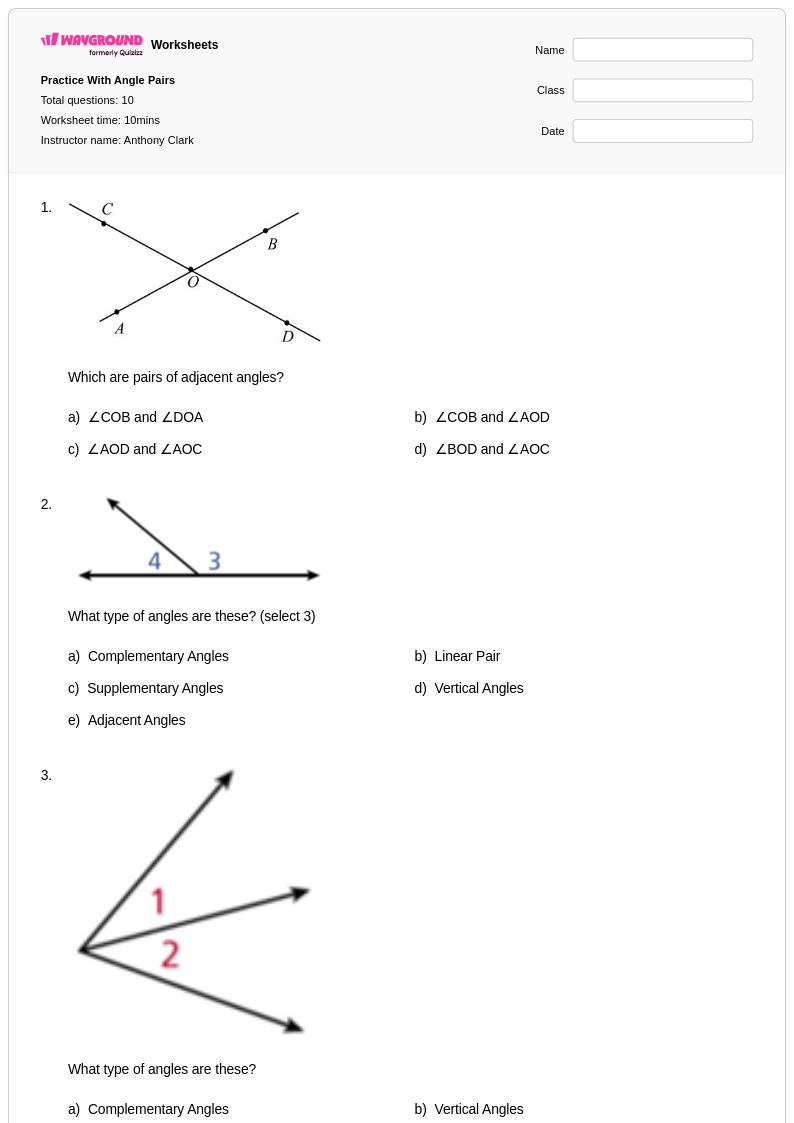
10 Q
9th - Uni
20 Q
9th - Uni
20 Q
9th - Uni
20 Q
9th - Uni
20 Q
9th - Uni
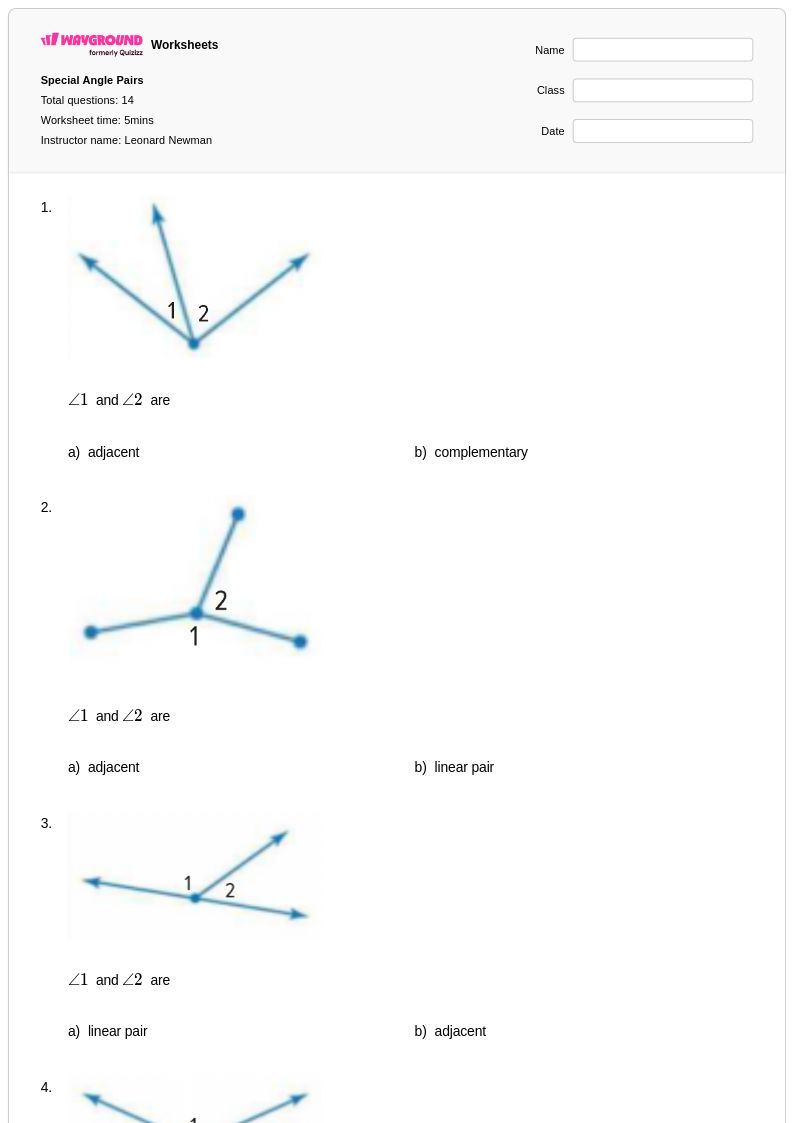
14 Q
9th - 12th
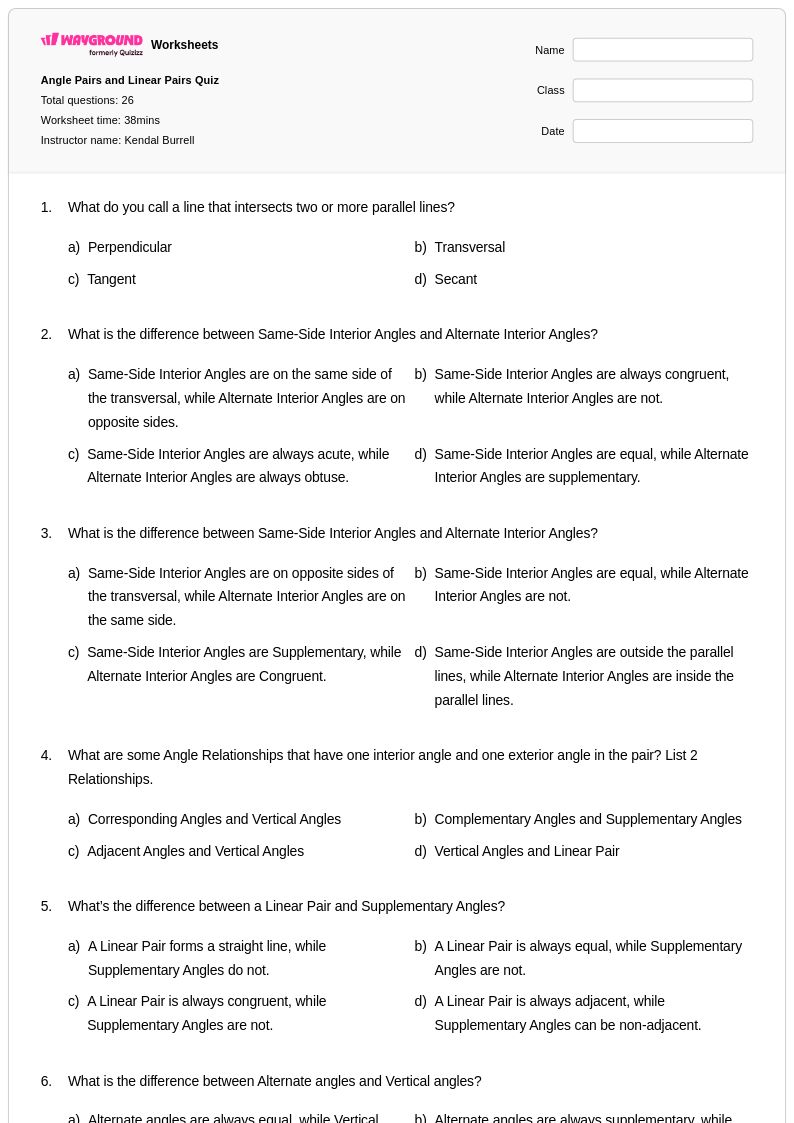
26 Q
9th - Uni
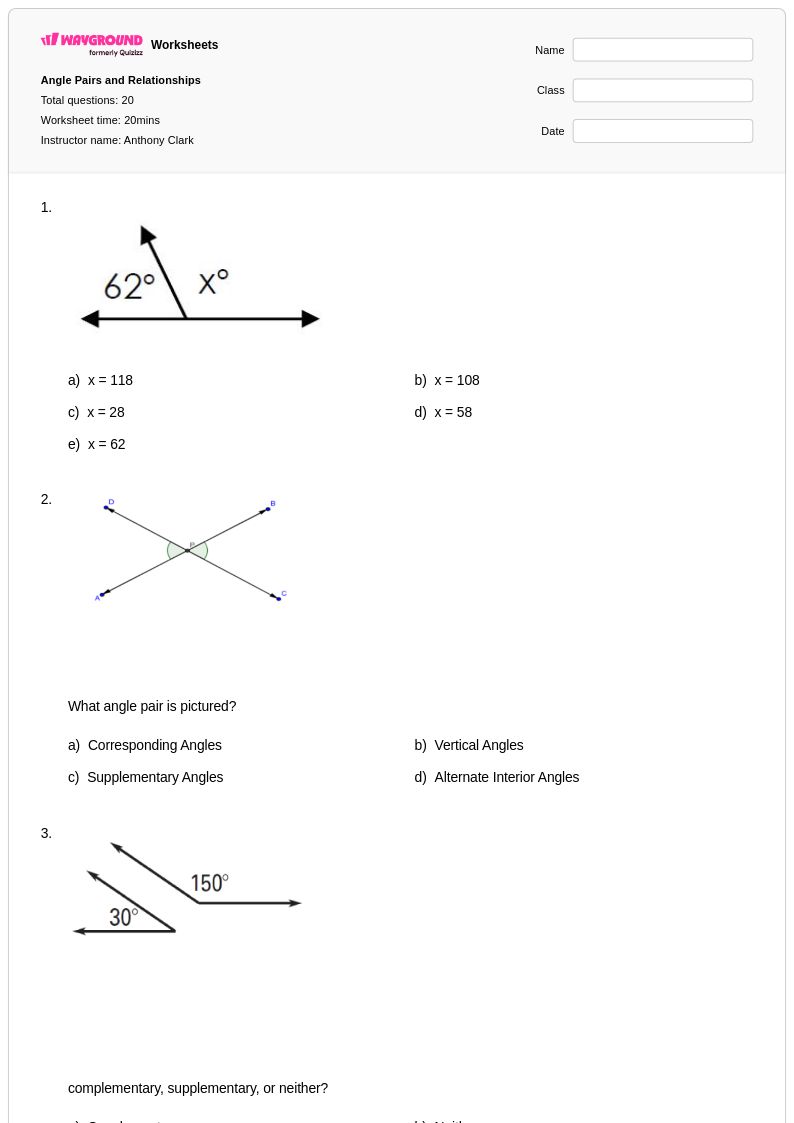
20 Q
9th - Uni
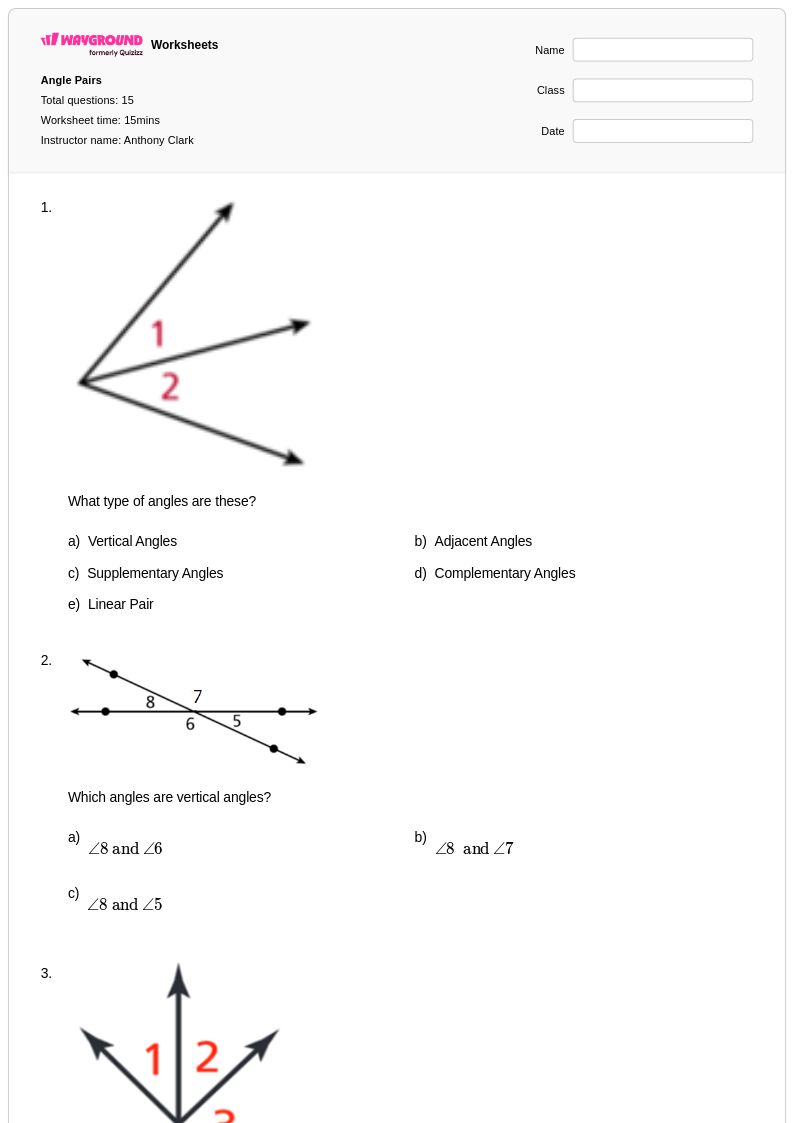
15 Q
9th - Uni
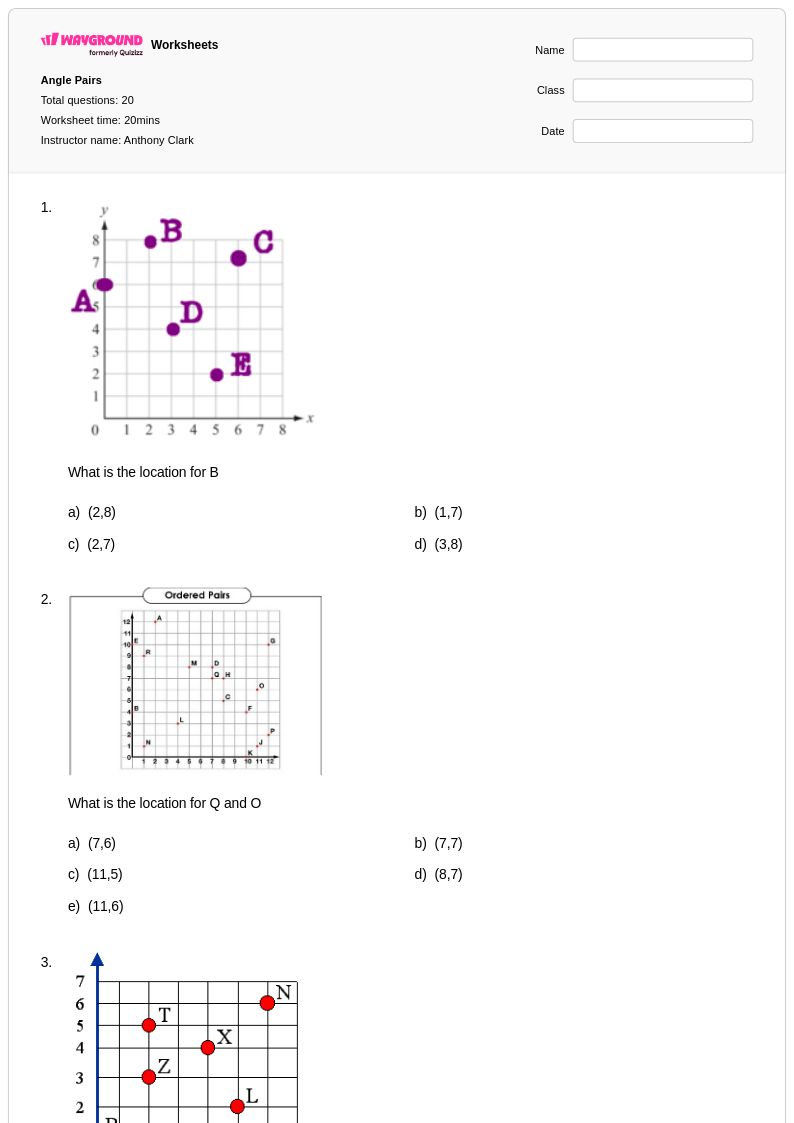
20 Q
7th - Uni
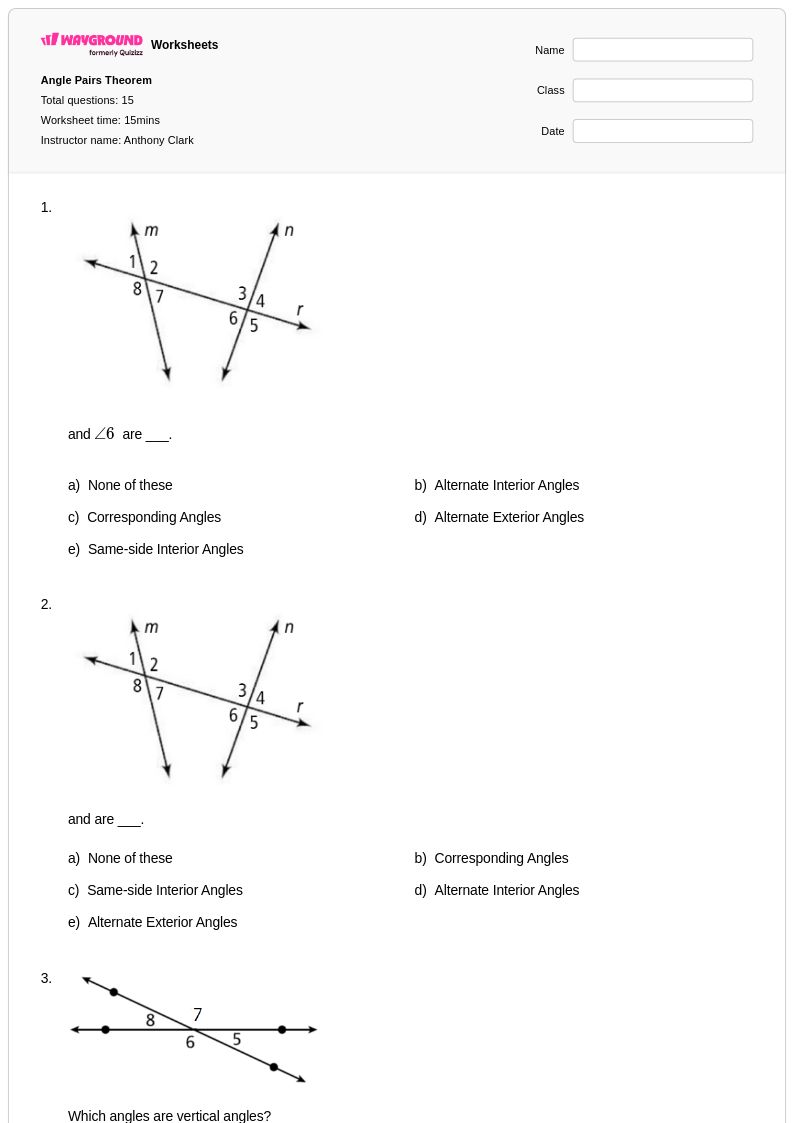
15 Q
10th - Uni
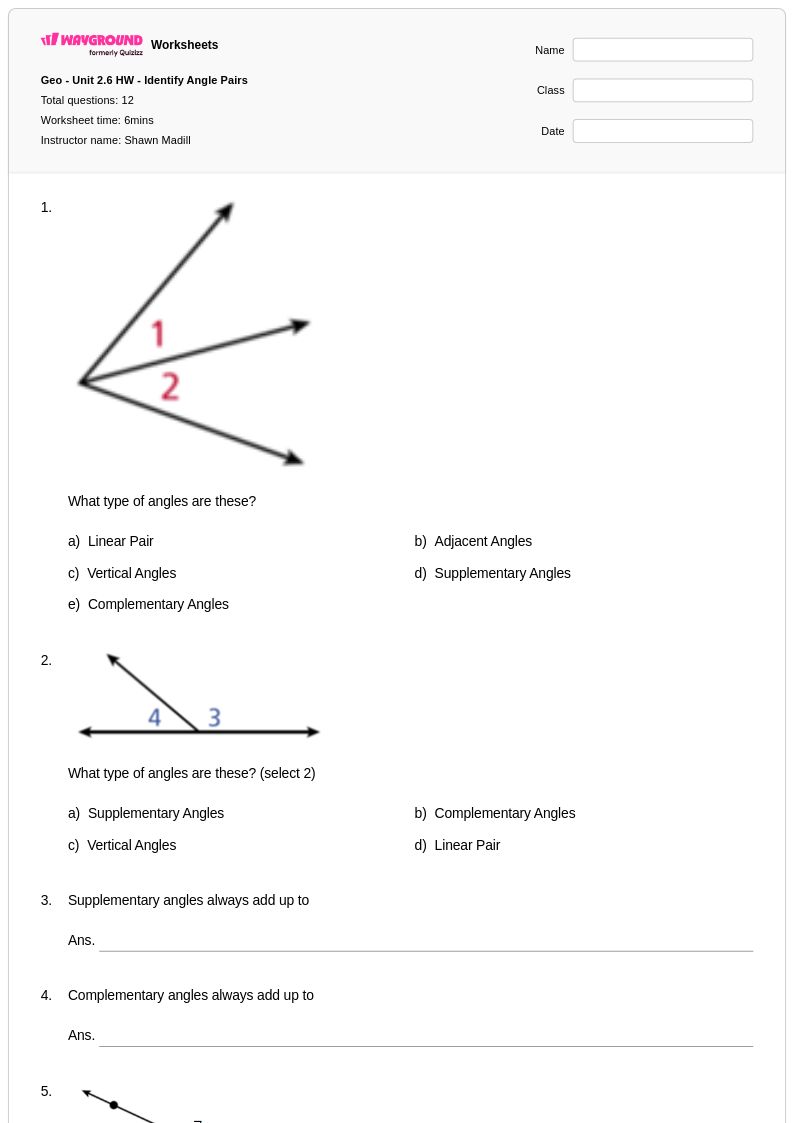
12 Q
9th - 12th
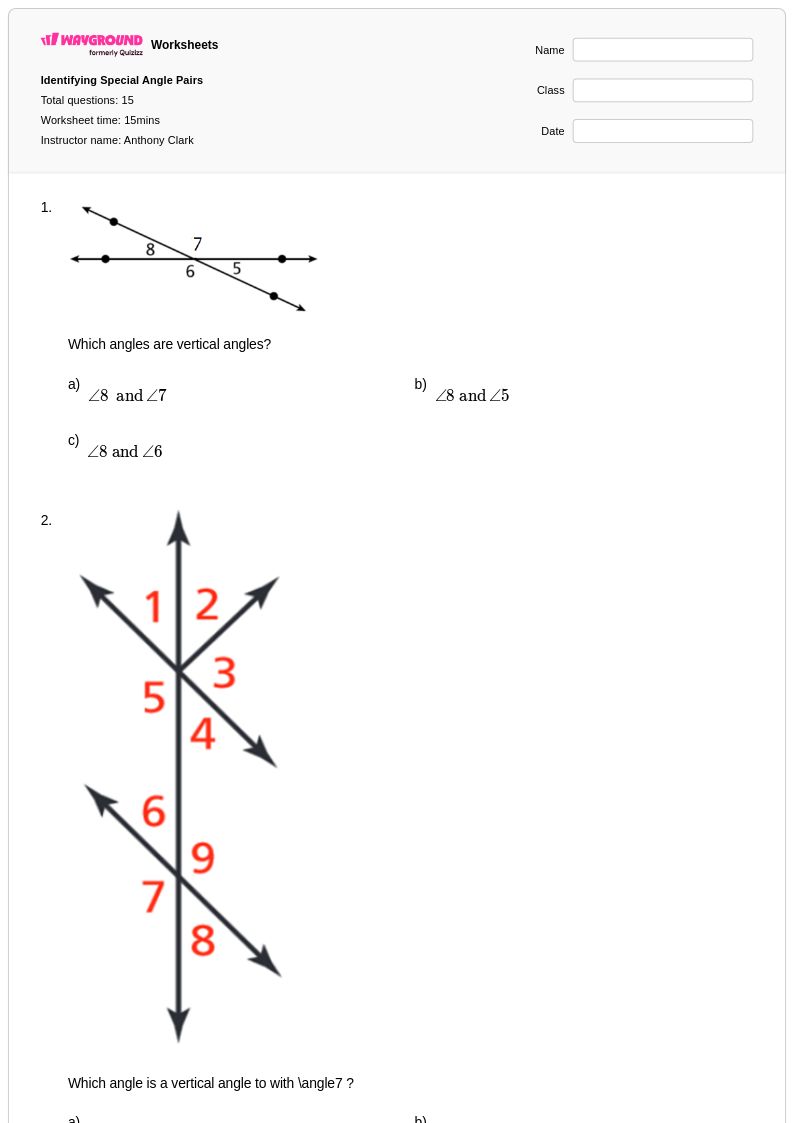
15 Q
9th - Uni
Explore Other Subject Worksheets for class 12
Explore printable Angle Pairs worksheets for Class 12
Angle pairs worksheets for Class 12 mathematics provide advanced practice with the relationships between angles formed by intersecting lines, parallel lines cut by transversals, and complex geometric configurations. These comprehensive worksheet collections from Wayground (formerly Quizizz) strengthen students' analytical skills in identifying and working with complementary angles, supplementary angles, vertical angles, corresponding angles, alternate interior and exterior angles, and same-side interior angles in sophisticated geometric contexts. Students engage with rigorous practice problems that require them to apply angle pair relationships to solve multi-step proofs, calculate unknown angle measures in complex figures, and analyze angle relationships in coordinate geometry settings. Each worksheet includes a complete answer key and is available as a free printable pdf, making it convenient for teachers to assign targeted practice that reinforces these fundamental geometric concepts essential for success in advanced mathematics courses.
Wayground (formerly Quizizz) empowers educators with an extensive library of millions of teacher-created angle pairs worksheets specifically designed for Class 12 geometry instruction. The platform's robust search and filtering capabilities allow teachers to quickly locate resources that align with specific curriculum standards and match their students' varying skill levels, from foundational angle pair identification to complex proof-based applications. Teachers can customize worksheets to focus on particular types of angle relationships, adjust difficulty levels for differentiation, and seamlessly integrate both digital and printable pdf formats into their lesson plans. These versatile tools support comprehensive instructional planning by providing structured practice for skill development, targeted remediation for students struggling with angle concepts, and enrichment opportunities for advanced learners ready to tackle more challenging geometric reasoning problems involving angle pairs in complex configurations.
FAQs
How do I teach angle pairs in Grade 12 geometry?
What angle-pair exercises are appropriate for Grade 12 students?
What errors do Grade 12 students make when solving angle-pair problems?
How can I assign a Grade 12 angle-pairs worksheet?
Are Grade 12 angle-pair worksheets aligned with Common Core geometry?
How can I differentiate advanced angle-pair worksheets?
Why are angle pairs still taught in Grade 12?