
20 T
6th - Uni
20 T
5th - Uni
20 T
7th - Uni
20 T
5th - Uni
19 T
5th - Uni
20 T
6th - Uni
20 T
7th - Uni
20 T
8th - Uni
20 T
7th - Uni
14 T
8th - Uni
19 T
5th - Uni
15 T
6th - Uni
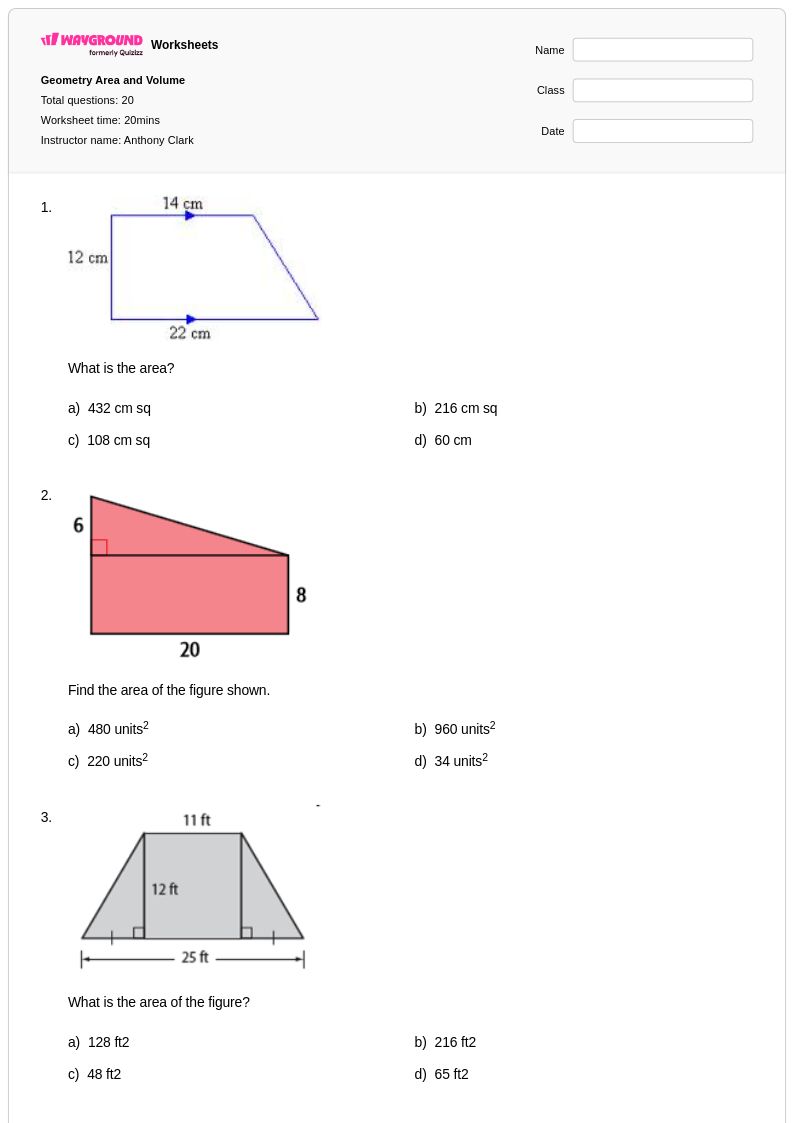
20 T
6th - Uni
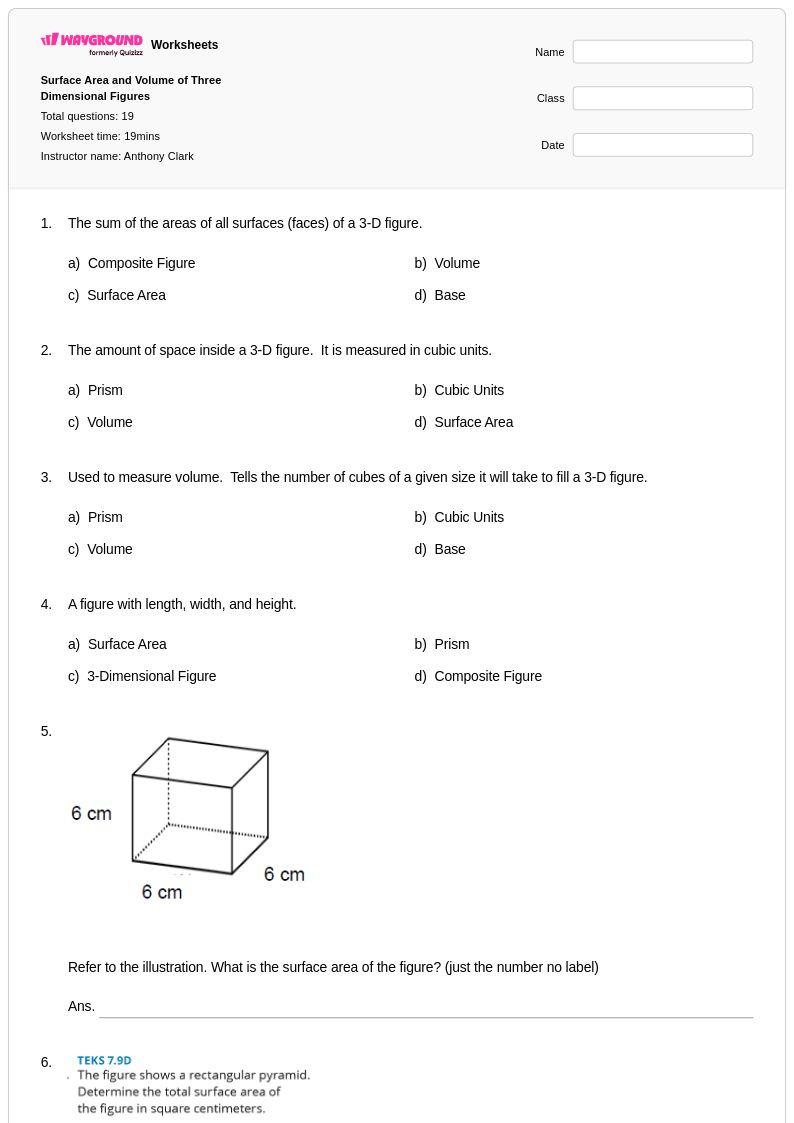
19 T
6th - Uni
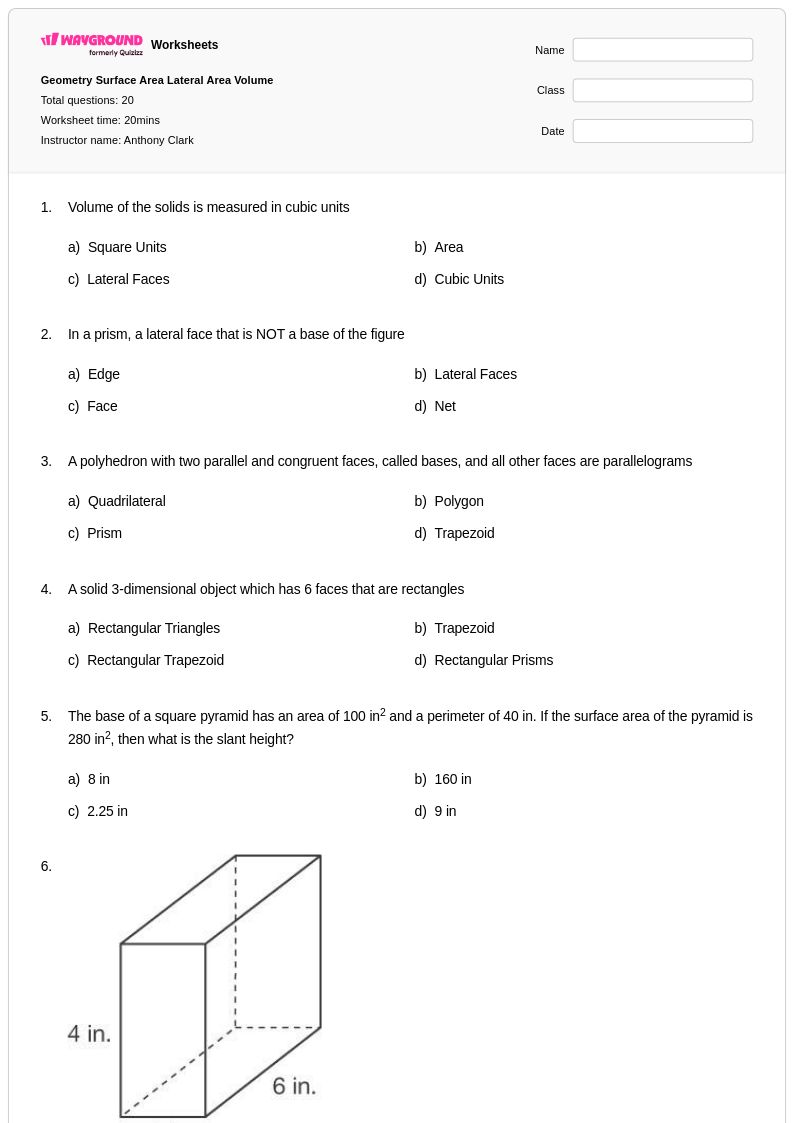
20 T
8th - Uni
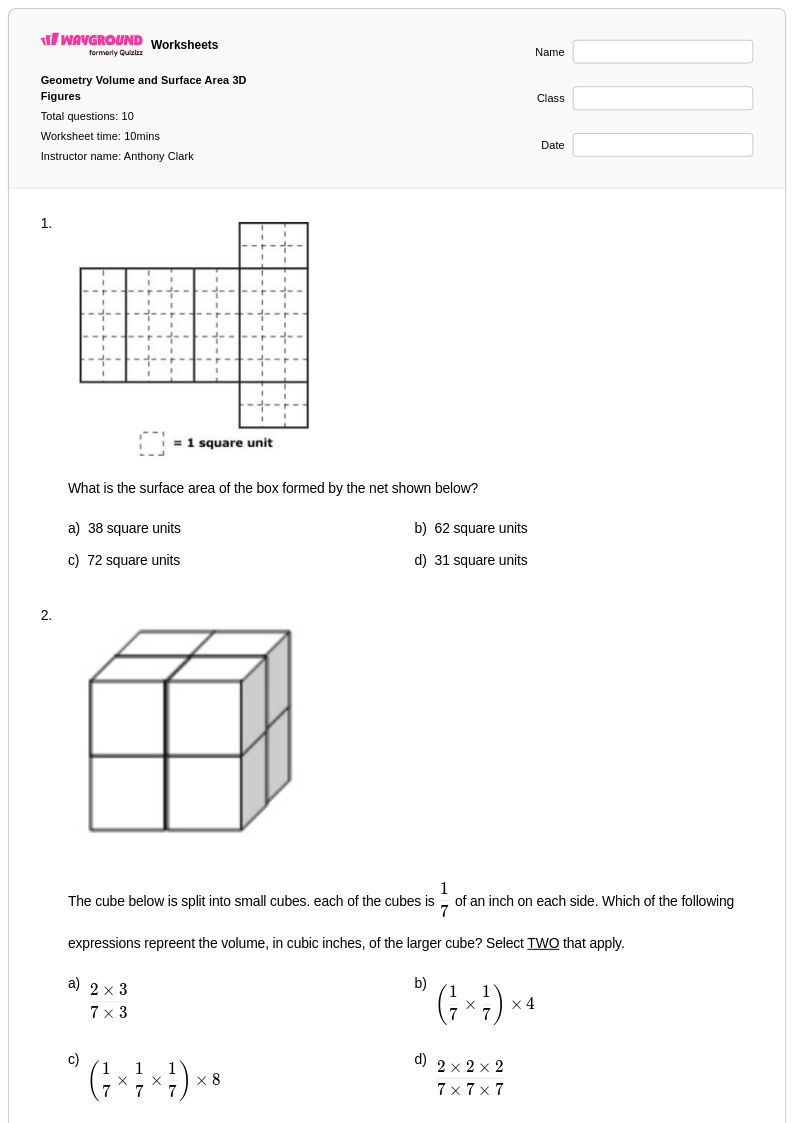
10 T
6th - Uni
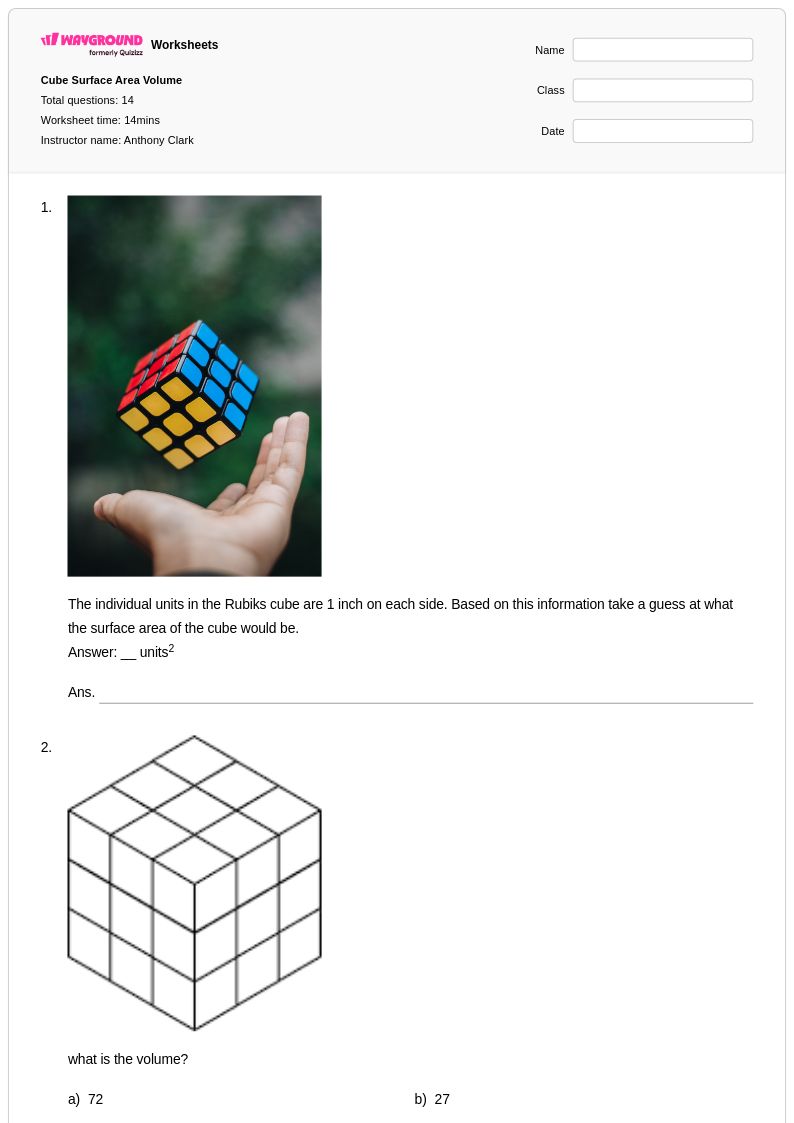
14 T
6th - Uni
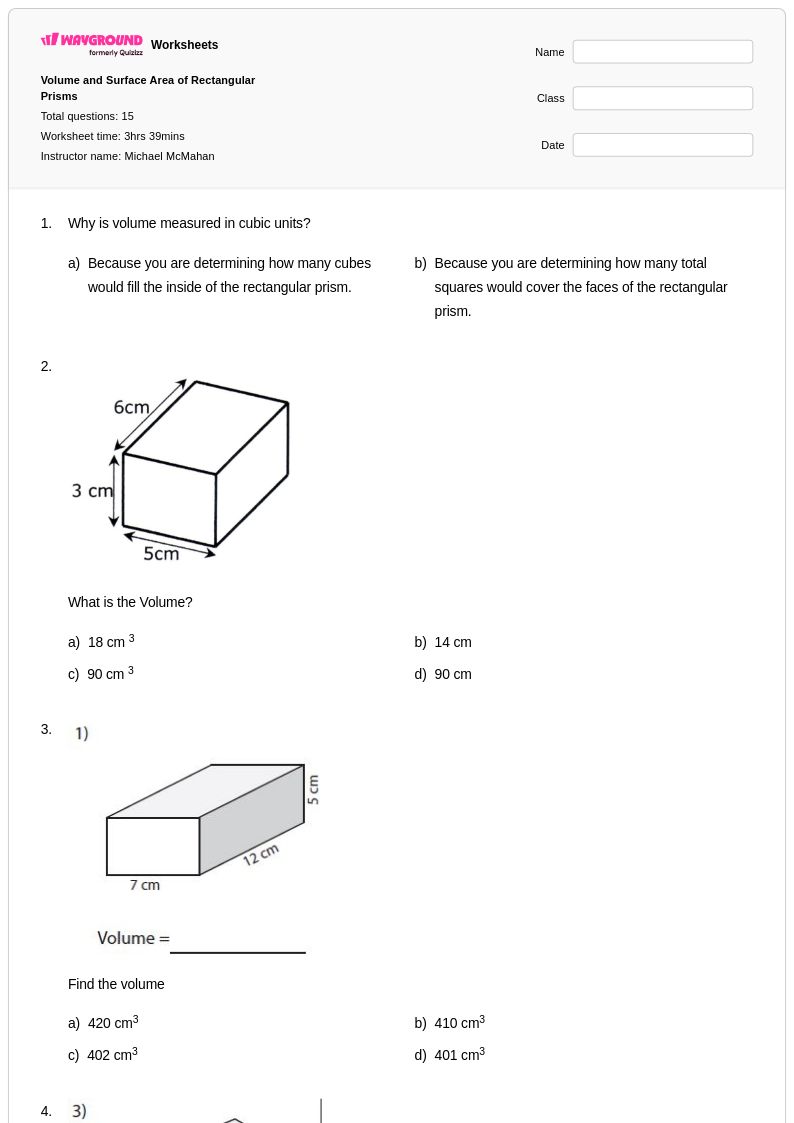
15 T
9th - 12th
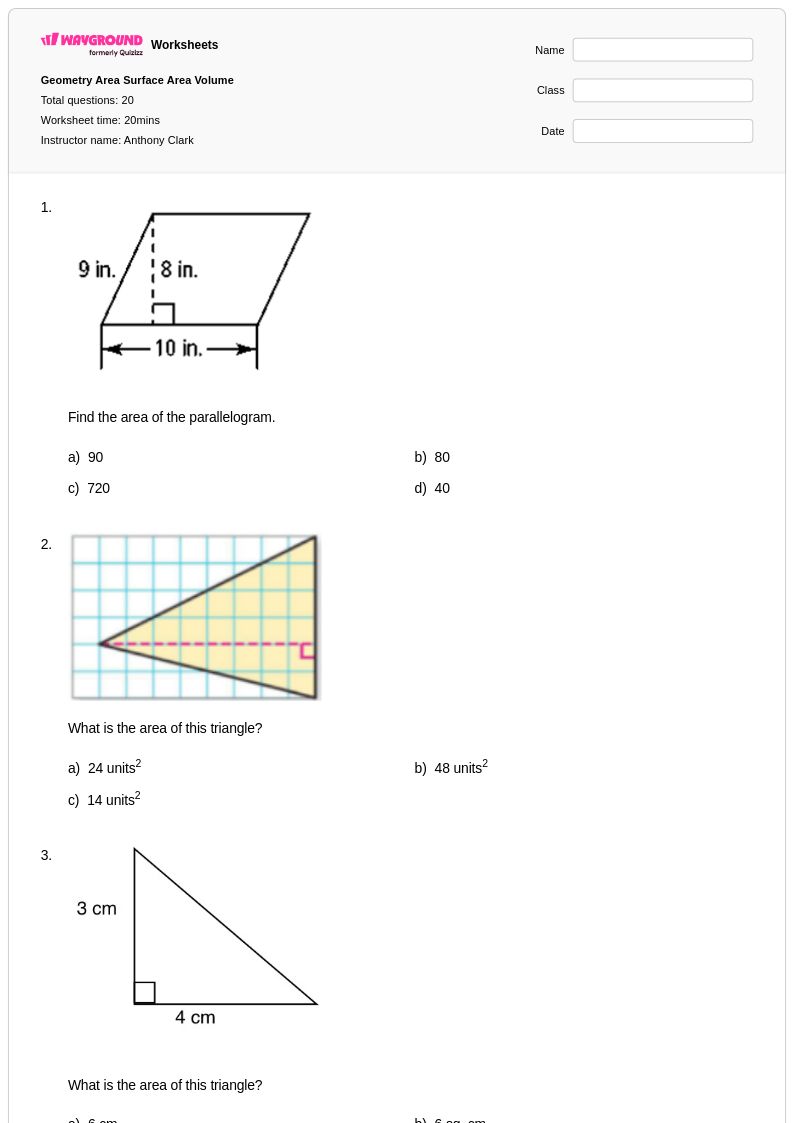
20 T
6th - Uni
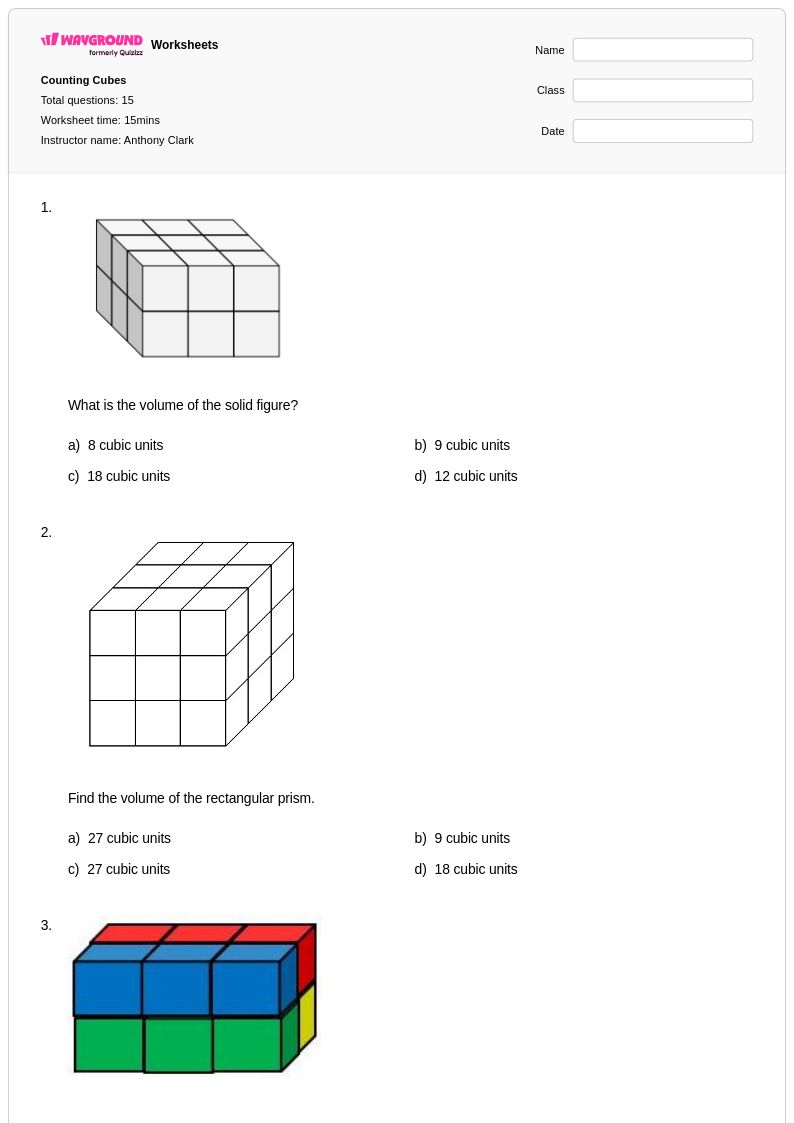
15 T
5th - Uni
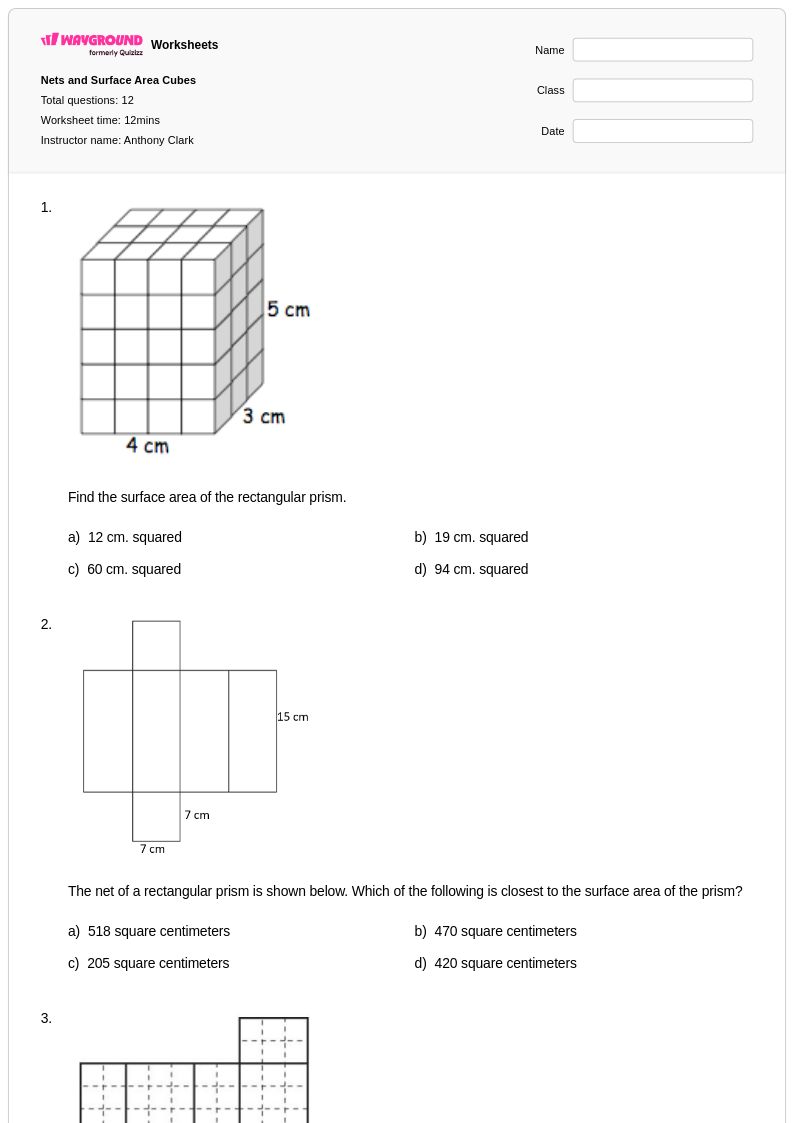
12 T
6th - Uni
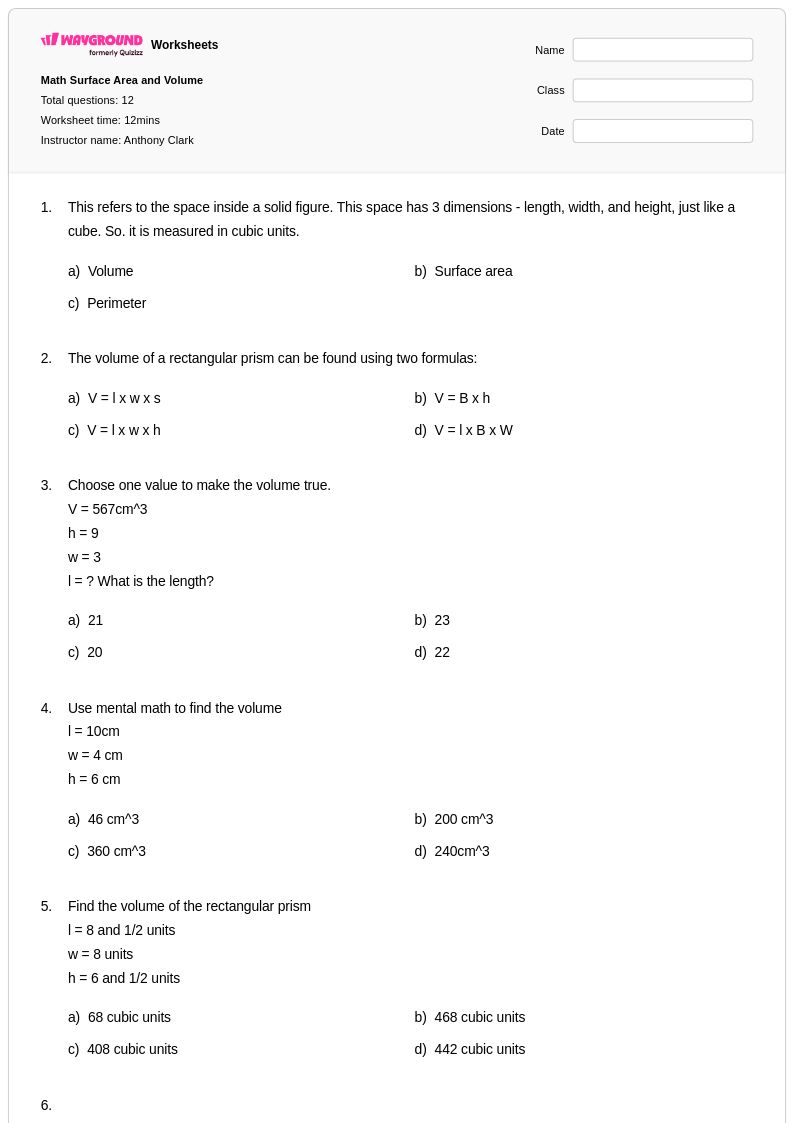
12 T
6th - Uni
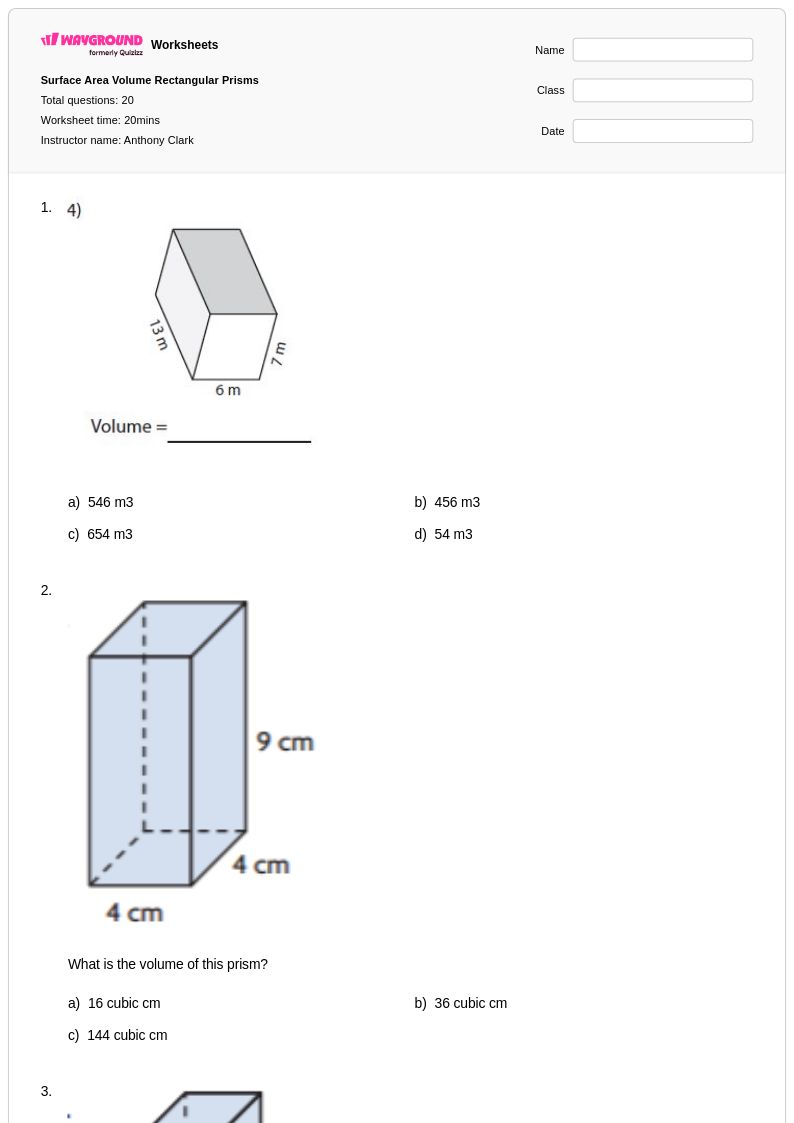
20 T
7th - Uni
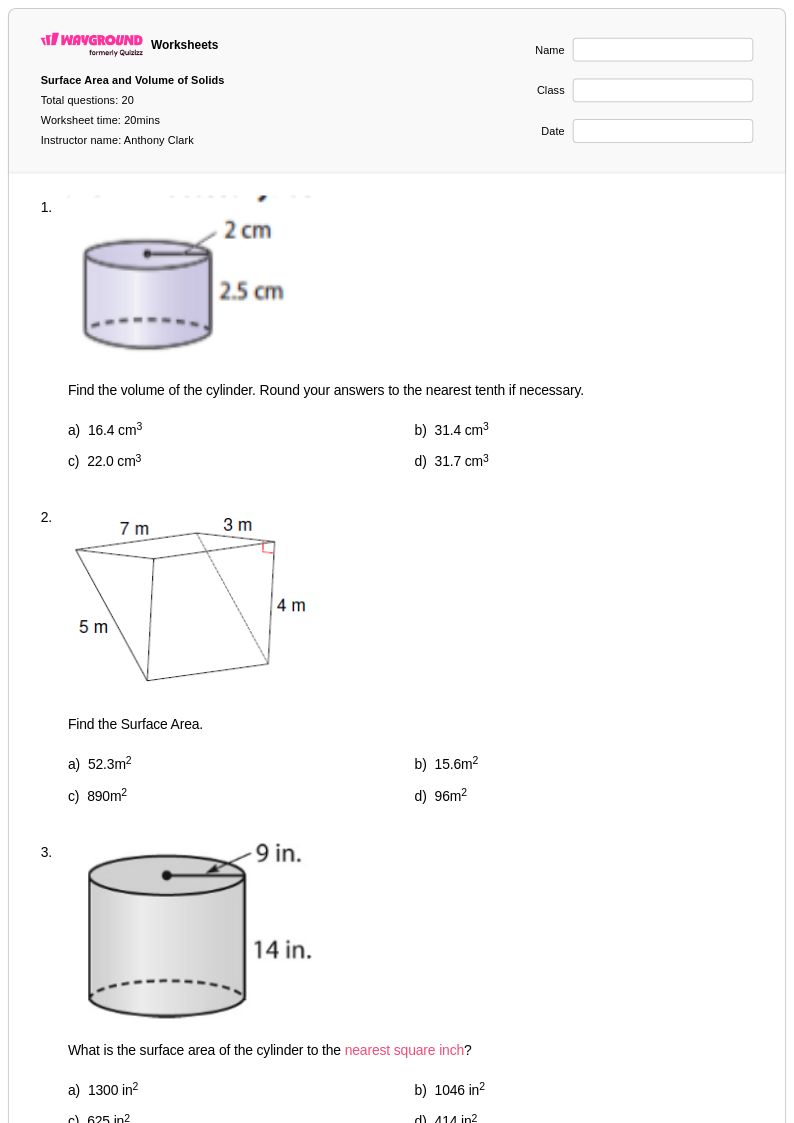
20 T
8th - Uni
Jelajahi Volume and Surface Area of Cubes Lembar Kerja berdasarkan Nilai
Jelajahi Lembar Kerja Mata Pelajaran Lainnya untuk class 12
Explore printable Volume and Surface Area of Cubes worksheets for Class 12
Volume and surface area of cubes worksheets for Class 12 mathematics provide advanced practice with three-dimensional geometric calculations that build upon foundational spatial reasoning skills. These comprehensive resources through Wayground (formerly Quizizz) challenge students to master complex formulas while developing critical thinking abilities essential for calculus and higher-level mathematics. Students work through practice problems that require calculating cubic volumes, determining surface areas of composite cube structures, and solving real-world applications involving cubic measurements. Each worksheet includes detailed answer key solutions that guide students through multi-step problem-solving processes, with free printable pdf formats ensuring accessible learning materials for diverse classroom environments.
Wayground (formerly Quizizz) empowers educators with millions of teacher-created resources specifically designed for Class 12 geometry instruction, featuring robust search and filtering capabilities that quickly locate volume and surface area materials aligned to state mathematics standards. Teachers can differentiate instruction through customizable worksheets that accommodate varying skill levels, from basic cube calculations to complex three-dimensional composite figures, while flexible digital and printable formats support both in-person and remote learning environments. These comprehensive collections enable efficient lesson planning and targeted remediation, allowing educators to provide enrichment opportunities for advanced learners while offering additional skill practice for students requiring foundational support in spatial geometry concepts.