
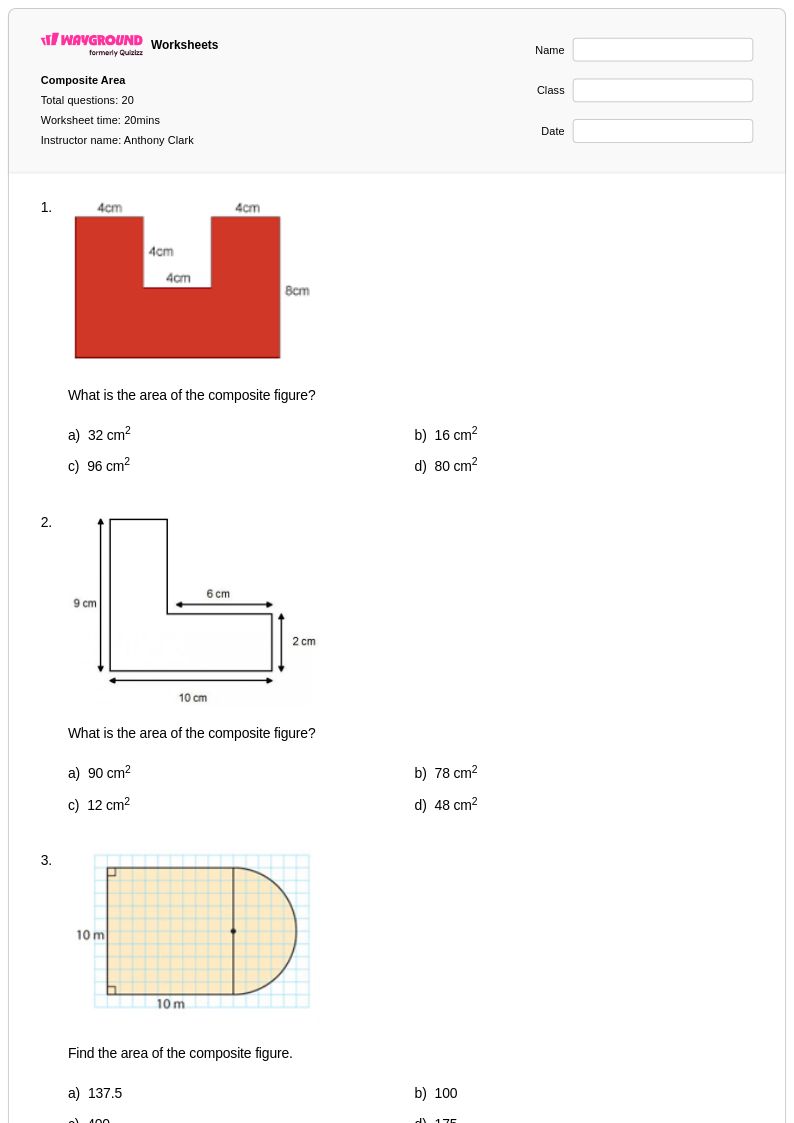
20 Q
6th - Uni
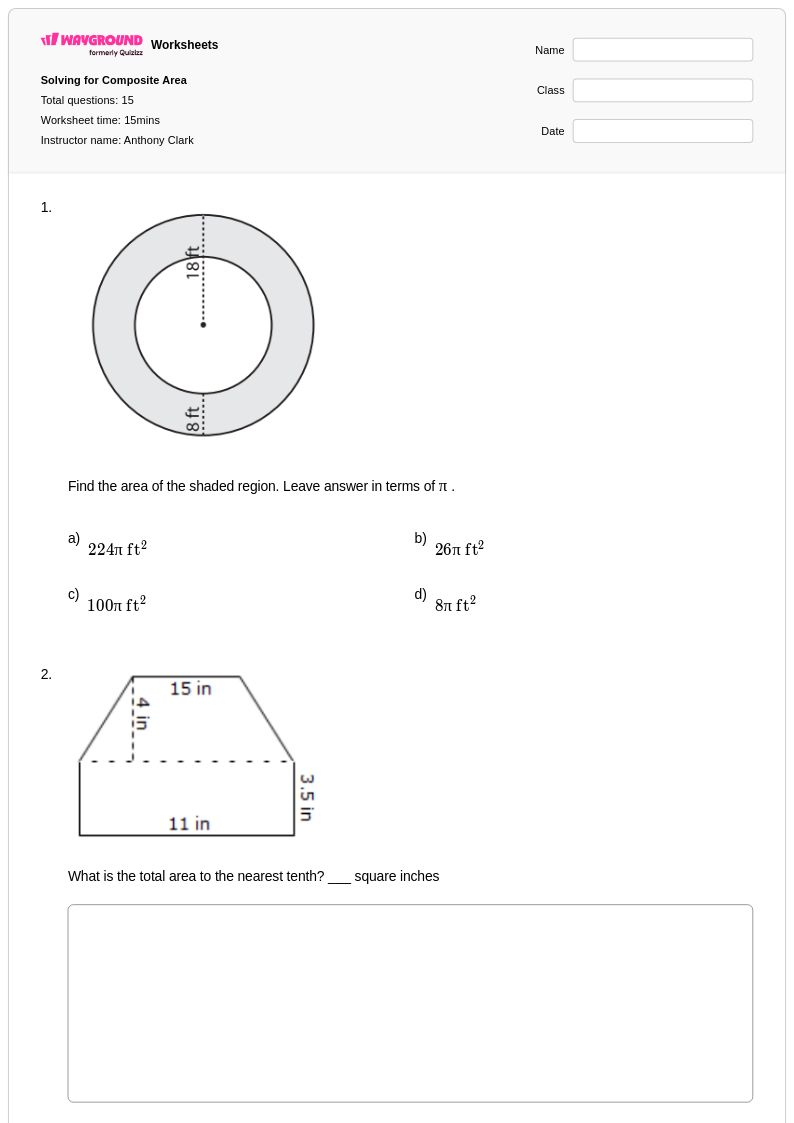
15 Q
7th - Uni
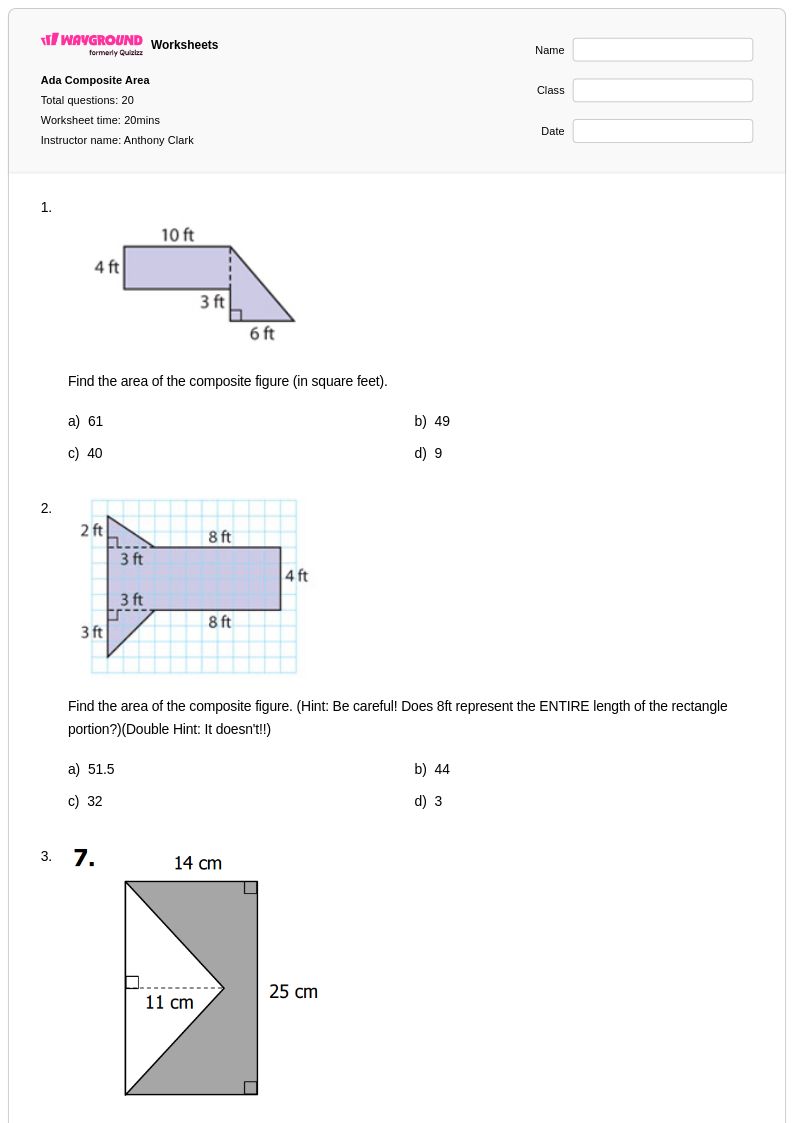
20 Q
7th - Uni
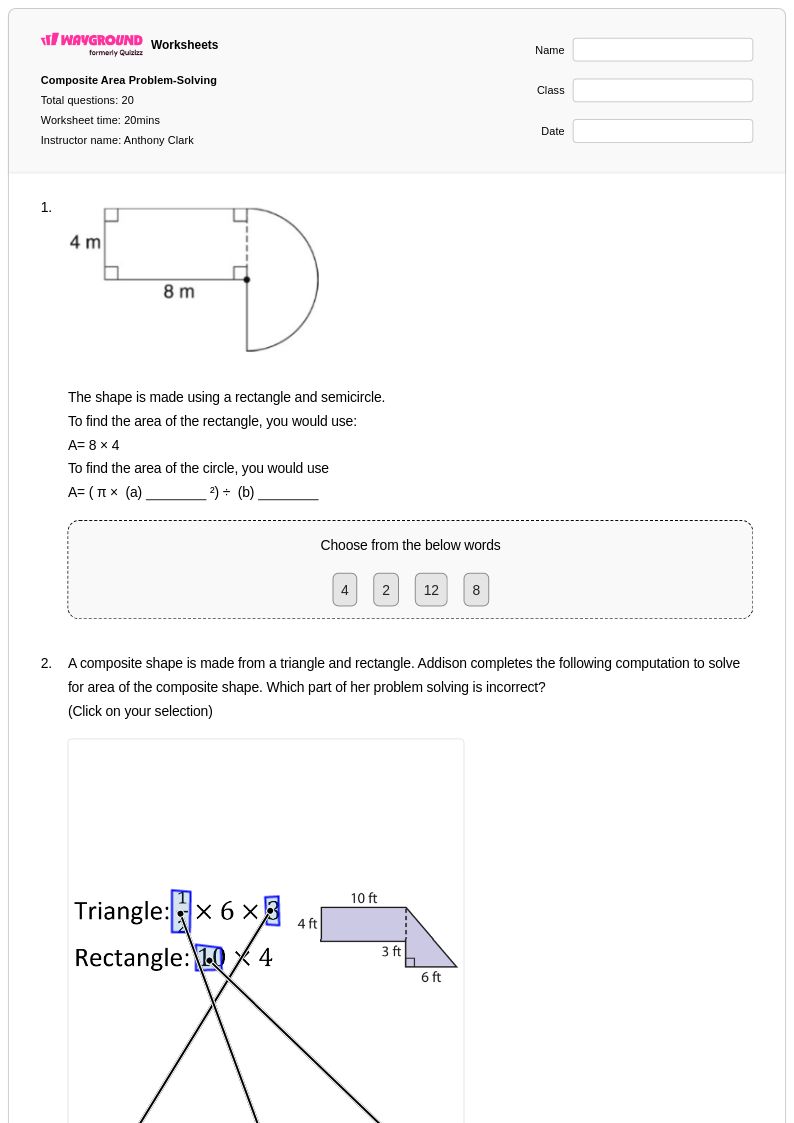
20 Q
7th - Uni
20 Q
7th - Uni
14 Q
7th - Uni
20 Q
7th - Uni
20 Q
7th - Uni
20 Q
7th - Uni
22 Q
9th - 12th
14 Q
12th
14 Q
6th - Uni
20 Q
7th - Uni
20 Q
6th - Uni
10 Q
6th - Uni
15 Q
6th - Uni
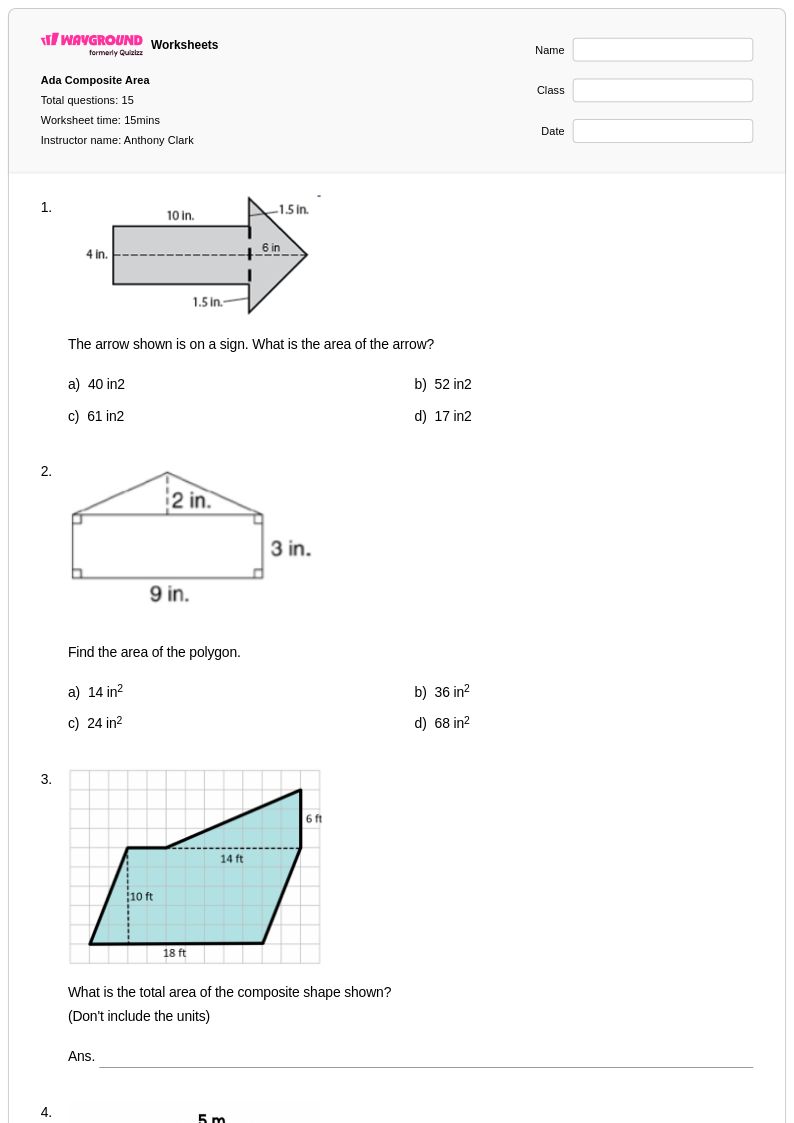
15 Q
7th - Uni
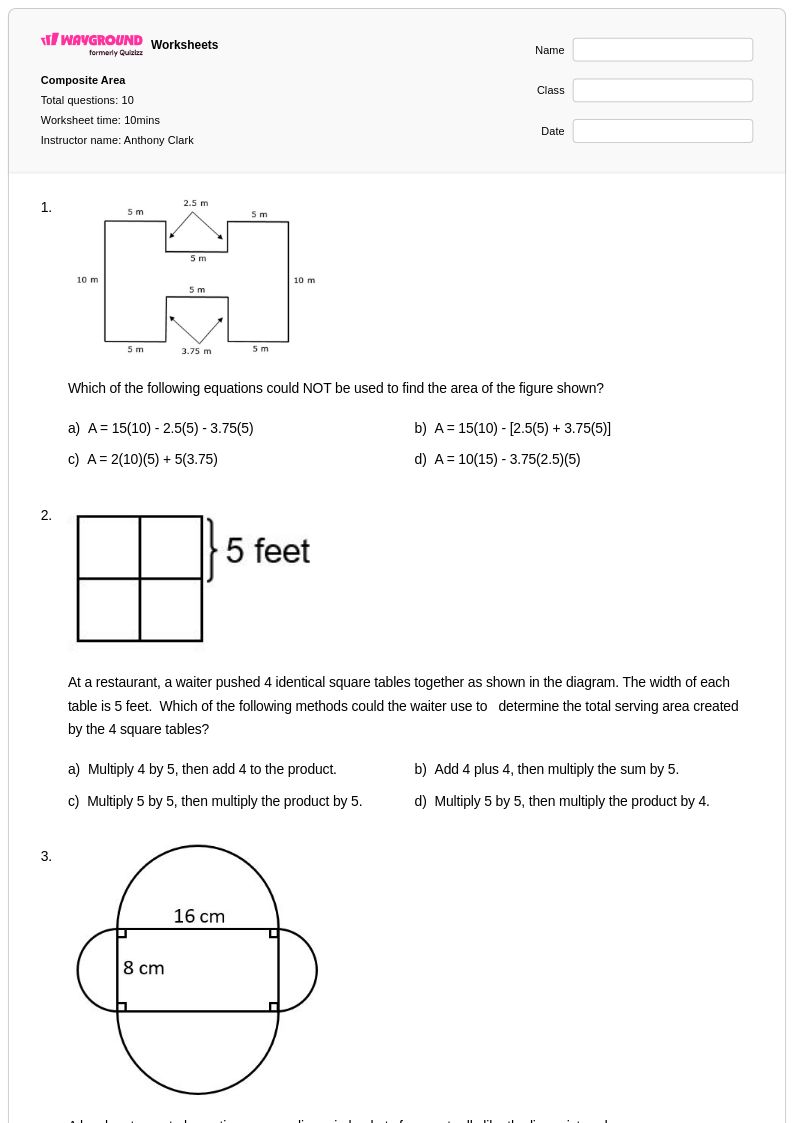
10 Q
7th - Uni
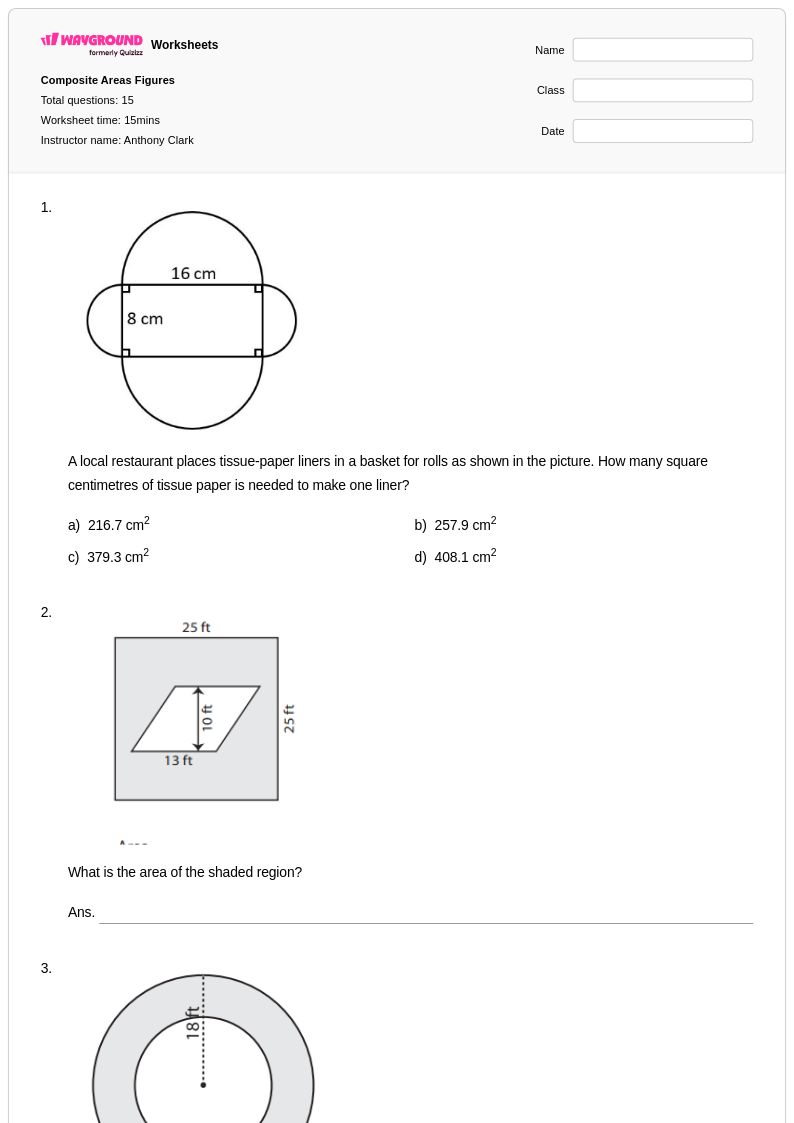
15 Q
8th - Uni
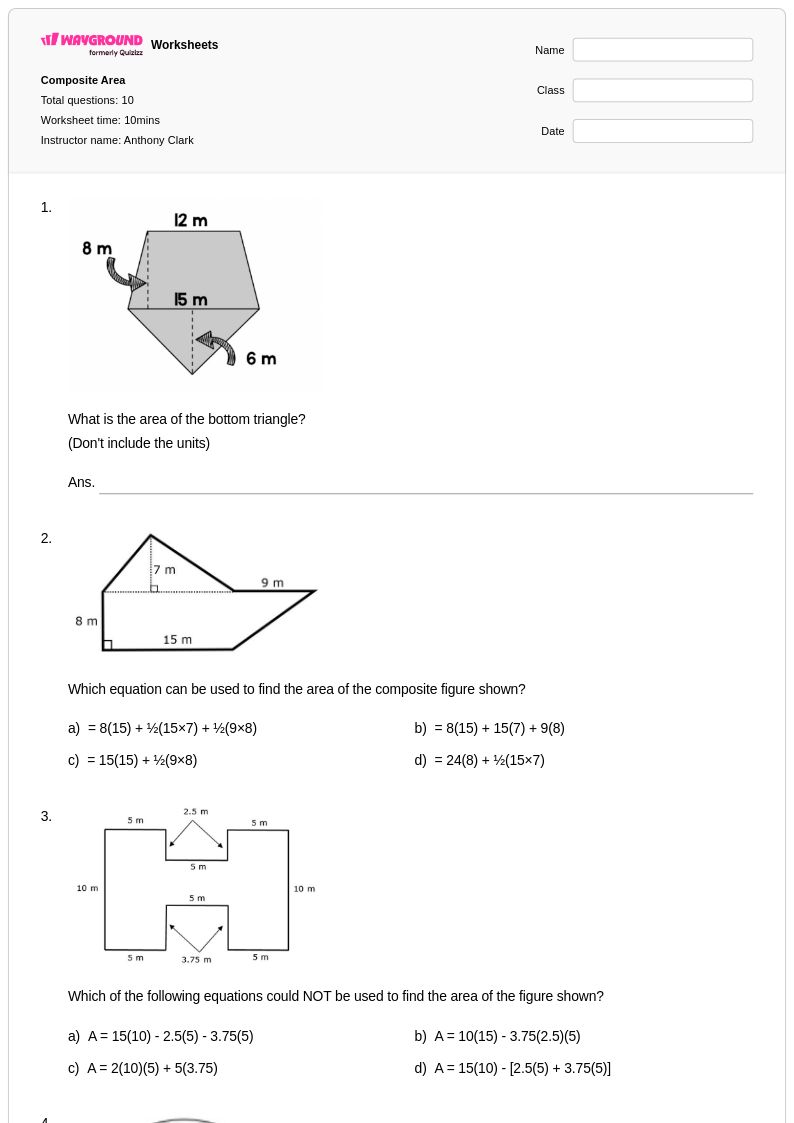
10 Q
7th - Uni
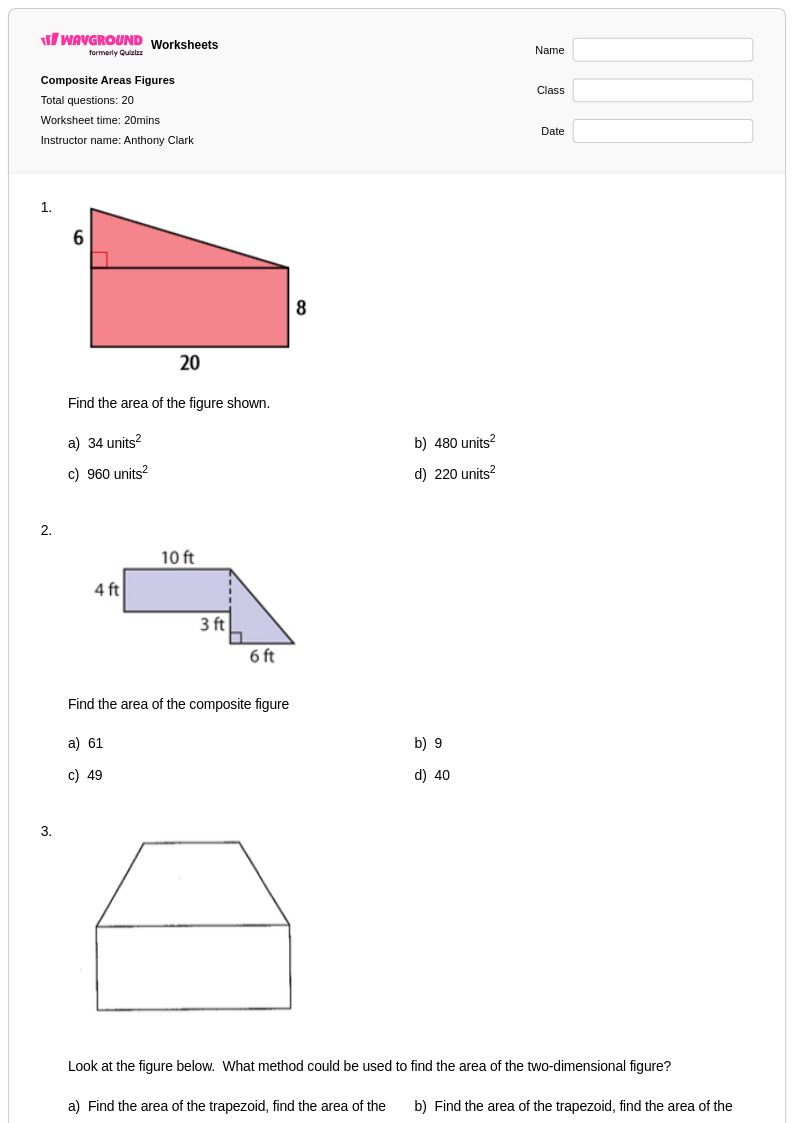
20 Q
8th - Uni
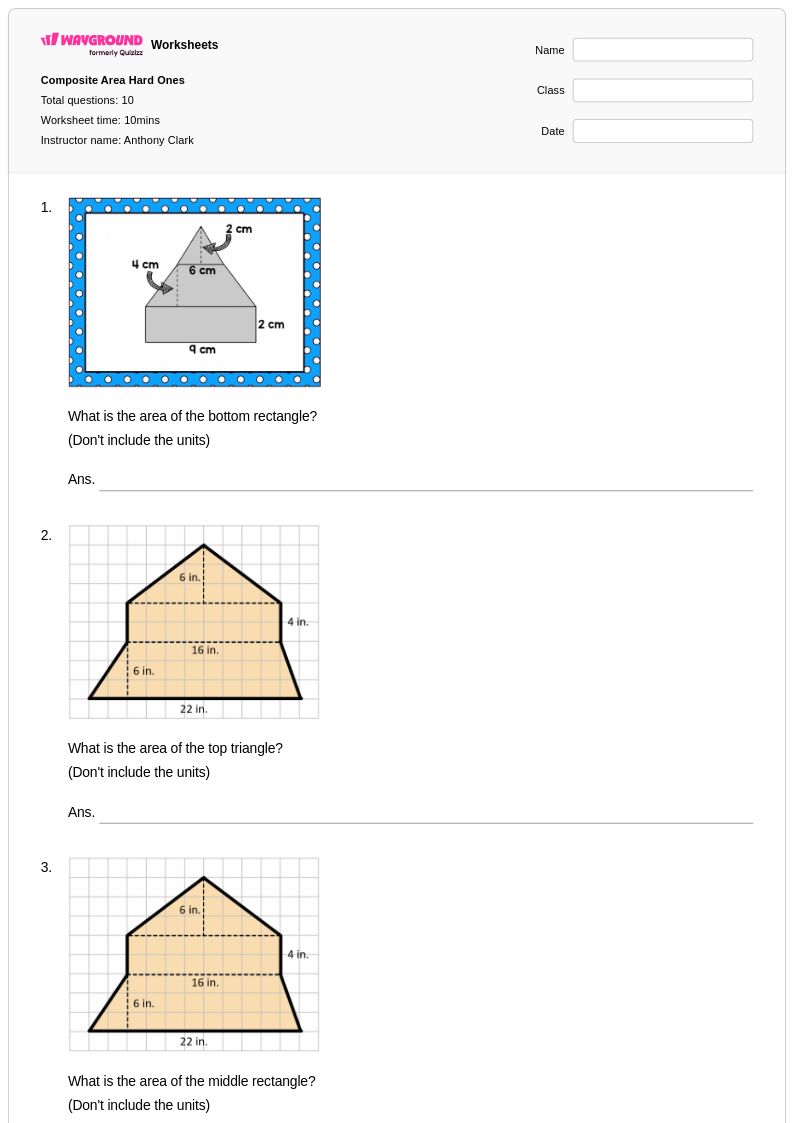
10 Q
7th - Uni
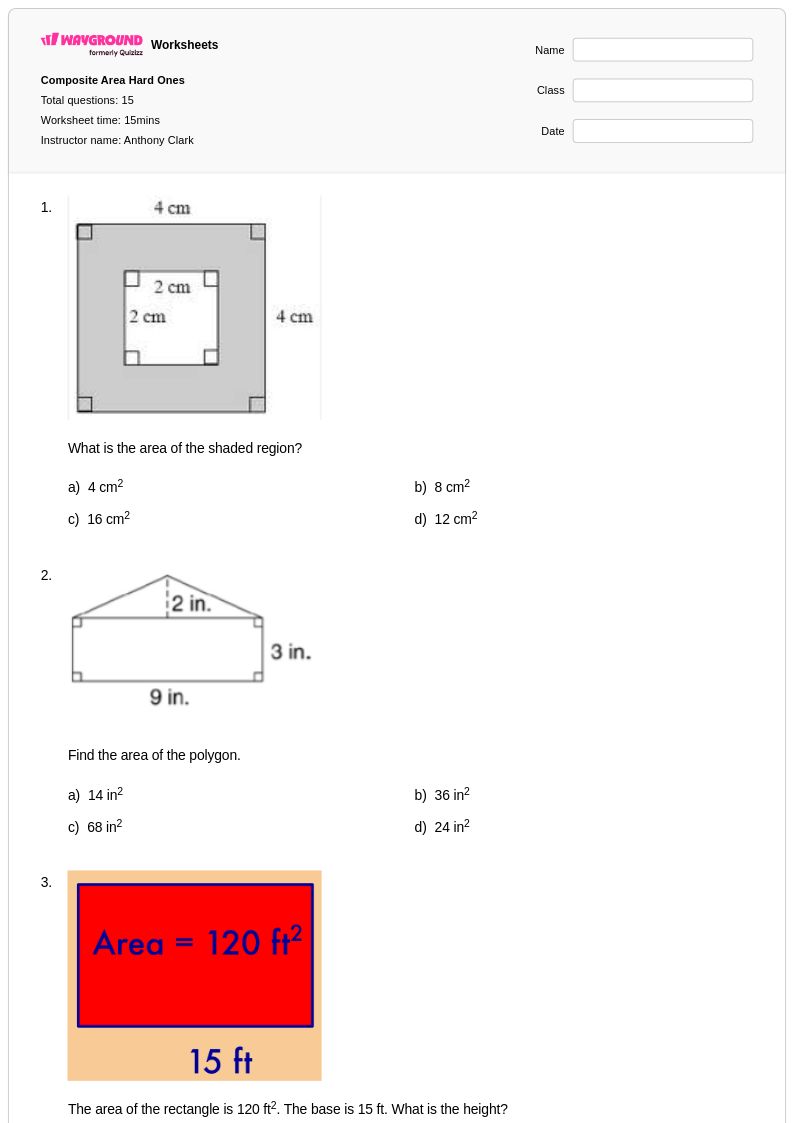
15 Q
7th - Uni
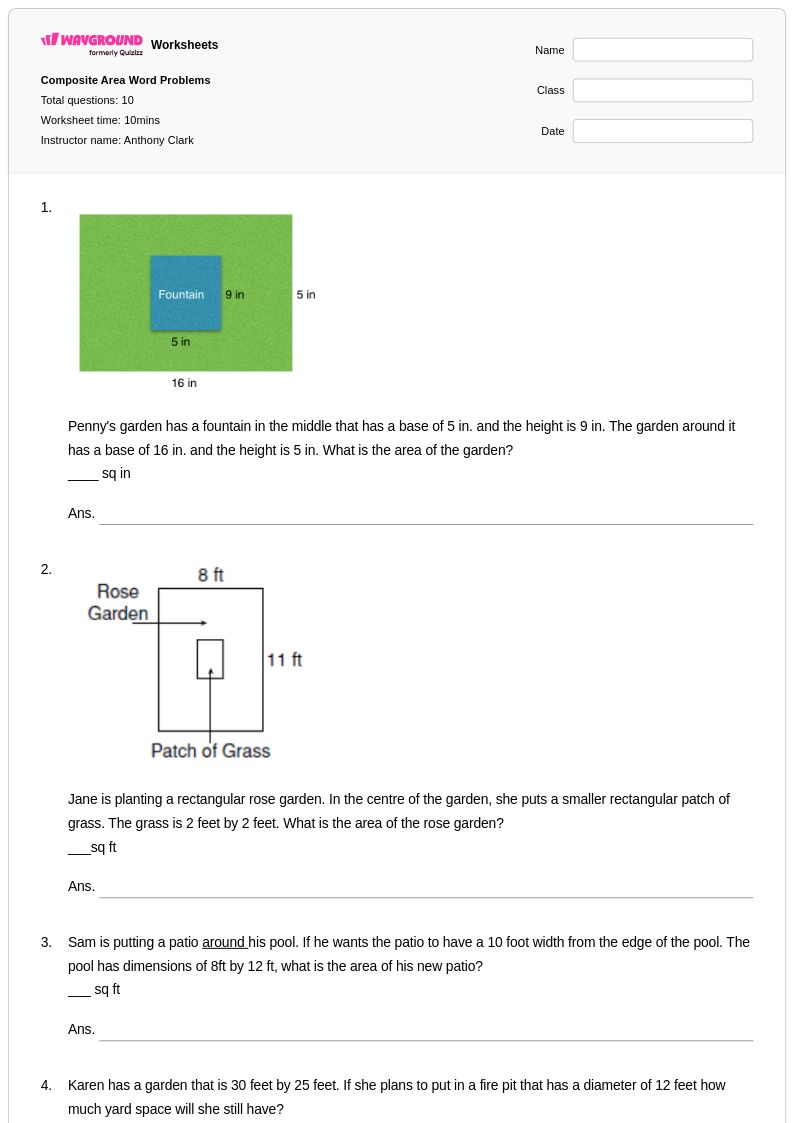
10 Q
7th - Uni
Explore Other Subject Worksheets for class 12
Explore printable Composite Area worksheets for Class 12
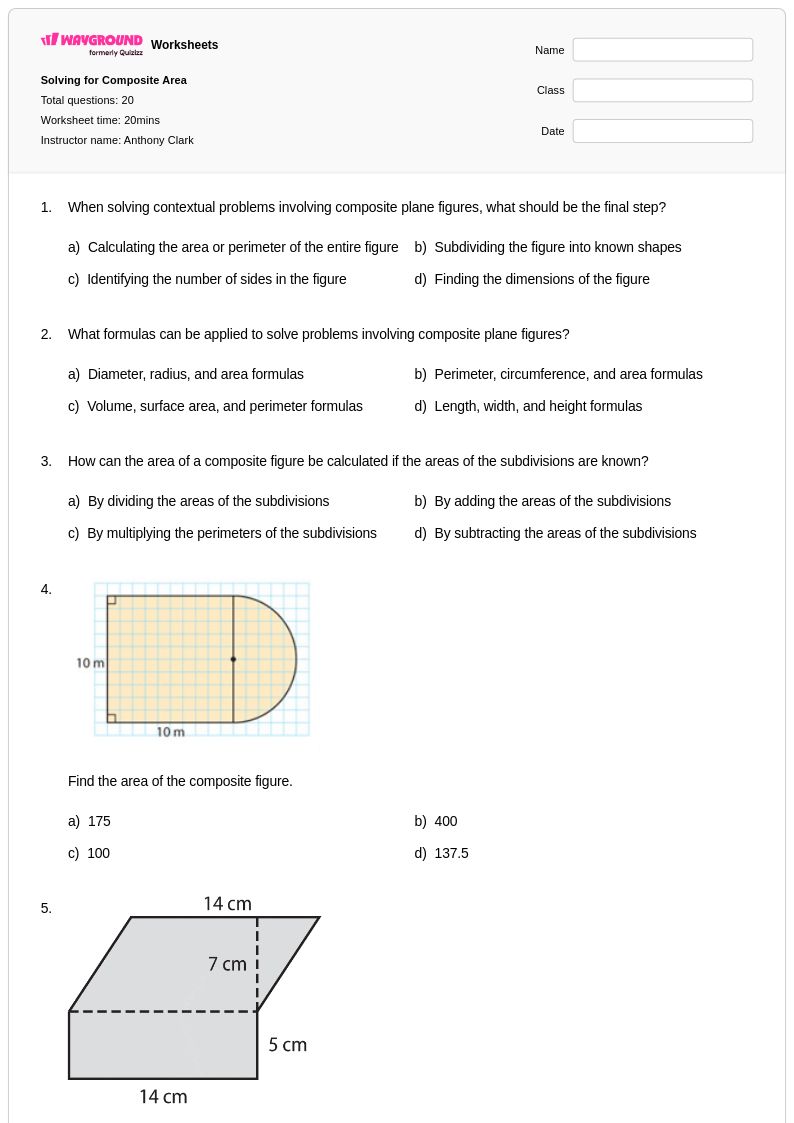
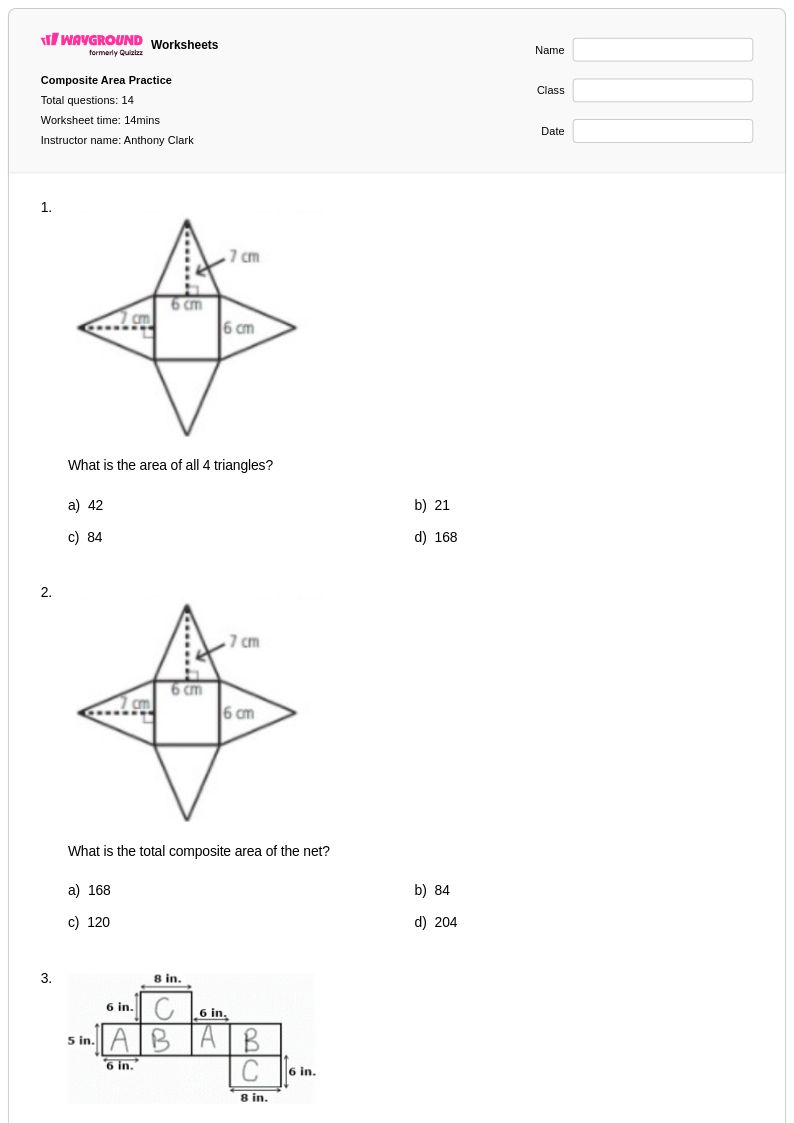
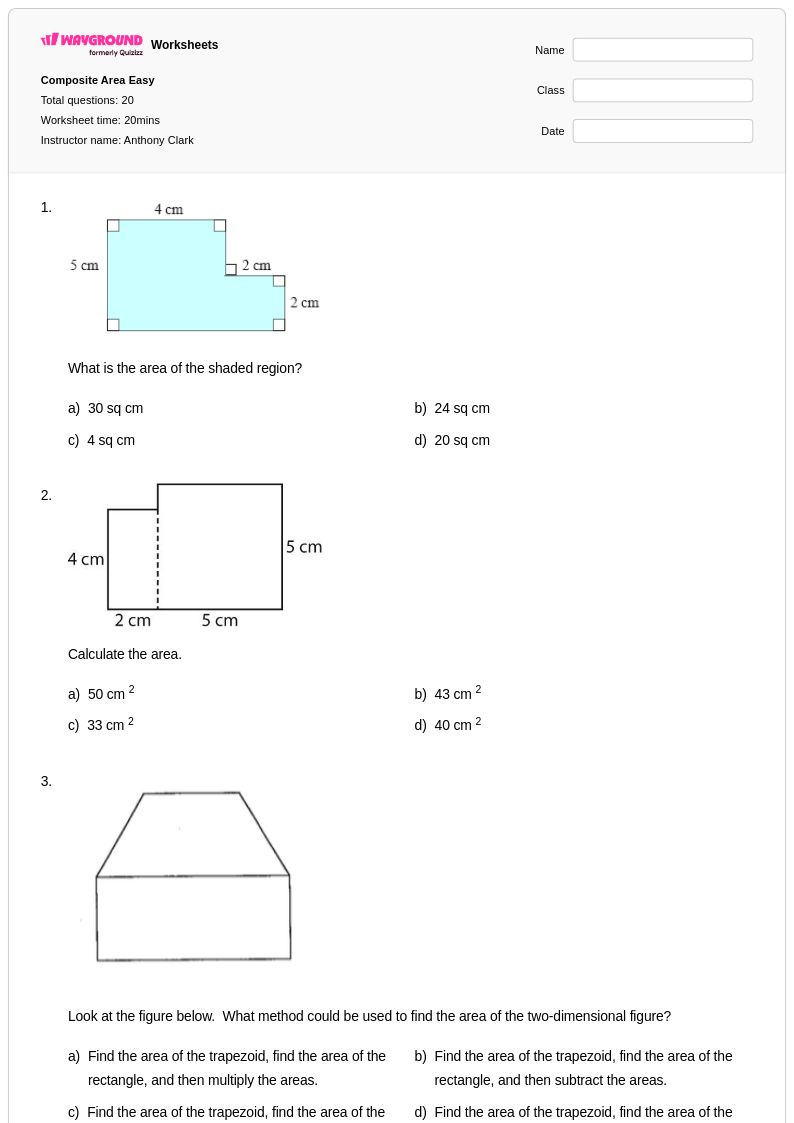
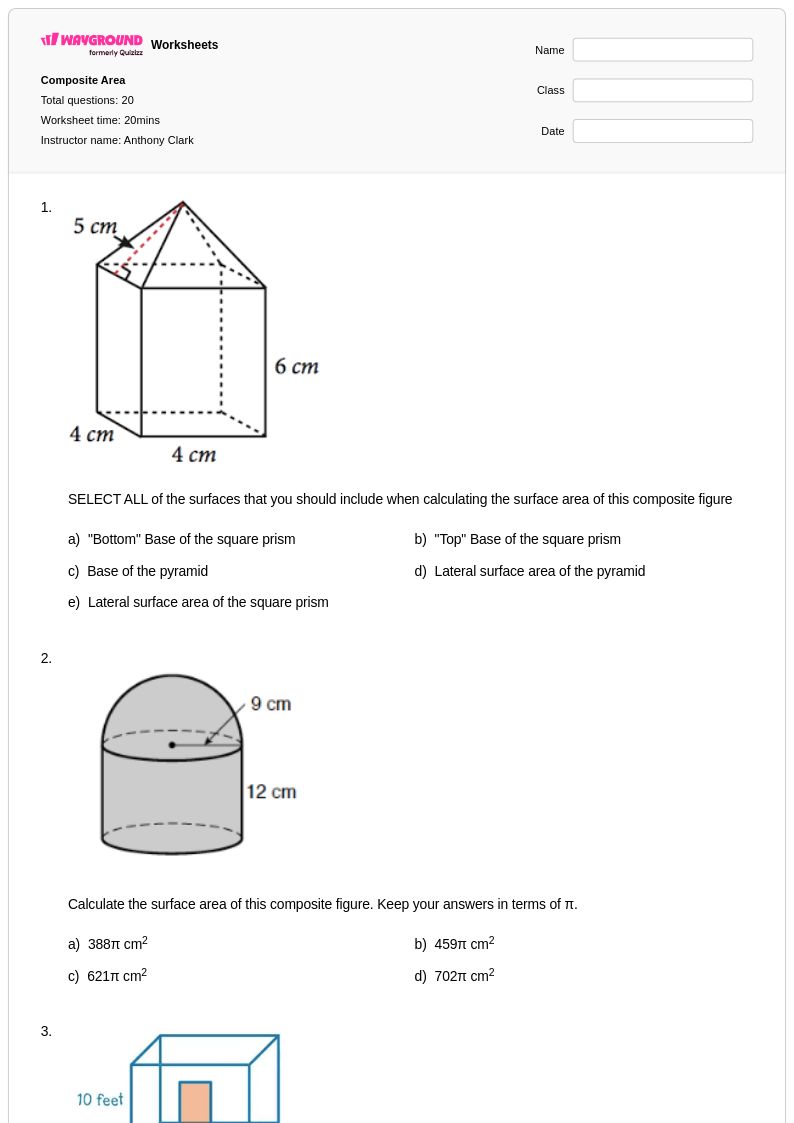
Composite area worksheets for Class 12 mathematics provide students with essential practice in calculating the areas of complex geometric figures formed by combining or subtracting basic shapes like rectangles, circles, triangles, and polygons. These comprehensive worksheets available through Wayground strengthen critical problem-solving skills by challenging students to decompose irregular figures into manageable components, apply appropriate area formulas, and perform accurate calculations involving multiple geometric principles. Students work through practice problems that require them to identify overlapping regions, calculate areas of composite shapes in real-world contexts, and demonstrate mastery of advanced geometric concepts essential for college-level mathematics. Each worksheet includes detailed answer keys and is available as free printables in convenient pdf format, making them accessible resources for both classroom instruction and independent study.
Wayground's extensive collection of teacher-created composite area worksheets supports educators with millions of high-quality resources designed to meet diverse classroom needs. The platform's robust search and filtering capabilities allow teachers to quickly locate materials aligned with specific curriculum standards and learning objectives, while built-in differentiation tools enable customization based on individual student abilities and learning styles. These versatile worksheets are available in both printable and digital formats, including downloadable pdfs, providing flexibility for various instructional settings and technology preferences. Teachers can effectively use these resources for targeted skill practice, remediation sessions for struggling learners, enrichment activities for advanced students, and comprehensive lesson planning that addresses the complex geometric reasoning required at the Class 12 level.
FAQs
How do I teach advanced composite area to Grade 12 students?
What exercises build mastery of composite area in Grade 12?
What errors should I assess in Grade 12 composite area work?
How can I use these Grade 12 composite area worksheets in class?
How does composite area connect to the Common Core high school curriculum?
How can I differentiate Grade 12 composite area worksheets?
What should Grade 12 students be able to do with composite area?